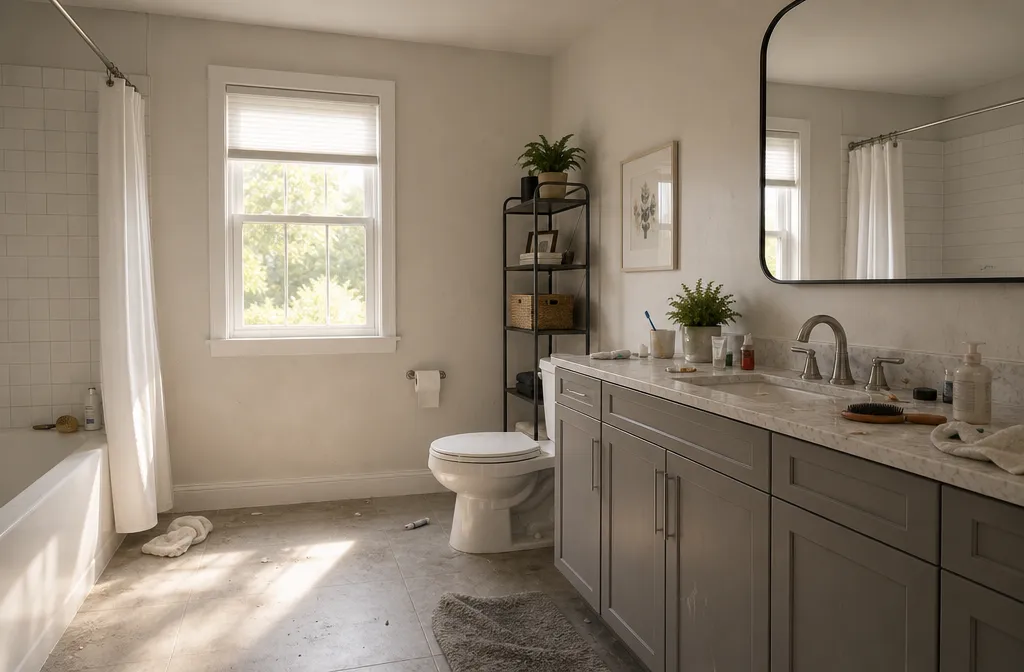
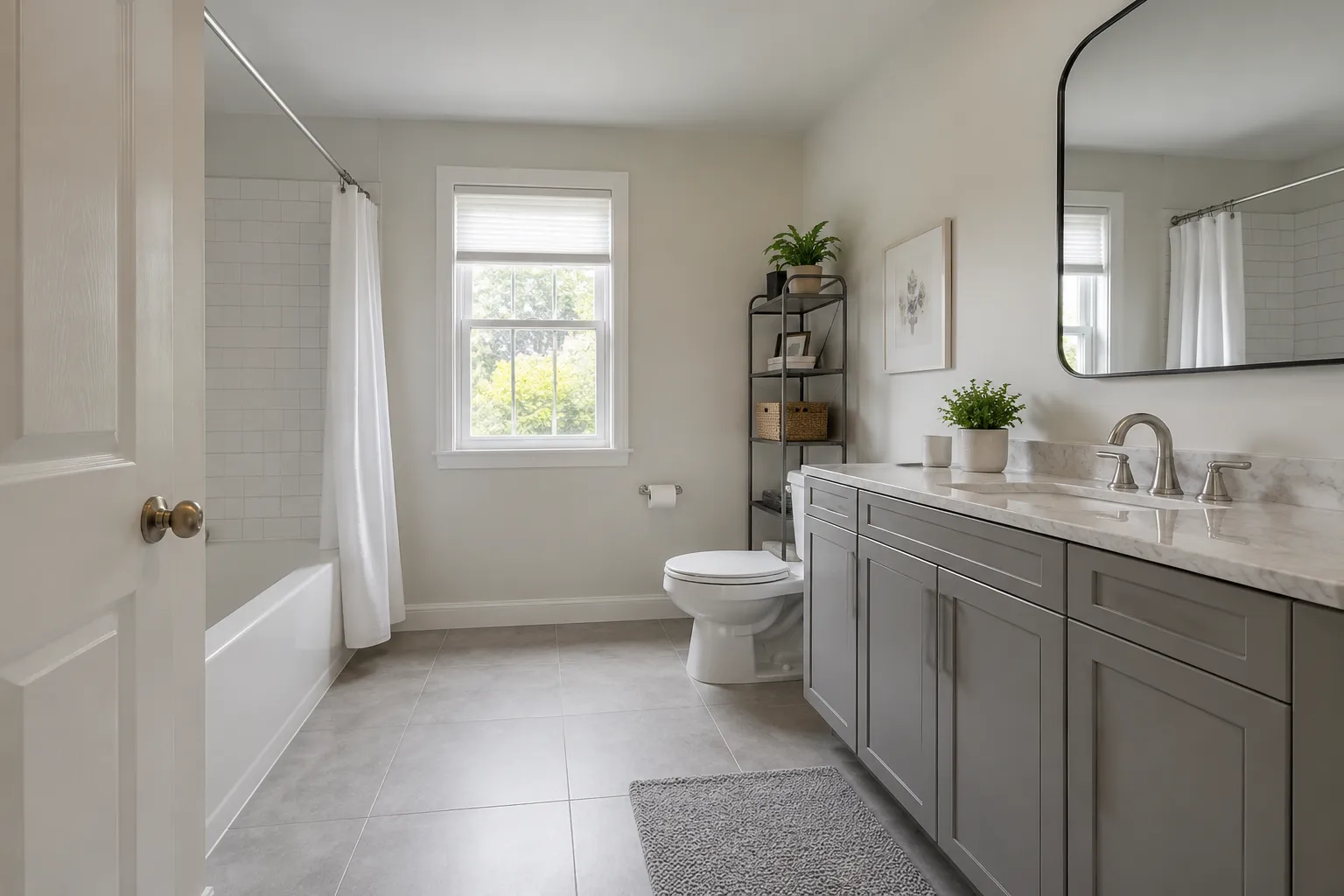
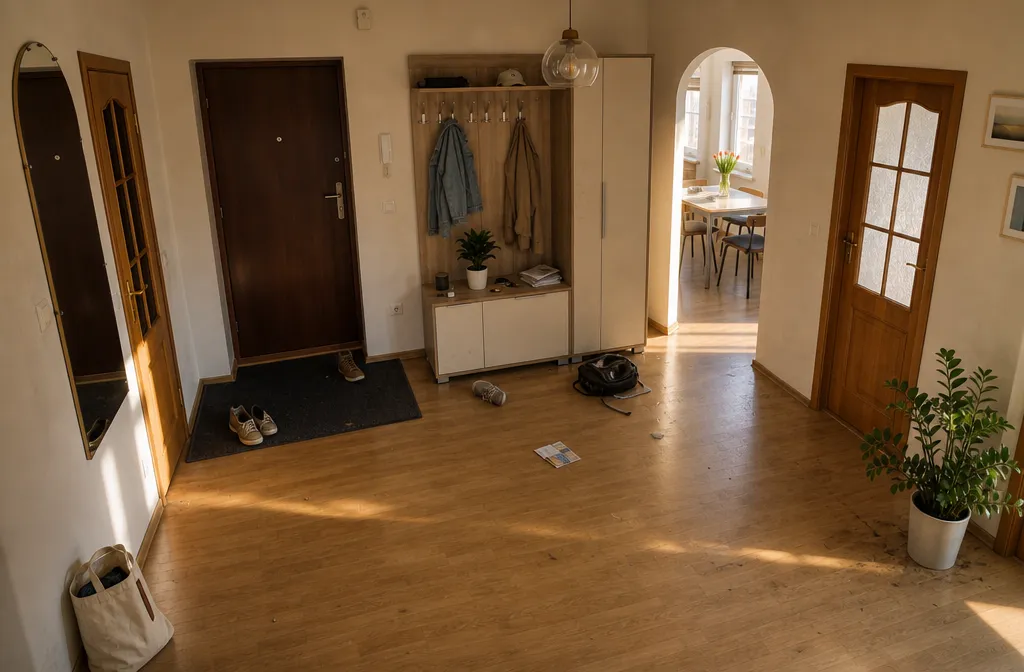
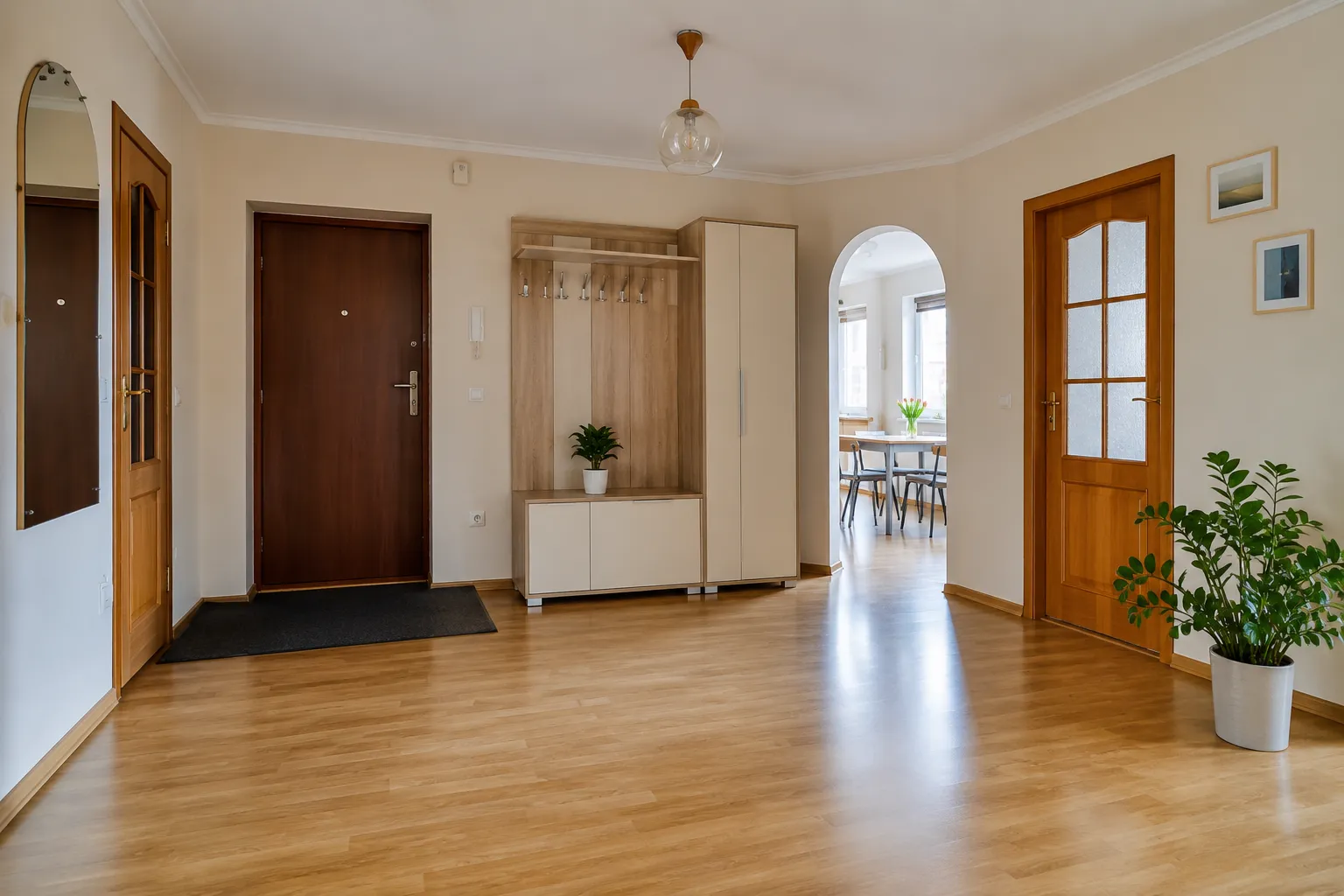
How Post-Renovation Cleaning Differs from Deep Cleaning
Many clients confuse post-renovation cleaning with deep cleaning, but in terms of tasks and complexity, these are two different types of cleaning services. Let’s break down the key differences: type of dirt, safety of finishing materials, need for specialized chemicals and equipment, and time investment.
Type of Dirt: Construction Dust vs. Household Grime
During a deep clean, we deal with ordinary dust, grease stains in the kitchen, limescale in the bathroom — all of which can be removed with household chemicals and standard cloths. After renovation, the picture is fundamentally different: cement and gypsum dust settles in every crevice, on the ceiling, inside ventilation, and behind baseboards. It is so fine that regular microfiber only smears it, clogging the pores of surfaces. In our practice, there was a case: a client tried to clean a stretch ceiling after puttying on their own — a week later, gray streaks from ingrained dust appeared, and we had to call in specialists for a re-stretch. Actionable insight: during the rough cleaning stage, use an industrial vacuum cleaner with an H13 class HEPA filter — it traps 99.95% of particles up to 0.3 microns, including cement dust that settles in the lungs.
Abrasive Substances: Cement, Grout, PVA Glue
Household deep cleaning does not involve removing construction compounds. But after renovation, drops of cement milk, dried grout, and traces of mounting glue remain on floors, tiles, and plumbing fixtures. Each of these materials requires its own acid-alkaline environment: cement dissolves only with specialized acid-based removers (pH 1–3), while epoxy-based grout requires organic solvents. Using the wrong compound can ruin the surface — for example, acid can strip the gloss from porcelain stoneware or dissolve sealant in the joints. We had a job where the client tried to clean grout with vinegar themselves — as a result, matte spots appeared on Italian marble, which had to be re-polished. Actionable insight: before treating any surface, test the reaction on an inconspicuous area — apply the product to a cotton pad and wait 3 minutes; if cloudiness or swelling appears, change the chemical.
Safety for Finishing Materials
After renovation, many coatings have not yet reached full strength: fresh paint, putty, varnish on parquet. Deep cleaning involves vigorous rubbing and heavy wetting — this can damage the unprotected layer. We apply the “dry start” principle: first, remove construction dust with a vacuum cleaner and electrostatic wipes, and only then perform wet cleaning with a minimal amount of water. For laminate and parquet, we use special pH-neutral compounds based on Sodasan — they do not leave streaks and do not raise the wood grain. Actionable insight: on freshly painted walls, do not use a wet cloth for the first 14 days after painting — even soapy water can remove the top layer of paint, leaving whitish streaks.
Time and Number of Passes
A deep clean in a standard apartment takes 3–5 hours with one cleaner. Post-renovation cleaning in the same apartment takes 6 to 10 hours with a team of two people, not including final polishing. The reason is the multi-layered process: first, dry cleaning of the ceiling and walls, then washing windows and window sills from cement splashes, then floors with several water changes. At sites in Almaty, we encounter an additional factor — dry air during the heating season: dust hangs in the air longer and resettles on already cleaned surfaces. Actionable insight: allocate at least 2 passes with a 2–3 hour interval for post-renovation cleaning — during this time, dust will resettle, and you won’t miss hidden dirt.
Equipment: From Mop to Orbital Machine
For a general cleaning, a bucket, mop, and microfiber cloth are sufficient. For a post-renovation cleaning, you need at least an industrial vacuum cleaner with a HEPA filter, a steam cleaner to remove dried glue, and an orbital polishing machine for final floor treatment. Our cleaners use equipment with HEPA filters — this is critical for Almaty apartments with central heating, where dust circulates through the ventilation. The steam cleaner at 140 °C softens grout and cement drips without chemicals, which is especially important for homes with children and allergy sufferers. Actionable insight: if you are ordering a post-renovation cleaning, check if the company has an industrial vacuum cleaner — a regular household appliance cannot handle cement dust and will clog within 15 minutes of operation.
How to Prepare Your Apartment for the Cleaners’ Arrival
Properly preparing your apartment before a post-renovation cleaning saves up to an hour of our cleaners’ time and reduces the risk of damage to final coatings. Let’s break down what you need to do before our arrival and what you should not touch.
What to Remove from the Cleaning Area
Before our cleaners’ visit, clear all horizontal surfaces: remove dishes, decor, cosmetics, documents, and electronics from window sills, countertops, shelves, and open bookcases. It is better to put small items (chargers, pens, remote controls) in a box or drawer — this way they won’t mix with construction debris and get lost. There is no need to take anything out of cabinets and drawers: we work on the outside, without rearranging things. It is advisable to pack clothes from open hangers and racks in garment bags or cover them with a sheet — even during wet cleaning, fine dust settles on fabric. It is better to roll up textiles (carpets, runners, blankets) and take them out to the hallway: this way we can treat the floor underneath and not stain the pile with wet cement. In Almaty apartments with panoramic windows, it is especially important to clear the area under the window sills — sofas and cabinets are usually placed there, and we need access to the slopes and radiators.
Utilities and Access — What to Check in Advance
Make sure there is water and electricity in the apartment: our HEPA-filtered washing vacuum cleaners and steam generators cannot operate without them. Check if the valves on the faucets are open — they are often shut off after renovation. If the water supply in the house is turned off, notify us a day in advance: we will bring spare 50-liter tanks, but this increases the cleaning time by 20–30 minutes. To access the plumbing and kitchen cabinets, move the washing machine, refrigerator, and gas stove away from the walls — we do not move heavy appliances ourselves without the customer’s instructions to avoid damaging the flooring. In new Almaty buildings (residential complexes “Akbulak”, “Nurly Tau”, “Grand Alatau”), induction hobs are often installed — their work surface is fragile, cover it with cardboard or soft cloth before our arrival. It is better to arrange the elevator for waste removal with the concierge in advance: in some residential complexes, temporary passes for cleaning crews are required.
Danger Zones: What Not to Touch Before the Cleaners
Do not attempt to wash off construction glue, mounting foam, or silicone from plastic windows and plumbing fixtures — aggressive solvents (acetone, white spirit) leave matte stains on PVC and acrylic bathtubs. Our cleaners use professional removers from Kiehl and Sodasan with a pH-neutral composition that remove hardened sealant without damaging the surface. Do not peel off the protective film from fittings and double-glazed windows before the final cleaning: condensation accumulates under the film, and if you remove it too early, streaks from cement dust will remain on the frames, which cannot be removed without polishing. The same applies to self-adhesive corners on door frames and baseboards — let us remove them ourselves; we know which direction to pull to avoid tearing off the paint. In Almaty apartments with heated floors (electric or water), turn off the heating 2–3 hours before cleaning: a hot floor absorbs moisture faster, and white salt stains may remain on the screed.
What Not to Do Yourself
Do not vacuum construction debris with a household vacuum cleaner — its filter will clog within 5 minutes, and fine dust (fraction up to 0.3 microns) will be blown back into the air, settling on freshly painted walls. Our industrial vacuum cleaners with HEPA H13 capture 99.97% of particles, including cement dust and quartz dust from grouting. Do not wash windows until walls and ceilings are cleaned: when we wash off whitewash or putty from slopes, water will get onto clean glass and leave difficult-to-remove streaks. The workflow is structured so that dirty processes (removing construction debris, washing walls) come before clean ones (washing windows, polishing surfaces). Do not try to scrub dried cement off tiles with a hard sponge — it will leave micro-scratches on glossy tiles, which will accumulate dirt over time. Our cleaners soak cement splatters with a special solution for 10–15 minutes, after which they are removed with a soft spatula without effort. In Almaty new builds with Italian porcelain stoneware (Marazzi, Atlas Concorde), this is especially important: scratches on such surfaces cannot be matted and are visible in side light.
The most difficult post-renovation stains and how professionals remove them
Construction dust is just the tip of the iceberg: the real headache for cleaners is hardened cement, polyurethane foam, silicone, paint on glass, and bitumen stains. In our practice at profi-clean, every third post-renovation job in Almaty contains at least one of these contaminants, and attempting to remove them with the wrong method is guaranteed to damage the surface.
Why construction dust settles on vertical surfaces and how to wash it off without streaks
Construction dust is a suspension of cement, gypsum, sand, and microscopic putty particles ranging from 0.5 to 50 microns. Due to electrostatic charge, it sticks to walls, stretch ceilings, and kitchen cabinet fronts, and plain water with detergent only smears it into dirt. We use professional vacuum cleaners with HEPA H13 filters — they capture 99.97% of particles up to 0.3 microns, and then we wipe surfaces with microfiber cloths and a special antistatic solution that neutralizes the charge and prevents dust from resettling. On stretch ceilings in Almaty, where static is particularly strong due to dry air, we use only soft microfiber cloths and a solution with minimal alcohol content — otherwise, the film loses its shine and develops rainbow streaks. If dust reappears on walls within an hour after regular cleaning, it means the static charge was not removed — this is a typical mistake made by inexperienced cleaners.
How to remove hardened cement and grout from tiles without scratching the glaze
Cement splatters on porcelain stoneware or ceramic tiles are one of the most insidious contaminants: they penetrate the glaze structure within 2–3 days, and mechanical scraping with a spatula leaves micro-scratches that darken over time from dirt. At profi-clean, we first soften the cement with a special acid-based solution containing phosphoric acid (pH 2–3) — it reacts with mineral deposits, turning them into a loose mass that washes off with water without friction. On matte tiles, popular in Almaty new builds (Fregat, Zhetysu-2), we keep the acid on for no longer than 3–4 minutes — any longer, and it starts to etch the glaze itself, leaving matte spots. Cement-based grout left in joints after grouting is removed with a narrow stainless steel scraper at a 45-degree angle — pressing straight down can scratch a groove in the tile. On glossy porcelain stoneware, abrasive sponges or powders are strictly prohibited — even one scratch on expensive Italian tiles becomes a permanent defect that cannot be hidden.
How to clean polyurethane foam and silicone sealant
Polyurethane foam on window frames, doors, or radiators is a contaminant requiring different approaches depending on timing: fresh foam (up to 30 minutes) is removed with acetone or a specialized cleaner like “Macroflex,” while cured foam (over an hour) requires mechanical removal only, using a blade or fine-grit sandpaper, which can easily scratch plastic. In our practice, we had a case in the “Akbulak” residential complex: a client tried to scrape foam off a plastic windowsill with a stiff sponge, leaving deep scratches that had to be masked with automotive polish. Silicone sealant, especially sanitary types with anti-fungal additives, adheres to the enamel of bathtubs and sinks at a molecular level. We use a professional silicone remover (based on dimethyl sulfoxide), which penetrates under the sealant layer in 10–15 minutes and peels it off as a film, leaving no greasy residue. On chrome-plated faucets in Almaty apartment bathrooms, silicone often remains after sink installation; it cannot be scrubbed with abrasives, otherwise the nickel coating will wear off in patches, and restoration requires re-chroming.
How to Remove Paint, Putty, and Glue from Windows and Windowsills
Drops of water-based paint on glass are a common scenario after ceiling painting: they dry in 15–20 minutes, and if not wiped off immediately, leave matte spots visible against the light. We use a glass-ceramic scraper (not a utility knife, which creates burrs) at a 30–45 degree angle: the paint comes off as shavings without scratching the glass. On plastic windowsills, putty penetrates the material’s micropores, and wiping with a damp cloth only smears it — we apply a specialized gel for removing construction dirt for 3–5 minutes, then wipe it off with the rough side of a sponge. Wallpaper glue and PVA, if they get on laminate or parquet flooring, dry into a transparent film that collects dust. We remove it with a water solution containing 30% isopropyl alcohol — the alcohol dissolves the polymer base of the glue without damaging the floor’s lacquer coating. In Almaty apartments with underfloor heating, removing glue residue from the screed is especially important: if not cleaned, when the heating is turned on, the glue melts and releases a pungent odor that the client might mistake for faulty wiring.
Can You Clean Up After Renovation Yourself: Pros and Cons
Cleaning an apartment after renovation yourself is a task often deemed simple until you encounter cured spray foam or micro-cement on double-glazed windows. We’ll break down the real advantages of a DIY approach — and the downsides that turn savings into extra expenses.
When DIY Cleaning Actually Works
DIY cleaning works after partial cosmetic renovations: wallpapering one room, replacing baseboards, or painting a ceiling. If the volume of construction waste is up to three bags, and the main contaminant is gypsum dust, you can manage in 3-4 hours. You’ll need a construction vacuum cleaner with a HEPA filter (a household “Raketa” or “Karcher” WD 3) — without it, fine dust particles will settle on furniture within a week. This only works under one condition: you have no allergy to cement or gypsum dust — its particles (0.5-5 microns) pass through regular respirators. In my opinion, DIY cleaning is justified if you’re willing to spend half a day on a small volume and have the right equipment, not just a rag and bucket.
What Beginners Miss: Hidden Contaminants
After renovation in Almaty, the most insidious traces are left where people rarely look: behind heating radiators, on top shelves of wardrobes, under windowsills, and inside ventilation grilles. We regularly find cured grout on tiles — beginners scrub it with an abrasive sponge, leaving scratches on the glossy finish. Another typical mistake is washing windows immediately after frame installation: an oily film from the mounting foam remains on the glass, and if not removed with a specialized solvent (e.g., “Cosmofen 10”), the film dries into a matte coating that cannot be washed off with regular cleaner. With inexperienced DIY cleaning, you risk damaging new surfaces — a scratched acrylic windowsill or matte laminate with streaks from incorrect chemicals will need replacement.
Why Construction Dust is Dangerous to Health
Construction dust is not just dirt, but a suspension of concrete, gypsum, adhesive, and mineral wool particles up to 10 microns in size. When cleaning on your own without a professional vacuum cleaner with a HEPA H13 filter (a filtration class capturing 99.95% of particles), you stir the dust back into the air, and it circulates for up to 2 hours after cleaning. In Almaty, with its dry climate and frequent humidity fluctuations, this dust is particularly aggressive: it settles on mucous membranes, causing irritation, and can trigger attacks in people with asthma or allergies. We use hypoallergenic chemicals from Kiehl and Sodasan, which leave no toxic residues, but beginners often have cheap chlorine- and ammonia-based products on hand—these react with cement dust, releasing volatile compounds. Before cleaning on your own, buy an FFP3 respirator and replacement filters—without them, you are breathing in what should be going into the dust collector.
When DIY Cleaning Costs More
The savings are illusory if, after DIY cleaning, you have to redo things: call for carpet dry cleaning (grout sets in within 2-3 days), replace damaged double-glazed windows, or sand laminate flooring to remove scratches. In our practice at profi-clean, there was a case: a client washed a kitchen backsplash made of artificial stone with vinegar three times—the acid dissolved the polish, requiring stone restoration specialists to be called in at a significant cost. Another common scenario is DIY window washing after renovation: alkaline soap leaves streaks on the glass, and after a month, they become so cloudy that professional polishing is needed. A specific challenge in Almaty is hard tap water (up to 8 mg-eq/L): when it dries, it leaves salt streaks that cannot be wiped off with a regular cloth; demineralized water is required. If you are not willing to risk your new renovation, call the professionals—it is cheaper than fixing damaged surfaces.
Why You Should Order Post-Renovation Cleaning from profi-clean
When the renovation is over, it seems the main work is done, but settled cement dust on the ceiling, dried adhesive on tiles, and white residue on fittings turn a “clean” apartment into a disaster zone. Entrusting the final cleaning to professionals is not a whim but a necessity if you want to move into a home without risking damage to surfaces and without a week of manual scrubbing. profi-clean takes on post-renovation apartments in Almaty with a guarantee that no traces of building materials will remain—even on surfaces you haven’t thought of.
What Happens If You Clean Construction Dust with a Household Vacuum Cleaner
A regular vacuum cleaner with a bag or cyclone filter lets up to 30% of fine particulate matter back into the air—construction dust (gypsum, cement, putty particles sized 1–10 microns) is not captured by household HEPA filters of class H12 and below. As a result, 2–3 hours after cleaning, a new gray layer settles on all horizontal surfaces. At profi-clean, we use industrial vacuum cleaners with an H14 filter and a 99.997% capture rate—they collect even the microparticles that settle in the lungs and cause allergies. In practice, the difference is immediately visible: after using our equipment, there is no need to wipe the floor with a damp cloth again—no dirt remains on the cloth.
Why Window Cleaning After Renovation Is a Separate Skill
On window frames and double-glazed windows after renovation, not only dust remains but also drops of mounting foam, dried silicone, traces of masking tape, and ingrained cement residue. Regular washing with Fairy or soapy water does not remove silicone stains—they remain as cloudy streaks visible in the sun. Our cleaners use professional silicone removers (Sodasan Silicone Remover) and special scrapers with ceramic blades that do not scratch the glass. For plastic window sills, we use a paste to remove cement splashes—in Almaty apartments with panoramic glazing, this service is especially in demand, as every scratch on new-build windows is visible as if under a magnifying glass.
How profi-clean Protects Surfaces from Aggressive Chemicals
Construction dirt — cement, grout, tile adhesive, putty — can only be removed with acid-based products (pH 1–3). Using a regular all-purpose cleaner will leave cement as a stubborn film on tiles and cause irreversible etching stains on marble and granite. At profi-clean, we use specific chemicals for each surface type: for porcelain stoneware — Kiehl acid concentrate with a corrosion inhibitor, for artificial stone — an alkaline compound with pH 8–9, for wooden floors — a neutral water-based cleaner. We select the product by testing it on an inconspicuous area to prevent any reaction with the final coating. For example, self-leveling floors in Almaty new builds are often coated with epoxy resin — abrasives cannot be used on them, only a soft brush and a pH-neutral solution.
What happens with the removal of protective film from furniture and fittings
The film used to cover kitchen fronts, doors, and window sills often becomes stuck after renovation — especially if paint or mounting foam has gotten on it. Peeling it off by hand risks removing a layer of varnish or paint along with the film. At profi-clean, we use an industrial heat gun with adjustable temperature (up to 150 °C) — we heat the film to 60–70 °C, and it comes off in one piece without any adhesive residue. If the film is already partially torn, we remove the remaining glue with Sodasan Adhesive Remover spray, which leaves no greasy traces. In multi-room apartments in Almaty, this stage takes up to 2 hours — without professional equipment, you can damage an expensive kitchen set worth a significant amount. Our principle: after removing the film, we check for any glue stains underneath and wipe the fronts with microfiber to avoid streaks from the heating process.
Why moving into an apartment after profi-clean cleaning is safe for allergy sufferers
Construction dust contains particles of gypsum, cement, fiberglass, and formaldehyde resins — even after wet cleaning, they remain in the pores of concrete floors and on walls if a professional extractor is not used. At profi-clean, the final stage is treating all hard surfaces with a steam cleaner at 140 °C: the steam penetrates the micro-cracks of the self-leveling floor and washes out dust that neither a mop nor a wet vacuum can handle. For families with children and asthmatics, this is critical: after such treatment, the air in the apartment becomes cleaner than outside in the center of Almaty. We use only hypoallergenic Kiehl and Sodasan chemicals without fragrances — no “cleaning” smell, just clean air.