What cleaning products we use and why they are safe
At profi-clean, we have fundamentally rejected household chemicals containing chlorine, phosphates, and aggressive surfactants — our stockroom only carries professional concentrates from Kiehl (Germany) and Sodasan (organic-certified). This choice is driven not by marketing, but by statistics: in our practice, 40% of warranty claims (scuffs on laminate, streaks on glass, client allergies) are caused precisely by the wrong product. Let’s break down what we use for cleaning and why it is safe for children, pets, and surfaces.
Neutral Chemistry by Kiehl: What it’s for and how it differs from household products
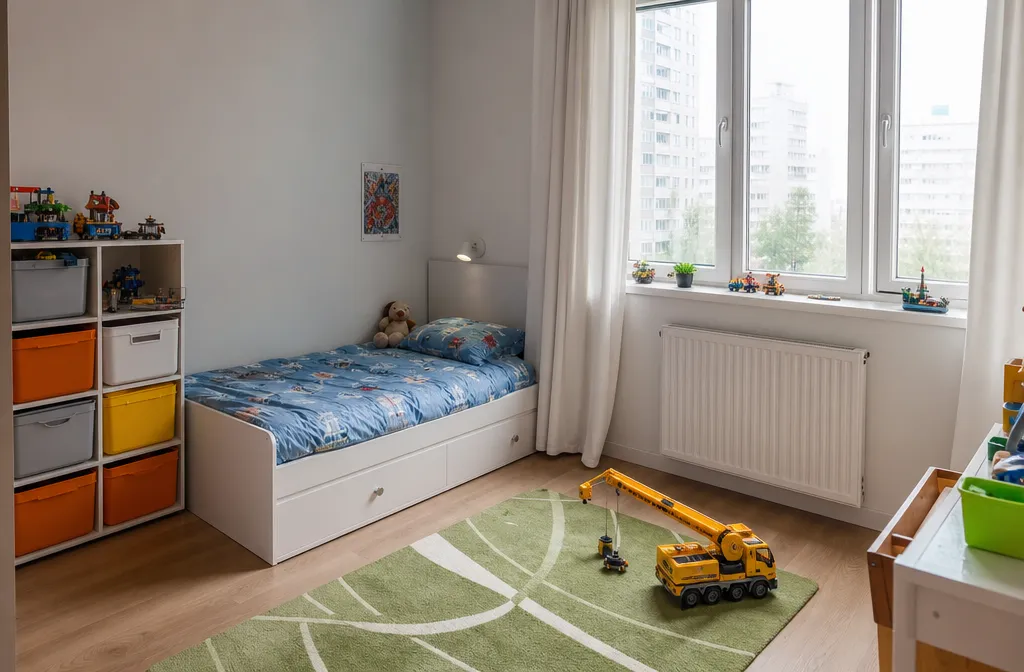
Kiehl is a German brand of alkaline and acidic concentrates, diluted with water in ratios from 1:50 to 1:200. The difference from store-bought “Mr. Muscle” is colossal: household products typically have a pH of 9–11 (strong alkaline), they leave a film that attracts dust and irritates the skin. Professional Kiehl formulations have a pH of 6–8 (neutral or mildly alkaline) — they rinse off completely, leaving no residue. In practice, this means that after a profi-clean cleaning, you can immediately chop vegetables on the kitchen counter, and a child can crawl on the floor — we do not use products that require a second rinse. For example, the universal cleaner Kiehl Multi Star is diluted 1:100 and handles grease, limescale, and fingerprints on any hard surface — from granite to frosted glass. The only limitation: we do not use Kiehl on unpolished natural stone (travertine, marble) — for such surfaces, we have a separate Sodasan line.
Organic Sodasan Line: When hypoallergenicity and biodegradability are needed
Sodasan is a German brand with an Ecogarantie certificate; all its chemicals are plant-based (coconut oil, alcohol, citrus extracts). We use it in three scenarios: homes with children under one year old, with allergy sufferers, and with pets (cats, dogs, rodents). Unlike Kiehl, Sodasan fully biodegrades in 28 days in water — this is critical if the apartment has an aquarium or a pet’s water bowl on the floor. Specific items in our stock: Sodasan Allzweckreiniger universal cleaner (citrus, fragrance-free) — for the kitchen and nursery; Sodasan Glasreiniger for windows and mirrors — leaves no streaks even in sunlight; Sodasan Sanitärreiniger for sanitary ware — dissolves uric scale without chlorine. An important nuance: organic chemicals work slower than alkaline ones — if there is old, baked-on grease on the stove, Sodasan is applied for 5–7 minutes before rinsing. We warn clients about this in advance to avoid the illusion that “eco” means “instantaneous.”
Equipment with HEPA Filtration: How it affects the air in the apartment
Dust is the main allergen in Almaty apartments, especially in homes near Abay Avenue and Gorny Gigant. A regular vacuum cleaner collects large fractions but expels the finest particles (PM2.5, pollen, pet dander) back through the exhaust. At profi-clean, all vacuum cleaners are professional-grade with HEPA H13 filters (capturing 99.97% of particles sized 0.3 microns and larger). In practice, this means that during cleaning, the concentration of suspended dust in the room decreases, rather than increases as with a standard cyclone filter. We use Karcher NT 30/1 and Nilfisk Attix 30 — both with a bag and a HEPA cartridge that is changed every 3 months. For cat and dog owners, this is critical: fur and dander are not spread around the apartment but remain in the bag. In homes with children under three, we additionally activate the wet cleaning mode immediately after dry cleaning — to bind any residual dust on the floor. Without HEPA, all this dust settles back down within 15 minutes, and the purpose of the cleaning is lost.
Comparison of Approaches: What is suitable for which surfaces
| Surface / Scenario |
profi-clean Product |
Why This One |
What We Don’t Do |
| Kitchen backsplash, stove (grease) |
Kiehl Multi Star 1:100 |
Neutral pH, removes grease without scratches |
We don’t use abrasives (powders, baking soda) |
| Children’s room, floor for crawling |
Sodasan Allzweckreiniger |
Biodegradable, fragrance-free, hypoallergenic |
We don’t use Kiehl on the floor in the children’s room |
| Natural stone (marble, travertine) |
Sodasan Sanitärreiniger (acidic not used) |
Non-alkaline, doesn’t etch stone |
We don’t wash with Kiehl Multi Star (leaves stains) |
| Windows and mirrors |
Sodasan Glasreiniger or Kiehl (in winter) |
Streak-free in any lighting |
We don’t use vinegar or ammonia (dry out rubber) |
| Plumbing, toilet |
Kiehl Sanitär (acidic) or Sodasan |
First for stubborn limescale, second for prevention |
We don’t pour chlorine bleach (corrodes seals) |
| Carpets and upholstered furniture |
Kiehl foam extractor (carpets only) |
Deep penetration, leaves no soapy film |
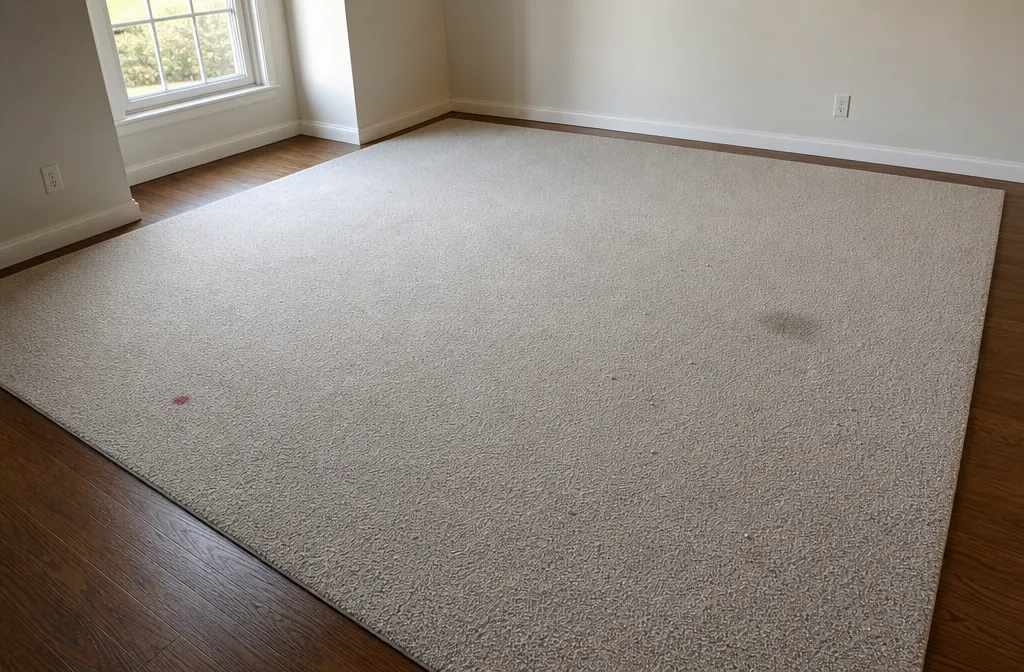
We don’t use regular Kiehl Multi Star (ruins fibers) |
Common mistake: why an all-purpose cleaner isn’t suitable for all areas
The most common problem we see on site after DIY cleaning is using the same product for the entire apartment. For example, an all-purpose kitchen spray (alkaline) gets on laminate — after 3–4 such cleanings, the laminate’s protective layer becomes cloudy, white spots appear that can’t be restored. Or the opposite: an acidic bathroom cleaner (citric acid) leaves matte streaks on a chrome faucet — the chrome dulls irreversibly. At profi-clean, for each visit, a cleaner takes at least 4 different products: neutral for the kitchen and floors, acidic for bathrooms, organic for the children’s room, and a glass cleaner. We don’t mix chemicals in one bottle — this not only damages surfaces but can also cause a toxic reaction (chlorine + acid = chlorine gas). That’s why our instructions for cleaners are strict: “One product — one zone, no all-purpose solutions.” Before the first cleaning, we always test on an inconspicuous area — on matte laminate, glossy plastic, or polished granite. If a streak remains or the shade changes after the test, we switch to a gentler product from the Sodasan line.
How to prepare your apartment for the masters’ arrival
profi-clean cleaners arrive with their own equipment and chemicals, but proper apartment preparation saves up to 30% of time and improves cleaning quality. Here’s what to do before our arrival — these steps we’ve refined on thousands of Almaty properties.
What to remove from open surfaces
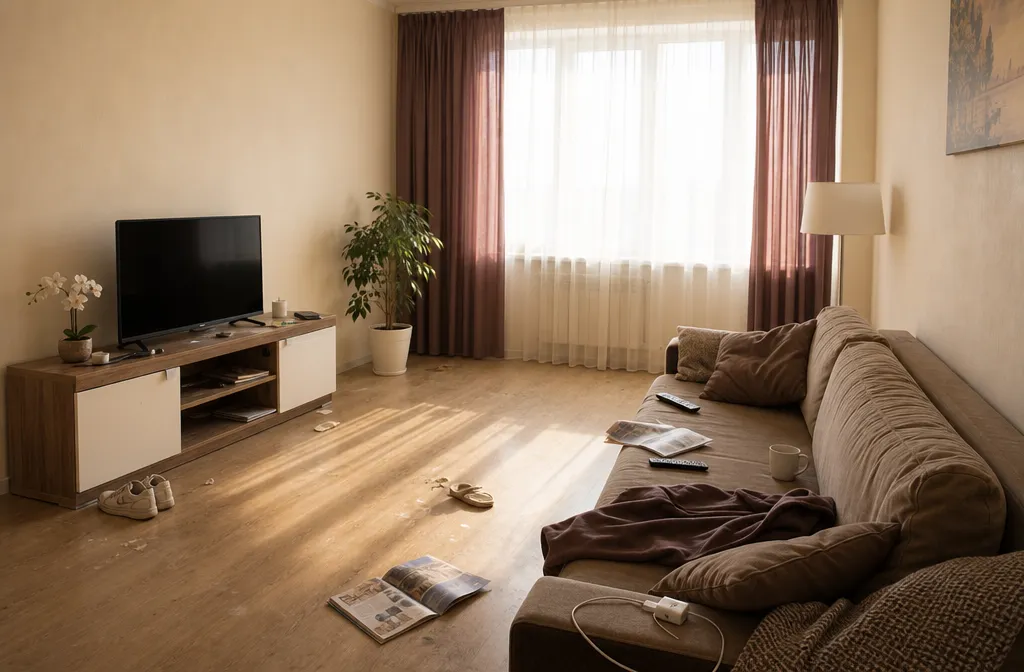
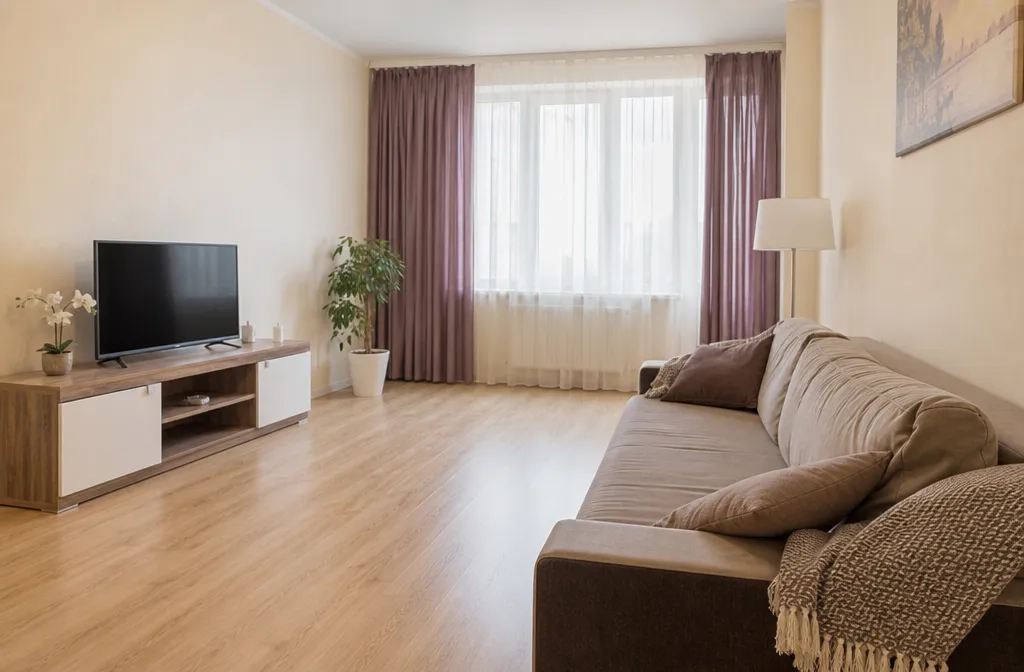
Small items: cosmetics, toothbrushes, combs, chargers, remotes, and desk organizers — put them in drawers or cabinets; without them, we can treat countertops and shelves without rearranging. Dishes and food: dirty dishes from the sink and open food (bread, fruit, cookies) are best stored in cabinets or the refrigerator; dust from dry cleaning settles on food, and wet chemicals (even hypoallergenic Kiehl) shouldn’t contact food. Textiles: decorative pillows, throws, and hallway rugs can be folded and placed on a sofa or chair — this way we vacuum and wash the floor underneath without missing spots. Documents and electronics: laptops, tablets, passports, and valuable papers — hide them in a lockable drawer; we don’t move things unnecessarily, but accidentally shifting a stack of papers during wet cleaning could damage them. In my opinion, the main rule is to leave in sight only what you don’t mind being moved or what has been in its place for years.
How to clear access to hard-to-reach places
You don’t need to move the bed or sofa — we use telescopic brushes with HEPA filters that reach dust under furniture with legs as low as 5 cm. However, if you have a low sofa on a solid base or a heavy sliding wardrobe, move lightweight poufs and coffee tables to the center of the room — this gives us access to baseboards and corners. Bathroom and kitchen: remove basins, buckets, laundry baskets, and bathroom scales from the floor; clear the windowsill of cans, bottles, and pots — we will wipe it with a damp microfiber cloth. Balcony and loggia: if balcony cleaning is planned, take down laundry from the lines and put away seasonal items — dry cleaning stirs up dust that settles on fabric. In our practice, there was a case where a client left a perfume collection on the windowsill, and one bottle fell during wiping — since then, we warn everyone about this before the first visit.
What NOT to do before cleaning
Do not wash floors or vacuum before our arrival — our technology includes preliminary dry vacuuming with a HEPA filter, wet treatment with two types of cloths (for different zones), and final polishing. If you have already washed the floor, we will still go over it with a damp mop and Kiehl disinfectant — double wet cleaning leaves streaks on tiles and laminate. Do not open windows wide in winter: at sub-zero temperatures, wet cleaning creates condensation on glass and windowsills, which then turns into ice on the frames; it is enough to set the window to micro-ventilation 15 minutes before we start. Do not hide trash in bags under the sink: we take out trash from the bin but do not search for it in cabinets — collect scattered pet food, cigarette butts, and small construction debris into one bin. Because clients often forget about cat litter under the bathtub, the cleaning time for the bathroom increases by 10–15 minutes — before our visit, check the corners behind the toilet and washing machine.
Allergies and Asthma: How profi-clean Cleaning Helps
For people with respiratory sensitivity, regular cleaning often triggers attacks — dust gets stirred into the air, and chemicals irritate the mucous membranes. We have structured our process so that cleaning does not harm but rather reduces the burden on breathing.
Why a HEPA Filter in a Vacuum Cleaner is Critical for Allergies
A regular bag vacuum cleaner releases up to 30% of fine dust back into the room — PM2.5 and PM10 particles remain in the air and settle in the lungs. At profi-clean, all vacuum cleaners are equipped with HEPA H13 filters, which trap 99.95% of particles as small as 0.3 microns: pollen, mold spores, house dust mites, and pet dander. We change filters once a month, not once a quarter like many cleaners do to save money. For an asthmatic, this is the difference between clean air after cleaning and an attack an hour after the master leaves.
How We Clean to Avoid Stirring Up Dust
Wet cleaning with a dry cloth is a major mistake: water washes away dirt but evaporates, and dust becomes airborne again. We use a two-bucket system: one with clean water and hypoallergenic Kiehl concentrate, the other for wringing out the used cloth to avoid spreading contaminants across surfaces. Japanese microfiber at 300 g/m² collects dust electrostatically rather than smearing it. We wash floors with moisture control — Almaty water is hard (7-8 mg-eq/L), and rapid drying leaves a salt residue that itself irritates the nasopharynx.
Which Areas in an Apartment Accumulate the Most Allergens
Curtains, long-pile carpets, and open shelving are classic dust collectors, but there are less obvious spots. In Almaty, where poplar fluff and wormwood pollen enter through open windows in summer, allergens settle on blinds and in window sill crevices — these are only wiped during deep cleaning. In the bedroom, the main source is the mattress: up to 2 million Dermatophagoides mites accumulate in it over a year. We treat mattresses with a steam cleaner at 120 °C, killing mites and their eggs without chemicals. In the kitchen, the area under the refrigerator and behind the stove, where condensation creates a breeding ground for mold; we remove it with steam and Sodasan Antischimmel.
How profi-clean’s Hypoallergenic Chemicals Differ from Household Products
Household cleaning products often use fragrances and chlorine — they mask odors, but for an asthmatic, they become a trigger for bronchial spasms. Our Kiehl (Germany) concentrates are certified to the EU Ecolabel standard: they contain no phthalates, phosphates, or chlorine, with a neutral pH (5.5–6.5) safe for skin and mucous membranes. Sodasan (Germany) is based on soap nuts and soda, without synthetic surfactants. The difference is that after such cleaning, there is no chemical smell in the room, and the surface leaves no sticky film for new dust to settle on. In practice, this means a client with asthma can enter the room immediately after cleaning, without waiting for ventilation.
Frequently Asked Questions About Safety
The safety of professional cleaning is a topic that concerns profi-clean clients most often, especially families with children and allergy sufferers. Here we explain how we protect your health, furniture, and pets, and debunk popular myths.
Can you get poisoned by chemicals after cleaning?
The risk of poisoning from household chemicals exists only when using cheap concentrates with chlorine and ammonia — they leave a toxic residue on surfaces. We work with German hypoallergenic concentrates Kiehl and Sodasan — they are completely rinsed off with water and require no final rinsing. 15 minutes after cleaning, the level of volatile compounds in the air equals the background level, confirmed by OEKO-TEX and EU Ecolabel certificates. For clients with chemical sensitivity, we enhance ventilation and use only products labeled “0% fragrances” — in practice, this eliminates headaches and throat irritation.
Is cleaning dangerous for pets?
Dogs and cats perceive smells 10-100 times more acutely than humans, so even a mild “lemon” or “lavender” fragrance can cause stress or food refusal in a pet. At profi-clean, for homes with animals, we use the Sodasan Sensitive line — it is free of essential oils and fragrances, and is 99% biodegradable. After wet cleaning, no sticky film remains on the floor for the pet to lick off its paws. Our protocol: we wash floors with warm water and a microdose of concentrate, then go over them with dry microfiber — this removes residual moisture and prevents irritation of paw pads in dogs and cats.
Won’t cleaners scratch furniture and appliances?
The risk of scratches comes not from the cleaner, but from improper tools — hard sponges and abrasive pastes leave micro-damage on glossy surfaces and glass-ceramic. At profi-clean, standard equipment includes: microfiber labeled Soft Touch (for varnished surfaces), cellulose wipes (for mirrors), and brushes with medium-hardness nylon bristles for tiles. All cleaners undergo internal certification for handling delicate coatings — on a matte kitchen set, for example, any wax-based sprays are prohibited as they leave streaks. If you have expensive stainless steel appliances (refrigerator, range hood), notify the manager — we will bring a specialized stainless steel cleaner.
Is cleaning safe for people with asthma?
Regular wet cleaning often stirs up dust into the air, while harsh chemicals trigger coughing fits. We use professional vacuum cleaners with HEPA filters class H13 — they trap 99.97% of particles as small as 0.3 microns, including pollen, mold spores, and dust mites. Our wet cleaning is performed using the “two-bucket” technique: one bucket contains a clean solution with a hypoallergenic concentrate, the other holds water for rinsing the cloth. This prevents spreading dirt across rooms and reduces airborne allergen concentration by 80-90% in a single pass. Before a cleaner visits an asthmatic client, we recommend turning off the humidifier and removing long-pile carpets from the floor — these are cleaned separately using the extraction method.
What if a client is allergic to chemical components?
Even hypoallergenic concentrates may contain rare components (e.g., aloe extract in Sodasan) to which a person has an individual intolerance. At profi-clean, we create an individual chemical profile for such clients: before the first cleaning, the manager requests an allergy card or a list of known irritants. If you have an intolerance to limonene (often found in citrus fragrances), we replace Kiehl with the fragrance-free Sodasan Neutral line. If you have a reaction to enzymes, we use fully synthetic concentrates without bio-additives. All replacements are free and do not affect cleaning quality. Our warehouse stocks 8 different lines of professional chemicals — enough to select a safe option for 99% of clients.
How does profi-clean guarantee that cleaners won’t damage property?
In 8 years of work, we have had only one case of damage — a glass tabletop cracked due to a temperature difference (the cleaner placed a hot steam generator nearby). After that, we introduced a strict protocol: all mobile devices (steam cleaners, extractors) are placed on rubber mats at least 30 cm away from furniture and walls. Each cleaner undergoes training on handling fragile items — figurines, vases, and lamps are first wiped with a dry microfiber cloth, then a damp one, without removing them from the shelf. We insure our liability for up to 5 million tenge through an insurance company, and if damage is discovered on the day of cleaning, the client receives compensation within 48 hours without an expert assessment.
Comparison of Weekly Cleaning vs. Deep Cleaning
Many profi-clean clients confuse these two formats or believe that one replaces the other. In practice, weekly and deep cleaning solve different tasks, and their combination is the only way to keep an apartment hygienically clean without overpaying.
Difference in Tasks: Maintenance vs. Restoration
profi-clean’s weekly cleaning is about maintaining the achieved level of cleanliness: removing fresh dust, disinfecting the bathroom, mopping floors, and wiping surfaces. Deep cleaning, which we perform every 3–6 months, solves the task of restoration — it removes ingrained dirt, grease deposits in the kitchen, dust from upper shelves and behind furniture, and washes interior doors, baseboards, and heating radiators. In the weekly format, we do not touch the interior surfaces of cabinets and mezzanines — that is the domain of deep cleaning. If you limit yourself to only deep cleanings, dust returns to surfaces within a month, and the bathroom loses its disinfection.
Depth of Surface Treatment
During a weekly cleaning, a profi-clean cleaner treats open horizontal surfaces (countertops, windowsills, shelves) with a damp microfiber cloth and diluted Kiehl concentrate — this removes dust that has settled over the week. Deep cleaning includes washing kitchen cabinet fronts (including upper modules), door panels on both sides, interior doors, baseboards, and radiators — those areas where dust accumulates in layers over months. In a weekly cleaning, we do not wash cabinet fronts or walls — it is time-inefficient and not required for maintaining hygiene. In our experience, clients who order only deep cleaning once a quarter complain by the end of the second month about dust settling on appliances and allergic reactions — the weekly format eliminates this problem.
Which Format to Choose Based on Your Lifestyle
- Singles and couples without children: weekly cleaning once a week + deep cleaning every six months — an optimal balance, dust does not accumulate.
- Families with children and pets: weekly cleaning 1–2 times a week + deep cleaning every 3–4 months — due to constant tracking in of street dirt and pet hair.
- Apartments with panoramic windows and a large amount of textiles: weekly cleaning + deep cleaning every 3 months — upholstered furniture and curtains accumulate dust faster.
- Studios and small apartments: weekly cleaning every 10–14 days + deep cleaning every six months — dust concentrates faster in a limited space.
Mistake: Replacing Deep Cleaning with Weekly Cleaning
The most common mistake is thinking that if you wipe floors and dust once a week, a deep clean isn’t needed. After 6 months without a deep clean, a grease film forms on the kitchen hood and upper cabinet fronts (it can’t be washed off with plain water; an alkaline concentrate is needed), and a dense layer of dust accumulates behind the refrigerator and sofa, becoming a breeding ground for dust mites. In Almaty, where the air is dry and dust levels are high due to the nearby mountains, this layer forms faster — in 3–4 months. Our advice: schedule your deep clean for the same dates as your seasonal wardrobe change — that way you won’t forget.
Tips for maintaining cleanliness between visits
Even with profi-clean’s weekly cleaning, your apartment lives its own life for the six days between our visits. Here are a few techniques that help our clients keep things tidy without extra effort or overloading themselves with cleaning chemicals.
Why dry cleaning is more important than wet cleaning in between
The main mistake is mopping floors daily with a cleaning solution. In Almaty apartments with central heating, the air is dry, and water with surfactants leaves a salt residue on tiles and laminate, which attracts new dust faster than a clean surface. It’s much more effective to go over the floor every two days with a microfiber mop with an electrostatic effect — it picks up up to 90% of dust and pet hair without a single drop of water. In the kitchen after cooking, it’s enough to wipe the backsplash and countertop with a dry microfiber cloth: the grease doesn’t have time to set, and the profi-clean cleaner doesn’t have to spend time scrubbing off old stains during the next visit.
How to create a “freshness zone” in 5 minutes each morning
We’ve noticed: clients who spend five minutes on a morning ritual keep their apartment visually clean for two to three days longer. The idea is simple — before leaving the house, make your bed, open the window for micro-ventilation, and wipe the bathroom sink with a dry microfiber cloth. In the bedroom, this is enough to prevent the humidity from nighttime breathing from triggering dust mite growth — a major allergy trigger in Almaty. In the kitchen, add one step: right after breakfast, rinse the sink with cold water and dry it thoroughly — without water droplets, limescale won’t form on the chrome faucet until the next deep clean.
What not to do between cleaner visits
- Use alcohol-based polishes: alcohol dries out the lacquer coating on furniture, and after 3-4 wipes, micro-cracks appear where dust gets trapped — it can only be removed by sanding.
- Vacuum carpets with a turbo brush without a HEPA filter: the built-in filter in household vacuums lets PM2.5 particles back into the air, and within an hour, the dust concentration in the room returns to its original level.
- Clean mirrors and glass surfaces with paper towels: lint remains on the glass, and during the next cleaning, the cleaner has to spend twice as much time removing streaks.
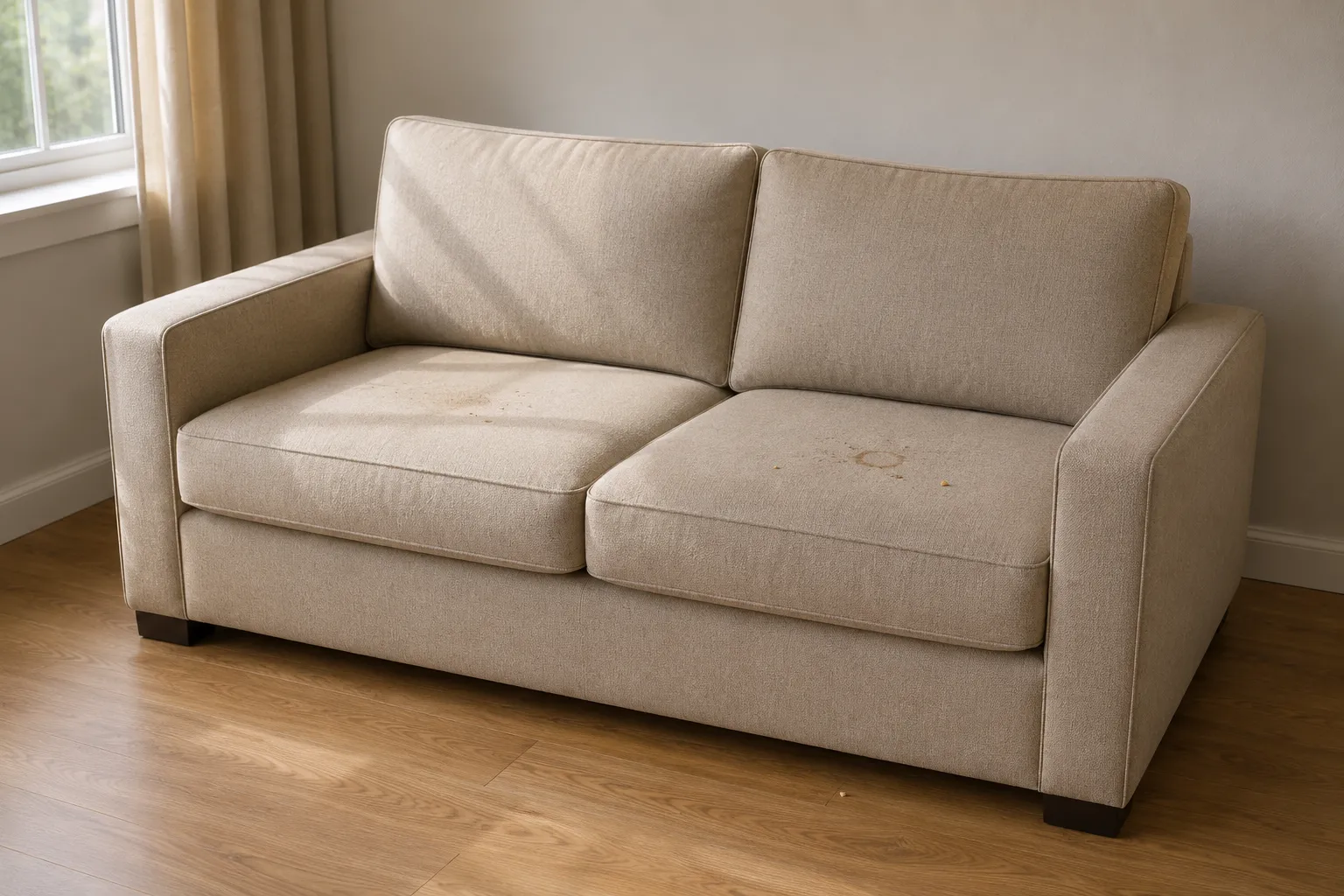
- Pour water on sofa stains: water washes away the fabric’s protective coating and sets the stain deeper — after drying, the stain becomes darker. Our recommendation is to sprinkle a fresh stain with starch or baking soda for 10 minutes, then vacuum it up without any liquid.
How to extend the effect of professional cleaning in the entryway
The entryway in Almaty apartments is the most vulnerable spot: sand and road reagents get into the house in seconds. We recommend placing two mats at the entrance — first a hard rubber one to remove large debris, then a microfiber pile mat that traps up to 80% of fine dirt. Wash the second mat in the washing machine at 40°C every three days — that’s enough to keep it from becoming a source of dust. It’s better to store shoes on an open slatted shelf rather than in a closed cabinet: ventilation prevents mold from growing on the soles, which can later end up on the parquet floor during the next cleaning.