Fabric inspection
The master determines the fabric type, identifies stains, and selects optimal products.
Professional dry cleaning of curtains, tulle, and drapes with home visit. We remove dust, odors, and stains without shrinkage.

We work with any types and materials
Gentle cleaning of thin fabrics without damaging the structure.
from 5,000 ₸Deep cleaning of dense fabrics with dust and stain removal.
from 5,000 ₸Careful cleaning while preserving shape and folds.
from 5,000 ₸Cleaning without removing from the roller, using an extractor.
from 5,000 ₸Cleaning each slat with dust and dirt removal.
from 2,000 ₸Cleaning of inter-slat space and surface.
from 2,000 ₸Cleaning while preserving metal elements.
from 5,000 ₸Untangling and cleaning each thread.
from 5,000 ₸Cleaning while preserving scallops and folds.
from 5,000 ₸Gentle cleaning with puff fixing.
from 5,000 ₸Cleaning of hard and soft lambrequins while preserving shape.
from 2,500 ₸Cleaning of lightweight curtains with dust and odor removal.
from 5,000 ₸From inspection to result with guarantee
The master determines the fabric type, identifies stains, and selects optimal products.
Optional: The technician carefully removes curtains from the rod and labels them.
Application of special Kiehl compounds on stubborn stains, soaking.
Deep cleaning in a bathtub or with a Karcher SE 4001 extractor.
Thorough removal of chemical residues with clean water.
Drying in a spread-out state in the workshop or at home using dehumidifiers.
Removal of wrinkles with a steam iron or steamer.
Optional: the master hangs clean curtains on the rod.
We use Kiehl product line, which is hypoallergenic and contains no harsh solvents. They effectively remove stains without damaging fabric fibers. Certified for use in childcare facilities.
Karcher SE 4001 extractor with 160 bar pressure ensures deep penetration of cleaning solution and instant dirt suction. This eliminates streaks and reduces drying time. The technology allows cleaning curtains while hanging.
We use vacuum cleaners with HEPA H13 filter, which trap particles up to 0.3 microns. This guarantees removal of dust mites, mold spores, and other allergens. Recommended for people with allergies and asthma.
We guarantee removal of 95% of stains. If a stain remains after treatment, we refund the full cost of the service. We provide a photo report before and after cleaning.
Our specialist will come to you for free, assess the fabric type, degree of soiling, and calculate the exact cost. The visit is made within 2 hours after the request.
Over 9 years of work, we have performed more than 5000 curtain dry cleanings. We have positive reviews on 2GIS and Yandex Maps. Our team includes 20 certified masters.
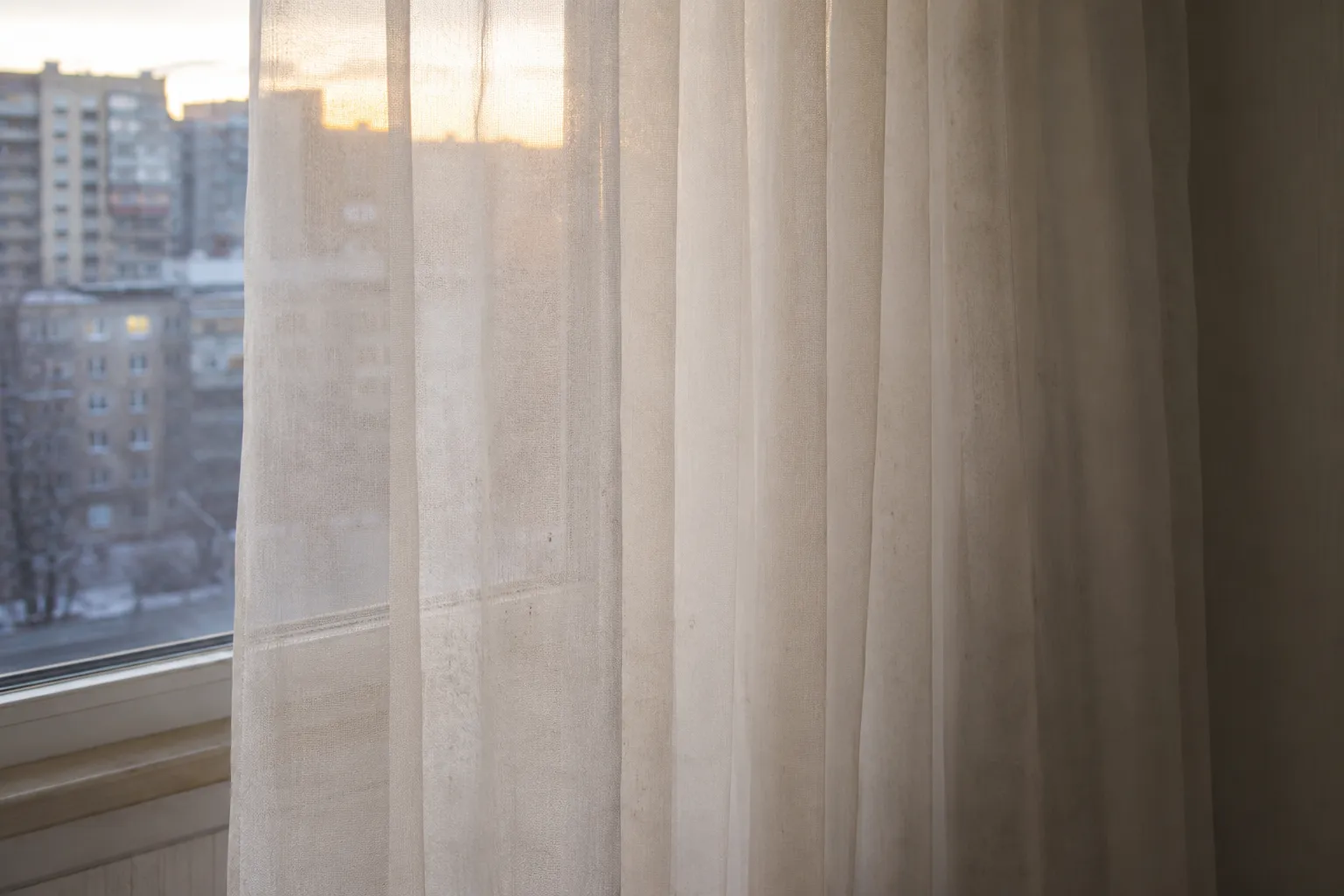
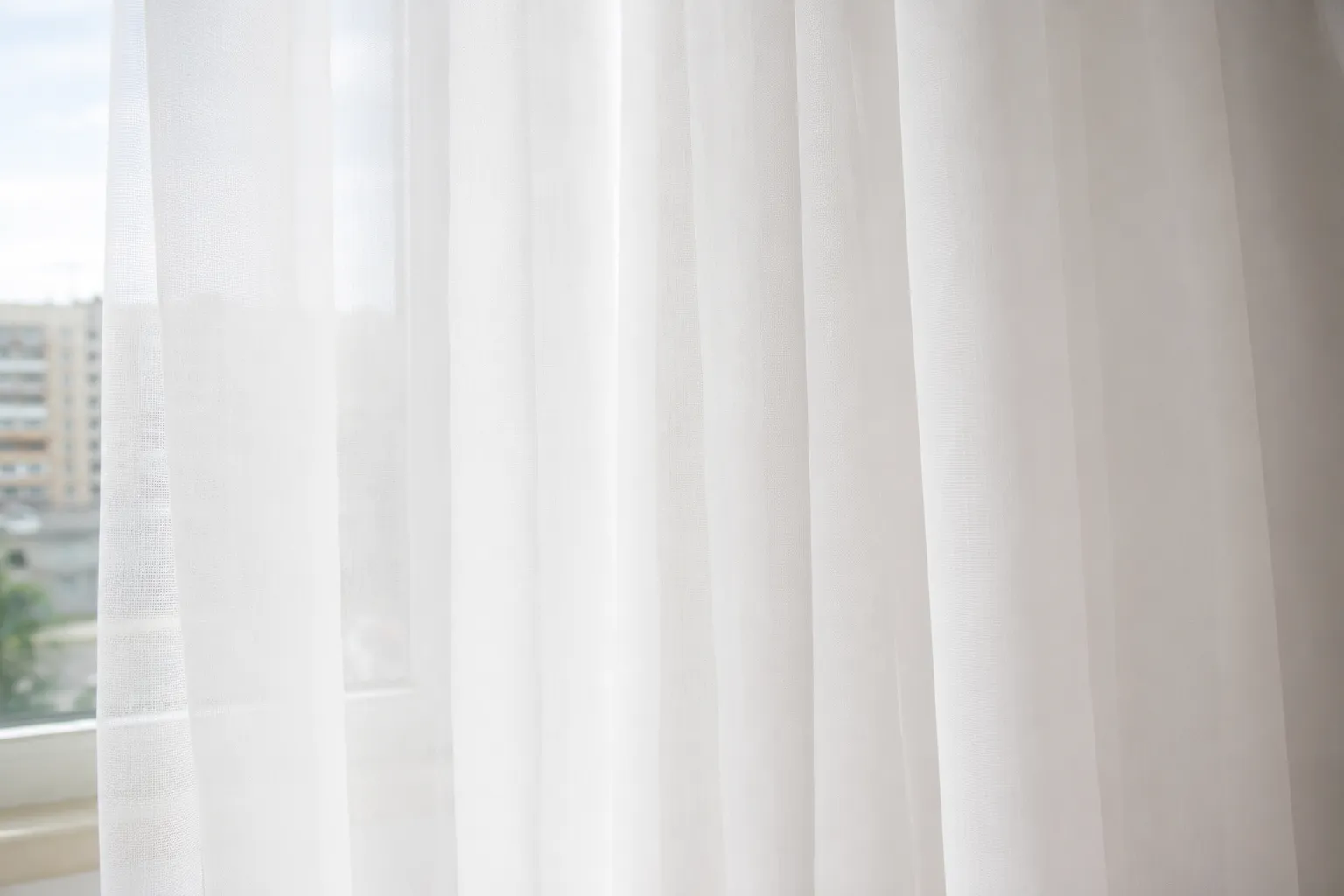 After
After
Request: Make the tulle snow-white, it has a gray coating and dust.
Done: We performed delicate dry cleaning of tulle with bleaching and anti-static finishing treatment.
Cost: 5 000 ₸
Master: Aigul Serikova, dry cleaning master
Total: Tulle regained whiteness and lightness, no streaks or odor.
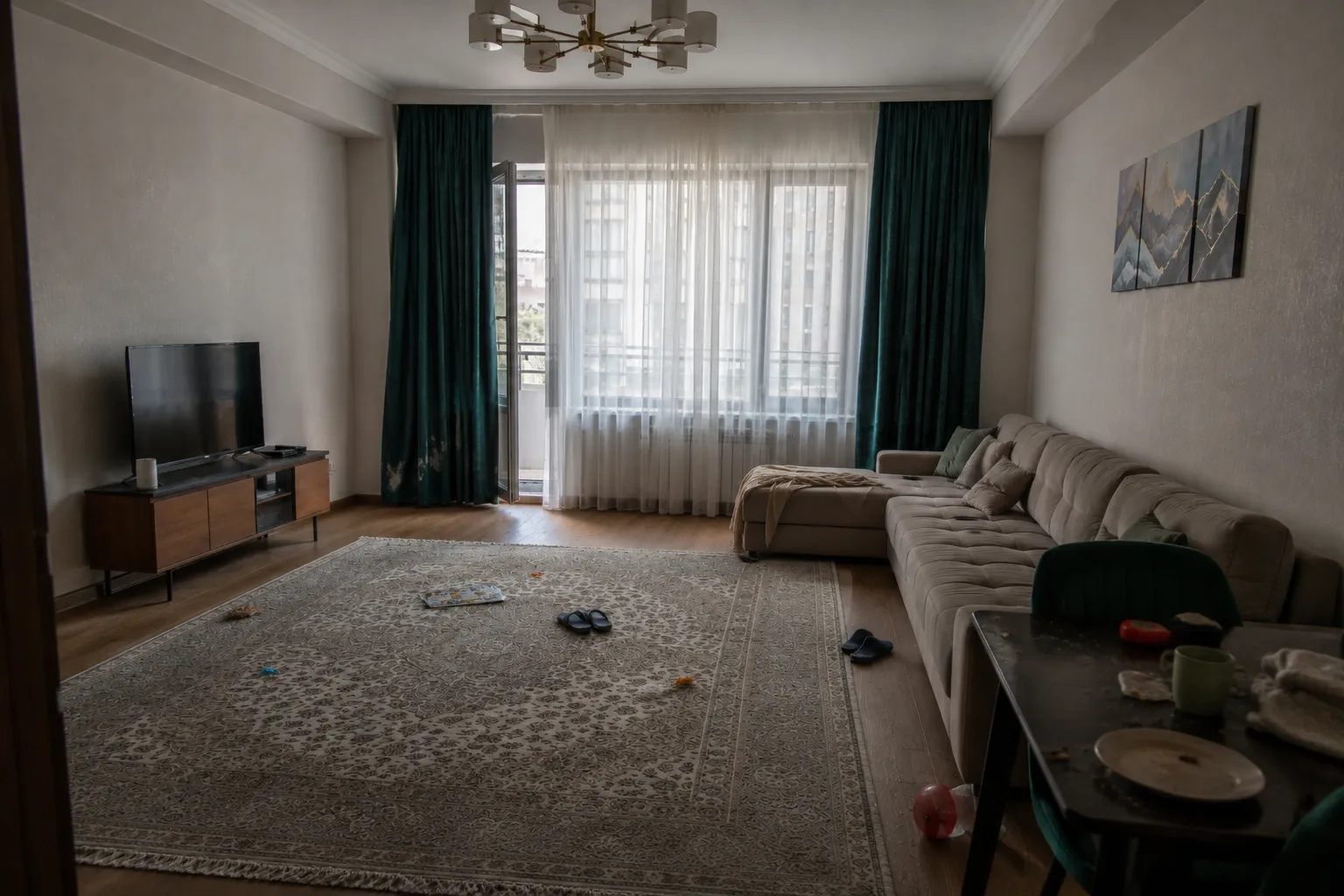
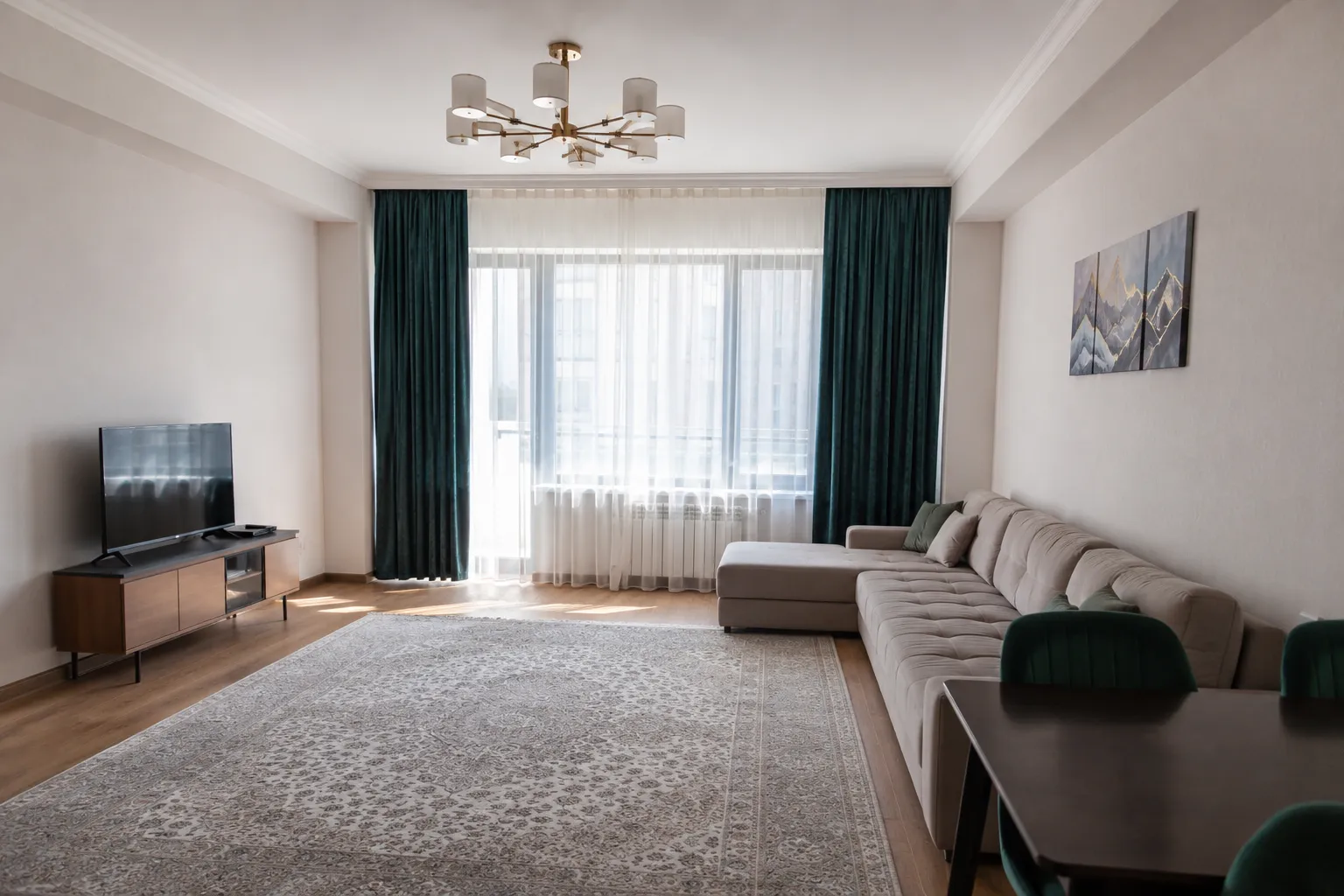 After
After
Request: Velvet curtains have become shiny, there are stains at the bottom.
Done: We performed gentle dry cleaning of velvet with stain removal and pile restoration.
Cost: 5 000 ₸
Master: Nurzhan Alimbayev, dry cleaning master
Total: Curtains became soft, color rich, no stains.
 After
After
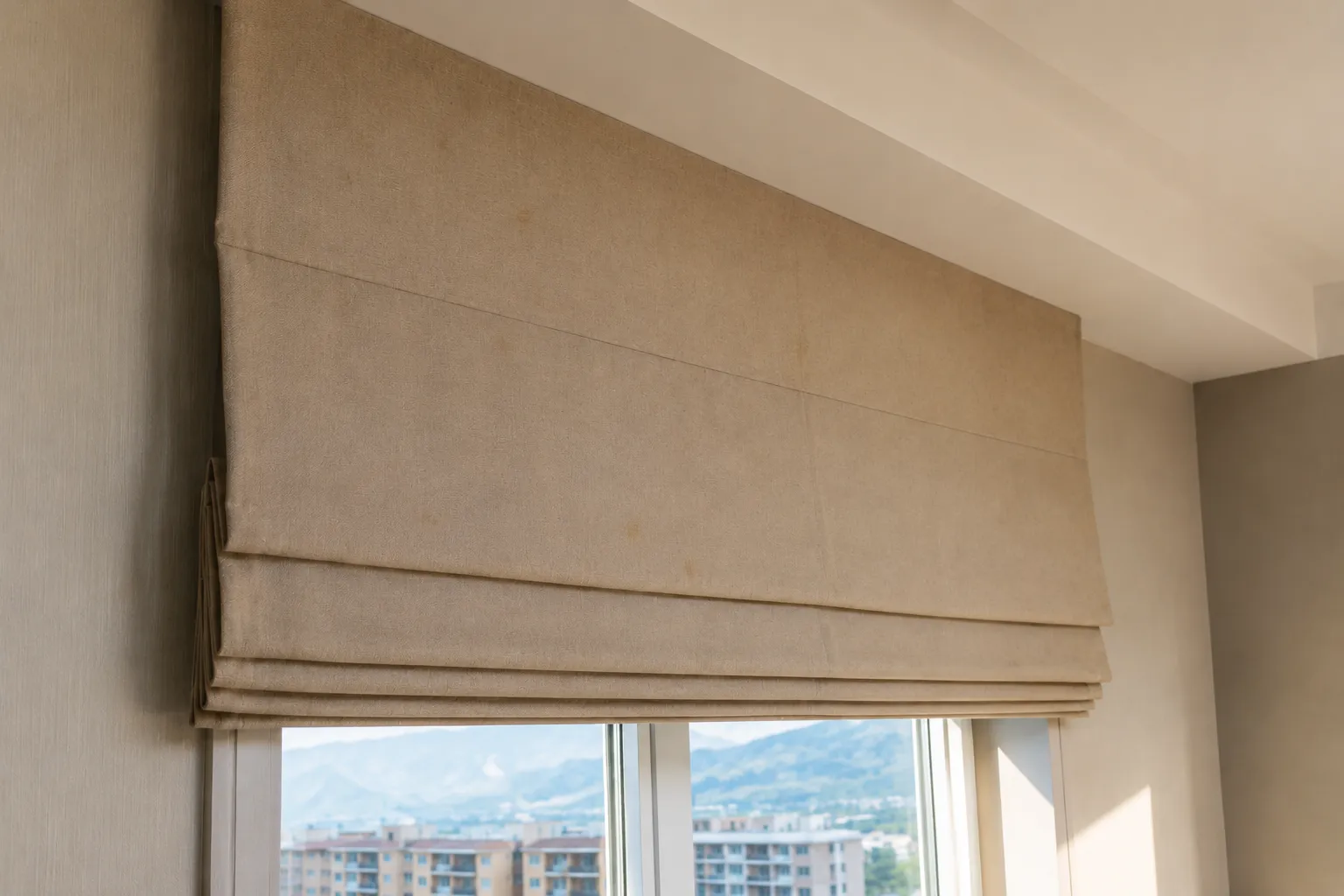
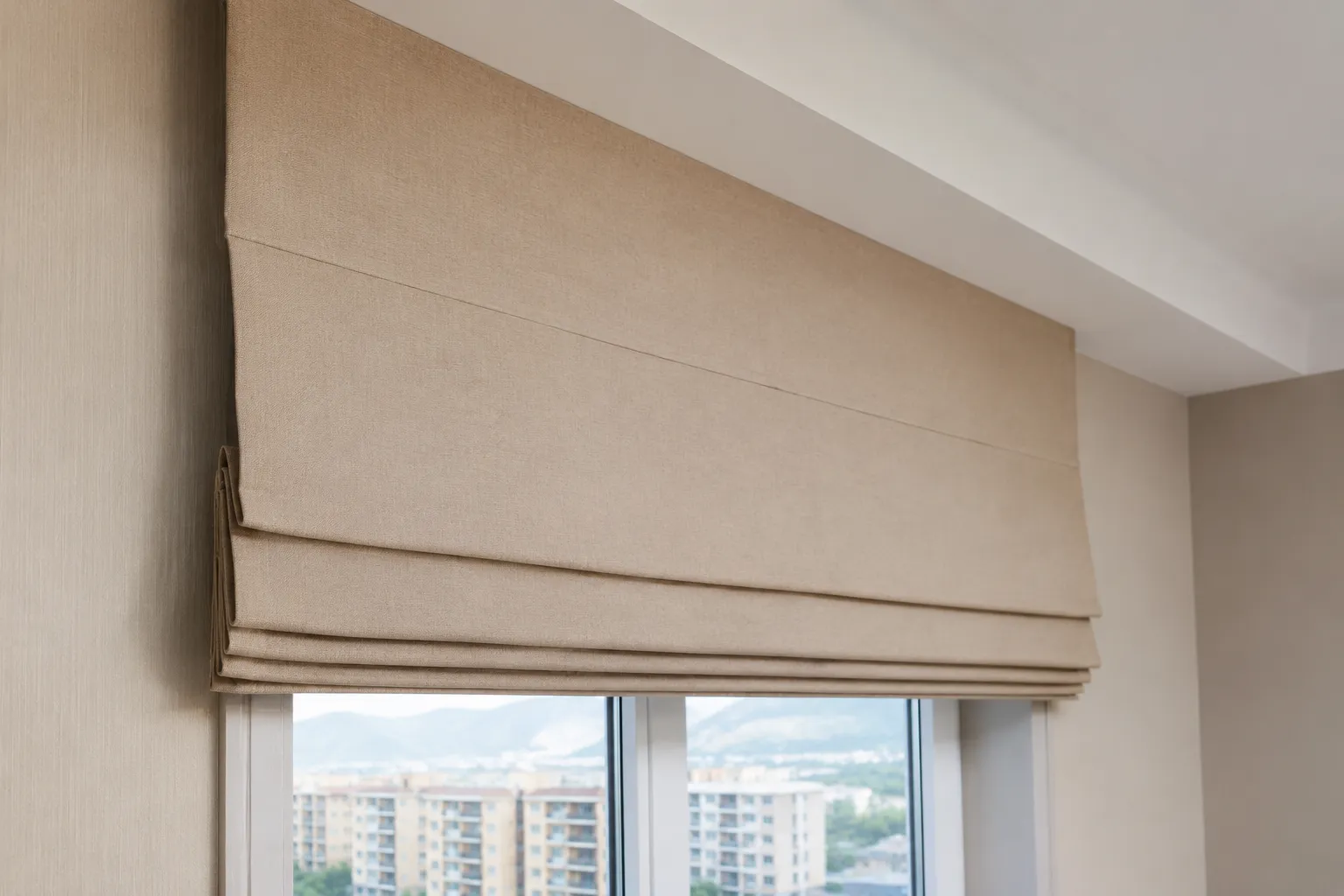
Request: Roman blinds have yellowed from the sun, there is dust.
Done: Cleaned roman blinds with delicate impregnation, restored color.
Cost: 5 000 ₸
Master: Gulmira Kassymova, dry cleaning master
Total: Blinds regained their original shade, fabric is fresh.
 After
After
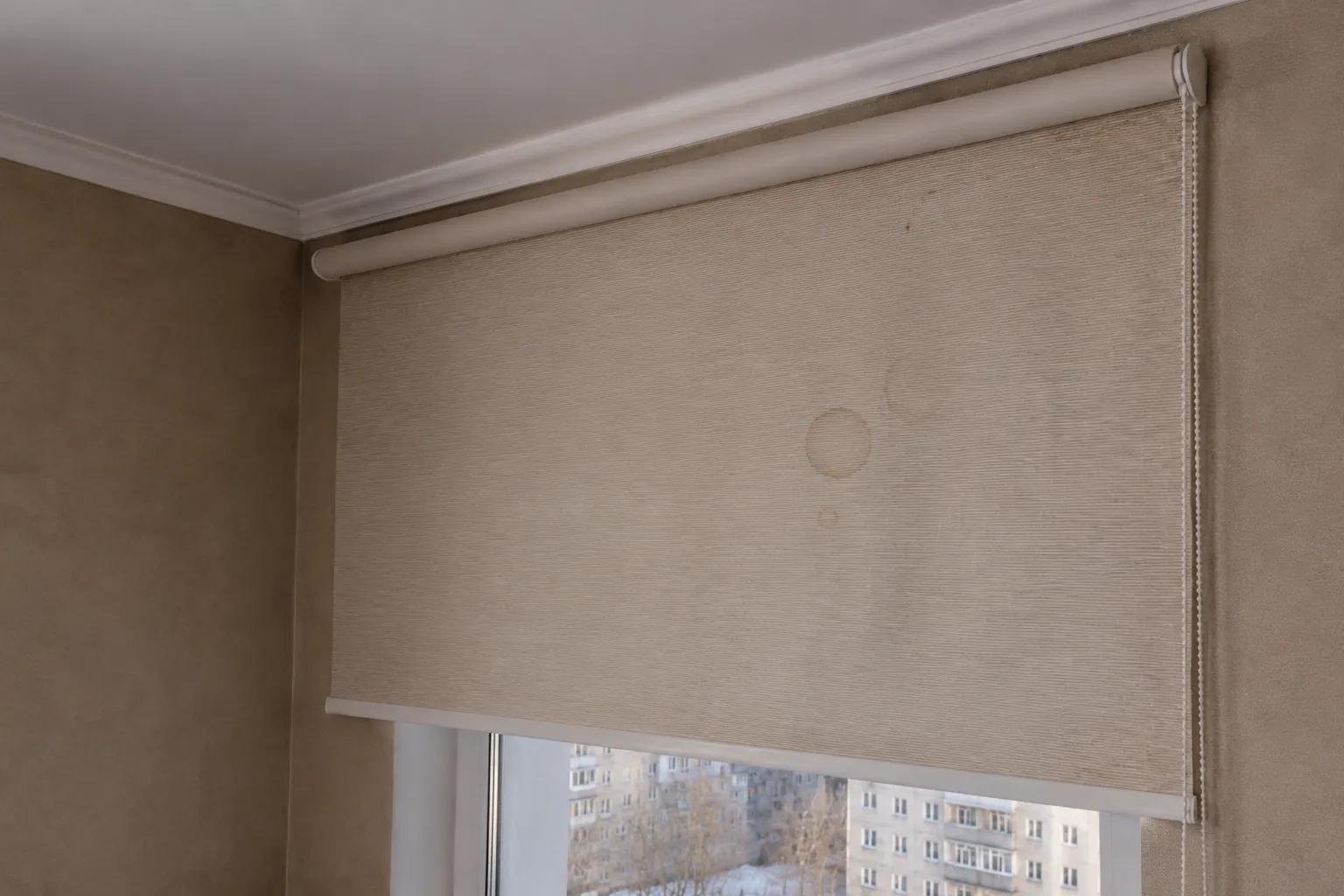
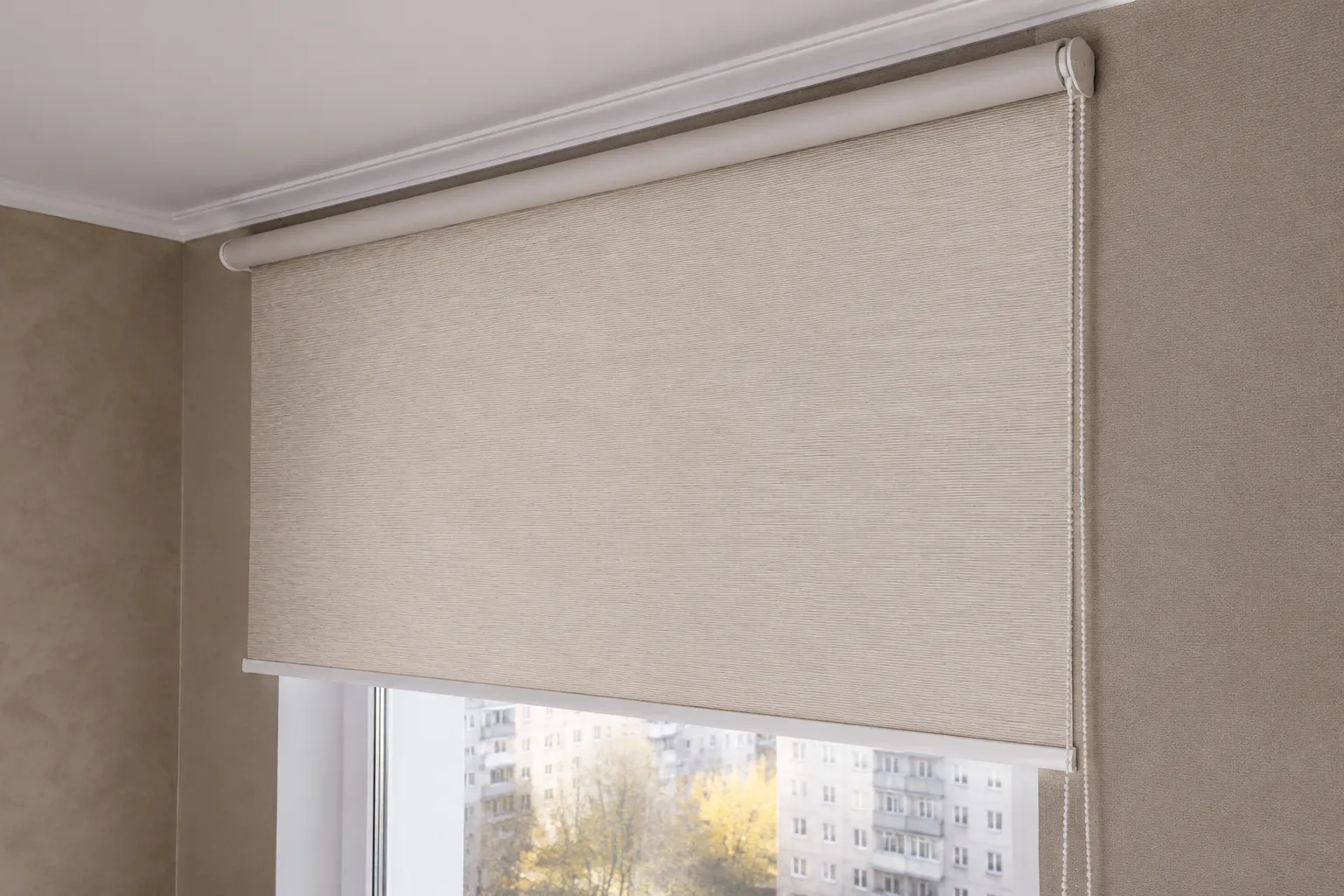
Request: Roller blinds have water stains and dust.
Done: Removed stains from roller blinds, applied anti-static.
Cost: 5 000 ₸
Master: Daniyar Yermekov, dry cleaning master
Total: Blinds are clean, no streaks, mechanism works perfectly.
 After
After
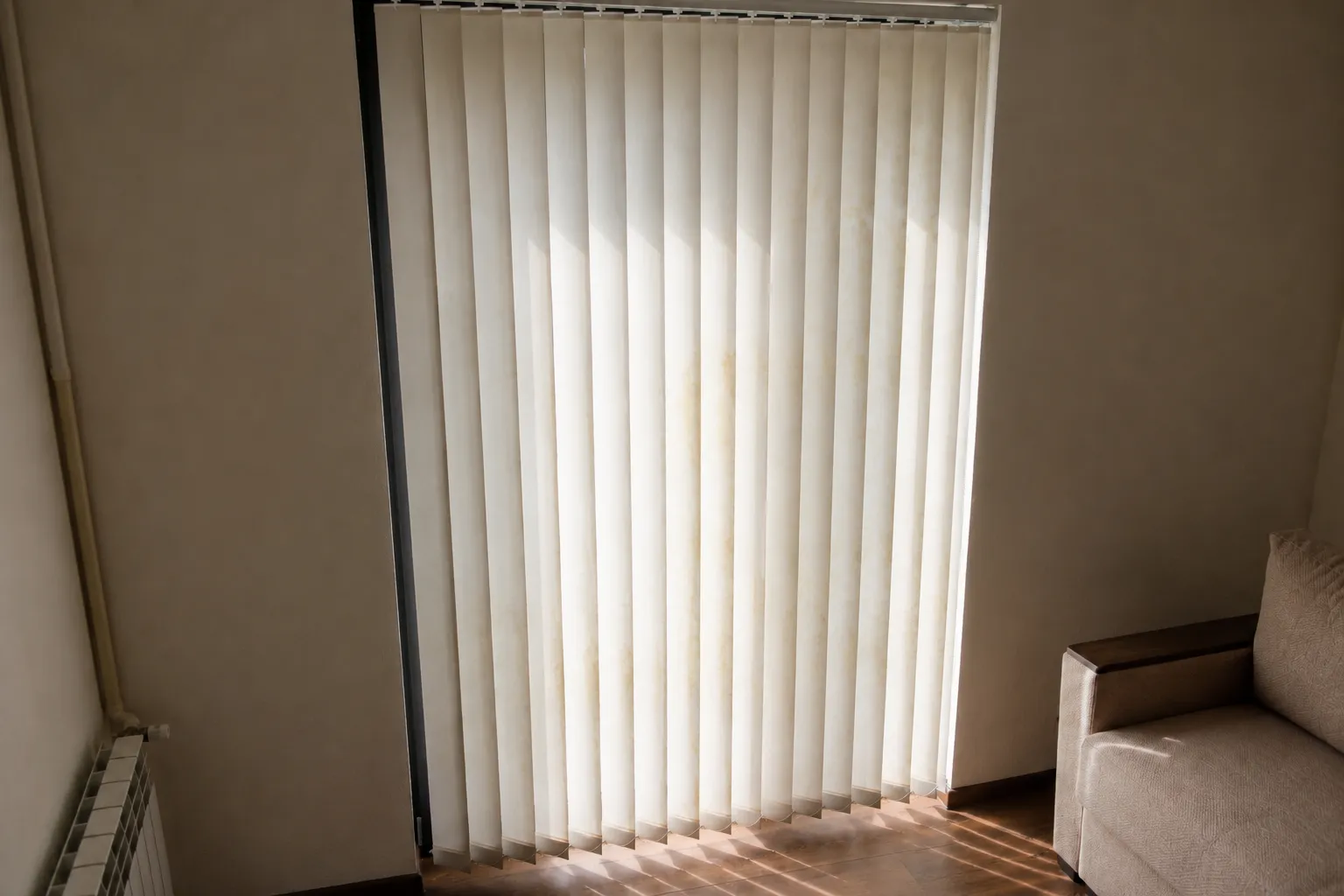
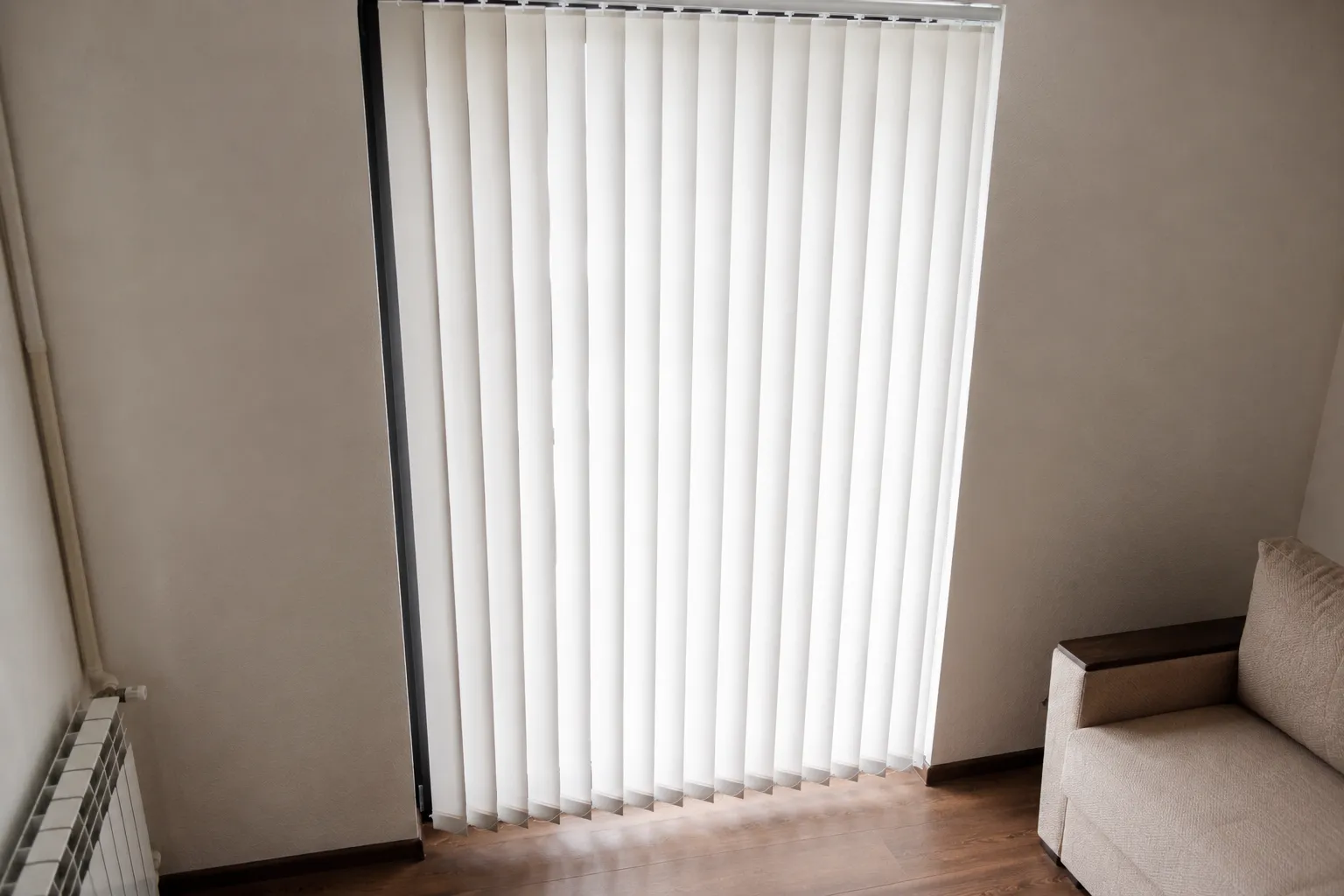
Request: Vertical blinds have become dusty, there are yellow stains.
Done: Cleaned each slat with disinfection, removed yellowing.
Cost: 5 000 ₸
Master: Aizhan Muratova, dry cleaning master
Total: Blinds are snow-white, slats are straight, no deformations.
 After
After
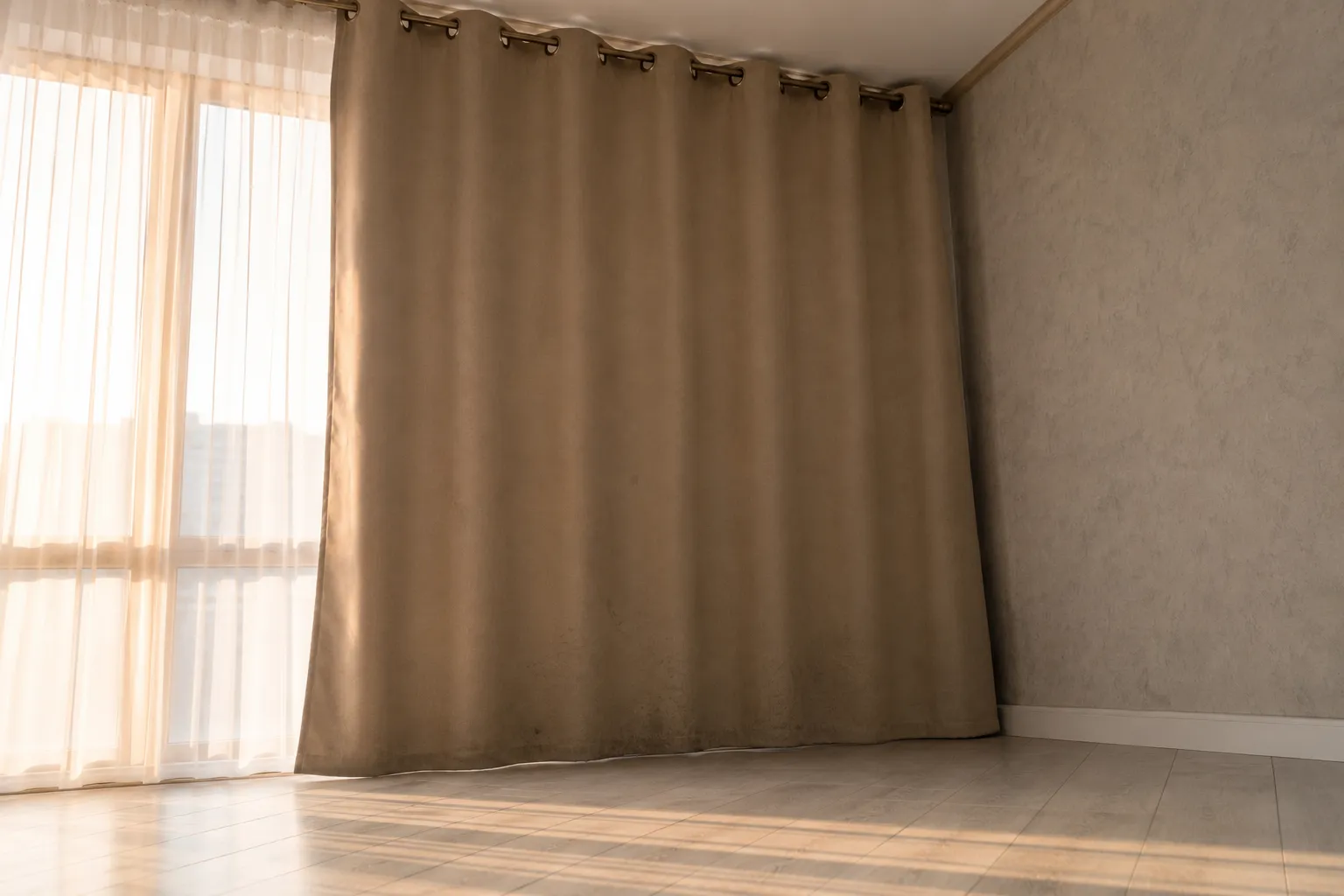
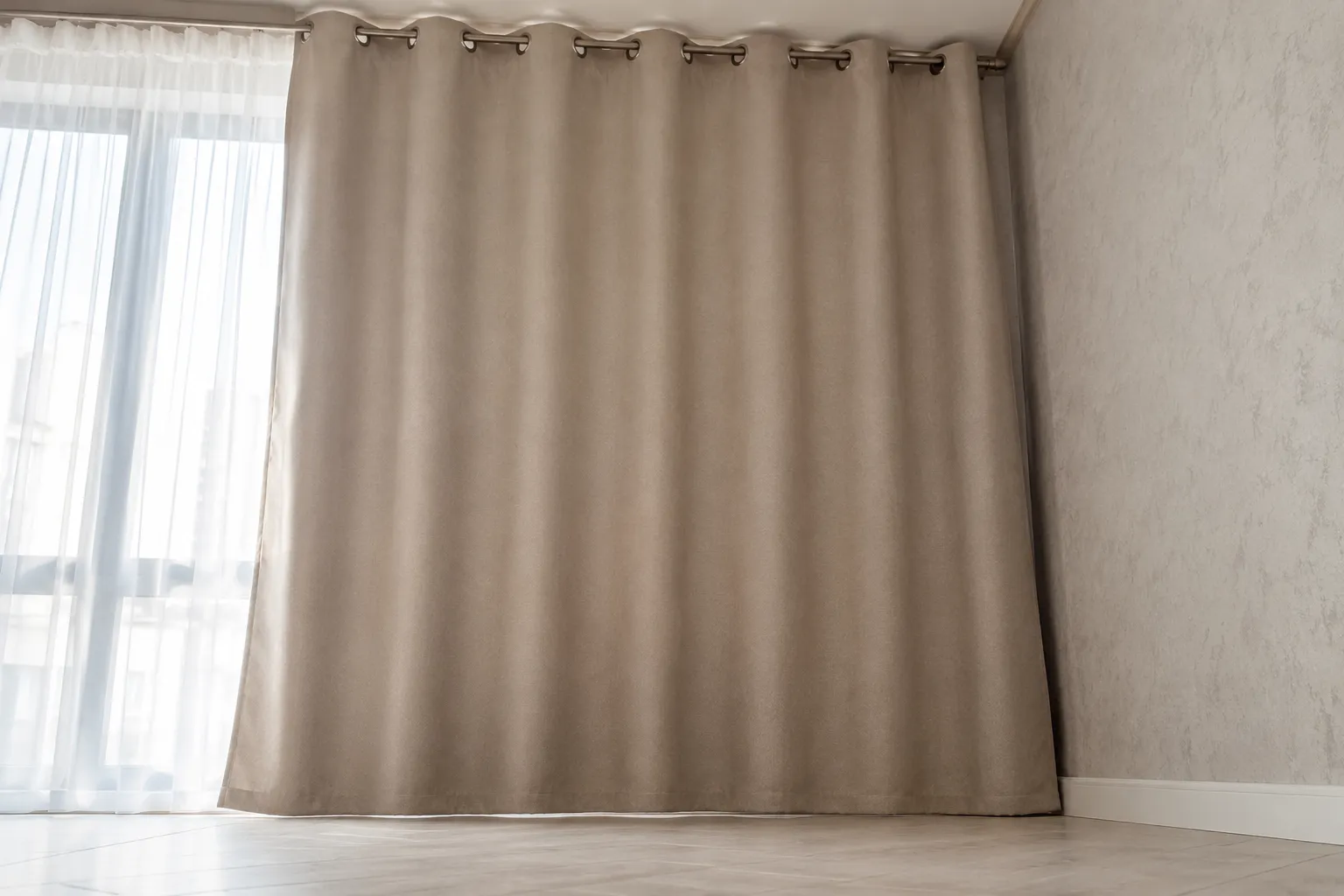
Request: Grommet curtains have turned gray, stains near the bottom.
Done: Performed dry cleaning of curtains with grommet reinforcement and whitening.
Cost: 5 000 ₸
Master: Timur Zhaksybekov, dry cleaning master
Total: Curtains are bright, grommets intact, fabric stain-free.
 After
After
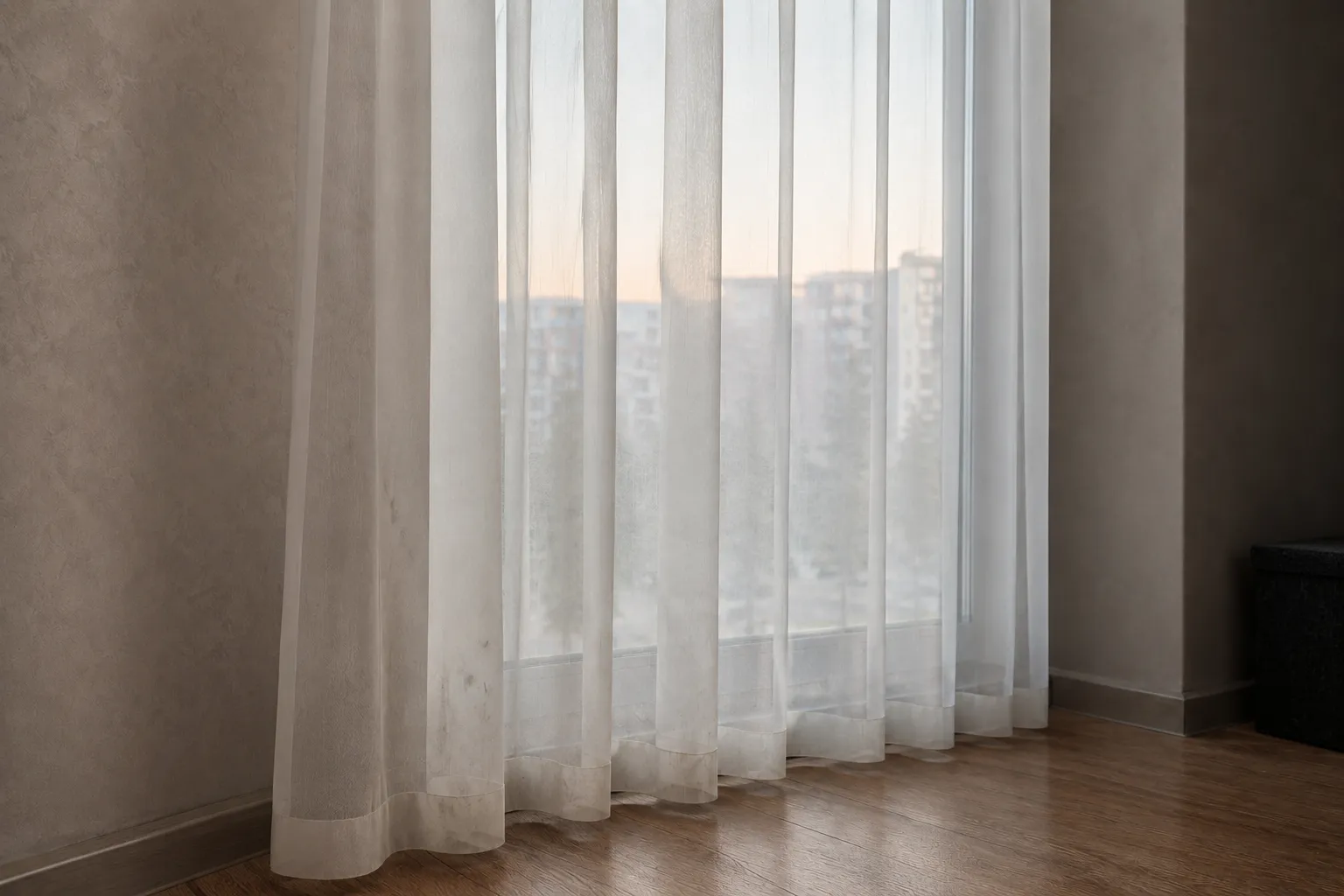
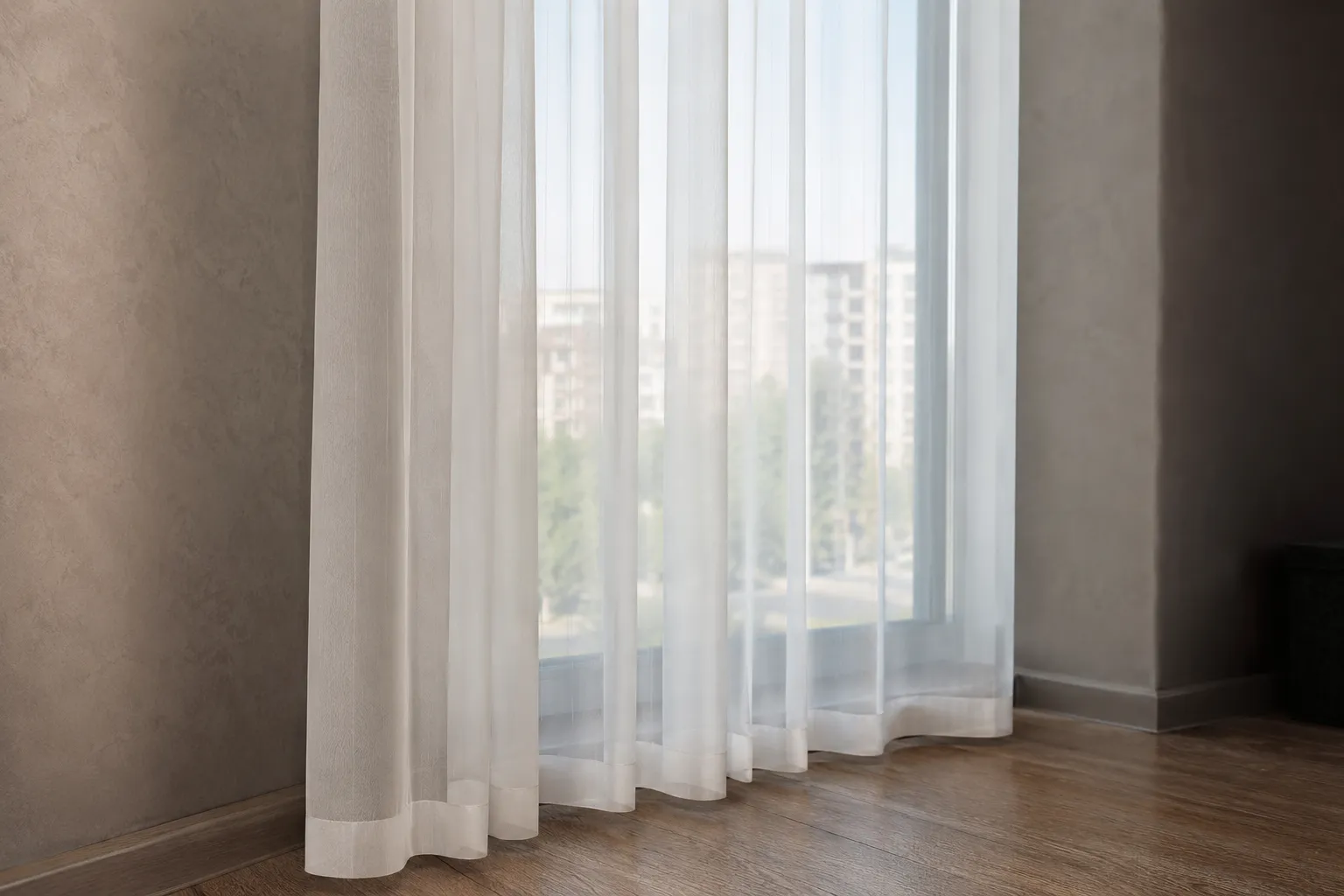
Request: Sheer curtains lost transparency, have a coating.
Done: Gently washed the sheer fabric, restored transparency and softness.
Cost: 5 000 ₸
Master: Aigul Serikova, dry cleaning master
Total: Curtains are transparent and airy again, odor-free.
 After
After
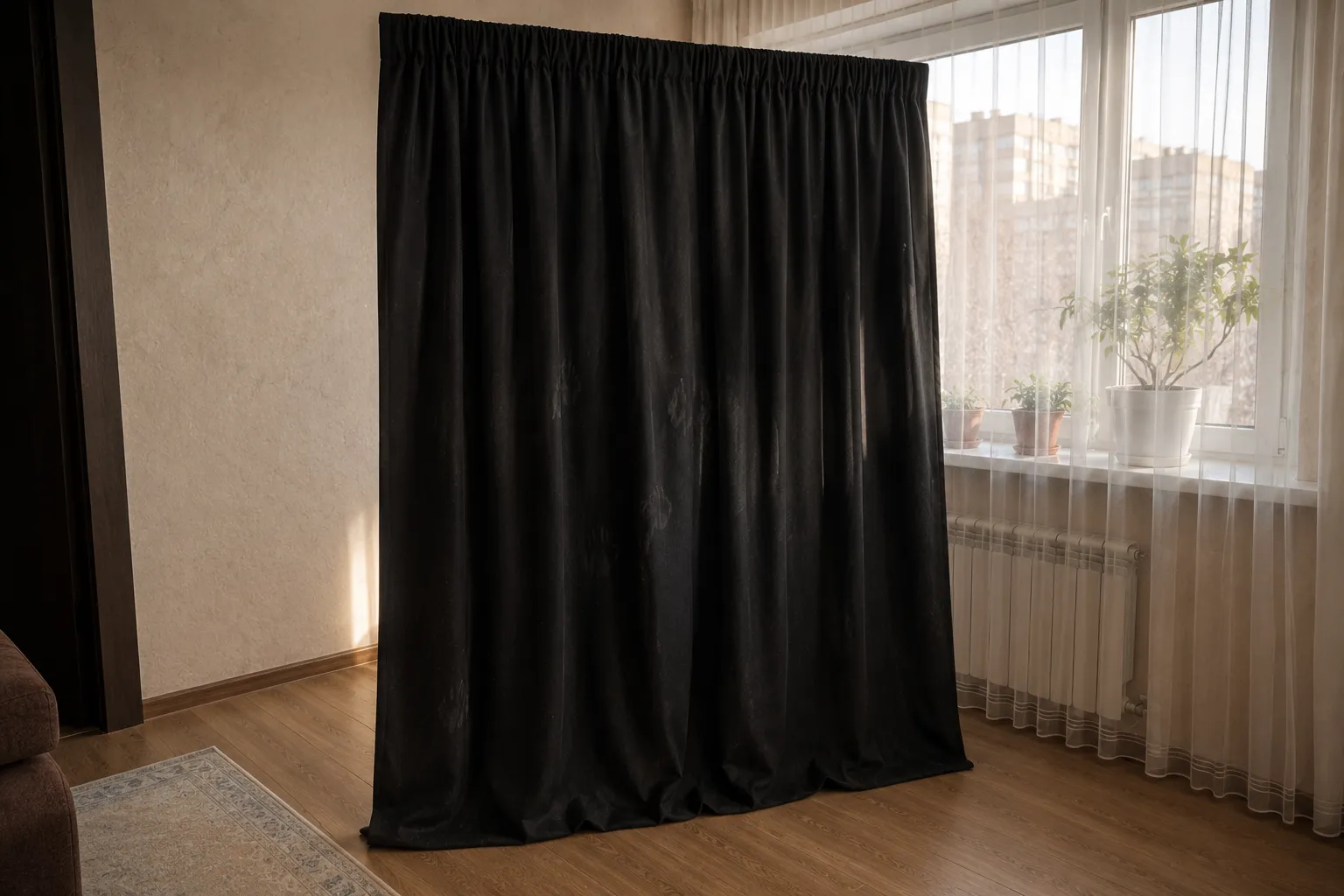
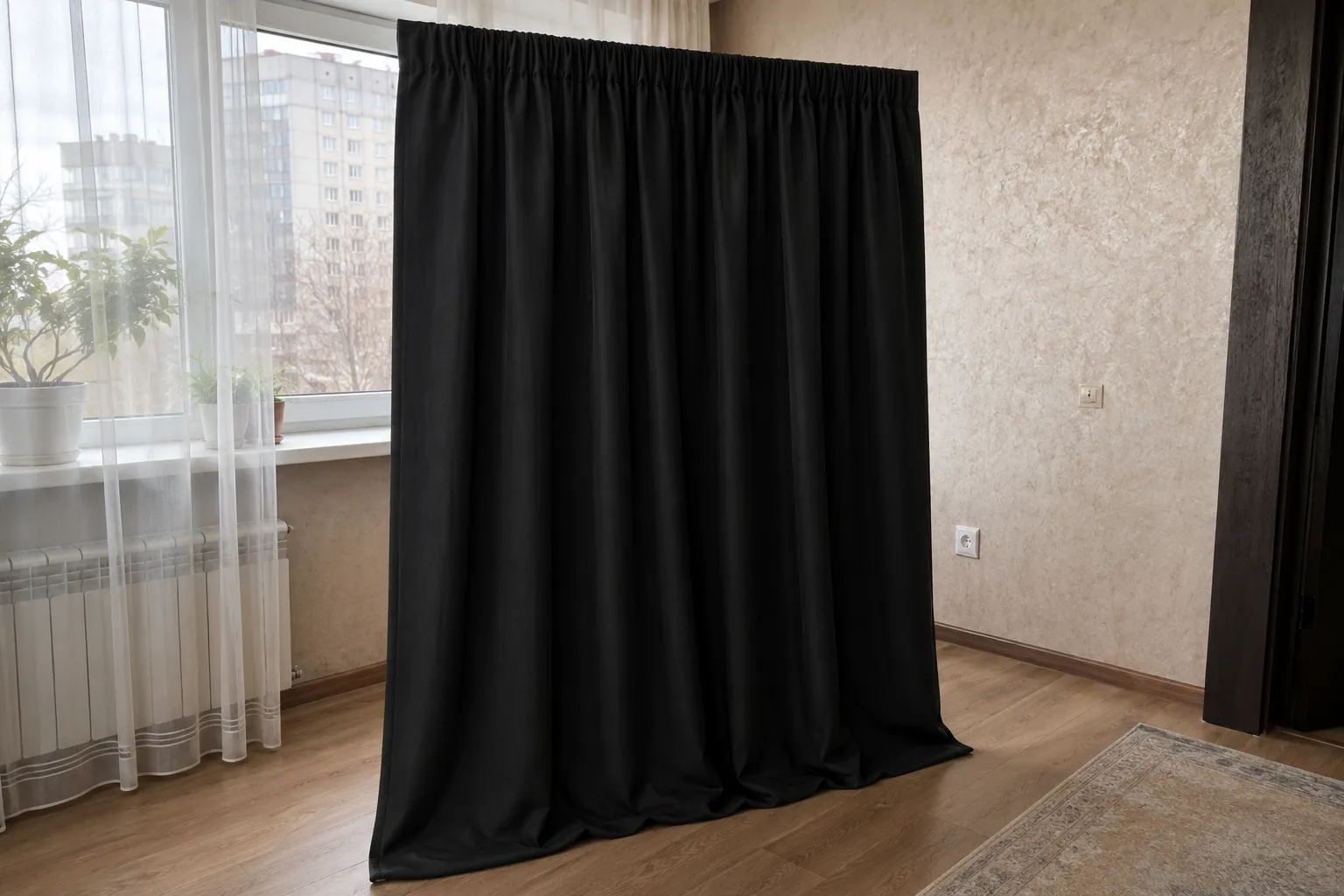
Request: Blackout curtains have collected dust, have handprints.
Done: Cleaned blackout curtains while preserving light-blocking properties.
Cost: 5 000 ₸
Master: Nurzhan Alimbayev, dry cleaning master
Total: Curtains completely block light, fabric clean and fresh.
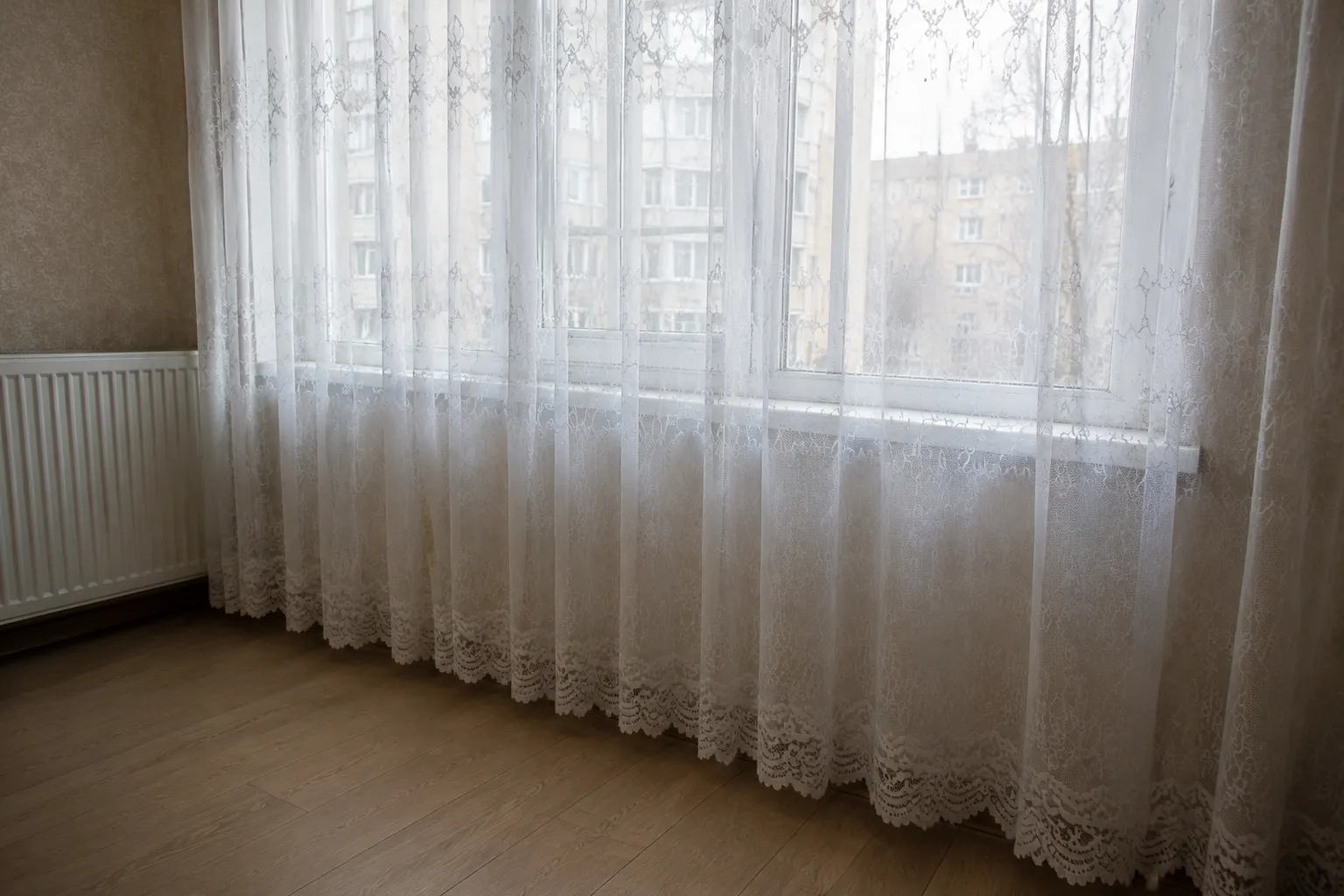
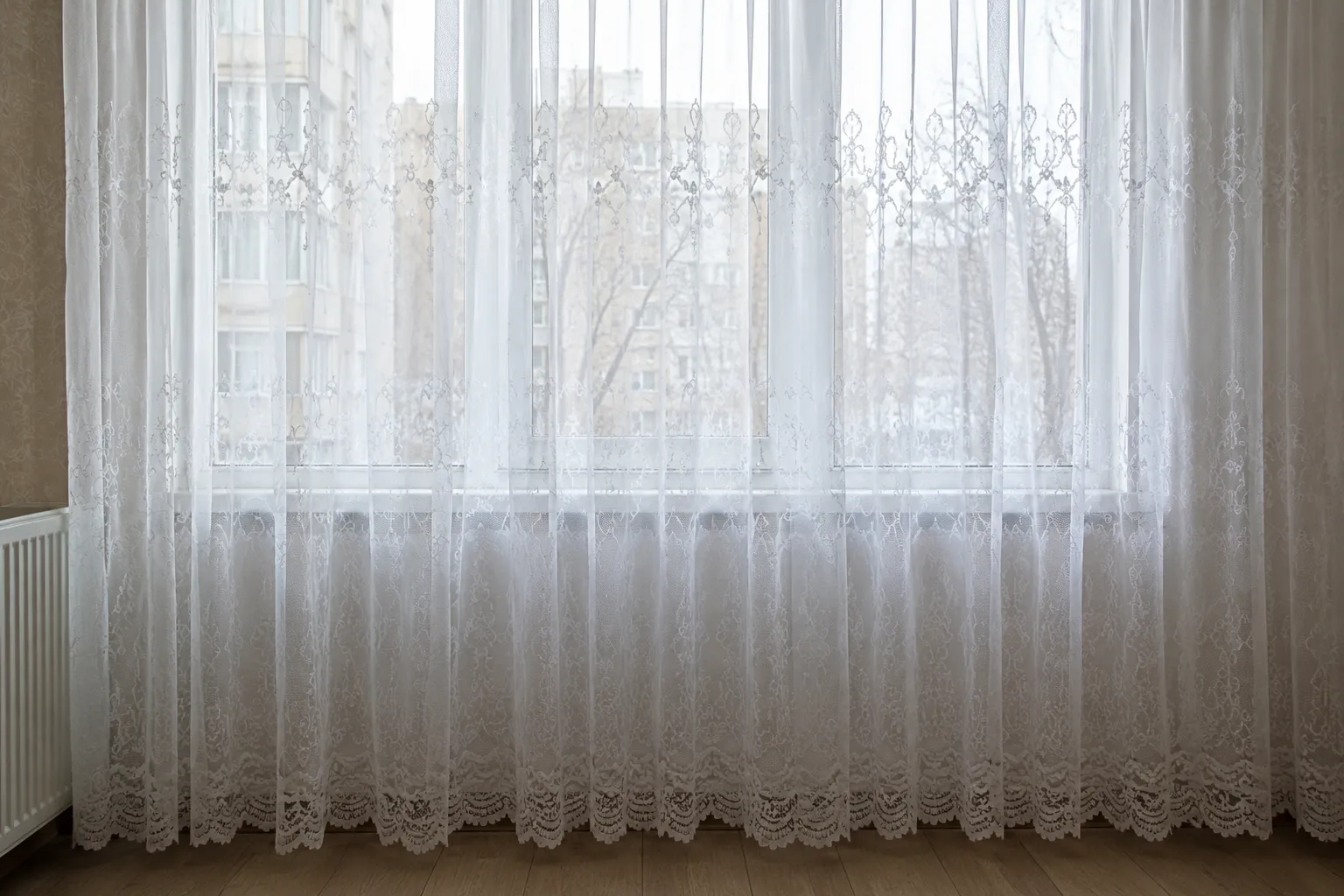 After
After
Request: Lace curtains have yellowed, lace clogged with dust.
Done: Hand dry cleaning of lace with whitening and pattern fixation.
Cost: 5 000 ₸
Master: Gulmira Kassymova, dry cleaning master
Total: Lace is snow-white, pattern clear, fabric soft.
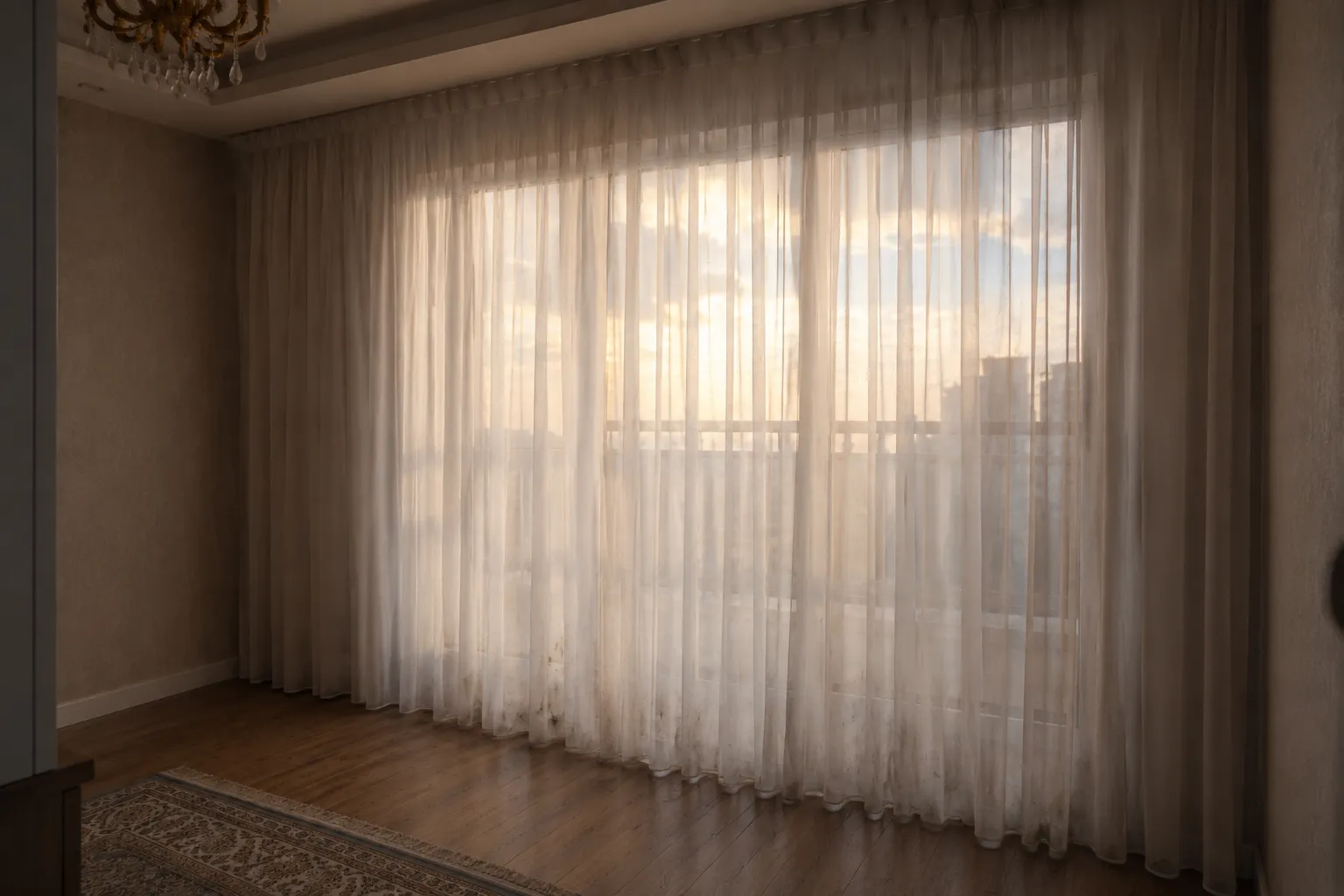
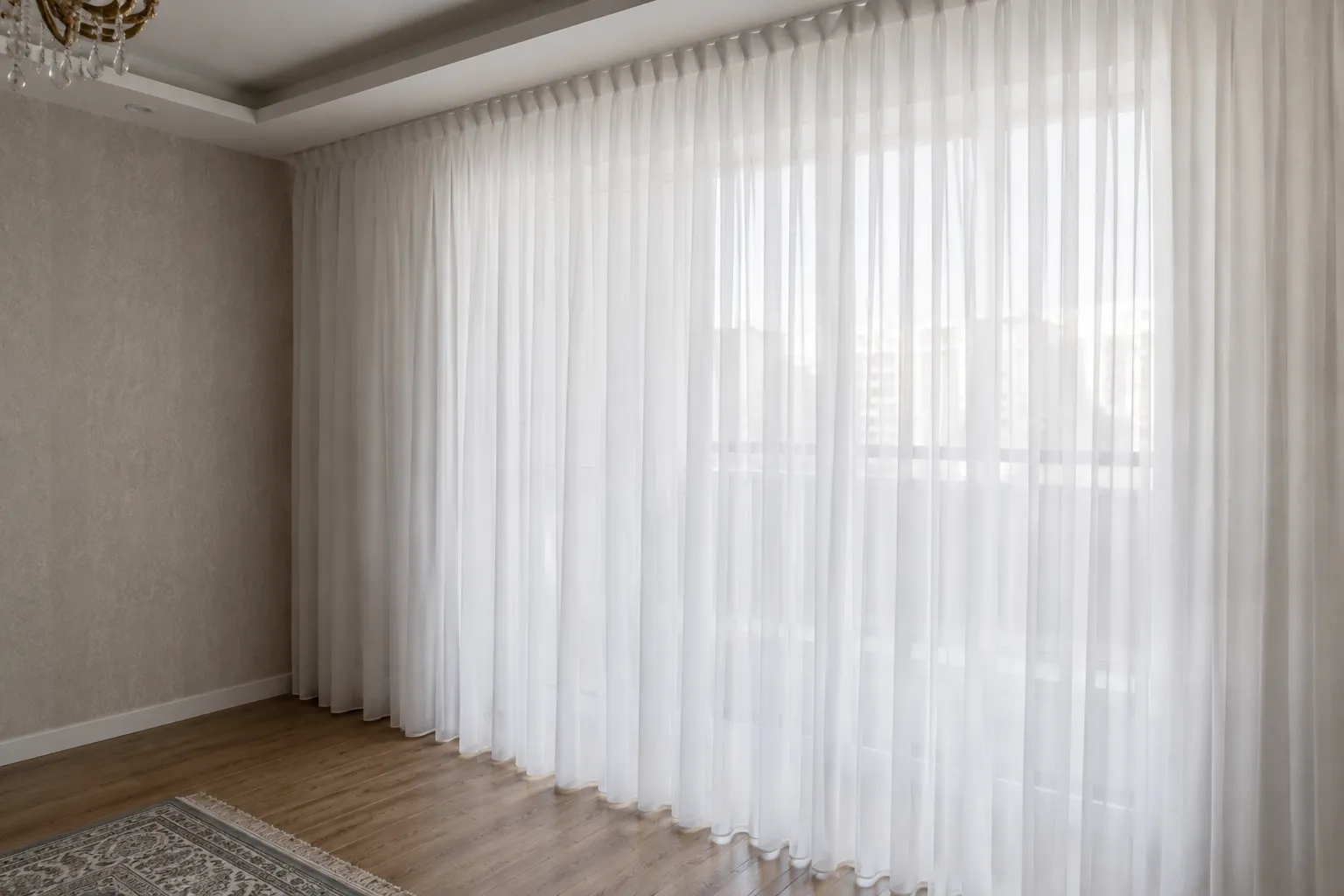 After
After
Request: Silk curtains lost their luster, have stains near the window.
Done: Delicate dry cleaning of silk with restoration of shine and color.
Cost: 5 000 ₸
Master: Daniyar Yermekov, dry cleaning master
Total: Silk shines, no stains, fabric soft and flowing.
All cleaners are profi-clean staff with training, uniform and security check. Each order has a team leader who controls quality.
A clear understanding of stain removability is the first thing a client asks when bringing curtains to dry cleaning. At profi-clean, we work daily with dozens of types of stains on curtains of varying density and composition, and practice shows: some stains disappear without a trace, others require pre-treatment, and a third group is irreversible. Let’s break down what professional dry cleaning can truly save, what comes with caveats, and what isn’t even worth trying to remove to avoid ruining the fabric completely.
Greasy marks, coffee, red wine, sauces, and juice are the most frequent “guests” on kitchen curtains and living room drapes. profi-clean removes 95% of organic stains provided the soiling is no older than 14 days. Old greasy marks, especially on polyester and viscose, oxidize and become fixed in the fibers — after a month they move into the “with caveats” category. In our practice, there was a case: an olive oil stain on linen curtains had been there for six months — we managed to lighten it by 80%, but complete removal was not achieved. In contrast, a fresh red wine stain on cotton disappears in one cycle with an enzyme stain remover. Our advice: don’t postpone dry cleaning if grease or a staining drink gets on your curtains — with each passing day, the chance of a 100% result drops by 5-7%.
Nicotine residue, soot from candles, and yellow “age” stains are a category where curtain dry cleaning shows impressive results even on neglected fabrics. profi-clean removes yellowing and nicotine odor by 90-95% using an alkaline pre-spray and hot water extraction, regardless of the age of the deposit. Unlike grease, the resinous particles of nicotine and soot do not absorb deeply into the fiber but settle on the surface — therefore, professional Kiehl and Sodasan chemicals wash them out in 1-2 cycles. A peculiarity of Almaty: in homes with stove heating (micro-districts of the Alatau district), soot mixes with dust and forms a sticky gray layer — this requires double treatment, but the result is consistently high. Moreover, on synthetics (polyester, nylon), yellow deposits disappear faster than on natural silk — which requires a delicate mode to avoid damaging the fibroin.
Pen ink, markers, watercolors, and acrylic paints are the most unpredictable stains. profi-clean removes water-soluble ink and alcohol-based markers in 70% of cases, and oil paint and permanent markers only if the stain is fresh (up to 2 hours). It’s all about the composition: water-based inks dissolve with alcohol-based stain removers, while an oil base seals the fibers with a film that even organic solvents cannot tackle without the risk of discoloring the fabric. We had a case in October: a child drew on white mixed-fabric drapes with acrylic — the stains dried within an hour and resisted all treatment; the fabric had to be repainted. For alcohol-based markers, cold treatment with isopropanol works: it pulls out the pigment without blurring. Our recommendation: if paint gets on the curtains, immediately blot the stain with a dry napkin (do not rub!) and call us — within an hour or two, the chance of saving the curtains is significantly higher.
Mold on curtains is a problem in bathrooms and kitchens with poor ventilation, especially in older homes (Khrushchev-era buildings in the Bostandyk and Medeu districts). profi-clean removes black mold from cotton and synthetics by 95-98%, but if the mycelium has grown into the fabric, microscopic pores remain, visible under ultraviolet light. The mechanics: mold spores live on the surface, while hyphae (fungal threads) penetrate the fibers to a depth of up to 0.5 mm. Professional treatment with oxygen bleach and an antimycotic spray kills the spores and bleaches the traces, but on porous fabrics (linen, cotton), a structural defect remains — the fabric becomes thinner in that spot and tears under tension. An important nuance for Almaty: during the rainy season (March-May), indoor humidity rises to 70-80%, and mold on curtains can return within a month after dry cleaning if the source of dampness is not eliminated. Our practical advice: before ordering dry cleaning for moldy curtains, check the ventilation — treated curtains without proper air exchange will become covered with fungus again within 2-3 weeks.
There is a category of stains that dry cleaning of curtains simply will not tackle — neither at profi-clean, nor at any other provider with any equipment. Hair dye (oxidative colorants), iodine, brilliant green, rust, and heat setting (with an iron) are irreversible: the pigment chemically reacts with the fiber and alters its structure. Hair dye contains hydrogen peroxide and ammonia — they “imprint” the color into the fabric at a molecular level, and no stain remover can break this bond without destroying the fiber itself. Iodine and brilliant green are alcohol-based dyes that leave permanent yellow-brown marks on light fabrics; bleach may lighten them to pale yellow, but cannot remove them completely. Rust is iron oxide; it embeds itself into cellulose fibers (cotton, linen) and can only be removed with acid, which dissolves the fabric. If hair dye has gotten on your curtains, the only solution is to repaint or replace the panel; dry cleaning is powerless here.
Many people think: a curtain is just fabric, why pay for dry cleaning when you have a washing machine? In reality, the difference lies in preserving the geometry, color, and the very structure of the panel. Let me show you with specific examples.
Fabric shrinkage: even on a delicate cycle (30°C, 400 rpm), natural and blended fabrics — linen, cotton, viscose — shrink by 5–12% in a single cycle. For a drape 280 cm high, that’s a loss of 14–34 cm in length. Mechanical damage: the drum vigorously twists the fibers, especially for drapes with grommets or large hardware — rings scratch the fabric and pull threads. Loss of coating: blackout and dim-out fabrics have a multi-layer structure — washing washes away the light-reflecting layer, and after 2–3 cycles, the curtain stops blocking light. Deformation of the cut: Roman, Austrian, and French curtains are sewn with fixed pleats — after machine washing, the gathering mechanism breaks, and the pleats become uneven. Color: cheap dyes (especially on dense polyester drapes) wash out upon first contact with water — you end up with faded fabric and streaks. In my opinion, risking expensive drapes to save on the cost of от 5 000 ₸ is questionable arithmetic.
At profi-clean, we use dry cleaning in perchloroethylene (automated dry cleaning) and wet treatment on a stand-mounted system with controlled humidity — both technologies eliminate mechanical twisting of the fabric. Geometry: the fabric is fixed on special frames that hold it along the perimeter — shrinkage and distortion of the cut are eliminated. Color: in perchloroethylene, the dye does not wash out (the solvent does not interact with water-soluble pigments), and dirt is removed without contact with water — even cheap polyester does not fade. Impregnations: blackout fabrics and those with a water-repellent layer (Teflon, Scotchgard) are treated without losing their properties — the solvent does not destroy the polymer film. Hardware: before loading, we remove all hooks, eyelets, and weights — they do not come into contact with chemicals and do not scratch the fabric. Pleats: Roman and French blinds, after dry cleaning, are gathered into the same pleats according to the original pattern — the master restores the drapery manually, not “as it turns out.” In our practice, there was a case: a client washed IKEA blackout curtains in a machine — after drying, the fabric lost 15% of its density and stopped darkening the bedroom; dry cleaning restored 90% of the properties, but full darkening could not be restored. Conclusion: a curtain washed in a machine loses up to 30% of its consumer properties in one cycle — dry cleaning preserves them at a level of 95–98% even after 5–7 treatments.
Not all curtains can be cleaned the same way — delicate fabrics require specific technology, otherwise the fabric will deform, shrink, or lose color. Our practice in Almaty shows that clients most often make mistakes with three groups of materials, and each dictates its own strict limitations.
Natural silk and viscose are the most capricious materials in curtain dry cleaning. They shrink by up to 10-15% when wet, so we treat them exclusively using a dry method on special racks with solvent supplied through nozzles. The solution supply temperature does not exceed 25°C — at 30°C, silk loses elasticity and becomes brittle. In our practice, there was a case where a client brought silk curtains from Turkey that had previously been washed in a machine — the fabric shrank by 12 cm in length, and it was no longer possible to restore the geometry. On silk and viscose, we never use spot stain removal with water-based agents — even a drop of water leaves an indelible ring visible when held up to the light. Before ordering dry cleaning for silk curtains, check with the master if the label has a “dry clean” symbol (P or F in a circle) — without it, we do not take on the job to avoid risking the fabric.
Pile fabrics — velvet, velour, plush, chenille — require delicate treatment due to the risk of crushing or “burning” the pile. We clean them using the “wet extraction” method with a RainJet extractor at a minimum pressure of 2 bar (compared to 4-5 for regular fabrics) to avoid damaging the pile structure. The water temperature is strictly 30-35°C — above 40°C, the pile of cotton-based velvet begins to detach from the base, and the curtain loses its appearance. For synthetic-based velour, we add an antistatic agent — without it, the pile becomes electrified and collects dust within a week after cleaning. In Almaty, where winter air humidity drops to 25-30%, velvet curtains in living rooms are especially vulnerable to static, and our recommendation is to treat them with an antistatic agent every 3-4 months after dry cleaning. If there are creases from the curtain rod on the velvet, we steam them with a Polti Vaporetto steam generator from a distance of 15 cm, but only before cleaning — after cleaning, steam sets dirt into the fibers.
Natural linen and cotton are durable but can shrink by 5-7% if dried incorrectly. The main issue is water-repellent coatings (Teflon, Scotchgard) applied to modern curtains: they break down upon contact with perchloroethylene-based solvents, causing the fabric to lose its dust and moisture protection. We check for coating using a drop test on an inconspicuous area (hem seam) — if water beads up, we use only water-based cleaning with a neutral pH of 6.5-7.5 and a final application of fresh Sprayway coating. For linen curtains in Almaty apartments with south- or southwest-facing windows, we reduce drying time to 40-50 minutes in a drying chamber at 40°C — linen dried slowly at room temperature fades in sunlight within 3-4 months due to residual moisture in the fibers. For cotton curtains with embroidery, we do not use mechanical spinning — the embroidery threads lose their shape and begin to fray, so these curtains are dried only in a horizontal position on mesh racks.
The frequency of dry cleaning curtains depends not on the calendar but on three factors: material, window location, and lifestyle in the apartment. There is no universal “once every six months” rule — for different fabrics and conditions, the interval ranges from 3 to 18 months.
For living rooms with standard heavy fabric curtains (jacquard, velvet, tapestry), the optimal interval is 10–12 months. Over a year, up to 2–3 grams of dust per square meter settles on the pile — enough to initiate micro-abrasive wear of the threads from friction against the windowsill or radiator. In bedrooms, where windows are opened less frequently, the interval can be extended to 14–16 months, but only with weekly vacuuming using a brush attachment. Tulle and voile, on the other hand, require more frequent cleaning — every 4–6 months: fine fibers accumulate greasy kitchen fumes and outdoor exhaust more quickly, which cannot be removed by vacuuming. If the home has high-pile carpets or pets, the interval is reduced by 2–3 months — fur and microfibers migrate to the curtains during ventilation.
In the kitchen, curtains come into contact with grease aerosol from the stove, condensation, and temperature fluctuations — here, dry cleaning is needed every 3–4 months, even if the fabric looks clean visually. Grease settles as an invisible layer within 2–3 weeks of active cooking, and after 6 months begins to polymerize — yellow stains appear on jacquard and linen that can no longer be removed by standard methods. For balcony doors and windows facing busy Almaty streets (Abay Avenue, Furmanov Street, Rayymbek Street), the interval is 5–6 months: exhaust fumes and road dust contain microparticles of soot that embed into the fabric structure. Our cleaners often see balcony curtains looking gray after just 3 months — this is not dirt but a coating from brake dust, which can only be removed by professional dry cleaning with pre-soaking in an alkaline solution.
In children’s rooms, especially for children under 3, dry cleaning curtains is needed every 4–5 months — during this time, not only dust but also allergens (house dust mites, mold spores from outdoor windows) accumulate on the fabric. For a child with allergic rhinitis or asthma, the interval is reduced to 3 months with mandatory use of hypoallergenic chemicals — we use Kiehl and Sodasan products, which leave no surfactant residues on the fibers. A common mistake is cleaning children’s curtains only with a steam generator: steam kills mites but does not remove their fecal particles (the main allergen), which remain in the fabric. Steam treatment must be followed by wet cleaning with extraction — this is exactly what we do at profi-clean. For families with cats or dogs, the interval is further reduced by 1–2 months: animal fur and dander become trapped between the threads of heavy curtains and cannot be shaken out by ordinary shaking.
There are four markers that appear before visual dirt: the smell of stale dust when shaken (noticeable from a distance of 30–40 cm from the fabric), a squeak of synthetic fibers when touched (accumulation of static electricity from dust), loss of draping stiffness in dense curtains (the fabric “sags” due to the weight of settled particles), and darkening of the fabric near the cornice by 1–2 shades compared to the bottom. If you notice at least one, dry cleaning should not be postponed for more than 2–3 weeks. In practice, in Almaty, curtains from kitchens are brought to us on average every 4 months, from bedrooms every 10–12 months, but balcony curtains from windows on Al-Farabi Avenue are ordered by clients every six months, and this is justified: the density of dust sediment there is 2–3 times higher than in houses near the mountains.
Washing curtains in a home machine seems like simple savings — but in reality, it destroys the fabric faster than any dirt. Let’s break down three main reasons why entrusting dry cleaning of curtains to professionals is not a whim, but a technical necessity.
After machine washing, portieres made of viscose, silk, or dense polyester almost certainly change their geometry: the fabric shrinks in length by 5–12% or stretches asymmetrically if the drum unevenly distributes moisture. At profi-clean, we see curtains daily at intake that have “lost” 10–15 cm of hem after home washing — restoring the original length is impossible without recutting. The problem is exacerbated by grommets or hooks: during spin cycles at 600–800 rpm, metal rings deform the edge of the fabric, leaving irreversible creases. In professional dry cleaning of curtains in Almaty, we dry each item on stretchers at a temperature no higher than 45°C — this fixes the original geometry without shrinkage. Before washing at home, check: if the label indicates a ban on machine washing (symbol of a crossed-out tub), the curtain is guaranteed not to survive the cycle.
Hot water above 40°C washes out pigment from most dyed fabrics — this is especially critical for curtains in deep tones (burgundy, dark blue, emerald) and printed models. In practice, this looks like spotty fading: corners and folds lose color faster than the center of the fabric, and after three or four washes, the curtain becomes two shades lighter than originally. Additionally, any machine washing removes the decorative impregnation — the dirt-repellent coating applied to portieres in the premium segment (for example, on jacquard or satin models). Our service uses hypoallergenic Kiehl chemicals with a pH-neutral composition — they remove dust and grease without affecting dye molecules. If the curtain has fringe, tassels, or glass beads, the machine tears off up to 30% of the decoration in one cycle: wash such items only using the dry method.
Washing curtains together with hooks, rings, or magnets is a typical mistake that damages both the fabric and the hardware. Plastic hooks crack during spinning, their fragments get stuck in the fibers and leave snags, while metal grommets scratch the inner wall of the drum — this is a direct path to machine imbalance and expensive repairs. The problem is common in Almaty apartments with heavy portieres on grommets 4–6 cm wide: removing and separately washing the rings takes 20–30 minutes, but most clients neglect this. In curtain dry cleaning, we remove all hardware before treatment and return it after final ironing — this eliminates mechanical damage. Tip: if you still decide to wash at home, remove all hooks and rings, fasten the grommets in a fabric bag, and set the “delicate wash” mode without spinning — but even then, the risk of shrinkage remains.
The most common cause of asymmetrical curtains after home washing is drying on a clothesline. Under their own weight, wet fabric stretches at the fold points, and after drying, the edge becomes wavy and the grommets shift to one side. The difference in length between the left and right panels can reach 3–5 cm — this is noticeable to the naked eye, especially on symmetrical drapes. We use horizontal drying racks with fixation along the side seams — the fabric dries without tension, preserving the factory geometry. If the curtains have grommets, we hang them on special spreaders that mimic a curtain rod — this keeps the rings in place. A home alternative is to dry each panel on a folded sheet on the floor, smoothing every centimeter by hand, but this takes 6–8 hours and requires a spacious room.
The only case where you can wash curtains at home is for items made of cotton or synthetics without impregnation, grommets, or decoration, with a permissive symbol on the label. For example, kitchen curtains made of polyester or cotton curtains for a summer cottage — they are cheaper to replace, and the risk of shrinkage by 3–5% is not critical. But for drapes made of viscose, silk, velvet, jacquard, as well as for any curtains with grommets or tassels — dry cleaning cost от 5 000 ₸ per item is insurance against replacing the fabric for a significant amount. The exception is if you are ready to replace curtains every six months: then machine washing is cheaper, but the total cost of ownership ends up being higher.
Ordered dry cleaning of living room curtains. They restored a fresh look, even removed tough coffee stains.
Thank you, Aigerim! Glad you are satisfied with the result.
Curtains in the bedroom became lighter and stopped smelling of dust. Great!
Blinds were cleaned well, but I had to wait a day for them to dry.
Thank you for the feedback! We will take the time note into account.
Had dry cleaning of kitchen curtains — removed greasy film, cooking smell disappeared.
After cleaning, the curtains in the nursery look like new, the child is happy.
Great! Safe products for children are our priority.
We ordered dry cleaning of curtains for the hotel rooms — everything is impeccable, guests praise it.
Stains on the blinds were removed, but one slat cracked, apparently during transportation.
We apologize for the oversight, we will replace the slat for free.
The tulle became snow-white, although I thought it couldn't be washed anymore.
We did dry cleaning of curtains at the restaurant — removed the cigarette smell, now it's fresh.
Thank you for your feedback! We work professionally with commercial properties.
The drapes did not shrink or fade after cleaning, the color is bright.
I ordered dry cleaning of curtains, but was not satisfied with the chemical smell afterwards — aired for a day.
We apologize, we use hypoallergenic products with minimal odor.
Roman shades were cleaned carefully, the mechanism was not damaged.
Along with dry cleaning of curtains, I ordered carpet cleaning — everything is top-notch.
A comprehensive approach is the best choice!
Tea stains removed, but a small crease remains on the curtain.
Ready to re-iron, please call us.
I was afraid to send photo curtains, but dry cleaning didn't damage the pattern.
The office became brighter after cleaning the blinds. Employees noticed.
Glad to help businesses!
Balcony curtains were dusty, after cleaning they look like new.
Dry cleaning for drapes went perfectly, removed yellowing from the sun.
Thank you for your trust!
Curtains became clean, but we had to wait for delivery longer than promised.
We apologize for the delay, we will improve logistics.
Did dry cleaning for theater curtains — refreshed velvet, rich color.
We work with delicate fabrics!
After a child's allergy, we cleaned the curtains — now he stopped sneezing.
Children's health is important! We use eco-friendly products.
Ordered dry cleaning for curtains in a country house — removed musty smell.
Linen curtains did not deform, became softer and more pleasant.
Linen requires a special approach, glad everything is fine!
Curtain dry cleaning done, but there are streaks on the dark fabric.
We will invite a master to redo it for free.
Voile became transparent and airy, like when purchased.
Blinds on plastic windows cleaned of dust, operate smoothly.
Ordered dry cleaning for cotton curtains — no shrinkage, even color.
Thank you! We follow the technology for cotton.
Roller blinds cleaned, but one edge slightly peeled off.
We'll fix it, contact us.
I was afraid to give silk curtains, but the result exceeded expectations.
Silk is delicate work, thank you for the feedback!
Did dry cleaning of curtains for the wedding hall — guests appreciated the cleanliness.
Cleaned the curtains before check-in, now the tenants are happy.
Useful service for landlords!
Along with dry cleaning the curtains, we cleaned the blanket — like new.
The drapes became cleaner, but the hooks on the curtain rod were bent during removal.
We will replace the hooks, we apologize.
The kindergarten ordered dry cleaning of curtains — safe and high quality.
Thank you for your trust! We use approved products.
After smoking tenants, the curtains stank, now they smell fresh.
The process usually takes 4 to 6 hours, including drying. Master's visit and rehanging take an additional 1 hour.
Yes, we use hypoallergenic Kiehl products that are safe for children and people with allergies. No harmful residues remain after cleaning.
Leave a request on the website or call us. We will come for a free assessment and calculate the cost. Convenient payment via Kaspi, Halyk.
Dry cleaning of tulle up to 3 m is charged at an individual rate per piece. For orders of 3+ pieces, a 10% discount applies.
Dry cleaning of velvet drapes up to 3 m is charged at an individual rate per piece. Stain removal is paid separately.
Yes, for orders of 3+ pieces a 10% discount is provided, for 5+ pieces — 15%.
Use the calculator on the website: select the type of curtains, quantity, and additional services. The system will automatically calculate the final price.
We clean tulle, drapes, Roman shades, roller blinds, blinds, grommet curtains, voile, French, Austrian curtains, lambrequins, and valances.
Yes, we clean Roman shades. The cost is at an individual rate per piece. We preserve the shape and folds.
Removal and rehanging are an additional service charged at an individual rate per set. If you remove them yourself, the cleaning cost is lower.
Tell us about your experience with profi-clean — it helps other clients and us improve.
We currently operate in Almaty. Other cities are coming soon.