How to Prepare Your Apartment for the Cleaners’ Arrival
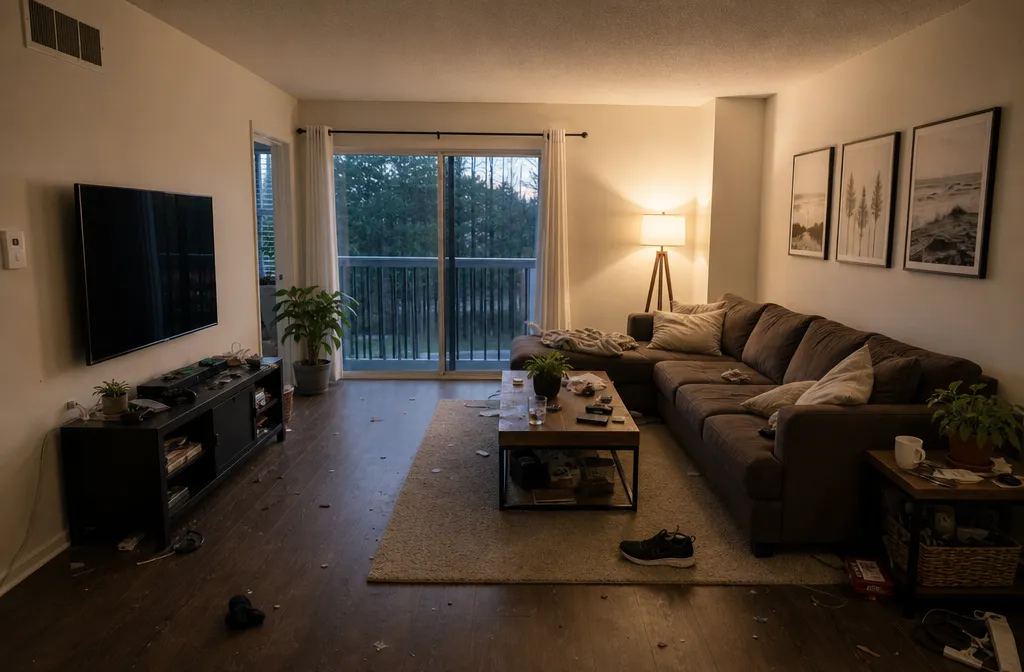
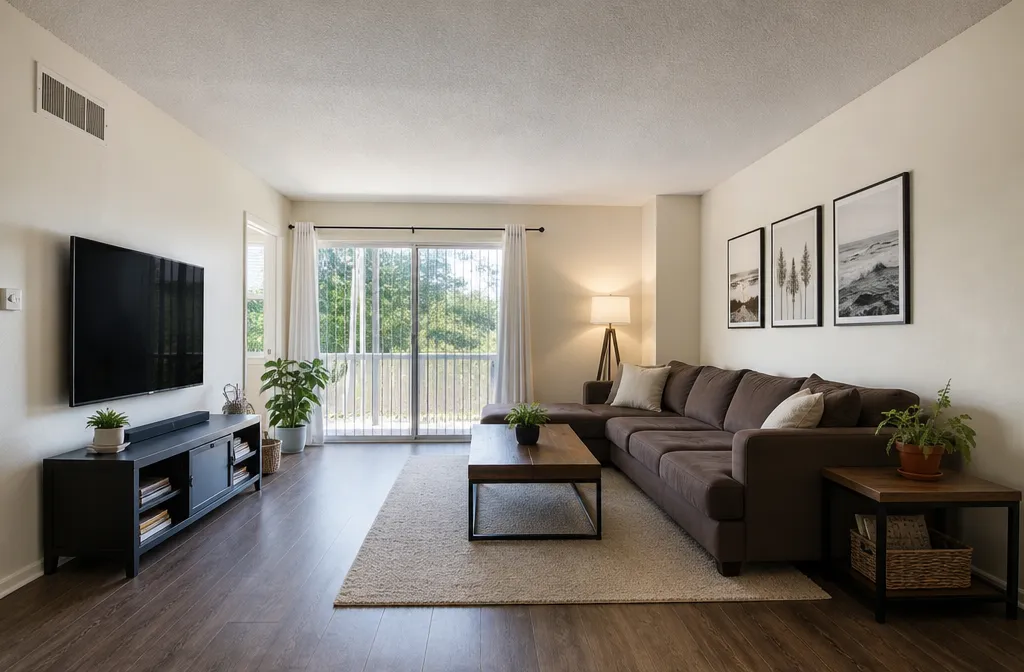
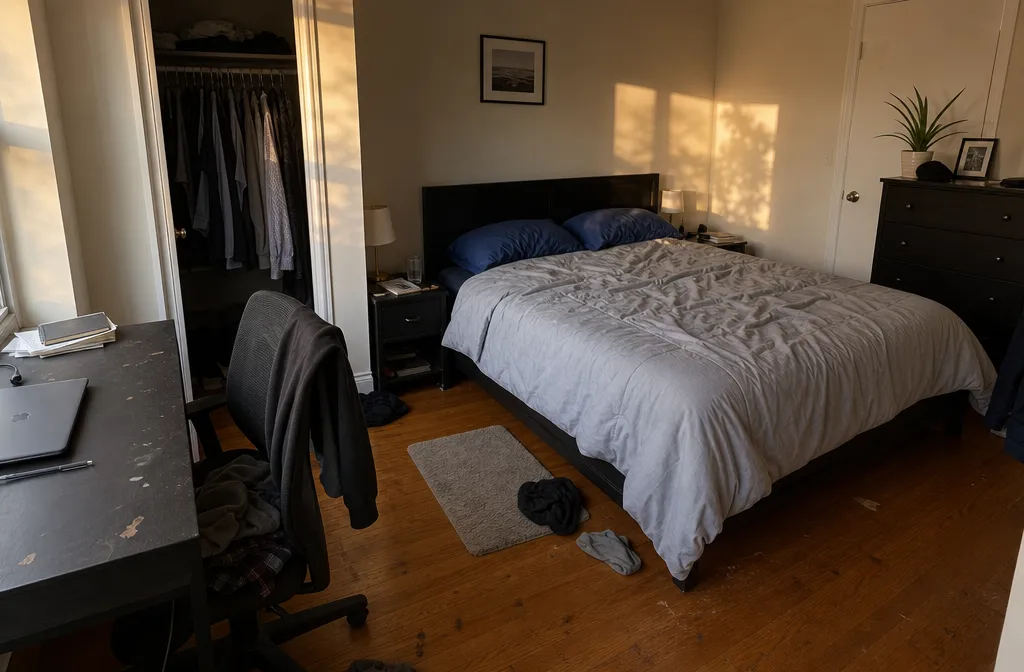
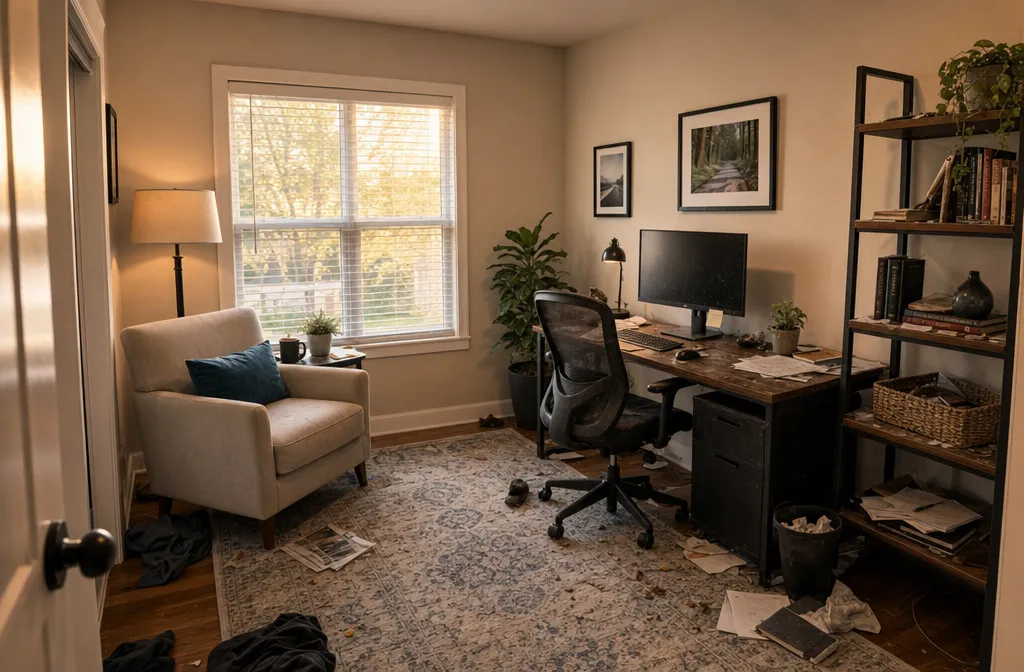
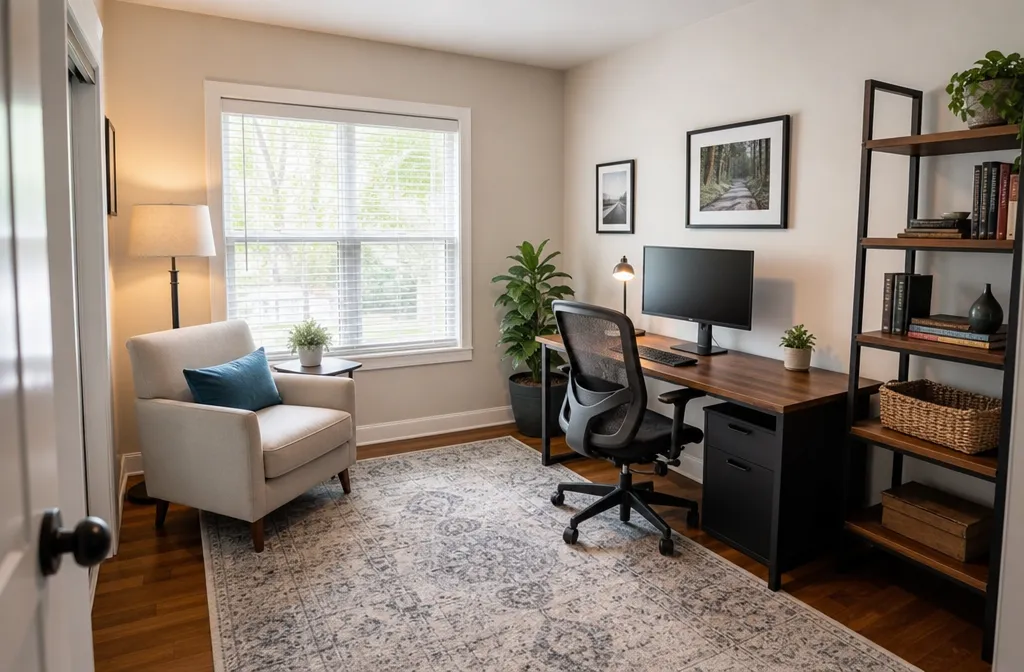
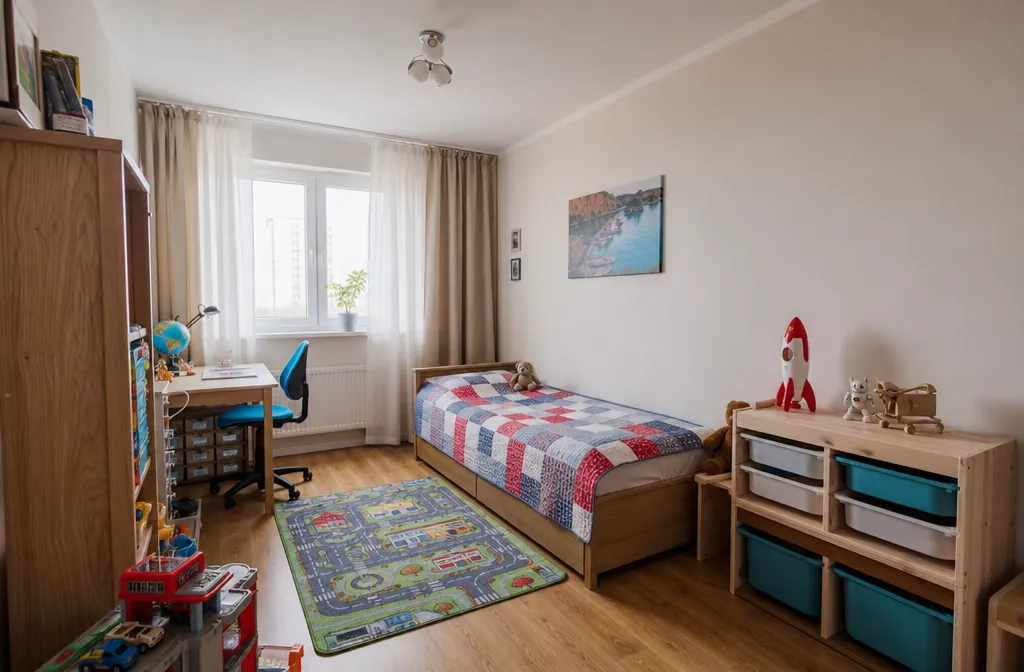
To ensure a comprehensive cleaning goes as efficiently and smoothly as possible, it’s best to prepare your apartment an hour before the team arrives. This isn’t about doing a deep clean yourself — we’re talking about simple actions that will speed up the work, protect your belongings, and save the cleaners from unnecessary risks. At profi-clean, we encounter varying degrees of clutter, and proper preparation directly impacts the speed and quality of the cleaning.
What to Remove from Open Surfaces
Small items on tables, windowsills, and nightstands are the main bottleneck in a cleaner’s work. Each figurine, photo frame, or cosmetic item has to be carefully lifted, dusted underneath, and placed back. In my experience at profi-clean, there was a case where a vanity had 40+ perfume bottles on it — moving them took 20 minutes out of the planned hour for the room. Put such items in a box or a drawer: a cleared surface allows the cleaner to work with a HEPA-filter vacuum without rearranging, and you get 15-20% more effective cleaning time for the same area.
How to Prepare Appliances and Furniture
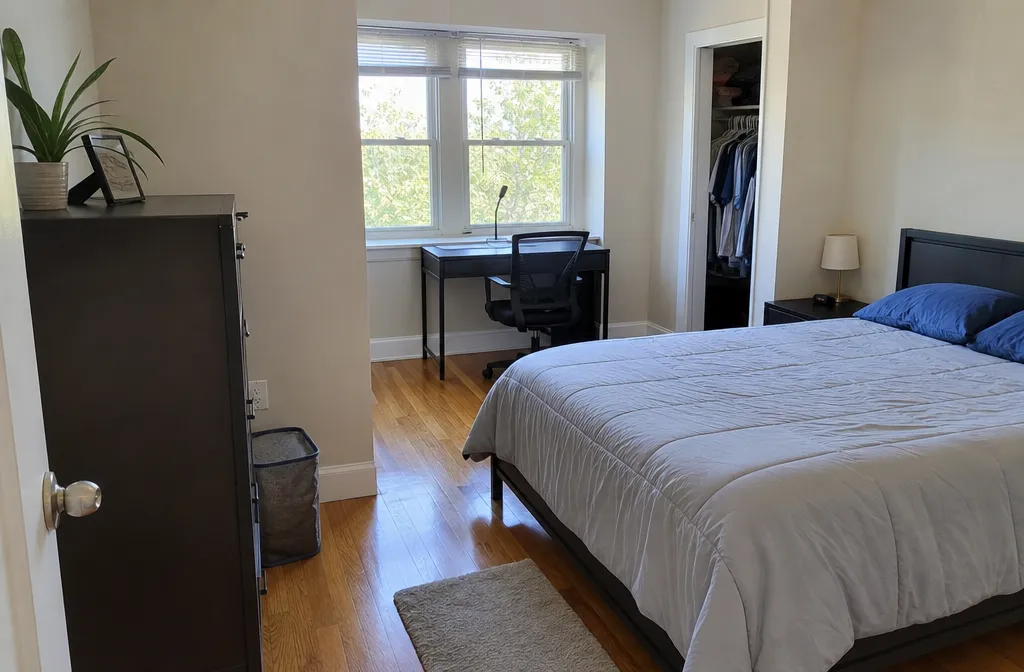
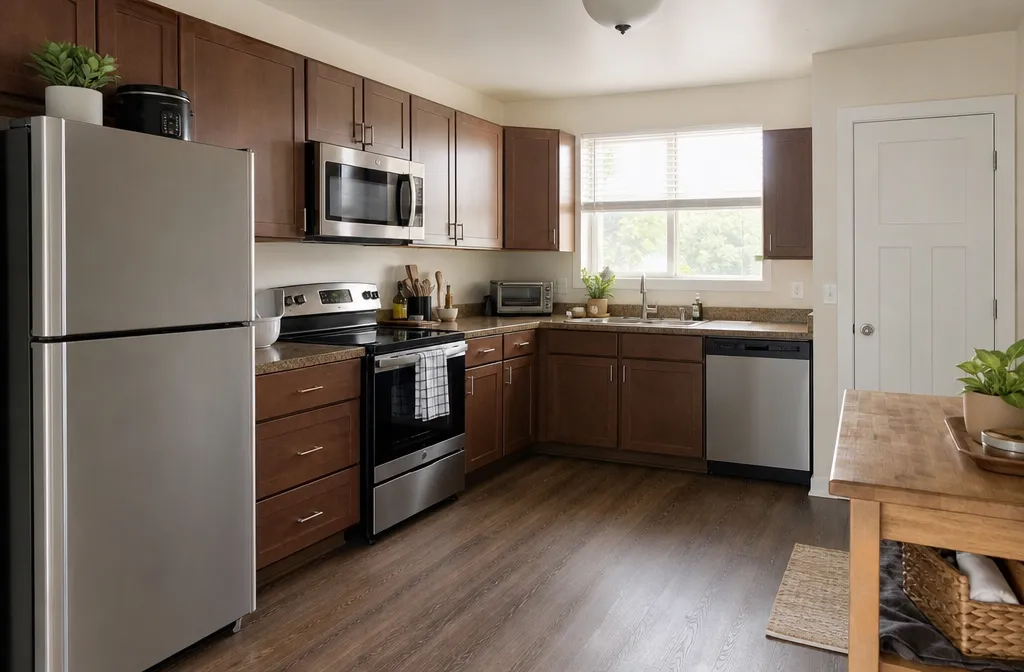
Before cleaning, the refrigerator and oven need to be unplugged and completely emptied of food and removable shelves. For ‘No Frost’ refrigerators, defrosting isn’t necessary — we unplug them for 30-40 minutes, clean the inside with a hypoallergenic Kiehl product, and plug them back in; your food goes back into a clean, dry compartment. It’s best to leave cabinets and dressers closed: we only wipe down the fronts and handles, leaving the interior shelves untouched unless you specifically request it. If there are items on the floor in your walk-in closet, hang them up: the cleaner needs access to the baseboards and corners where dust accumulates.
What NOT to Do Before Cleaning — Common Mistakes
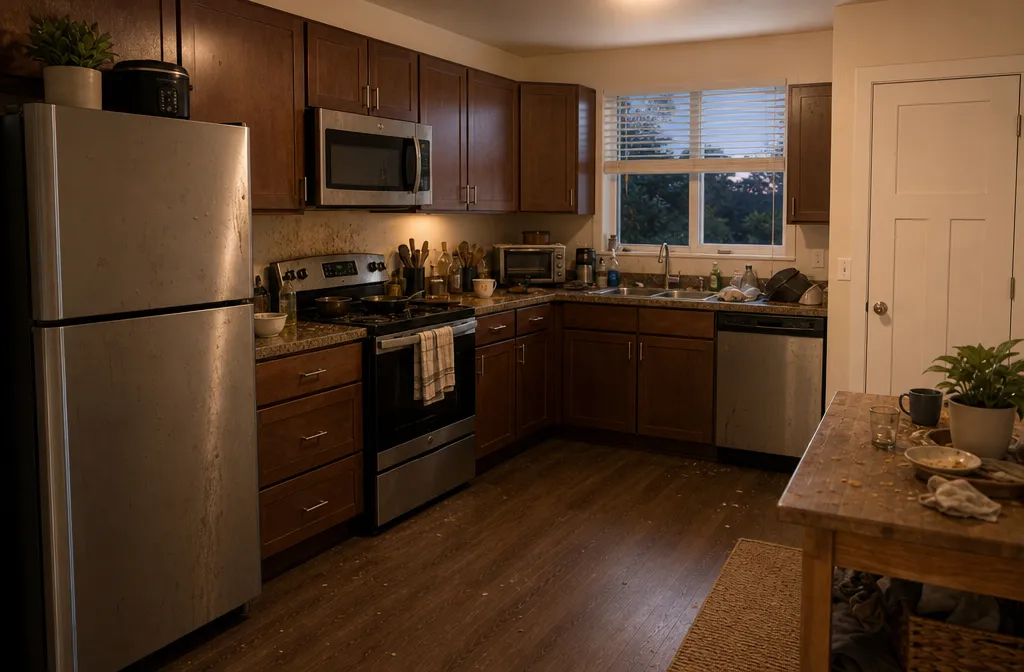
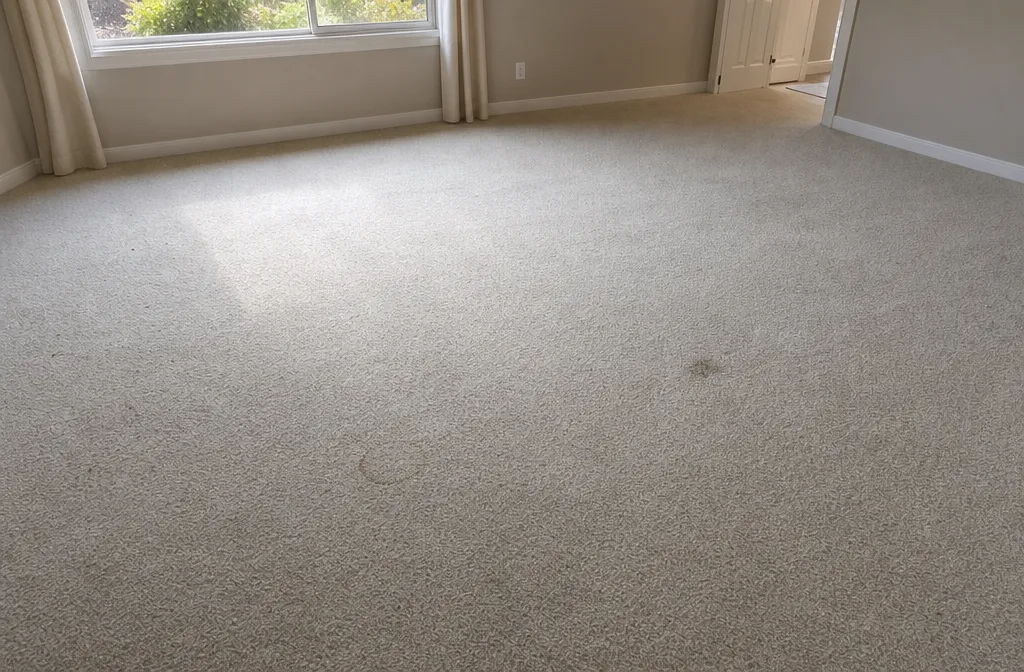
The most common mistake is trying to wash the floors yourself an hour before the team arrives. Wet cleaning before a professional wash just spreads dirt around and leaves chemical residue on the surface: our Sodasan and Kiehl products are designed to work on a clean surface, not on a layer of household detergent. The second mistake is leaving carpets wet after a home cleaning: the cleaner won’t be able to vacuum them with a HEPA filter or treat them with an enzymatic shampoo while they’re damp — it would require an extra day for drying. The third is hiding valuables in the bedding or under the mattress: the profi-clean team makes the beds and changes the linens, so small items risk getting lost. The best approach is to gather all valuables in one drawer and inform the cleaner at the start.
How to Ensure Safety for Cleaners and Your Property
Fragile items — glass vases, porcelain figurines, crystal glasses — are best stored in a closed cabinet or on high shelves where the cleaner can’t reach them without a stepladder. In Almaty, due to seismic activity, many people keep dishes in open sideboards: the vibration from a vacuum cleaner or a damp cloth can shift unstable items. Pets are another important consideration: cats and dogs are often frightened by the noise of a professional vacuum (up to 70 dB) and run to the furthest rooms. Confine your pets to a separate room or warn the cleaner — we use a quiet mode for floor attachments, but an animal’s reaction is unpredictable. Our 24-hour satisfaction guarantee applies to the quality of the cleaning, not to the safety of items that could be damaged due to careless placement.
How Comprehensive Cleaning Differs from Deep Cleaning
In practice, these two terms are often confused, although there is a fundamental difference in the depth of work, the scope of tasks, and the time required. We distinguish them based on three criteria: frequency, focus on surfaces, and the degree of intervention in hard-to-reach areas.
Comprehensive Cleaning is Regular Maintenance
Comprehensive cleaning is a scheduled procedure performed once every 1–2 weeks or monthly. Its goal is to maintain cleanliness on all open surfaces: wet mopping floors, dusting furniture, window sills, household appliances, and cleaning mirrors and plumbing fixtures. In Almaty apartments with panoramic windows, we also wipe the inside of the double-glazed windows — without removing the sashes or washing the facade. For one apartment of 60–80 m², it takes us 1.5–2 hours with a team of two cleaners. We use hypoallergenic chemicals from Kiehl and Sodasan — they are safe for children and pets, who often stay indoors during cleaning. With this schedule, Almaty dust (a mix of sand and fluff) doesn’t have time to embed into textiles, and carpets stay fresh without unscheduled dry cleaning.
Deep cleaning — thorough treatment once a season
Deep cleaning is a one-time or seasonal procedure (every 3–6 months) with complete clearing of the premises. We move furniture, wash walls and baseboards, clean heating radiators from the inside, treat the kitchen unit outside and inside (including pull-out drawers), and remove deposits from the hood and stove. In bathrooms — cleaning ventilation grilles, treating tile grout for mold with a steam generator. For an apartment of 60–80 m², deep cleaning takes 4–6 hours with the same team. The difference in labor intensity is 2–3 times, and this is not marketing: we physically treat 3–4 times more square meters of surface. In our orders from 50 m², post-renovation deep cleaning is a separate category: washing construction dust from ceilings and walls requires industrial vacuum cleaners with HEPA filters, which we use only for this type of work. Before ordering a deep cleaning, check if the company has equipment for wet wall cleaning — without it, construction dust will settle back within a day.
Safety of cleaning for children and pets
For families with children and pets, cleanliness is not just about aesthetics but also health. Let’s break down which cleaning components are safe and which pose a hidden threat.
Which household chemicals are truly hypoallergenic
We use professional concentrates from Kiehl and Sodasan — they have a zero skin and mucous membrane irritation index. Unlike cheap chlorine-based products from the supermarket, these formulas do not leave a toxic residue on surfaces and fully break down in water. We have a separate set for children’s rooms: pH-neutral products without fragrances or dyes. In practice, if a child or cat licks a washed floor, there will be no consequences — the composition is safe upon contact with saliva.
Equipment with HEPA filtration against allergens
Our vacuum cleaners are equipped with HEPA filters class H13 — they capture 99.97% of particles up to 0.3 microns in size. This means that after cleaning, no dust mites, mold spores, or pet dander remain in the air. A regular bagged vacuum cleaner blows fine dust back out — a child with asthma or allergies will start coughing within an hour. With us, the air becomes cleaner after cleaning than before, as confirmed by pulse oximeter measurements from our clients with allergic children.
Which areas in the apartment require special attention
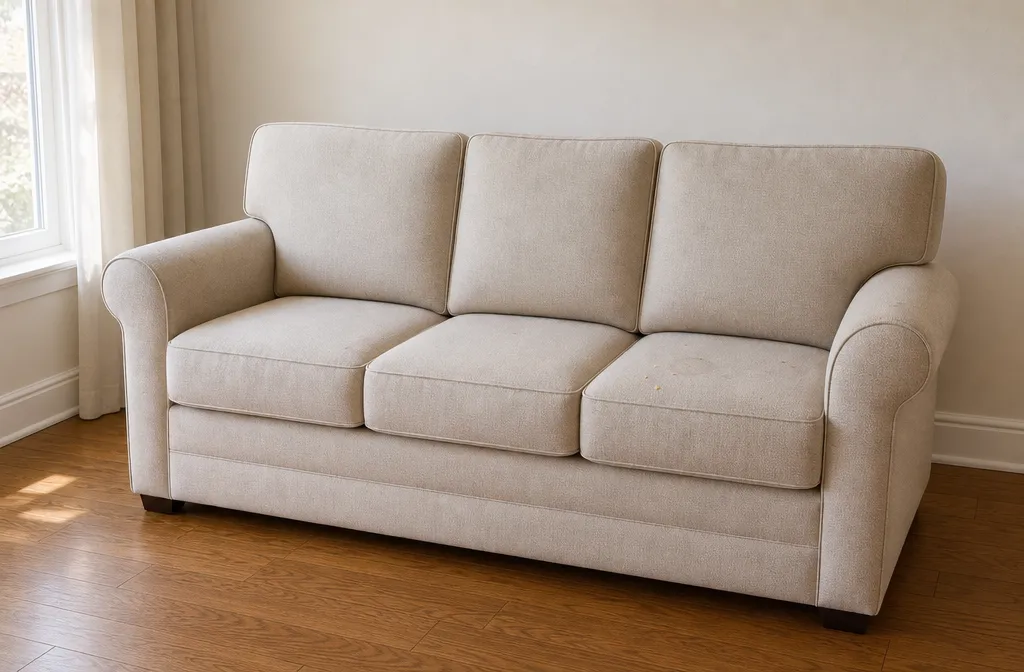
The baby crib, changing table, pet bowls, and the area under the sofa — we treat these separately from the rest of the apartment. For these locations, we use only water-based Sodasan solutions without alcohol or ammonia. Toys and scratching posts undergo dry steam cleaning at 120 °C — this kills bacteria without chemicals. Our principle: if an item a child or pet puts in their mouth, it must be sterile without a single gram of household chemicals on the surface. Therefore, before wet cleaning, we remove all small toys and bowls into a separate bag.
Why residual chemicals are more dangerous than dirt
The most common mistake in DIY cleaning is poorly rinsed cleaning concentrate. It remains on the floor and walls as a film, which when dry turns into a sticky layer for dust. A child crawls on such a floor — a cocktail of surfactants and street dirt settles on their palms and knees. Our final stage is a triple rinse of all surfaces with clean water and microfiber. This removes even traces of our own safe product, leaving the surface pH-neutral.
Features of cleaning in Almaty: water, dust, and climate
Cleaning in Almaty has its own specifics due to hard water, abundant dust in the foothills, and sharp humidity fluctuations. Our profi-clean team, with eight years of experience, has selected methods and chemicals that handle these conditions without damaging surfaces.
Hard Tap Water: Limescale on All Surfaces
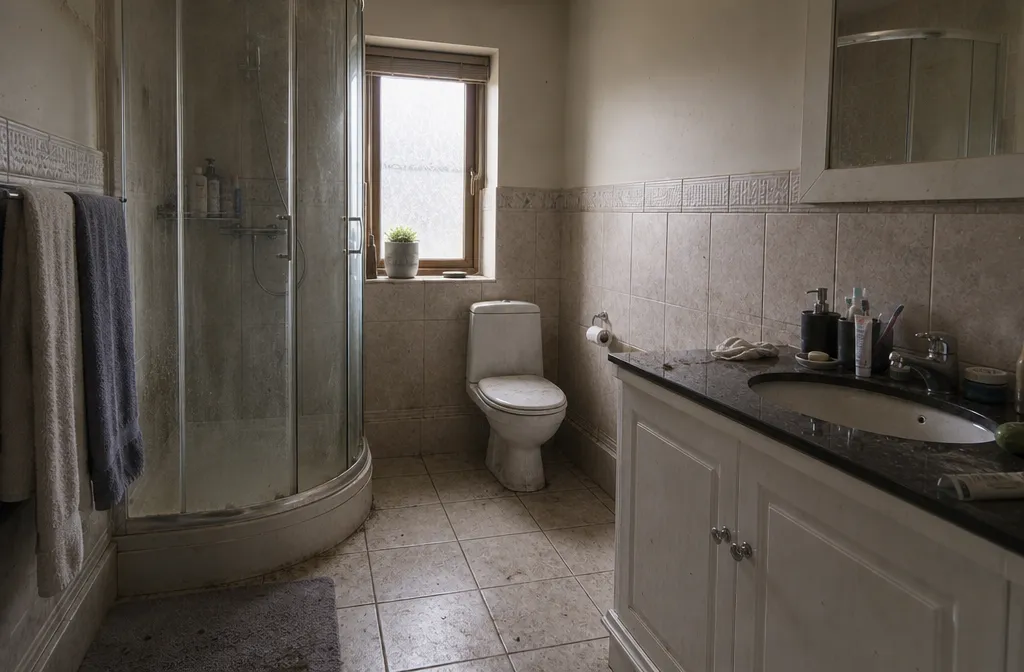
In Almaty’s water supply, the content of calcium and magnesium salts reaches 7-8 mg-eq/L — one and a half times higher than the average norm for Kazakhstan. When washing windows, mirrors, and plumbing fixtures with standard compounds, a whitish residue remains after drying, which clogs micro-cracks and, over time, becomes ingrained in porcelain stoneware. At profi-clean, we use demineralized water from our own reverse osmosis filters and pH-neutral Kiehl products — they bind hardness ions and prevent them from crystallizing on the surface. If there is already old limescale in the house, a Sodasan paste is applied before polishing the faucets — it dissolves salt deposits without abrasives in 3-5 minutes.
Foothill Dust: Sand, Fluff, and Fine Particulate Matter
The city’s geographical location at the foot of the Zailiysky Alatau creates a “dust bowl” effect — the air contains up to 40-60 µg/m³ of suspended PM10 particles, especially in May-June (poplar fluff) and August-September (dry soil). This dust doesn’t just settle on surfaces — it penetrates upholstery fabric, carpet fibers, and parquet gaps, and during wet cleaning turns into an abrasive paste that scratches laminate and polish. Our cleaners use a two-phase technology: first, dry dust collection with an industrial vacuum cleaner with a HEPA filter (captures 99.97% of particles up to 0.3 microns), then wet cleaning with microfiber, which doesn’t spread dirt but absorbs it. For windows and mirrors, we only use distilled water — otherwise, the dust leaves streaks after drying that are visible in the sunlight.
Humidity Fluctuations and Seasonal Dirt
Humidity in Almaty ranges from 25% in summer to 80% in the off-season, and this directly affects the drying time of cleaning agents and dust behavior. In spring and autumn, when the air is saturated with moisture, standard all-purpose cleaners take up to 40-50 minutes to dry, creating a sticky film that instantly attracts street dust from open windows. In winter, conversely, the dry air in apartments with central heating causes static electricity to build up on plastic and electronics — dust literally “attracts” to TV and monitor casings. At profi-clean, we adjust product exposure times based on the season: in damp periods, we use fast-drying concentrates (Sodasan Rapid), and in winter, anti-static polishes for smooth surfaces. Our practical tip: in autumn, before a deep clean, be sure to air out the apartment for 15-20 minutes — this reduces indoor humidity by 10-15% and cuts the drying time of compounds in half.
How Often Should You Order a Comprehensive Cleaning
The regularity of comprehensive cleaning depends not on the calendar, but on lifestyle, the number of residents, and seasonal factors. At profi-clean, we identify four basic scenarios to which we tailor the frequency.
Families with Children and Pets
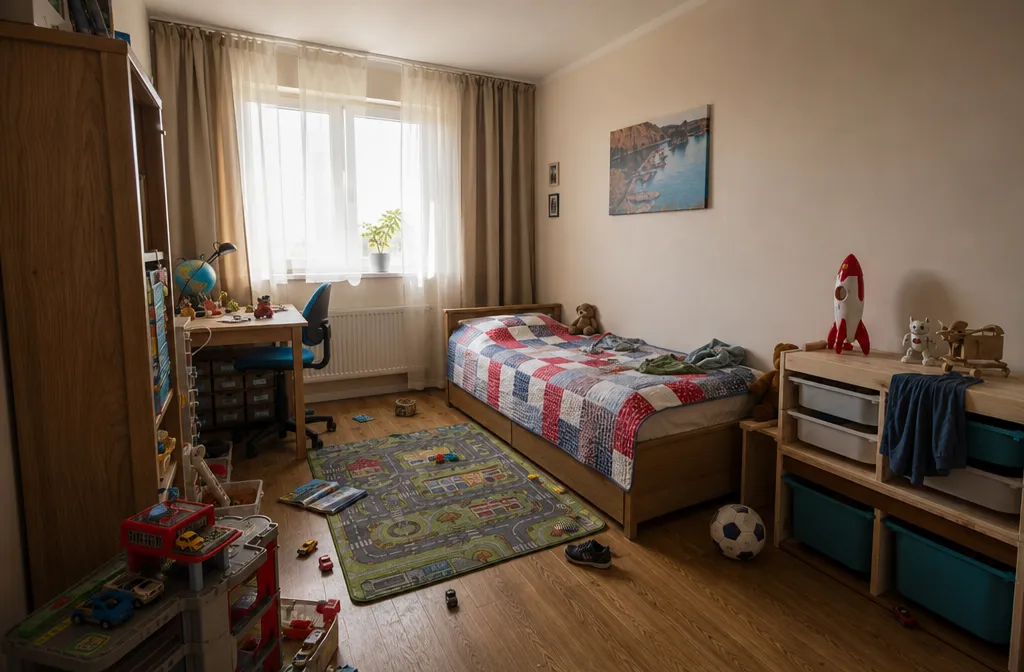
In such apartments, dirt accumulates 2-3 times faster: fur, traces of play, crumbs, street dust on shoes after walks. We recommend comprehensive cleaning once a month — this is enough to maintain a hygienic level without the buildup of allergens in carpets and upholstered furniture. During the off-season, when children are sick more often, the interval can be shortened to three weeks to treat all surfaces with hypoallergenic Kiehl and Sodasan compounds. Before the team arrives, it’s enough to pick up small toys from the floor — we take care of the rest.
Single Residents and Couples without Children
With a standard work schedule and no pets, it is sufficient to order comprehensive cleaning once every two to three months. The main areas of dirt are the kitchen (grease on cabinet fronts and the hood) and the bathroom (limescale). In between, weekly self-cleaning with a vacuum cleaner with a HEPA filter helps maintain order. We have noticed: for clients who call a team once a quarter, the kitchen set lasts 2-3 years longer because grease doesn’t get ingrained into the hardware.
Apartments Near Busy Roads and in New Buildings
Almaty dust mixed with exhaust fumes settles on surfaces within 10-14 days after cleaning, especially on windowsills and open shelves. For such premises, comprehensive cleaning should be planned every 3-4 weeks, and during the flowering season — every three weeks to reduce the burden on allergy sufferers. Our cleaners use microfiber cloths with an antistatic effect — this slows down the re-deposition of dust by 5-7 days longer than regular rags. If windows face major highways, we additionally wash the glass once a month, although in the standard schedule they are included once a quarter.
Homes with basement floors and cellars
In private houses and townhouses, comprehensive cleaning is needed more often — every 2-3 weeks, because dust and mold spores rise from underground spaces. This is especially relevant for houses in the foothills of Almaty (Koktobe, Gorny Gigant microdistricts), where humidity in the basement reaches 70-80% even in summer. We additionally treat basement walls with chlorine-free antifungal compounds — this reduces the risk of black mold in living rooms by 60-70%. With this schedule, a general cleaning with furniture removal is required once a year, rather than once every six months, as with infrequent calls.