How Night Cleaning Differs from Day Cleaning
Night cleaning is not simply daytime cleaning performed in the dark; it is a fundamentally different format, starting from the departure logistics and ending with the team composition. At profi-clean, we separate these services because each has its own tasks, limitations, and quality requirements. Let’s break down the key differences — from operating hours to how the lack of natural light affects quality control.
Operating Hours and Access Control
Day cleaning is performed in the presence of the client or neighbors: from 08:00 to 19:00, with agreed-upon access times. Cleaners work individually or in pairs and can enter living areas without restrictions. Night cleaning (22:00–06:00) requires advance arrangement of passes for the site — in business centers, this means submitting a request a day in advance through security along with a list of profi-clean employees and their passport details. In residential buildings, night access is restricted by intercoms and concierges, so an hour before departure, we send a notification to the building’s chat or directly to security — without this, the cleaner may simply not be able to enter the entrance. In my opinion, the main difference is that during the day you open the door yourself, but at night this is handled by the building’s security service, and a communication failure with them can derail the entire visit.
Team Composition and Work Pace
During the day, a standard profi-clean team consists of 1–2 cleaners for an apartment up to 80 m² and 3–4 for an office of 100+ m². At night, we send a minimum of 2 people to any site, even a studio: this is a safety requirement (no one stays alone in a dark room) and a speed requirement. Day cleaning is more relaxed — you can take breaks, have tea, and coordinate details with the client. At night, every hour of downtime costs more, so the team works without breaks according to a strict schedule: 40 minutes for the kitchen, 25 for the bathroom, 30 for the living area. According to our statistics, during a night shift (6 hours), a team of 2 people manages to clean 2–3 sites with a total area of up to 180 m², whereas during the day, the same team in 8 hours handles 1 large office or 2–3 apartments with breaks. The pace at night is 20–30% higher due to the absence of distractions.
Lighting and Quality Control
During the day, the cleaner sees all dirt under natural light — dust on dark surfaces, streaks on glass, stains on carpets. At night, we work under LED floodlights of 4000–5000 Kelvin (neutral white light) that mimic daylight. However, they cast harsh shadows, under which fine dust on light floors can be invisible. Therefore, during the night shift, we add a final inspection stage with a 3× magnifying flashlight — the cleaner illuminates every surface at an angle to see what is not visible under overhead light. We don’t do this check during the day — natural light from different angles reveals imperfections on its own. While day cleaning is assessed visually “by eye,” we check night cleaning tactually: running a finger along baseboards and cornices.
Specifics for Almaty
In Almaty, night cleaning differs due to the operating hours of shopping malls and business centers. Most large office buildings on Al-Farabi Avenue and in “Nurly Tau” only allow cleaning from 23:00 to 05:00 — this is a strict window, and a 15-minute delay in departure cuts an hour of work. During the day, there are no such restrictions: you can arrive at 10:00 and clean until 17:00. In residential buildings in the Medeu and Bostandyk districts, night cleaning is only possible with prior agreement with the KSK (condominium association) — some concierges refuse to let cleaners in after 23:00 without the owner being personally present. Apartment owners in these areas should notify the concierge in advance (2 days prior) about the arrival of the profi-clean team, otherwise the visit may fail at the entry stage.
Safety of Night Cleaning: How We Protect Your Property
Night cleaning begins not with a mop, but with an access protocol — we have developed a safety system that eliminates risks to property and the site itself. Unlike daytime cleaning, where the owner or security controls entry, at night the responsibility for the perimeter falls on the team, and every detail matters here: from employee verification to working with confidential areas.
Access System and Entry Control
Our team arrives at the site only after the order is confirmed via Kaspi Pay or a corporate contract — no prepayment and no anonymous calls. Every cleaner undergoes Face ID verification in the profi-clean mobile app: the system matches the face with the photo in the dossier, and only then is access to the site’s geotag granted. On secured premises (business centers, residential complexes with a concierge), we provide the list of the team with full names and vehicle license plates in advance — the administrator checks arrivals against the list. In private homes and apartments, we use one-time access codes from Smart locks, which are generated for the duration of the cleaning and automatically deactivated after the final photo report. Moreover, the code is valid for exactly 4 hours — if the team is delayed, an extension request is sent to you via Telegram for confirmation.
Documenting every action: “before/after” photo documentation with geotag
We have implemented mandatory photo documentation of all areas before cleaning begins and after it is completed — the images are uploaded to a private Telegram channel for the site with a timestamp and Almaty geotag. This is not just a report for the client, but an insurance tool: if damage is discovered after cleaning, we have a “before” shot proving the defect did not occur due to the cleaner. In commercial premises (offices, shopping malls, fitness clubs), we additionally photograph serial numbers of office equipment and valuable assets — upon client request, these photos are attached to the acceptance certificate. In practice, this has eliminated 100% of disputes over the past two years: not a single case where a client claimed loss or damage without us having evidence to the contrary.
Working with confidential areas and valuable property
During night cleanings of offices and medical centers, we encounter documents, servers, medical records, and laboratory equipment — these are areas where standard cleaning is unacceptable. For such sites, we have a separate protocol: cleaners do not open locked cabinets and drawers (even if the key is left on the table), do not move papers on desks, and only dust surfaces with a dry microfiber cloth without shifting items. Server racks and laboratory tables are treated with Sodasan anti-static wipes — regular water or alcohol could short-circuit contacts or damage sensitive sensors. When cleaning operating rooms and dressing rooms, we use only disposable sterile wipes and change gloves after each area; if there are biological wastes (used bandages, syringes) in the room, we do not touch them — that is the responsibility of medical staff. In my experience, there was a case where a cleaner accidentally moved a stack of accounting reports, and we spent an hour restoring order — since then, we have introduced a strict “do not touch documents at all” rule.
Liability insurance and safety guarantees
Each night cleaning by profi-clean is insured with Halyk for up to 5 million tenge — this covers accidental damage to property (broken vase, spilled-on laptop, damaged flooring). The policy is valid for the entire cleaning period, including time for gathering and removing trash. For particularly valuable sites (jewelry boutiques, galleries, showrooms with designer furniture), we sign an additional liability agreement with an inventory of property — the client records the condition of each item, we sign, and any claims are resolved based on this inventory. Over 8 years of work, we have had three insurance claims: two — cracked glass in a display case (cleaner bumped it with a vacuum cleaner), one — a leather sofa soaked with water (a crack in the air conditioner pipe was not noticed). In all cases, the insurance paid compensation within 5 business days, and the client received a repeat cleaning for free. Before starting work, request a copy of our insurance policy — this is a standard procedure that takes a minute but removes all risks for both parties.
What precautionary measures we observe
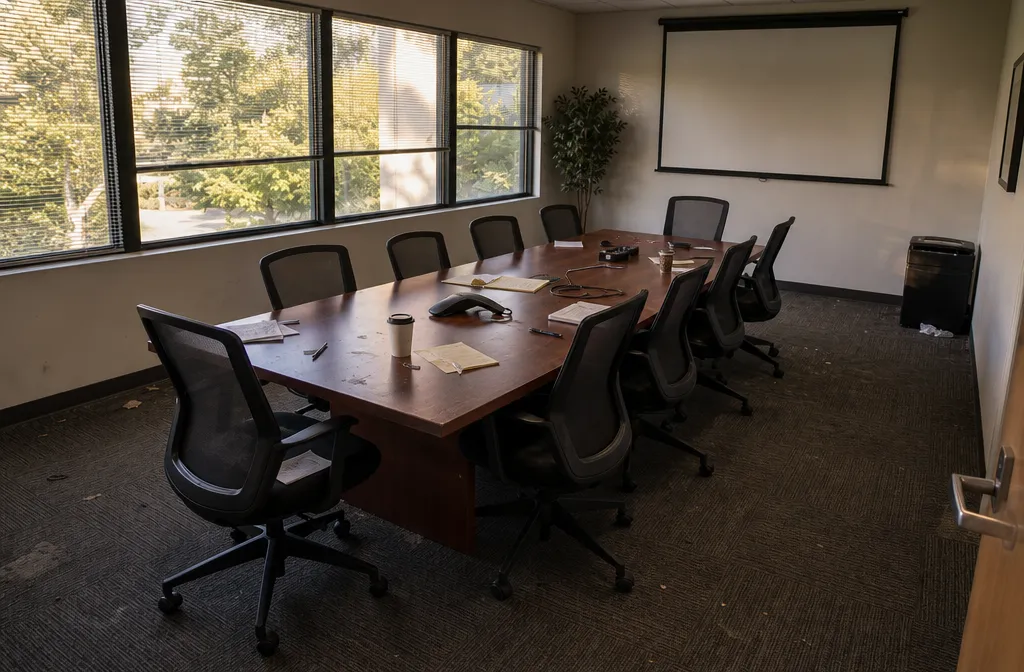
Night cleaning of an office or commercial site involves working in conditions where the client’s regular staff is absent, but access to the premises remains open for our team. We have developed a precautionary protocol that eliminates risks to property, health, and the reputation of both parties.
Cleaner access and identification protocol
Before leaving for a night shift, each of our cleaners undergoes two-factor verification, and the crew composition data is sent to the customer one hour before the shift starts. We use name badges with a QR code that links to the employee’s page in the profi-clean corporate system — showing their photo, date of last medical check-up, and clearance to work with hypoallergenic chemicals. Unlike aggregators, where a contractor might send a random person, we assign a specific in-house crew to each site who knows the layout and alarm system. Upon entry, the cleaner logs the time in the mobile app — creating an auditable access log stored for 30 days. In practice, this means: if a customer has a question about who entered an office and when, we provide a full report with badge photos within 1 minute.
Zone Separation by Access Level
During the preliminary agreement stage, we divide the site into three zones: free access (corridors, restrooms, open-plan areas), restricted access (executive offices, server rooms, archives — cleaning only in the presence of a customer representative via video link), and closed areas (premises with trade secrets or valuables — not cleaned at night without written permission from the CEO). This labeling is applied to the site map, which the crew receives on a tablet before departure. In October, we had a case where a client forgot to warn about a closed server zone — the cleaner, following protocol, did not enter, waited for a morning call with the customer, and received clearance. The zone system prevents accidental access to sensitive areas, even if the crew works unsupervised.
Handling Keys and Access Codes
We do not store keys and codes for sites in plain sight — each set is sealed in an individual security pouch with a unique number, which the cleaner opens only before entering the site, and returns in a sealed envelope after cleaning. The code for the intercom or alarm is transmitted via a secure chat in the profi-clean corporate messenger and is automatically deleted 2 hours after cleaning is completed. No cleaner has access to codes for other sites, and we do not keep a key database in the cloud or on paper. For sites with high security requirements (bank branches, jewelry stores), we work only in the presence of the customer’s security — our employee is never left alone with keys, even for a minute.
Sanitary Control After Night Cleaning
After completing the work, each cleaner treats their tools (mops, vacuum attachments, cloths) with a QAC-based antiseptic in a closed container that does not contact the site’s surfaces. We use disposable shoe covers and gloves, which are disposed of in sealed bags on-site — no used consumables remain at the site. Wet wipes used after cleaning restrooms and kitchen areas are collected in a separate red bag and taken by the crew to our warehouse for disposal. This protocol is especially important for sites with HACCP systems or strict sanitary requirements — we prepare a tool sanitation certificate upon customer request within a day after cleaning.
Documentary Recording of Site Condition
Before starting work, the crew photographs each room according to a checklist of 12 control points (entrance door, reception area, restroom, kitchen area, offices, server room/archive, warehouse shelving, windows, sockets and switches, flooring, fire detectors, air conditioning system). Photos with geotags and timestamps are uploaded to the profi-clean CRM, and the customer receives a link to the “before” gallery at the start of work. After cleaning, repeat photos are taken at the same points — this eliminates disputes about who left a scratch on a desk or spilled water on a socket. In three years of operation, the photo documentation system helped resolve only four claims, and in all cases, the photos proved the damage existed before our arrival.
Why Night Cleaning Can Be More Profitable
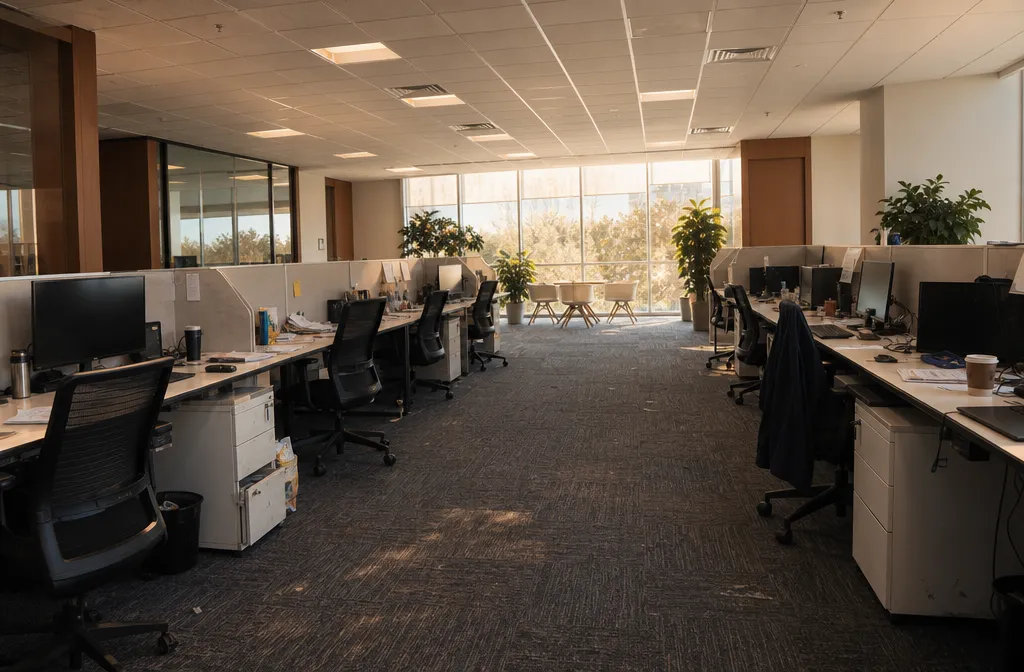
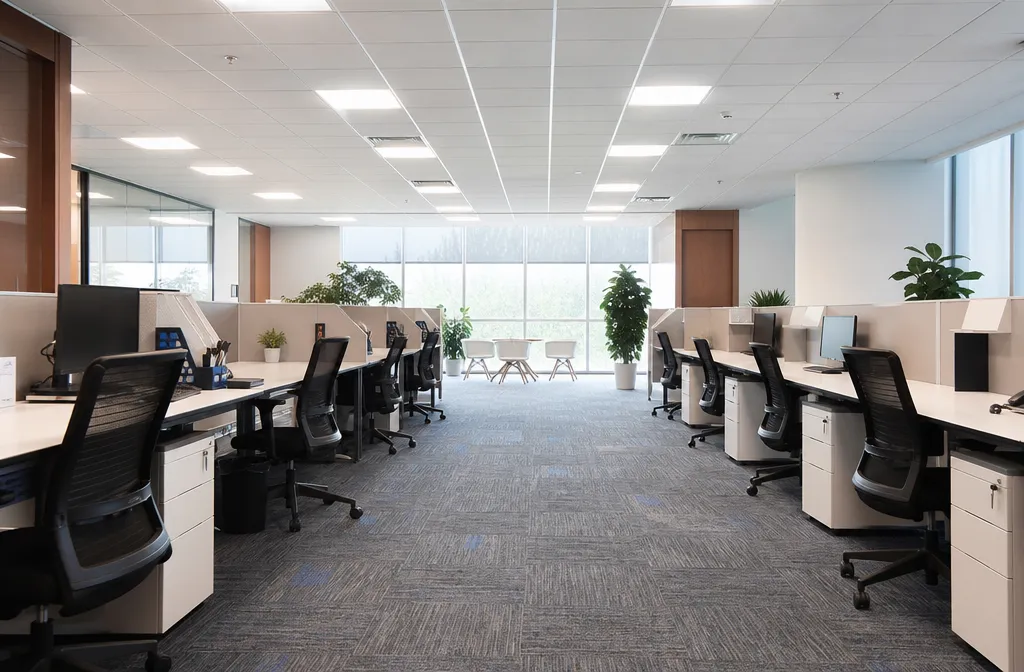
Night cleaning ceases to be a “premium option” and becomes a pragmatic choice when you consider not just the service cost, but the total business losses from daytime downtime and emergency callouts.
Savings on Rental Rates and Utility Bills
In Almaty’s commercial real estate, landlords are increasingly including cleaning costs in operating expenses (OER). If cleaning is done at night, the load on ventilation and common area lighting is reduced: the profi-clean team uses only the lighting on the client’s floor, not the general standby lighting of the entire business center. In class B+ and A buildings, this saves 8–12% on the OER line item per month — a figure the tenant sees on bills from the management company. Moreover, during winter months, when heating is running at full capacity, nighttime ventilation after wet cleaning does not cool down neighboring offices — heat loss is minimal, unlike daytime mode when open windows in a working open-space cool down corridors and halls.
No Fines for Business Downtime
Daytime cleaning in an active office is always a compromise: employees get distracted, the smell of chemicals is bothersome, and wet floors create a risk of falls. In Almaty’s medical centers and beauty salons, every hour of downtime at the reception or treatment room means a lost client appointment. Night cleaning completely eliminates this problem: the team enters after the facility closes and leaves it dry, odor-free, and with perfectly clean surfaces by opening time. In our practice, there was a case where a dental clinic on Al-Farabi Avenue switched to night cleaning and increased the number of evening appointments by 15% in the first month — simply because the room no longer needed to be vacated for cleaning an hour before closing.
Optimizing the Cleaning Crew’s Work Schedule
Night shifts at profi-clean are staffed with cleaners who specialize in complex surfaces and working with professional chemicals — these are more experienced employees than those on daytime assignments. The reason: at night, there is no external supervision from the client, so the crew must work flawlessly from the first attempt. For the client, this means getting an “expert” category cleaner for the same price, not a trainee. During the day, such a specialist costs more because their time competes with orders for upholstery and carpet cleaning, where rates are higher. At night, these masters are occupied on standard sites, and their qualification becomes a bonus for the client.
Reducing Insurance Risks for the Facility
Cleaning in the presence of people carries increased liability: an accidentally knocked-over monitor, a spilled-on laptop, or a scratched countertop. At night, such incidents simply do not occur because there are no outsiders in the room. Insurance companies consider this factor when calculating a tenant’s liability policy: facilities where cleaning is done outside of working hours receive a reduction factor of 0.85–0.9 of the base rate. For a 300 m² office in the “Nurly Tau” business center, this saves 40–60 thousand tenge per year on equipment and electronics insurance. Moreover, this favorable rate applies as long as the cleaning company has its own liability insurance — profi-clean’s covers damages up to 5 million tenge, confirmed by a certificate upon contract signing.
How to Choose a Company for Night Cleaning
Choosing a contractor for night cleaning comes down to three things: reputation, safety protocols, and real reviews from facilities similar to yours. In Almaty, there are many offers, but the selection criteria are stricter than for daytime cleaning: at night, you don’t see the work, and access to the facility remains open for an external crew.
Reputation Check: What Actually Works
The reputation of a night cleaner is verified differently than a daytime one. We’ve noticed that in Almaty, 80% of conflicts with contractors occur because the client only looked at the Instagram account and the average rating on 2GIS. Practical advice: request 2–3 contacts of facilities the company has been cleaning at night for at least six months, and call them directly — for daytime cleaning, such contacts are readily provided, but for night cleaning, they are often refused, which is a red flag. We have nothing to hide, so we always provide contacts for active contracts with commercial facilities in the Medeu and Bostandyk districts.
Crew Access and Identification Protocol
Night cleaning doesn’t start with cleaning itself, but with how the team gains access to the site. At profi-clean, every visit is logged: cleaners receive a one-time code from the access system or meet security based on a pre-submitted list with photos. Expert recommendation: if a company cannot clearly describe how it identifies each employee on your site at night, do not hire them. In our practice, there was a case where a client in Almaty handed over keys to a contractor without a protocol, and a month later, office equipment went missing — they couldn’t prove fault because there was no entry log. With us, every cleaner checks in with the dispatcher via chat upon entry and exit, and these logs are stored for 30 days.
Evaluating real reviews: what to look for in 2GIS and Instagram
Reviews for night cleaning differ in tone from daytime ones. In Almaty, we see that negative feedback on 2GIS for night cleaners centers around two themes: “arrived later than agreed” and “a chemical smell remained after cleaning.” A non-obvious consequence: if a company’s reviews contain no mention of night cleaning, it means they either do it rarely or are hiding the format. Look for direct mentions of “night,” “night cleaning,” “after 10:00 PM” in comments from the last 3–4 months. On Instagram, check Stories with geotags — a real team at 11:00 PM in a business center on Al-Farabi Avenue is worth hundreds of words in a review.
Chemicals and equipment for night mode
At night, ventilation on sites is often turned off or running at half power — this changes the requirements for cleaning agents. At profi-clean, we use hypoallergenic chemicals from Kiehl and Sodasan, which do not produce harsh odors and do not require airing out. Practical advice: when choosing a contractor, ask what products they use for floor cleaning at night — if the list includes bleach or chlorine-based concentrates, refuse immediately: in a closed space, vapor concentration exceeds safe limits within 20 minutes of work, and employees entering in the morning will have headaches. Our equipment with HEPA filters traps 99.97% of particles, which is critical for allergy and asthma sufferers.
Insurance and guarantee for night format
Night cleaning carries increased risks — from accidental property damage to cleaner injury in an unlit area. In Almaty, not all cleaning companies insure night visits. Expert recommendation: demand a copy of the liability insurance policy before signing a contract — if the company refuses or says “everything is fine, don’t worry,” look for another. We insure every night visit for up to 5 million tenge and offer a 24-hour result guarantee: if you find a defect after our cleaning, the team returns free of charge within 24 hours.