How Often Should You Schedule Bathhouse Cleaning
The regularity of professional bathhouse cleaning isn’t a matter of convenience, but is directly dictated by the materials, usage intensity, and Almaty’s hard water. Based on eight years of profi-clean’s practice in private bathhouses and public complexes across the city, we’ve compiled a frequency scale — here’s how it looks for different scenarios.
Private Family Bathhouse — Optimal Once a Quarter
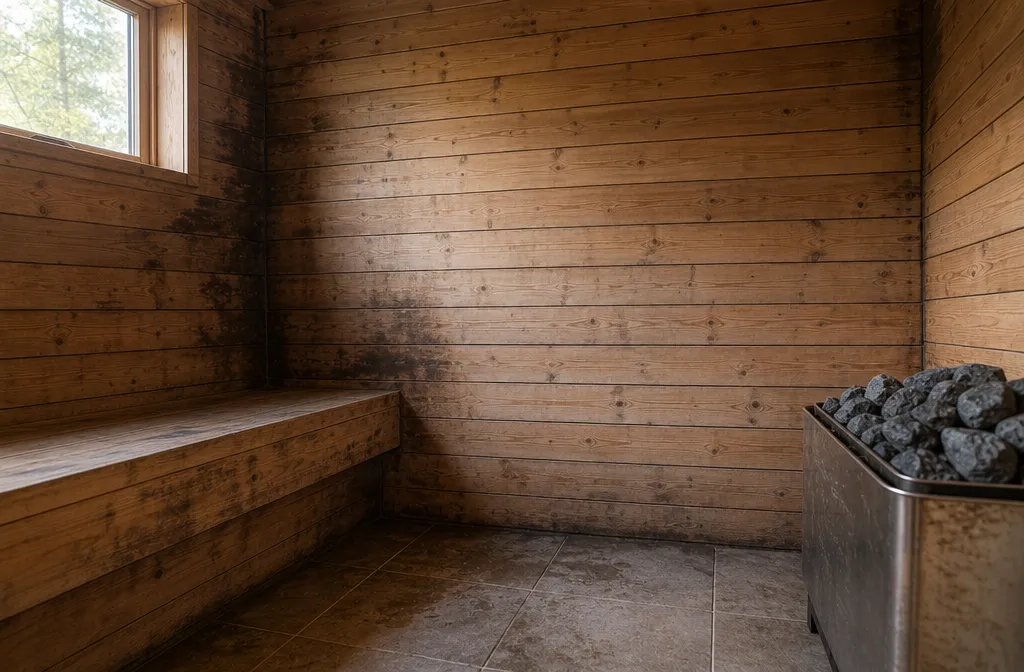
A standard family bathhouse used 2-4 times a month requires professional cleaning once every three months. Over this period, a layer of saponified fat and mineral sediment from water accumulates on wooden shelves and the stone heater — regular wiping with a cloth won’t remove it. We’ve noticed: after three months without deep cleaning, the steam room starts to darken noticeably, especially on hardwood species (linden, aspen). In our experience with properties in the “Akbulak” and “Gorny Gigant” microdistricts, quarterly cleaning extends the lifespan of wooden paneling by 2-3 years — by removing the plaque that would otherwise embed into the wood’s structure. If the bathhouse is heated less than once a month, the interval can be extended to six months, but no longer: mold in the gaps between boards develops unnoticed even with infrequent heating.
Public Bathhouse or Commercial Sauna — Monthly
In high-traffic bathhouses (sports complexes, fitness centers, hotel spas), professional cleaning is needed every 4-6 weeks. The reason is the scale of biological contamination buildup: sweat and sebum from dozens of visitors per week create a breeding ground for bacteria and fungi. At profi-clean’s projects in Almaty fitness clubs, we recorded that without monthly treatment, the level of microbial contamination on steam room surfaces exceeds the norm by 3-4 times, according to laboratory swab data. Particularly vulnerable are the joints between shelves and the corners of loungers — moisture stagnates there, and mold can develop within 10-14 days. Monthly cleaning with an antiseptic treatment based on hypoallergenic chemicals eliminates biological activity to a safe level without damaging the wood’s impregnation — unlike household bleach, often used by non-professionals.
Post-Construction Cleaning — One-Time Before the First Heating
This is a separate scenario that doesn’t fit into a regular schedule. After log house assembly, stove installation, and steam room finishing, all surfaces retain construction dust, sawdust, oil stains from tools, and remnants of mounting foam. We recommend ordering bathhouse cleaning immediately after finishing work — before the first firing. At projects in new Almaty residential complexes (“Aksai”, “Merey”), we encountered situations where owners started heating the bathhouse without prior cleaning: construction dust sintered into a difficult-to-remove coating when heated, and oil stains from a hammer drill soaked into the linden wood within one heating cycle. After that, washing the shelves without sanding becomes impossible. Post-construction cleaning solves the problem in one visit: we remove dust from the ceiling, walls, and floor with an industrial HEPA-filter vacuum cleaner, then treat the wood with a neutral Kiehl cleaning agent — without risk to the fresh impregnation.
Seasonal Cleaning — Before and After the Bathing Season
In Almaty, the bathing season is clearly tied to the cold: from October to April, private bathhouses are used actively, in summer — rarely or not at all. We advise scheduling two seasonal cleanings: autumn (September-October) before the season starts and spring (April-May) after it ends. Autumn cleaning removes dust and cobwebs accumulated over the summer, checks the ventilation and stove stones — we’ve repeatedly found dried leaves in heaters that produce acrid smoke when lit. Spring cleaning is more important: after winter, condensation remains in the steam room, which, without drying, triggers black mold in corners and under shelves. At properties in foothill areas (“Butakovka”, “Alatau”), we observed that a missed spring cleaning led to fungal damage to the wood over a single summer — walls had to be replaced. Seasonal antiseptic treatment before downtime preserves the bathhouse without loss of wood quality.
Emergency Cleaning — When Mold, Odor, or Leaks Appear
This is an unscheduled scenario, not tied to a calendar. Signals: a persistent musty smell in the steam room, dark spots at the joints of boards, water streaks on the ceiling after a roof leak. In such cases, you can’t delay — mold grows into the wood structure within 2-3 weeks, and surface cleaning with a rag won’t help anymore. profi-clean responds for emergency cleaning within 60 minutes across Almaty: we treat affected areas with professional Sodasan antiseptic (chlorine-free, safe for wood and breathing), then dry the room with a heat gun. If the mold has already penetrated deeper than 2-3 mm, we have to sand the surface followed by impregnation — in Almaty facilities with high-altitude humidity, we’ve encountered this in 15-20% of emergency calls. Emergency cleaning does not replace regular cleaning — after it, we return to the quarterly schedule, but with enhanced antiseptic treatment for six months.
Typical Mistakes in DIY Bathhouse Cleaning
DIY bathhouse cleaning seems simple, but in reality, one wrong move or product turns a quality steam room into a source of problems — from ingrained dirt to destroyed wood. In our practice, we have dozens of cases where owners made the situation worse trying to save on cleaning. Let’s break down the most common and costly mistakes.
Using Household Chemicals Instead of Professional Ones
Regular cleaning products for the kitchen or bathroom are the main enemy of a bathhouse. Chlorine, acids, and alkalis in their composition draw moisture out of the wood, leave white streaks on the stone, and, most importantly, evaporate as toxic compounds when heated — inhaling them in the steam room is dangerous. We use hypoallergenic Kiehl and Sodasan chemicals: they are biodegradable, leave no film, and do not react to high temperatures. On the shelves, a soda-alkali concentrate in a 1:10 ratio with water removes grease and soot without abrasives, and for stone, a neutral cleaner based on citric acid. Before buying any product, check the pH: for wood — 5–7, for stone — 6–8, for tiles — any except chlorine-based ones.
Neglecting Antiseptic Treatment of Wooden Surfaces
The humid environment of a steam room is an ideal incubator for mold and fungus. If you just wipe the shelves and walls after washing, the spores remain and, after 2-3 heating-cooling cycles, produce black spots at the joints of the boards. At profi-clean, we always treat all wooden surfaces with a professional sauna antiseptic based on quaternary ammonium compounds — it penetrates 2-3 mm deep into the wood and blocks the development of microorganisms for 6-8 weeks. Homemade vinegar and soda only provide a surface effect, while hydrogen peroxide discolors larch and aspen. Apply the antiseptic with a brush to all horizontal and end surfaces — that’s where condensation accumulates.
Cleaning Stones in the Heater with Abrasive Methods
Metal brushes, stiff sponges, and pumice strip the top layer of jadeite, talc-chlorite, or gabbro-diabase — the stone starts to crumble, loses heat capacity, and cracks during the next heating. Stones should only be cleaned with a soft brush and a special compound for bath stones that dissolves soot without mechanics. In our orders for heavily used steam rooms, we sort through the stones every 3 months, discard cracked ones, and wash the rest in a neutral cleaner solution — this extends the lifespan of the fill to 2-3 years. Don’t try to scrub the stone “to a shine” — a matte coating after professional cleaning is normal and does not affect steam generation.
Improper Drying After Washing
The most insidious mistake is leaving the steam room door tightly closed after cleaning. Moisture doesn’t evaporate; within a day, a musty smell appears under the shelves and in corners, and the first mold spots appear on the ceiling. After wet cleaning, we always open all doors and windows for 40-60 minutes, turn on forced ventilation to maximum, and wipe wooden shelves with a dry microfiber cloth. In steam rooms without windows — leave the door ajar by 10-15 cm and turn on the exhaust fan. If the bathhouse is not used for a week or more, go in and air it out every 3-4 days — stagnant air kills wood faster than infrequent heating.
How Bathhouse Cleaning Differs from Regular Cleaning
Bathhouse cleaning is not washing floors with a bucket and mop, but working with an aggressive environment: temperature fluctuations, humidity close to 100%, porous wood, mold deposits, and alkaline residues. Regular cleaning here is not just ineffective — it’s dangerous for the material.
Why Regular Cleaners Destroy Your Bathhouse, While Professional Ones Extend Its Life
Household cleaning chemicals — Cif, Mr. Proper, Domestos — are designed for smooth surfaces (tile, plastic, glass) and room temperature. In a bathhouse at 60–90 °C, these compounds react with the wood: chlorine eats away at the lignin, alkali raises the grain, and surfactants leave a sticky film that clogs the wood’s pores. During the next firing, this film begins to smolder, releasing a burnt smell. At profi-clean, we use exclusively hypoallergenic Kiehl and Sodasan chemicals — they are biodegradable, free of chlorine, phosphates, and synthetic fragrances. On wooden surfaces, these formulas work gently: they soften dirt without damaging the fiber structure. In my opinion, the main marker of a good product is that it doesn’t foam in the steam room: if you see abundant foam, it means the formula contains an aggressive surfactant that will leave a film on the shelves. Moreover, regular chemicals are completely contraindicated for sauna stones — they bake into the pores and release toxic fumes when heated.
How Bathhouse Cleaning Equipment Differs from Household Tools
A household vacuum cleaner with a paper bag or aqua filter is unsuitable for a bathhouse: humid air damages the motor, and fine dust (ash, microscopic mold particles) passes through a standard HEPA filter — instead of cleaning, you get spores dispersed throughout the room. Our cleaners use industrial vacuum cleaners with H13-class HEPA filters, which trap 99.97% of particles as small as 0.3 microns. Brushes have natural bristles (synthetics scratch linden or aspen), and mops use long-pile microfiber that picks up dirt from the gaps between shelf spaces. An ordinary cotton cloth leaves streaks and clogs gaps — moisture stagnates there, and within a week, a black spot of mold appears. In Almaty bathhouses with their humidity fluctuations (dry steam vs. wet sauna), this is especially critical: after cleaning with household tools, we’ve recorded mold reappearing as early as 10–14 days later.
How Bathhouse Cleaning Solves the Mold and Mildew Problem — Where Regular Cleaning Fails
Regular cleaning washes away visible mold, but spores remain in the wood’s pores and joints — within 5–7 days, they germinate again. Bathhouse cleaning includes treatment with water-based, deep-penetrating antiseptics (chlorine-free) — they penetrate 2–3 mm into the linden or aspen structure and block the mycelium. At profi-clean, we use a two-component method: first, an alkaline compound to remove the biofilm, then a long-acting antiseptic preservative (lasting 6–8 months). On seams and joints, where mold most often develops, we work with narrow bristle brushes — a household sponge simply can’t reach there. In Almaty bathhouses, where ventilation is often poorly designed (lack of an intake valve or narrowed vents), areas behind shelves and under benches become ideal incubators — regular cleaning simply misses these spots. Because mold spores become airborne with every movement, without professional treatment, even a new bathhouse develops a characteristic musty smell within six months that doesn’t air out with ventilation.
Why Bathhouse Cleaning Requires Reduced Humidity Afterward — Unlike Household Cleaning
After regular cleaning, opening a window for 15 minutes is enough — surfaces dry on their own. In a bathhouse, after wet treatment, the wood absorbs water, and if it’s not forcibly removed, a rotting process begins within the wood’s thickness. Professional bathhouse cleaning includes a drying stage: we use heat guns or dehumidifiers with a capacity of up to 30 liters of moisture per day, which reduce humidity from 90–95% to 40–50% in 2–3 hours. Under this regime, the wood releases moisture evenly, without warping or cracking. At home, bathhouses are dried with firewood — this causes uneven heating and local zones of overdrying. In practice, the difference is visible after six months: in a bathhouse where drying was used after cleaning, the shelves remain smooth, while on “self-drying” ones, hairline cracks appear on the aspen — they become new channels for moisture and dirt. If the bathhouse is on loose soils (southern districts of Almaty — Alatausky, Nauryzbaysky), without drying, mold on the lower log crowns appears within one season.
How Bathhouse Cleaning Accounts for Wood Type — While Household Cleaning Doesn’t
Home cleaning treats everything the same — oak, pine, linden, aspen. Yet each type of wood requires its own acid-base environment. Linden is soft and porous, afraid of acid (it destroys fibers); aspen is neutral to weak alkalis but cannot tolerate abrasives; pine releases resin that can only be removed with an alcohol-based compound, while household chemicals just smear it; oak is dense, but at a pH above 9 it turns black due to tannins. At profi-clean, the route sheet for an object includes a “coating material” column — the cleaner selects the product strictly according to it. In Almaty’s private bathhouses, combined finishes are common: a linden shelf, aspen walls, porcelain tile floors — each area uses its own chemicals and its own tools. A regular cleaning with one universal product will inevitably ruin at least one surface.
Why it’s important to use professional products
Household chemicals from the supermarket against a steam room — like laundry detergent against a fur coat: it will wash it, but ruin it. For a bathhouse, you need compounds that don’t leave a film, don’t wash out the protective layer of wood, and are safe at 100°C. Let’s break down how professional lines differ and why they don’t skimp on them.
The aggressive environment of a bathhouse requires an alkaline balance
In the steam room, temperatures reach 90–110°C, humidity is near 100%, and a mixture of sweat, oils, and wood resins settles on surfaces. Household chemicals with a neutral pH (6–7) can’t handle fat deposits — they leave a sticky film that clogs wood pores and starts to smell burnt when heated. Professional bathhouse cleaning products have an alkaline pH of 9–12 — they break down organic deposits in 3–5 minutes without abrasive scrubbing. At profi-clean, we use Kiehl concentrates with a pH indicator: the solution changes color when the dirt is neutralized — this eliminates under-washing. On hardwoods (linden, aspen), an acidic rinse (pH 4–5) is mandatory after alkali, otherwise alkali residues raise the grain and the wood becomes rough — household lines don’t have this step.
Hypoallergenicity and absence of toxic fumes
At 90°C, any chemical compound evaporates 5–7 times faster than at room temperature. Products with chlorine, ammonia, or phosphates release gaseous toxins when heated — inhaling them in a steam room risks mucosal burns and allergic reactions. The professional Sodasan chemicals used by profi-clean are certified to the Ecogarantie standard — they contain no chlorine, parabens, or synthetic fragrances. All components are biodegradable and safe to inhale even in the enclosed space of a steam room. In practice, this means you don’t have to wait for the smell to “air out” after cleaning — you can breathe in the steam room immediately. For comparison, household products like Fairy or Mr. Proper leave a white residue on contact with hot wood — this is an under-acidified surfactant that melts and emits a sweet plastic-like smell during the next heating.
Specifics of Almaty water and its impact on product choice
Tap water in Almaty is hard — 7–8 mg-eq/L, with a high content of calcium and magnesium salts. When washing a bathhouse with such water without softening, white streaks remain on the wood — a carbonate deposit that eventually penetrates the pores and makes the surface rough. Professional products include complexing agents (EDTA or sodium gluconate) that bind hardness ions and prevent sediment from settling on the board. Household chemicals without such additives leave a calcium film — visible in the light: wet wood darkens unevenly. At profi-clean, for Almaty facilities, they use Kiehl K2 concentrate with an anti-scale component — it neutralizes salts directly in the solution. If you wash a bathhouse with a regular product, after six months of regular cleaning, a matte layer forms on the shelves and walls that cannot be washed off — it can only be sanded down.
Why folk recipes (soda, vinegar, citric acid) harm wood
Soda (NaHCO₃) is an abrasive with a hardness of 2.5 on the Mohs scale; it scratches varnished or oiled wood, leaving micro-scratches where dirt accumulates. Acetic acid (pH 2–3) softens lignin — the binder of wood fibers — and after 3–4 treatments, the board becomes loose and begins to absorb moisture like a sponge. Citric acid is effective against limescale, but when in contact with heat-treated wood (abashi, cedar), it triggers an oxidation reaction — the wood turns yellow in patches. In profi-clean’s professional practice, there have been cases where, after a year of “vinegar” cleanings, shelves in the steam room lost density and began to crumble at the edges. The only safe folk method is mechanical steam treatment (Karcher SC steam cleaner at 140°C) without chemicals, but it does not remove oily deposits and requires subsequent impregnation with a protective compound.
“`markdown
Tips for maintaining cleanliness between cleanings
Keeping the steam room tidy between professional profi-clean visits is easy if you know what specifically harms the wood and stone. Here are four proven rules that extend the freshness after our cleaning.
Daily ventilation and drying
After each heating session, open the steam room door and turn on the supply ventilation for 15–20 minutes: humidity should drop from 90% to 40–50%. In Almaty bathhouses with dense layouts (private homes in Gorny Gigant or basement floors in the city center), steam stagnation is the main reason why a musty smell appears a week after our cleaning. We’ve noticed: if you leave wet towels and mats in the dressing room, mold on the joints of the shelves grows three times faster. Therefore, after airing, wipe the floor and shelves with a dry microfiber cloth, and take textiles outside or to a ventilated room to dry.
Gentle treatment of shelves and walls without abrasives
Once every three to four sessions, go over wooden surfaces with a sponge soaked in a weak vinegar solution (1 tablespoon per liter of water) — it neutralizes the alkalinity from sweat and soap without damaging the wax coating. Never use soda, bleach, or hard brushes: they strip the protective layer, and the wood starts to “gray” within a month. In our practice, clients who used “Belizna” to bleach aspen shelves ended up with matte spots by the next profi-clean cleaning, which had to be sanded again. For stone in the steam room — only water and a soft brush; acidic compounds destroy the structure of granite and talc-chlorite.
Controlling deposits on glass and tiles
Glass doors and ceramic tiles in the washing area lose their appearance fastest due to limescale. It’s enough to wipe them once a week with a citric acid solution (a teaspoon per glass of water) and dry them thoroughly — no streaks. In Almaty, the water is hard (up to 7–8 mg-eq/L), so if you let drops dry on their own, a matte layer forms on the glass in two months that cannot be removed with regular chemicals. Our cleaners remove such deposits with a professional compound during scheduled visits, but with weekly prevention, the procedure takes 5 minutes and doesn’t require calling a specialist.
What to do at the first signs of mold
If you notice dark spots at the joints of shelves or in corners under the ceiling — treat the area with 3% hydrogen peroxide (sold at any Almaty pharmacy) and leave it for 15 minutes, then rinse with water. This is safe for wood and kills spores, preventing them from growing deep. Do not use copper sulfate or aggressive fungicides — they penetrate the pores and release toxic fumes when heated. If the mold returns after two weeks, the problem is deeper: a roof leak or insufficient waterproofing. In that case, call profi-clean — we will perform thermal diagnostics and treat the sources with an industrial water-based, odorless antiseptic. “`