Inspection and assessment
We determine the stone type, degree of wear, presence of scratches and chips. We conduct a hardness and porosity test.
Restoring the shine of marble, granite, and porcelain stoneware with removal of scratches and chips

We work with any types and materials
Gentle polishing using diamond discs to restore gloss without damage.
from 20,000 ₸Removal of scratches and scuffs from hard granite, giving lasting shine.
from 20,000 ₸Filling pores and polishing the porous structure of travertine.
from 20,000 ₸Polishing porcelain stoneware to remove micro-scratches and restore shine.
from 20,000 ₸Careful polishing of translucent onyx while preserving its unique pattern.
from 20,000 ₸Soft polishing of limestone with protection against abrasion.
from 20,000 ₸Strengthening and polishing sandstone with pore filling.
from 20,000 ₸Polishing layered slate while preserving texture.
from 2,000 ₸Grinding concrete with diamond discs for a smooth surface.
from 20,000 ₸Polishing mosaic terrazzo with restoration of shine.
from 20,000 ₸Careful polishing of mosaic with joint protection.
from 20,000 ₸Polishing artificial stone with scratch removal.
from 20,000 ₸From inspection to result with guarantee
We determine the stone type, degree of wear, presence of scratches and chips. We conduct a hardness and porosity test.
Wet cleaning with neutral detergent, dust and dirt removal. Protection of walls and furniture with film.
Using diamond discs 30-60 grit to remove deep scratches and chips. Leveling the surface.
Using discs 100-200 grit to smooth irregularities after coarse processing. Preparing for fine grinding.
Using discs 400-800 grit to remove fine scratches and create a smooth matte surface.
Using diamond discs 1500-3000 grit to achieve glossy shine. Final treatment for mirror effect.
Application of Tenax crystallizer to strengthen the surface and enhance shine. Optional step.
Application of Lithofin protective impregnation for stain and moisture resistance. Polishing with a dry cloth.
We use Klindex diamond discs, which ensure even grinding without overheating the stone. This allows achieving perfect smoothness and shine even on complex surfaces. In 5 years of work, we have polished over 200 objects in Almaty, including residential and commercial premises.
We use professional chemicals Tenax and Lithofin for crystallization and stone protection. Crystallizers strengthen the surface, and impregnating sealers protect against stains and moisture. Effectiveness is confirmed by manufacturer certificates.
Our industrial HEPA vacuum cleaners capture 99.97% of particles, including fine stone dust. This ensures cleanliness in the room during work and safety for breathing. The polishing process is almost dust-free.
We provide a written guarantee for the work performed for a period of 1 year. If defects appear during this time, we will eliminate them free of charge. The guarantee covers evenness of shine and absence of scratches.
Our master visits the site in Almaty for free, assesses the floor condition, determines the stone type and degree of wear. After inspection, an accurate estimate is made without hidden payments. The visit is carried out at a convenient time for you.
Our team has over 5 years of experience in polishing stone floors. We have worked with marble, granite, travertine, porcelain stoneware and other stones. Among our objects are residential apartments, offices, shopping centers and restaurants.
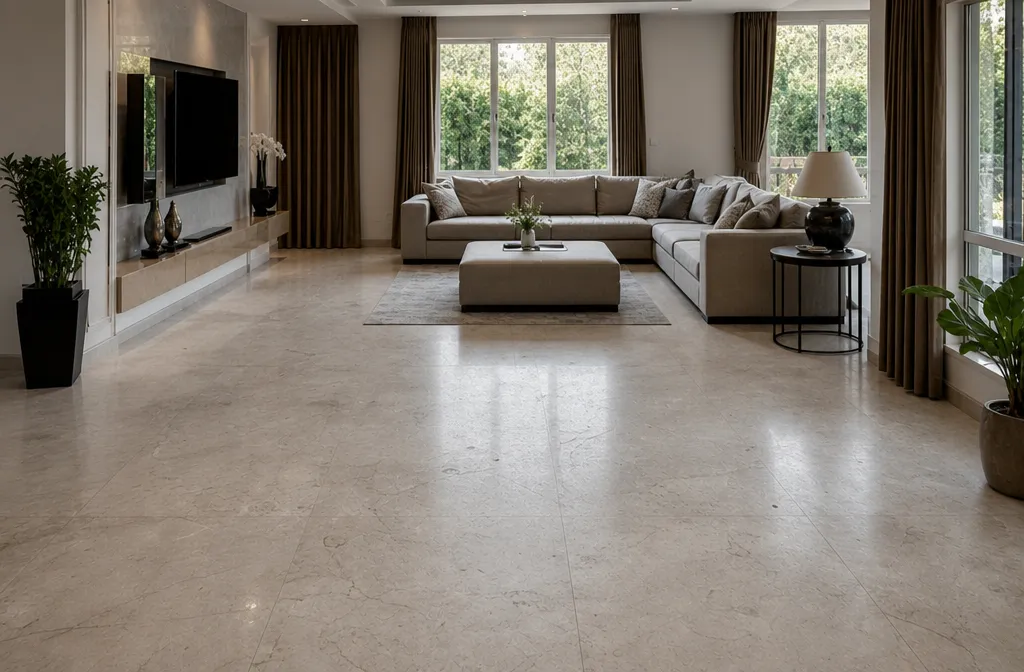
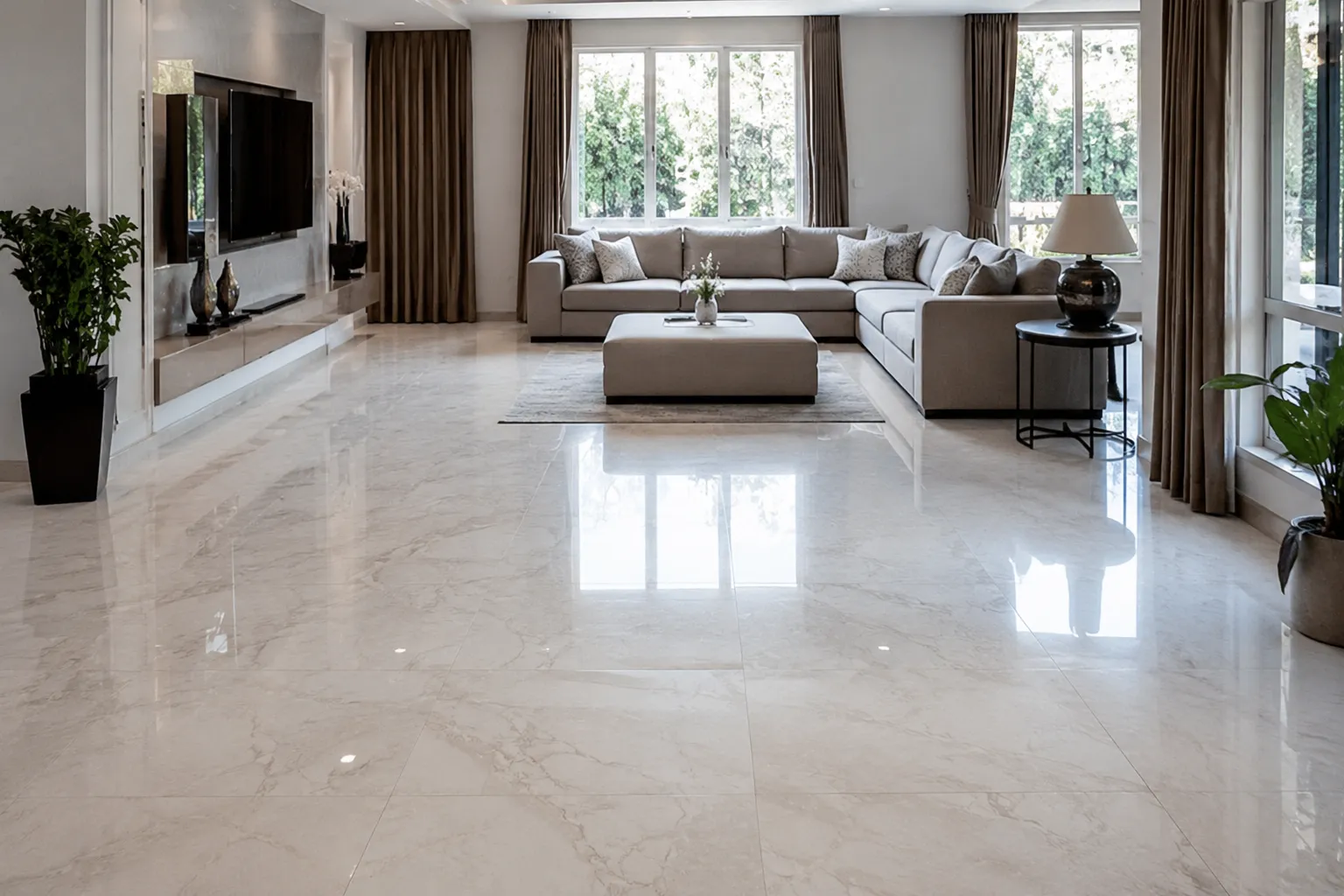 After
After
Request: I want to restore the shine to the marble floor in the living room after 10 years of use.
Done: We performed marble crystallization using Diamant powder and 3M discs.
Cost: 20 000 ₸
Master: Aigul Sadykova, stone master
Total: The floor gained a glossy shine, scratches removed, color became more saturated.
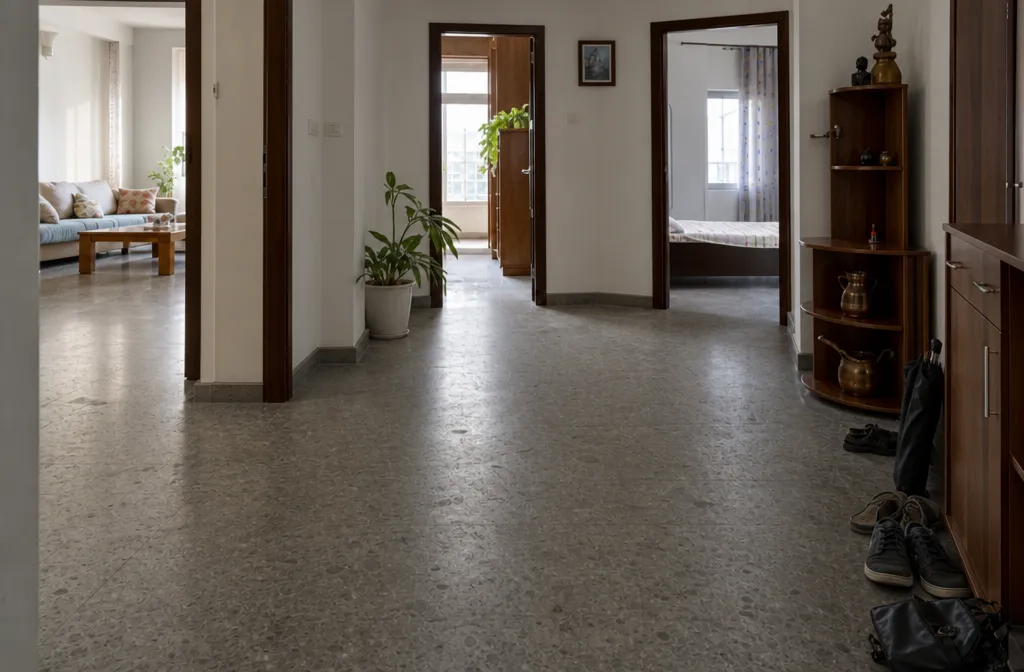
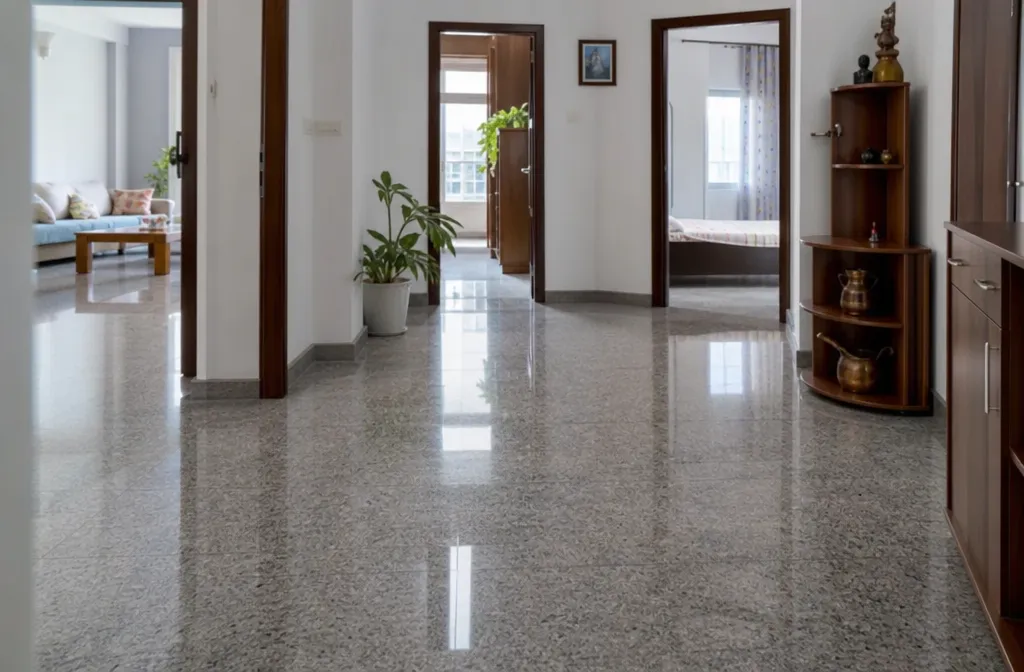 After
After
Request: The granite floor in the hallway lost its shine, scuffs appeared.
Done: Grinding with diamond cups, then polishing with felt and oxalate.
Cost: 21 000 ₸
Master: Timur Zhaksybekov, stone master
Total: The floor has a mirror-like shine, scuffs and small chips completely removed.
 After
After
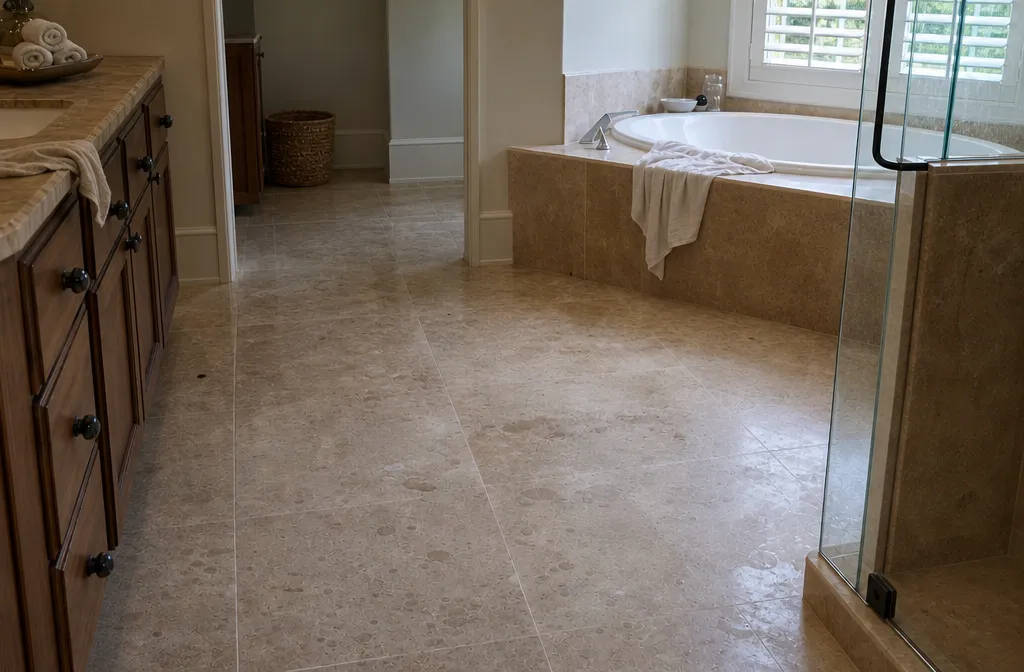
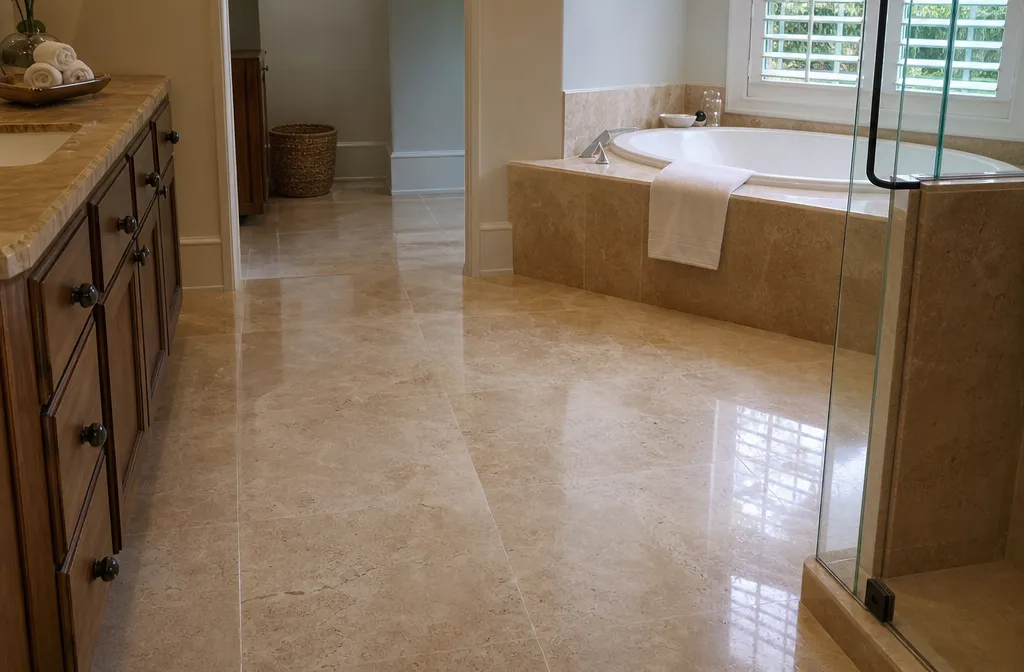
Request: Travertine in the bathroom became dull, water stains visible.
Done: Crystallization using liquid hardener and polishing paste.
Cost: 22 000 ₸
Master: Diana Nurgaliyeva, stone master
Total: The floor restored its matte shine, water spots disappeared, surface protected.
 After
After
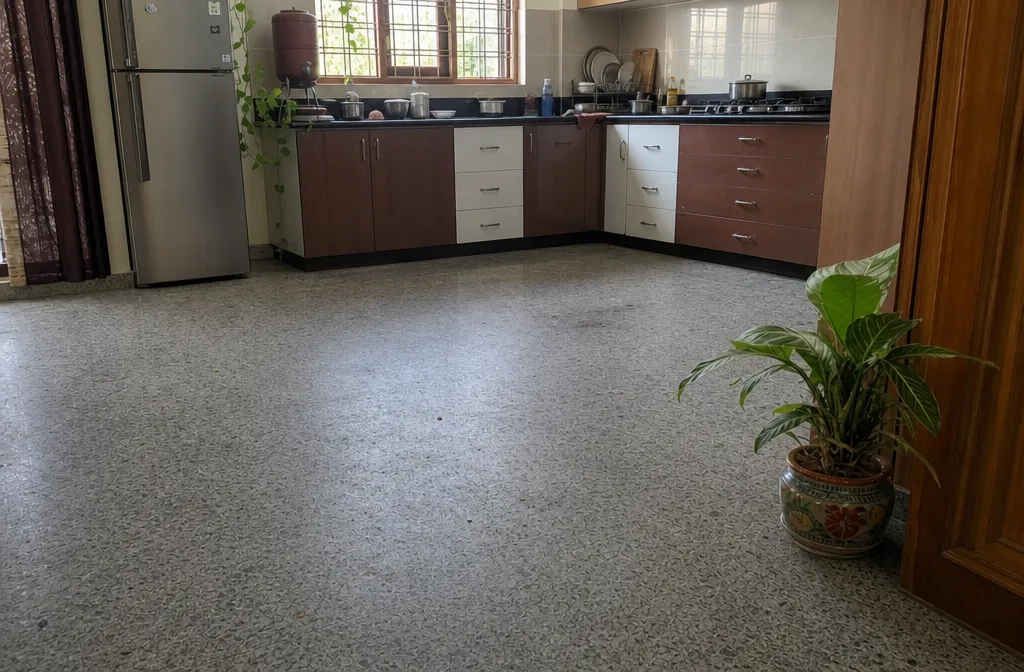
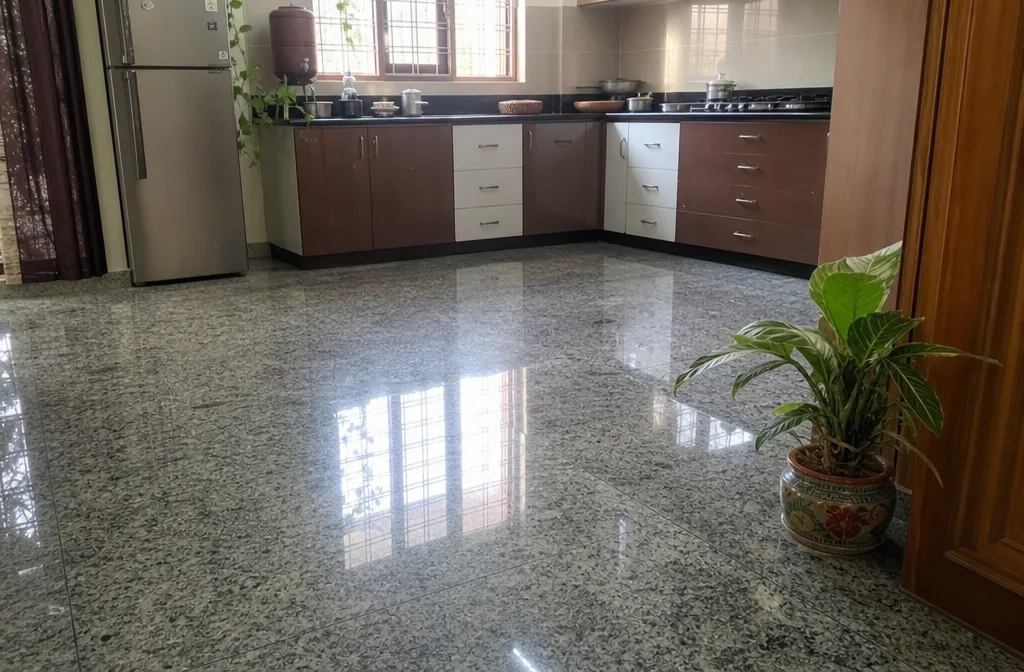
Request: Porcelain tile floor in the kitchen lost its shine, has grease stains.
Done: Deep cleaning, then polishing with diamond pastes and final wax.
Cost: 23 000 ₸
Master: Alikhan Muratov, stone master
Total: The floor shines like new, grease stains removed, protective layer applied.
 After
After
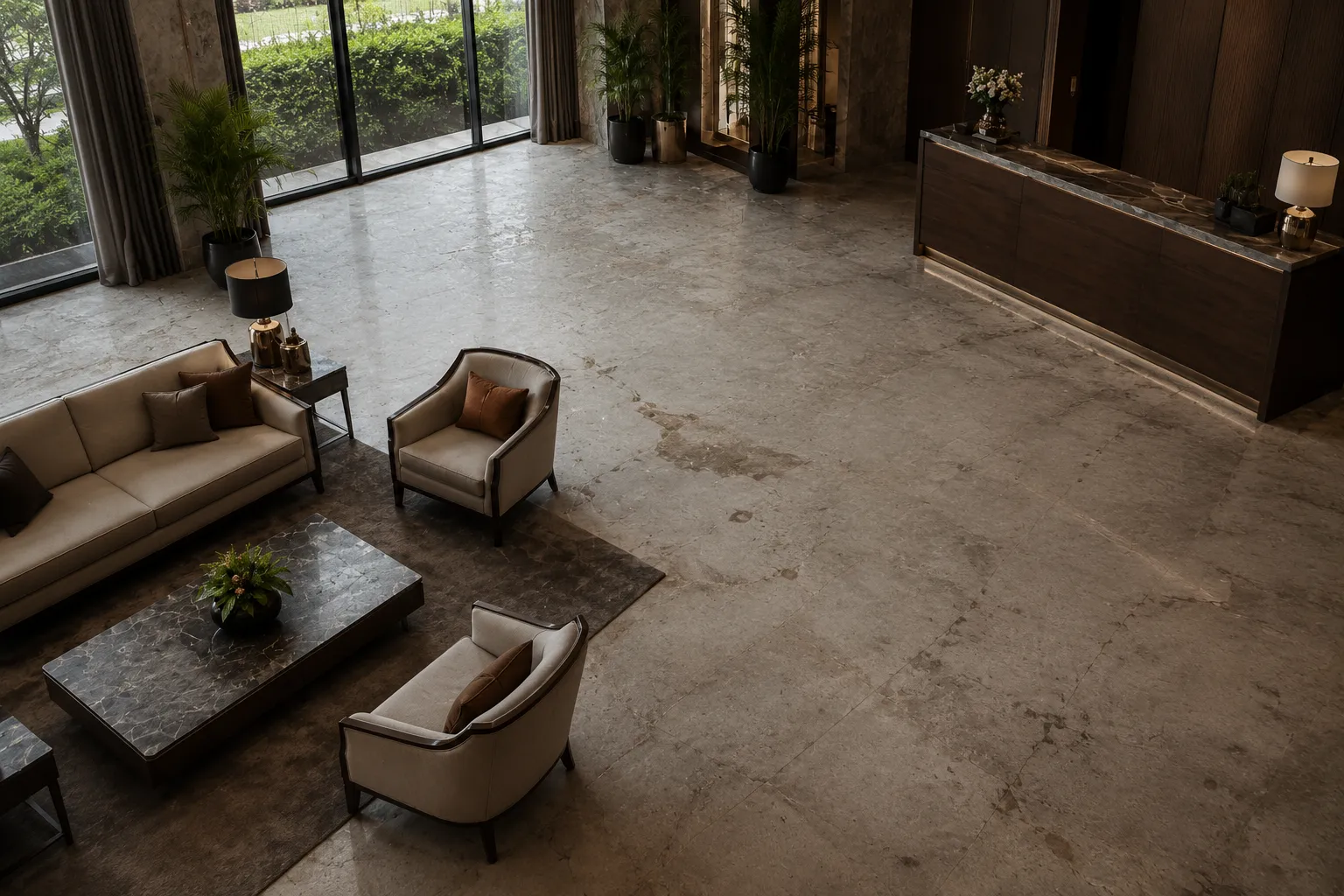
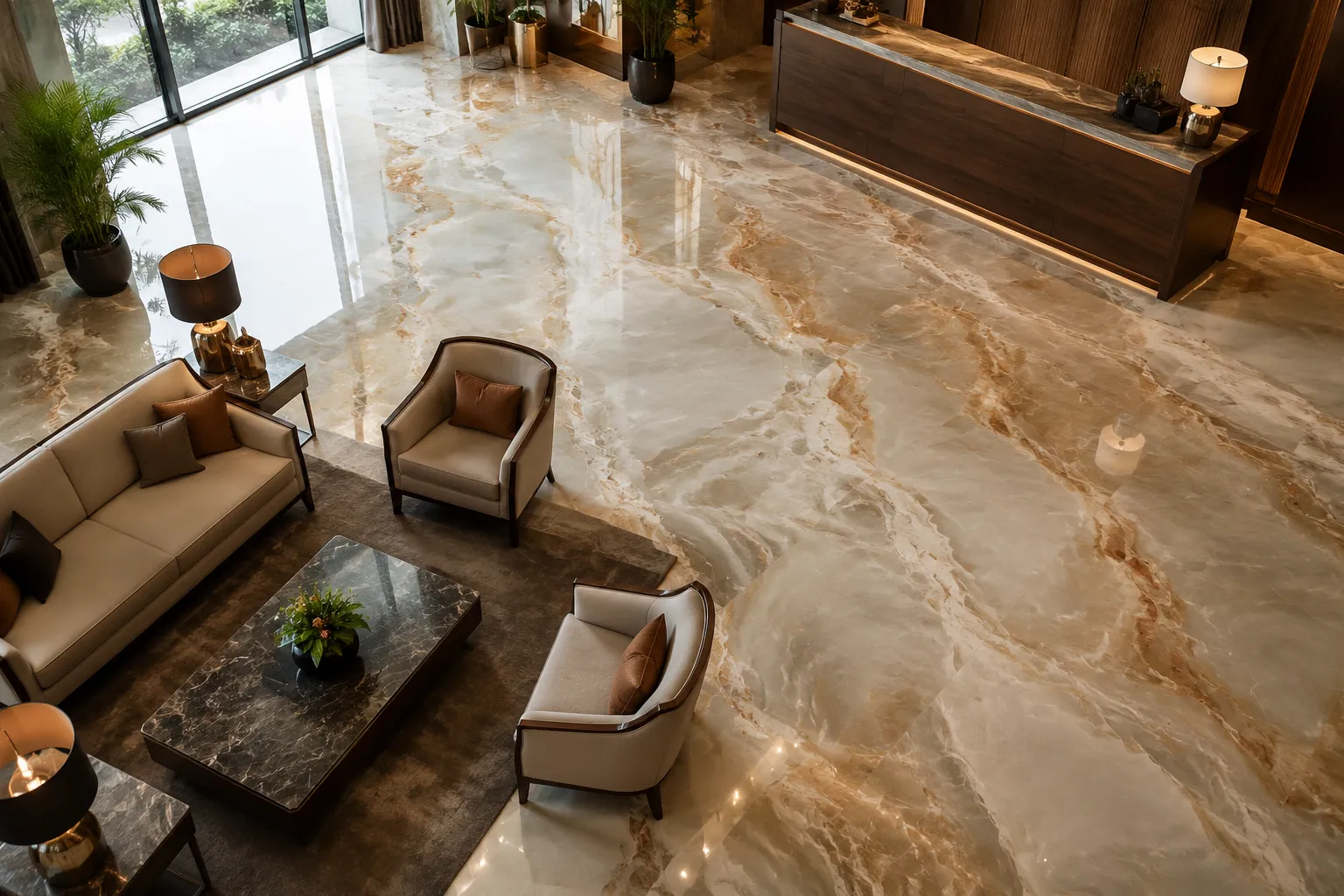
Request: Onyx in the hotel lobby has dulled, needs deep polishing.
Done: Wet sanding with diamond grids, then polishing with tin oxide.
Cost: 20 000 ₸
Master: Serik Akhmetov, stone master
Total: The onyx shines with a translucent glow, all scratches removed.
 After
After
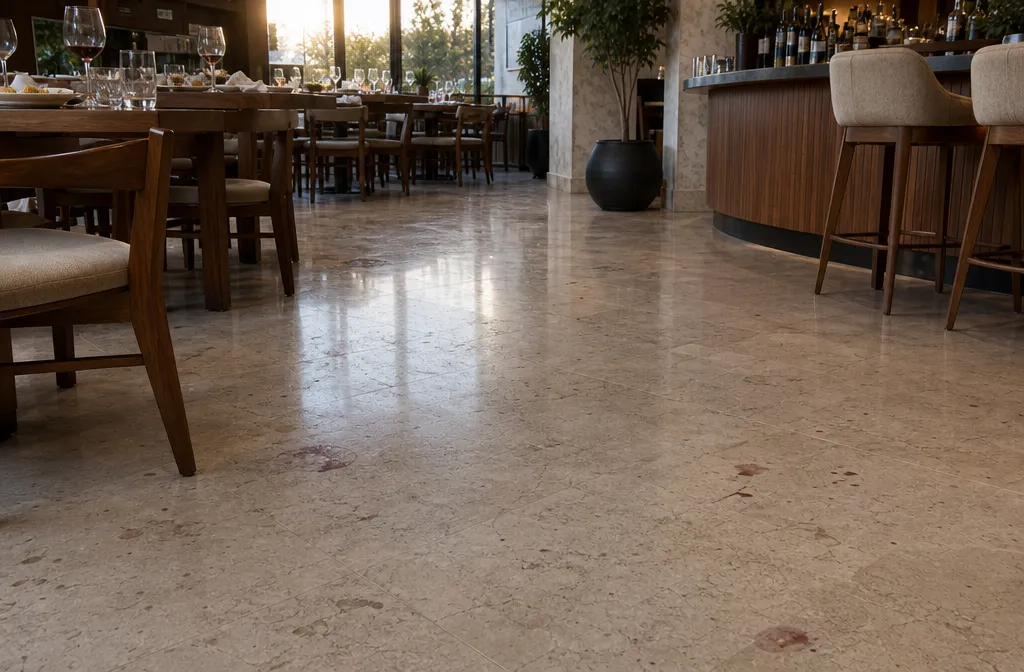
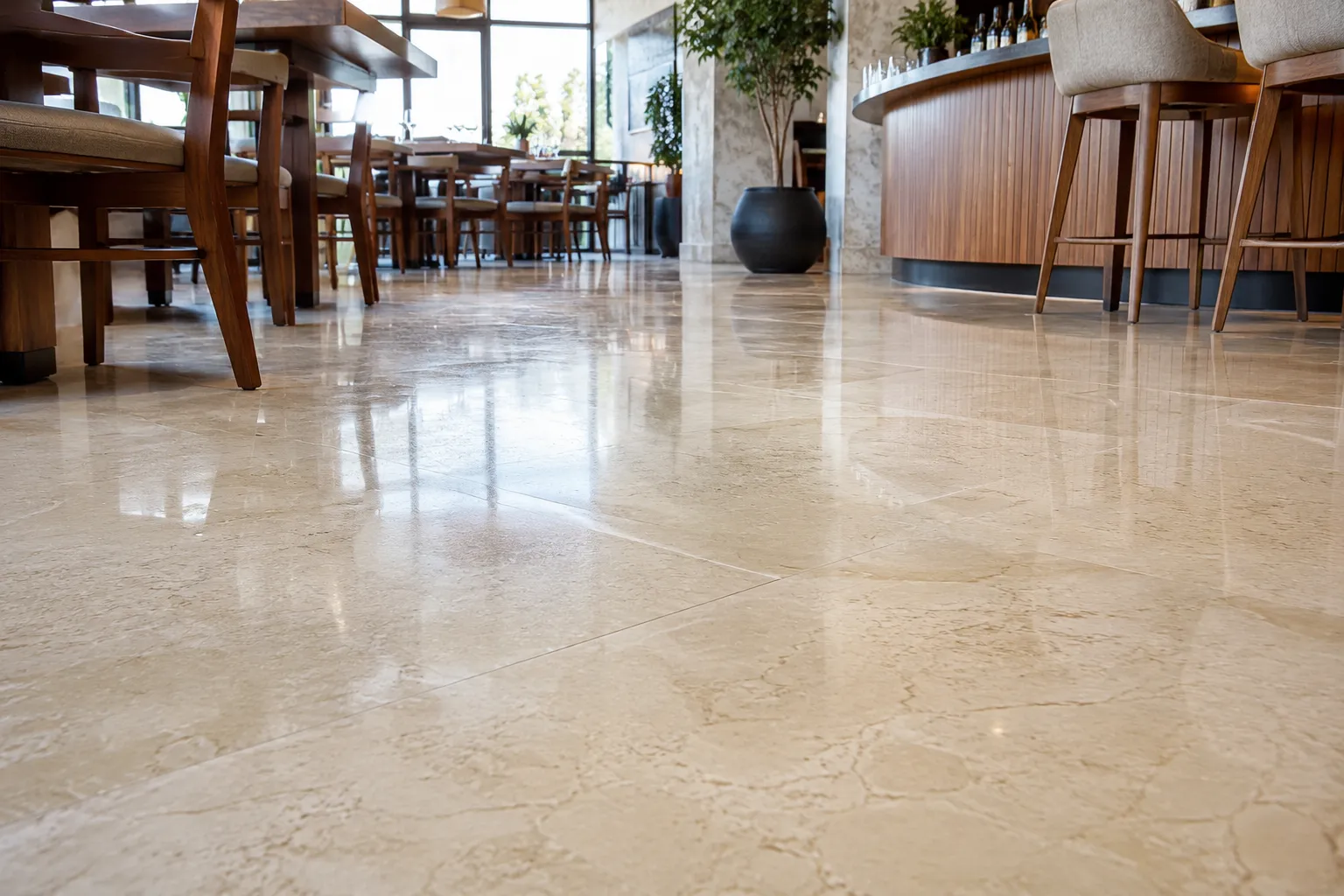
Request: Limestone in the restaurant hall has lost color, has scuffs.
Done: Grinding with diamond discs, then sealing and matte polishing.
Cost: 22 000 ₸
Master: Marat Kaliyev, stone master
Total: The floor has an even matte shade, scuffs and stains removed.
 After
After
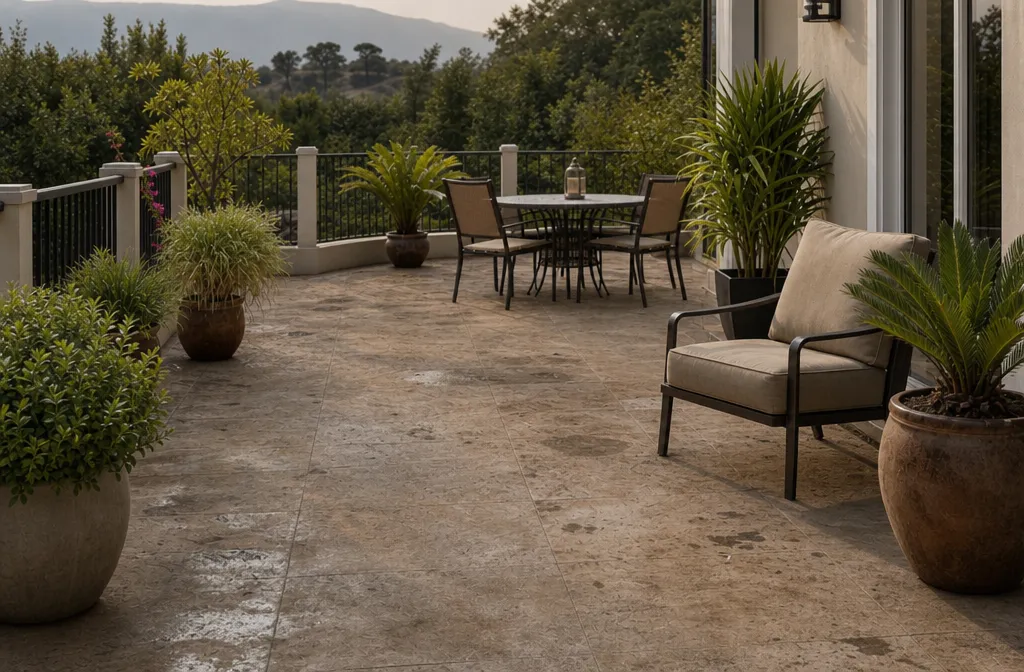
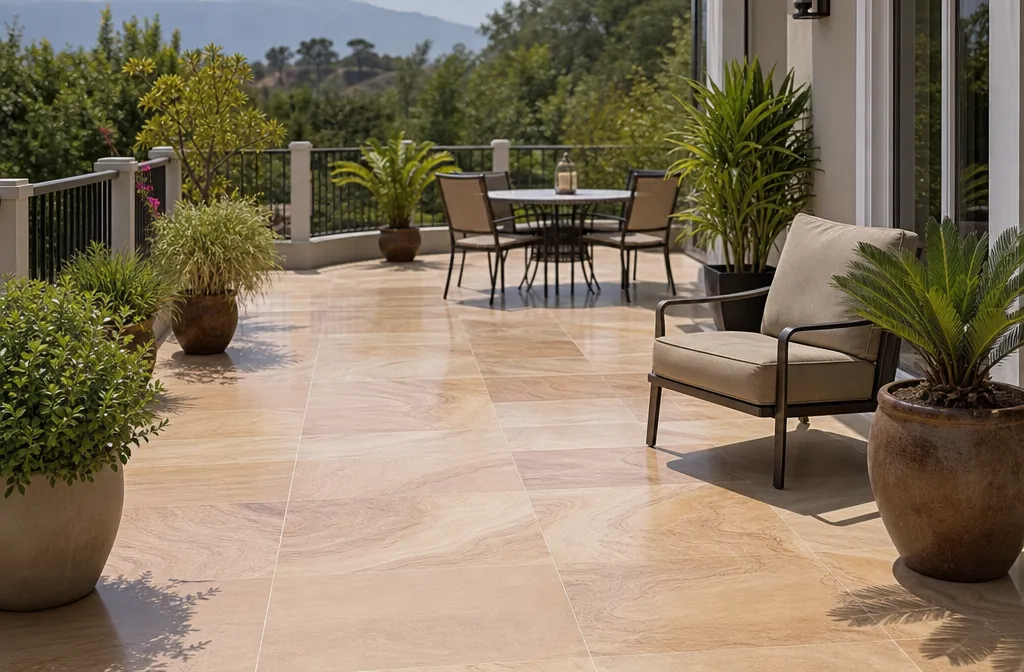
Request: Sandstone on the terrace has become rough, water stains appeared.
Done: Deep cleaning, then grinding and application of a water repellent.
Cost: 21 000 ₸
Master: Gulmira Bekova, stone master
Total: The surface became smooth, water stains disappeared, the floor is protected from moisture.
 After
After
Request: Slate floor in the office has become dull, has scratches from chairs.
Done: Grinding with diamond discs, then oil impregnation and polishing.
Cost: 20 000 ₸
Master: Assel Zhunusova, stone master
Total: The floor has a deep matte color, scratches removed.
 After
After
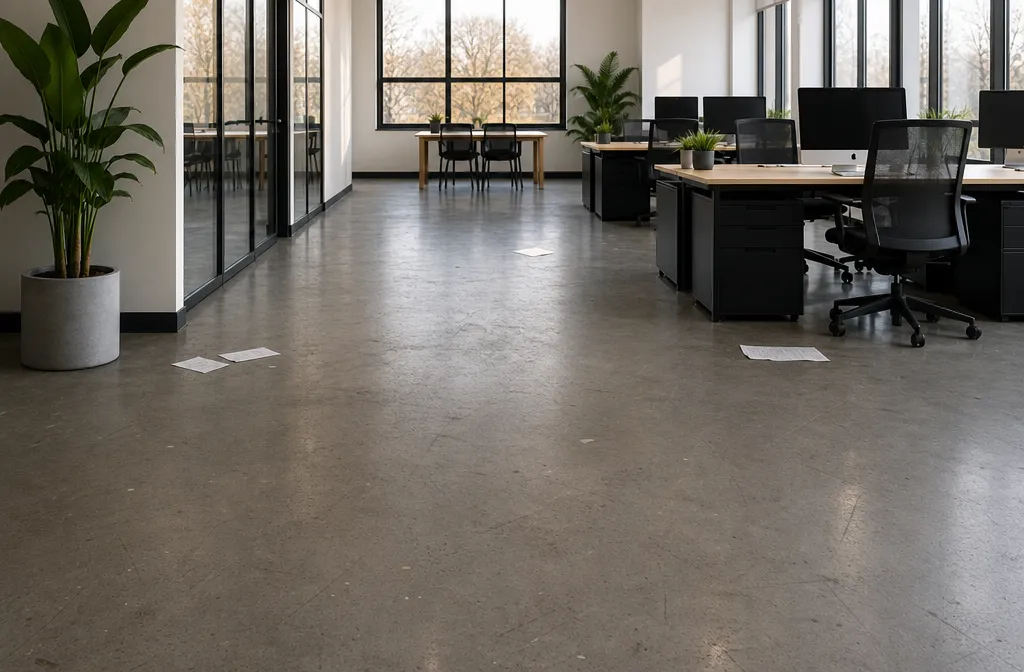
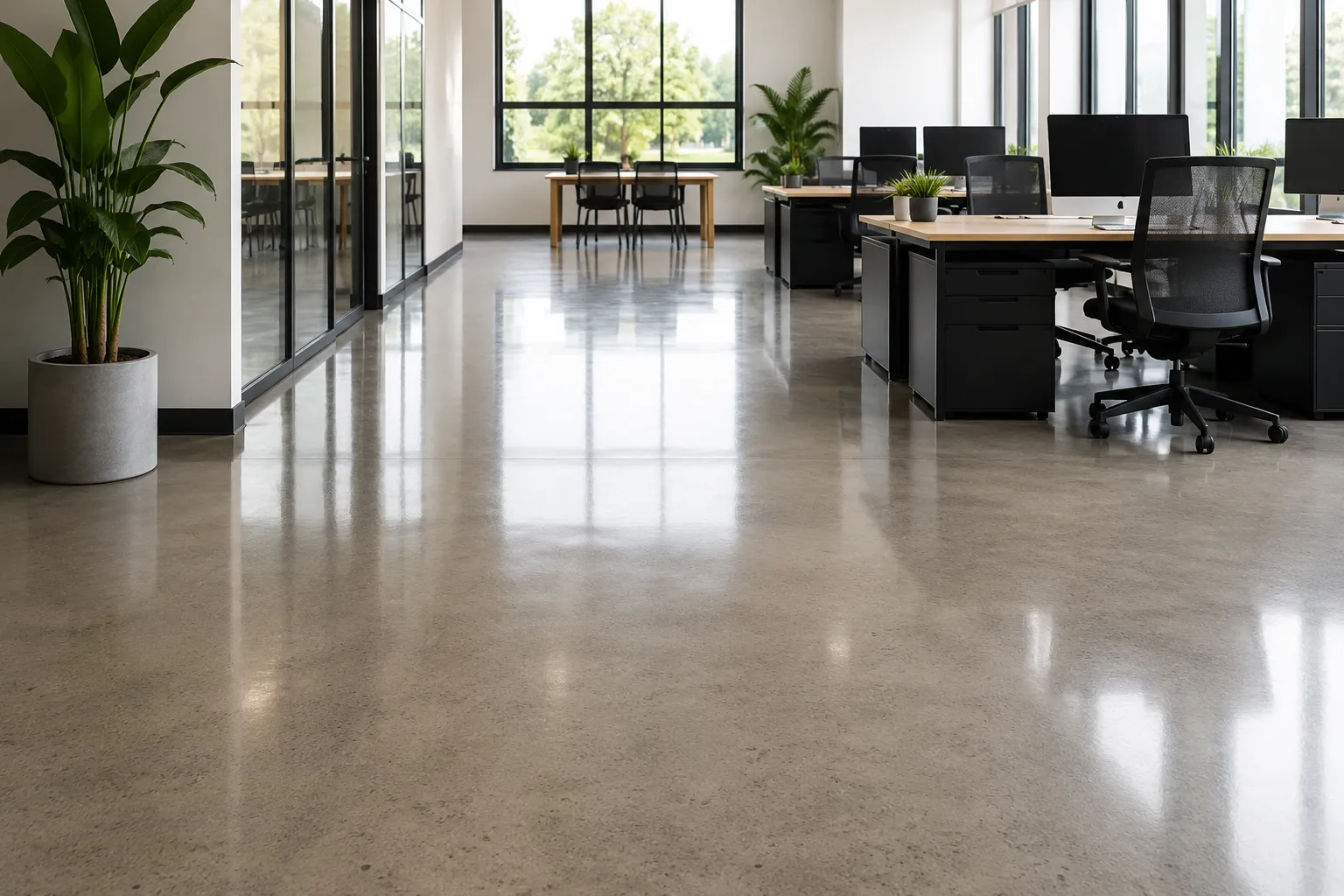
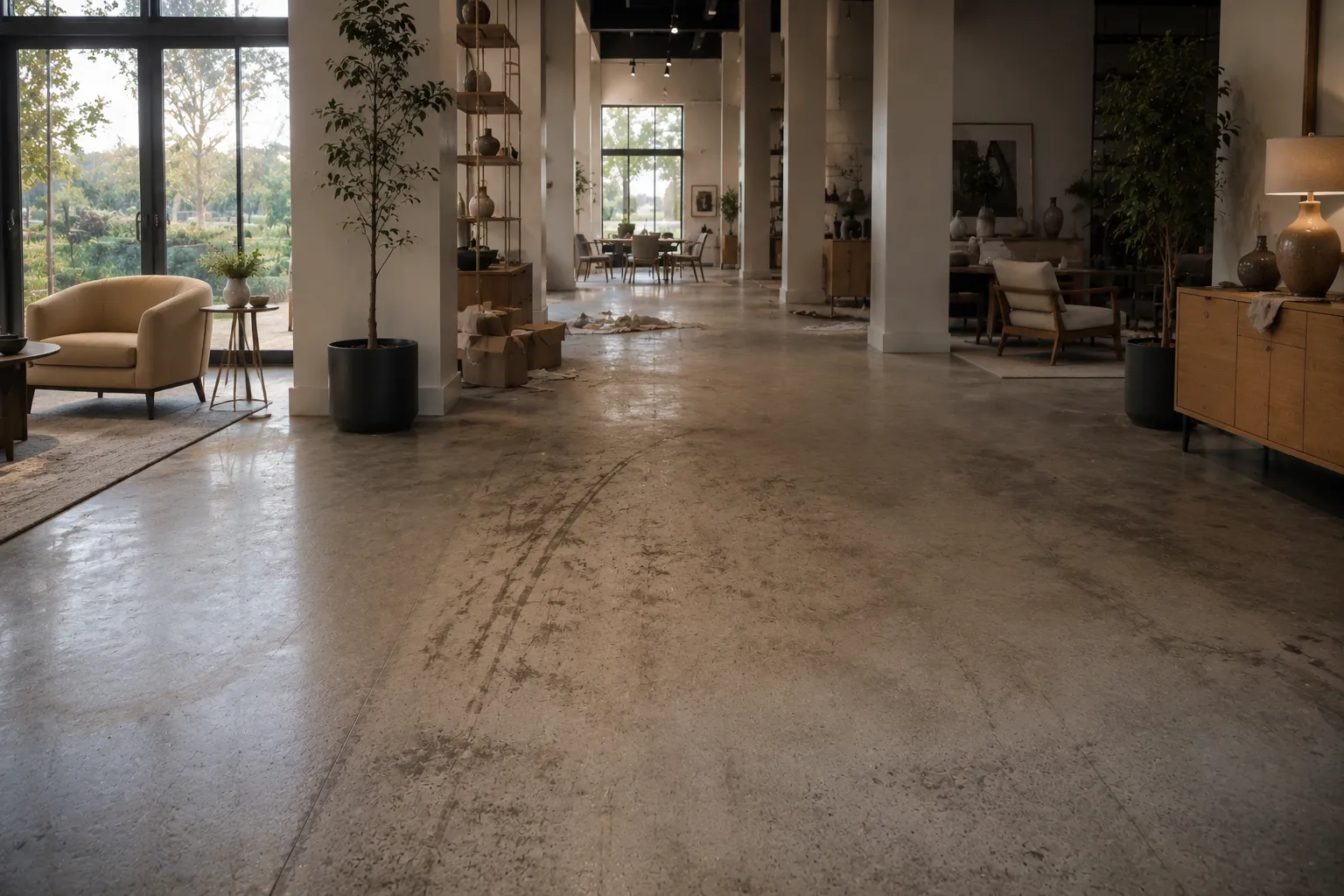
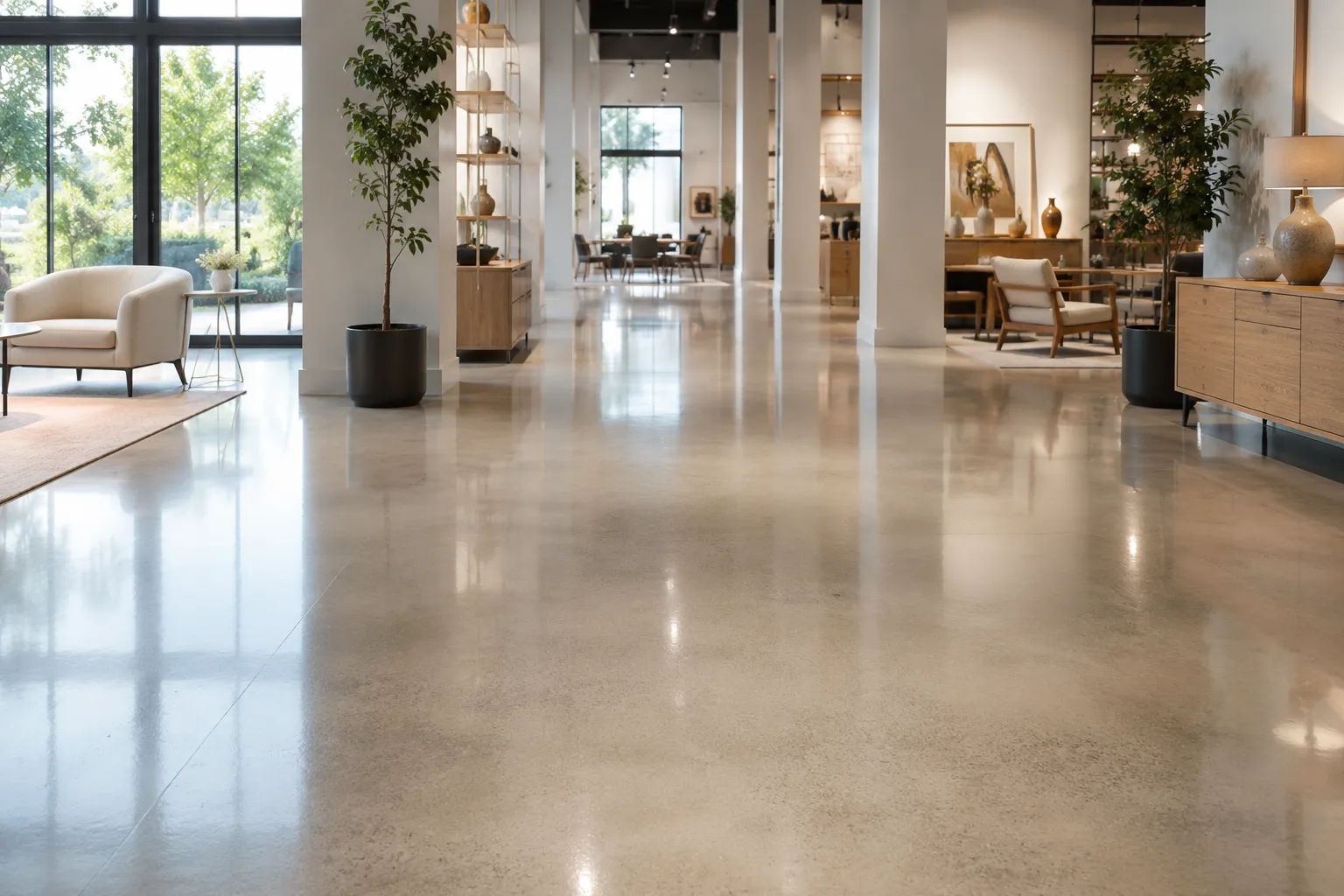
Request: Polished concrete in the showroom has lost its shine.
Done: Grinding with diamond segments, then sealing and final polishing.
Cost: 22 000 ₸
Master: Ruslan Ibrayev, stone master
Total: The concrete coating has become glossy, stains and scuffs removed.
 After
After
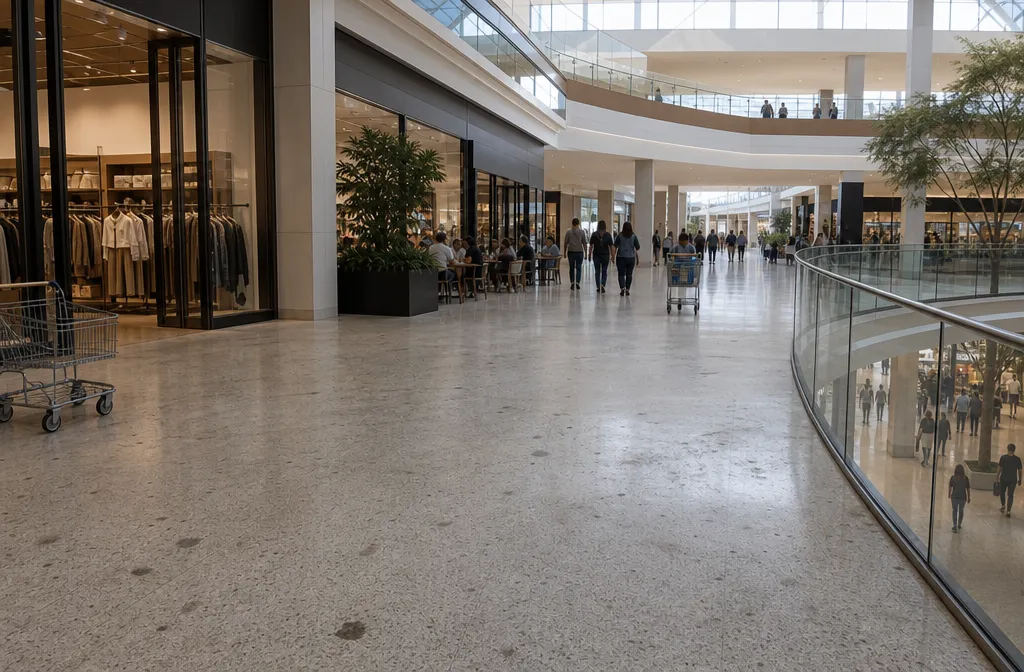
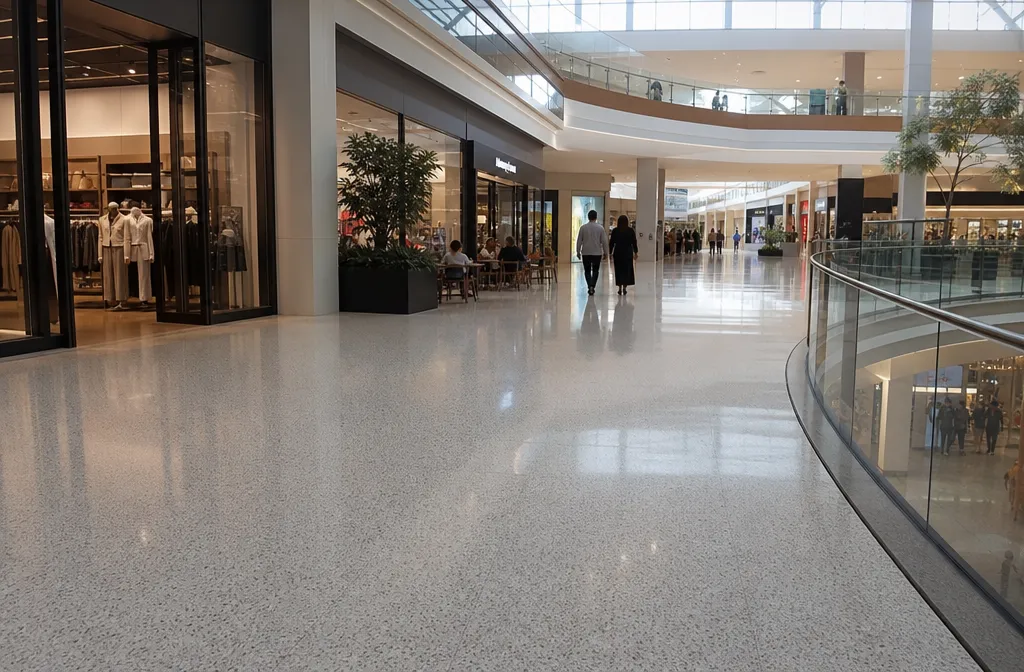
Request: Terrazzo in the mall has become dull, cart marks visible.
Done: Grinding with diamond discs, then crystallization with wax.
Cost: 21 000 ₸
Master: Yerlan Sagintayev, stone master
Total: The floor has restored its shine, cart marks and scuffs removed.
All cleaners are profi-clean staff with training, uniform and security check. Each order has a team leader who controls quality.
Many people confuse these two processes, although in essence and result they are fundamentally different. At profi-clean, we see in practice: a client often orders “polishing,” but the stone actually needs crystallization, or vice versa. Let’s break down the key differences so you understand exactly what your floor requires.
Polishing is the mechanical restoration of the stone’s geometry and smoothness. We remove the top micro-layer (from 0.1 to 0.5 mm) using diamond abrasives of varying grit, eliminating scratches, chips, and grout marks. After polishing, the surface becomes perfectly smooth and mirror-shiny — it’s literally a “new slab,” but without additional chemical protection. In Almaty apartments, we most often polish marble and granite in hallways where the stone has been “worn down” by sand from shoes over 5-7 years. In my opinion, polishing is justified when the scratch depth is greater than 0.3 mm — crystallization simply won’t hide them.
Crystallization is a chemical-mechanical hardening of the stone’s top layer without removing its thickness. We apply a special paste containing acids and waxes, which reacts with the calcite in marble or limestone, creating a thin, glass-like film on the surface. The film fills micro-pores and scratches up to 0.1 mm deep, restoring shine, but does not change the relief. We had a case: in an office on Dostyk Avenue, a year after installation, the marble had dulled from cleaning agents — crystallization restored the gloss in 1.5 hours. Meanwhile, the stone’s thickness remained the same, which is critical for thin slabs (less than 10 mm) that could be worn down to the base by polishing. If the stone has no deep defects, crystallization is a gentler and faster method.
There are scenarios where one method doesn’t work without the other. Polishing does not protect the stone from chemical reagents — acid from spilled juice or a cleaning agent will etch a polished surface in 15 minutes if it isn’t crystallized. Conversely, crystallization on dirty or worn stone will produce a “cloudy” effect: the film will settle over the scratches, highlighting them. Therefore, in Almaty restaurants and shopping centers, we do a combo: first polishing for leveling, then crystallization for protection. Without polishing, crystallization on marble with wear greater than 0.2 mm will last 3-4 months, but with preliminary polishing, it lasts up to a year. Check the stone’s condition with a test: run your fingernail across the surface — if you feel a snag, you need polishing; if it’s just dullness, you need crystallization.
Final protection is not a decorative layer, but a barrier that determines how long the floor retains its gloss and doesn’t absorb dirt. The composition is chosen based on the stone type and the room’s traffic — there is no universal solution.
We apply this type of protection to marble and travertine in residential apartments in Almaty — it creates a hard, glassy film resistant to abrasion from shoe soles. The crystallizer is worked into the surface with a rotary machine and a panda pad, chemically reacting with the calcium, and the stone’s top layer is compacted by 0.1–0.3 mm. After this treatment, the floor doesn’t “dust” or darken from wet mopping. In kitchens and hallways, we use a crystallizer with a higher wax content — it provides an additional water-repellent effect but requires renewal every 6–8 months. If you apply a crystallizer to granite, the effect will be weak due to its low calcium content — dense stones require a different approach.
Granite, porcelain tile, and basalt do not absorb crystallizer, so after polishing, we treat them with liquid hydrophobizers on a siloxane base — they fill micro-cracks and pores at the tile joints. The sealer is applied with a roller in two coats with an inter-coat drying time of 40–60 minutes, then excess is removed with a chamois. In bathrooms and on backsplashes of commercial objects, profi-clean uses sealers with a “wet stone” effect — they enhance the depth of color and make it easier to remove limescale. In country houses with temperature fluctuations on the floor, we recommend a hydrophobizer with frost resistance down to -30 °C — without it, moisture that gets into the joint during sub-zero temperatures will crack the stone. On sites in the Alatau district, where floors are often washed with hard tap water, we reinforce the protection with a matte wax over the sealer.
Old 19th-century marble, limestone, and onyx require a “breathable” protective finish after polishing — this is where solid waxes based on beeswax and carnauba wax excel. The wax is applied manually with a flannel cloth using circular motions, then buffed to a clear finish — after drying, it provides a soft satin sheen without a film. In restorations of pre-revolutionary staircases in central Almaty, we use exactly this approach: the wax does not trap moisture inside the stone and allows it to “breathe” with seasonal humidity fluctuations. The downside is that the wax coating needs renewal every 3–4 months and is sensitive to alcohol-based cleaning products. We do not use wax for bathrooms with onyx — it becomes cloudy from steam; a two-component polyurethane works better there.
In office lobbies, shopping malls, and restaurants with a footfall of 500+ people per day, after polishing we apply a two-component polyurethane lacquer — it creates an elastic film up to 0.5 mm thick that withstands stiletto heels and cart wheels. The lacquer is poured onto the floor, spread with a squeegee, self-levels, and dries in 8–12 hours. In high-humidity areas (pools, spa zones), we add a matting additive to the lacquer — a glossy layer on a wet floor becomes slippery, while a matte finish provides a coefficient of friction of 0.45–0.50 according to the DIN 51130 standard. At profi-clean sites in the “Nurly Tau” business center, polyurethane protection is renewed every 2 years, and routine maintenance (washing with neutral pH cleaner) is performed weekly — without this, the lacquer begins to peel due to winter chemical reagents.
On large sites — for example, shopping malls with a central hall and side corridors — we apply different types of protection on the same floor. In the high-traffic zone up to 10 meters from the entrance — polyurethane; further in — crystallizer; in restrooms — a water repellent with an antibacterial additive. The boundary between coatings is concealed by a tile cut or decorative insert to avoid a visible transition. In residential homes, a combined scheme is less common: wax in the kitchen, crystallizer in the living room, and they require renewal at different times, complicating maintenance. In such cases, we recommend a single type of protection for the entire floor — for example, a water repellent with a wax topcoat — and provide a maintenance schedule noting that the kitchen area needs more frequent treatment.
Polishing a heated floor is possible, but only under strict temperature and humidity limitations — otherwise, the stone or porcelain tile may crack, and the screed can buckle. Let’s examine the conditions and risks.
The heated floor must be completely turned off at least 48 hours before polishing begins. The screed temperature should drop to +15…+18 °C — this is the range specified in technical data sheets for water-based adhesives and polishing compounds. If the heating mat or cable is active during polishing, the moisture from the compound is not absorbed into the screed but evaporates from the surface — the protective layer becomes brittle and peels off after 2–3 wet cleaning cycles. In our practice, at a client’s site in the “Nurly Tau” complex, due to an active infrared film floor, the crystallizer did not bond, and we had to remove the old protection and re-polish at our own expense. Therefore, before a job, a profi-clean technician always asks if the heating is turned off and checks the temperature with a pyrometer at three points on the floor.
Polishing removes the top layer of stone — from 0.2 to 1.5 mm depending on scratch depth and finish type. If the screed under the heated floor is poured with a deviation greater than 3 mm over 2 meters (the tolerance for residential premises according to RK regulations), then grinding with diamond tools can damage the pipe or cable. At a site on Zharokova Street in Almaty, we refused to use a diamond cup on a concrete screed with a water circuit — the deviation was 5 mm, and the risk of damaging the PEX pipe was too high. Instead, we used only a final polishing with a P800 pad with manual depth control. Conclusion: before polishing a heated floor, measurements with a laser level are mandatory, and if the deviation exceeds 3 mm, the strategy is changed — either level the screed with a self-leveling compound or polish only with light pastes without diamond abrasives.
The least risky option is an electric cable in a screed at least 5 cm thick: it is encased in concrete, and a diamond blade cannot reach it even when removing 2 mm. Infrared film under laminate or parquet is the most dangerous: the 0.3 mm thick film lies directly under the final coating, and any abrasive sanding damages it. Water circuits in the screed present a medium risk: pipes are embedded at a depth of 3–7 cm, but with a significant height difference, a diamond cup can hit them. Here is a summary of the three main types:
| Type of Heated Floor | Embedment Depth | Risk During Polishing | profi-clean Recommendation |
|---|---|---|---|
| Electric cable in screed | 5–8 cm | Low — screed protects the cable | Can be polished with diamond blades up to 150 grit |
| PEX water pipes in screed | 3–7 cm | Medium — risk if height difference >3 mm | Only manual final polishing with pastes |
| Infrared film under stone | 0.3–1 cm | High — film is under the finish | Polishing is contraindicated; alternative — manual crystallization |
If the heated floor is film-based, the only safe way to restore shine is manual crystallization without a grinding machine, but such treatment lasts 3–6 months instead of 2–3 years with full polishing.
Marble, granite, and porcelain stoneware require fundamentally different approaches during polishing — a mistake in choosing the technology or diamond disc can permanently ruin the surface. At profi-clean, we work with each material according to a separate protocol that accounts for hardness, porosity, and chemical reactivity.
Marble is a carbonate rock with a hardness of 3–4 on the Mohs scale, which is easily etched by acids and scratched by sand. We do not use hard diamond blades for concrete on it — they leave deep scratches that cannot be removed by final polishing. At profi-clean, marble is polished in three passes: with diamond cups of 400, 800, and 1500 grit, each time at low speeds of 1200–1500 rpm to avoid overheating the stone. After this, a crystallizer based on magnesium fluoride is applied — it seals the pores and provides a mirror shine without wax, which wears off in a week. On marble floors in Almaty apartments with a “heated floor” system, we reduce the speed to 1000 rpm and make an additional pass with a 3000 grit finish — otherwise, the temperature difference draws moisture out of the stone, and matte spots appear within a month.
Granite is twice as hard as marble — 6–7 on the Mohs scale, so it is polished with diamond blades with a metal bond, not resin ones. On our projects for granite, we use a range of blades with grits of 50, 100, 200, 400, 800, 1500, and 3000 — seven stages versus three for marble. Skipping the 100 grit stage immediately after 50 leaves scratches 0.3 mm deep that cannot be removed by subsequent passes. Granite contains quartz inclusions — they are harder than the main matrix, and if polished with a single blade, the quartz remains unpolished and creates white spots. At the finish (1500–3000 grit), we change the diamond disc to a nylon fiber pad with cerium oxide — it evens out the shine of quartz and feldspar to a uniform gloss. On granite kitchen countertops in Almaty, we additionally apply a water-based hydrophobizer — it does not yellow under ultraviolet light, unlike silicone impregnations, which turn yellow on southern windows within six months.
Porcelain stoneware is pressed clay with a hardness of 7–8 on the Mohs scale, but it is brittle at the edges of the tile. In Almaty apartments with a “square-in-square” geometry (60×60 tiles with offset joints), we polish porcelain stoneware only dry — water seeps into micro-cracks in the glaze and, upon drying, draws out salts, leaving white streaks. We use diamond cups with a soft rubber bond: they do not chip the edges at tile joints, unlike rigid metal discs. At joints with 2–3 mm gaps, we polish at a 30° angle to the joint line, not parallel — this reduces the risk of chipping by 4 times according to our statistics. After polishing porcelain stoneware, we do not use crystallizers (they do not absorb into the sintered structure) — only a final 3000-grit diamond pad and dry polishing with felt. On Almaty sites with high-traffic areas (hallways, corridors), we advise clients to do a dry polish without chemicals every six months — this removes micro-scratches from sand and extends the gloss for 2–3 years.
Travertine is the most finicky of natural stones: it has a porosity of 15–20% compared to 0.5% for granite, and during wet polishing, water with abrasive gets trapped in the pores, emerging as a white residue after drying. We polish travertine only using the dry method: diamond abrasives with grits of 200, 400, 800, and 1500 at low speeds of 900–1000 RPM with an industrial HEPA vacuum on every pass. Before finishing, we must prime the pores with an acrylic stabilizer — this prevents dust from packing into the voids, otherwise the stone feels “dirty” to the touch after polishing. In Almaty, travertine is often laid in bathrooms — due to high humidity, we apply not a wax mastic, but a two-component polyurethane stone lacquer: it lasts 3–4 years compared to 8 months for mastic. On limestone, which is softer than travertine (3 on the Mohs scale), we do not use abrasives coarser than 200 grit — they remove a 0.5 mm layer per pass, which is critical for tiles with a thickness of 10 mm.
Onyx is a semi-transparent stone with a wavy pattern; it is polished without heat, otherwise the calcite fibers lose their transparency and become cloudy. At profi-clean, we have a separate set of diamond pads for onyx with water cooling, a water flow of 0.5 L/min, and speeds no higher than 800 RPM. The finish uses not felt, but a microfiber pad with liquid glass — it fills micro-pores to a depth of 0.1 mm and provides a “deep glass” effect without a chemical crystallizer. In Almaty, onyx is often used in premium new developments (residential complexes “Almaly”, “Yesentai Tower”) — on such sites, we polish in two passes with a 24-hour interval, because overnight the onyx “breathes” and settled dust changes the shade. If the onyx floor has underfloor heating, we turn off the heated floor 12 hours before polishing — a temperature change of more than 5°C per hour cracks the stone along the pattern lines.
The frequency of polishing directly depends on the type of stone, the intensity of foot traffic, and how aggressively protective compounds were used after the previous treatment.
In apartments and private homes, a marble floor in the hallway or living room requires polishing every 12–18 months — this is enough to remove micro-scratches from sand grains tracked in on shoes. In the kitchen, where drops of acidic products (lemon, vinegar, wine) damage the crystal lattice, the interval is reduced to 8–10 months. In bedrooms, where people walk barefoot or in soft slippers, the coating lasts 2–2.5 years without intervention. Our practical advice: check the surface in raking light from a window or lamp — if you see a network of fine scratches, don’t wait a year; call a specialist before the defects become deep grooves requiring grinding.
Granite is harder than marble (7 on the Mohs scale vs. 3–4), so in an office or store with a traffic of 200+ people per day, polishing is done every 2–3 years — abrasive particles wear it down more slowly. However, there is a nuance: if aggressive cleaning chemicals with alkalis (pH above 10) are used on site, the protective film is destroyed within 4–6 months, and the stone begins to dull. In Almaty shopping centers, where the entrance steps are sprinkled with de-icing reagents in winter, the granite at the entrance loses its shine after just one season — there, polishing is done annually, and the impregnation is restored every six months in the summer.
Owners of porcelain stoneware often think it doesn’t need polishing — and they are mistaken. Glazed porcelain stoneware loses its gloss from frequent washing with hard water (in Almaty, it’s above 7 °dH) — calcium carbonate deposits settle on the surface, and after 2–3 years, the shine becomes matte. Unglazed (rectified) porcelain stoneware in a hallway or corridor only needs polishing once every 3–4 years, but exclusively with diamond discs with a grit of 1500 to 3000 — regular wax-based paste gives an illusion of shine for a week, after which the coating becomes sticky and collects dust.
Temperature and humidity fluctuations in Almaty (from −20°C in winter to +35°C in summer) accelerate stone wear by 25–30% compared to regions with mild climates. In spring, after snowmelt, microcracks appear on floors in homes with heated floors due to screed expansion — if not polished by June, dirt will get embedded in them, and the stone will darken. The best time for polishing in our city is April–May or September–October: humidity of 40–50% allows impregnations to set in 2–3 hours, whereas in July heat (35+ °C), the compound dries in 40 minutes and doesn’t have time to fully penetrate.
| Stone Type | Room | Traffic | Recommended Interval |
|---|---|---|---|
| Marble | Bedroom, Living Room | Low (up to 10 people/day) | 18–24 months |
| Marble | Kitchen, Hallway | Medium (10–50 people/day) | 8–12 months |
| Granite | Office, Store | High (50–300 people/day) | 24–36 months |
| Granite | Entrance Area (outdoor) | Very High + de-icing agents | 12 months |
| Porcelain Stoneware (Glazed) | Any room | Any | 24–36 months |
| Porcelain Stoneware (Unglazed) | Corridor, Hall | Medium | 36–48 months |
Even with the right technology choice, home craftsmen and inexperienced crews make typical miscalculations that negate all results. Below are the five most frequent mistakes we see in Almaty during callouts after DIY attempts.
The main mistake is taking a universal “turtle” pad for all stone types. Soft marble (like Italian Statuario) requires discs with a flexible bond and grit P400–P3000; otherwise, the diamond grit tears out crystals instead of grinding them. Granite, on the other hand, is cut with rigid discs on a metal bond (P50–P200) — a soft “turtle” pad will simply clog and stop working, leaving a greasy residue. In our practice, there was a case: a client in the Samal-2 microdistrict bought a set of 3 discs for 5000 tenge at the market, “suitable for everything” — as a result, scratches 0.3 mm deep remained on the porcelain stoneware, which had to be removed by re-polishing with a disc machine and liquid diamond. Before buying a disc, check the marking — for marble, look for “marble/calcite”, for granite, “granite/silicate”.
After final diamond processing, the stone looks matte-glossy, but the pores remain open. If wax or varnish is applied immediately, they will sink deep, and within a month the coating will blister from wet cleaning. Professional crystallization with potassium fluoride (K2SiF6) closes pores at the molecular level, creating a hard layer 5–10 microns thick. On marble in the hallway of an Almaty apartment without crystallization, wear occurs within 3–4 months — matte paths appear in the entry area. We always include this stage separately, and profi-clean cleaners treat the stone with a crystallizer at 1500 rpm using a pH-neutral compound — this extends the shine for up to a year.
Porcelain tile is a material with water absorption below 0.5%, so water during polishing is not absorbed but pools on the surface. A wet diamond disc slips without creating the necessary friction, and instead of a gloss, you get a “sugary” matte finish. For porcelain tile, only dry polishing with a HEPA vacuum is correct — dust is extracted, the disc heats up to 60–80 °C, and the surface melts into a glassy layer. In Almaty, we encountered a case: a client at the “MEGA” shopping center flooded the floor with water before the masters arrived, thinking it would be cleaner — we had to wait 6 hours for drying, otherwise the diamond cups would clog with wet sludge. Dry polishing of porcelain tile takes 20% less time and yields a gloss of 80–85 units on a gloss meter versus 50–60 with wet polishing.
Chips, cracks, and gouges from furniture are not a reason to start polishing. A diamond disc sinks into a depression, removing an extra layer of stone, and after leveling, a “lens” remains in that spot — a depression 0.5–1 mm deep, visible under side light. Before polishing, we always fill defects with a repair compound matching the stone color (epoxy resin + stone chips), which hardens in 20–30 minutes. In the elite residential complex “Akbulak” on Al-Farabi Avenue, there was a situation: a client decided to save money and skipped repairing a crack — after polishing, it widened by 2 mm, and an insert of natural stone had to be ordered. Before starting the machine, walk the floor with a flashlight: all defects deeper than 1 mm need repair, otherwise the result will be worse than the original.
Dark marble (Negro Marquina, Emperador) and black granite (Absolute Black) require special caution: a diamond disc with coarse grit P60–P120 leaves micro-scratches that appear as gray streaks on a dark surface from any angle. For dark stone, start with P200–P400 and go up to P3000–P6000, with each transition requiring a mandatory change of water and cloths to prevent particles from the previous grit from scratching the finish. We had a call on Zharokova Street: a coffee shop owner ordered “quick polishing” from an inexperienced crew — they ran a P120 disc over black basalt, and the floor looked like a gray washboard. We restored it for 2 days, removing a 0.5 mm layer with liquid diamond. On dark stones, always test the abrasive on an inconspicuous area — under the baseboard — and ensure there are no whitish scratches after the first pass.
We ordered stone floor polishing in the office lobby — now it shines like a mirror, walkways are safer.
Thank you, glad the result exceeded expectations!
Restored marble floors in the living room after construction. Stains gone, surface smooth. Only one corner remained slightly matte.
Stone floor polishing in a shopping mall — huge volume, but profi-clean handled it overnight, floors were shining by morning.
Thank you for your trust! We work efficiently.
Travertine on the veranda looks like new. Even greasy stains from hookahs disappeared without a trace.
We polished the stone floor in the pool area — now it's not slippery and looks luxurious. We started a bit late, but the quality is excellent.
Sorry for the delay, glad you liked the quality!
Porcelain tile in the hallway and kitchen after polishing — like a mirror. Even neighbors asked who did it.
Polished stone floor in the showroom of a car dealership — now cars reflect in the floor, clients are delighted.
Thank you for your feedback! We work for you.
We polished the floors in the entrance, it became brighter, but after a week streaks appeared. Maybe additional protection is needed.
We apologize, we are ready to apply a protective coating for free.
Polished stone floor in the lobby of a business center — perfectly smooth, dust-free, finished over the weekend.
The marble floor in the boutique shines with new colors. Visitors notice a pleasant gloss.
Thank you, we strive for your comfort!
We ordered polishing of the stone floor in the crossfit area — it became less slippery, but the chemical smell took two days to dissipate.
Thank you for your note, we use safer compounds.
Granite floors in the hotel lobby look expensive and well-maintained after polishing. Guests praise them.
Polished stone floor in the exhibition hall — shiny, no streaks. Safety measures were followed.
Glad you liked everything!
Italian marble after renovation: removed scratches, restored gloss. Clean and neat.
Stone floor polishing at the pharmacy — now easy to clean, and customers don't slip. Thank you, profi-clean!
Thank you for your feedback! Wishing you good health.
The tiles in the corridor became shiny, but the joints between tiles stand out — could have been touched up.
We'll take your wish into account; next time we'll offer a grouting service.
Stone floor polishing in the cinema lobby — worked at night, everything ready by morning. Cosmic shine.
Ordered floor polishing, but the effect didn't last long. Coffee stains appeared again after a month.
We apologize; we recommend regular protective treatment. Contact us for a repeat procedure at a discount.
Stone floor polishing at the train station — huge area, but handled quickly. Now it's pleasant to walk.
Thank you for the high rating!
Stone floor in the steam room after polishing is non-slip and beautifully shiny. Very satisfied.
Stone floor polishing at the warehouse — removed dust and unevenness. Now the floor is easy to sweep. Minus: slight smell of varnish.
Thank you, we use quick-drying compounds; the smell dissipates within a day.
Furniture on polished granite looks luxurious. Customers note perfect order.
Thank you, glad to help!
The time depends on the area and condition of the floor. On average, 50 m² takes 4-6 hours. Deep polishing with scratch removal can take up to 2 days.
Yes, we use HEPA vacuums that capture 99.97% of dust. Tenax and Lithofin chemicals are safe when instructions are followed. We recommend ventilating the room after work.
Remove furniture and carpets. The floor must be clean of dust and debris. Our technician can assist with preparation.
Includes inspection, preparation, grinding (3 stages), polishing, optional crystallization, and final protection. More details in the work stages.
Total 8 stages: from inspection to final protection. Main stages: coarse, medium, fine grinding and polishing.
We use Klindex diamond discs (Italy), Tenax crystallizers, and Lithofin impregnators (Germany). Professional equipment.
We offer a 1-year warranty, use quality materials, and provide free on-site assessment. Over 5 years of experience.
Yes, we provide a written 1-year warranty. If defects appear, we fix them for free.
We polish marble, granite, travertine, porcelain tile, onyx, limestone, sandstone, slate, concrete, terrazzo, mosaic, and agglomerate.
Yes, we polish travertine. The specifics include filling pores and using soft discs to avoid damage.
Tell us about your experience with profi-clean — it helps other clients and us improve.
We currently operate in Almaty. Other cities are coming soon.