Floor inspection
Determine the type of dirt and select the cleaning mode.
Deep mechanical cleaning of tiles, stone, linoleum, laminate, and parquet with removal of stubborn dirt and restoration of shine.
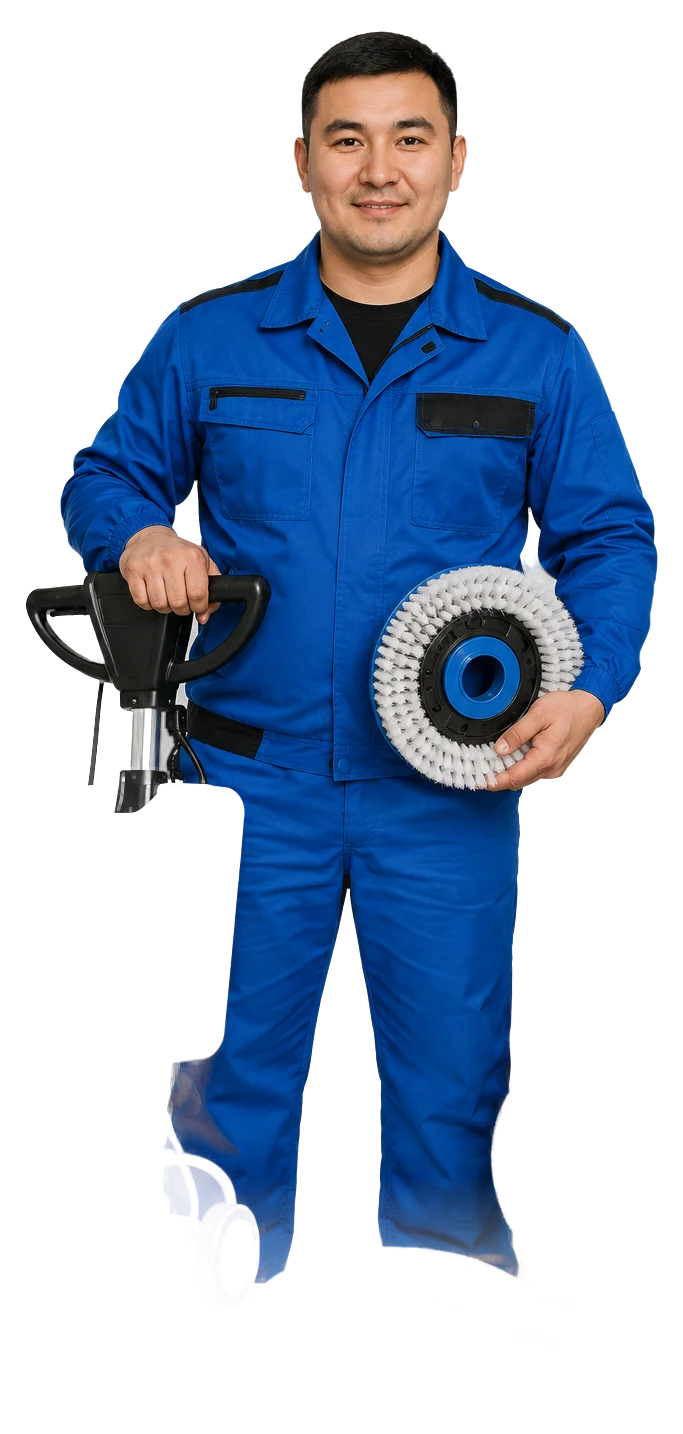
We work with any types and materials
Removal of grout and grease using a stiff pad and alkaline cleaner.
from 3,000 ₸Deep cleaning with neutral pH to preserve structure.
от 1 300 ₸Only pH-neutral Kiehl products to prevent etching.
от 1 800 ₸Alkaline Sodasan solution effectively removes grease stains.
от 1 000 ₸Soft pad and minimal moisture to prevent swelling.
от 1 100 ₸Special mode with low pressure and quick drying.
from 1,500 ₸Gentle cleaning with moisture control, finishing oil.
от 1 700 ₸Soft brush to remove streaks without scratches.
from 3,000 ₸Polishing after cleaning to restore gloss.
от 1 400 ₸Removal of oil stains using a hard scraper and alkali.
от 1 300 ₸Deep cleaning followed by crystallization.
от 1 600 ₸Extraction of dirt from solid base without damaging the pile.
from 1,200 ₸From inspection to result with guarantee
Determine the type of dirt and select the cleaning mode.
Clear the area for access to the entire surface.
Collect dust and debris with a HEPA vacuum to prevent scratches.
Evenly apply cleaning solution using a sprayer.
Rotary machine with pad removes dirt.
Extractor collects dirty water without leaving streaks.
Final rinse with clean water and moisture collection.
Check for streaks and shine, finalize result.
Our technicians are trained to work with different types of flooring. Karcher machines provide constant pressure and rotation speed, eliminating scratches and streaks. Each technician holds a profi-clean Academy certificate.
For natural stone we use Kiehl pH 7, for linoleum — Sodasan alkaline concentrate. Products leave no film and are non-allergenic. All formulations are biodegradable.
Each technician passes an exam on cleaning 12 types of flooring. The program includes material theory and practice on real sites. The certificate is renewed annually.
After final rinsing, we check the floor under different lighting angles. If you notice streaks within 24 hours, we come back and fix it at our expense. The guarantee is stated in the contract.
We don't spread dirt; we collect it with an extractor. After cleaning, the floor is dry and safe to walk on. Floor moisture does not exceed 5%.
For areas over 50 m², a 10% discount applies to all types of work. For areas over 100 m², a 15% discount. The promotion can be combined with other offers.
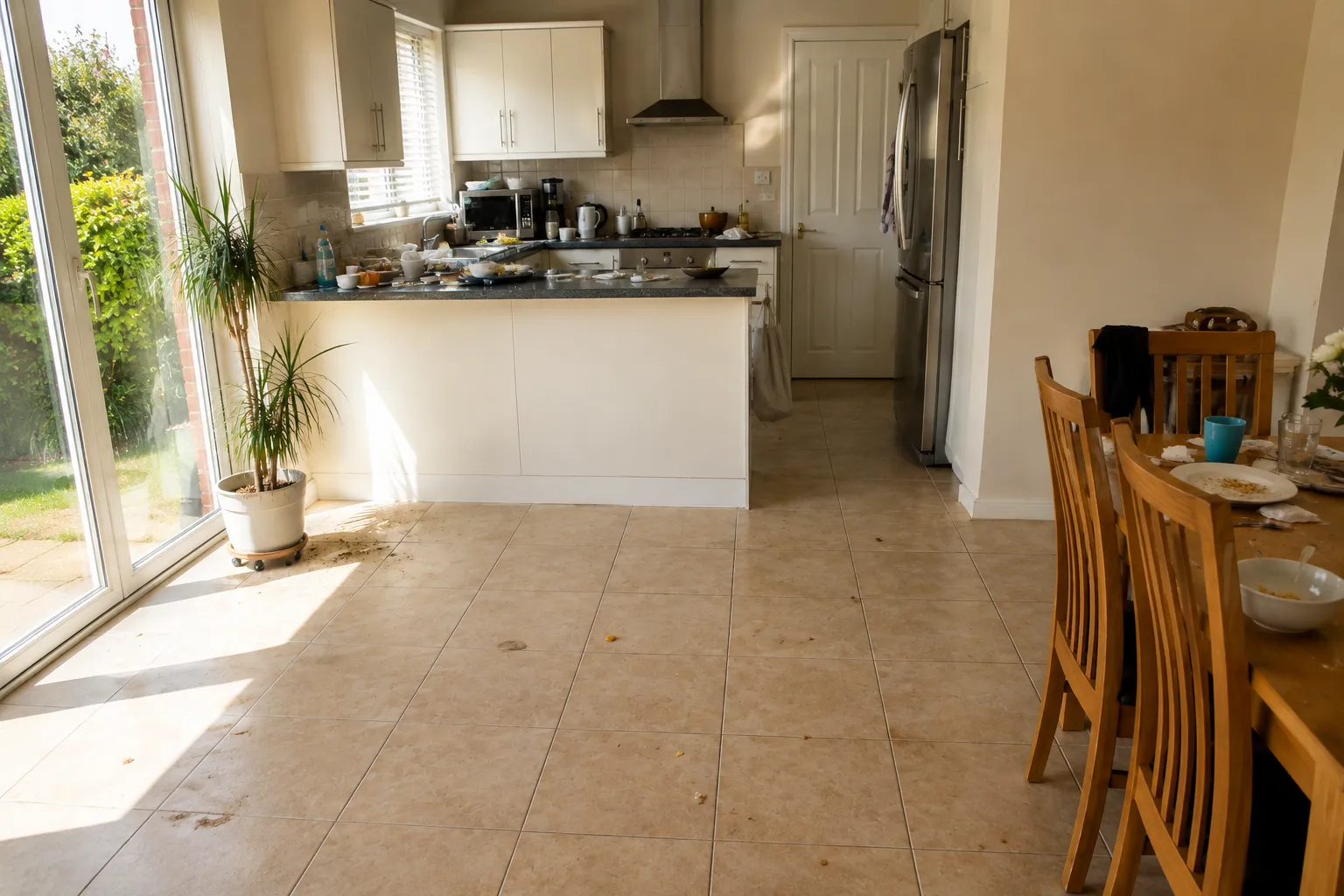
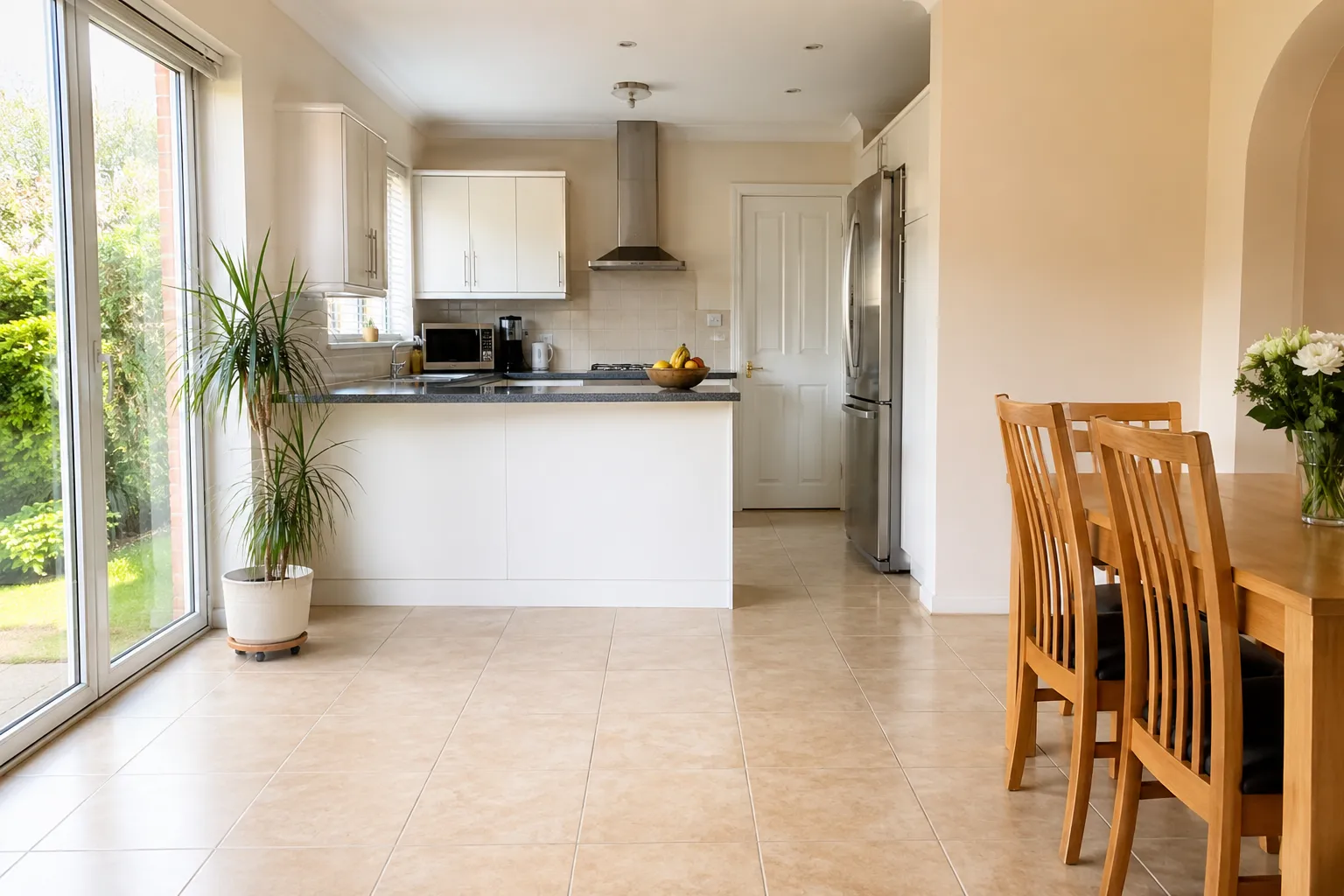 After
After
Request: Kitchen tiles had greasy film and dark stains in grout.
Done: Performed rotary cleaning with alkaline cleaner and stiff brush.
Cost: 14 000 ₸
Master: Aigul Saparbayeva, dry cleaning master
Total: Tiles and grout completely cleaned, kitchen looks fresh.
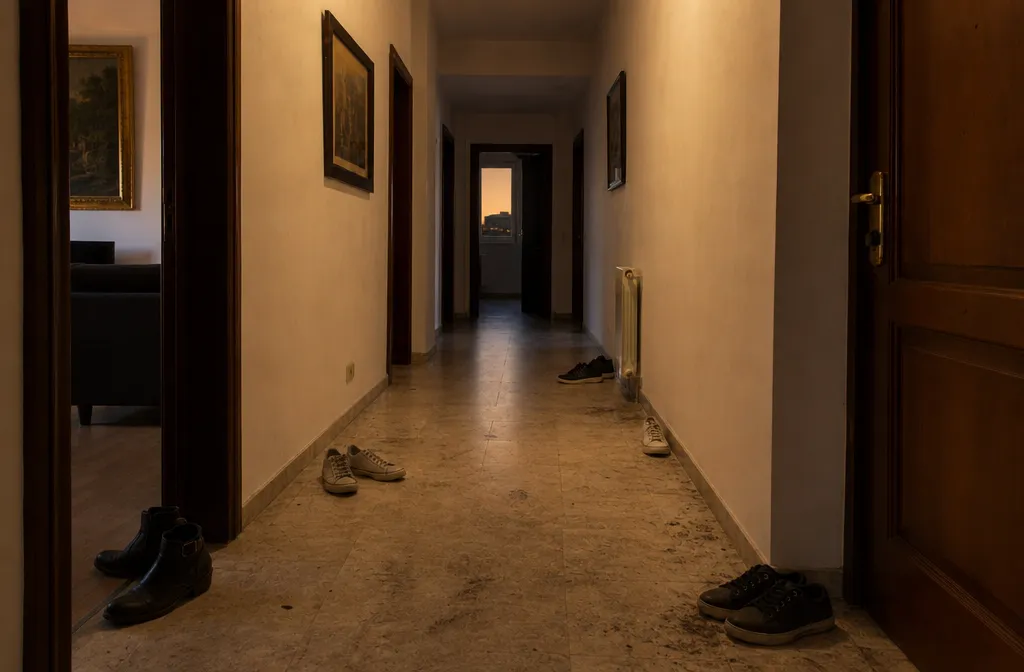
 After
After
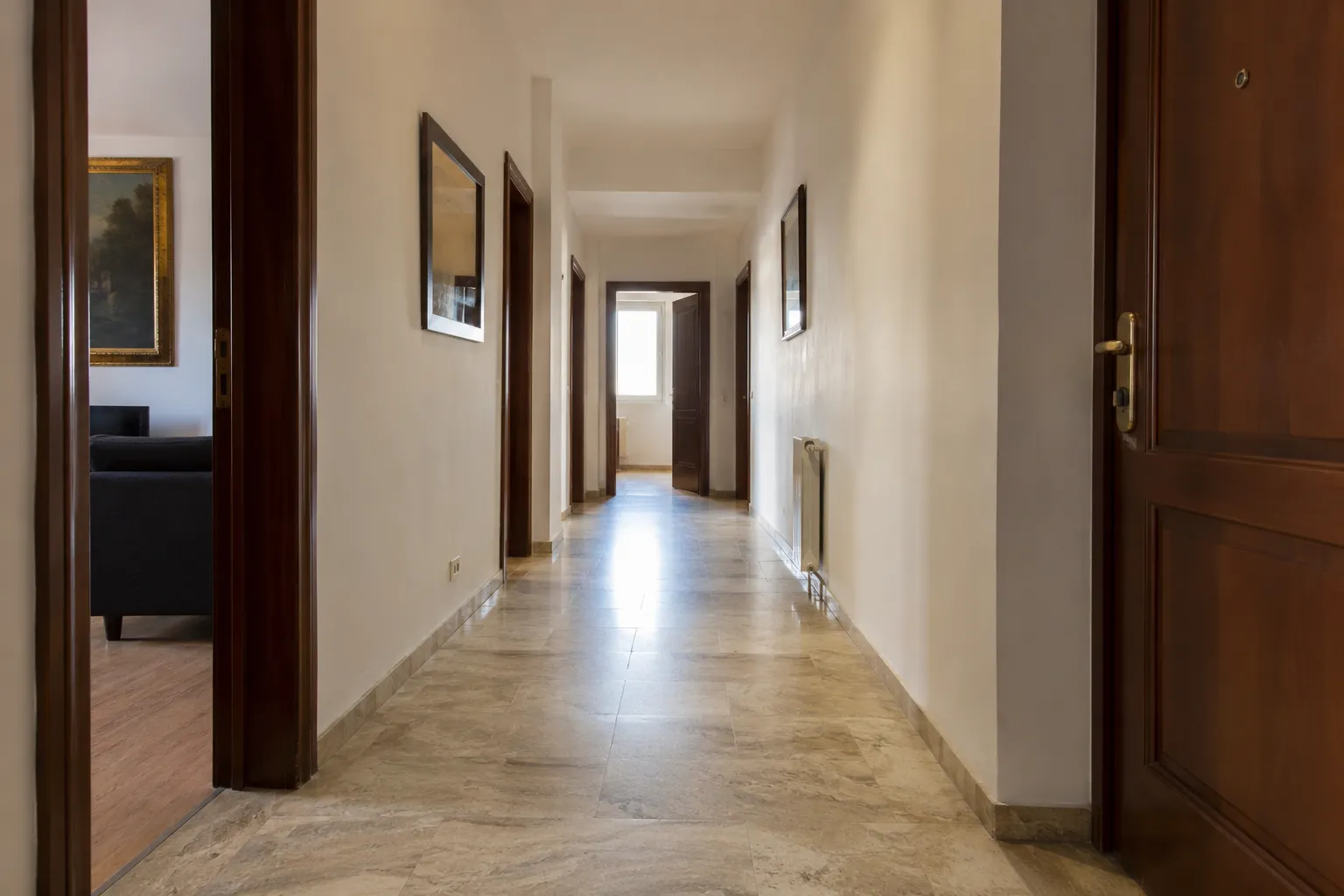
Request: Stone floor in hallway lost shine, dark scuffs appeared.
Done: Cleaned floor with rotary machine using neutral cleaner and polishing pad.
Cost: 13 000 ₸
Master: Timur Zhaksybekov, dry cleaning master
Total: Floor restored natural shine, stains and scuffs removed.
 After
After
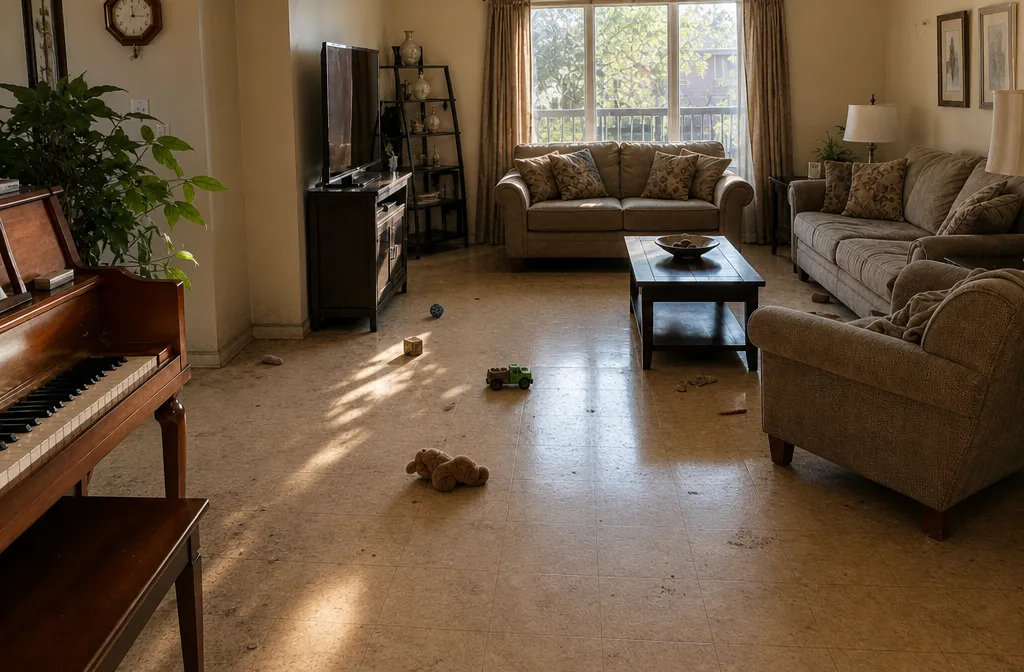
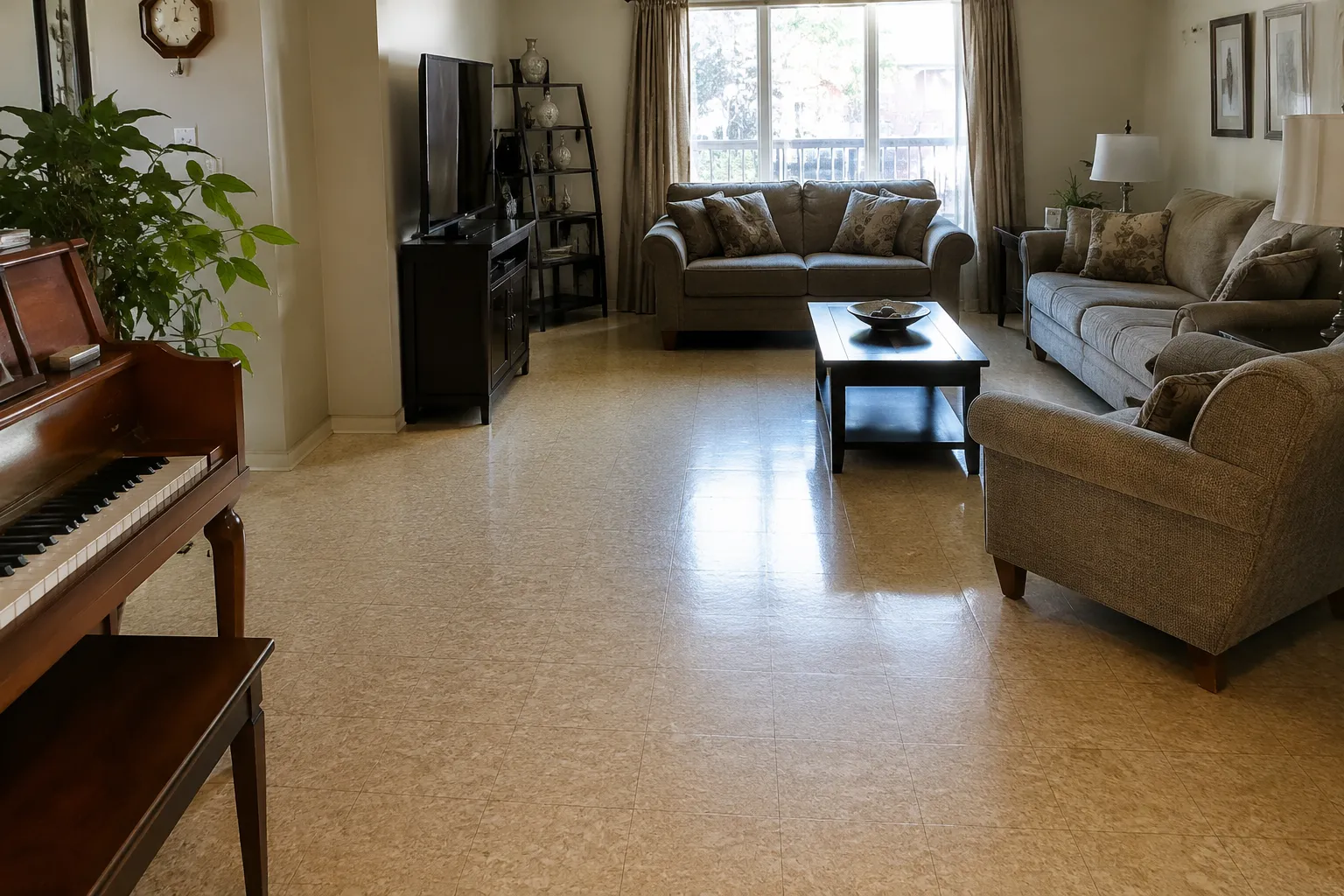
Request: Linoleum in living room became dull, visible shoe marks and stains.
Done: Performed rotary cleaning with soft brush and detergent.
Cost: 14 000 ₸
Master: Daniyar Kuanyshev, dry cleaning master
Total: Linoleum completely cleaned, no streaks, surface matte and clean.
 After
After
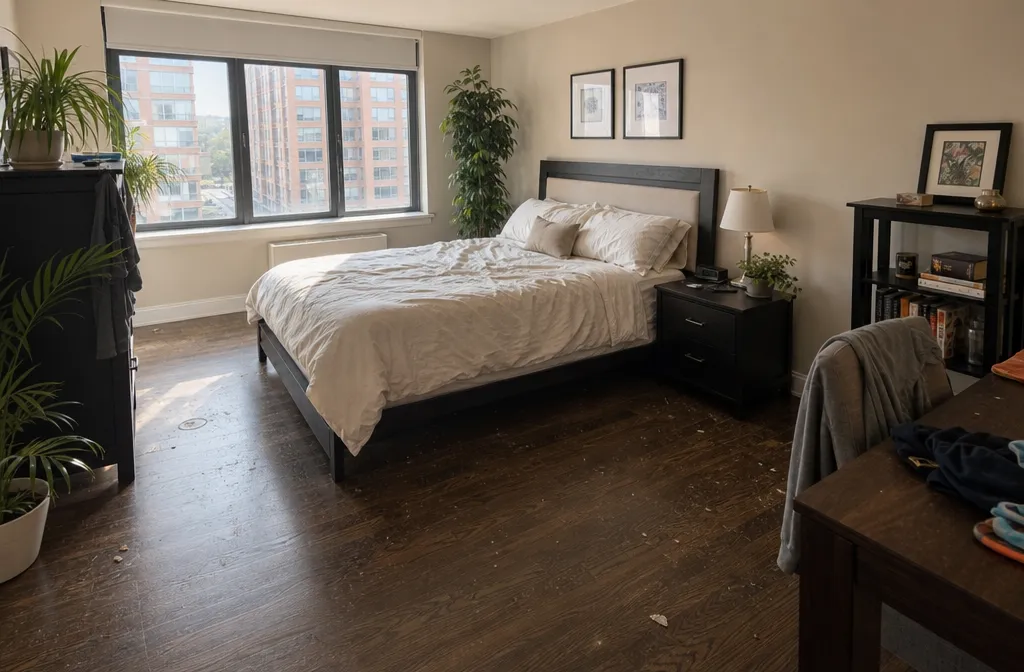
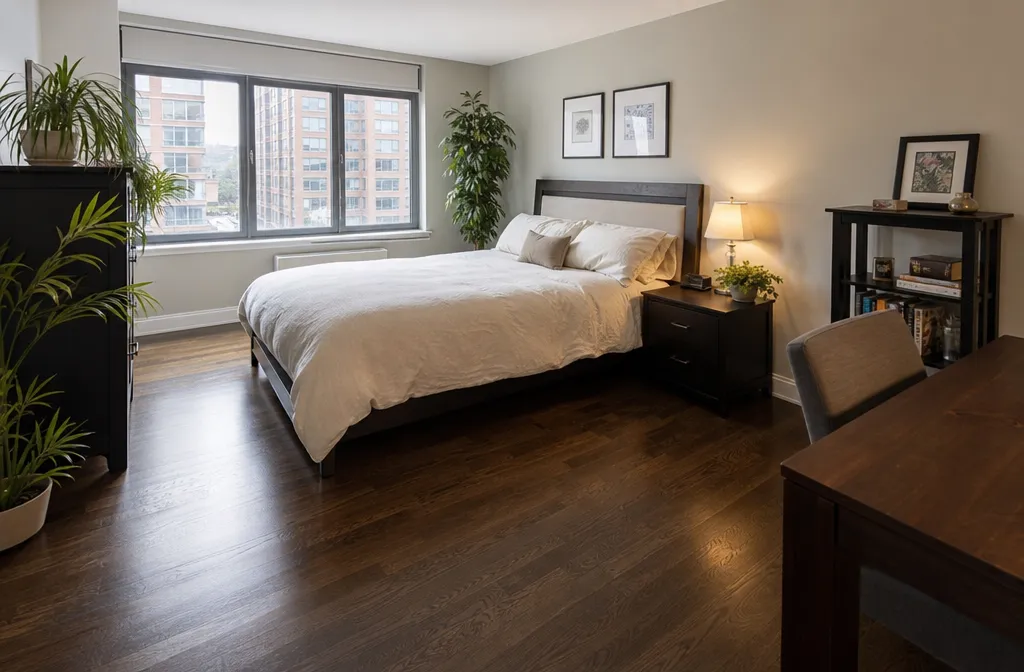
Request: Laminate in bedroom covered with dust and fine scratches.
Done: Performed rotary cleaning with neutral shampoo and soft brush.
Cost: 13 000 ₸
Master: Aigul Saparbayeva, dry cleaning master
Total: Laminate cleaned of dust, scratches less visible, floor shines.
 After
After
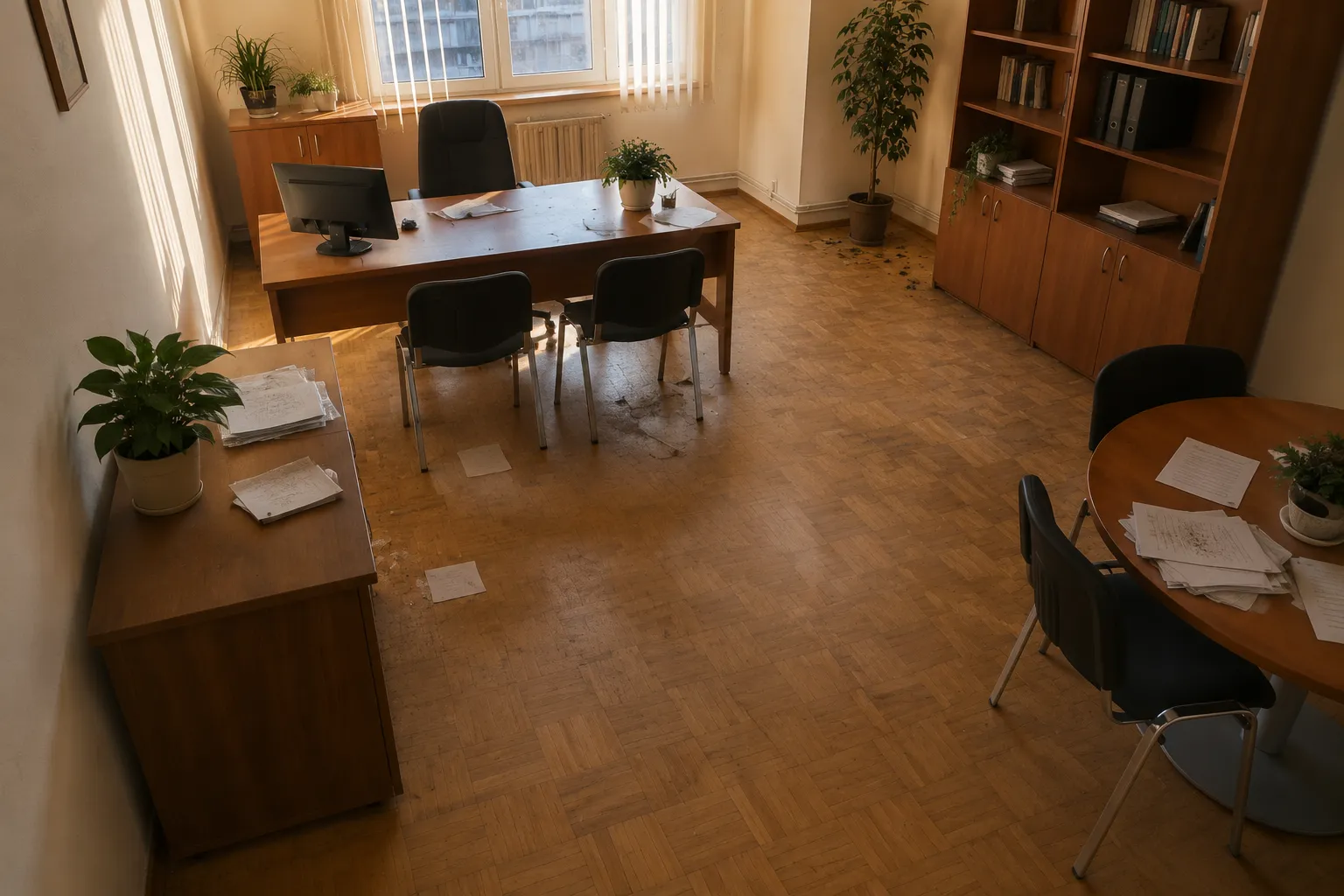
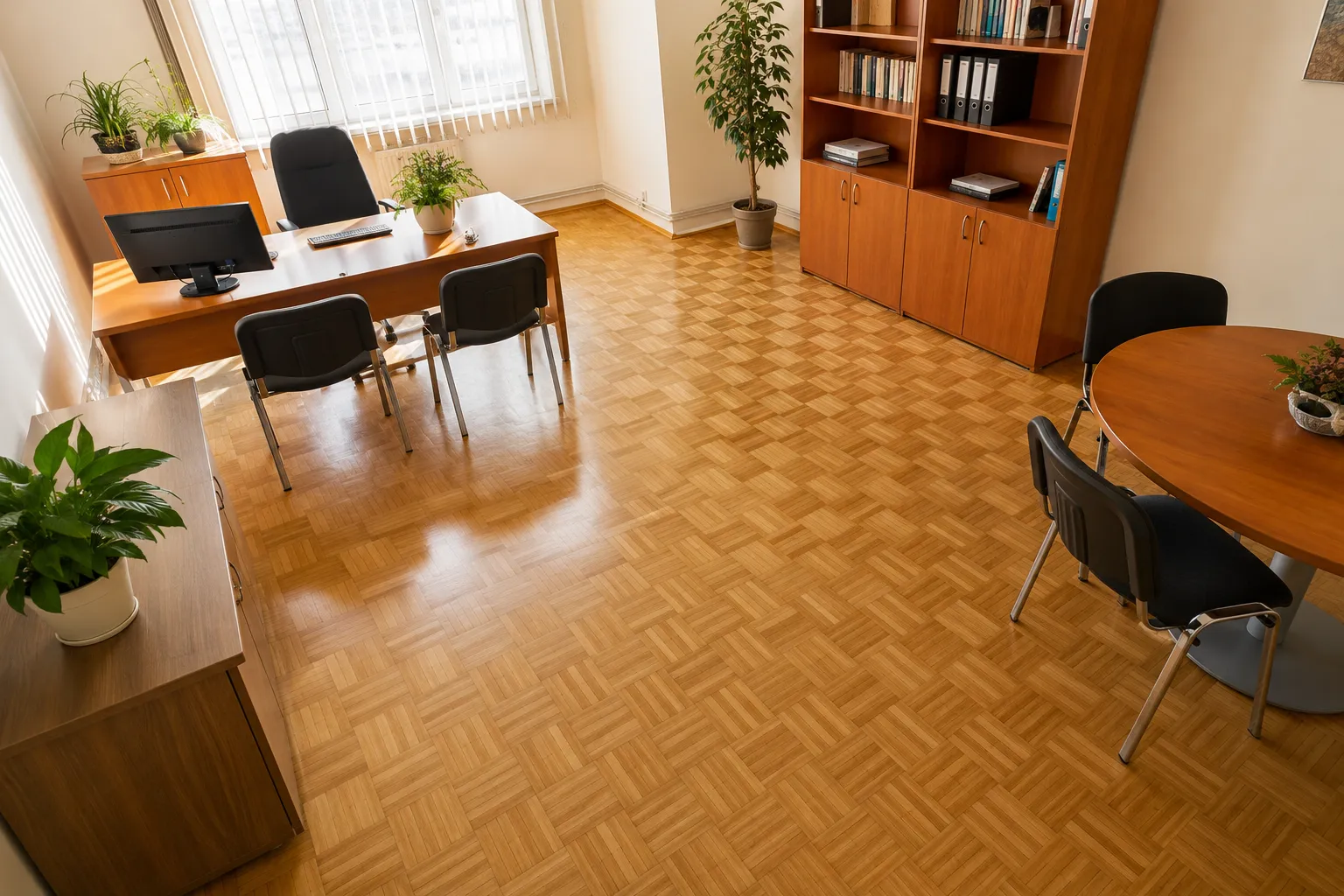
Request: Parquet in office became dull, scuffs from furniture appeared.
Done: Cleaned parquet with rotary machine using polishing pad and special cleaner.
Cost: 12 000 ₸
Master: Timur Zhaksybekov, dry cleaning master
Total: Parquet regained shine, scuffs removed, office looks presentable.
 After
After
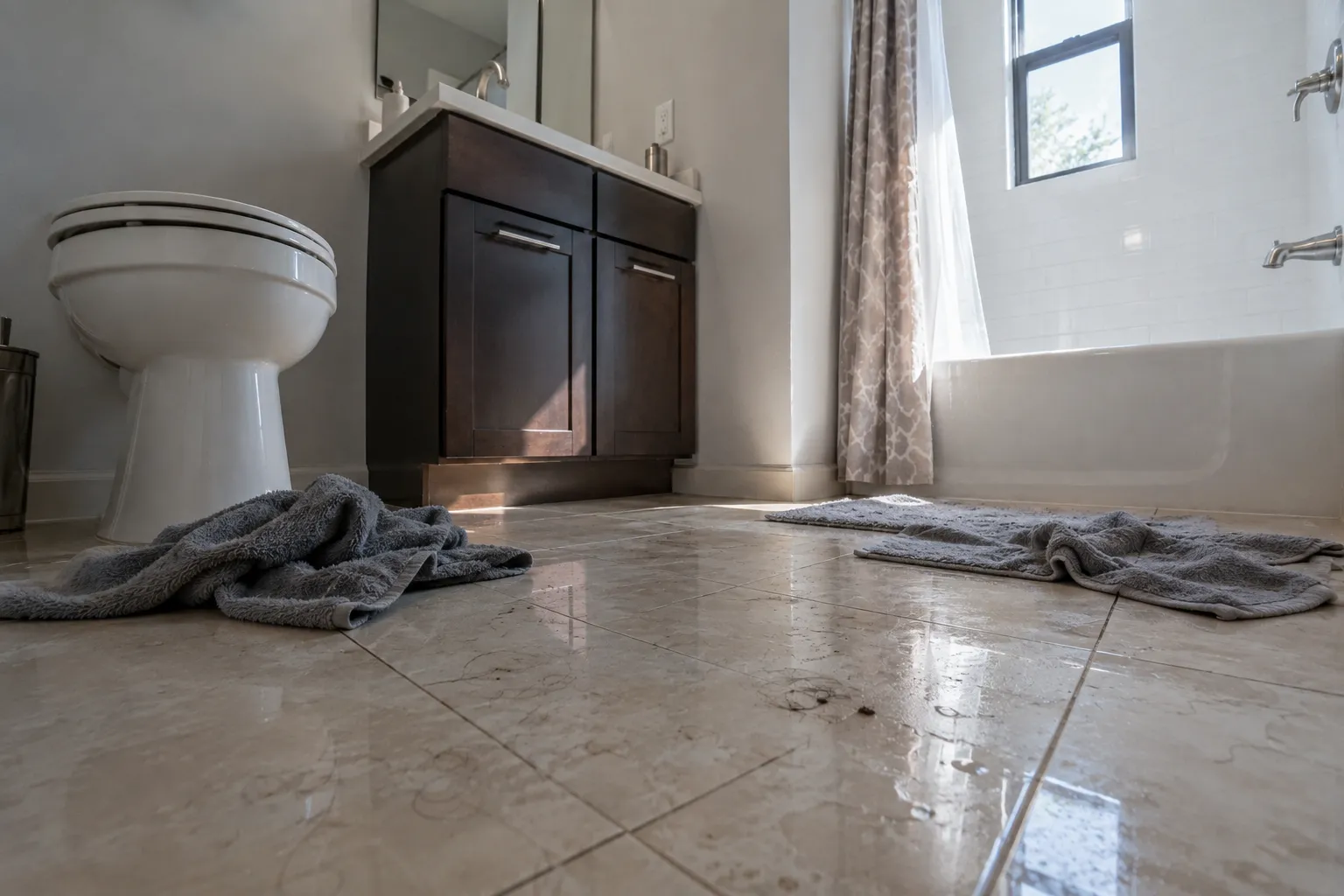
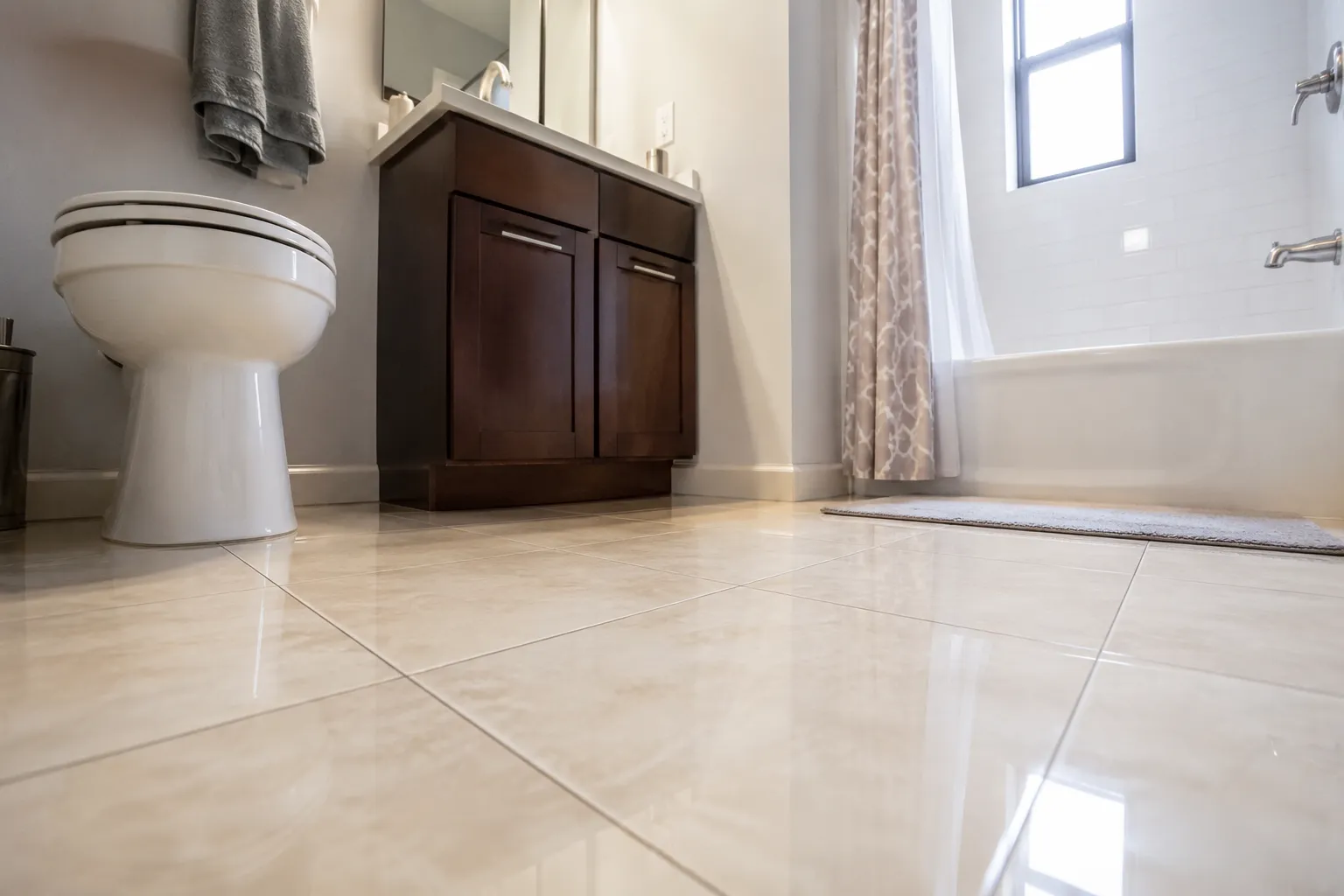
Request: Porcelain tile in bathroom covered with soap scum and dark stains.
Done: Performed rotary cleaning with acidic cleaner and stiff brush.
Cost: 14 000 ₸
Master: Daniyar Kuanyshev, dry cleaning master
Total: Porcelain tile and grout fully cleaned, bathroom sparkling clean.
 After
After
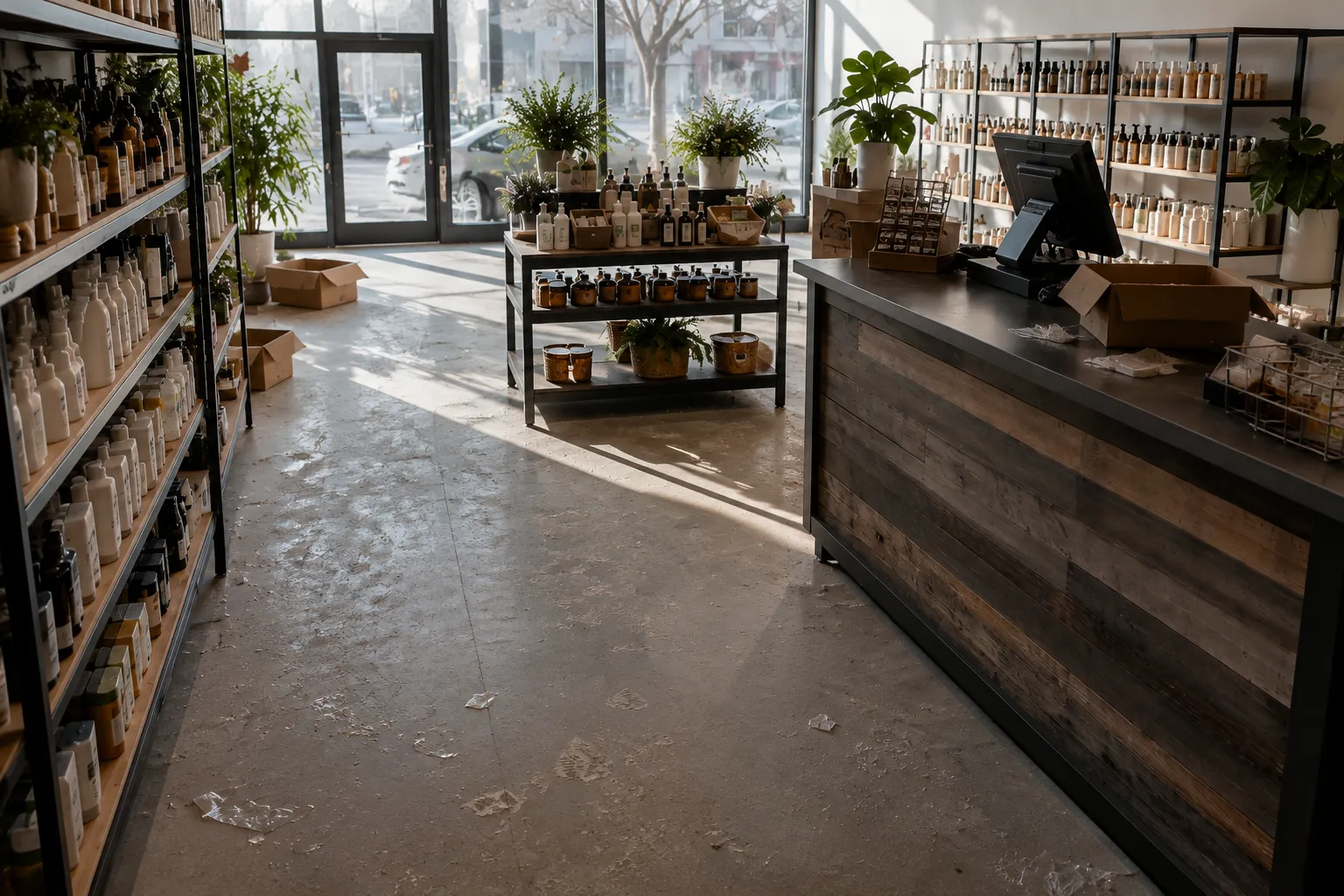
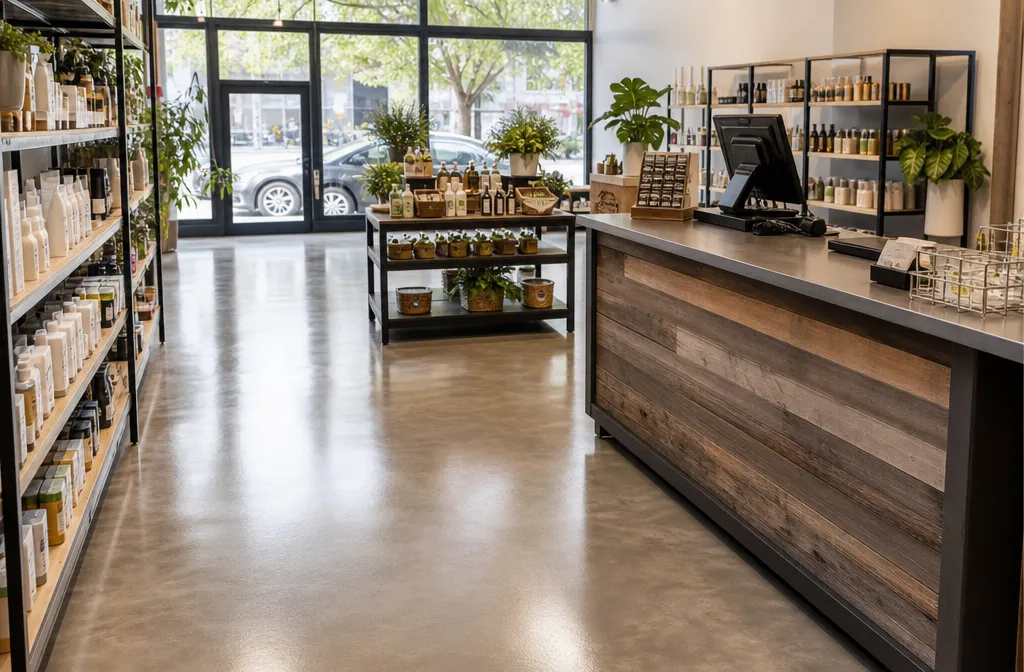
Request: Vinyl floor in store stained with construction dust and glue.
Done: Cleaned floor with rotary machine using solvent and stiff brush.
Cost: 15 000 ₸
Master: Timur Zhaksybekov, dry cleaning master
Total: Vinyl floor completely cleaned of dirt, no damage.
 After
After
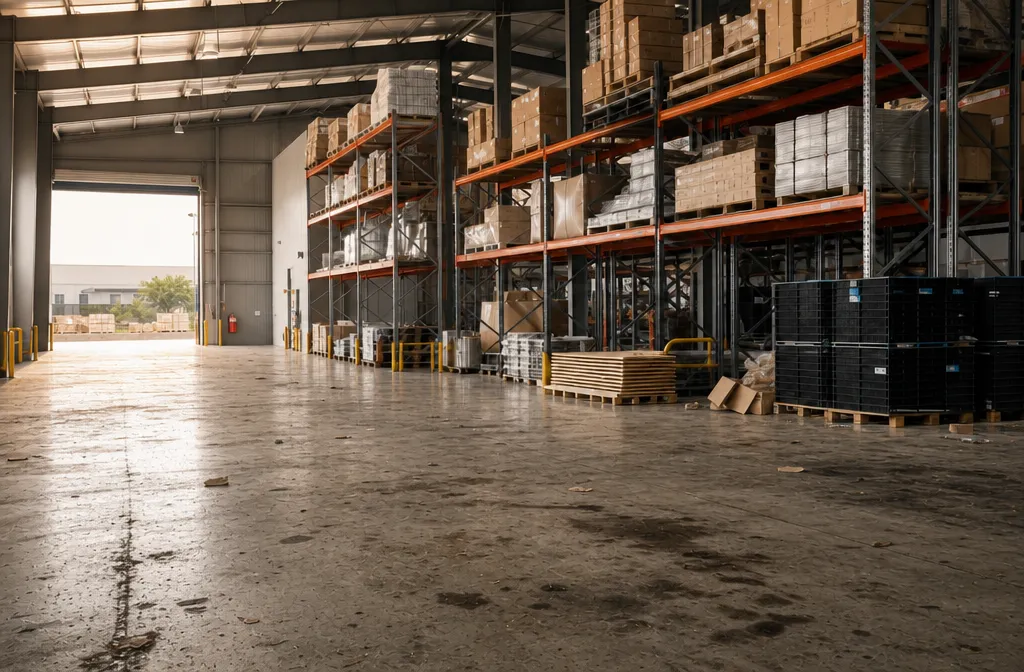
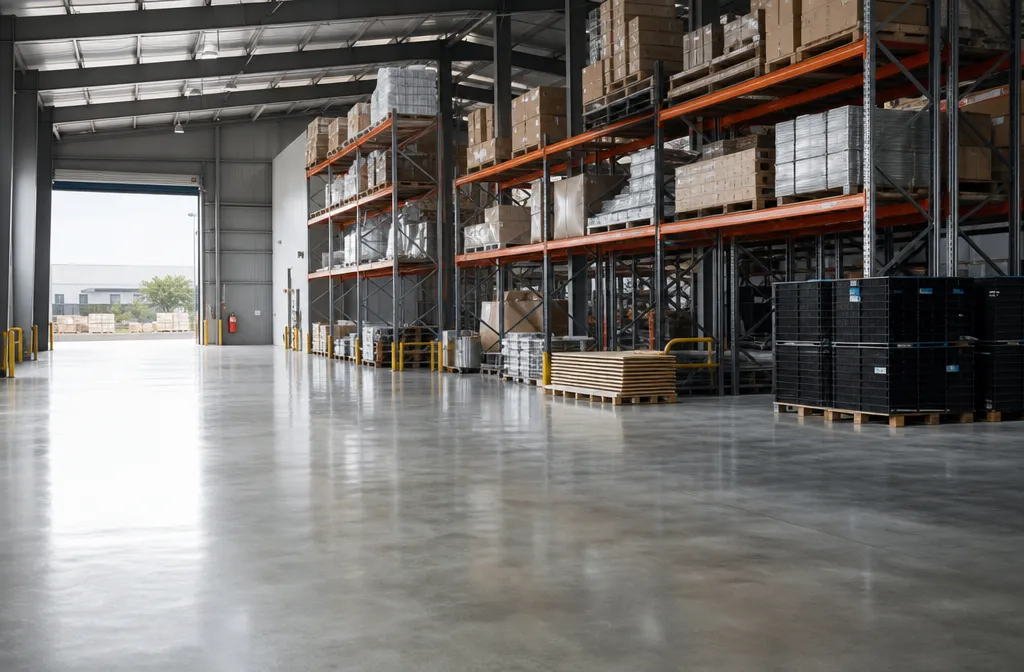
Request: Concrete floor in warehouse covered with oil stains and dust.
Done: Performed rotary cleaning with degreaser and stiff brush.
Cost: 14 000 ₸
Master: Daniyar Kuanyshev, dry cleaning master
Total: Concrete floor cleaned of oil and dust, surface non-slip.
 After
After
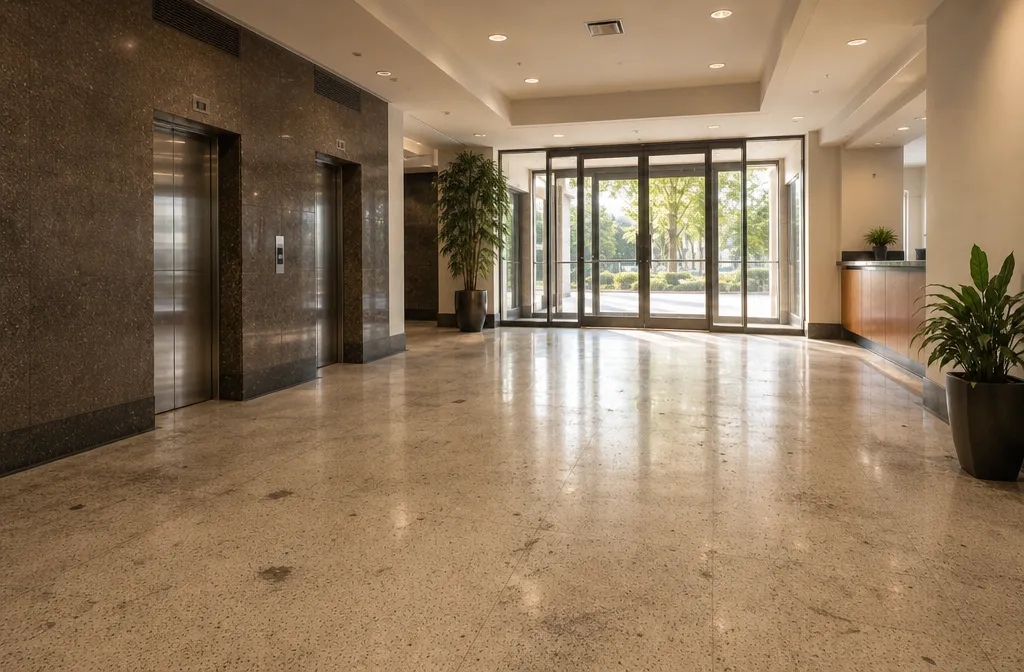
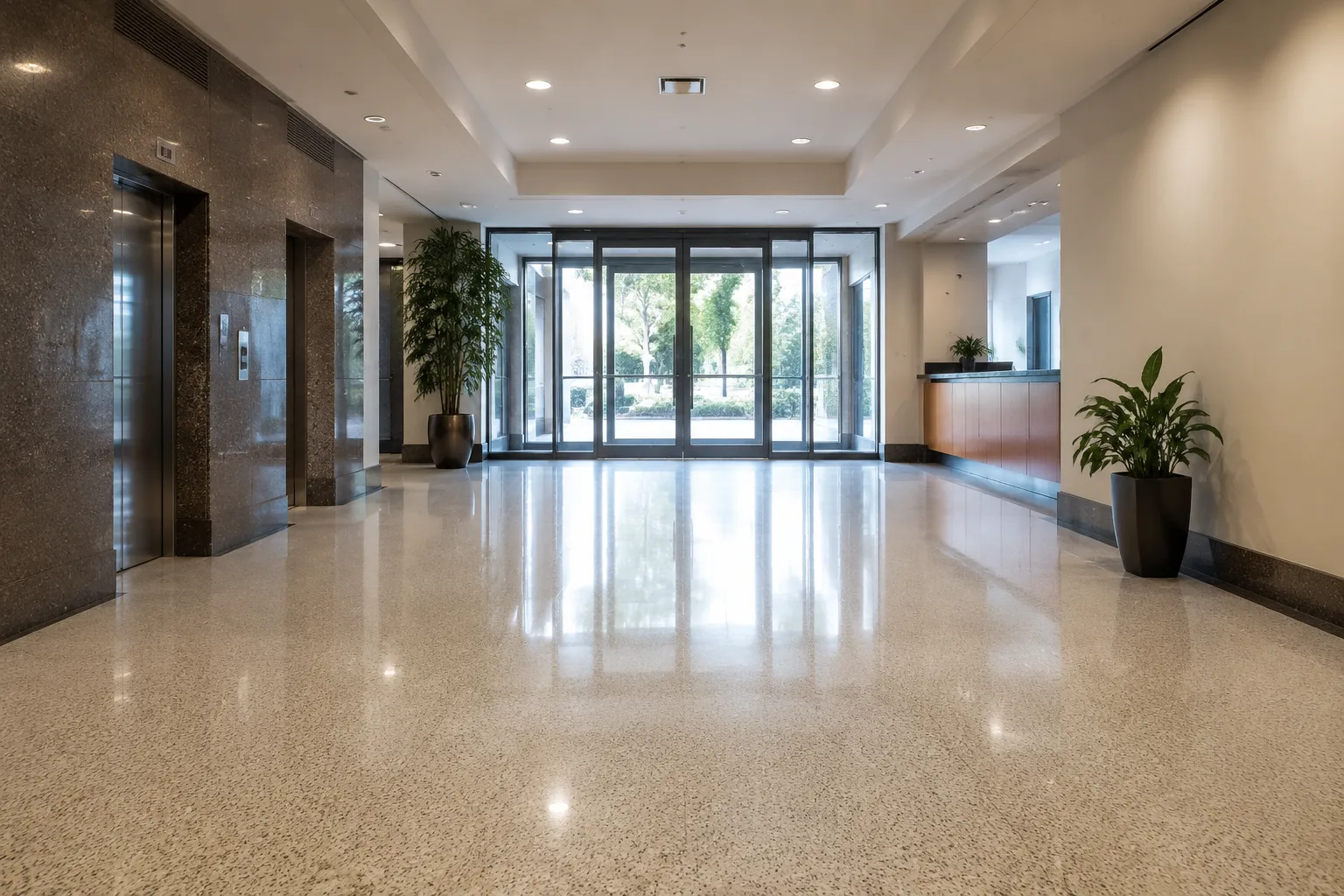
Request: Terrazzo floor in lobby lost shine, stains appeared.
Done: Cleaned floor with rotary machine using polishing paste and soft brush.
Cost: 14 000 ₸
Master: Aigul Saparbayeva, dry cleaning master
Total: Terrazzo restored gloss, stains removed, lobby looks luxurious.
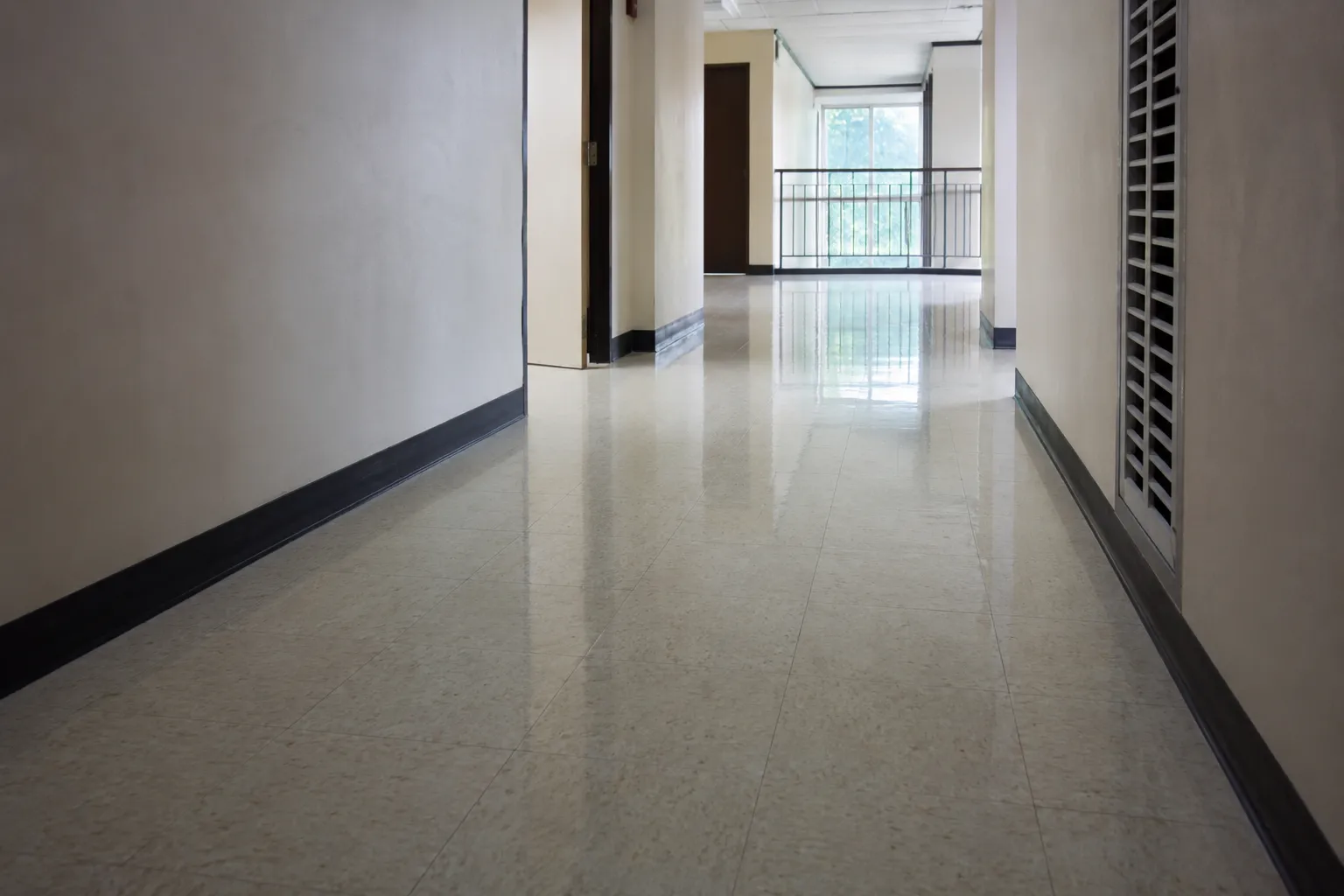 After
After
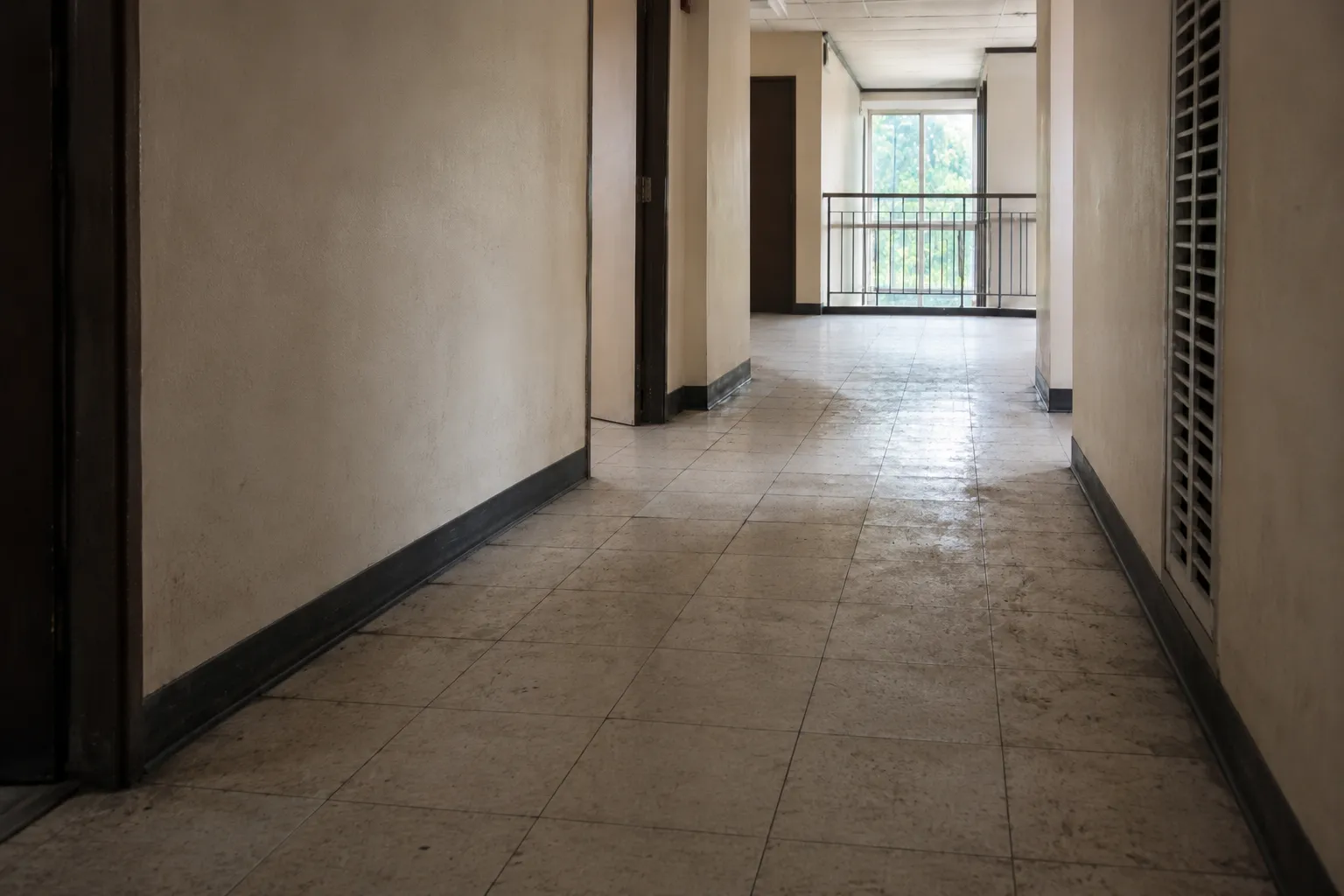
Request: PVC tile in corridor dulled, grout darkened.
Done: Performed rotary cleaning with soft brush and detergent.
Cost: 13 000 ₸
Master: Timur Zhaksybekov, dry cleaning master
Total: PVC tile and grout cleaned, corridor brighter and cleaner.
All cleaners are profi-clean staff with training, uniform and security check. Each order has a team leader who controls quality.
When clients ask for “just a floor wash,” they don’t always realize that mopping and professional rotary cleaning are fundamentally different processes that solve completely different problems. Let’s break down the key differences.
Regular wet mopping removes the surface layer of dust and smudges but doesn’t reach micro-cracks and pores in the flooring. Rotary floor cleaning with our machines, equipped with abrasive brushes and HEPA filtration, penetrates 3-5 mm deep into the structure of stone, tile, or concrete. In our orders over a significant amount, we see how after 2-3 passes with a rotary machine, dirt that has accumulated for years comes out of tile joints. In my opinion, this is a fundamental difference: a mop works with visible dirt, a rotary machine works with accumulated dirt. Before ordering, check what type of soiling you have: if the floor is just dusty, wet mopping will suffice; if there are grease stains or darkened grout, you can’t do without a rotary machine.
During regular mopping, you spread water and cleaning solution across the surface, and some dirt remains in puddles that then dry, leaving streaks. Rotary floor cleaning Almaty from profi-clean works differently: a rotating brush under pressure dislodges dirt particles from the base, and a powerful HEPA-class vacuum immediately sucks them up — dirt isn’t spread but completely removed. In our practice at sites in central Almaty (Zhibek Zholy, Furmanova streets), after rotary cleaning, the floor becomes visually 2-3 shades lighter precisely due to the extraction of ingrained dust from pores. Unlike wet mopping, there is no sticky residue from the cleaning solution after rotary cleaning — the surface remains matte and non-slip. If you have light-colored tiles that have “grayed” over time, order rotary cleaning — the effect is noticeable immediately.
A common mistake is thinking a rotary machine is only suitable for tiles. At profi-clean, we use adjustable machines where the rotation speed and brush type are selected for the specific material. Hard surfaces (porcelain tile, natural stone, concrete) can withstand up to 1500 RPM without damage. We clean laminate and engineered wood flooring at minimum speeds (300-400 RPM) with soft nylon brushes and hypoallergenic Kiehl chemicals — this is safe provided the flooring isn’t swollen. Wet mopping laminate is dangerous due to moisture over-saturation at the joints, while rotary cleaning with controlled water application and instant moisture removal eliminates this risk. The main rule: inform us of the flooring type before ordering — natural stone requires non-abrasive brushes to avoid scratching the gloss.
Regular wet mopping leaves moisture in the air and on surfaces, which, with insufficient ventilation, creates an environment for mold and dust mites. Rotary floor cleaning price (calculated individually based on area and condition) includes not only mechanical action but also drying: after the machine passes, the surface is dry within 10-15 minutes thanks to HEPA filtration and the built-in vacuum. For families with allergy sufferers in Almaty, we recommend rotary cleaning once a quarter — it removes up to 99% of dust mites and mold spores from grout and micro-cracks, which no mop can achieve. Our hypoallergenic Sodasan chemicals contain no chlorine or phosphates, so no chemical odor remains after cleaning — an important detail for homes with small children. If there’s an allergy sufferer in the house, regular wet mopping only rinses dust from the surface, while a rotary machine extracts it from the base — the difference in air cleanliness is noticeable within an hour.
Rotary floor cleaning solves problems that a regular mop or steam cleaner can’t handle — from ingrained dirt to sticky residue after renovations. Let’s break down the specific types of soiling for which we use the rotary machine and explain why it’s the only working method in each case.
Kitchen linoleum and tiles are an area of persistent grease deposits that cannot be removed with water and household chemicals. A rotary brush with abrasive bristles and an alkaline concentrate (pH 10-12) emulsifies the grease: hardened oil drops, traces of spilled sauce, and the film from frying that turns into a sticky crust over weeks. In kitchens of Almaty apartments, we encounter old, set-in grease that has accumulated in tile grout lines for years — a rotary machine with a narrow corner attachment cleans these joints by 90% in a single pass. After cleaning, the grease does not return if the floor is treated with a protective compound — without it, microscopic grease particles settle back on the porous surface within 2-3 weeks.
On tiles, porcelain stoneware, and commercial linoleum in hallways and corridors, black streaks remain from the soles of outdoor shoes — especially from rubber boots and sneakers with aggressive treads. Regular mopping smears the graphite particles, while rotary cleaning with a neutral surfactant and a soft white brush (1200-1500 rpm) removes rubber particles from the micro-relief of the coating. In our orders across Almaty, such marks are the second most common reason for a service call after grease. On matte tiles, black streaks disappear in one cycle; on glossy tiles, a second pass with reduced pressure may be required to avoid leaving micro-damage on the lacquer layer.
The joints between tiles are an ideal collector for dust, sand, hair, and kitchen vapors. Over a year, a layer accumulates in the grout that cannot be washed out with a brush or cleaned with a steam cleaner — steam only softens the top 0.5 mm, leaving compressed dirt underneath. A rotary machine with a medium-hard nylon brush and an enzyme concentrate breaks down this crust to a depth of up to 2 mm in 3-4 passes. At sites in old Almaty buildings (Khrushchyovkas, “Stalinkas”), the grout is often clogged with black deposits from dampness and mold — in such cases, we add a chlorine-containing bleach to the solution and treat the joints with an antiseptic after cleaning.
Almaty water has high hardness — up to 7-8 mg-eq/L, which leaves a white limescale deposit on tiles and linoleum after every wet cleaning. Over time, this deposit cements, forming a matte film that cannot be removed with vinegar or citric acid at household concentrations. Rotary cleaning with an acidic concentrate (citric acid + surfactant, pH 3-4) and an abrasive P1200 brush removes this layer in a single pass. After cleaning, we apply a neutralizer — otherwise, acid residues can leach the color from the grout in the joints.
Spilled juice, compote, soda — on linoleum and laminate, they leave a sticky sugar film that attracts dust and turns into a dark residue within a day. A damp cloth only removes the top layer, while the sugar remains in the micro-pores of the coating. A rotary machine with a soft brush and an enzyme agent breaks down sucrose into glucose and fructose, which are easily rinsed away with water. On parquet and engineered wood, we use minimum speeds (800-1000 rpm) and a dry cloth immediately after cleaning — to prevent moisture from penetrating the joints.
In spring, Almaty experiences a pollen peak: poplar fluff, ragweed, and wormwood blossoms settle on the floor and in the joints, causing allergies for residents. Rotary cleaning with a HEPA filter (installed on all our machines) captures 99.97% of particles as small as 0.3 microns — including mold spores, which often develop in bathroom grout joints due to constant humidity. After cleaning, we treat the floor with a hypoallergenic Sodasan compound — it neutralizes residual allergens and creates an antistatic barrier that prevents pollen from resettling for 2-3 weeks.
| Type of Contamination | Cleaning Agent | Brush Type | RPM | Number of Passes |
|---|---|---|---|---|
| Kitchen Grease | Alkaline Concentrate pH 10-12 | Abrasive Nylon | 1500-1800 | 1-2 |
| Black Scuff Marks from Shoes | Neutral Surfactant pH 7 | Soft White | 1200-1500 | 1-2 |
| Limescale Deposits | Acidic Concentrate pH 3-4 | Abrasive P1200 | 1200-1500 | 1 |
| Sticky Sugar Layer | Enzymatic Cleaner | Soft | 800-1000 | 1 |
| Mold and Spores | Enzymatic + Chlorine | Medium-Hard Nylon | 1000-1200 | 2-3 |
| Pollen and Allergens | Hypoallergenic Sodasan | Soft with HEPA | 800-1000 | 1 |
Before cleaning stubborn grease or limescale deposits, test the coating’s resistance on an inconspicuous area — on glossy linoleum from some Chinese brands, an abrasive brush can leave matte streaks that can only be corrected with polishing.
The frequency of rotary floor cleaning depends on the flooring type, room traffic, and lifestyle — there is no universal schedule. In our orders, we see that owners of commercial properties get the frequency wrong in 70% of cases: they either clean too rarely (dirt becomes ingrained) or too often (flooring wear accelerates). Here are intervals proven on Almaty properties for each floor type.
Porcelain tile in Almaty hallways and corridors collects sand from the streets within just three weeks after mopping. Rotary floor cleaning in Almaty with neutral chemicals removes deposits from grout lines — that’s where 80% of bacteria accumulate, which regular water cannot remove. In retail spaces over 200 m², we recommend an interval of every 4-6 weeks: dirt accumulates three times faster in the entryway. In kitchens and bathrooms of residential apartments, once a quarter is sufficient — provided you wipe the floor after cooking. Before rotary treatment, we check the grout condition: if the joints are crumbling, we first seal them with an acrylic compound, otherwise the machine will dislodge the debris and leave grooves.
Laminate is the most delicate flooring for a rotary machine: the frequency of rotary floor cleaning here should not exceed once every six months, and only with a soft white pad (17-20 inches, 150-200 RPM). In Almaty, winter humidity in apartments drops to 25-30% — the boards dry out, and micro-cracks become clogged with dust. If you clean such flooring more than once a year, the abrasive wears down the protective laminate layer, and after 2-3 years, matte spots appear. At profi-clean sites, we use pH-neutral Sodasan foam — it leaves no streaks and does not lift the locking edges. The exception is high-traffic hallways (children, dogs): an interval of every 4 months is acceptable, but with a mandatory test on an inconspicuous area before cleaning.
Self-leveling floors in Almaty offices and showrooms are a coating that, with proper care, lasts 15-20 years. Rotary floor cleaning on this base removes grease residue from hands and shoes, which oxidizes and yellows the surface. The optimal interval is every 3-4 months for reception and meeting room areas; in warehouse spaces (where people wear shoes) — every 2 months. Our practice shows: if you skip a cycle, the polyurethane starts absorbing dirt, and restoration then requires sanding with diamond cutters — which is 4-5 times more expensive than regular cleaning. After treatment, we apply a water-based protective polish — it extends the effect until the next cycle and reduces slipperiness.
Linoleum in shops, clinics, and schools in Almaty is the most heavily trafficked flooring: up to 500 people pass over it daily. The price for rotary floor cleaning for such volumes is calculated individually, but the frequency is critical: if cleaned less than once a month, the top PVC layer becomes embedded with shoe rubber and darkens irreversibly. In entry areas (the first 3 meters from the door), we recommend rotary treatment every 2–3 weeks with a red pad and an alkaline concentrate — it dissolves bitumen traces brought in from the street. In the rest of the hall, monthly cleaning with a green pad is sufficient. After 8–10 cycles, mandatory polishing is required to restore shine; otherwise, linoleum loses up to 30% of its light reflection and looks dull even after cleaning.
Stone floors in the lobbies of Almaty’s elite residential complexes (“Almaly”, “Turksib”, “Dostyk”) require a delicate approach: marble is porous and soft, easily rubbed to a matte finish. Rotary floor cleaning on stone is performed only with a beige pad and an acidic concentrate (pH 5–6) — alkali destroys calcite and leaves white spots. The interval is once every six months for residential areas and once every 8 months for office floors. If the stone has scratches from sand (in Almaty, sand from icy roads in winter is a major problem), we first perform crystallization with a diamond paste, then clean — otherwise, the machine will “smear” the scratches, making them more noticeable. It’s best to order rotary floor cleaning from us before the rainy season (March–April or September–October), when street dirt is most aggressive.
Laminate and parquet are finicky floorings: a rotary machine removes dirt from them, but if done incorrectly, it leaves scratches or causes swelling. Let’s break down how to clean both materials without risk, considering Almaty’s climate and common owner mistakes.
Laminate is a multi-layer composite with a top decorative layer of melamine or acrylic resin. Parquet is a solid natural wood array, 12–22 mm thick, with a lacquer or oil finish. For laminate, we only use soft white pads (red or beige) and a minimal amount of water — 50–70 ml per m²; otherwise, moisture penetrates the HDF board joints, causing swelling. Parquet can tolerate more moisture (up to 120 ml per m²) but requires strict control of the grain direction: cleaning across the fibers makes the lacquer cloudy. In our practice, orders for laminate in Almaty come in 3 times more often than for parquet — due to the popularity of laminate in new buildings (“Nurly Tau”, “Triumph”). Before cleaning laminate, we always check the wear resistance class: classes 31–33 can be cleaned with a rotary machine, classes 21–23 only by hand, otherwise the protective layer wears off in 2–3 procedures.
Sharp humidity fluctuations in Almaty — from 20% in winter (heating) to 70% in spring — create a risk of parquet cracking and laminate joint separation. After cleaning with a rotary machine, we leave the flooring to dry with windows open for 2–3 hours, but in winter in apartments with central heating, drying is faster — 40–60 minutes. For parquet in older buildings (Medeu, Bostandyk districts) with temperature swings of up to 15°C per day, we use Sodasan chemicals with a low pH (5.5–6.0) — they don’t draw moisture from the wood, unlike alkaline agents that leave white streaks on the lacquer. We measure room humidity with a hygrometer before cleaning: if it’s below 30%, we pre-turn on a humidifier; otherwise, the laminate “breathes” and absorbs water into the joints.
The main owner mistake is using a household rotary machine with a hard brush on laminate: scratches up to 0.3 mm deep remain after the first pass, and shine can only be restored with wax polishing. The second is excess water on parquet: clients pour 200–300 ml per m², water seeps into the gaps, and within a month the boards start to creak or turn black from fungus. The third is cleaning oil-finished parquet with a rotary machine without a special adapter: the oil washes out, and the wood dulls after 2–3 procedures. In Almaty, cases are common where, after DIY cleaning with a steam cleaner, white spots remain on laminate — this is from overheating the decorative layer above 60°C. Our cleaners always check the flooring type and its age before arriving: fresh parquet (up to a year old) is cleaned only by a dry method — with a microfiber cloth and wax, without a rotary machine.
For laminate, we use rotary machines with adjustable speeds of 150–300 rpm — at speeds above 400 rpm, the pad leaves micro-damage. Pads are white (polishing) or red (for stubborn stains), but only dry or slightly damp. Chemicals are neutral Kiehl products (pH 7.0), which leave no film and do not yellow over time. For parquet, we use green pads (abrasive, for removing old varnish) and white pads (for final polishing), at speeds of 200–350 rpm. Oil-finished parquet is treated only with an alkaline Sodasan solution (pH 9.0–9.5) — it breaks down grease without damaging the oil, and we apply a protective wax after cleaning. In our orders for cottages in “Gorny Gigant,” oiled parquet occurs in 40% of cases — for these, we bring a separate set of pads to avoid transferring wax from laminate.
A rotary machine cannot be used on laminate classes 21–23 (cheap models for bedrooms) — their top layer is thinner than 0.2 mm and wears off in a single cleaning. Parquet with a varnish thickness of less than 0.5 mm (coating age 10+ years) is also vulnerable: the rotary machine removes the varnish, leaving the wood unprotected. A third case is laminate after flooding: if the HDF board has already swollen, rotary cleaning will cause delamination. In homes on “Kok-Tobe” with floor level differences and high basement humidity, we refuse to use a rotary machine on parquet if the indoor humidity exceeds 65% — we dry the room for 2–3 days. Fourth, coatings with a vinyl top layer (SPC laminate): the rotary machine leaves matte streaks that cannot be removed by polishing. In such cases, we use manual cleaning with microfiber and steam at 110°C — this is the only safe method for vinyl.
When clients ask how we clean floors after renovations or ingrained dirt in hallways, they often confuse the methods. Rotary cleaning, steam cleaning, and chemical cleaning are three fundamentally different approaches, each with its own area of effectiveness and risks for the flooring.
A steam cleaner delivers water heated to 120–150 °C under pressure — it melts grease and kills bacteria on tiles and grout. However, steam is contraindicated on laminate and parquet: temperature fluctuations and moisture deform the locking joints and cause boards to swell. A rotary machine, in contrast, works with cold water and a hypoallergenic agent (Kiehl or Sodasan) and a soft brush — it does not heat the coating or flood the joints. In our practice, there was a case: a client got swelling in three rooms after steam cleaning laminate — 12 boards had to be replaced. Rotary cleaning on the same laminate provides a tight fit without the risk of deformation, and we recommend steam cleaning only for porcelain stoneware and tiles in bathrooms. For ingrained dirt (kitchen grease, post-construction soot), steam is effective on tiles but powerless on suede-like and oily stains — these require a rotary machine with an abrasive attachment or chemicals.
Chemical cleaning involves applying a concentrated solution (acidic or alkaline) followed by rinsing with an extractor. It removes old stains from wine, coffee, urine, and oil paint but is aggressive on the coating: incorrect concentration or overexposure burns the top layer of laminate, leaves whitish spots on parquet, and strips the color from tile grout. Rotary cleaning is gentler: the brush mechanically removes dirt without deep chemical penetration. We use chemical cleaning only spot-wise — on stains that the rotary machine couldn’t handle. For example, at a site in the “Nurly Tau” residential complex after paint was spilled on laminate: we first went over it with a rotary machine — removed 80% of the residue, then spot-applied a neutral solution to the remnants — the coating was unharmed. If we had started with chemicals immediately, we would have had to sand and repaint three boards. For owners of commercial spaces (offices, cafes), chemical cleaning is faster, but for home laminate and parquet, we recommend rotary cleaning — it cleans deeper than a steam cleaner and is safer than chemicals.
| Covering Type | Rotary Cleaning | Steam Cleaning | Chemical Cleaning |
|---|---|---|---|
| Laminate (class 31–34) | Yes, with a soft brush and neutral chemicals | No — risk of lock swelling | Only spot treatment, with a neutral solution |
| Parquet board (solid wood) | Yes, with adjustable speed | No — deformation from steam | Carefully — aggressive solutions wash off varnish |
| Porcelain stoneware and tiles | Yes, with a stiff brush for grout | Yes — best choice for tiles | Yes — for stubborn stains in grout |
| Linoleum (commercial) | Yes, at low speed | No — steam peels edges | Yes, but with caution — it corrodes PVC |
| Self-leveling floor (epoxy) | Yes, with a white pad attachment | Limited — for tough stains | Yes — for oily marks |
The most common mistake is trying to replace rotary cleaning with a steam cleaner on laminate. Over the past year, we visited 12 sites where clients steamed laminate themselves and got joint swelling — the average cost of floor repair in one 20 m² room was about a significant amount. The second mistake is using acidic chemicals on varnished parquet: clients wash off the varnish, and the floor becomes matte and scratches within a month. The third is ignoring preliminary wet cleaning before the method: if there is sand on the floor, the rotary brush scratches the covering, and the steam cleaner bakes in dirt. On our visits, we always first vacuum the floor with an industrial vacuum cleaner with a HEPA filter, then choose the method based on the type of dirt. For a kitchen in an apartment on Abay Avenue: rotary cleaning removed the grease film in 40 minutes, and the steam cleaner on the backsplash tiles handled old grease in 15 minutes — we combine methods, not replace one with another. Before ordering rotary cleaning, ask the technician to show a test on an inconspicuous area — this will eliminate the covering’s reaction to the chosen method.
We ordered rotary floor cleaning at the office – the linoleum started shining, coffee stains disappeared.
Glad you liked the result! We look forward to seeing you again.
After renovation, the floors were dusty and streaky – now they shine like new. The guys did it in 2 hours.
We had rotary floor cleaning in the cafe hall – the tile was cleaned of grease, but a couple of stains remained in the corners.
Thank you for the feedback! We will take note and pay more attention to corners next time.
The parquet looked dull after winter, but now it looks like it was just laid. Very satisfied.
A rotary floor cleaning was ordered in the store — the sales floor became brighter, customers notice.
Great! It helps create a pleasant atmosphere.
Expected more. The laminate became cleaner, but some scratches are still visible. Maybe the material is already worn.
We understand your concern. Laminate can have defects over time, but we try to refresh the coating as much as possible.
We performed rotary floor cleaning in the gym — the rubber flooring stopped being slippery, the sweat smell disappeared.
The carpet in the living room had stains from juice and fur — now it's clean and fluffy. Thank you!
You're welcome! We work with quality.
Rotary floor cleaning in the restaurant helped remove grease in the kitchen, but one area in the hall had to be redone.
Sorry for the inconvenience. We treated it again for free.
After playing with plasticine, the floor was terrible. Everything was cleaned without a trace, now the child draws on the clean floor.
I ordered rotary floor cleaning in the hallway — the laminate looks like new, even the joints brightened.
Glad to help! Laminate loves professional care.
The kitchen tile is cleaned perfectly, but the grout remained slightly dark. Overall good.
Thank you, we'll pay attention to the grout next time.
Before the event, we urgently did rotary floor cleaning — the parquet shone, guests were delighted.
The linoleum in the classroom was gray from chalk and dirt. Now it's clean and bright, the kids are happy.
Great news! That's wonderful that you helped.
We tried rotary floor cleaning in the garage — oil stains became lighter but didn't disappear completely. Maybe chemical cleaning is needed.
For concrete with oil stains, we recommend additional treatment. Contact us for a consultation.
The hallway was always dirty from shoes — now the floor shines, I can't believe it. Thanks to the masters!
We ordered rotary floor cleaning at the fitness club — the flooring stopped smelling of sweat, the color refreshed.
Great! Now it's more pleasant to work out.
The laminate became cleaner, but one board swelled after wet cleaning. I hope it's not because of us.
Laminate swelling is usually due to excess moisture. During work we control humidity, but if the defect was already there, we might have worsened it. We apologize.
Rotary floor cleaning in the office — the carpet looks like new, even the employees noticed the freshness.
At the dacha, the floors hadn't been washed for a long time — after cleaning, you can invite guests. No streaks, pleasant smell.
Glad that the dacha is also in order!
In the bar, the wooden floor was sticky from spilled beer. Rotary floor cleaning saved the day — now it's clean and non-slip.
Glad the bar is cozy again!
The bathroom tiles are cleaned well, but the grout still has residue. Maybe it needed separate cleaning.
The grout requires separate treatment. We can offer a grout cleaning service.
We did rotary floor cleaning in the hotel rooms — the laminate became matte and pleasant to touch. Guests are satisfied.
Thank you for your trust! We will maintain cleanliness.
The balcony tiles were covered in moss and dirt — we cleaned them to a shine. Now it's pleasant to go out.
We ordered rotary floor cleaning at the salon — the linoleum became snow-white, clients praise the cleanliness.
Great! This is important for the image.
The concrete floor in the basement became lighter, but dust still remains. For a basement, it's probably normal.
Concrete in the basement is difficult to clean completely, but we can recommend a sealant to reduce dust.
Rotary floor cleaning in the kitchen — the tiles sparkled, grease stains disappeared. Very satisfied!
The warehouse floor was gray from dust and oils. After cleaning, it became light and safe for workers.
Glad we improved working conditions.
We did rotary floor cleaning at the kindergarten — the linoleum is clean, but the chemical smell lingered for a day. We had to air it out.
Sorry about the smell. We use safe products, but recommend airing out after cleaning.
Yes, we clean laminate using a soft pad and minimal moisture. We work with low pressure to avoid damaging the locks. After cleaning, the floor is dried within 30 minutes.
On average, 1.5–2 hours, including preparation and drying. Time depends on the degree of soiling and the type of flooring.
Leave a request on the website or call +7 (727) 123-45-67. The manager will clarify the area and floor type, calculate the cost, and agree on a convenient time.
Suitable for all hard surfaces: tile, porcelain stoneware, stone, linoleum, laminate, parquet, PVC, self-leveling floor, concrete, terrazzo. Not suitable for soft carpet coverings.
No, with proper pad and pressure selection. For laminate we use a soft pad, for tile a hard one. The Karcher machine has speed adjustment, which prevents damage.
Yes, a 10% discount for orders from 50 m² and 15% from 100 m². The discount applies to all services, including additional options.
For natural stone – pH-neutral Kiehl products, for linoleum and tile – alkaline Sodasan. All products are safe for people and animals, leave no odor.
Yes, we guarantee no streaks or stains. If streaks remain after cleaning, we will redo it for free within 24 hours. The guarantee is stated in the contract.
The price depends on the type of flooring: per individual tariff/m² for linoleum, per individual tariff/m² for natural stone. The exact cost is calculated after inspection.
Approximate cost for a floor area of 60 m² (laminate and tile) – per individual tariff with a 10% area discount. The exact amount depends on the proportion of coverings and additional options.
Tell us about your experience with profi-clean — it helps other clients and us improve.
We currently operate in Almaty. Other cities are coming soon.