Inspection and assessment
Visual inspection and defect diagnosis: scratches, chips, stains. Determine the stone type and select the grit.
We restore the shine of marble, granite, and concrete. We remove scratches and scuffs.

We work with any types and materials
Gentle polishing with gloss restoration and scratch removal.
from 20,000 ₸Intensive polishing for hard granite, joint leveling.
from 20,000 ₸Polishing with pore filling and moisture protection.
from 20,000 ₸Grinding to a smooth surface with a matte or glossy finish.
from 20,000 ₸Polishing to restore the shine of porcelain stoneware.
from 20,000 ₸Restoration of mosaic surfaces with scuff removal.
from 20,000 ₸Soft polishing for porous limestone.
from 20,000 ₸Careful polishing for translucent onyx.
from 20,000 ₸Strengthening and polishing sandstone with impregnation.
from 20,000 ₸Polishing while preserving the texture of slate.
from 20,000 ₸Polishing clinker for a glossy finish.
from 3,000 ₸Polishing artificial stone with shine restoration.
from 20,000 ₸From inspection to result with guarantee
Visual inspection and defect diagnosis: scratches, chips, stains. Determine the stone type and select the grit.
We cover furniture with plastic wrap, protect walls with painter's tape. We perform wet cleaning to remove dust.
Using diamond discs grit 30-50, we remove deep scratches and chips. We level the joints of slabs.
Using discs grit 100-200, we remove marks from coarse grinding. We achieve a smooth matte surface.
Using discs grit 400-800, we create a matte surface without shine. Preparation for polishing.
Using discs grit 1500-3000, we buff to a gloss. We use diamond pastes for a mirror shine.
Apply Tenax crystallizer, buff with machine. Harden the surface and lock in shine.
Collect dust with Nilfisk industrial vacuum, mop floor with neutral cleaner. Hand over the site.
We use Klindex (Italy) diamond discs with different grits — from 30 to 3000. This ensures even layer removal without overheating the stone. The result is a perfectly smooth surface without streaks.
We use Tenax (Italy) crystallizers to harden the surface and give a mirror-like shine. Tenax protective impregnations prevent moisture and dirt absorption. The effect lasts up to 3 years.
We connect Nilfisk (Denmark) industrial vacuums with HEPA filters that capture 99.97% of particles. During polishing, dust is practically absent — furniture can stay in place.
In 7 years, we have polished over 5000 m² of floors in Almaty — from apartments to shopping centers. Each project is accepted with measurements and photo documentation.
We provide a written 1-year warranty. If scratches or dullness appear within a year, we fix them for free. We work under a contract with clear deadlines.
We visit for free within Almaty. The master assesses the floor condition, selects the technology, and provides an estimate without pressure. We sign a contract on the spot.
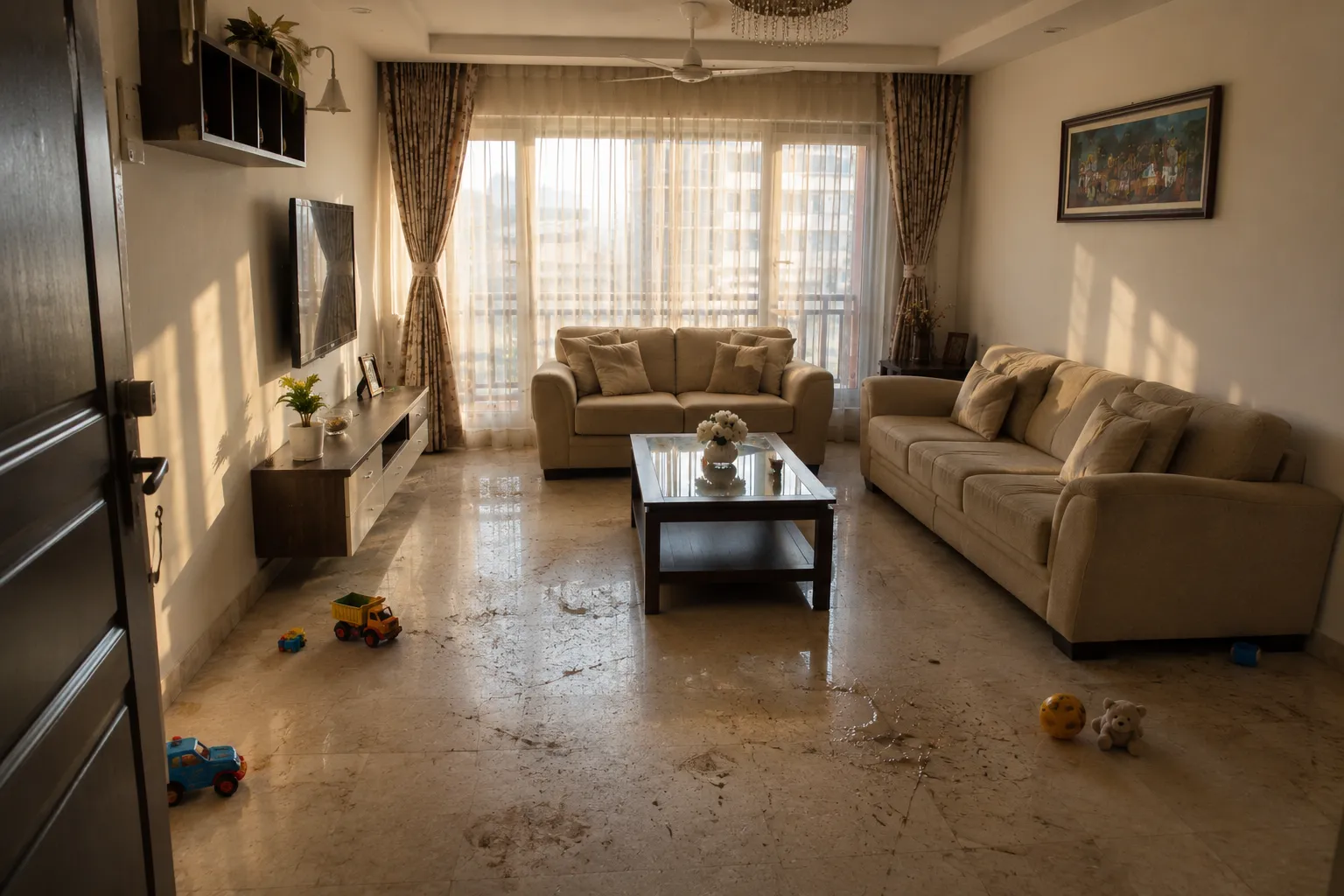
 After
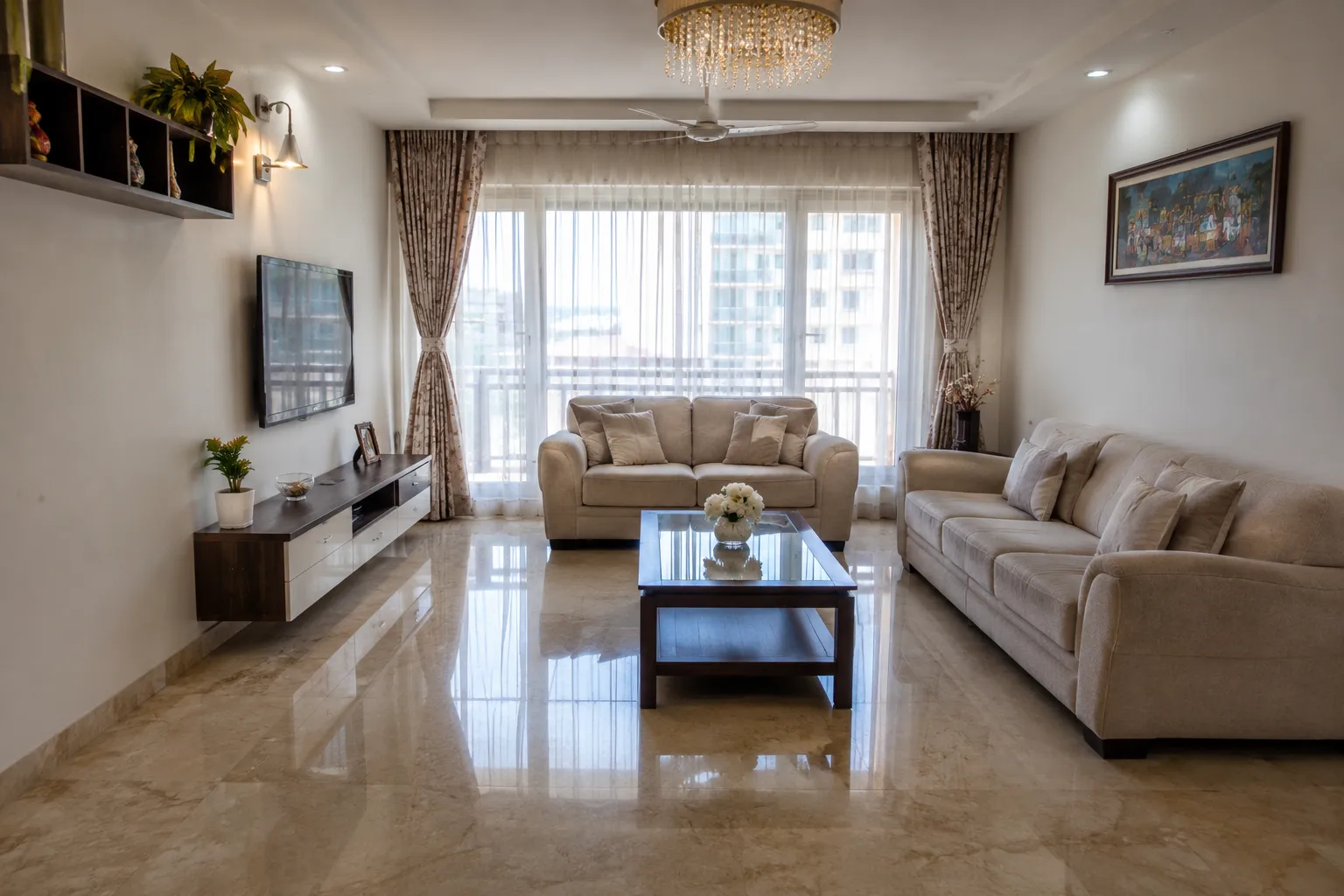
After
Request: Restore shine to marble floor in living room after wear and dulling.
Done: Performed marble crystallization using diamond pastes and final polishing.
Cost: 20 000 ₸
Master: Aigul Kassymova, stone master
Total: Floor gained mirror-like shine, scratches and dull spots completely eliminated.
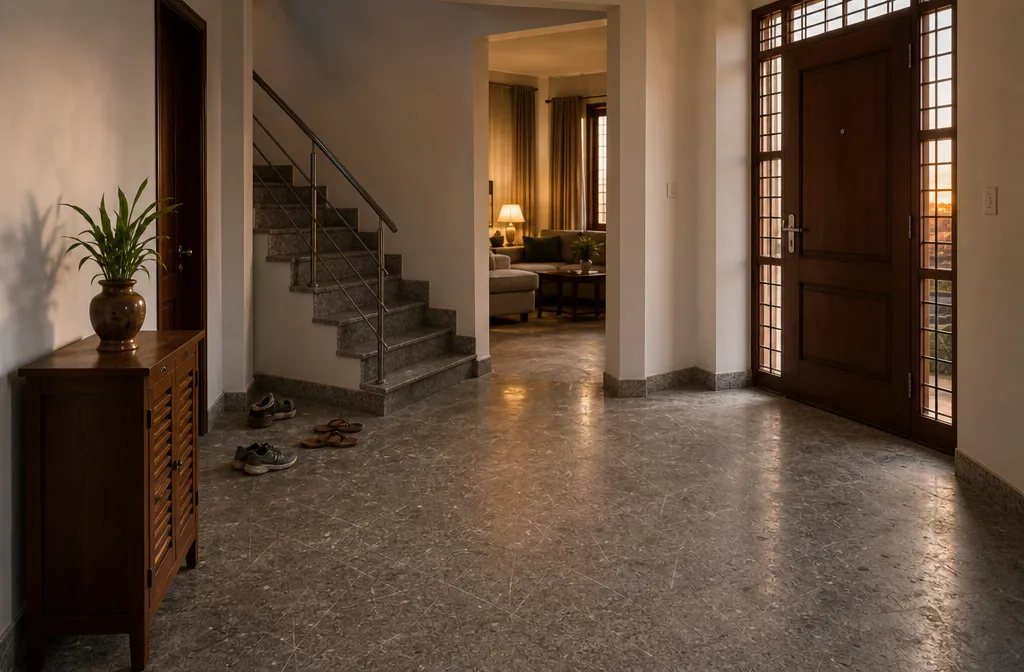
 After
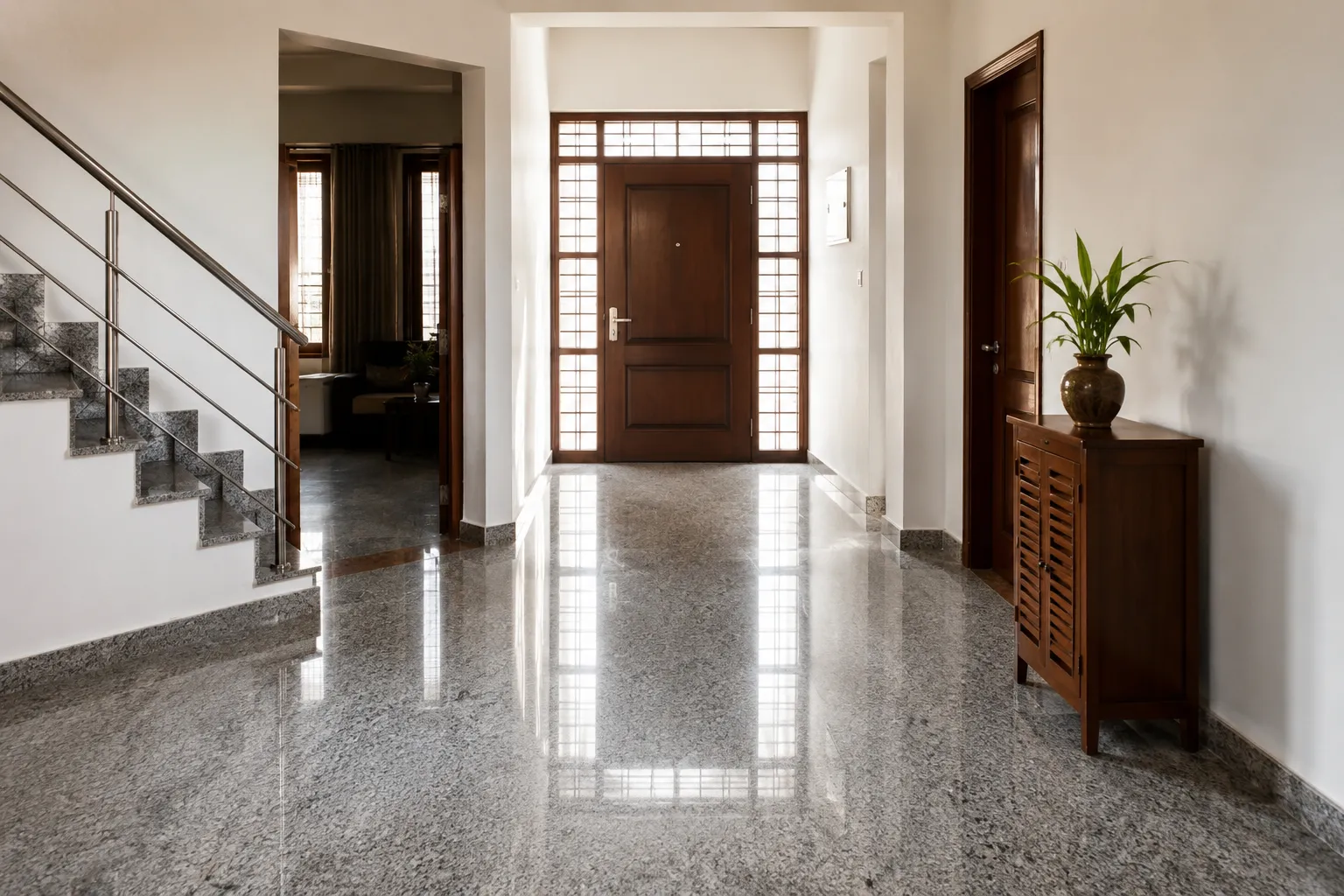
After
Request: Remove deep scratches and scuffs on granite floor in hallway.
Done: Performed granite grinding with diamond discs and applied protective coating.
Cost: 21 000 ₸
Master: Timur Zhaksybekov, stone master
Total: Scratches gone, surface became smooth with a matte sheen.
 After
After
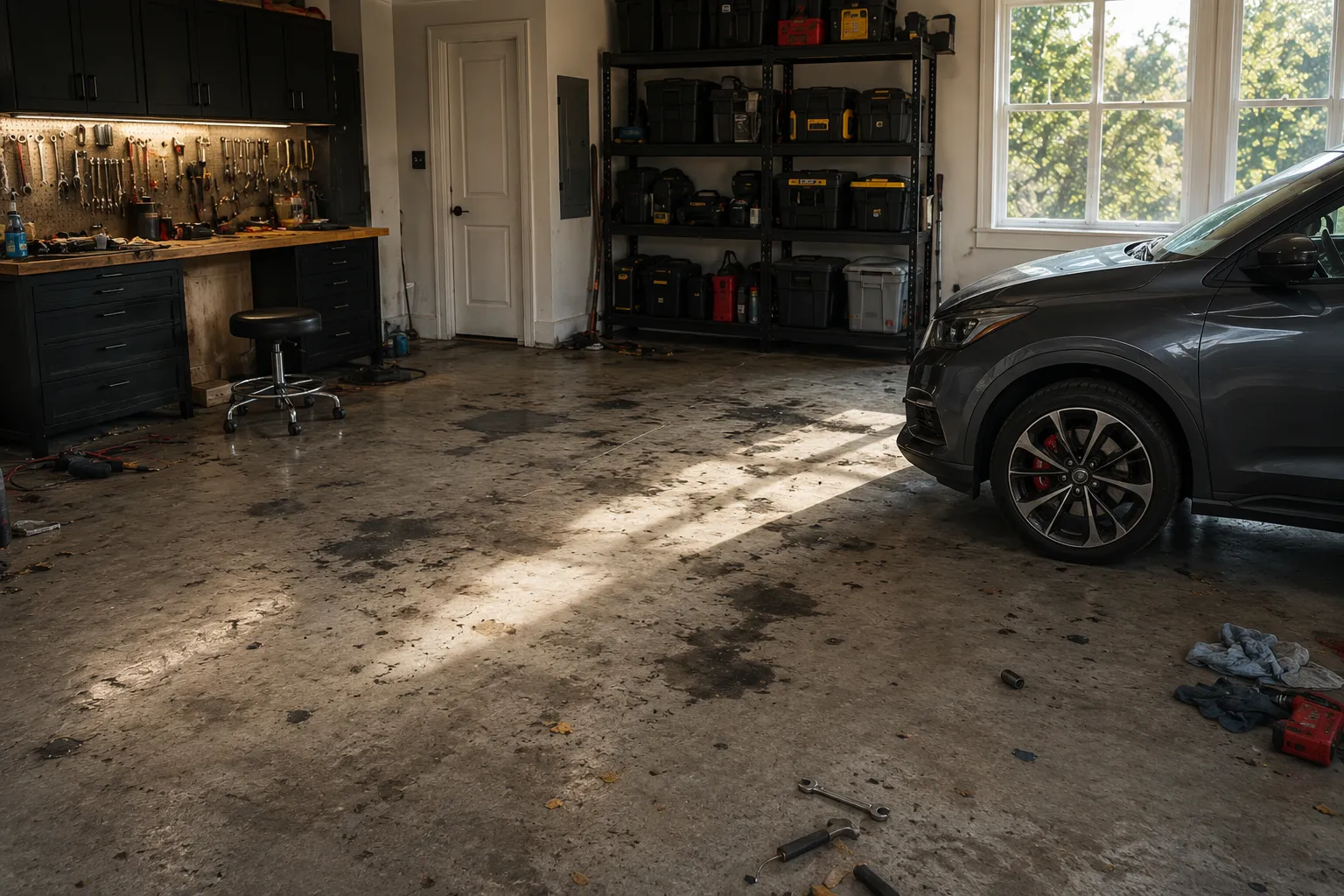
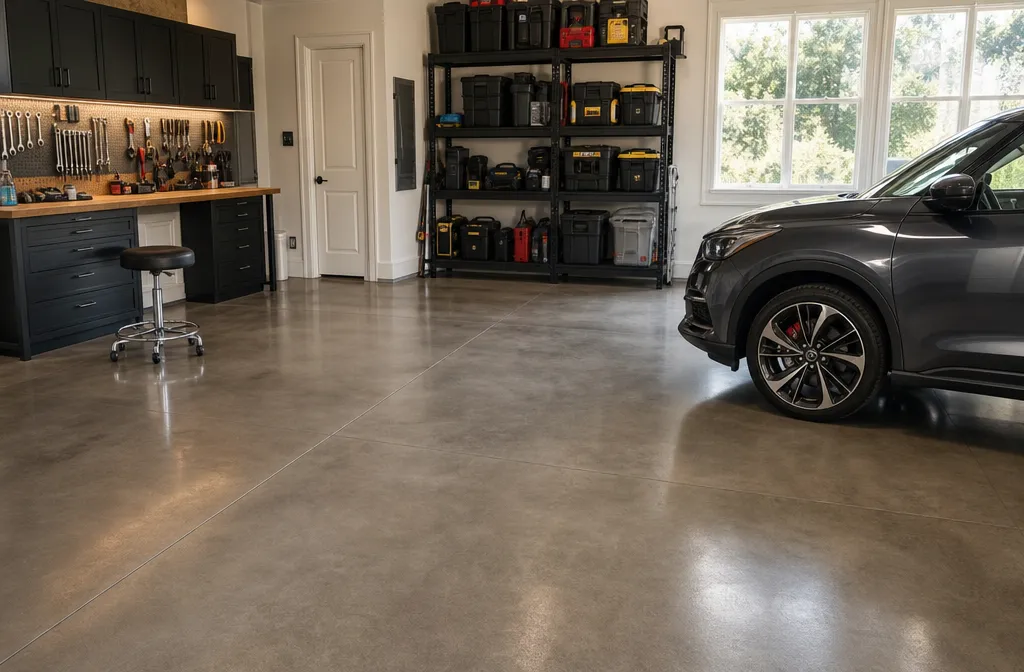
Request: Remove dust and make concrete floor smooth and shiny.
Done: Performed concrete grinding with diamond cups and applied polymer impregnation.
Cost: 22 000 ₸
Master: Serik Aliyev, concrete master
Total: Floor became smooth, dust-free, with a slight gloss and moisture protection.
 After
After
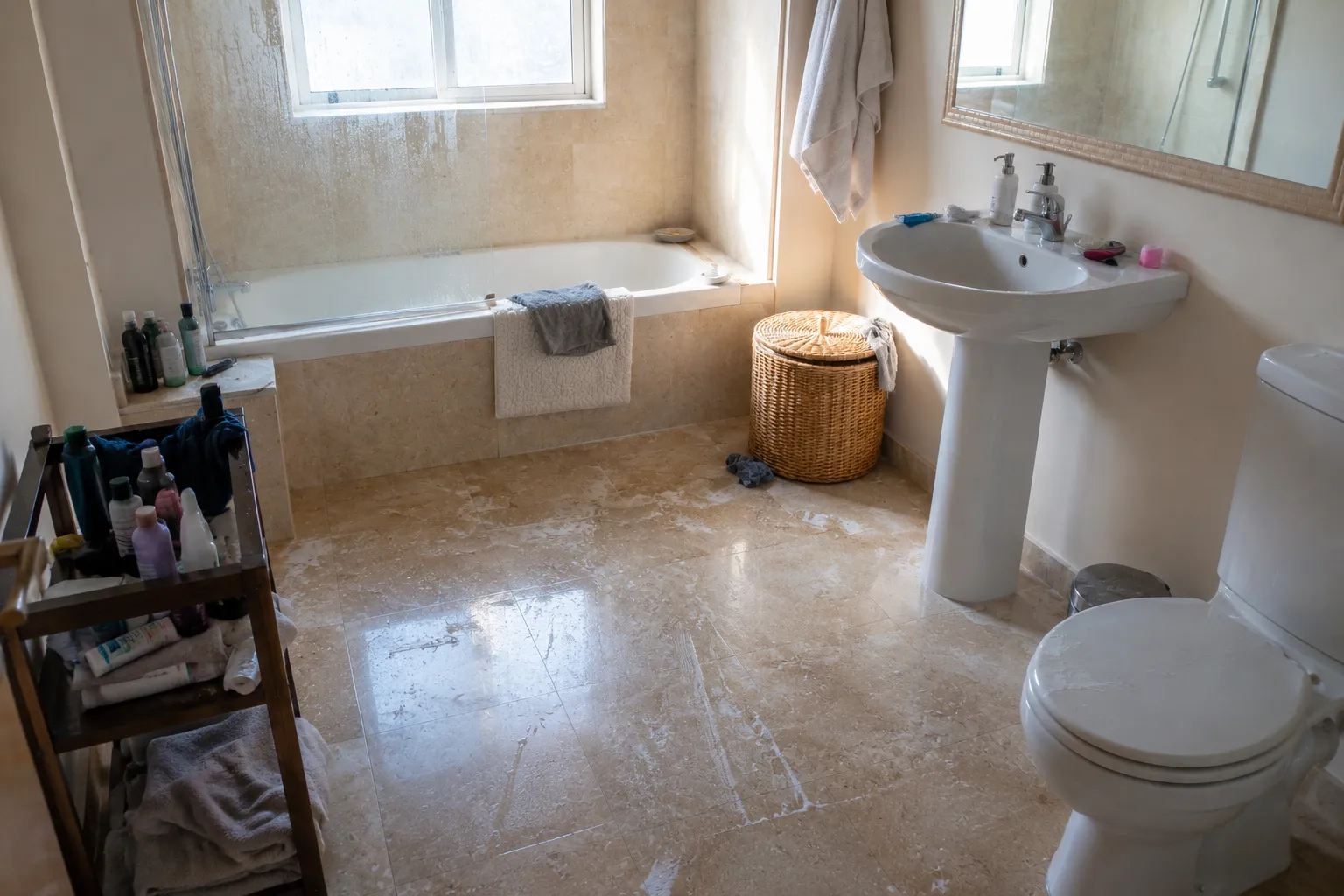
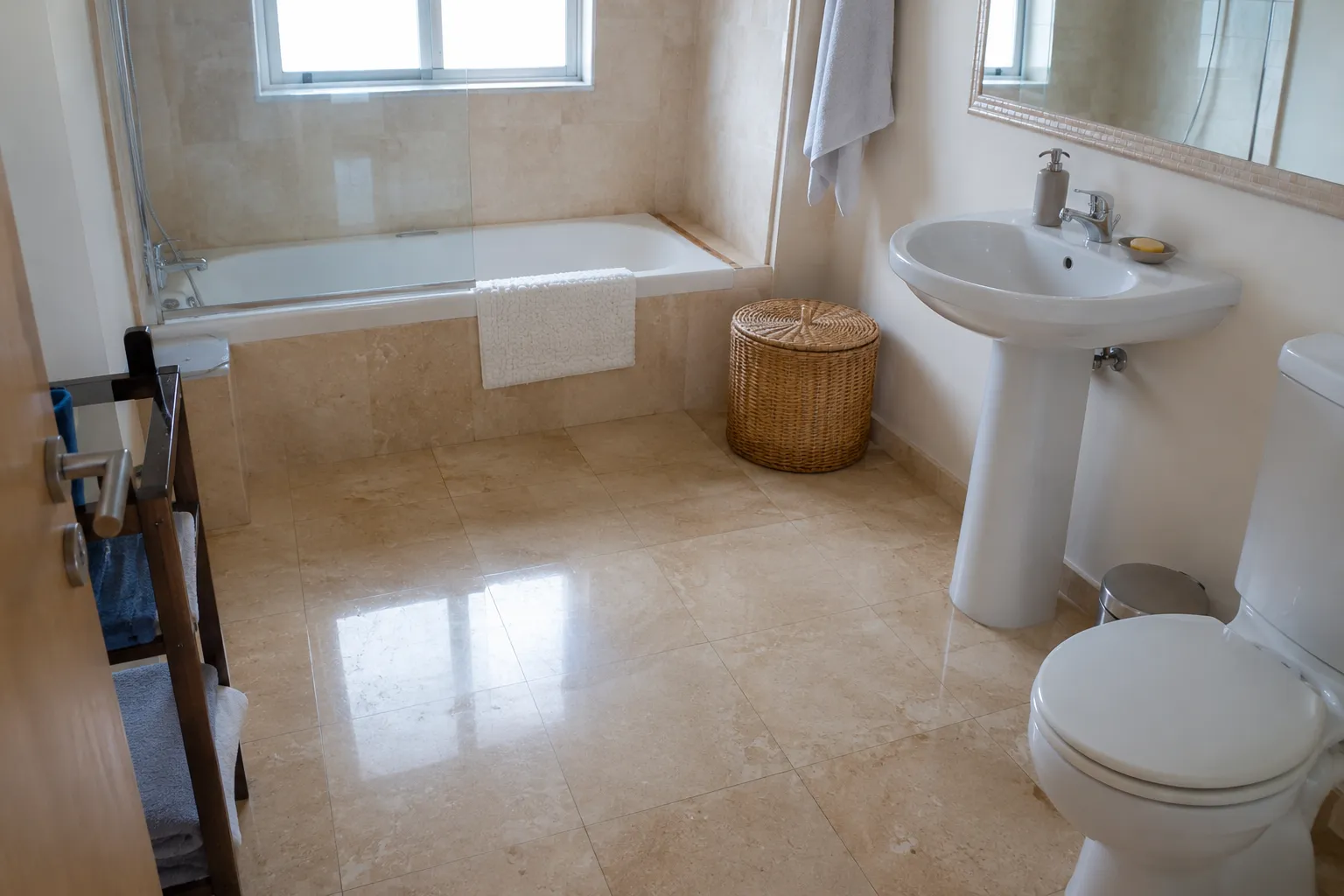
Request: Restore matte shade to travertine, remove whitish streaks.
Done: Performed deep cleaning and polishing of travertine using neutral products.
Cost: 21 000 ₸
Master: Dinara Nurgaliyeva, stone master
Total: Surface gained even matte color, streaks and stains removed.
 After
After
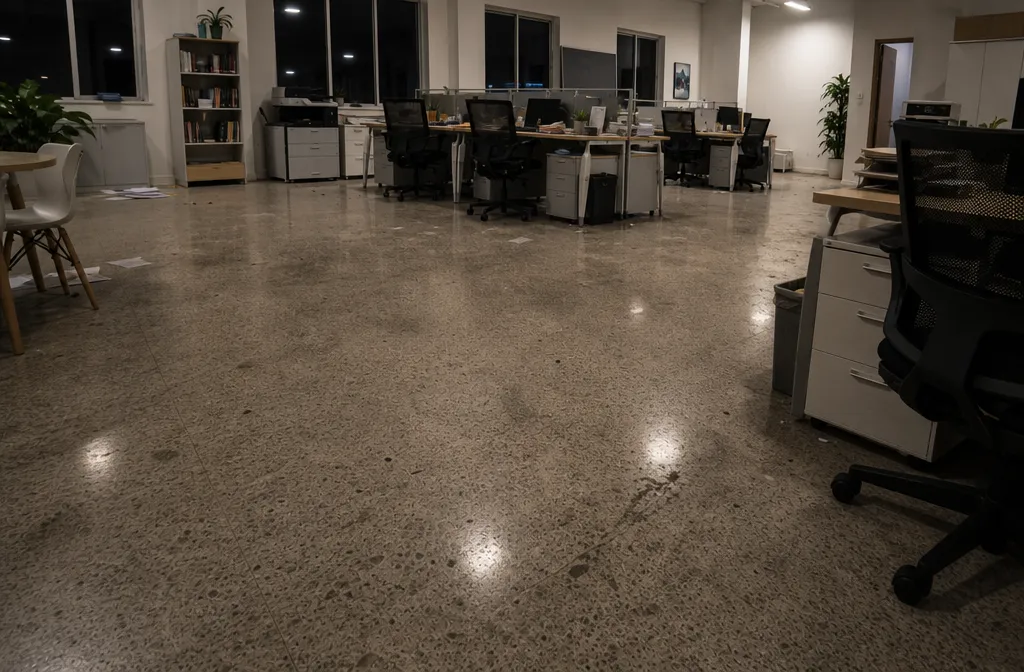
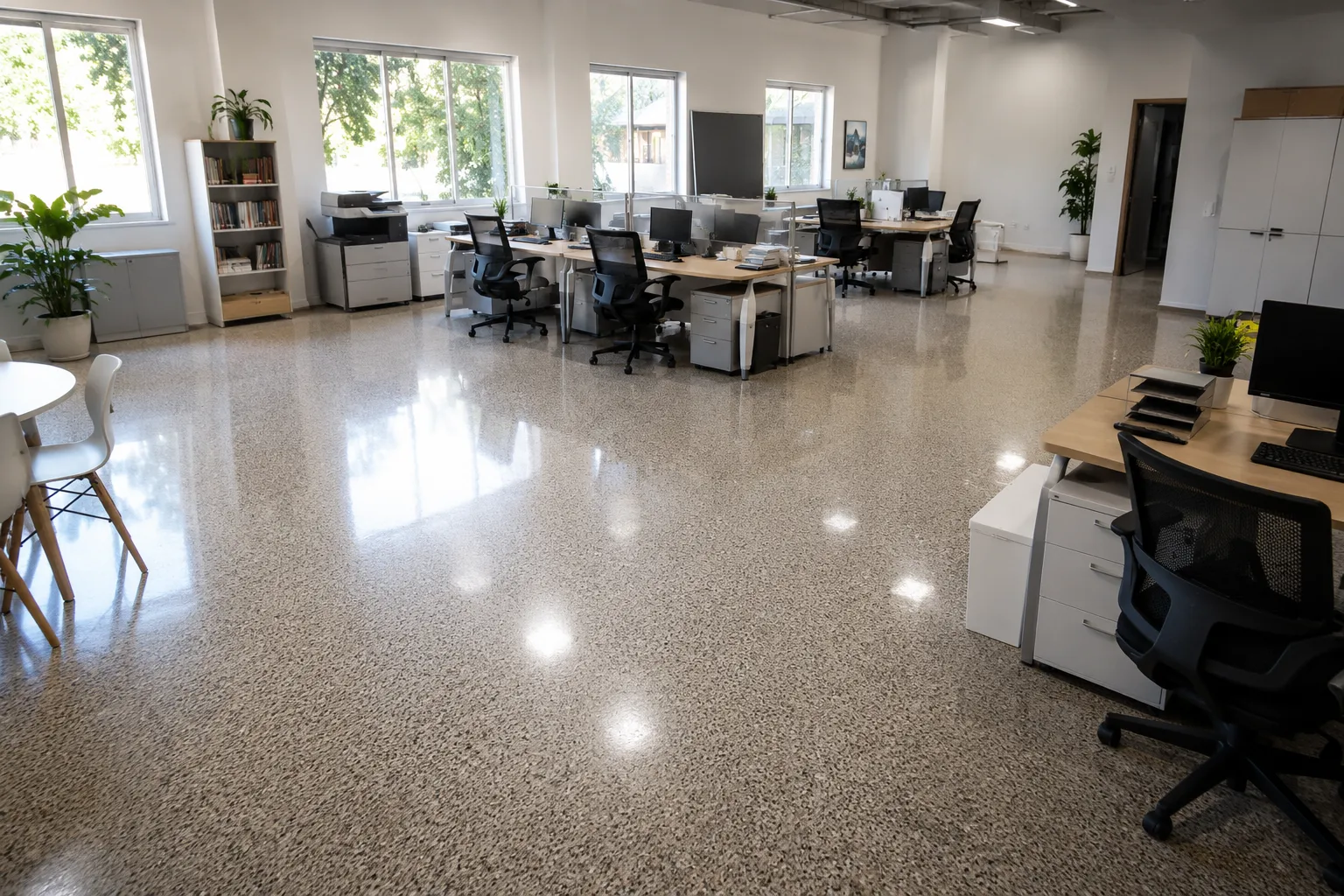
Request: Renew the terrazzo floor in the office, remove scuffs and stains.
Done: We performed terrazzo grinding with diamond segments and applied mastic.
Cost: 20 000 ₸
Master: Azamat Kusainov, floor master
Total: The floor became uniform, scuffs disappeared, and a slight shine appeared.
 After
After
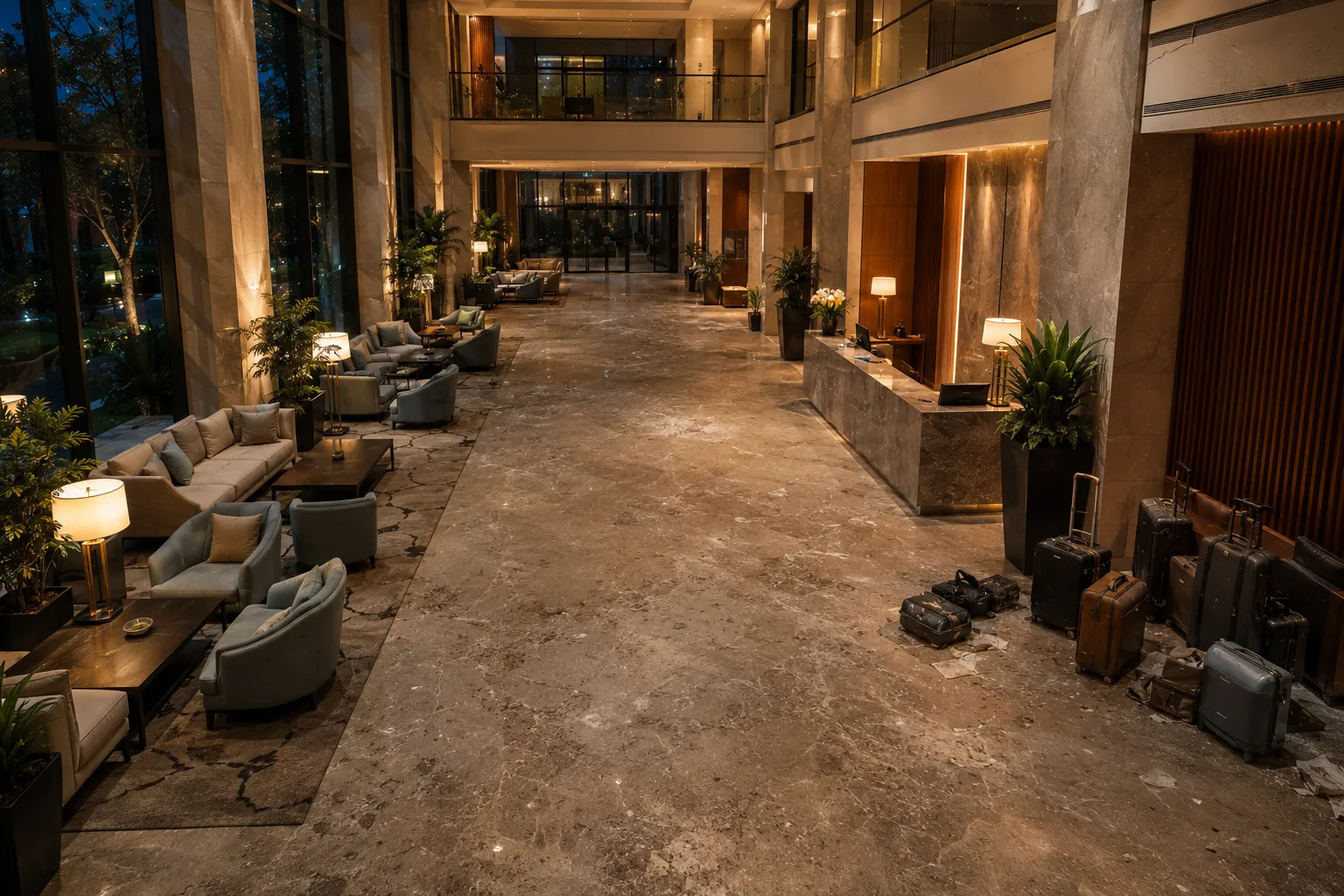
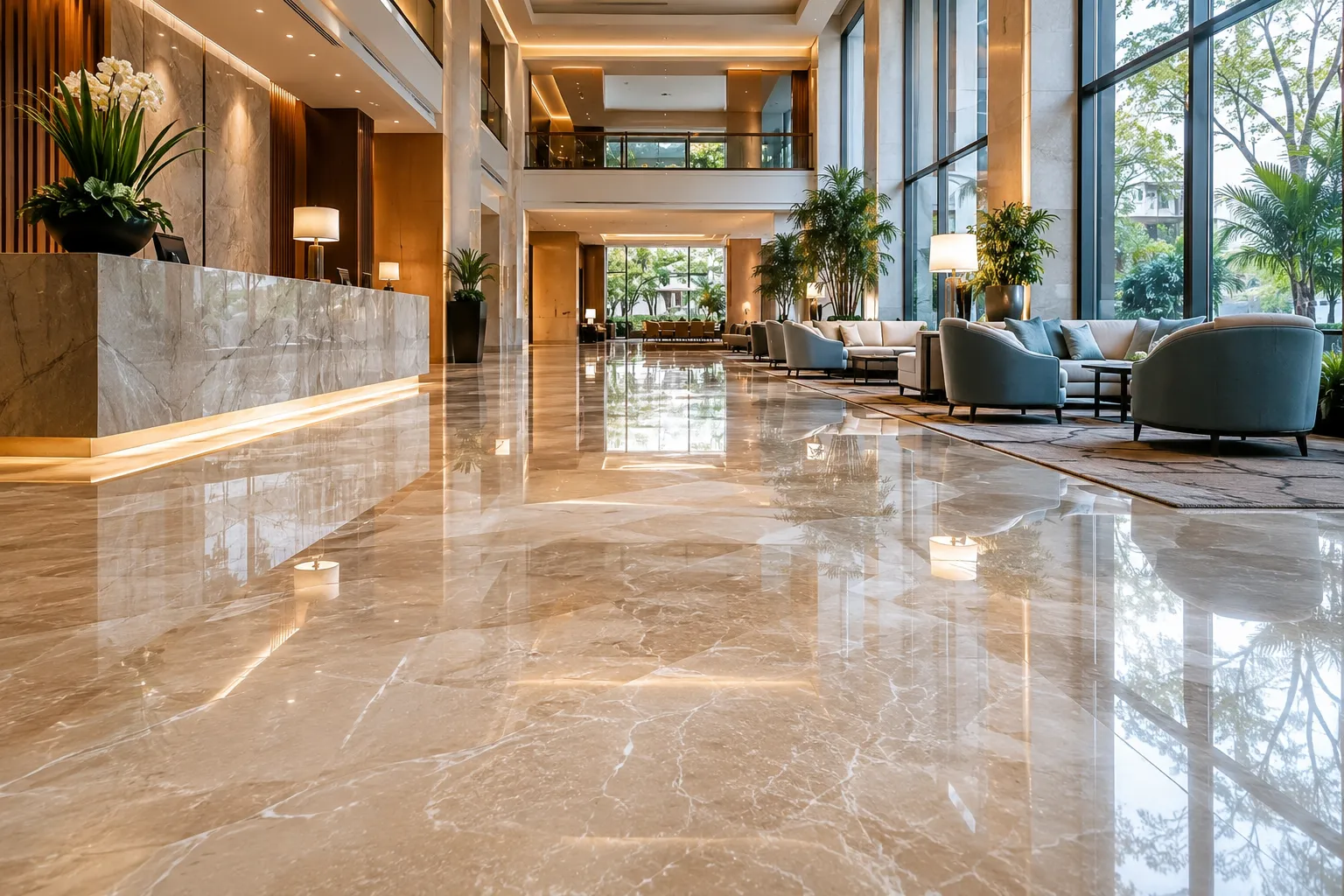
Request: Restore the mirror shine of the marble floor in the hotel lobby.
Done: We performed marble crystallization using diamond paste and polishing.
Cost: 22 000 ₸
Master: Nurlan Zhumabayev, stone master
Total: The floor shone with a mirror-like gloss, fine scratches and dullness were eliminated.
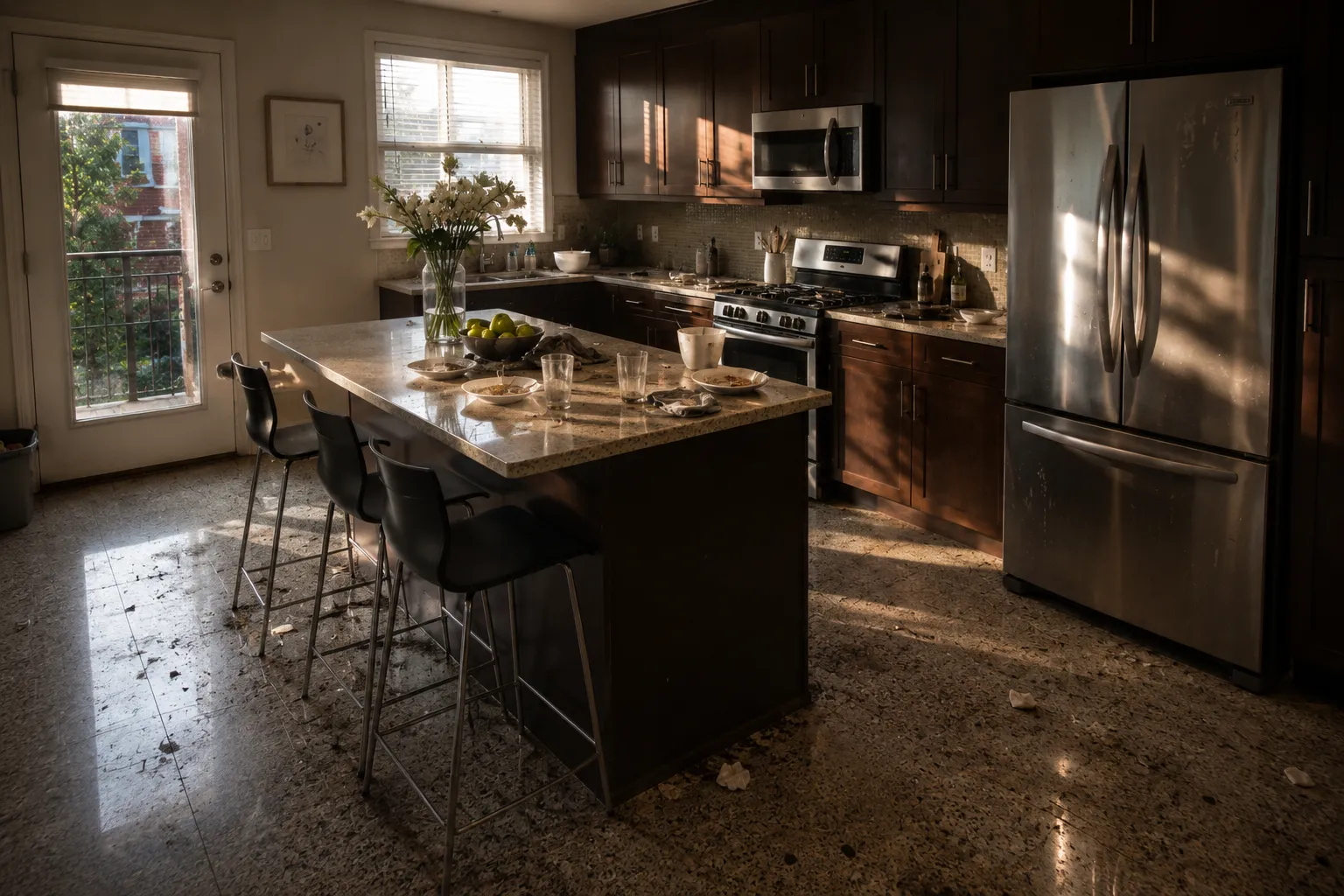
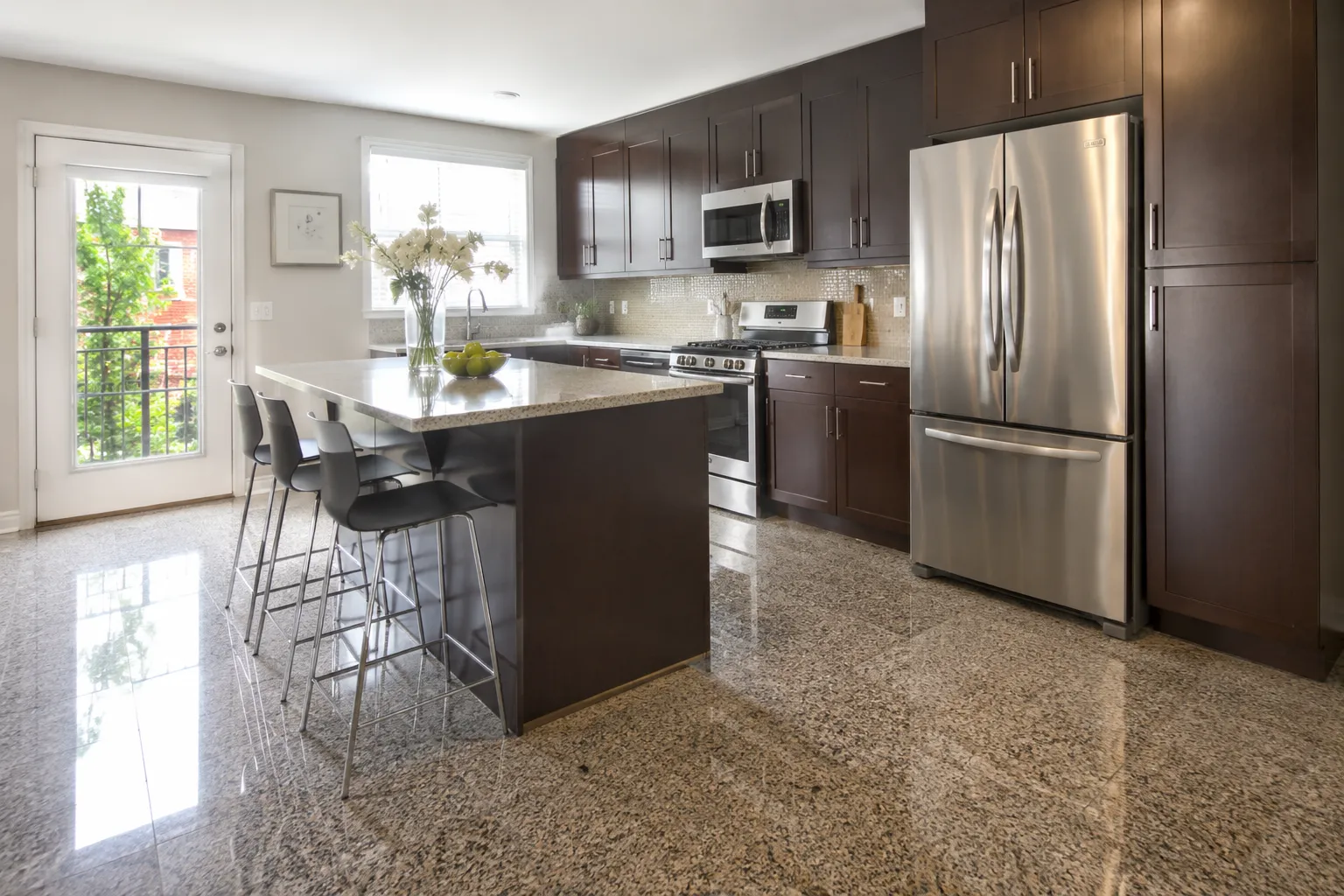 After
After
Request: Remove grease stains and restore shine to the granite floor in the kitchen.
Done: We performed deep cleaning and polishing of granite using alkaline agents.
Cost: 23 000 ₸
Master: Lyazzat Muratova, stone master
Total: Stains removed, surface became shiny and uniform.
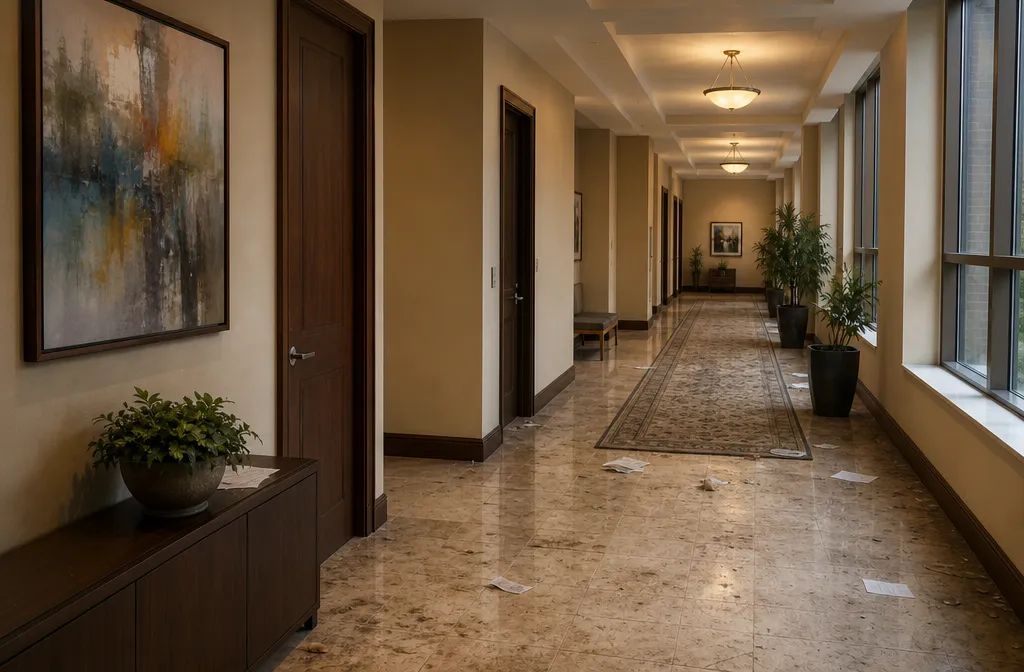
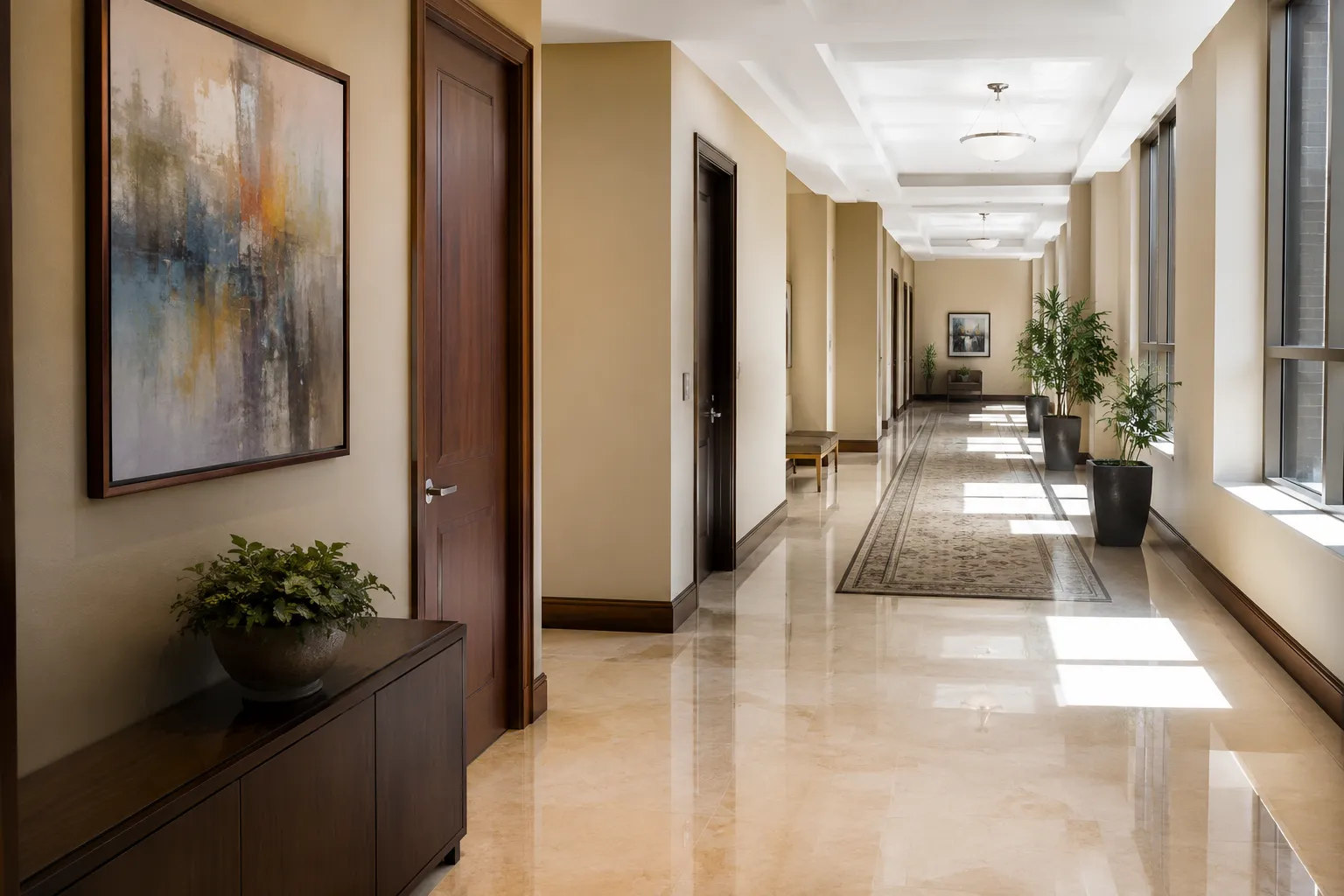 After
After
Request: Remove scuffs and restore the matte look of the limestone floor in the hallway.
Done: We performed grinding and polishing of limestone using soft abrasives.
Cost: 20 000 ₸
Master: Yerzhan Sagintayev, stone master
Total: Scuffs disappeared, the floor acquired an even matte shade.
 After
After
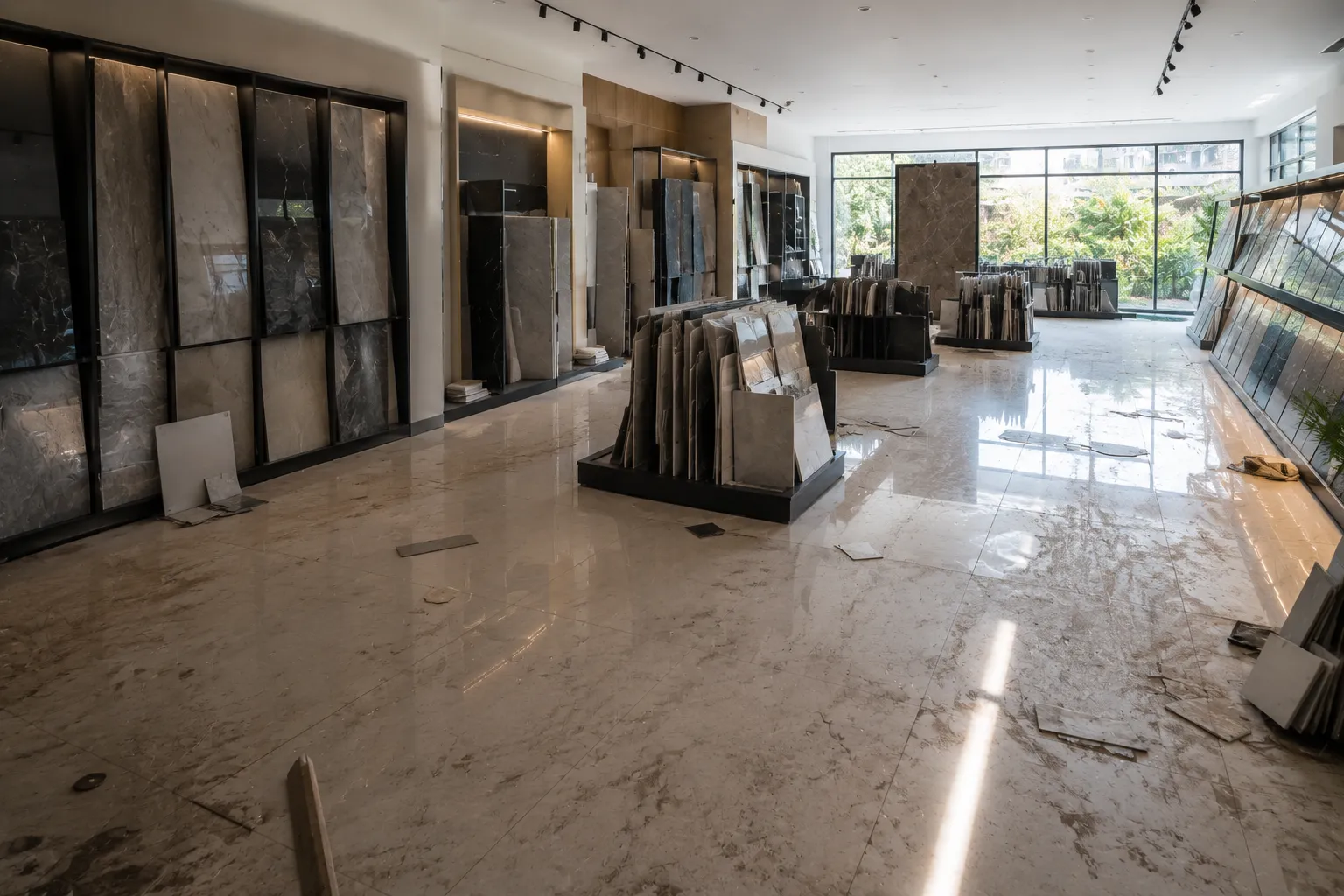
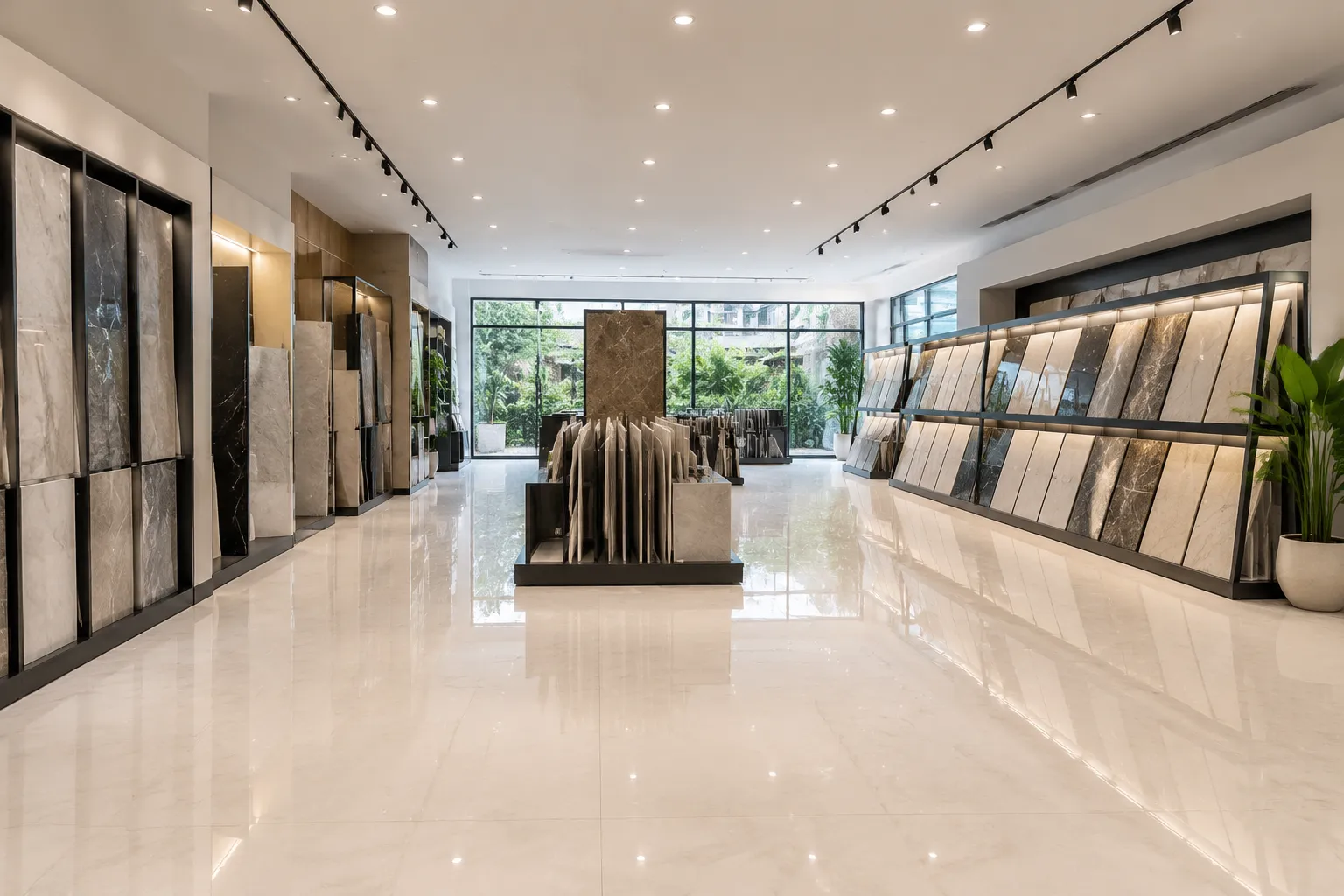
Request: Remove streaks and restore gloss to the ceramic granite floor in the showroom.
Done: We performed polishing of ceramic granite using diamond discs and finishing wax.
Cost: 22 000 ₸
Master: Gulmira Saparbayeva, floor master
Total: The floor became glossy, without streaks, with a wet stone effect.
 After
After
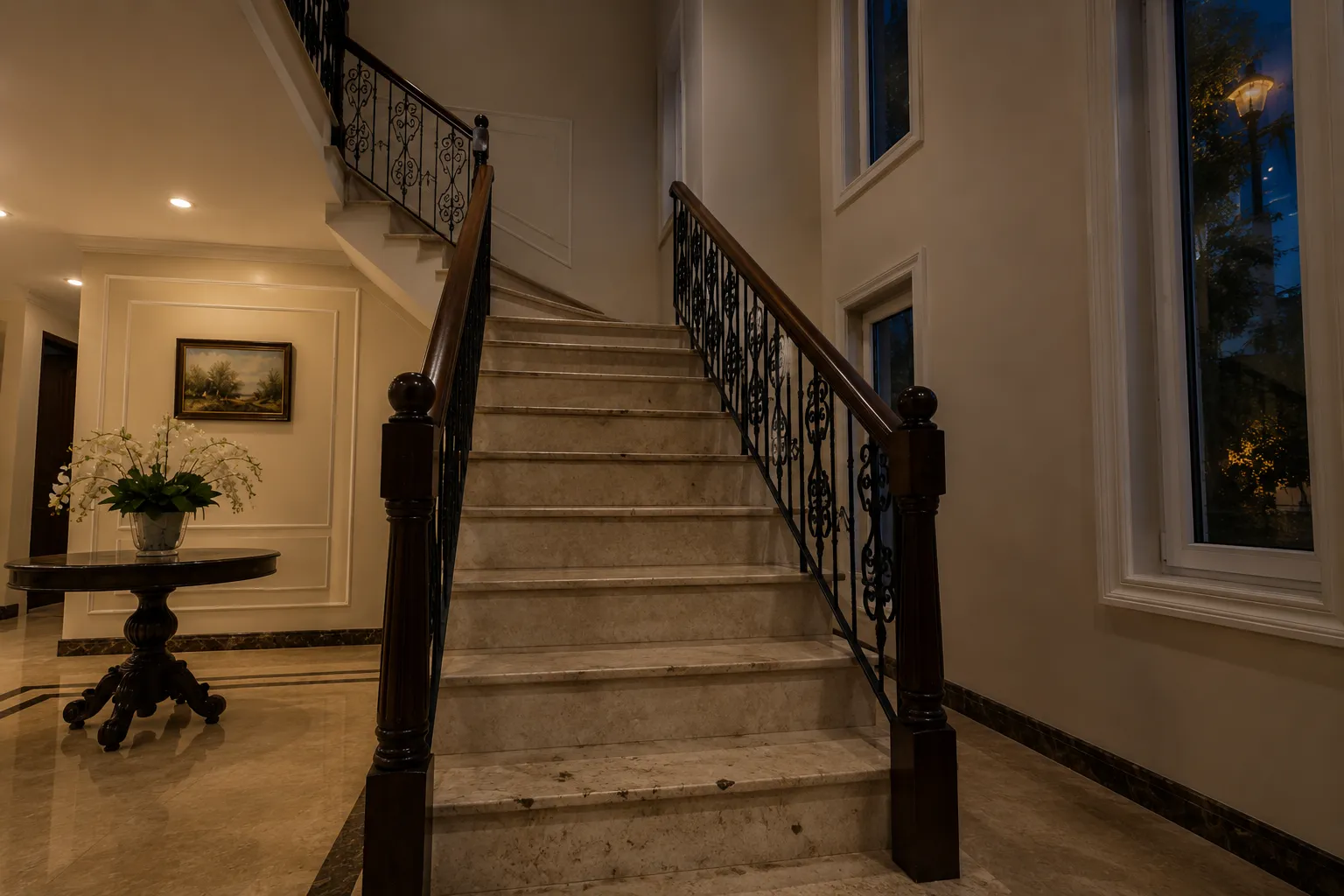
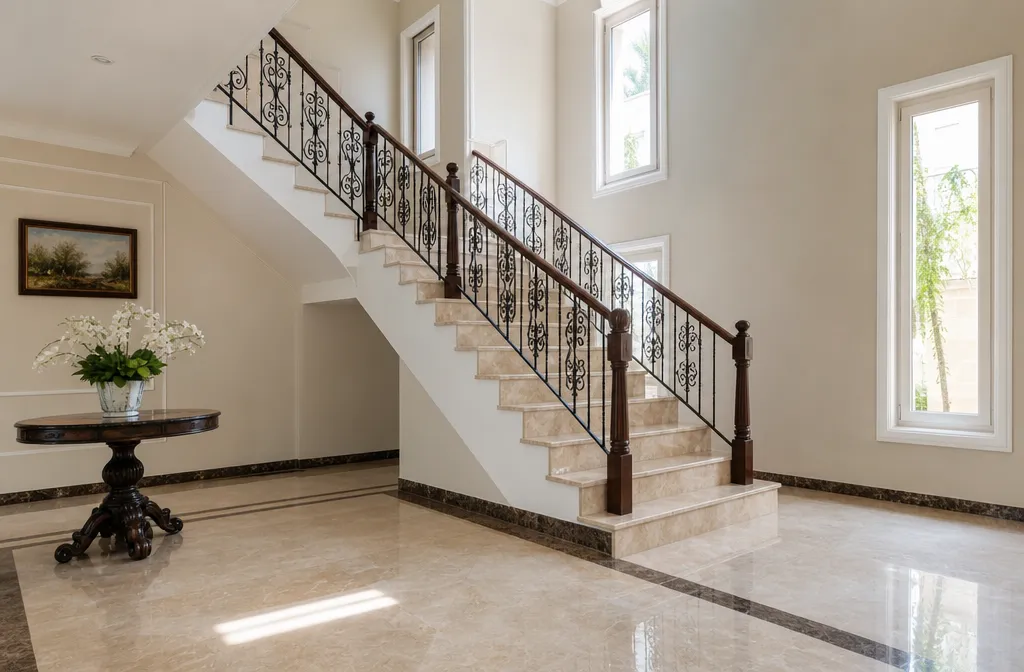
Request: Restore shine to the marble staircase steps, remove scuffs.
Done: We performed crystallization and polishing of each step using diamond pastes.
Cost: 21 000 ₸
Master: Marat Akhmetov, stone master
Total: The steps gleamed, scuffs and matte areas disappeared.
All cleaners are profi-clean staff with training, uniform and security check. Each order has a team leader who controls quality.
The choice between stone polishing and crystallization comes down not to price, but to the type of coating and the desired result. Both procedures restore shine, but work differently: polishing removes a micro-layer of stone, while crystallization densifies the top layer with a chemical compound. In our practice in Almaty, the difference is what clients most often ask about — and here is how we answer them.
Polishing: Mechanical grinding of the surface using abrasive diamond tools. It removes 0.1–0.3 mm of the top layer, eliminating scratches, scuffs, heel marks, and chemical stains. After polishing, the stone becomes matte or semi-matte — an additional finishing coating (crystallizer, varnish, impregnator) is applied separately. Suitable for marble, granite, travertine, concrete, and porcelain stoneware with significant damage.
Crystallization: A chemical-mechanical treatment using a crystallizer (a mixture of acids and fluorides) and a rotary machine with a pad. The compound is worked into the stone, fills micropores, and creates a hard, glassy film 1–3 microns thick on the surface. Crystallization does not remove deep scratches but provides a mirror-like shine and increases wear resistance. It only works on calcium-containing rocks (marble, limestone, onyx) — it does not react with granite or porcelain stoneware.
Hypoallergenic cleaning chemicals are not just marketing, but a necessity in a city where 15% of the population suffers from respiratory allergies (data from the Almaty branch of the NCE). Acid-based crystallizers release chlorine and fluoride fumes — without supply ventilation, they remain in the air for up to 4 hours. For our orders in kindergartens and dental clinics, we use only acid-free Sodasan crystallizers, which have no strong odor and do not require staff evacuation. Marble polishing dust (calcite microcrystals) is inert in itself, but we work with HEPA-class industrial vacuum cleaners to prevent it from settling in the client’s lungs. If you are ordering polishing for an apartment with a small child, be sure to check whether the contractor has certificates for the chemicals and the vacuum cleaner class — this is a matter not of comfort, but of health.
Even a perfectly polished surface loses its shine within 2-3 months without proper care. We’ve broken down the typical mistakes that ruin polish the fastest and compiled working life hacks for marble, granite, concrete, and porcelain stoneware in Almaty conditions.
Vinegar, citric acid, and any chlorine-containing gels (Cillit Bang, Domestos) destroy the crystal lattice of polished stone within 3-5 uses — the surface becomes matte and rough to the touch. For daily wet cleaning, use neutral pH-balanced solutions (pH 7-8): in our orders, Kiehl Floor Cleaner and Sodasan Steinreiniger work consistently — they leave no streaks and do not wash away the protective layer. On marble and travertine, additionally apply a liquid crystallizer (sealer) once a month, which closes micropores and restores the mirror-like reflection. Before buying household chemicals, check the label: if the bottle does not have a note saying “for natural stone” — don’t buy it, even if the seller assures you the product is universal.
Sand and fine abrasives brought in on shoe soles act like sandpaper — within a month of foot traffic, micro-scratches appear on polished granite, visible in sunlight. A broom and a stiff-bristled brush only spread the sand across the surface and deepen the scratches. Our cleaners use microfiber mops with a sprayer and an industrial vacuum cleaner with a HEPA filter: it captures up to 99.97% of particles sized 0.3 microns and larger without stirring dust into the air. At home, sweeping twice with a soft microfiber broom (available at Fix Price and on Kaspi) and wet cleaning once every 2-3 days is sufficient — for offices and shops, the frequency should be increased to daily, otherwise the abrasive will “eat” the polish within six months.
Chairs on casters, metal sofa legs, and heavy dressers without felt pads leave dents and scratches up to 0.5 mm deep on polished concrete and porcelain stoneware — these require not just polishing but grinding with recrystallization. At entry areas (hallway, foyer), be sure to lay rubber mats with a cellular structure — they trap up to 80% of street sand and gravel. Stick self-adhesive felt glides (Silent Step or similar on Kaspi) under furniture, at least 3 cm wide — narrow pads under thin legs create point pressure on the coating. If the room has office chairs, buy transparent polycarbonate floor mats — they distribute the load and protect the polish from wheel abrasives.
Almaty dust contains fine particles of clay and sand from vacant lots and construction sites — they settle on the floor in a dense layer within 6-8 hours, and if you simply wipe the floor with a damp cloth, the clay spreads into an abrasive paste. In summer, during dry weather, use water-free cleaning: knock down dust with an electrostatic duster or a vacuum cleaner with a turbo brush, and do wet wiping only in the evening when the suspended particles have settled. In winter, reagents from shoes (salt, calcium chloride) eat into the micropores of polished marble within 2-3 passes — at the entrance, place deep rubber dirt-trapping mats at least 1 meter long so that a person can take 3-4 steps on the grate before reaching the main flooring. At sites in the Medeu and Bostandyk districts, where humidity is higher due to the proximity of the mountains, we recommend additional impregnation of the floor with an oleophobic compound every six months — it repels water and dirt, extending the lifespan of the polish by 8-10 months.
A polished floor loses its gloss unevenly: high-traffic areas (hallways, kitchen, entryway) dull first, while the shine under furniture remains original. On marble and concrete, the first sign is “clouding”: the surface stops reflecting clear outlines of objects, a matte film appears that cannot be washed off with water. On granite and porcelain stoneware, wear is noticeable by micro-scratches that create a “cobweb” effect in the light. If the gloss does not recover after wet cleaning with a neutral cleaner, it’s time to call the specialists. In our orders, the average cycle between polishings for residential premises is 12-18 months, for commercial spaces (cafes, open-plan offices) — 6-9 months. Do not wait for a complete loss of gloss: the deeper the wear, the more aggressive the grinding needed, and it removes up to 0.3 mm of the coating per pass.
Choosing a polishing compound is not a matter of cost, but of compatibility with the stone type and operating conditions. At profi-clean, we select chemicals based on the rock type, final treatment, and traffic intensity — there is no universal “one-bottle-fits-all” solution.
Marble crystallization is a chemical-mechanical process: an acid-containing compound (Kiehl Marble Crystallizer or equivalent) is applied to the surface, which heats up under the disc and fuses into the calcite. The top layer of the stone is compacted to a mirror gloss and a hardness of 4-5 on the Mohs scale. Crystal grinding is a purely abrasive treatment with diamond tools (grit 400-3000), where a micro-layer is removed to expose a fresh structure. On marble, we combine both approaches: first, we grind to remove scratches and level the surface, then we crystallize to seal the pores. The difference is significant: crystallization provides gloss and protection for 3-6 months, grinding only provides an even matte background without pores. A mistake is trying to crystallize granite or porcelain stoneware: the acid does not react with quartz, and the compound simply spreads as a film that peels off within a week. On granite, we use alkaline hardeners (Sodasan Stone Hardener) with aluminum oxide — they create a hard coating without etching.
For concrete floors in Almaty apartments and offices, we use two-component lithium hardeners — they chemically bond with the cement stone and seal the pores from within. Unlike acrylic sealers, which form a film and wear off in 2-3 months, lithium compounds (Kiehl Lithofin or Retroplate) penetrate 3-5 mm and act as structural reinforcement. In Almaty’s underground parking garages, where sand and reagents are present in winter, film polishes do not hold up — we treat the concrete with a lithium compound immediately after grinding with diamond segments. As a final step, we apply a carnauba-based wax emulsion (Sodasan Floor Wax) — it provides a water-repellent layer without slipperiness. An important nuance: concrete in Almaty new buildings often has a high clay content in the mix — such a floor absorbs the hardener unevenly. Before polishing, we do a test on 0.5 m²: if the compound absorbs within 30 seconds, the concrete is porous and requires a double layer; if it remains as a puddle, the pores are clogged, and diamond grinding with 200 grit is needed to open the capillaries.
Porcelain stoneware is a sintered quartz-feldspar material with zero porosity and a hardness of 7–8 on the Mohs scale. Acid-based crystallizers do not react with it — the compound sits as a film and peels off during the first wet cleaning. For porcelain stoneware, we use water-based diamond polishing pastes with micro-particles of cerium oxide (Kiehl Ceramic Gloss). The paste is applied to a felt pad at 1500 rpm — the abrasive fills micro-irregularities in the glaze and creates a mirror shine without chemical etching. In Almaty shopping centers, where porcelain stoneware is laid over large areas, this method provides durability for 6–8 months with a daily footfall of 500+ people. A mistake is trying to polish matte porcelain stoneware (R11 and above): it has a deliberately rough surface for slip resistance, and polishing reduces the safety class to R9. In such cases, we apply a protective hydrophobic agent (Sodasan Nano Seal), which does not change the texture but repels water and dirt.
On granite floors in the hallways of Almaty apartments, we use alkali-based crystallizers with added aluminum oxide (Kiehl Granite Gloss). The compound is applied with a floor machine using a white pad at 1200 rpm — it hardens the surface without an acid reaction. Granite is a finicky stone: it is not afraid of acids (unlike marble), but it has micropores where dirt gets trapped. In Almaty, where clay and sand are on shoes during the off-season, we combine alkali crystallization with subsequent application of an oil-based hardener (Lithofin Oil-Stop) — it fills the pores and prevents dirt from embedding. Without this, after 2–3 months, dark stains from wet shoes appear on the granite, which cannot be removed by regular washing. In our practice, there was a case in the “Akbulak” residential complex: clients ordered polishing of dark granite, but after a month the floor dulled again — we found that the cleaner used an acidic tile cleaner. After re-polishing and applying Oil-Stop, the problem was resolved. Advice: on granite in the entryway, renew the protective layer every 4–5 months, not once a year — Almaty’s clay dust wears down the hardener faster than in European cities.
Polishing a floor with a heating system is a feasible process, but with strict limitations on the surface temperature. Violations lead to cracking of the stone or tile delamination.
During floor polishing, the surface temperature must not exceed +25 °C. On hot stone (from +35 °C), the polishing compound sets in 40–50 seconds instead of the required 2–3 minutes — the cleaner cannot distribute the paste in time, leaving oily streaks that embed into the pores. We have had cases where a client turned the heated floor to full power before the team arrived, hoping “the floor would dry faster after wet cleaning” — resulting in indelible dark stains from the crystallizer on Crema Marfil marble. Therefore, 6–8 hours before work begins, we ask to turn off the heating and let the covering cool to room temperature. On concrete floors with heating, the restriction is milder — up to +30 °C — but even then, we check the temperature with a pyrometer before each pass.
Each material reacts to temperature changes differently. Natural marble (travertine, Carrara, Emperador) is the most vulnerable: a temperature difference between the cold polishing paste (+15–18 °C) and the heated floor (+35–40 °C) causes thermal shock in the stone. Micro-cracks along the mineral cleavage expand over 2–3 cycles, and after six months, a “cobweb” — a network of surface cracks — appears on the tiles, which can only be removed by re-grinding with a 1–2 mm layer removal. Granite is more heat-resistant: its structure withstands heating up to +50 °C without losing integrity, but on hot granite, the crystallizer-sealer hardens into a film that peels off within a month. Porcelain stoneware (polished, satin) can be polished mechanically without the risk of cracks, but with the heating on, the adhesive under the tile has not yet reached full strength — in new buildings, we wait 28 days after installation. Expert recommendation: if a heated floor is already installed, request a surface temperature measurement report from the master before ordering polishing — in Almaty in December, we had 4 visits where the floor was +42 °C due to round-the-clock heating operation, and the work had to be rescheduled.
The most common is trying to speed up the drying of the compound. On a heated surface, diamond grinding segments (grit 50–100) overheat within 15–20 minutes of work, lose their abrasive grain, and start to “burnish” the surface instead of cutting it. As a result, the marble shines for the first 2 days, but on the third day it becomes matte — the “false gloss” effect. The second typical mistake is using water-based polishing compounds (Sodasan, Cleaner) on heated floors: the water evaporates instantly, the compound does not penetrate the stone’s pores, and after the first wet cleaning, the gloss disappears by 60–70%. On projects with underfloor heating, we switch to water-free crystallizers (Kiehl K2, filter K6) — they work at +18–25 °C and provide a stable gloss. The third mistake is ignoring joint areas: the expansion joints between tiles in an underfloor heating system are filled with elastic sealant (silicone, polyurethane), which expands more than the stone when heated. If you polish on a hot floor, the sealant oozes out of the joint as a bead and stains the edges of the tiles — at profi-clean, on such projects, we first let the floor cool to +20 °C, then treat the joints separately with a zero-shrinkage finishing sealant. An alternative approach: on heated floors in commercial spaces (lobbies, corridors), we recommend not polishing with crystallization, but matting followed by hardening — it is less sensitive to temperature fluctuations and provides protection for 8–12 months without re-polishing.
Even professional floor polishing loses its effect if typical miscalculations are made — from incorrect grit selection to ignoring humidity. We have analyzed the five most common mistakes we encounter on projects in Almaty and explain how to avoid them.
The most costly mistake is starting to polish marble or granite immediately with felt pads, bypassing the diamond grinding segment. In our practice, there was a case in a business center on Abay Avenue: the cleaner “saved” an hour on preparation, and after the final polish, all the micro-scratches from sand, which had been ground into the floor for years, showed through. Diamond tooling with a grit size of 50–100 grit removes the top worn layer of stone — without this, polishing only fixes the defects. On concrete floors in the parking lots of the “Nurly Tau” residential complex, we use segmented diamond cups: they open the pores and remove laitance, otherwise the floor remains matte in patches after polishing. Skipping the diamond grinding stage guarantees that traces of old wear will appear on the surface within a month, and the polishing will have to be redone.
Skipping grit sizes is a typical logical trap: “why polish with 200 grit if you can go straight to 400?” On the marble in the lobby of the “Akbulak” residential complex, we saw the result of this approach: the floor looked perfect after 800 grit, but under side lighting from spotlights, a “grid” of scratches from the 200 grit, which hadn’t been removed, was visible. Each step in the grit sequence (50 → 100 → 200 → 400 → 800 → 1500) must remove the scratches from the previous one — skipping a link leaves a micro-relief that the final polish doesn’t mask, but highlights. On granite, the step can be larger (50 → 200 → 400 → 800), but on marble and travertine, you cannot skip grit sizes — the stone is softer, and a scratch from 100 grit won’t be erased by 400 grit. In our regulations, a specific grit sequence is prescribed for each type of stone, and the cleaner is not allowed to change the sequence without approval from the technologist.
Dry polishing of marble guarantees overheating and “burning” of the stone. In Almaty, this mistake occurs in private homes in Gorny Gigant, where craftsmen save on water: the marble loses moisture, the crystal lattice breaks down, and whitish spots appear on the surface — the so-called “stone sunburn.” Wet polishing with a constant water feed (0.5–1 l/min per machine) keeps the stone temperature below 40 °C and washes the slurry out of the pores. At a project in the “Triumph” residential complex, we use industrial vacuum cleaners with a water collector — the water doesn’t spill across the lobby, and the stone stays cool. Concrete, on the other hand, is polished mainly using a dry method with a powerful HEPA-class vacuum cleaner (our fleet includes Tornado and Klindex): moisture on concrete softens the top layer, and the final gloss is lost within a week. The rule is simple: marble, travertine, limestone — only with water; granite, concrete — dry polishing with a vacuum cleaner.
The indoor microclimate directly affects the result. In Almaty, humidity fluctuations are especially noticeable in spring and autumn: in March-April, humidity in apartments can reach 75–80% due to snowmelt. If you polish the floor at such humidity, crystallizers (on marble) do not harden, and oils for concrete are not absorbed — they remain sticky. Once we arrived at a site in the Samal-2 microdistrict: the owner turned on the heated floor to 35 °C, thinking it would speed up drying. In reality, at that temperature, the polishing paste started to “burn” — we had to remove the entire layer with a diamond cup and start over. Optimal conditions for polishing: air temperature 18–22 °C, humidity 40–60%, heated floor turned off 12 hours before starting. Before starting, we always measure the humidity of the stone floor with a hygrometer — if the reading is above 5%, we postpone the work for 1–2 days and dry the room with heat guns.
The mistake is thinking that after diamond polishing to 1500 grit the floor is ready. Without final crystallization (on marble) or a hardener (on concrete), the surface remains porous and collects all the dirt from shoes within a month. At the MEGA Alma-Ata shopping center, we saw a granite floor that was polished without crystallization: after three weeks it became matte, and greasy coffee stains had seeped into the pores — we had to do deep grinding with a 50 grit diamond and reapply the crystallizer. Our technology: after diamond polishing — applying ColorCrystal crystallizer to marble (2–3 layers with intermediate polishing using white felt), and a water-based impregnator for concrete, which seals the pores and gives a “wet stone” effect. Final crystallization not only locks in the shine but also makes daily cleaning easier — dust and sand are not ground into the surface but are collected by the mop in one motion.
We ordered floor polishing in the office after renovation. The old coating became like new, shiny. The work was neat, no smell.
Thank you, Aigerim! Glad the result met expectations.
In the shopping center, they polished the floors to a mirror shine. True, they finished an hour late, but the quality is excellent.
Floor polishing in the living room — just out of this world! The parquet came alive, scratches disappeared. Very satisfied.
Thank you for your feedback! Our team worked hard for you.
The floors in the clinic became perfectly clean and smooth. Patients notice a pleasant shine. Thank you!
Ordered floor polishing for the warehouse. Overall not bad, but there were some matte spots left. Had to redo it.
We apologize. We promise to pay more attention to quality in the future.
The floors at the cafe look expensive and well-maintained after polishing. Customers praise the atmosphere. Highly recommend!
Floor polishing at the gym was done excellently. The coating became non-slip and shiny. Now it's more pleasant to work out.
Glad you liked it! Safety is important.
The floors in the studio shone like new. The only thing is a slight chemical smell lingered for a day. Otherwise, great.
Thank you for the feedback! Next time we'll use products with less odor.
We polished the floors at the restaurant. The marble shines, guests are delighted. We will definitely come back.
The floors in the kindergarten became smooth and safe. Kids run around and nothing slips. Great job!
Thank you, Gulnara! Children's safety is our priority.
Floor polishing in the hotel lobby was done quickly. The result is good, but I would have liked a deeper shine.
After polishing in the fitness club, the floors are not slippery and look premium. The trainers are satisfied.
Thank you! We work for your comfort.
For the exhibition, floor polishing was urgently needed. profi-clean handled it overnight, the floors are shining. Thank you!
The floors in the hallway became better, but not perfect. There are streaks in some places. I think I should have chosen a different service.
Sorry for the inconvenience. We will offer a re-treatment with quality control.
Floor polishing in the banquet hall before the wedding — the floors shone, guests took photos against the background. Thank you, profi-clean!
Congratulations on the holiday! Glad we could help.
After polishing at school, the floors in the corridors became bright and clean. Cleaning is now easier.
The floor polishing in the workshop was done well, with minimal dust. But the price could have been lower.
Thank you for your feedback! We try to keep prices reasonable.
The corridors in the office look like new. Employees noticed the difference. Fast and clean.
We did floor polishing on the first floor of the cottage. The parquet looks like a picture. The family is delighted!
Thank you! Glad we could please you.
In the dance hall, the floors became moderately slippery, ideal for dancing. But they were a bit late starting.
Sorry for the delay. Next time we will arrive on time.
Floor polishing at the car showroom — now the cars look even more impressive on the shiny floor. Clients are amazed.
After polishing, the library became brighter and cozier. Readers are happy. Thank you for the quiet work.
We tried not to disturb. Thank you for the feedback!
I ordered floor polishing in the garage. The concrete became smoother, but not as much as I wanted. It's okay for a garage.
Thank you for the feedback. We will take into account the wishes for concrete floors.
The laminate in the living room shines after polishing, scratches disappeared. Neighbors are already asking who did it.
Floor polishing in the business center lobby — the granite sparkled. All tenants are satisfied. Professional.
Thank you! Glad to cooperate.
In the spa salon, the floors became pleasantly warm-looking and smooth. There was a slight smell left, but we aired it out.
Sorry for the smell. Next time we will use fast-evaporating compounds.
With proper care, the effect lasts from 2 to 5 years. Crystallization and protective impregnation extend the period to 3-5 years. We recommend annual renewal of the impregnation.
On average, 1-2 days depending on the area and condition. For a 20 m² room, about 6-8 hours. We determine exact timelines after inspection.
Yes, we use water-based Tenax compounds without toxic solvents. Dust is collected with HEPA filters. The area is safe to enter immediately after cleaning.
We are a direct service provider with our own technicians. We use Italian Klindex discs and Tenax crystallizers. 1-year warranty and free assessment visit.
Yes, we provide a written 1-year warranty. If defects appear, we fix them free of charge. We work under a contract with before and after condition documentation.
Yes, our portfolio has over 100 examples. We can send a selection based on your floor type. We also provide a photo report of your project.
Average rating 4.9 from 150+ reviews on 2GIS and Instagram. Clients note dust-free process and long-lasting shine. We can provide contacts for references.
Price depends on condition: light polishing at [price service="light marble"]/m², medium at [price service="medium marble"]/m², deep at [price service="deep marble"]/m². Exact price determined after inspection.
For concrete garage floor: light polishing at [price service="light concrete"]/m², medium at [price service="medium concrete"]/m², deep at [price service="deep concrete"]/m². Impregnation for oil protection is available.
Granite in hall: light polishing at [price service="light granite"]/m², medium at [price service="medium granite"]/m², deep at [price service="deep granite"]/m². Crystallization is often required for wear protection.
Tell us about your experience with profi-clean — it helps other clients and us improve.
We currently operate in Almaty. Other cities are coming soon.