Inspection and diagnostics
The technician assesses tile type, grout, and dirt level. Determines whether deep cleaning or anti-mold treatment is needed.
Professional tile and grout cleaning in Almaty — we remove plaque, mold, grease, and limescale without damaging the surface.

We work with any types and materials
Cleaning ceramic tiles without risk of damaging the glaze, removing plaque and mold.
from 3,000 ₸Removing stubborn dirt from porcelain stoneware without scratches, using diamond brushes.
from 12,000 ₸Gentle cleaning of natural stone with pH-neutral products, preserving structure and shine.
from 12,000 ₸Cleaning artificial stone without abrasives, restoring color and protecting against stains.
from 12,000 ₸Removing cement residue and efflorescence from clinker tiles with steam and special compounds.
from 3,000 ₸Careful cleaning of mosaic without damaging grout, treating each element.
from 12,000 ₸Cleaning Metlakh tiles while preserving the matte surface, removing grease and dirt.
from 3,000 ₸Cleaning subway tiles with detailed work on joints and relief using a steam cleaner.
from 3,000 ₸Removing dirt from wood-look tiles without scratches, protecting grout.
from 3,000 ₸Cleaning large-format tiles with even coverage, no streaks.
from 3,000 ₸Cleaning floor tiles in any room, removing ingrained dirt.
from 3,000 ₸Cleaning wall tiles from splashes, grease, and limescale.
from 3,000 ₸From inspection to result with guarantee
The technician assesses tile type, grout, and dirt level. Determines whether deep cleaning or anti-mold treatment is needed.
Protect furniture, baseboards, and vents with film and painter's tape. Remove fragile items.
Vacuum the surface with a HEPA-filter vacuum cleaner to remove dust and debris.
Apply professional solution Kiehl or Sodasan, let sit for 5-10 minutes to dissolve dirt.
Use a rotary machine with a soft brush, Karcher steam cleaner, and hand brush for grout.
Apply special fungicidal compound to joints, let sit, rinse.
Thoroughly rinse cleaning agents with water, collect moisture with an extractor.
We dry the surface with a microfiber cloth, check the quality, and apply a protective coating if necessary.
We only use certified Kiehl (Germany) and Sodasan (Eco-certified) compounds. They effectively remove plaque, mold, and grease without damaging glaze, grout, or natural stone. pH-neutral and alkaline products are selected based on the type of dirt.
We use professional Karcher steam cleaners (steam temperature up to 140°C) and rotary machines with nylon brushes. This removes dirt without abrasives, preserving shine and tile integrity. For mosaic and stone, manual cleaning.
Special fungicidal compounds penetrate grout pores, destroying mycelium. After cleaning, we apply anti-mold protection to prevent recurrence. Result: clean grout without dark spots.
We are confident in our service quality. If after cleaning there are traces of plaque or mold (provided it is removable), we will refund the full cost. The guarantee is stated in the contract.
All profi-clean employees are in-house, not subcontractors. Each undergoes training in cleaning ceramics, porcelain, stone, and mosaic. Technicians know how to avoid surface damage and achieve perfection.
Sodasan products have eco-certification, contain no chlorine or harsh surfactants. The room can be used immediately after cleaning. We care about your family's health.
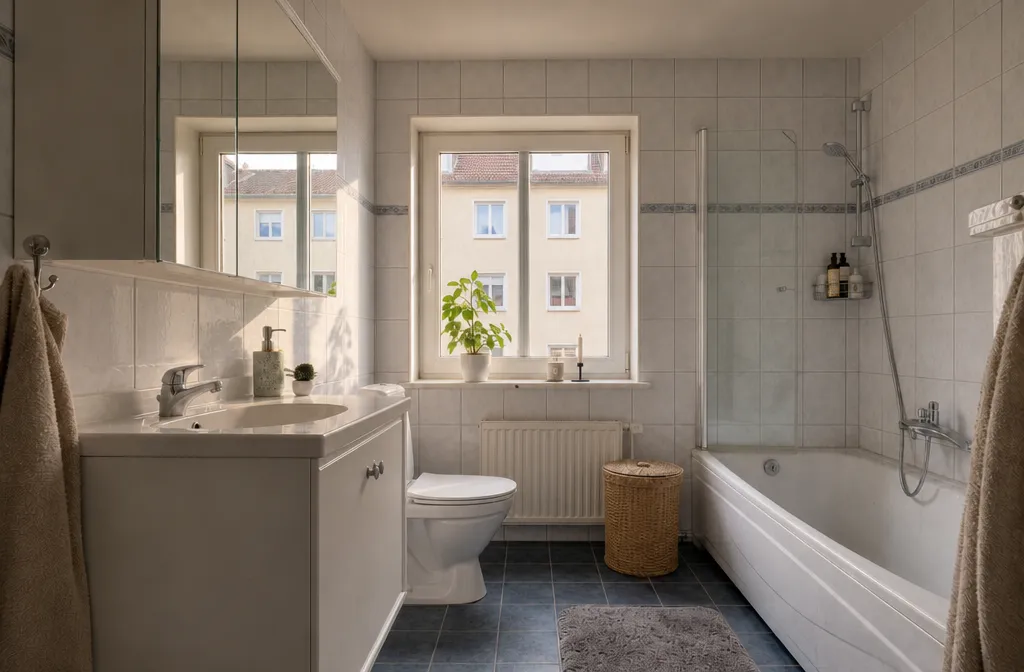
 After
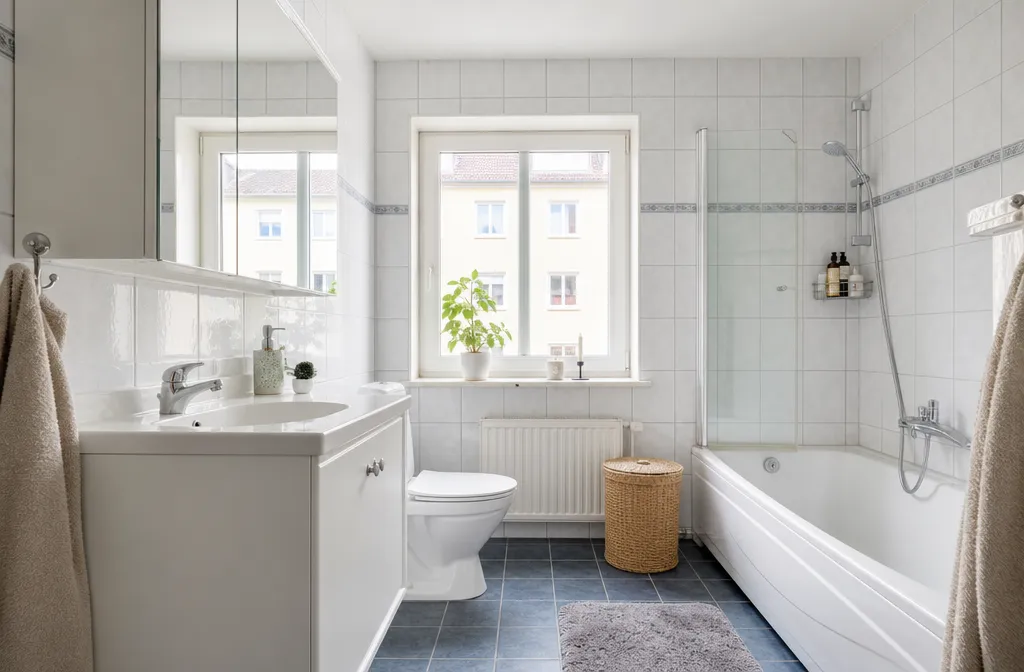
After
Request: Tiles above the bathtub covered with soap scum and water spots.
Done: Performed deep cleaning using professional alkaline cleaner and Karcher steam cleaner.
Cost: 12 000 ₸
Master: Aizhan Muratova, Cleaning Master
Total: Tiles are completely clean, grout is lightened, surface shines.
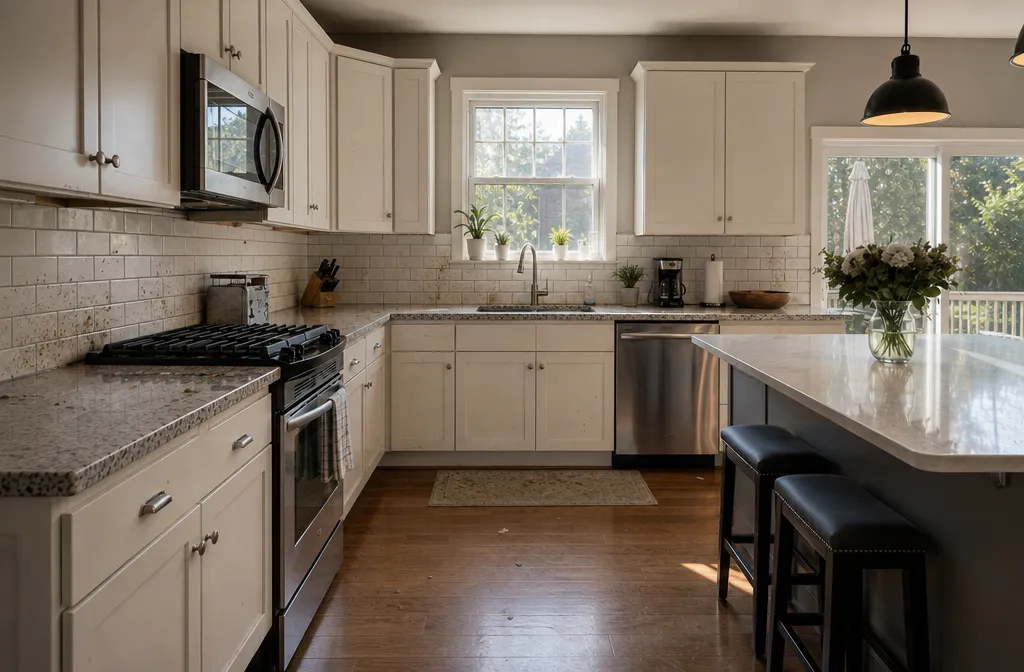
 After
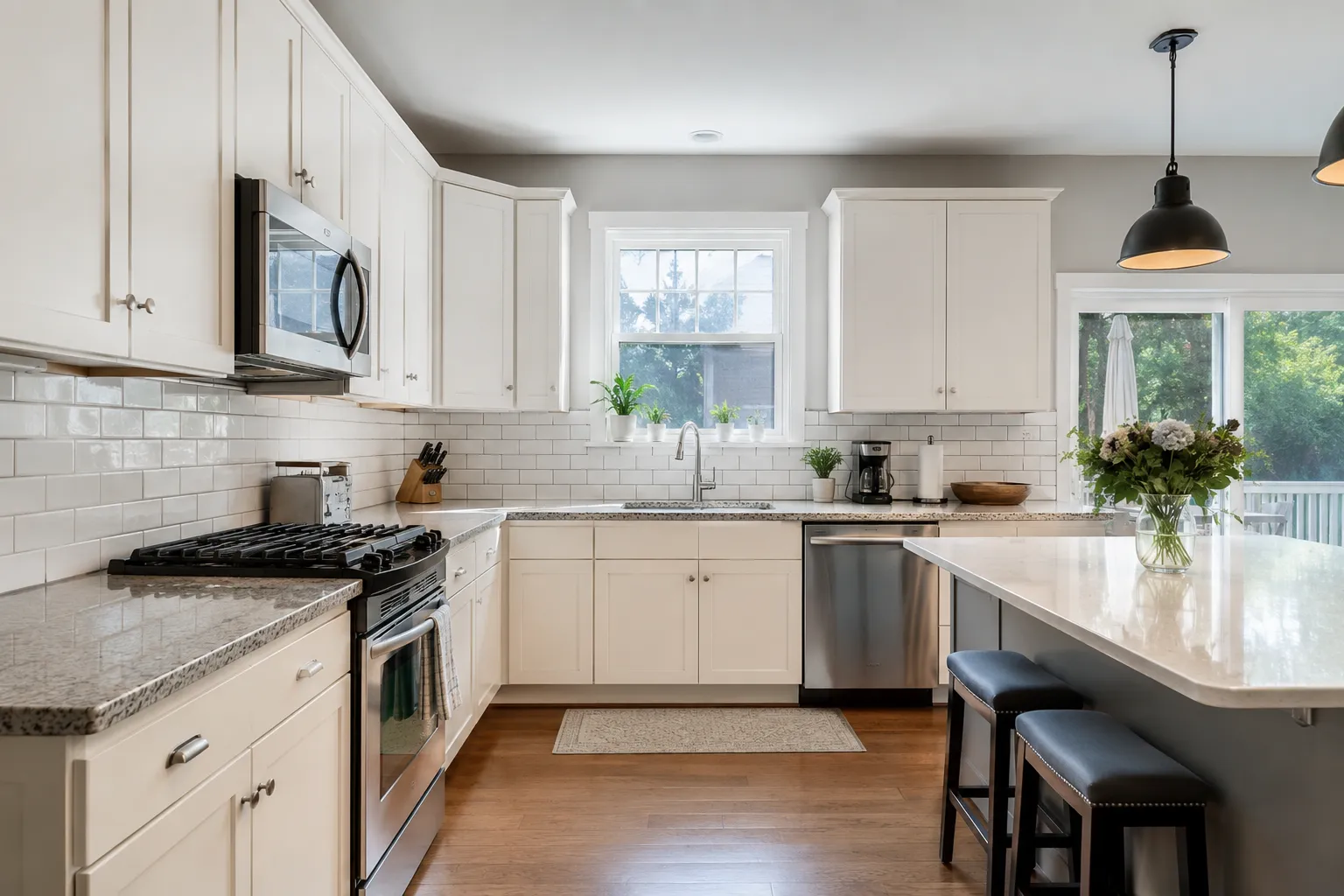
After
Request: Tiles behind the stove covered with greasy film and splatters.
Done: Treated the backsplash with hot steam and applied degreaser, then rinsed.
Cost: 15 000 ₸
Master: Timur Zhaksybekov, Dry Cleaning Master
Total: Tiles perfectly clean, grease and soot completely removed.
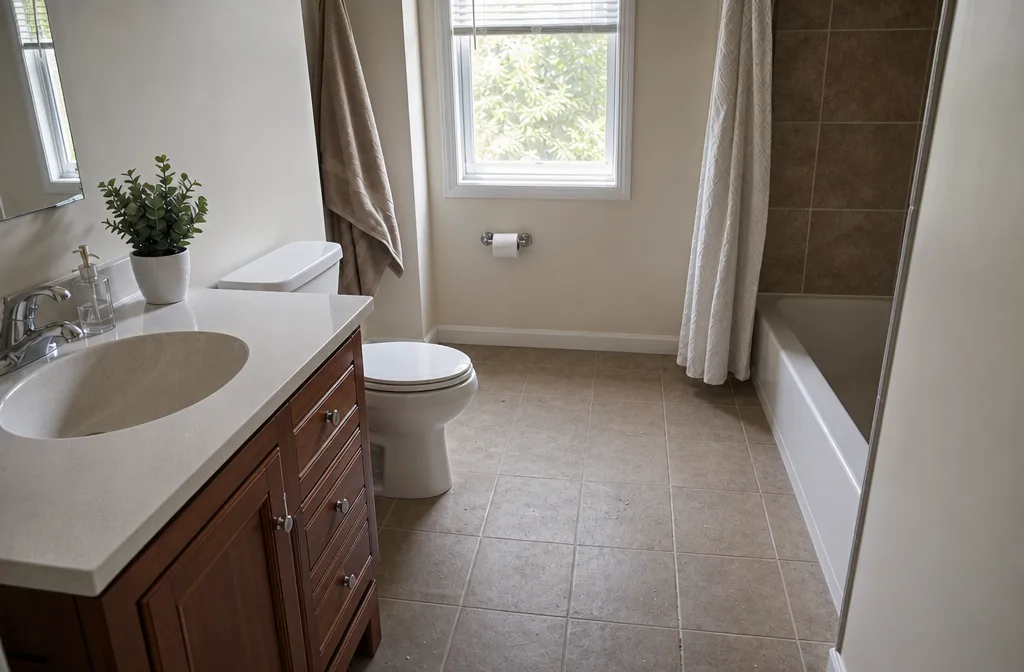
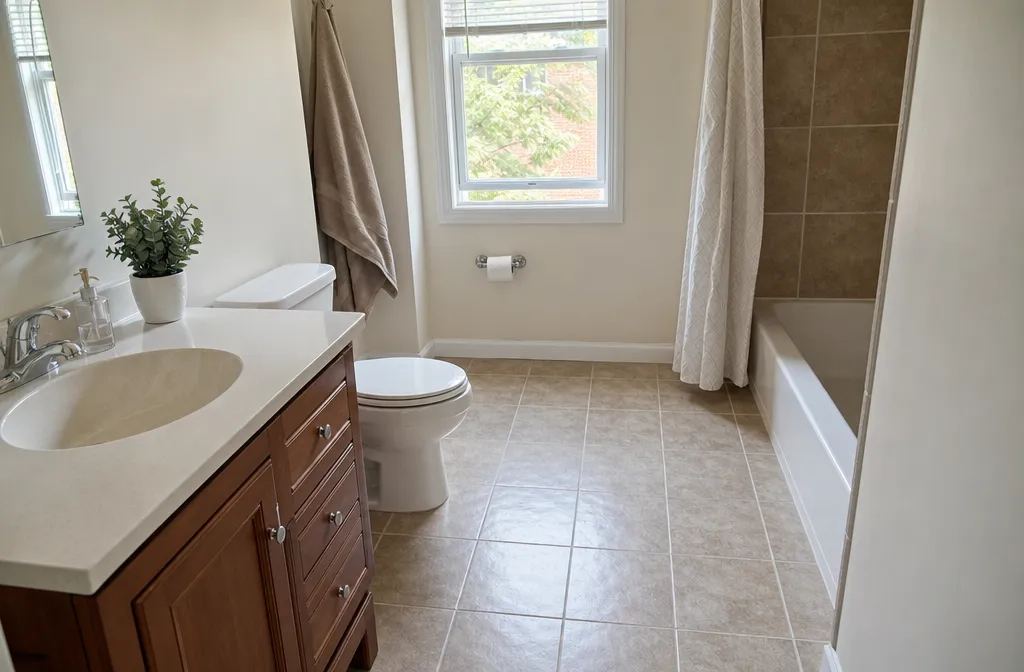 After
After
Request: Bathroom floor tiles lost shine, streaks visible.
Done: Washed the floor using neutral detergent and a stiff-bristle brush.
Cost: 14 000 ₸
Master: Dana Bekzhanova, Cleaning Master
Total: Floor clean, no streaks, tiles shine.
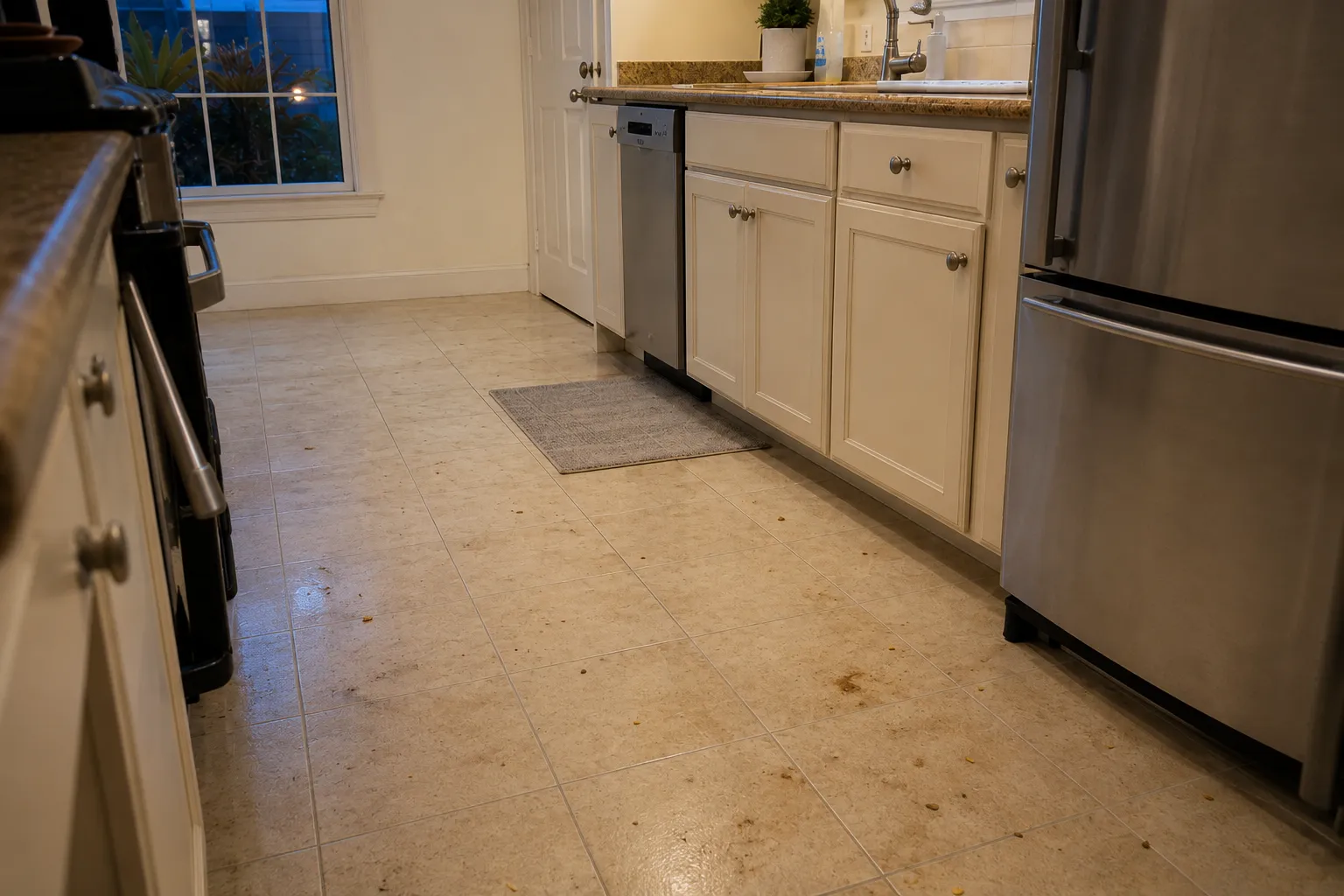
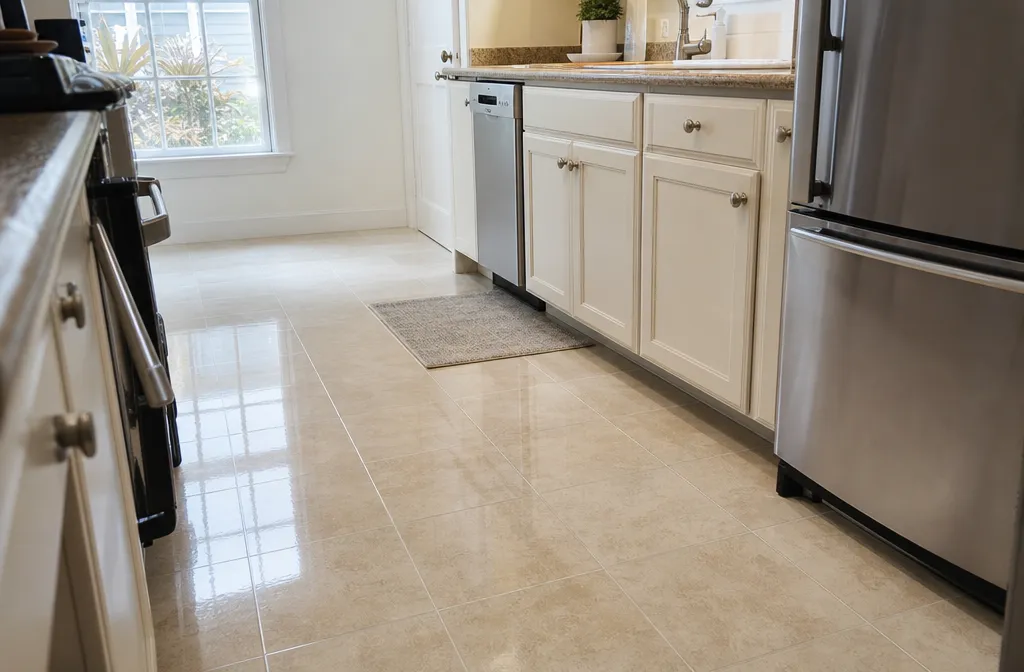 After
After
Request: Kitchen floor tiles greasy, with stains from spilled food.
Done: Applied alkaline kitchen cleaner and steam treatment.
Cost: 13 000 ₸
Master: Yerzhan Nurgaliyev, Cleaning Master
Total: Tiles clean, greasy stains removed, surface matte.
 After
After
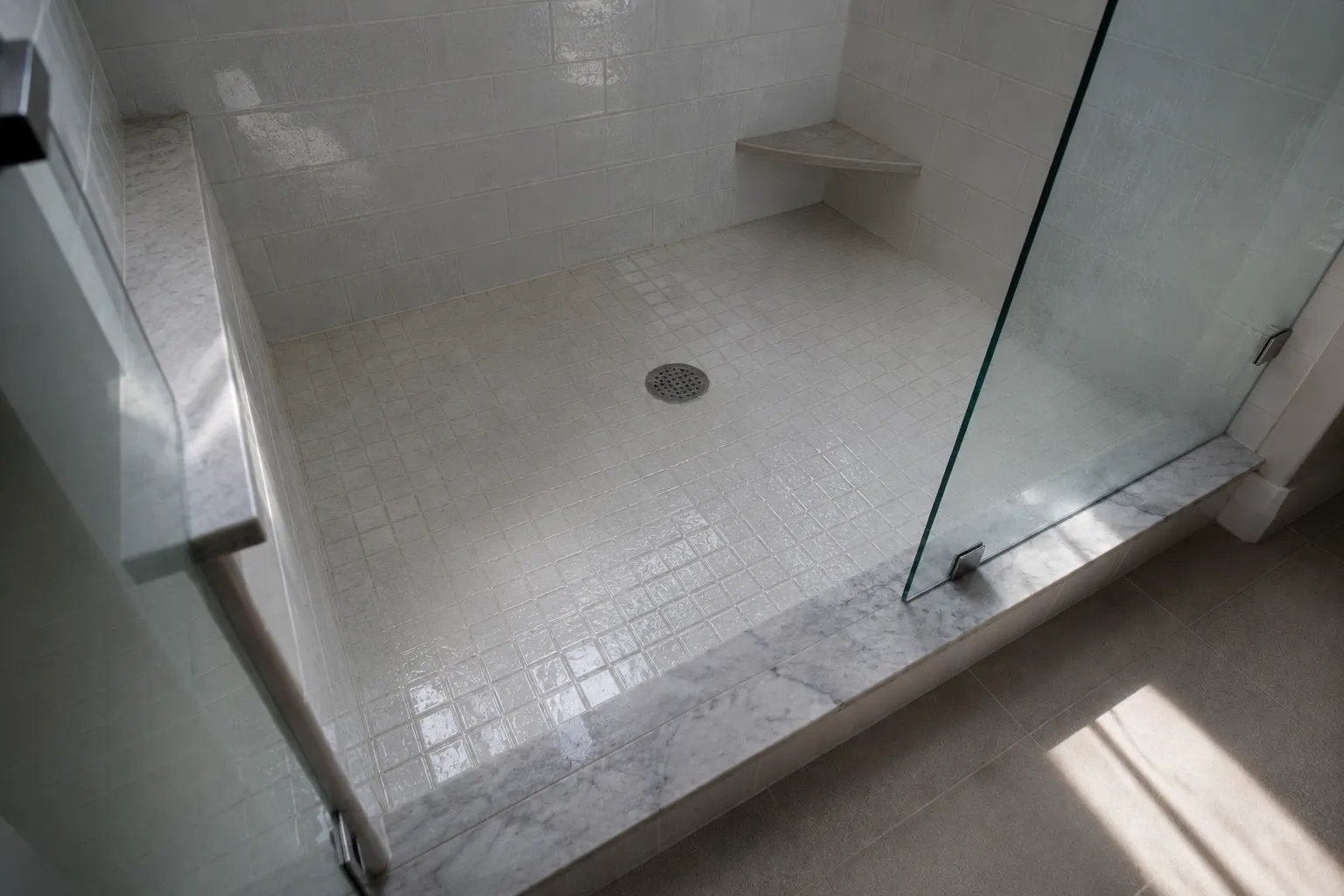
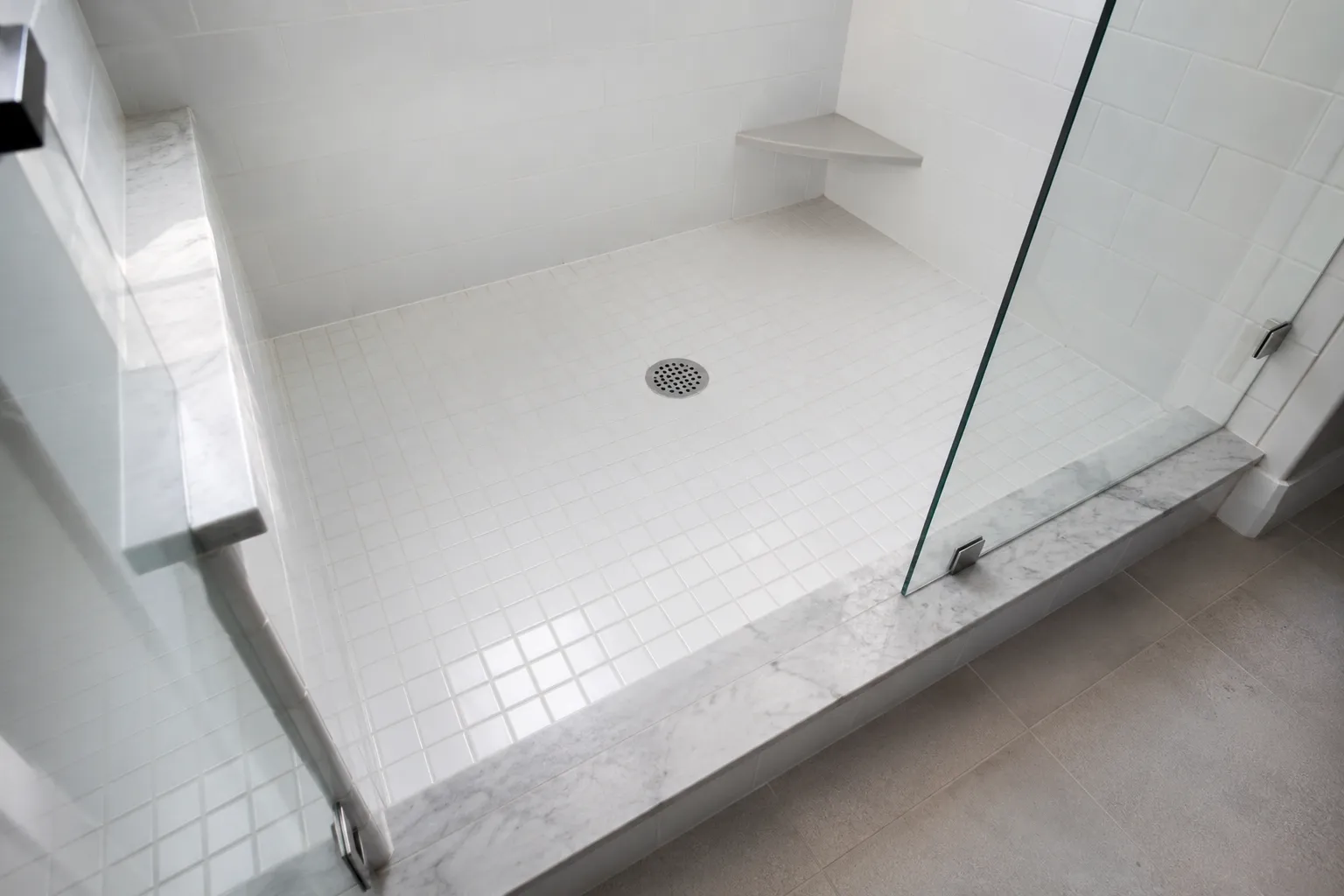
Request: Shower floor tiles slippery from soap scum.
Done: Cleaned the shower floor with acidic cleaner and steam treatment.
Cost: 12 000 ₸
Master: Aliya Sagintayeva, Cleaning Master
Total: Tiles non-slip, clean, no residue.
 After
After
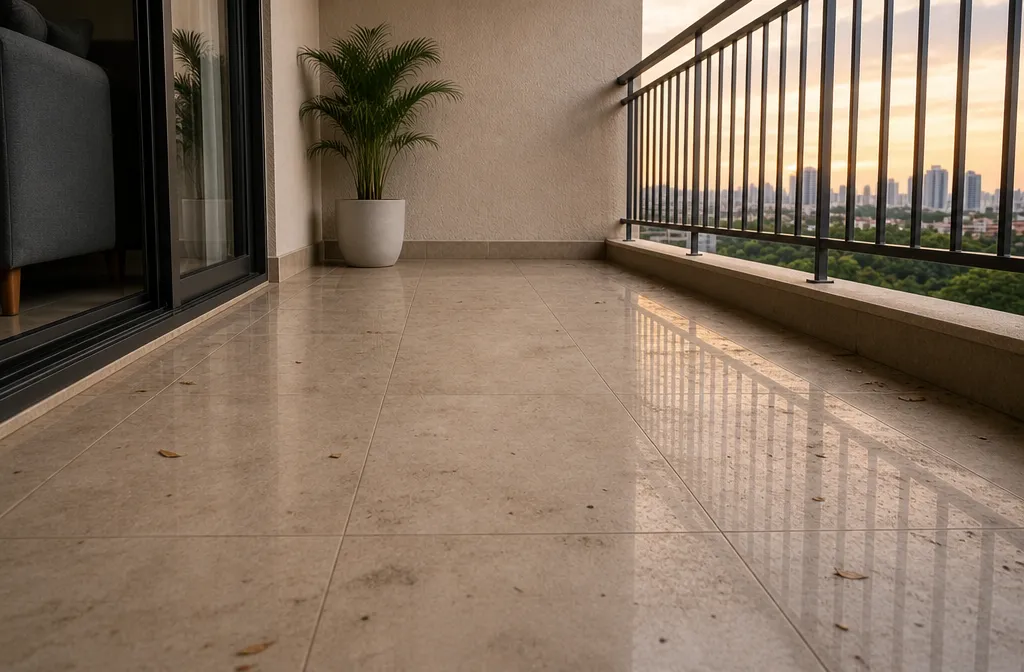
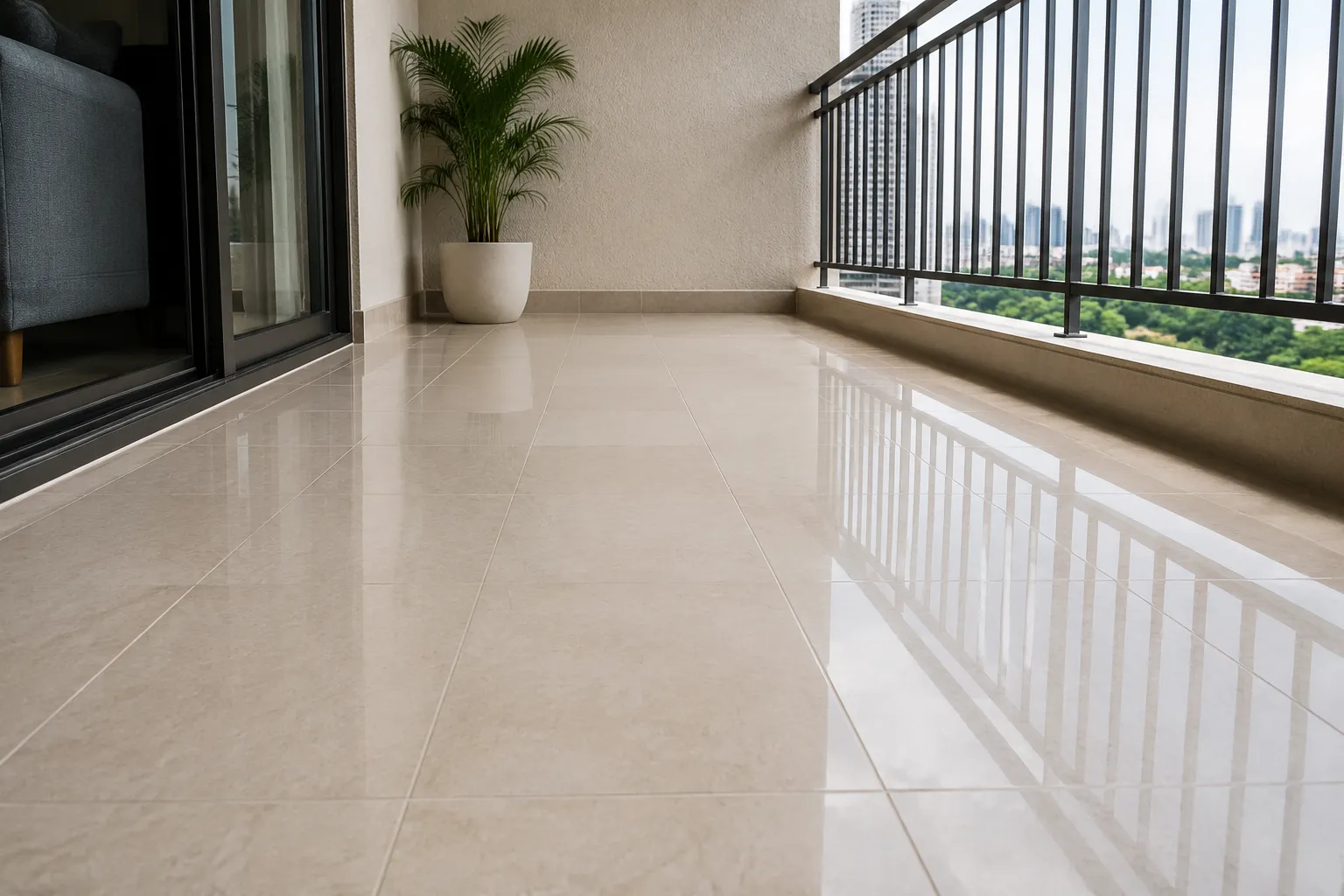
Request: The balcony tiles are covered with dust and dirt after winter.
Done: We washed the balcony floor using a cleaning vacuum cleaner and a brush.
Cost: 14 000 ₸
Master: Marat Kaliyev, cleaning master
Total: The tiles are clean, free of dust and dirt, the surface is fresh.
 After
After
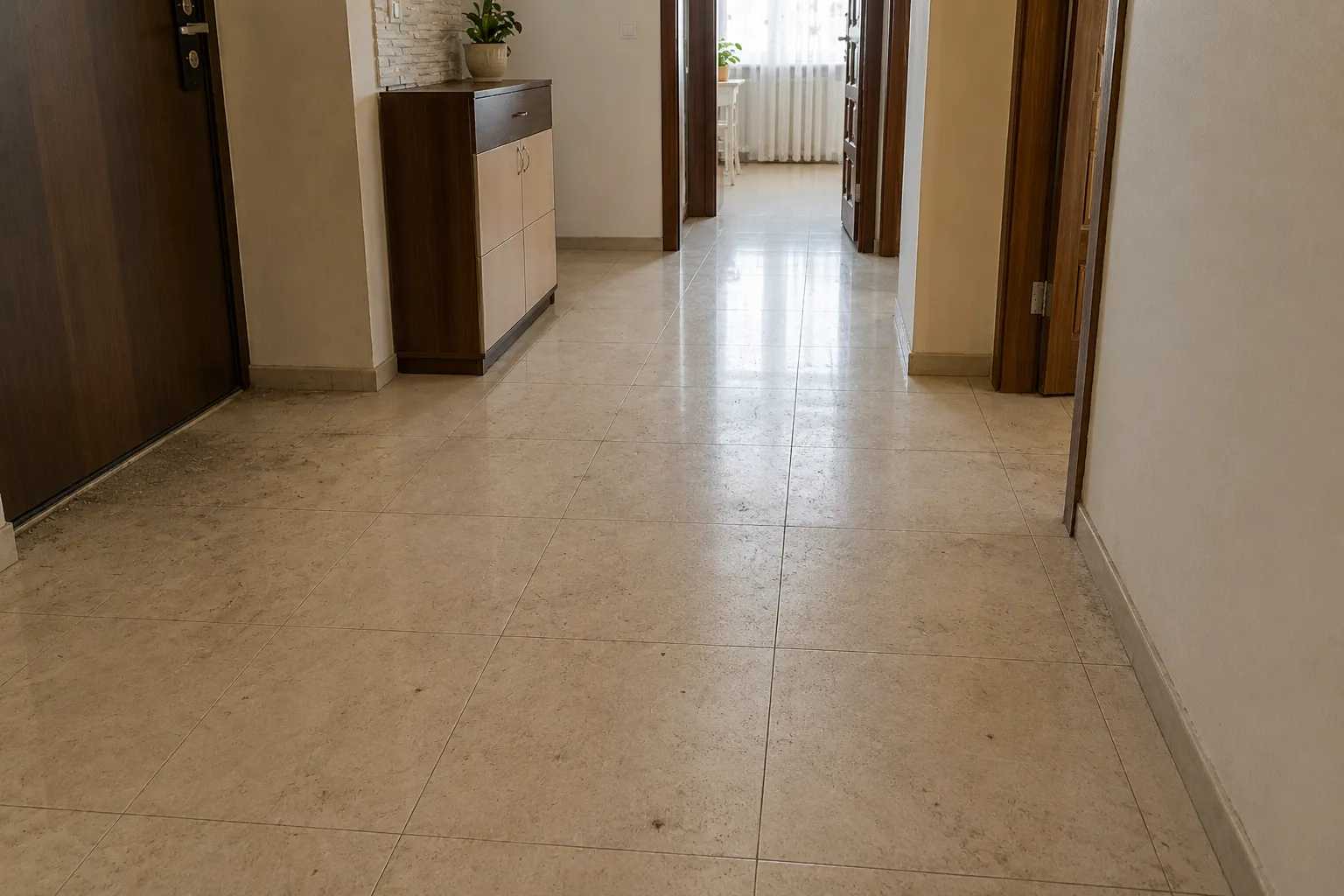
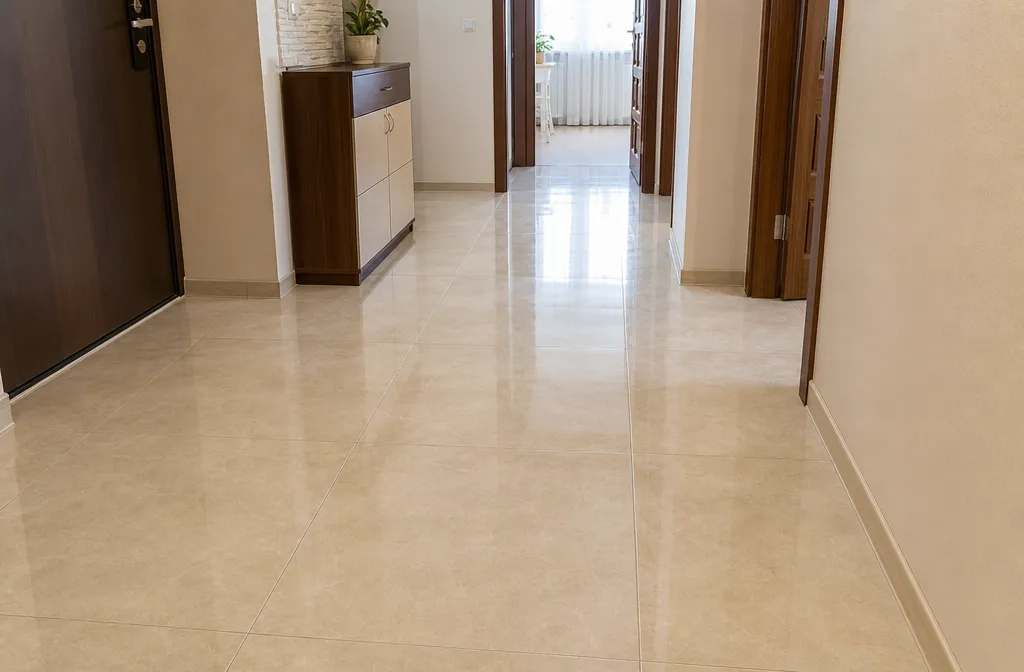
Request: The hallway tiles are trampled, dark marks are visible.
Done: We washed the floor using a stain remover and a steam cleaner.
Cost: 13 000 ₸
Master: Gulnaz Temirova, cleaning master
Total: The tiles are clean, shoe marks removed, the floor shines.
 After
After
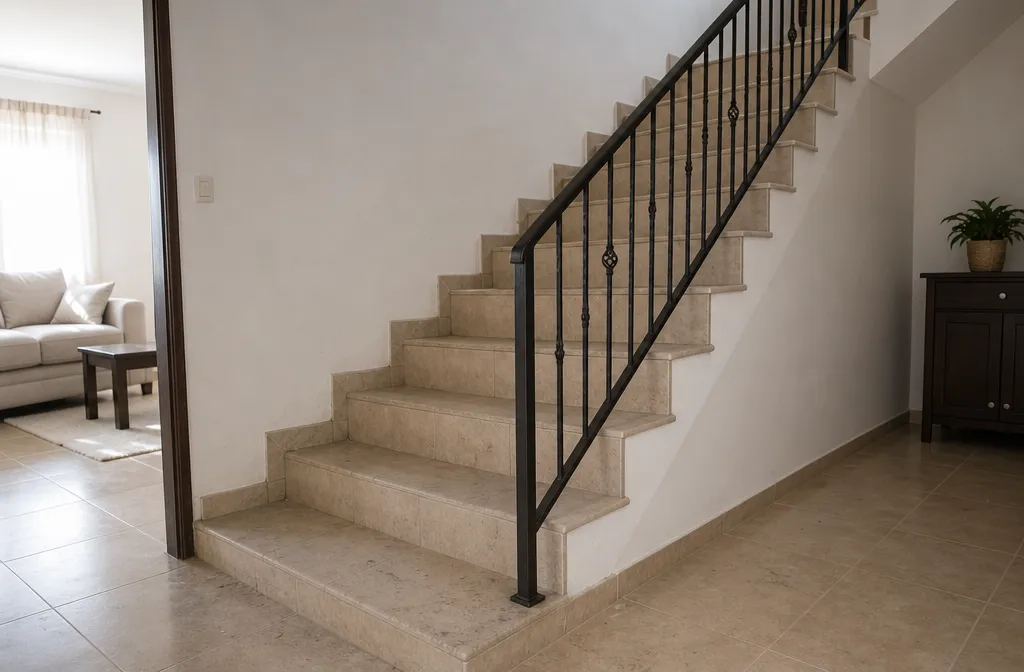
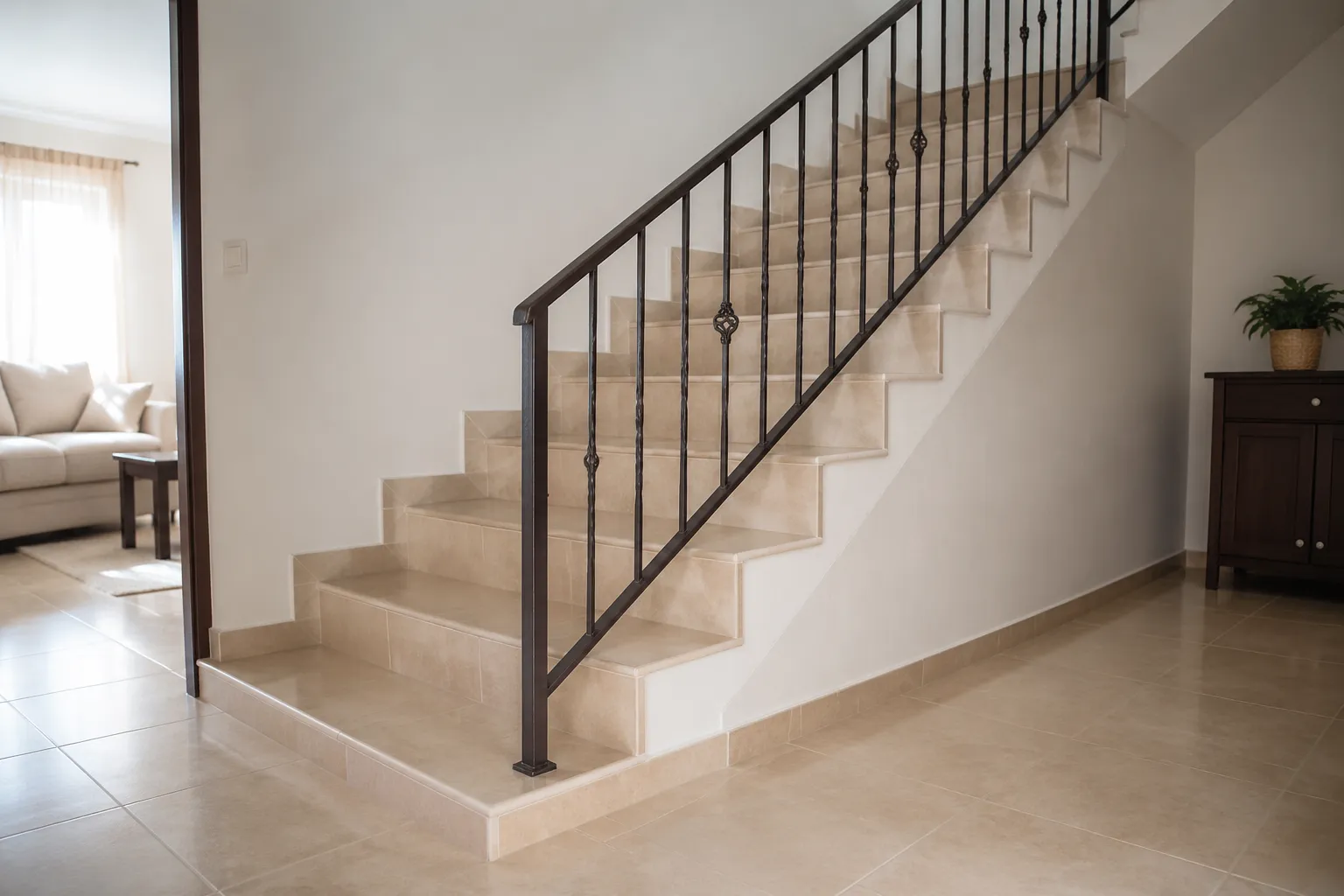
Request: The tile stairs are covered with dust and stains.
Done: We cleaned each step manually with a brush and cleaning agent.
Cost: 12 000 ₸
Master: Ruslan Akhmetov, cleaning master
Total: The steps are clean, free of dust and stains, the grout is lightened.
 After
After
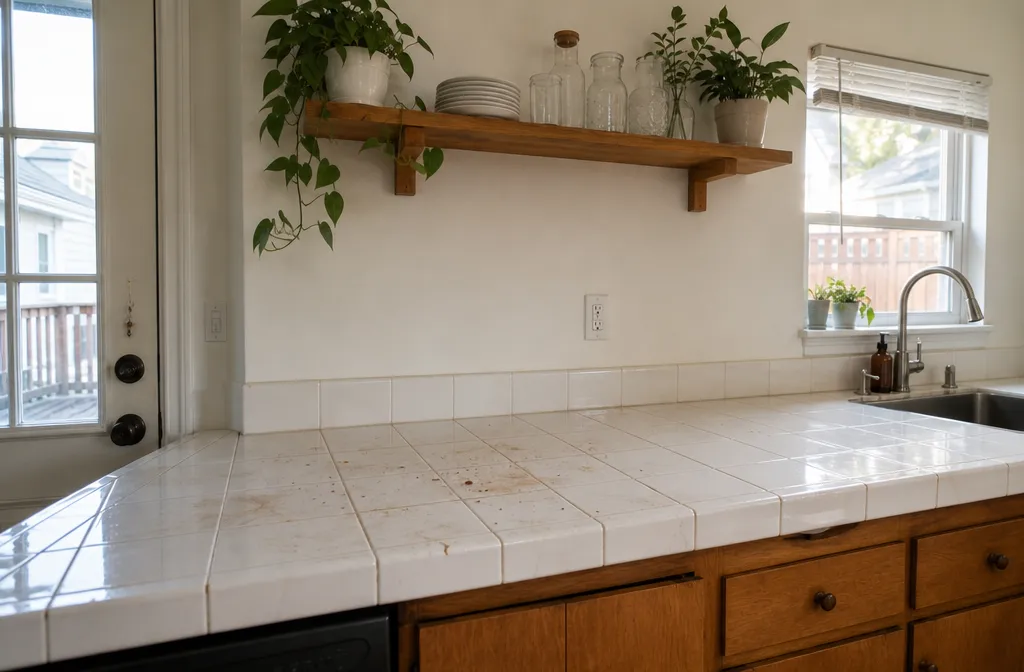
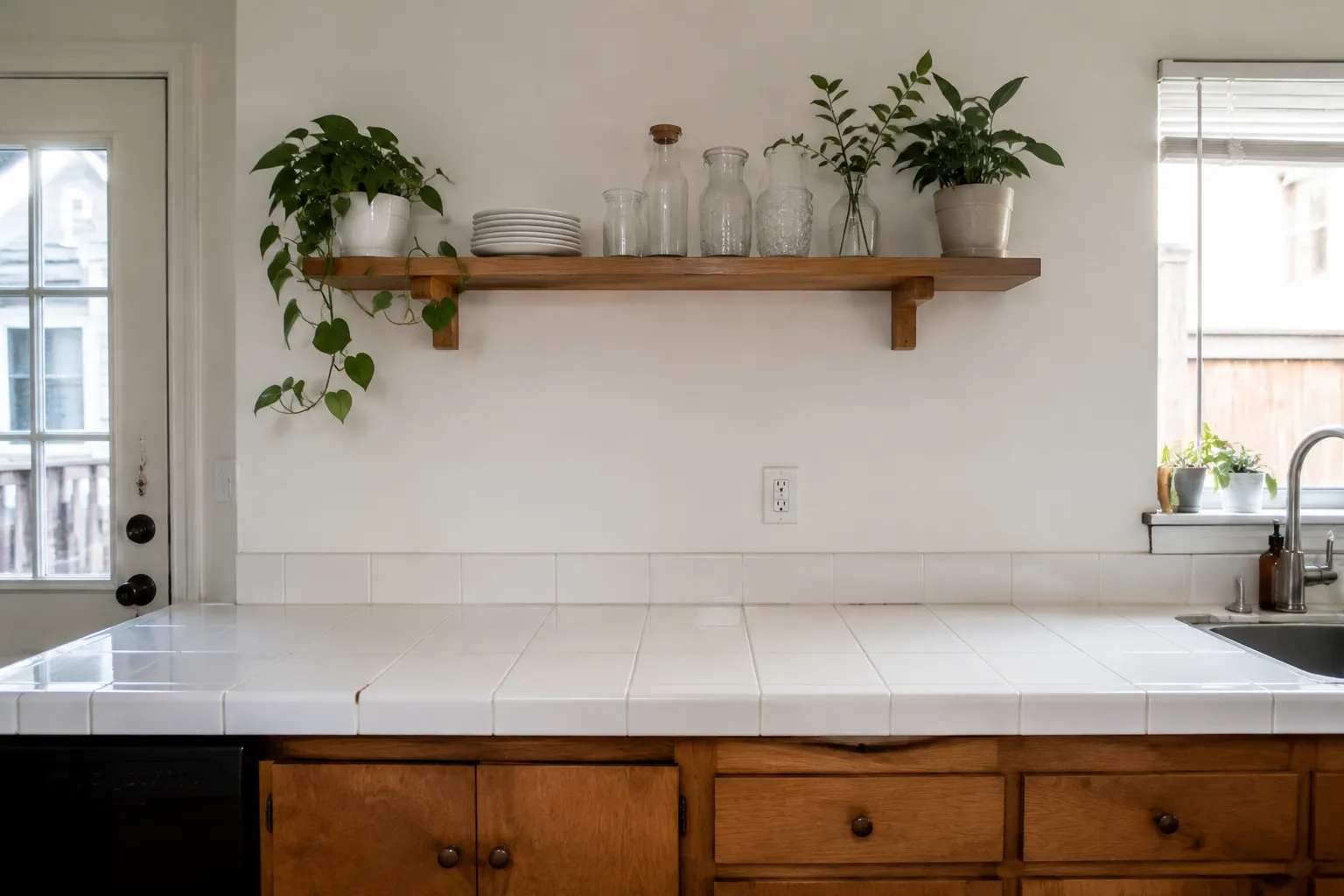
Request: The tiles on the kitchen countertop have tea and coffee stains.
Done: We treated the countertop with steam and applied tile polish.
Cost: 14 000 ₸
Master: Lyazzat Ospanova, cleaning master
Total: The countertop is clean, without stains, the surface shines.
 After
After
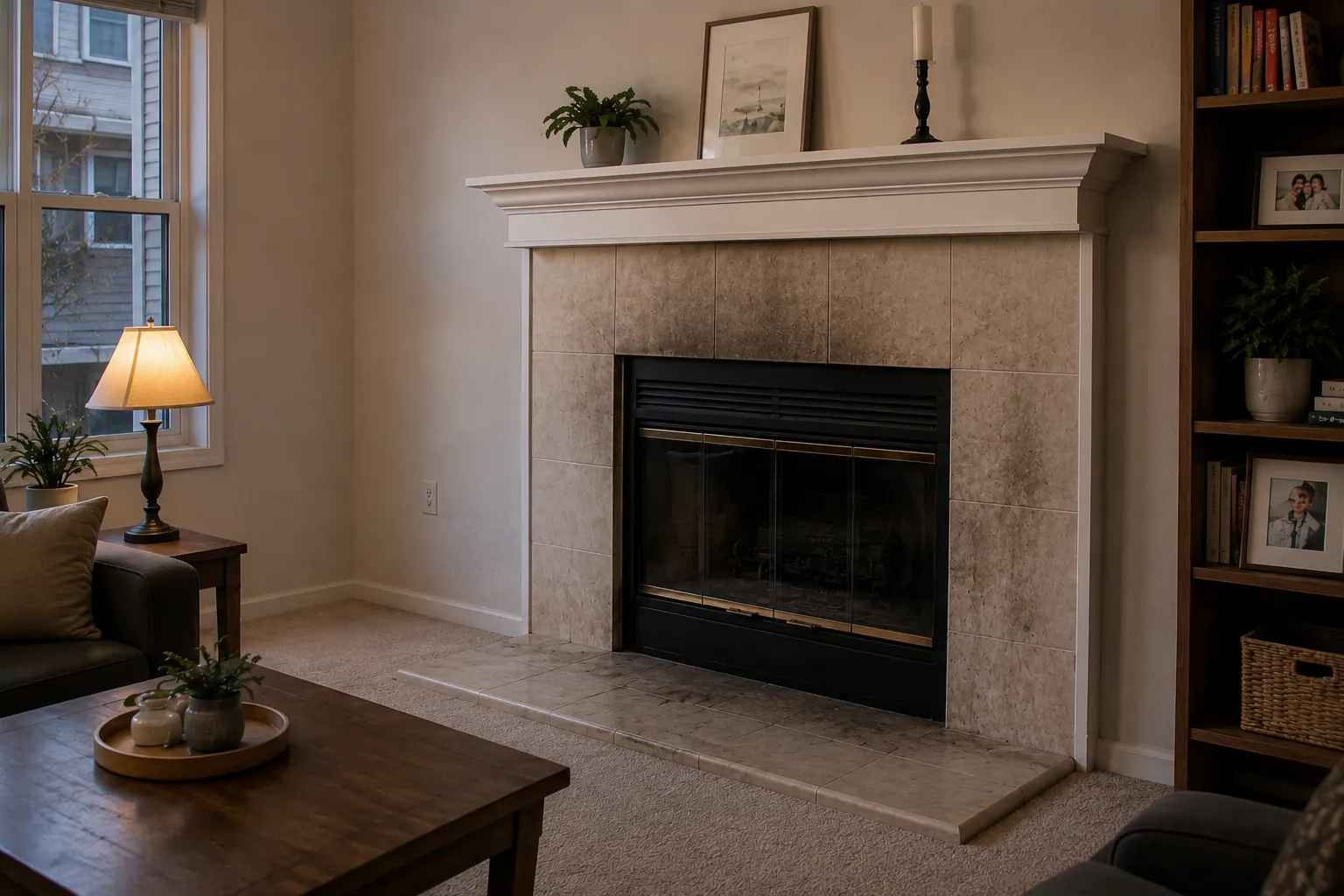
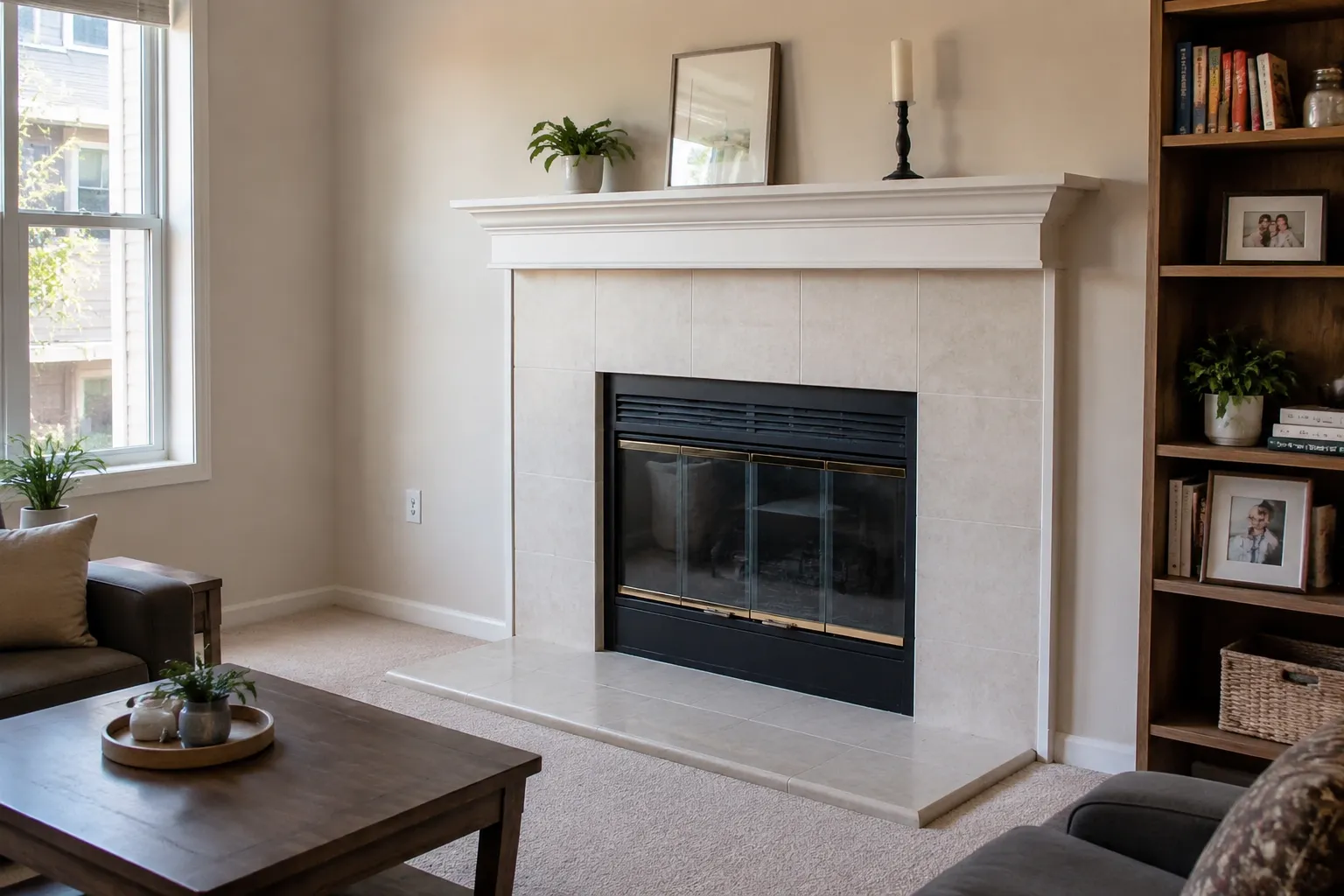
Request: The tiles around the fireplace are covered with soot and smoke stains.
Done: We cleaned the tiles with a special soot remover and a steam cleaner.
Cost: 13 000 ₸
Master: Bakhytzhan Smagulov, cleaning master
Total: The tiles are clean, soot and smoke stains completely removed.
All cleaners are profi-clean staff with training, uniform and security check. Each order has a team leader who controls quality.
Home tile cleaning is surface-level washing, while professional tile cleaning restores the surface at a micro level, unattainable with household products. The difference isn’t in effort, but in the chemicals, equipment, and knowledge of materials.
Bathroom gels and powders are designed for fresh stains and residue that builds up over a day or two. Limescale, stubborn grease on a kitchen backsplash, and mold in grout lines are layers that household chemicals don’t dissolve, only mask. Alkaline gels (Cif, Comet) leave micro-scratches on glossy tiles from abrasives, while acidic household products (Sanfor, “Toilet Duck”) can eat away at grout if left on for more than 2-3 minutes. In our practice, we see tiles that have been scrubbed for years with baking soda and vinegar — the gloss is worn off, grout is crumbling, and stains remain. profi-clean industrial concentrates — with a pH of 2-3 for limescale and pH 10-12 for grease — work in 5-7 minutes without damaging the enamel and rinse off completely. Before buying a household stain remover, test it on an inconspicuous area — if a white residue remains after drying, the product is not suitable for your tile.
A household steam cleaner (Karcher SC, Polaris) produces steam at 100-110 °C and pressure up to 4 bar — enough for fresh grease, but not for a crystallized limescale layer in the bathroom. A profi-clean professional steam generator operates at 160 °C and 9 bar, with a dual supply valve: dry steam removes residue without wetting the grout, while wet steam softens mold in the joints. In addition to steam, we use a rotary orbital machine with nylon brushes at 1000-1500 rpm — it removes dirt layers from tiles without the risk of scratching, unlike a hand brush where pressure is uneven. Almaty water is hard (up to 7 mg-eq/L), so limescale on tiles in new buildings (e.g., “Akbulak” residential complex, “Grand Alatau”) builds up in 2-3 months — a steam cleaner won’t handle it; you need a machine with a rotary attachment and an acidic gel. If the tile is matte (cotto, porcelain stoneware), machine cleaning is mandatory — abrasive powders leave white streaks on it, visible under side lighting.
Grout lines are the most vulnerable part of a tiled surface: they are porous, absorbing moisture, grease, and mold spores. Home cleaning with a stiff brush wears away the top layer of grout, making the joints loose — after 6-8 months, they start to crumble. We treat the joints with a silicone-based water-repellent impregnation after cleaning: it seals the pores, causing water to bead up and roll off without being absorbed. Mold in the joints is not just a cosmetic defect but a source of spores that, when inhaled, can trigger allergies and asthma. At home, mold is masked with bleach (Domestos) — it whitens the visible layer, but spores remain deep in the grout and regrow within 2-3 weeks. Our protocol: a fungicidal treatment with a 15-minute dwell time, followed by mechanical removal of the spore-bearing layer with steam, and a final water-repellent treatment. Without this step, cleaning bathroom tiles is a temporary measure that doesn’t solve the problem of musty odors and black spots on the joints.
After home cleaning, tiles remain damp for 2-3 hours — enough time for new contaminants (airborne dust, soap scum) to settle into the grout. The professional cycle includes final drying: floors with a turbo dryer blowing 40 °C air (30 minutes instead of 3 hours of natural drying), walls with a microfiber cloth whose nap doesn’t leave streaks. Surface moisture after our service is less than 10%, preventing mold regrowth for 4-6 weeks. In Almaty apartments with poor ventilation (typical panel buildings, older housing stock), humidity after a shower lingers for 6-8 hours — if the tiles aren’t force-dried, mold appears in the joints within a month. Schedule your tile cleaning for the first half of the day so the technician can dry the room before evening — nighttime humidity negates the cleaning effect.
The most expensive mistake is using “folk” remedies: citric acid on marble tiles eats away the polish in 2-3 applications, baking soda with vinegar leaves matte spots on gloss, and white spirit on porcelain stoneware penetrates the pores and changes the color. The second most common mistake is cleaning with the rough side of a sponge (scotch-brite): it scratches the gloss, and in the light, the tile looks cloudy, as if it has been sanded with sandpaper. The third is leaving acidic products on the grout for too long: if the gel is left for 10-15 minutes, the seams become discolored and brittle. In our practice, there was a case: a client in the “Triumph” residential complex was cleaning limescale on Italian marble with vinegar — within a month, the tile developed a network of craquelure cracks. The price of professional tile cleaning is calculated individually based on area and condition, but restoring a coating damaged by household chemicals costs several times more. If you are unsure of the tile type, do not experiment: one test in an inconspicuous area will save you a significant amount on replacement.
The frequency of professional tile cleaning directly depends on the type of room, intensity of use, and type of dirt — there is no universal schedule, and a mistake in frequency leads to the destruction of grout or the appearance of persistent deposits that cannot be removed with household products.
The kitchen backsplash above the work area needs cleaning every 2–3 months, even if it looks clean: the oil aerosol from frying settles on the tile in microscopic droplets, which polymerize into a sticky film within 4–5 weeks. In my opinion, owners of gas stoves in Almaty encounter this faster — due to the characteristics of the local gas (more humid than in European networks), the grease settles denser and darkens within a month. The kitchen floor, on the other hand, only needs cleaning every 6–8 months if it is washed daily with a neutral product: the main threat here is not grease, but abrasive sand particles from shoes, which scratch the glaze, and only deep washing with pH neutralization removes them. Moreover, if the floor has matte tiles (e.g., concrete-look porcelain stoneware), the interval is reduced to 4–5 months — a matte surface holds dirt in its pores more strongly than a glossy one. Before ordering a kitchen backsplash cleaning, check the range hood: if it is recirculating (without an outdoor vent), grease condenses on the tiles twice as fast, and the frequency should be adjusted to 1–1.5 months.
In the bathroom, the main enemy is limescale from tap water, and in Almaty, the water is moderately hard (5–7 mg-eq/L), so professional cleaning of walls and floors is needed every 4–6 months, and with poor ventilation, every 3 months, to prevent mold from growing in the grout lines. At profi-clean, we notice a pattern: if the bathroom has a walk-in shower (floor drain), limescale on the walls forms 20–30% faster than with a classic bathtub — due to constant water evaporation from the tiles without ventilation. For the bathroom floor, the interval is the same, but with a nuance: if you use rubber mats with suction cups, moisture stagnates underneath, and the grout darkens from fungus within 2 months — such areas should be treated with an antiseptic once a month, rather than waiting for the general schedule. Expert recommendation: in homes with water softening systems (ion exchange filters), tile cleaning can be done every 8–9 months — limescale practically does not form, but the seams still need mold prevention every six months.
Tile in the hallway is the most heavily used flooring in an apartment, and professional cleaning is required here every 3–4 months, regardless of whether you mop the floor daily. The reason is that street dirt contains quartz sand and de-icing reagents (chlorides in winter, bitumen particles from asphalt in summer) that embed themselves into the micro-cracks of the tile and grout — a household mop only removes the top layer, while deep pressure washing flushes the abrasive out of the pores. In Almaty homes with carpet at the entrance, the situation is slightly easier (frequency 5–6 months), but if there is no dirt-trapping mat at least 1 meter long in front of the entrance, dirt clogs the tile twice as fast. Our experience shows that on dark tiles (anthracite, graphite), sand is visually unnoticeable, but it scratches the glaze — after 2–3 years the coating loses its shine, and it can only be restored by polishing with diamond pastes, which costs more than regular cleaning. If the hallway has un-chamfered 60×60 porcelain stoneware, the grout wears out faster — it is enough to clean it every 3 months to prevent sand from crumbling the joints.
In commercial facilities, the cleaning frequency is strictly tied to foot traffic: for a restaurant or bar kitchen — every 1–1.5 months, for restrooms in shopping malls — every 2–3 months, for office corridors — every 4–5 months. The main difference from residential spaces is that commercial tile almost always has a protective coating (polyurethane mastic or wax), and frequent cleaning with harsh chemicals washes this layer off in 6–8 months — then the tile has to be polished again. In cafes on Arbat or in Almaty’s “Mega Park,” we recommend owners alternate deep cleaning (every 2 months) with a monthly light wash using a neutral pH cleaner to make the mastic last longer. Another nuance: in pizza kitchen areas where deep frying is constant, grease settles even on ceiling tiles — these zones need to be cleaned once a month, otherwise the oil film smokes and yellows, and cleaning it without dismantling is practically impossible.
Even experienced housewives and some cleaners repeat the same errors — from choosing the wrong chemicals to ignoring the condition of the grout. Let’s break down the five most costly mistakes that turn shiny tile into dull flooring and destroy the joints.
The most common mistake is using strong acids (citric, acetic, hydrochloric) on glossy ceramics and porcelain stoneware. In our practice, there was a case: an apartment owner in the “Nurly Tau” residential complex poured concentrated vinegar over the bathroom tiles to remove limescale — within a month, the glaze developed a web of micro-cracks. The acid eats away the top layer, the gloss becomes matte, and dirt gets trapped in the micro-cracks, which can no longer be washed out. On matte tiles and clinker, acidic compounds are acceptable, but strictly with a dwell time of no more than 2–3 minutes and thorough rinsing. For glossy surfaces, we use alkaline concentrates with a pH of 9–10 — they dissolve grease and soap scum without an abrasive effect. Before purchasing a product, test it on an inconspicuous area: apply a drop and wait 5 minutes — if a matte spot appears, the compound is dangerous for the entire surface.
The second most frequent mistake is trying to scrub grout with a stiff brush or steel wool. In older Almaty buildings (Khrushchev-era apartments on Abay, panel buildings on Rozybakieva), the joints are often cement-based and porous — the bristles scrape them down to the base, and within six months, mold develops in the voids. White joints darken even more after such cleaning because the bristles leave micro-scratches where dirt embeds itself. The correct approach is a steam cleaner with a narrow nozzle (steam pressure 3–4 bar) or an alkaline gel applied for 10–15 minutes and rinsed off with a sponge without pressure. Epoxy-based grout (common in new builds like the “Akbulak” residential complex) is more durable, but it also cannot be scrubbed with metal — it gets scratched, visible under side lighting. If the joints have already darkened, it is easier to refresh them with a restorative impregnation than to try to scrub them with an abrasive.
Many people are sure: the hotter the water, the better the tiles are cleaned. In reality, hot water (above 50 °C) on tiles in Almaty apartments with hard water (average hardness 6–8 mg-eq/L) has the opposite effect — calcium and magnesium salts crystallize faster on the surface, leaving a white residue that cannot be wiped off with a regular towel. The tiles on the kitchen backsplash suffer especially: fat melts at high temperatures and penetrates deeper into the pores instead of being washed away. The optimal washing temperature is 30–35 °C — warm, but not scalding to the hand. To remove stubborn grease, we use a cold alkaline spray (pH 11–12) — it works through chemistry, not heat. After washing, be sure to wipe the tiles dry with a microfiber cloth — this removes salt residues and prevents streaks.
The most non-obvious mistake is not applying protection immediately after the tiles have dried. A clean surface is maximally vulnerable: pores are open, grout is still damp, and in the first 24 hours, everything gets absorbed into it — from grease droplets to dust from Almaty’s air (the city has high dust levels due to construction and smog). At profi-clean, after each cleaning, we apply a water-based hydrophobic impregnation — it creates an invisible film that repels water and dirt for 2–3 months. Impregnation is especially important for tiles in the hallway and kitchen, where contact with shoes and splashes is highest. Without protection, clean tiles get dirty in 3–5 days; with protection, they maintain their appearance for up to 3–4 weeks with regular cleaning. Tip: don’t skimp on the finishing spray — it extends the effect of professional cleaning by 2–3 times.
The fifth mistake is washing floor tiles with the same mop and cloth used for laminate. In Almaty, universal microfiber cloths are often used — on tiles, they just spread dirt around instead of collecting it. For tiled floors (especially with a “stone-look” texture or relief), you need a flat mop with medium-hardness bristles — it gets into the pattern’s recesses and sweeps out sand that scratches the glaze when walked on. Wet cleaning should be two-phase: first, dry collection of dust and sand (a dust mop), then wet cleaning with a neutral detergent. On kitchen floors in houses on Baizakov and Zharokova streets, sand from shoes mixes with grease — without the dry phase, you get an abrasive paste that wears down the top layer of tiles to a matte finish within a year.
Stores have dozens of bottles promising “instant shine,” but 80% of them are either useless against stubborn residue or destroy grout after a few uses. I’ll tell you what to actually look for to avoid ruining your tiles and wasting money.
Acidic compounds (based on citric, oxalic, or hydrochloric acid) dissolve limescale, cement residues, and rust — that’s their only zone. Alkaline ones (pH 8–12) handle grease, oil films, soot, and organic dirt. No product works equally well against both groups: if the kitchen backsplash has a layer of hardened grease with hard water spots, acid will only remove the streaks, leaving the grease, and vice versa. In our practice, there was a case: a client washed her bathroom for six months with a “universal” neutral pH spray — residue built up, though the shine seemed normal. On matte tiles, neutral products leave an invisible residue that, after 3–4 months, appears as a whitish haze — it’s not dirt, but hardness salts that neutral chemicals can’t handle. Before buying, check the pH on the label: for limescale, you need an acidic gel (pH 2–4); for a greasy kitchen, an alkaline concentrate (pH 10–12); for daily wet cleaning, a neutral one (pH 6–8), but it doesn’t clean, only maintains.
Glossy tiles (ceramics, glazed porcelain stoneware) are sensitive to abrasive powders and stiff brushes — scratches on a shiny surface are not hidden but become anchors for new dirt. Matte porcelain stoneware and clinker can withstand more aggressive mechanical action, but high-concentration acids etch the structure, making it rough. Natural stone (marble, travertine, granite) is a different story: marble is dissolved by any acid, including lemon juice, so only alkaline or neutral formulations labeled “for stone” should be used. In Almaty, “subway tile” is popular for backsplashes — its textured surface accumulates grease in the grout lines, and liquid sprays are useless here; a thixotropic gel is needed that doesn’t run down vertical surfaces and works with contact time of at least 10–15 minutes. On 60×60 porcelain stoneware in hallways, acid-based cement removers are often used after installation — if left on longer than specified, they etch the structure by 0.2–0.5 mm, and the floor starts to attract dust. I recommend testing any new product on an inconspicuous area (under the sink or behind the toilet) before first use — apply for 5 minutes and rinse: if matte spots or roughness appear, the product is not suitable for that tile.
On a supermarket shelf, 80% of the volume is water, fragrance, and thickener. A truly effective concentrate is identified by two signs: the percentage of active ingredient (listed in the composition as “citric acid 5–15%” or “sodium hypochlorite <5%”) and the dwell time recommended by the manufacturer on the packaging. If a product promises “instant action in 30 seconds” — it likely contains aggressive acid that simultaneously damages the grout. Professional lines (Kiehl, Sodasan, HG) work with dwell times from 3 to 15 minutes — this is normal; active components need time to soften the dirt layer, not just wet it. In Kazakhstani stores, cheap gels labeled “for bathroom” without specifying the composition are common — such products contain surfactants and fragrance but do not dissolve limescale; they only emulsify it, creating an illusion of cleanliness that disappears in 1–2 days. In my opinion, the optimal strategy for home is to keep two products: a neutral one for weekly cleaning and an acid gel for monthly deep cleaning of bathroom tiles. If you buy one “universal” product, you will either not remove the limescale or damage the grout — there is no compromise between pH 4 and pH 10.
Epoxy grout is resistant to acids but sensitive to abrasives — they scrape off the top layer, making the joint matte and porous. Cement-based grout (the most common in Almaty due to its low cost) is the main victim of incorrect chemicals: acids with a pH below 3 wash out the cement binder after 2–3 applications, the joints become loose, start to crumble, and develop mold inside. Chlorine-based bleaches (“Belizna”, Domestos) destroy the pigment of colored grout in a single application — a gray joint fades to white or yellow, and the color cannot be restored. In our orders from a significant amount, we see this picture in 60% of apartments: the grout in the shower is washed out by acid to a depth of 2–3 mm, and the only solution is complete regrouting. If the product packaging says “do not use on colored surfaces” or “avoid contact with joints” — do not ignore it; this is a direct indication of aggressiveness. I recommend applying a protective mask for the joints (a special wax roller) or at least wetting the grout with water before treating the entire wall — this reduces acid absorption by 40–50%, but does not eliminate the risk with regular use.
Water in Almaty is one of the hardest in Kazakhstan: 7–10 mg-eq/L compared to the norm of 1.5–3. This means limescale on tiles forms 3–4 times faster than in regions with soft water, and without a professional approach, it turns the surface into a matte gray layer within six months that cannot be removed with ordinary household chemicals.
Hard water leaves not just streaks on tiles, but a crystalline layer of calcium and magnesium carbonate — it embeds itself into micro-cracks in the glaze and grout, expanding them with each heating cycle. In our practice, out of three calls for bathroom tile cleaning, two are due to this exact deposit, not mold. The difference from grease is fundamental: grease is organic, dissolved by alkalis in 5–10 minutes, while limescale requires an acid reaction, and not just any acid — vinegar or citric acid, popular in home tips, erode the grout and make the joints porous, after which dirt becomes permanently embedded. We use professional acidic compounds with corrosion inhibitors — they break down the salt but do not affect the cement base of the grout. Before treatment, we always check the tile type: on glossy glaze, we hold the acid for no more than 3 minutes; on matte porcelain stoneware, up to 7 minutes — otherwise, dull spots remain.
Grout suffers more from hard water than tiles — it is porous, and calcium salts crystallize inside it, not on the surface. After 6–8 months of installation, grout in Almaty apartments turns yellow not from mold, but from mineral deposits, and regular chlorine bleach only accelerates the destruction — chlorine reacts with carbonates, releasing gas that makes the joints brittle. At profi-clean, we first apply a neutral pH 7 cleaner to the grout, which draws salts out of the pores, and then an acidic gel only on the tile itself, avoiding the joints. If the grout has already yellowed from deposits, not mold, it cannot be cleaned — only regrouting is needed, and this is a common mistake when clients spend a year trying to scrub the joints with a brush, then wonder why they crumble.
In Astana, the water is softer (3–5 mg-eq/L), and limescale there is more of an aesthetic issue — a white fluffy layer that washes off with a weak vinegar solution in one pass. In Almaty, the deposit is dense, gray-yellow, with rust inclusions from old pipes — in houses from the 1970s–80s (microdistricts “Taugul”, “Kamenka”, “Alatau”), the water also has elevated iron content, up to 0.5–1 mg/L, and the deposit takes on a reddish tint that regular acidic cleaners cannot handle. For such cases, we have chelating compounds in our arsenal — they bind iron and calcium ions into soluble complexes that rinse off with plain water. On callouts to areas with hard water, we always bring iron test strips to select the concentration in advance — this saves an hour of work on site because we don’t have to try three products in a row.
Ordered tile cleaning on the kitchen backsplash — grease and grime came off perfectly, tiles shine like new. Very happy with the result.
Thank you, Aigerim! Glad you liked it.
After renovation, there were grout and glue stains on the floor — the technicians cleaned everything without a trace. Now the hallway looks great.
Had tile cleaning in the bathroom — limescale and mold in the joints were completely removed. Breathing is easier.
Thank you for the review! Gentle treatment of joints is our priority.
The tiles on the walls were cleaned well, but one grout remained slightly yellowish. Overall okay.
Zhanna, sorry for the oversight. We'll give a discount on your next order.
Cleaning the tiles on the kitchen floor — ingrained dirt is gone, grout lines became light. The result exceeded expectations.
After winter, the tiles had stains from de-icing agents — now they shine like a mirror. They work very carefully.
Thank you, Assel! Glad to help.
Ordered pool tile cleaning — the deposit was removed, but there are still small streaks at the waterline. Could have been better.
Kuanysh, thank you for the feedback. We'll take note and improve the quality.
Cleaned the facade tiles from dust and dirt — the house looks ten years younger. The price is reasonable.
Did tile cleaning in the garage — oil stains removed, now the floor looks like new. I recommend it.
Timur, thank you! Come back again.
The tiles were cleaned of grease well, but a couple of grout lines had to be re-grouted ourselves. Overall satisfied.
Gulnara, we apologize. Next time we'll monitor more carefully.
Ordered tile cleaning on window sills and slopes — old cement stains removed without scratches. Excellent.
Soap scum and deposits disappeared, the tiles shine. The master arrived on time, worked quickly.
Olga, thank you for the review!
On the balcony, the tiles were dirty after winter — tile cleaning restored their original appearance. Thank you.
The floor was cleaned well, but the chemical smell lingered for a day. I recommend airing it out longer.
Saule, we use safe products, but we recommend airing out. Thank you!
Our countertop is tiled — the tile cleaning removed all tea and coffee stains. Now it looks like new.
Glad we could help! Enjoy your meal.
The kids drew on the tile with markers — the masters wiped it all off without a trace. They really helped us out.
I ordered tile cleaning in the sauna — the mold was removed, but the grout darkened after a week. Not very durable result.
Ruslan, thank you for your feedback. We will treat the grout additionally under warranty.
Greasy buildup from several years — cleaned to a shine. The tile looks like it was just laid.
Tile cleaning on the stairs — worn shoe marks disappeared, steps became slip-resistant. Super!
Svetlana, thank you! Safety is important.
The tile was cleaned well, but I had to wait for the master for 40 minutes. The work is quality.
Aman, sorry for the delay. We are optimizing logistics.
On average, 1-2 hours depending on the area and degree of soiling. A bathroom up to 5 m² takes about an hour, with deep grout cleaning up to 2 hours.
Yes, we work every day from 8:00 AM to 10:00 PM. Orders for Saturday and Sunday are accepted, with a possible surcharge for urgency.
Just clear the floor of small items, rugs, and appliances. The technician will protect furniture and baseboards themselves.
No, we use eco-friendly Sodasan products that are safe for people and pets. No toxic fumes remain after cleaning.
Cash, Kaspi Gold, Halyk Bank, card transfer. Installment payment is available.
Yes, we guarantee complete removal of dirt. If anything remains, we'll refund your money.
Yes, we work in Almaty and suburbs within a 30 km radius. Please inquire about travel costs.
Yes, we clean floor and wall tiles on balconies and loggias, including removal of outdoor dirt.
Yes, deep grout cleaning is available separately from main tile cleaning.
In the bathroom and kitchen, every 3-6 months; in the hallway, every 6-12 months depending on usage.
Tell us about your experience with profi-clean — it helps other clients and us improve.
We currently operate in Almaty. Other cities are coming soon.