What is a deep bathroom cleaning and how does it differ from a standard one
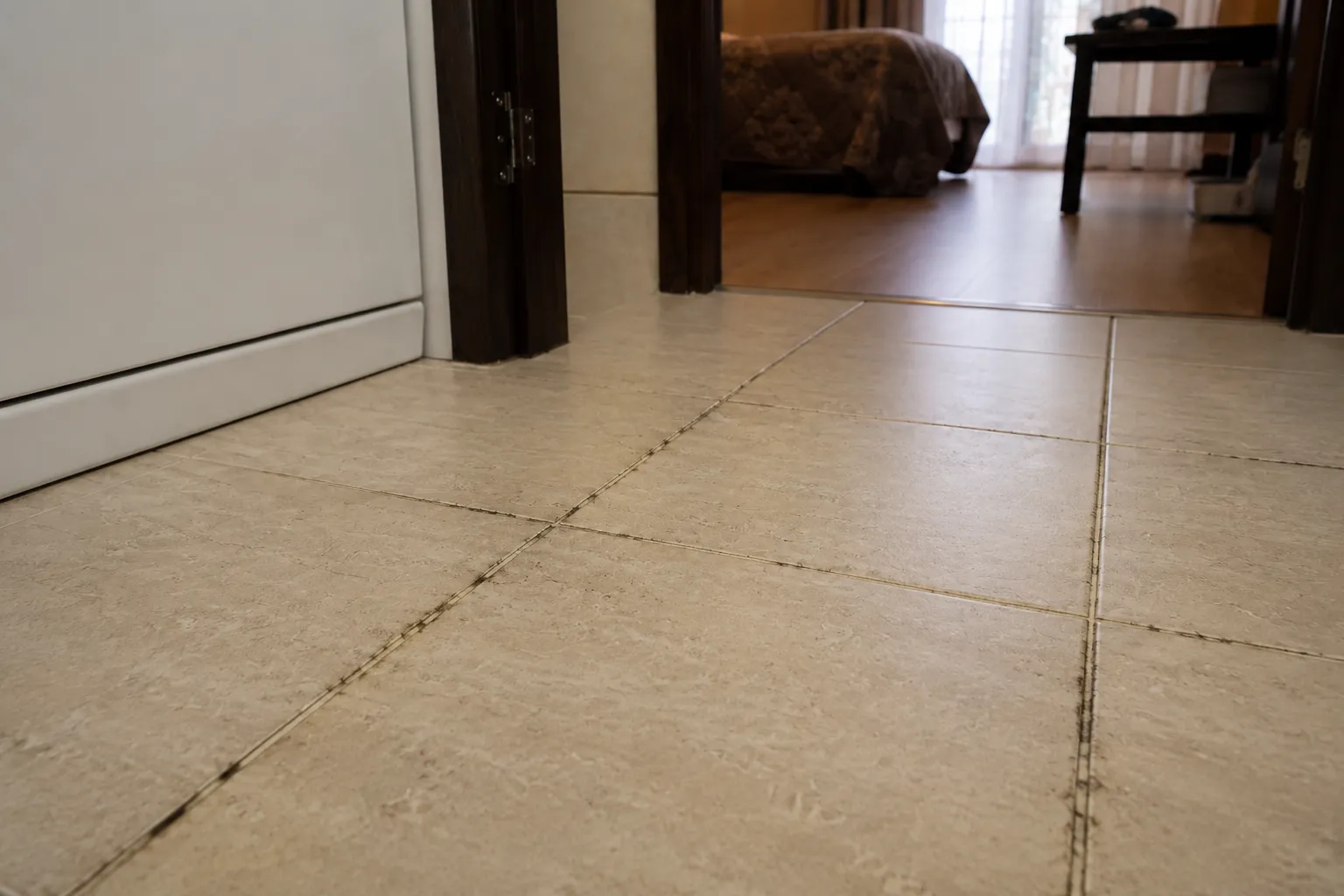
Many people confuse a general bathroom cleaning with a deep one, although the difference is fundamental: a standard cleaning removes surface dirt, while a deep one penetrates into tile pores, joints, and micro-cracks where mold and limescale accumulate for years. In Almaty, where the water is hard (8-10 mg-eq/L carbonate hardness) and bathroom humidity stays at 70-80% for most of the year, simply washing floors and wiping mirrors does not solve the main problem — salt deposits eat into the grout, and mold spores grow inside silicone seams. In practice, this means that without professional deep treatment, even new tiles lose their color after 2-3 years, and the rubber seals of a shower cabin start to blacken from the inside.
How deep bathroom cleaning differs from regular cleaning
Deep bathroom cleaning differs from regular cleaning not in the set of tools, but in the physics of the process: standard cleaning is the removal of visible dirt from smooth surfaces (tiles, glass, porcelain), while deep cleaning is the dismantling of multi-year deposits from porous and hard-to-reach areas. In our practice, the difference is especially noticeable at the joints: during a regular cleaning, the cleaner wipes silicone seams with a sponge and gel; during a deep cleaning, an alkaline solution is applied to them for 20-30 minutes, then treated with steam at 120°C to draw out salt crystals from micro-cracks. The second difference is working with mechanics: we remove ventilation grilles, pull out cabinet drawers, and wash the internal cavities where condensation accumulates — regular cleaning does not touch these. The third is the use of acidic solutions (15-20% citric acid or professional products based on sulfamic acid) to dissolve uric scale under the toilet rim and “stubborn” limescale on faucets that household chemicals cannot handle. In Almaty, this difference is critical: due to water from the Kapshagai reservoir with high calcium and magnesium content, deposits on chrome surfaces harden within 2-3 weeks, and if not removed with acid once a month, they turn into a crust that can only be removed mechanically — risking scratching the coating. Therefore, deep bathroom cleaning is not just “washing everything twice,” but a technological process involving chemical dwell time, a steam generator, and pH control after treatment to avoid damaging the grout and silicone.
Which bathroom areas remain dirty after a regular cleaning
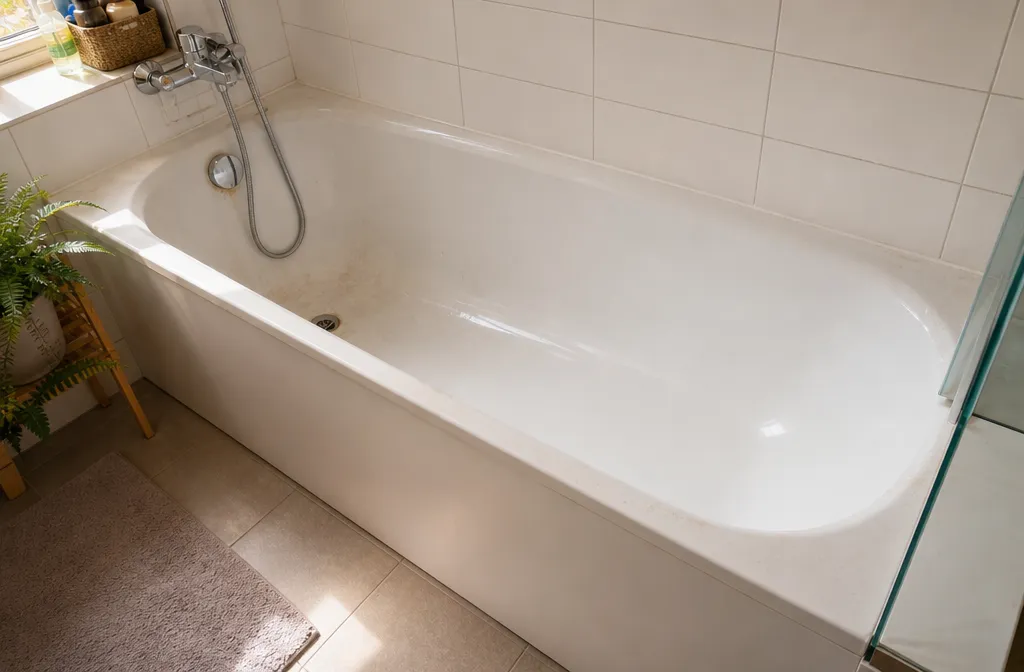
After a standard bathroom cleaning, five areas almost always remain dirty, and this is not the cleaner’s fault — household products are simply not designed for such dirt. The first is the back wall of the toilet under the rim and the drain channel: uric scale and biofilm accumulate there, invisible to the eye but causing odor 2-3 days after cleaning. The second is the lower corners of the shower tray, where water with soap scum stagnates: without removing the siphon and cleaning the drain, black slime forms there and rises back during drainage. The third is the joints between the bathtub and tiles, especially at the wall junction: silicone sealant is porous, and after six months, mold penetrates 1-2 mm deep into it, which cannot be washed out with a brush — treatment with a chlorine-based solution for 40 minutes is needed. The fourth is the inside of the washing machine under the rubber gasket: condensation and powder residue create an environment for black mold, which goes unnoticed during regular cleaning until an odor appears. The fifth is the exhaust grilles and air ducts: in Almaty apartments with plastic windows, ventilation often fails, and a greasy deposit from steam settles on the grilles, which is simply smeared during regular wiping. In our deep cleaning orders, we record these areas in 90% of cases — and if the client does not order separate deep treatment, within six months, mold from the joints spreads to the tiles, and removing it becomes three times more expensive.
Why surface cleaning is dangerous for health and surfaces
Surface cleaning of a bathroom creates an illusion of cleanliness, but in reality, it embeds dirt into the pores, making its future removal more aggressive and expensive. The mechanism is as follows: when you wipe tiles with a regular cleaning agent with a pH of 7-8, you remove the top layer of soap scum, but salt deposits in micro-cracks remain and crystallize upon drying — with each cycle, they compact, and after a year, the grout becomes rough and dark. In Almaty, where winter water temperatures in risers drop to 5-8°C, condensation on tiles forms more often than in regions with soft water — this accelerates mold growth by 2-3 times. According to our observations, bathrooms in houses of the “Panel-97” series (Kamenska, Orbita microdistricts) have the worst ventilation: there, mold at the joints appears within 3-4 months after regular cleaning, whereas with deep treatment using an antiseptic and subsequent sealing of seams, it does not return for up to a year. For health, this means constant inhalation of mold spores (Aspergillus niger, Penicillium) — they trigger allergies and asthma, especially in children. In our orders, we often see families where a child started coughing in the morning, and after a deep bathroom cleaning with silicone replacement, symptoms disappeared within 2-3 weeks. Therefore, deep bathroom cleaning is not cosmetic but preventive: it removes the biological burden that is invisible to the eye but affects well-being.
Which Contaminants Require Special Treatment
In Almaty bathrooms, the top three complex contaminants are black mold, limescale, and stubborn grease with soap scum. Each requires its own chemicals and techniques; otherwise, the dirt returns within a week or damages the surface.
Black Mold in Tile Joints
Mold in seams and under silicone sealant is not just an aesthetic issue but a health threat: spores trigger allergies and asthma. We treat affected areas with a fungicidal concentrate based on hydrogen peroxide — it penetrates the grout pores by 2-3 mm, killing the mycelium. Regular bleach or household sprays only remove the surface layer, and within 10-14 days, the mold grows back. Humidity in Almaty apartments without exhaust fans reaches 80%, so the risk zones are joints near the bathtub and behind the toilet. In my opinion, prevention is simpler: once a month, blow-dry the seams with a hairdryer on a cool setting after a shower and apply a water-repellent impregnation (e.g., Ceresit CT 10) — this reduces the risk of recurrence by 90%.
Limescale on Faucets and Glass
Almaty water is hard (about 7-8 mg-eq/L), so calcium carbonate deposits on chrome surfaces and shower enclosures as a dense crust within 2-3 weeks. Mechanical cleaning with abrasives scratches the chrome — after that, limescale embeds into micro-cracks even faster. We use a mildly acidic solution based on citric and sulfamic acids with a pH of 3.5 — it dissolves the layer in 5-7 minutes without contact with rubber seals. For glass shower doors, we apply a hydrophobic coating after treatment — water droplets roll off without leaving streaks. In our orders, we regularly encounter faucets that have become covered with a 1-2 mm layer over a year — such limescale cannot be removed in one pass; a repeat treatment is required after 24 hours.
Stubborn Soap Scum and Grease on Tiles
Soap scum mixed with cosmetics (creams, oils, shampoos) polymerizes on tiles over time into a sticky film that attracts dust and forms a gray coating. Regular cleaning agents with surfactants only remove fresh traces; an old layer requires an alkaline degreaser with a pH of 10-11, which breaks down fat bonds in 10-15 minutes. An important nuance: on matte tiles and porcelain stoneware, the alkaline solution must be rinsed off no later than 15 minutes — if left too long, it “eats away” the matte finish, and the surface starts to shine unevenly. In grout between tiles, the soap film mixes with mold — then the treatment is combined: first alkaline, then fungicide, otherwise the fungus under the film survives.
How Often Should a Deep Bathroom Cleaning Be Done
The frequency of deep bathroom cleaning depends not on a calendar but on three factors: the intensity of bathroom use, room humidity, and water hardness. In Almaty apartments with daily shower use and no forced ventilation, the interval is reduced to 4-6 weeks, while with soft water and good ventilation, it extends to 3-4 months.
Scenarios by Type of Use
- Bathroom for 1–2 people with daily showers: deep cleaning is required every 6–8 weeks — during this period, soap scum accumulates in tile joints and under sealant, which standard cleaning cannot remove.
- Family with children (3–4 people): the interval is reduced to 4–6 weeks due to frequent water splashing and a higher amount of organic contaminants, which create a nutrient medium for microorganisms.
- Combined bathroom with bathtub and toilet: in this format, deep cleaning is recommended every 5–6 weeks, as bacteria from the toilet settle on nearby surfaces, including towels and the shower curtain, when flushed.
- Guest bathroom used 2–3 times a week: one session every 3 months is sufficient, provided the room is regularly ventilated and wiped dry after each use.
- Bathroom with a walk-in shower (floor drain): requires more frequent deep cleaning — every 3–4 weeks, as moisture lingers longer in the drain and on floor tiles, promoting mold growth in hard-to-reach areas.
Signs that it’s time to adjust the schedule
In our practice, we adjust the recommended frequency if we see one of three signals. The first is the appearance of dark spots in the silicone sealant along the edge of the bathtub or sink: this is the initial stage of mold, which penetrates deep into the seam within 2–3 weeks. The second is a dull film on faucets and showerheads that doesn’t wash off with water: this is calcium carbonate, and the longer it remains, the harder it is to remove without abrasives that scratch chrome. The third is a musty smell that appears 20–30 minutes after closing the door: it indicates moisture stagnation in the ventilation duct or under the bathtub. If you notice any of these signs, deep cleaning is needed off-schedule — delaying it by a week doubles the time needed to remove the film and increases the risk of damaging the sealant.
How water hardness in Almaty affects frequency
Tap water in Almaty has medium hardness — 5–7 °dH (degrees of hardness), which is higher than the recommended SanPiN 3–4 °dH. This means that with daily bathroom use, a layer of carbonate deposits on glass shower doors and chrome surfaces reaches visible thickness within just 3 weeks. If deep cleaning is not performed more often than every 6 weeks, the limescale crystallizes and embeds into micro-scratches on acrylic bathtubs and enamel — after this, it can only be removed with an acidic compound, which thins the protective coating layer. Therefore, for bathrooms in Almaty, we recommend an interval of 5–6 weeks as a baseline, and 4 weeks if there is no water softener or reverse osmosis system. In practice, this means that during the active heating season (October–April), when bathroom humidity is higher due to temperature contrast, it is better to shift the frequency to the lower limit — once a month.
Typical mistakes when choosing frequency
The most common mistake is tying deep cleaning to the general cleaning of the entire apartment once a quarter. For the kitchen and living rooms, a three-month interval is justified, but for the bathroom, it is too long: mold in tile joints begins to grow at 5–6 weeks, and by the 12th week, it penetrates 2–3 mm deep into the grout, making it impossible to remove without replacing the grout. The second mistake is increasing the interval after each deep cleaning, thinking that “now it’s clean for a long time.” In reality, a quality deep treatment does not change the rate of film accumulation or reduce room humidity — it only returns surfaces to their original state, after which the contamination cycle starts anew. The third mistake is using chlorine-based products for weekly maintenance cleaning in hopes of postponing deep cleaning. Chlorine destroys silicone sealant and grout: after just 4–5 months of regular use, the sealant loses elasticity and begins to leak water under the bathtub, requiring costly removal and replacement. Instead of chlorine, for weekly treatment, it is sufficient to wipe surfaces with a citric acid solution (1 tablespoon per liter of water) — this slows down the formation of carbonate deposits without damaging the seams.
Bathroom cleaning specifics in Almaty: hard water and mold
Almaty water from the BASK (Greater Almaty Canal) is one of the hardest in Kazakhstan: the calcium and magnesium salt content reaches 7-8 mg-eq/L against a norm of 1.5-2. Combined with the high humidity of the local climate, this creates an aggressive environment that can ruin new plumbing fixtures in a month if the correct care strategy is not chosen.
Why hard water in Almaty destroys your bathroom faster than in other regions
Every drop of Almaty water leaves behind calcium carbonate crystals as it dries — they cement themselves firmly onto tiles, faucets, and shower glass. Within two weeks without treatment, the limescale transitions from a “cloudy stain” stage to a “crust” stage that a regular sponge with Fairy can no longer handle. We at profi-clean have noticed: at sites in the “Aksai” and “Kamenka” microdistricts (harder water due to worn-out pipes), the limescale layer builds up 30-40% faster than in homes in “Gorny Gigant” or “Vesnovka,” where the water supply is newer. If the deposit is not removed every 2-3 weeks, it grows into the micro-cracks of the faucet’s glossy coating — restoring the shine later requires abrasive polishing, which removes the top chrome layer by 0.05-0.1 mm. Our cleaners carry a pH tester — they measure the water hardness at the apartment’s inlet to adjust the dosage of the water softener: for water above 6 mg-eq/L, we add 15-20% more concentrate than at sites in Astana, where the water is softer.
How mold in Almaty bathrooms differs from mold in other cities
In Almaty, the mold fungus of the genus Aspergillus niger dominates at tile joints and under the bathtub, not only due to humidity but also due to the temperature difference between a warm floor (if present) and a cold exterior wall — condensation forms at the junction, creating an ideal environment with constant humidity of 85-90%. In houses of the “105th series” (microdistricts “TaUgul”, “Koktobe”), ventilation relies on natural airflow through gaps in wooden windows — after replacing them with double-glazed PVC windows, air exchange drops by 2-3 times, and mold grows inside the sealed joints within 3-4 weeks. We have learned from experience: treating with bleach provides a visible effect for 2-3 days, but Aspergillus spores survive in the pores of the grout to a depth of 2 mm and recur at the first increase in humidity. In our algorithms for Almaty bathrooms, we use a biocidal concentrate based on quaternary ammonium compounds (QACs) with a 20-minute exposure time — it penetrates the grout pores to a depth of 3 mm and destroys the mycelium, rather than just bleaching the deposit. At sites after such treatment, the reappearance of mold is recorded no earlier than after 4-5 months — compared to 2-3 weeks after using bleach.
The mistake that doubles limescale: using acidic products on marble and travertine
In Almaty’s new developments (residential complexes “Akbulak”, “Almaly”, “Nurly Tau”), designers are increasingly installing marble, travertine, and onyx in bathrooms — these stones consist of calcium carbonate, which reacts with acids (acetic, citric, hydrochloric). If you treat a marble sink with a limescale remover based on citric acid, matte spots form on the surface within 10-15 seconds — the result of a chemical reaction releasing carbon dioxide, which etches the polish. Restoring the gloss is only possible by polishing with diamond pastes of 3000-5000 grit, costing as much as a full countertop replacement. For natural stone in Almaty, we only use pH-neutral products (pH 7.0-7.5) with chelating agents — they bind calcium ions into soluble complexes without damaging the surface. Before the first visit to a site with marble in the bathroom, a profi-clean cleaner always performs a test on an inconspicuous area: applies the product and checks the shine after a minute — if the surface has dulled, the product is replaced with a neutral one.
Why silicone sealant in Almaty bathrooms lasts 2 times less
Standard sanitary silicone, sold in Almaty construction stores (“Baucenter”, “Toretay”), is designed for water hardness up to 3 mg-eq/L — at 7-8 mg-eq/L, it begins to crack within 4-6 months due to salt crystallization inside its pores. At the junction of the bathtub and tiles in apartments on Abay Avenue or Tole Bi Street, we have removed sealant that, after six months of use, turned into a crumbling mass through which water seeped under the bathtub — mold and rot developed in the crawl space. The alternative is polyurethane sealant: it is 30-40% more elastic than silicone in terms of deformation and does not absorb salts, so it lasts 1.5-2 years without cracking. Our cleaners recommend clients replace the sealant every 12-14 months, rather than waiting for a black line to appear at the joint — this is a signal that spores have already penetrated inside and mold is growing under the bathtub. At profi-clean, we use sealant labeled “for hard water” — its price is 40-50% higher, but it saves the client from replacing the seal every six months.
Professional Products and Equipment for Deep Cleaning
The choice of chemicals and equipment for deep bathroom cleaning is not a matter of price or brand, but a matter of compatibility with the specific type of dirt and surface material. At profi-clean, we use four classes of products and three types of equipment — each for its own task, and an incorrect choice at one stage negates all the work.
Acidic and Alkaline Products: What and When to Use
Acidic compounds work on mineral deposits — limescale, rust, uric scale. In Almaty conditions, where water hardness exceeds 7 mg-eq/L, deep cleaning of tiles, toilets, and faucets is impossible without acid treatment. Alkaline products solve the opposite problem: they break down fatty and organic contaminants — soap scum, sebum, cosmetics. We use Kiehl (Germany) concentrates with pH 2-4 for the acidic line and pH 10-12 for the alkaline line. The main rule is not to mix: if you apply alkali over an acidic residue, the reaction neutralizes both compounds, and the dirt remains. In our practice, there was a case where a client tried to clean the toilet with an acidic gel before the cleaners arrived, and we then applied alkali — we had to rinse and start over. Before a deep cleaning, check with the technician what surfaces were treated with — this will save an hour of work.
Hypoallergenic Chemicals and Safety for Families with Children
Sodasan (Germany) products and the Kiehl “Sensitive” line are the only compounds in our arsenal certified for cleaning in the presence of children and allergy sufferers. They do not contain chlorine, phosphates, or synthetic fragrances, and their active components are plant-based surfactants derived from coconut oil and citric acid. The difference from household chemicals from the supermarket is evident in the VOC (Volatile Organic Compounds) index: for professional hypoallergenic products, it is below 0.1%, for mass-market products — up to 15%. In bathrooms of Almaty apartments with forced ventilation (which is 70% of new buildings), chlorine can linger in the air for 2-3 hours after cleaning. We apply the hypoallergenic compound, work for 15-20 minutes, rinse — and after 10 minutes, the room is safe to enter. If there is a child under one year old or an asthmatic in the family, insist on the note “Sodasan only” when ordering — this is not a whim, but a medical recommendation.
Equipment with HEPA Filtration and Steam Cleaners
The industrial vacuum cleaner Karcher NT 22/1 with a HEPA-13 filter traps 99.97% of particles up to 0.3 microns in size — these are mold spores, dust mites, and microscopic cement particles that remain in the grout after renovation. In the bathroom, it is indispensable for the preliminary collection of dry dust from the ceiling, walls, and ventilation grille before wet treatment. The steam cleaner Karcher SC 5 with a steam pressure of 4.5 bar and a temperature of 140 °C at the outlet is the second key tool. It softens stubborn limescale on silicone joints and faucets without chemicals, and the steam kills 99.9% of bacteria and mold spores on the surface within 3-5 seconds. Our standard scheme: first, dry collection with a HEPA vacuum cleaner, then steam treatment of joints and plumbing, and only then — chemical cleaning of the tiles. Skipping the vacuum cleaner stage is the most common mistake in home cleaning: wet dirt is smeared over a wet surface, and after drying, streaks remain.
Microfiber, Scrapers, and Brushes: The Right Tool for Every Surface
Color-coded microfiber is not a marketing gimmick, but a system of protection against cross-contamination. We use yellow cloths for walls and tiles, green for plumbing fixtures and faucets, blue for floors and baseboards, and white for mirrors and glass. If you wipe a toilet with a cloth that was previously used on tiles, bacteria from the floor transfer to the walls — we verified this with tests using a fluorescent marker. Scrapers with ceramic blades (not steel!) are used to remove dried silicone and glue from glass and tiles without scratching. Medium-hardness nylon brushes are for grout and textured tiles: metal bristles leave micro-cracks in porcelain stoneware, where dirt later accumulates. On models with glossy tiles, we use only microfiber and steam — abrasive sponges with a hard layer matte the surface, and after six months, the tile looks dull.
Impregnations and Protective Coatings for Tiles and Grout
Fila Fober water-based hydrophobic impregnation is the final layer applied to clean, dry grout after a deep clean. It creates an invisible film that repels water and dirt: if shampoo or paint is spilled, the contamination stays on the surface and is wiped away with microfiber without being absorbed into the joints. Its effectiveness lasts 6–12 months, depending on shower usage intensity. Without impregnation, grout absorbs moisture like a sponge, and within 3–4 months, black mold reappears — especially in the shower tray area. Wax for porcelain stoneware (e.g., Fila Stonetech) is applied to the floor after cleaning and drying — it is non-slip and extends the shine for 2–3 weeks. We apply impregnations only with the “Deep Clean + Protection” order — they are not included in the standard rate.
How to Prolong Cleanliness After Cleaning: Expert Tips
After a deep bathroom clean, you want the result to last as long as possible. In Almaty’s conditions with hard water and high humidity, this requires not magic, but a few conscious habits. Here is what really works.
Daily Ventilation and Humidity Control
The main enemy of bathroom cleanliness after cleaning is stagnant, humid air, which triggers the reappearance of mold and limescale within 3-5 days. After every shower or bath, open the door wide for at least 20 minutes — this is enough to reduce humidity from 95% to a working 60-65%. If the bathroom has an exhaust fan, run it for half an hour after water procedures: in Almaty homes, especially in old five-story buildings and Khrushchev-era apartments, the standard ventilation is often clogged or works poorly, so an additional floor fan directed towards the door reduces the risk of condensation on tiles by 70%. In my opinion, this is the cheapest and most effective way to prolong the cleaning effect without chemicals — simple airing saves you from calling a cleaner again for a month to a month and a half.
Timely Removal of Drops and Splashes
Water drops on the faucet, glass shelf, or tiles after a shower are future limescale stains that harden within 6-8 hours. Make it a rule: after each use, wipe horizontal surfaces and chrome details with a dry microfiber cloth — this takes 30 seconds but prevents the formation of limescale, which, given Almaty’s hard water (8-10 mg-eq/L), crystallizes by morning. Hang wet washcloths and bath mats spread out, rather than leaving them on the floor — under them, a greenhouse effect occurs within 24 hours, an ideal environment for black mold spots. Moreover, removing these spots later requires acidic compounds that wear down grout faster — it’s easier to prevent than to restore.
Protecting Grout and Silicone After Cleaning
After deep cleaning of grout and silicone seals, they become vulnerable — the chemicals have removed not only dirt but also the protective layer. Apply a water-repellent spray (e.g., silicone or wax-based) to tile joints and bathtub edges — it creates an invisible film that repels water and soap scum for 2-3 weeks. In Almaty’s new buildings, where grout is often poor quality and porous, such treatment doubles the cleanliness of the joints — from two weeks to a month. Do not use folk remedies like vinegar or citric acid for this: they soften silicone, and within 3-4 months, the seal will start to peel off, allowing water to seep under the bathtub.
Choosing the Right Products for Ongoing Maintenance
Between deep cleanings, use non-aggressive chemicals, but rather neutral pH-balanced cleaners — they do not wash away the protective layer we applied to the grout and tiles. Products with oxalic or hydrochloric acid (like “Cillit Bang” against limescale) should be reserved for one-time removal of stubborn deposits — with regular use, they destroy the gloss of tiles and the matte finish of faucets. At profi-clean, for maintenance we use Kiehl spray based on lactic acid — it gently dissolves fresh limescale without damaging the coating. Simply spray the sink and shower head once every 2-3 days and rinse with water after 2 minutes — no scrubbing and no risk to chrome surfaces.