What cleaning format to choose for a two-bedroom apartment
A two-bedroom apartment is the most common order format, and it’s important here not to overpay for extras and not to skimp on what’s necessary. Let’s break down when a maintenance clean is enough and when a deep clean is needed.
Maintenance vs. deep clean — what’s the difference for a two-bedder
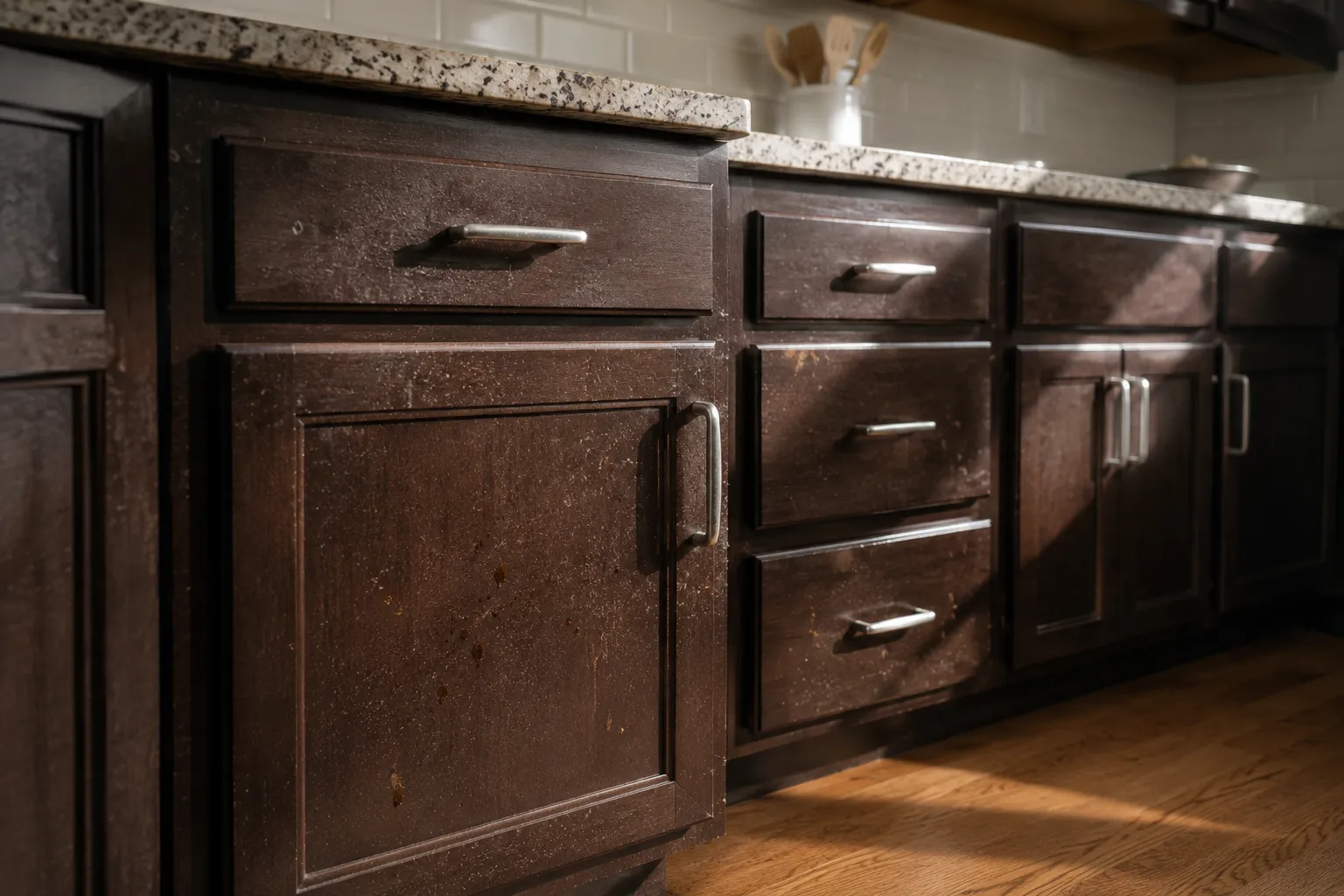
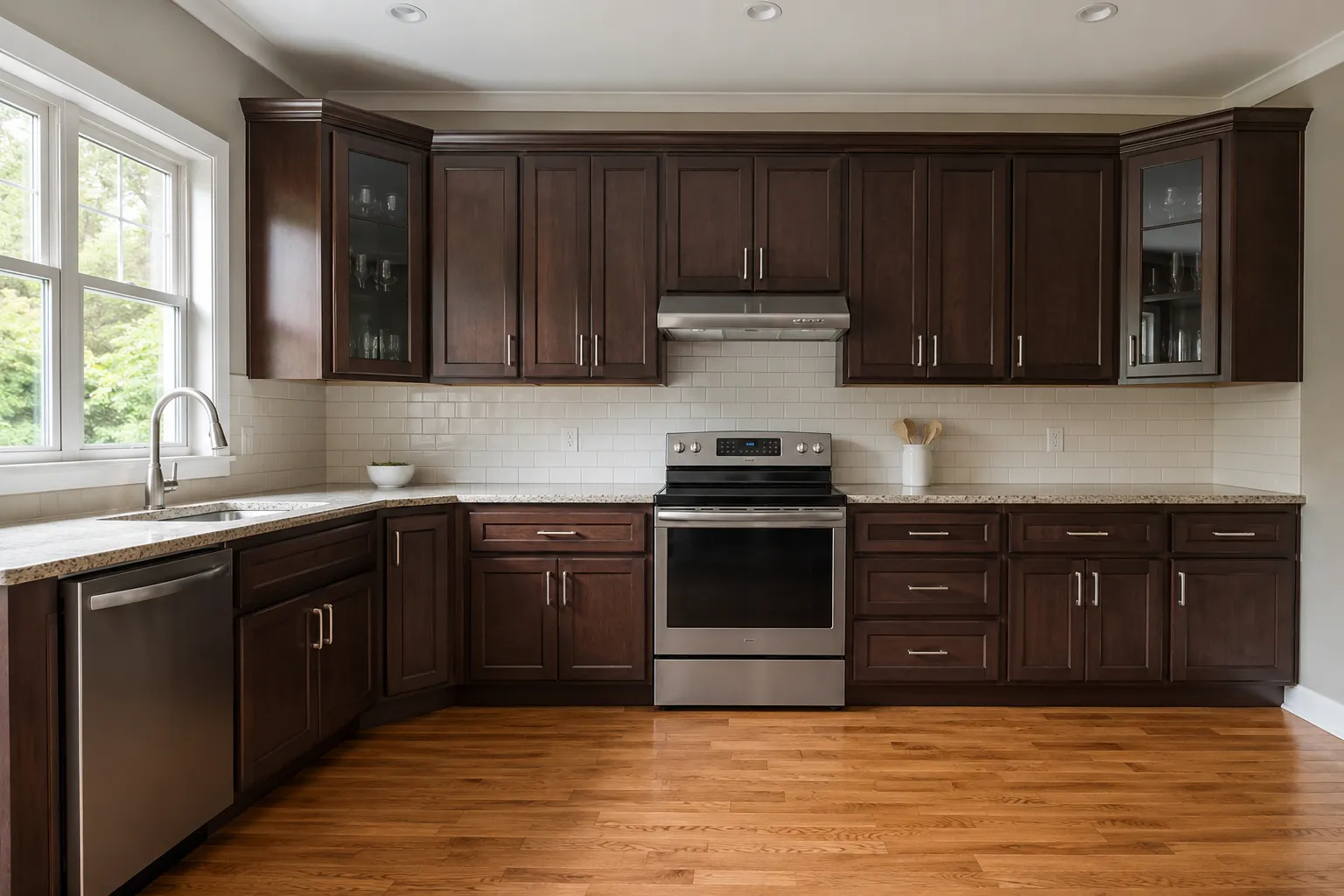
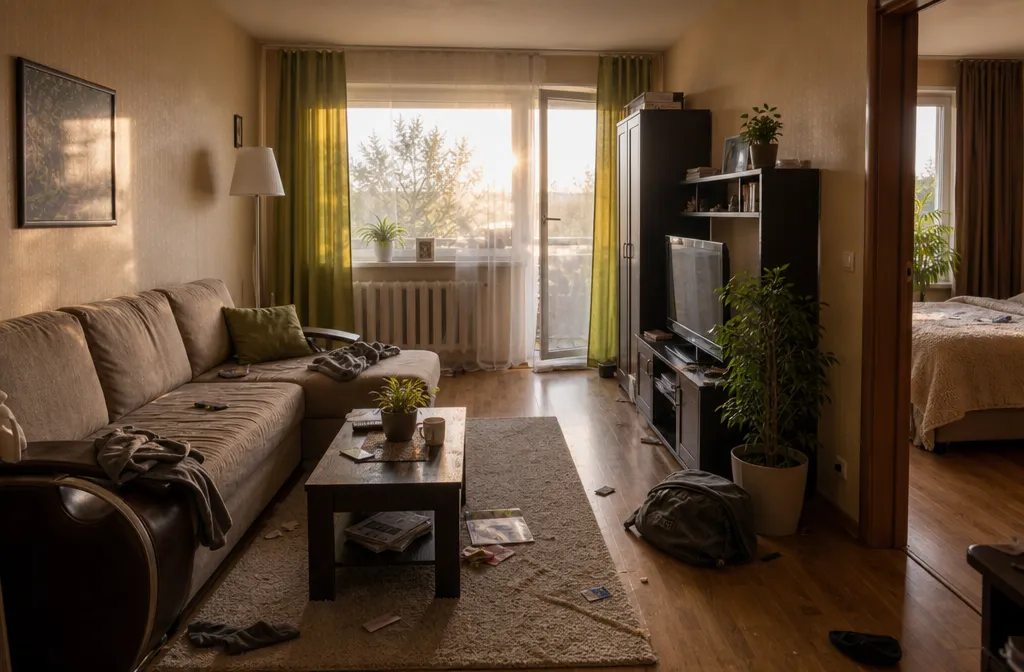
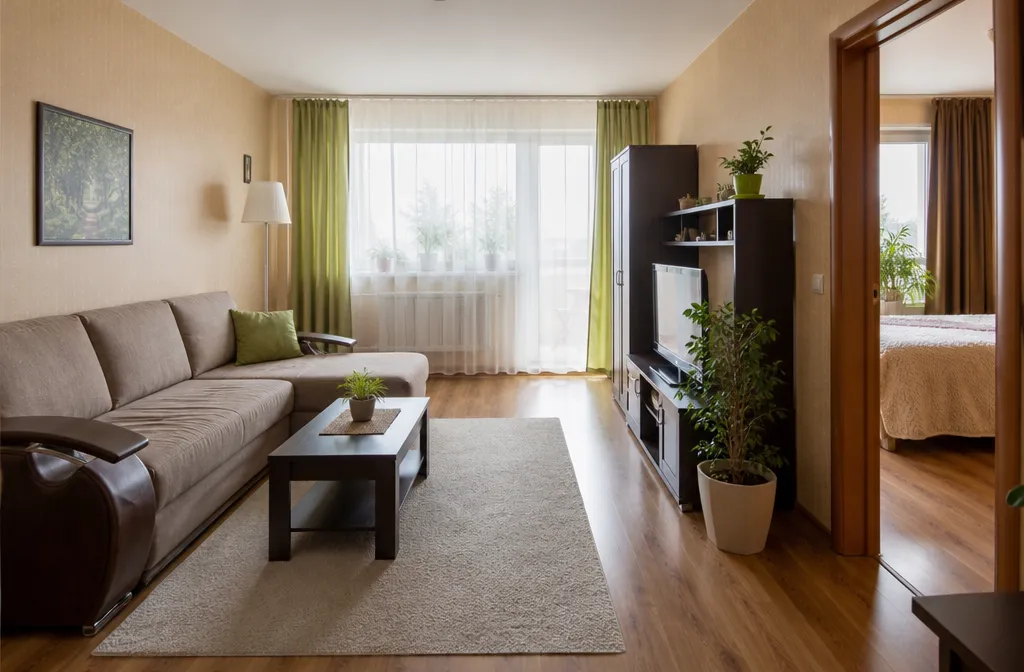
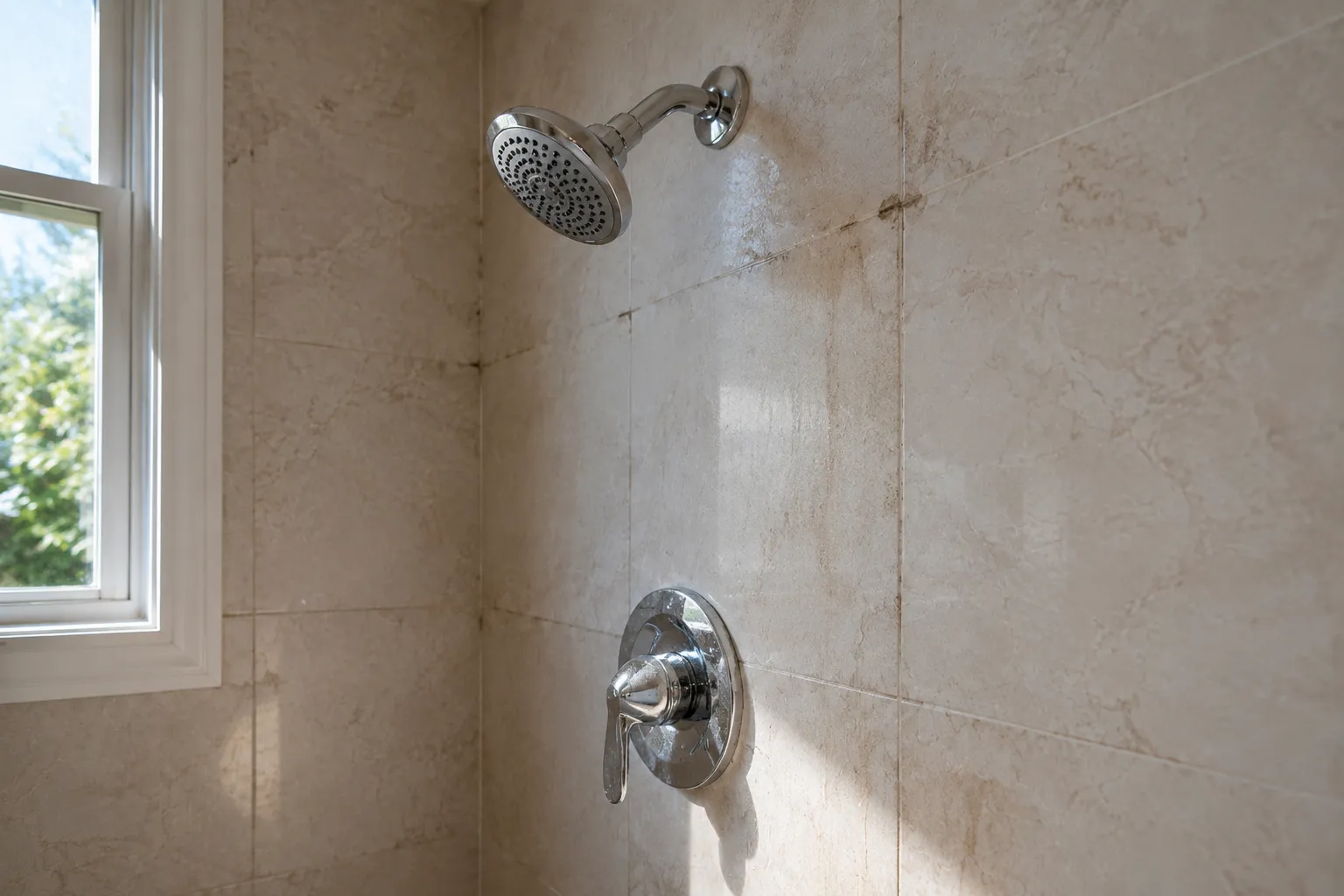
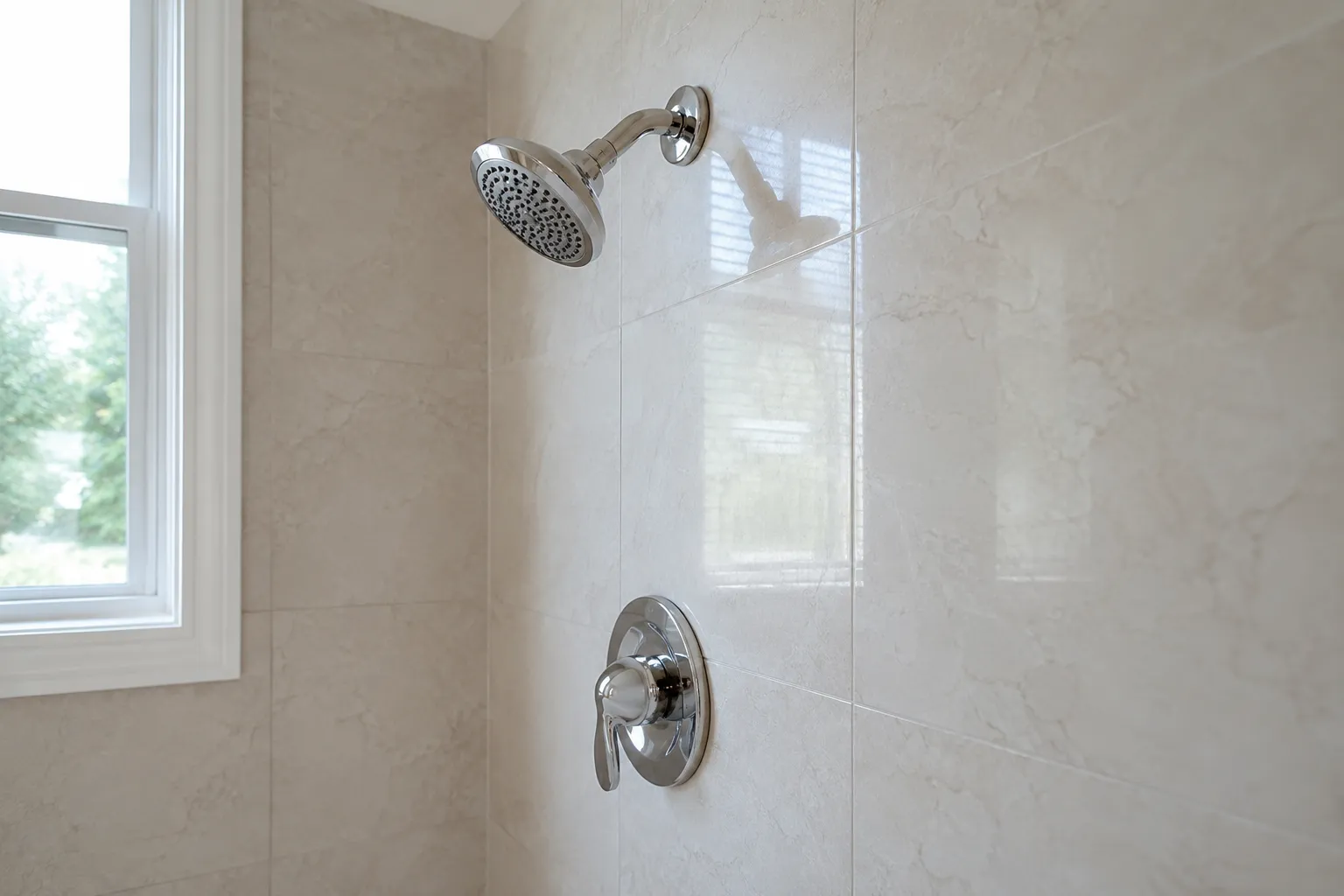
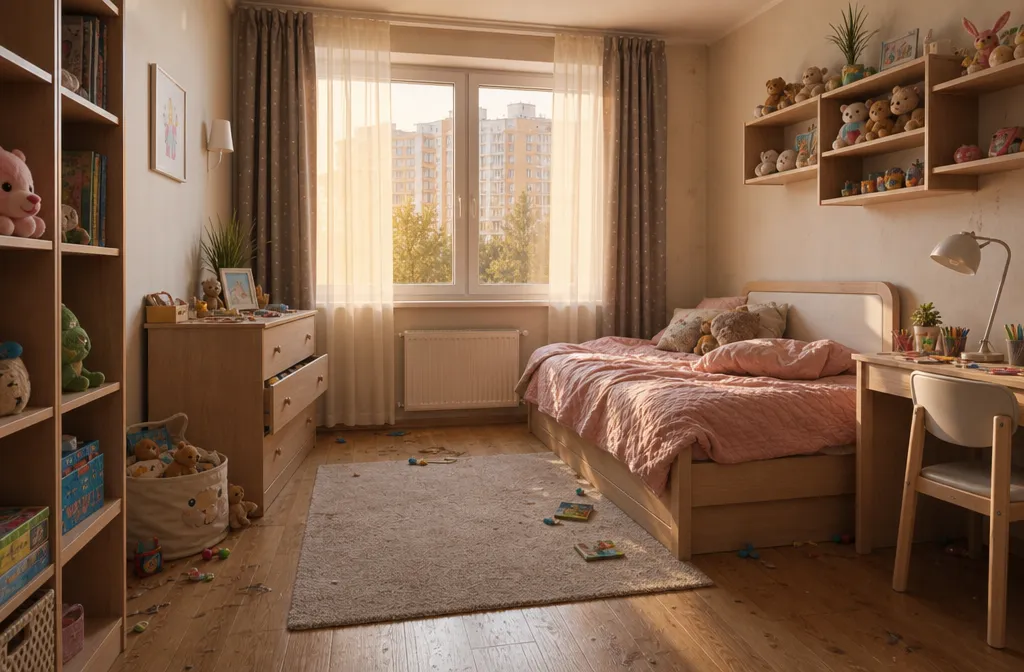
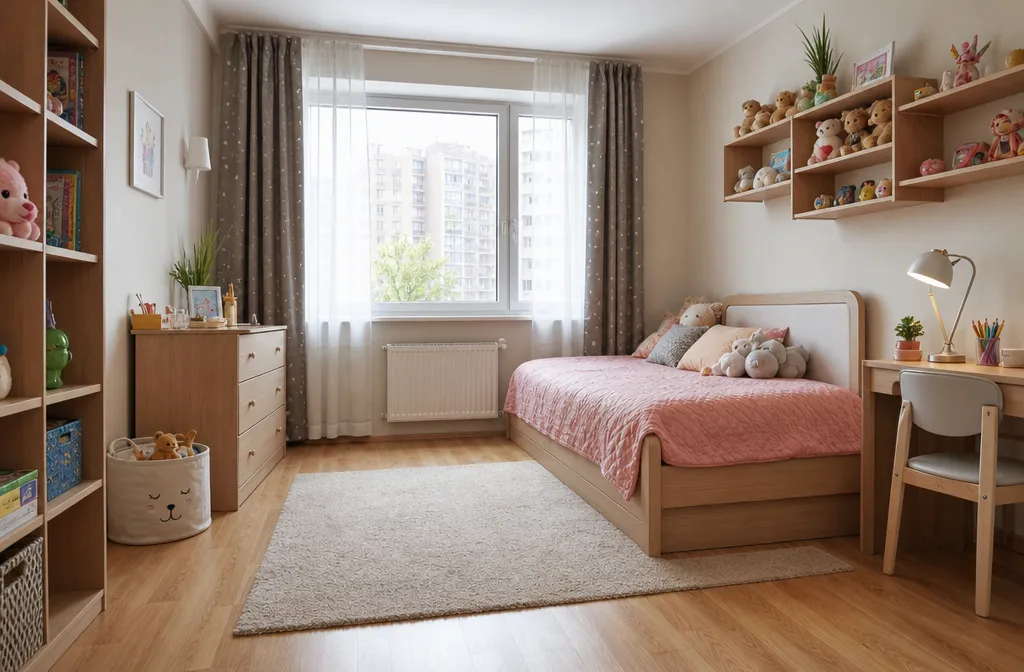
Cleaning a two-bedroom apartment in a maintenance format keeps “visible cleanliness”: wet mopping floors, dusting open surfaces, bathroom and kitchen wiped down externally — this takes us two to three hours. A deep clean differs not in the list of zones, but in the depth of work: the team extracts dust from under furniture and from curtain rods, washes windows from the inside, degreases the kitchen unit and extractor hood, cleans tile grout — this takes four to six hours for two rooms. If the apartment hasn’t been professionally cleaned in a long time, start with a deep clean: a maintenance clean on settled dust only moves it from upper surfaces to the floor, and within a day, surfaces are grey again.
How long does cleaning two rooms take
For a standard two-bedroom apartment of 45–65 m², we send a team of two people, and the time depends not on the square footage, but on the level of soiling. A maintenance clean fits into two to three hours, a deep clean into four to six hours, and a post-renovation clean can take the whole day due to repeatedly washing floors to remove construction dust. The presence of pets, smokers, or a kitchen with long-standing grease deposits increases the time, so the operator clarifies the apartment’s condition when you place an order. Clear access to surfaces for the team in advance — if cleaners spend the first hour clearing items from the floor and windowsills, less time remains for the actual cleaning of the two-bedroom apartment.
When a two-bedder needs a one-time deep clean
- After a long break: if it hasn’t been professionally cleaned for several months — only a deep clean will remove accumulated dust.
- Before moving in or after moving out: cleaning inside wardrobes, appliances, and the bathroom before arranging belongings.
- Seasonally in spring and autumn: with wardrobe changes and window washing after winter and pollen.
- After residents’ illness: a deep clean with disinfection of surfaces and textiles.
- Before renting out: to present the apartment in a marketable condition.
Products and equipment for cleaning a two-bedroom apartment
The result of cleaning two rooms depends not on the number of people, but on the chemicals and equipment the team brings. Here’s what we use and why.
Hypoallergenic chemicals Kiehl and Sodasan
We clean with professional hypoallergenic chemicals Kiehl and Sodasan, water-based — free of chlorine and strong fragrances, with EU Ecolabel certification, safe for children and allergy sufferers. For the kitchen and bathroom, we use pH-neutral formulas that remove grease and limescale without abrasives that scratch enamel and chrome fixtures. The products are biodegradable and leave no chemical film, so the rooms of the two-bedroom apartment can be used immediately after cleaning. In a small two-bedder, the concentration of odours is felt more strongly than in a spacious house — so low-odour chemicals are not a luxury here, but a necessity, especially if windows face the courtyard and ventilation is poor.
HEPA vacuums, steam, and extraction
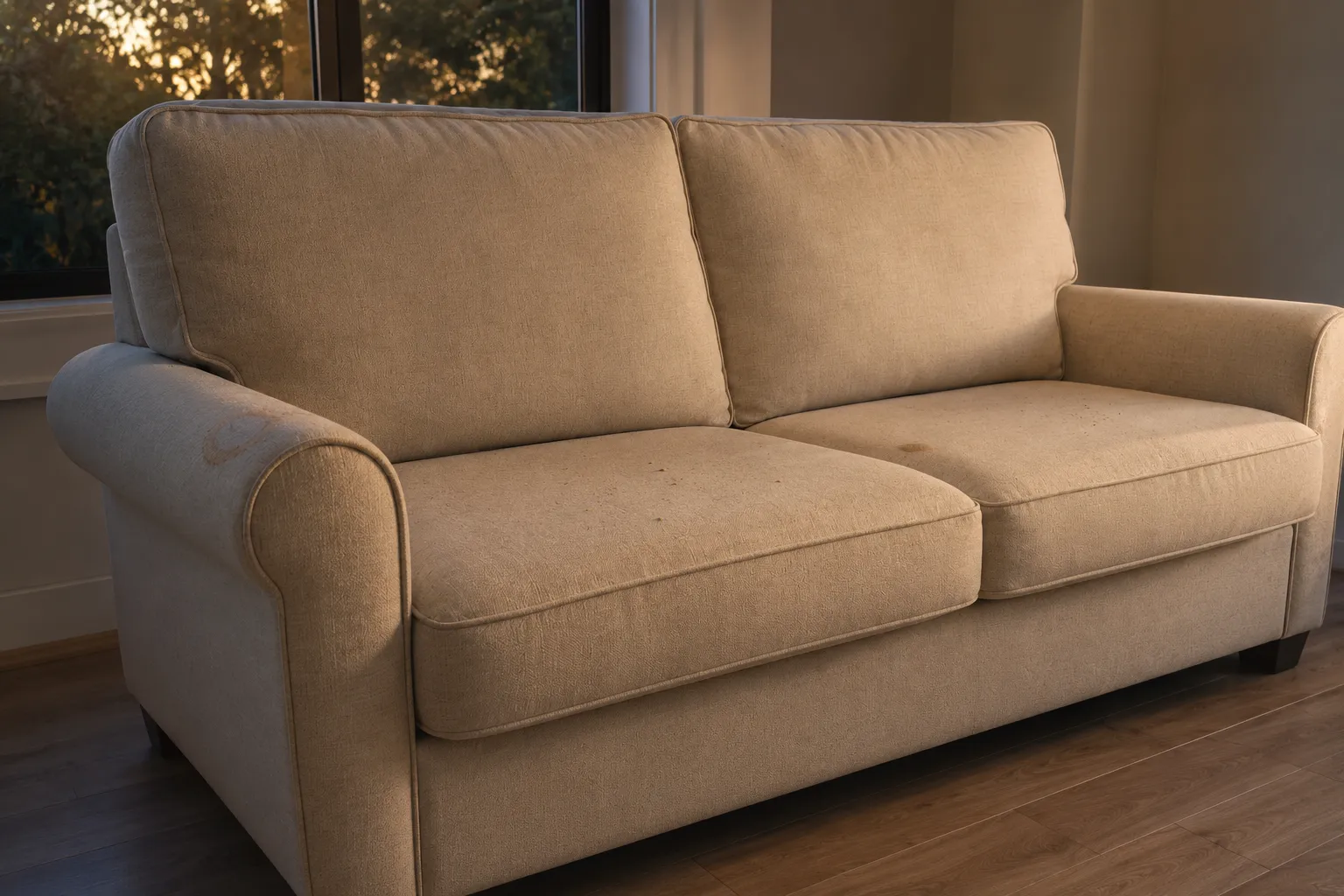
For cleaning a two-bedroom apartment, we bring vacuums with HEPA filtration: they trap fine dust and allergens inside, rather than blowing them back out like household models with cloth bags. A steam cleaner disinfects tile grout, plumbing, and children’s surfaces with hot steam without chemicals. For sofas and armchairs with stains, we add Karcher Puzzi extractor cleaning — the solution is injected into the padding and immediately extracted along with dirt and moisture. If the sofa is a pull-out and serves as a bed in the second room, schedule extraction for the morning: the padding needs four to six hours to dry, otherwise sleeping on damp upholstery the same evening won’t be possible.
What we use to clean different zones
| Zone |
Equipment |
Result |
| Floors, carpets |
HEPA vacuum, wringer mop |
Dry and wet cleaning without streaks |
| Bathroom, kitchen |
Steam cleaner, pH-neutral chemicals |
Limescale and grease without abrasives |
| Sofa, armchairs |
Karcher Puzzi extractor |
Deep cleaning of upholstery and stains |
| Glass, mirrors |
Lint-free cloths, squeegee |
Clarity without fibers |
How to Prepare a Two-Bedroom Apartment for Cleaning
A little preparation speeds up the team’s work and protects your belongings. Below is what to do before their arrival and what not to do.
What to Remove and Clear in Advance
- Personal valuables and documents: Put money, jewelry, and papers in one closed place.
- Small items from surfaces: Clear tables, windowsills, and the floor so the team cleans, not declutters.
- Fragile and cherished items: Set aside souvenirs and electronics you are hesitant to entrust yourself.
- Access to outlets and water: Hot water and free power points are needed for the steam cleaner and extractor.
- Spaces for pets: It’s better to confine a cat or dog to a separate room during the work.
Do You Need to Wash Floors Before the Cleaners Arrive
There is no need to wash floors or wipe surfaces before the team arrives — that’s the work you’re paying for, and pre-cleaning doesn’t speed it up and sometimes hinders assessing the apartment’s actual condition. It’s enough to remove items, toys, and wires from the floor so the cleaners can start cleaning immediately. However, it’s better to remove dirty dishes from the sink in advance: if only a two-bedroom apartment cleaning without dishwashing is ordered, a pile of plates blocks access to the sink and faucet. Show the team leader the “problem areas” at the start — a stain on the carpet, limescale in the shower, streaks on your favorite window — so they are treated specifically, not as an afterthought.
Common Mistakes in DIY Two-Bedroom Apartment Cleaning
Home cleaning of two rooms often eats up a day off, and cleanliness lasts only a couple of days. We’ve compiled mistakes that spoil the result.
Mistakes in Cleaning Technique
- Moving from dirty to clean: Mopped the floor, then wiped shelves — dust settles back down.
- One cloth for the whole apartment: Without color zoning, bacteria from the bathroom travel to the kitchen.
- Excess water on laminate: Joints swell and the flooring warps.
- Missing “quiet” zones: Baseboards, tops of cabinets, and cornices accumulate dust that’s not immediately visible.
- Ignoring the range hood and filters: Grease and dust return to the air right after cleaning.
Improper Drying of Furniture and Textiles
After wet cleaning a sofa or carpet, the foam and fibers remain wet inside, and without forced ventilation, a musty smell and mold risk appear within hours — this is the most common mistake in home textile cleaning. The correct way to dry upholstery is with a draft or a fan directed at the surface, not by covering the sofa with a blanket “to speed things up.” In a two-bedroom apartment with one window per room, air circulation is weaker, so after washing, it’s better to dry a carpet vertically by an open window rather than on the floor. If the upholstery takes longer than six hours to dry, a damp smell almost always appears — in this case, only repeated drying with warm air will help.
Specifics of Apartment Cleaning in Almaty
Almaty’s dust and climate change the frequency of cleaning even for a compact two-bedroom apartment. We explain why wet cleaning is done more often here.
Mountain Dust and Heating Season
Almaty lies in a foothill basin with poor ventilation, so fine mountain dust and exhaust settle in apartments faster than on the plains, especially on lower floors along main avenues. During the heating season, smog and dry air from radiators add to the problem: dust becomes finer, stays suspended longer, and resettles on furniture within a day. Residents of the center and busy streets have to do wet cleaning one and a half to two times more often than standard recommendations. Install a humidifier and wipe windowsills every other day in calm weather — in dry, smoggy air, dust hardly settles on its own and returns to surfaces immediately after cleaning.
Fluff, Blooming, and City Districts
In spring, the workload increases due to flowering and poplar fluff: it clogs mosquito nets and settles on carpets, triggering allergies, so during this period, textile cleaning and net washing are needed more often. The scenario also depends on the area: in new residential complexes on the outskirts, construction dust from ongoing development is added to household dust, while in the foothills of the Medeu and Bostandyk districts, fine sand is carried in after wind and rain. On upper and ventilated floors, sand flies through the windows — keep your nets clean and wash windows more often in spring, because a clogged net lets dust inside and negates the cleaning effect.
Key points when ordering cleaning for a two-bedroom apartment
We have compiled guidelines to make cleaning two rooms predictable and keep cleanliness longer.
- Choose the format based on the condition: maintenance cleaning for regular order, deep cleaning after a break or move.
- Allocate time according to the level of dirt: from two to three hours for maintenance cleaning to a full day for post-renovation cleaning.
- Pay attention to chemicals and equipment: hypoallergenic products and HEPA equipment solve the issue of safety and quality.
- Consider the climate of Almaty: mountain dust and smog require more frequent wet cleaning than in other cities.