What is the difference between a deep clean and a maintenance clean
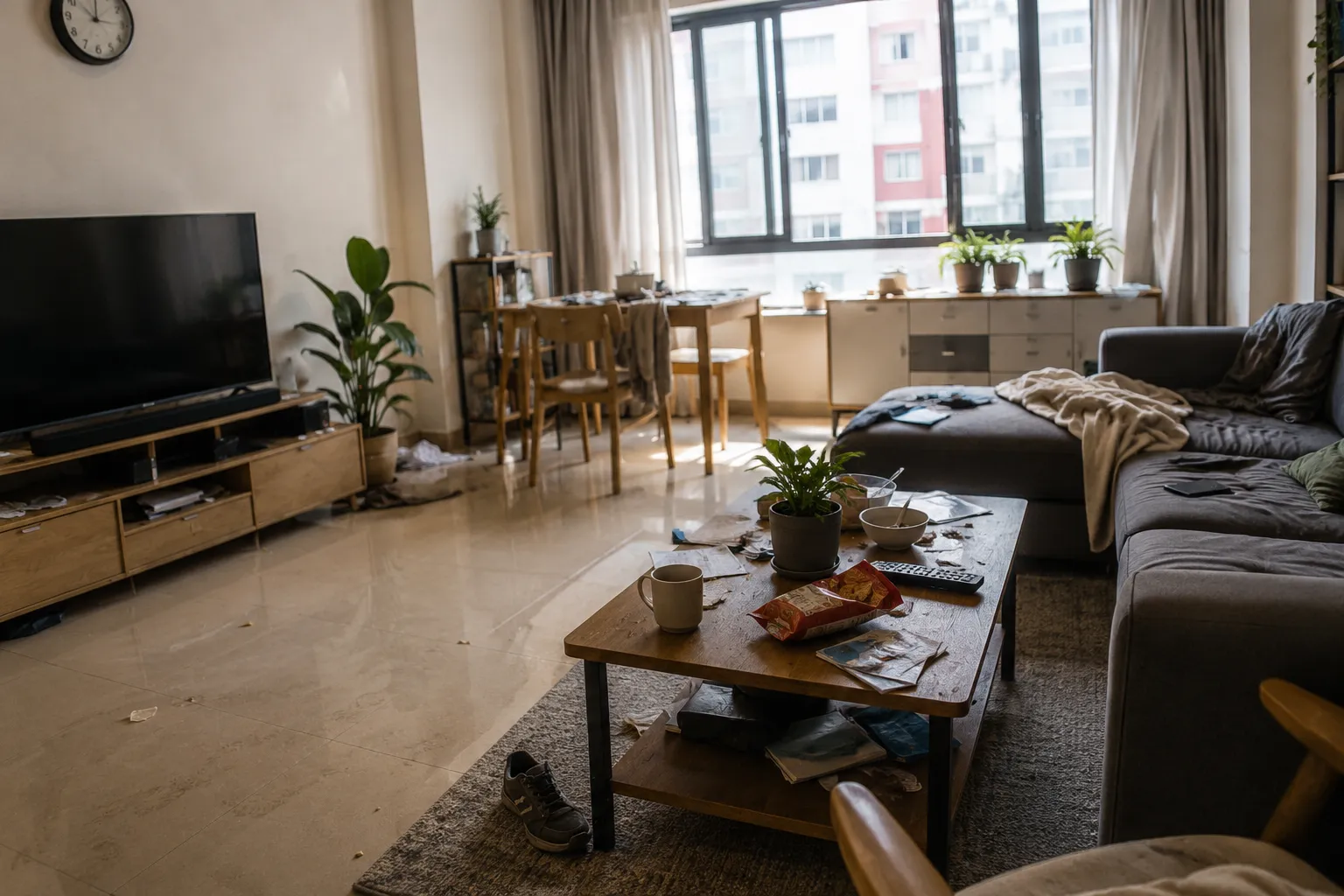
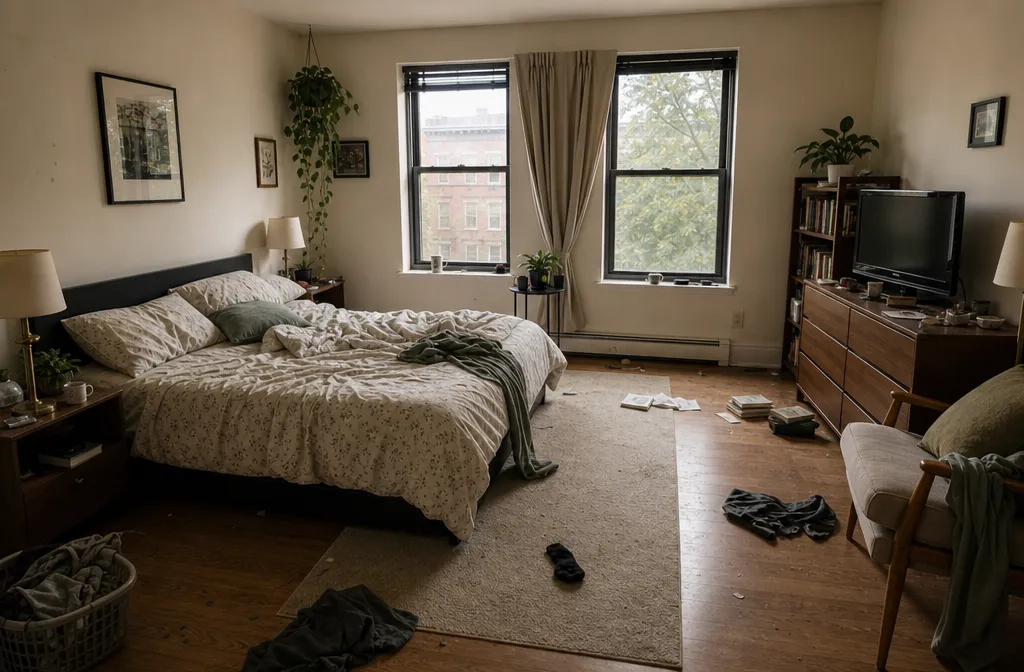
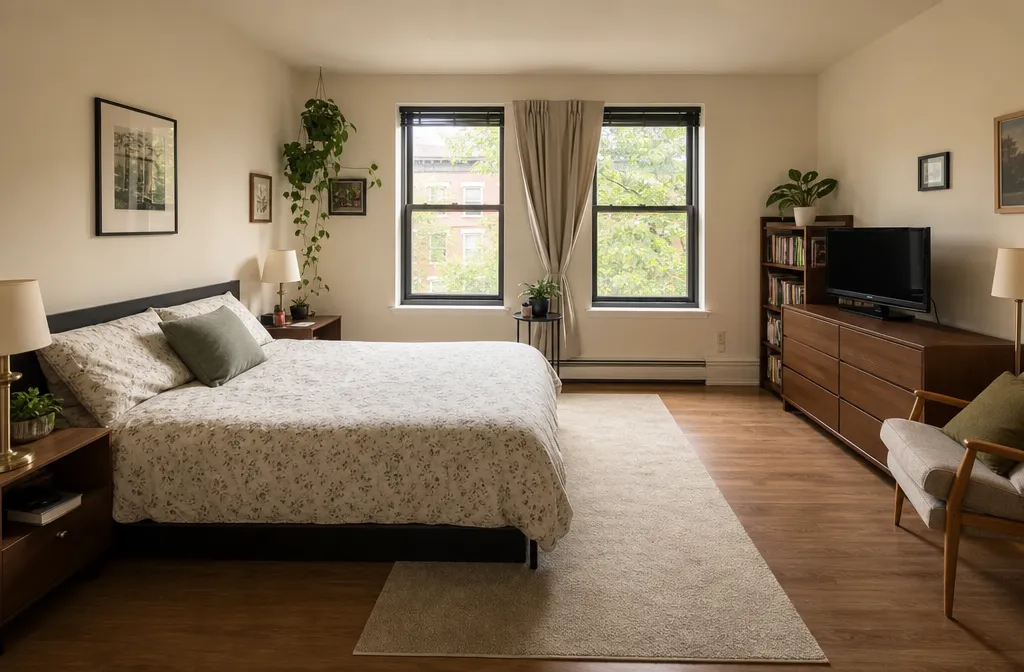
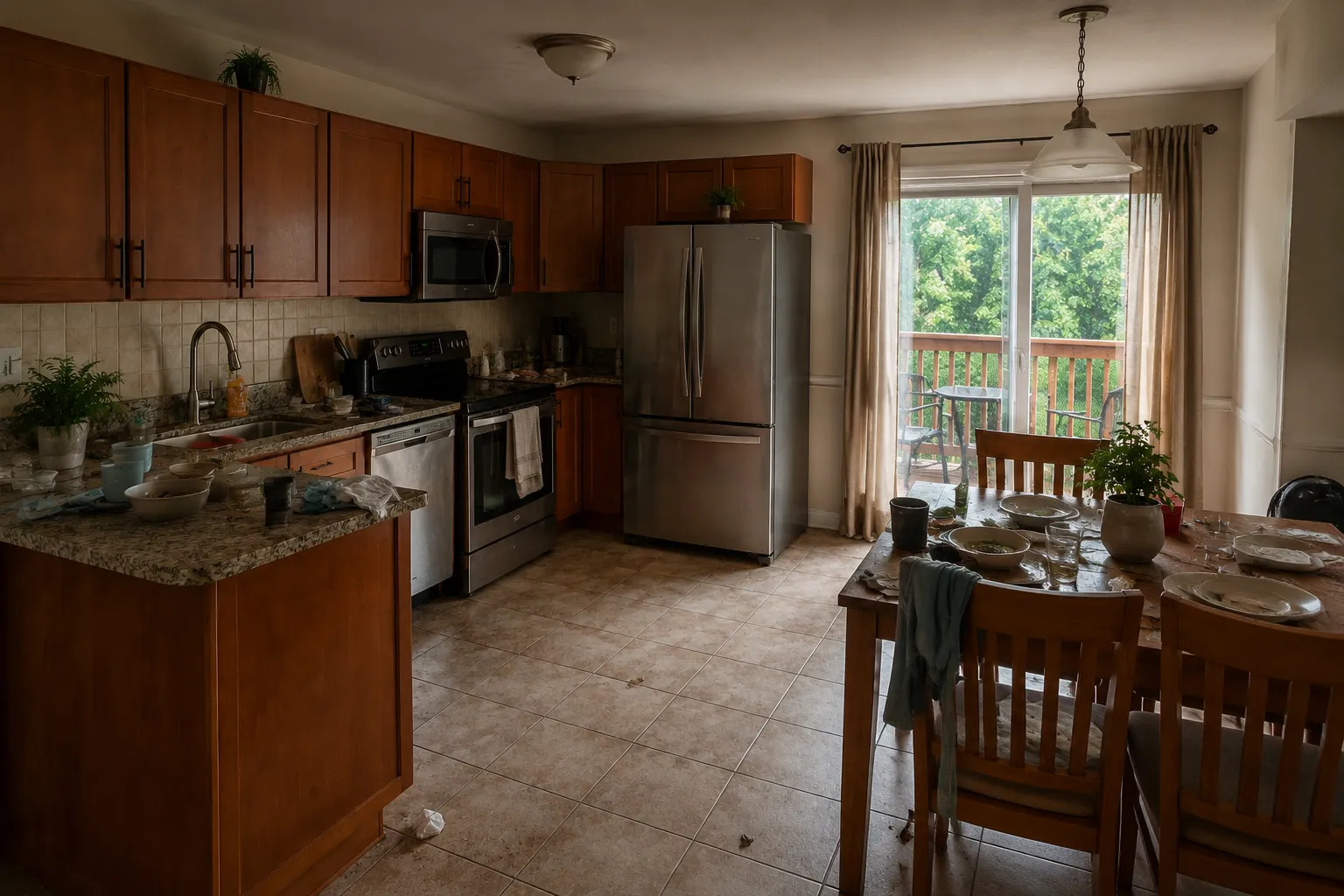
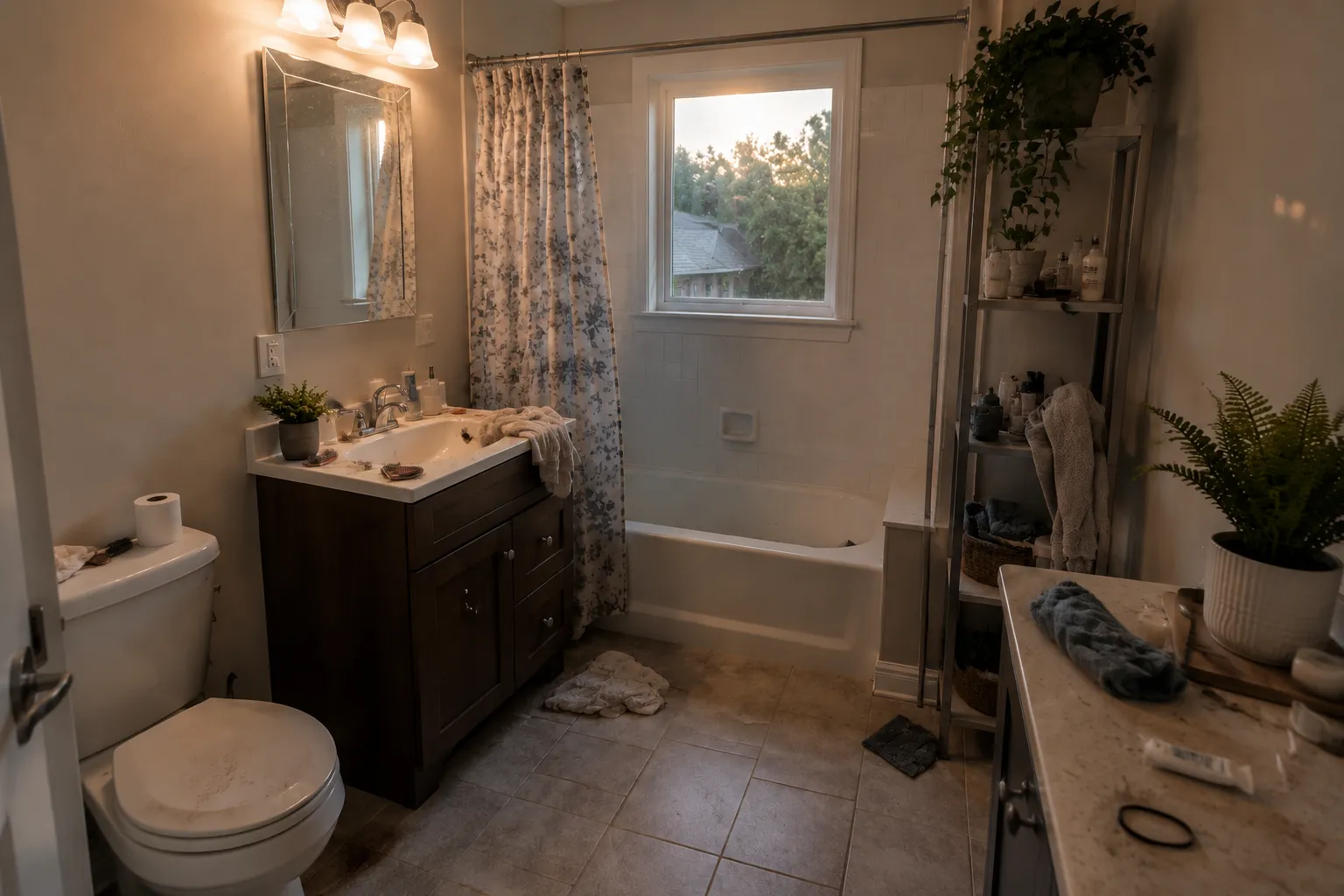
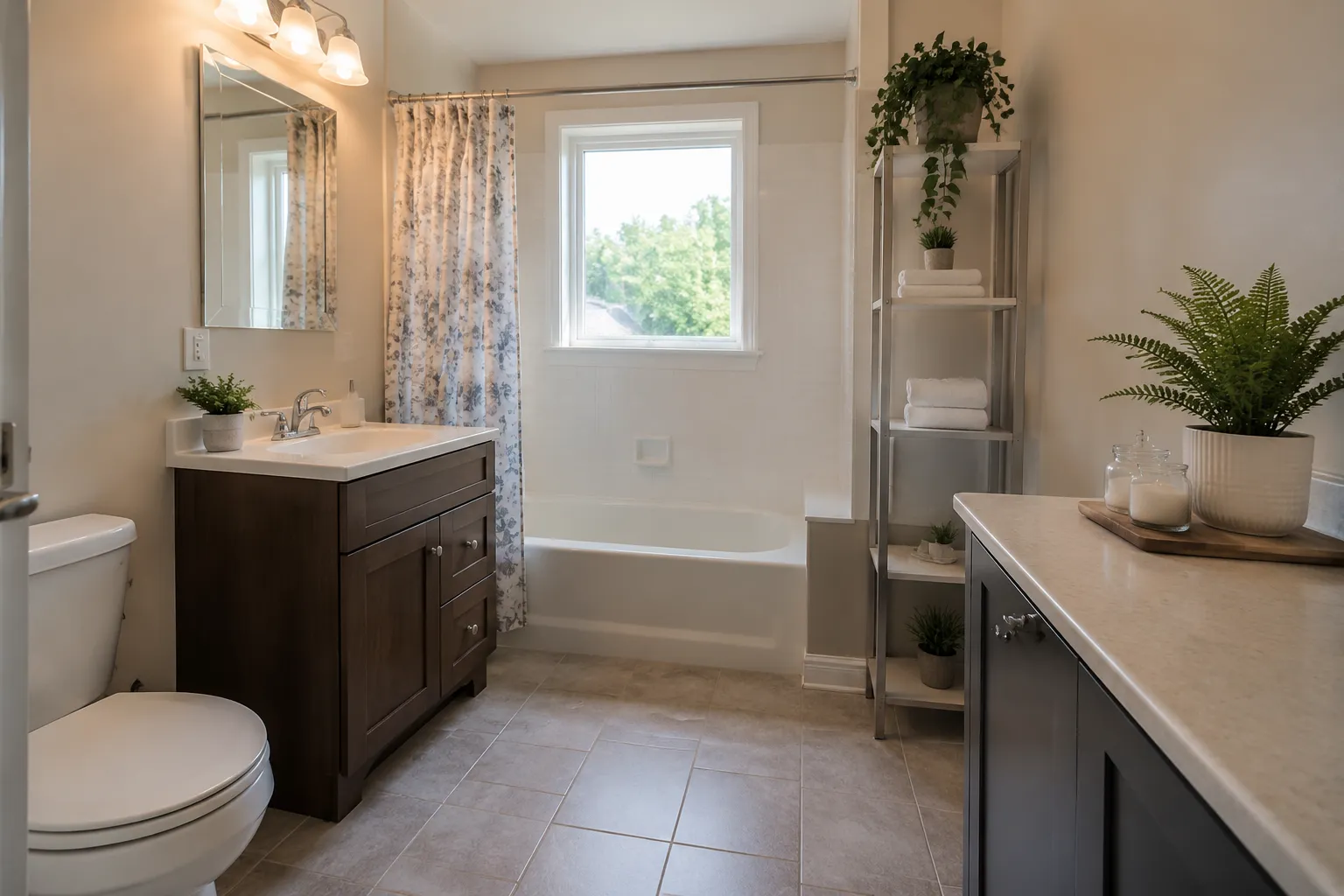
Many clients confuse these two formats and expect a level of depth from a maintenance clean that it is not designed for, or they order a deep clean when a weekly tidy-up would suffice. The difference is not in the list of services, but in the goal, time, and technology: a deep clean restores cleanliness to “neglected” areas, while a maintenance clean maintains an already achieved standard.
Goal and Depth: Why a Deep Clean Doesn’t Replace a Weekly One
A deep clean tackles problems that accumulate over months: grease buildup on the kitchen backsplash, dust behind the refrigerator, limescale under the bathtub, scuffed marks on baseboards. At profi-clean, a team of two cleaners takes between 4 to 8 hours for this type of cleaning, depending on how neglected the space is. A maintenance clean, on the other hand, is a “quick circuit”: wiping down surfaces, vacuuming, mopping floors, refreshing the bathroom. It does not involve moving furniture, organizing closets, or cleaning chandeliers. In my opinion, the main mistake is ordering a deep clean once a month and thinking that’s enough: without weekly control, dust and grime become embedded faster, making the next deep clean more expensive.
Technology and Chemicals: Different Products for Different Tasks
For a deep clean, we use alkaline solutions (Kiehl Pro Line) to remove stubborn grease and acidic ones to remove uric scale and limescale. After such treatment, surfaces require neutralization and thorough rinsing; otherwise, chemical residue can damage the coating. For a maintenance clean, neutral pH products (Sodasan) are sufficient — they are safe for children and allergy sufferers but won’t handle stubborn dirt. The tools also differ: a deep clean requires a steam cleaner with steam temperatures up to 150°C and a turbo brush for grout lines, while a weekly clean needs microfiber cloths with different color codes for the kitchen, bathroom, and rooms. Moreover, in Almaty apartments with hard water (salt content up to 7 mg-eq/L), limescale on faucets and showerheads forms within 5-7 days — so a maintenance clean in the bathroom must include wiping chrome surfaces with a dry microfiber cloth; otherwise, the scale turns into a difficult-to-remove layer.
Frequency: When is a Maintenance Clean Enough, and When is a Deep Clean Needed?
A maintenance clean is optimal every 7-10 days for a family of 3-4 people — this is enough to prevent dust from accumulating on open surfaces and keep the floors clean. A deep clean is needed every 2-3 months, but there are triggers that shift the schedule: the flowering season (poplar fluff in May-June in Almaty clogs air conditioners and accumulates on curtains), having pets (fur and dander build up on upholstered furniture faster), or neighbors renovating (construction dust enters through ventilation). If you notice that after a maintenance clean there is still an odor or a film settles on surfaces, it’s a signal that it’s time to call in a team for a deep clean.
Almaty Specifics: Dust, Smog, and Seasonal Factors
In Almaty, due to its geographical location in a basin, dust settles on surfaces more intensively than in plains cities — especially in the Abaya-Rozybakiyeva and Sain areas, where construction is ongoing year-round. Air dustiness here is 20-30% higher than the average for Kazakhstan, which accelerates the soiling of textiles (sofas, carpets, curtains). In our orders, we have noticed that with monthly maintenance cleaning but without a quarterly deep clean, after six months, dust begins to embed into upholstery fabric, and restoring the color is only possible with extraction cleaning. Therefore, for Almaty apartments, I recommend shifting the deep clean interval from 3 to 2 months if the windows face a busy road (Al-Farabi Avenue, Timiryazev Street) or if there is construction nearby.
Common Mistakes: What Clients Do Wrong
The most common one is trying to save money by ordering a maintenance clean once a month instead of weekly, and then wondering why after 3-4 months the apartment gets “neglected” and needs a deep clean. The second is ordering a deep clean without having done a maintenance clean first: if there’s a week’s layer of grease in the kitchen, the deep clean will be spent removing it, leaving no time for organizing closets and washing windows. The third mistake is asking cleaners to wash windows during a deep clean but not removing the mosquito nets: dirt accumulates on the nets in Almaty’s conditions to such an extent that after washing the glass, new dust flies in through the open window. Before the team arrives, remove the nets and wash them separately — this saves an hour of work and keeps things clean for a month longer.
How often should you do a deep clean
The frequency of a deep clean directly depends on the family composition, lifestyle, and the presence of allergy sufferers or pets — there is no single schedule, but we have derived three basic scenarios based on our experience in Almaty.
Optimal schedule for a family without children or pets
For two adults without chronic respiratory issues, one deep clean every 2–3 months is sufficient. During this period, up to 3–5 mm of dust accumulates in hard-to-reach areas (under sofas, behind cabinets, on top shelves of mezzanines), which a regular vacuum cleaner cannot handle — only an anti-static microfiber cloth will do. In the kitchen, over 8–10 weeks, the grease deposit on the range hood and upper cabinet fronts hardens to a state where household chemicals with a pH of 7–8 are no longer effective — an alkaline solution with a pH of 11–12, like the one in our arsenal, is needed. If the kitchen set is flushed with a steam generator at 120 °C once a quarter, the service life of MDF facades increases by 2–3 years — this is a non-obvious consequence we’ve noted from warranty claims. With this schedule, our team spends 3.5–4 hours on a three-room apartment, and repeat orders usually confirm that the condition hasn’t been neglected. Before ordering, I recommend a test drive: run your finger along the top edge of the kitchen backsplash — if a greasy mark remains, it’s time.
Families with children under 7 — once a month
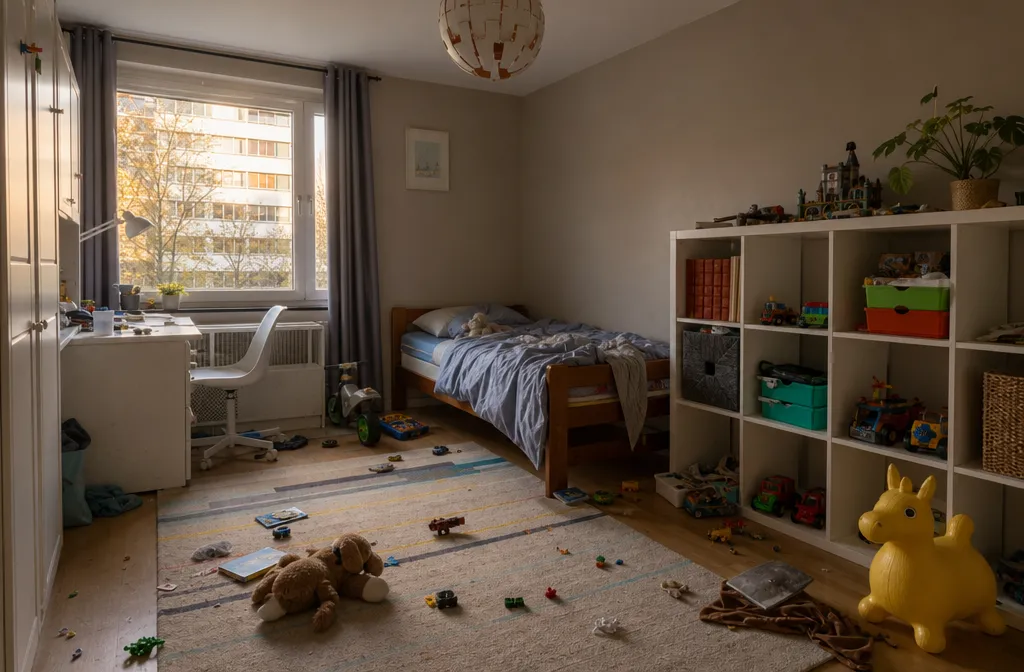
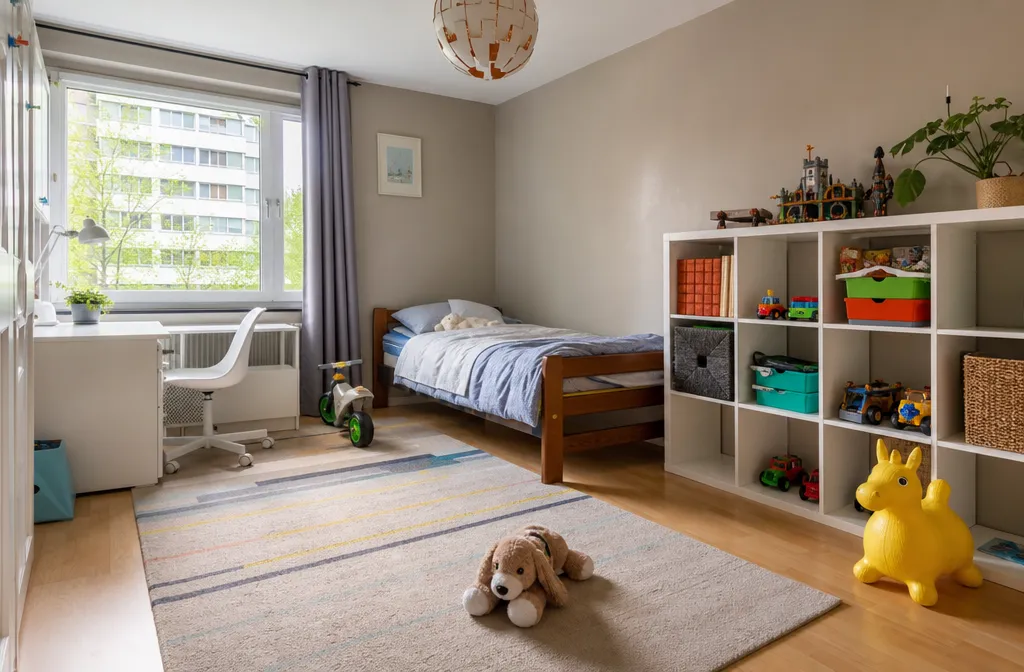
Preschoolers bring in 2–3 times more street dust and sand than adults, plus small toys and crumbs settle behind baseboards and under furniture. In our orders for three-room apartments with children, we see that in a month, up to 200–300 grams of microparticles accumulate on the floor in the children’s room, including poplar fluff and pollen allergens — critical for Almaty in May–June. A deep clean once a month, with mandatory wall washing up to a child’s height (80–100 cm) and mattress treatment with steam at 130 °C, reduces the frequency of allergic reactions in children by 40–60%, based on our observations from repeat orders. Wet floors after a regular clean leave streaks — we use a mop with a clean water reservoir and a two-chamber wringer to ensure no cleaning solution remains on the floor. If the child has allergies, the interval is reduced to 3 weeks, with window washing mandatory — pollen invisible to the eye settles on the glass. In practice, we advise families with children to schedule the deep clean for the first Sunday of the month to avoid disrupting the routine.
Pets and allergy sufferers — every 2–3 weeks
Cats and dogs shed dander and fur that penetrate upholstery and carpeting to a depth of 5–7 mm — a regular vacuum cleaner with an H12 HEPA filter removes only 70% of particles, leaving the rest to accumulate. In 2–3 weeks, in a three-room apartment with one medium-sized dog (10–15 kg), up to 50–80 grams of fur and microparticles settle on surfaces — for those with epidermal allergies, this is enough to trigger a flare-up. We use vacuum cleaners with an H13 HEPA filter and a turbo brush with nylon bristles — they extract fur from carpet fibers with 95% efficiency, compared to 60% for standard attachments. Treating sofas with a steam generator at 150 °C additionally destroys dust mites, whose excrement is the main trigger for household allergies. For cat owners, washing vertical surfaces (curtains and walls) is critical — fur clings to textiles due to static and remains there for months. If a pet lives in the home, a deep clean schedule of every 2–3 weeks is not a luxury but the only way to keep allergen concentrations below the reaction threshold.
Special category — apartments in new Almaty buildings
In homes handed over less than a year ago, construction dust (cement suspension, microscopic plaster particles) continues to settle on surfaces for 6–8 months after occupancy, even if high-quality renovations were done. In our orders for the “Akbulak” and “Nurly Tau” residential complexes, we observe that within 3 weeks, a gray coating 1–2 mm thick forms on upper shelves and cornices — this is not household dust, but abrasive particles that scratch lacquered facades and appliance screens. For such apartments, we recommend a general cleaning once a month with mandatory washing of walls and ceilings at height — standard wet mopping of floors does not remove the suspension from horizontal surfaces above 1.5 m. We treat walls and ceilings with a special brush on a telescopic handle and a pH 7 (neutral) solution to avoid damaging paint or wallpaper. In practice, after six months of occupancy, the interval can be increased to 2 months — but only after three consecutive general cleanings at monthly intervals, which wash out residual construction dust. If dust reappears on windowsills 2 weeks after cleaning, the house is still “breathing,” so reduce the interval back to one month.
Cleaning specifics for a three-room apartment in Almaty
A three-room apartment in Almaty covers 65–100 square meters with typical dust traps: Soviet-era mezzanines, panoramic windows in new buildings, kitchen-living rooms, and three bathrooms in modern residential complexes. Each layout dictates its own cleaning nuances that a standard checklist won’t cover. Below, we break down the key areas where cleaners most often make mistakes and how our team avoids these pitfalls.
Dust on mezzanines and built-in wardrobes — the main enemy of allergy sufferers
In older three-room apartments (Zhetysu, Alatau district), mezzanines and built-in wardrobes are dust traps with years of buildup. We remove the top shelves and wipe not only horizontal surfaces but also the edges of doors — up to 70% of microparticles accumulate there, which become airborne every time the wardrobe is opened. In new buildings (Miras, Nurlytau), the problem is reversed: walk-in closets with open shelving — dust settles on clothes. Our technique is to first vacuum the shelves with a brush attachment featuring a HEPA filter, then treat them with Sodasan antistatic spray, which reduces dust settling for 2–3 days. If allergy sufferers live in the apartment, before cleaning the mezzanines, we spray the shelves with Kiehl hypoallergenic spray — this binds microparticles and prevents them from scattering around the room.
Kitchen-living room: the zone of grease and crumbs under the sofa
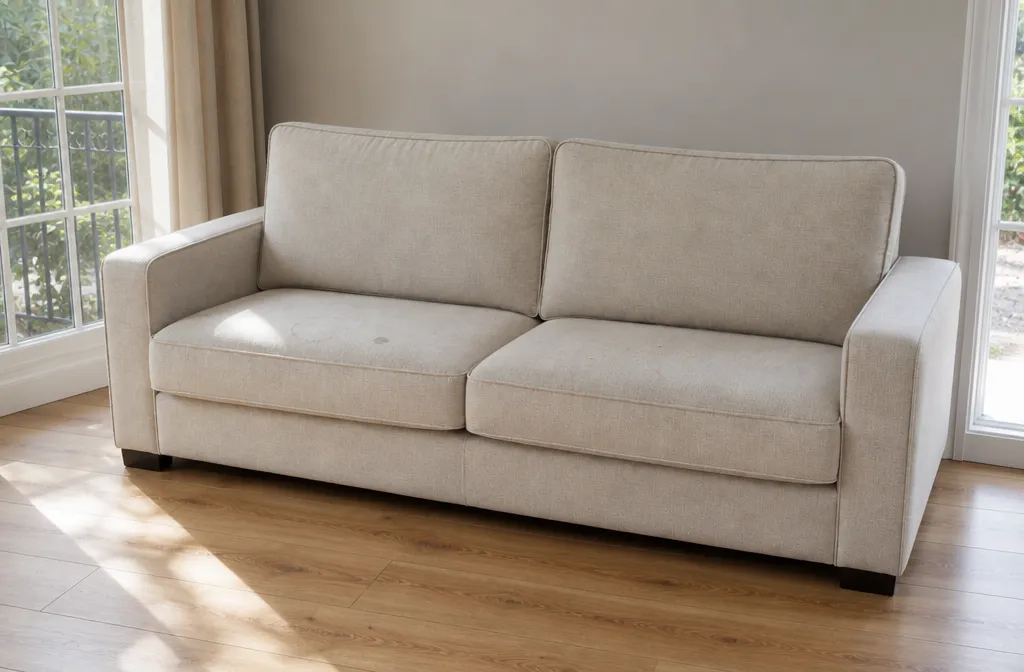
In modern three-room apartments with a 30–40 square meter kitchen-living room, grease settles not only on the backsplash but also on the sofa upholstery located 2–3 meters from the stove. A typical mistake is washing the floor and facades while forgetting the upholstered furniture. We treat sofas with a steam generator at 120°C, which softens old grease, then perform dry cleaning with Kiehl stain remover for textiles. A separate issue is crumbs under the sofa: we always move furniture away from the wall (even heavy corner models) and vacuum the area underneath with a crevice tool. Wet mopping the floor afterward is done with a neutral pH cleaner to avoid streaks on laminate or parquet — Almaty apartments often have oak flooring, which is sensitive to harsh chemicals.
Three bathrooms: mold in ventilation and limescale on chrome faucets
In three-room apartments with two or three bathrooms (residential complexes “Symphony,” “Triumph”), humidity stays above 70%, and mold most often hides not in tile joints but inside ventilation grilles. We remove the grilles, soak them in a Sodasan solution (oxygen bleach without chlorine), and treat the ventilation shaft walls with Kiehl antifungal spray. Limescale on chrome faucets is the second headache: hard Almaty water leaves white streaks within a day of cleaning. Our hack is to first wipe the faucets with a microfiber cloth and citric acid (1 tsp per 500 ml of water), then polish with a dry cloth. If this isn’t done, limescale clogs the aerators, reducing water pressure by 20–30% over six months.
Panoramic windows: streaks from Almaty dust and desert sand
In three-bedroom apartments with panoramic glazing (residential complexes “Almaty Towers”, “Esentai”), especially on upper floors, windows get dirty not only from rain but also from fine dust from the Taukum desert — it is carried by the southeast wind and settles on the glass in a yellow-gray layer. Regular glass cleaner cannot handle this dust: it just smears it into a film. We use a two-stage washing process: first, rinsing off the dust with water and Sodasan (the alkali softens mineral particles), then a final polish with a microfiber cloth and a neutral compound. We wipe the frames separately — sand accumulates in the grooves, which can scratch the double-glazed window if not cleaned out with a brush. When wet-cleaning window sills after the windows, we always change the water — otherwise, the sand will remain on the plastic and scratch it.
Hallway and Corridor: Street Dirt and Shoe Dust
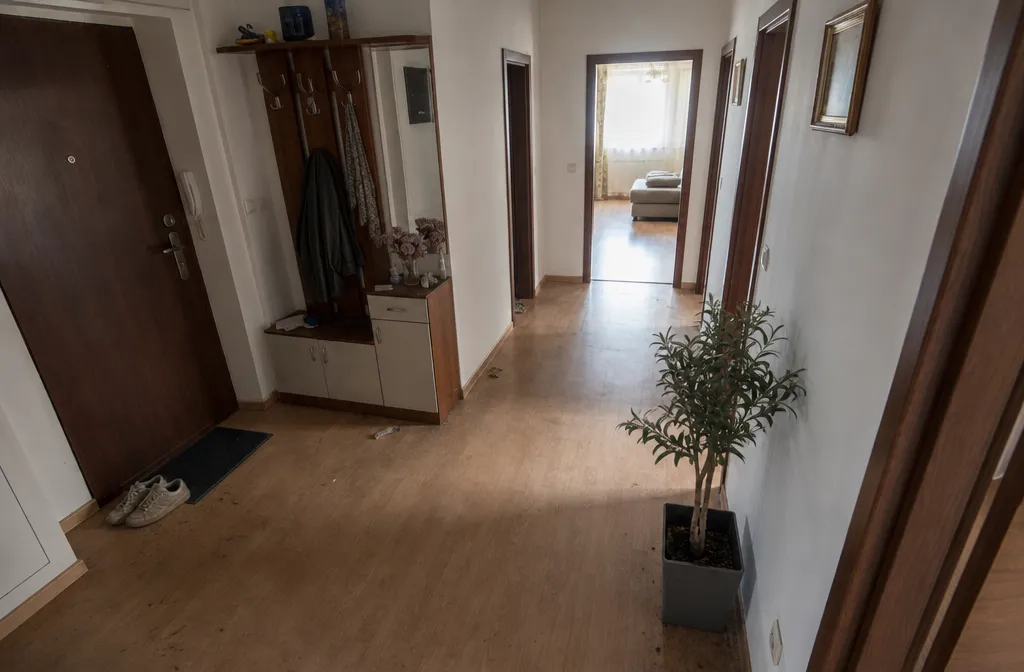
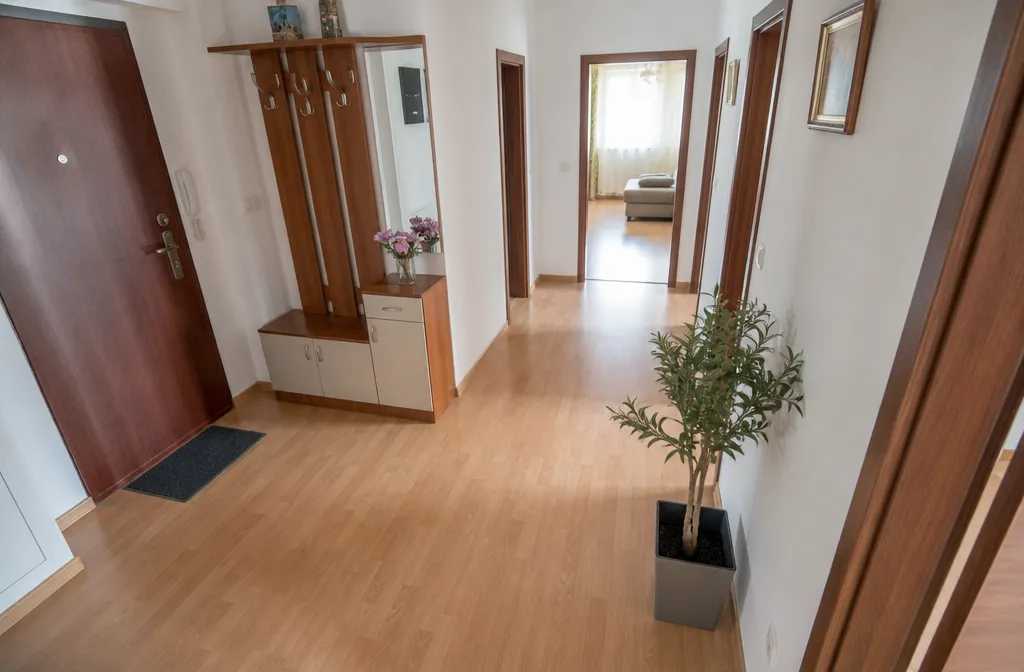
The hallway in a three-bedroom apartment is a transit zone through which the whole family passes, and dirt from Almaty sidewalks (sand and reagents in spring, clay with leaves in autumn) settles on the floor and the shoe rack. We start with dry cleaning: vacuuming the doormat and using a crevice tool on the baseboard joints. Then wet cleaning with a neutral, silicone-free agent (silicone creates a film that attracts new dirt). We treat the shoe rack with Kiehl antibacterial spray — this reduces sweat odor and fungus growth in damp shoes. If there is carpet in the hallway, we clean it with an extractor (hot water + Sodasan) — in Almaty, street dust is very fine, it gets embedded in the pile and cannot be removed by a regular vacuum cleaner. After drying, we apply an antistatic agent to the carpet to prevent it from attracting new dust.
Which Stains Are the Most Difficult to Remove
In a three-bedroom apartment, especially in Almaty, there are contaminants that regular household chemicals and standard wipes cannot handle. We have broken down five types of the most stubborn stains and deposits we encounter on jobs — from greasy condensation on kitchen fronts to nicotine film on ceilings. Each requires a specific reagent, dwell time, and technique; otherwise, the dirt smears or sets permanently.
Grease and Soot on Kitchen Fronts
In Almaty apartments with gas stoves, greasy condensation settles not only on the backsplash but also on the upper cabinet fronts — especially above the cooking surface. Regular soap only removes fresh splatters, while aged deposits turn into a sticky film that we remove with an alkaline solution (pH 11–12), leaving it on for 5–7 minutes to soften. On MDF fronts with PVC film, aggressive alkali cannot be used — it causes the film to bubble, so we use a gel concentrate with an emulsifying effect. If grease has seeped into the joints between the fronts and the body, it must be manually cleaned with a microfiber cloth along the seam — this is the only way to remove the yellow line without dismantling the kitchen.
Nicotine Deposits on Ceilings and Walls
In three-bedroom apartments where smoking occurred for years in the kitchen or bathroom, nicotine resin settles on stretch and painted ceilings, as well as on paintable wallpaper. From PVC stretch ceilings, the deposit is removed with a 30% isopropyl alcohol solution (without acetone) — otherwise, the film becomes cloudy and loses its gloss. Removing nicotine from matte paint is more difficult: it absorbs into the porous layer, so we use dry cleaning with a special melamine sponge, then apply a dust-repelling compound to prevent the odor from returning after 2–3 days. On paintable wallpaper, nicotine often remains even after two cleaning cycles — in such cases, we recommend repainting the walls, as it is impossible to completely remove yellow streaks without damaging the texture.
Old Pet Urine Stains
In apartments with cats and dogs, urine penetrates laminate, parquet, and concrete screed — the stain may appear dry, but under a UV lamp (365 nm), it glows yellow-green even months later. Regular vinegar or bleach does not eliminate the odor: ammonia and uric acid crystallize in the wood structure, and when humidity rises, the smell returns. We use an enzymatic neutralizer with Bacillus bacteria, which break down uric acid crystals into carbon dioxide and water — the dwell time is 6 to 12 hours, so we apply the treatment overnight. On laminate, a whitish mark from over-wetting often remains after cleaning — we remove it with a wax-based polish; otherwise, the spot will be visible in side lighting.
Salt Stains on Windows and Window Sills
In older housing stock in Almaty (Khrushchyovkas, “Czech” panel buildings), a white coating forms on windows and window sills — this is salt from construction mortar and cement dust that rises to the surface during humidity fluctuations. Water and vinegar only remove the top layer, while the salt remains in the micropores of the plastic and reappears within a week. We treat the streaks with an acidic cleaner based on citric acid (5–7%), leave it for 10–15 minutes, then rinse with distilled water — otherwise, regular tap water leaves new salt stains. On aluminum window sills, acid is unacceptable: it destroys the anodized coating, causing the sill to darken — for aluminum, we use a neutral surfactant-based compound followed by waxing.
Pollen and Bitumen Stains on Balconies and Loggias
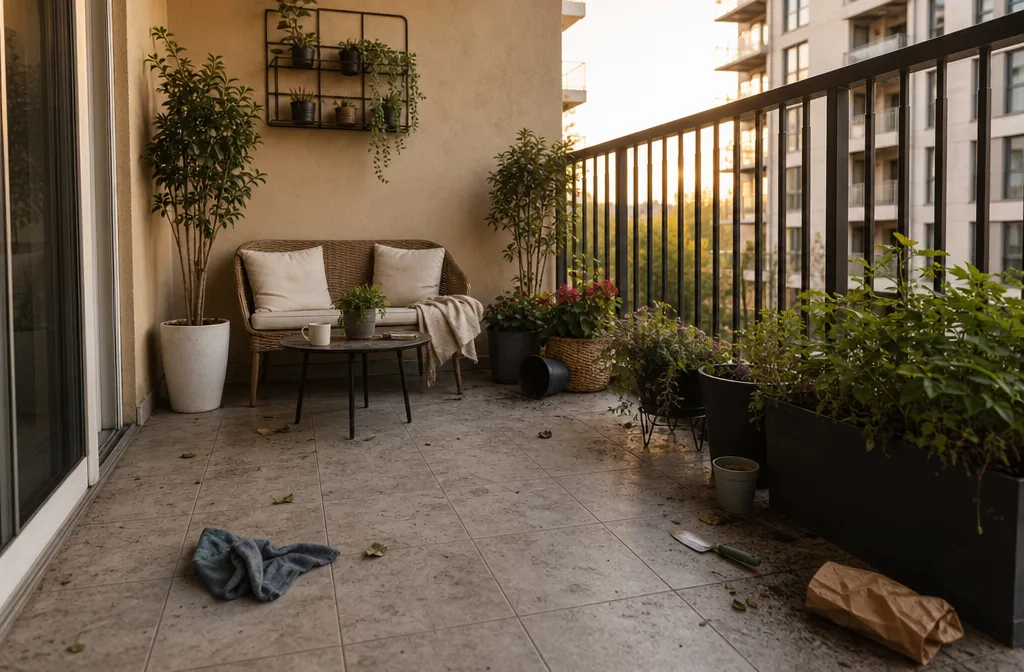
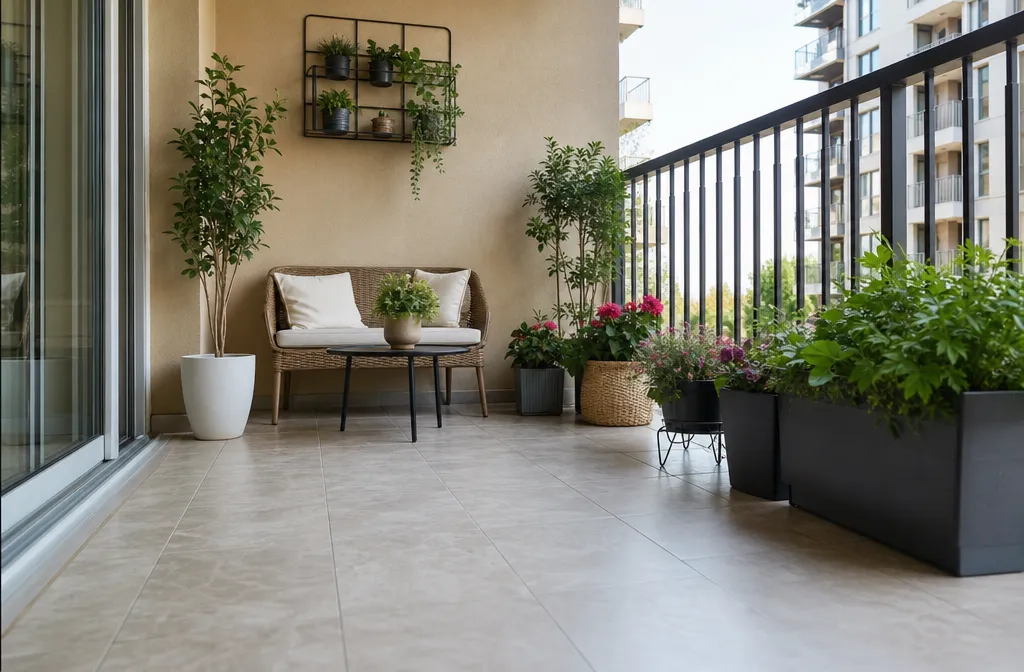
In spring and summer, pollen from poplars, acacias, and ragweed settles on open balconies of three-room apartments — it embeds itself into tiles and painted floors, especially if the balcony is not glazed. Regular water smears the pollen into a yellow paste that clogs the grout lines between tiles. We use an alkaline concentrate with added hydrogen peroxide (3%) — it oxidizes plant pigments and whitens the grout without chlorine. Bitumen stains from the roof, which are carried onto the balcony after rain, are only removed with an organic solvent (white spirit applied pointwise with a cotton swab, then washed off with a soapy solution) — on tiles and plastic, bitumen leaves a black mark that cannot be removed with abrasives, only smeared even wider.
Tip: If your apartment has old stains — grease, nicotine, salt deposits, or pet marks — do not try to scrub them with abrasives or bleach: this fixes the stain into the surface structure. In our practice, 80% of unsuccessful DIY cleanings end with the client using the wrong reagent, and we spend extra time neutralizing the consequences before the main cleaning.
Comparison of DIY Cleaning vs. Professional Cleaning
Clients often ask us whether it’s worth paying for professional cleaning when they can handle it themselves. The difference is not just in the result — it’s in the depth of treatment, time, wear and tear on equipment, and material safety, especially in three-room apartments with their diverse surfaces.
What You Get for Your Money: Time, Resources, and Depth
DIY cleaning of a three-room apartment in Almaty takes a family of three 5–8 hours on a weekend — with breaks for rest, distractions, and changing the water in the bucket. A professional profi-clean team of two cleaners covers the same volume in 2–3 hours, using an industrial vacuum cleaner with a HEPA filter (captures particles down to 0.3 microns) and a rotary machine for carpets. Your resource is the weekends not spent on cleaning, and your equipment does not wear out: a household vacuum cleaner used for weekly cleaning of a “three-room” loses 15–20% of its suction power per year due to clogged filters, whereas professional equipment is serviced after each job. In practice, this means that during DIY cleaning, you won’t reach the dust in floor baseboards, behind radiators, and under built-in furniture — areas where up to a kilogram of microparticles accumulates over a season.
How Professional Chemicals Differ from Household Ones
Household chemicals from the supermarket are universal formulas with aggressive surfactants that work “by eye” and often leave streaks on glossy facades and glass tabletops. At profi-clean, we use hypoallergenic chemicals from Kiehl and Sodasan with a pH-neutral formula: they do not damage the protective coating of laminate (the polyurethane layer, 0.2–0.5 mm thick, is worn away by aggressive alkalis in 3–4 years) and do not leave white residue on black stone or matte plumbing fixtures. The difference is visible on a kitchen backsplash made of porcelain stoneware: after washing with a “glass and mirror” cleaner, greasy streaks remain that attract dust within an hour, while after a professional degreaser, the surface stays clean for 5–7 days. If you have a child with allergies or a cat at home, professional cleaning with hypoallergenic formulas reduces the concentration of household allergens in the air by 60–70% in a single visit — this is confirmed by measurements from our clients using home air analyzers.
Mistakes That Cost More Than Calling Cleaners
The most common mistake in DIY cleaning is using a wet cloth on all surfaces indiscriminately: water seeps into laminate joints (causing edge swelling of 2–3 mm within six months), leaves whitish stains on oak countertops, and clogs the micropores of natural stone. A second typical problem is improper care of upholstered furniture: attempting to remove a red wine or coffee stain with a household stain remover often fixes the pigment deeper into the fabric fibers, and later professional dry cleaning cannot remove it without risking damage to the color. The third is dust on mezzanines and cabinets: during DIY cleaning, it is simply swept onto the floor, from where it rises back into the air, whereas during professional cleaning, it is collected with a vacuum cleaner and brush attachment directly into the bag. In our practice, there was a case where a client washed windows in a three-room apartment on the 4th floor by herself for six months — by spring, a salt deposit from Almaty tap water had formed on the glass, which had etched into the pane, and only professional cleaning with distilled water and a scraper could remove it without scratches.
Which option to choose for your scenario
| Scenario |
DIY Cleaning |
Professional Cleaning by profi-clean |
| Weekly maintenance cleaning |
Yes, if you have 1–2 hours per week for vacuuming and mopping |
No, economically unfeasible |
| Deep cleaning every 3–6 months |
Difficult: requires a full day, a powerful vacuum, and chemicals for different surfaces |
Optimal: a team handles all areas, including mezzanines and kitchen cabinets, in 2–3 hours |
| Post-renovation cleaning |
Almost impossible without an industrial vacuum — construction dust clogs a household vacuum in 15 minutes |
The only working option: cyclone filter + wet cleaning in 3 passes |
| Cleaning before selling or renting out an apartment |
Risk of leaving streaks on windows and stains on carpets, which could lower the price |
Cleanliness guaranteed for up to 24 hours — you can show the apartment the next day |
| If there is an allergy or asthma sufferer in the home |
Household chemicals may trigger a flare-up |
Hypoallergenic formulas and HEPA filter — dust concentration in the air is reduced by 2–3 times |
When choosing between DIY cleaning and calling professionals, it is worth evaluating not only the cost but also the price of your time and equipment wear: if your three-room apartment requires a full cycle once a month, professional cleaning will be cheaper than replacing a household vacuum every two years and losing your weekends.
How to choose a cleaning company in Almaty
Choosing a contractor for apartment cleaning is a decision that directly affects the preservation of furniture, coverings, and the health of household members. There are dozens of offers on the Almaty market, but only a few provide a truly safe and predictable result — let’s break down the criteria by which you should evaluate a company, not just the price.
How to check if the company is a direct provider, not an aggregator
Aggregators take an order, pass it to a third-party cleaner, and take a 20–30% commission — you pay for the middleman, while the performer gets less and saves on chemicals or time. profi-clean works directly: in-house cleaners assigned to the site undergo monthly certification and use materials from our warehouse — without substitution with cheap analogs. In Almaty, it is easy to distinguish a direct company from an aggregator by one sign: ask for a contract with the legal entity’s seal and TIN — aggregators’ contracts state “agent,” while direct providers state “contractor.” Moreover, direct companies always provide an office address and warehouse premises, not just a phone number. With aggregators, the cleaner may arrive with a vacuum without a HEPA filter or with household chemicals from a supermarket — responsibility for quality is blurred, and you would have no clear entity to hold accountable for a guarantee.
Why cheap chemicals are dangerous for furniture, floors, and health
Household chemicals from mass-market stores contain chlorine, phosphates, and aggressive surfactants that strip the protective coating from laminate and parquet flooring within 3–4 cleanings — the floor becomes dull and starts to dry out. On MDF kitchen fronts, such products leave whitish streaks that cannot be wiped away again. In Almaty, where apartments often have 32–33 class laminate flooring and custom-made solid wood kitchens, we use only professional hypoallergenic chemicals from Kiehl (Germany) and Sodasan (organic) — they are chlorine and phosphate-free, biodegradable, and safe for children and allergy sufferers. The difference is immediately noticeable: after cleaning with household chemicals, a sharp “lemon” smell lingers in the room — this is from volatile compounds evaporating that irritate the respiratory tract. After professional chemicals, there is no smell at all, and the air remains fresh. Our advice: before your first order, ask the company to send a photo of the Safety Data Sheet (SDS) for the product they use — if they can’t provide it, the chemical was chosen based on price, not composition.
What equipment a professional company must have
A vacuum cleaner with an H13–H14 class HEPA filter traps 99.95% of particles as small as 0.3 microns — pollen, dust mites, mold spores. A regular bagged vacuum cleaner releases the finest particles back into the air, and within an hour after cleaning, the dust concentration returns to 70%. profi-clean uses industrial Nilfisk vacuum cleaners with HEPA H13 — they even collect construction dust after cosmetic renovations, which a household “cyclone” simply circulates around the room. For upholstered furniture and carpets, an extractor machine (not a steam cleaner!) is essential — it sprays water and chemicals under pressure and immediately vacuums up the dirty solution, rather than pushing dirt deeper into the fibers. In Almaty, where carpets are a frequent source of contamination due to dusty streets, it’s impossible to clean carpeting thoroughly without an extractor: a steam cleaner only “presses” dust down to the base. Check if the company has a certified fleet of equipment — we undergo an annual Nilfisk inspection and replace filters according to schedule, not just when they get clogged.
How to distinguish a professional cleaner from a random handyman
In the Almaty market, there are many private ads for “cheap cleaning” from people without specialized training — they may not know that wood polish should not be applied to lacquered surfaces, or that an abrasive sponge leaves scratches on stainless steel. profi-clean trains each cleaner according to an internal standard: 5 days of theory (chemical compositions, surface types, safety protocols) and 10 days of practice with a mentor on real sites. After the internship, there is an exam: cleaning a three-room apartment within a set time, with quality checked against a 40-point checklist. We test cleaners on their knowledge of specific materials: how to clean acrylic bathtubs (no abrasives), how to care for matte stretch ceilings (steam only, no brushes), how to clean quartz agglomerate countertops (no acid). In Almaty, where new buildings often use expensive finishing materials, a cleaner’s mistake can cost tens of thousands of tenge to restore the surface. A professional cleaner always asks clarifying questions before starting: where are the valuables, which surfaces require special care, does anyone in the household have allergies — this is a sign of systematic training, not guesswork.
What guarantees a company should offer to avoid leaving streaks
After cleaning, the client has the right to inspect each room based on parameters: no dust on horizontal surfaces (run your finger — it should leave a clean mark), streak-free glass shine, dry tile joints in the bathroom. profi-clean offers a 24-hour result guarantee: if within 24 hours you notice a missed spot or settled dust, we return for free at your first call. In Almaty, where windows are often wide open during the off-season and dust settles within 2–3 hours, the warranty period is especially important — we account for this factor and adjust our dispatch schedule. The guarantee only works if there is a contract with clearly defined quality criteria: what constitutes a “clean window,” how many times the floors are wiped, whether baseboards are treated. Without a contract, you cannot file a complaint — the company will claim a “different understanding of cleanliness.” Our practical advice: before signing the acceptance certificate, check corners and joints with a flashlight — a professional cleaner leaves even the top surfaces of cabinets and furniture legs clean, places usually overlooked.