What is the difference between a deep clean and a maintenance clean
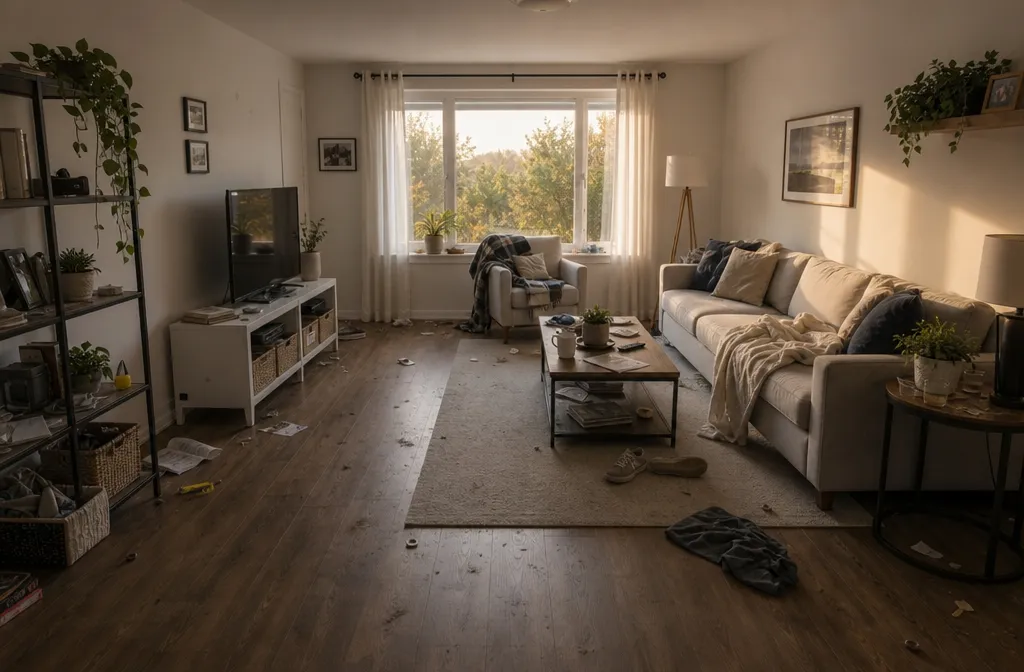
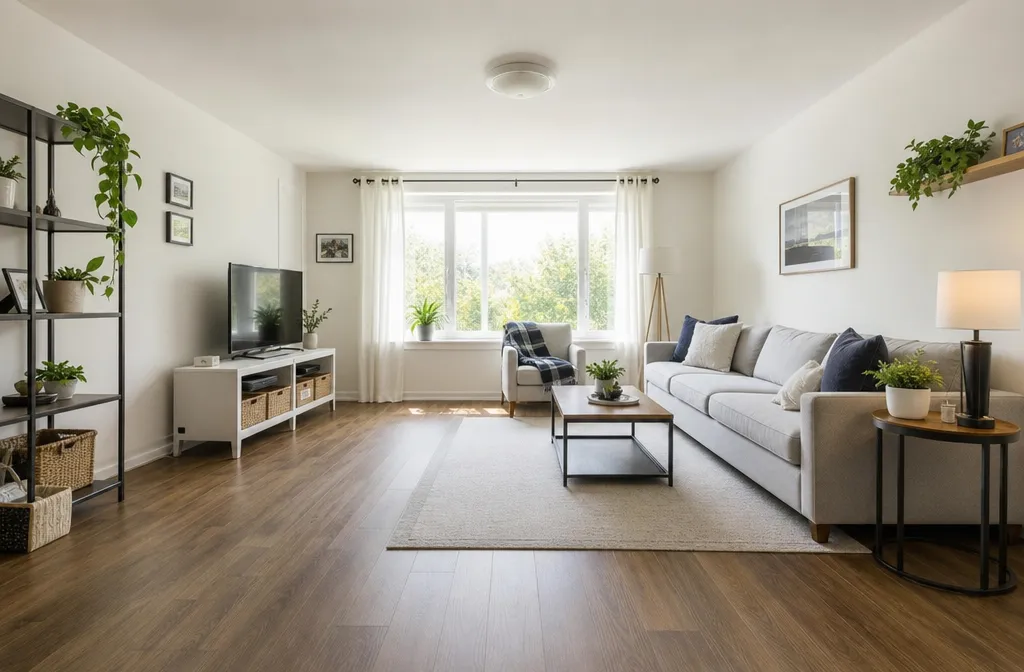
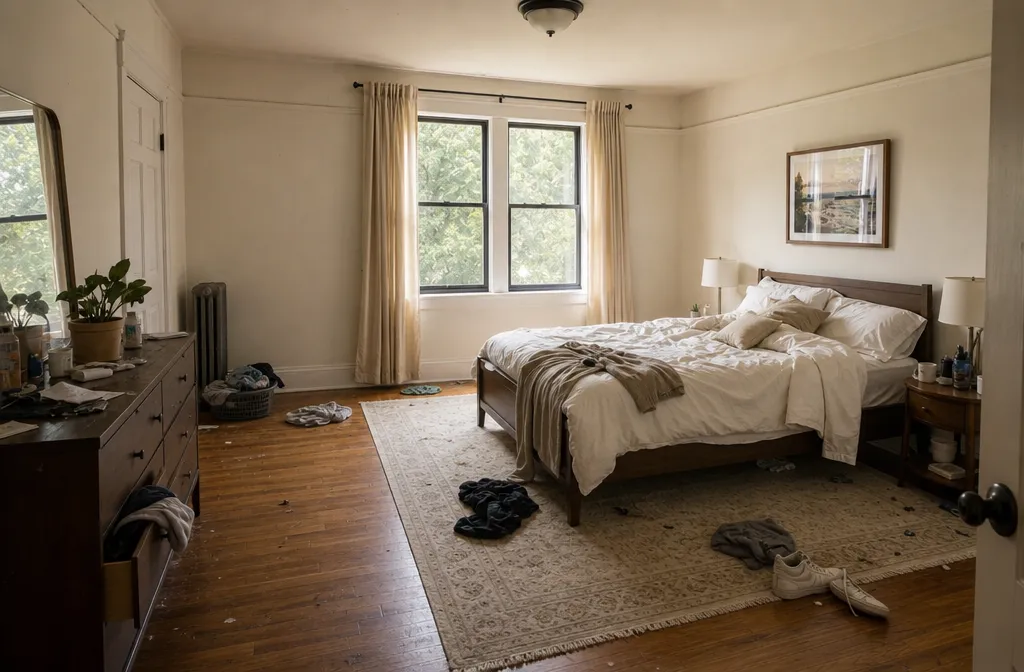
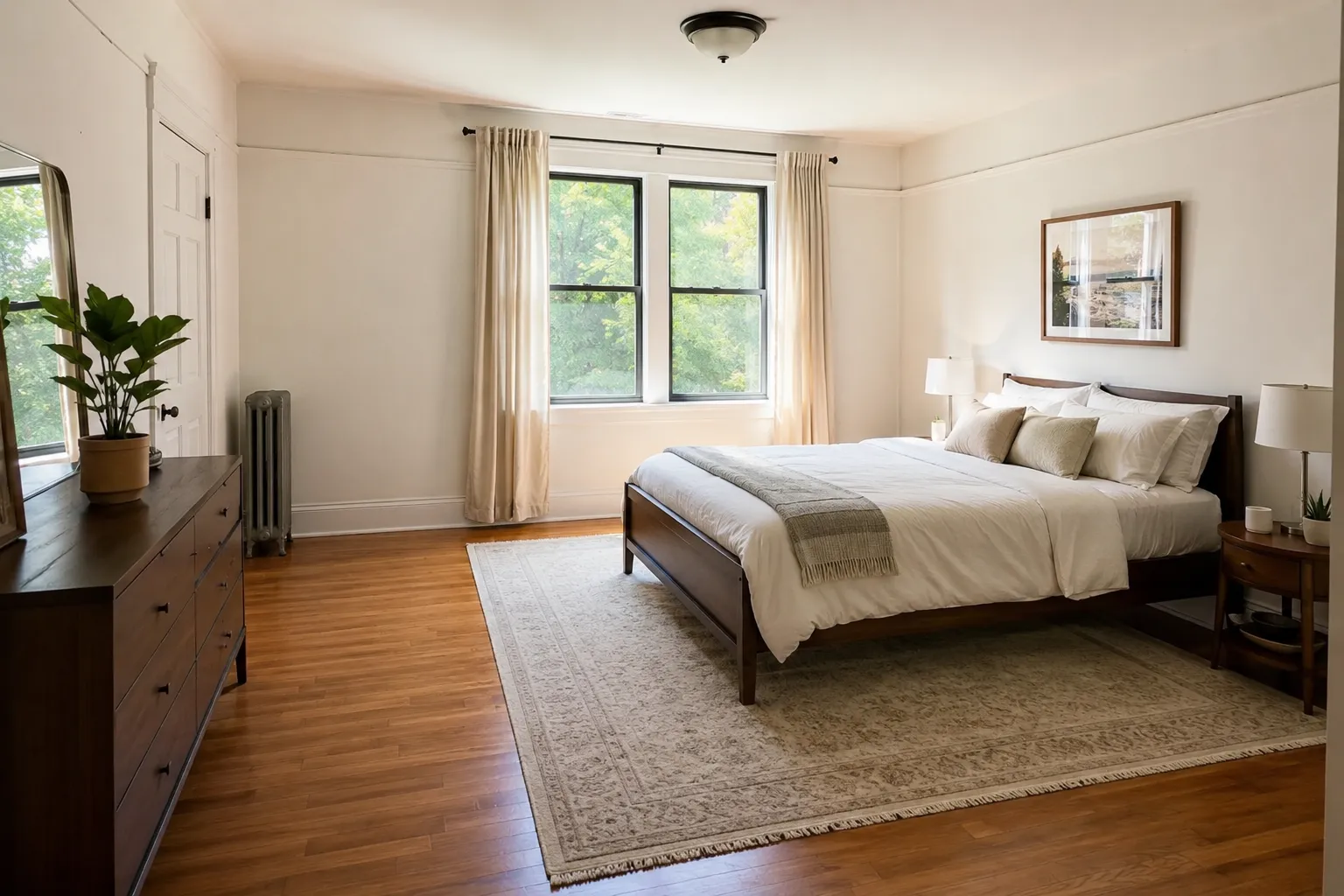
Many clients confuse deep cleaning with maintenance cleaning, expecting a regular cleaner visit to achieve a depth it isn’t designed for. The difference isn’t in the number of hours spent, but in the tasks: one cleaning removes built-up grime, the other prevents it from appearing. In Almaty, with our dust and wind, this choice is critical.
What a deep clean does that a maintenance clean cannot
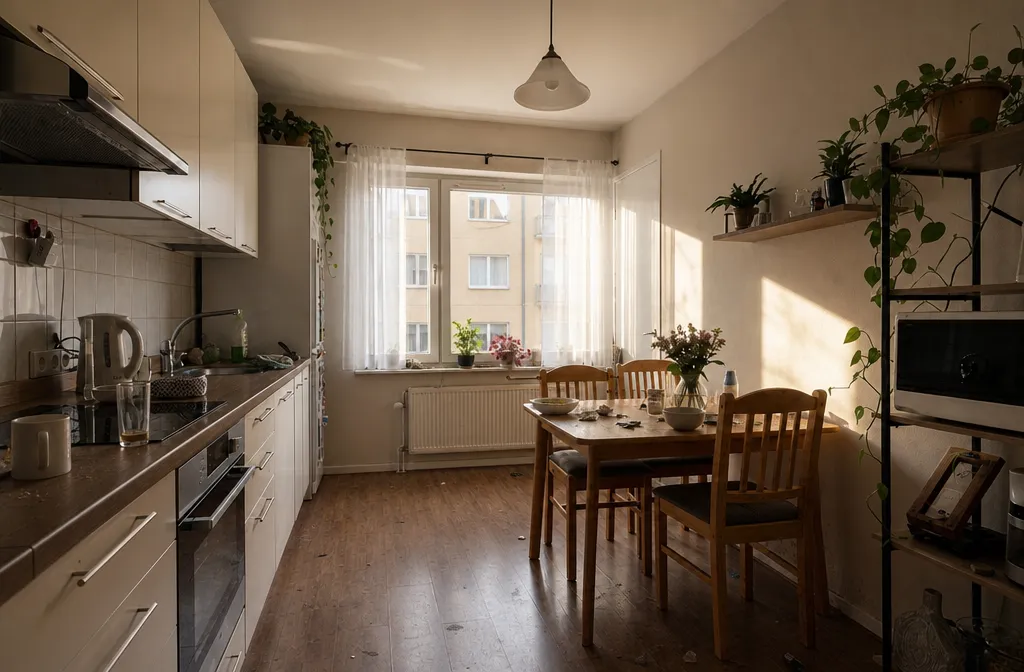
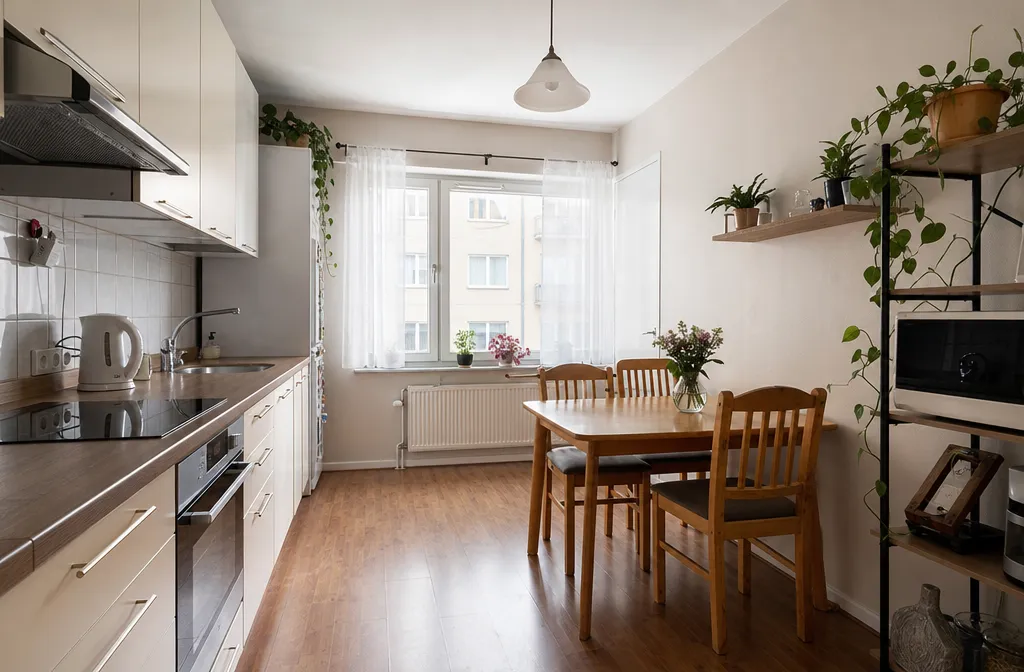
A deep clean restores cleanliness to a baseline level. The cleaner moves all furniture, washes walls from ceiling to baseboard, cleans inside shelves of cabinets, soaks grease off the kitchen backsplash, and scrubs limescale from faucets. We remove lamp shades from chandeliers and wash them inside, clean heating radiators with a crevice tool on the vacuum, and wipe every fin of the radiator. The refrigerator and oven are defrosted, cleaned inside and out, and then disinfected. Windows are a mandatory part of a deep clean: washed on both sides, including frames and sills. A maintenance clean, unlike a deep clean, bypasses these areas — it only works on open surfaces: floors, countertops, sink, mirror. Moreover, in Almaty apartments, a deep clean is necessary every 2-3 months: fine dust from construction and smog settles into the pores of upholstered furniture faster than in European homes with a humid climate.
How often is a maintenance clean needed and what does it depend on
The frequency of a maintenance clean is directly linked to two factors: the number of residents and the type of flooring. In an apartment with two adults and a child, with tiles and laminate, one visit per week is enough — street dust and kitchen grease don’t have time to accumulate. If there are pets in the house — even a hairless cat — we recommend twice a week: dander, sand from paws, and saliva settle on the floor and sofa, and the profi-clean vacuum’s HEPA filter captures 99.97% of allergens, but only with regular treatment. In a one-bedroom apartment with one resident and carpet, a maintenance clean every 10-14 days is sufficient, provided that once a month the cleaner still dusts the walls and cleans upholstered furniture with a steam cleaner. A typical mistake Almaty residents make is scheduling a maintenance clean once a month and expecting the effect of a deep clean. Due to dry air and open windows, dust settles in layers, and a month-long break means carpets and sofas already require deep cleaning.
What hidden areas are missed during a maintenance clean
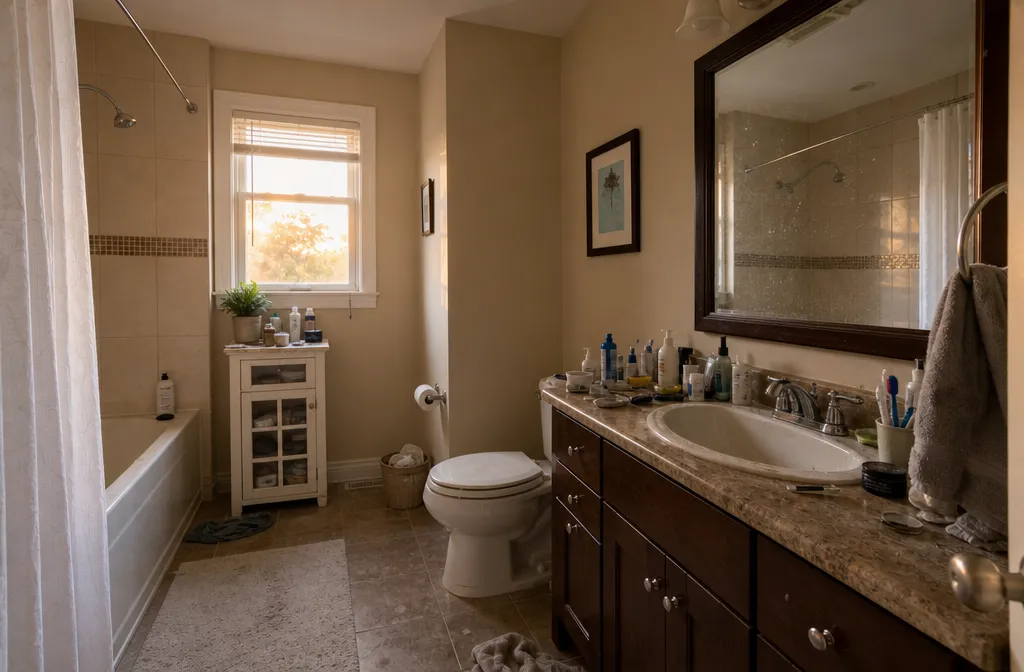
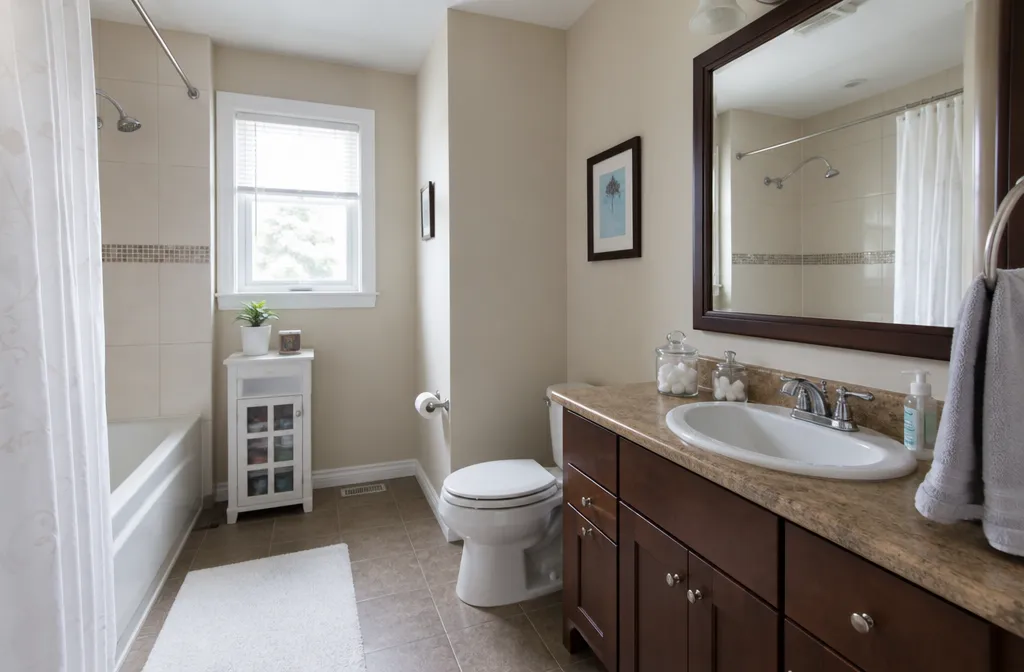
A maintenance clean does not touch “dead zones” — spaces out of sight where bacteria and allergens accumulate. In Almaty apartments with stretch ceilings, these are the upper parts of walls and cornices: in 2-3 months, up to 2-3 mm of dust settles on them, which a regular cloth can’t handle. The back walls of the refrigerator and washing machine are another silent accumulator: condensation mixes with dust, forming a sticky film that heats up when the compressor runs and spreads a burning smell. Baseboards and corners behind the toilet are a mold zone, especially in old Almaty houses with poor ventilation (Khrushchev-era buildings, panel houses from the 70s-80s). A cleaner during a deep clean treats these areas with steam at 120°C and a hypoallergenic Kiehl product that kills fungus. Inside shelves of cabinets are another hidden area: during a maintenance clean, the cleaner only wipes the fronts, while dust from textiles accumulates inside, which we remove during a deep clean. In practice, this means that if a deep clean is not done once a quarter, the concentration of dust mites in the apartment increases by 2-3 times, which is especially critical for families with allergy sufferers.
How to distinguish a deep clean from an express clean
In the Almaty market, there are many offers for “express deep cleaning” in 2-3 hours — this is a marketing gimmick with no relation to real thoroughness. A true deep cleaning of a one-bedroom apartment at profi-clean takes from 4 to 6 hours, depending on the initial condition: the cleaner systematically goes through the kitchen, bathroom, living room, and hallway, cleaning each surface in three passes (damp cloth with detergent, dry cloth, disinfection). An express option in 2 hours is an intensive maintenance clean: the cleaner washes the floor, dusts open shelves, cleans the plumbing, but does not touch the walls, move furniture, or wash windows. We warn clients: if the contract specifies a time of less than 3 hours for a one-bedroom apartment, it is not a deep cleaning. The difference is clearly visible on the kitchen backsplash: with an express clean, grease remains in the tile joints; with a deep clean, it is completely removed with steam. For Almaty apartments with gas stoves, where grease becomes ingrained within a week, an express deep clean does not solve the problem — within a month, soot builds up again on the hood and walls.
What mistakes do clients make when choosing the type of cleaning
The most common mistake is ordering a maintenance clean when the apartment hasn’t been cleaned for 2-3 months, expecting the cleaner to “catch up” on cleanliness within a standard hour. At profi-clean, we encounter this weekly: a client calls, says “maintenance,” but on-site it turns out the stove is greasy, the refrigerator has been defrosted once every six months, and there are dried tea stains on the floor. In such a case, the cleaner is forced to either do a superficial job or switch to a deep cleaning format with an additional fee. The second mistake is confusing seasonal cleaning with deep cleaning: in spring and autumn in Almaty, after the poplar bloom and leaf fall, clients ask for “just a vacuum,” when what’s actually needed is wet treatment of all surfaces from pollen and shoe dirt. The third mistake is skimping on deep cleaning before renovations or a move: we advise doing it after all construction work, not before, otherwise construction dust will settle on clean walls within a day. In Almaty, where apartment humidity drops to 20% in winter, renovation dust hangs in the air for up to 3 hours after cleaning, and only a deep clean with a HEPA filter and wet wall cleaning solves the problem.
How to prepare your apartment for the cleaners’ arrival
Proper preparation of the apartment for cleaning saves time and eliminates risks: from damaging fragile items to chemical reactions on unsuitable surfaces. At profi-clean, we ask clients to follow five simple steps — they speed up the work by 30–40 minutes during a standard cleaning of a one-bedroom apartment.
What must be removed before the cleaner arrives
- Documents and valuables: put passports, money, and jewelry in a lockable drawer or safe — even a regular cleaner might accidentally touch a stack of papers with a damp cloth.
- Fragile decor and dishes: remove glass vases, porcelain figurines, and ceramic cups from tables and windowsills — during a deep clean, we move all items to wash surfaces, and small details are easily knocked over.
- Personal electronics: bundle laptops, tablets, and chargers into one bag and place them on the bed — when wet-cleaning a table, water should not get onto ports and keyboards.
- Food and trash: open the refrigerator and throw away expired products, remove bread, fruit, and cookies from the table — Kiehl and Sodasan chemicals are hypoallergenic, but their particles should not come into contact with open food.
- Small items from the floor: put shoes by the front door in a closet, collect toys and remotes in a box — the vacuum cleaner with a HEPA filter should not suck up foreign objects that could damage the hose or turbo brush.
Which areas require pre-treatment
Although we handle any dirt, some areas should be prepared to avoid damaging surfaces. For example, stubborn stains on laminate or parquet from spilled wine, coffee, or oil — if the cleaner starts rubbing them with a dry cloth, abrasive particles become embedded deeper. It’s better to apply a neutral dishwashing gel to the stain 15 minutes before arrival — it will soften the grease, and profi-clean’s professional chemicals will remove the residue without floor polishing.
In the kitchen, remove the removable grates from the stove and soak them in hot water with soda — this reduces the time needed to remove old burnt-on residue by 50–60%. If the apartment has carpets with paint or wax stains, do not try to scrape them off yourself — tell the cleaner upon arrival, we will treat the area with a special water-based solvent that does not bleach the pile. In Almaty apartments with panoramic windows, palm prints and poplar fluff often accumulate — warn the technician if the windows haven’t been washed for more than a month: a double pass with distilled water will be required to avoid streaks from hard tap water.
What access needs to be provided for the cleaner
- Water and electricity: turn on the faucet in the kitchen and bathroom, check that the sockets are working — our vacuum cleaner and steam cleaner consume up to 2.5 kW; with weak wiring in Khrushchev-era buildings, the circuit breaker may trip.
- Space for carts and buckets: clear the hallway of boxes, bicycles, large bags — the minimum working area is 1.5 × 1 meter so the cleaner can lay out sprayers, microfiber cloths, and replacement attachments.
- Access to the balcony: if exterior window washing is planned, remove the drying rack, flower pots, and small items from the balcony — the profi-clean cleaner opens the sashes inward and washes the outside with a telescopic mop, but extra items hinder maneuvering.
- Elevator and parking: in buildings without a freight elevator, notify the concierge about the visit — cleaners bring equipment weighing up to 15 kg (vacuum cleaner, steam cleaner, bucket with chemicals), and if the elevator is under repair, the ascent time increases by 10–15 minutes.
What not to do before cleaning
The main mistake clients make is trying to “help” the cleaner by wiping dust or washing floors before arrival. Wet cleaning an hour before the main service wets the dust, causing it to settle in a thick layer on surfaces — professional profi-clean microfiber then only smears the dirt. Leave the dust dry: the cleaner will first vacuum with a HEPA filter, which captures 99.97% of particles up to 0.3 microns, and then perform wet cleaning using a two-bucket system — one bucket for soapy water, the other for clean water, to avoid spreading dirt around the rooms.
Do not disassemble or wash light fixtures and chandeliers yourself — improper disassembly can damage fragile shades or break the wiring. We have a stepladder 2.5 meters high and special brushes with a telescopic handle for lampshades. If there are pets in the apartment, confine them to a separate room or take them for a walk — the noise of the vacuum cleaner and the smell of chemicals (even hypoallergenic ones) can cause stress in cats, and dogs may try to lick wet floors, which is unsafe if recently treated with an antiseptic.
“`markdown
What types of stains we remove
In our practice, we have accumulated over 30 types of stains that we encounter in Almaty apartments — from ordinary dust to specific marks that household chemicals cannot handle.
Organic stains: grease, food residue, and biological fluids
Grease on kitchen fronts and backsplashes is the most common stain, requiring not just washing off but breaking down. Our alkaline chemical Kiehl with pH 12-14 softens old grease in 3-5 minutes, after which it is removed without abrasives, preserving the gloss. Coffee, tea, and wine stains on artificial stone countertops are removed with Sodasan oxygen bleach — it leaves no streaks, unlike chlorine-based products that yellow the stone. Biological stains (blood, urine, vomit) are treated with an enzymatic compound: enzymes break down protein bonds at the molecular level, removing not only the stain but also the odor. In bedrooms and children’s rooms, we use the hypoallergenic Sodasan series without fragrances — this eliminates allergic reactions in residents.
Mineral and construction stains: cement, grout, limescale
After renovation in Almaty’s new buildings, microscopic particles of cement dust remain, which regular cleaning only smears across surfaces. We use professional vacuum cleaners with H13 HEPA filters, capturing particles down to 0.3 microns — this is 10 times finer than ordinary household dust. Lime scale on faucets and glass shower cabins is removed with Kiehl acidic cleaner with pH 2-3: it dissolves hardness salts without mechanical friction, preserving the chrome coating. Grout on tiles, if not removed by builders, is taken off with a special gel remover — softening takes 10-15 minutes, after which the compound is removed with a spatula without scratches. When working with marble and travertine, we do not use acid — only neutral foam, to avoid damaging the stone’s structure.
Complex household stains: nicotine, soot, mold, and odors
Nicotine film on walls and ceilings is a sticky layer of resins and soot that regular cleaning agents cannot handle. We apply Kiehl alkaline concentrate for 15-20 minutes, then rinse with hot water under pressure — the method is effective even on whitewashed ceilings if the whitewash layer is intact. Soot from a gas stove or fireplace settles on cabinets and textiles; for its removal, we use dry chemical foam that absorbs soot without streaks. Mold in the bathroom and on window slopes is treated with a fungicidal compound based on chloramine — it penetrates the material’s pores and destroys fungus up to 2 mm deep, not just on the surface. In Almaty, where humidity in basement rooms reaches 80%, we recommend preventive treatment every six months to prevent mold from returning.
Specific stains for apartments in Almaty: pollen, poplar fluff, and street dirt
Due to abundant greenery in the southern capital during the flowering season (April-June), pollen and poplar fluff clog window gaps, air conditioning systems, and textiles. Our cleaners go through all hard-to-reach areas with a turbo brush attachment, which beats fluff out of carpet fibers and upholstery. Street dirt brought in on shoes contains sand and reagents used to sprinkle sidewalks in winter — they scratch laminate and parquet. We use a special neutral floor shampoo with pH 7, which dissolves reagents without damaging the coating, and then apply a protective wax-based polish — it creates a barrier against future dirt for 2-3 weeks. On balconies and loggias after winter, traces of bird droppings remain: we treat them with a biocidal spray that disinfects and removes odor without labor-intensive scraping. “`
Balcony and loggia cleaning: what’s included
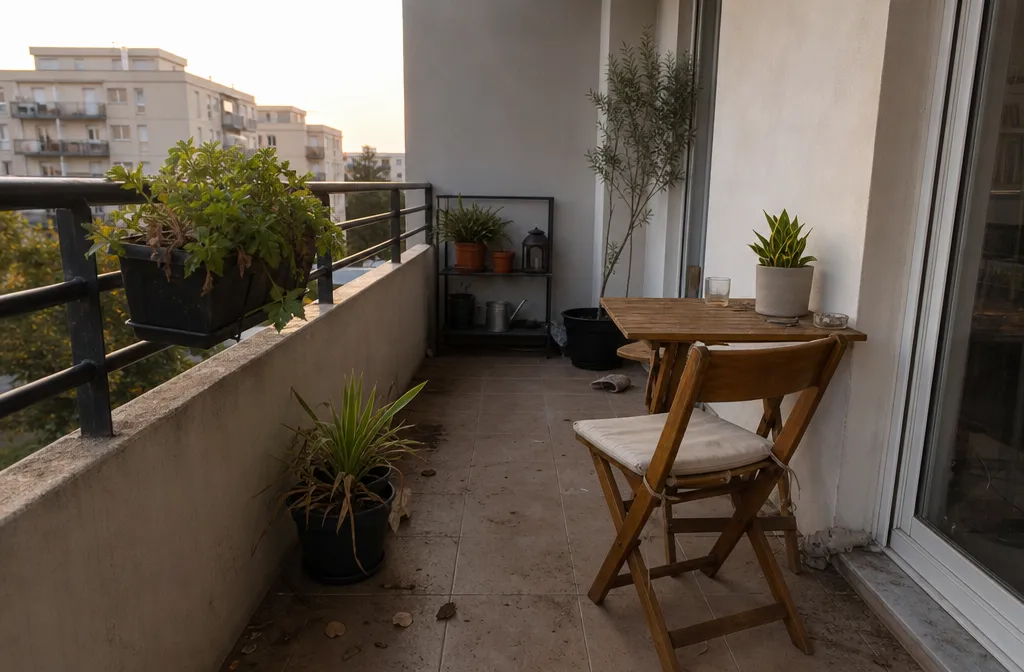
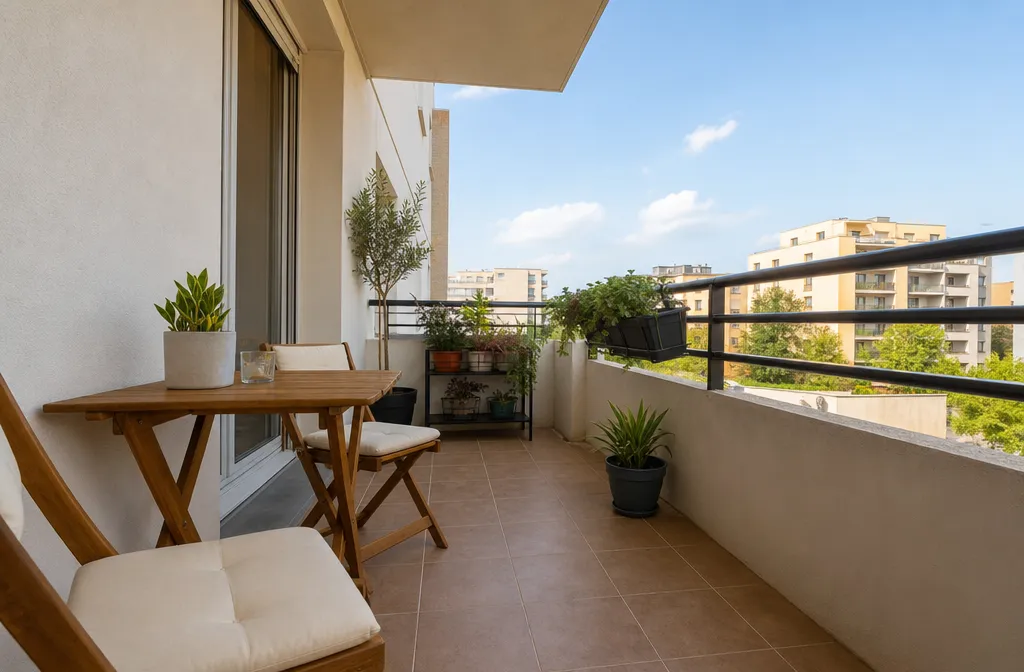
The balcony and loggia are areas that during deep cleaning are most often either skipped or washed “by eye,” without considering the specifics of materials and seasonal dirt. We break down exactly what cleaning we perform in these spaces and why it differs from washing rooms.
Why balcony dust is more dangerous than room dust
On open and glazed balconies in Almaty, not just household dust settles, but a complex mixture: exhaust particles from avenues (especially from Al-Farabi and Abay Avenue), sand from desert winds, and poplar fluff spores in May-June. This mixture contains fine PM2.5 fractions, which, when swept normally, rise into the air and settle on textiles and items stored on the balcony. In our orders for cleaning one-bedroom apartments, we only use vacuum cleaners with H13 HEPA filters — they capture particles down to 0.3 microns and do not release them back. Before wet cleaning, we always dust all surfaces with a vacuum cleaner, not a broom, otherwise dirt is smeared on walls and floors rather than removed. On glazed loggias with plastic windows, dust accumulates in frame grooves and on drip edges — we clean these areas with a brush nozzle to avoid damaging the seal.
How to wash the floor on the balcony: tile, wood, concrete
The flooring material on your balcony determines the cleaning method — there is no universal recipe, and choosing the wrong product can damage the surface. On open balconies with concrete bases and tiles, we use a neutral pH solution (pH 7) without aggressive acids to avoid eroding the grout in the joints — after winter, white efflorescence (salt stains) often appears on it, which can only be removed with a special neutralizer, not regular vinegar. On wooden decking (terrace boards, deck flooring), we use gentle, soap-based cleaning agents and a soft nylon-bristle brush — a stiff wire brush strips the protective oil, causing the wood to rot within a season. On loggias with self-leveling floors or linoleum, a damp mop with microfiber is sufficient, but it must be wrung out almost completely dry — excess water seeps under the baseboards and causes mold. If there is carpet or carpeting on the balcony, we treat it with an extractor (deep cleaning with water injection and dirt suction), not just a vacuum cleaner — Almaty dust embeds itself into the fibers within 2-3 months.
How we clean the walls and ceiling on the loggia
The walls and ceiling on the loggia get dirty differently than in a room: due to temperature and humidity fluctuations, plaque and streaks appear that cannot be washed off with plain water. On painted walls (acrylic or water-based paint), we use a sponge with a mild soap solution and never rub with the abrasive side — it leaves scratches that later trap dust. On plastic panels (PVC lining), the plaque is washed off with a solution containing a small amount of ammonia — it removes the greasy layer that settles from cooking if the kitchen opens onto the loggia. The ceiling on glazed balconies is often covered with a light stretch fabric or simply painted — we wipe it dry with a microfiber cloth on a telescopic pole, without water, to avoid leaving streaks. We pay special attention to corners and wall-ceiling joints — cobwebs and dust bunnies accumulate there, which scatter throughout the apartment when there is a draft. On open balconies without glazing, walls are washed only in dry weather, and we use products with an anti-static effect to slow down dust settling — in practice, this provides an extra 3-4 days of cleanliness.
Balcony windows: streaks, seals, and mechanisms
Washing windows on the loggia is a separate task because the glass here gets dirtier than street-facing windows due to proximity to the road and the lack of an awning for protection. We use a two-sided squeegee with a rubber blade and distilled water to avoid white streaks from salts, which exceed the norm in Almaty’s tap water (up to 350 mg/l). The frames (aluminum or plastic) are washed separately from the glass: first, a damp cloth removes the layer of dirt, then a dry microfiber cloth wipes them dry — if moisture is left in the grooves, black mold eventually appears and embeds into the plastic. We treat the rubber seals with silicone lubricant once a quarter — without it, the rubber hardens in the sun and loses its seal, allowing dust and condensation to enter through the gaps. We blow out the mechanisms of sliding frames (rollers, tracks) with compressed air and lubricate them with a special spray for aluminum profiles — if this is not done, the sashes start to jam within a year of active use. Before washing the glass, we always check the tightness of the double-glazed windows: if condensation has formed inside, the glass cannot be cleaned at all — replacement is required.
Specifics of cleaning a one-bedroom apartment in Almaty (water, dust)
Cleaning a one-bedroom apartment in Almaty has its own geo-specifics: hard tap water, poplar fluff and dust from April to June, and micro-districts with different types of buildings. We have broken down three key challenges that determine the choice of products and cleaning regimen.
Hard Almaty water and its effect on surfaces
Tap water in Almaty has an average hardness of 7–9 °H (degrees of hardness) — this is above the norm for household appliances and glass surfaces. When washing windows and mirrors, calcium and magnesium salts leave a white residue that does not rinse off with ordinary water and, upon drying, etches into the glass. We use demineralized water in a 10-liter tank for the final rinse — this eliminates streaks. On kitchen countertops and faucets, hard water scale accumulates within 2–3 days, so during maintenance cleaning, we apply a protective polymer coating to chrome surfaces — it extends cleanliness until the next visit. In our orders, clients from the Medeu district more often complain about limescale in kettles than residents of microdistricts with central water supply — the water there is softer, around 5 °H.
Poplar Fluff and Sooty Dust: Seasonal Pollutants
From April to June in Almaty, poplar fluff peaks, clogging ventilation grilles, window seals, and air conditioner filters. In a one-bedroom apartment on the first to third floor, up to 2–3 grams of fluff accumulates on the windowsill per day, mixing with street dust to form a sticky mass. We remove the fluff with a separate vacuum cleaner equipped with a HEPA filter and pre-motor filtration — a regular vacuum cleaner blows fine particles back into the air. After winter, sooty dust accumulates on windows — this is a residue from exhaust fumes and industrial emissions that settles on plastic frames and double-glazed windows. Sooty dust does not wash off with soap and water: it requires an alkaline concentrate like Kiehl for PVC, which dissolves the oily film. In orders for cleaning one-bedroom apartments in the residential complexes “Almaty Tower” and “Grand Alatau,” we encounter a denser layer of sooty dust than in bedroom communities — due to proximity to thermal power plants and transport interchanges.
Construction and Renovation Dust in New Buildings
In Almaty, 50–60 new residential complexes are commissioned annually, and owners of one-bedroom apartments in new buildings face fine construction dust that penetrates through ventilation and gaps in the walls. This dust — a mixture of cement, gypsum, and quartz sand with a fraction of 0.1–0.5 microns — lingers in the air for up to 12 hours after a standard wet cleaning and settles on fabrics and upholstered furniture. We use a two-pass scheme: first, dry cleaning with an industrial vacuum cleaner with HEPA H13, then wet treatment of all surfaces with an antistatic compound like Sodasan, which neutralizes the static charge of the dust. On furniture and curtains in a new building, construction dust embeds into the fibers within 2–3 weeks — if deep upholstery cleaning is not done in the first month, the dust sets and becomes much harder to remove. In our practice of cleaning one-bedroom apartments in the residential complexes “Akbulak” and “Astana,” construction dust is present in 80% of orders in the first six months after the building is handed over.
How Often to Schedule Cleaning
The frequency of cleaning visits depends not on the calendar, but on lifestyle, season, and the type of pollutants in an Almaty one-bedroom apartment. We have broken down four scenarios — from a bachelor studio to an apartment with an allergy sufferer — and selected the optimal frequency for each.
For Busy Professionals: Every 2 Weeks
If you work in an office from 9 to 7 and only come home to sleep, a two-week interval is optimal. In 14 days, just enough dust accumulates in a one-bedroom apartment to settle on horizontal surfaces after the poplar season in Almaty — approximately 3-5 grams per square meter according to our measurements. Meanwhile, the kitchen backsplash, stove, and sink have not yet become coated with a grease film requiring alkaline soaking. We notice: with this schedule, a cleaner spends 45-50 minutes on a standard maintenance cleaning compared to 70-80 minutes if the interval is stretched to a month. In the kitchen, it is sufficient to wipe the cabinet fronts and countertop with a microfiber cloth and a neutral cleaner — without abrasives or harsh chemicals. If even one scheduled cleaning is missed, by the next visit the dust on cabinets compacts into a layer that can only be removed with two passes — dry and wet.
For Families with Children: Weekly
In a one-bedroom apartment where a child under 7 lives, weekly cleaning is not a luxury but a hygiene minimum. Over 7 days, up to 8-10 grams of dust per square meter accumulates on the floor and toys — twice as much as in a childless apartment, due to constant air movement and active contact with outdoor clothing. Our cleaners note: in such one-bedroom apartments, floors must be washed weekly with a hypoallergenic Kiehl concentrate, which neutralizes not only dust but also mold spores brought in with shoes. Spilled baby food in the kitchen starts attracting ants within 3-4 days — a typical problem on the first floors in Almaty. During a weekly visit, we manage to treat all surfaces, including the area under the crib and behind the armchair, where a dust layer up to 2 mm thick forms in 7 days. We recommend parents schedule cleaning strictly on the same day of the week — this way, dust mites don’t have time to restore their population after wet treatment.
For allergy and asthma sufferers: every 5-7 days
Owners of one-bedroom apartments with allergies to pollen or household dust are our most frequent request for frequent cleaning. In Almaty, the poplar flowering season lasts from April to June, and fluff flies in even through mosquito nets: over 5 days, up to 15 grams of allergenic material per square meter accumulates on the windowsill and floor. We recommend an interval of 5-7 days with mandatory treatment of all textile surfaces — sofa, carpet, curtains — with a vacuum cleaner equipped with a HEPA filter that traps particles down to 0.3 microns. In our practice, clients who switch to a weekly schedule report a 60-70% reduction in nasal congestion after a month — this is confirmed by their reviews on 2GIS. We use only hypoallergenic Sodasan chemicals without fragrances and phosphates to avoid triggering additional reactions. If you skip more than 10 days, the concentration of Dermatophagoides pteronyssinus mites in the mattress and sofa triples — and the next visit already requires deep extraction cleaning, not surface cleaning.
For those who often host guests: once every 1-2 weeks plus an express visit
If 3-5 people gather in your one-bedroom apartment weekly for tea or dinner, standard maintenance cleaning once every two weeks is insufficient. After a party, crumbs, drink stains, and shoe marks remain on the floor — within 7 days, this layer compacts and embeds into laminate or linoleum. At profi-clean, we offer a combined schedule: a full cleaning every two weeks with floor washing, dusting all surfaces, and kitchen cleaning, with an express visit of 20-30 minutes in between — just the floor, kitchen backsplash, and bathroom. This format is cheaper than a full visit but keeps the apartment in a “guest-ready” state. In Almaty, where spring is often rainy and dirt is tracked in on soles, an express cleaning once a week prevents the formation of smudged streaks on hallway tiles. Our clients on this schedule order a deep cleaning once every 3-4 months instead of the usual 2-3 — simply because the apartment doesn’t get dirty enough to require deep washing.
Seasonal adjustment: more often in summer, less often in winter
The cleaning frequency for the same one-bedroom apartment may vary depending on the season in Almaty. From April to June, poplar fluff and flower pollen require increasing the interval by 30-40%: if cleaning once every 2 weeks is sufficient in winter, then in May — every 7-10 days. In winter, with closed windows and central heating running, dust settles more slowly, but its composition is heavier — soot particles from stove heating in the private sector of the Alatau or Zhetysu microdistricts enter through ventilation. We advise clients to switch to a bi-weekly schedule in autumn and a weekly schedule in spring, factoring this difference into the annual cleaning budget. In our orders totaling one to two monthly norms, seasonal changes are most often triggered: in March-April, the number of requests for maintenance cleaning increases by 1.8 times compared to December. If you plan cleaning a year in advance, keep in mind that summer visits are cheaper due to less work — no deep cleaning is needed, only routine maintenance.