How a One-Time Cleaning Differs from a Deep Cleaning
One-time cleaning is often confused with deep cleaning, although these are fundamentally different services with different purposes, depths, and technologies. Let’s break down the key differences using specific examples.
Purpose and Frequency
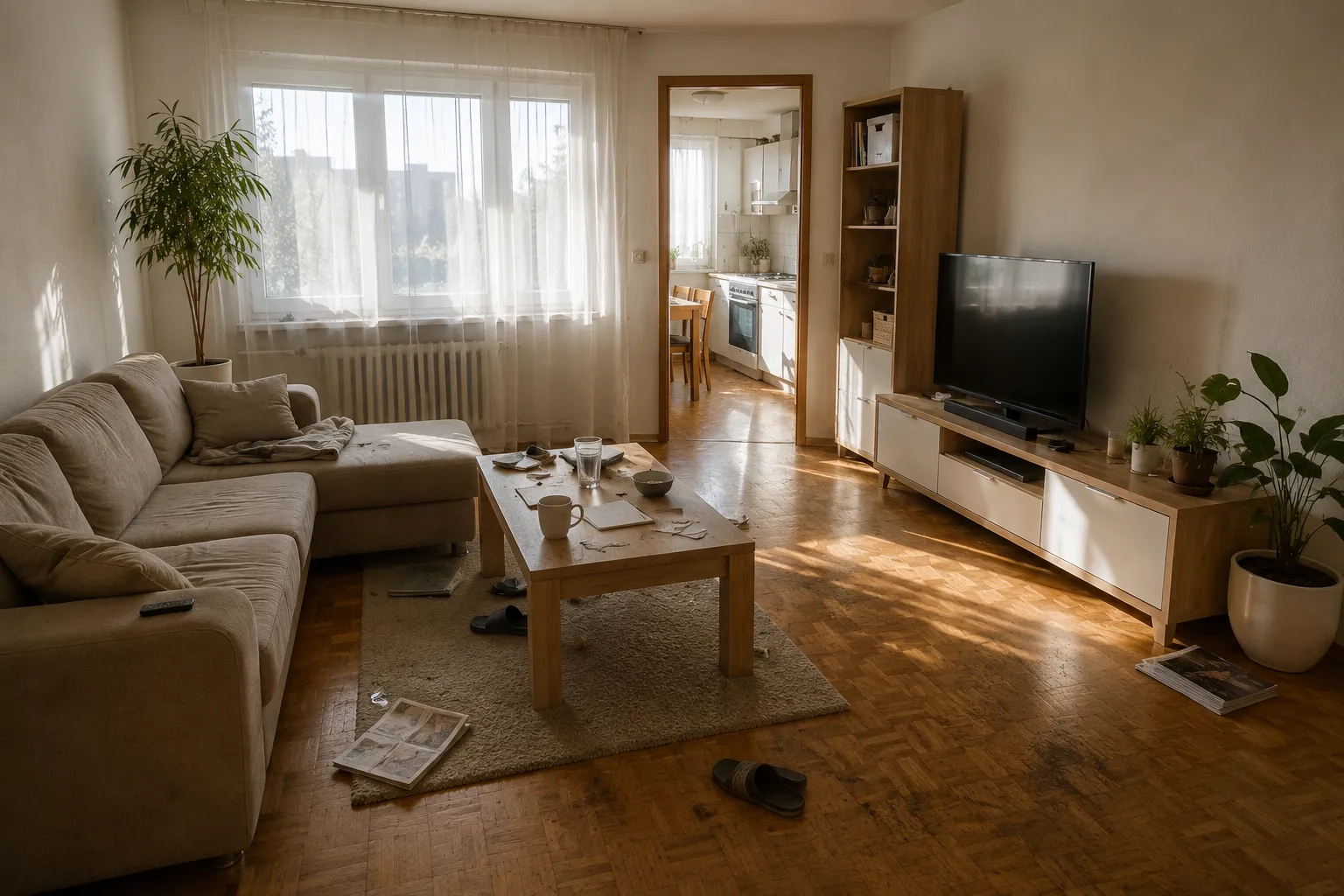
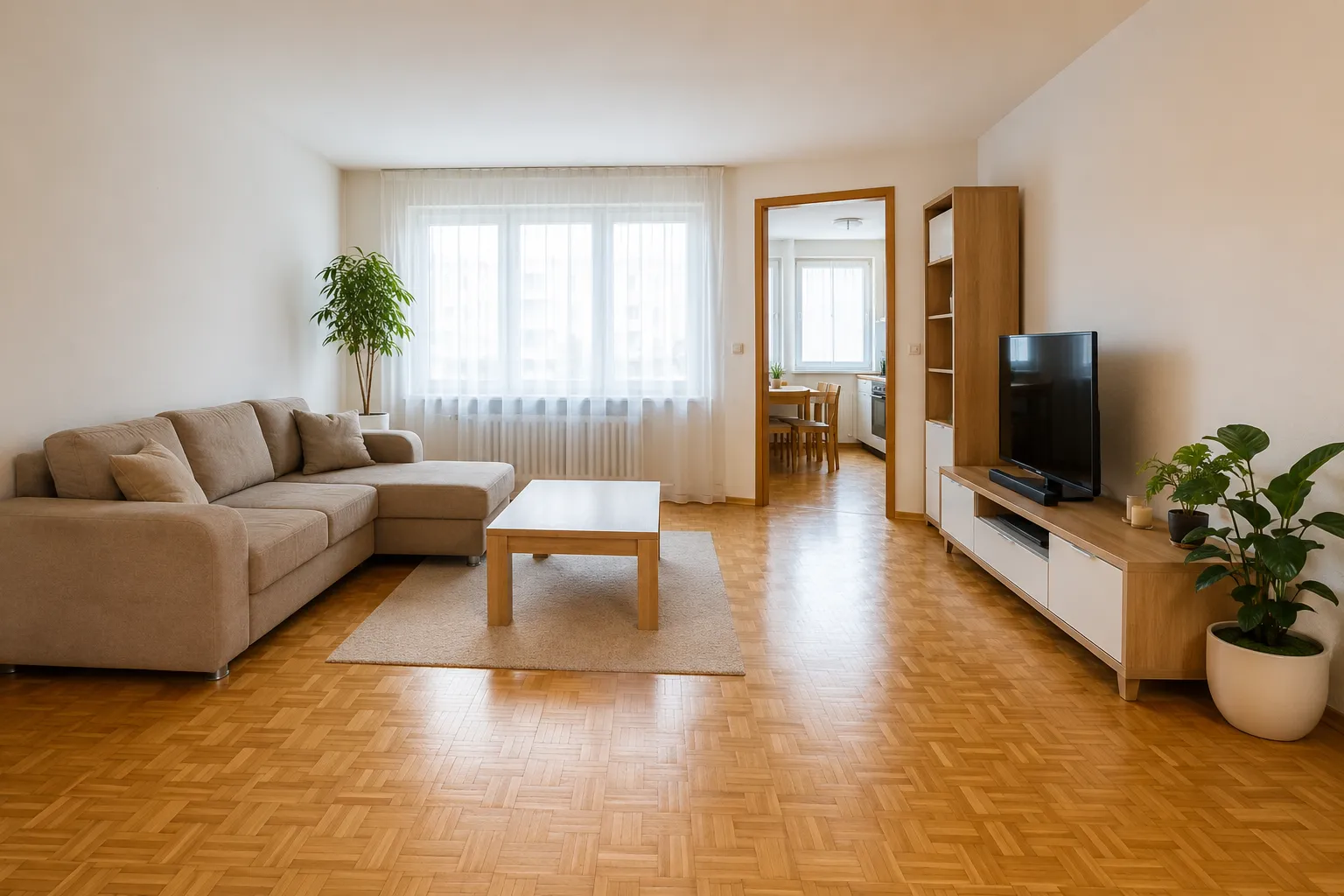
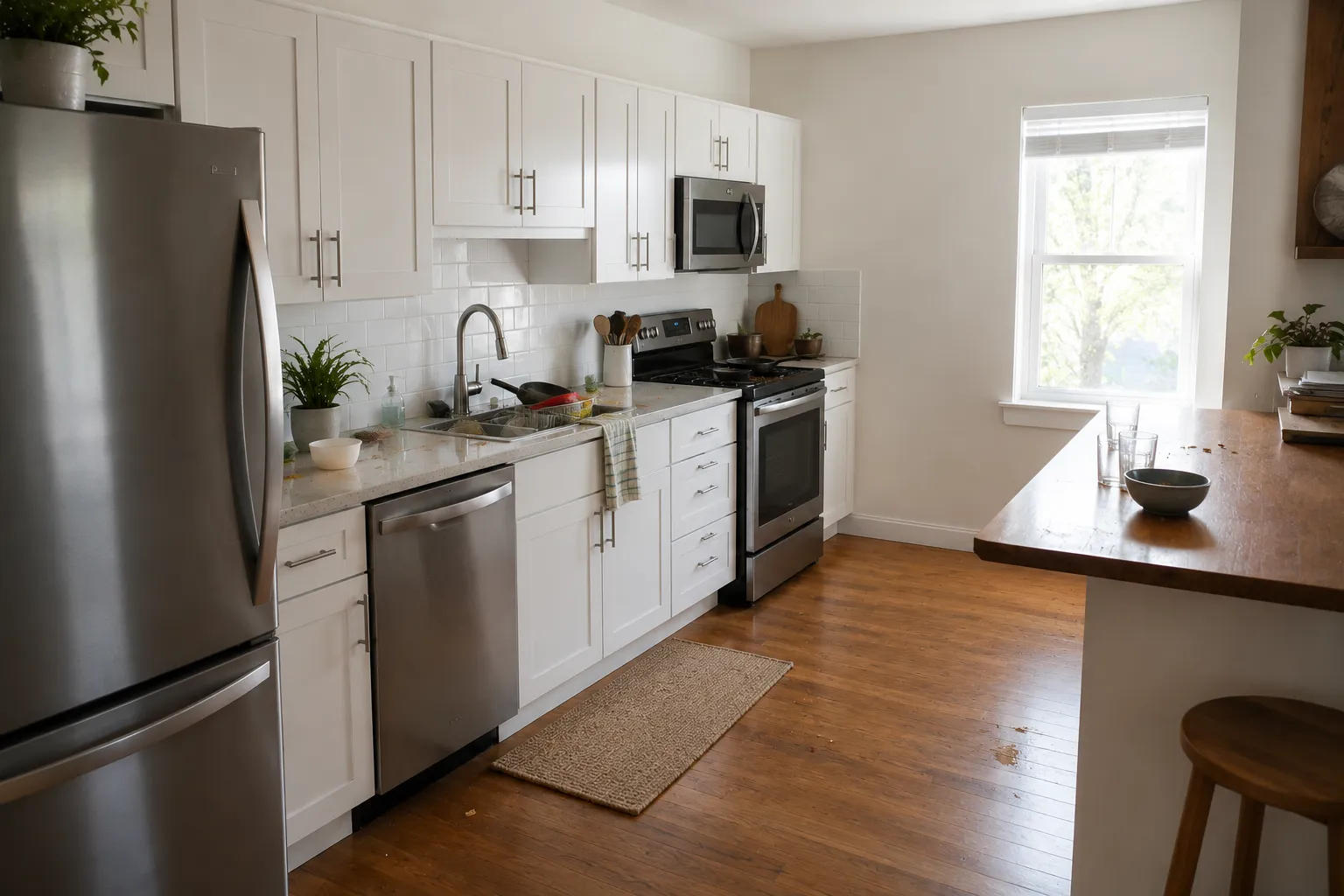
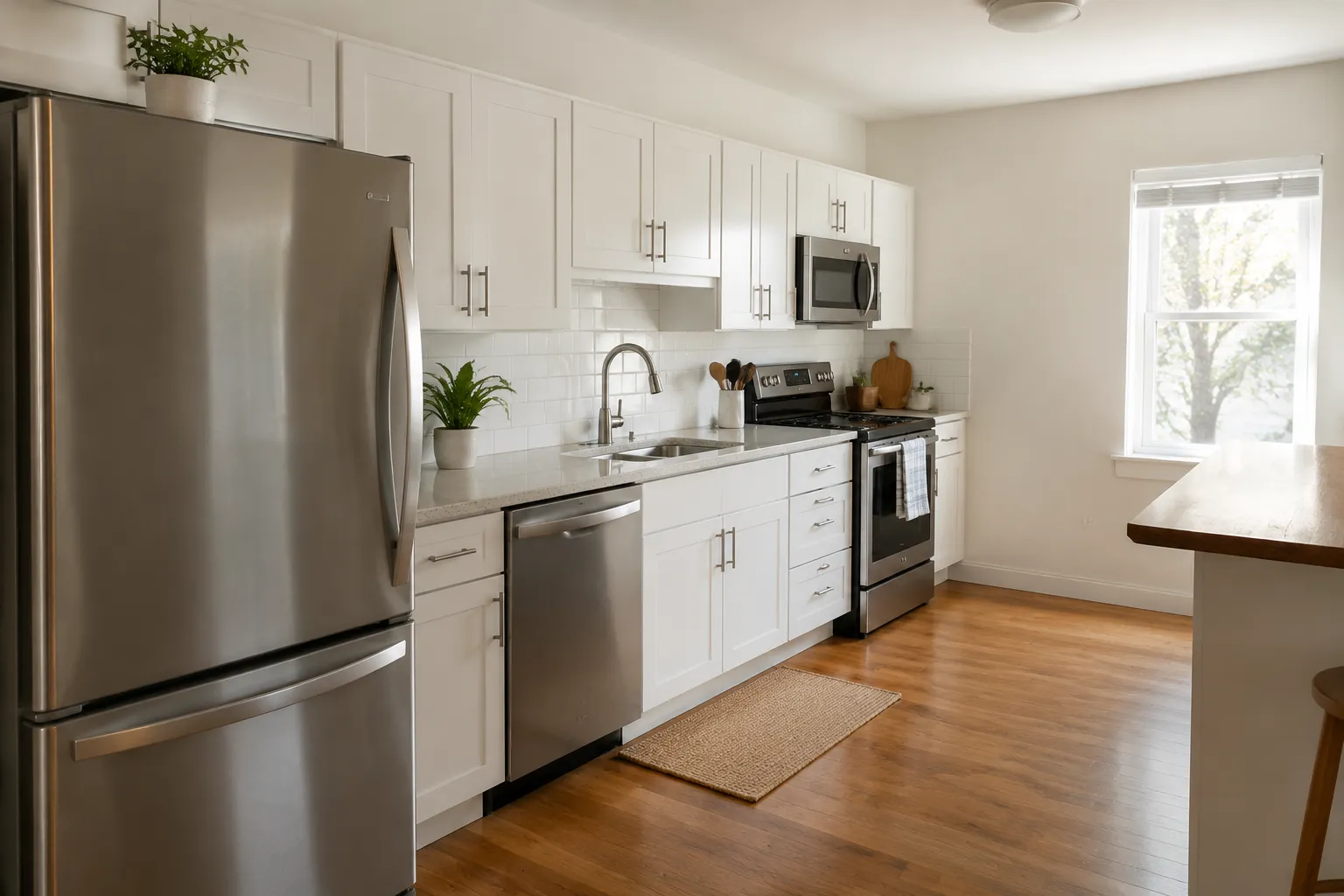
One-time cleaning: This is a quick restoration of order in an apartment without major intervention — we remove surface dust, mop floors, wipe down open horizontal surfaces, clean plumbing fixtures and the kitchen backsplash. It is ordered between deep cleanings: after a party, before guests arrive, or once every 1-2 weeks to maintain cleanliness. Deep cleaning: A thorough cleaning of all areas, including hard-to-reach places — behind the refrigerator, under the bathtub, inside cabinets, on top shelves, as well as scrubbing stubborn stains and buildup in the kitchen and bathroom. It is performed every 3-6 months, when moving, or after renovations. In practice, profi-clean clients combine both services: deep cleaning once a quarter, one-time cleaning weekly. If you are on a budget, a one-time cleaning every two weeks is more effective than one deep cleaning — dirt doesn’t have time to set in.
Scope and Labor Intensity
During a one-time cleaning, we treat approximately 40-50% of the apartment’s area — everything visible to the eye: floors, baseboards, window sills, kitchen cabinet fronts, sinks, toilet, shower cabin, mirrors. A deep cleaning covers 90-95% of surfaces, including the interior walls of household appliances (oven, microwave, refrigerator), ventilation grilles, curtain rods, chandeliers, radiators, interior doors on both sides, and the back sides of baseboards. In terms of time, a one-time cleaning of a one-bedroom apartment takes 1.5-2 hours for two cleaners, while a deep cleaning takes 4-6 hours. At profi-clean, we send a team of 3-4 people for deep cleaning to finish within a day — otherwise, the client is left without a kitchen for half a day. When ordering a deep cleaning, keep in mind that you will need to empty cabinets and remove small items from shelves — this saves 30-40 minutes of the cleaners’ time and reduces the risk of damaging fragile items.
Products and Equipment Used
For one-time cleaning, we use universal everyday cleaning compounds: a neutral pH-balanced Kiehl concentrate for floors and surfaces, Sodasan glass cleaner, and a disinfectant for plumbing fixtures. Equipment includes a vacuum cleaner with an H13 HEPA filter and a set of microfiber cloths (8-12 different colored cloths for different zones). For deep cleaning, the arsenal is wider: a steam generator is added for cleaning grease in the kitchen and stubborn limescale, an orbital rotary machine for scrubbing floors with an abrasive pad, an extractor for cleaning upholstered furniture and mattresses, as well as chemicals for removing specific contaminants — rust, wax, silicone. The difference in materials directly affects the final cost: deep cleaning requires more chemical consumption and equipment wear, so it is calculated individually based on area and condition, whereas one-time apartment cleaning has a fixed price per square meter. During deep cleaning, we change the water in buckets every 10-15 minutes and use up to 5 sets of cloths per apartment — for one-time cleaning, two water changes are sufficient.
Common Client Mistakes
The most common mistake is ordering a deep cleaning once a month when a one-time cleaning would suffice, or conversely, trying to save money on deep cleaning and ordering a one-time cleaning once every six months. In the first case, you overpay 2-3 times for unnecessary depth; in the second, dirt accumulates in crevices, and after 6-8 months, it can only be removed using harsh chemicals that damage surfaces. In Almaty, due to dusty winds (especially in spring and autumn), one-time cleaning should be done every 7-10 days, and deep cleaning every 2-3 months, rather than every six months as in regions with a more humid climate. The second mistake is ordering a deep cleaning without first clearing surfaces: cabinets, shelves, and window sills should be empty, otherwise cleaners spend 30-40 minutes moving items instead of cleaning. If you are not ready to clear all surfaces, order a one-time cleaning — it requires no preparation, and we work with what we see.
How to Prepare Your Apartment for the Cleaners’ Arrival
Proper preparation of the apartment reduces cleaning time by up to 30% and allows profi-clean cleaners to focus on complex areas rather than clearing pathways. Here is what you should do before our arrival — and what you absolutely should not do.
What to Remove from Open Surfaces
Clear your countertops, windowsills, shelves, and nightstands of small items: cosmetics, dishes, documents, decor. In our experience, a cleaner spends up to 15 minutes rearranging items in a room if they haven’t been gathered in advance — it’s better to use those minutes for washing the backsplash or removing stains from the sofa. Put valuables — jewelry, watches, cash — in a locked drawer or safe: we are only financially responsible for damage to property during the cleaning process, not for the safekeeping of personal valuables. It’s best to remove floor vases, fragile figurines, and empty pots temporarily — the vacuum cleaner’s HEPA filter creates a strong airflow that can knock over a light object. Coil up and secure charger cords and extension cords with a tie or rubber band: this way, the cleaner won’t trip over them with the mop and pull out a socket.
How to Prepare Textiles and Carpets
Roll up small rugs in the hallway and bathroom and take them out to the balcony or place them on the sofa — they are cleaned separately with a hand-held extractor. Remove bed linens from the beds and put them in a basket: fitted sheets prevent us from vacuuming the mattress and treating the bed frame. There’s no need to take curtains off their rings — we clean them in place with a vacuum cleaner and a fabric attachment, and if you order dry cleaning, we take them down and transport them ourselves. An important nuance: if there’s an old stain on the carpet or sofa, don’t try to remove it with home remedies (soda, vinegar, citric acid). A chemical reaction with our professional stain remover, Kiehl, could produce an unexpected color or set the pigment. It’s better to just note the area in the order comments — our technician will select a safe removal method.
Do You Need to Wash Dishes Before Cleaning?
Yes, and here’s why: washing dishes takes a cleaner 20–30 minutes, which isn’t included in the standard cleaning time — those minutes are taken away from cleaning the stove or range hood. If the sink is full of dirty plates and pots, we can’t properly clean the sink itself and the faucet. The exception is a severe case (a pile of 40+ dishes): then we wash them for an additional fee under the “Kitchen” rate. In my opinion, the best option is to run the dishwasher before the cleaner arrives, and if you don’t have one, soak the dishes in a basin of water and detergent so they soften by the time we get there, and we can rinse them off in 5–7 minutes.
What Not to Do Before Cleaning
Don’t do a preliminary wet cleaning: our Kiehl and Sodasan chemicals are applied to a clean, dry surface, and a wet cloth just spreads dust and neutralizes the active ingredients. Don’t start a general carpet wash — two-phase cleaning (alkali + enzyme) only works at temperatures above +15 °C, and on a wet base it’s ineffective and can leave streaks. Don’t hide small debris under rugs and baseboards — profi-clean cleaners move furniture and collect it with the vacuum anyway, but it takes extra time. Don’t apply household sprays to mirrors and glass — our streak-free technology requires a clean, degreased surface, and the silicone components in “Mr. Muscle” create a film that causes glare in sunlight. Also, if there’s open food left in the kitchen — bread, fruit, cookies — put it in the refrigerator or cupboard: our hypoallergenic chemicals are safe for contact with dishes, but we can’t guarantee that aerosol particles won’t settle on unprotected food.
What Stains We Remove: From Dust to Grease
Here at profi-clean, we deal with dozens of types of dirt every day, and each one requires its own tactic, chemical, and tool. I’ll tell you what a regular cleaner can really handle and what requires pre-treatment.
Household Dirt: Dust, Grime, Streaks
Dust in Almaty isn’t just a gray coating; it’s a mix of street particulate, textile lint, and smog particles that settle on surfaces just 2-3 hours after airing out. We don’t remove it with a dry cloth that spreads submicron particles, but with an electrostatic microfiber cloth — it attracts dust instead of stirring it into the air. For glossy surfaces (glass, mirrors, kitchen fronts), we use an alcohol-based cleaner that doesn’t leave rainbow streaks, even on black gloss. On matte surfaces, on the other hand, alcohol leaves a whitish residue — there we use a neutral pH solution. A typical mistake in DIY cleaning is using one product on all surfaces, which leaves sticky marks on matte plastic that attract even more dust.
Grease and Kitchen Grime: From Light to Baked-On
Fresh oil splatters on an apron and hood are removed in 3-5 minutes with an alkaline spray at pH 11-12 — it breaks down triglycerides without mechanical friction. However, old grease on oven walls or hood grilles, accumulated over months, requires a different approach: we apply a gel foam with a dwell time of 15-20 minutes, then remove the softened layer with a stainless steel scraper, and the final film with an alkaline solution. Important: on aluminum parts (e.g., inner walls of cheap hoods), alkali causes corrosion — there we use a neutral cleaner with micro-abrasives, which removes grease mechanically, without chemical attack on the metal. In our orders, kitchen grease is the cause of 30% of repeat visits if the cleaner missed the preliminary degreasing of the hood.
Stubborn Stains: Coffee, Wine, Markers, Glue
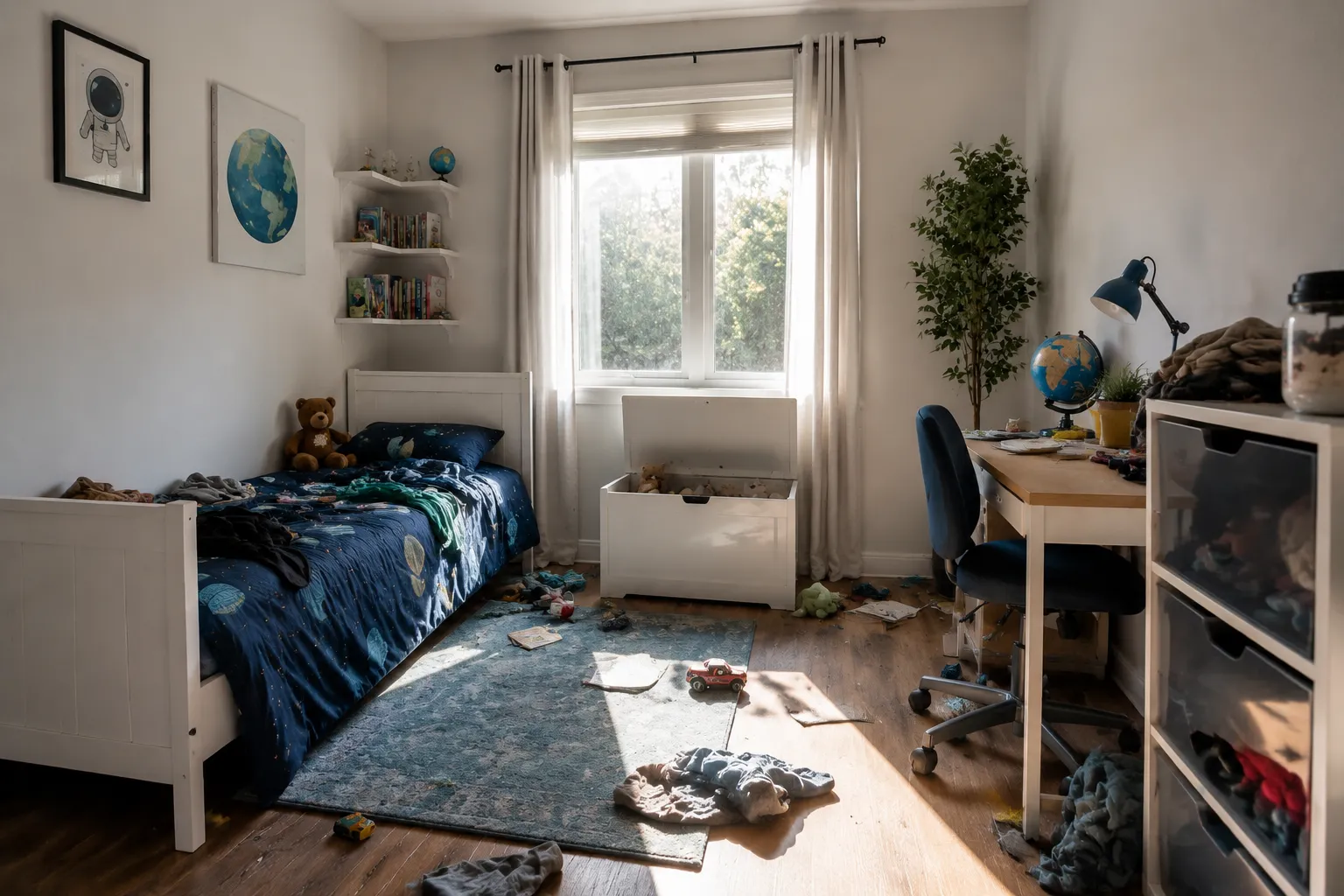
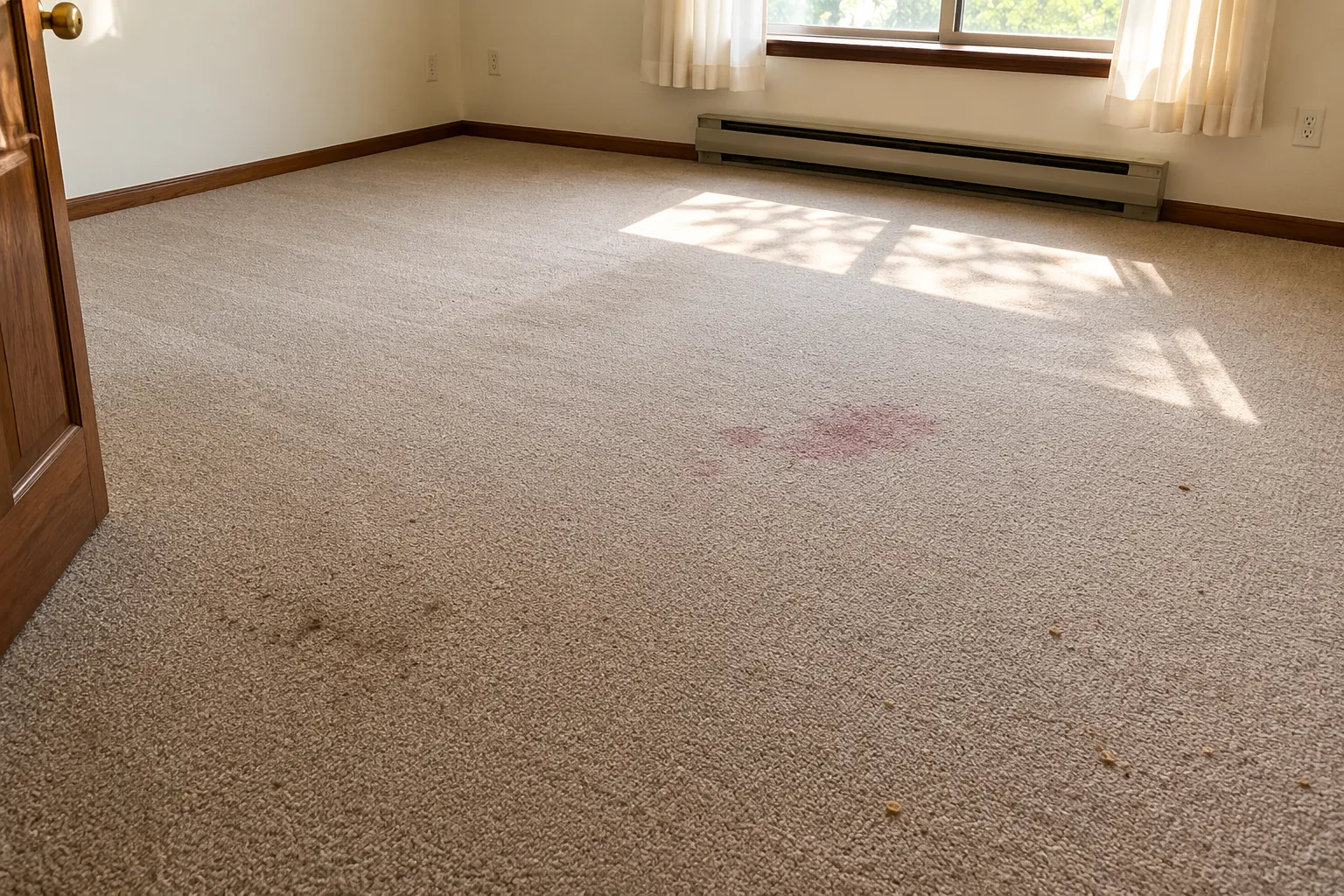
Fresh coffee stains on a carpet or sofa are blotted with a dry napkin, then treated with an enzymatic stain remover — it breaks down tannins at the molecular level in 10 minutes, after which residues are removed with water. Dried wine on upholstery requires a different algorithm: first, apply a glycerin-based solution to soften the pigment, then an oxygen bleach (chlorine-free), which pulls the color from the fibers without damaging the fabric structure. Markers on plastic window sills or doors are a common “surprise” in apartments with children: alcohol-based markers are removed with isopropanol, and permanent ones with acetone, but only on glossy surfaces; on matte plastic, acetone leaves an irreversible dull spot, so there we use a melamine sponge with water. Glue from tape or stickers on glass — don’t try to peel it off dry: we apply lemon oil for 2-3 minutes, the glue loses adhesion and is removed in one motion with a spatula, without scratches.
Specifics of Almaty Apartments: Smog, Construction, Water
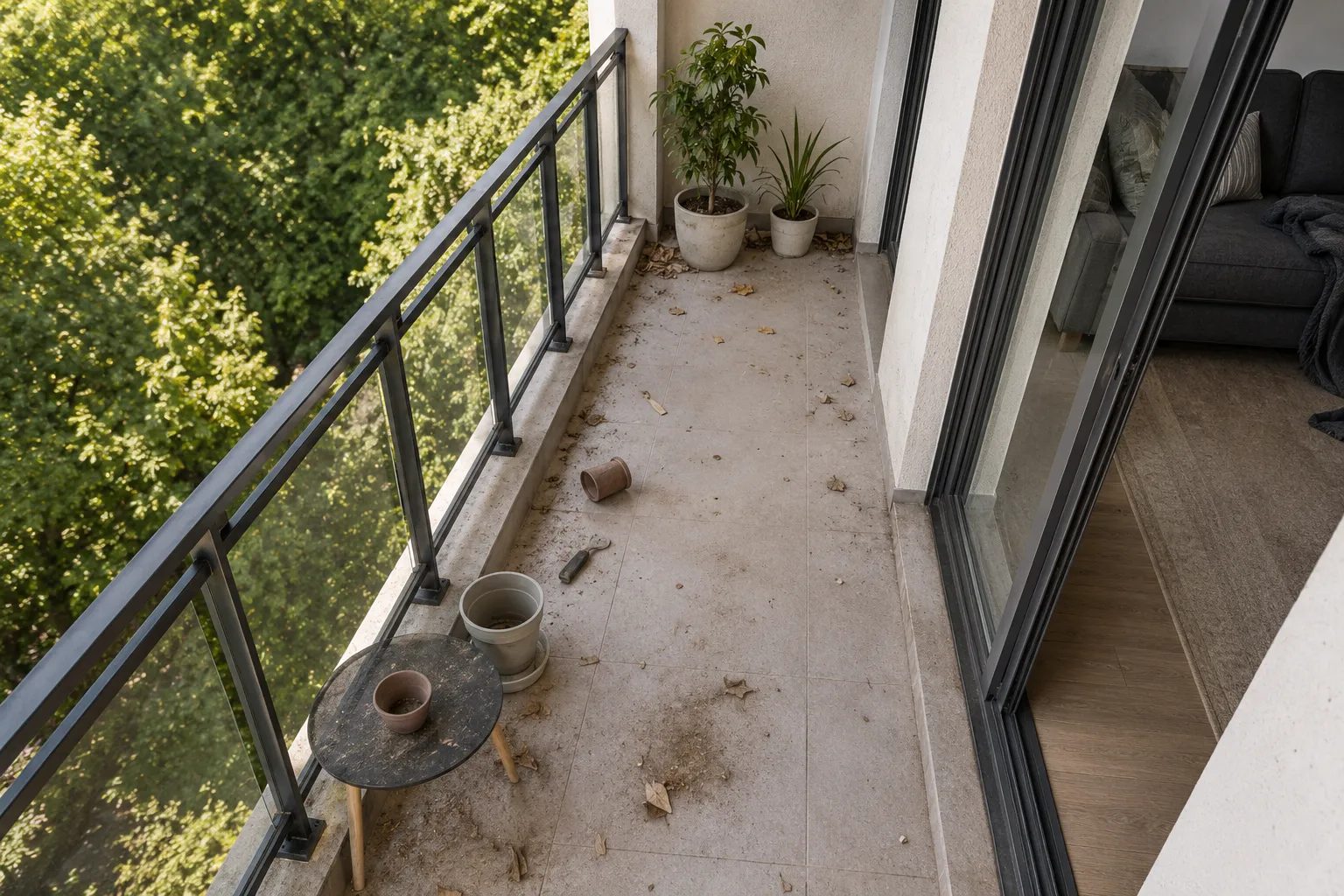
Almaty is a city with high dust levels due to smog and proximity to mountains, so it’s not just dust that settles on window sills and balconies, but a black coating mixed with soot from exhaust fumes. We first wash it off with a degreaser (soot is an oily suspension), then with a neutral shampoo. In houses built before [year], walls and window sills often have a yellow coating from previous residents’ tobacco smoke — nicotine resin is not washed off with plain water; we treat such surfaces with an enzyme-based solution that breaks down the resin in 20 minutes. Another Almaty feature is limescale on plumbing fixtures from hard water (the city’s average hardness is 7-8 mg-eq/l): it doesn’t come off with household gels, so on toilets, sinks, and shower heads we use an acidic cleaner with formic acid, which dissolves deposits in 5-7 minutes without damaging the chrome. On old faucets with damaged coating, acid can expose the metal — before treatment, we test on an inconspicuous area to avoid worsening corrosion.
Features of Apartment Cleaning in Almaty: Hot Climate and Dust
Almaty’s climate — hot summers, sharp humidity fluctuations, and dry winds from the desert outskirts — creates a specific profile of dirt that requires different approaches than in cities in the middle latitudes.
Why Almaty Has More Dust Than Other Cities
The city’s geographical location in the foothills of the Zailiysky Alatau creates a “dust pocket” effect. Air masses from the Ili Desert and Balkhash bring fine particulate matter that settles on surfaces 2-3 times faster than in Astana or Karaganda. In our one-time apartment cleaning orders, we record that up to 70% of calls in Almaty involve complaints about a “gray coating” on window sills and furniture just 2-3 days after cleaning. In my opinion, this factor is the reason why standard wet cleaning once a week is insufficient here: fine dust penetrates deeper into textiles and furniture joints.
How Heat Affects Stain Persistence and Chemical Choice
At temperatures above +30°C, ordinary household cleaning products evaporate from surfaces before they have time to break down grease and mineral deposits. At profi-clean, we use hypoallergenic Kiehl and Sodasan chemicals with a lower boiling point for active components — they work within 30–40 seconds of contact, even in the heat. In our orders for one-time apartment cleaning, the price of effectiveness directly depends on how long the chemicals stay wet: in Almaty during the summer, we reduce the application-to-rinse interval to 15 minutes compared to the standard 30. This is especially critical on kitchen surfaces — an area with grease films: if the product dries, the dirt becomes more firmly fixed than before treatment.
Mistakes Apartment Owners Make When Cleaning in a Dry Climate
The most common mistake is using chlorine-based products for washing floors and tiles in hot weather. In Almaty’s dry air, chlorine evaporates faster, leaving microscopic salt crystals on the surface that scratch laminate and porcelain tile when walked on. In our practice, there was a case where a client, after a month of using Domestos for wet cleaning, left their floors with a “matte film” condition, which we only removed with a three-stage polishing process. Expert recommendation: for daily cleaning in Almaty apartments, use neutral pH products without chlorine or ammonia — they don’t crystallize and leave no streaks on glass or mirrors.
How Often Should You Order One-Time Cleaning
The frequency of one-time apartment cleaning depends on lifestyle, season, and type of housing — in Almaty, standard intervals don’t work for everyone. Let’s break down three main scenarios so you don’t overpay for unnecessary visits or let your apartment reach a state where a deep clean becomes unavoidable.
Families with Children and Pets: Every 2–3 Weeks
For families with young children and pets, our cleaners recommend an interval of 2–3 weeks — this is the only way to maintain a hygiene minimum. Fur, food particles, and sand from the street settle on floors and sofas faster than it seems: after two weeks without cleaning, the air allergen level in an apartment with a dog increases by an average of 40% compared to a cleaned one. We use hypoallergenic Kiehl chemicals and vacuum cleaners with HEPA filters to remove not only visible dirt but also microparticles that trigger allergies in children. In practice, for families with two or more children under three years old, it’s better to schedule one-time cleaning every two weeks — by the third week, a dense layer of grease and dust accumulates in the kitchen and children’s room, requiring a deep-cleaning approach.
Singles and Couples Without Pets: Every 4–6 Weeks
If one or two adults live in the apartment without animals, the interval can be safely stretched to 4–6 weeks — provided you maintain order between visits. In such an apartment, the main source of dirt is street dust, which settles faster in Almaty due to dry winds and proximity to desert zones: within a month, a noticeable layer accumulates on windowsills and shelves. Our standard monthly visit handles dust, window cleaning, and bathroom fixtures, but if you rarely open windows or live above the fifth floor, the interval can be extended to a month and a half. We’ve noticed: for singles who order one-time cleaning less often than every 6 weeks, grease starts to build up on the range hood and kitchen backsplash after two to three months — making the next visit more expensive due to extra soaking time.
Seasonal Adjustments for Almaty: More Often in Summer, Less in Winter
Almaty’s summer, with heat up to +35°C and dry winds, increases the intensity of dirt: street dust penetrates through micro-ventilation, and sweat and skin oils on surfaces decompose faster. In June–August, we recommend shortening the interval between cleanings by 1–2 weeks compared to your usual schedule — especially if you live in the Abay–Auezov area, where construction stirs up dust. In winter, conversely, the interval can be increased: with closed windows and operating air purifiers, there is 20–30% less dust. But there’s a nuance — after the heating season, a black soot deposit from burnt dust remains on radiators and windowsills, which cannot be washed off with a regular damp cloth: when ordering a one-time cleaning after spring, be sure to inform the operator about radiator cleaning so the cleaner brings an alkaline solution.