Reception and labeling
We inspect each pair, identify stains, and record defects. We label with a unique number tag.
Professional dry cleaning of trousers, jeans, and sweatpants in Almaty. We remove any stains, restore freshness and shape.
We work with any types and materials
Delicate cleaning preserving creases and shape.
from 2,800 ₸Removal of old stains and color restoration.
from 3,000 ₸Freshening and removal of dirt from cotton fabric.
from 2,500 ₸Cleaning of synthetics and cotton with deodorization.
from 2,800 ₸Gentle cleaning without damaging the pile.
from 2,800 ₸Delicate treatment preserving linen structure.
from 2,800 ₸Professional wool cleaning without shrinkage.
from 2,800 ₸Special leather cleaning with nourishment and restoration.
from 2,800 ₸Careful cleaning with protection of decorative elements.
from 2,800 ₸Deep cleaning with whitening and yellowing removal.
from 2,800 ₸Hand treatment of embroidery to preserve threads.
from 2,800 ₸Delicate cleaning of sequins with shine fixation.
from 2,800 ₸From inspection to result with guarantee
We inspect each pair, identify stains, and record defects. We label with a unique number tag.
Apply KIEHL stain remover to local stains. Use different formulas for different stains.
Soak in professional solution at 30°C. For delicate fabrics, hand wash.
Use Karcher SE 4001 extractor with steam and vacuum table. Remove 99% of dirt.
Thoroughly rinse chemical residues with clean water. Use neutralizer to maintain fabric pH.
Dry in special chamber at 40°C with humidity control. For wool and silk, cold drying.
Iron with steam, restore creases and shape. Use steam generator with temperature adjustment.
We check the quality of cleaning, absence of stains and defects. We pack in a bag with a tag.
We use hypoallergenic KIEHL products safe for all fabrics. They effectively remove stains without damaging fibers. Suitable for people with sensitive skin and allergies.
The Karcher SE 4001 extractor delivers steam and cleaning solution under pressure, while the vacuum table instantly sucks up dirt. We remove 99% of stains, including old ones.
Each master has undergone training and holds a certificate. They know the characteristics of all fabrics from silk to leather. Regularly improve their skills.
If a stain is not removed after cleaning, we refund your money. We conduct quality control at every stage. You are assured of the result.
When ordering 3 or more pairs, the courier comes for free. We pick up pants, clean them, and return them within 24 hours. You save time.
We work directly, without intermediaries. Prices are 20% lower compared to competitors. We control quality at all stages.
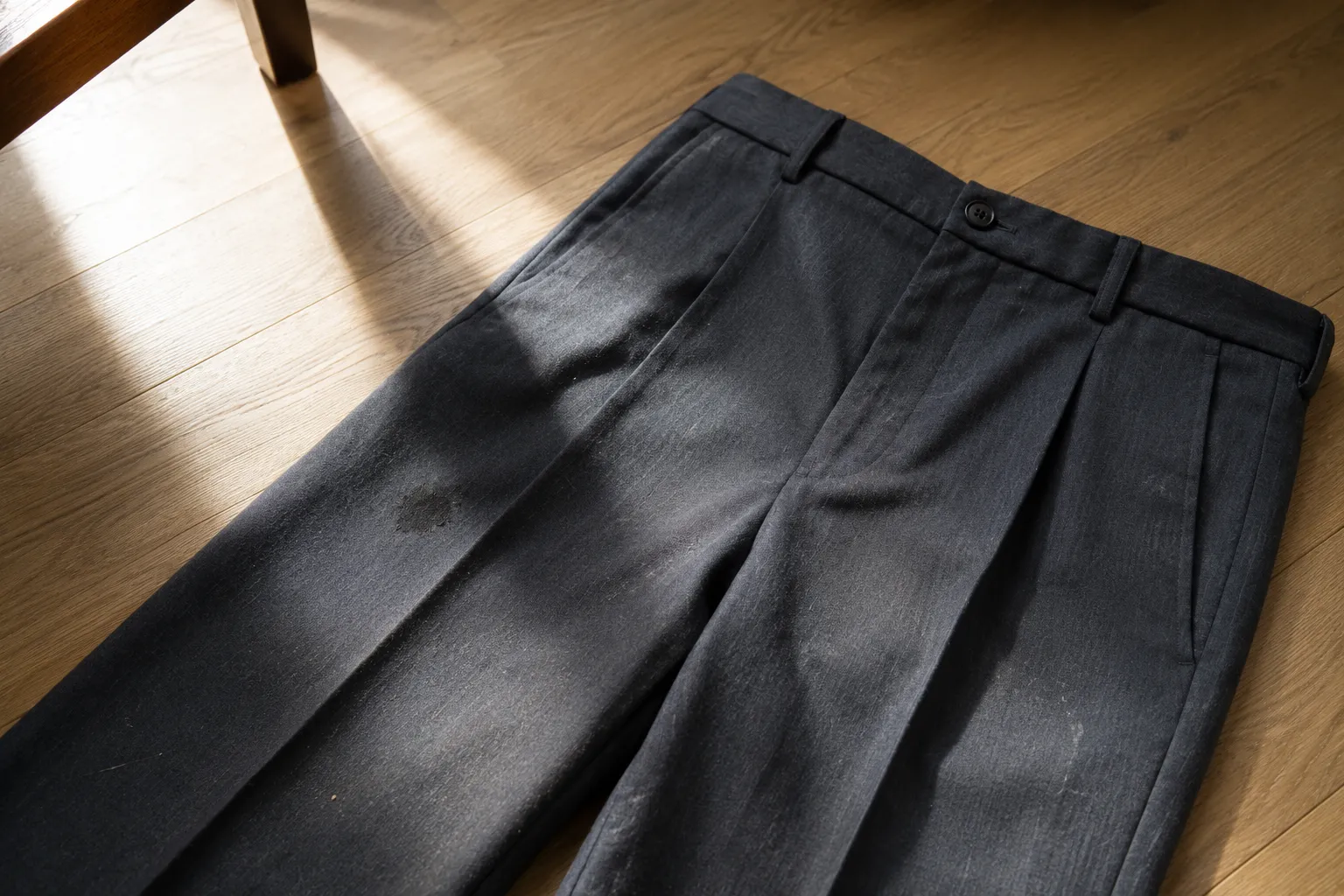
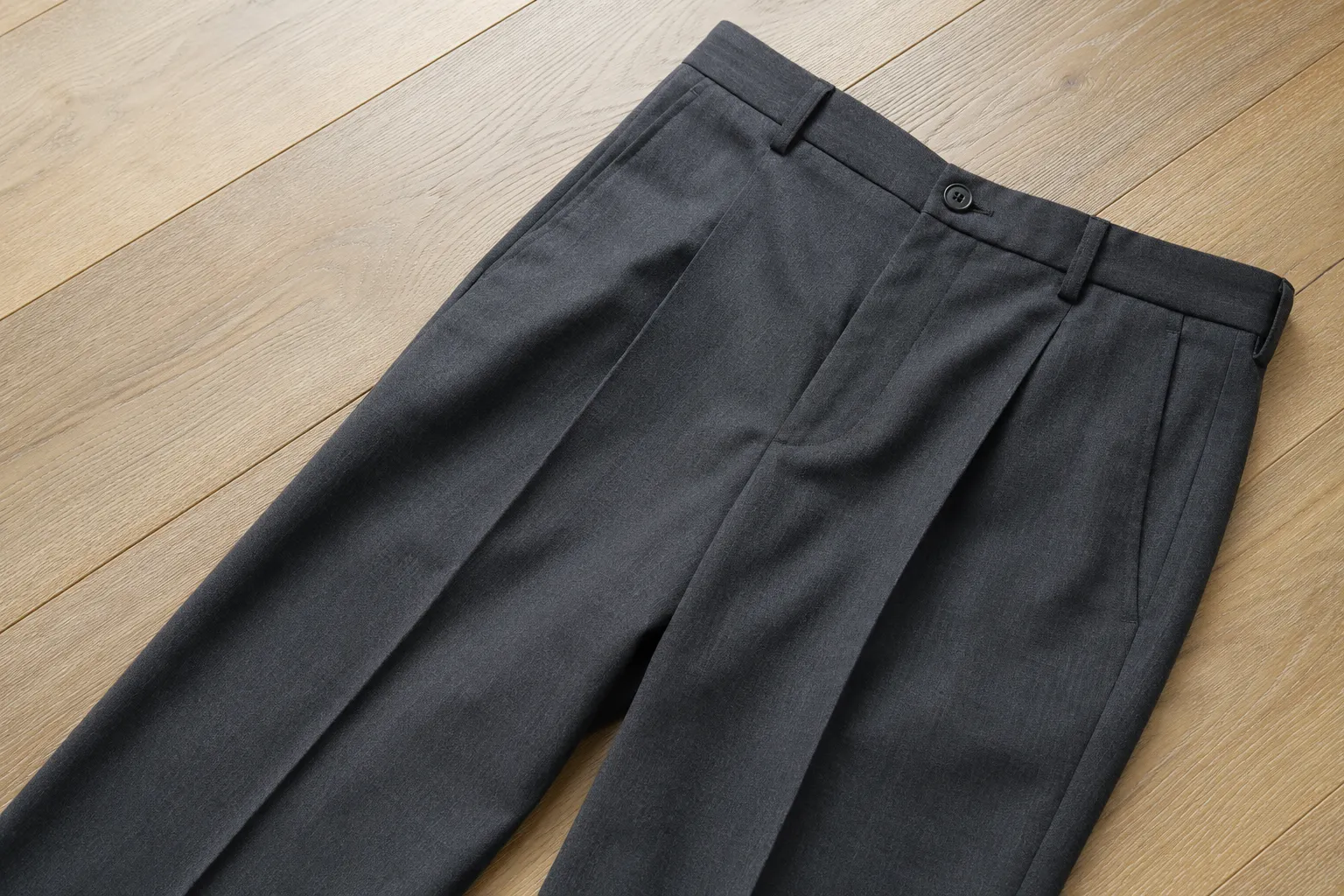 After
After
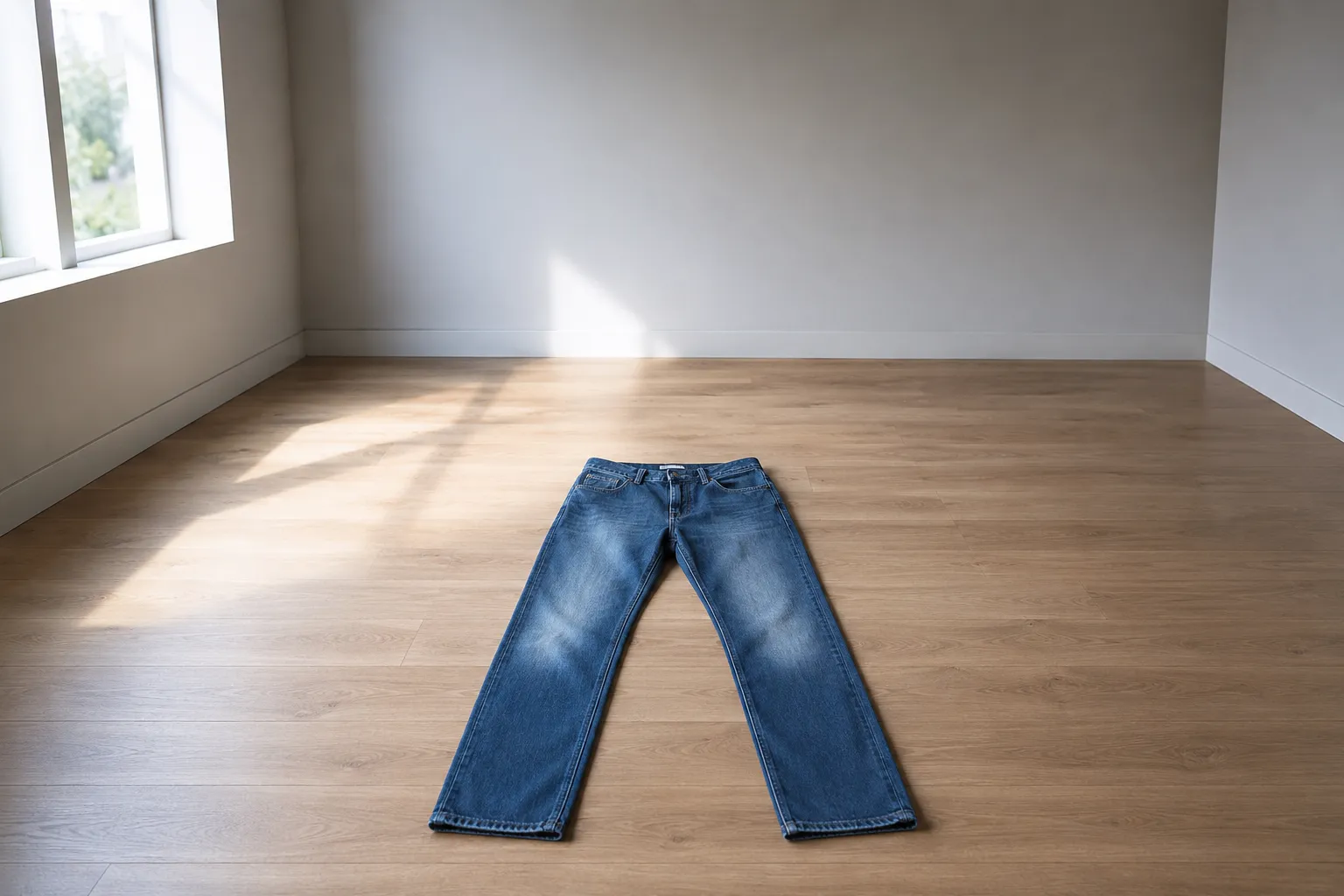
Request: Urgently need to remove an ink stain from classic trousers before an important meeting.
Done: Applied an alcohol solution and ink stain remover, treated the stain, then washed on delicate cycle.
Cost: 2 800 ₸
Master: Aigul Nurgaliyeva, dry cleaning master
Total: The ink stain is completely gone, the trousers look like new, without streaks.
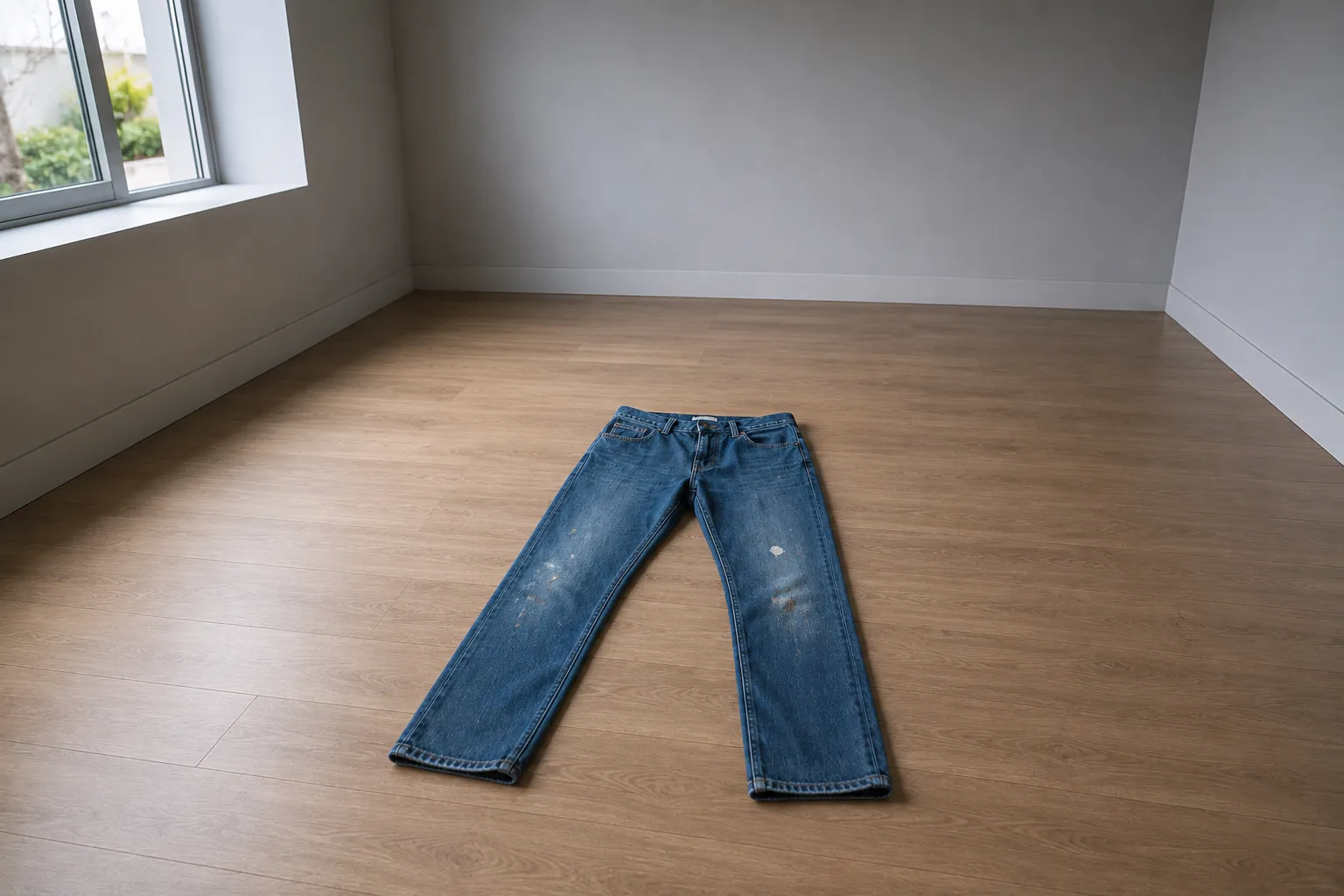
 After
After
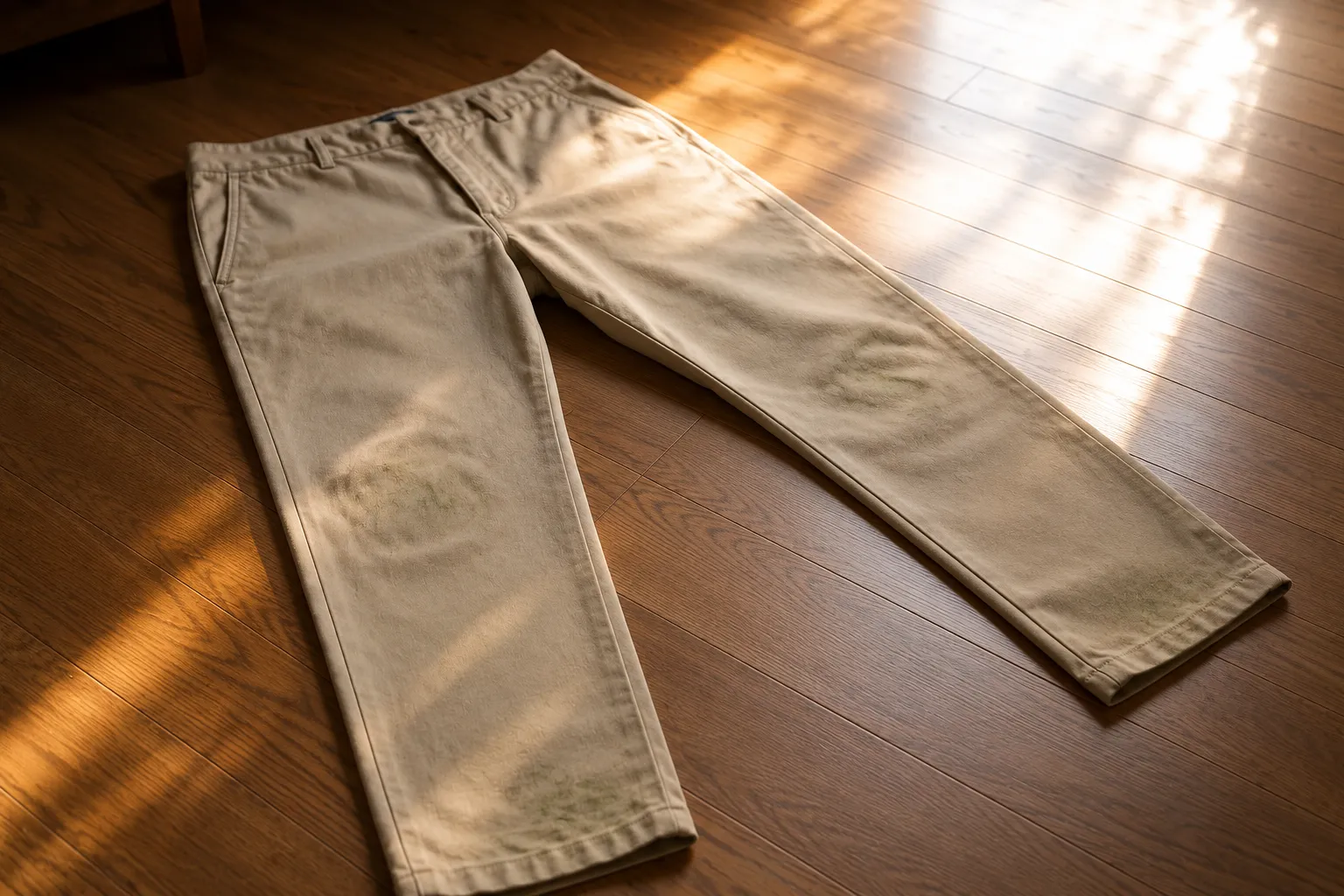
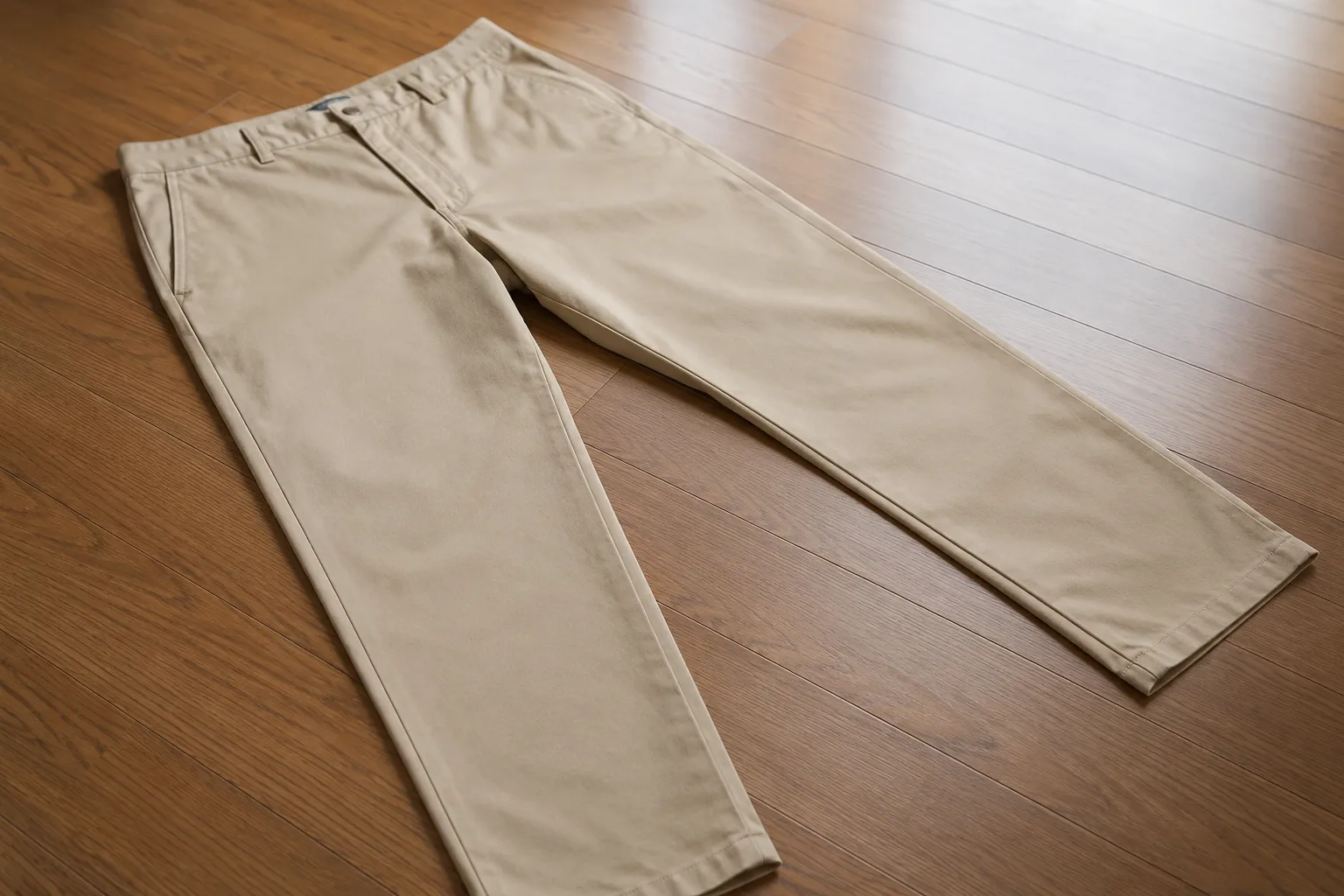
Request: After a picnic, green grass stains remained on the jeans, need to clean.
Done: Treated stains with a special grass stain remover, soaked in warm water, then washed with bleach.
Cost: 3 000 ₸
Master: Marat Abdrakhmanov, dry cleaning master
Total: Grass stains completely removed, jeans became snow-white.
 After
After
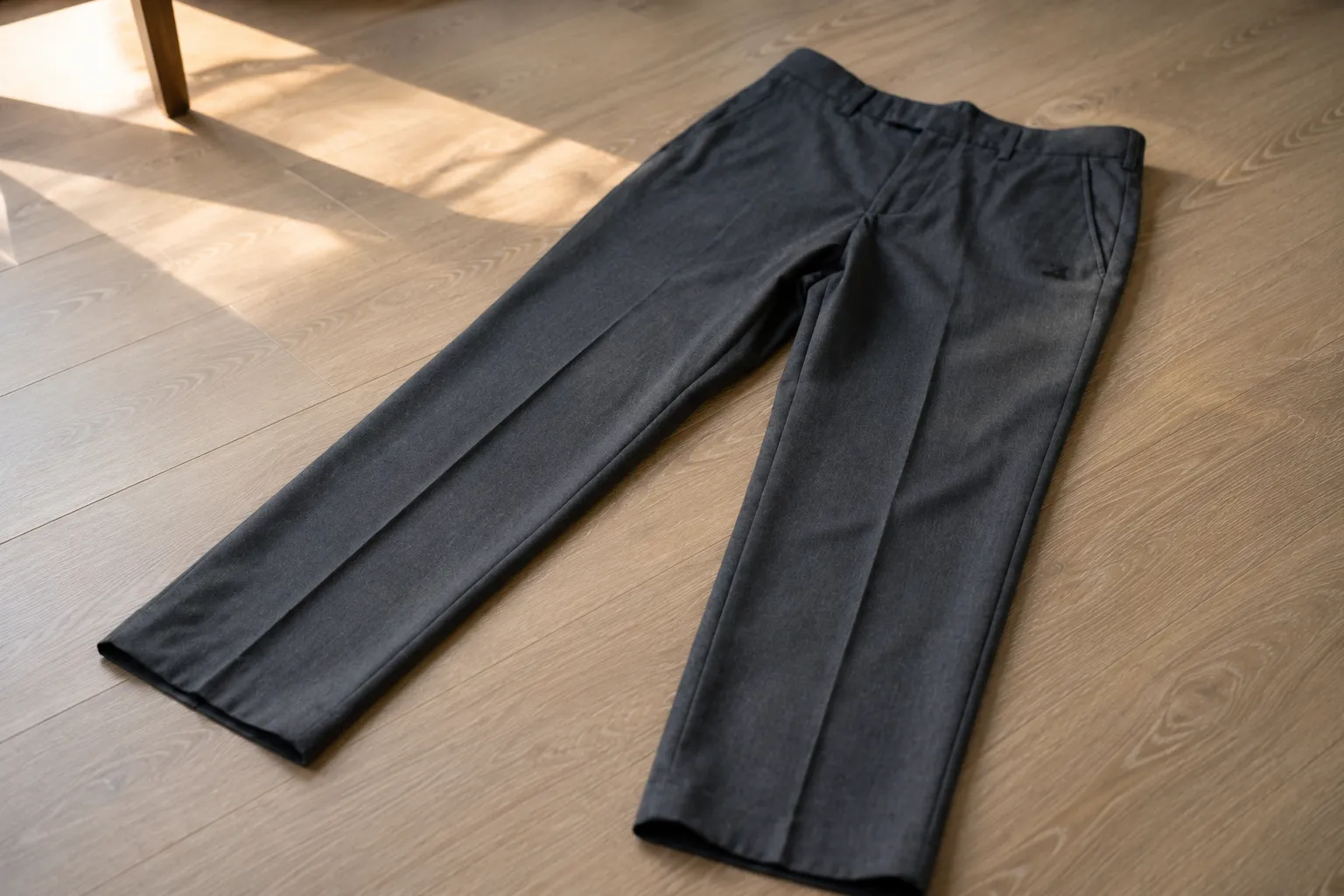
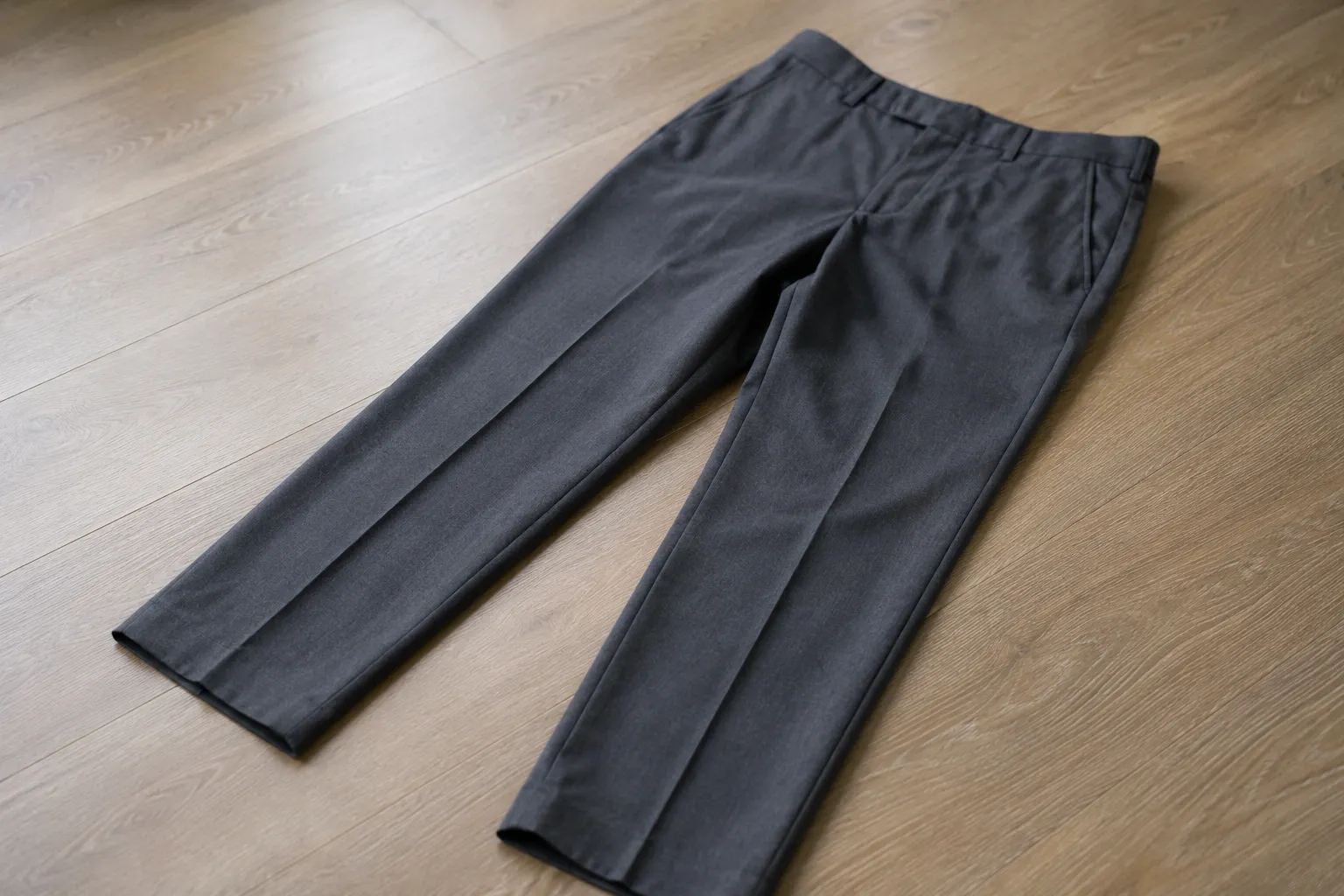
Request: Spilled vegetable oil on chinos, stain is greasy and dark.
Done: Applied absorbent (talc) to soak up oil, then treated with stain remover and washed.
Cost: 16 000 ₸
Master: Gulmira Sadykova, dry cleaning master
Total: The oil stain is gone, fabric without traces of grease, color restored.
 After
After
Request: Spilled red wine on wool pants at a party, stain is large.
Done: Treated stain with salt solution and special wine stain remover, then steam cleaned.
Cost: 2 800 ₸
Master: Yerzhan Kydyrbayev, dry cleaning master
Total: Wine stain completely removed, pants without damage or odor.
 After
After
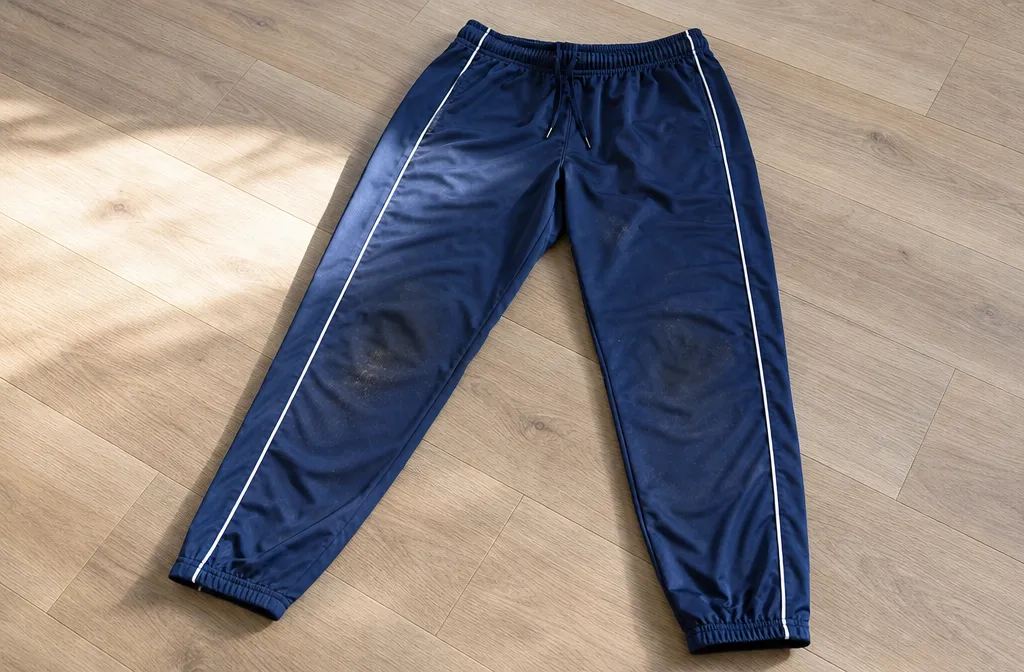
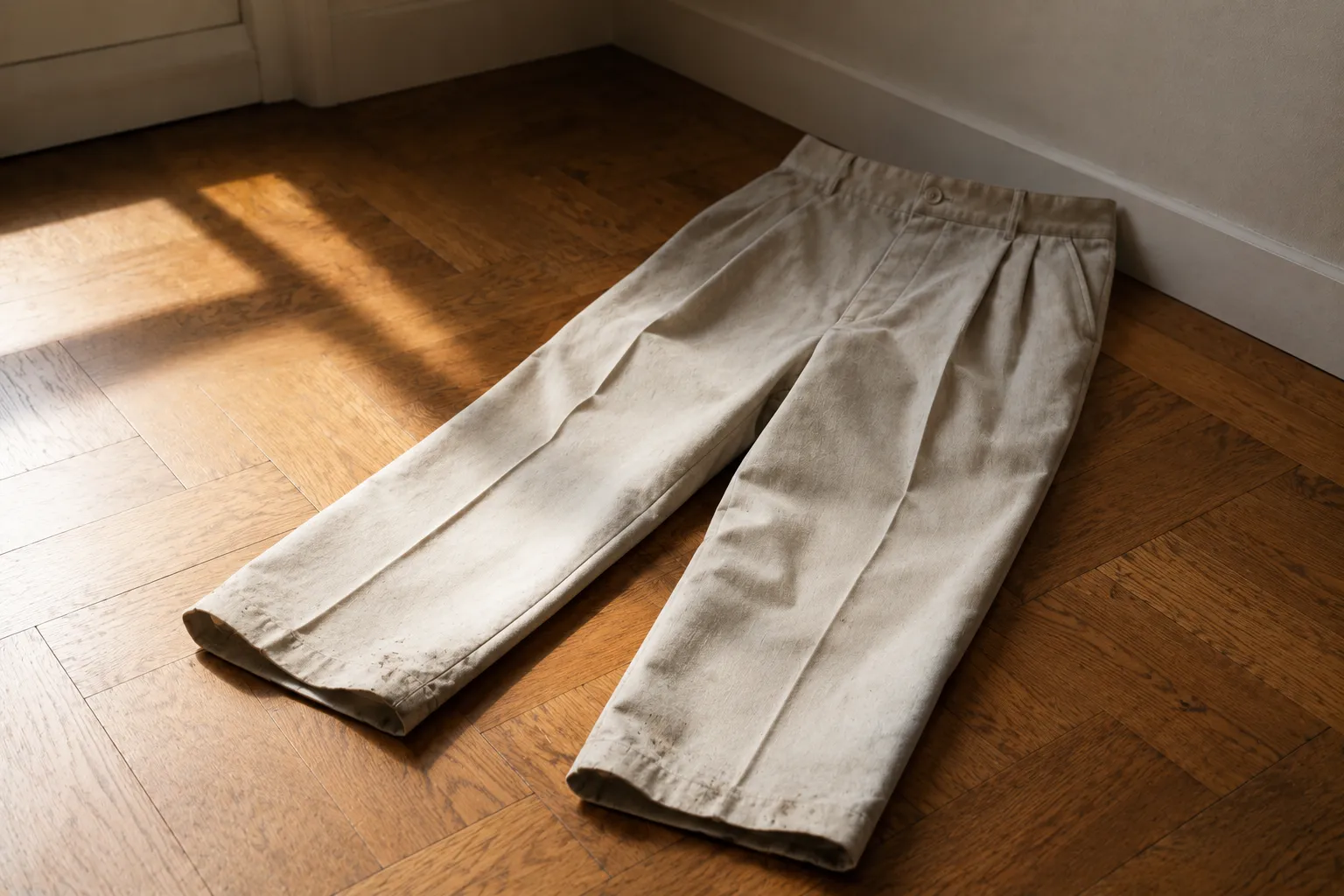
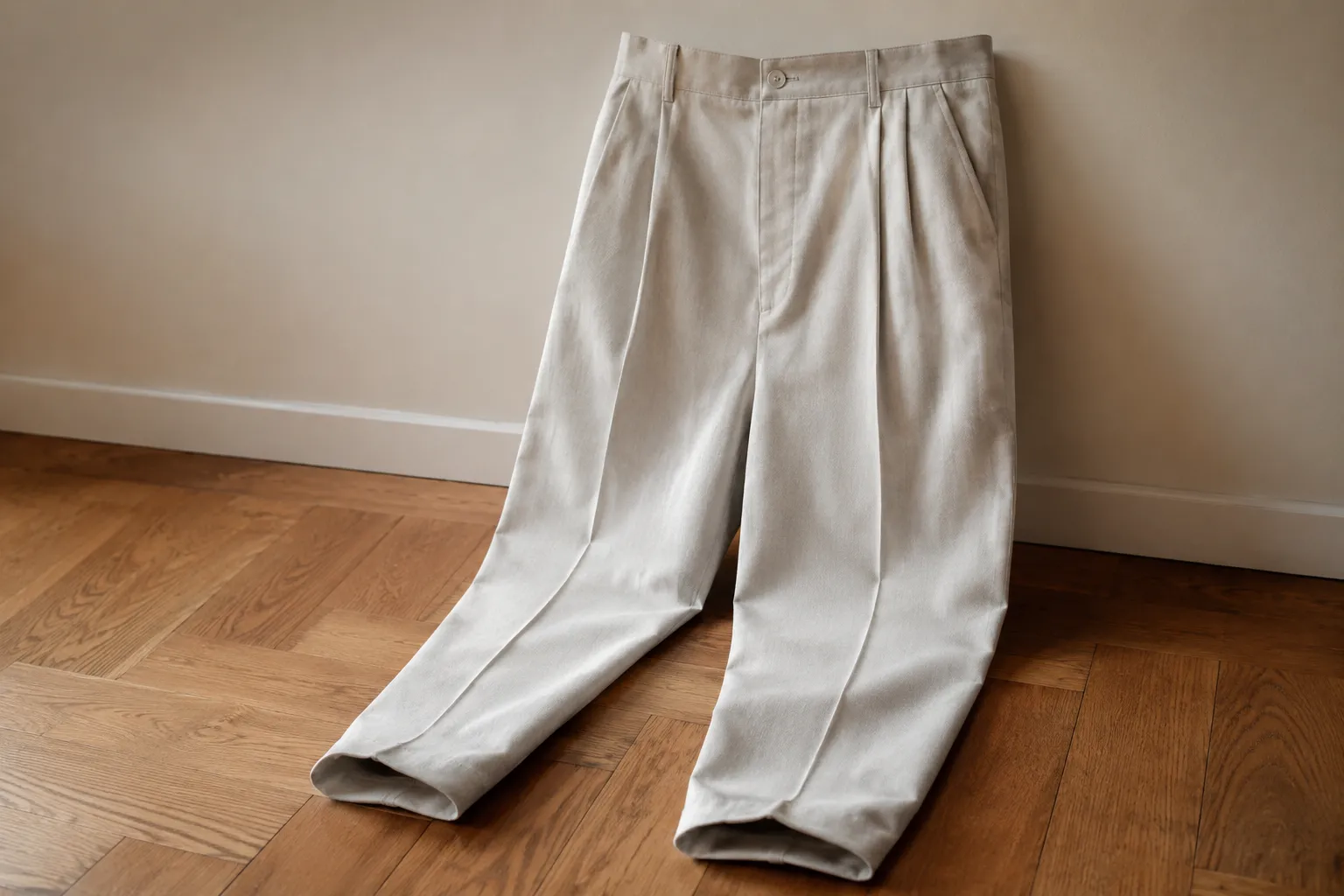
Request: Trousers got dirty after a walk, need delicate cleaning.
Done: Removed dry dirt with a brush, then treated stains with mild detergent and dried.
Cost: 2 800 ₸
Master: Aliya Muratbekova, dry cleaning master
Total: Dirt removed, velvet restored softness and color, without streaks.
 After
After
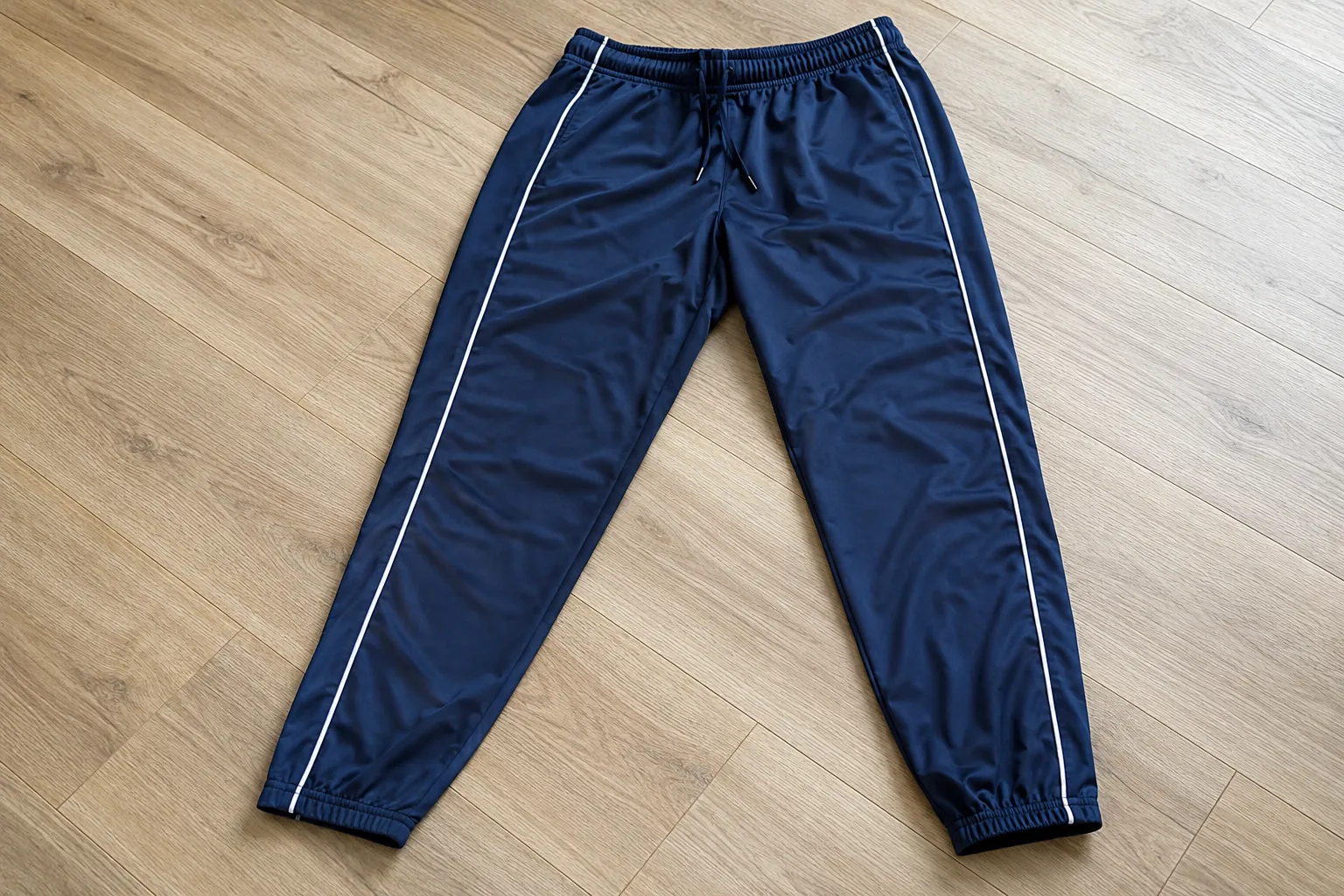
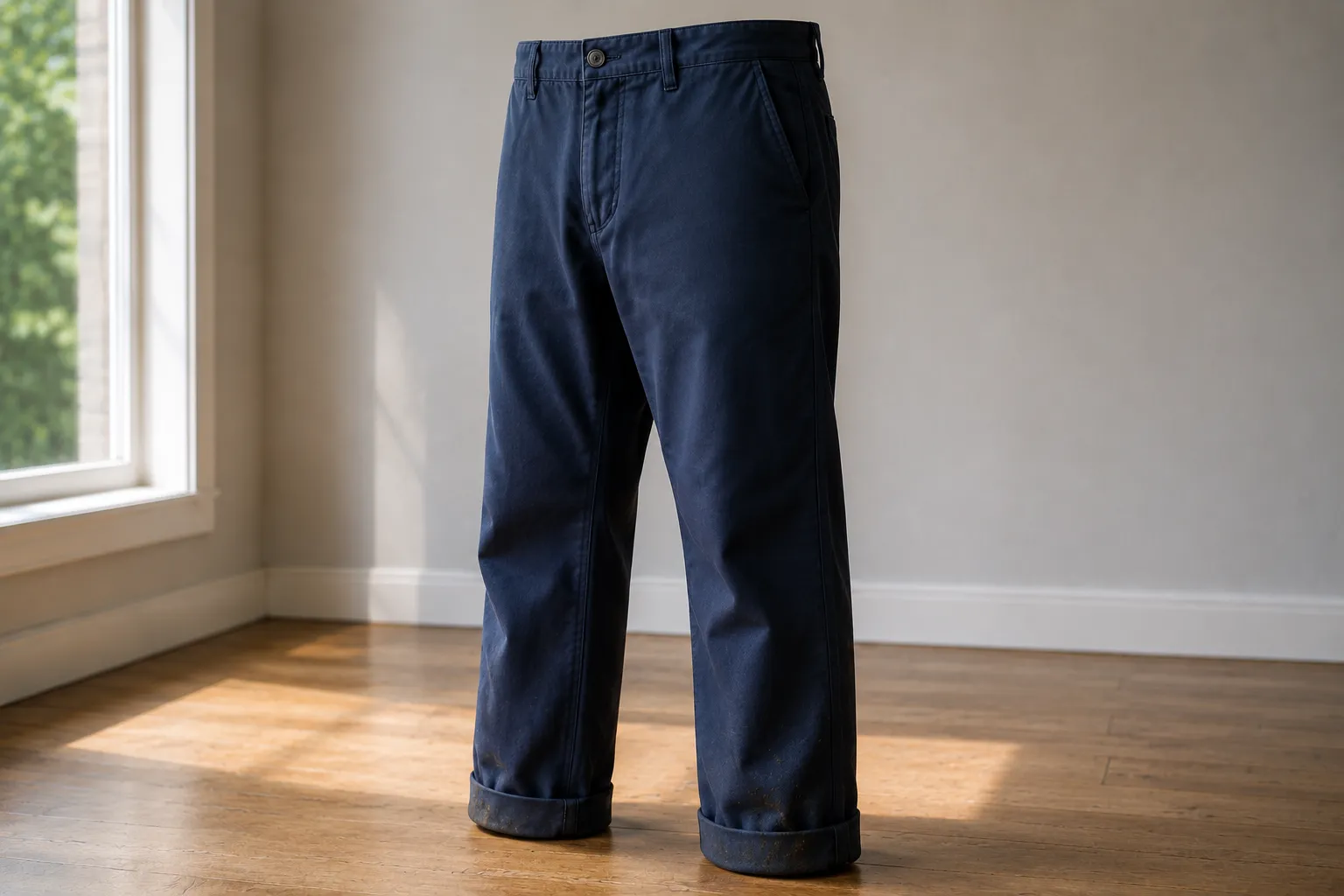
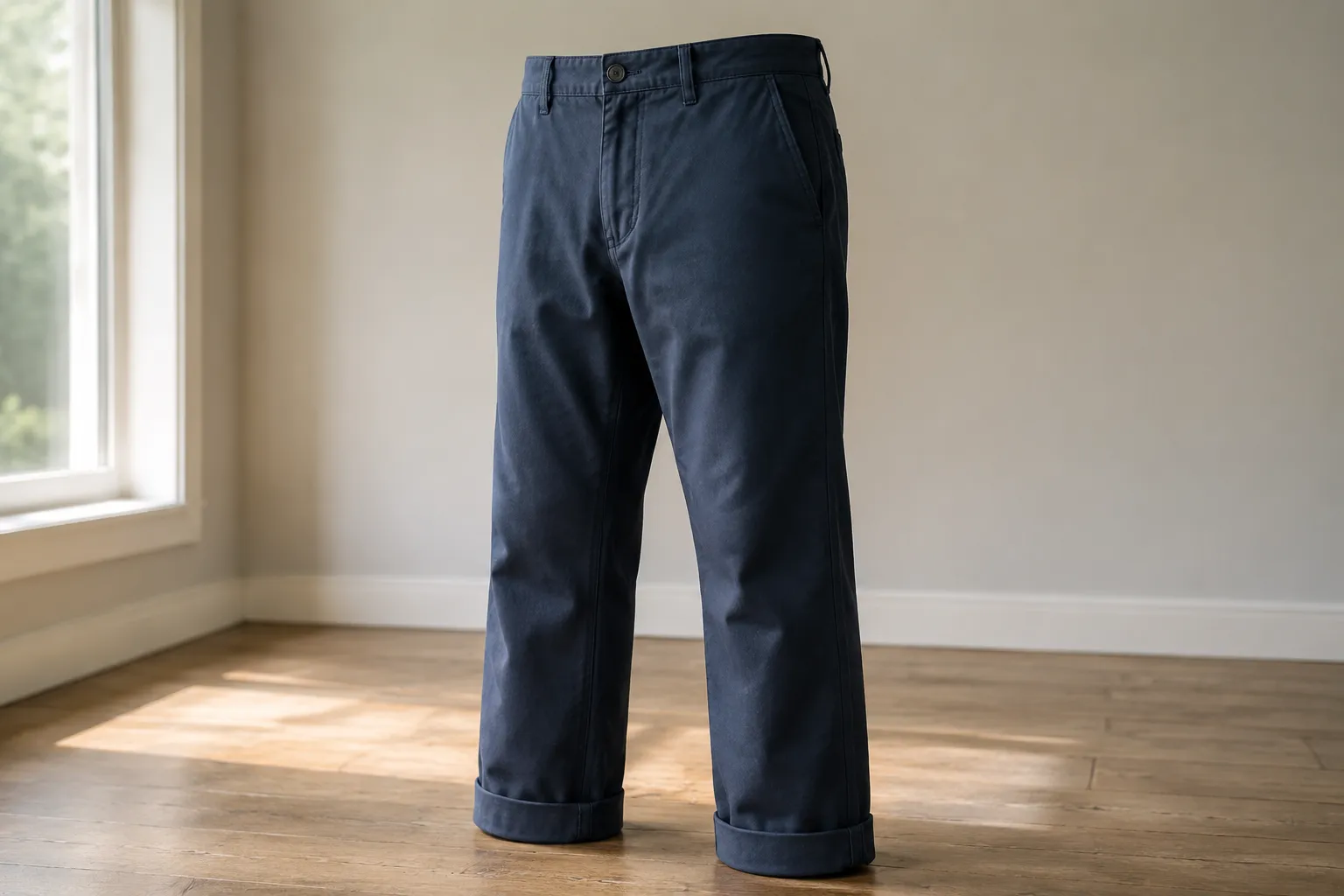
Request: After a workout, yellow sweat stains and odor remained on the pants.
Done: Soaked in enzyme solution, treated stains, washed with antibacterial agent.
Cost: 2 800 ₸
Master: Daniyar Bekzhanov, Dry Cleaning Master
Total: Sweat stains gone, odor eliminated, pants fresh and clean.
 After
After
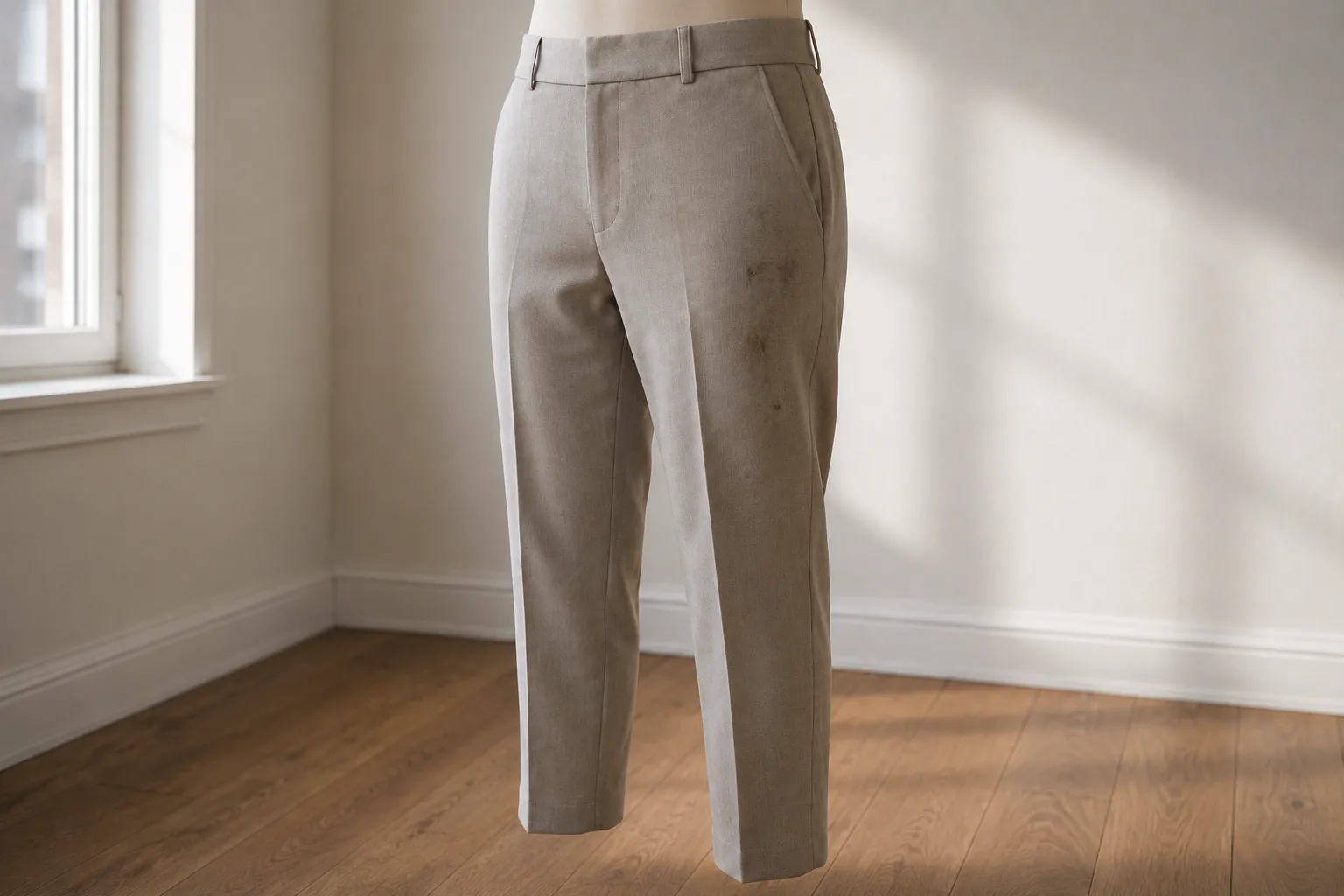
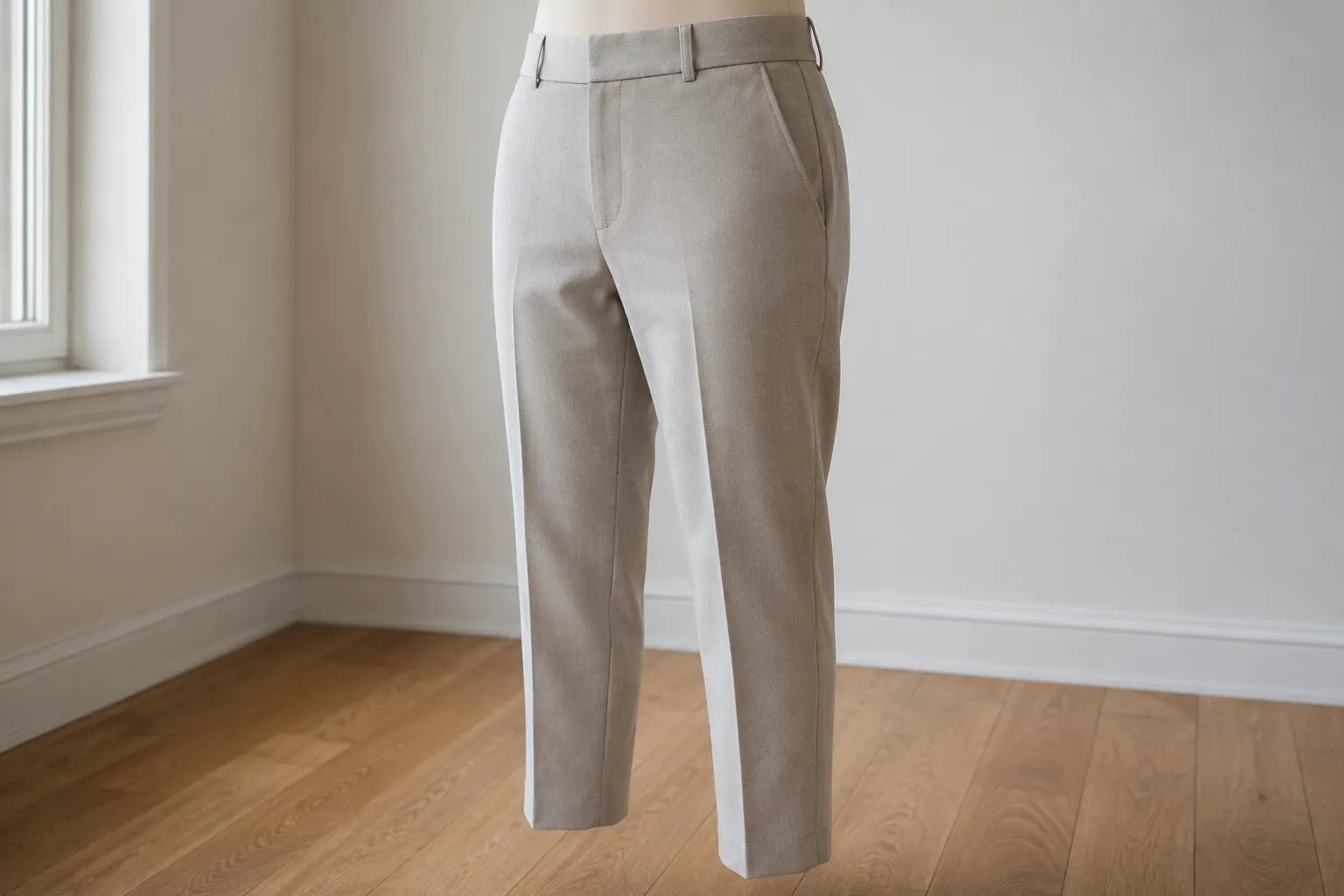
Request: Spilled coffee on linen pants, stain absorbed quickly.
Done: Treated stain with glycerin and stain remover, then washed in cold water.
Cost: 2 800 ₸
Master: Assem Kairzhanova, Dry Cleaning Master
Total: Coffee stain completely removed, fabric not deformed.
 After
After
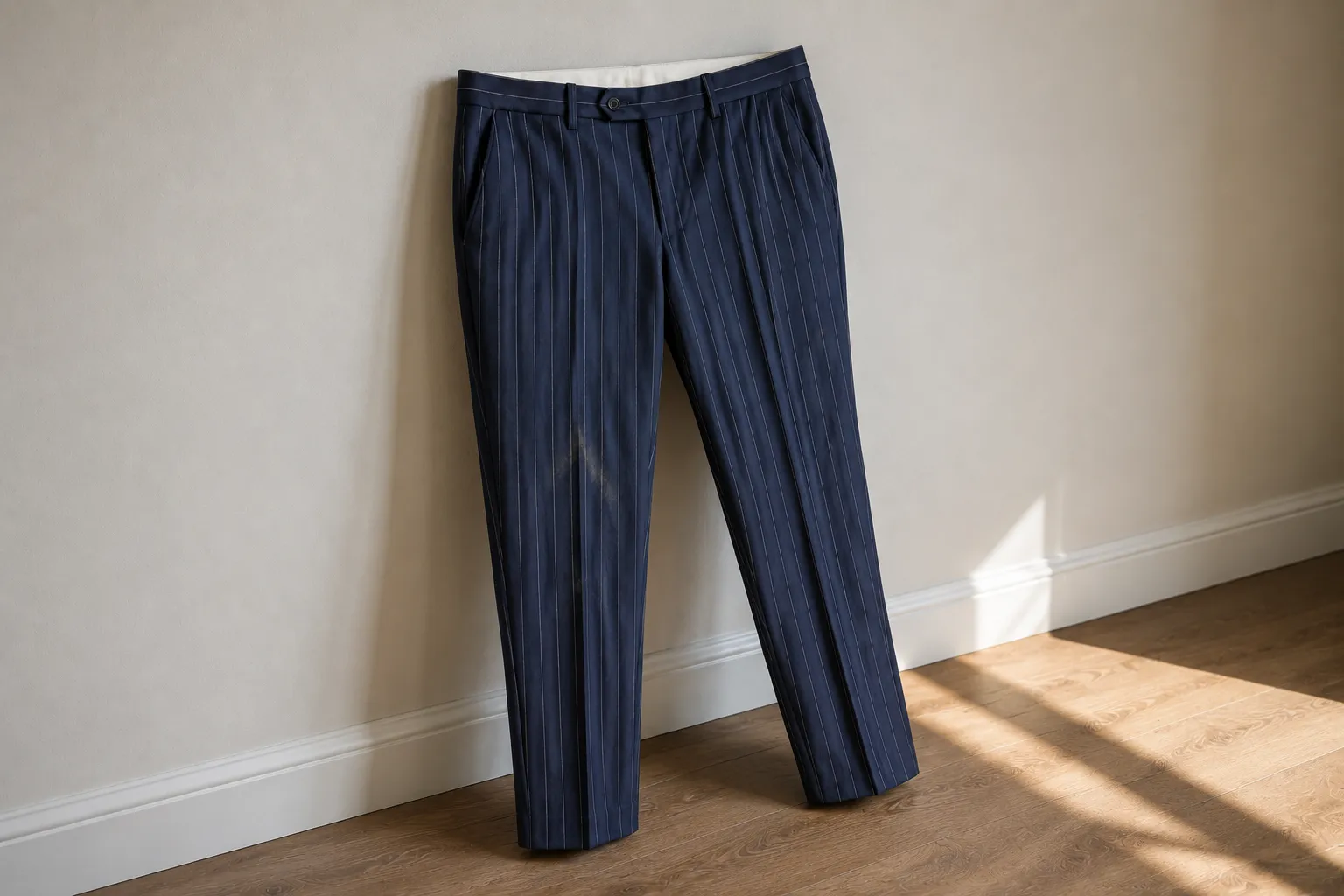
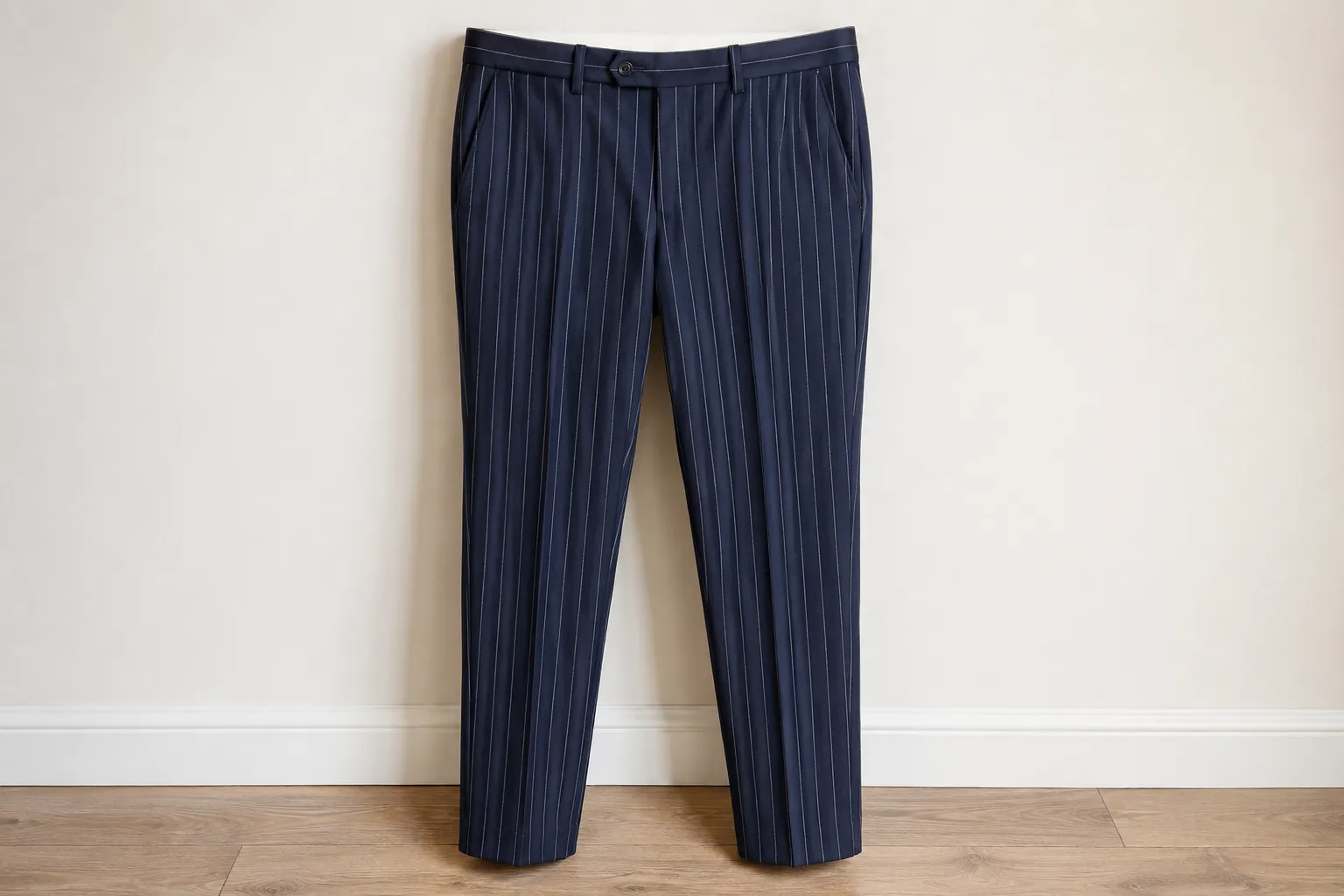
Request: Leather pants developed scuffs and scratches, need restoration.
Done: Cleaned surface, applied leather conditioner and colored scuffs with paint.
Cost: 2 800 ₸
Master: Ruslan Iskakov, Dry Cleaning Master
Total: Scuffs eliminated, leather soft and shiny, color even.
 After
After
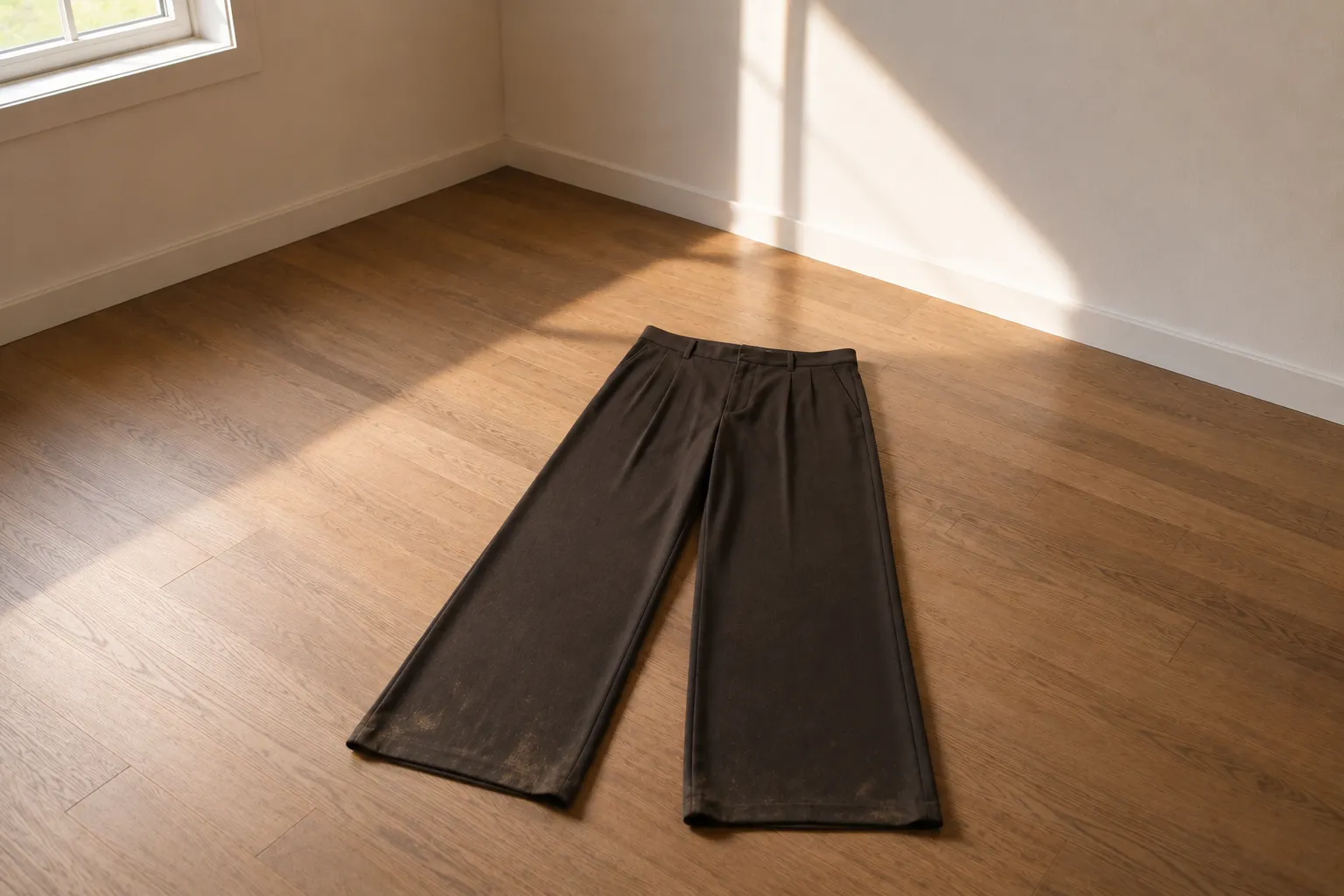
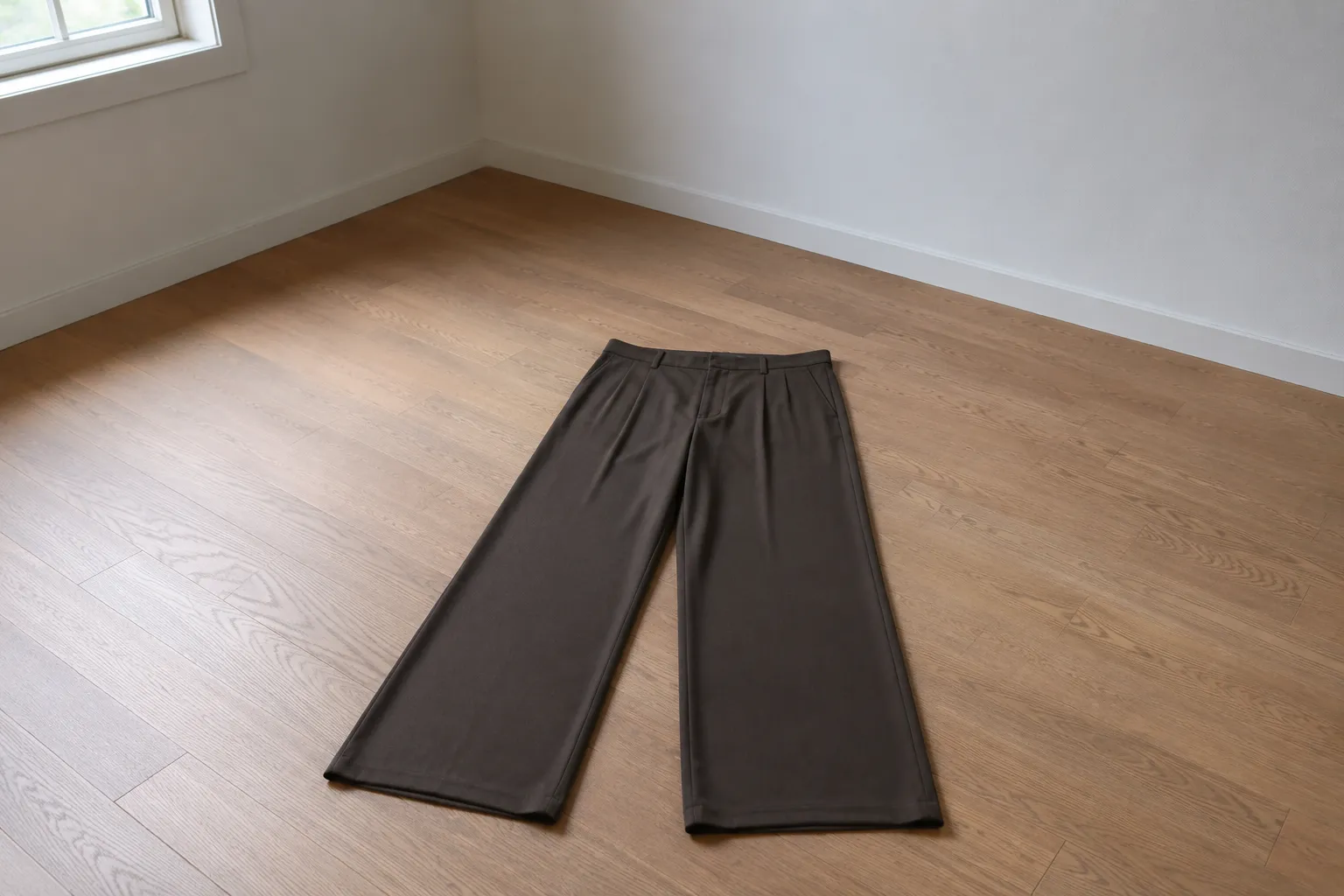
Request: Black trousers faded after washing, turned gray, need to restore richness.
Done: Applied black color restorer and special conditioner, then gentle wash.
Cost: 2 800 ₸
Master: Lyazzat Ospanova, Dry Cleaning Master
Total: Color became deep black, trousers look like new, no streaks.
 After
After
Request: After painting, acrylic paint stains remained on jeans.
Done: Treated stains with solvent, then soaked and washed with stain remover.
Cost: 3 000 ₸
Master: Bakhytzhan Toleuov, Dry Cleaning Master
Total: Paint stains completely removed, jeans clean and undamaged.
All cleaners are profi-clean staff with training, uniform and security check. Each order has a team leader who controls quality.
At profi-clean, we use professional chemicals from two European brands — Kiehl and Sodasan — and not a single aggressive solvent like perchloroethylene. Many clients worry about delicate fabrics, and rightly so: on the Almaty market, there are still dry cleaners that cut costs on reagents. We select the composition for each type of material, rather than “pouring one thing on everything.”
Perchloroethylene (PERC) is the standard for most industrial dry cleaners, but it is aggressive for thin fabrics: wool, viscose, acetate. Under the influence of PERC, fibers lose elasticity, and a gray film appears on dark trousers that cannot be removed. At profi-clean, we replaced PERC with hydrocarbon solvents KWL (Kiehl) — they delicately remove grease and oil stains without fabric shrinkage and without the odor that remains after “classic” dry cleaning. In practice, this means that wool trousers after our treatment do not shrink a size, and viscose ones do not lose their shape. Before ordering, clarify which solvent the dry cleaner uses: if you hear “perchloroethylene” — for delicate trousers, this is a risk.
For stains from coffee, grass, blood, sauces, and sweat, we use aqueous preparations from Sodasan — a German brand with an Ecogarantie certificate, free of phosphates, optical brighteners, and synthetic surfactants. For each type of stain, there is a separate enzyme composition: protease for protein-based stains (blood, milk), lipase for fats (oil, cream), amylase for starch (sauces, porridge). We do not mix a “universal stain remover” — that destroys the fabric. For example, a red wine stain on light linen trousers is treated with Sodasan oxygen bleach at 30°C, not boiling water, which sets the pigment. In our orders for dry cleaning trousers with such stains, the removal rate is 95% in the first cycle; the rest is removed during a second treatment without damaging the fiber. If the stain is complex and old, it is better not to try to remove it at home with vinegar or lemon — acid can permanently set some dyes.
The most common client fear is that after dry cleaning, trousers will fade or “shrink.” To prevent this, we use pH-neutral cleaning complexes from Kiehl with Color Protect — they do not wash out the pigment from the fiber but fix it. For black and dark blue trousers (classic trousers, jeans, chinos), we use preparations with a polymer barrier — they envelop each fiber in a thin film, preventing dye abrasion during mechanical action. Additionally, during the rinsing stage, we add Sodasan conditioner with aloe vera — it removes static electricity and restores softness to the fabric, especially after treatment on synthetic cycles. In Almaty, where the water is hard due to mountain limestone, without conditioner the fabric becomes stiff and prickly — we compensate for this at the finish. In my opinion, it is this final stage that distinguishes professional dry cleaning from home washing: after us, trousers do not look “washed out”; they retain their factory texture.
The product is only 30% of the result; the rest is the machine in which it works. profi-clean uses steam convection chambers with HEPA filtration, which prevent chemical vapors from settling on the fabric. The temperature in the drum is regulated individually for each batch: for wool — 30–35°C, for cotton — up to 50°C, for synthetics — 25°C. If the machine heats everything indiscriminately to 60°C, any delicate solvent becomes aggressive — the fabric shrinks or deforms. Our sensors control humidity and the residual amount of solvent to ensure no chemical odor remains in the trousers after the cycle. When ordering dry cleaning for trousers, ask if the service controls the temperature based on the fabric type — if the answer is “we have a standard mode,” for expensive trousers, this is a red flag.
A greasy oil stain on wool trousers, old wine on linen, or a protein stain on silk — each fabric and stain type requires its own sequence and chemistry. Based on 8 years of practice, I will break down which mistakes most often ruin an item during home removal and how profi-clean acts in complex cases.
Most household stain removers (Vanish, Antipyatin, laundry soap) work on the principle of “one formula for everything” — this is a direct path to setting the stain. In practice at profi-clean, we see three typical mistakes. First is hot water on protein stains: traces of blood, milk, or egg at temperatures above 40°C coagulate and become permanently embedded in the fibers. Second is scrubbing delicate fabrics with a brush: viscose, silk, and cashmere develop irreversible pilling and thread breaks after friction. Third is mixing acidic and alkaline agents (e.g., vinegar and baking soda) on the same garment: the neutralization reaction creates a salt residue that can only be removed through 4–5 cycles of professional extraction. Unlike aggressive household formulas, we use pH-neutral enzyme concentrates from Kiehl, which break down dirt at the molecular level without damaging the fabric structure.
An oil stain on trousers is the most insidious: if not treated immediately with an adsorbent, the grease penetrates deep into the fibers and oxidizes, creating a yellow halo. Our sequence for set-in greasy marks on classic wool and suit trousers is three-step. First, we apply a silicate sorbent to the dry fabric for 20 minutes — it draws the grease out of the top layer. Then we treat the area with Sodasan emulsifier based on coconut oils — it binds the remaining grease into a water-soluble emulsion. The third stage is cold extraction on a vacuum table with HEPA filtration: water at a pressure of 3 bar flushes out the emulsion, and the vacuum immediately removes moisture, preventing the stain from spreading. For jeans and cotton with motor oil stains, we add a pre-soak in an enzyme solution at 30°C — this reduces cleaning time from 40 to 25 minutes.
Residual odor is a direct consequence of incomplete removal of detergent or biological soiling. It most often occurs if the technician used a fabric softener with a strong fragrance to “mask” the unpleasant smell, or did not dry the item thoroughly after extraction. In our practice, there was a case: a client brought in wool trousers with a sweat smell, which had been treated twice with chlorine-based bleach at another service — the smell only became sharper, and the wool turned yellow. We performed a three-cycle rinse with distilled water and Sodasan odor neutralizer (based on sodium citrate), followed by low-temperature drying at 35°C for 3 hours — the smell disappeared completely. If there is a chemical smell after cleaning, do not wear the trousers immediately: air them on hangers for 12 hours in a well-ventilated area to allow residual volatile components to dissipate — this is a standard recommendation for all types of dry cleaning.
Shrinkage of 2–5% is the most common complaint after DIY stain removal on trousers made of wool, cashmere, and viscose. The cause is a sharp temperature change: a person pre-washes the stain with hot water and then rinses with cold, causing the fibers to contract unevenly. At profi-clean, we use a strict temperature protocol: all treatment stages — soaking, chemical application, extraction — are carried out at a consistent temperature of 30–35°C. For wool trousers with creases (school uniforms), we additionally set the creases with a steam generator at 110°C immediately after extraction — this restores the fabric’s shape without shrinkage. On viscose and Tencel trousers, we never use mechanical spinning — only vacuum water removal, otherwise the fibers stretch by 10–15% along the leg length.
In our practice in Almaty, trousers from four fabric groups are most commonly brought in, and each requires its own approach — using the same method can ruin the item in one cycle. We’ve broken down the key differences so you understand why professional trouser dry cleaning delivers a fundamentally different result than home washing.
Cotton trousers are the most common in Almaty wardrobes: from classic chinos to summer linen blends. We process them using a wet cycle with pH control, because an alkaline environment above 8.5 destroys the fiber structure — pants lose their shape after just three washes. Cotton is sensitive to sudden temperature changes: rinsing with cold water after a hot soak causes the fibers to “collapse,” and the trousers shrink by a size. Our cleaners use neutral enzyme preparations from Kiehl for cotton — they rinse out at 30–35 °C, leaving no white residue on dark fabrics. Another nuance is that colored cotton fades unevenly if the dye isn’t fixed with a fixative before the cycle. Before ordering dry cleaning for trousers, check the label: if it says “dry clean only” — don’t risk water, as non-washable pigment will come off in patches.
Wool trousers are the most common source of complaints at dry cleaners: clients wash them in a machine, and after 20 minutes get felt. We clean wool exclusively in perchloroethylene on a short cycle (12–15 minutes), because water and mechanical friction cause irreversible shrinkage of up to 15% in length. Cashmere is even more sensitive — we process it in a solvent machine at reduced drum speed (400 versus the standard 800). Wet cleaning for wool is possible, but only with cold water, no spin cycle, and final drying on a stretching mannequin. In Almaty, due to humidity fluctuations (dry air in apartments during winter and humidity in spring), wool fibers become electrified and attract dust — we remove static with an anti-static conditioner in the final rinse. On wool trousers with greasy knees, do not use a steamer — steam “seals” the grease deeper into the fiber, making it three times harder to remove later.
Linen trousers are a summer hit in Almaty, but the fabric is tricky: when wet, it loses up to 30% of its tensile strength. We wash linen in cold water (maximum 30 °C) on a delicate cycle without spinning, because the centrifuge breaks dry fibers — after three cycles, white “creases” appear at the knees. Linen cannot tolerate acidic stain removers: citric acid or vinegar destroys the cellulose structure, leaving a hole where the stain was. At profi-clean, we use only neutral soap solutions from Sodasan with soap nut extract for linen — they don’t cause the yellow undertone on white linen that appears with regular powder. After finishing, we always treat linen trousers with a starch spray — this restores the shape of the creases and prevents wrinkling during wear. If there’s a red wine stain on linen pants, don’t rub it — the fiber will fray; just sprinkle with salt and take it to the dry cleaner within an hour.
Polyester, nylon, elastane, and cotton blends are materials for sport and office trousers, but they melt at 140 °C and accumulate static electricity. We process synthetics at temperatures no higher than 40 °C and iron through a pressing cloth, because direct contact of the iron with the fabric creates a “lacquer” film — a shine that cannot be washed off. Blended fabrics (e.g., 65% cotton + 35% polyester) require a compromise cycle: cotton shrinkage and synthetic heat shrinkage occur at different temperatures, so we dry such trousers on hangers at room temperature, not in a drum. In Almaty, due to the dry climate, synthetics become highly electrified — we add an anti-static agent with silver ions to the rinse, which lasts up to five wears. On trousers with polyester stripes, do not use steam — it deforms the appliqué; a gentle solvent cleaning with final smoothing on a mannequin is sufficient.
A foreign smell after dry cleaning is not normal, but a sign of technology violation: residual detergent, moisture in the fibers, or a reaction of the fabric with an unsuitable solvent. At profi-clean, we encounter such cases when a client brings an item ruined elsewhere, and we explain how to distinguish a safe process from shoddy work.
Actionable Insight: To check if a smell remains, don’t sniff the item immediately after pickup — wait 30–40 minutes at room temperature; if a smell appears or intensifies, demand reprocessing with a rinse.
| Sign | Safe (water/steam residue) | Concerning (chemical residue) |
|---|---|---|
| Intensity | Faint, “damp,” disappears after 15–20 minutes of airing | Sharp, sour, or “acetone-like,” doesn’t dissipate within an hour |
| Location | Cuffs, waistband, pockets — areas where moisture collects | Evenly across the entire fabric surface — meaning chemicals are inside the fibers |
| Reaction to heat | After ironing, the smell disappears completely | After heat, the smell intensifies — chemicals evaporate from within |
| Effect on skin | No irritation, no burning | Redness, itching, throat irritation upon close contact |
If you notice even one sign from the right column, the item is unsafe to wear. In Almaty services that skimp on rinse agents, this is common in budget dry cleaners — at profi-clean, we don’t use shortened cycles because each pair of trousers undergoes at least two rinses with a pH neutralizer.
Actionable Insight: Before putting on trousers, hold them in a bathroom with hot water running (no ventilation) for 10 minutes — if steam intensifies the smell, return the item for re-cleaning with a full rinse.
Actionable Insight: Don’t use vinegar or alcohol to remove dry-cleaning smells — they react with solvent residues and can create a persistent “chemical” bouquet that won’t come out even with repeat cleaning.
If after airing, steam, and baking soda the smell persists or returns 10–15 minutes after you put the trousers on, it means the source is inside the fibers and home remedies can’t reach it. In our practice, such cases account for about 8% of repeat requests in Almaty — most often these are wool trousers after treatment with an aggressive solvent without rinsing. Demand from the dry cleaner a repeat treatment with an extended rinse cycle, or if the smell is toxic, a replacement of the service. profi-clean offers a 24-hour guarantee on the absence of odor, and if a client reports an issue, we re-clean the item for free, adding a finishing rinse with enzymes that break down surfactant residues. Don’t delay: the longer chemicals remain in the fabric, the higher the risk of fiber structure damage — on wool, this causes irreversible felting.
Many Almaty residents believe that washing at a laundry replaces dry cleaning trousers, but in reality, these are two different processes with different chemicals, temperatures, and risks to the fabric. Let’s break down when washing is justified and when it leads to shrinkage and fading.
Laundry is suitable for everyday cotton and synthetic trousers without stubborn stains or decorative elements. In our experience in Almaty, sports pants, polyester joggers, and linen office trousers withstand machine washing at 30–40 °C without losing shape. The problem starts when wool or silk trousers end up in the machine — temperatures above 30 °C and spinning destroy the fiber structure, and after the first drying, the trousers shrink by 1–2 sizes. Another risk is decorative elements: sequins, rhinestones, leather inserts, and patches peel off or deform in the drum. Therefore, before handing an item to a laundry, check the label: the “dry clean only” symbol is not a recommendation but a direct ban on water. In practice, we see the consequences of such washing every week — restoring shrunken wool or detached decorations is impossible, and the client loses the item irreversibly.
Dry cleaning trousers uses organic solvents instead of water, which fundamentally changes the cleaning mechanism — dirt and grease dissolve without fiber swelling. At profi-clean, we use perchloroethylene and hydrocarbon solvents on equipment with a closed loop: the solution is filtered and distilled, not drained into the sewer like water from a washing machine. This means that even delicate fabrics — cashmere, viscose, acetate — do not deform because the fibers do not absorb liquid and do not swell. Additionally, the temperature in dry cleaning does not exceed 30 °C, eliminating thermal shrinkage — a common cause of returns after laundry. For Almaty’s spring with its sharp humidity fluctuations, this is especially relevant: wool trousers washed at home after rain often shrink unevenly. Choosing dry cleaning protects your item from shrinkage, fading, and loss of shape — especially if the label has “P” or “F” (professional solvent cleaning).
There are three scenarios where washing at a laundry or at home will definitely ruin the item, and dry cleaning trousers is the only solution. First — greasy and oily stains: oil, sauce, shoe cream are not removed by water; the solvent breaks them down at the molecular level without streaks. Second — trousers made of wool, cashmere, silk, or viscose: these fabrics shrink by 5 to 15% upon contact with water above 20 °C, and after washing, the trousers turn into capris. Third — complex cuts with lining, darts, creases, or cuffs: water and spinning disrupt the item’s geometry, and restoring the creases with an iron is no longer possible — they shift sideways. In our practice in Almaty, there was a case: a client washed wool trousers with a silk lining at a laundry — the lining shrank more than the outer fabric, causing the trousers to warp. Dry cleaning silk and wool in one item requires different solvents and cycles, which only a professional machine with separate cycles can handle. Before taking an item to a laundry, assess the fabric composition and type of soiling: if there is at least one of these three signs — choose dry cleaning, otherwise repairs will cost more than the cleaning itself.
On the Almaty market, what is often passed off as dry cleaning of trousers is actually aqua cleaning — washing in water with minimal mechanical action using specialized equipment. The difference is fundamental: aqua cleaning uses water and biodegradable surfactants at low temperatures, which is suitable for cotton and synthetics, but for wool, silk, and viscose, there is still a risk of shrinkage. At profi-clean, we work using the “dry cleaning” technology — without water, in a perchloroethylene or hydrocarbon solvent environment, and for delicate fabrics, this is the only correct method. At the same time, aqua cleaning is justified for trousers with a water-repellent coating (ski pants, hiking pants) — water does not damage the membrane, while solvent can destroy it. Our advice: check at the drop-off point which method is used — if they tell you “water-based cleaning,” for wool and silk this is not dry cleaning, and the item may be damaged.
I ordered dry cleaning of trousers — white trousers after a coffee stain became like new. Very satisfied.
Thank you, Aigerim! We're glad we restored the impeccable look of your items.
They perfectly removed an old oil stain on classic trousers. I couldn't even believe it was possible.
I sent jeans for dry cleaning — the paint was almost completely removed, only a little remained on the seams. Overall good.
Thank you for your feedback! We will try to improve treatment of difficult areas.
Wool trousers after dry cleaning became softer and without pills. Perfect!
Great to hear! Gentle cleaning is our priority.
Before the wedding, I ordered dry cleaning for my trousers — they removed a champagne stain, and the trousers look brand new.
Congratulations! We're glad we could help on your special day.
My son spilled pomegranate juice on the trousers — the stain was completely removed, not even a trace left.
I tried dry cleaning for leather trousers — the oil stain became lighter but didn't go away. I expected more.
We apologize for the result. Leather requires special treatment; we'll take note.
The linen trousers became fresh after cleaning, without any yellowing. They were pressed perfectly.
I dropped off trousers for dry cleaning after a picnic — the green stains were removed, but there's a slight odor left. Overall, not bad.
Thank you for pointing that out. We'll work on odor removal.
Vintage flared trousers look perfect after dry cleaning — not a single snag, colors bright.
I ordered dry cleaning for sweatpants — they removed the shine on the knees, now they look like new.
Great! Sportswear also needs care.
Red wine was almost completely removed, leaving a slight pink tint. Not bad for an old stain.
Thank you! Next time we'll try to be even more effective.
Dry cleaning for velvet trousers went great — the nap wasn't flattened, and the chocolate stain disappeared.
Thank you, Nurlan! We work carefully with delicate fabrics.
Removed ink stain from trousers — I was already thinking of throwing them away. A miracle!
Sent uniform trousers for dry cleaning — they removed old dirt and pressed the creases. Great service.
Glad to help! We work especially carefully with uniforms.
The machine oil stain was removed, but the fabric faded a bit in that spot. I hope it's not permanent.
We apologize. We'll pay attention to color preservation.
Sent cargo pants for dry cleaning — removed grass and dirt stains, color became more vibrant.
The grease stain from sauce was removed perfectly — I can't even believe it was there. Thank you!
You're welcome! Glad you're satisfied.
Dry cleaning handled the hair dye almost completely, only a trace remained on the pocket. Overall okay.
Thank you for your feedback. We'll try to improve the result.
Wide palazzo pants after dry cleaning look like new — no stains, no creases.
Ordered dry cleaning for jeans — they washed off dried dirt and sand. Looks great.
Thank you! Jeans are a common task for us.
The ketchup stain was removed, but a faint pink tint remains. Otherwise, good.
Thank you for your feedback. We will take measures to better remove pigment stains.
I submitted trousers for dry cleaning due to an unpleasant odor — now they smell fresh. Super.
A child drew on the trousers with a permanent marker — completely removed! Thanks to the masters.
Always happy to help with tough stains!
I tried dry cleaning for rust stains — it didn't help, the stain remained. Disappointed.
Sorry we didn't meet expectations. Rust is a tough case; we'll look for a solution.
Fashionable banana trousers fit perfectly after cleaning, no stains. I recommend.
I submitted chinos for dry cleaning — they removed greasiness and refreshed the color. Great.
Chinos are back in order! Glad.
The cherry juice stain was almost completely removed, but a slight purple tint remains on the light fabric.
Thank you for the feedback. We will work on improvement.
I ordered dry cleaning for trousers stained with paint — result is 5+. No trace left.
Standard cleaning takes 24 hours. Express cleaning takes 3 hours (surcharge at individual rate).
Place an order on the website or by phone. Courier delivery is free for orders of 3 pairs or more.
Yes, we use KIEHL products safe for silk, wool, cashmere. Masters select the mode according to the fabric.
Yes, if a stain is not removed, we refund your money. 100% guarantee on results.
Yes, for orders of 3 pairs or more, free courier pickup. For large volumes, individual discounts.
Cleaning of classic trousers is at an individual rate. The price includes stain removal, deodorization, and ironing.
Cleaning of jeans is at an individual rate. We restore color and remove set-in stains.
We accept any: classic, jeans, chinos, sports, corduroy, linen, wool, leather, with stripes, embroidery, sequins.
Yes, we clean leather pants. We use special leather products with nourishment and restoration.
Yes, we clean carefully, protecting the stripes. Price at an individual rate.
Tell us about your experience with profi-clean — it helps other clients and us improve.
We currently operate in Almaty. Other cities are coming soon.