Reception and inspection
We tag the shirt, identify stains and determine fabric type. We record the condition of the collar and cuffs.
Professional shirt dry cleaning with stain removal and perfect ironing

We work with any types and materials
Standard treatment with focus on collar and cuffs.
from 2,500 ₸Lighter cleaning, reduced drying time.
from 2,500 ₸Delicate wash preserving collar shape.
from 2,500 ₸Intensive treatment of dense fabric with stain removal.
from 2,500 ₸Gentle mode with shrinkage control and steaming.
from 2,500 ₸Hand wash with mild stain removers, vertical drying.
from 2,500 ₸Delicate cleaning with low temperature mode.
from 2,500 ₸Thorough cuff treatment using stain remover.
from 2,500 ₸Special ironing to preserve collar shape.
from 2,500 ₸Special cleaning with focus on pleats and lapels.
from 7,000 ₸Hand treatment of embroidery to prevent damage.
from 2,500 ₸Hypoallergenic cleaning using organic products.
from 2,500 ₸From inspection to result with guarantee
We tag the shirt, identify stains and determine fabric type. We record the condition of the collar and cuffs.
Apply Kiehl or Sodasan stain remover to collar, cuffs, and visible stains. Leave for 10-15 minutes.
Delicate fabrics (silk, viscose) are soaked in a professional solution at 30°C. Cotton and linen at 40°C.
Wash in an industrial machine with temperature and spin control. For silk, use hand wash mode.
Gentle drying: vertical drying for silk, drum drying with HEPA filter for cotton.
Iron using a steam mannequin or steam generator iron. Special attention to collar and cuffs.
Check cleanliness, absence of wrinkles and damage. Repeat treatment if necessary.
We pack items on hangers or in individual bags. Prepare for handover or transfer to courier.
We use Kiehl (Germany) and Sodasan (organic) — they are safe for fabrics and skin, effectively remove stains without damaging fibers. This preserves the color and structure of the shirt.
The steam mannequin speeds up ironing by 30% and eliminates creases. Shirts look like new, without wrinkles on collar and cuffs.
Dryers are equipped with HEPA filters that remove 99.9% of allergens — pollen, dust, pet dander. Ideal for people with sensitive skin.
Dry cleaning processes are certified according to ISO 9001, ensuring consistent quality. Each stage is controlled according to standards.
If a stain is not removed the first time, re-treatment is free. We use local application of stain remover for stubborn dirt.
Our own courier service delivers shirts in Almaty within 24 hours. Order before 12:00 — receive in the evening.
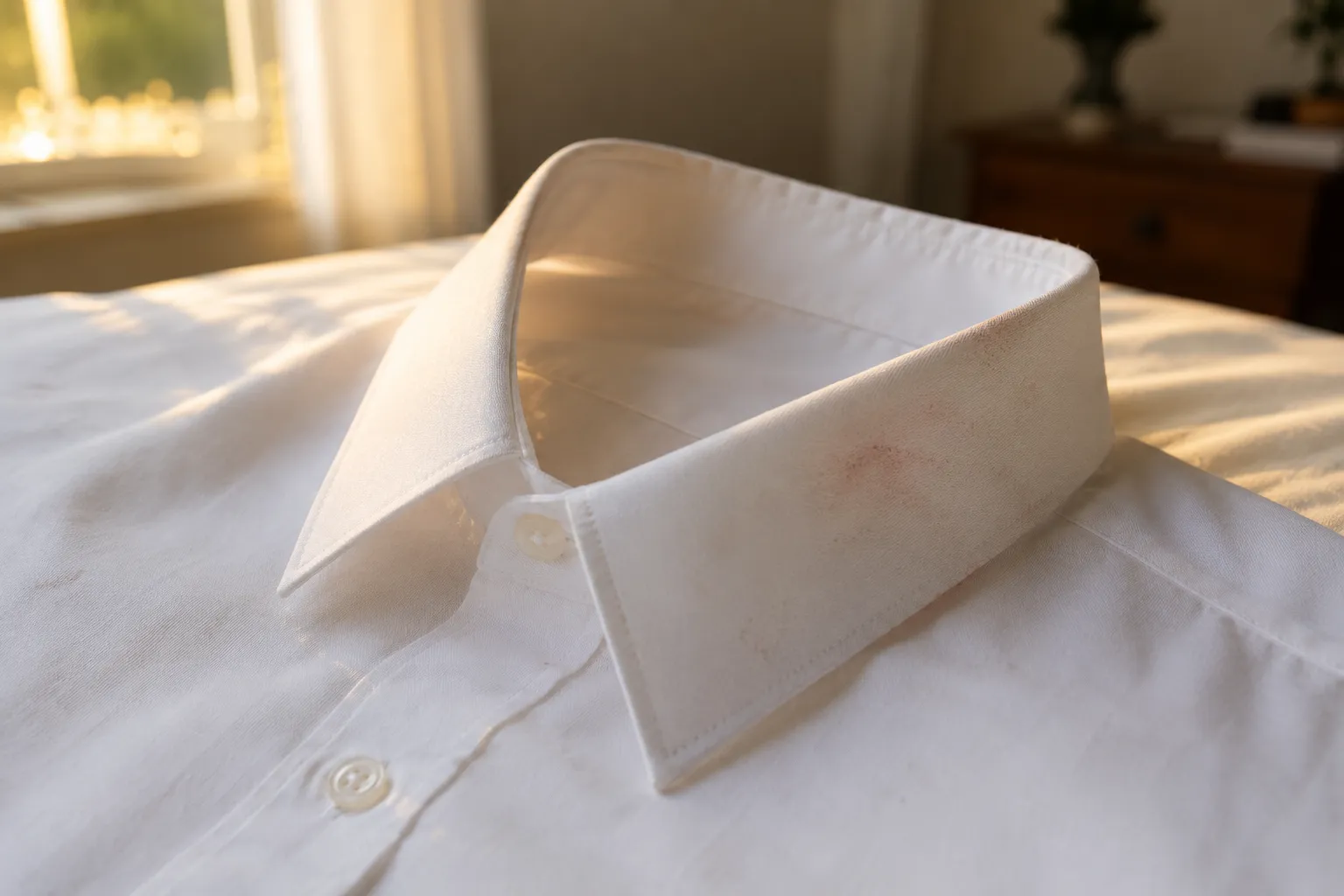
 After
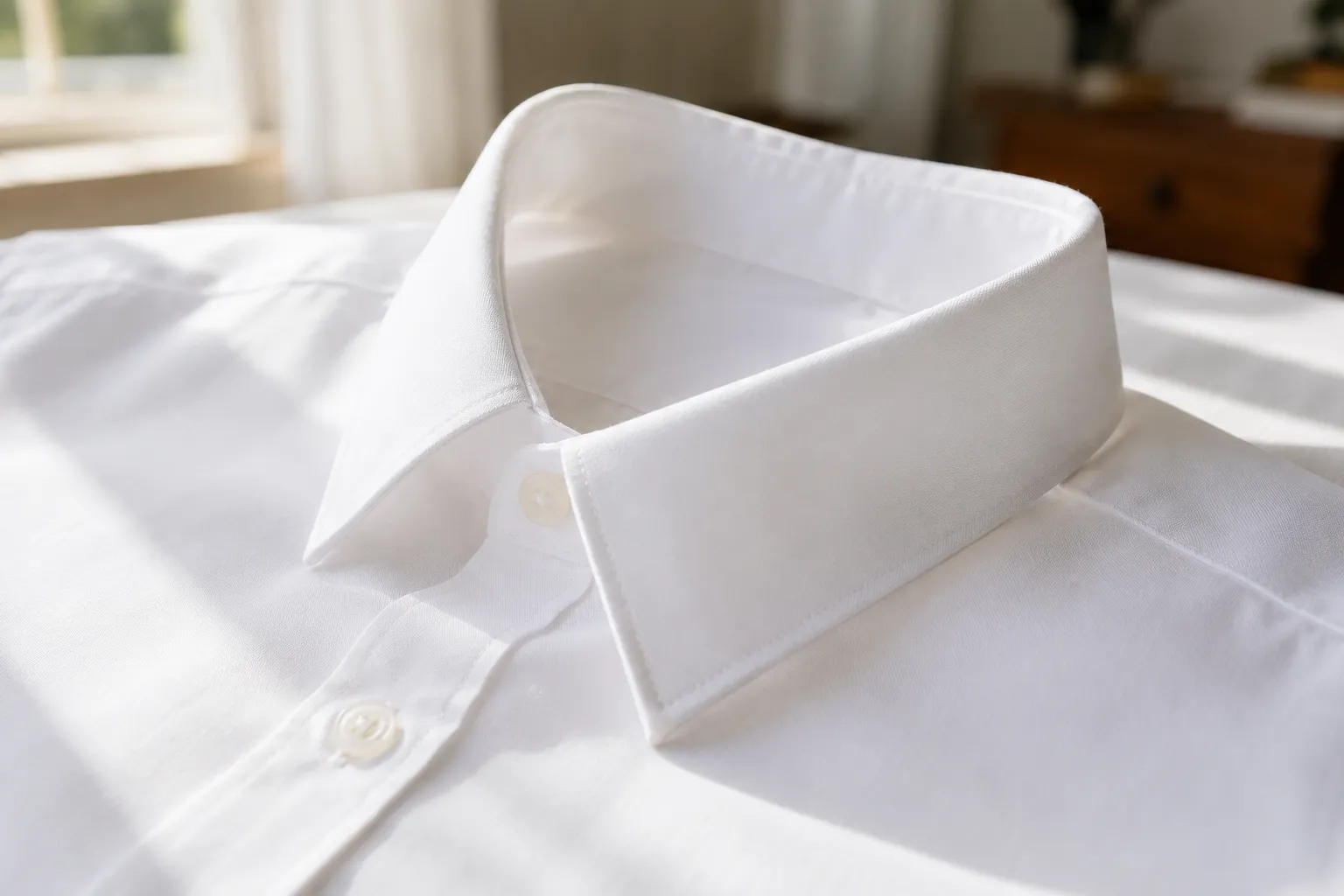
After
Request: Remove yellow stain from the collar of a white shirt.
Done: Applied stain remover to the collar, soaked, washed with bleach.
Cost: 2 500 ₸
Master: Aigul Nurmagambetova, dry cleaning master
Total: Collar perfectly white, no trace of stain.
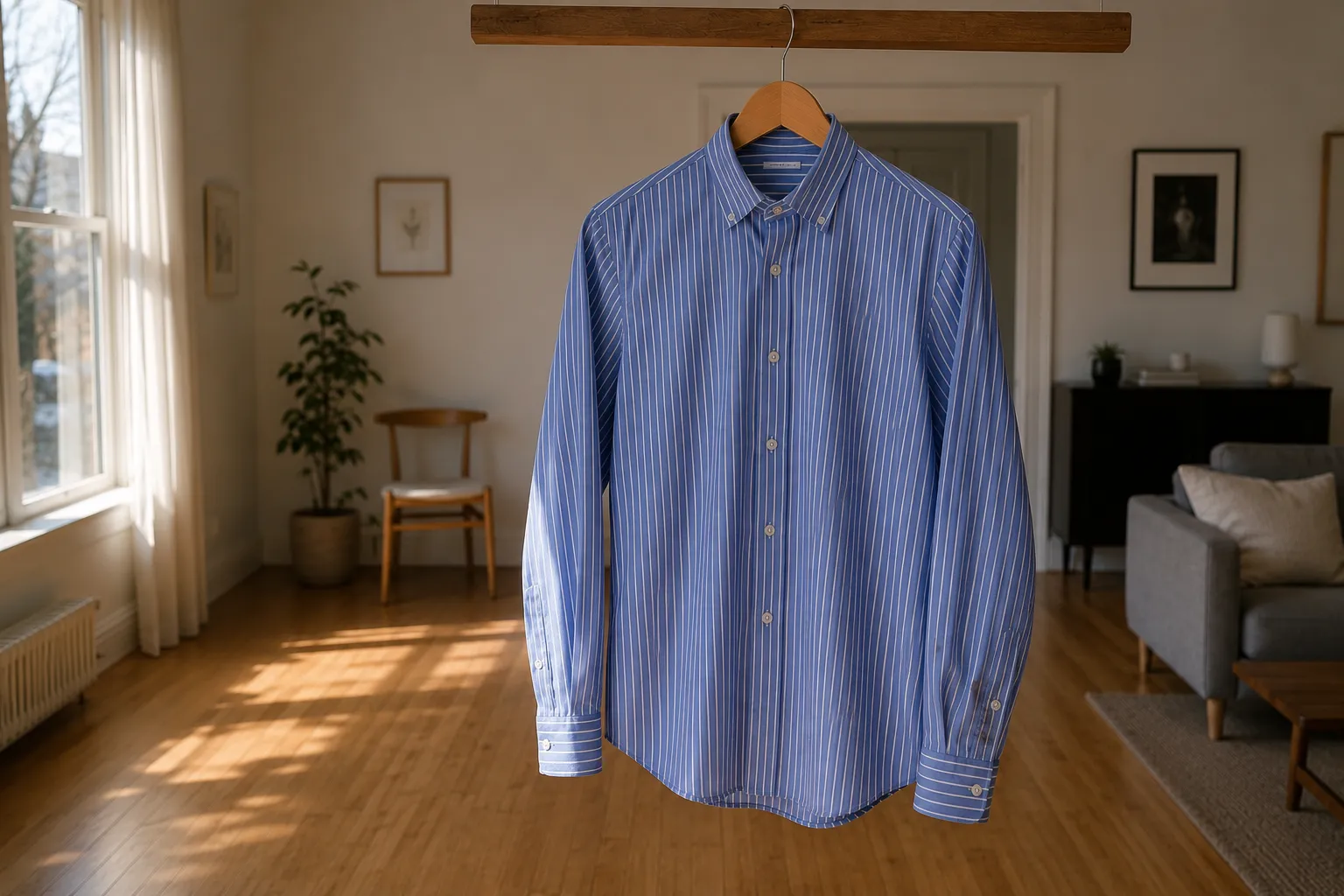
 After
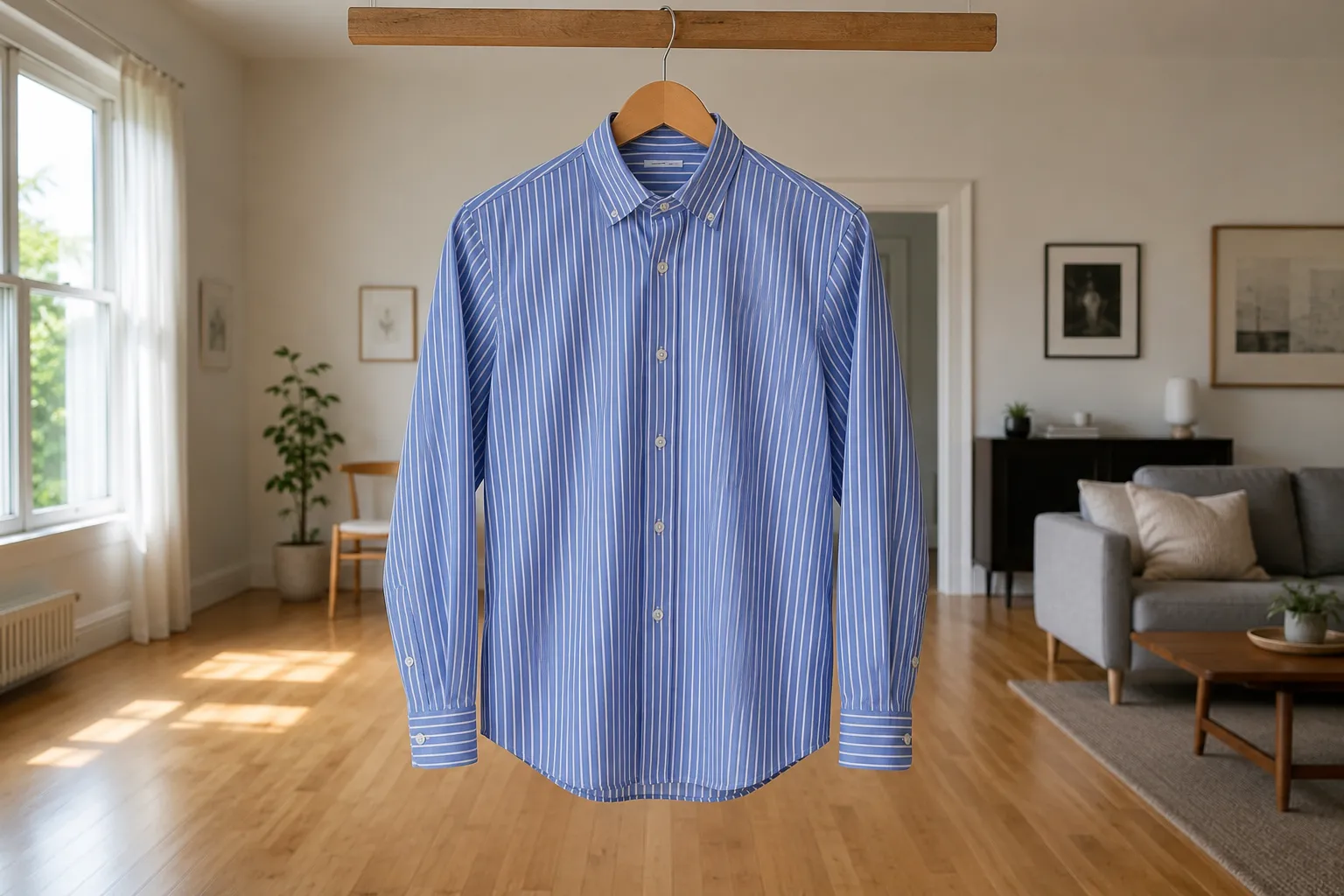
After
Request: Remove ink stain from the sleeve of a blue shirt.
Done: Treated stain with alcohol, soaked in enzyme solution, washed.
Cost: 3 000 ₸
Master: Timur Zhaksybekov, dry cleaning master
Total: Sleeve clean, no ink visible.
 After
After
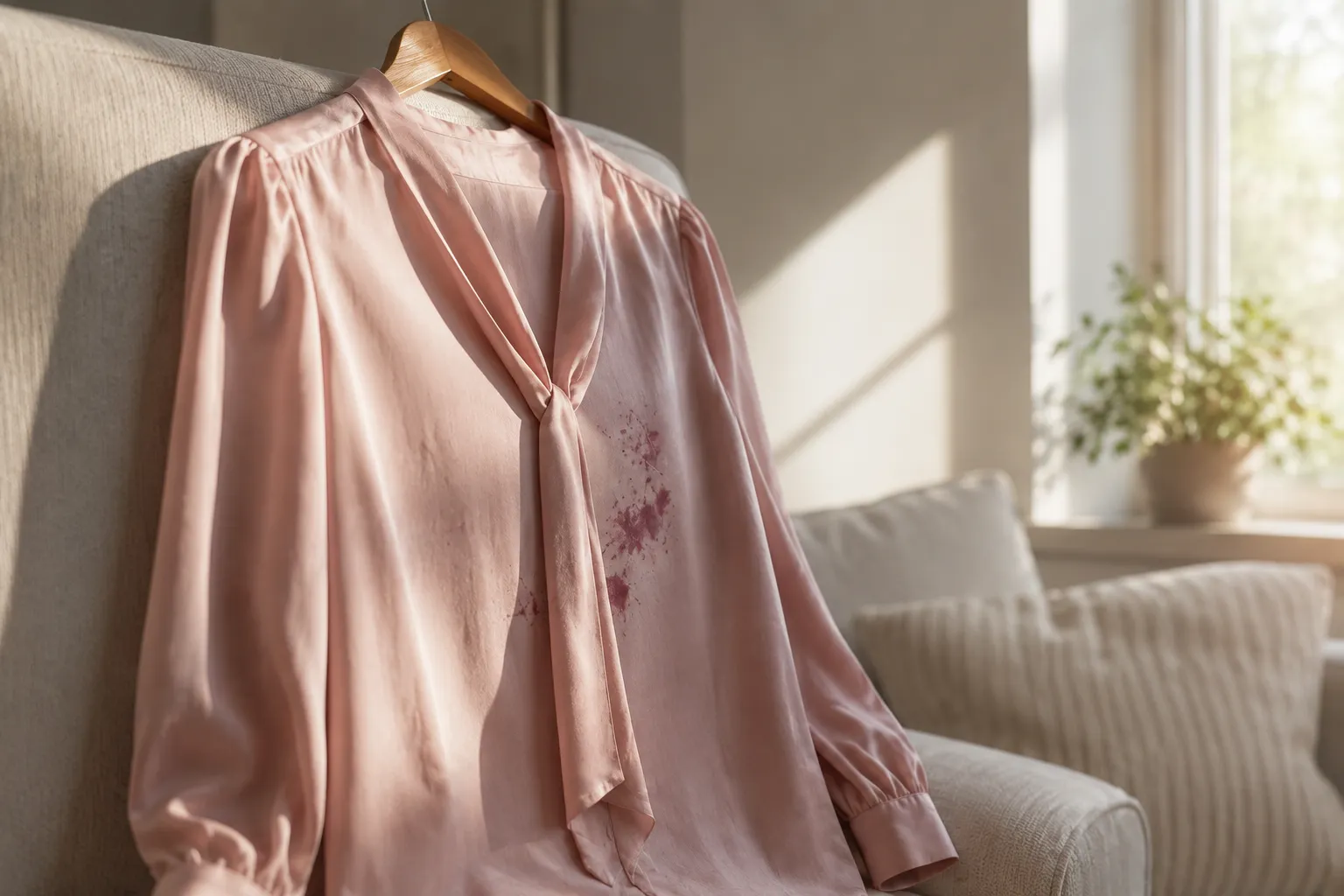
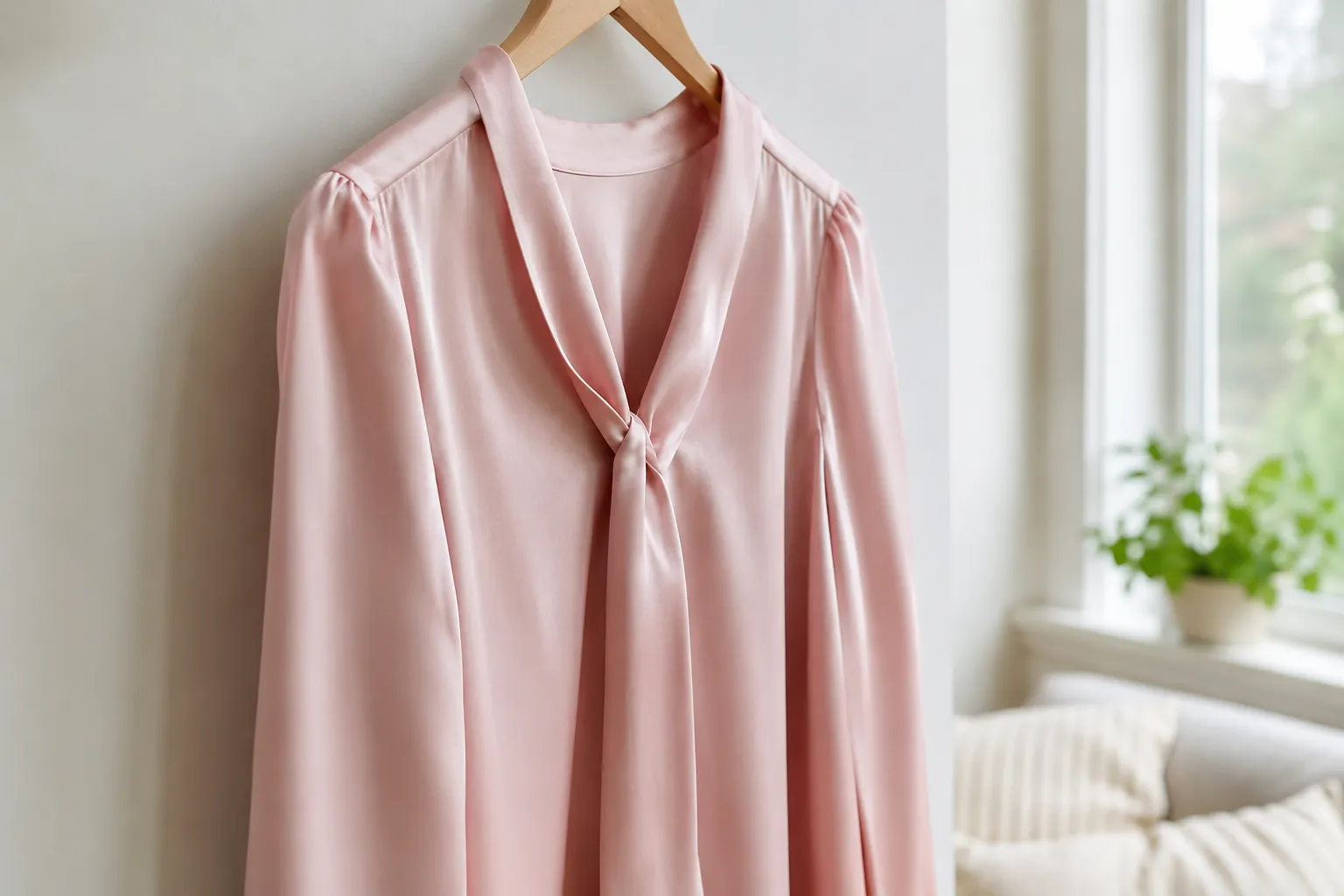
Request: Remove red wine stain from a silk blouse.
Done: Blotted stain, applied stain remover for silk, gently washed.
Cost: 2 800 ₸
Master: Dinara Sagintayeva, dry cleaning master
Total: Blouse without traces of wine, fabric not damaged.
 After
After
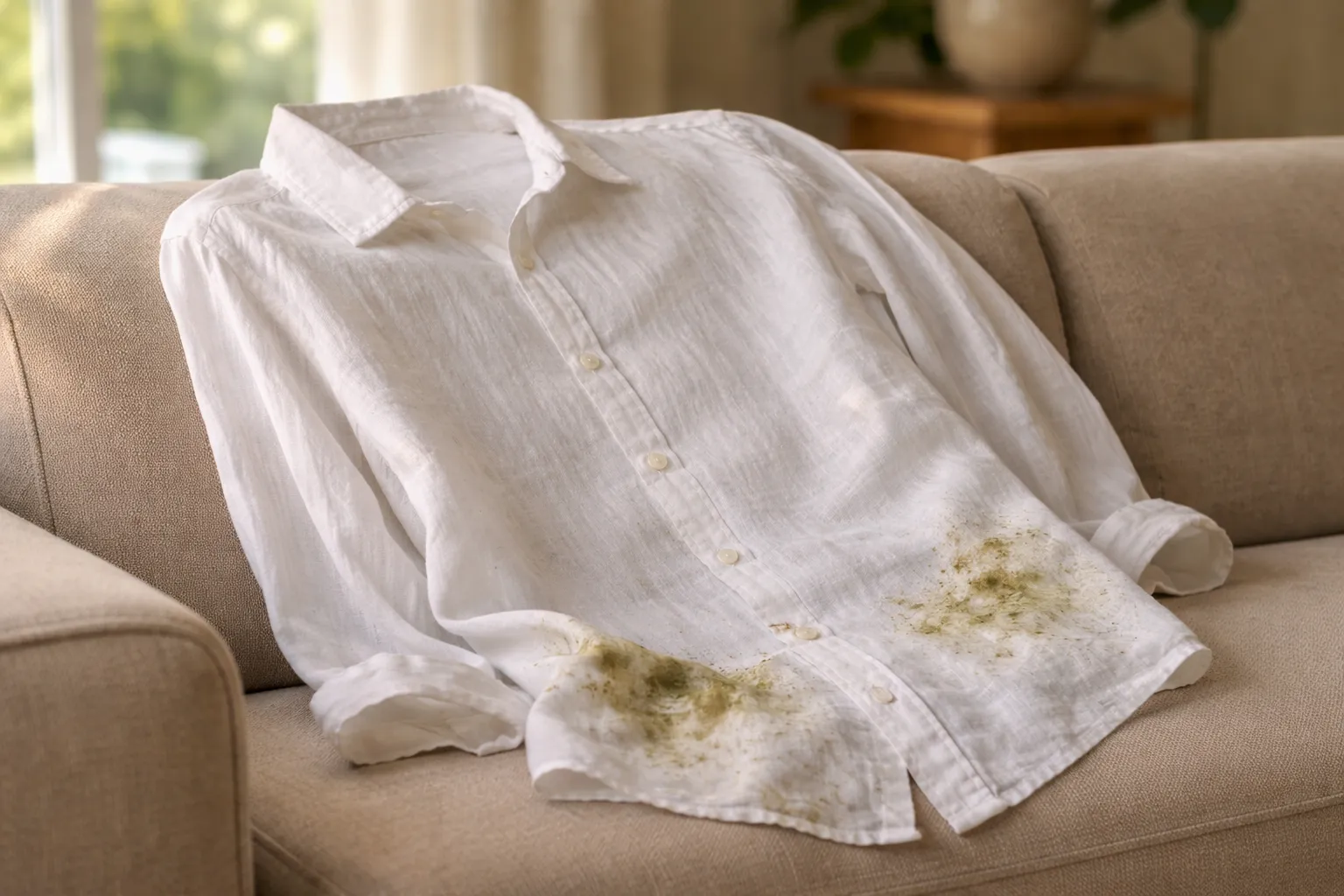
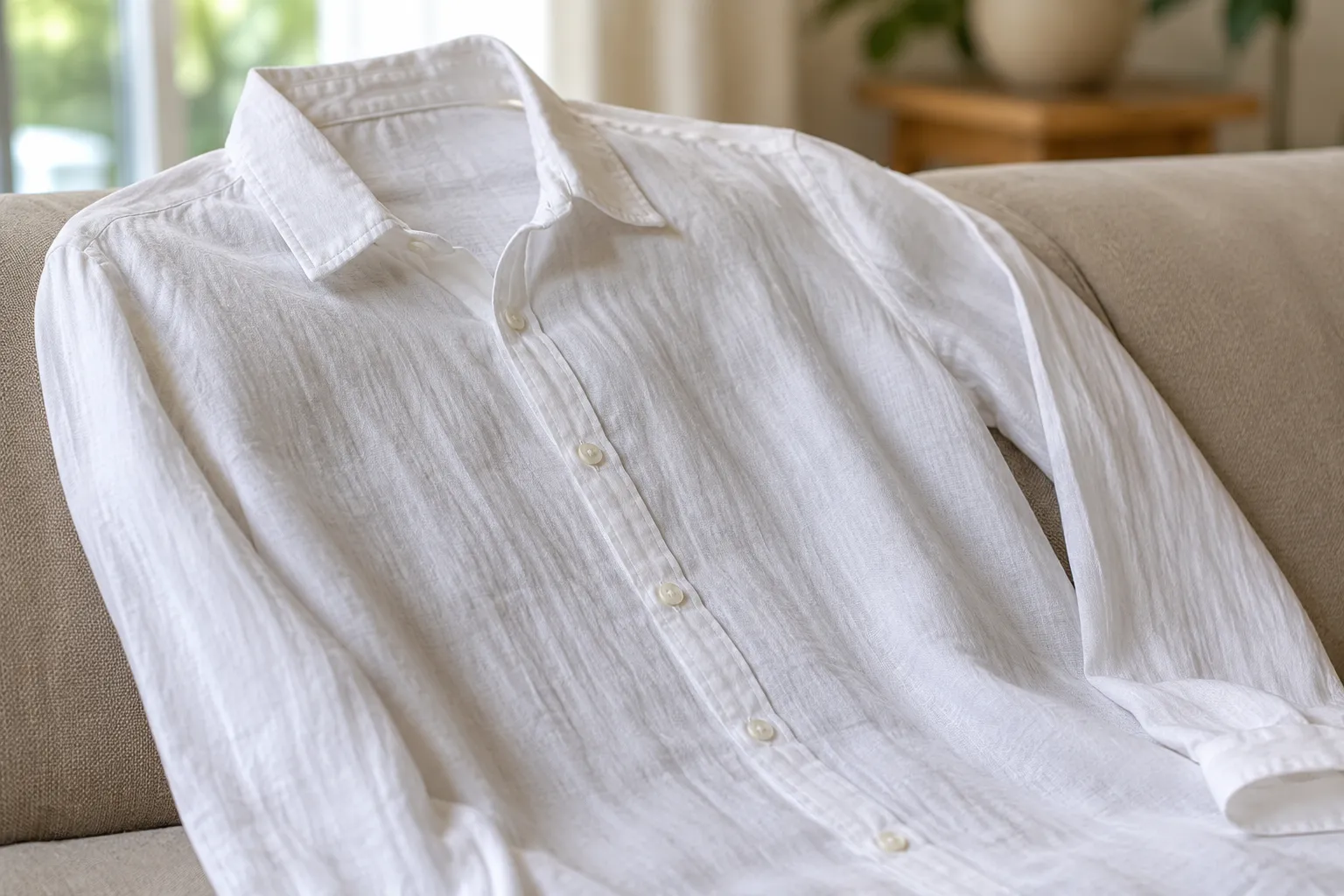
Request: Remove green grass stain from a linen shirt.
Done: Applied stain remover, soaked in warm water, washed with bleach.
Cost: 2 500 ₸
Master: Alikhan Muratov, dry cleaning master
Total: Stain completely gone, shirt like new.
 After
After
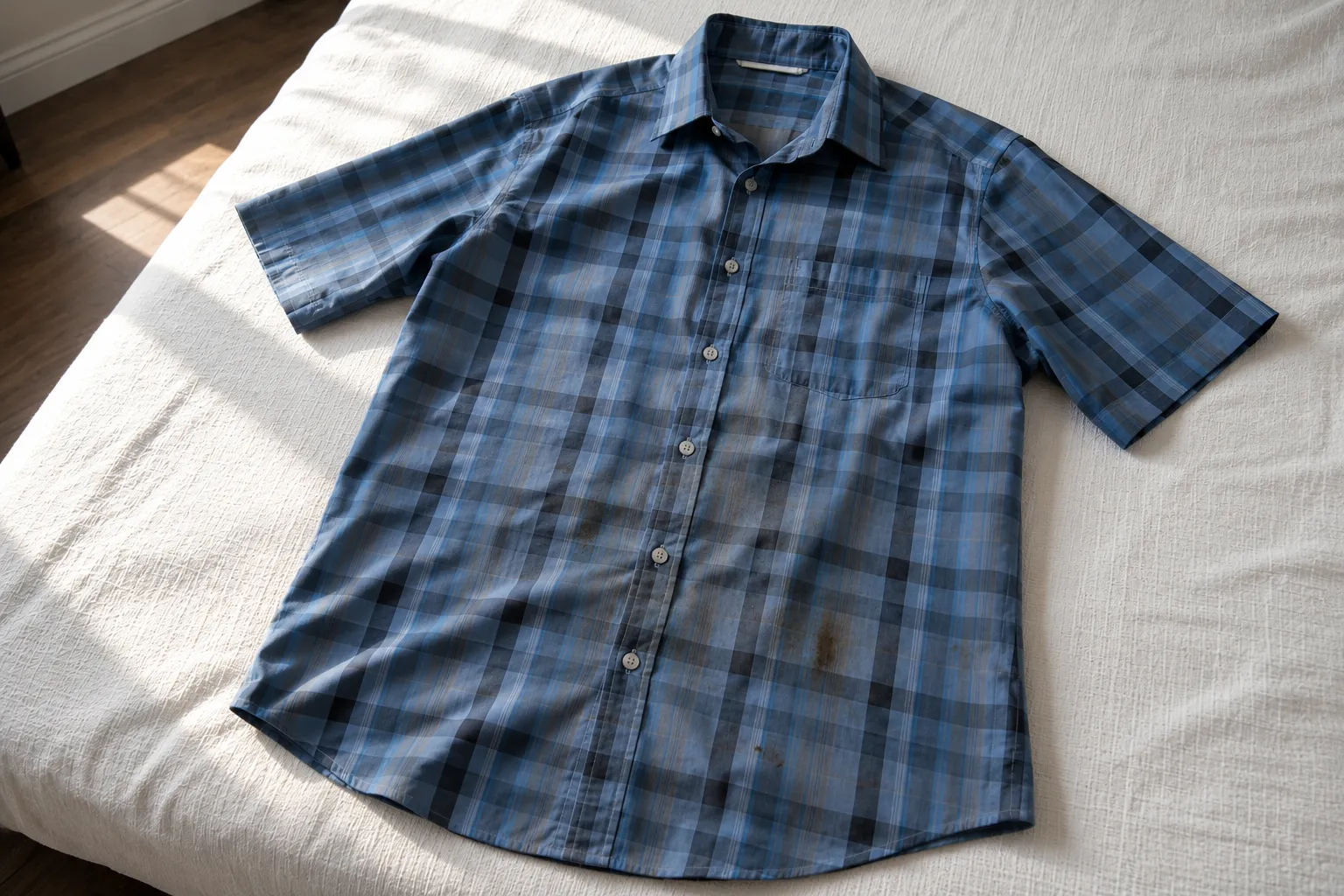
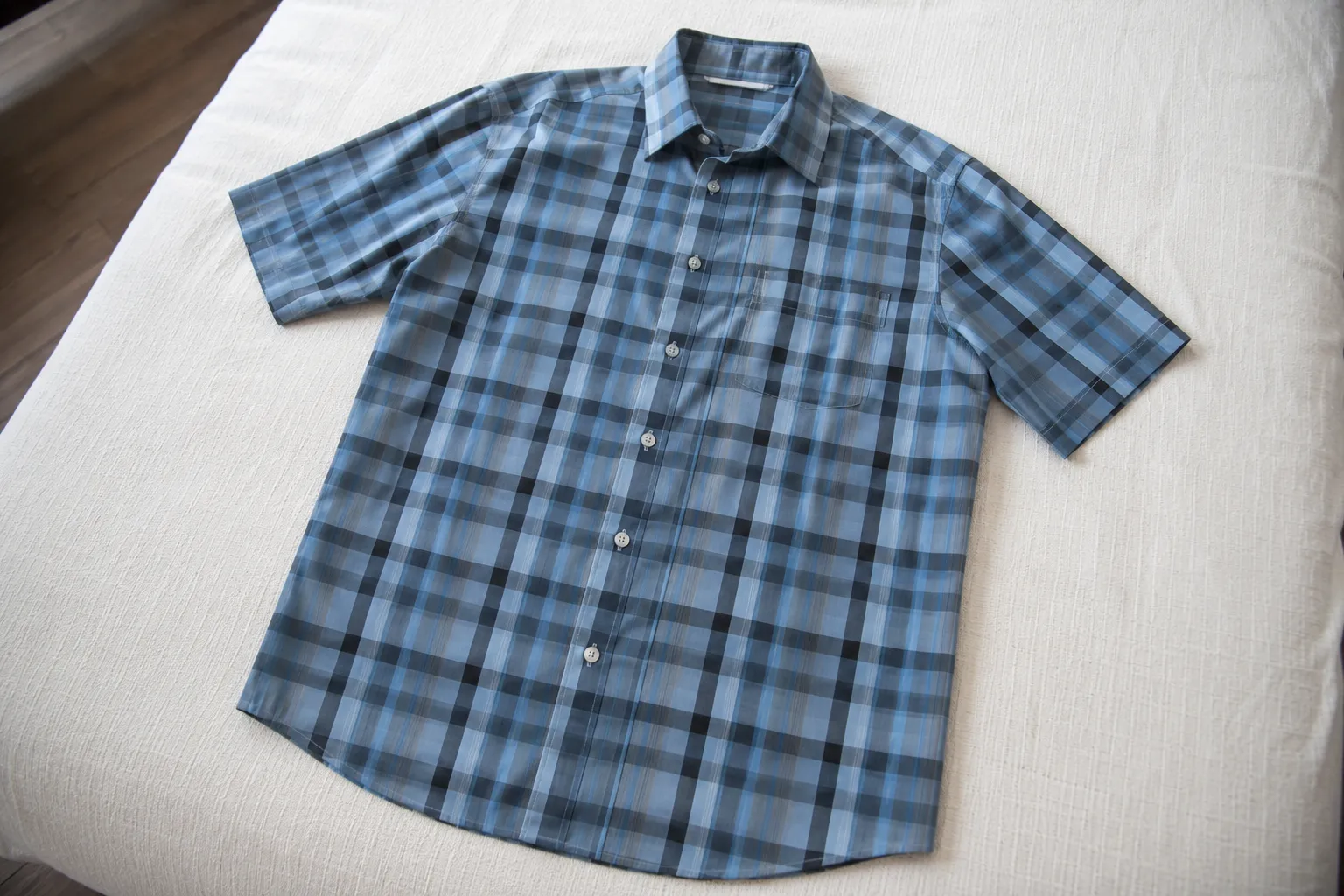
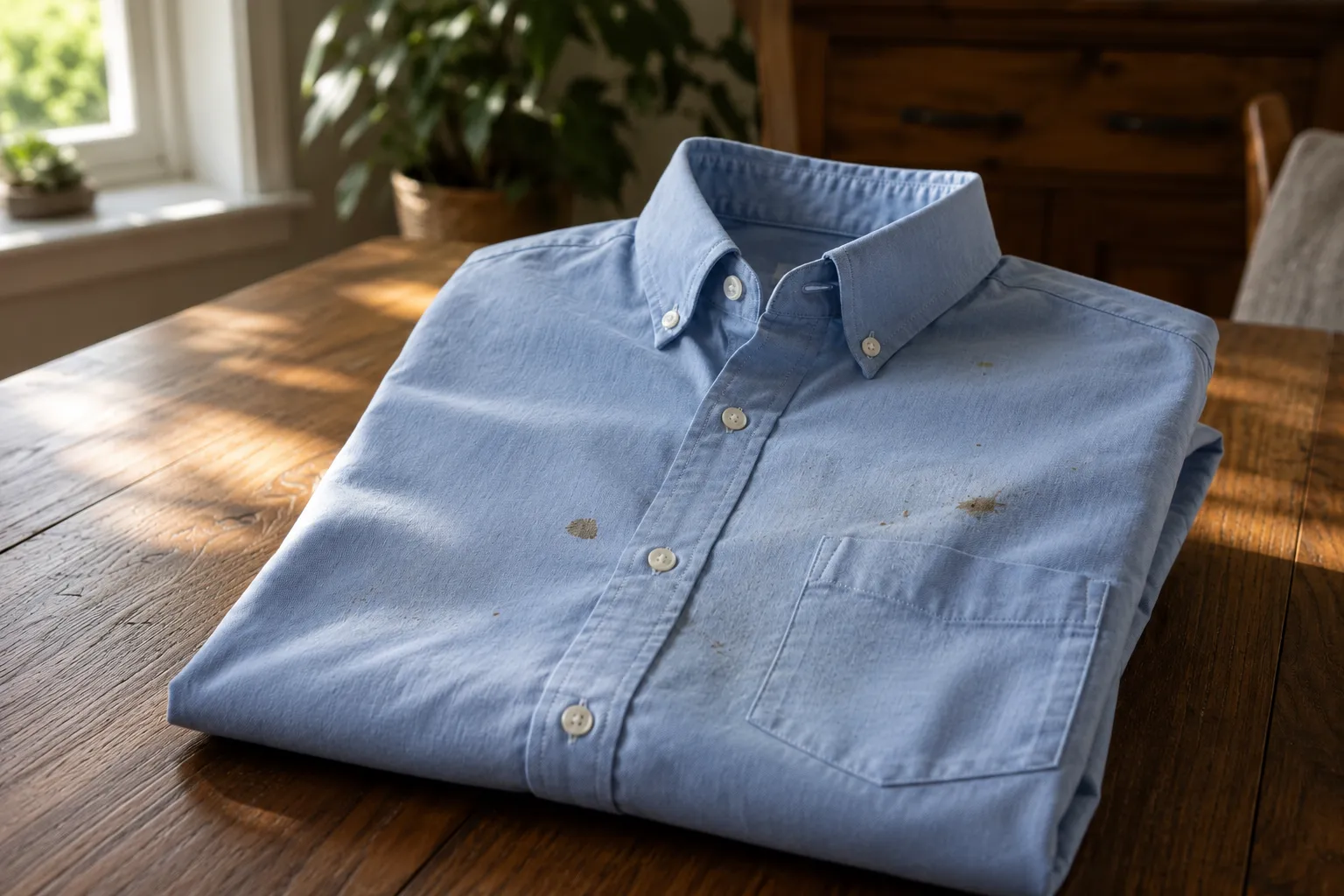
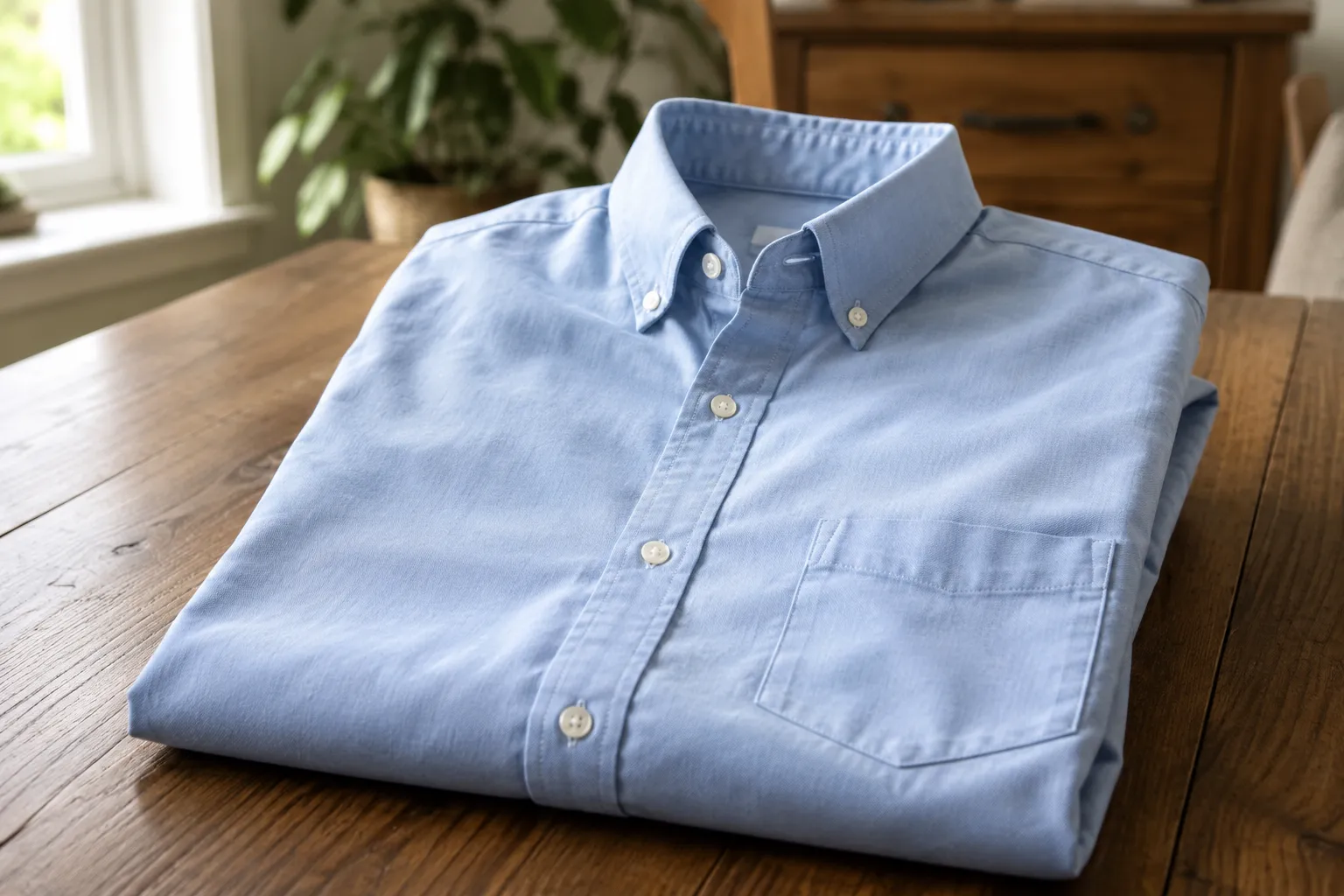
Request: Remove grease stain from a polo shirt.
Done: Sprinkled with talc, applied degreaser, washed at high temperature.
Cost: 14 000 ₸
Master: Aigerim Kassymova, dry cleaning master
Total: Stain gone, fabric without streaks.
 After
After
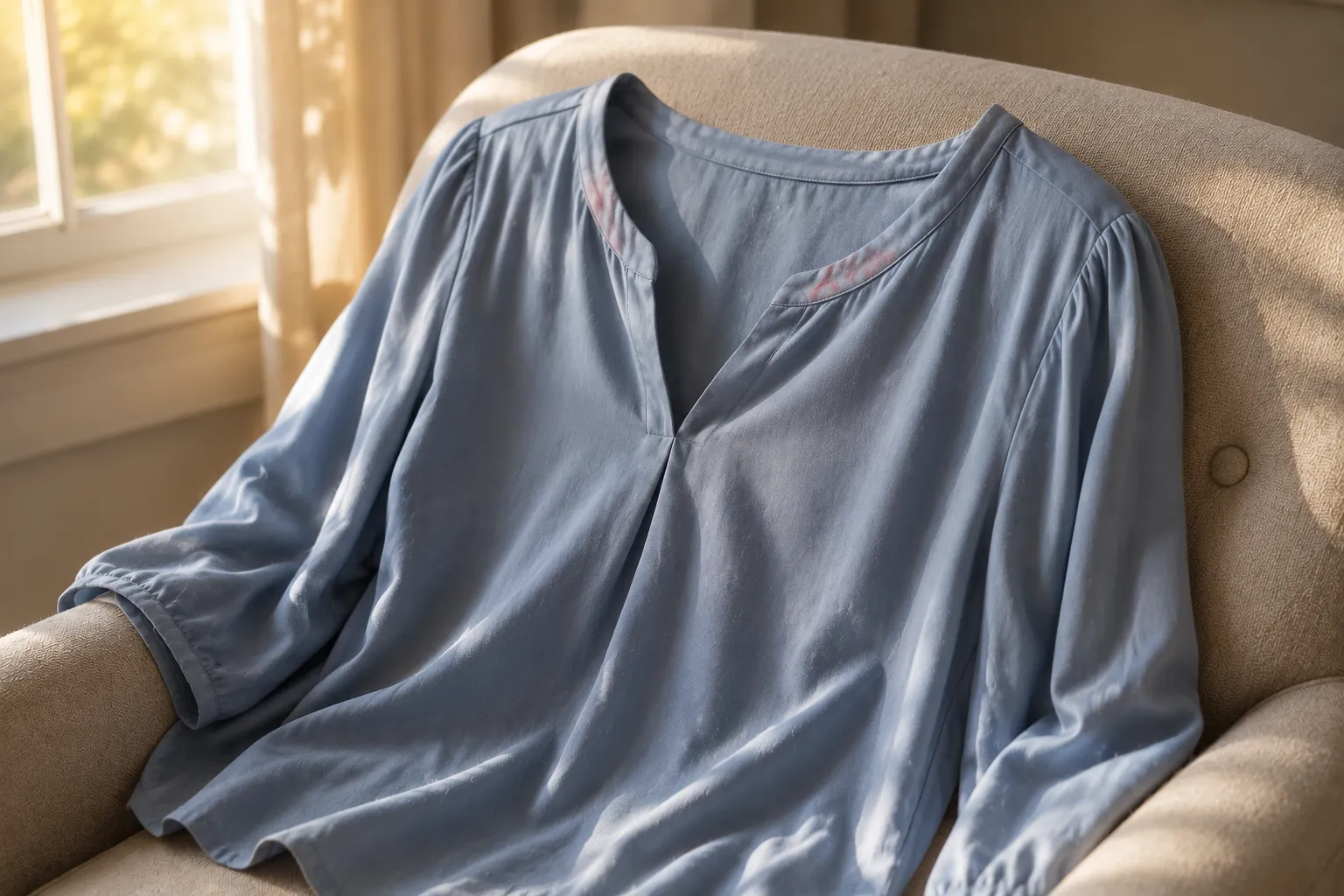
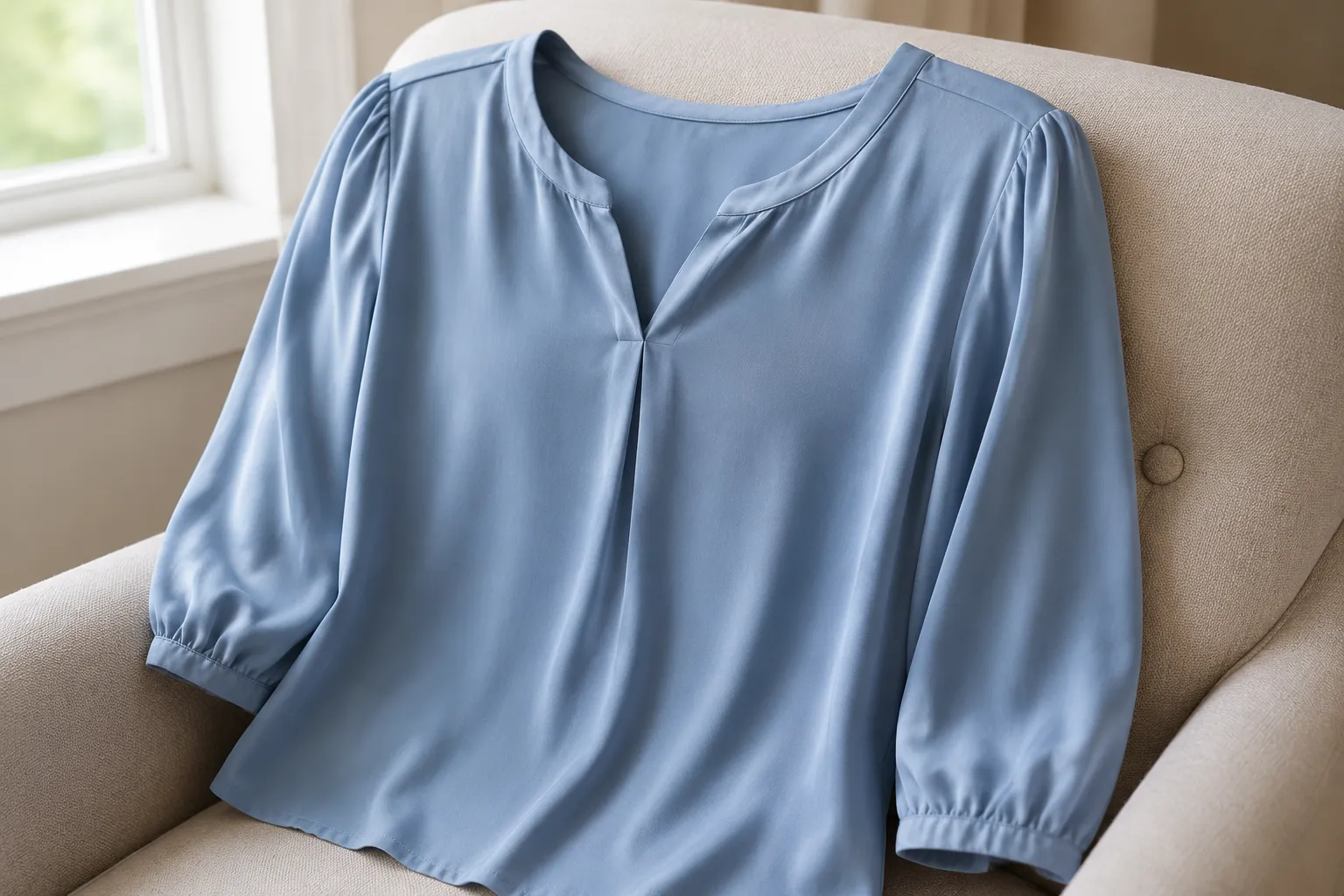
Request: Remove dirty stains from the cuffs of a white shirt.
Done: Rubbed cuffs with stain remover, soaked, washed.
Cost: 2 500 ₸
Master: Madina Yerzhanova, dry cleaning master
Total: Cuffs clean, no traces of dirt.
 After
After
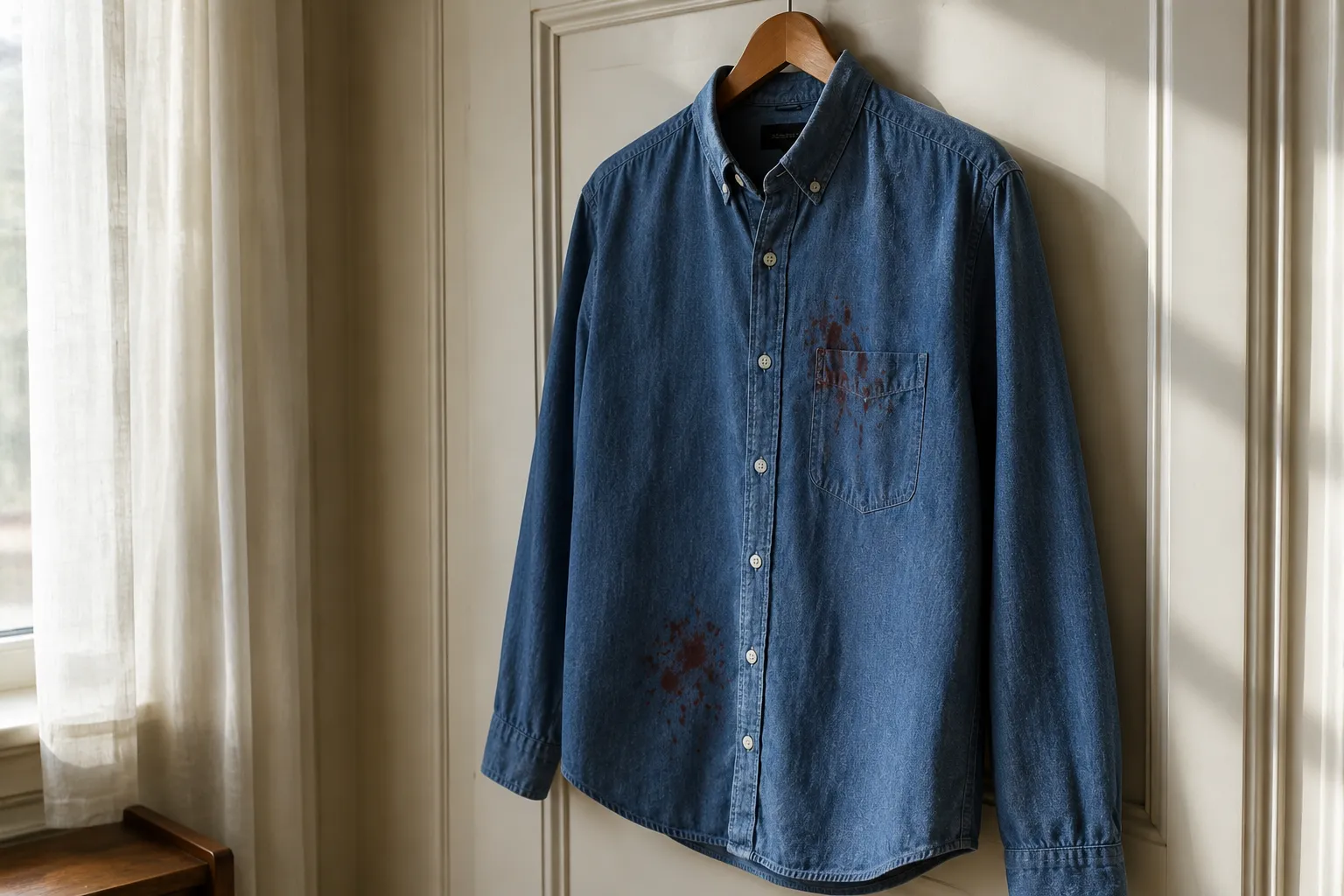
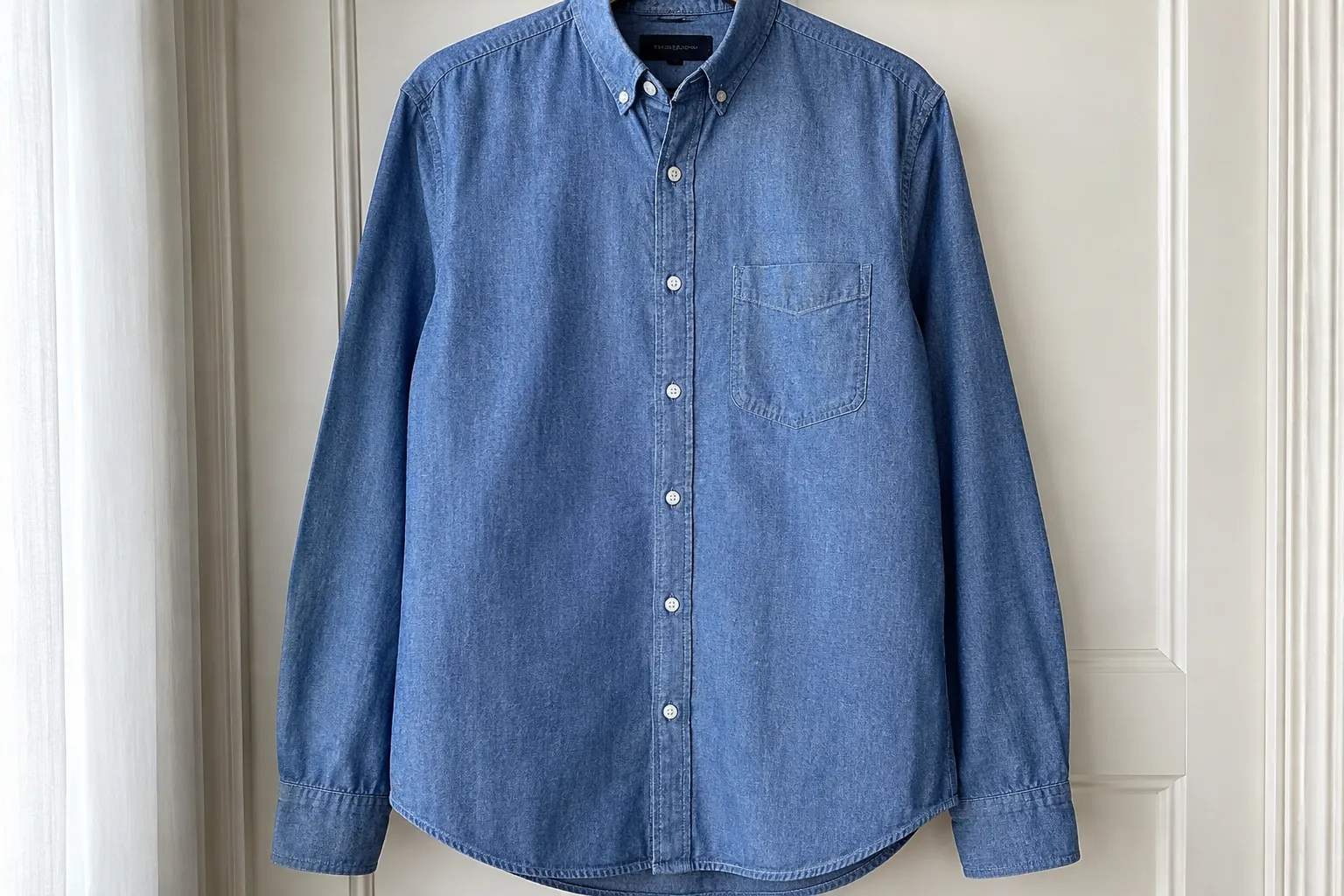
Request: Remove tomato sauce stain from a kids shirt.
Done: Applied stain remover, soaked in cold water, washed.
Cost: 2 500 ₸
Master: Zarina Akhmetova, dry cleaning master
Total: Stain gone, shirt bright and clean.
 After
After
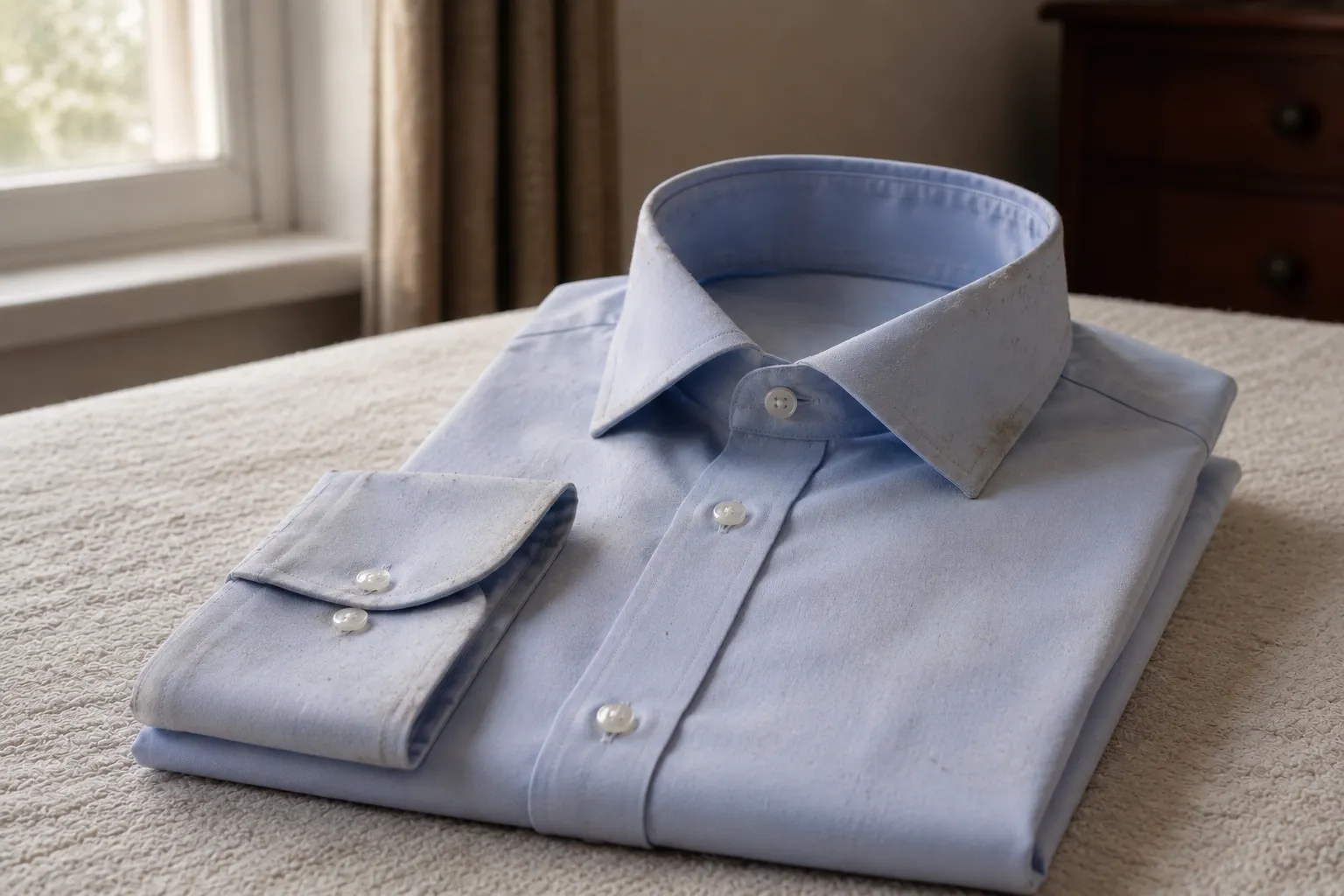
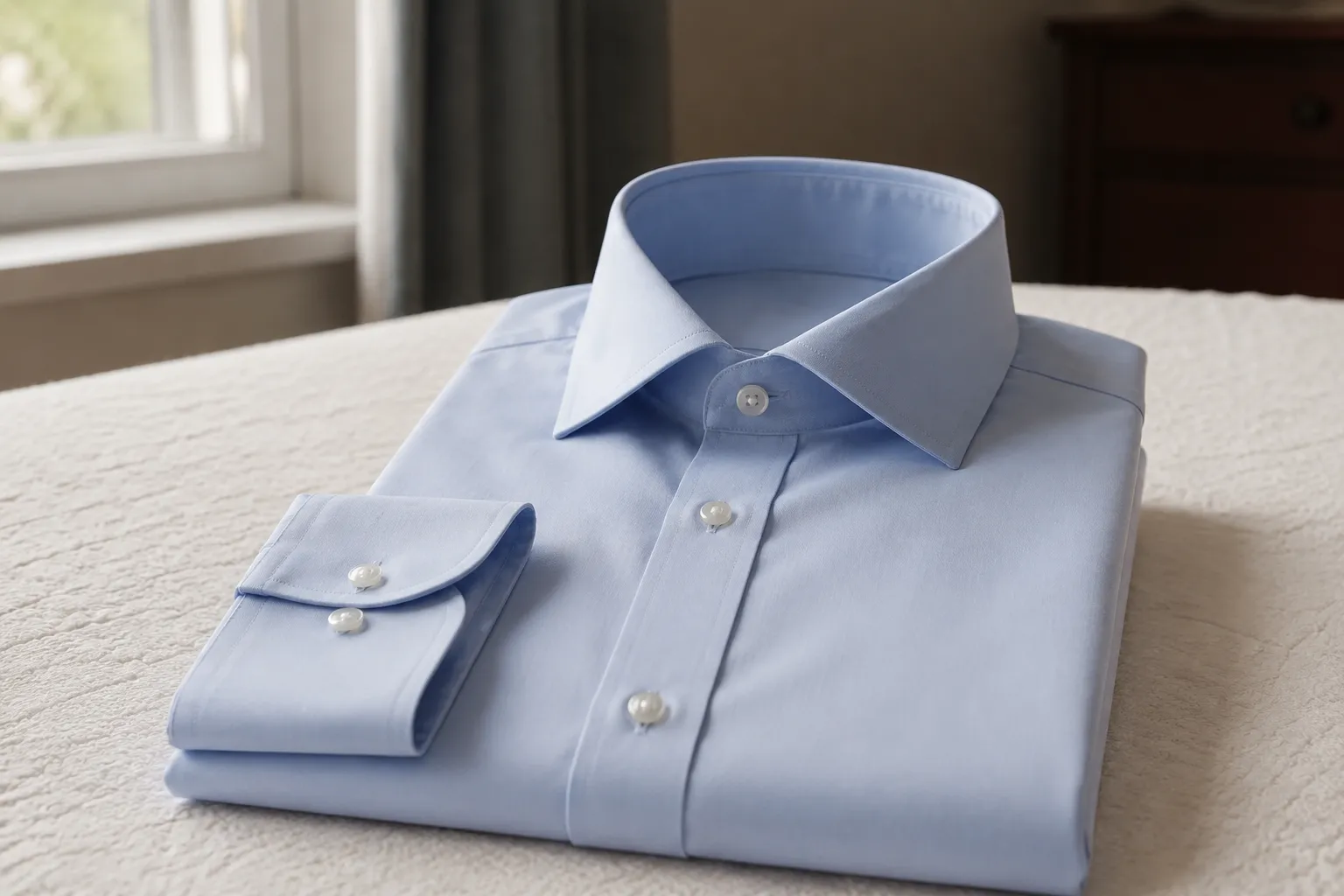
Request: Remove dark stain of unknown origin from a striped shirt.
Done: Tested stain remover, applied, soaked, washed.
Cost: 2 500 ₸
Master: Nurlan Bekzhanov, dry cleaning master
Total: Stain removed, shirt undamaged.
 After
After
Request: Remove dried blood stain from a white shirt.
Done: Soaked in cold water, applied hydrogen peroxide, washed.
Cost: 2 500 ₸
Master: Gulmira Tulegenova, dry cleaning master
Total: Stain completely removed, shirt snow-white.
All cleaners are profi-clean staff with training, uniform and security check. Each order has a team leader who controls quality.
We daily receive shirts with a wide variety of soiling — from coffee stains to set-in oil marks. In this section, we’ll break down which types of stains our dry cleaning removes guaranteed, and where a special approach is needed. Understanding the nature of the soiling is the first step to restoring a shirt’s impeccable appearance without damaging the fabric.
The most common request in our practice is traces of coffee, tea, and red wine. Fresh coffee and tea stains we remove completely in one dry cleaning cycle — the proteins and tannins dissolve in the organic solvent without a trace. Red wine is more challenging: anthocyanins (natural pigments) penetrate deeply into cotton and linen fibers. If the stain is set-in (more than 2–3 days old), before the main cleaning we apply an oxygen bleach based on hydrogen peroxide — it breaks down the pigment without chlorine. Greasy stains from oil, sauces, and mayonnaise are our area of expertise: tetrachloroethylene (perchloroethylene) in professional machines breaks down fats at a molecular level. We had a case where a client brought in a shirt with an olive oil stain three months old — after two treatment cycles, the stain disappeared completely. Fruit and berry stains (cherry, pomegranate, blueberry) contain tannins that fix onto the fabric upon contact with hot water. Never rinse such stains with boiling water — it permanently sets the pigment. At profi-clean, we treat them with a 5% citric acid solution before loading into the machine. Tip: if you spill red wine on your shirt at a restaurant, blot the stain with a dry napkin (don’t rub!) and immediately sprinkle it with salt — it will absorb the moisture and slow down pigment penetration. Bring the shirt to us within 24 hours — the chance of complete removal is 98%.
Biological stains require a special approach due to their protein base. Blood is one of the most finicky contaminants: fresh (up to 2 hours) is removed with cold water and soap, but if the blood has dried or been treated with hot water, the protein denatures and “bonds” to the fiber. In dry cleaning, we use enzyme pre-spotters (proteases) that break down hemoglobin into amino acids — the solvent then washes them away without a trace. Sweat and deodorant are the cause of yellow underarm stains on white shirts. This isn’t just dirt, but a reaction of aluminum salts from antiperspirant with sweat proteins. Regular machine washing doesn’t remove these salts — they crystallize in the fibers and eventually yellow under UV exposure. Our method: pre-soaking in an alkaline solution (pH 9–10) followed by steam treatment at 120°C on the finishing press. Urine and vomit contain urea and ammonia — upon drying, they leave a hard-to-remove odor. Here, a combination works: first an acidic pre-spot (3% acetic acid) to neutralize the ammonia, then the main dry cleaning cycle with the addition of a deodorizing agent. Bile (stains from the gallbladder when butchering poultry) is rare for shirts, but we have cleaned it: the bile pigment bilirubin is only removed by an organic solvent; water sets it. Our expertise: if a blood or sweat stain is set-in (over a month), we recommend a double treatment with intermediate drying — one cycle only breaks down the top layer of denatured protein. Bring such items to us — we will assess the condition before starting work and give an honest prognosis.
These stains are encountered less often, but they are the most stubborn. Fuel oil and technical oils (traces from a bicycle chain or car engine) are a mixture of hydrocarbons of different fractions. In dry cleaning, they are removed in 1–2 cycles, but if the stain has oxidized in the air (turning dark brown), manual cleaning with a steam generator may be required. Paint depends on its composition: acrylic (water-based) is completely removed with a solvent, oil-based (alkyd) only if fresh (up to 3 hours). We do not undertake to remove dried oil paint — it penetrates the fabric structure and destroys the fiber when you try to rub it off. Ink from pens — gel and ballpoint — dissolves in perchloroethylene, but there is a nuance: blue and black ink is removed in one cycle, red and green (containing phthalocyanine pigments) in 2–3 cycles with intermediate drying. Felt-tip pens and markers — alcohol-based (permanent) are 90% removed in the first cleaning, water-based completely. Glue (from badges or tape) consists of synthetic resins; we apply a citrus solvent (d-limonene) to the stain, which softens the glue in 5–7 minutes, after which it is washed off in the machine. An important observation: never try to remove an oil stain with gasoline or acetone at home — these solvents wash out the dye from the fabric and leave whitish streaks that even professional cleaning cannot remove. At profi-clean, we use only certified pre-spotters compatible with the specific fiber type.
Cosmetic stains are a separate category due to their fatty base and pigments. Lipstick and lip gloss contain waxes, oils, and synthetic dyes (often based on carmine or iron oxide). In dry cleaning, the waxes melt at 60°C in the solvent, and the pigments are mechanically washed out — resulting in 99% removal in one cycle. Foundation and concealer are an emulsion of oils and silicones with titanium (white pigment). If the cream has been rubbed into the fabric, we apply a silicone dispersant to the stain 10 minutes before loading — it breaks the emulsion, and the solvent washes it out completely. Iodine is a volatile substance: on a fresh shirt (up to 1 hour), it evaporates on its own under heat, but if more time has passed, iodine crystallizes and leaves a yellow-brown mark. We treat it with a 3% sodium thiosulfate solution (photographic fixer) — it reduces iodine to a colorless iodide. Brilliant green is an aniline dye that cannot be removed by water or alcohol. In our practice, the only working method is treatment with a concentrated hydrogen peroxide solution (12%) followed by a dry cleaning cycle on a cold setting (30°C). Nail polish and acetone are a paradox: the polish itself is easily removed by an organic solvent, but acetone, if already applied to the stain, destroys acetate and acetate-silk fibers. We do not accept shirts treated with acetone — the fabric is already damaged. Practical advice: washing cosmetic stains with soapy water is useless — the fatty base does not emulsify without a solvent. Simply blot the stain with a dry cloth and bring it to profi-clean — we will do a preliminary diagnosis in 2 minutes on the spot.
Honesty with the client is our principle. Heat-set stains are those that have been ironed after soiling. High temperatures (150°C and above) “fuse” organic compounds into the polymer structure of synthetic fibers (polyester, nylon). On cotton and linen, thermal fixation is less deep, but still reduces the chance of removal to 30–40%. Rust stains (from metal buttons or snaps left on a damp shirt) — iron oxides do not dissolve in organic solvents. We use oxalic acid (5% solution) for local treatment, but on colored fabrics it can fade the dye — so we always test on an inconspicuous area. Dyes from other items (e.g., a red t-shirt bleeding onto a white shirt during washing) — this is the adsorption of a water-soluble dye. Dry cleaning is ineffective here: perchloroethylene does not wash out water-soluble compounds. We send such shirts to wet cleaning (specialized water treatment with oxygen bleach). Mold and mildew — black spots on cuffs and collars if the shirt has been left damp for a long time. Mold grows inside the fiber, and its mycelium cannot be completely removed — only bleached by bleach. We warn: after cleaning, the stain will disappear, but in 2–3 months, under high humidity conditions, it may reappear. Sunburn (photo-oxidation) — uneven yellowing of white shirts from UV light. This is not a stain, but the destruction of the optical brightener in the fabric — dry cleaning does not restore whiteness. Only re-dyeing or replacing the item. When we say “no”: if the stain is the result of a chemical burn (acid, alkali, bleach), the fabric is irreversibly damaged. In such cases, we honestly recommend not spending money on cleaning and buying a new shirt.
Basic recognition helps save time. By color: yellow-brown — often sweat, coffee, or rust; red/burgundy — wine, berries, or lipstick; black/dark gray — oil, fuel, or ink; white/cloudy — deodorant, foundation, or starch. By texture: greasy to the touch (shows through from the inside) — oil, cream, sauce; sticky — syrup, honey, glue; dry and hard — dried blood, egg white, paint. By smell: sour — dairy products or sweat; chemical — solvent, paint, medicine; sweetish — wine, juice, soda. By reaction to water: drop a drop of water on the stain — if it beads up (hydrophobic surface), you have grease or wax; if it absorbs and spreads — a water-soluble contaminant (salt, sugar, protein). Our practice: in 80% of cases, clients mistakenly mistake an old sweat stain for an oily one, and deodorant marks for mold. Bring your shirt to profi-clean for a free diagnosis — a technician will determine the type of contamination in 30 seconds under a UV lamp and give an accurate removal forecast. It’s free and non-binding.
Proper preparation of a shirt before sending it to the dry cleaner directly affects the quality of stain removal and fabric preservation. At profi-clean, we have compiled the main rules to help avoid common mistakes and extend the life of your favorite items.
Inspect the shirt in daylight and note all soiling — greasy marks on cuffs, sauce stains on the collar, deodorant traces in the underarm area. Do not try to pre-wash stains yourself: water and laundry gel fix protein and oily contaminants in the fibers, after which even a professional solvent may not be able to handle them. Check pockets — a forgotten pen or candy can leave indelible marks. Remove detachable accessories: brooches, cufflinks, patches — during machine processing, they can damage the drum or the fabric itself. In my opinion, the most common mistake clients make is trying to rinse a stain with water: Almaty tap water contains many hardness salts, which react with the stain and make it irremovable.
The optimal frequency is after 2-3 wears for classic shirts (cotton, linen, blends) and after each wear for shirts made of delicate fabrics (silk, viscose, fine cotton). Our cleaners treat items in gentle modes without mechanical friction, which wears the fabric less than home washing in a machine with powder and spin cycle. For white poplin or twill shirts, it is acceptable to send them for treatment every week — provided you don’t wear them in hot weather (sweat destroys cellulose fibers faster than solvents). Damage to the fabric occurs not from the frequency of cleaning, but from improper storage between orders: damp shirts in a bag create an ideal environment for mold. In our practice, there was a case where a client sent in the same shirt every three days for a month, and after 10 cycles, the fabric looked like new — because the cleaning was done on a delicate cycle without bleaches.
Persistent odors — sweat, tobacco smoke, perfume — require separate treatment, as they are absorbed into the lining and seams. At profi-clean, we use ozonation in a sealed chamber to neutralize odor molecules at the molecular level, which does not damage the fabric or leave a chemical trace. Before sending such a shirt for dry cleaning, air it out on the balcony for 2-3 hours — this will reduce the odor concentration by 30-40% and speed up the ozonation process. Do not try to mask the odor with deodorant or perfume: the alcohol base fixes sweat molecules in the fibers, making them harder to remove. In Almaty’s summer heat, when humidity in the city reaches 60%, sweat odor penetrates cotton shirts within 4-5 hours of wear — such items are best sent for treatment the same day, without delay.
When sending 3-10 shirts at the same time, it is important not to mix them up after treatment — we use colored tags with an order code, but clients can also help. Attach a paper tag to each shirt with a brief description (e.g., “blue striped, mother-of-pearl buttons”) — this will eliminate confusion, especially if you have several identical models. Do not use plastic clips or metal staples — they leave marks on the fabric during heat treatment. In our service, it is standard practice to photograph each item before starting work and compare it with the client’s tag, but additional labeling reduces the reception time by 5-7 minutes and lowers the risk of error. For silk and cashmere shirts, we recommend attaching a separate note specifying the fabric type — this helps the master choose the correct cleaning mode without an additional call.
Washing a silk shirt in a home machine is almost a guaranteed loss of shape, color, and fabric structure. At profi-clean, we receive such shirts daily after owners’ unsuccessful attempts to “just wash out a stain.” Silk is a natural protein (fibroin) that behaves fundamentally differently from cotton or synthetics and requires completely different conditions.
Ordinary washing powder with alkaline components (pH above 7) literally corrodes fibroin threads. Silk loses up to 40% of its tensile strength after just one wash in water above 30 °C — this is data from laboratory tests by textile institutes. Water, even cold, causes the fiber to swell by 30-40% of its original diameter, and during mechanical spinning in the drum, these swollen threads break. In practice, this appears as “whitening” of the seam, stretched loops on knitted silk, or irreversible deformation of the collar and cuffs. Even liquid “delicate fabric” detergents contain surfactants that wash out the natural wax layer of silk — after 3-4 washes, the shirt becomes dull and stiff to the touch.
Many clients think hand washing is safer — in reality, the friction of wet silk against fingers creates micro-creases that remain as whitish streaks after drying. Wet silk loses up to 70% of its tensile strength — just pulling a sleeve during rinsing can irreversibly deform the thread. Drying on a line under its own weight stretches the shoulder seam by 2-3 cm in 6-8 hours — the shirt shortens in length but widens in the shoulders. Direct sunlight during balcony drying in Almaty destroys dyes in 2-3 cycles: UV light discolors silk unevenly, and yellow or faded spots appear on the back or shoulders that cannot be restored. The only way to dry without losing shape is horizontal drying on a terry towel in complete darkness, but at home this requires a separate space and time.
A steam iron in contact with silk leaves shine marks (glossy areas) due to the pile being compressed — on dark shirts, this is noticeable as “mirror” spots on the sleeves and back. The soleplate temperature, even on the “silk” setting (around 150 °C), is higher than the glass transition temperature of fibroin (140 °C) — the fiber begins to melt, losing elasticity. At profi-clean, we use steam mannequins with temperature control down to the degree and steamers with a steam pressure of 4-5 bar — the steam penetrates between the fibers, smoothing out creases without contact with the fabric. A home steamer with a pressure of 1-2 bar simply wets the silk without smoothing the creases, and after drying, the wrinkles return. Before handing your shirt in for dry cleaning, do not try to iron it yourself — wrinkled areas complicate the diagnosis of the fabric’s initial condition during intake.
| Type of Silk | Reaction to Water | Reaction to Mechanical Action |
|---|---|---|
| Chiffon (Crepe Georgette) | Significant shrinkage up to 15%, loss of transparency | Breakage of warp threads, holes along seams |
| Satin (Satin Weave) | Loss of luster, appearance of “water” spots | Creases that cannot be steamed out |
| Silk Knit (Jersey) | Stretching of loops, loss of elasticity | Stretched loops, pilling on cuffs |
| Twill (Dense Fabric) | Uneven shrinkage, skewed cut | Whitish streaks along folds |
Raw silk (wild silk) with an uneven texture shrinks up to 20% in length when washed — a shirt made from this material becomes unwearable after one machine wash. If the label says “100% silk” without additional treatments, any home soaking guarantees the loss of the manufacturer’s quality certificate, and a warranty return to the store becomes impossible.
The optimal frequency of professional cleaning depends on the fabric, color, and intensity of wear — there is no universal schedule. We have broken down typical scenarios and mistakes that shorten the life of shirts faster than dirt.
The collar and cuffs of a white shirt noticeably yellow after just one day of wear due to contact with skin and sweat. During home washing, these areas often remain gray — especially on cotton with a density of 120-140 threads. We recommend sending white shirts to dry cleaning after every second wear: this prevents pigment from absorbing into the fibers, and the fabric does not lose its whiteness. On the collars of white shirts made of Egyptian cotton, we apply a pre-treatment with an enzymatic stain remover — it breaks down protein-based soiling that regular powder cannot handle. If a light-colored shirt is worn three to four times without dry cleaning, yellowing becomes irreversible even with industrial treatment — this is a case where prevention is cheaper than restoration.
On black, dark blue, and gray shirts, soiling is less noticeable, but sweat and sebum still accumulate on the collar and underarm inserts. If a dark shirt is worn 5-6 times without dry cleaning, the fabric in these areas begins to shine — the oil embeds into the weave of the threads, and the matte finish cannot be restored. We recommend an interval of 3-4 wears: during this time, soiling remains on the surface and is removed without aggressive solvents. For dark fabrics, we use perchloroethylene (perc) with a reduced drying temperature — this prevents the dye from washing out, and the shirt does not acquire a “worn” look after 10-15 cleanings. On dress shirts made of blended fabrics (cotton+polyester), the interval can be increased to 5-6 wears if the shirt is worn only in an air-conditioned office — in Almaty’s heat, perspiration is higher, and shine appears faster.
Silk absorbs sweat and odors instantly, and home washing destroys fibroin — the main protein of the silk fiber. After one day of wear, micro-soiling remains on a silk shirt, which begins to oxidize at room temperature within 48 hours. We accept silk shirts for dry cleaning immediately after wearing — this is the only way to preserve the softness and luster of the fabric. At profi-clean, silk is treated with liquid carbon dioxide (liquid CO₂) instead of perc: it does not shrink the fabric and leaves no solvent odor. For viscose and Tencel shirts (lyocell), the same rule applies — after every wear, because these fibers lose strength when wet in home conditions by 30-40% per wash cycle.
Linen wrinkles quickly, but soiling on it is less visible than on white cotton. In Almaty’s summer heat (July-August), a linen shirt absorbs sweat within an hour and a half — after two wears, the collar already requires professional treatment. During the cooler season (September-October), the interval can be extended to 3-4 wears if the shirt is worn under a jacket. We use a gentle cycle with reduced mechanical action on linen: linen is a stiff fiber, and with intensive spinning in the drum, it loses up to 15% of its tensile strength over 20 cycles. After dry cleaning, a linen shirt is best steamed rather than ironed — steam restores the fiber structure and removes creases without pressure.
Polo shirts made of piqué (cotton knitwear) and sports shirts made of microfiber have more contact with the skin than classic ones — they are worn without an undershirt and absorb sweat faster. After one day in such a shirt, a greasy residue remains on the collar, which decomposes at room temperature and produces an odor within 24 hours. We recommend sending such shirts to dry cleaning after every second wear — this prevents the growth of bacteria in the fibers, which are not fully removed by home washing. For knitwear shirts, we do not use a spin speed above 400 rpm — otherwise, the elastic in the collar and cuffs stretches. In Almaty, where air humidity drops to 30-35% in winter, static electricity accumulates faster on synthetic polos — professional antistatic treatment in dry cleaning solves this problem for 3-4 wears.
The climate of Almaty is sharply continental: +35°C with dust and smog in summer, -15°C with de-icing reagents on sidewalks in winter. During the summer months (May-September), shirts get dirty faster: dust settles on collars and cuffs after just 2-3 hours outdoors, and sweat mixes with urban grime to form a sticky film. During this period, we recommend reducing the interval by one wear for all fabric types. In winter, when thermal underwear or a turtleneck is worn under a shirt, collar soiling is minimal — dry cleaning can be done 1-2 wears less often. Our clients from the Medeu District (above 900 m) note that shirts get dirty more slowly than in the city center, due to lower air dust levels. For such cases, we accept shirts based on actual soiling, without a strict schedule: bring them in when you see that the collar or cuffs have lost their freshness.
The first mistake is waiting until the shirt is “completely dirty.” After 6-8 wears without cleaning, sweat and sebum penetrate the inter-fiber space, and can only be removed with aggressive solvents that “eat away” both the dye and the finish (factory fabric treatment). The second mistake is washing shirts in a home machine “just in case” between dry cleanings. Each home wash for cotton means a 5-7% loss of fiber strength due to the mechanical action of the drum. If you wash a shirt at home 2-3 times between professional cleanings, its lifespan is reduced by 15-20%. The third mistake is using fabric softener before dry cleaning. Silicones from the softener settle on the fibers and block the solvent’s access to dirt — as a result, after dry cleaning, gray streaks remain on the collar that must be removed again.
In our practice, there have been cases where clients brought in shirts after 10-12 wears, hoping for dry cleaning as a “magic bullet.” In reality — persistent yellowing on cotton and irreversible shine on synthetic fabrics. Extending a shirt’s service life to 3-5 years of active wear is only possible with regular professional cleaning — once every 2-4 wears depending on the fabric and season, without skipping and without home “intermediate” washes.
Almaty’s water and sharply continental climate create specific risks for shirts that ordinary laundries do not account for. At profi-clean, we adjust our technologies to local conditions so that the fabric does not shrink or lose color after the first cleaning.
Tap water in Almaty contains up to 7-8 mg-eq/L of hardness salts (calcium and magnesium) during the off-season, which is twice the norm for delicate washing. Upon contact with cotton or linen, these salts crystallize in the fibers, leaving a white residue and making the fabric brittle after 3-4 cycles. We use industrial water softeners at the pre-treatment stage — they reduce hardness to 0.5 mg-eq/L, at which the fiber retains its elasticity. In my opinion, neglecting this stage is the main reason why shirts from mass-market stores (“all for 5000 tenge”) lose their appearance within six months: salt deposits act as an abrasive inside the thread.
Almaty’s spring and autumn bring humidity levels of 70-80%, while in summer it drops to 30-35% due to dry winds from the Ili Valley — the fluctuation can reach 40 points within a month. A cotton shirt dried in low humidity shrinks 3-5% in sleeve length, and when subsequently worn in humid weather, it stretches back unevenly — hence the “bubbles” at the elbows. In our drying chambers, we maintain 50-55% humidity and a temperature no higher than 45°C to stabilize the fibers. If you dry your shirt at home on the balcony on a dry, windy day, hang it on a hanger rather than a line — this reduces collar and cuff deformation by 60% according to our measurements.
Almaty dust is not just sand, but a mixture of exhaust fumes (soot, nitrogen oxides) and fine particulate matter PM2.5 from CHP-2 and vehicles, which settles on shirts even after a single day of wear. Unlike rural dust, these particles contain oily fractions — upon contact with sweat, they form a film that clogs the micropores of the fabric and eventually yellows white shirts. We pre-soak collars and cuffs in a solution with an enzymatic stain remover (Kiehl) at 30°C — this breaks down the oil-dust bond without affecting the dye. In practice: if a white shirt is not treated within 48 hours after a summer day, the yellow mark on the collar sets and can only be removed in 2-3 cycles.
During the poplar and ragweed blooming period (April-September), pollen settles on shirts at concentrations up to 1500 grains per square centimeter — for people with allergies, this causes skin reactions even after washing with regular detergent. We use a final rinse with distilled water and Sodasan Anti-Allergen — it neutralizes protein allergens from pollen and detergent residues. We had a case in May: a client brought in a shirt causing itching after home washing — after our treatment, the reaction disappeared within a day. If you are prone to allergies, request a “hypoallergenic treatment” note when placing your order — this does not change the price but adds a double rinse step.
I sent a white shirt for dry cleaning — a stubborn coffee stain disappeared, the collar became like new.
Glad we handled the stain! We treat fabrics with care.
The shirt was perfectly ironed after cleaning, but the button was a bit loose. Overall good.
Sorry about the button, we will take measures. Come again!
I ordered dry cleaning for a training shirt — grass stains were gone, fabric didn't fade.
Delicate washing of a silk shirt went perfectly — no creases, no color change.
Silk requires special care, we know. Thank you for your trust!
Dry cleaning of the shirt from wine worked great, but a faint chemical smell remained.
We use safe formulas, the smell dissipates. Thank you for your feedback!
My son stained his shirt with plasticine — after treatment, no trace, colors bright.
I use shirt dry cleaning regularly — always impeccable look, time-saving.
Glad to be your helper! Thank you for your loyalty.
The color became slightly paler after cleaning, although stains were removed. I hoped for a better result.
We apologize, we will choose a gentler mode next time.
Linen often shrinks, but shirt dry cleaning went without issues — same size, neat.
Oil stain on the shirt was removed perfectly, not even a trace left. Fast and high quality.
Oil is a tough stain, but we handled it! Glad to help.
I order shirt dry cleaning once a month — always fresh, like from the store.
The lace was not damaged, everything neat, but the cuff crease got slightly misaligned.
We will try to be more attentive to details. Thank you!
My husband is satisfied with shirt dry cleaning — collar not greasy, buttons intact.
Great! We monitor the quality of collar treatment.
The polo didn't stretch after cleaning, the color is vibrant. I recommend it.
I urgently needed dry cleaning for a shirt — the blood stain was removed in an hour, excellent.
We work quickly. Glad we made it!
The denim was cleaned well, but there is a slight shrinkage. Otherwise fine.
Denim can shrink, we'll take that into account next time.
I gave the blouse for dry cleaning — delicate, no snags.
After long storage, the shirt smelled musty — now it's fresh like new.
We eliminate any odors. Thanks for reaching out!
The collar turned yellow, dry cleaning helped — restored whiteness.
Special anti-yellowing agents work effectively.
The embroidery wasn't damaged, but the shirt was slightly over-dried. Overall good.
Noted, we'll adjust the drying cycle.
The apple juice stain was completely removed. Dry cleaning is top-notch.
After painting, the shirt had paint on it — they cleaned it without a trace, well done.
Tough stains are our specialty. Thank you!
Shirt dry cleaning done, but some sequins have dulled. Expected better.
Sorry, the decoration requires care. We'll try to improve.
Viscose is finicky, but cleaned perfectly — no shrinkage or deformation.
After the picnic, the shirt was green — dry cleaning saved the day.
Grass is easy to remove. Glad we helped!
All buttons are in place, but one was sewn crookedly. Otherwise great.
We'll check the sewing quality. Thanks for the feedback.
Ordered shirt dry cleaning — they removed hair and unpleasant odor.
Ink stain from a pen removed completely, shirt like new.
Ink is tough but doable. Thanks for the review!
Shirt dry cleaning handled oil paint — thought I'd have to throw it away.
Oil paint yields to special solvents. Glad to save the item.
Print didn't fade, but slight fuzziness appeared. Overall not bad.
We'll take measures for gentler print treatment.
I gave my father's shirt to the dry cleaners — they restored its look, dad is happy.
Family values matter. Thank you for trusting us!
The shirt looks impeccable after cleaning — the date went great!
A great look is the key to confidence. Happy to help!
Deodorant marks on a white shirt — dry cleaning removed them forever.
The cuffs were cleaned of dirt, but one cuff remained slightly yellow.
We will clean it again for free on your next order.
Cherry juice is a nightmare, but dry cleaning saved the favorite item.
We remove berry stains perfectly. Contact us!
Mold after long storage — completely removed, no smell.
Mold is dangerous, we use antibacterial agents.
Standard dry cleaning takes 24 hours. Express service is available in 4 hours with an additional fee based on individual rates.
Place an order on the website or by phone. The courier will arrive at a convenient time, pick up the shirts, and deliver them back within the day.
We use professional stain removers Kiehl and Sodasan. Tough stains are treated locally. If the stain remains, re-treatment is free.
We recommend no more than once a week for classic shirts. Delicate fabrics (silk, linen) — once every two weeks.
We use certified products Kiehl (Germany) and Sodasan (organic). They are safe for fabrics and skin, and do not cause allergies.
Yes, we guarantee stain removal. If a stain remains, we will treat it again for free.
Prices are based on individual rates for children's shirts, silk, and tuxedos. The average price for a classic shirt is based on individual rates.
A 10% discount is given for 5 or more shirts. For regular customers, there is a cumulative discount system.
There are no limits. We accept from 1 to 50 shirts per order. Large batches are processed within 48 hours.
Yes, we specialize in delicate fabrics. We use hand washing, vertical drying, and gentle products.
Tell us about your experience with profi-clean — it helps other clients and us improve.
We currently operate in Almaty. Other cities are coming soon.