Inspection and diagnosis
The technician determines the fabric type and degree of soiling, selects products and cleaning mode.
We'll restore your ottoman's freshness in 1–2 hours
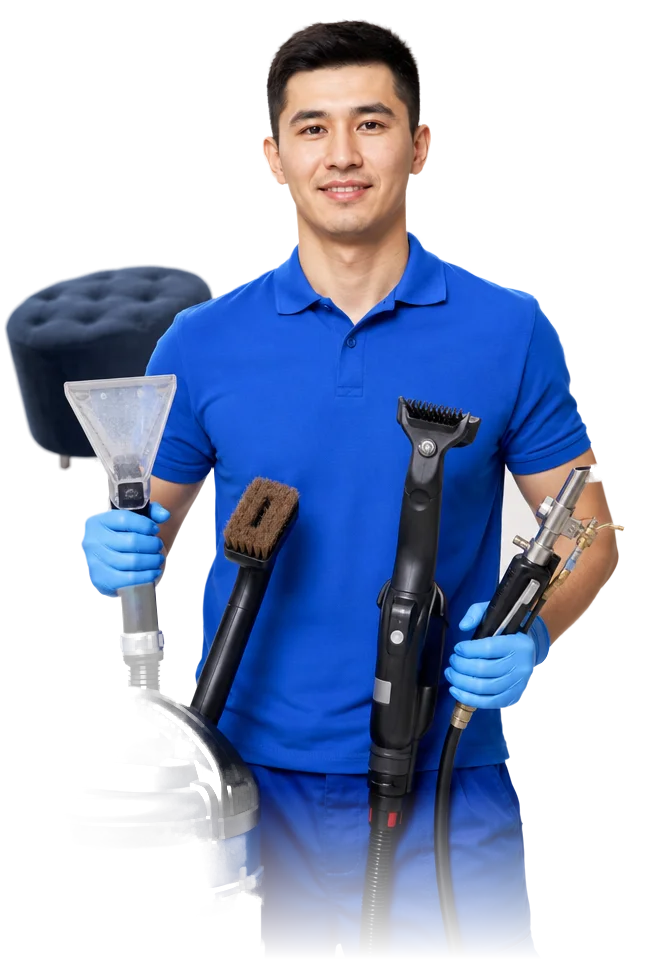
We work with any types and materials
Deep extraction cleaning with dust and stain removal.
from 2,500 ₸Gentle cleaning with moisturizing and leather protection.
from 2,500 ₸Careful brushing and extraction to preserve the pile.
from 2,500 ₸Effective stain removal without streaks.
from 2,500 ₸Cleaning of all edges, including corners and seams.
from 2,500 ₸Cleaning of seat and backrest, removal of stains and odors.
from 2,500 ₸Cleaning with access to the inner compartment.
from 2,500 ₸Cleaning with treatment of legs and hard-to-reach areas.
from 2,500 ₸Cleaning of all structural elements.
from 2,500 ₸Manual cleaning of delicate embroidery areas.
from 2,500 ₸Cleaning without damaging the coating.
from 2,500 ₸Upholstery cleaning and wood care.
from 2,500 ₸From inspection to result with guarantee
The technician determines the fabric type and degree of soiling, selects products and cleaning mode.
A vacuum with a HEPA filter removes dust, pet hair, and allergens from the surface and folds.
A special solution is applied to stains to break down dirt without damaging the fabric.
The Karcher SE 4001 extractor sprays water with detergent under pressure and vacuums up dirt.
Steam disinfects the fabric, kills bacteria, and removes residual odors.
Clean water removes detergent residues, preventing streaks.
Professional air blower or natural drying until completely dry.
The master checks the cleaning quality and applies a protective treatment if desired.
The Karcher SE 4001 extractor sprays water with detergent under pressure and simultaneously vacuums dirt. This ensures deep penetration into fabric fibers and complete removal of contaminants. Result: no streaks or soap residue.
Kiehl and Sodasan products have hypoallergenic certifications and contain no harsh chemicals. They are safe for children, allergy sufferers, and pets. Yet they effectively remove stains and odors.
In the first stage, we vacuum the ottoman with a HEPA-filter vacuum that traps the smallest particles. This reduces allergy risk and improves indoor air quality.
We guarantee stain removal if possible for the fabric type. If a stain remains after cleaning, we refund your money. We are confident in our service quality.
If ordered before 2:00 PM, the technician arrives the same day. We travel to all districts of Almaty. Working hours: 9:00 AM to 8:00 PM.
If you order cleaning of two or more ottomans, the technician visit is free. Savings under individual tariff.
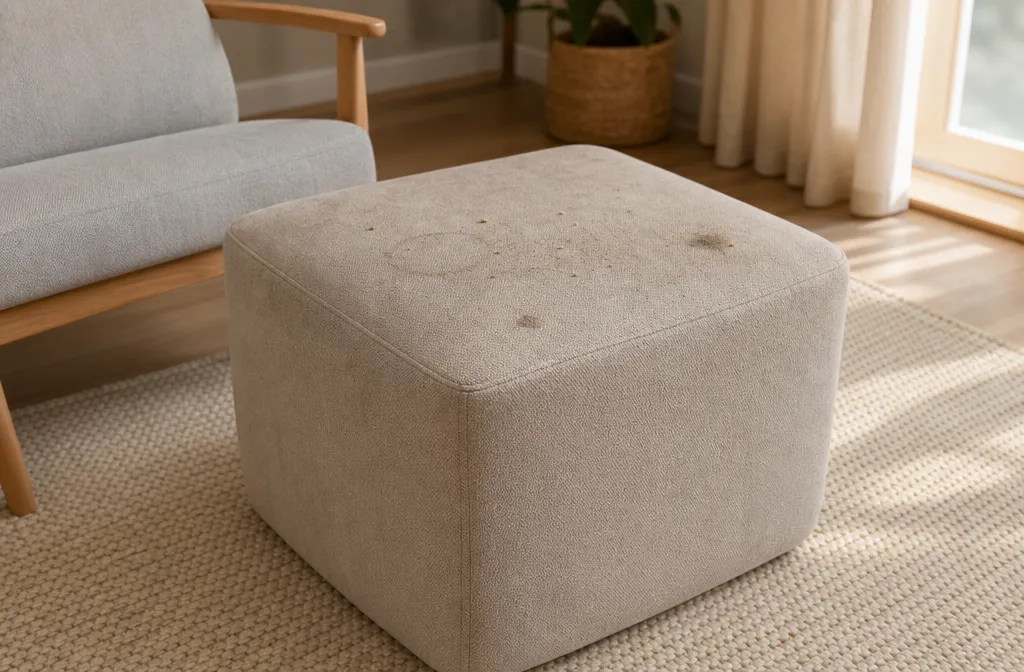
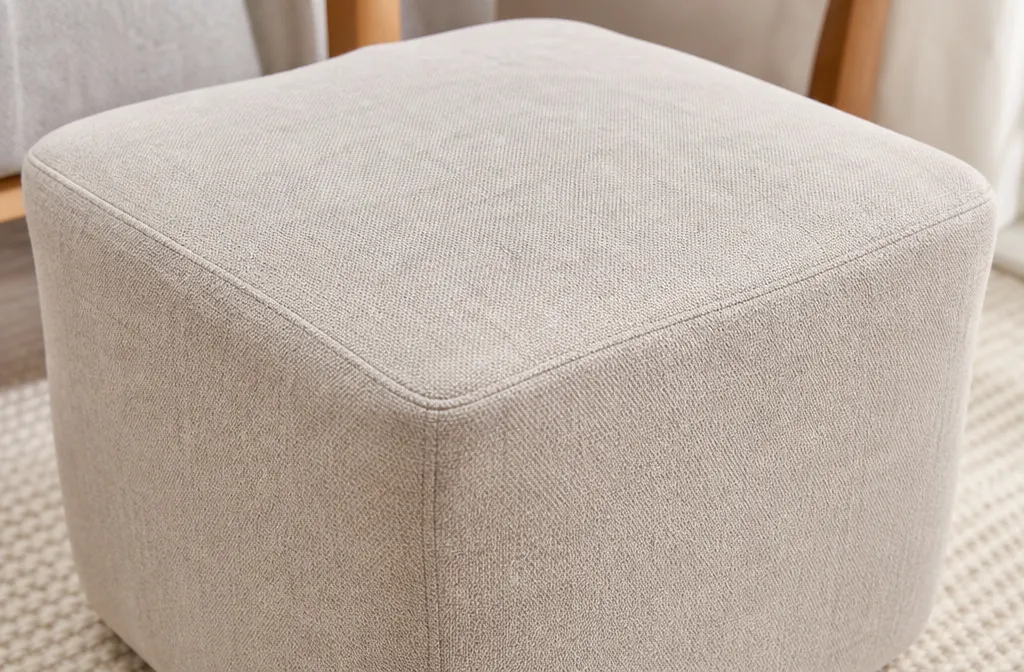 After
After
Request: The pouf in the living room was covered with stains and dust, needed to restore cleanliness.
Done: We performed deep fabric dry cleaning using an extractor and stain remover.
Cost: 12 000 ₸
Master: Aigul Serikova, dry cleaning master
Total: The pouf is clean, stain-free, with fresh color and pleasant smell.
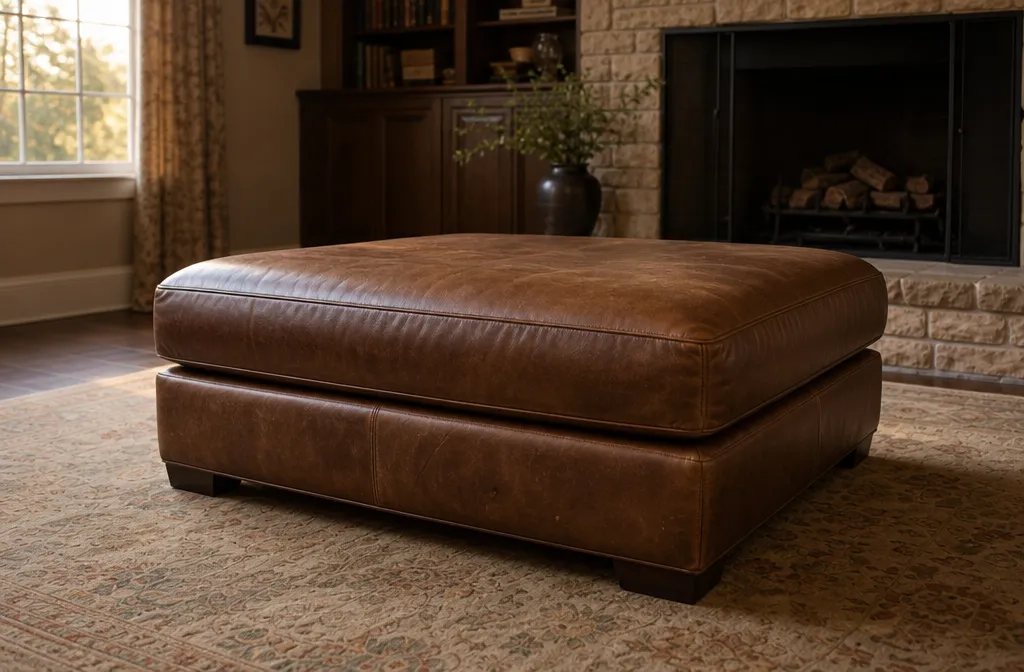
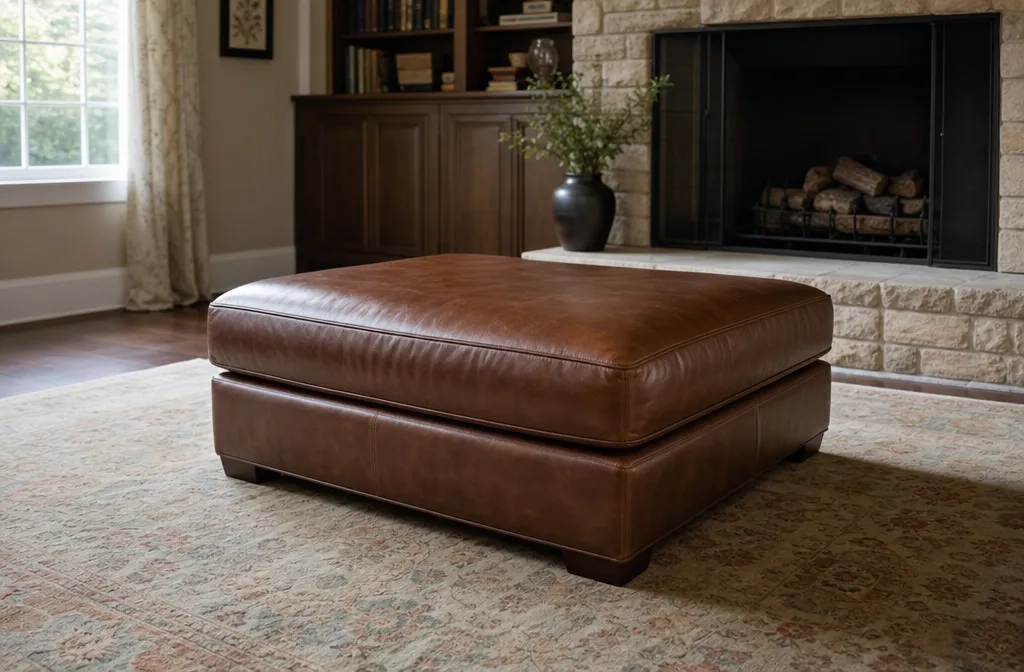 After
After
Request: The leather pouf lost its appearance, needed deep cleaning.
Done: We cleaned the leather with a special solution, removed scuffs and refreshed the color.
Cost: 13 000 ₸
Master: Timur Zhaksybekov, dry cleaning master
Total: The leather is soft, shiny, without stains or scuffs.
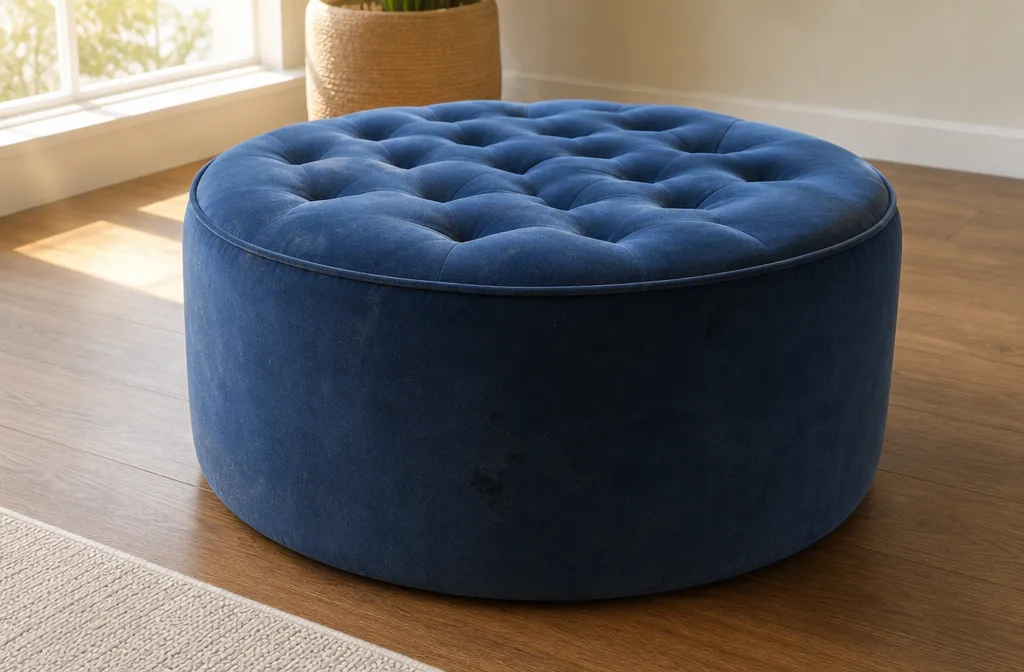
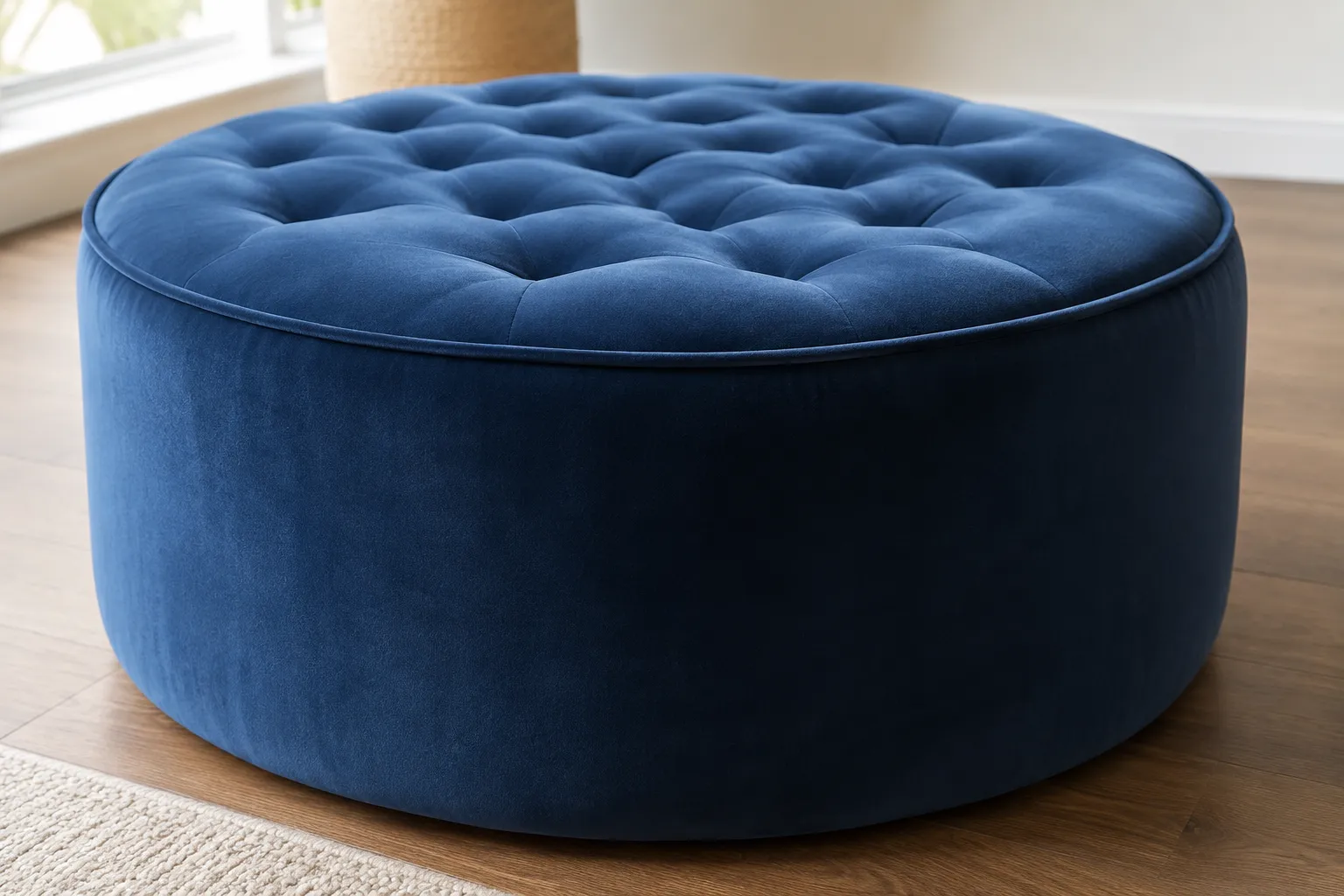 After
After
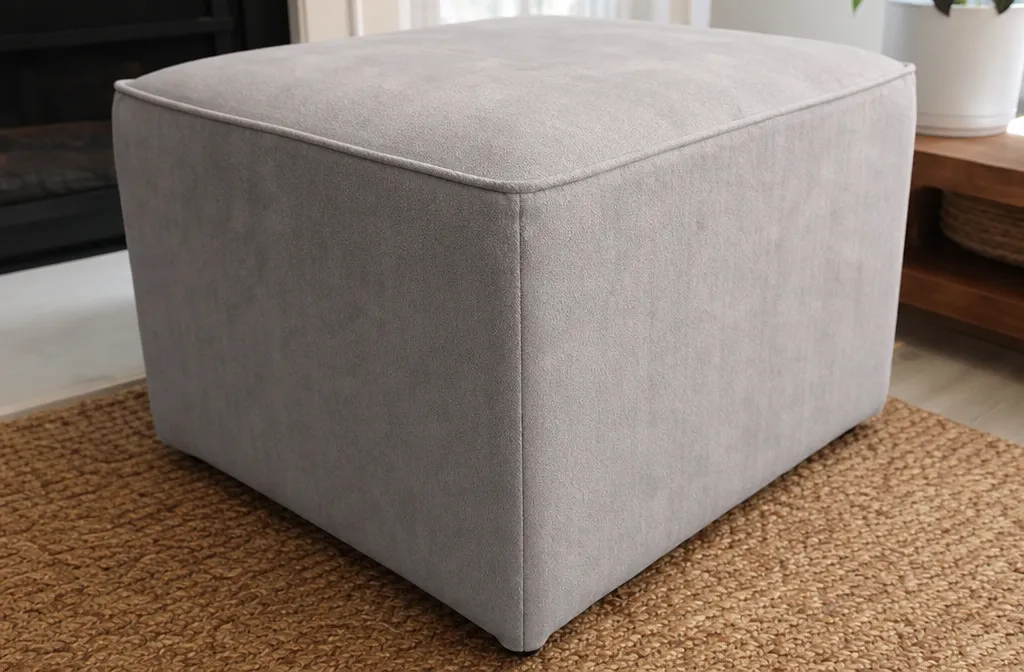
Request: The velvet pouf in the bedroom became greasy, needed delicate cleaning.
Done: We cleaned the velvet with steam and a soft brush, removed grease stains.
Cost: 16 000 ₸
Master: Dinara Muratova, dry cleaning master
Total: The velvet is fluffy, evenly colored, without greasy areas.
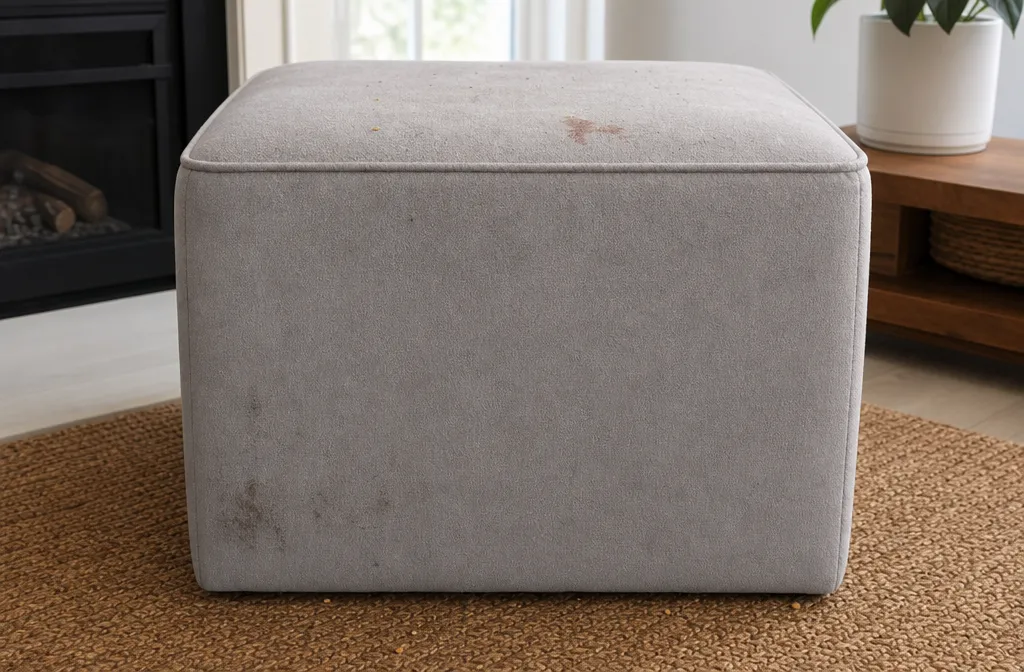
 After
After
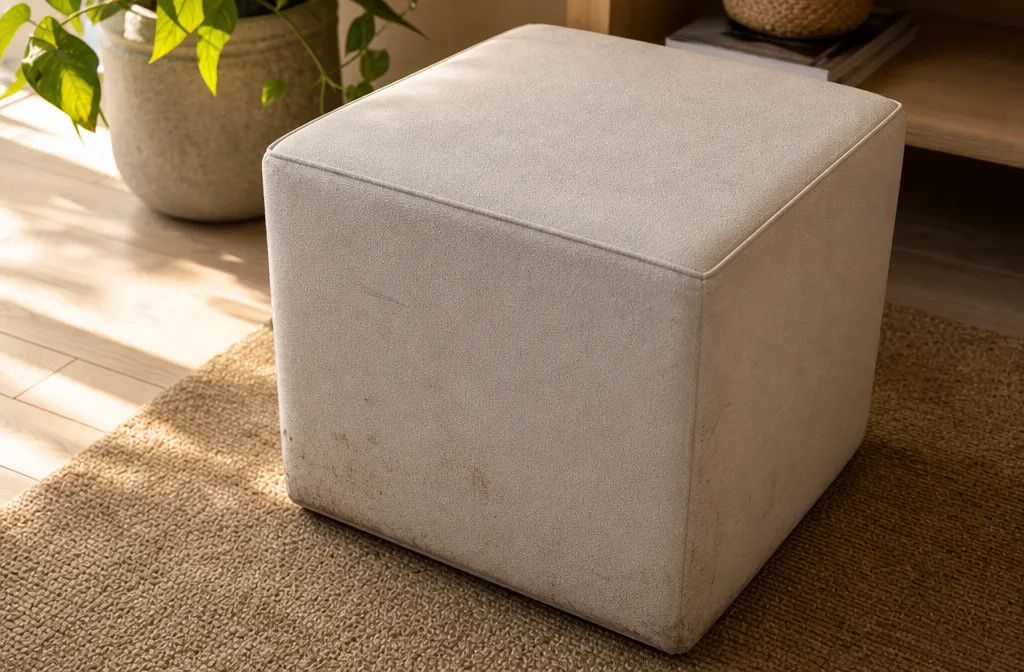
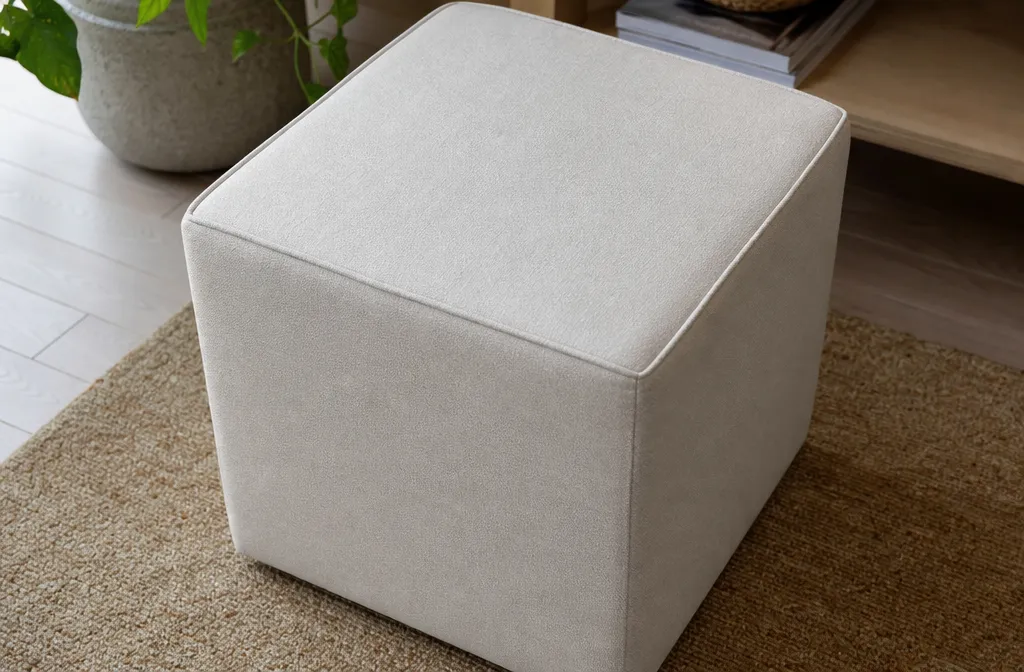
Request: The microfiber pouf in the children's room was dirty, needed safe cleaning.
Done: We applied an enzyme stain remover and extraction cleaning.
Cost: 13 000 ₸
Master: Yerlan Sagindykov, dry cleaning master
Total: The pouf is clean, without streaks, hypoallergenic and fresh.
 After
After
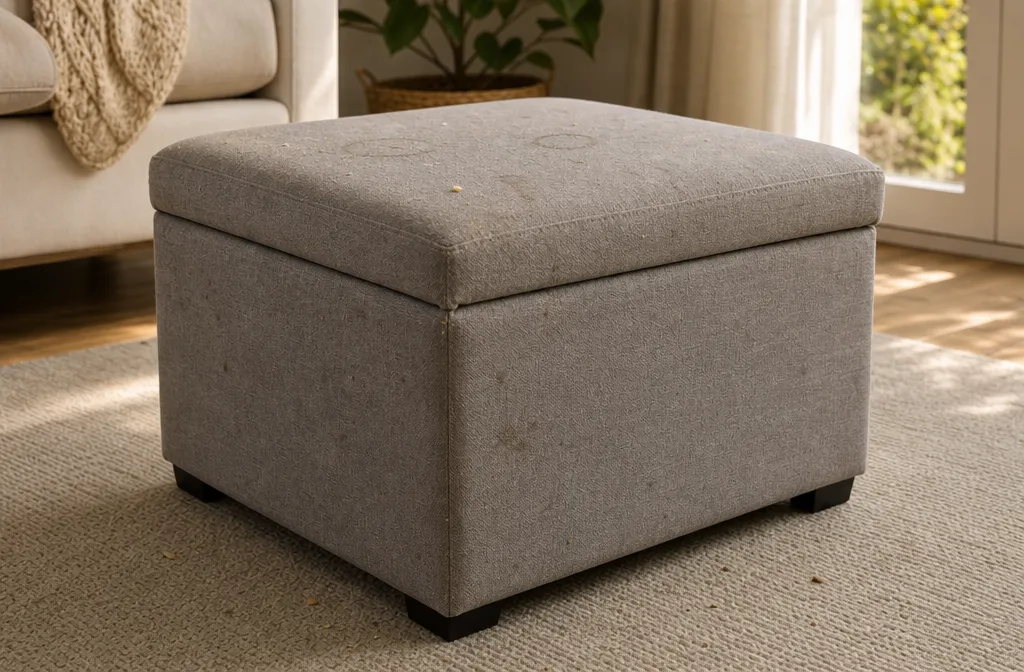
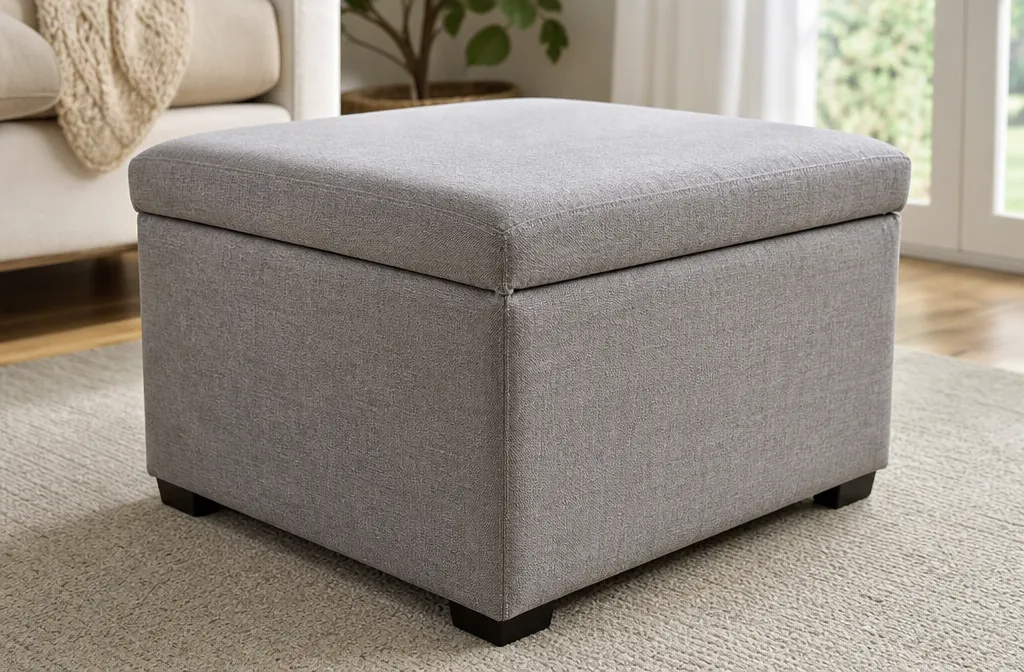
Request: The cube pouf in the hallway was stained by shoes, needed cleaning.
Done: We cleaned the fabric from dirt and dust, treated with a water-repellent spray.
Cost: 2 500 ₸
Master: Aliya Nurgaliyeva, dry cleaning master
Total: The cube pouf is clean, without shoe marks, protected from moisture.
 After
After
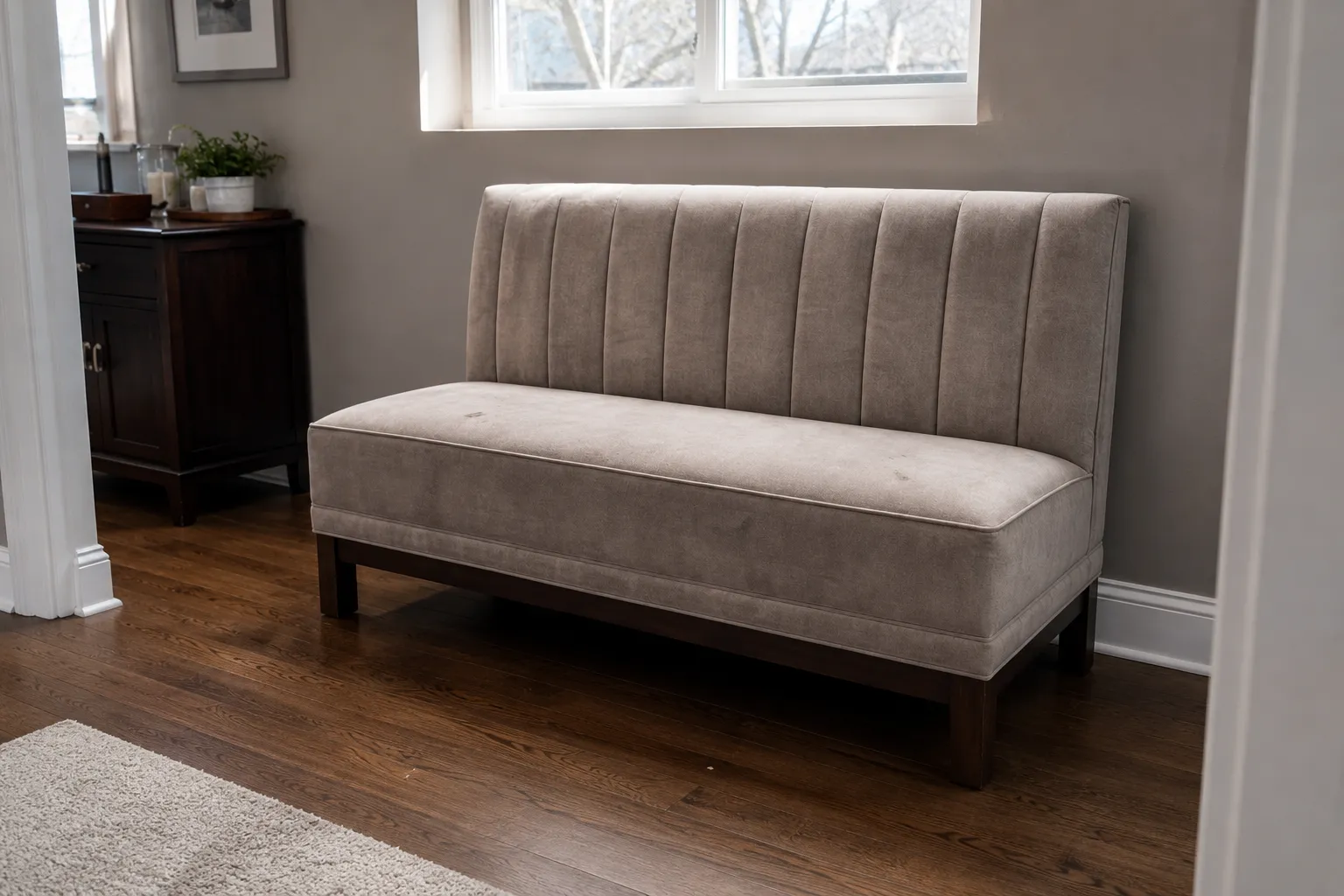
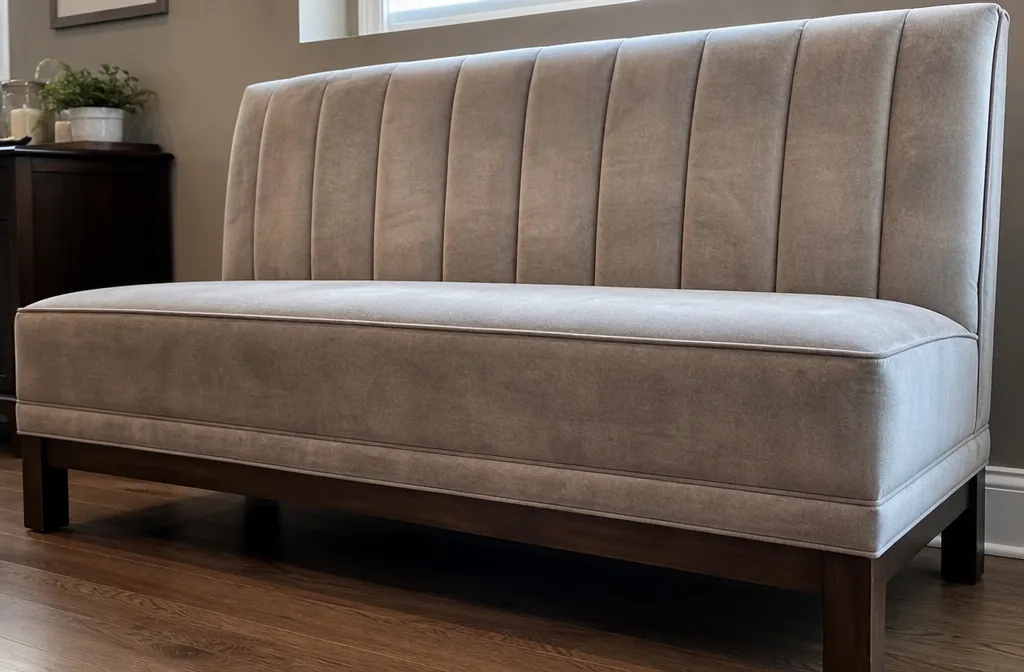
Request: Banquette in the hallway is soiled, needs comprehensive cleaning.
Done: Cleaned the upholstery with steam and stain remover, removed odor.
Cost: 2 500 ₸
Master: Ruslan Akhmetov, dry cleaning master
Total: Banquette fresh, no stains or odor, like new.
 After
After
Request: Pouf with storage is dirty, needs cleaning inside and out.
Done: Cleaned the fabric outside, vacuumed inside, removed stains.
Cost: 2 500 ₸
Master: Gulnara Kassymova, dry cleaning master
Total: Pouf clean inside and out, no dust or stains.
 After
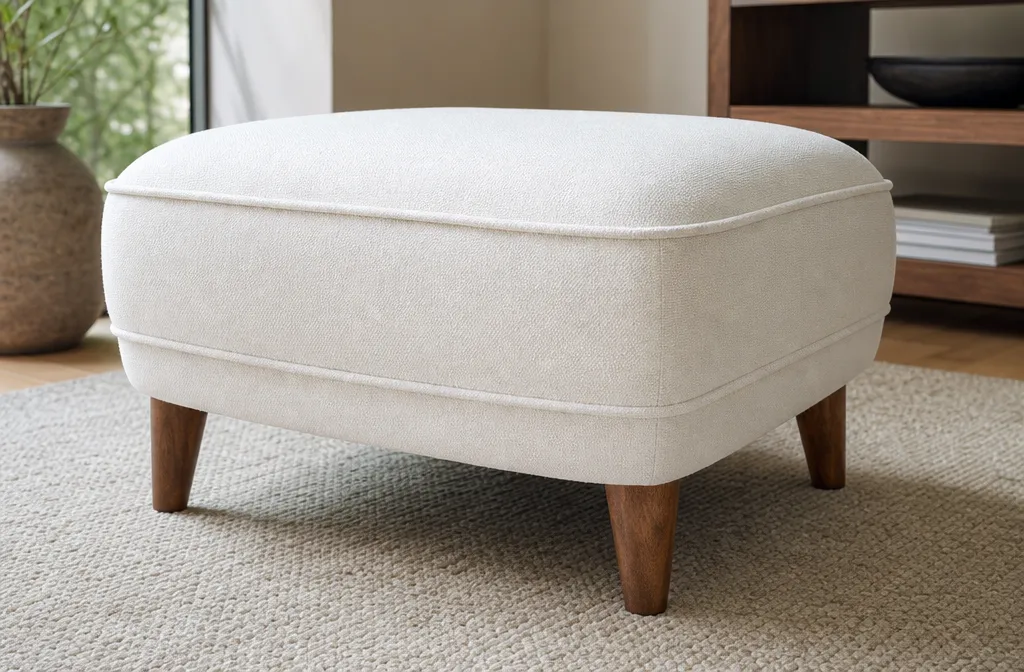
After
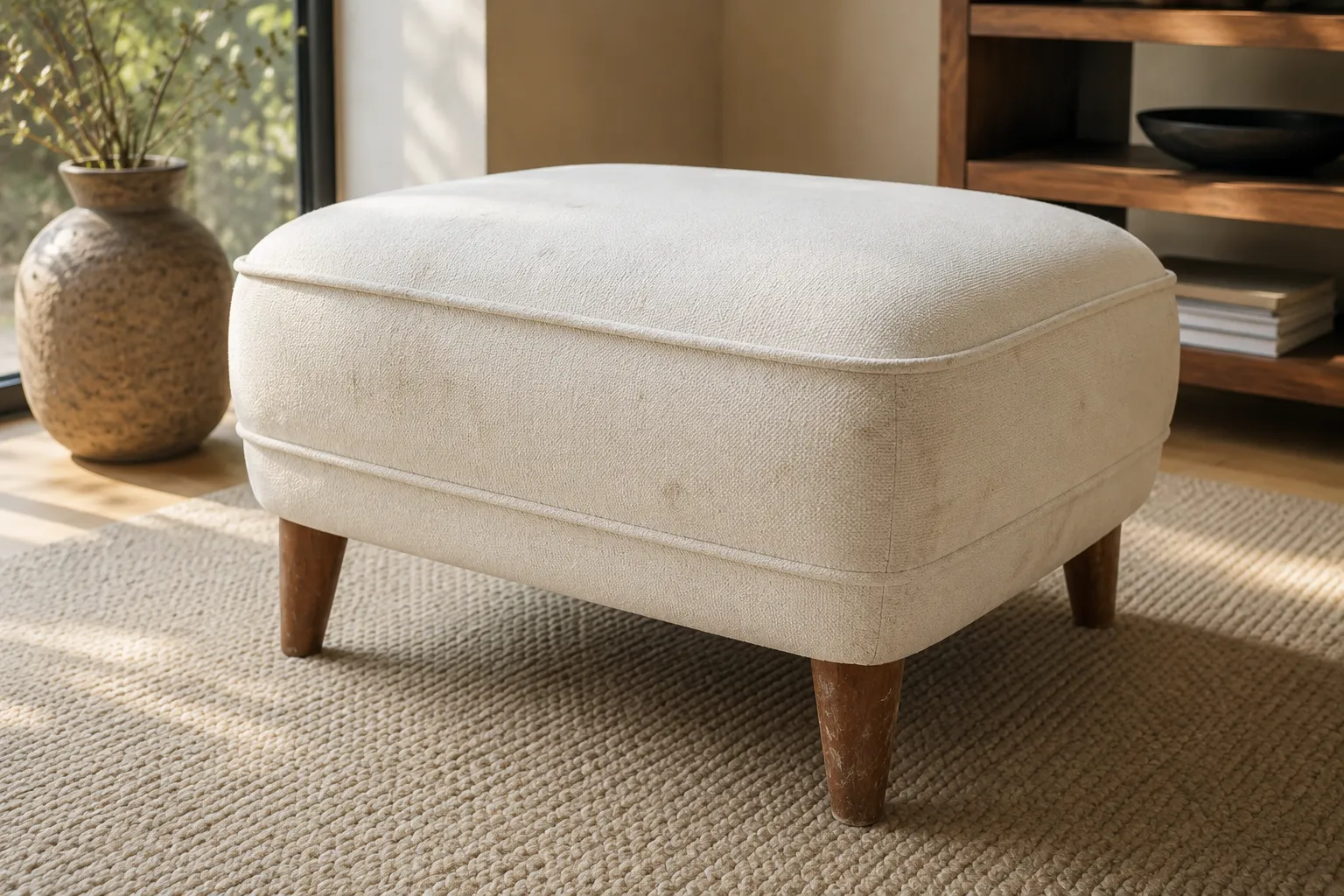
Request: Pouf with wooden legs is dirty, needs careful cleaning.
Done: Cleaned the fabric, polished the legs, removed signs of wear.
Cost: 2 500 ₸
Master: Marat Zhumabayev, dry cleaning master
Total: Pouf clean, legs shiny, no scratches or stains.
 After
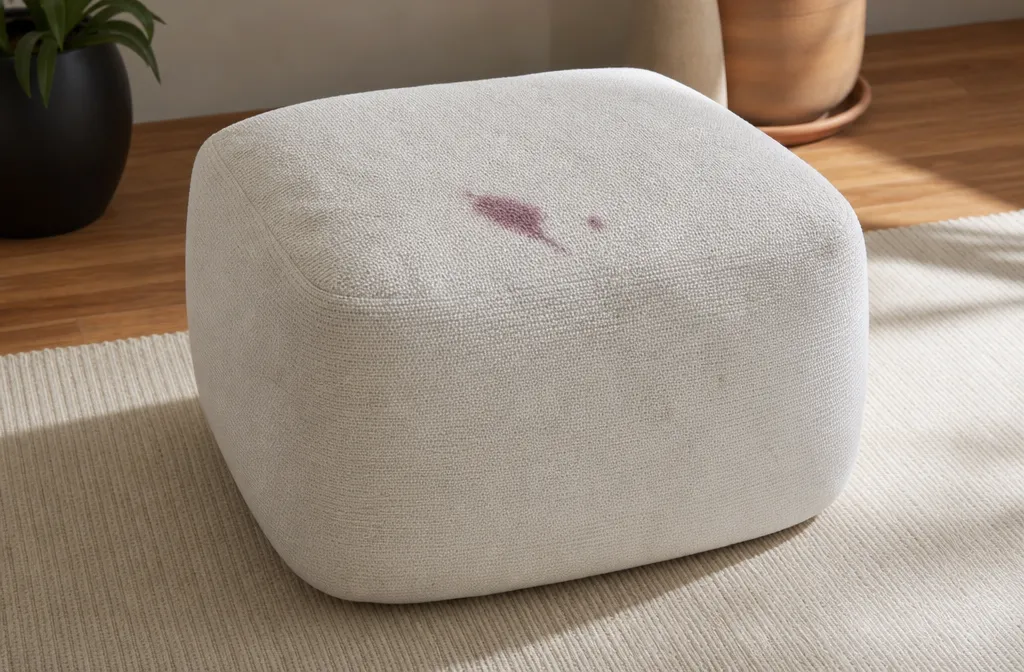
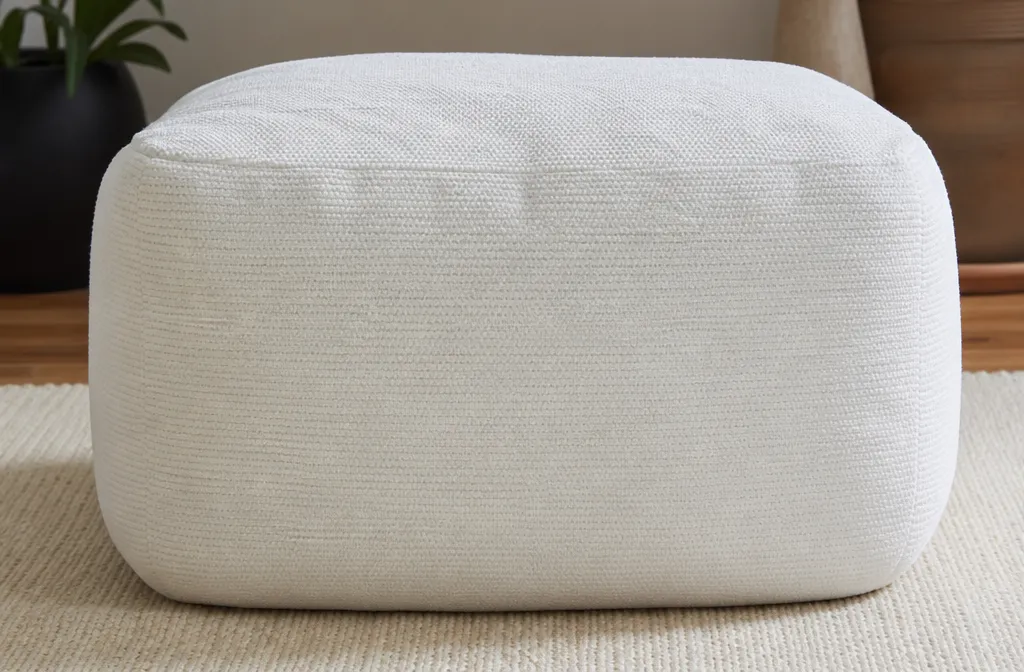
After
Request: Wine spilled on the white pouf, need urgent stain removal.
Done: Treated the stain with oxygen bleach and extractor.
Cost: 14 000 ₸
Master: Assel Bekzhanova, dry cleaning master
Total: Wine stain completely removed, pouf snow-white.
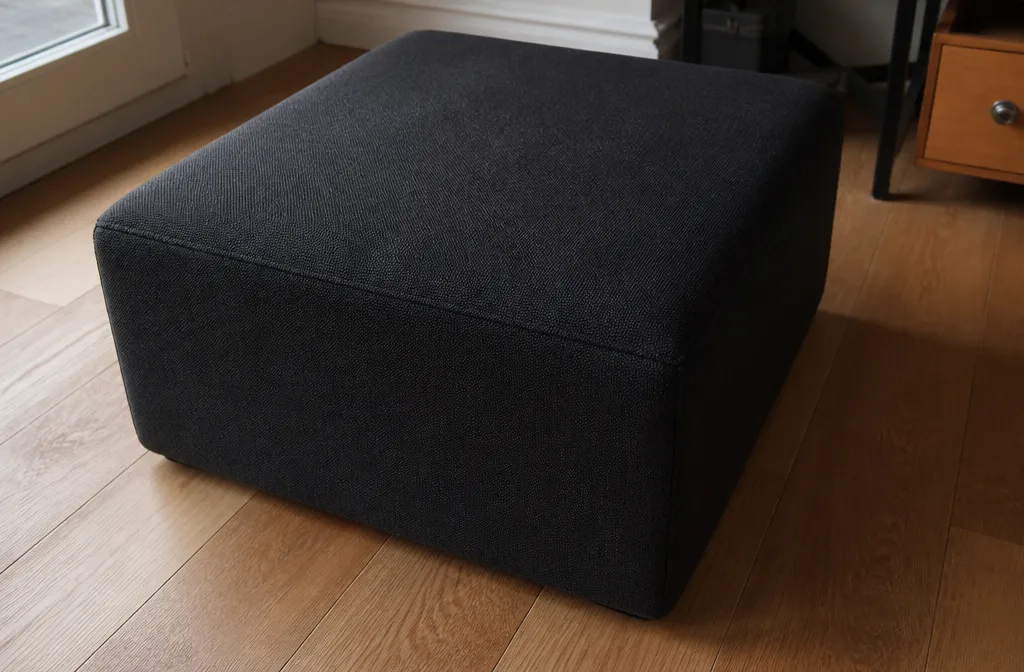 After
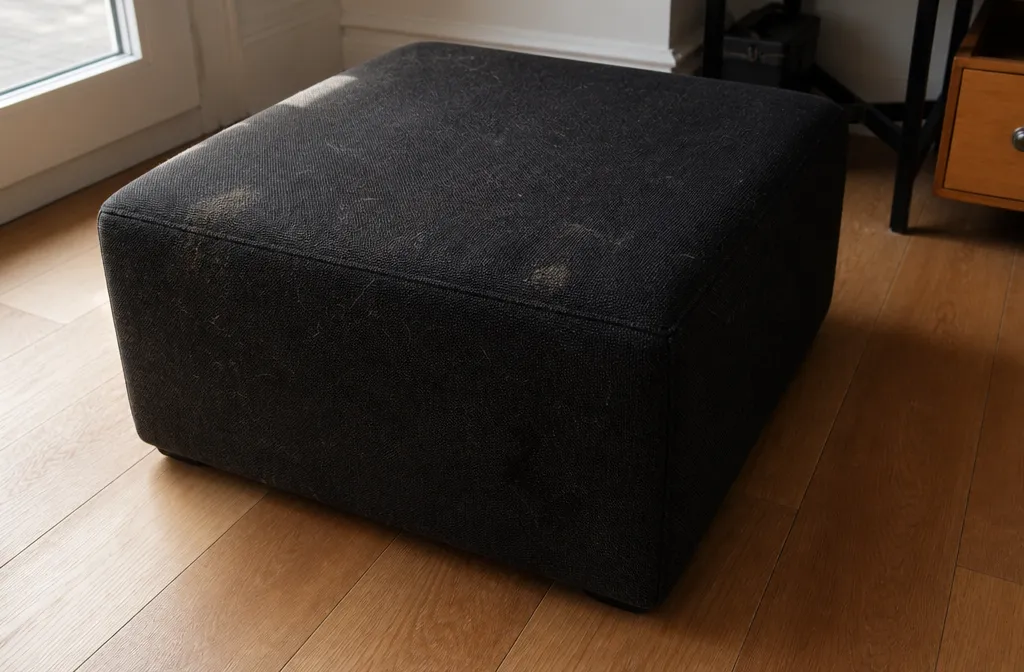
After
Request: Dark pouf in the living room soiled by pet, needs cleaning with odor removal.
Done: Applied enzyme cleaner and extraction, removed odor and stains.
Cost: 13 000 ₸
Master: Nurlan Ibraev, dry cleaning master
Total: Pouf clean, no stains or animal odor.
All cleaners are profi-clean staff with training, uniform and security check. Each order has a team leader who controls quality.
“`markdown
At profi-clean, we select chemicals strictly according to the upholstery type and stain complexity — this is the foundation of safe ottoman dry cleaning. Let’s break down what products and technologies we use, how they differ, and why they do not harm the fabric or the residents.
The basis of our arsenal consists of professional products from Kiehl (Germany) and Sodasan (Germany/Austria). Kiehl offers enzyme stain removers for protein-based stains (blood, dairy, food) and pH-neutral shampoos for delicate fabrics like velvet and chenille. Sodasan is certified organic, based on plant-derived surfactants, free of phosphates and chlorine, which we use for children’s ottomans and allergy sufferers. In our practice, Kiehl delivers results on set-in grease and coffee stains within 1-2 cycles, while Sodasan is used for hypoallergenic final treatment. Before applying any product, we test it on an inconspicuous area — this eliminates reactions with the dye, especially on budget fabrics with unstable pigment.
Household foams like “Vanish” or “Udalix” are aerosols with aggressive surfactants that often leave a sticky residue and attract dust faster than before cleaning. profi-clean’s professional concentrates, on the other hand, have a neutral pH (5.5–7.0), do not damage the water-repellent impregnation, and are completely rinsed out by the extractor. The key difference lies in the enzyme composition: our products break down protein at a molecular level, rather than just masking the stain. In practice, this means that after using household foam, an ottoman might look clean for a day, but within a week, a yellow halo — the residue of unwashed grease — may appear at the stain site. This doesn’t happen with us because we work using the technology: apply — let it sit — extract with water.
A beginner’s mistake is using the same product for velvet and microfiber. Velvet is a pile fabric requiring minimal water and a neutral pH; otherwise, the pile mats down, and the ottoman loses its appearance. Microfiber is a synthetic fabric resistant to mild alkaline solutions but afraid of chlorine and bleaches. For natural leather, we have a separate set: a conditioning soap with beeswax and acetic acid that moisturizes without leaving white streaks. Our cleaners are trained using a fabric chart — on each job, they have a checklist with the upholstery type and recommended product. If the ottoman is combined (wood + fabric), we isolate the wooden legs with film and treat them separately to prevent the chemicals’ oils from damaging the varnish.
All profi-clean products have ECOCERT or COSMOS certificates — meaning they are 90% biodegradable within 28 days and contain no volatile organic compounds (VOCs) above the norm. After cleaning, we perform a mandatory neutralization: a final rinse with clean water and a neutralizer (0.5% citric acid solution) that removes surfactant residues. In our practice, there was a case: a client asked us to clean an ottoman for a child’s room where a child is allergic to pollen and household chemicals — we treated it only with Sodasan labeled “for allergy sufferers” and let it dry for 8 hours with an open window. Recommendation: if you have a child or a cat at home, warn the technician before cleaning — we will select the gentlest mode and leave the ottoman to dry longer than the standard 4 hours.
Full-fledged ottoman dry cleaning is impossible without a water extractor — a vacuum cleaner with a washing function. We use professional Karcher SE 4001 machines with an H13 class HEPA filter, which captures 99.97% of particles as small as 0.3 microns — including dust mites, mold spores, and allergens. Many cleaners in Almaty cut costs and use household steam cleaners: steam kills bacteria but does not mechanically remove dirt — it remains in the fibers and returns as a gray coating within a month. Our scheme: apply the product — wait 10-15 minutes — extract with water under pressure. This is the only way to remove deep-seated dirt from the filling, not just from the fabric surface. “`
Suede and nubuck are demanding materials: their nap is easily flattened, and wet cleaning without preparation leaves streaks and hard stains. Many owners of poufs in Almaty, trying to remove a stain with home remedies, only make the situation worse — at profi-clean we fix the consequences of such experiments weekly. We’ll tell you what actually works.
Suede: natural leather with a nap, absorbs moisture and grease instantly — a coffee or cream stain penetrates deep within 10-15 seconds. Nubuck: the same leather, but with a finer nap and split grain — it loses color faster when in contact with alkaline compounds (laundry detergent, soap). Both materials fear friction: if you rub a stain with a cloth, the nap “mats down” and leaves a bald spot. In Almaty’s climate with dry air and frequent dust (especially in areas near construction sites), suede and nubuck become clogged with fine particles that turn into dirt when wet — so dry cleaning before wet cleaning is mandatory. In our practice, nubuck poufs that were cleaned with water without prior dust removal developed a gray coating after drying that could not be washed off again.
| Parameter | Suede | Nubuck |
|---|---|---|
| Nap | Long, noticeable, “velvety” | Short, almost imperceptible, “velour-like” |
| Reaction to water | Absorbs quickly, leaves a dark wet mark | Absorbs more slowly, but the mark lasts longer |
| Allowable wet cleaning | Foam only (minimum water) | Gentle wet cleaning with pH control possible |
| profi-clean products | Kiehl foam for suede + dry cleaning | Sodasan product for nubuck with neutral pH |
| Risk if mistaken | “Bald” spots from friction, color loss | Streaks, gray coating after drying |
| Post-cleaning recommendation | Mandatory Collonil impregnation | Impregnation + soft brush to raise the nap |
If an oil or grease stain has been sitting for more than a week — it has likely soaked through the leather, and even professional dry cleaning does not guarantee complete removal. In such cases, at profi-clean we honestly warn the client: a “shadow” of the stain will remain. On light suede (beige, gray), the shadow is less noticeable; on dark suede (chocolate, graphite), it appears as a matte area. If there are many stains and they are old (from coffee, wine, greasy cream), reupholstering the pouf with new leather or fabric will be cheaper than 2-3 repeated cleanings with incomplete results. Moreover, on the Almaty market, reupholstering a standard-sized pouf costs about the same as two professional dry cleanings — this is worth considering before starting work.
The frequency of dry cleaning a pouf depends not on the calendar, but on three factors: intensity of use, type of upholstery, and the microclimate of the room. At profi-clean, we have developed recommendations based on 8 years of working with Almaty apartments — here, dust and smog from the roads settle faster than in the suburbs.
This is a high-contact zone: people sit on the ottoman in the hallway with outdoor shoes, place bags on it, and dust from the floor rises with every movement. Over six months, up to 200–300 grams of dust, pollen, and rubber particles from soles accumulate in the pile. In the living room, crumbs and spilled drinks are added to this. The optimal interval is once every six months for fabric models and once every 8 months for leather or eco-leather (they absorb less). If you notice the upholstery has lost its color or feels stiff to the touch, don’t wait for the deadline—order cleaning sooner. Additionally, once a month it’s useful to treat the ottoman with a steam cleaner with a brush attachment—this removes surface dust and extends the time between deep cleanings.
Children spend hours on the ottoman: drawing, eating, playing with plasticine and markers. Saliva, food residue, and urine when wet create an ideal environment for bacteria and mold—especially during Almaty’s humid spring and autumn. We at profi-clean recommend cleaning a children’s ottoman once a quarter, and if the child has allergies, once every 2 months. Between cleanings, wipe the cover with a damp microfiber cloth and a hypoallergenic solution (e.g., Sodasan)—this reduces the concentration of allergens in the air by 40–50% according to our measurements. And never use harsh household chemicals: they remain in the fabric and can cause skin irritation upon contact with a child’s skin.
In the bedroom, the ottoman is used less frequently—for storing linens or as a footrest. Deep cleaning once every 12 months is sufficient if no one eats on it or sits on it in outdoor clothes. However, if you store blankets or pillows inside the ottoman, moisture and dust from the upholstery seep inside through the seams—over a year, up to 50–100 grams of dust accumulate inside, which you then inhale at night. Before dry cleaning, be sure to empty the contents and vacuum the interior cavity. Moreover, for the bedroom, it’s better to choose lint-free fabrics (herringbone, microfiber)—they accumulate fewer dust mites than velor or flock.
Almaty is a city with high air dust levels: according to monitoring data, the concentration of suspended PM2.5 particles in residential areas is 2–3 times higher than the average for Kazakhstan. This dust settles on all surfaces, including ottomans, and gets embedded in fabric fibers faster than in the suburbs or Astana. Therefore, for apartments on the first floors or with windows facing busy streets (Abaya, al-Farabi, Sain), we advise reducing the standard interval by 2 months: for the hallway—once every 4 months, for the living room—once every six months. If a gray coating remains on the ottoman after airing, it’s a sure sign it’s time to call us.
When an ottoman loses its appearance, a choice arises: take it to a stationary facility or call a technician to your home. Both options solve the problem, but with different risks for the fabric and your time. Let’s break down the key differences so you understand what you lose or gain in each scenario.
With mobile ottoman dry cleaning at home, you personally see which products are applied to the upholstery and how long they are left on. A profi-clean cleaner works on your premises—you can immediately point out problem areas or ask for a delicate area to be treated more gently. At a stationary facility, the ottoman goes to the workshop, and the entire cycle (soaking, cleaning, drying) happens without your involvement. Our experience shows that owners of velor and velvet ottomans more often complain about changes in pile texture after stationary treatment—because the technician doesn’t see the material “live” and follows a template. Before submitting a request, clarify whether the company can send preliminary photos of the stages: if not, there is a higher risk that the upholstery will be damaged without the ability to influence the process.
A profi-clean cleaner arrives within 60 minutes from the request to the start of work; the pouf cleaning itself takes 30–60 minutes depending on soiling. Complete drying takes 2–4 hours with natural ventilation. At a stationary facility, you lose at least a day: an hour traveling to the dry cleaner, waiting in line (often 2–3 days during the season), then a day for treatment, followed by the return trip. For poufs with a wooden frame, add the risk of leg damage during loading and unloading — in Almaty, chipping during transport in a car trunk is common. If you need your pouf back by evening the same day, the mobile format is the only realistic option.
| Parameter | profi-clean Mobile Pouf Cleaning | Stationary Dry Cleaning |
|---|---|---|
| Risk of fabric texture change | Minimal — the master selects the mode on-site under your supervision | Increased — treatment follows a standard cycle without considering wear |
| Time “without the pouf” | 2–4 hours for drying at your home | From 1 to 3 days, including logistics |
| Preservation of frame and legs | Complete — the pouf is not moved | Risk of chips and scratches during transport |
| Suitable for complex materials (suede, nubuck, velvet) | Yes — the master sees the fabric’s reaction and adjusts | With caution — standard modes often damage the pile |
For pile fabrics (velour, velvet, flock), the mobile format is preferable: during stationary pressure treatment, the pile often becomes irreversibly flattened, and restoring it is only possible with a second fluffing using a steam generator with a narrow nozzle — a service not available at all dry cleaners.
In Almaty, humidity in spring and autumn reaches 70–80%, which is critical for stationary dry cleaning: the pouf is dried in the workshop after treatment, but when taken outside, it absorbs moisture from the air, and residual dampness can cause a musty smell for up to a week. With mobile cleaning, we dry the pouf in your apartment with climate control — we open windows or use a dehumidifier, reducing drying time to 2 hours even on a rainy day. In winter, conversely, stationary cleaning wins in drying speed (workshop temperature 22–25°C vs. 18–20°C in an apartment) but loses in logistics: transporting the pouf to the dry cleaner on icy roads is risky, and taxi delivery doubles the budget. When choosing a method, consider the weather forecast for the next two days — for the mobile option, it’s enough that the room is dry and warm on cleaning day.
Almaty’s air is not just an aesthetic nuisance: fine dust and smog settle into the upholstery pile, mixing with sebum and creating a sticky film that a regular vacuum nozzle cannot remove. Therefore, pouf cleaning in the southern capital requires a different approach than in cities with clean air.
In Almaty during the smog period (usually from November to February), the concentration of suspended particles PM2.5 and PM10 in the air exceeds WHO standards by 5–7 times — these particles are 40% soot and hydrocarbons from exhaust and stove heating. Settling on the pouf, they don’t just dirty the fabric: the soot chemically bonds with polyester and microfiber fibers, and combined with humidity (fog, dampness from melting snow), forms a difficult-to-remove oily film. In our practice, there was a case where a white velour pouf from an apartment on Al-Farabi Avenue acquired a persistent gray tint after two weeks of smog, which was not removed by vacuum cleaning or water-based shampoo — it required treatment with an extractor using hot water at 65°C and an acidic pre-spray. Therefore, when ordering pouf cleaning in Almaty, the master always checks the upholstery for “smog soot” — if the fabric leaves a black mark on a wet finger, we double the pre-soaking time to 20 minutes.
Household appliances with a cyclone filter and a HEPA H12 bag allow up to 5% of 0.3-micron particles to pass through — and this is the exact fraction that makes up the bulk of the smog suspension in Almaty. Once settled in the fabric, this dust does not rise back into the air during standard dry cleaning: it gets clogged between the threads and is fixed by the static charge of synthetics. We use an industrial extractor with a water filter and HEPA H14 (99.995% efficiency), which supplies the solution at a pressure of 8 bar and immediately sucks it out along with the dirt — the water in the tank is brown even from a visually clean pouf. Moreover, on microfiber upholstery (Ferrari, Sunbrella), after the extractor run, we additionally go over it with a turbo brush with nylon bristles to knock out remaining particles from the depth of the weave — otherwise, within a week, the dust will reappear on the surface as a “gray coating.” Before cleaning a pouf in Almaty, check with the technician whether their machine is equipped with a filter no lower than H13 — without it, half the dust will remain inside.
The most common mistake Almaty residents make is trying to remove the smog coating with a dry foam shampoo or simply a vacuum cleaner in hopes of “blowing away” the dirt. In reality, solid PM2.5 particles are rubbed deeper into the pile by the brush friction, while the oily fraction smears across the fibers, creating a “grease stain” effect over the entire surface — after drying, the pouf looks even dirtier than before cleaning. At profi-clean, there was a case: a client from the “Nurly Tau” residential complex treated a light chenille pouf with dry foam from a can — within an hour, the fabric darkened unevenly, and we had to perform a full wet extraction with a neutralizer to remove the foam and soot residues. The only correct protocol for a smog-affected pouf is a two-phase cleaning: first, applying an enzyme pre-spray (it breaks down soot hydrocarbons), then hot extraction with an acidic rinse to neutralize the alkaline environment left after dirt decomposition. If there is smog outside, do not attempt to clean the pouf yourself with dry products — call a technician with an extractor, otherwise you risk ruining the upholstery permanently.
For apartments in the city center (areas of Abay Avenue, Timiryazev Street) and near CHP-2, we recommend a pouf dry cleaning interval of 4-5 months, rather than once a year as for cities with clean air. The explanation is simple: over three months of smog film accumulation on a 0.5 m² pouf, up to 15-20 grams of soot particles settle — this is visible if you wipe the surface with a damp cloth; it will turn black. According to our statistics for orders from the “Zeleny Kvartal” and “Akbulak” residential complexes, poufs cleaned once every six months required 30% more extraction time than those treated every 4 months — the coating did not have time to coke up. For apartments in the upper part of the city (Megapolis, Gorny Gigant), the interval can be increased to 6-7 months, as smog disperses faster there due to altitude and winds. I advise residents of first floors and houses near busy highways (Saina, Ryskulova) to schedule pouf dry cleaning for early March and early September — before the rainy season and after the heating season, when the concentration of soot in the air is at its maximum.
I ordered dry cleaning for poufs — the white pouf after coffee became like new. Stains completely gone, pile not damaged.
Thank you, Aigerim! We're glad you loved the result.
The eco-leather pouf had oil stains — after treatment no traces at all, fresh smell. The technician arrived on time.
We had dry cleaning for children's poufs — markers and plasticine came off well. A slight smell of detergent remained but dissipated within a day.
Thank you for the review! We use hypoallergenic products, the smell dissipates quickly.
The velvet pouf after a year of use was cleaned — the result is perfect, the color became richer. Even the cat didn't recognize the spot.
Dry cleaning of poufs with embroidery — I was afraid the decor would be damaged. No, everything is intact, the embroidery is bright, tea stains are gone.
We handle details with care, glad you liked it!
Light pouf cleaned from yellowing — became lighter but not completely. Probably the material is old. Expected a bit better.
Assel, thank you for the feedback. Old stains don't always yield 100% results, but we did our best.
Ordered dry cleaning of vinyl poufs — ink and grease removed. Shines like new, no streaks.
I was afraid to clean the pouf with fringe, but the masters handled it carefully. Fringe not damaged, wine stains disappeared.
Thank you, Dinara! Complex elements are treated manually.
Dry cleaning of pouf armchairs — two large armchairs cleaned in an hour. Sweat smell gone, fabric became fluffy.
Velvet pouf cleaned — became softer, color even. But in light I noticed a couple of streaks, possibly from water.
Gulnara, sorry for the oversight. We'll give a discount on your next order.
Dry cleaning of hallway poufs — washed off dirt and shoe marks. Now the pouf looks like new, thank you!
The bear-shaped pouf was covered in chocolate — cleaned perfectly, toy not deformed. Child is happy.
Olga, great! We love children's orders.
Ordered dry cleaning of poufs with tufted upholstery — buttons didn't come off, fabric clean. Very satisfied.
The rattan woven pouf was cleaned of dust — it looks neat, but fine dirt remains in the crevices. Overall good.
Aliya, thank you! For woven items we use a special brush; next time we'll pay more attention.
Dry cleaning of kitchen poufs — removed grease stains and food odors. Now the pouf smells fresh.
The bench in the hallway was cleaned — the upholstery lightened, shoe stains are gone. Really liked the service.
Glad to hear that, Saule!
Dry cleaning of an old pouf — coffee stains didn't all come out, faint marks remain. Possibly cannot be removed.
Bakhtiyar, with old stains the result isn't always 100%, but we suggested alternative methods. Thanks for understanding.
The sequin pouf was cleaned — not a single sequin fell off, sparkles shine. Juice stains removed without a trace.
Did dry cleaning of foot poufs — removed sweat odor and dirt. Now it's pleasant to rest feet.
Thank you, Arman! We use antibacterial solutions.
The pouf in the bedroom was cleaned of cosmetics — foundation and eyeshadow came off well. But drying time was long.
Lyazzat, thank you! Moisture is needed for deep cleaning; we try to speed up the process.
Dry cleaning of poufs used as stands — cleaned marks from cups and books. Wooden elements not damaged.
The fabric and leather pouf was cleaned — seams didn't separate, colors became brighter. Excellent work!
Thank you, Aina! We work with any materials.
Ordered dry cleaning for living room poufs — two poufs had wine stains after a party. Everything cleaned, no smell.
Cleaned an oval pouf — shape unchanged, stains gone. But there's slight fuzziness on the fabric, like after cleaning.
Gaukhar, thank you! After cleaning, the nap may rise, that's normal; it will settle over time.
Dry cleaning of transformer poufs — the folding mechanism wasn't soaked, fabric is clean. Very careful.
I was afraid to send the pouf with hand embroidery — in vain! The embroidery is bright, tea stains disappeared. The masters are great.
Zhuldyz, thank you for your trust! We handle handwork with extra care.
Dry cleaning of a dark pouf — dust removed, but white streaks remained after drying. Had to re-clean myself.
Yerzhan, we apologize. Next time we'll monitor drying, we'll give a discount.
The dacha pouf after winter had mold — cleaned, disinfected. Now like new, can be taken outside.
Ordered dry cleaning for office poufs — 5 pieces processed in a day. Coffee and pen stains gone, employees happy.
We work quickly, happy to help businesses!
Cleaned a pouf with tassels — tassels didn't tangle, color became richer. Juice stains disappeared.
Dry cleaning of a round pouf — clean, but fabric shrinkage of 1 cm. Overall unnoticeable, but would have appreciated a heads-up.
Murat, thank you! Shrinkage is possible on some fabrics, we will warn you.
Cleaned the glitter pouf from dirt — the glitter didn't dull, it shines. Very beautiful!
Sara, thank you! We love complex tasks.
Ordered dry cleaning of suitcase-shaped poufs — removed sticker stains, the leather shines. Super!
Cleaned the printed pouf — the design didn't wear off, colors are bright. But the cleaning solution smell lingered for a day.
Karina, thank you! We use neutral products, the smell dissipates quickly.
Dry cleaning of car poufs — cleaned the child's pouf seat from chocolate. No stains, smells fresh.
Cleaned the pouf with armrests — armrests didn't get soggy, fabric evenly cleaned. Top-notch service.
Thank you, Nazgul! We carefully work on every detail.
Dry cleaning of poufs from cat urine — almost removed the smell, but the stain is still slightly visible. Not perfect.
Azamat, for persistent odors we use enzymes, sometimes a repeat is needed. We'll offer a discount next time.
Children's pouf after paints — cleaned everything, paint didn't set in. The child draws on it again.
Ordered dry cleaning of embroidered poufs — was worried about the threads, but everything is intact. Tea stains disappeared, embroidery brighter.
Thank you, Rymtai! We handle decor with care.
Cleaned the microfiber ottoman — it became softer, but the color faded a bit in the sun. Overall good.
Ainur, thank you! Microfiber can lighten, but it doesn't affect the quality.
On average, 1–2 hours depending on size and soiling. A small pouf takes about an hour, a large one or with stubborn stains up to 2 hours.
Leave a request on the website or call us. We will choose a convenient time, and a master will come to your address in Almaty. For orders of 2 or more poufs, the visit is free.
Yes, we use hypoallergenic products Kiehl and Sodasan, which are safe for children, allergy sufferers, and pets. No harmful residues remain after cleaning.
A small pouf (up to 40 cm) is charged at an individual rate. The price includes inspection, dry cleaning, stain treatment, extraction cleaning, steam treatment, and drying.
A large pouf (over 60 cm) is charged at an individual rate. Includes a full cleaning cycle using the Karcher SE 4001 extractor.
Yes, for orders of 3 or more poufs, a 10% discount. Also, for orders of 2 or more poufs, the master's visit is free.
Use the calculator on our website: select the type of pouf, quantity, and additional options. The system will automatically calculate the total cost.
We clean fabric, leather, velour, microfiber, eco-leather, cube poufs, benches, poufs with storage, on legs, transformers, with embroidery, and wooden frame.
Yes, we clean poufs with wooden legs. The wood is treated separately to avoid damaging the finish.
There are 8 stages: inspection, dry cleaning, stain treatment, extraction cleaning, steam treatment, rinsing, drying, final inspection and impregnation.
Tell us about your experience with profi-clean — it helps other clients and us improve.
We currently operate in Almaty. Other cities are coming soon.