Inspection and dye selection
The master determines the leather type (smooth, nubuck, suede, patent) and selects the FENICE dye of the desired color. Wear and client preferences are taken into account.
Restore the color and freshness of your leather jacket in Almaty
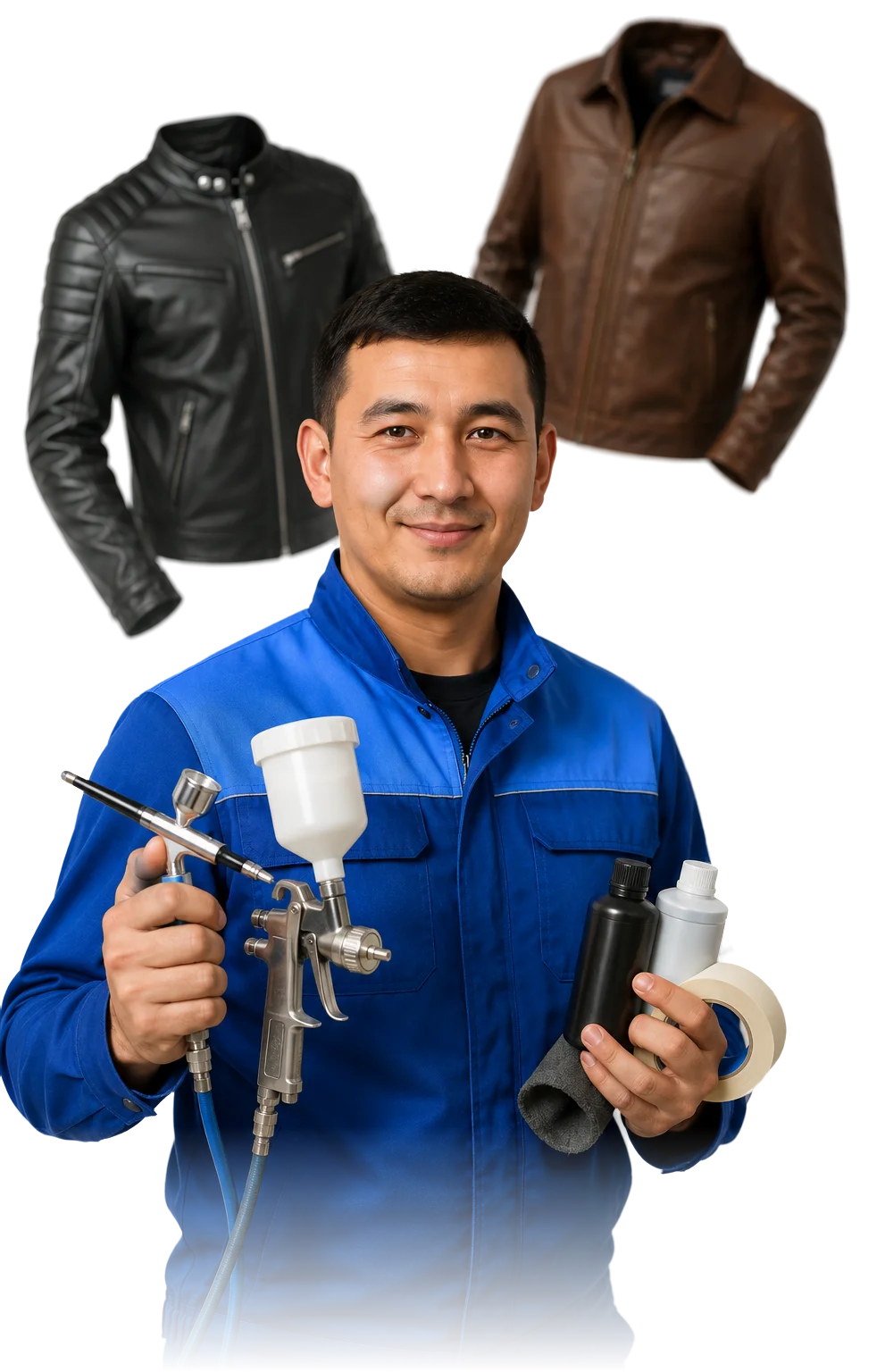
We work with any types and materials
Compact waist-length jacket, requires careful paint application on textured seams and zippers.
from 5,000 ₸Hip-length jacket, dyeing considering volume and collar.
from 5,000 ₸Long leather jacket, requires more material and time for treatment.
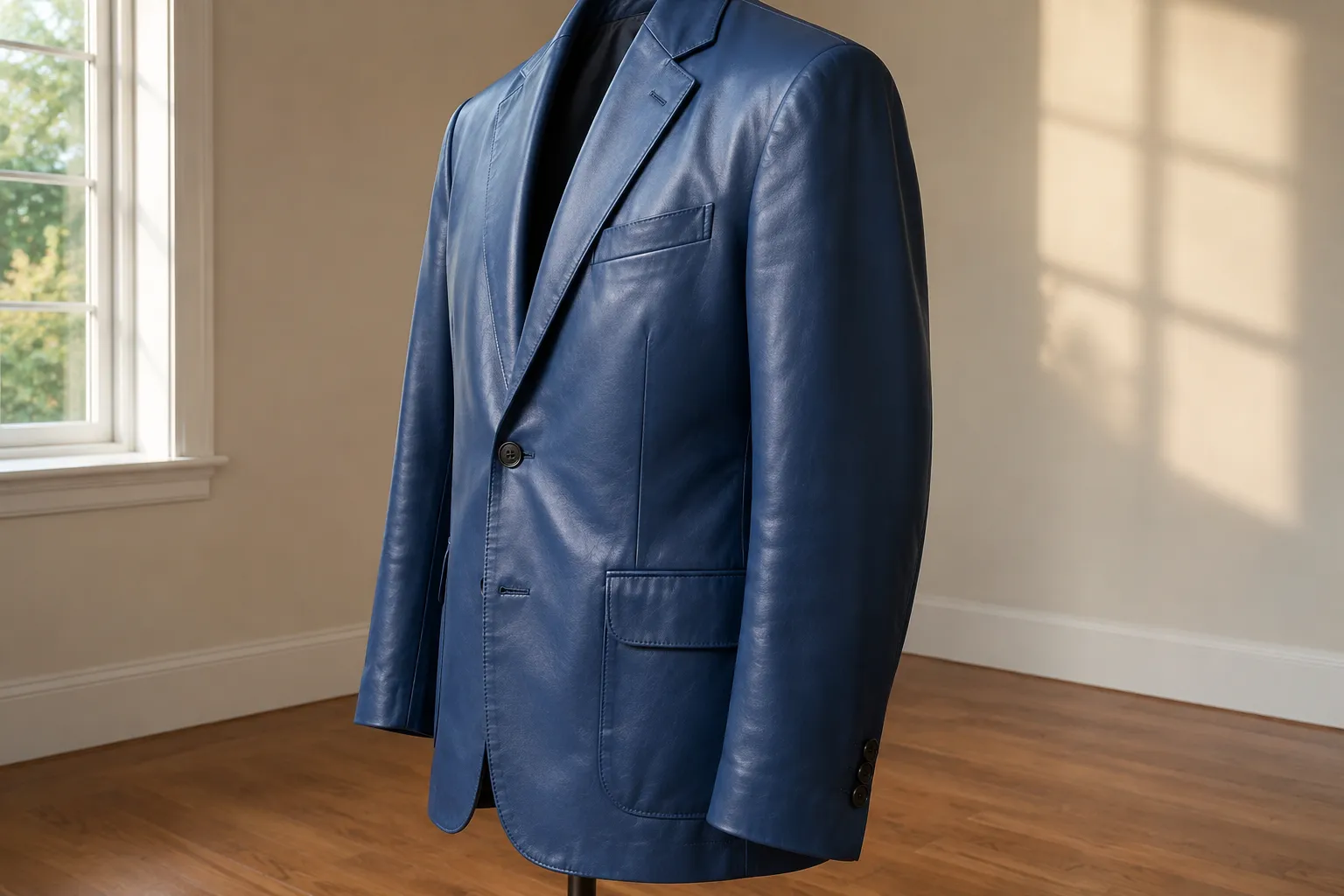
from 8,000 ₸Leather blazer, dyed considering lapels and buttons.
from 3,500 ₸Sleeveless vest, dyeing is simpler and faster.
from 2,500 ₸Nubuck requires special dyes and gentle application to preserve the nap.
from 5,000 ₸Suede is capricious, we use only specialized compounds.
from 5,000 ₸Patent leather requires a special finish coating for shine.
from 5,000 ₸We eliminate abrasions by local tinting and full dyeing.
from 5,000 ₸Deep scratches are filled and masked with paint.
from 5,000 ₸We restore color saturation with 2-3 layers of paint.
from 5,000 ₸We remove stains with special cleaners, then dye.
from 5,000 ₸From inspection to result with guarantee
The master determines the leather type (smooth, nubuck, suede, patent) and selects the FENICE dye of the desired color. Wear and client preferences are taken into account.
Using a special degreaser, we remove dirt, grease, and remnants of the old coating. This ensures paint adhesion to the leather.
We tape zippers, buttons, and snaps with painter's tape to prevent paint from getting on metal. Areas not to be painted are isolated.
The primer layer improves paint adhesion. It is applied evenly over the entire surface with an airbrush.
FENICE paint is applied in 2-3 layers with a paint sprayer or airbrush. Each layer dries for 10-15 minutes.
The jacket is dried at room temperature or with a heat fan. It is important to avoid overheating to prevent the leather from cracking.
We apply a protective layer (matte or glossy) for abrasion and moisture resistance. The choice depends on the leather type.
We inspect the jacket for defects: unevenness, streaks, peeling. We fix if necessary.
FENICE dyes provide deep color, resistant to UV and abrasion. Over 500 jackets dyed with them. Color lasts up to 2 years without fading.
Each leather type requires its own approach: for smooth – spray gun, for nubuck – airbrush with reduced pressure, for patent – gloss finish. We have experience with all types.
Before dyeing, we always clean the jacket with a special compound to remove grease and dirt. This procedure is included in the price, no additional charges.
We provide a written guarantee that the paint will not peel or fade within six months. If defects are found, we repaint the problem area for free.
profi-clean has been on the Almaty market since 2019. During this time, we have perfected the dyeing technology: we use only proven materials and equipment.
Bring your jacket to our center – we will assess its condition for free, select the paint type, and explain all details. The consultation is non-binding.
 After
After
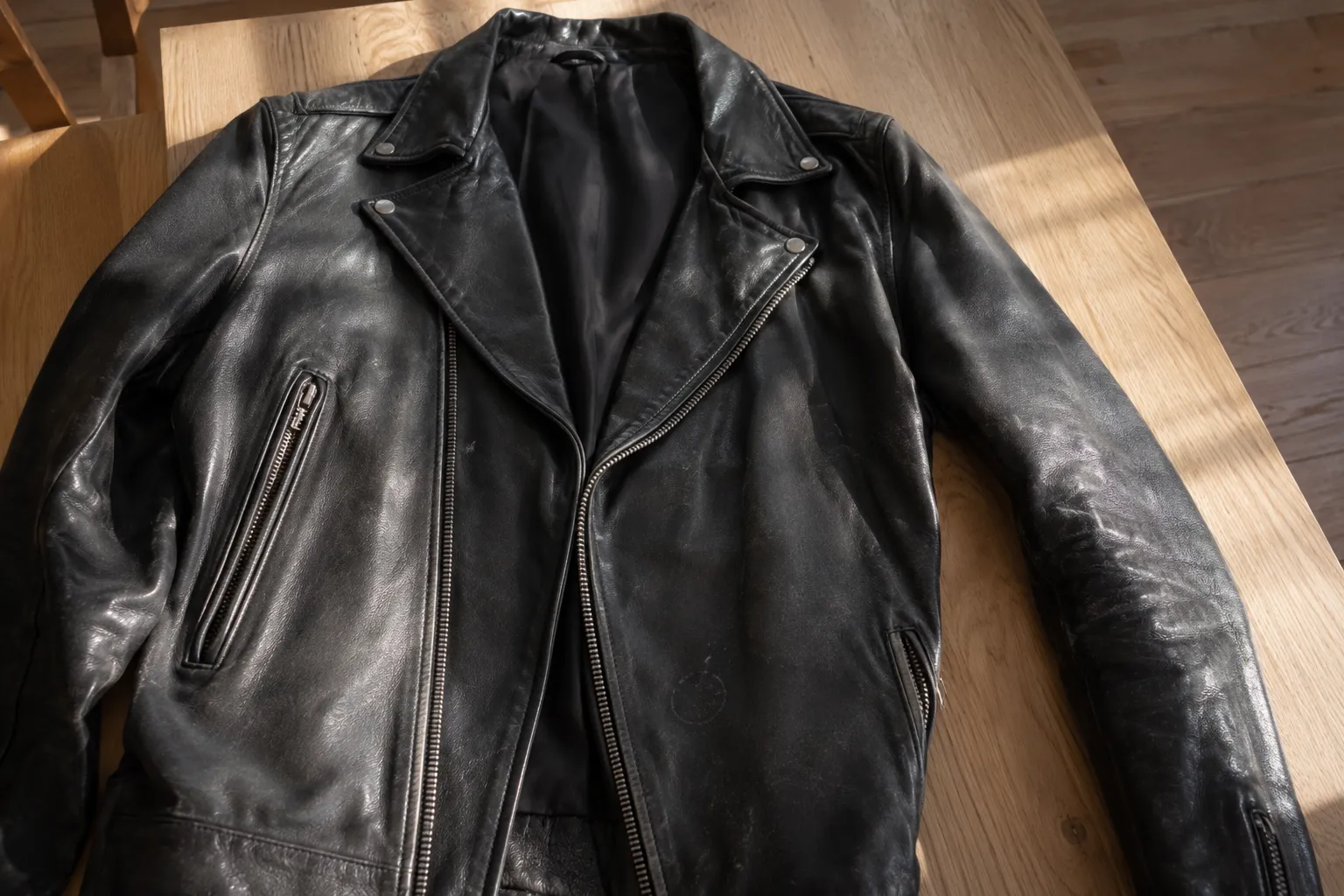
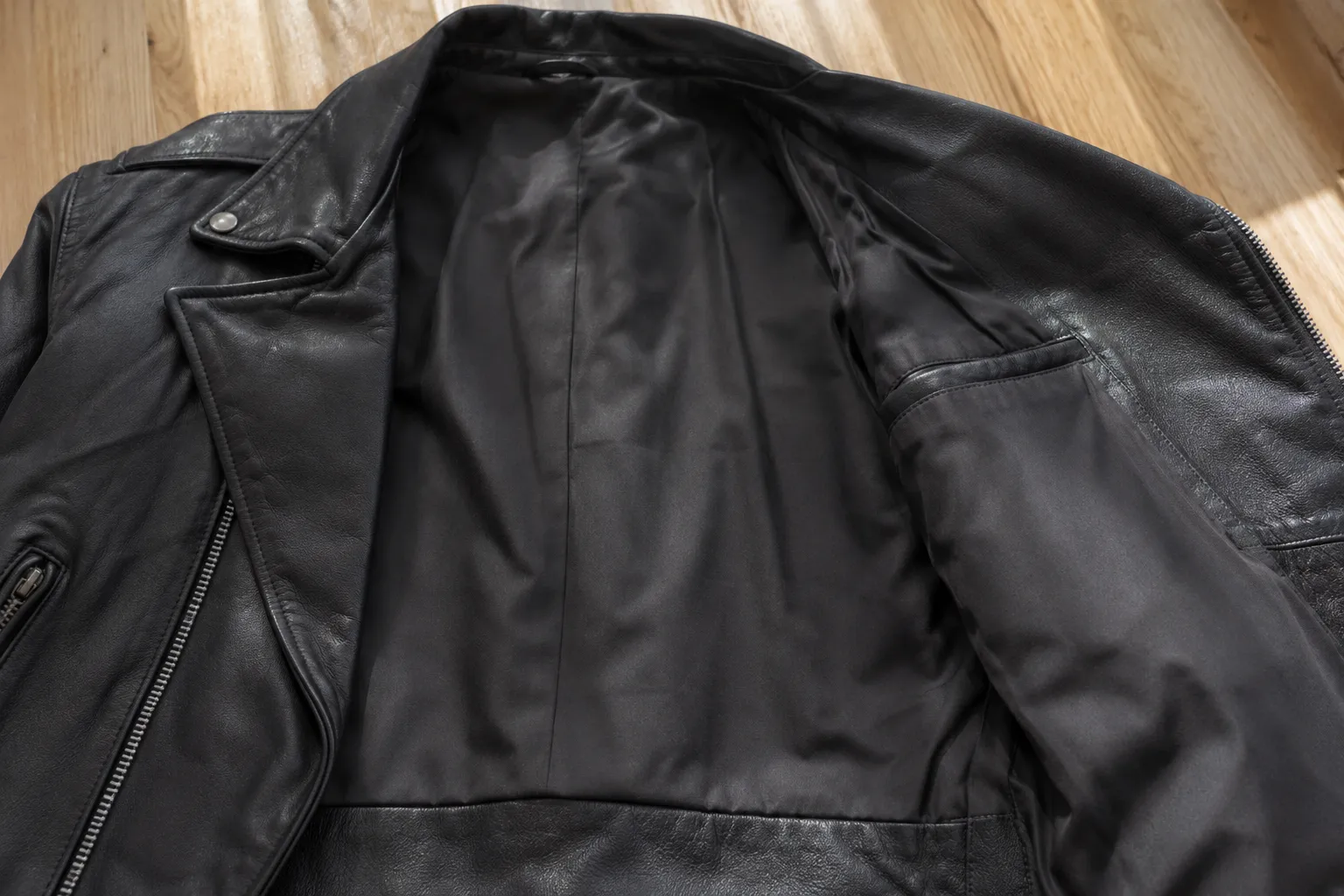
Request: Refresh the color of a black leather jacket that has faded on the shoulders.
Done: We performed deep cleaning, applied two coats of black paint with a fixer.
Cost: 5 000 ₸
Master: Aigul Serikova, dry cleaning master
Total: The jacket has a rich black color without streaks.
 After
After
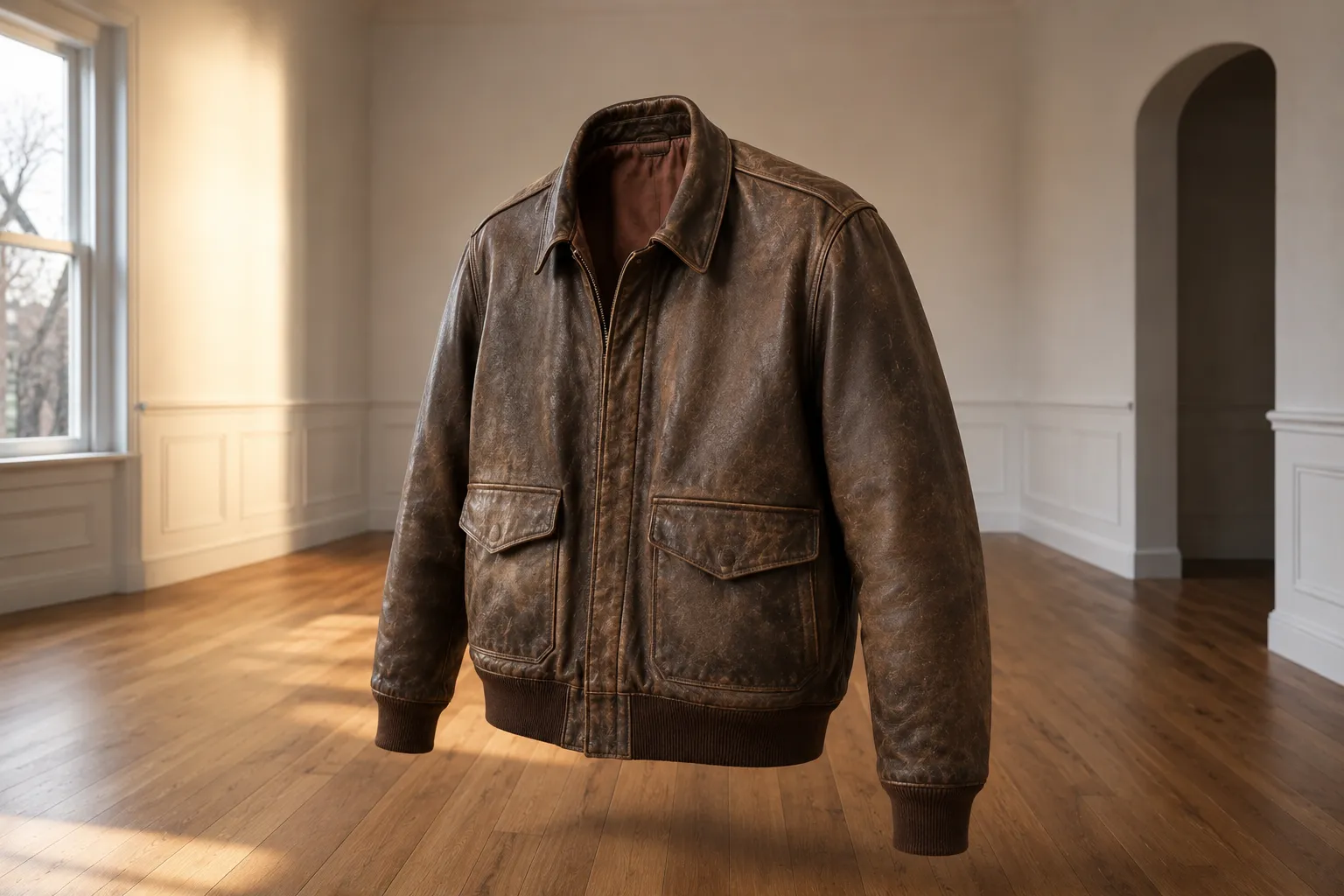
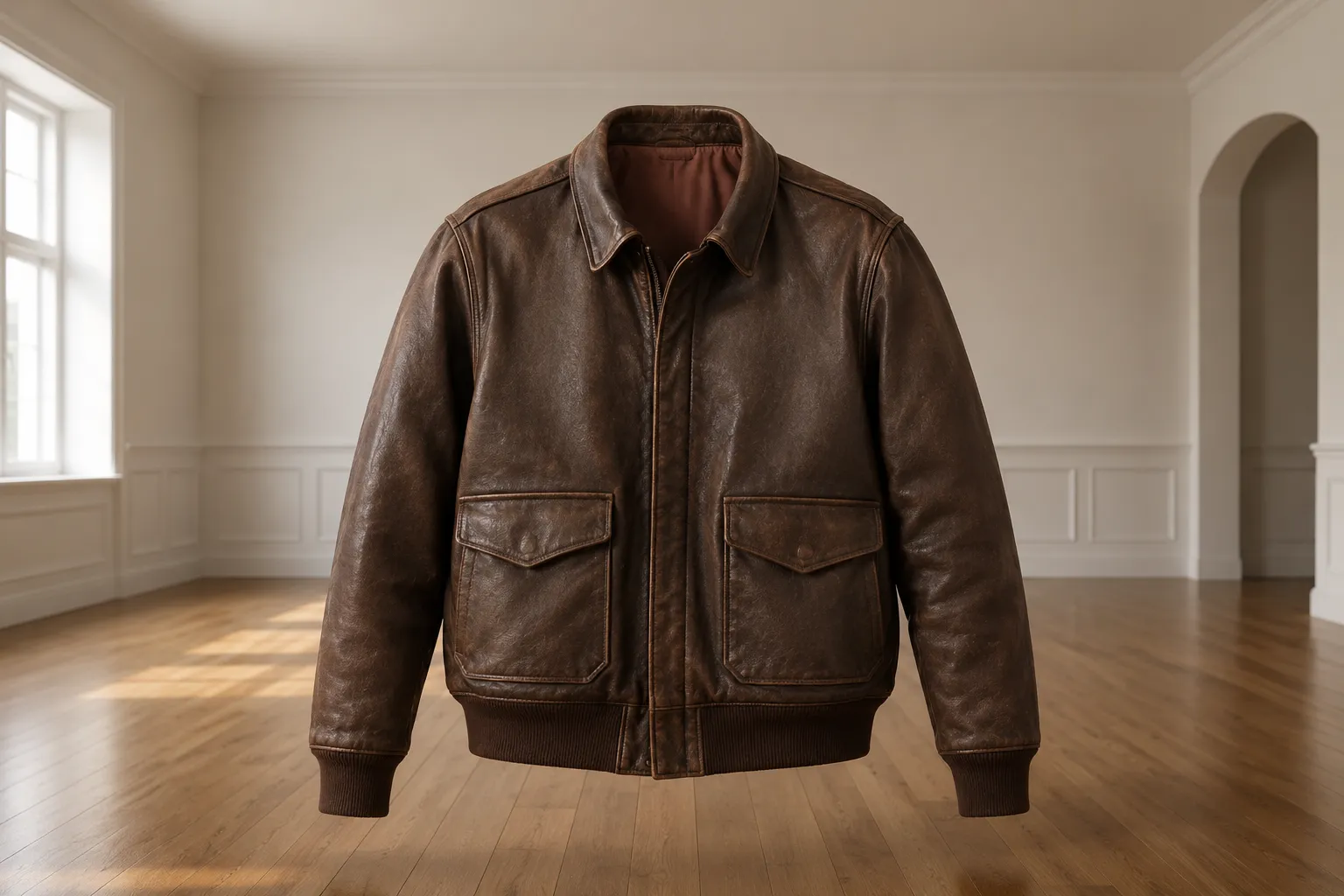
Request: Restore the rich brown shade to a leather jacket.
Done: We cleaned, applied restorative dye and conditioner.
Cost: 5 000 ₸
Master: Timur Zhaksybekov, dry cleaning master
Total: The color is deep, even, the leather is soft.
 After
After
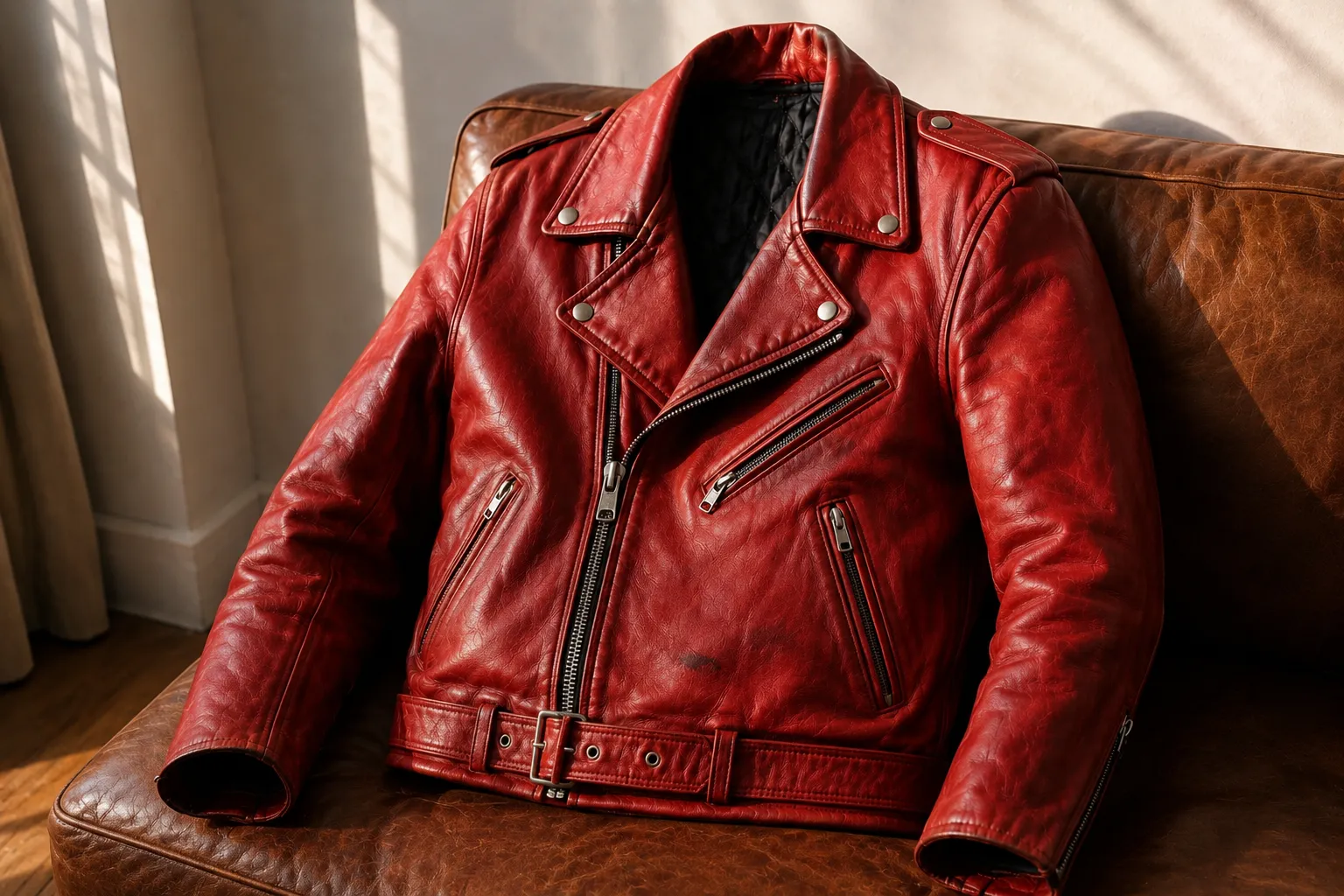
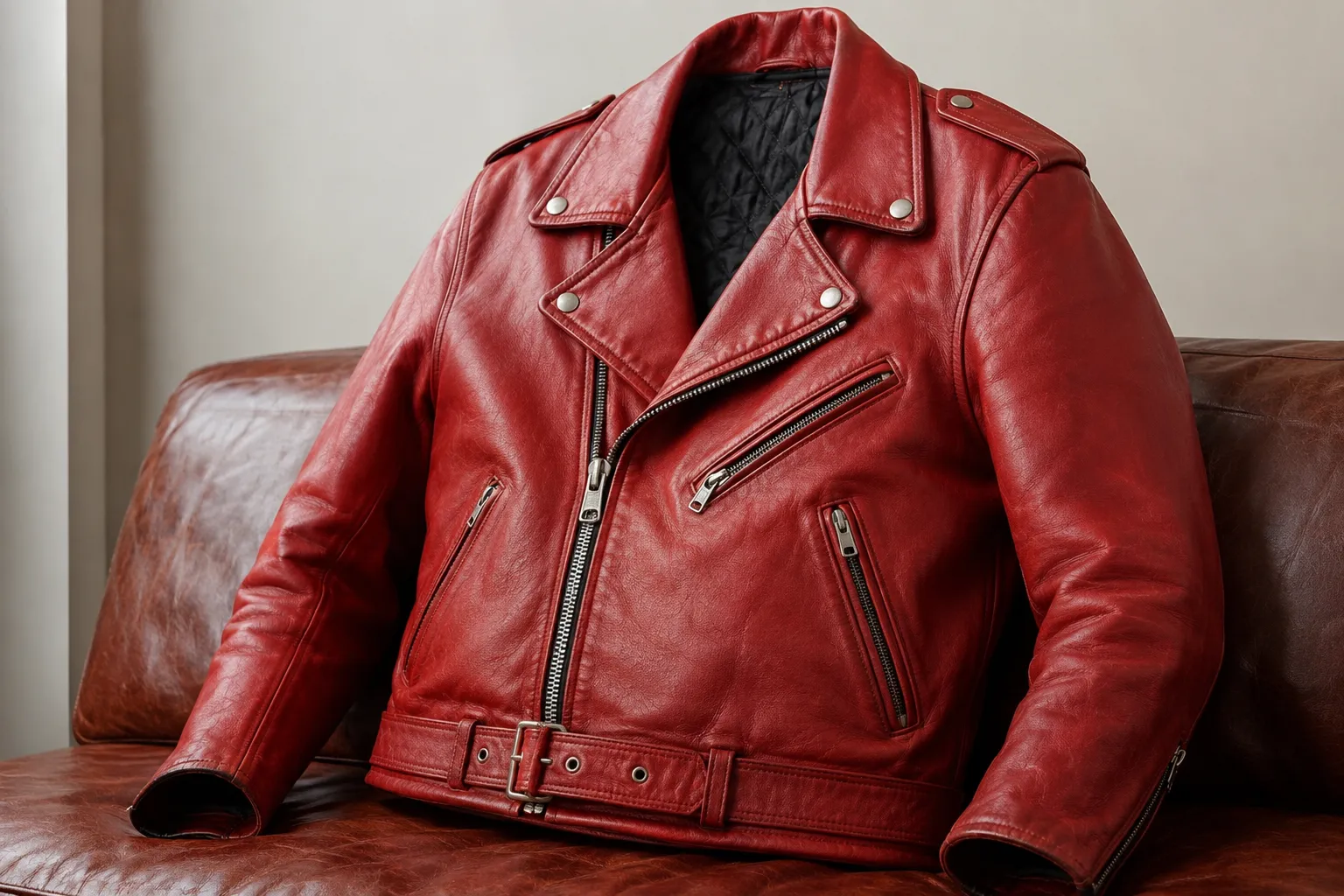
Request: I want a bright red color on an old jacket.
Done: We degreased, applied primer and two coats of red paint.
Cost: 5 000 ₸
Master: Dinara Akhmetova, dry cleaning master
Total: The jacket is bright red, like new.
 After
After
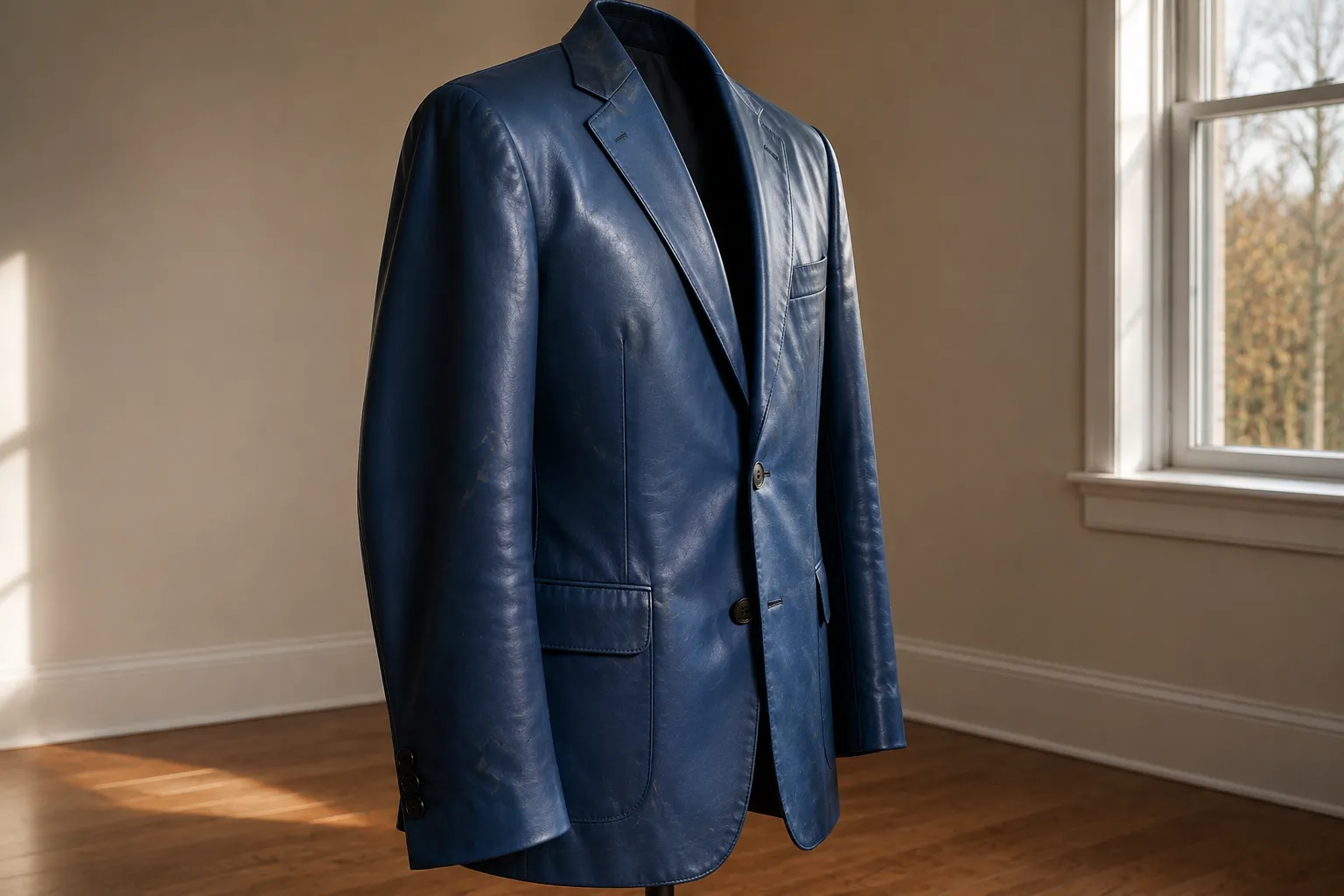
Request: Clean and refresh a blue suede jacket.
Done: Dry brush cleaning, stain removal, nap lifting.
Cost: 5 000 ₸
Master: Nurlan Kassymov, dry cleaning master
Total: Suede is clean, nap is even, color refreshed.
 After
After
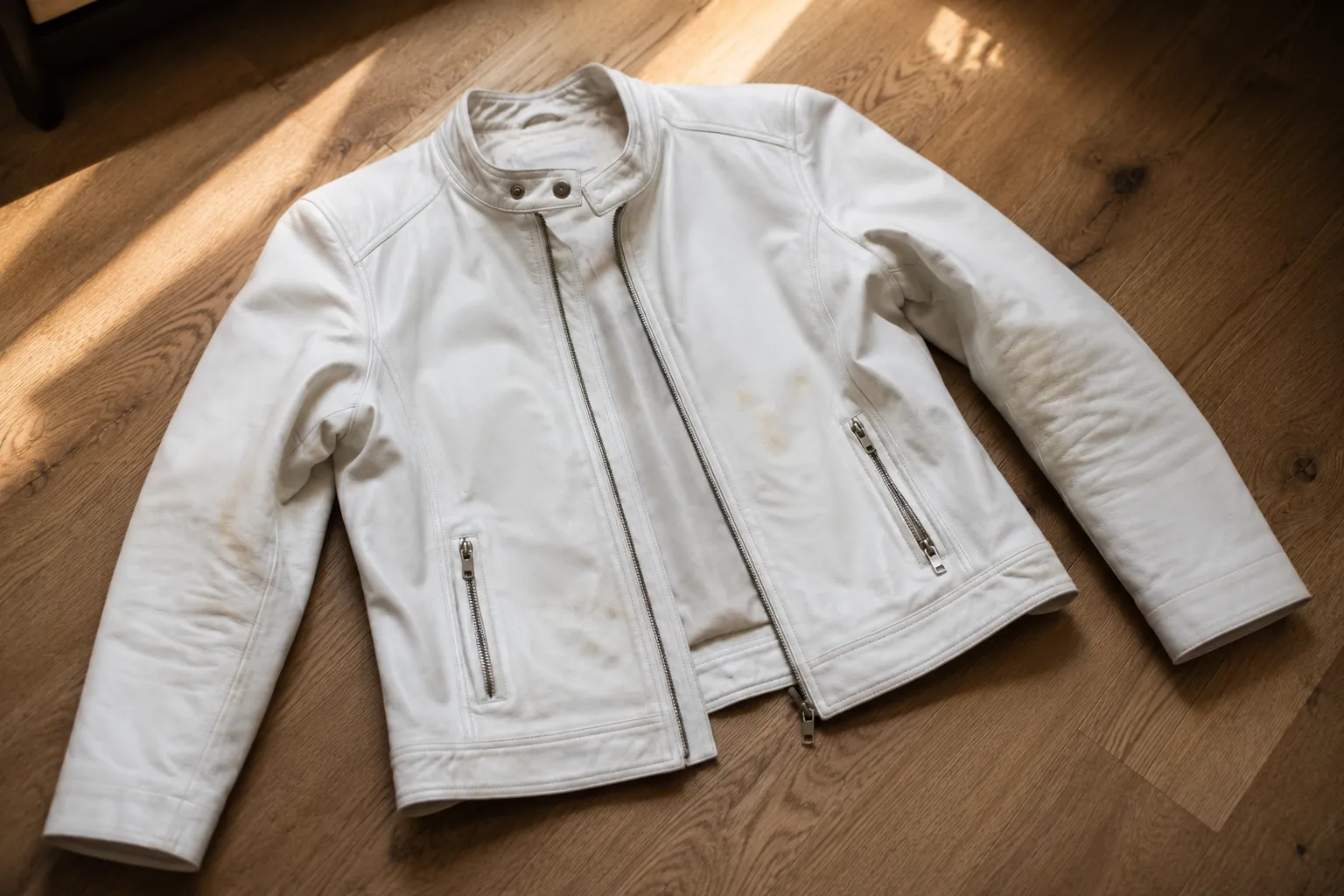
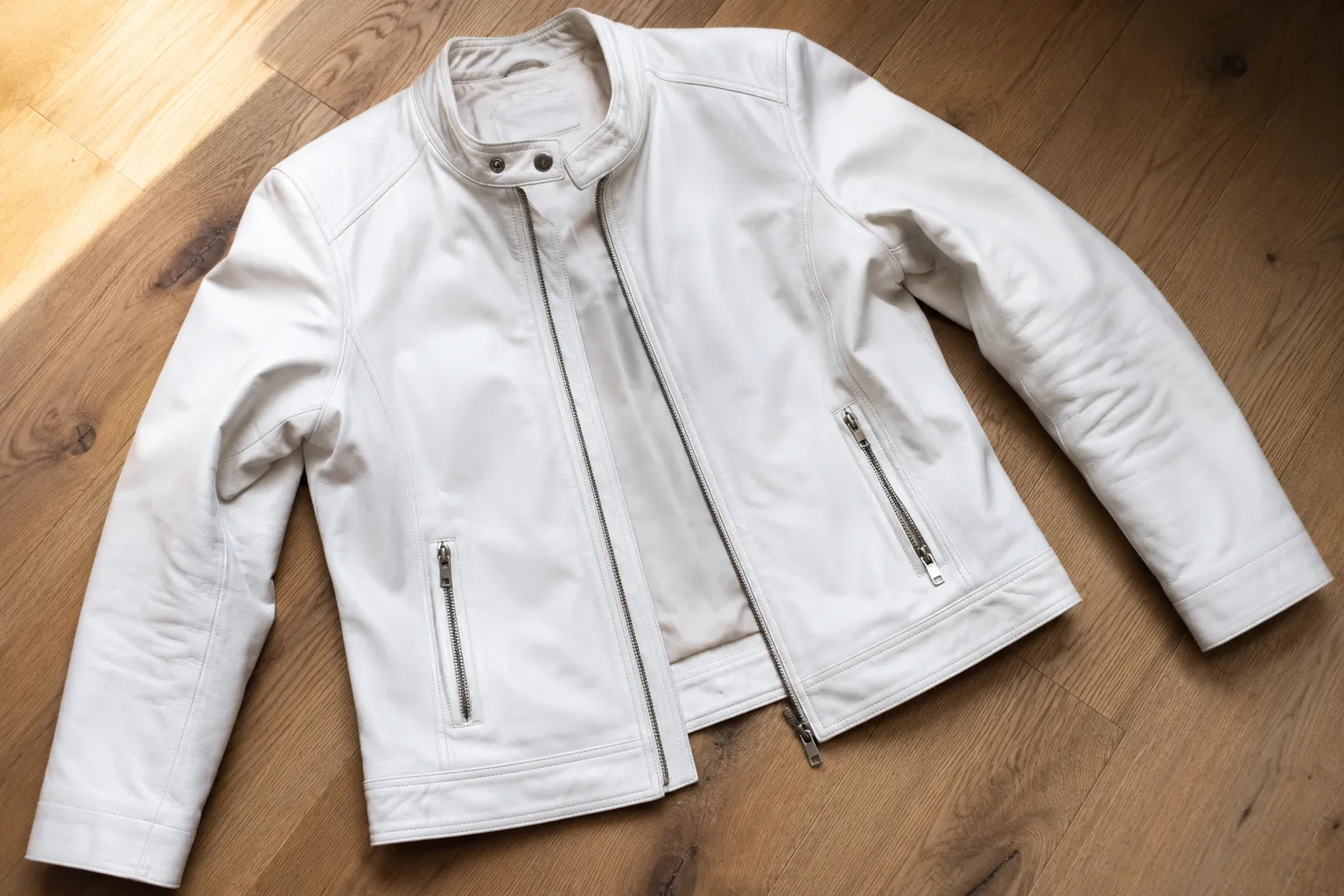
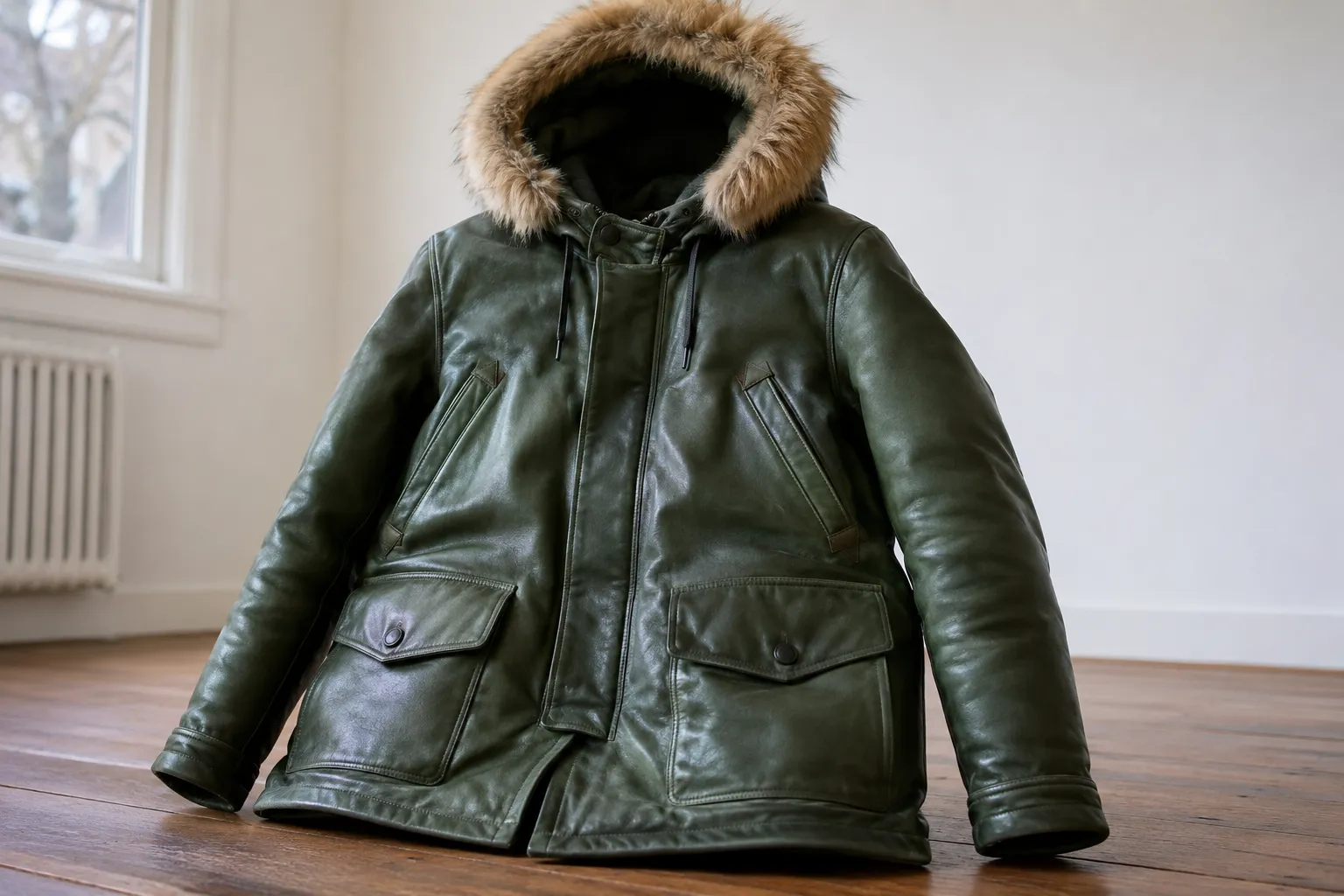
Request: Remove stains and refresh a white leather jacket.
Done: We removed stains with a special product, repainted with white paint.
Cost: 5 000 ₸
Master: Aigul Serikova, dry cleaning master
Total: The jacket is snow-white, with no traces of dirt.
 After
After
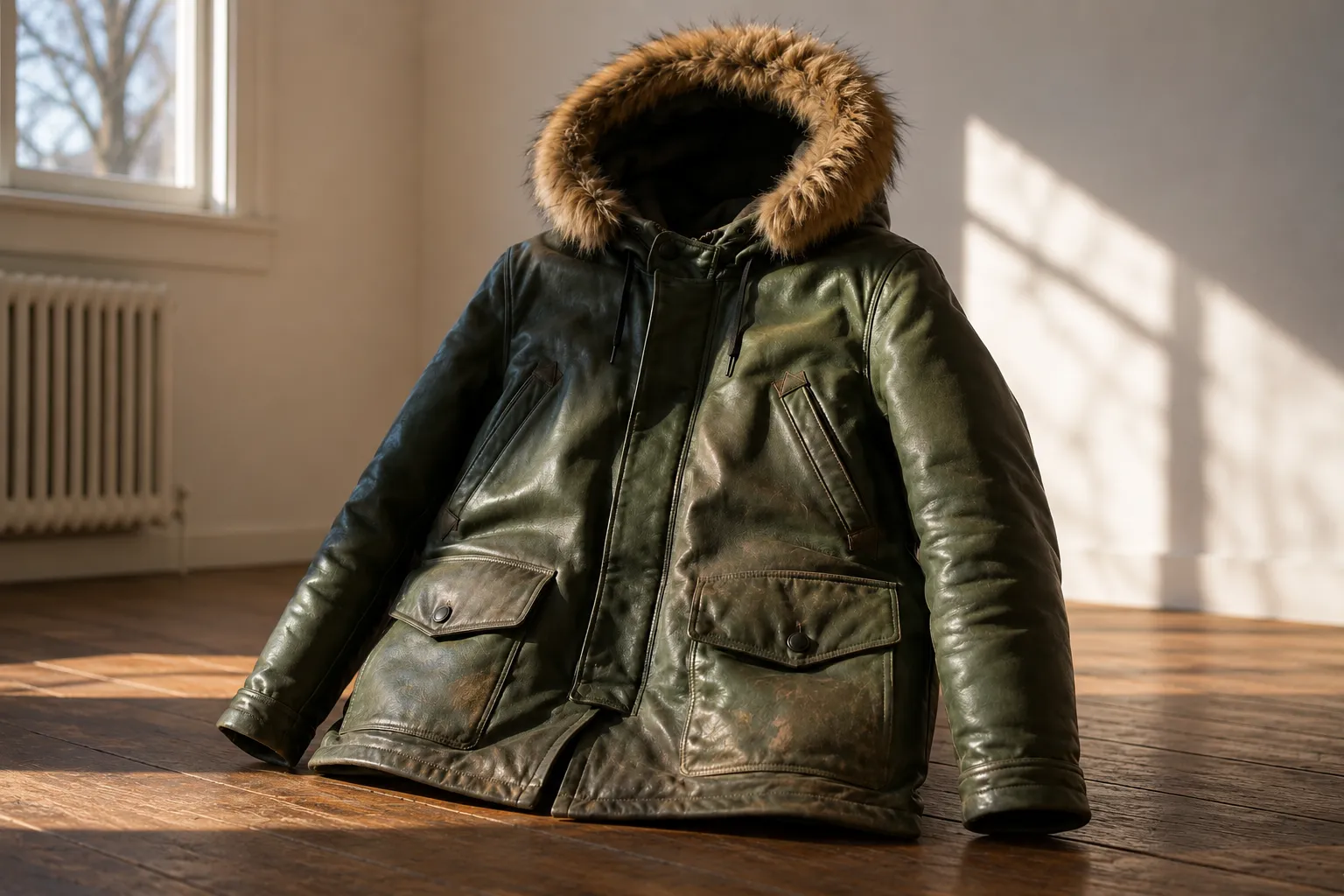
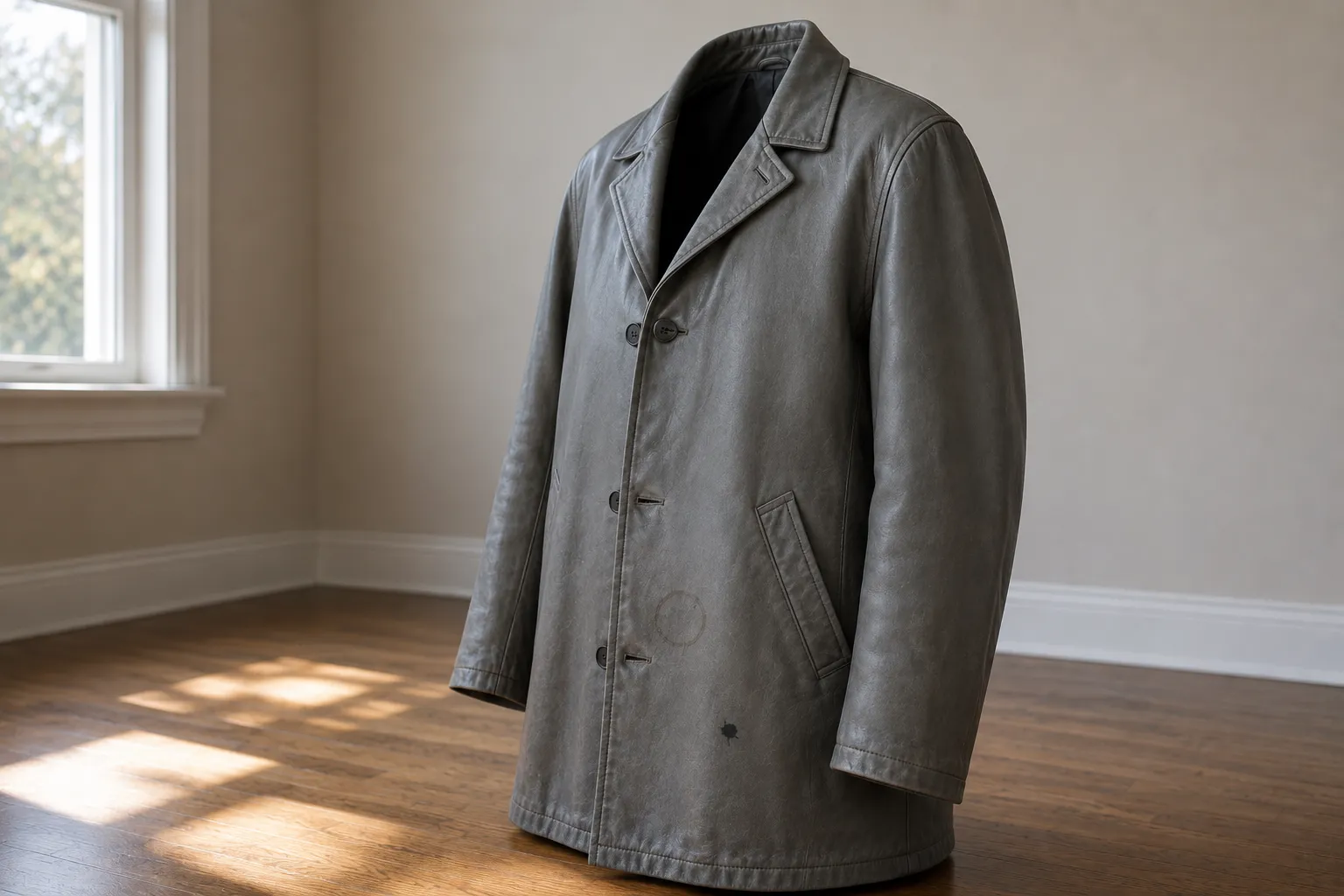
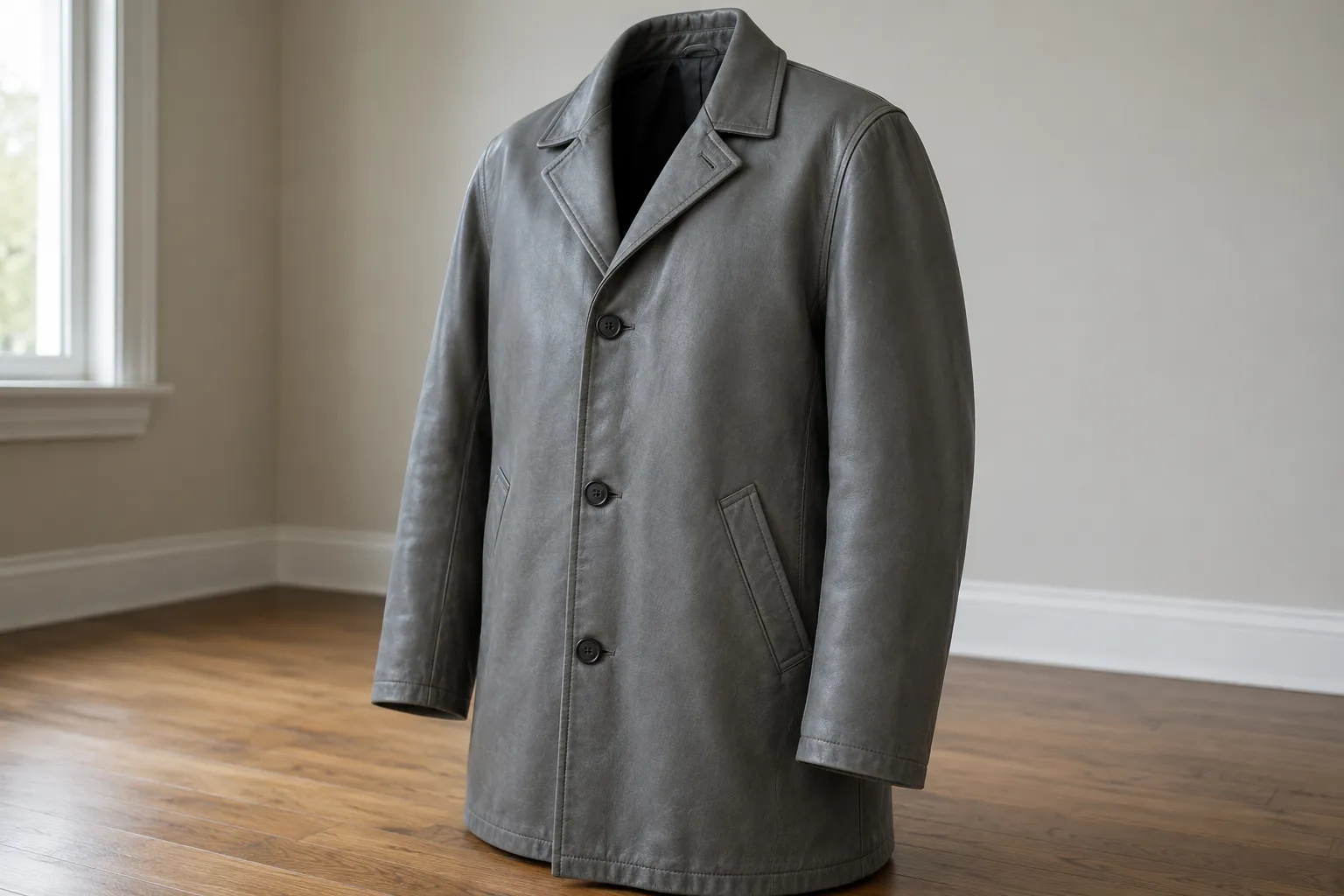
Request: Restore the appearance of an old vintage jacket.
Done: Cleaning, leather conditioning, toning of scuffs.
Cost: 5 000 ₸
Master: Timur Zhaksybekov, dry cleaning master
Total: The jacket looks like a rare item in excellent condition.
 After
After
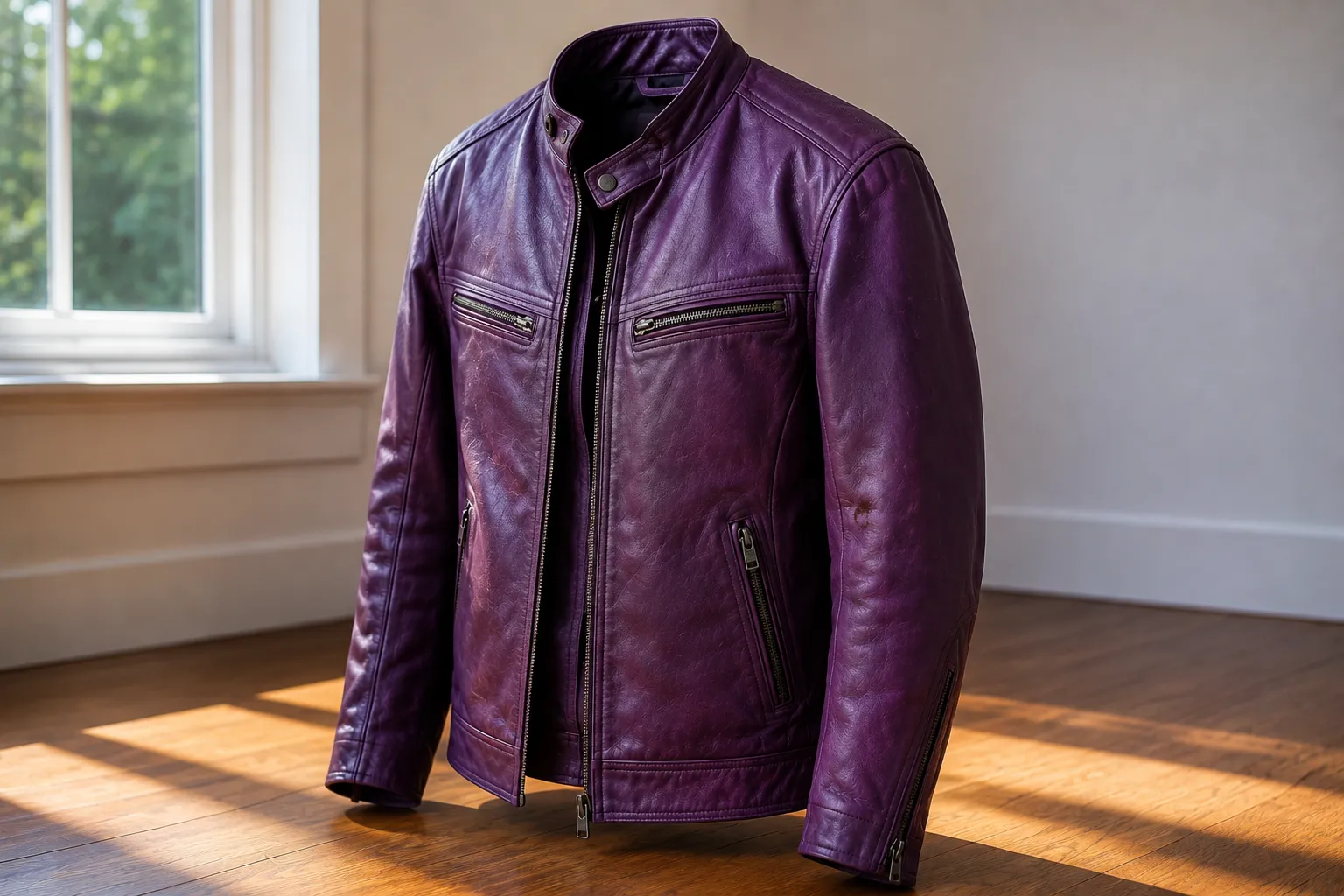
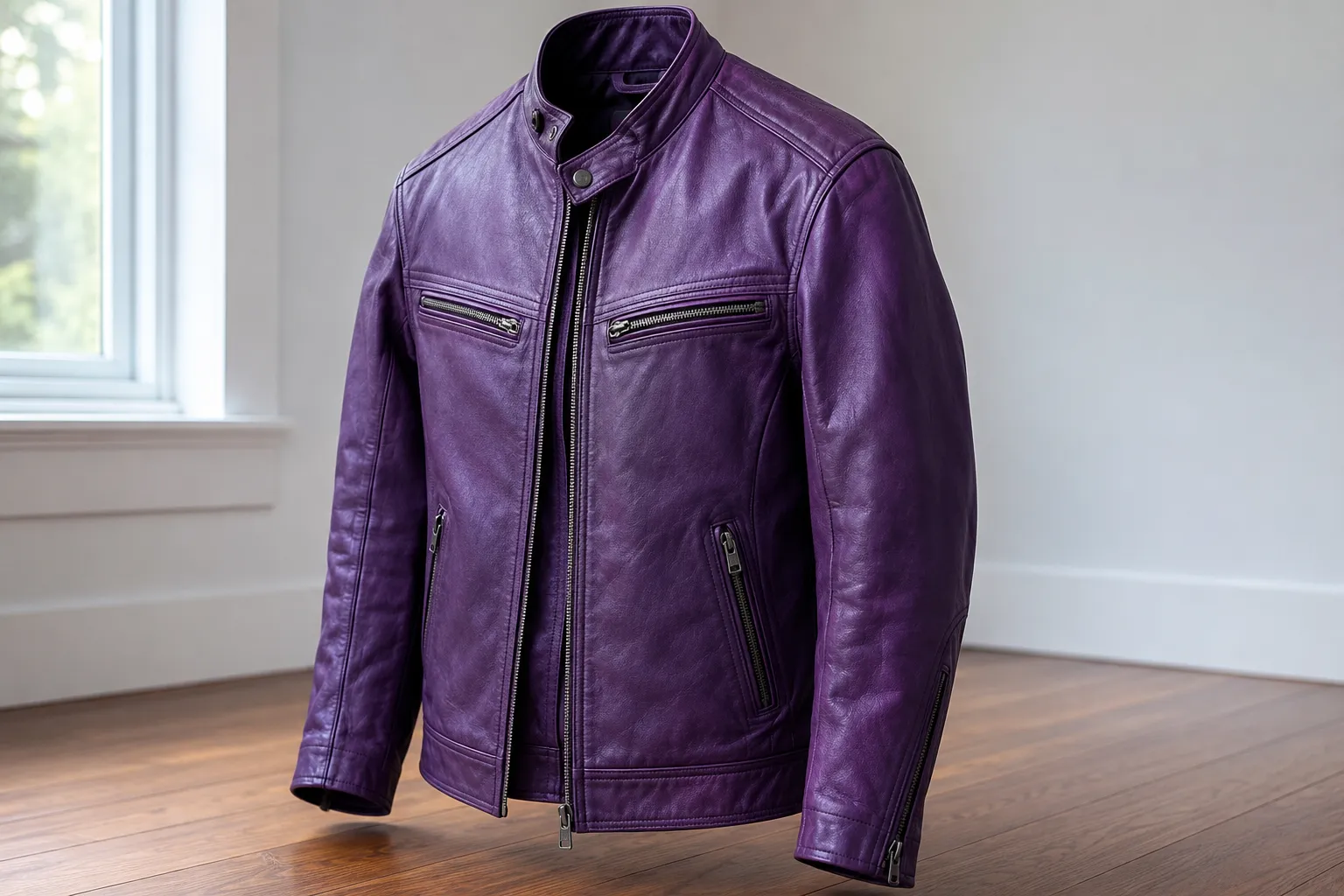
Request: Remove scratches from a leather biker jacket.
Done: Sanded scratches, applied paint and protective coating.
Cost: 5 000 ₸
Master: Dinara Akhmetova, dry cleaning master
Total: Scratches are invisible, leather is uniform.
 After
After
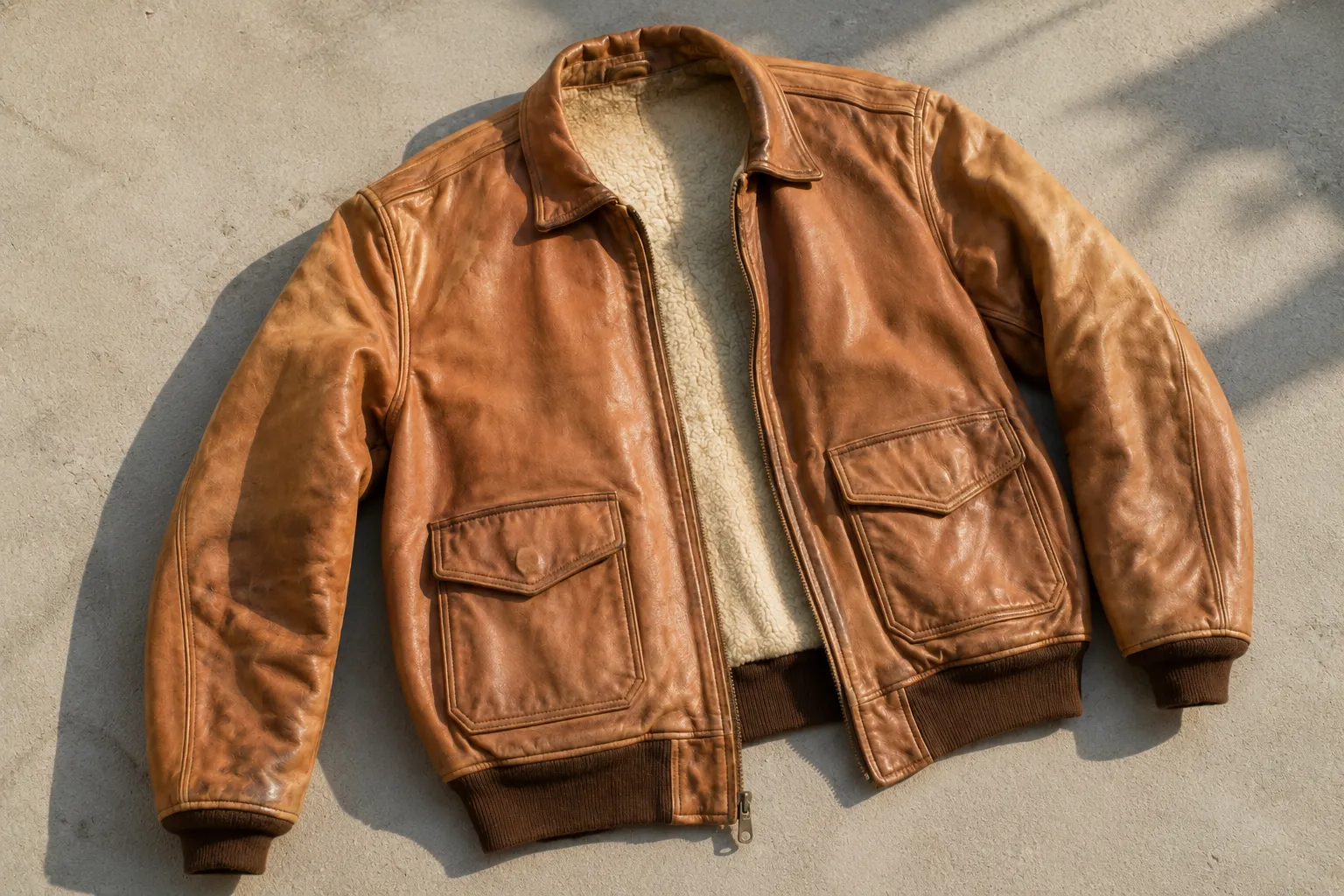
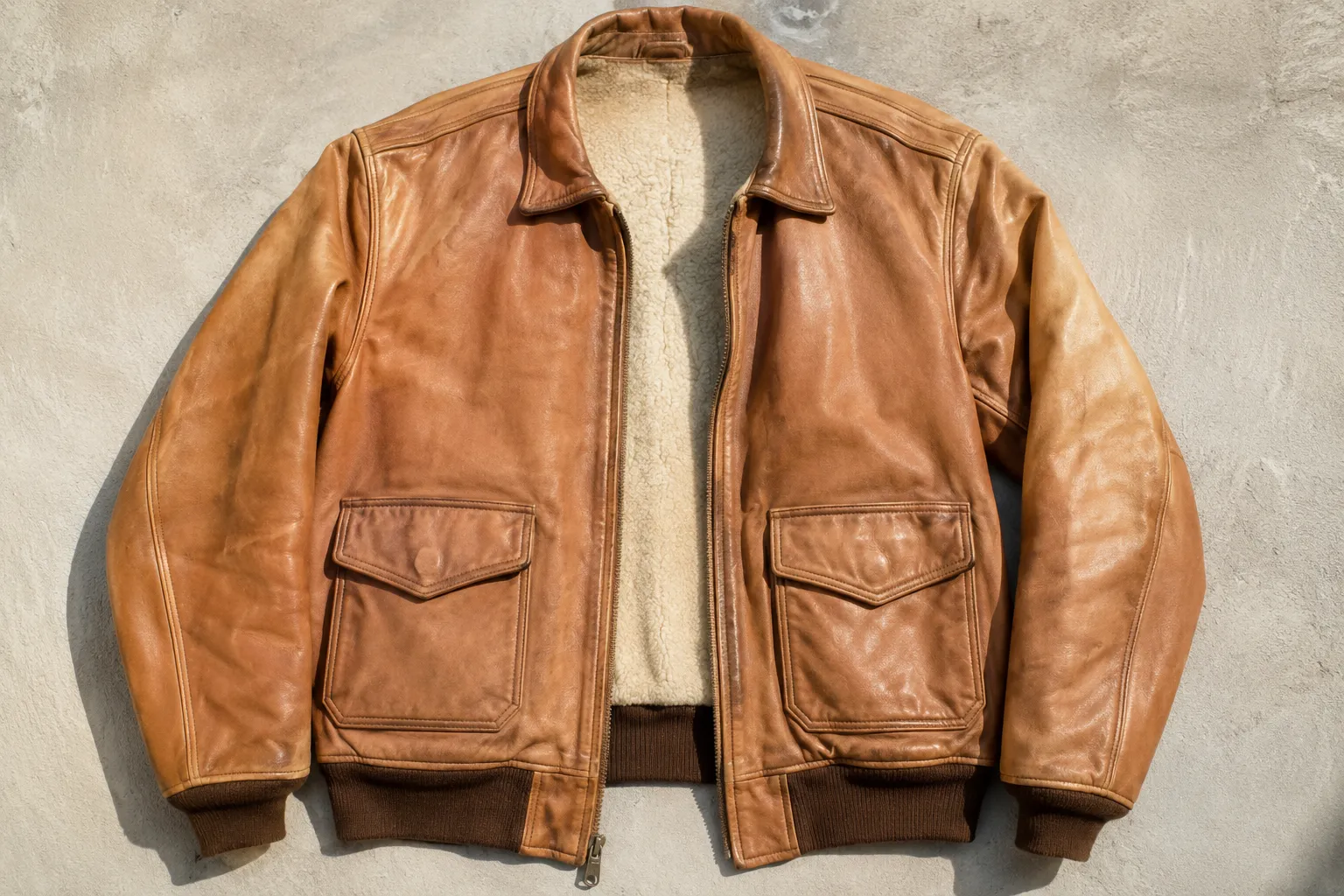
Request: Refresh the color of a nubuck jacket that has become dull.
Done: Cleaning, applying spray paint for nubuck.
Cost: 5 000 ₸
Master: Nurlan Kassymov, dry cleaning master
Total: Color became saturated, nap is soft and even.
 After
After
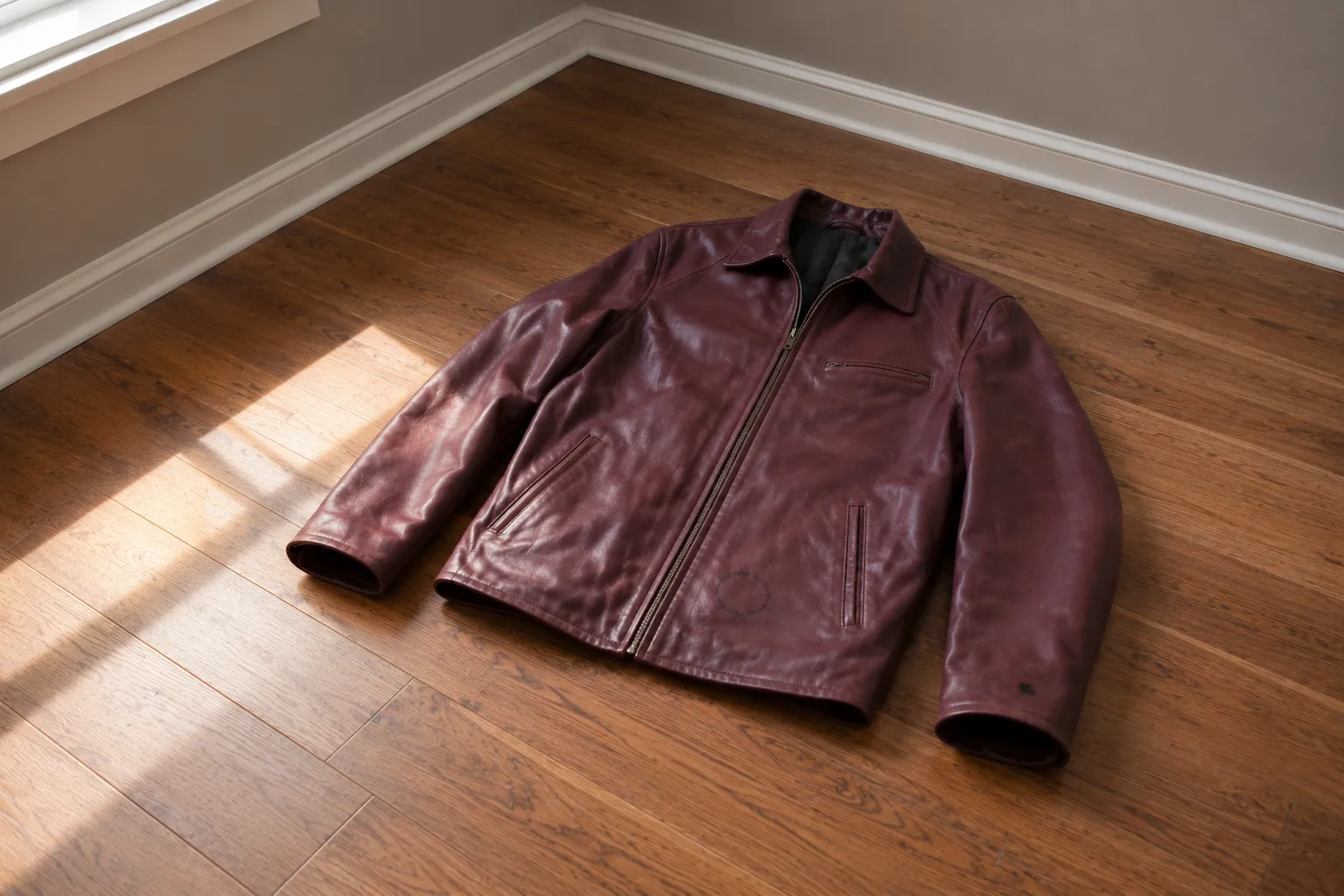
Request: Repaint a patent leather jacket to black.
Done: Cleaning, applying special paint for patent leather.
Cost: 5 000 ₸
Master: Aigul Serikova, dry cleaning master
Total: The jacket shines, color is even, no streaks.
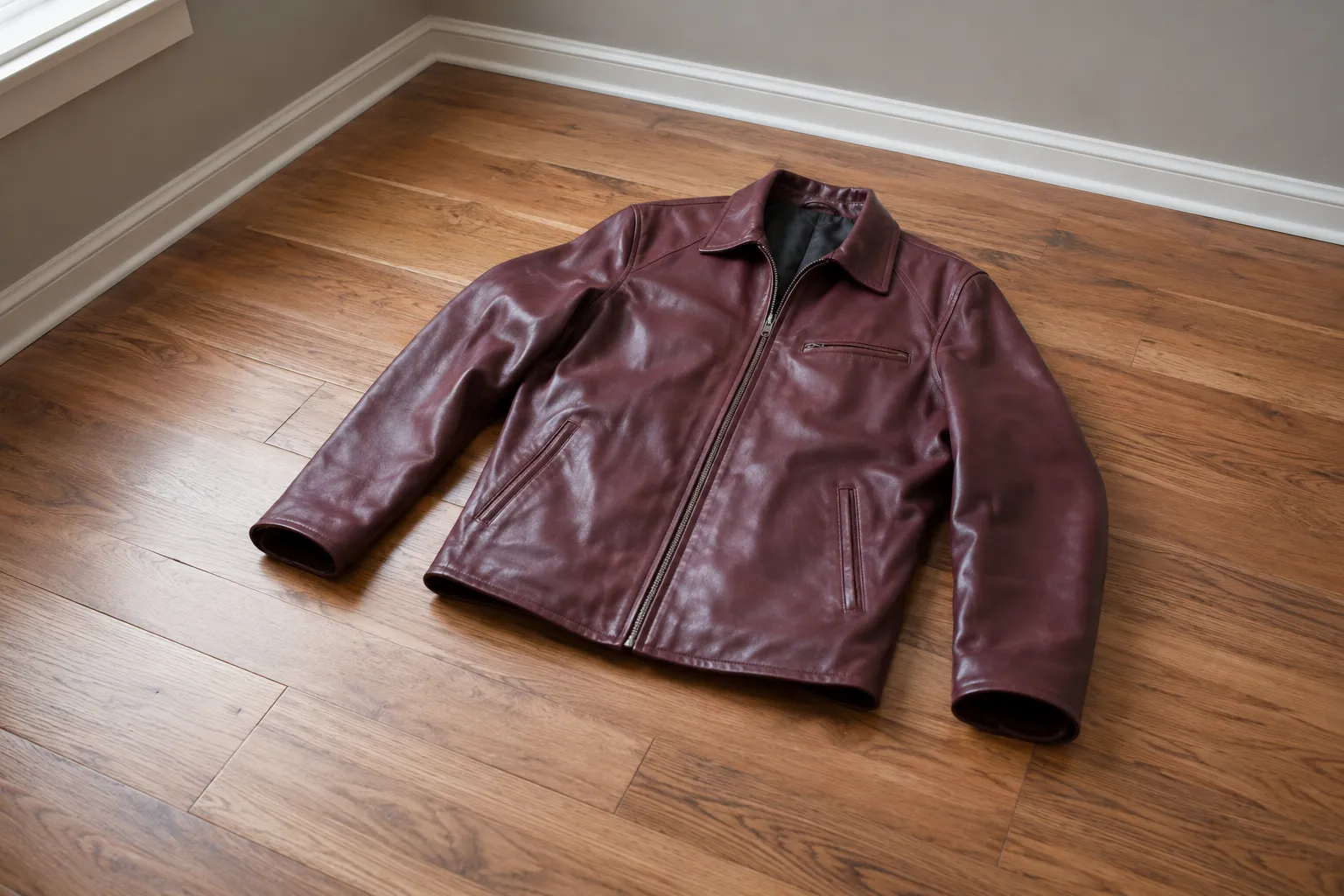 After
After
Request: I want to change the color of a leather blazer from brown to black.
Done: Full repaint: degreasing, primer, two coats of black paint.
Cost: 3 500 ₸
Master: Timur Zhaksybekov, dry cleaning master
Total: The blazer became black, looks like new.
All cleaners are profi-clean staff with training, uniform and security check. Each order has a team leader who controls quality.
A customer, when handing over a jacket for painting, is most often afraid not of the color, but of the composition — that the paint will cause allergies, smell of chemicals, or ruin the item. Let’s break down how justified these fears are, which dyes are truly dangerous and which are not, and how to tell them apart before the item goes into work.
Professional dyes (Tarragó, Fiebing’s, Saphir) are water-based or alcohol-based compositions without lead, cadmium, or formaldehyde. They pass dermatological tests and do not emit toxic fumes even when heated to 60°C during drying. Amateur compositions (shoe polish from the market, automotive nitro enamel, spray cans from Fix Price) contain toluene, xylene, and acetone — these substances evaporate for up to two weeks and can cause headaches and dermatitis. In our practice, there was a case: a client brought a jacket that had been painted before us in a basement service with automotive paint — the smell didn’t dissipate for three weeks, and we had to remove the entire layer with a professional remover. Before handing over an item, ask the service provider for a certificate for the dye — if there isn’t one, they are likely using an amateur composition that will wear off in 2-3 months.
Water-based paint (we use the Tarragó Eco line) after full polymerization does not migrate to clothing or the body — its molecules bond with the leather fibers to a depth of 0.2-0.5 mm. For comparison: alcohol-based dyes penetrate deeper (up to 1 mm) but dry faster and require mandatory fixing with a finisher, otherwise the pigment remains on your hands during wear. For people with sensitive skin, even high-quality paint can cause a reaction if the item is worn immediately after painting — we recommend keeping the jacket in a ventilated room for 24 hours after the final coating. In practice, over 8 years of work, not a single profi-clean client has complained about irritation from painting, although we process an average of 12-15 leather items per month. If you have an allergy to nickel or chromium, warn the craftsman before painting — for such cases, we use chromium-free fixatives that do not contain heavy metal salts.
The most common mistake is trying to paint a jacket with furniture or shoe dye: these compositions have different elasticity, the paint cracks and flakes at the bends on the sleeves, and fine dust from the peeled-off pigment can enter the respiratory tract. The second most common mistake is ignoring the fixative: without it, even expensive paint remains “active” and stains light linings, shirts, and the neck. The third is applying paint to dirty leather: grease and silicone on the surface prevent the pigment from bonding, it peels off in pieces, leaving a sticky film in the peeled areas to which dust sticks. Before painting, be sure to demand degreasing with a professional primer (not a soap solution) — this is the only way to guarantee that the paint won’t “run” in a month and start dusting.
Almaty’s summer with +35°C and humidity of 25-30% is a harsh test for paint: when overheated, some compositions release volatile compounds that, when inhaled in an enclosed space, can cause mild dizziness. Water-based Tarragó Eco dyes withstand heating up to +80°C without degradation — this covers any Almaty temperatures with a margin, including a car interior in summer. Winter temperature changes from -15°C outside to +25°C indoors are more dangerous: paint on a low-quality binder hardens, loses elasticity, and cracks at the folds. We tested 8 brands of dyes in local conditions — only compositions with an acrylic-polyurethane base survive three “freeze-thaw” cycles without losing their properties. If you plan to wear the jacket in winter, check with the craftsman about the type of binder — polyurethane compositions last 2-3 times longer than acrylic ones when worn outdoors during an Almaty winter.
After professional painting, a jacket requires special care — otherwise, the pigment can fade within two to three months of active wear. In Almaty, with its sharp humidity changes and dusty air masses, this is especially critical. We have compiled rules that extend the coating’s durability for a year or more.
During this period, the paint fully bonds with the skin fibers, and any deviation from the technology almost guarantees peeling. Do not wear the jacket in rain or snow — drops leave permanent streaks that can only be removed by repainting. Do not fold it in a bag or hang it in a cramped closet: micro-cracks in the pigment form at the folds, visible upon close inspection. Store the jacket on wide hangers, in a flat position, at room humidity of 40–60%. In our practice, there was a case where a client placed a freshly painted jacket on the back seat of a car, and after a 40-minute drive in the sun, the paint on the back bubbled — we had to repaint the area. For the first 14 days, do not treat the jacket with any creams or sprays — they block the fixation of the top coat.
Regular leather conditioners with silicones and waxes soften the top layer of paint, and over time, it begins to roll off with friction. Use only pH-neutral cleaners labeled “for painted leather” — for example, the Leather Master or Collonil line. Apply the product to a microfiber cloth, not to the jacket, and wipe in circular motions without pressure. Never use alcohol-based wipes, acetone, solvents, or household chemicals with chlorine — they dissolve the pigment in one application, leaving whitish stains that cannot be restored without repainting. In Almaty, where tap water is hard (up to 7–8 mg-eq/L), after wet cleaning, wipe the leather with a dry cloth — otherwise, dried drops leave a salt residue that eats into the paint.
Direct sunlight is the main enemy of painted leather: UV burns out the pigment after 50–60 hours of continuous exposure, especially on light shades (beige, gray, pastel blue). In Almaty, with about 300 sunny days a year, wear the jacket in cloudy weather or use a water-repellent spray with a UV filter — for example, Collonil Carbon or Salamander. Rain and wet snow soak the pores of the leather; if the jacket gets wet, dry it at room temperature away from radiators and heaters — hot air dries the top layer faster than the bottom, causing the paint to crack in a web pattern. Do not rub wet areas with a towel — blot with a soft cloth without pressure to avoid smearing the pigment. In the car, do not hang the jacket on a hook near the rear window — the temperature there is 15–20 °C higher than in the cabin, and the paint “cooks” after just a few trips.
Plastic bags create a greenhouse effect: condensation builds up inside, and the paint becomes damp, then molds along with the leather. Use breathable bags made of cotton or spunbond — they allow air circulation but protect from dust. Before storing for the summer, be sure to clean the jacket of dirt and sweat — organic residues eat into the paint and leave permanent dark stains. In Almaty, where humidity drops to 30% in winter, do not store the jacket on an unheated balcony — overly dry air makes the leather brittle, and the paint flakes off at the folds during the next wear. Optimal conditions: a dark closet, temperature 18–22 °C, humidity 50–60%, jacket on wide hangers, zipper half-closed (to avoid deforming the fabric at the zipper).
Even with perfect care, painted leather fades over time — this is a normal wear process. The first sign: a slight matte shade appears on the elbows, cuffs, and collar, differing from the main area. If no action is taken, after 3–4 months of active wear, these areas will become noticeably lighter. The second sign: small light stripes form on the sleeve folds, resembling cracks, but the leather feels intact to the touch. At profi-clean, we recommend preventive tinting once a year — this restores color saturation and extends the coating’s lifespan without full repainting. If you notice wear earlier, don’t wait — schedule a local restoration: the master applies pigment only to the problem areas, and the jacket looks like new for another season.
Even high-quality paint won’t help if the technology is violated — we at profi-clean see the consequences of such mistakes weekly.
The most common cause of new pigment peeling is applying paint over silicone shine or wax left behind by home creams. In our practice, there was a case: a client brought in a jacket painted at another workshop—the paint peeled off after two weeks. The reason: the surface was not degreased with a professional degreaser (we use Kiehl compound with pH 9.5). Without this step, the new layer sits on a film rather than in the pores of the leather and lasts a maximum of one month. Before painting, demand a two-stage cleaning: first an alkaline compound to remove silicones, then a neutral one to restore the acid-base balance.
Smooth leather, nubuck, suede, and patent leather require fundamentally different paints and primers—applying acrylic to suede means ruining its nap forever. In Almaty, a frequent request is painting sheepskin coats and suede jackets brought from clothing markets (Barakholka, “Sary-Arka”). For smooth leather, we use a water-based covering pigment (Sodasan); for nubuck, an aniline dye that absorbs rather than clogs pores. For patent leather, acrylic is strictly contraindicated: it cracks when bent. If a master says “one compound for everything”—leave, it’s guaranteed to be defective after a month of wear.
Leather is a finicky material: with excess moisture, it stretches and loses shape; with too-fast drying, it becomes covered in micro-cracks where dirt gets trapped. The optimal regime for Almaty with its dry air (indoor humidity 40-55%) is drying at 22-25°C in the shade, without a fan or radiator, for 8-12 hours depending on leather thickness. Speeding up the process with a hairdryer is a mistake: water molecules evaporate faster than the polymer film can bond with the fibers. In our chambers, a stable microclimate is maintained, and we have recorded that jackets dried slowly (12+ hours) last twice as long without needing reconditioning.
Many home craftsmen paint leather and leave it as is—without a final fixative that protects against friction and water. The result: after just three to four wears, light spots appear on the collar and cuffs. In professional technology, applying a fixative is mandatory (we use a natural-based liquid wax from Kiehl)—it creates an elastic, invisible film that withstands up to 200 friction cycles per the Martindale test. On our orders, jackets with fixative do not require touch-ups for at least 18 months, while without it, clients return within six months with complaints about worn elbows.
Almaty’s climate—sharply continental with dry summers (+40°C) and humid winters (fogs, fluctuations from -5°C to +10°C)—dictates its own requirements for leather painting that typical dry cleaners do not consider.
Leather is a hygroscopic material: it absorbs moisture from the air and releases it when dry. In Almaty, winter humidity reaches 75–85%, and if paint is applied without a plasticizer adapted to such conditions, the coating cracks when exposed to frost—micro-cracks appear after just 2–3 “outdoor–indoor” cycles. In summer, with humidity at 25–35%, the same paint dries out and flakes off in scales. At profi-clean, we use finish fixatives with an elastic film that maintains adhesion during fluctuations from -15°C to +35°C—this is not stated on the can but is selected based on seasonal weather data. Before painting a jacket in Almaty, check if the master performs a temperature-humidity test: a leather sample with applied paint is kept in a refrigerator for 2 hours, then at room humidity—if there is no cracking, the compound is suitable.
Solar activity in Almaty is higher than the Kazakh average — 280–300 sunny days per year, and the UV index reaches 8–9 units (dangerous level) in summer. Conventional aniline dyes without UV blockers fade within 2–3 months on jackets worn in the city: shoulders, collars, and upper sleeves fade. In professional formulations for the Almaty market, we add a benzotriazole-based light stabilizer — it absorbs UV rays and extends color fastness to 12–18 months with daily wear. The craftsman should clarify whether the dye contains a UV absorber: if not, use a spray with SPF protection for the skin after painting — this is the only way to slow fading in direct sunlight.
Almaty’s microdistricts differ in microclimate: in the Medeu district (above 1000 m above sea level), humidity is 10–15% lower, and UV intensity is 20% higher than in the Bostandyk district at the foothills. A jacket painted for Bostandyk conditions (moderate humidity, less sun) will start cracking within a month in Medeu due to dryness and fade two months earlier. In our practice, there was a case: a client from Gorny Gigant had a jacket painted at a dry cleaner in the center, and after 6 weeks came with a complaint — the paint peeled off the collar. The reason was that the formulation was designed for 60% humidity, while the area maintained 40%. We repainted it with the addition of a moisturizing component, and the jacket lasted two seasons without issues. When ordering leather jacket painting, specify your residential area — the craftsman will select a formula adjusted for the local climate.
Due to frequent weather changes (fog in the morning, sun in the afternoon), jackets made of nubuck and velour are popular in Almaty wardrobes — they breathe but absorb moisture more than smooth leather. Nubuck requires a fluorocarbon-based water-repellent impregnation after painting, otherwise the pigment will “bleed” into spots after the first rain. Patent leather jackets, on the contrary, suffer from temperature fluctuations: the lacquer film cracks in frost, and the paint underneath peels off in layers — for such models, we use elastic acrylic dyes with thermal resistance down to -20°C. Smooth leather with embossing (“crocodile”, “ostrich”) is another complex case: the texture gets clogged with dust and grease, and without preliminary deep steam cleaning, the paint will apply in spots. If your jacket is made of nubuck or patent leather, don’t skimp on a test sample — apply the formulation to an inconspicuous area (inner pocket) and check the reaction after drying for 24 hours.
The choice between professional painting and home dyeing comes down to differences in durability, leather safety, and the total cost of ownership of the item. We’ve broken down the key differences across three critical parameters.
profi-clean: Staff technicians with 3+ years of experience work with temperature and pressure fixatives. Each order undergoes a compatibility test of the dye with the leather type — different formulations are used for smooth leather, nubuck, and patent leather. DIY: Home dyes without a primer cause streaks in 70% of cases, and blow-drying deforms the leather — after such painting, the jacket often only goes for reupholstering, not repainting. Before painting at home, test the leather type on an inconspicuous area under the lining — if the dye absorbs unevenly within 10 seconds, a professional primer is mandatory, otherwise the pigment will peel off within a month.
profi-clean: We use water-based fixatives with UV blockers — after painting, the jacket retains saturation for 12-18 months with wear 2-3 times a week. The finish coating protects against abrasion on cuffs and elbows. DIY: Without a fixative, the paint fades within 2-3 months under the Almaty sun, especially on shoulders and hoods — due to a UV index of 6-8 in summer months. If dyeing at home, apply two layers of fixative with an intermediate drying time of 12 hours — this will extend durability to 6 months, but won’t protect against abrasion at creases.
profi-clean: We pick up your jacket, dye it in 2-3 days, and return it with a 24-hour result guarantee — you don’t waste time searching for materials or cleaning up after dyeing. DIY: A can of dye (calculated individually), primer (calculated individually), fixer (calculated individually), brushes and gloves (calculated individually) — totals a significant sum. Plus 4-6 hours of work at home with the risk of ruining an item worth a significant sum. If the jacket is worth more than a significant sum, professional dyeing with a guarantee is cheaper than a replacement purchase — home savings of a significant sum result in losing the item.
| Parameter | profi-clean | DIY Dyeing |
|---|---|---|
| Risk of leather deformation | Minimal (temperature and pressure control) | High (over-drying with hairdryer, streaks) |
| Color durability | 12-18 months with UV-block | 2-6 months without professional fixer |
| Time for the process | 2-3 days (pick up and return) | 4-6 hours of work + 12 hours of drying |
| Material costs | Included in the service | Calculated individually |
| Result guarantee | 24 hours for inspection | No — fixing errors is more expensive |
profi-clean: We account for air humidity during drying — in the rainy season (October-March) we use forced ventilation with a dehumidifier to ensure the paint applies without bubbles. DIY: In Almaty apartments in winter, humidity is 20-30% — the paint dries too quickly, forming micro-cracks that expand and peel off in summer at +35°C. After winter home dyeing, be sure to place the jacket in a room with a humidifier (40-50% humidity) for 24 hours — this reduces the risk of cracking but doesn’t eliminate it completely.
The decision between dyeing and buying a new jacket isn’t made based on mood, but on three parameters: the condition of the leather, the type of defect, and the cost of the alternative. At profi-clean, we see clients who spend a significant sum on a new item, even though their current jacket only needed local pigment restoration.
If the leather is intact, without tears or deep cracks — dyeing will restore its appearance for 2-3 years of active wear. In our practice, 80% of jackets brought in for diagnostics have only abrasions on the sleeves and collar, not base wear. Dyeing completely loses its point when the leather has “crumbled” — it flakes at the folds, has through holes, or the face layer is delaminating. In such cases, new pigment will sit on a damaged base and peel off within a month. Another criterion is smell: if the leather smells musty even after drying, the tanning agents have begun to rot, and paint won’t stop the process. At profi-clean, we always warn: on “dead” leather, dyeing is wasted money — it’s better to look for a replacement right away.
Abrasions on cuffs, a worn collar, faded shoulders — an ideal scenario for local tinting: it takes one day and costs significantly less than a new jacket. However, if the paint has worn off on the back or seat (a common story for motorcyclists and drivers) — a full repaint is needed, and the savings compared to buying a new jacket are still significant. A critical point is uneven sun fading: on leather jackets, Almaty’s UV radiation creates a gradient (sleeves lighter than the body). Full repaint solves this problem, while buying a new one doesn’t, unless you change the style. Our advice: if the jacket fits perfectly and you like the style — dyeing is more profitable than replacement, even with a full color renewal.
Jacket painting (local or full) costs 3–5 times less than a new leather item of similar quality in Almaty, while the service life of the refurbished product is 2–3 years. Considering that a leather jacket lasts 5–7 years with proper care, one painting in the third year extends its life for another two seasons. If the jacket is from the budget segment (faux leather or thin split leather for a significant amount), painting loses its meaning, as the material will begin to deteriorate along the seams within a year. At profi-clean, we always honestly say: on cheap materials, professional paint holds up worse than on high-quality leather, and we recommend assessing the initial class of the item.
I ordered painting of a leather jacket, it came back like new — even color, no streaks.
Thank you, Aigerim! Glad you liked the result.
The jacket was painted well, but the paint smell was a bit bothersome — it faded in a couple of days.
I had my leather jacket painted — the sheepskin coat was renewed perfectly, rich color, soft leather.
Thank you for the review! We always try to preserve the leather structure.
The jacket was painted red — color as in the catalog, no cracks anywhere.
The leather jacket painting turned out so-so: the paint peeled off a bit at the creases, had to redo it.
We apologize. Contact us and we'll fix it for free.
Updated my old beige jacket — now it looks like from a store window, thanks to the masters!
The painting of the leather biker jacket was quick, the color became deeper, and the hardware wasn't stained.
Glad you liked it. Wear it with pleasure!
The jacket was painted neatly, but there's a slight hint of the old color left on the collar.
I gave my leather motorcycle jacket for painting — now it's like new, the paint holds perfectly.
Thank you, Timur! Safe rides!
The jacket was painted chocolate — very natural, nice shine.
Leather jacket painting — super! Even the wear on the sleeves was removed, the color is even.
Thank you for your trust! Come back again.
Painted the jacket blue — good, but a bit darker than I wanted.
Did the painting of a leather jacket with fur trim — didn't ruin the fur, the leather is like new.
Thank you, Aigerim! We always protect the fur.
The jacket became matte after painting, just as I wanted. No creases.
Leather bomber jacket painting — restored color, even fixed the zipper for free.
Glad to help! Always a comprehensive approach.
Painted the patent leather jacket — the gloss disappeared, became matte. Not exactly what I expected.
Sorry, it's difficult to preserve shine on patent leather. We'll offer a solution.
Ordered painting of a leather jacket with embroidery — the embroidery was not touched, work 5+.
The white leather jacket was whitened and painted — now dazzling white.
Thank you for the review! Whitening and painting are our specialization.
Painting a suede leather jacket — color restored, but applied unevenly on the nap.
The jacket with sequins was painted — sequins not damaged, color perfect.
Thank you! Carefulness is our priority.
Painting a leather blazer — done quickly, color rich, no missed spots.
Painted the jacket with hood — great, the hood was also refreshed.
Glad everything was satisfactory!
Painting a leather jacket with lots of zippers — everything painted over, zippers work.
Thank you, Alexey! We always mask the zippers.
The jacket was painted, the belt was left untouched — good, but there is paint left on the belt.
Painting an oversize leather jacket — handled it, the color became deep black.
Thank you! Enjoy wearing it.
The lining wasn't ruined, the leather looks like new. Great job.
Painting a leather jacket with scratches — the scratches weren't hidden, had to sand it myself.
We apologize. Please come back — we'll fix it.
Made a worn effect on the jacket — looks stylish, the paint doesn't peel.
Painting a leather jacket with a print — preserved the print, refreshed the background color.
Thanks for the review! We work carefully with prints.
The collar wasn't damaged, the jacket became brighter. Very satisfied.
The full dyeing cycle takes 4 to 6 hours, including drying. You can pick up the jacket the same day if brought in the morning. Express dyeing in 3 hours is available for an extra charge.
Yes, we restore such defects. Scuffs are covered with paint, and deep scratches are first filled with a special compound.
The price depends on the area: short (waist length) — individual rate, medium (hip length) — individual rate, long (below hip) — individual rate. Bring the jacket for an accurate estimate.
All colors from the RAL catalog are available: black, brown, blue, red, green, white, and others. Shade matching by sample is possible.
We dye smooth leather, nubuck, suede, and patent leather. We use appropriate dyes and technology for each type.
The process includes 8 stages: inspection, cleaning, masking, priming, dyeing in 2-3 coats, drying, finishing coat, and final check.
Yes, cleaning from dirt and grease is included in the dyeing price. No hidden fees.
We offer a 6-month guarantee on color and no peeling. If issues arise, we re-dye for free.
We use Italian FENICE dyes, have over 5 years of experience, and have dyed more than 500 jackets. We offer a guarantee and free consultation.
We use professional FENICE dyes (Italy). They are fade-resistant, elastic, and safe for leather.
Tell us about your experience with profi-clean — it helps other clients and us improve.
We currently operate in Almaty. Other cities are coming soon.