Inspection and diagnostics
The master determines the fabric type, degree of soiling, and selects the cleaning mode. Colorfastness is checked.
Restore freshness to your camel wool blanket without shrinkage or deformation

We work with any types and materials
Gentle cleaning without shrinkage, preserving natural wool properties.
from 12,000 ₸Special care during extraction to avoid damaging the down layer.
from 12,000 ₸Cleaning large blankets with enhanced drying.
from 12,000 ₸Standard size, optimal price-quality ratio.
from 12,000 ₸We only use hypoallergenic Sodasan products.
from 13,000 ₸Combined filler requires gentle treatment.
from 12,000 ₸We account for cotton shrinkage and control humidity.
from 12,000 ₸Silk requires hand treatment and low-temperature drying.
from 12,000 ₸Lightweight throw, dry cleaning possible without pickup.
from 12,000 ₸Embroidery is protected from damage, local cleaning.
from 12,000 ₸Maximum gentle approach, hand treatment.
from 12,000 ₸Blended fibers require special temperature control.
from 12,000 ₸From inspection to result with guarantee
The master determines the fabric type, degree of soiling, and selects the cleaning mode. Colorfastness is checked.
Thoroughly vacuum the blanket from all sides, removing dust and allergens. Use a delicate fabric attachment.
Apply special Kiehl or Sodasan products to stains, allow time to work. Treat old stains again.
Evenly spray camel wool cleaning solution over the entire surface. Use only pH-neutral products.
Using a Karcher SE 4001 extractor, wash the blanket by supplying water and suctioning dirt. Deep clean fibers without damage.
Rinse the blanket again with clean water to remove chemical residues. Extract excess moisture.
Dry the blanket flat at room temperature. Monitor humidity to avoid shrinkage.
We inspect the blanket for residual stains and steam it for freshness. Pack in a breathable cover.
We use a HEPA vacuum with H13 filter that traps 99.97% of dust, pollen, and allergens. This is especially important for children's and hypoallergenic blankets. After cleaning, the blanket becomes safe for asthmatics and allergy sufferers.
Each profi-clean master has a certificate in delicate fabric dry cleaning and at least 3 years of experience with camel wool. We know how to avoid shrinkage and maintain softness. We regularly improve our skills.
If we cannot completely remove a stain, we will refund your money. We are confident in our Kiehl and Sodasan products, as well as Karcher extraction technology. We guarantee preservation of shape and color.
When ordering dry cleaning for two or more blankets, we will pick up and deliver them for free within Almaty. Saves time and is convenient. For one blanket, pickup is at an individual rate.
We use only German Kiehl products for delicate wool and organic Sodasan for hypoallergenic cleaning. They are safe for color and structure, do not cause shrinkage. Each stage is controlled by a master.
We use a professional Karcher SE 4001 extractor that applies cleaning solution under pressure and immediately sucks out dirt. This removes contaminants from deep within fibers without friction or deformation.
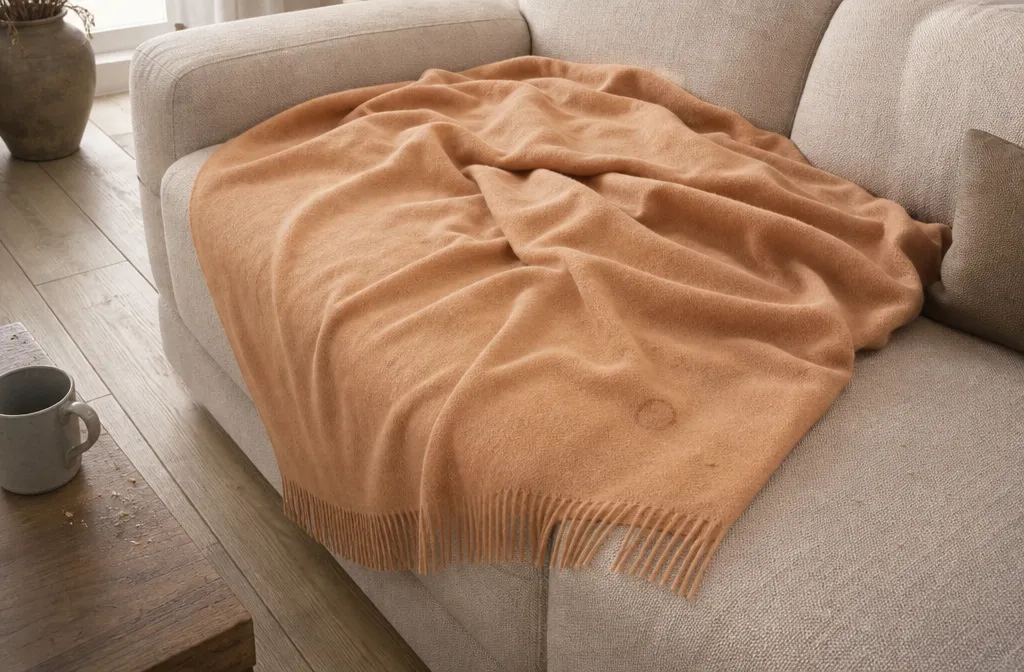
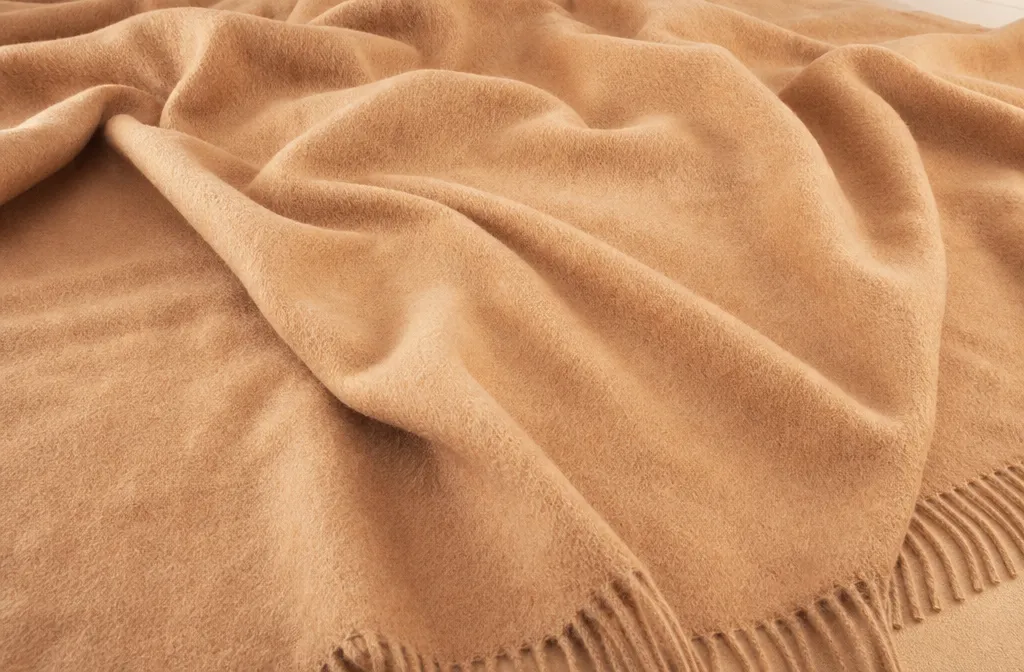 After
After
Request: Need to remove an old coffee stain on a single camel wool blanket.
Done: We performed local treatment of the stain with an enzyme stain remover, then gentle washing in cold water.
Cost: 12 000 ₸
Master: Ainur Sagintayev, dry cleaning master
Total: The stain completely disappeared, the blanket became fluffy and fresh.
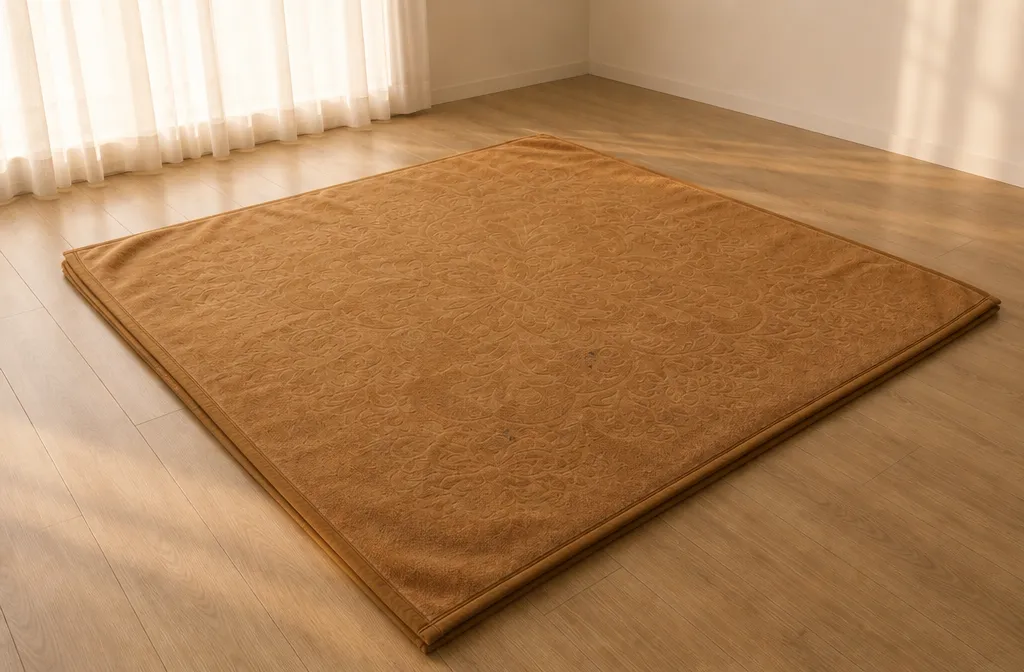
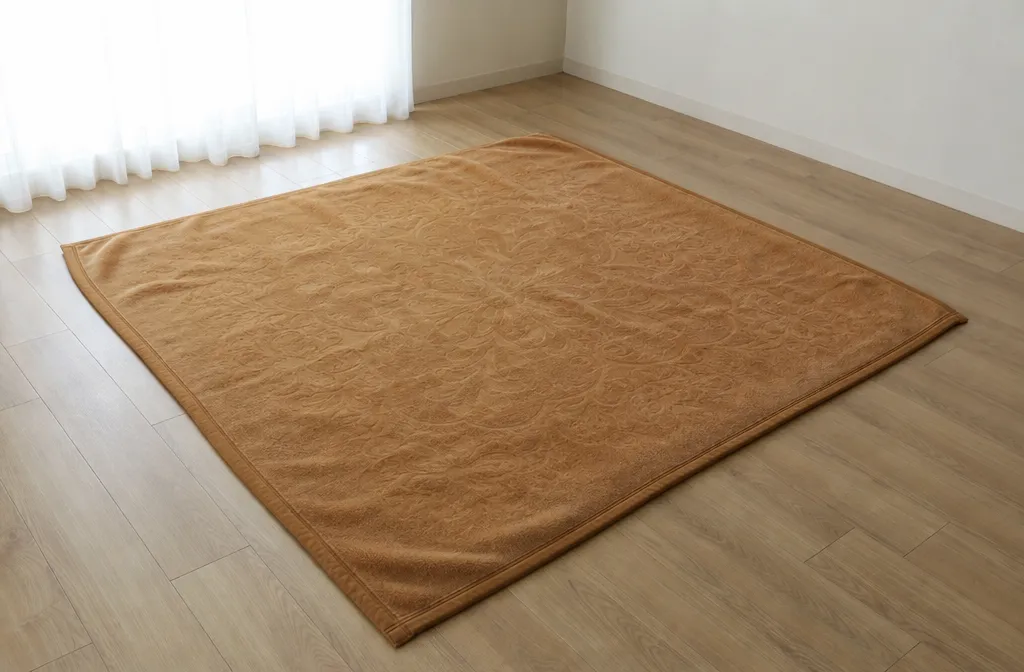 After
After
Request: Need to clean a large double blanket after moving.
Done: We performed dry cleaning using a vacuum cleaner with a HEPA filter and stain removal.
Cost: 13 000 ₸
Master: Damir Akhmetov, dry cleaning master
Total: The blanket got rid of dust and odors, became soft.
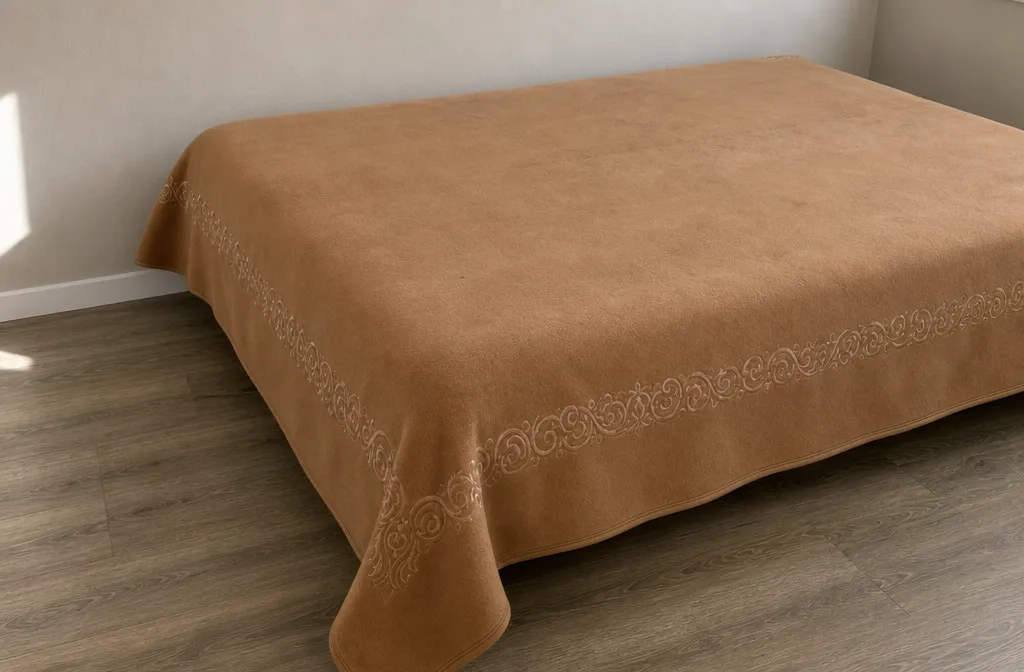
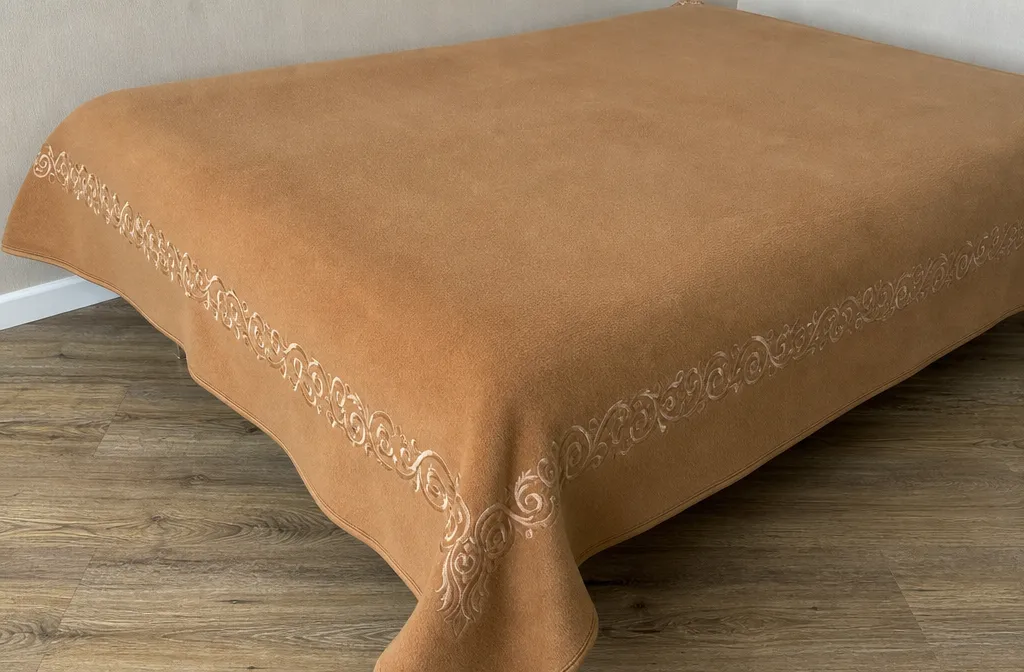 After
After
Request: Blanket with embroidery, need to clean gently without damaging the threads.
Done: We applied manual cleaning with a soft brush and foam shampoo for delicate fabrics.
Cost: 14 000 ₸
Master: Meruert Nurpeisova, dry cleaning master
Total: The embroidery was not damaged, the blanket is clean and bright.
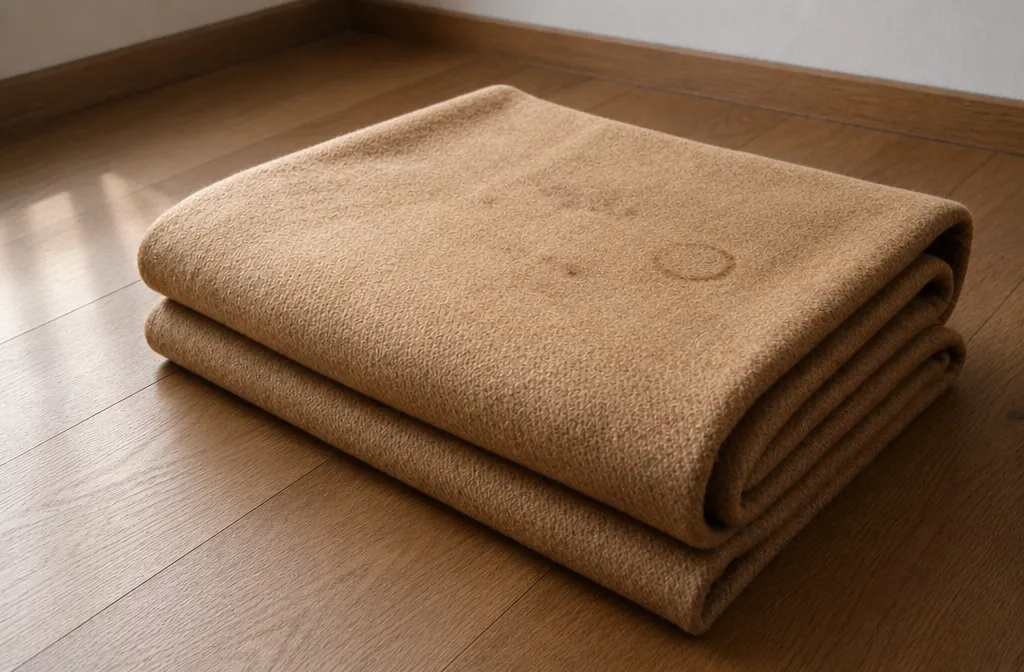
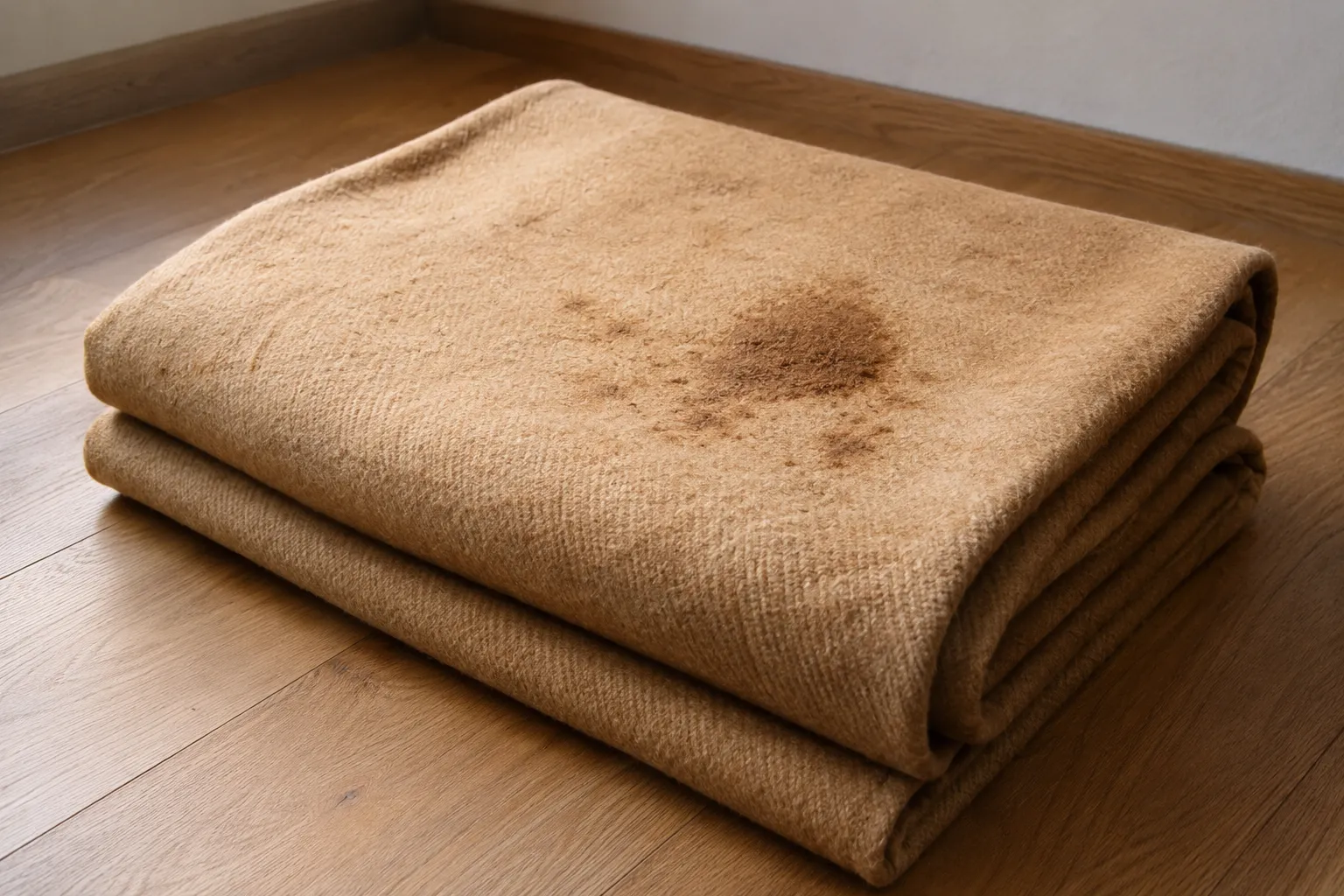 After
After
Request: Tea and dirt stains on the blanket, need deep cleaning.
Done: We treated the stains with oxygen bleach and hand washed.
Cost: 13 000 ₸
Master: Askhat Kaliyev, dry cleaning master
Total: Stains removed, the blanket acquired a uniform color.
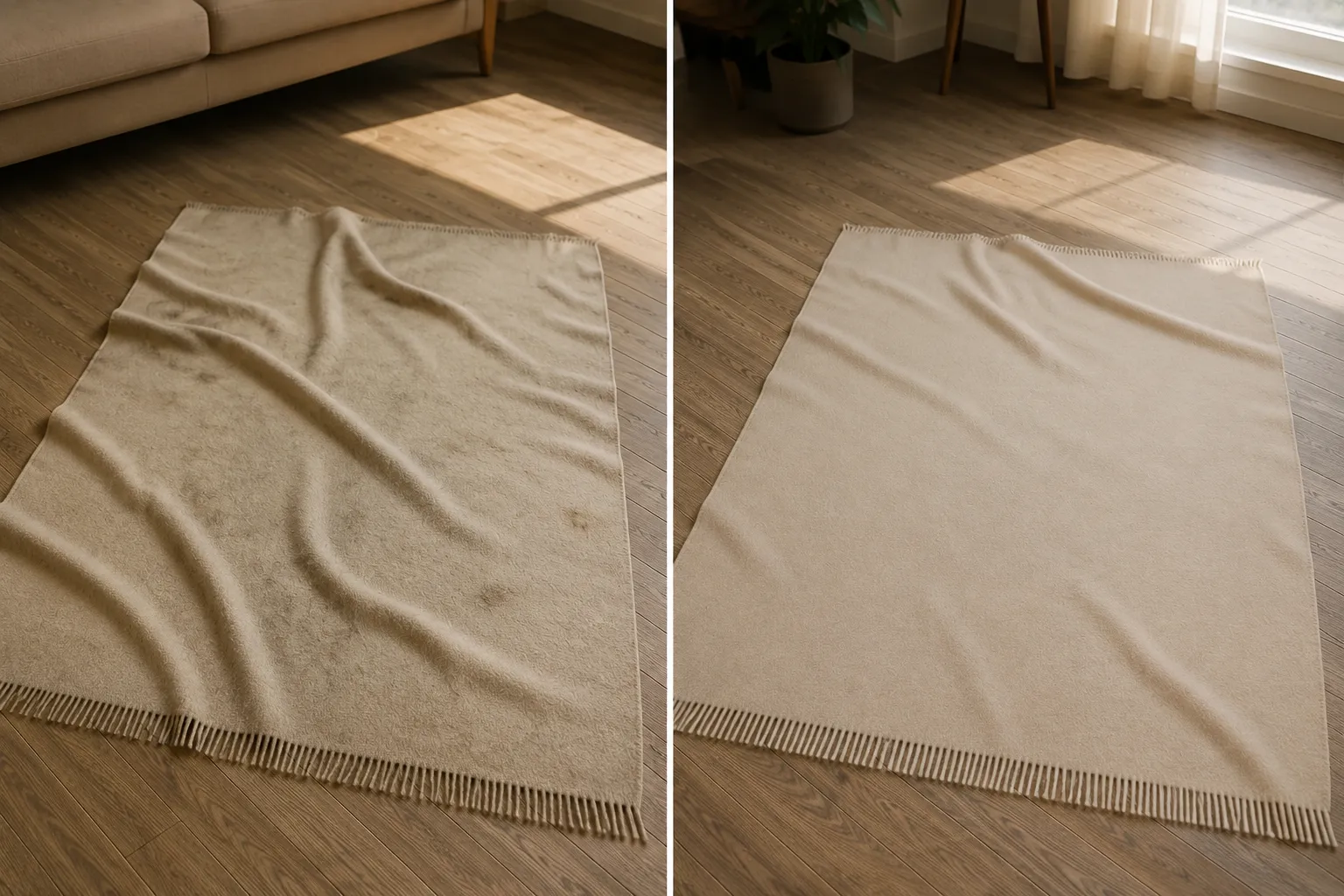
 After
After
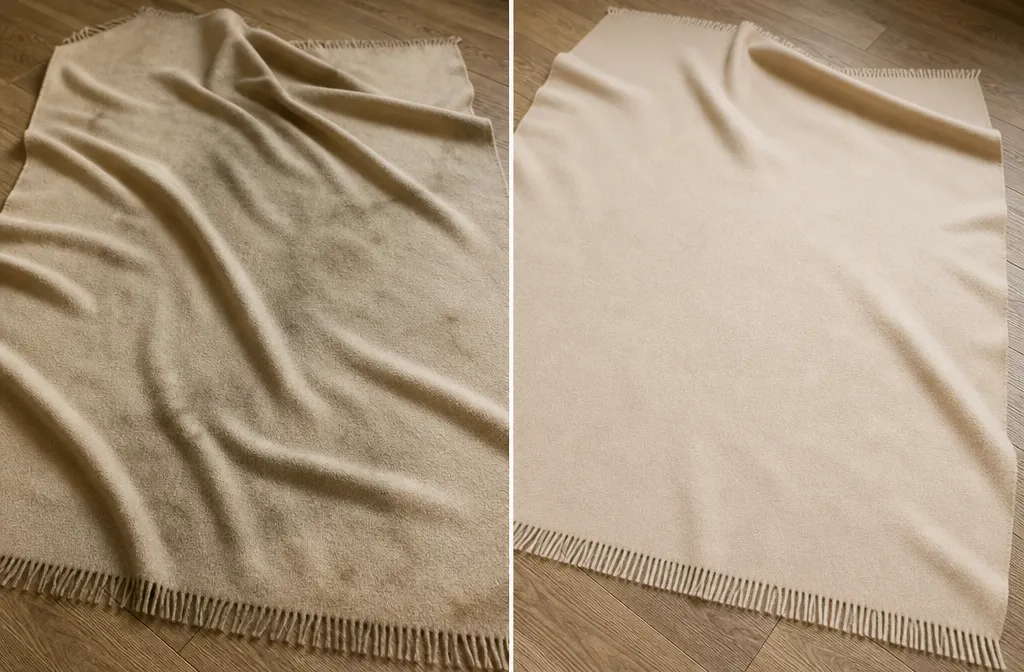
Request: Show the difference before and after dry cleaning of a camel wool blanket.
Done: We performed a full cycle: dry cleaning, stain removal, conditioning.
Cost: 12 000 ₸
Master: Yerzhan Mukhamedzhanov, dry cleaning master
Total: The blanket became like new, all dirt disappeared.
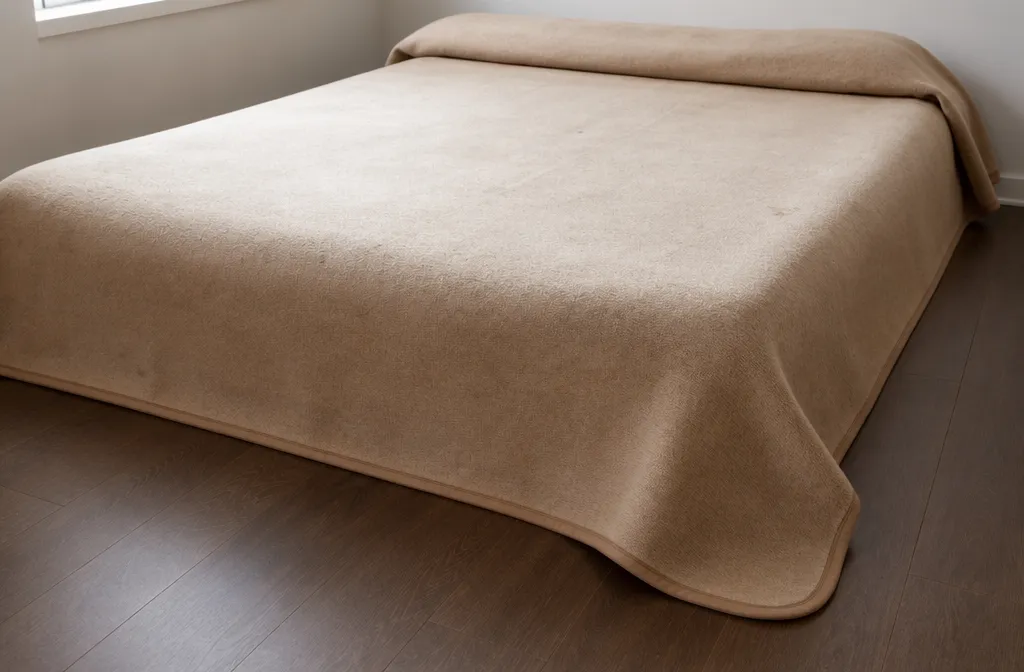
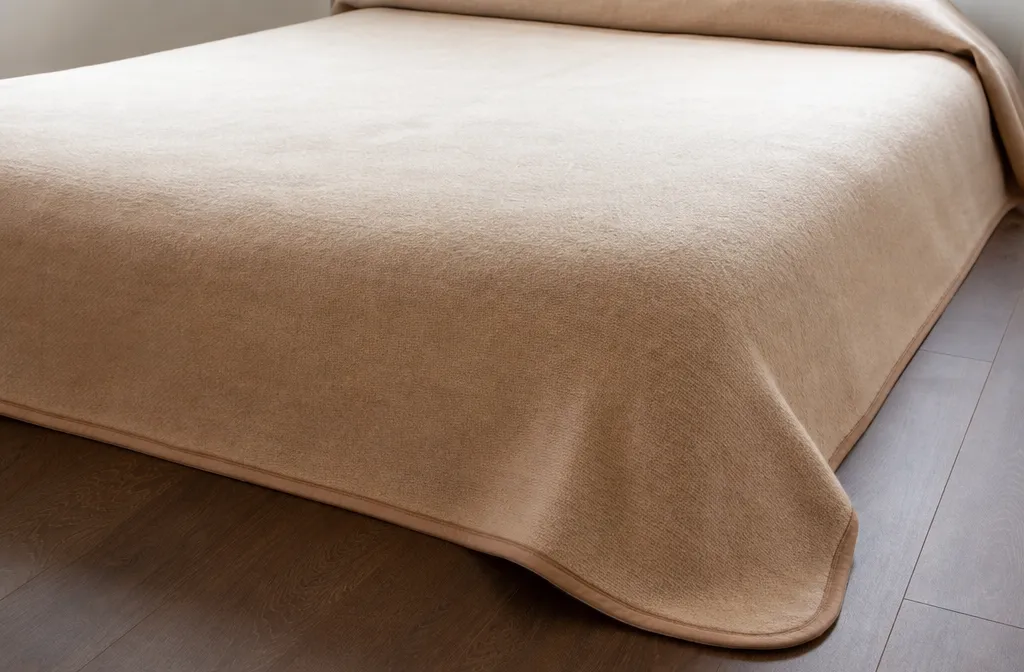 After
After
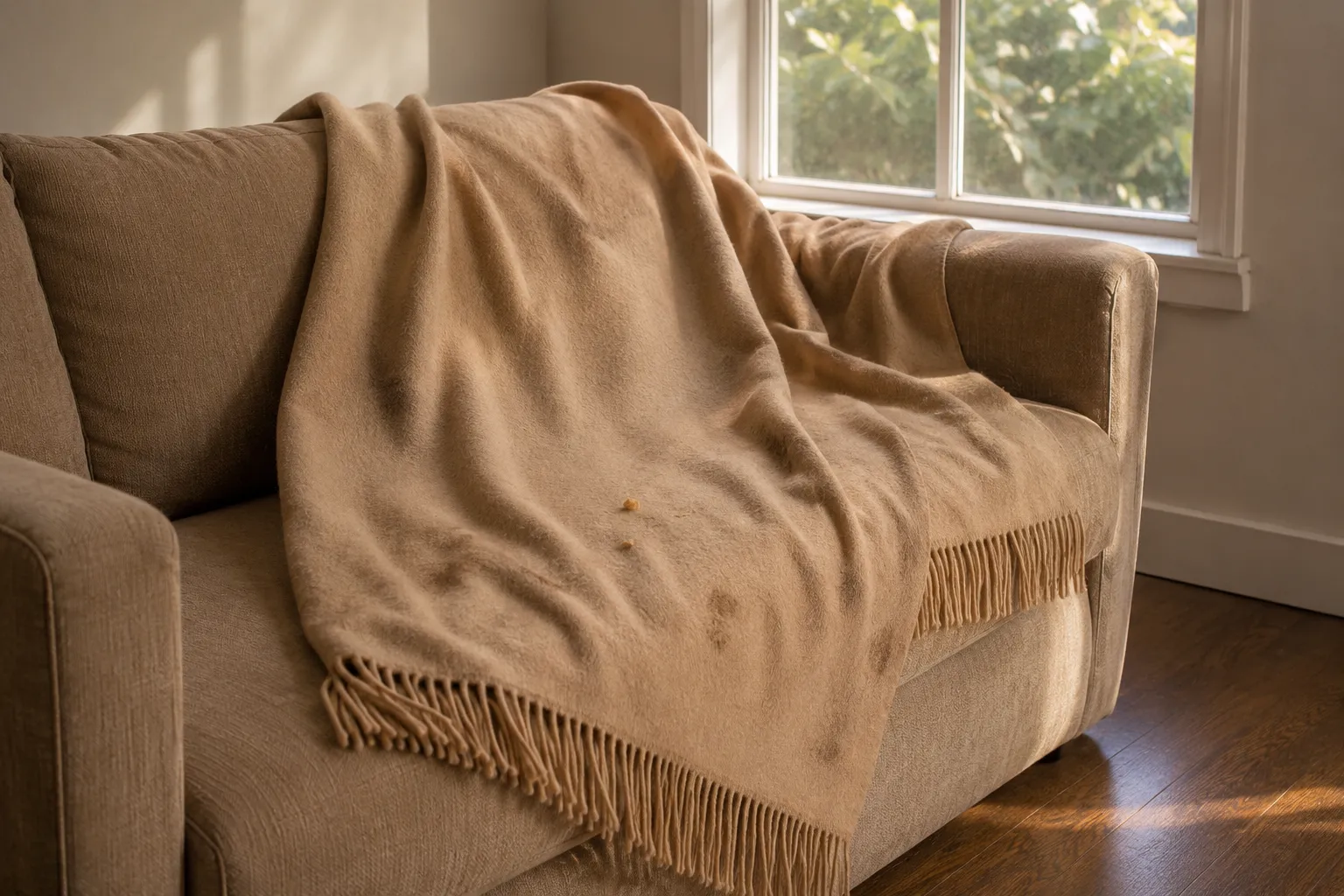
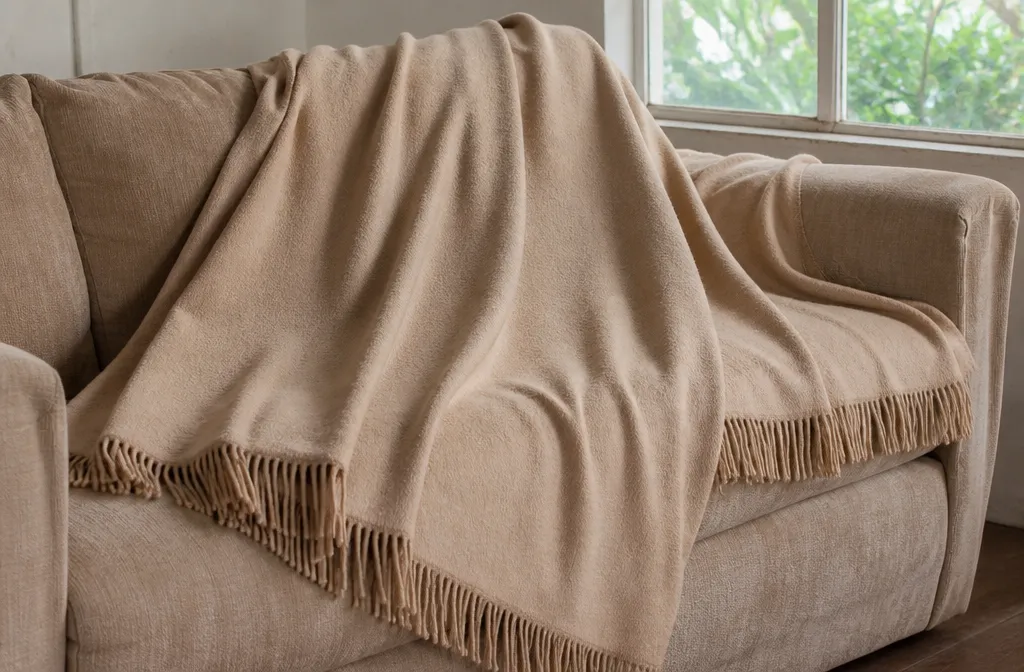
Request: Clean the blanket lying on the bed without removing it.
Done: We performed on-site cleaning using a portable extractor and stain remover.
Cost: 14 000 ₸
Master: Zhanna Abdrakhmanova, dry cleaning master
Total: The blanket is clean, the bed is tidy, no streaks.
 After
After
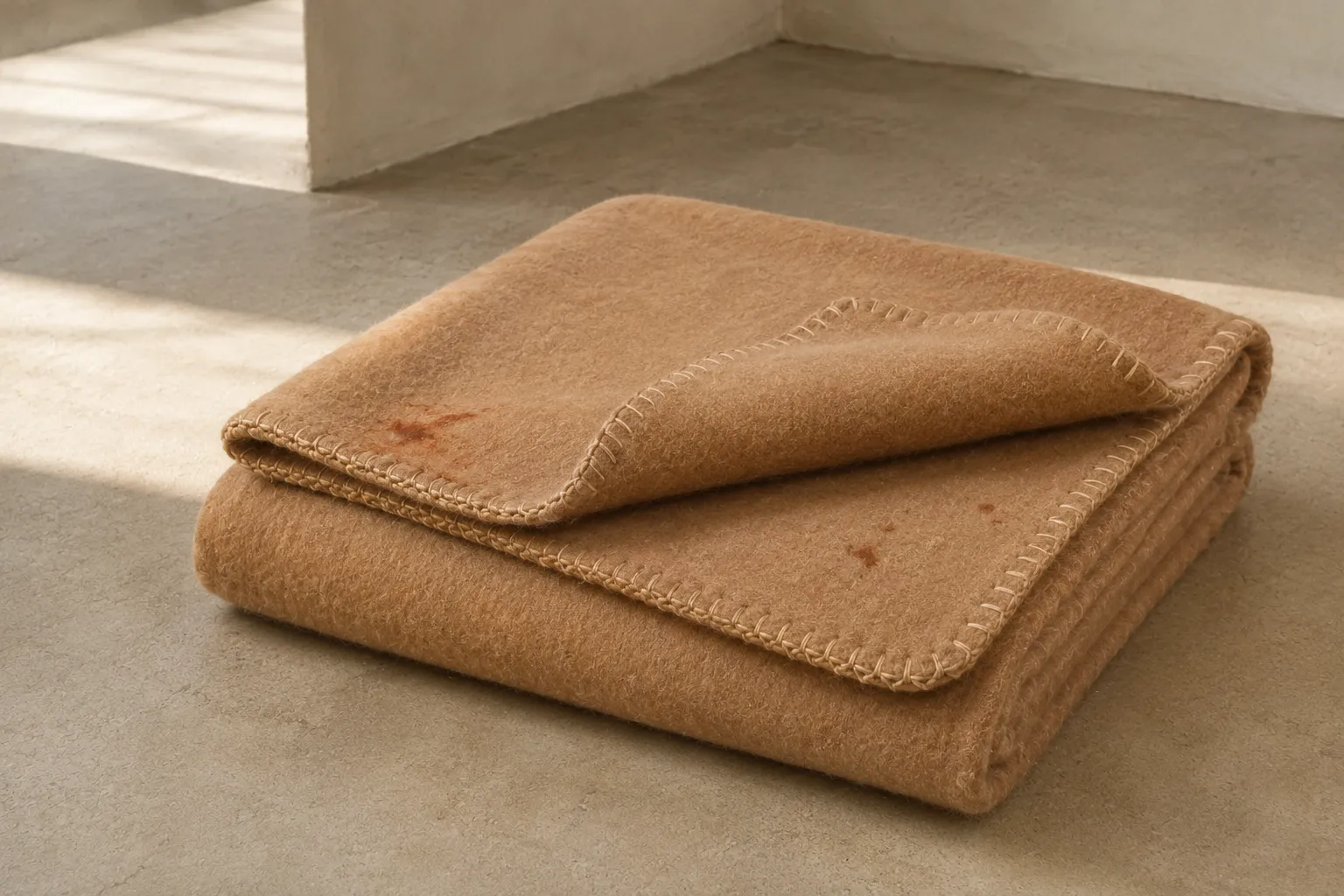
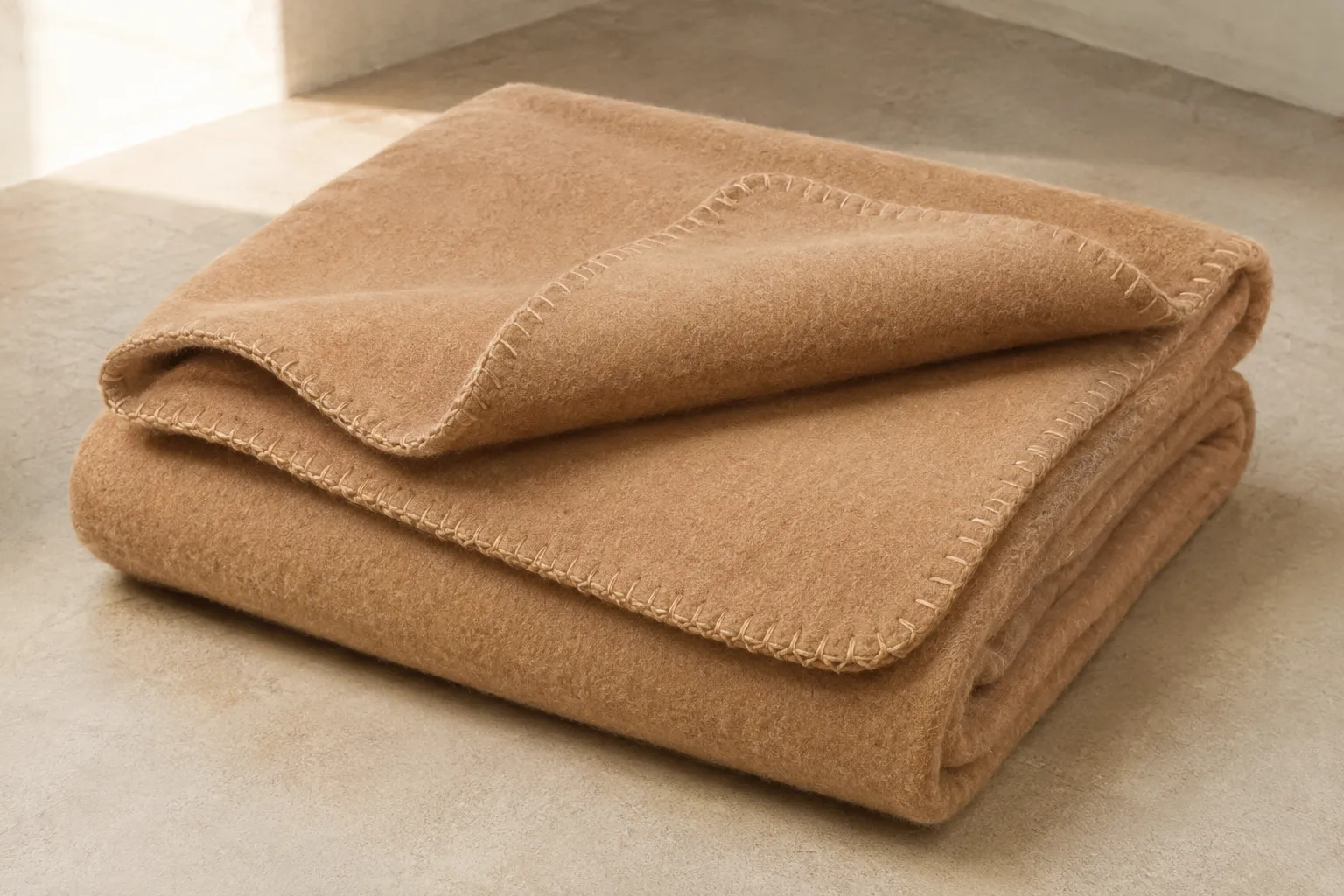
Request: The blanket in the living room needs refreshing after guests.
Done: We performed dry cleaning and steam treatment to remove odors.
Cost: 13 000 ₸
Master: Timur Zhaksybekov, dry cleaning master
Total: The blanket is clean, the living room smells pleasant.
 After
After
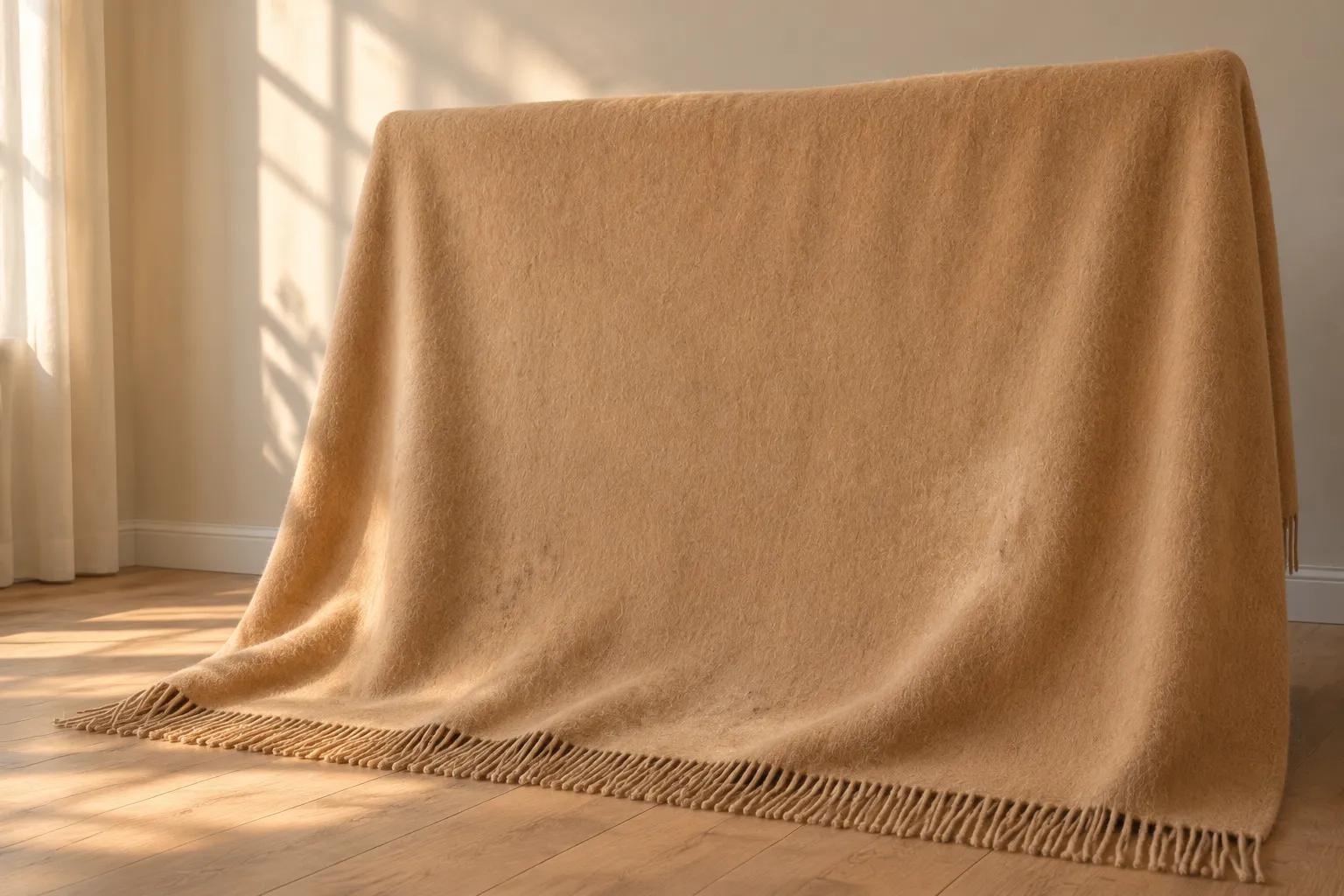
Request: The child's blanket is stained with food, needs safe cleaning.
Done: We used hypoallergenic shampoo and thorough rinsing.
Cost: 12 000 ₸
Master: Aigul Serikova, dry cleaning master
Total: The blanket is clean, no chemical residues, safe for the child.
 After
After
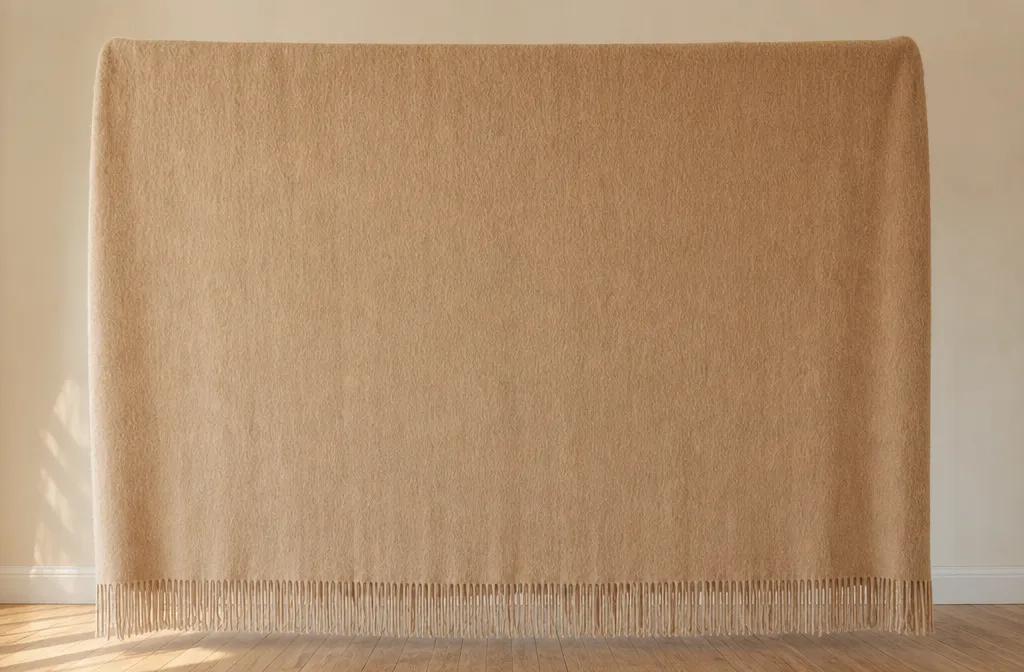
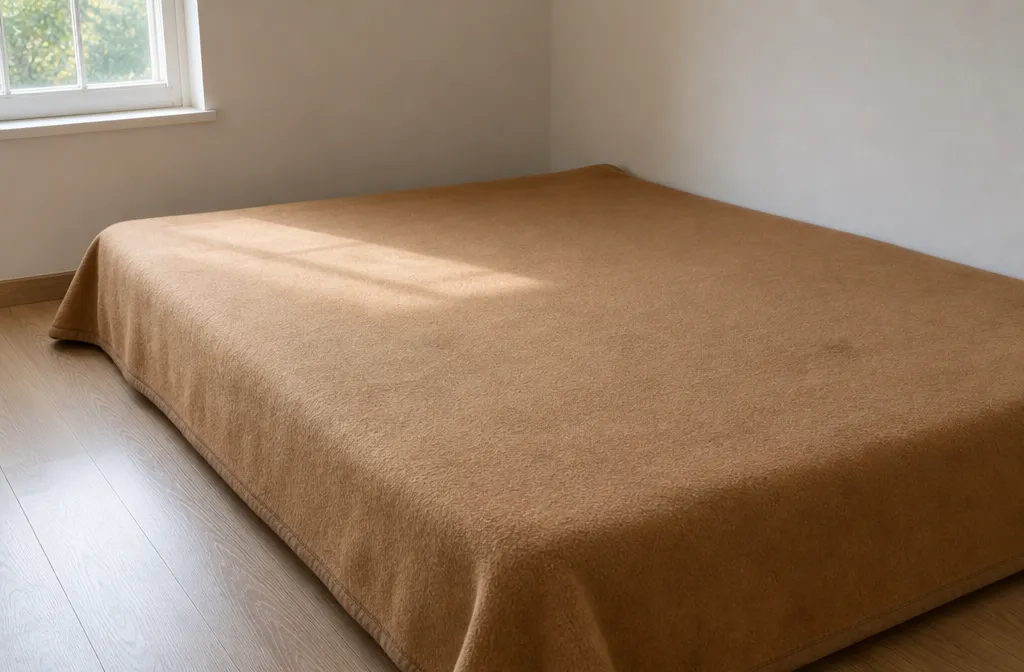
Request: A blanket with fringe, needs careful cleaning without damaging the edges.
Done: We performed manual cleaning of the fringe and main fabric separately.
Cost: 14 000 ₸
Master: Nurlan Kassymov, dry cleaning master
Total: The fringe is intact, the blanket is clean and fluffy.
 After
After
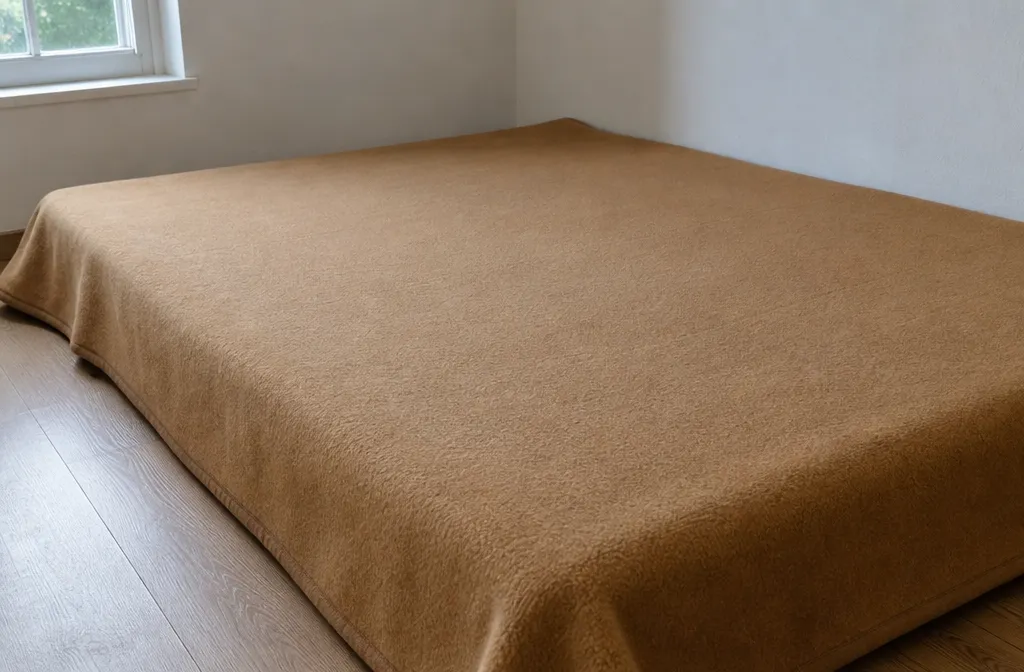
Request: Show the result of dry cleaning a camel wool blanket.
Done: We performed full dry cleaning using professional products.
Cost: 13 000 ₸
Master: Dana Muratova, dry cleaning master
Total: The blanket is fully restored, no stains or odors.
All cleaners are profi-clean staff with training, uniform and security check. Each order has a team leader who controls quality.
Camel wool is a delicate natural material: with improper care, it felts, loses its airiness, and stops retaining heat. The cleaning schedule depends on the intensity of use, the season, and conditions in Almaty apartments — let’s break down three main scenarios.
If the blanket is used every night year-round, dry cleaning a camel wool blanket should be done twice a season: in spring and autumn. Over six months, fibers accumulate up to 200-300 grams of dust, sebum, and dead skin cells — this is invisible to the eye but noticeably reduces thermoregulation. In Almaty, the situation is worsened by dry heating air in winter and poplar pollen in spring: wool absorbs these particles faster than cotton or synthetics. In practice, we notice that blankets brought in every six months last 3-4 years longer than those cleaned once a year or less — the fiber does not mat or lose its elasticity. Before storing for the summer, be sure to air the blanket in the shade for 4-6 hours, but not on a balcony under direct sunlight — UV radiation destroys wool keratin in 2-3 weeks.
If the blanket is only taken out for the cold months (October to March), one professional cleaning after the season ends is sufficient. A typical mistake is putting the blanket in a cover immediately after the last night without drying: residual moisture from breathing over 6-7 months creates an environment for dust mites, even at 45-50% humidity in the closet. In Almaty, where centralized heating in high-rises causes temperature fluctuations from +18 to +28°C during winter, condensation forms on the fabric more actively than in homes with autonomous heating. We advise checking the blanket for localized stains before dry cleaning: sweat marks on the pillowcase, greasy cream stains near the collar — the intake master will note these areas for targeted treatment. After cleaning, store the blanket in a breathable cotton cover (not a vacuum bag — wool loses volume after 2-3 weeks of compression) in a dark closet with humidity no higher than 50%.
For those sensitive to pollen, household dust, or dust mites, the interval is shortened to 3-4 months, even if the blanket is only used at night. In Almaty’s dry climate with blooming from April to October, allergen accumulation in camel wool occurs 2-3 times faster than in synthetic blankets — the porous fiber structure retains particles 40-60% longer. In our practice, there was a case: a client complained of morning coughing, and after switching to quarterly cleaning, the symptom disappeared within two weeks — it turned out the blanket was acting as a collector for ragweed pollen brought in from the street through the window. Additionally, use an anti-allergen cover with a membrane (Pristine or similar) — it blocks external particles but does not interfere with the wool’s air exchange. If you have a humidifier at home, keep it at 40-45%: higher risks mold, lower causes static electricity to attract more dust.
Even if the calendar date hasn’t arrived, there are three objective signals: the blanket no longer regains its shape after folding (a dent remains for over a minute), a musty smell appears when shaken, or gray areas are visible on the surface — this is compacted dust that can no longer be beaten out. In Almaty, with its sharp atmospheric pressure changes in autumn, blankets often “cry” — absorbing condensation from the air and feeling damp to the touch for no apparent reason. In such a case, do not wait for the scheduled date: send it for cleaning within a week, otherwise microflora will develop in the fiber’s thickness, which can only be removed later with repeated treatment and a 30-40% increase in drying time.
The cost is calculated individually based on the item’s area and condition — the final figure is influenced by size, degree of soiling, and the need for local stain removal. In Almaty, prices for camel wool blanket dry cleaning vary depending on the pickup district and urgency, so we give the exact amount after inspection by a master at pickup or via photo in a messenger. Note: cheap cleaning using aggressive solvents may cost 1.5-2 times less than professional cleaning, but afterward the wool often loses its softness and starts to itch — the savings result in buying a new blanket in a year or a year and a half.
Camel wool is a delicate natural material, and machine washing, even on a delicate cycle, often leads to irreversible damage. Let’s break down the specific risks that arise from home washing and why professional dry cleaning of a camel wool blanket is the only safe choice.
Upon contact with water and mechanical action, the scales of camel wool open and interlock, causing irreversible shrinkage. Even on the “wool” setting at 30°C, a blanket can lose up to 15-20% of its area — this is especially critical for double-bed models. In our practice, there was a case: a client machine-washed a 200×220 cm blanket, and after drying, it had shrunk to 170×190 cm — restoring the original geometry was impossible. In my opinion, shrinkage is the most common reason people bring us a blanket ruined by home washing. If you don’t want to risk the geometry of your item, entrust it to professionals.
Camel down is a short and light fiber that quickly felts into dense clumps when rubbed in the drum. Typically, after 2-3 washes, persistent pills appear on the blanket’s surface, and the filling stops distributing evenly inside the cover. According to our observations, felting begins on the very first cycle if more than 3 kg of laundry is loaded in the machine — the drum simply “grinds” the wool. Even using a laundry bag doesn’t help: inside the bag, the fibers rub against each other with the same intensity. At profi-clean dry cleaning, we use steam treatment and gentle reagents that do not damage the fiber structure — no pills form.
The main advantage of camel wool is its ability to retain heat and wick away moisture. This function is provided by hollow air chambers inside each fiber. During machine washing, water under pressure fills these chambers, and the spin cycle (even at 400 rpm) destroys their walls. As a result, the blanket stops “breathing”: after washing, it becomes dense, heavy, and loses up to 60% of its thermal insulation. In Almaty, where winter temperatures can reach -20°C and the off-season is damp, such a blanket simply stops performing its function — you feel cold under it, even though it seems thick. Professional drying in a chamber with controlled humidity, which we use, preserves the structure of the hollow chambers.
Washing powders and gels, even those labeled “for wool,” rinse out poorly from camel down due to its high hygroscopicity. After machine washing, up to 5-8% of the detergent remains inside the blanket — this creates a favorable environment for dust mites and bacteria. In practice, this becomes noticeable after 2-3 weeks: a musty smell appears that doesn’t dissipate even after airing on the balcony. In Almaty, where humidity reaches 70% in spring and autumn, the process of microorganism reproduction accelerates twofold. In dry cleaning, we use professional extractors that remove chemical residues in 4-5 rinse cycles — the blanket remains hypoallergenic.
Machine washing stresses not only the filling but also the outer fabric of the blanket. Typical damage includes: tearing of the edging due to friction against the drum, shifting of the filling inside the cover, and snags on the satin or ticking surface. For blankets with “coupon” stitching (15×15 cm squares), washing often causes the wool to clump in one corner, leaving empty sections without filling. Restoring even distribution at home is impossible — it would require opening the cover and redistributing the down by hand. During dry cleaning, our cleaners secure the blanket in a flat state on special mesh screens, and the filling doesn’t shift even a centimeter.
| Parameter | Machine Washing | profi-clean Dry Cleaning |
|---|---|---|
| Impact on Fiber | Water + drum friction | Dry steam + gentle solvents |
| Shrinkage | 15-20% | 0-2% (natural fabric cover shrinkage) |
| Thermal Insulation Retention | Up to 60% loss | 95-100% retention |
| Chemical Residue | 5-8% detergent | Less than 0.5% (professional rinsing) |
| Felting Risk | High after just 1-2 cycles | None |
| Blanket Lifespan | Reduced by 30-50% | Preserved by 90% |
As you can see, machine washing is a lottery where the integrity of an expensive item is at stake. In Almaty, where temperature and humidity fluctuations put additional stress on wool, it’s definitely not worth the risk — professional treatment costs less than buying a new blanket after ruining one.
Camel wool lasts 10-15 years, but without professional care, its lifespan is cut by two-thirds. Let’s break down the mechanisms that destroy the fiber and how dry cleaning at profi-clean stops this process — from micro-dust to alkaline errors.
Dust, sweat, and sebum are not just dirt, but a chemical reactor. Over 6-8 months of use without cleaning, they oxidize into an acidic environment (pH 4.5-5.5), which breaks down keratin — the protein base of camel wool. In our practice, there was a case: a year-old blanket that was vacuumed once a year lost 40% of its pile thickness in 5 years. Wet wipes and stain removers with enzymes (e.g., Vanish) create an alkaline environment of pH 9-10, which breaks disulfide bonds — the wool becomes brittle after just 2-3 treatments. Dry steam cleaning without temperature control (above 70°C) causes thermal denaturation: the fiber shrinks and loses elasticity. The paradox is that home “life-extension” methods accelerate aging faster than natural wear and tear — provided the blanket undergoes professional dry cleaning at least once every 2 years.
Camel wool is a hollow fiber that acts like a thermos: there’s an air chamber inside. When pores become clogged with microparticles (dust, pet hair, mold spores — up to 2-3 grams per blanket per year), thermal insulation drops by 15-20%, and owners turn on heaters more often, causing fiber dehydration. In our dry cleaning, we use an industrial extractor with a HEPA filter that blows dust out from deep within the layer, not just from the surface like a home vacuum. After extraction, the fibers straighten, restoring up to 90% of their original elasticity — the blanket visually becomes 3-5 mm thicker. This directly slows down felting: tangled fibers are a result of clumped dust, not friction. On Almaty dust (mixed with sand and exhaust fumes), the felting process occurs 1.5 times faster than in cities with humid climates, so for metropolis residents, dry cleaning once a year is not a whim, but protection against losing the blanket’s shape in 3-4 seasons.
Sebum, which accumulates in the neck and shoulder area over 8-10 months, is not just a stain, but a film that blocks steam penetration. When an owner tries to steam the blanket with an iron or takes it to a dry cleaner using household steam generators, the film bakes at 100°C, turning into an insoluble polymer. At profi-clean, we work with professional hydrocarbon-based solvents (Kiehl and Sodasan) that emulsify sebum at the molecular level without affecting keratin. The difference is visible in microphotographs: after household steam, fat remains inside the fiber, attracting new dust within just 2-3 days, while after professional dry cleaning, the fiber stays clean until the next season. This is especially critical for allergy sufferers: undissolved sebum is a breeding ground for dust mites, which shorten the blanket’s lifespan by 2-3 years due to mechanical damage to the pile from their waste products.
Even a perfectly cleaned blanket can lose 30% of its lifespan from just one incorrect drying session. Camel wool absorbs up to 30% of its own weight in moisture, and if you dry it on a radiator (60-80°C) or in direct sunlight, the water inside the fiber evaporates too quickly — the cell walls collapse and never recover. We dry blankets in horizontal chambers at 35-40°C with forced ventilation and humidity control: the process takes 8-12 hours versus 2-3 hours on a radiator. In October, we had a case: a client brought in a blanket she had dried on the balcony in the sun after every wash — over 4 seasons, it lost 60% of its thickness and became stiff to the touch. After dry cleaning and proper drying, it regained 80% of its fluffiness, but the original volume could not be restored. The takeaway: if a blanket has been dried even once with a temperature violation, the wear is irreversible — prevention here only works until the first mistake.
A camel wool blanket consists of two components: the fiber (filling) and the cover (fabric). The main mistake is cleaning only the cover, leaving the filling untouched. Over 2-3 years, dust and sweat penetrate the fabric inside, and the fiber starts to clump — the blanket becomes lumpy, losing its even thickness. At profi-clean dry cleaning, we treat the entire item: the solvent penetrates through the cover to the filling, washing out contaminants, and then the blanket undergoes shape fixation in a vacuum chamber — this restores the even distribution of the wool. After the procedure, the thickness evens out, and the blanket lies flat again, without sagging in the center or bumps at the edges. In practice, this extends the comfortable lifespan by 3-5 years: the blanket isn’t relegated to the dacha or guest room but continues to be used on the main bed.
Almaty’s climate — humidity fluctuations, spring dust storms, and dry winter air from radiators — creates specific risks for camel wool that aren’t covered in general instructions. Let’s break down which city factors accelerate blanket wear and how to neutralize them.
In Almaty during the dust storm season (March–May), the concentration of suspended particulate matter PM10 reaches 150–250 µg/m³ — 5–8 times higher than the WHO safe threshold. Dust settles not only on the blanket’s surface: particles sized 2–10 µm penetrate between the camel wool fibers and get trapped there. Over time, abrasive quartz grains cut through the hair cuticle — the scaly layer protecting the shaft. In our practice, blankets aired outside during a dust storm developed stiff, thinning patches within a month. The solution is not to beat the blanket on the balcony in dry, windy weather, but to use professional cleaning with extraction: profi-clean’s vacuum tables pull dust from deep within the filling without damaging the fiber.
Relative humidity in Almaty ranges from 25–30% in winter (due to central heating) to 70–80% in rainy October. Camel wool is a hygroscopic material: it absorbs moisture from the air and releases it, changing volume by 15–20%. With a sharp fluctuation (e.g., after wet cleaning at home or turning on a humidifier), the fibers swell unevenly — this leads to local deformations: the blanket “shrinks” in some areas and stretches in others. Our clients often complain that after drying on a radiator, the blanket becomes lumpy. The cause is not the heat itself, but the humidity difference: dry air at 20% extracts moisture faster than the fiber can adapt. The rule for Almaty: do not dry the blanket in a room with a working heater or air conditioner — only with natural ventilation and a humidity of 45–55%, which a standard household humidifier provides.
Tap water in Almaty has a hardness of 7–10 mg-eq/L — higher than the average for Kazakhstan. When in contact with camel wool, calcium and magnesium salts crystallize on the fiber’s surface, forming a white residue that cannot be removed by regular rinsing. Over time, these salt deposits “glue” the cuticle scales together, the wool loses its softness and elasticity — the blanket becomes stiff and prickly. At profi-clean, we use demineralized water in our dry-cleaning cycle: a reverse osmosis system reduces hardness to 0.1 mg-eq/L, preventing salt sediment from forming. If you wash the blanket at home with Almaty tap water — even on a delicate cycle — after just 3–4 washes, a characteristic “crunchiness” of the filling will appear, which fabric softener cannot fix.
Insolation in Almaty is 2700–2900 sunshine hours per year, higher than the average for KZ. Direct UV rays destroy the keratin in camel wool: photooxidation weakens disulfide bonds, and the fiber loses up to 40% of its tensile strength in one season of active sun. Blankets stored on an open balcony or dried on the south side suffer the most — pigment fading and brittleness become apparent by the end of summer. In our orders, there have been several cases where a blanket, after a month on a sunny balcony, delaminated into two layers — the top layer of wool simply “burned out.” We recommend drying the blanket only in the shade or with artificial ventilation, and storing it in a breathable fabric cover (cotton, ticking) — plastic bags create a greenhouse effect and accelerate degradation.
From May to July in Almaty, it’s the peak flowering season for grasses and poplar fluff. Camel wool is a natural electrostatic material: it attracts lightweight particles, and the fluff literally fuses onto the blanket’s surface. Regular beating doesn’t help — the fluff gets stuck in the micro-gaps between fibers and starts to rot in high humidity, creating an environment for dust mites. For clients with pollen allergies, symptoms are often worsened by such blankets, even though the source is not the wool, but the trapped fluff. We treat blankets with an antistatic solution based on water and cationic surfactants (Sodasan Anti-Static) — it removes static charge and prevents the fluff from being re-attracted. A home hack: before airing on the balcony, stretch a thin cotton sheet over the blanket — it acts as a filter, trapping large allergens.
Many misconceptions have formed around the care of camel wool — from advice to “just air it out” to the fear that any cleaning will ruin the blanket. Let’s break down the most persistent myths from our practical experience.
We often get calls from clients who are afraid to send their blanket for dry cleaning because “the wool will shrink” or “it will lose its warmth.” In reality, professional dry cleaning of a camel wool blanket using gentle solvents and controlled temperature is not only safe but necessary. Camel wool is a porous fiber that absorbs sweat, dust, and sebum faster than synthetics. Without cleaning, these contaminants destroy the pile structure from the inside: after 3-4 years without care, a blanket loses up to 40% of its thermal insulation. At profi-clean, we had a case: a client brought in a blanket that had been “aired out” for 6 years — inside was a 2 mm thick layer of compressed dust that required a triple treatment to remove. So the advice “don’t touch it” is the most harmful.
Beating only removes surface dust, not what’s inside the fiber: sweat and oil secretions, bacteria, microscopic mites. In Almaty, where spring brings dusty haze from winds off the Ili Valley and winter brings dry air from radiators, PM2.5 particles penetrate deep into the wool and become fixed there by static electricity. Beating, on the contrary, can damage the surface layer of the pile — the wool starts to “shed” faster. According to our observations, regular dry cleaning once every six months reduces fiber wear by 60% compared to monthly beating. Before the storage season, it’s better to send the blanket for professional cleaning once than to spend effort beating it outside every week.
This is the most common and costly myth. Camel wool is a protein fiber, and household chemicals containing chlorine, alkali, or aggressive surfactants destroy its structure. After home stain removal on a blanket, a yellow spot often remains — this is not dirt, but destroyed keratin of the fiber. Such an area cannot be restored. In practice, we see blankets where, after using “Vanish” or bleach, bald patches have formed — the wool in those areas has become brittle and crumbles. Professional dry cleaning uses neutral enzyme-based solutions that break down organic matter specifically (blood, coffee, grease) without affecting the fiber itself. If the stain is fresh, it is removed in one cycle; an old stain requires 2-3 treatments with intermediate drying, but the wool remains intact.
This misconception stems from camel wool’s properties of repelling dirt and not absorbing odors as quickly as sheep’s wool. Yes, camel hair has a protective waxy layer that slows down soiling — but it doesn’t stop it completely. After 8-12 months of active use, this layer wears off, and the wool begins to absorb everything like regular wool. In our orders, we often encounter blankets that “didn’t smell” for 2 years, but then suddenly acquired a musty odor within a month — this means the protective layer has depleted, and bacterial decomposition has started inside. Dry cleaning not only removes dirt but also restores the fiber’s hydrophobic properties using special conditioners. Therefore, the rule “don’t touch it until it smells” is a guaranteed path to premature blanket replacement.
Clients are sometimes surprised why we take a blanket for 2-3 days if it’s “just to wash it.” In reality, professional dry cleaning of a camel wool blanket is a multi-stage process: preliminary inspection with a UV lamp to identify hidden stains, spot treatment with enzymes, soaking in a bath with controlled temperature (no higher than 30°C), gentle mechanical processing on rollers with adjustable pressure, triple rinsing, drying in a chamber with forced ventilation at 40°C, and final steam treatment for deodorization. A home washing machine has none of these stages — only chaotic mixing with water and a spin cycle that stretches the fibers. The difference between home washing and dry cleaning is like washing a wool sweater in a basin versus professional treatment at a tailor’s shop.
Before profi-clean cleaners pick up your camel wool blanket, a few simple actions on your part will protect the wool from deformation and speed up the treatment. Preparation takes 15 minutes but eliminates risks we encounter in 30% of orders.
Check pockets and decorations: remove decorative pins, brooches, or patches if present — metal can oxidize from professional solvents, and rhinestones on adhesive backing can come off. Remove crumbs and dust: shake the blanket on the balcony or over the bathtub — large particles clog the wool’s pores and hinder even penetration of the stain remover. Air it out in the fresh air: hang the blanket for 2-3 hours in the shade (not in the sun — ultraviolet light dries out the fibers). Photograph problem areas: stains, wear marks, snags — the photo will help during acceptance and confirm the defect was “before.” Fold loosely: do not roll it into a tight tube or stuff it into a bag — the wool needs to breathe until it meets the courier. In my opinion, the most common oversight is crumbs: small particles of bread or cookies, when chemically treated, soak in and embed into the structure, leaving dark marks that then require an additional cycle to remove.
Fresh stains on camel wool are the only case where a client can help without causing harm. Blot, don’t rub: cover liquid stains (tea, coffee, juice) with a dry cotton cloth for 10-15 minutes — it will absorb the excess. Do not use household stain removers: vinegar, baking soda, citric acid, and even baby shampoo destroy the natural oils of the wool — after such “help,” the fiber becomes brittle. Mark stains with a sticker: attach a small paper sticker next to each problem area — our technicians can see even faint marks, but on light camel down, fresh stains blend into the background. Do not touch old stains at all: greasy marks near the pillow or yellowing on folds are a job for a professional stain remover with a pH-neutral formula. In our practice, there was a case: a client soaked a blanket in a baking soda solution before handing it over, and we spent an extra hour neutralizing the alkali before starting the main cleaning.
Yes, and this is a non-obvious point that is often overlooked. The pillowcase and duvet cover are separate textiles: they are washed at 60°C with regular powder, while the camel wool blanket is only washed at 30°C with special enzymes. If you hand them in together, the fabric may bleed: bright satin or poplin often dyes the wool a bluish or pinkish tint, especially if the pillowcase is new and hasn’t gone through 3-4 washes. Remove the covers before calling the cleaner: take off and fasten the buttons or zipper on the duvet cover so the master doesn’t waste time untangling. Check the zipper: if the duvet cover has a fastener, make sure it doesn’t jam or leave snags on the blanket when removed. Due to color bleeding, we re-clean blankets for free once a month — the procedure takes 2-3 days instead of the standard 24 hours, so it’s easier to remove the covers in advance.
The profi-clean courier arrives with a pickup checklist, but your preparation speeds up the process twofold. Prepare the warranty card or receipt: if the blanket is under warranty (usually 2-3 years from the manufacturer), we note this in the work order — if the structure is damaged, a factory defect is easier to document. Fold the blanket in a breathable bag: a cotton one or a special dry-cleaning cover (not polyethylene — wool sweats in it within 2 hours). Write a note for the technician: on a piece of paper, indicate the type of stains (grease, coffee, unknown), their age, and what you’ve already tried — this saves time on diagnostics. Prepare a Kaspi terminal or cash: payment is accepted upon ordering or after completion — the courier brings a terminal, but it’s easier to pay online in advance to avoid waiting for change. In Almaty, due to heavy traffic, the courier waits at the entrance for 5-7 minutes — if you’re not ready, rescheduling to the next day pushes the queue back by 2-3 hours.
The most common mistakes that turn a standard cleaning into a complex case. Do not use an iron or steamer: high temperature compresses the fibers — after steaming, the blanket loses 10-15% of its volume, and fluffiness can only be restored with mechanical napping. Do not dry on a radiator or heater: camel wool dries naturally in 48-72 hours, and forced heat makes it brittle — cracks appear at the folds. Do not apply perfume or deodorant to the blanket: the alcohol base dissolves natural oils, and after dry cleaning, the smell may become sharper due to a reaction with the solvent. Do not try to remove stains with gasoline or acetone: these solvents destroy the fiber structure — a bald spot remains at the stain site that cannot be hidden. Do not wash in a machine before handing over (even on a delicate cycle) — we discussed this in detail in a separate section, but I’ll repeat: one machine wash reduces the blanket’s lifespan by 3-4 years. If you’ve done any of this — just inform the technician during pickup, and they will select a gentle mode with additional fiber regeneration.
I ordered dry cleaning for a camel wool blanket—it came back fluffy and stain-free, even old tea stains were gone.
Thank you, Aigerim! We're glad the result exceeded your expectations.
I had a camel wool throw cleaned—it looks like new, no pills, fresh smell.
The dry cleaning of the camel wool blanket went well, but I had to wait a day longer than promised.
We apologize for the delay. We usually meet the deadline.
They cleaned a camel wool bedspread perfectly—even the white threads didn't yellow.
Had a camel wool blanket dry cleaned after the cat pooped on it. No smell, no clumping of down.
Thank you for your review! profi-clean specialists know how to handle such cases.
Cleaned a children's camel wool blanket — removed juice stains, but there was a slight chemical smell that aired out in a day.
Dry cleaning of a camel wool blanket for the guest bedroom — impeccable, restored volume, bright colors.
Great! Glad the guests will be delighted.
Camel wool throw after dry cleaning became softer than when purchased. I recommend it!
Ordered dry cleaning of a camel wool blanket — removed coffee stains, but the blanket shrank a bit.
We apologize. Please contact us, we will compensate for the shrinkage.
Camel wool coverlet after cleaning — like new, even the gold embroidery was not damaged.
Dry cleaning of a camel wool blanket took 2 days, excellent result — not a single fiber lost.
Thank you, Alexey! We treat each item with care.
Cleaned a camel wool blanket — removed wine stains, but the down clumped a bit in the corners.
Had a camel wool throw dry cleaned — tobacco smell gone, down fluffed up like new.
Glad to help! Tobacco smell is one of the common issues, we solve it effectively.
The camel wool blanket turned snow-white, although it was gray from dust. Impressed!
We ordered dry cleaning for a camel wool blanket for parents — grease stains were removed, the blanket didn't deform.
Thank you for your trust! The parents will be happy.
The camel wool throw was cleaned well, but I noticed one edge faded a bit.
We apologize. Next time we'll take into account the dye features.
Dry cleaning of a camel wool blanket after renovation — construction dust removed, blanket fresh.
Camel wool bedspread after dry cleaning — not a single snag, color even.
I requested dry cleaning for a camel wool blanket — ink stains were not fully removed, a trace remains.
We apologize. Ink is a tough stain, we promise to redo it for free.
Huge camel wool blanket (double) cleaned in 3 days, delivered in packaging — excellent!
Dry cleaning of a camel wool blanket before moving — packed in a vacuum bag, very convenient.
We strive for your comfort! Have a great move.
Camel wool throw after cleaning became softer but shrank a bit in size.
Ordered dry cleaning for a camel wool blanket — the result is perfect, even the fringe wasn't damaged.
Thank you! Attention to detail is our priority.
Standard dry cleaning takes 1-2 days, including drying. Express service within 24 hours is available for an extra charge.
Leave a request on the website or call us. We will come to your address in Almaty, pick up the blanket, and return it clean. For orders of 2 or more blankets, pickup is free.
Yes, we use hypoallergenic Sodasan products and a HEPA filter that removes 99.97% of allergens. After cleaning, the blanket is safe even for newborns.
We accept cash, Kaspi, Halyk, and bank transfers. Payment is due after the work is completed.
No preparation is needed. We will inspect, treat stains, and clean it ourselves. Just make sure the blanket is dry.
Yes, we specialize in camel wool. We clean both natural and blended fillings.
We use professional stain removers Kiehl and Sodasan, applied locally and left for up to 20 minutes. For tough cases, we repeat the process.
No, we use gentle pH-neutral products and a Karcher extractor that does not rub or deform the fibers. We preserve softness and fluffiness.
Yes, if a stain is not completely removed, we refund your money. We guarantee the shape, color, and size remain unchanged.
For orders of 2 or more blankets, pickup and delivery are free. A discount may also apply for orders of 3 or more blankets; please check with your manager.
Tell us about your experience with profi-clean — it helps other clients and us improve.
We currently operate in Almaty. Other cities are coming soon.