Equipment Shutdown
We turn off the filter, heater, and lighting for safety. We drain some water to access the gravel.
Professional Aquarium Cleaning in Almaty: Clear Water and Healthy Fish

We work with any types and materials
Algae removal, gravel vacuuming, water change, glass and decoration cleaning.
from 12,000 ₸Extra care with corals and invertebrates, use of specialized marine water products.
from 12,000 ₸Cleaning of the above-water part, plant and substrate care, humidity control.
from 12,000 ₸Compact volumes up to 30 L, gentle siphoning and glass cleaning without stressing inhabitants.
from 12,000 ₸Delicate pruning, fertilization, cleaning without damaging roots.
from 12,000 ₸Algae removal from rocks and decorations, gravel vacuuming considering territorial behavior.
from 12,000 ₸Frequent water changes, powerful siphoning of waste products.
from 12,000 ₸Minimal intervention, use of fine-mesh siphon, safe conditioners.
from 12,000 ₸Careful glass and decoration cleaning, maintaining stable water parameters.
from 12,000 ₸Plant shaping, removal of old leaves, fertilization.
from 12,000 ₸Complex plant pruning, structure maintenance, gravel cleaning.
from 12,000 ₸Cleaning of artificial corals and decorations, gravel vacuuming.
from 19,000 ₸From inspection to result with guarantee
We turn off the filter, heater, and lighting for safety. We drain some water to access the gravel.
We use a professional Tetra scraper with a glass blade. Clean all aquarium walls from deposits.
Using an Eheim siphon, we go through all the gravel, removing organic deposits. We do not damage plant roots.
Remove and clean decorations with a brush, remove algae. Treat stones with steam.
Trim rotten leaves, thin out overgrowth. Replant plants if necessary.
Add aged water treated with Seachem Prime. Temperature matches aquarium.
Rinse filter sponges in drained water, clean mechanics. Do not use chemicals to avoid killing bacteria.
We turn on the equipment, check the filter and heater operation. Assess water clarity.
Our specialists have specialized education and 3+ years of experience. They know how to clean aquariums with cichlids or corals without disturbing the bio-balance. We use professional Tetra scrapers and Eheim siphons for gentle care.
We guarantee crystal-clear water for a week after cleaning. If the water becomes cloudy earlier, we will re-clean for free. We use Seachem Prime conditioners to neutralize chlorine and heavy metals.
Visit within the city is free. The master arrives with all equipment: scrapers, siphons, conditioners. We work under a contract with a fixed price, no hidden fees.
We only use professional tools: Tetra scrapers with stainless steel blades for glass and acrylic, Eheim siphons for effective gravel cleaning without stirring up debris. This allows fast and quality cleaning.
Seachem Prime binds ammonia, nitrites, and nitrates, making water safe for fish and plants. We use it with every water change. The product is approved by ichthyologists.
Before starting work, we sign a contract with the exact price. No additional payments. Payment in cash, Kaspi, or Halyk Bank.
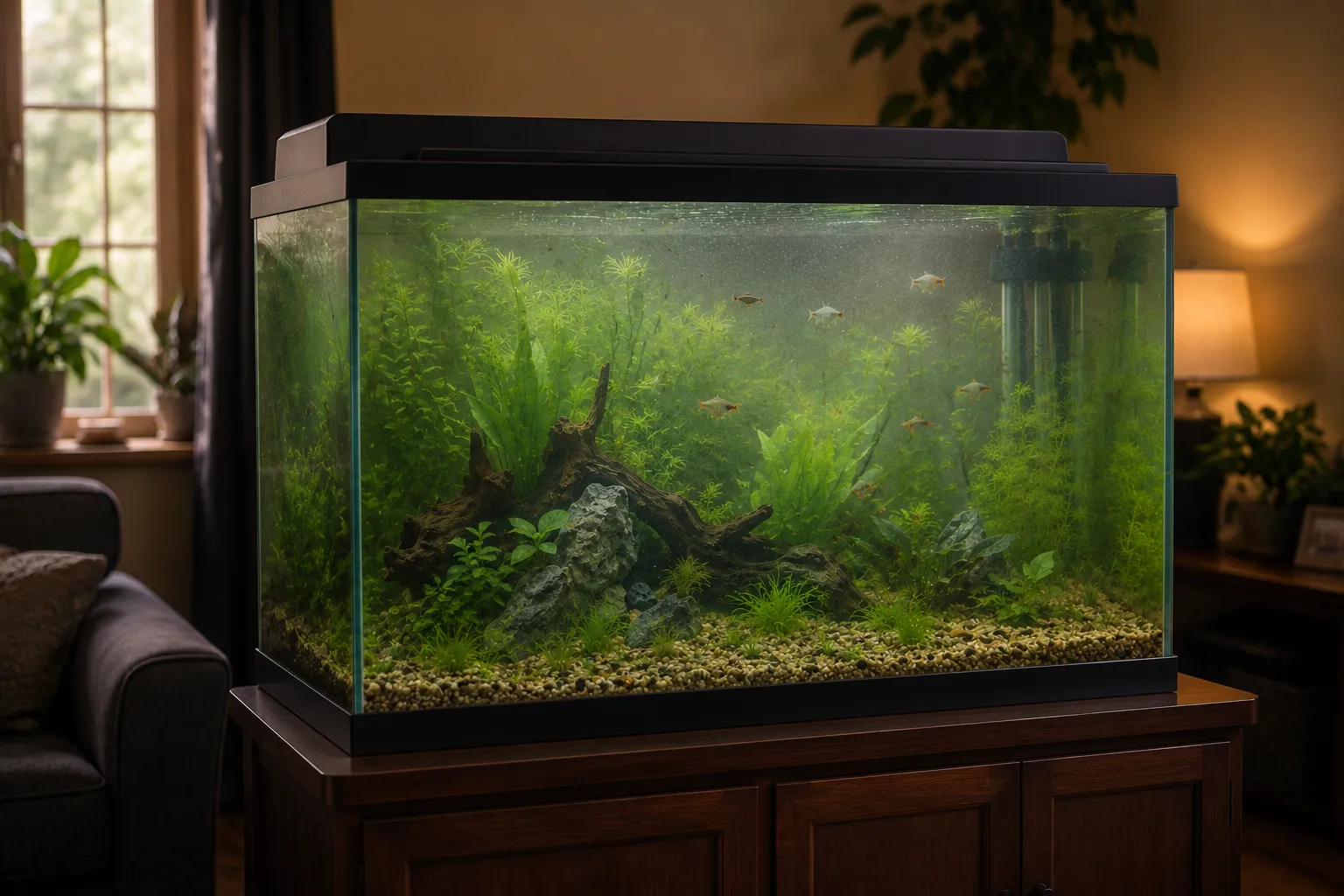
 After
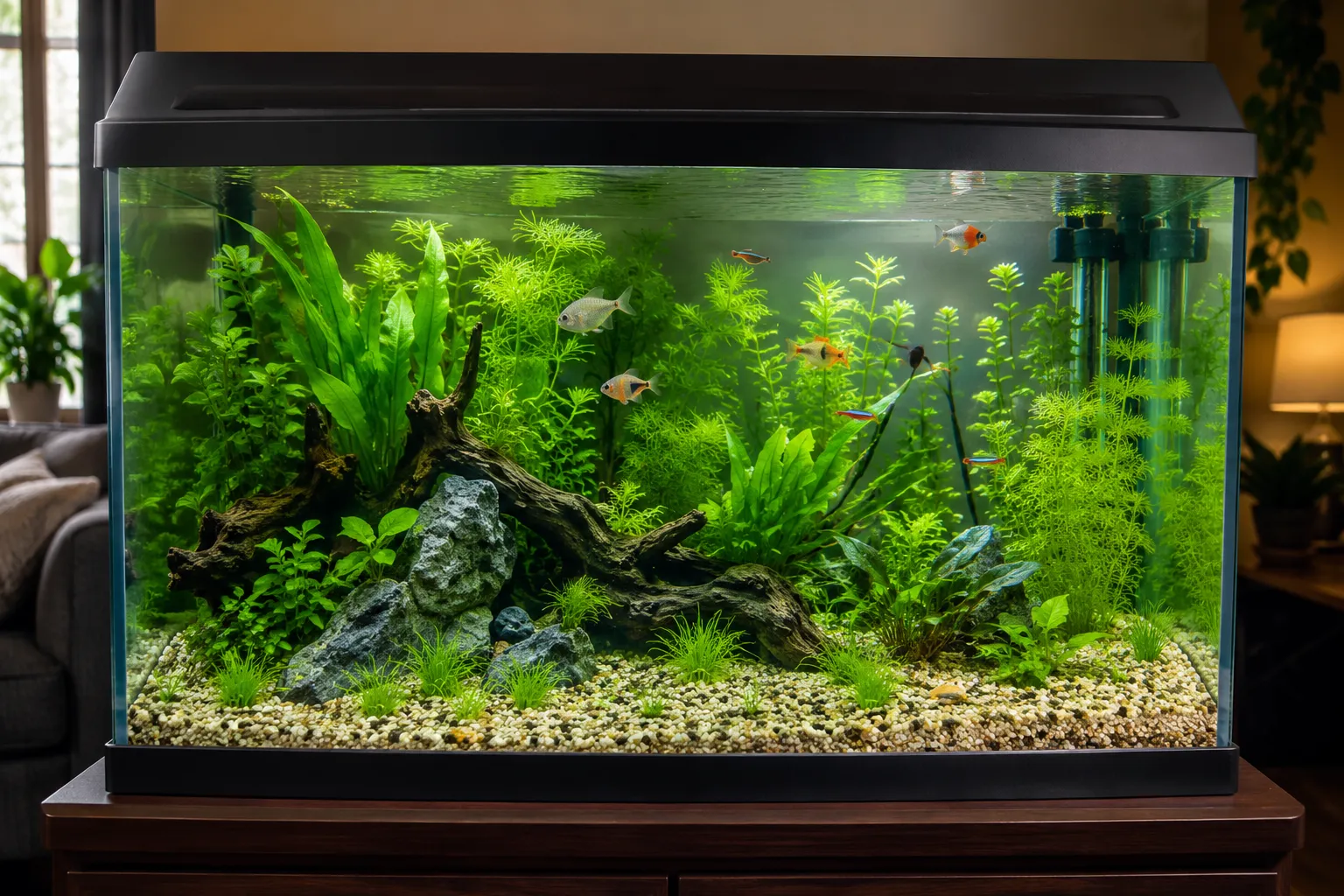
After
Request: Water cloudy, walls with green algae, full cleaning required.
Done: Performed cleaning of walls, substrate, filter and 30% water change.
Cost: 12 000 ₸
Master: Aigul Serikova, aquarium master
Total: Aquarium clear, water crystal clear, fish active.
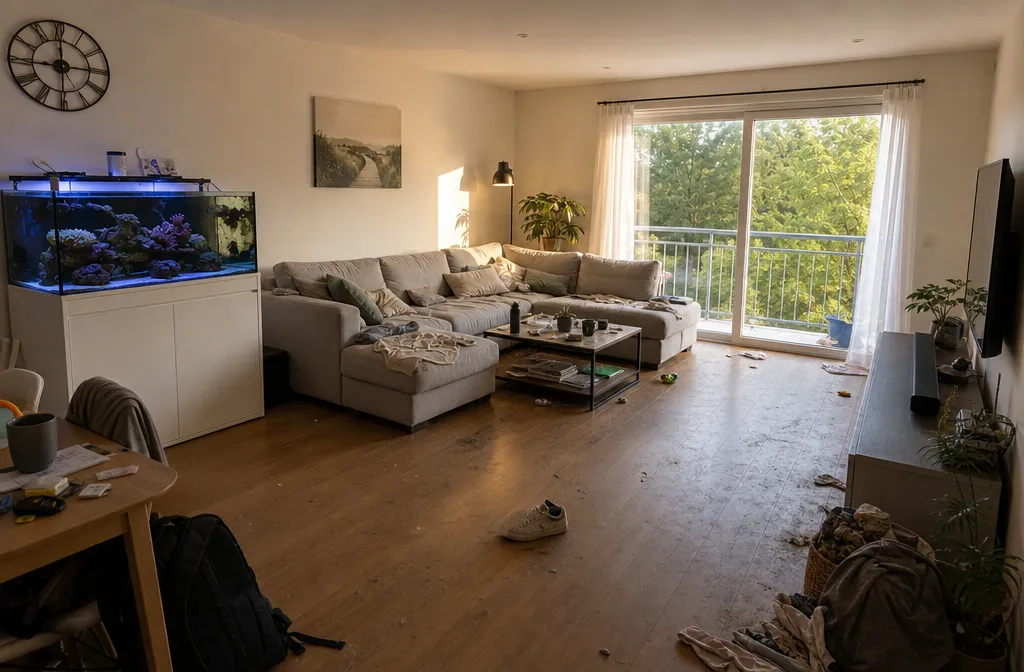
 After
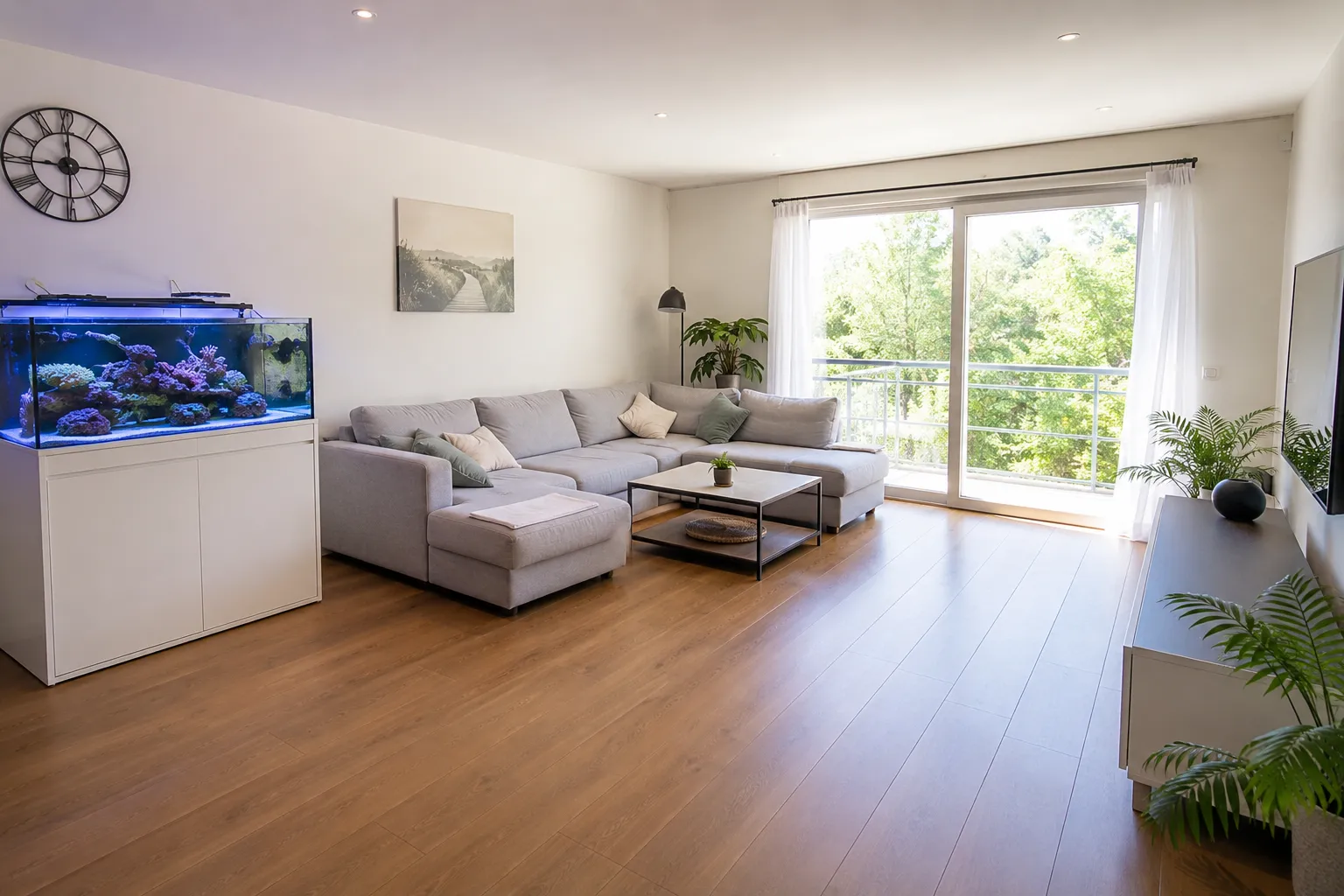
After
Request: Corals covered with algae, nitrate levels elevated.
Done: Performed substrate siphoning, rock cleaning and water change with RO/DI.
Cost: 13 000 ₸
Master: Damir Nurgaliev, aquarium master
Total: Water clear, corals open, parameters normal.
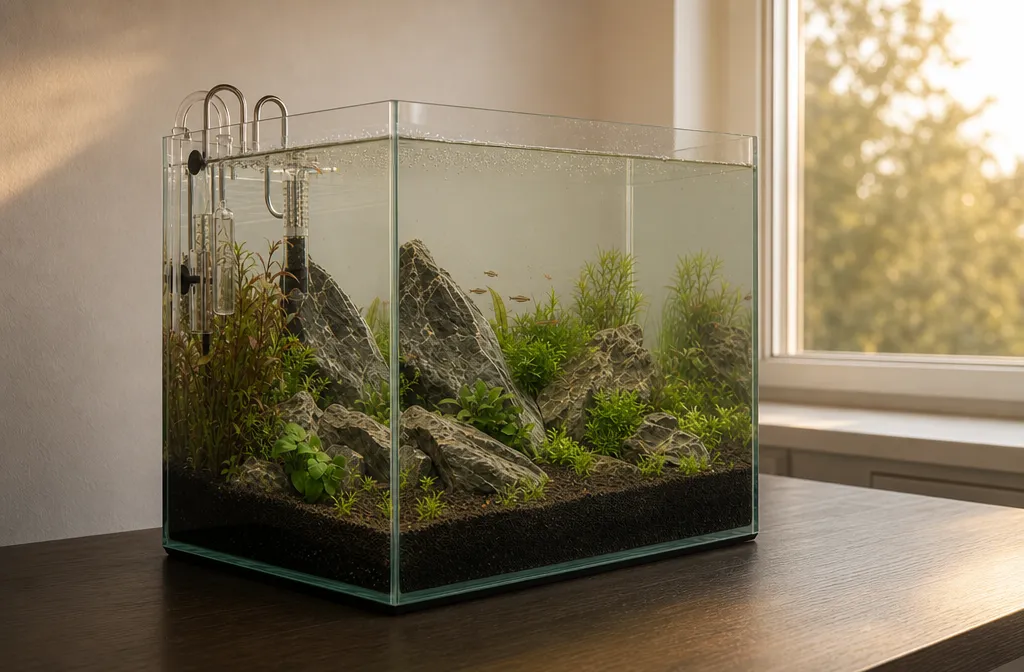
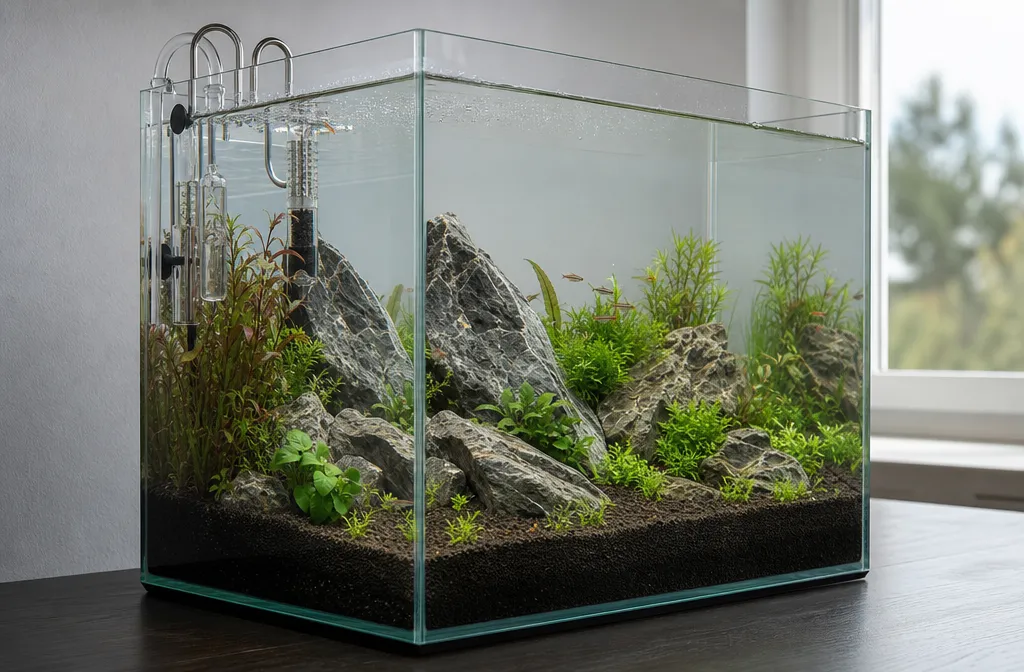 After
After
Request: Brown algae on walls, substrate silted, fish sluggish.
Done: Cleaned walls, substrate and decorations, replaced 20% water.
Cost: 14 000 ₸
Master: Malika Akhmetova, aquarium master
Total: Aquarium like new, water clear, fish revived.
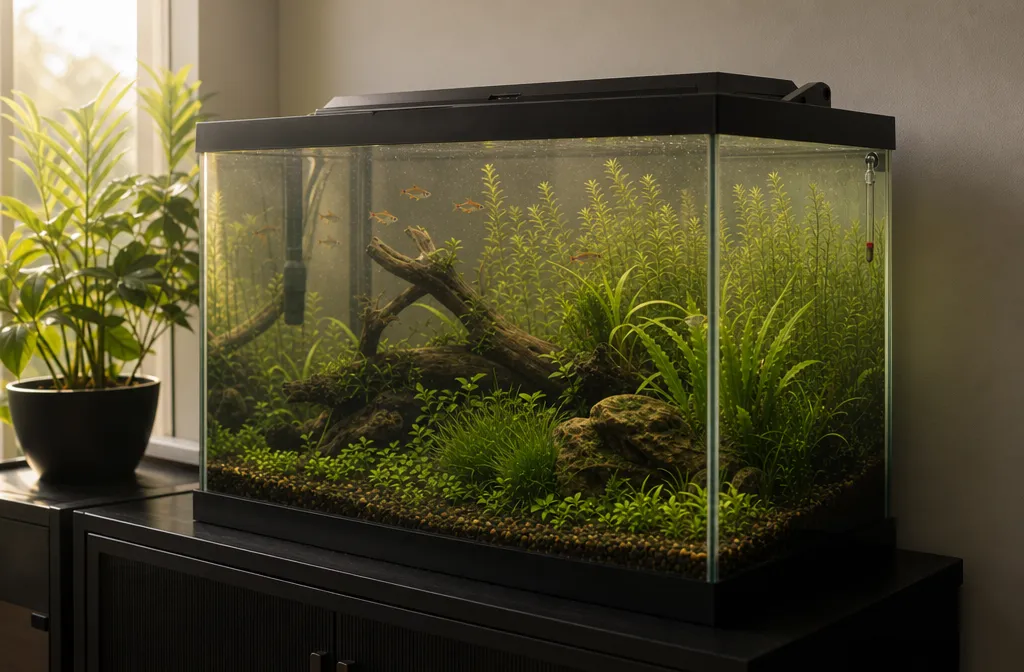
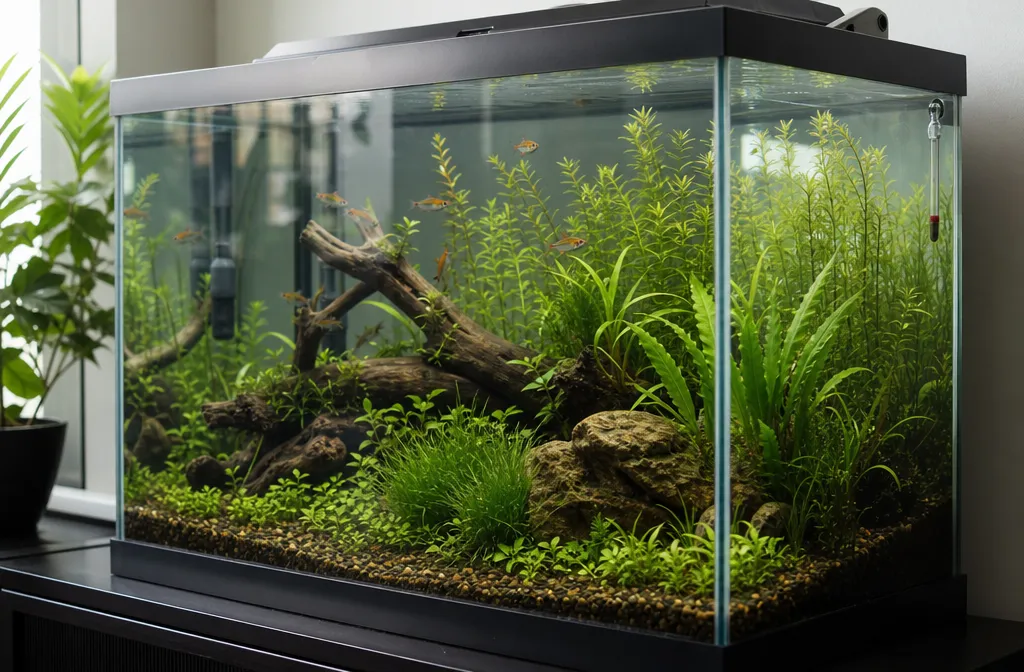 After
After
Request: Plants overgrown with algae, leaves covered with film.
Done: Removed algae manually, trimmed plants, changed water.
Cost: 13 000 ₸
Master: Nurlan Bekzhanov, aquarium master
Total: Plants healthy, water clean, aquascape neat.
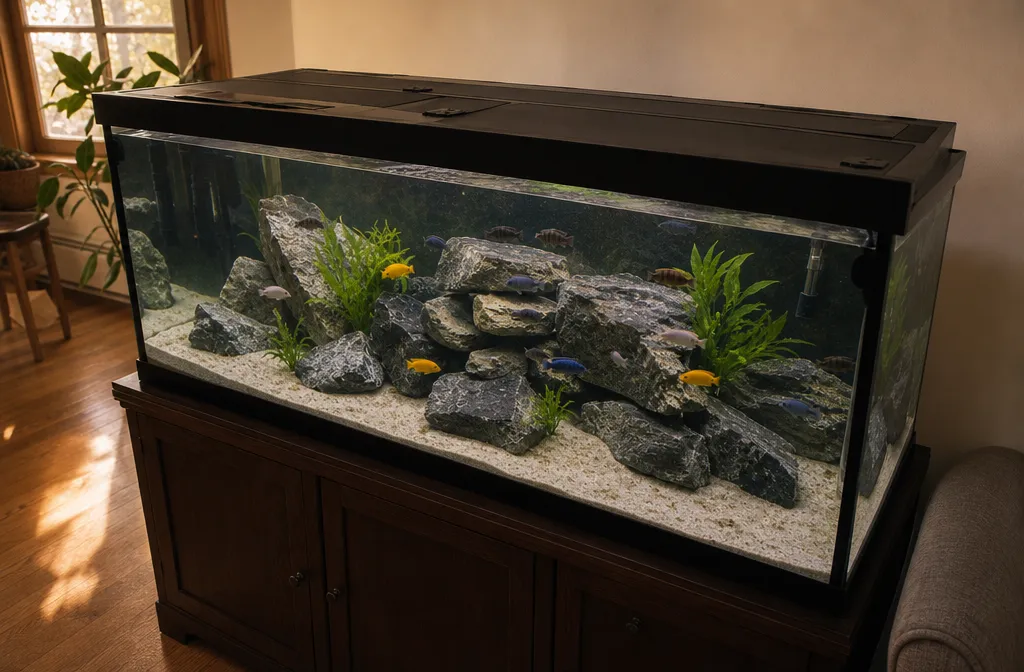
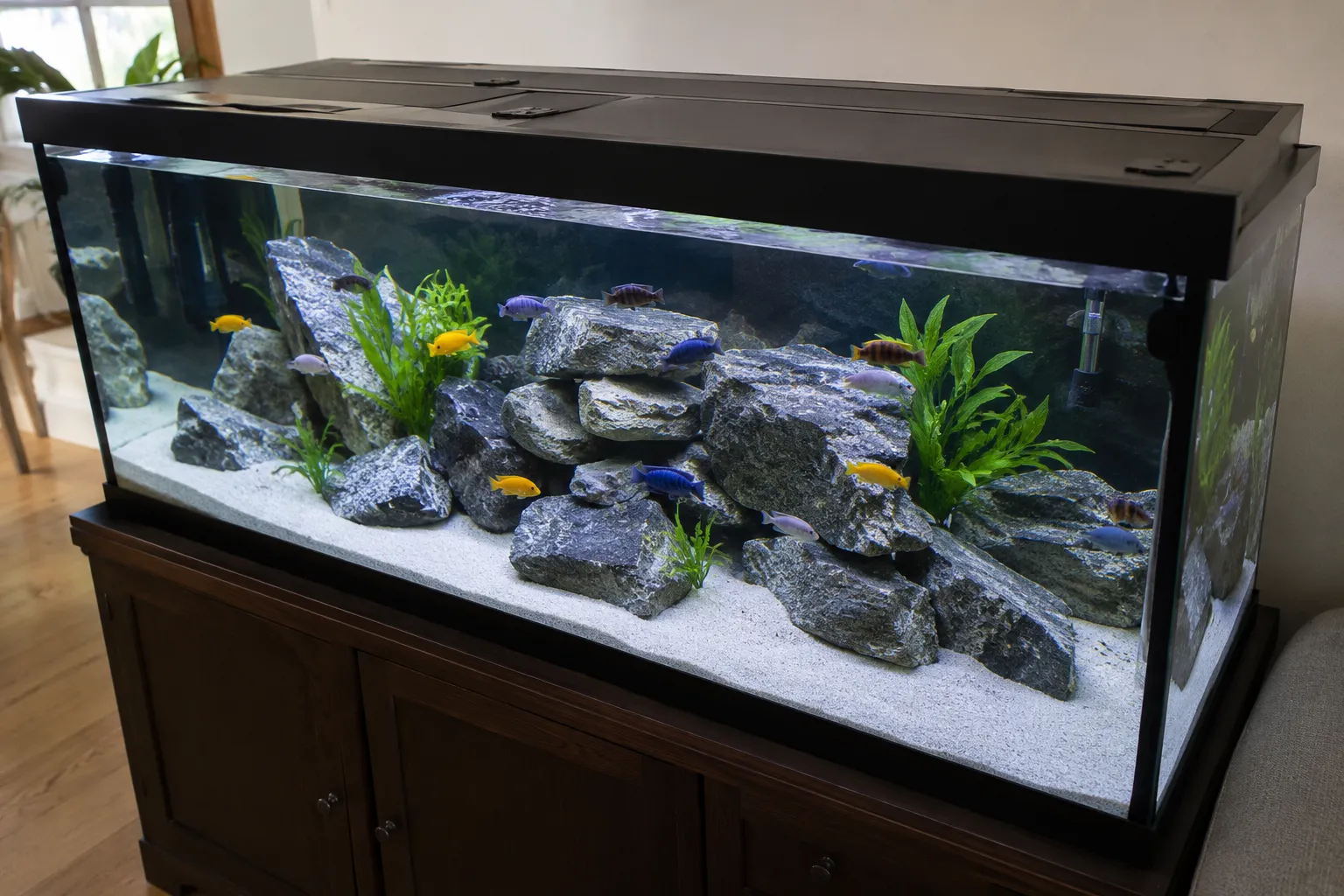 After
After
Request: Substrate dirty, water cloudy, fish digging bottom.
Done: Substrate siphoning, filter cleaning, 40% water change.
Cost: 12 000 ₸
Master: Aidar Sagintayev, aquarium master
Total: Substrate clean, water clear, cichlids active.
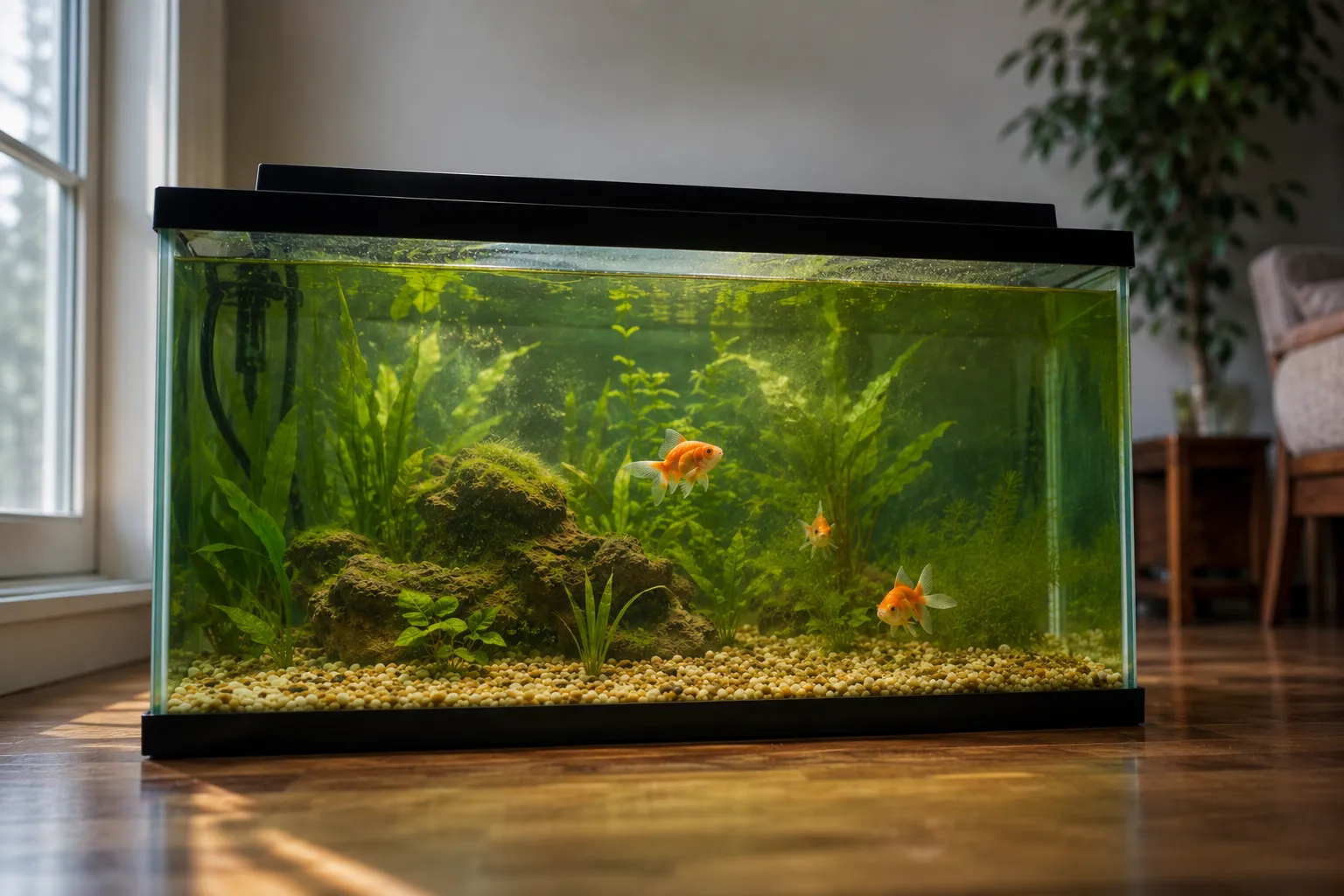
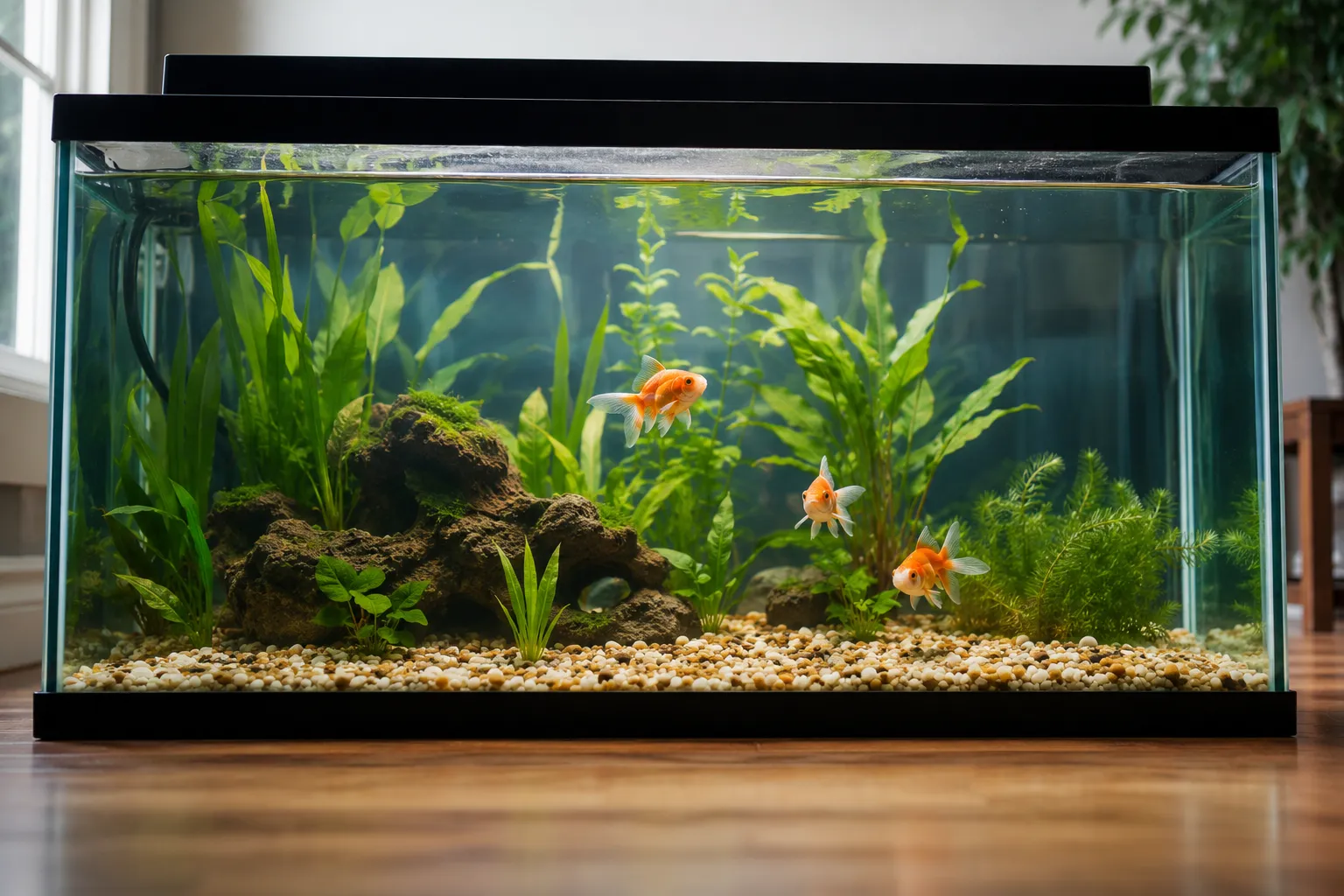 After
After
Request: Water is green, walls covered in algae, fish swim near the surface.
Done: Cleaning of walls, gravel, filter, and 50% water change.
Cost: 14 000 ₸
Master: Kamila Tulegenova, aquarium master
Total: Water is clear, fish swim throughout the volume.
 After
After
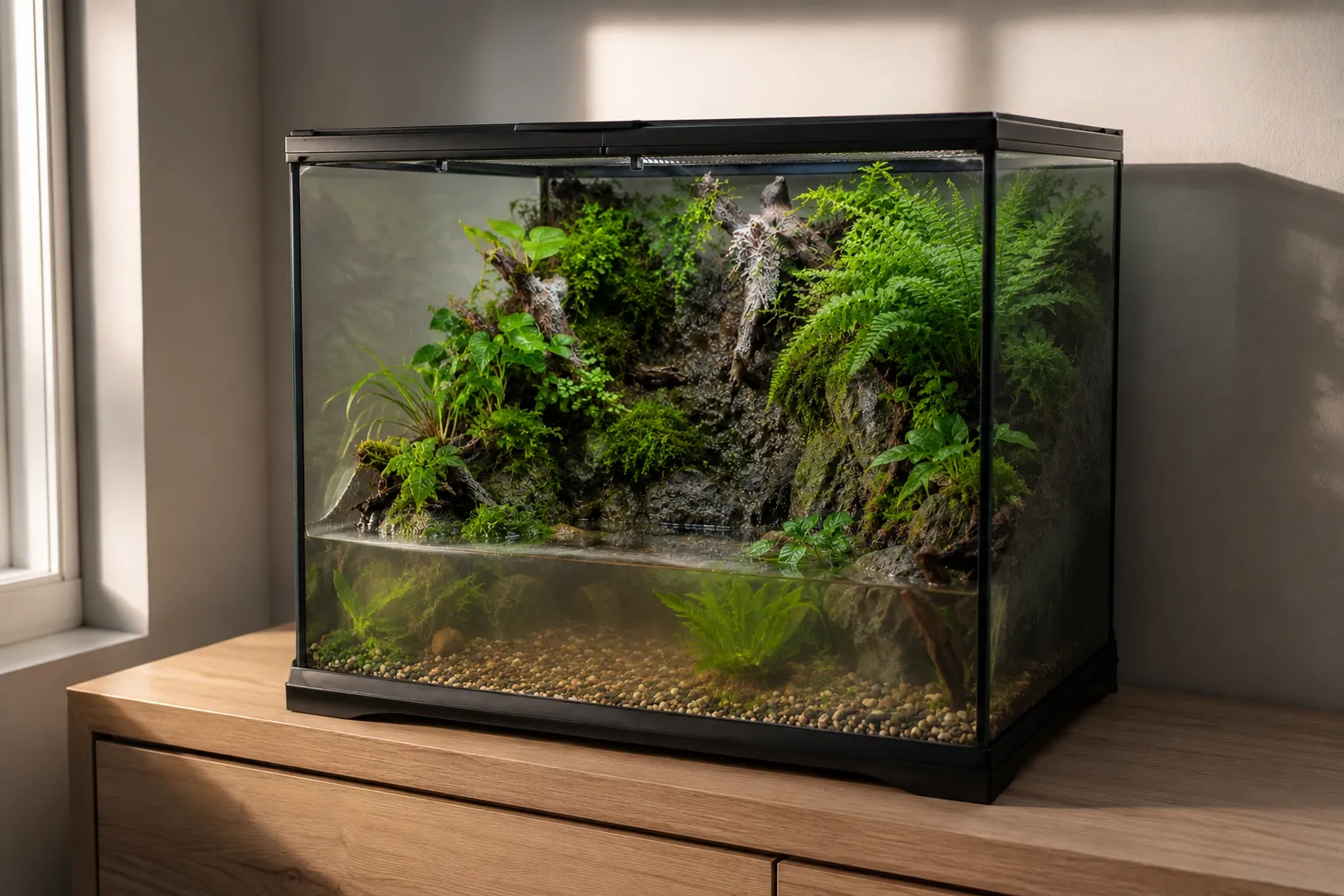
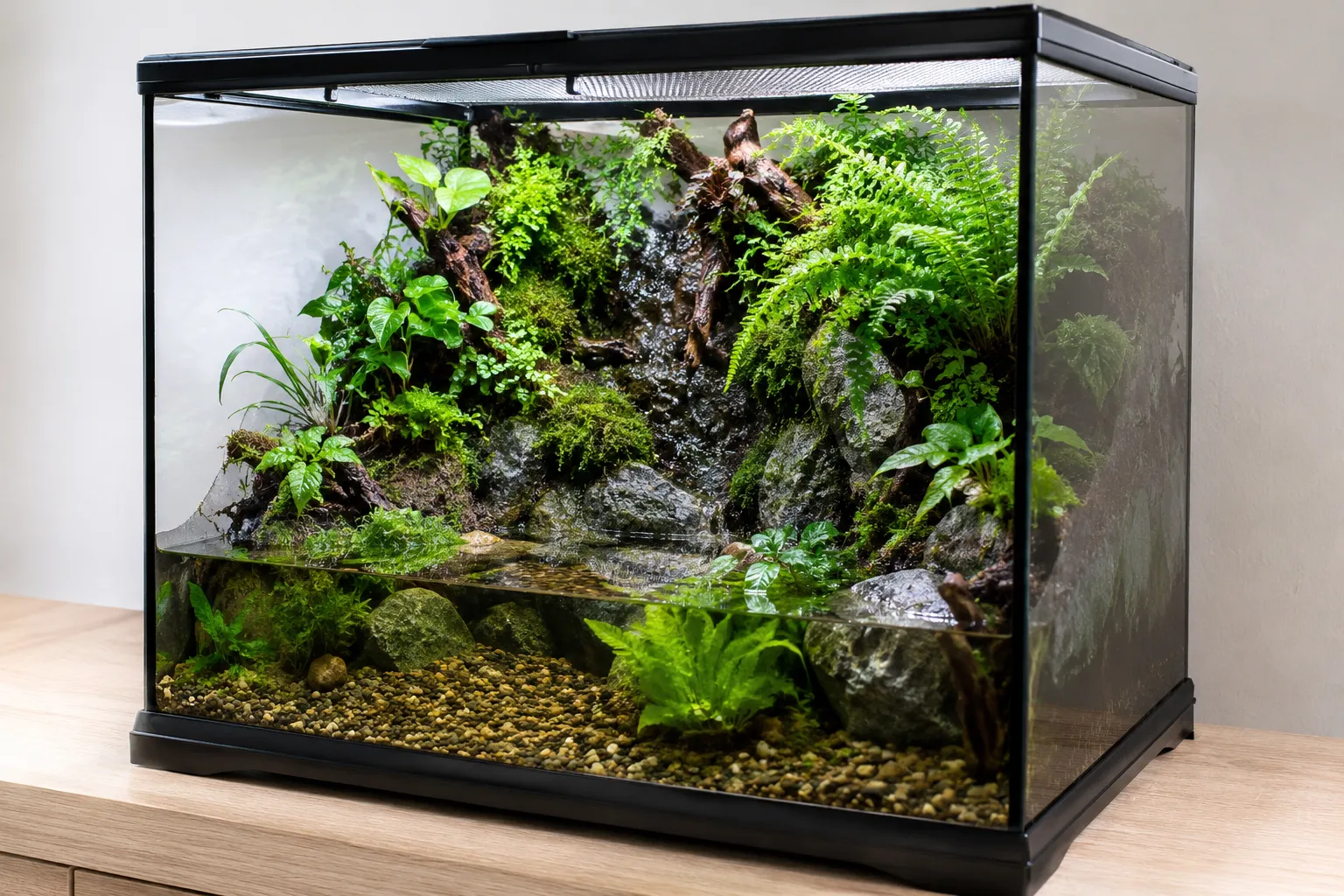
Request: Dry part overgrown with mold, water cloudy.
Done: Cleaned dry part, washed driftwood, replaced water.
Cost: 15 000 ₸
Master: Yerzhan Muratov, aquarium master
Total: Paludarium looks natural, mold removed.
 After
After
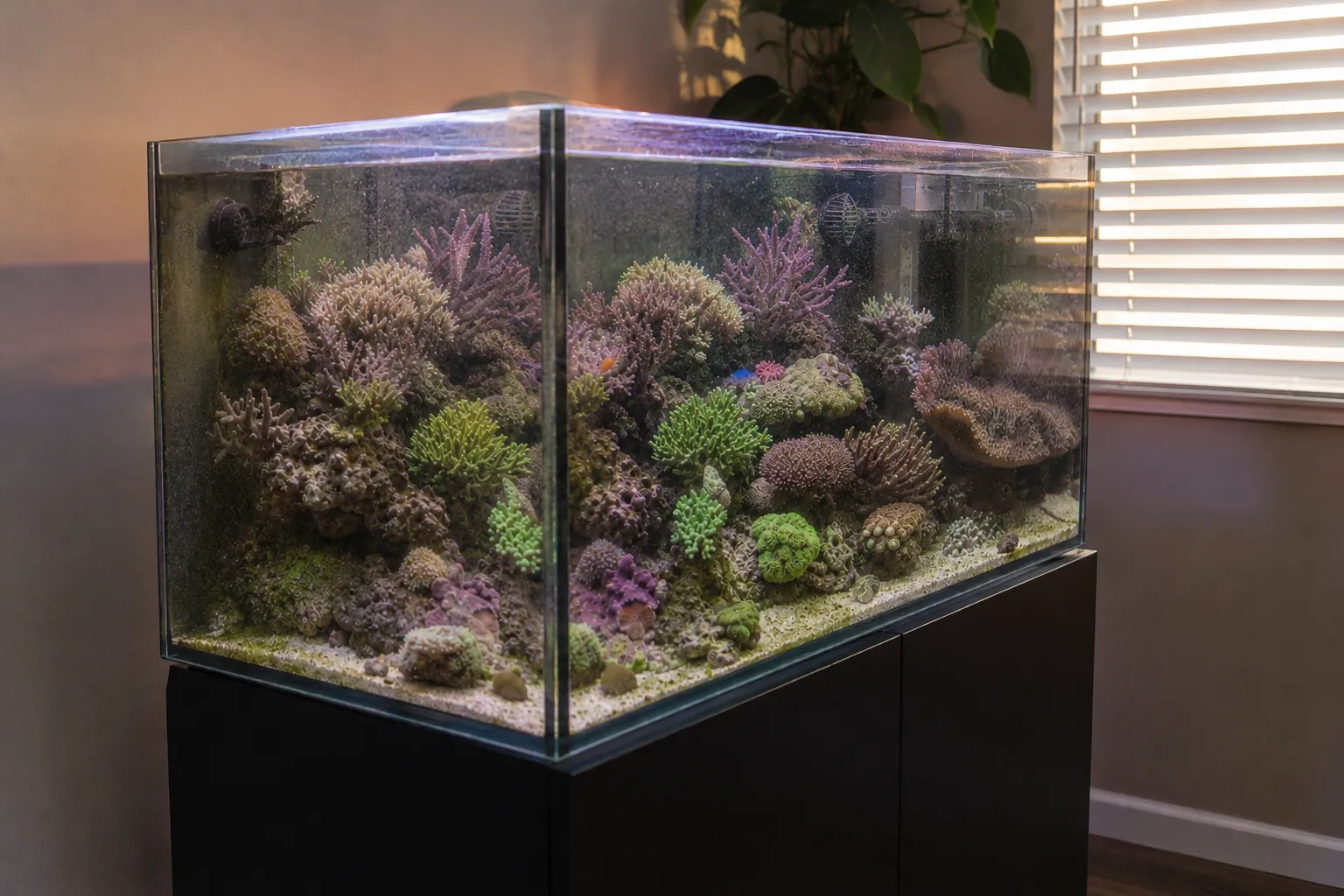
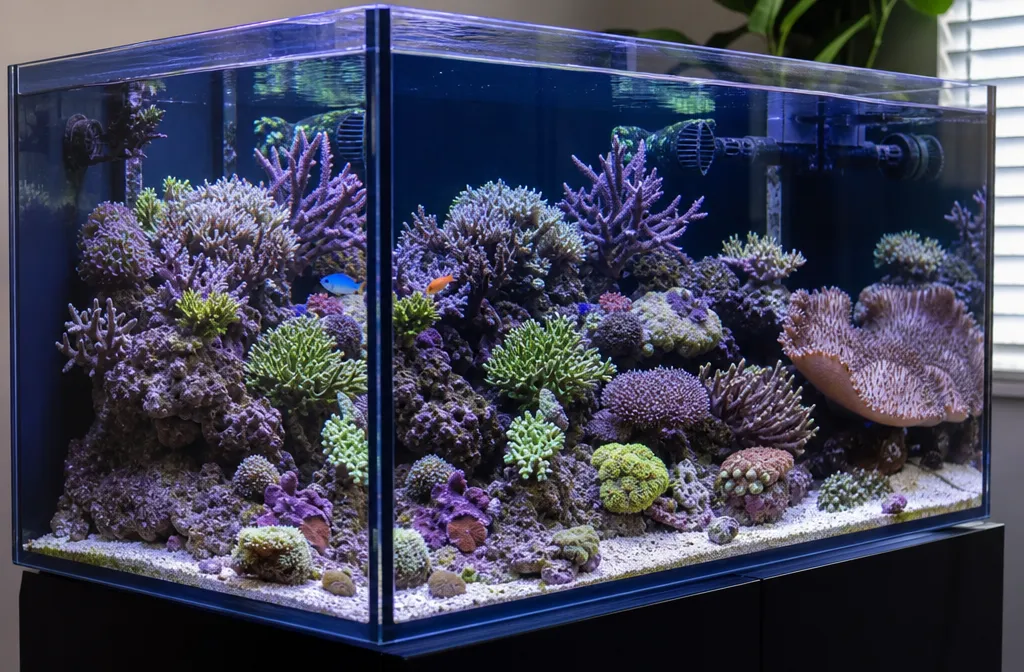
Request: Corals partially bleached, algae on rocks.
Done: Cleaning rocks, removing algae, water change with RO/DI.
Cost: 12 000 ₸
Master: Ruslan Ibraev, aquarium master
Total: Corals regained color, water is clear.
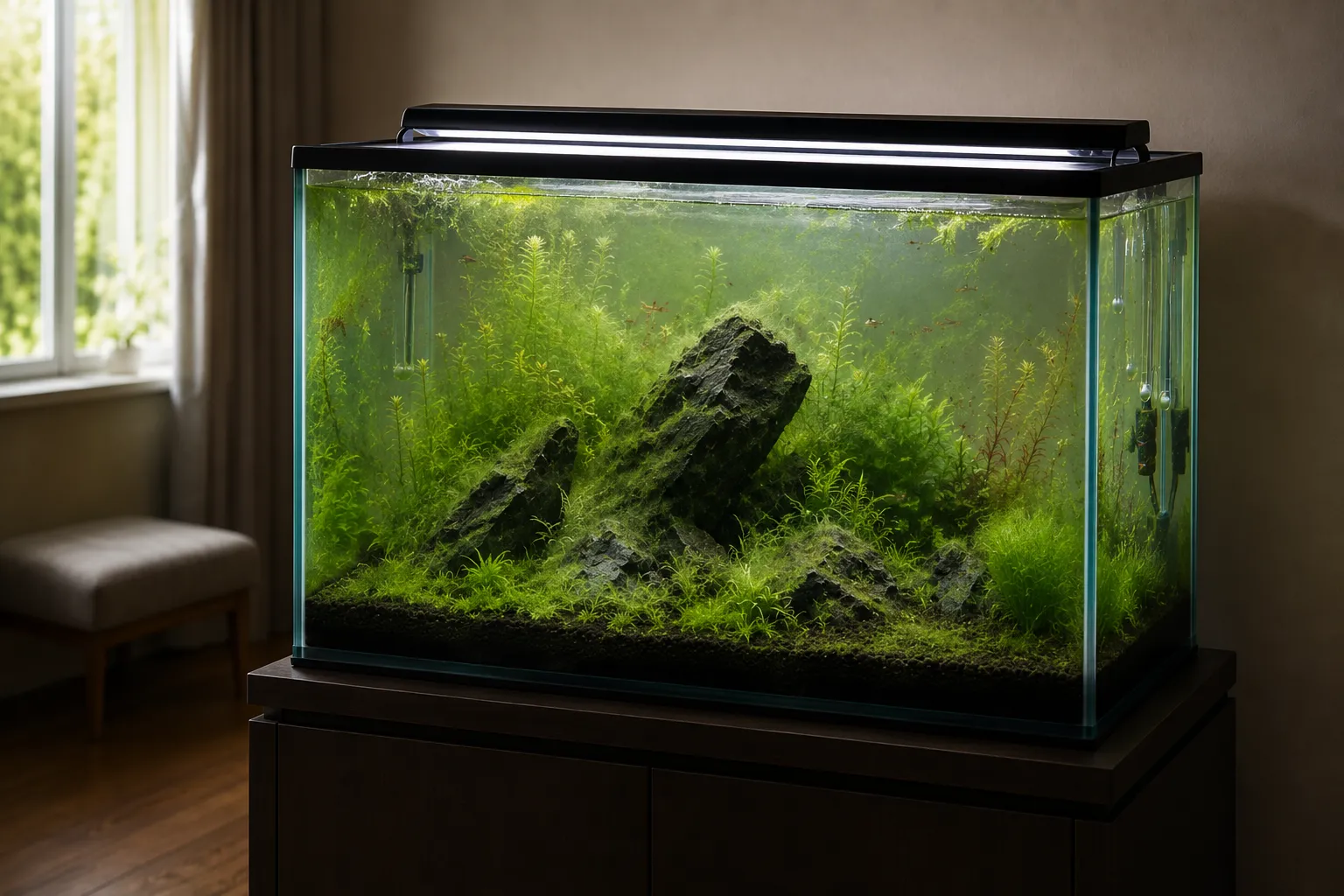
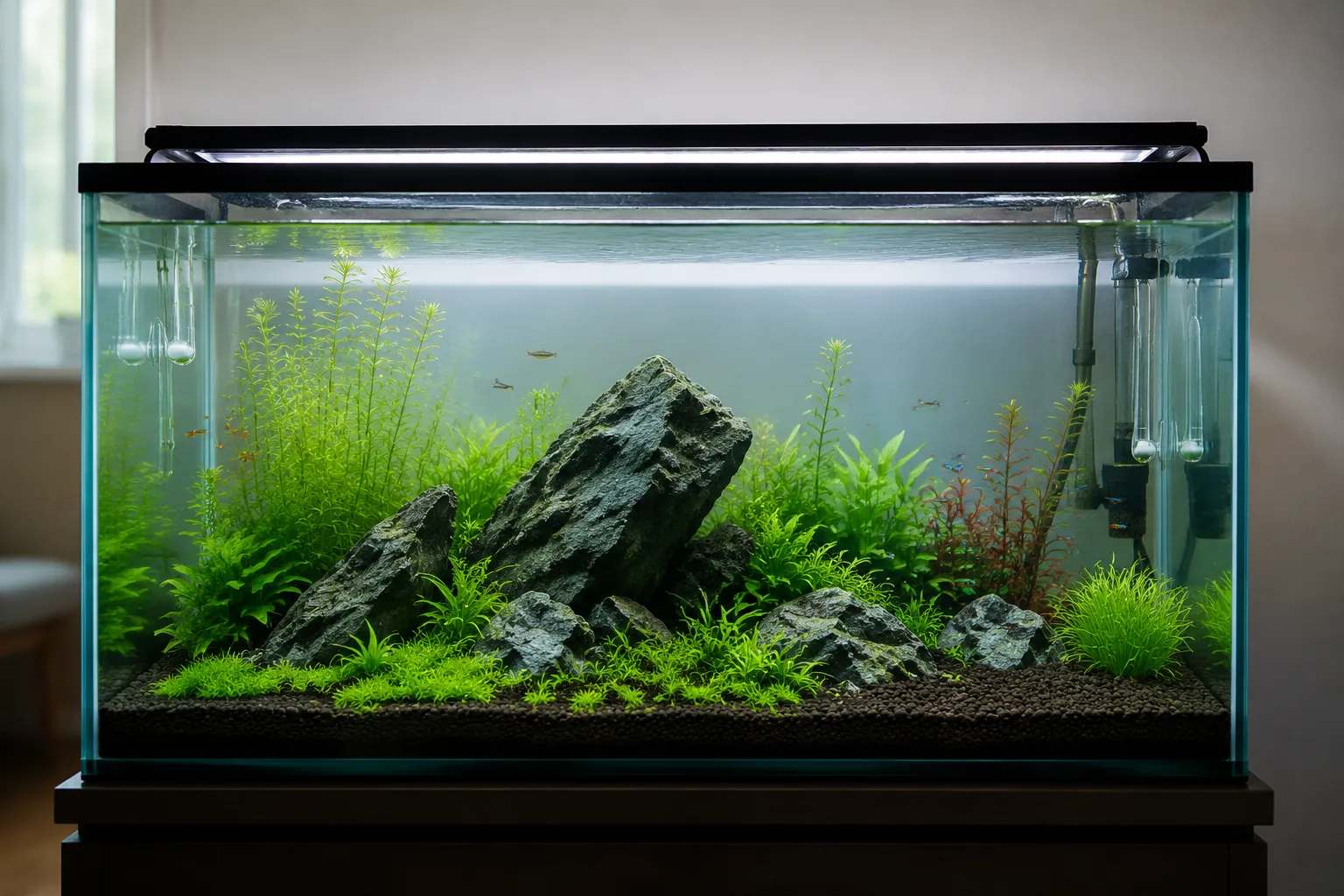 After
After
Request: Everything covered in green filamentous algae, fish barely visible.
Done: Removed algae manually, treated with hydrogen peroxide, changed water.
Cost: 14 000 ₸
Master: Aliya Zhangaliyeva, aquarium master
Total: Algae completely removed, water is clear.
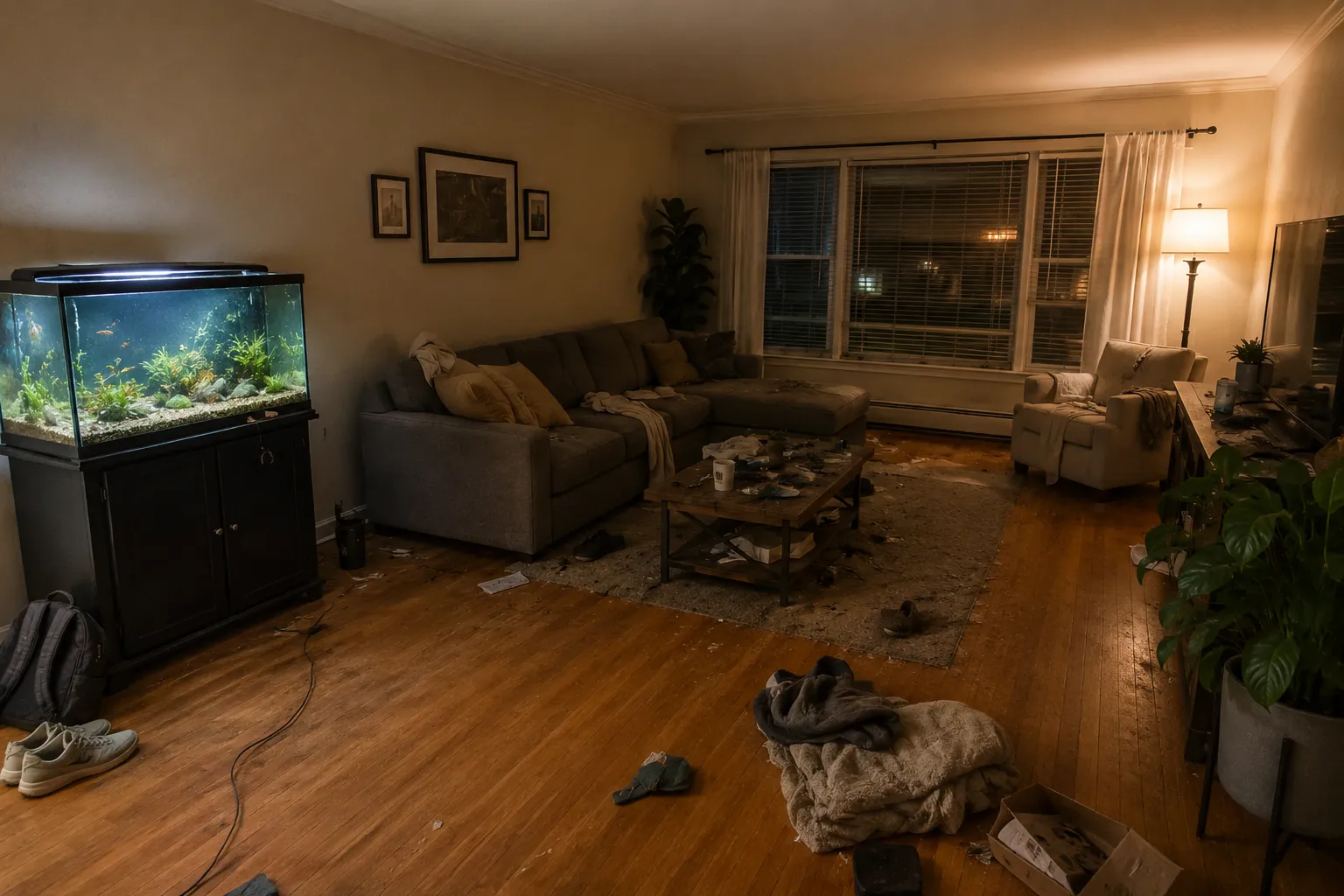
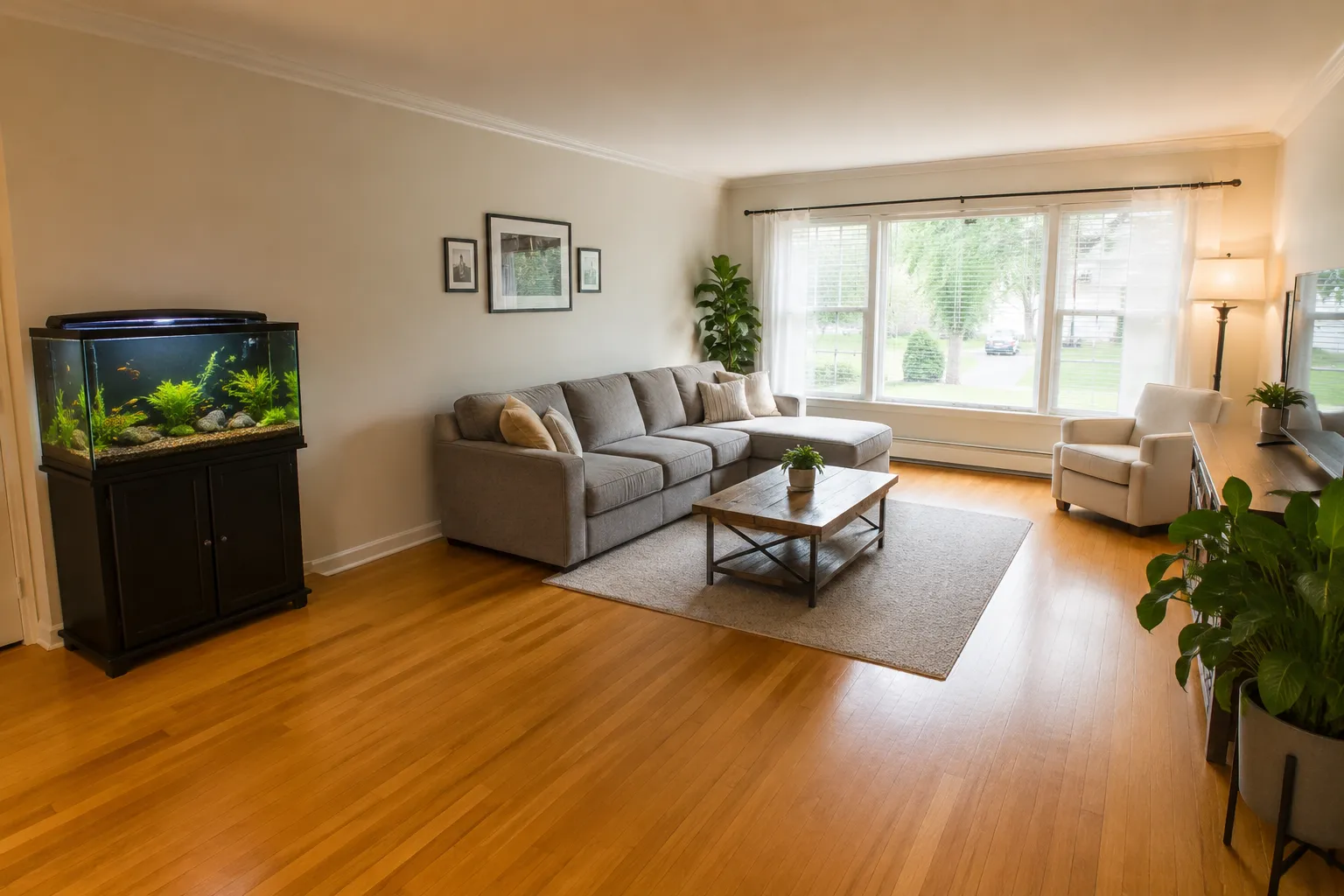 After
After
Request: Aquarium not cleaned for a year, everything covered in grime and dirt.
Done: Full disassembly, cleaning of all elements, reassembly and startup.
Cost: 13 000 ₸
Master: Bakhtiyar Kaliyev, aquarium master
Total: Aquarium sparkles, water perfectly clear.
All cleaners are profi-clean staff with training, uniform and security check. Each order has a team leader who controls quality.
Draining all the water from the aquarium and filling it with fresh water is the most common mistake beginners make, destroying biological balance within an hour.
An aquarium is a closed ecosystem where filter bacteria process ammonia from fish waste into nitrites, and then into safe nitrates. A complete water change destroys this colony of beneficial microorganisms, which live not in the water column, but on the filter sponge, substrate, and decorations. When you pour in fresh tap water, the pH level and hardness change dramatically — this is equivalent to shock for the fish. In our practice, there was a case: the owner of a 200-liter aquarium replaced all the water in one day, and by morning had lost half of their cichlid population — their gill mucous membranes failed due to the acidity change. In Almaty, tap water is hard (7-8 dGH), and with a complete change, the pH swing can reach 1.5-2 units, which is lethal for most freshwater species. Instead of a complete change, we recommend replacing 20-30% of the volume once a week — this keeps the bacterial layer intact, and the water chemistry changes gradually.
Even with a partial water change, tap water contains chlorine and chloramines, which damage fish gills at a concentration of 0.5 mg/l. In Almaty, “Koksu” and “Almaty Su” supply water with residual chlorine up to 0.3-0.5 mg/l, and during peak flood season (April-May), the chloramine content doubles. Simply letting water sit in a bucket for a day is insufficient: chloramines only evaporate after 3-5 days with active aeration. We use conditioners like Tetra AquaSafe or Seachem Prime, which bind chlorine, chloramines, and heavy metals within 5 minutes. The temperature of the new water should be 1-2°C warmer than the aquarium water — adding cold water (15-18°C in winter from the Almaty water supply) causes thermal shock, and fish will lie on the bottom. In practice: before pouring, measure the replacement volume, add conditioner according to instructions, and heat it to 26-28°C — only then carefully pour it into the aquarium using a hose or a cup.
The only case where a complete drain is necessary is during an infection outbreak (ichthyophthiriasis, oodinium) or chemical poisoning after incorrect treatment. In such a situation, the water becomes toxic, and a partial change does not remove pathogens from the substrate and decorations. But even in an emergency, we don’t drain all the water at once: first, we move the fish to a separate container with aeration and 50% old water, then drain the aquarium, rinse the substrate with boiling water, and the decorations with 3% hydrogen peroxide. After filling with fresh water, be sure to add a starter bacterial culture (Tetra Bactozym or Seachem Stability) — without it, the filter will take 2-3 weeks to “cycle.” In Almaty’s hard water conditions, we advise feeding fish minimally (once every 48 hours) for the first 3 days after a complete change to reduce the load on the immature filter. Ordering aquarium cleaning with professional bio-balance control is the only way to avoid risk during serious water problems.
Pouring bleach or glass cleaner into the aquarium to kill algae is the second most common way to kill its inhabitants within an hour. Chlorine from tap water, ammonia from all-purpose cleaners, and phosphates from dishwashing detergents destroy the nitrogen cycle and gill mucous membranes. Let’s break down the dangers of each group, which ingredients to look for on the label, and what to use instead.
Chlorine-based bleaches (Domestos, bleach) and ammonia-based glass cleaners (Mr. Muscle) kill nitrifying bacteria in the filter within 10–15 minutes of contact. After residual cleaner is introduced into the aquarium, the ammonia (NH₃) level spikes to 2–4 mg/l — while the norm is 0 mg/l for freshwater fish. At just 0.5 mg/l, fish begin to suffer chemical burns on their gills: rapid breathing, mucus on the body, and refusal to eat. In our practical work, there was a case where a client treated decorations with bleach and rinsed them with tap water — within 6 hours, 80% of the neon tetras died. Chlorine and ammonia cannot be rinsed to a safe level with simple washing: it requires soaking in clean water for 24 hours with three water changes. The only safe option for disinfecting decorations and substrate is boiling or soaking in a potassium permanganate solution (1 g per 10 l) for 30 minutes, followed by a one-hour soak in clean water.
Dishwashing liquids (Fairy, Sorti) contain 15–30% anionic surfactants and phosphates that do not fully rinse off sponges and scrapers, even after five rinses. When they enter an aquarium, phosphates (PO₄) trigger an outbreak of filamentous algae and cyanobacteria within 2–3 days, while surfactants destroy the protective mucous layer on fish skin — opening the door to bacterial infections (ichthyophthiriasis, furunculosis). In Almaty’s water (hardness 5–7 °dH), surfactant residues foam longer and break down worse than in soft water — increasing the risk of accumulation. For washing hands and tools, use only laundry soap (72%) without fragrances or perfumes: it contains no phosphates or anionic surfactants, and its alkaline environment (pH 11–12) is neutralized during the first rinse.
Professional aquarium cleaning products (from Tetra, Sera, API) work differently than household chemicals: they bind chlorine and heavy metals into chelate complexes rather than killing bacteria. When buying a conditioner, check that the composition includes sodium thiosulfate (neutralizes chlorine up to 5 mg/L), ethylenediaminetetraacetic acid (EDTA — binds copper and zinc from tap water), and polyvinylpyrrolidone (PVP — coats fish mucus, reducing stress). At profi-clean, we use Sera aquatan for primary water treatment — it additionally contains colloids that protect gills during pH fluctuations. Do not buy products without listing active ingredients on the label (“natural bio-cleaners” marked “composition — trade secret”): they often contain the same surfactants as household chemicals, but in lower concentrations, and do not undergo safety testing for fish.
Rinsing filter media under the tap is the third most common mistake among aquarium owners in Almaty, destroying the colony of nitrifying bacteria in a single contact with chlorine. The city’s tap water contains 0.3–0.5 mg/L of residual chlorine — enough to sterilize a sponge in 10–15 seconds.
Chlorine and chloramines, used to treat water at “Almaty Su,” destroy the cell membranes of nitrifying bacteria — the very ones that convert ammonia into nitrites and nitrites into nitrates. Up to 70–80% of the entire aquarium biofiltration colony lives on the sponge of an external or internal filter. If you rinse it under the tap, the bacteria die, and within 12–24 hours, the NH₃/NH₄⁺ level in the water spikes sharply. In practice, after such cleaning, profi-clean clients recorded ammonia levels of 1.5–2.5 mg/L against a norm of 0 mg/L — this is toxic shock for all aquatic organisms. Before replacing the media, be sure to filter the water through a carbon cartridge or let it sit for 48 hours — this reduces the chlorine concentration to a safe level.
The only way to preserve the colony is to rinse the filter media in the aquarium water you drained during the water change. Collect 3–5 liters of old water in a separate basin, gently squeeze the sponge 2–3 times until cloudy sediment stops running off it. Do not touch ceramic rings and bio-balls at all — they accumulate bacteria in their pores, and mechanical friction destroys the biofilm. In our weekly aquarium maintenance orders for volumes from 100 liters, we always rinse the media precisely in the drained water — this is the only method that yields stable zero ammonia readings on API tests. If the sponge is so clogged that it cannot be cleaned without strong pressure, it is better to replace it with a new one and add a bacterial starter — there is no point in restoring the old one.
When a dense layer of organic matter has accumulated on the sponge and it does not come clean even after five squeezes in aquarium water, use a weak solution of water conditioner with dechlorinator — for example, Tetra AquaSafe or Seachem Prime. Dilute 5–7 drops per liter of settled water, soak the media for 10 minutes, then rinse in clean settled water. Under no circumstances use soap, soda, vinegar, or any cleaning agents — their residues cannot be washed out of the porous structure and poison the biofilter for weeks. In profi-clean’s practice, there was a case where a client washed the sponge with dish soap, after which the aquarium “bloomed” with green water for three weeks, despite daily water changes — we had to restart the filtration from scratch.
Sponges and filter floss are changed not by the calendar, but by condition — when they lose their shape or let water through without trapping sediment. On average, for aquariums of 60–120 liters with moderate bioload, a sponge lasts 4–6 months, ceramic rings — up to a year. But you cannot change all media at once: this will reset the biofiltration. Replace no more than 30–40% of the volume at a time, and soak the new sponge for a day in aquarium water from the drain before installation — so that some bacteria can migrate onto it. In our maintenance of a 200-liter cichlid aquarium, we change the external filter in stages: in the first week — one sponge, a month later — the second, another month later — carbon and bio-balls. This schedule yields stable nitrates below 20 mg/L without ammonia spikes.
If you accidentally rinsed the sponge under the tap, immediately add a double dose of dechlorinator to the aquarium — this will bind any chlorine residues that may remain on the media. After 6–8 hours, test for ammonia and nitrites using drop tests (not strips — they are inaccurate). If NH₃/NH₄⁺ is above 0.25 mg/L, pour in a bacterial starter at the dosage indicated for starting a new aquarium, and increase aeration for 24 hours. If the ammonia level is above 1 mg/L, start 20% water changes every other day until readings return to zero. In our practice during an emergency visit in Almaty, we restored a 150-liter aquarium in three days — with daily water changes and a double dose of Seachem Stability. But it is better not to let it get to that situation: keep a bottle of settled water on hand for rinsing the filter media.
Skipping substrate vacuuming is the fourth most common mistake among aquarium owners in Almaty, turning the substrate into a toxic reservoir within a month or two without intervention.
Leftover food, fish waste, and dead plant parts accumulate in the thickness of gravel or sand. Without regular vacuuming, this organic matter begins to rot under anaerobic conditions — without oxygen access. The rotting process releases hydrogen sulfide, which is toxic to fish even in micro-concentrations. In our practice, there was a case: an owner of a 200-liter aquarium did not vacuum the substrate for six months, and lost all ancistrus and neon tetras within two weeks. The smell of rotten eggs from the substrate is a clear sign of an advanced process. If the situation is neglected, hydrogen sulfide penetrates the water and causes poisoning of the inhabitants. At the first signs — cloudy water with an odor, fish gasping at the surface — you need to urgently vacuum the substrate and perform a 30% water change.
Use a bulb siphon or a flow-through one — the latter is more effective for aquariums of 100 liters or more. Lower the bell into the substrate by 2-3 cm, no deeper — to avoid damaging the root system of plants and disturbing beneficial bacteria in the lower layers. Freshwater aquariums in Almaty with live plants are siphoned once every 2-3 weeks, covering 30-40% of the bottom area at a time. In tanks without plants and with decorations — once every 10-14 days, completely. Marine aquariums are siphoned less frequently — once a month, as detritivores (shrimp, snails) partially process organic matter. In my opinion, the best tool for Almaty water is a siphon with adjustable flow, to avoid draining more than 20% of the volume per procedure.
| Substrate type | Siphoning method | Immersion depth | Frequency |
|---|---|---|---|
| Coarse gravel (3-5 mm) | Flow-through siphon | 2-3 cm | Every 2 weeks |
| Fine sand (0.5-1 mm) | Siphon with mesh at the inlet | 0.5-1 cm (surface only) | Once every 3 weeks |
| Nutrient substrate under plants | Bulb or narrow bell | 1-2 cm, without disturbing layers | Once every 3-4 weeks |
| Marine sand (aragonite) | Weak suction, without stirring | 0.5 cm | Once a month |
In aquariums with live plants, siphoning is done carefully, keeping 3-5 cm away from the roots of cryptocorynes and echinodorus — to avoid exposing the root system. If the substrate is heavily silted, it is better to do fractional cleaning: 15-20% of the bottom each week for a month. This is safer for biofiltration — a sudden full-volume siphoning can trigger an ammonia spike.
Pruning aquarium plants is an operation that owners often perform “by eye,” without knowing the physiology of stems and roots. The result is slowed growth, rot, or the death of the plant within 1-2 weeks.
Cutting a stem “any old way” means leaving an open wound with no chance of healing. Different types of aquarium flora have their growth point located differently: in Vallisneria and Cryptocoryne — at the root crown, in Ludwigia and Rotala — in the leaf axil. If you cut Vallisneria above the root crown, the remaining stump rots within 3-5 days in warm water at 24-26 °C, poisoning the water with ammonia. In fast-growing stem plants, such as Hygrophila and Echinodorus, an incorrect cut leaves a “bald” section of the stem that produces no new shoots — the plant stretches, loses its decorative appeal, and stops absorbing nitrates. In our practice, there was a case where a client in Almaty cut all Echinodorus stems at the same level with paper scissors — within a week, the plant completely rotted, requiring a 30% water change and restarting the nitrogen cycle. Always determine the plant type before pruning: stem plants are cut 3-4 internodes from the root, rosette plants only have old leaves removed at the very base.
Regular office scissors or a knife crush the stem tissues, leaving a ragged edge — through this, bacteria and fungi enter the plant’s vessels, causing necrosis within 2-3 days. Aquarium pruning requires special curved scissors made of 304 stainless steel or medical alloy — they provide a clean cut at a 45° angle, which heals within 12-24 hours without sap loss. Tweezers with long jaws (25-30 cm) allow you to remove old leaves of Cryptocoryne and Anubias without pulling roots from the substrate. Before each procedure, tools must be disinfected: 3% hydrogen peroxide for 5 minutes or boiling water for 2 minutes — otherwise, you transfer algae spores from one plant to the entire aquarium. Store the pruning kit separately from household scissors — at profi-clean, we use individual sterile boxes for each aquarium to prevent cross-contamination.
Pruning during periods of stress — adaptation after replanting, fish treatment, or changes in water parameters — deals a double blow to the plant: it spends resources on healing the wound instead of restoring the root system. For cryptocorynes and anubias, pruning leaves within the first 2-3 weeks after planting causes “cryptocoryne disease” — massive dissolution of the leaf blade within 24 hours. In fast-growing stem plants (rotala, ludwigia), frequent pruning every 3-4 days without CO₂ supplementation and macro-fertilizers depletes potassium and iron reserves — leaves become smaller, stems thin out. The optimal regime for most species: once every 10-14 days, removing no more than 20-30% of the green mass at one time. Before scheduled pruning, check nitrate (NO₃) and phosphate (PO₄) levels with tests — if they are below 5 and 0.5 mg/l respectively, postpone the procedure for 3-4 days and apply fertilizers.
Leaving cut parts in the aquarium is a mistake that triggers rotting processes within 6-12 hours. Leaves and stems should be immediately removed with a net or tweezers, especially if they show signs of algae or biofilm. Cuttings of stem plants (10-15 cm tops) can be re-rooted: plant them in the substrate at 3-4 cm intervals, weigh them down with a weight, and turn on enhanced aeration for 2-3 days. Old lower leaves with signs of necrosis or algae overgrowth should not be composted in the aquarium — discard them, otherwise algae spores return to the water within 2-3 days. If the volume of cut greenery exceeds 30% of the plant’s mass, be sure to change 10-15% of the water one hour after the procedure to reduce organic concentration and prevent a bacterial outbreak.
Proper preparation of the aquarium for the cleaner’s arrival is the key to ensuring the cleaning is safe for fish and plants, and the results last longer. Here’s what you need to do before our team’s visit.
Before cleaning, we disconnect all electrical equipment: filter, compressor, heater, and UV sterilizer. The owner just needs to unplug the external filter in advance and remove its hoses — we handle the rest on site. We dismantle internal pumps and airlift filters ourselves, but it’s important that access to the back wall of the aquarium is clear. For paludariums and aquaterrariums, remove lights and mounted equipment an hour before starting — in Almaty, due to voltage fluctuations in the evening, equipment can overheat when ventilation is off, and an extra 60 minutes without light reduces stress for light-loving cryptocorynes. If you have an Eheim or Tetra external filter, do not drain the water from it beforehand — bacteria in the sponges live in a moist environment, and dry air kills the colony within 15 minutes.
We drain 30–40% of the old water into a clean container — this water is used for rinsing the filter and refilling. The owner should prepare several 10-liter canisters or food-grade buckets in advance: for a 200-liter aquarium, 60–80 liters of container capacity is needed. Important: do not drain water with a siphon from the substrate — organic matter that we will remove purposefully will go with the water. We use a separate hose for draining from the water column to avoid lifting detritus from the bottom. For marine aquariums in Almaty with Australian corals, we leave 50% of the old water — they have a narrower pH range, and a complete change causes osmotic shock. Before draining, check the temperature in the aquarium with a thermometer: if it is above 28°C (common in summer in Almaty apartments without air conditioning), cool it to 24–25°C by adding 0.5 liters of settled water every 10 minutes — rapid cooling kills nitrifying bacteria faster than chlorine.
We remove driftwood, stones, and artificial decorations ourselves, but it is better for the owner to remove fragile elements (ceramic castles, miniature figurines) an hour before our arrival — they may crack during transport. We do not pull out large Echinodorus and Vallisneria; instead, we carefully press them to the bottom with a stainless steel staple to avoid damaging the root system during siphoning. In paludariums with terrestrial plants (Spathiphyllum, Ficus pumila), we ask that you wrap the roots in damp gauze and secure them with tape to the rim — this prevents tearing the aerial roots during glass cleaning. If you have an aquascape with mosses (Java moss, Phoenix moss), do not try to lift or replant them before cleaning — the moss is attached to fishing line and suction cups, and any displacement ruins the composition, requiring 2–3 months for recovery.
I ordered aquarium cleaning, the master arrived on time, washed the substrate and filter — the water became clear.
Glad you liked the result! We look forward to seeing you again.
At the office, the aquarium was started after general cleaning, the fish are active again.
I asked for cleaning of a non-standard shaped aquarium — they managed, but a few scratches remained on the glass.
We apologize for the scratches, next time we will use soft sponges.
After cleaning, the water is crystal clear, the fish are livelier. Very satisfied.
I ordered cleaning of algae from the aquarium — they removed the algae, but a week later they appeared again.
Usually after cleaning we recommend adjusting the lighting, perhaps that's the reason.
My nano-aquarium is now sparkling, corals have opened up. Thank you for your neatness.
They came for aquarium cleaning, cleaned the walls, siphoned the substrate — the water is crystal clear.
Thank you for your feedback! Always at your service.
Kids are delighted, the aquarium has become brighter, fish swim faster.
I ordered cleaning of the aquarium for a turtle — they cleaned the filter perfectly, but there is still residue on the stones.
Sorry, the residue can be removed with a special product, we will pass it on to the master.
It's not the first time I've contacted, always perfectly clean and fast.
The aquarium cleaning went great — the master even changed the water and cleaned the compressor.
We try our best for you! Contact us.
The marine aquarium looks like new, corals have bloomed. Very professional.
We had the aquarium cleaned at the cafe — visitors noticed that the water became clearer, but there was a slight chemical smell.
We apologize for the smell, we use safe products.
Fish stopped hiding, the aquarium is a joy to behold. Thank you!
Ordered aquarium cleaning for the salon — clients praise the cleanliness, water is clear.
Thank you for your trust! Always happy to help.
The aquarium was in terrible condition, after cleaning it got better but not perfect — the glass is a bit cloudy.
In neglected cases, a repeat treatment may be needed; we'll offer a discount.
Aquarium cleaning for my guppies — everything neat, water clear, fish active.
Colleagues noticed the aquarium became brighter, thanks for the promptness.
Called, they came the same day, aquarium cleaning was quality, fish are happy.
Promptness is our priority. Thank you!
Clean, but the master forgot to wipe the lid inside — we had to do it ourselves.
We apologize, we'll pass it on to the master.
For a spa salon, aesthetics are important; aquarium cleaning was done perfectly — the water sparkles.
Yes, we regularly maintain aquariums with live plants. During cleaning, we carefully siphon the substrate, trim rotten leaves, and feed the plants with safe fertilizers.
We recommend a full cleaning every 2-4 weeks depending on the load. Small aquariums require more frequent care, larger ones less often.
On average, cleaning takes 1-1.5 hours. Nano aquariums up to 30 liters take about 40 minutes, large ones from 200 liters up to 2 hours.
Yes, we travel throughout Almaty. Travel within the city is free. The master brings all necessary equipment.
We use only certified Seachem Prime conditioners, which are safe for fish, plants, and invertebrates. The products contain no harsh chemicals.
Yes, we guarantee water clarity for 7 days. If the water becomes cloudy earlier, we perform a repeat cleaning for free.
When signing a contract for monthly maintenance, a 10% discount is provided. Discounts for regular customers are also available.
The cost depends on the volume and type of aquarium. Use the calculator on the website: select the type and volume, add additional services, and get the final price.
Cleaning a 100-liter freshwater aquarium costs at an individual rate, saltwater at an individual rate. Additional services are paid separately.
We clean freshwater, saltwater, paludariums, nano aquariums, planted aquariums, cichlid tanks, goldfish tanks, shrimp tanks, coral tanks, as well as Dutch and pseudo-marine aquariums.
Tell us about your experience with profi-clean — it helps other clients and us improve.
We currently operate in Almaty. Other cities are coming soon.