Inspection and assessment
The master inspects the sheepskin coat, determines the leather type, and identifies stains. A cleaning plan is created.
Restore your sheepskin coat to its original appearance without damaging the material
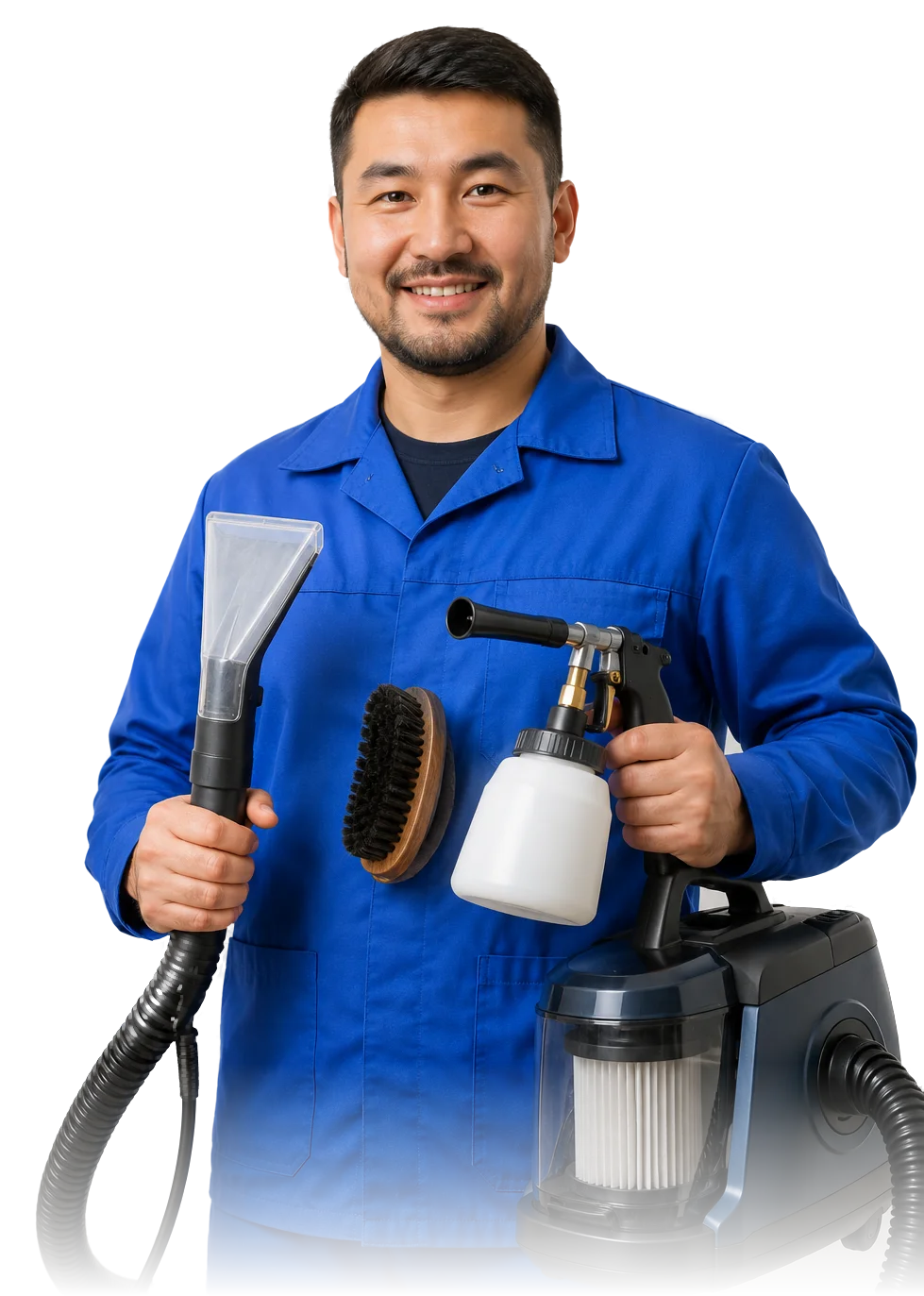
We work with any types and materials
Compact model, cleaned quickly and efficiently.
from 9,000 ₸Standard length, requires thorough treatment.
from 9,000 ₸Long model, requires more time and products.
from 9,000 ₸Delicate cleaning with conditioning to maintain elasticity.
from 9,000 ₸Gentle cleaning without harsh solvents.
from 9,000 ₸Special brush cleaning and impregnation for water protection.
from 9,000 ₸Steam treatment and pile restoration.
from 9,000 ₸Soft cleaning with conditioner to preserve velvety texture.
from 9,000 ₸Separate cleaning of collar and main part.
from 12,000 ₸Thorough cleaning of hood and main part.
from 9,000 ₸Standard cleaning without additional elements.
from 9,000 ₸Safe cleaning with hypoallergenic products.
from 9,000 ₸From inspection to result with guarantee
The master inspects the sheepskin coat, determines the leather type, and identifies stains. A cleaning plan is created.
Special Sodasan and Kiehl products are applied to stains to dissolve dirt.
Karcher SE 4001 extractor with soft brushes removes dirt and product residues.
Steam treatment disinfects and softens the material, preparing it for final finishing.
Special leather/suede conditioner restores softness and elasticity.
Drying in a ventilated room at room temperature to avoid deformation.
If necessary, we restore color using professional dyes.
We apply a water-repellent impregnation to protect against moisture and dirt.
We only use certified Sodasan and Kiehl products that deeply clean without damaging the structure of leather and suede. These brands are known for their effectiveness and safety, confirmed by years of experience. Your sheepskin coat receives gentle care without risk of shrinkage or color loss.
The Karcher SE 4001 extractor provides powerful suction and pressurized water delivery, removing dirt from deep layers of the material. After cleaning, no streaks remain, and the sheepskin coat looks like new. This professional equipment guarantees high quality for every procedure.
Our vacuum cleaners are equipped with HEPA filters that trap up to 99.97% of allergens, dust, and microparticles. This is especially important for people with allergies or asthma. After dry cleaning, the sheepskin coat becomes not only clean but also hypoallergenic.
profi-clean has ISO 9001:2015 certification, confirming compliance with international quality standards. All dry cleaning processes are strictly regulated and controlled. You get a guaranteed high result.
We offer free courier pickup and delivery for sheepskin coats in Almaty when ordering at an individual rate. It's convenient and saves your time. The courier will come at a time convenient for you.
We guarantee that your sheepskin coat will be clean. If a stain is not removed due to our fault, we will refund your money. This is our responsibility for quality. You risk nothing by ordering dry cleaning at profi-clean.
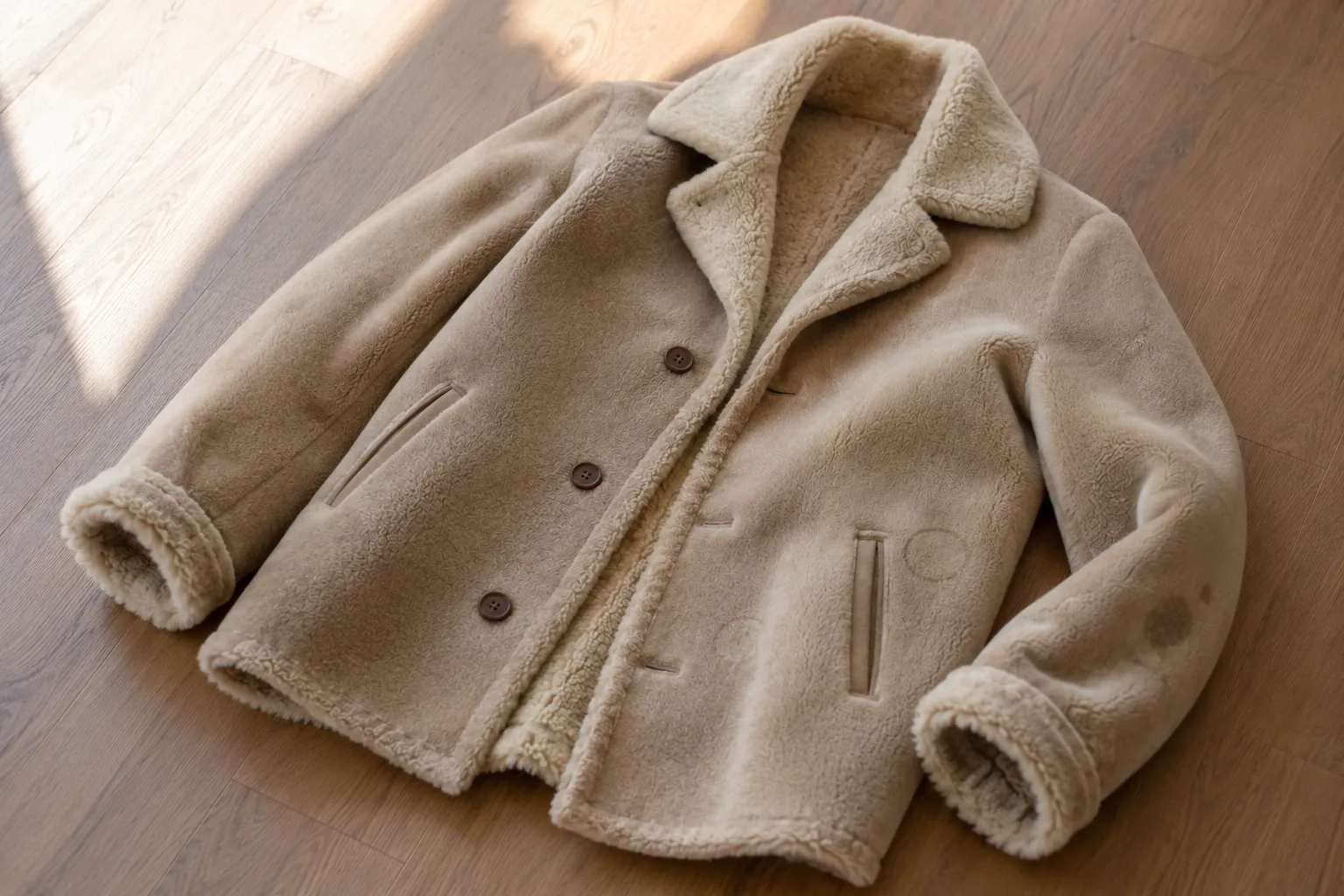
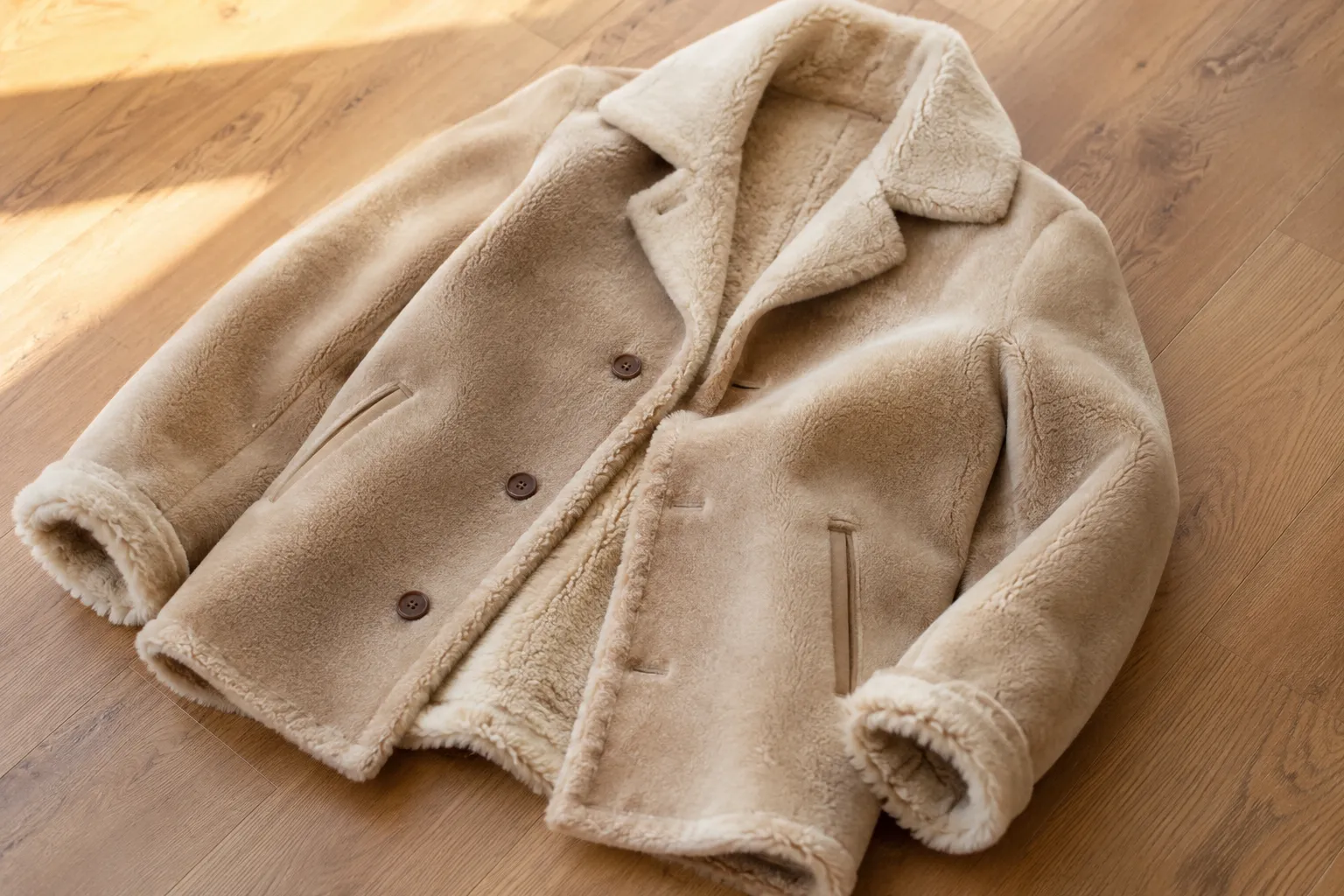 After
After
Request: Clean a short sheepskin coat, remove stains on the sleeves.
Done: We performed dry and wet cleaning, treated stains, restored the pile.
Cost: 9 000 ₸
Master: Aigul Serikova, dry cleaning master
Total: The sheepskin coat became clean, soft, without stains or odors.
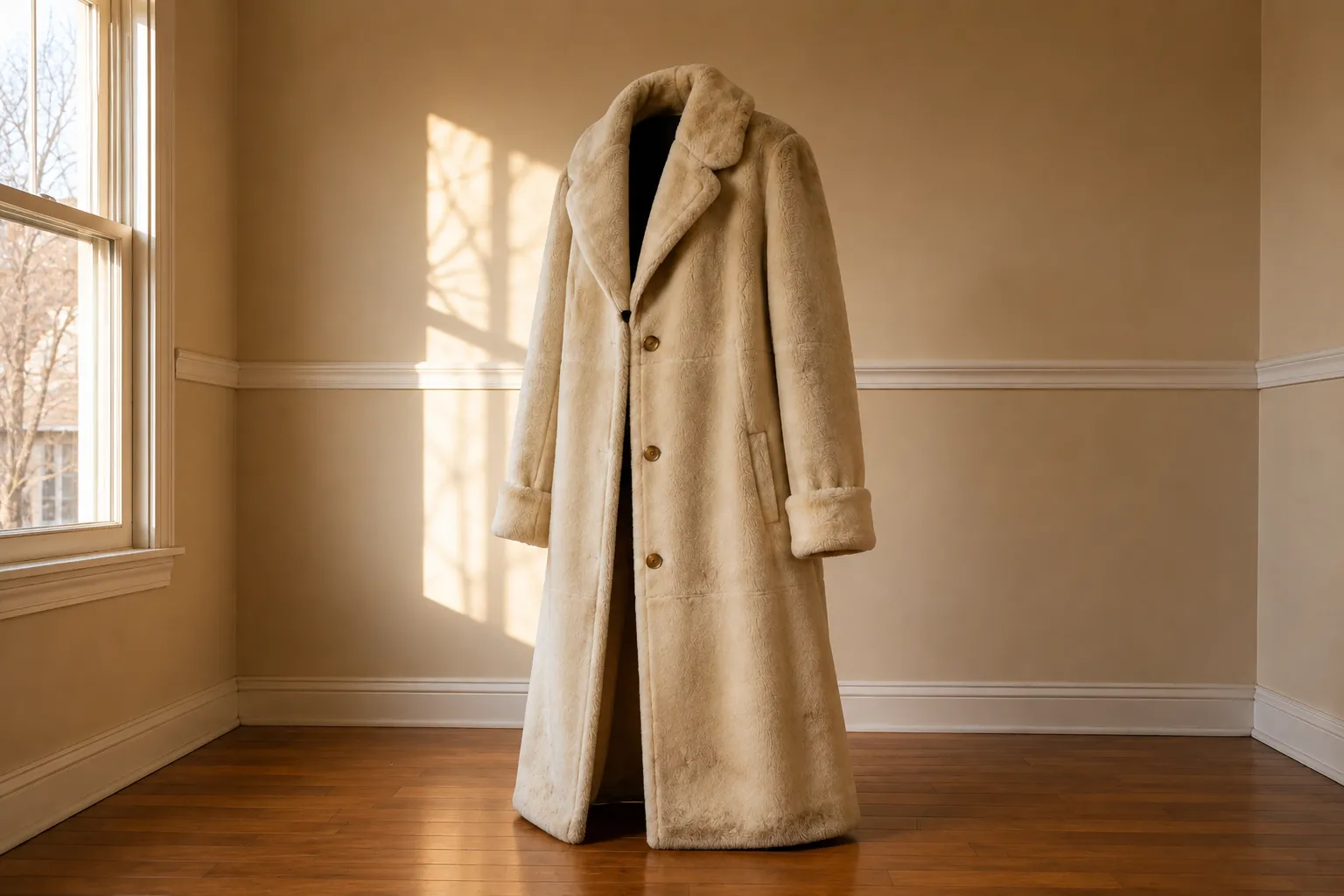
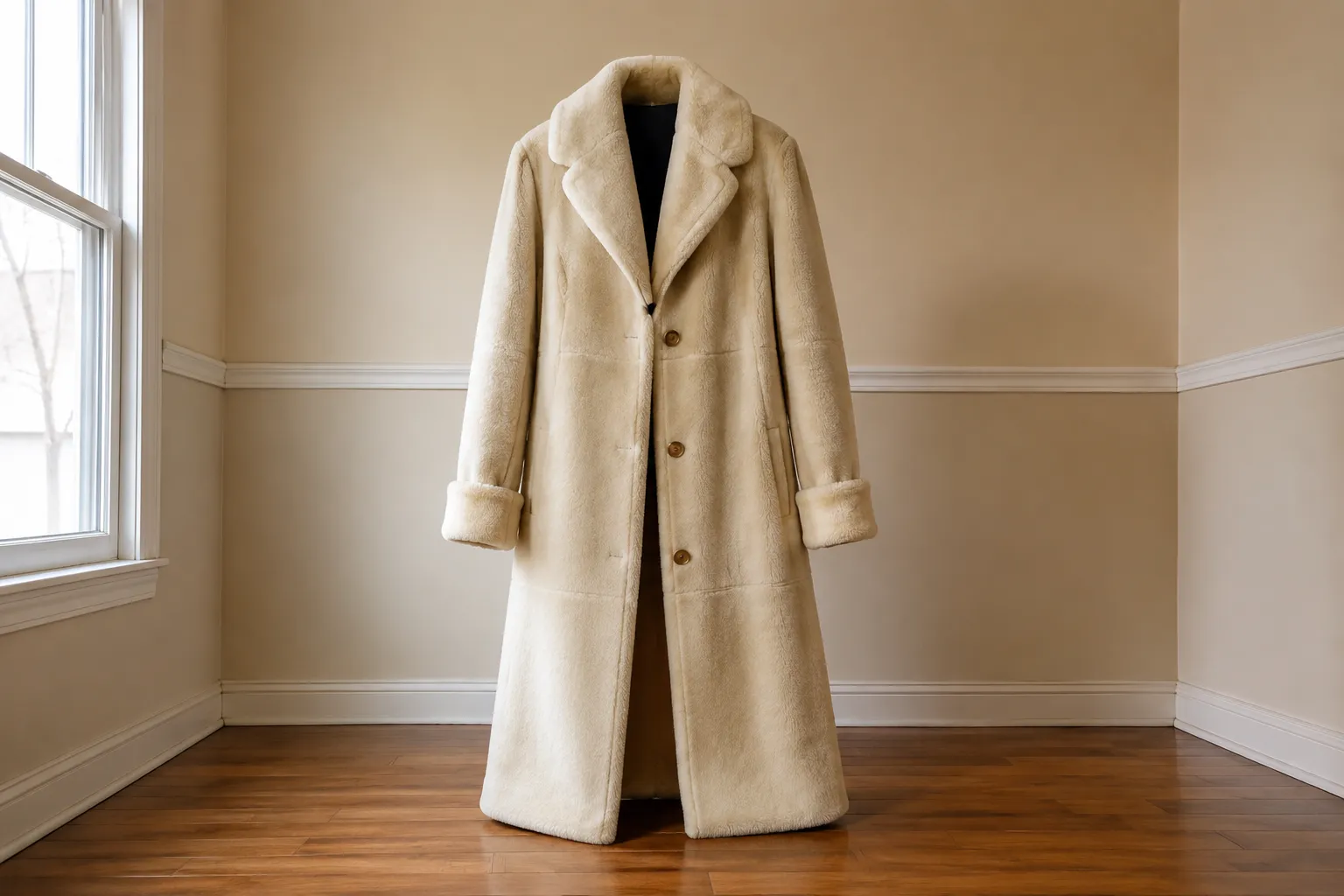 After
After
Request: Refresh a long sheepskin coat, remove dirt on the hem.
Done: We performed cleaning using special shampoos, treated the hem.
Cost: 9 000 ₸
Master: Timur Zhaksybekov, dry cleaning master
Total: The sheepskin coat looks like new, without signs of wear.
 After
After
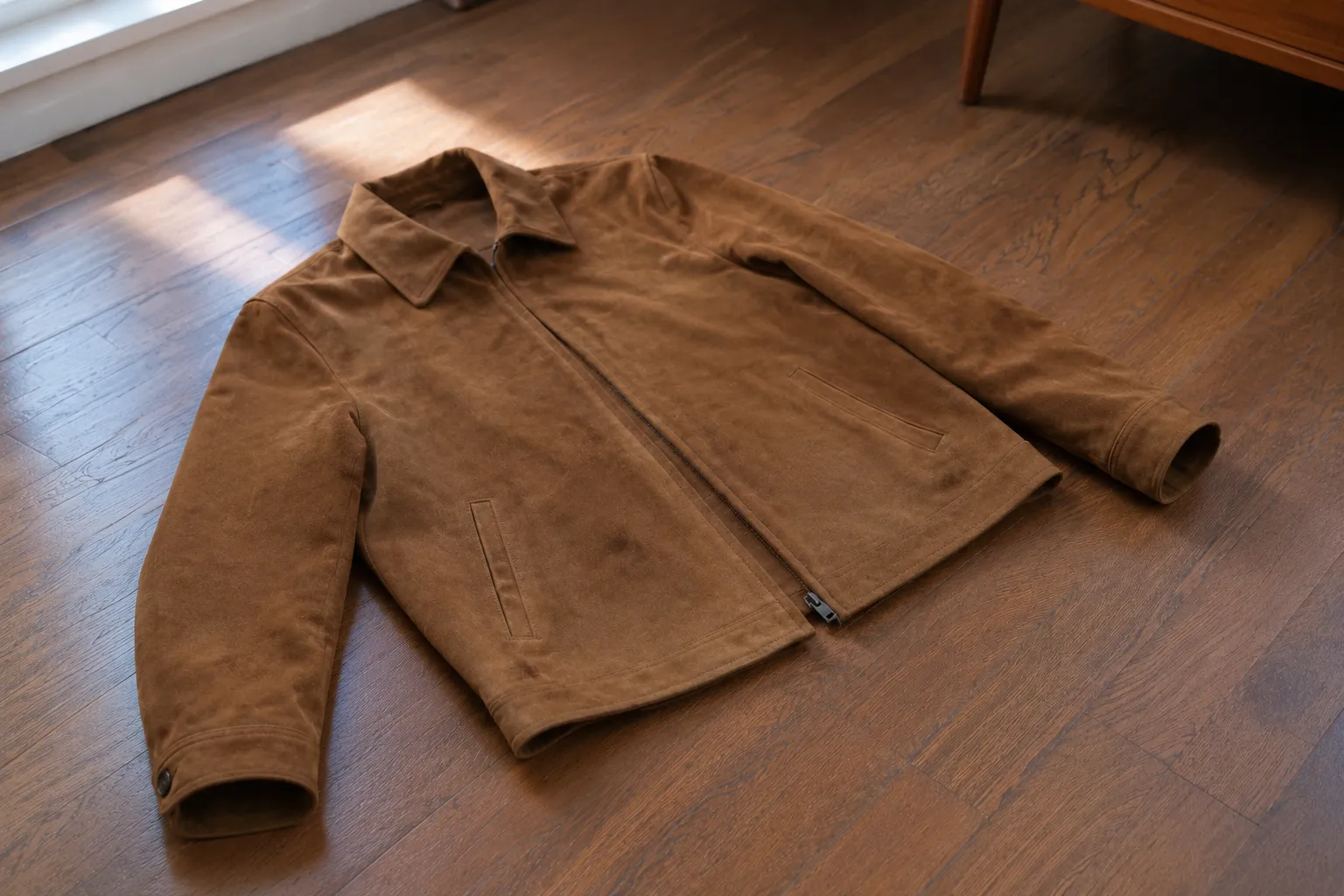
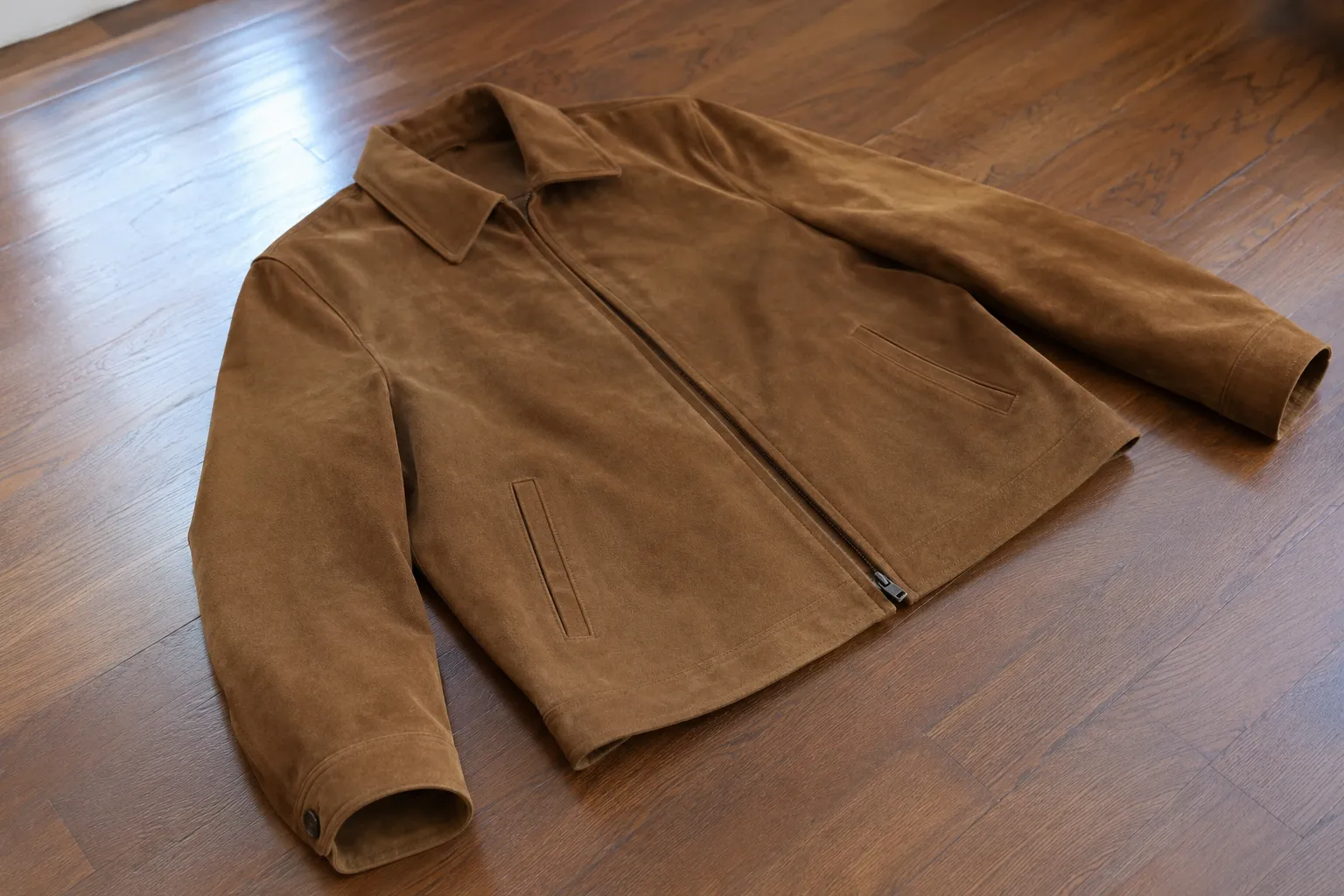
Request: Clean a suede jacket, remove scuffs and stains.
Done: We performed dry cleaning with brushes, removed stains with a special compound.
Cost: 5 000 ₸
Master: Aigul Serikova, dry cleaning master
Total: Suede restored, color even, pile raised.
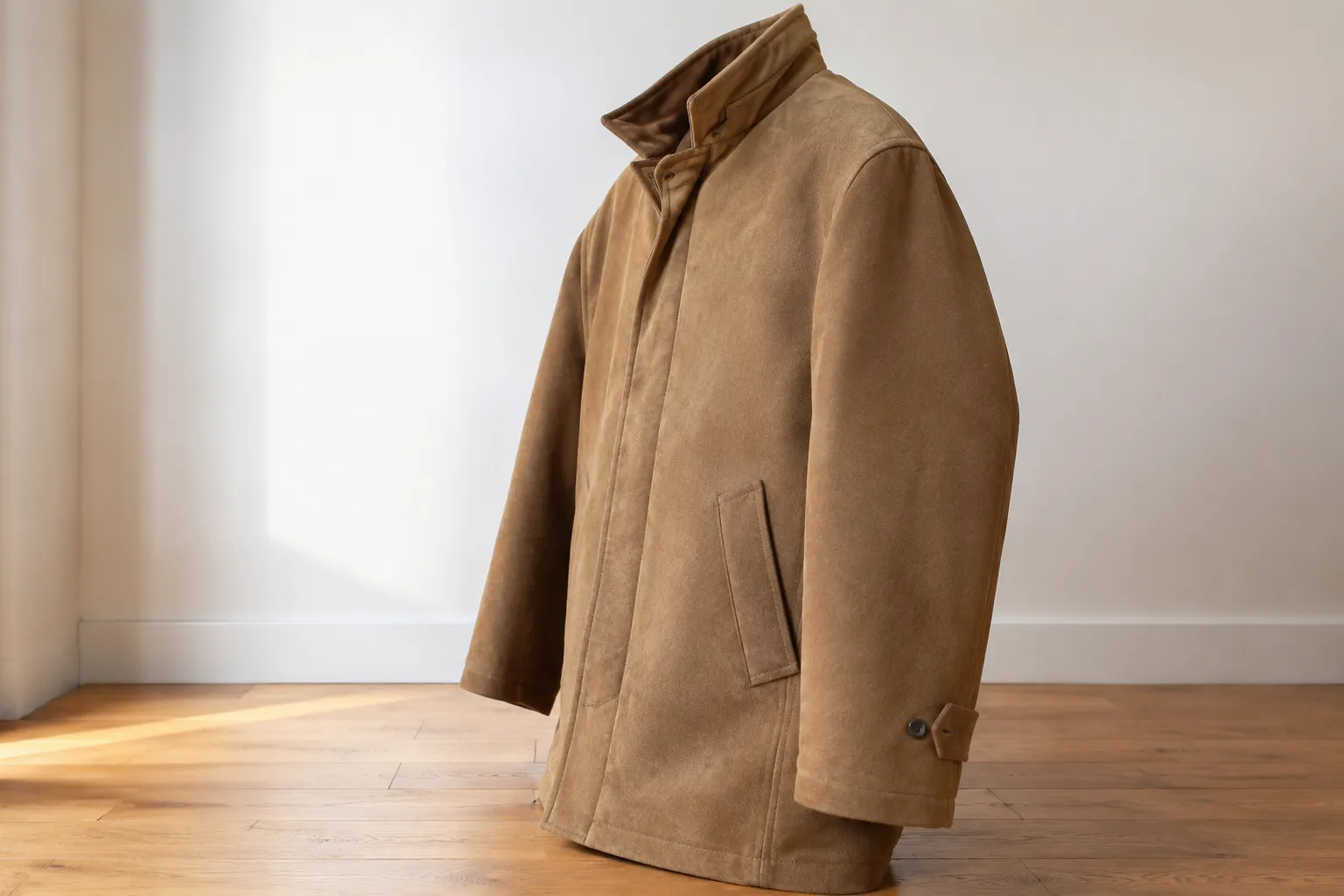 After
After
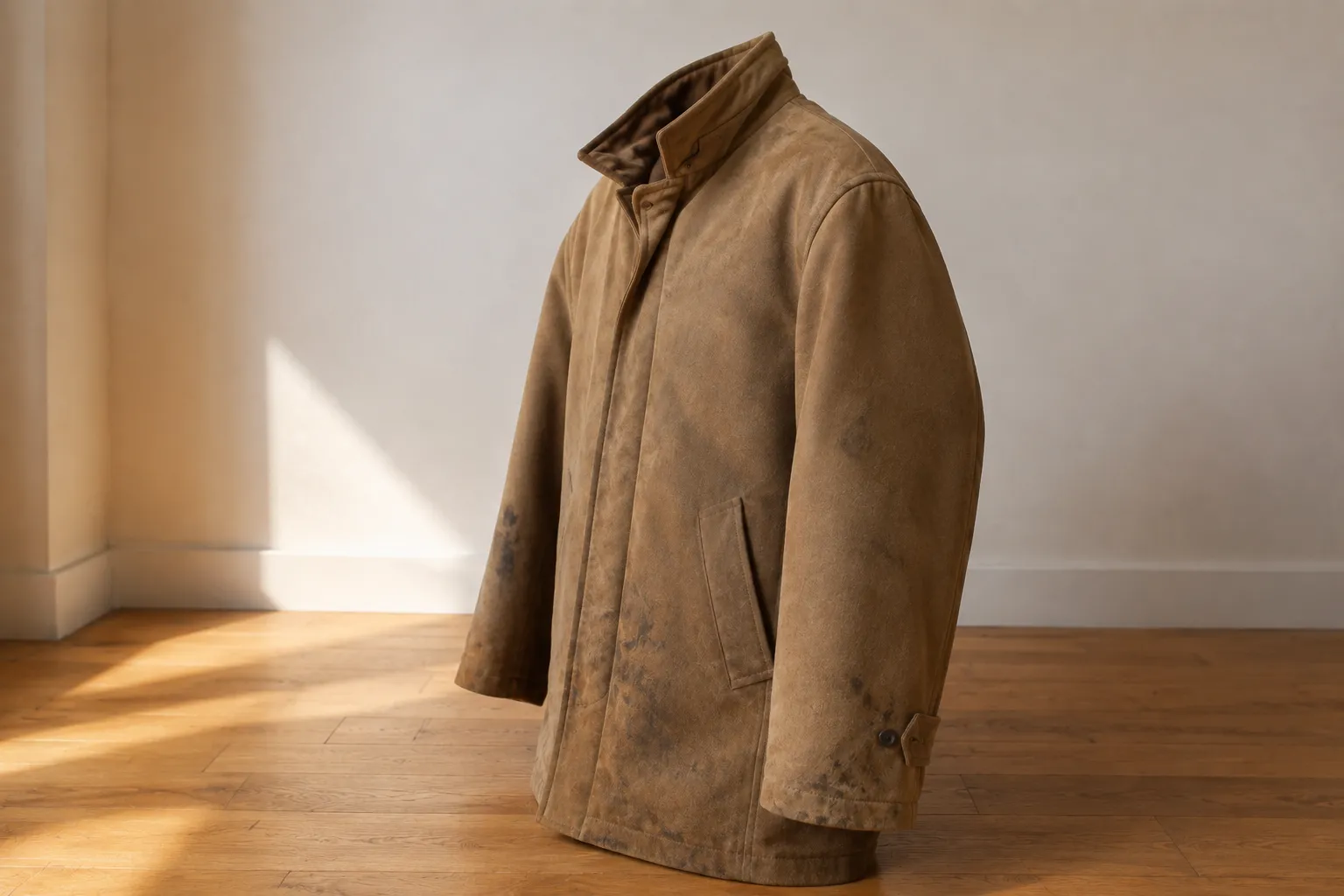
Request: Clean a nubuck coat from dirt, refresh the color.
Done: We applied foam cleaning, treated stains, restored water repellency.
Cost: 9 000 ₸
Master: Timur Zhaksybekov, dry cleaning master
Total: Nubuck is soft, clean, without streaks.
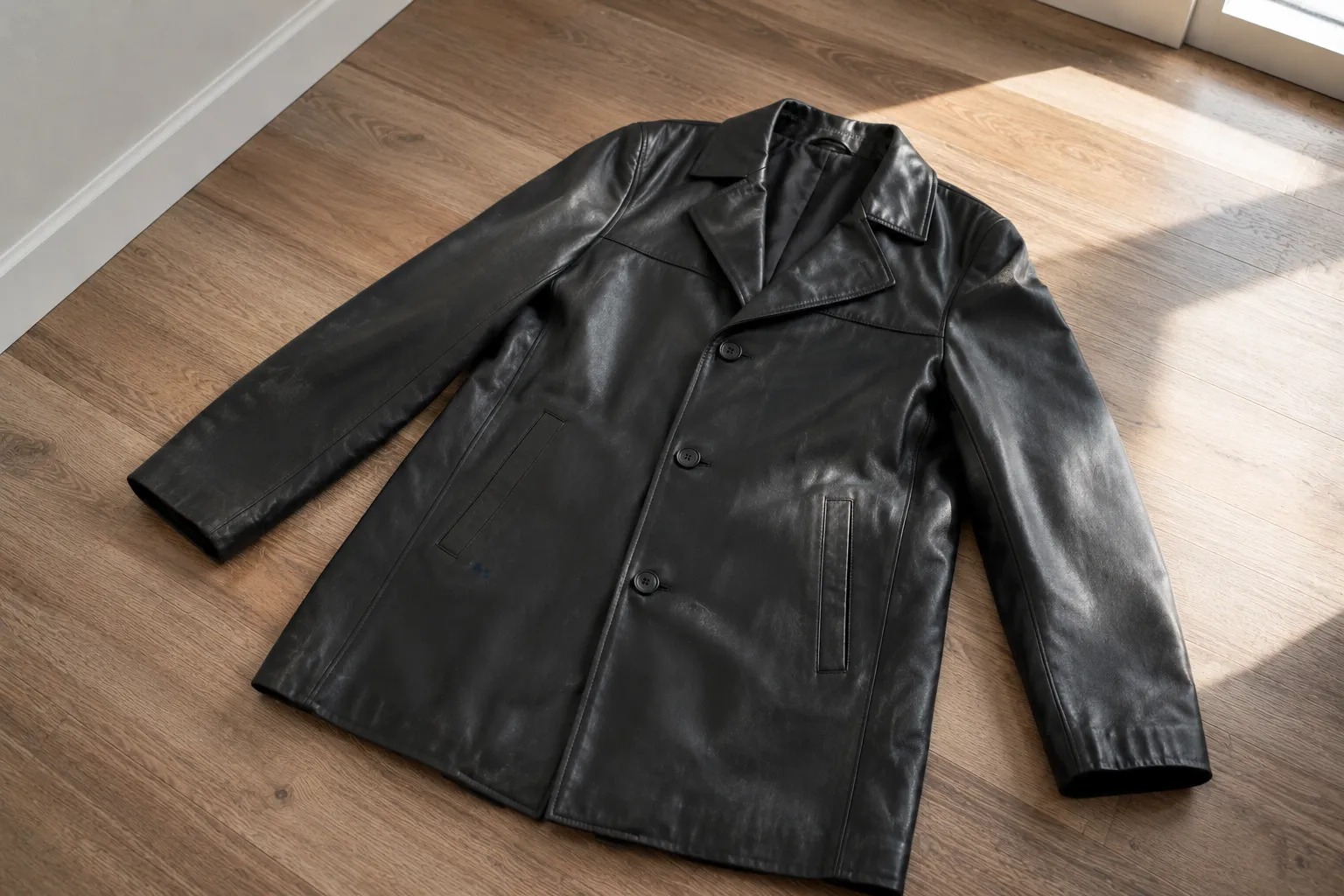
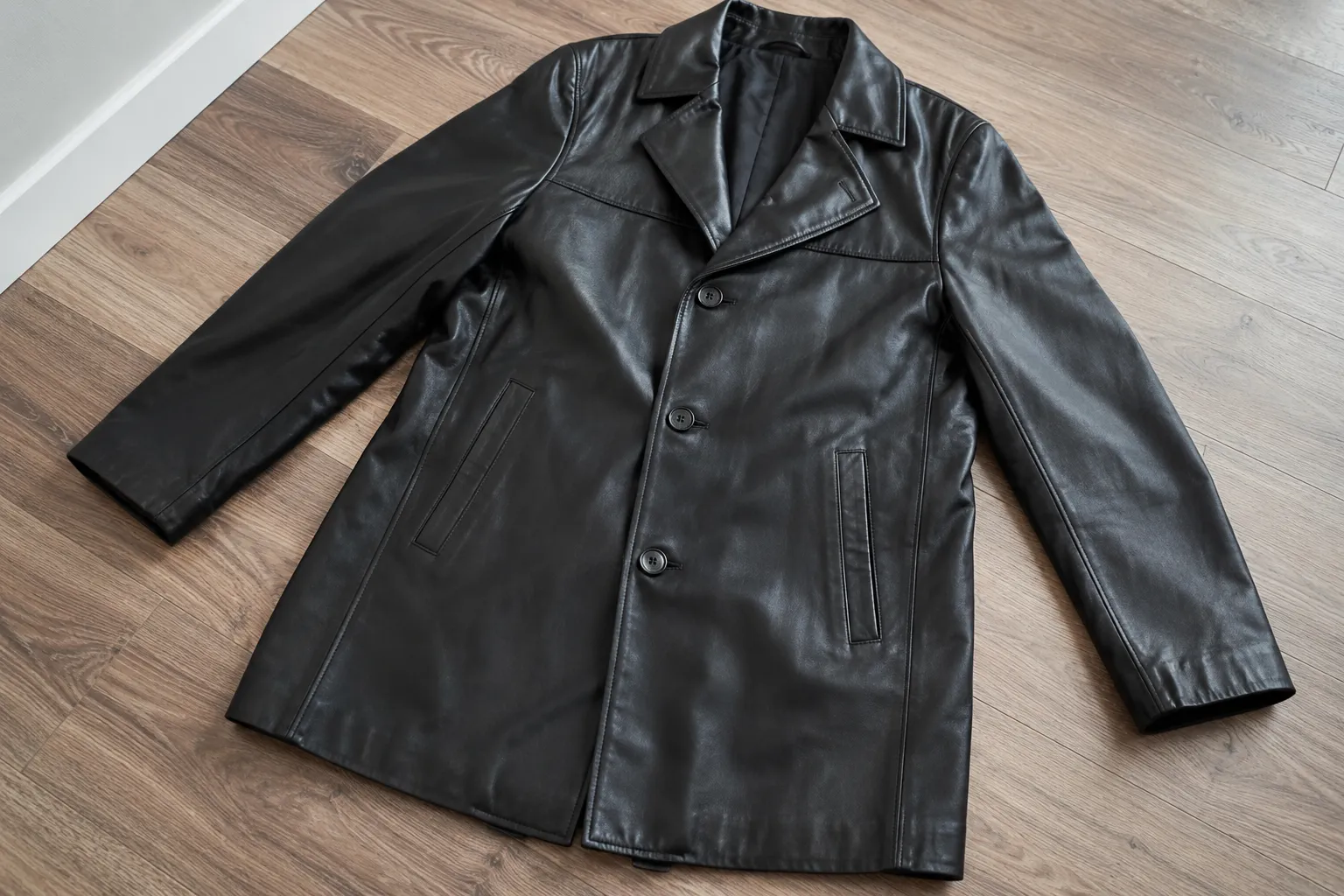 After
After
Request: Clean an eco-leather jacket, remove stains and scuffs.
Done: We performed wet cleaning with mild surfactants, applied conditioner.
Cost: 5 000 ₸
Master: Aigul Serikova, dry cleaning master
Total: Faux leather shines, without stains or cracks.
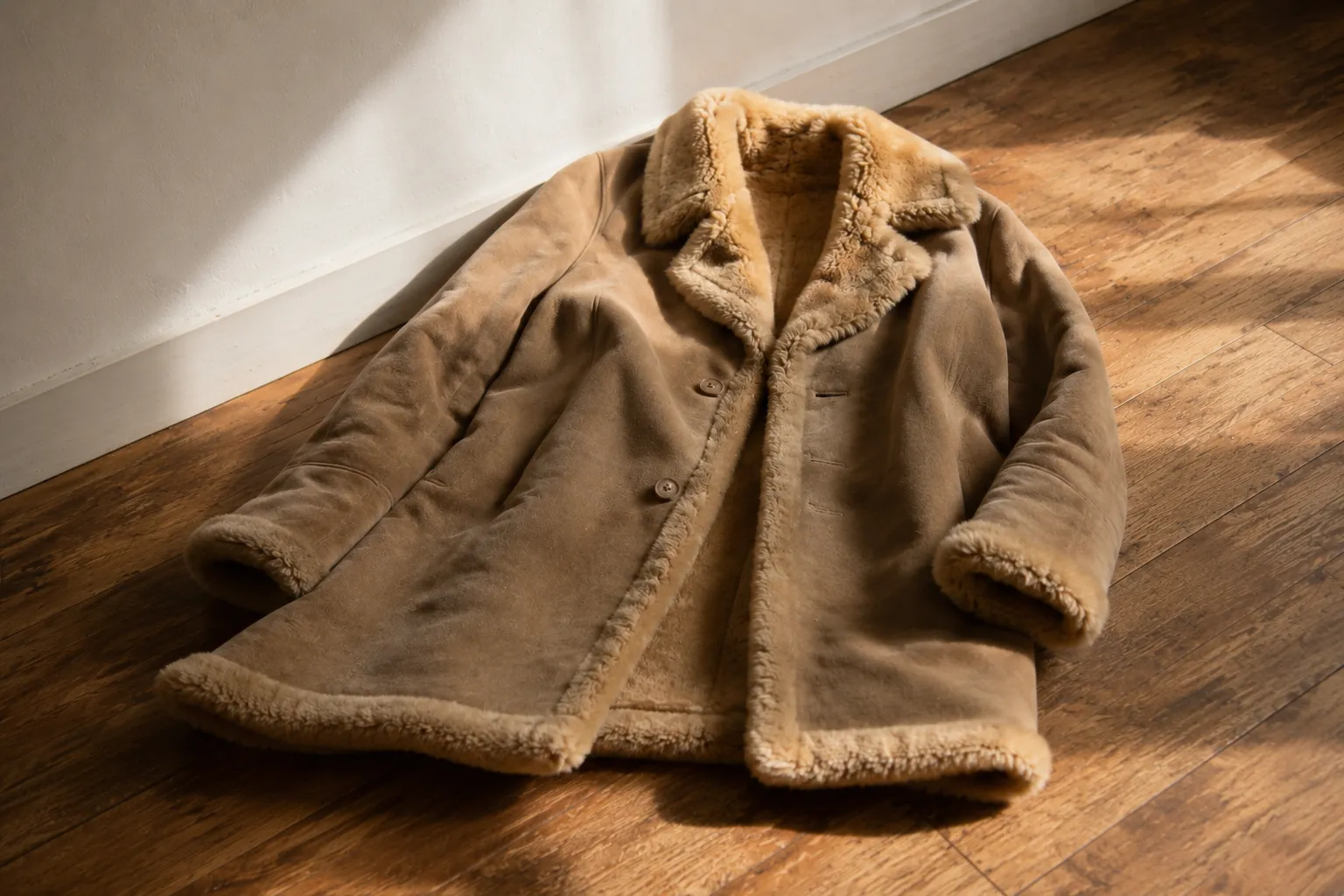
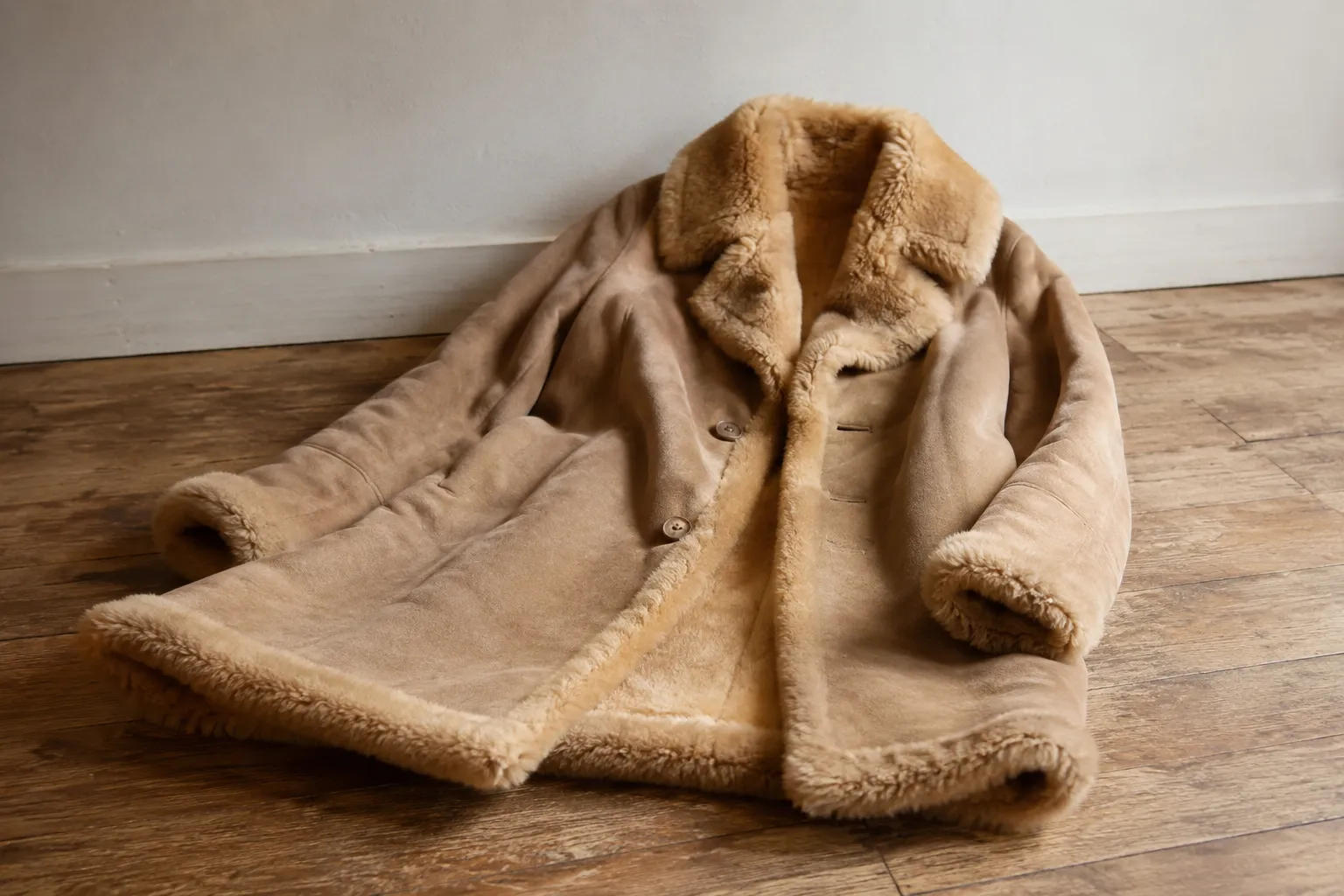 After
After
Request: Clean sheepskin coat with fur collar, remove yellowing.
Done: Cleaned leather and fur separately, restored collar whiteness.
Cost: 9 000 ₸
Master: Timur Zhaksybekov, dry cleaning master
Total: Sheepskin coat and collar clean, fur fluffy.
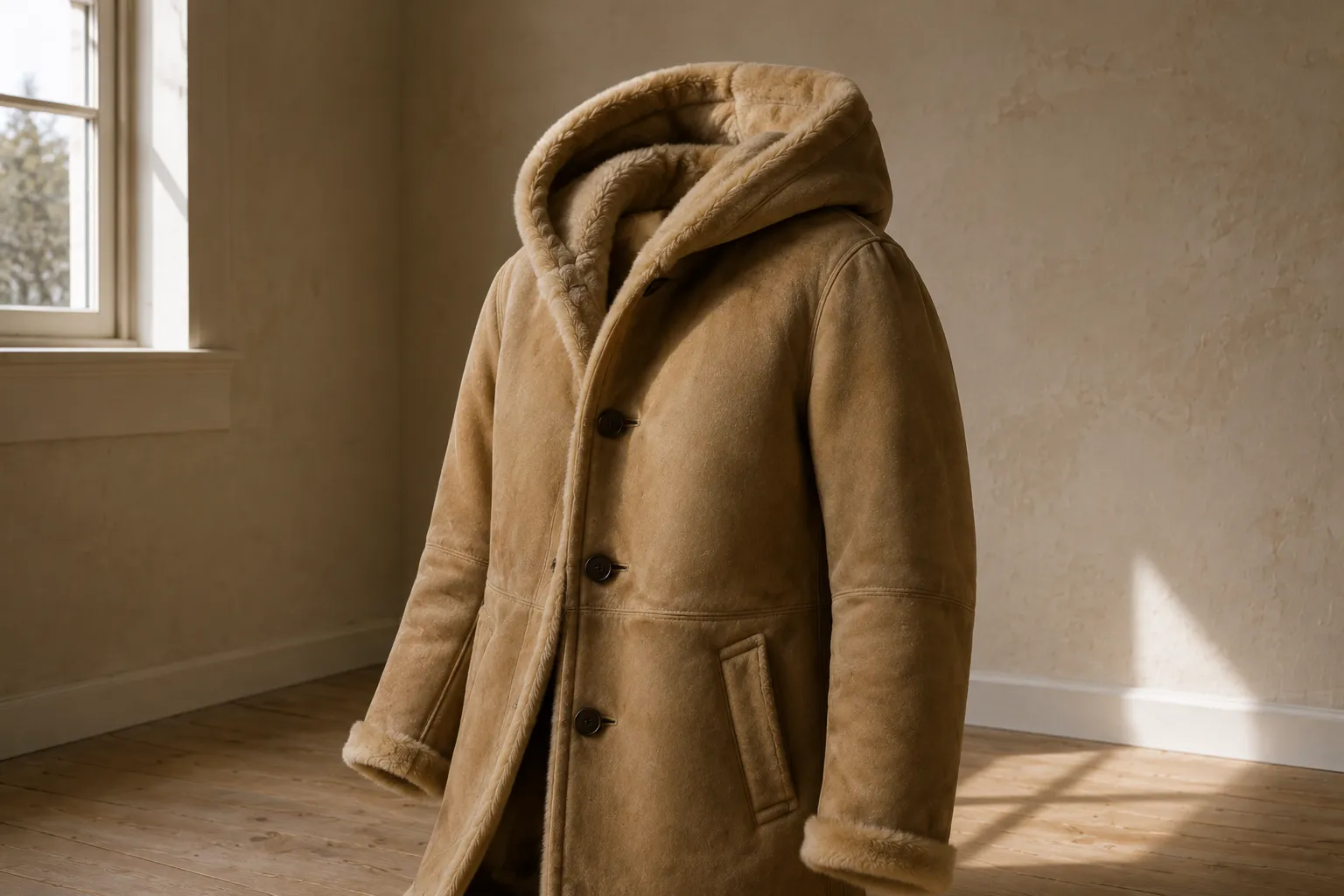
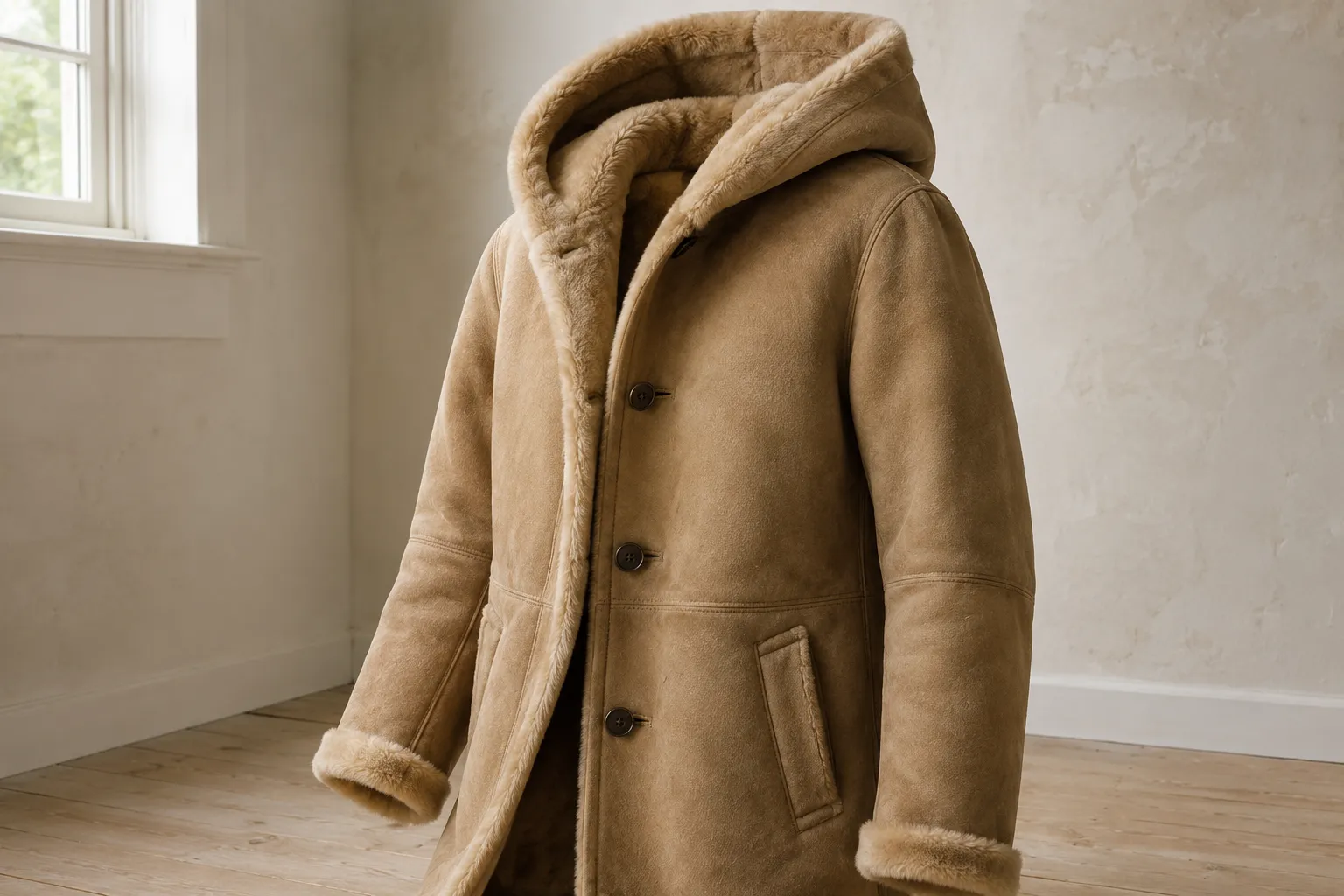 After
After
Request: Refresh sheepskin coat with hood, remove stains on hood.
Done: Performed full cleaning, special attention to hood.
Cost: 9 000 ₸
Master: Aigul Serikova, dry cleaning master
Total: Hood and sheepskin coat clean, no streaks.
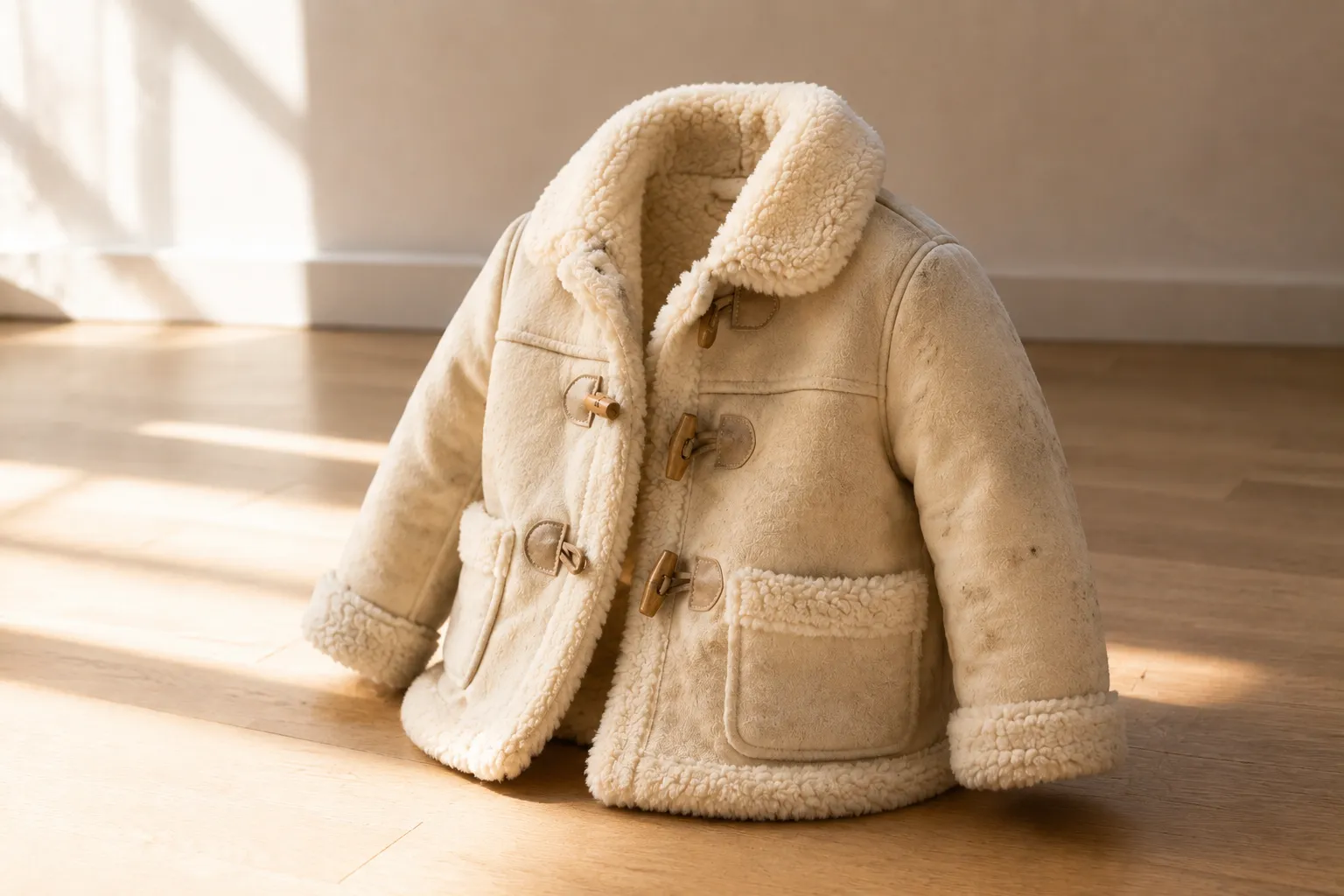
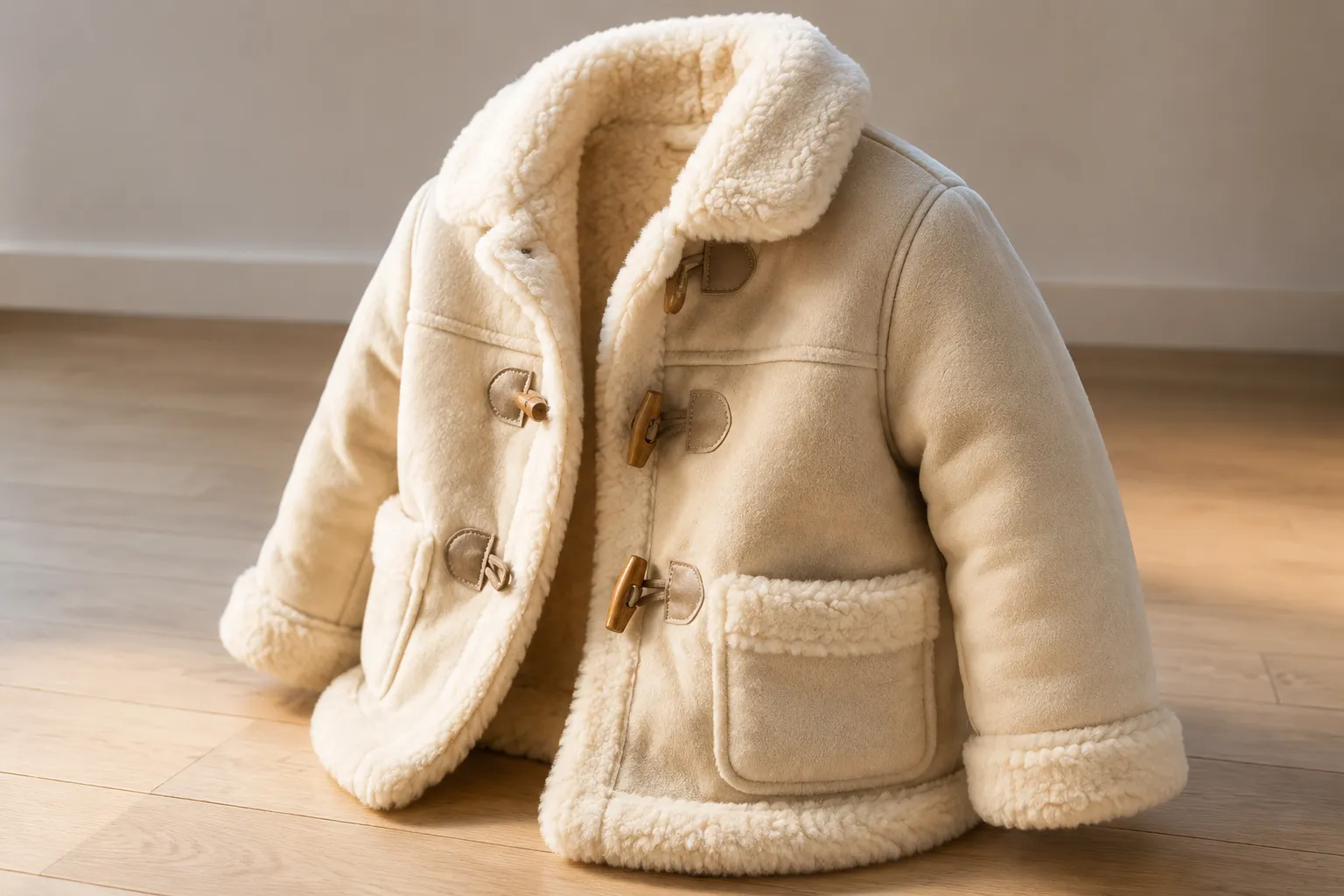 After
After
Request: Clean kids sheepskin coat from tough stains after walks.
Done: Removed mud and grass stains, performed delicate cleaning.
Cost: 9 000 ₸
Master: Timur Zhaksybekov, dry cleaning master
Total: Sheepskin coat like new, no traces of dirt.
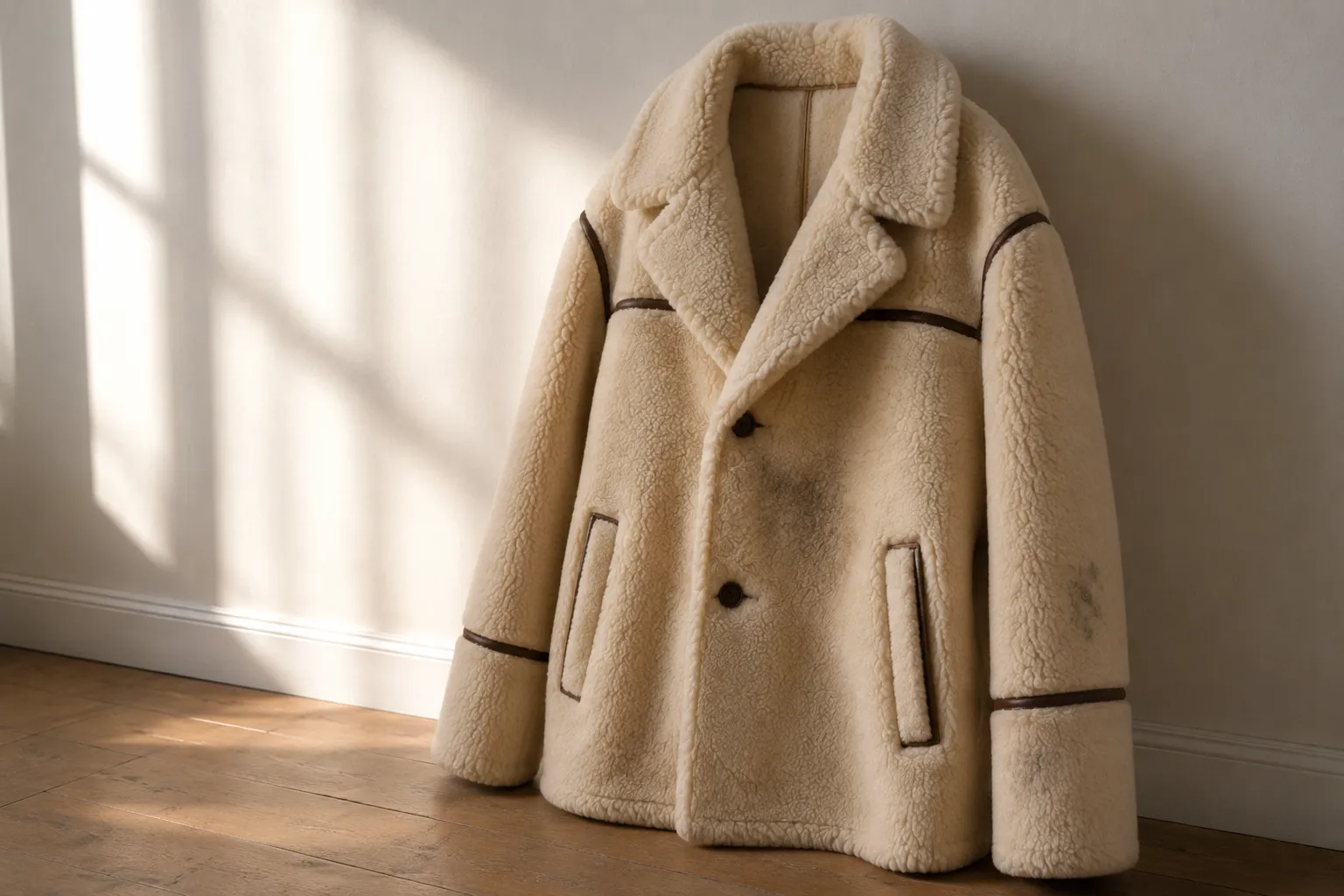
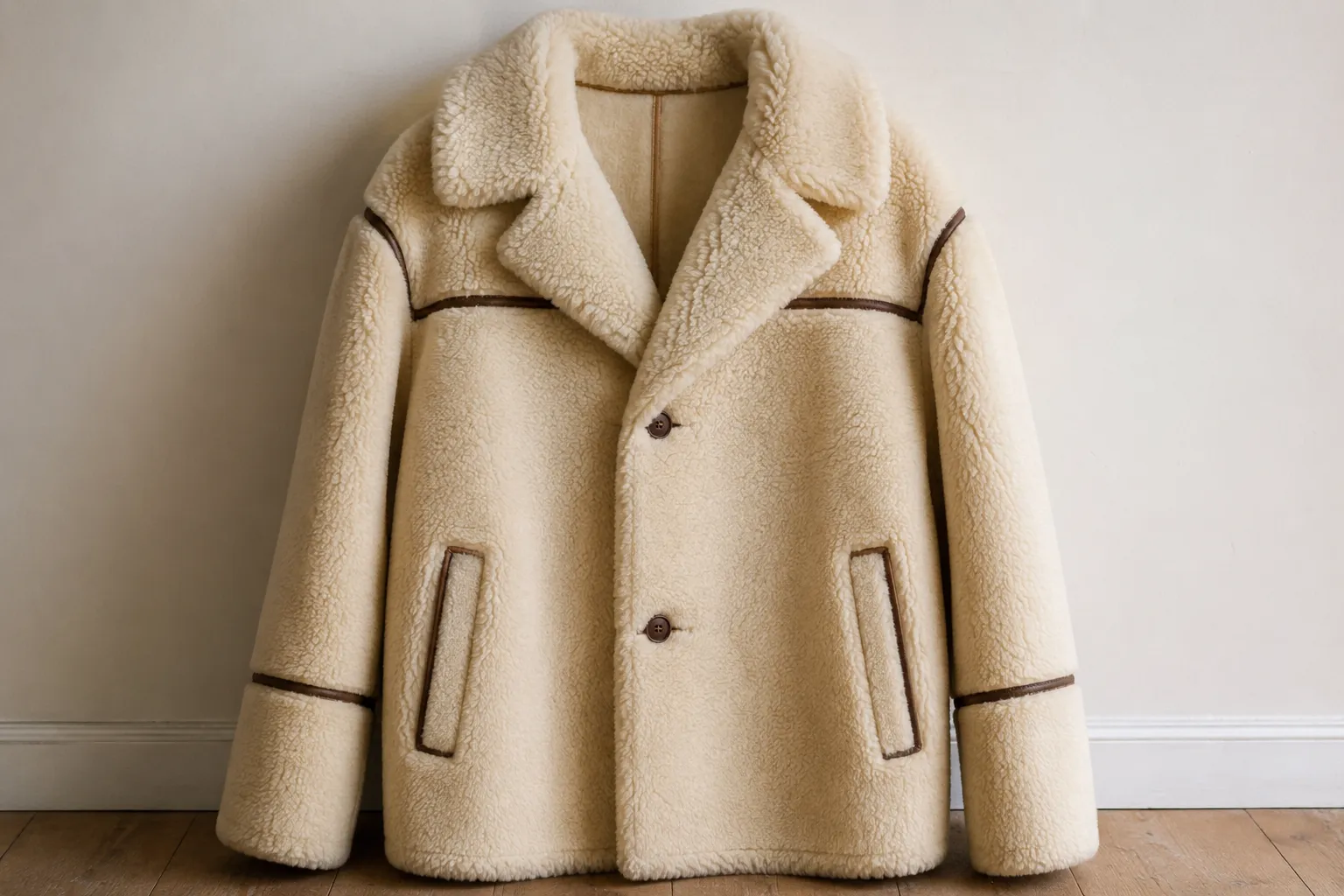 After
After
Request: Remove grease stains from sheepskin coat after food and cosmetics.
Done: Treated stains with solvent, performed local cleaning.
Cost: 9 000 ₸
Master: Aigul Serikova, dry cleaning master
Total: Grease stains completely removed, no traces.
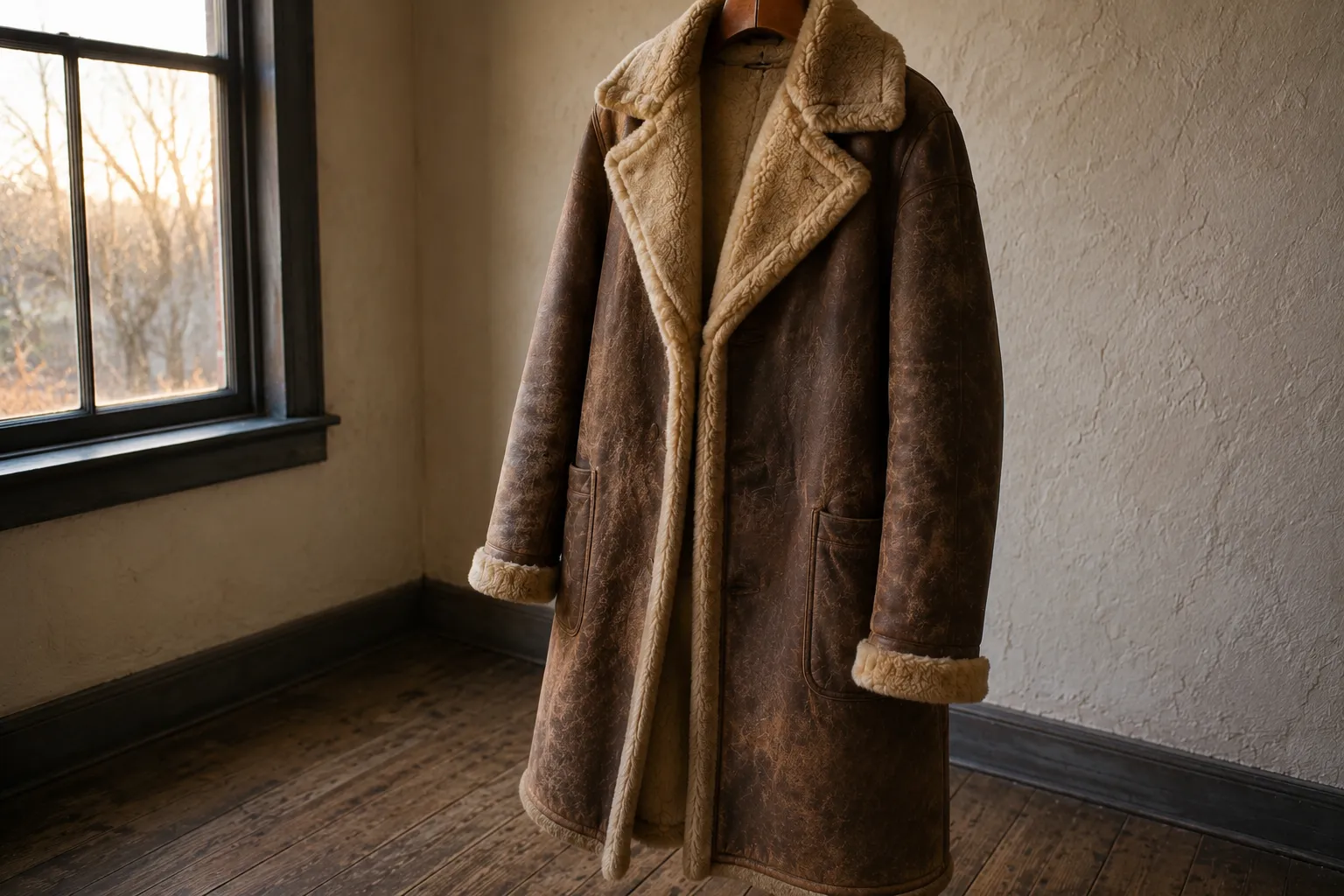
 After
After
Request: Restore rich color to faded sheepskin coat, remove scuffs.
Done: Applied color restorer, fixed with fixative.
Cost: 9 000 ₸
Master: Timur Zhaksybekov, dry cleaning master
Total: Color became deep and even, sheepskin coat renewed.
All cleaners are profi-clean staff with training, uniform and security check. Each order has a team leader who controls quality.
A sheepskin coat and a down jacket are items made from completely different materials, and the approach to cleaning them is radically different. The difference is based on how leather (sheepskin, nubuck, velour) and synthetic or natural fillers react to moisture, chemicals, and mechanical action.
Sheepskin coat: This is natural leather (usually sheepskin) with a suede (leather) side and fur inside. Leather does not tolerate heavy soaking — water washes out tanning agents, makes it stiff, and after drying, the sheepskin coat “shrinks” in size and loses its shape. Fur from water becomes matted and loses volume. Therefore, we use gentle wet treatment with minimal water consumption — applying foam or spray followed by vacuum removal of dirt, without immersion in a bath. Down jacket: The filler (down, feather, synthetic padding, holofiber) is not afraid of water, but of clumping and improper rinsing. Down can be washed entirely, but it requires special tennis balls in the dryer to break up clumps. The main risk for a down jacket is washing away the water-repellent coating from the outer fabric, which we compensate for by subsequently applying a DWR treatment. Due to this difference in technology, dry cleaning a down jacket is cheaper and faster to process than dry cleaning a sheepskin coat — we spend an average of 2–3 days on a down jacket order versus 5–7 days on a sheepskin coat.
Sheepskin coat: The main stains are greasy collars and cuffs from contact with human skin, and ingrained road dirt. We remove grease from sheepskin coats using special hydrocarbon-based solvents (perchloroethylene is not suitable — it dries out the leather). For oil stains, we use enzyme stain removers followed by pH neutralization to avoid damaging the suede. It is strictly forbidden to rub a sheepskin coat with a brush — the nap on the leather “rolls up” and leaves unsightly scuffs. Down jacket: Stains on a down jacket are most often oily (food, motor oil), grass, and sweat stains. For these, we use oxygen bleaches and stain removers based on surfactants, which are safe for the outer fabric and filler. The main thing is to thoroughly rinse the chemicals out of the down, otherwise, reagent residues can cause allergies when worn. In practice, in October we had a case: a client brought in a sheepskin coat with an ink stain, and a down jacket with a cherry juice stain. For the sheepskin coat, we used an alcohol-based solution followed by color fixing; for the down jacket, a regular stain remover for colored fabrics; both stains were removed, but the approach was completely different.
Sheepskin coat: The most common mistake is trying to wash a sheepskin coat in a machine. After washing, the leather becomes “oaky,” the suede cracks, and the item itself shrinks by 2–3 sizes. Restoring such a sheepskin coat is almost impossible — only re-cutting it into a vest. At profi-clean, we accept such items only with a warning: there is no guarantee of restoration after machine washing. Down jacket: The main risk with home washing is clumped down that doesn’t dry inside and begins to rot with a musty smell. If a down jacket is dried on a radiator, the filler “sinters” and loses its thermal insulation properties. Proper drying of a down jacket is in a horizontal position or in a dryer with tennis balls at 40°C, which is rarely done at home. Therefore, before ordering dry cleaning for a sheepskin coat or down jacket, assess: you will guaranteed ruin a sheepskin coat at home; you will likely ruin a down jacket if you don’t have a professional drying machine.
Sheepskin coat: In Almaty, due to dust storms and sand that gets into the fur and pores of the leather, sheepskin coats require more frequent cleaning — once a season instead of once every 1–2 years, as in Europe. Sand acts as an abrasive, wearing away the top layer of the leather. Also, in winter, a sand-salt mixture is used on the streets (rather than chemical reagents), and its particles become embedded in the fur — we knock these out mechanically before wet treatment. Down jacket: In Almaty, down jackets suffer from street dust, which settles on the outer fabric and penetrates inside through the seams. Due to sharp humidity fluctuations (dry indoor air and humid outdoor air), the down loses its loft faster. When cleaning down jackets in Almaty, we always add a down conditioner to restore their volume after winter. In my opinion, this is the key difference of the Almaty service: we know the local contaminants and select chemicals for them, rather than following a universal protocol.
After professional treatment, a sheepskin coat requires a special regime to restore the softness of the leather and the nap. In our practice, profi-clean cleaners notice: improper drying or storage negates the result of even the highest quality cleaning. Let’s break down typical mistakes and give specific care rules.
Wet leather after dry cleaning of a sheepskin coat loses elasticity with accelerated heating. We dry sheepskin coats only horizontally on terry sheets at room temperature 18–22 °C, away from heaters and direct sunlight. Humidity in the room should be 50–60%, otherwise the leather dries out and cracks. On a radiator or under a hairdryer, the leather becomes hard as plywood in 2–3 hours — it will be impossible to restore it. The average natural drying time is 24–36 hours, depending on the thickness of the sheepskin coat. Our cleaners turn the item over every 4–6 hours and change the wet sheet for a dry one to avoid creases. If the sheepskin coat dries for more than 48 hours, it means the room is too damp — move it to a ventilated room.
Even after gentle dry cleaning, a sheepskin coat may become slightly stiffer due to the evaporation of natural oils. At profi-clean, we use a professional lanolin-based leather conditioner — it restores elasticity to the leather in one application. We apply it to an almost dry sheepskin coat (10–15% moisture) with a soft sponge, distributing it evenly over the entire surface, and leave it for 20–30 minutes to absorb. After that, the item is steamed with a vertical steamer from a distance of 15–20 cm: the steam softens hardened areas and smooths the nap. Never use an iron — direct contact with the soleplate burns the nap and leaves irreversible shiny spots. On the collar and cuffs, where the leather is thinner, apply the conditioner in a layer half as thick, otherwise these areas will become sticky. After steaming, let the sheepskin coat dry for another 6–8 hours in a spread-out form on hangers with wide shoulder pads — this sets the shape.
After dry cleaning, the nap of a sheepskin coat often mats into clumps, especially on the sleeves and back. 2–3 hours after the start of drying, when the sheepskin coat is 30–40% damp, go over the nap with a rubber brush for suede or velour — it lifts flattened fibers without damaging them. Movements should be only from top to bottom, in the direction of the nap growth, otherwise you will pull out fibers and create bald spots. On long-nap sheepskin coats (shearling, muton), use a wide-tooth comb made of natural bristle — a metal comb scratches the leather. On areas with creases (elbows, pockets), before combing, lightly moisten the nap from a spray bottle with water and a couple of drops of conditioner — tangles will come undone effortlessly. In case of severe matting (which can happen after improper hanging drying), repeat the treatment the next day after complete drying. In our practice, on karakul sheepskin coats, the nap is combed only with a dry brush — water destroys the curl structure, and the pattern is lost forever.
A dry restored sheepskin coat is hung on wide hangers (at least 40-45 cm) — narrow wooden ones leave creases on the shoulders that do not smooth out over time. The cover should only be breathable cotton or non-woven fabric; a plastic bag creates a greenhouse effect, and within a week mold appears on the suede. In the wardrobe, the sheepskin coat should hang freely, without adjacent clothes touching it — otherwise the pile gets crushed, and marks from down jackets or coats remain on the sheepskin coat. Once a month during the wearing season, the sheepskin coat needs to be aired on the balcony for 2-3 hours at a temperature no higher than 15 °C and humidity of 50-60%. If the radiators in an Almaty apartment are running at full power in winter, place a humidifier next to the hanger — dry air draws moisture from the suede, and the sheepskin coat becomes brittle within two months. For summer storage, the sheepskin coat must be sent to the dry cleaner again before packing — ingrained dust and sweat eat away at the leather from the inside over six months, and in autumn you will receive an item with crumbling suede.
Some stains are removed in one cycle, while others become permanently embedded in the structure of suede or nubuck. In our practice, the most difficult are those that have penetrated the leather along with grease or dye and have had time to set under the influence of heat or time.
Oil does not penetrate the sheepskin coat superficially — it spreads along the suede fibers, bonds with tanning agents, and creates a dark halo. On a fresh stain, we use an absorbing powder based on zeolite (Kiehl), which draws out the grease in 20-30 minutes. But if the stain is old or someone tried to remove it with home remedies — soda, vinegar, dish soap — the grease becomes “sealed” in the structure, and regular water cleaning no longer works. In such cases, we have to apply a degreasing gel for leather (Sodasan) for 8-12 hours, and then treat it with steam at 130°C to open the pores. Our cleaners in Almaty frequently encounter oil stains from kuyrdak, shubat, and motor oil — these are the three most common requests. Before ordering dry cleaning for a sheepskin coat, inform the master about the origin of the stain: oil stains from food and technical fluids require different solvent compositions.
Alcohol-based dyes from ink and markers instantly set in the sheepskin coat because the alcohol degreases the leather and carries the pigment deep into the backing. Rubbing such a stain with a wet wipe is the most common mistake: the pigment smears, and the affected area increases 2-3 times. At profi-clean, we first isolate the stain with an absorbing powder, then spot-apply a water-based, alcohol-free solvent and remove the residue with a vacuum extractor. Ink from gel pens (blue, purple) is removed in 1-2 cycles, but permanent markers and stamps — only with a risk of lightening the pile: after pigment removal, a light spot remains that requires tinting. In the Almaty market, we most often receive sheepskin coats with ink from Kaspi terminals — the paste from receipts is particularly stubborn, requiring removal in 3 stages with intermediate drying.
Tannins from wine and berries (cherry, pomegranate, currant) act as a natural dye: they bond with the leather protein and create a violet-pink tint that cannot be washed out with water. If the stain is not treated within the first 30 minutes, the tannins polymerize and become water-resistant. In our orders, there have been cases where pomegranate juice from freshly squeezed juice at the Green Bazaar spilled on a sheepskin coat left a stain that even a professional leather stain remover couldn’t handle — we had to repaint the area. For fresh marks, we use an acid neutralizer (pH 3.5), which blocks the tannins before they set. For old stains, we use an enzyme composition with lipase (breaks down the pigment matrix), a 6-hour soak, and repeated treatment. Red wine and berry juices account for 15-20% of our complex orders during the summer party and wedding season, so when ordering dry cleaning for a sheepskin coat, it’s better not to delay the visit for more than 2-3 days.
Blood protein coagulates upon contact with hot water (above 40°C) — the stain turns grey-brown and becomes permanent. In Almaty, we treat sheepskin coats after car accidents, hunting, and household injuries — and in every case, the first rule is: only cold water and an enzymatic stain remover (protease). Hot water or steam at the initial stage guarantees the stain will remain forever. Our cleaners apply the enzyme gel locally, let it sit for 40-60 minutes, and remove it with a cold extractor. After blood removal on a sheepskin coat, a “shadow” often remains — a trace of dried protein on the nap; it only disappears after a full cleaning cycle with leather conditioning. If blood got on the sheepskin coat more than a week ago, we warn: complete removal may not be possible, but lightening it by 80-90% is achievable.
Sweat on a sheepskin coat is not just water and salt: it contains lipids, amino acids, and urea, which, upon contact with tanning agents, produce a yellow-brown pigment. This is especially noticeable on light sheepskin coats — beige, grey, cream. Antiperspirant deodorants contain aluminum, which leaves whitish crystalline streaks on suede. In Almaty, the problem is worsened by temperature fluctuations: -10°C outside, +20°C in transport — the sheepskin coat sweats, the sweat absorbs into the lining and transfers to the leather. We remove sweat stains in two stages: first, an alkaline pre-spray (pH 8.5) that breaks down lipids, then an acidic neutralizer to remove aluminum salts. Yellow stains on the collar and cuffs are the most common reason for seeking dry cleaning of sheepskin coats in Almaty: they accumulate over 2-3 seasons of wear and do not come out with home methods. After professional treatment, the lining and collar are treated with an antibacterial spray to slow down their reappearance.
Suede is a capricious material: it fears water, wears down from friction, and loses color with improper drying. The specifics of the Almaty climate (sharp humidity changes, reagents on sidewalks) add risks. Let’s break down the key nuances that determine whether the item remains wearable after cleaning.
Suede is leather with a nap made from natural split leather, nubuck has a finer, denser nap, and velour is generally faux leather with a fabric base. They look similar externally but react differently to cleaning.
In my opinion, the main mistake is trying to clean suede like nubuck with a damp sponge. After such treatment, streaks remain on the sheepskin coat, which can only be removed by repeated dry cleaning with the risk of damaging the nap. Before starting work, we always check the material type on the inner seam — it takes a minute but saves the item from ruin.
Drum washing is guaranteed death for a suede sheepskin coat: the leather shrinks by 2-3 sizes, the nap mats, the lining peels off, and the fatty impregnations are completely washed out.
In our practice, there was a case: a client washed a suede sheepskin coat in a home machine on a delicate cycle — the item shrank by two sizes, the collar lost its shape, and the leather became stiff as cardboard. It had to be sent for restretching — which cost almost half the price of a new sheepskin coat. Therefore, we only accept such items for dry cleaning using water-based foam compounds without immersion — this is the only safe method.
In winter, the sidewalks of Almaty are sprinkled with technical salt and sand — the mixture gets embedded into the soles and the bottom of sheepskin coats, leaving white stains that a dry brush cannot remove. Spring slush is compounded by high humidity (up to 70-80% in March-April) — suede absorbs moisture from the air, loses its softness, and becomes covered with salt stains.
Due to the de-icing agents on Almaty’s streets, the interval between cleanings for suede sheepskin coats here is shorter than in dry regions: while in Astana an item can be worn for 2-3 months without visible soiling, in Almaty salt traces appear on the hem and sleeves within a month. We recommend bringing your sheepskin coat in for preventive cleaning immediately after the winter season ends — this removes the de-icing agents before they penetrate deep into the leather.
The most common one is attempting to remove a greasy stain with household products: alcohol, acetone, or nail polish remover. Suede is natural leather with an open, porous structure; solvents draw out the fatty impregnations, leaving a hard, light-colored “bald spot” in place of the stain that cannot be restored.
Moreover, even room-temperature water is dangerous: if you wet a small area and leave it to dry naturally, a hard, “plate-like” stain will remain in that spot. At profi-clean, we use only foam-based solutions with minimal water content — the foam is applied to the nap and removed along with the dirt without penetrating deep into the leather. This is the only way to preserve the softness and elasticity of suede for years.
The frequency of professional sheepskin coat cleaning depends not on the calendar, but on the intensity of wear, the weather in Almaty, and the material. A general guideline is once per season for active wear, but there are nuances that will require adjusting this schedule.
One visit to the dry cleaner at the end of winter is the standard for a sheepskin coat worn 3–4 times a week. This is sufficient to remove accumulated dust, de-icing agents from sidewalks, and sweat marks from the collar and cuffs. In our experience, most Almaty residents bring in their sheepskin coats precisely in March-April, after the cold season ends. If the winter was wet — with frequent rain and wet snow, as in the foothills of Almaty — it is better to have it cleaned immediately after the last wear, without waiting until spring. Salt and dirt on wet fur or leather become embedded within 2–3 days and are then more difficult to remove without a stain remover.
Beyond the seasonal norm, there are triggers that require immediate cleaning. The first is visible soiling on the sleeves and collar: a greasy sheen from contact with the skin cannot be removed with a wet wipe and will darken and become sticky over time. The second is odor: a natural sheepskin coat absorbs smoke, perfume, and kitchen aromas; airing it out on the balcony helps little, while professional cleaning with ozone solves it in one cycle. The third is traces of rain or snow: if the sheepskin coat got wet and dried with white streaks, this is no longer just water, but salt deposits. On suede, these streaks set within 24 hours and require steam and brush treatment — do not wait until the end of the season.
The material dictates the interval. A suede sheepskin coat is the most sensitive: it needs cleaning every 2–3 months of active wear because suede absorbs dirt faster and loses color from UV light. Smooth leather or nubuck can withstand less frequent cleaning — once every 4–5 months, provided you only wear it in dry weather. Faux sheepskin (eco-leather or flock) requires cleaning no more than once a year, because synthetics absorb less but wear out faster from harsh chemicals. In our orders from Almaty, suede sheepskin coats arrive for cleaning on average 40% more often than leather ones — a direct correlation with Almaty’s dust and humidity fluctuations.
The most common one is attempting to clean a sheepskin coat in a home washing machine. Even a delicate cycle crushes the fur and deforms the lining; after such a wash, the coat loses its shape and requires not cleaning, but restoration by a furrier. The second mistake is using a stain remover based on chlorine or acetone: it removes the dye, leaving a white spot on suede or nubuck that cannot be restored. The third is wearing the sheepskin coat every day without a break: the fur and leather don’t get a chance to “breathe,” accumulate moisture from the body, and after a month, a musty smell appears on the inside. Moreover, on long-haired sheepskin coats, mold develops in the folds of the lining, where it’s invisible until the smell appears. If you wear your sheepskin coat daily, schedule professional cleaning every 6–8 weeks, not once a season.
Almaty is a city with sharp fluctuations: below zero in the morning, above zero in the afternoon, plus dry air in winter and dust storms in spring. This means the sheepskin coat is simultaneously affected by road chemicals (a mixture of sand and salt is spread) and UV radiation at an altitude of 800–900 meters — it burns the dye on suede within one or two months of active wear. In our orders from the southern microdistricts (Almaty, Alatau district), sheepskin coats arrive with faded shoulders and collars by mid-winter, not by spring. Therefore, for Almaty residents, we recommend not waiting until the end of the season but bringing the sheepskin coat in for preventive cleaning in January — this prevents the setting of salt stains and fading, which cannot later be corrected with pigment.
A sheepskin coat is not a down jacket or a fabric coat: its base is natural or faux fur on leather or suede, and contact with water in a washing machine destroys both layers. It might seem that a stain can be hand-washed or a short delicate cycle run, but in reality, home washing causes irreversible defects that only repainting or replacing the lining can fix. In our practice, every third sheepskin coat brought in after a home attempt requires twice as much time to restore as an item with normal soiling.
Hand washing in a basin or under a tap damages a sheepskin coat almost as much as machine washing. The only difference is that you control the soaking time, but the leather structure still becomes saturated with water. Our cleaners note two typical mistakes in hand washing: rubbing with a brush on wet suede (wears down the nap) and wringing by twisting (breaks the leather fibers at the folds). If you have still gotten your sheepskin coat wet in Almaty, do not dry it on a radiator or heater — local overheating makes the leather stiff, crack, and only professional impregnation can restore its elasticity. In my opinion, the only safe way to refresh a sheepskin coat at home is dry cleaning with a special water-free foam for suede and nubuck, and even then only on local areas without grease stains.
| Type of care | What can be done at home | When professional cleaning is needed |
|---|---|---|
| Dry cleaning with foam | Local stain without soaking, on a dry item | Stain larger than 5 cm, greasy or oily |
| Brushing the fur | After dry cleaning, with a soft brush on dry nap | Fur matted after getting wet — needs professional steaming brush |
| Dust removal with a vacuum cleaner | With a brush attachment on a dry sheepskin coat, without pressure | Dust deeply embedded — needs an extractor or professional cleaning |
| Applying a water-repellent spray | Only on a clean, dry sheepskin coat, 24 hours before going out | Sheepskin coat is already soaking through — needs impregnation in a professional chamber |
If you have already washed the sheepskin coat and realized the mistake immediately after washing — do not try to fix the situation at home. Hang the item on wide, rounded hangers (not a wire hanger), straighten the sleeves and lining, and let the water drain naturally. Do not use a hairdryer, heater, or radiator — local overheating causes the leather to lose elasticity and crack at the folds. As soon as the sheepskin coat stops dripping (after 4–6 hours), take it to professionals. At profi-clean, we handle such emergency cases: our cleaners carefully straighten the deformed leather with steam, restore the shape on a mannequin, and apply a fat impregnation that returns softness. If the item has been drying incorrectly for more than a day, the chance of restoring its original appearance decreases by 60–70% — do not delay contacting us.
I ordered dry cleaning for a mink sheepskin coat — it came back perfectly clean, the fur became fluffy.
Thank you for your review! We're glad you were happy with the result.
I handed over a faux leather jacket with a greasy collar — they removed all stains, it's like new.
Had dry cleaning of a sheepskin coat after an oil stain — almost invisible, but there's a slight chemical smell.
We apologize for the smell; it usually dissipates in a day or two.
A white sheepskin coat was gray after winter — they whitened it perfectly, soft and clean.
Dry cleaning of a sheepskin coat from a wine stain — average result, streaks remained but became paler.
Sorry we couldn't remove the stain completely. On your next visit, we'll offer additional treatment.
I gave a sheepskin coat with a fur collar — the collar was cleaned separately, the fur became voluminous and shiny.
Very satisfied with the dry cleaning of my suede sheepskin coat — they removed scuffs and restored the color.
Thank you! Suede requires a delicate approach; glad we managed it.
The leather sheepskin coat looked like new after dry cleaning, even small scratches were masked.
I ordered dry cleaning for a sheepskin coat with grass stains — almost completely removed, but a faint trace remained.
Grass stains are tough, but we used enzymes. Next time we'll try a different formula.
The white sheepskin coat came back snow-white after dry cleaning, no yellowing.
I gave a sheepskin coat with a hood for dry cleaning — they unbuttoned the hood and cleaned it separately, everything was great.
Thank you for your review! We try to consider all details.
The mouton sheepskin coat looked worn — after cleaning it became fluffy and soft, the smell disappeared.
I had a long sheepskin coat dry cleaned — they carefully cleaned the hem and sleeves without creases.
Glad you are satisfied! Long items require special attention.
The coffee stain on the suede coat was removed well, but the leather was slightly pulled in one spot.
We apologize for the oversight. We'll give you a discount on your next order.
I ordered dry cleaning for a suede coat — they cleaned it delicately, raised the nap, and the color is even.
The belt from the coat was cleaned separately, and the buckle wasn't damaged — a small but nice touch.
Thank you for your attention to detail! We take care of the hardware.
Dry cleaning of the coat for paint stain — the stain became lighter but didn't disappear completely, unfortunately.
Unfortunately, the oil paint has soaked in deeply. We can try again with a stronger solution.
The short coat looks like new after dry cleaning, no defects at all.
I brought in an embroidered coat for dry cleaning — the embroidery wasn't damaged, everything is clean and fresh.
Thank you! Embroidery requires care, and we took that into account.
The grease stain on the coat was removed, but there's a slight shine left at the spot.
The shine may be due to residual grease. On your next visit, we'll use a degreaser.
The colored coat didn't fade after dry cleaning; the colors became brighter.
The lining of the coat was cleaned separately, the fur didn't mat, and everything is dry.
Thank you! We always clean the lining carefully to avoid deformation.
I ordered dry cleaning for a sheepskin coat with a karakul collar — the collar became soft and shiny.
The ink stain on the sheepskin coat was almost removed, but the outline is still slightly visible.
Ink is difficult to remove completely. We can offer paint masking.
Very satisfied with the dry cleaning of the karakul sheepskin coat — the fur was smoothed out, no smell.
Thank you! Karakul requires special care, glad we managed.
Sheepskin coat with a fur hood after cleaning — the hood looks like new, fur doesn't shed.
I brought my llama sheepskin coat for dry cleaning — it became very soft, no stains.
Thank you! Llama wool is delicate, we used gentle products.
The berry stain on the sheepskin coat was removed, but the leather became slightly stiffer at the stain site.
We apologize. After cleaning, we recommend applying a moisturizing cream.
Dry cleaning of a chinchilla sheepskin coat — the expensive item was not ruined, the fur became voluminous.
Sheepskin coat with sequins — the sequins didn't fall off, everything sparkles, clean.
Thank you! We tape the sequins with tape for protection.
Ordered dry cleaning of a suede coat for sweat odor — the smell became weaker but didn't disappear completely.
Sweat odor is difficult to remove from fur. We recommend additional ozone treatment.
Nubuck suede coat after cleaning — the nap was raised, color refreshed, looks great.
Standard dry cleaning takes 1-2 days. Urgent dry cleaning is done within 24 hours.
Yes, we use professional products and equipment that gently clean the material without damage.
Leave a request on the website or call us. The courier will pick up your sheepskin coat for free when ordering at an individual rate.
We remove stains from grease, oil, blood, paint, wine, and other tough dirt.
No, we do the full cleaning ourselves. Just give the sheepskin coat to the courier.
Yes, we clean sheepskin coats made of faux leather using special gentle products.
Empty the pockets and check for small items. Nothing else needs to be done.
We accept cash, Kaspi, Halyk, and Visa/Mastercard cards.
Yes, if a stain is not removed due to our fault, we will refund your money.
Yes, we use hypoallergenic products that are safe for children.
Tell us about your experience with profi-clean — it helps other clients and us improve.
We currently operate in Almaty. Other cities are coming soon.