Inspection and assessment
We identify stains from popcorn, soda, oil, grease, chewing gum. Determine fabric type and degree of soiling.
Professional dry cleaning of cinema seats in Almaty using extraction technology and safe products
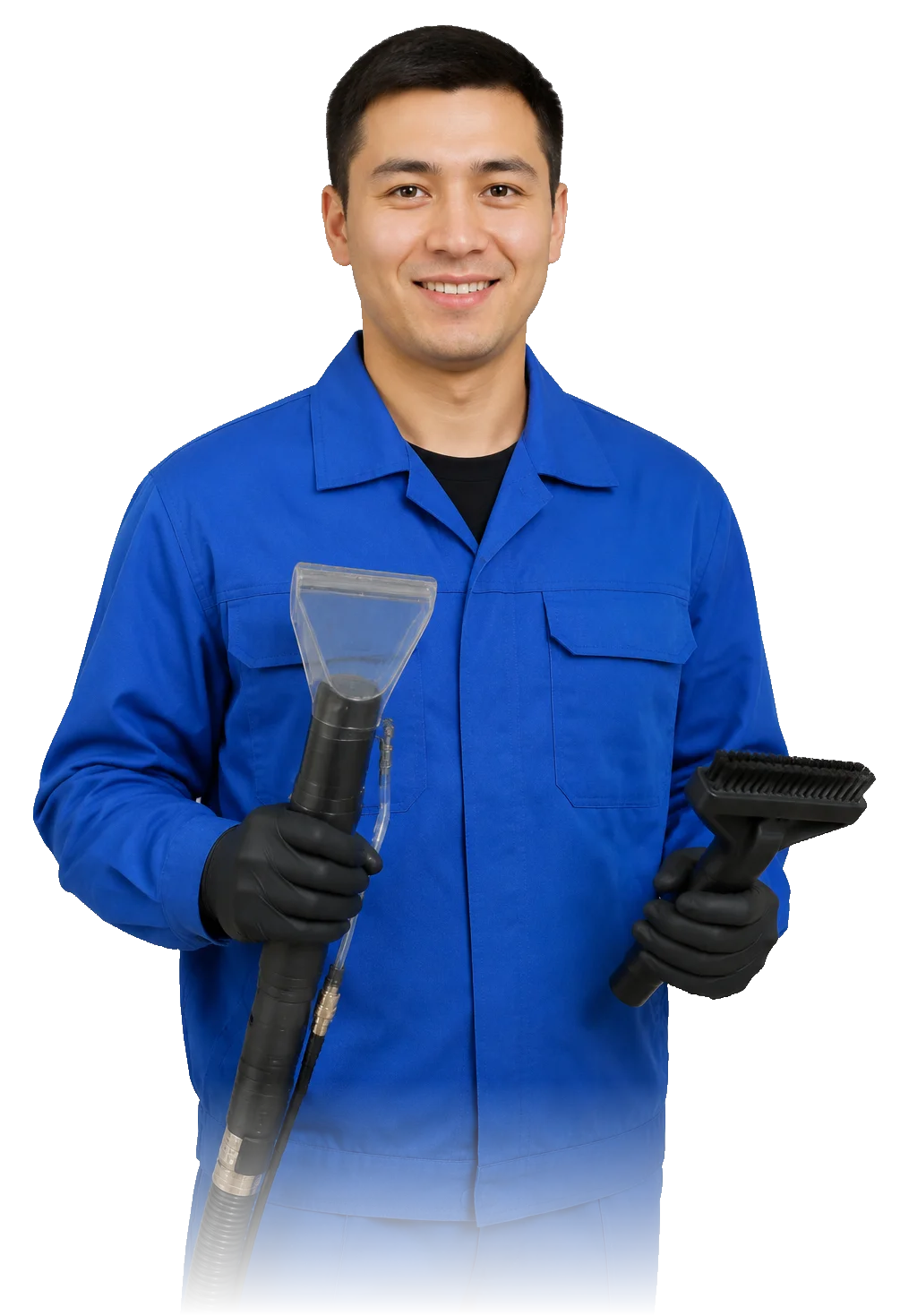
We work with any types and materials
Deep extraction cleaning with removal of popcorn and soda stains.
from 3,500 ₸Gentle cleaning using leather products, preventing cracks.
from 3,500 ₸Cleaning without harsh chemicals, preserving the structure of eco-leather.
from 3,500 ₸Delicate cleaning of velvet with low pressure to avoid deformation.
from 3,500 ₸Thorough cleaning of armrests with manual brush treatment.
from 3,500 ₸Cleaning of cup holders and seat, removal of sticky residues.
from 3,500 ₸Cleaning of recliner mechanisms and upholstery considering complex design.
from 3,500 ₸Cleaning of paired seats with seam treatment.
from 3,500 ₸Hypoallergenic cleaning with safe products.
from 3,500 ₸Cleaning considering design features, without removal.
from 3,500 ₸Cleaning of table and upholstery, removal of food traces.
from 3,500 ₸Careful cleaning around electrical wiring, no risk of short circuit.
from 3,500 ₸From inspection to result with guarantee
We identify stains from popcorn, soda, oil, grease, chewing gum. Determine fabric type and degree of soiling.
Apply specialized stain remover to stubborn stains, let sit for 5-10 minutes to soften.
Use an extractor with hot water and cleaning solution for deep penetration into the fabric. Remove dirt and stain residues.
Manual brush and steam cleaner treatment for armrests and cup holders. Remove sticky residues and dirt.
Apply odor neutralizer or ozonation to eliminate popcorn, sweat, and tobacco odors.
Remove residual moisture and cleaning solution with an extractor. Reduce fabric moisture for quick drying.
Accelerate drying with fans or heat guns until completely dry. Usually 2-4 hours.
Check each seat for stains, streaks, and odors. Repeat steps if necessary.
We use professional Kiehl products (Germany) and Karcher extractors (Germany) for deep cleaning without streaks. Each seat undergoes 8 stages of treatment, including ozonation to remove odors. This guarantees cleanliness and freshness.
We offer a 14-day guarantee on results — if a stain reappears, we will re-clean for free. We are confident in the quality of our products and equipment.
We have been working with Almaty cinemas for over 5 years and have experience cleaning halls with up to 300 seats. We know the specifics of different seat types and stains.
We use products with a safety certificate for children and allergy sufferers (no chlorine or harsh chemicals). All formulations are hypoallergenic and safe.
We come at any time of day, including night, to avoid disrupting cinema operations. Flexible schedule to match your screening schedule.
Ozonation and antibacterial treatment remove up to 99.97% of bacteria and unpleasant odors. Seats become fresh and safe.
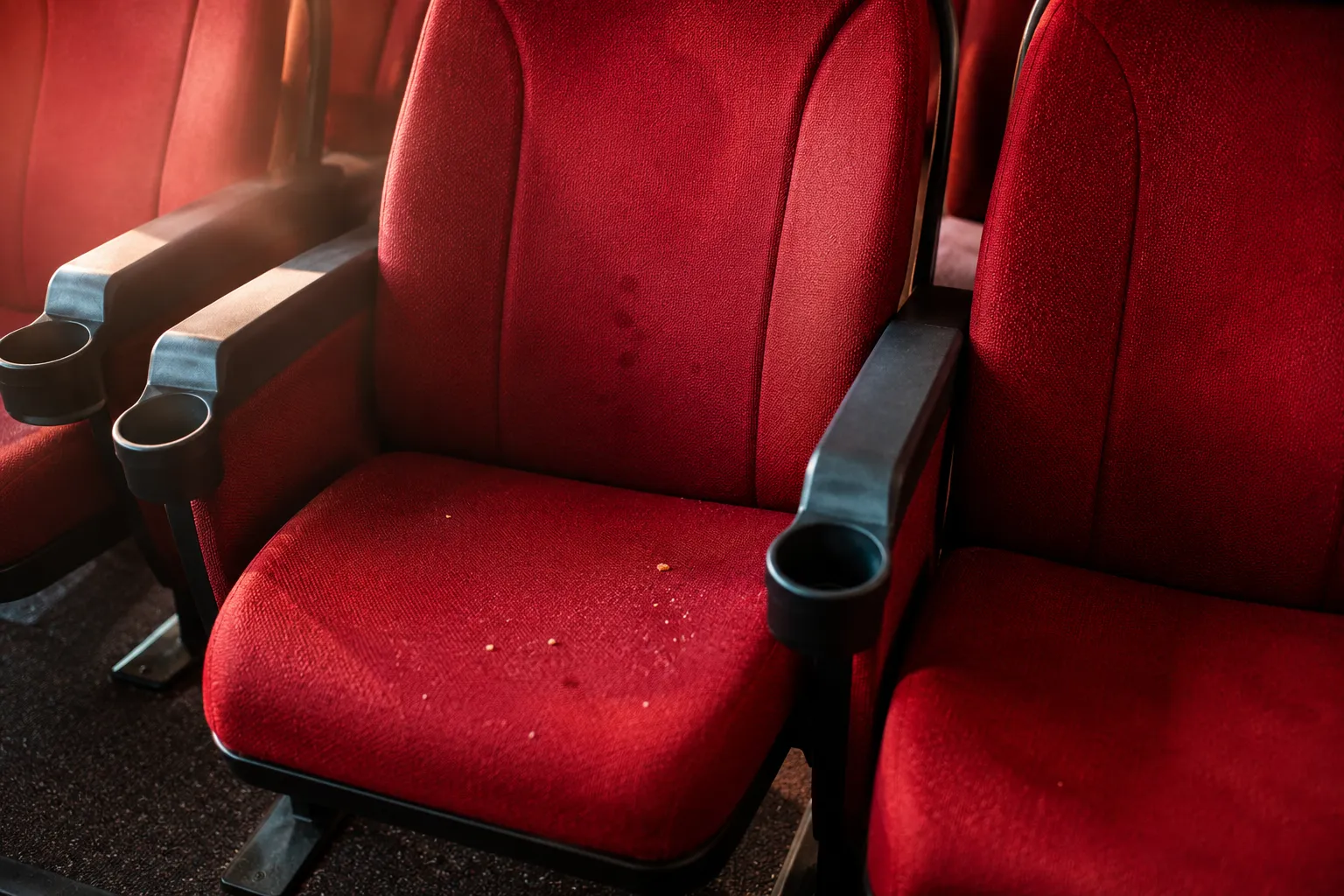
 After
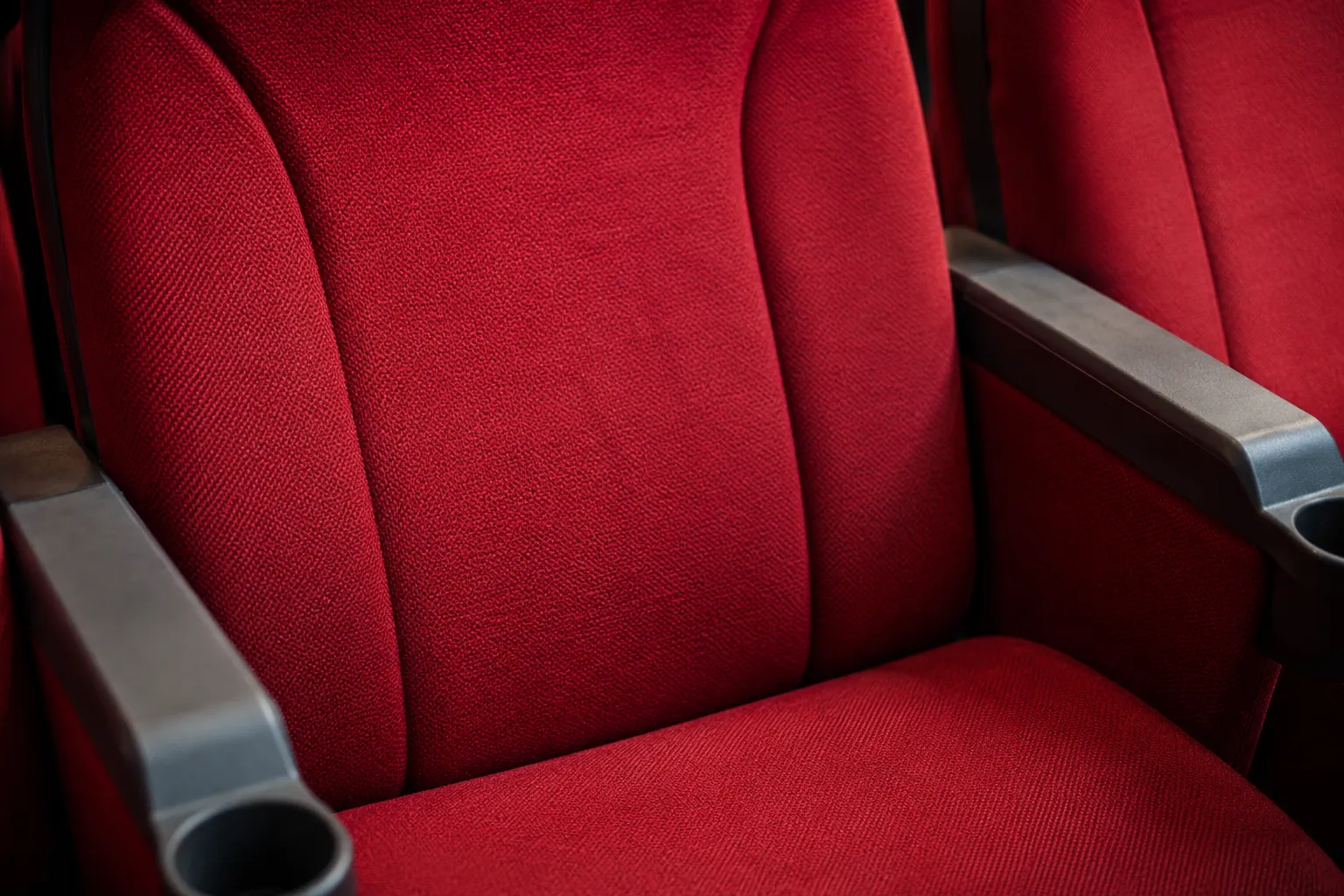
After
Request: Remove old popcorn grease stains from upholstery.
Done: Deep extraction cleaning performed with enzyme stain remover.
Cost: 3 500 ₸
Master: Aizhan Nurtayeva, dry cleaning master
Total: Upholstery fully cleaned, stains gone, color uniform.
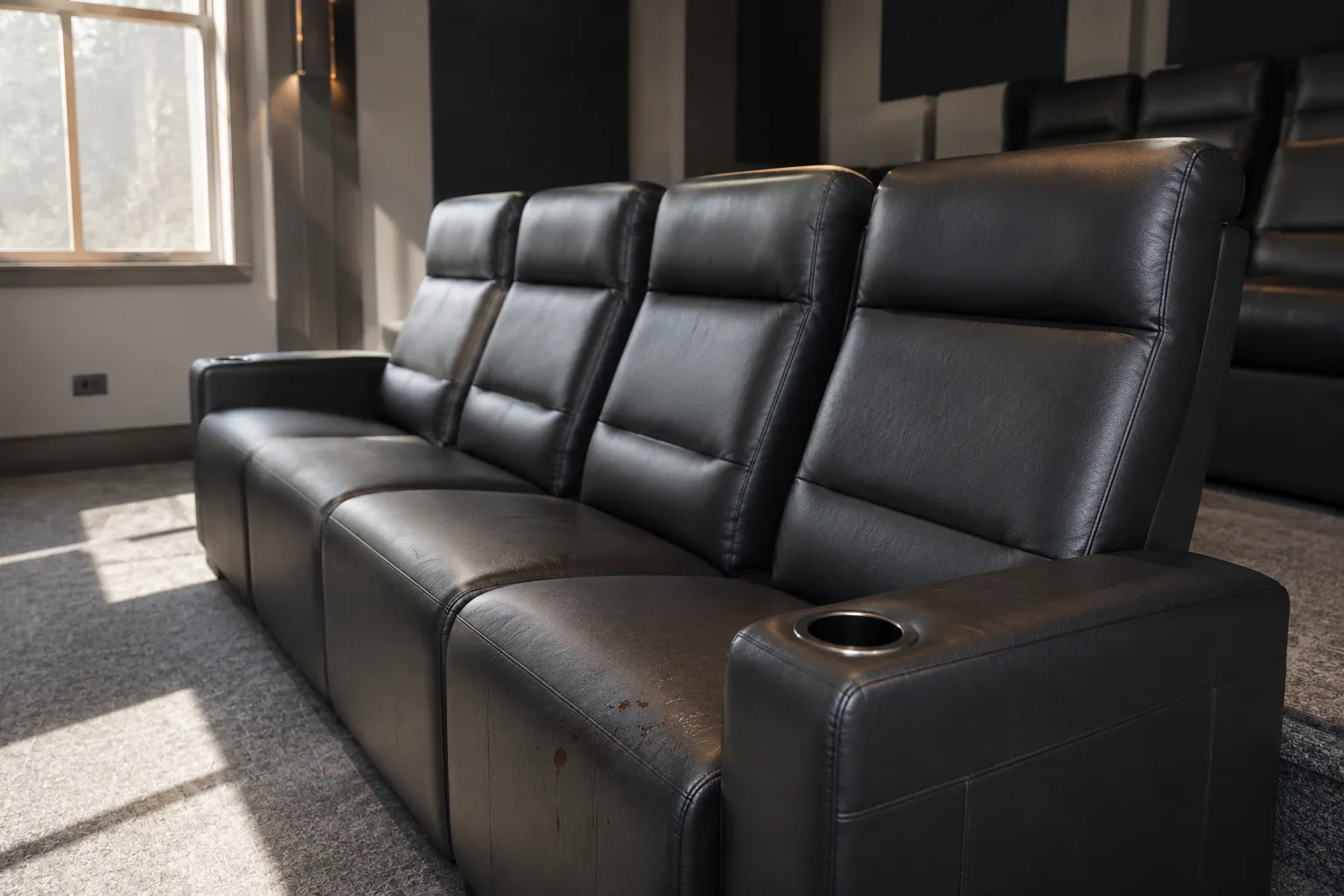
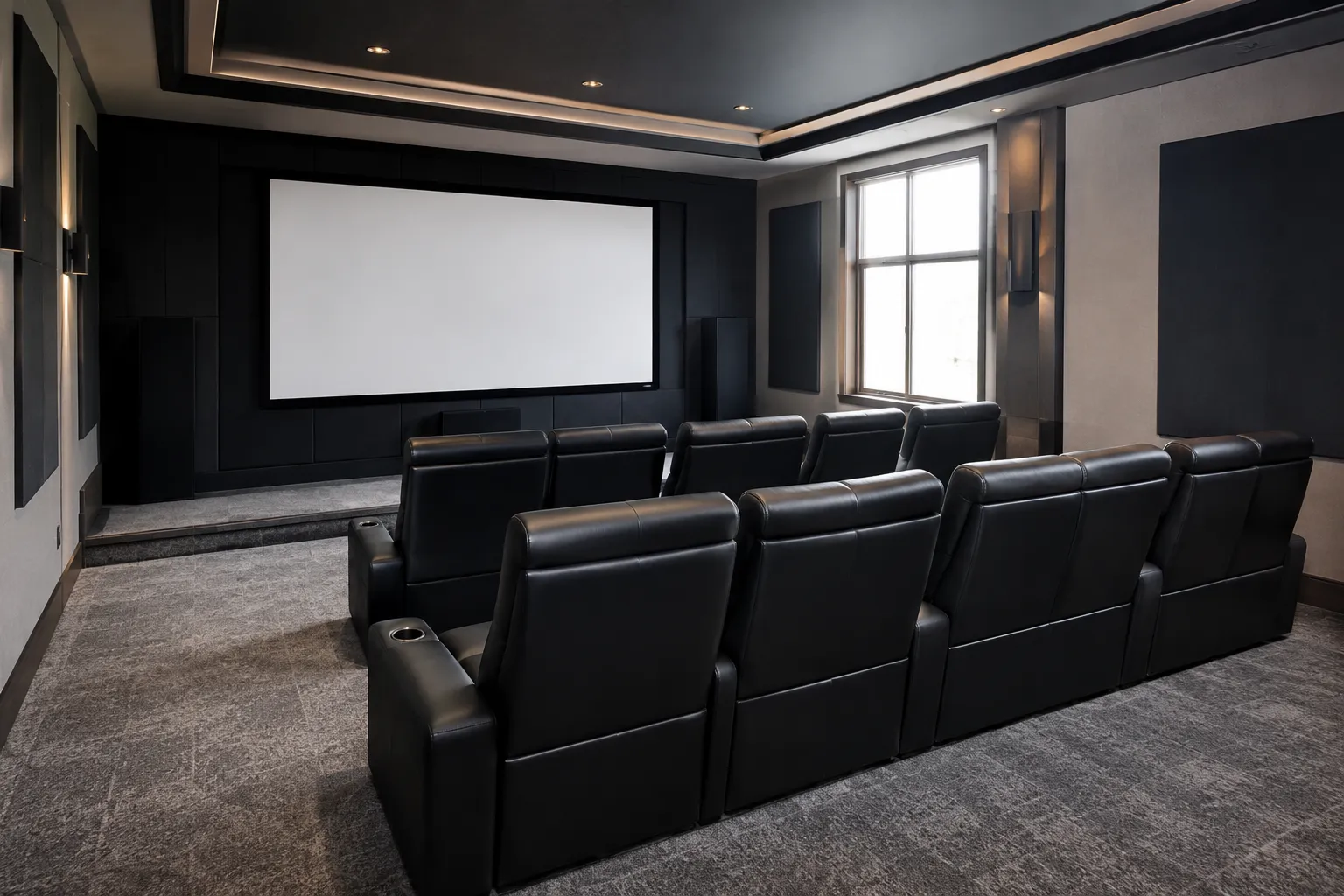 After
After
Request: Remove sticky stains and streaks from carbonated drink.
Done: Leather cleaning with a special compound for removing sugary residues.
Cost: 13 000 ₸
Master: Timur Zhaksybekov, dry cleaning master
Total: Leather is soft, without stains or stickiness, color restored.
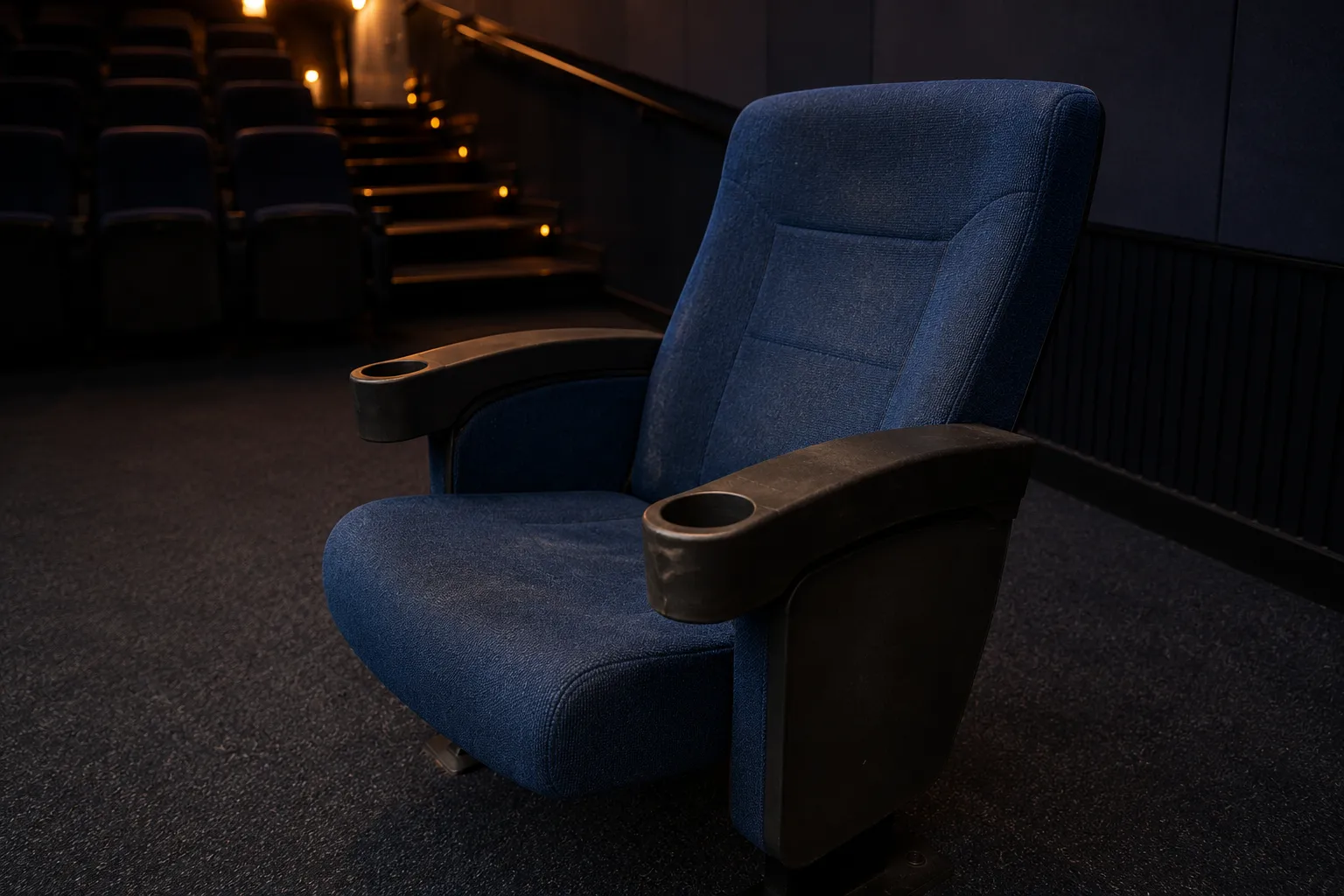
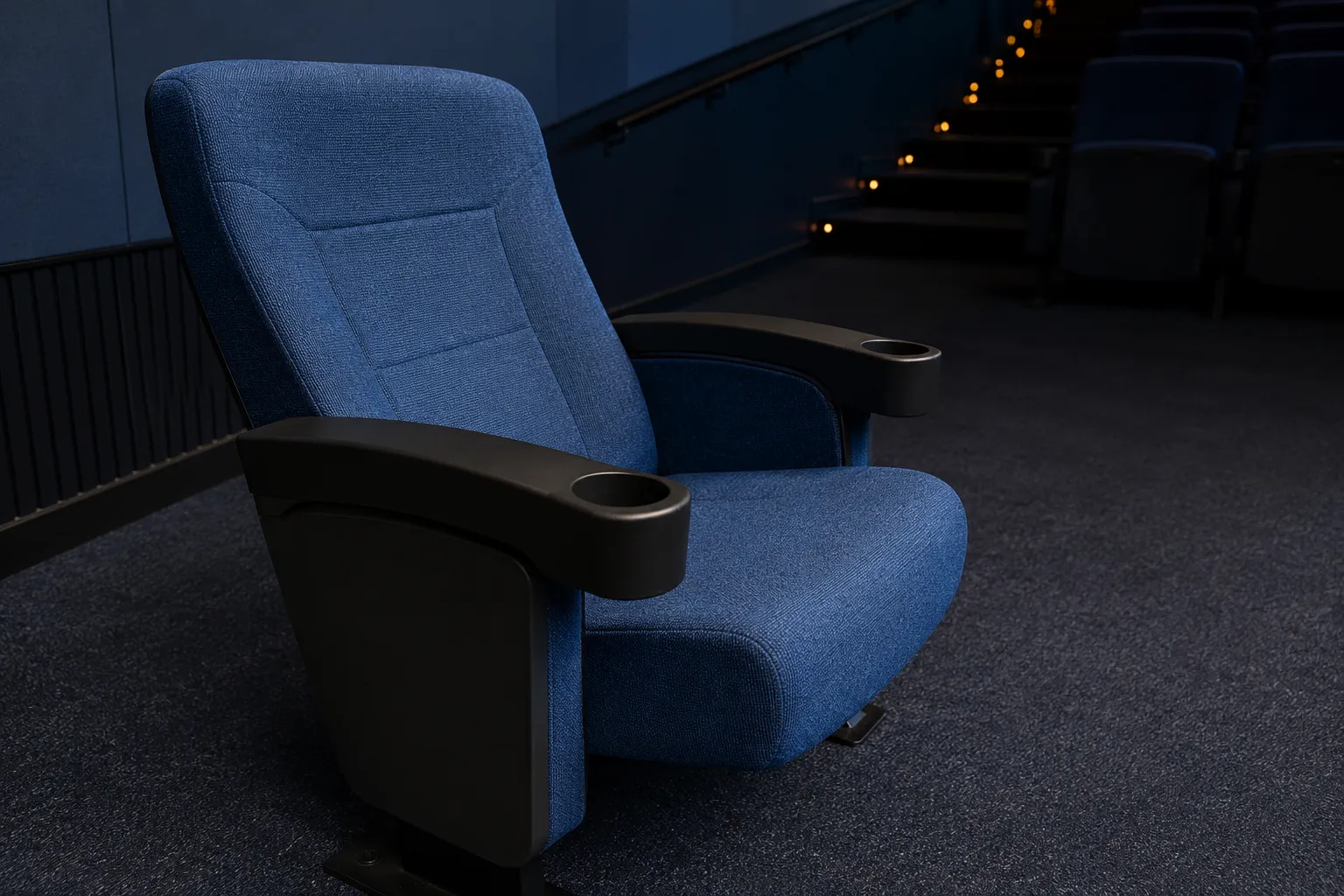 After
After
Request: Clean armrests and seat from ingrained dirt.
Done: Steam cleaning with vacuum extraction, armrests brushed.
Cost: 14 000 ₸
Master: Ainur Sagintayeva, dry cleaning master
Total: Armrests and seat are clean, without wear or odor.
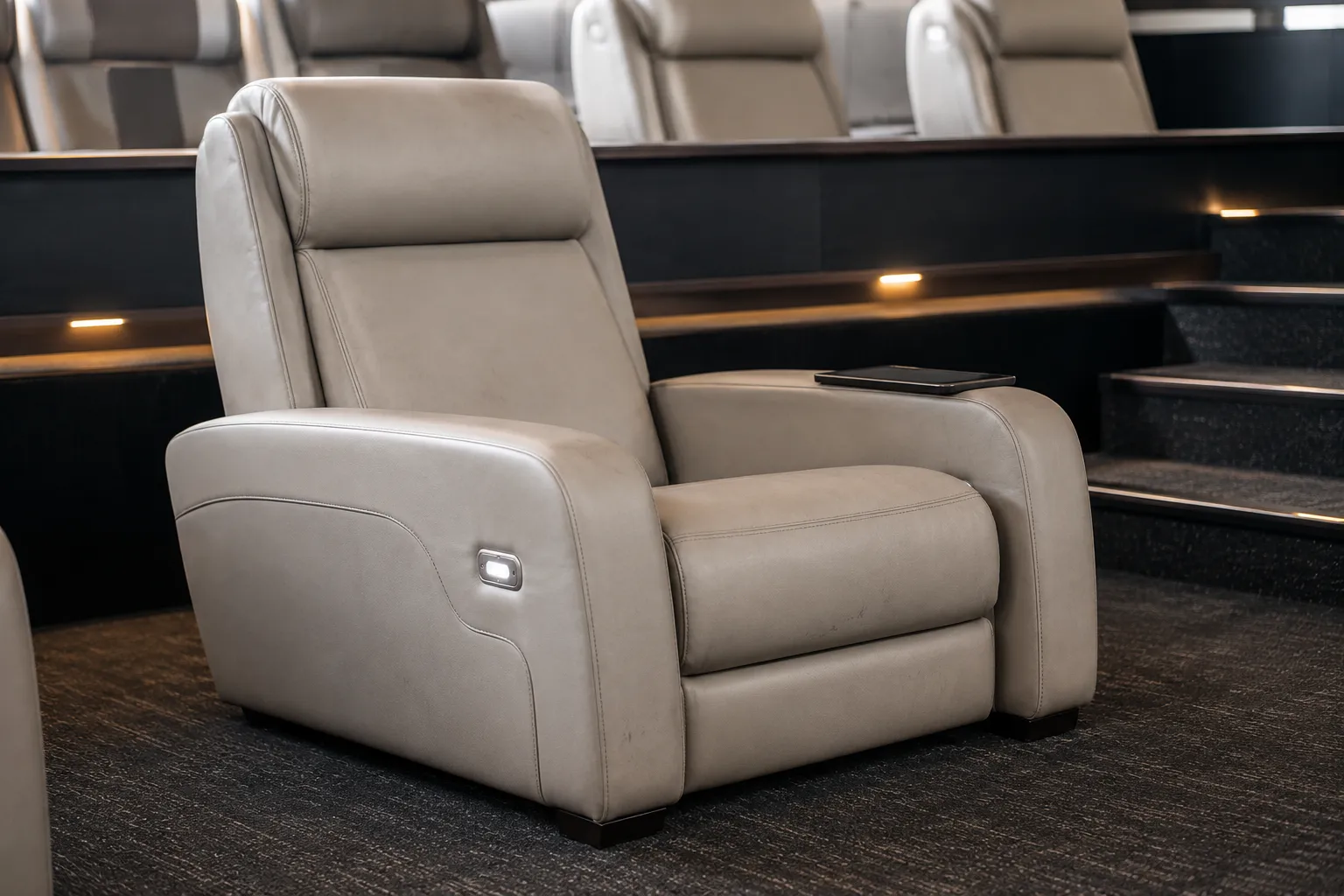
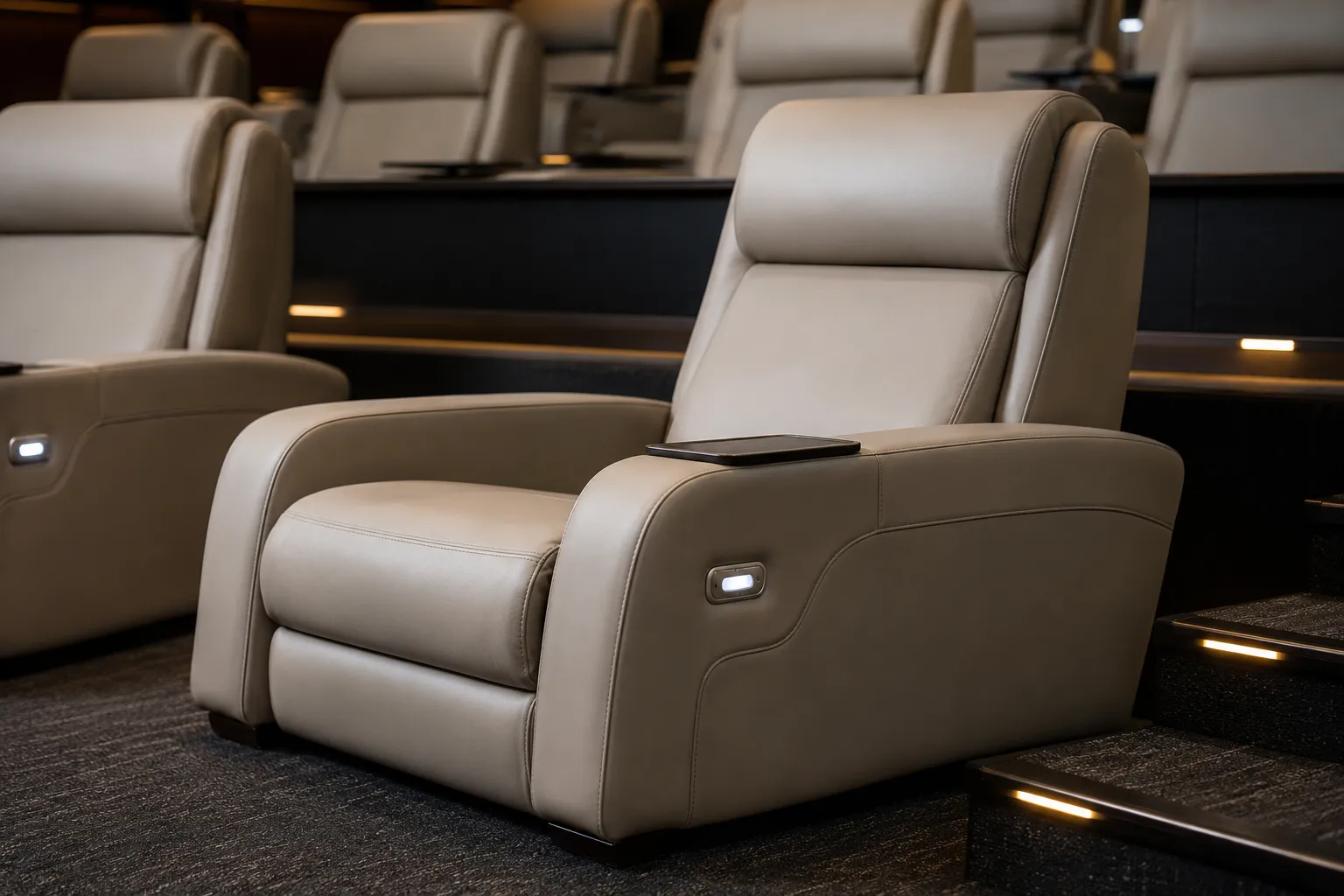 After
After
Request: Restore leather recliner seat after prolonged use.
Done: Deep leather cleaning with conditioning, removal of scuffs.
Cost: 13 000 ₸
Master: Bakhytzhan Aliyev, dry cleaning master
Total: Seat looks like new, leather is elastic, without defects.
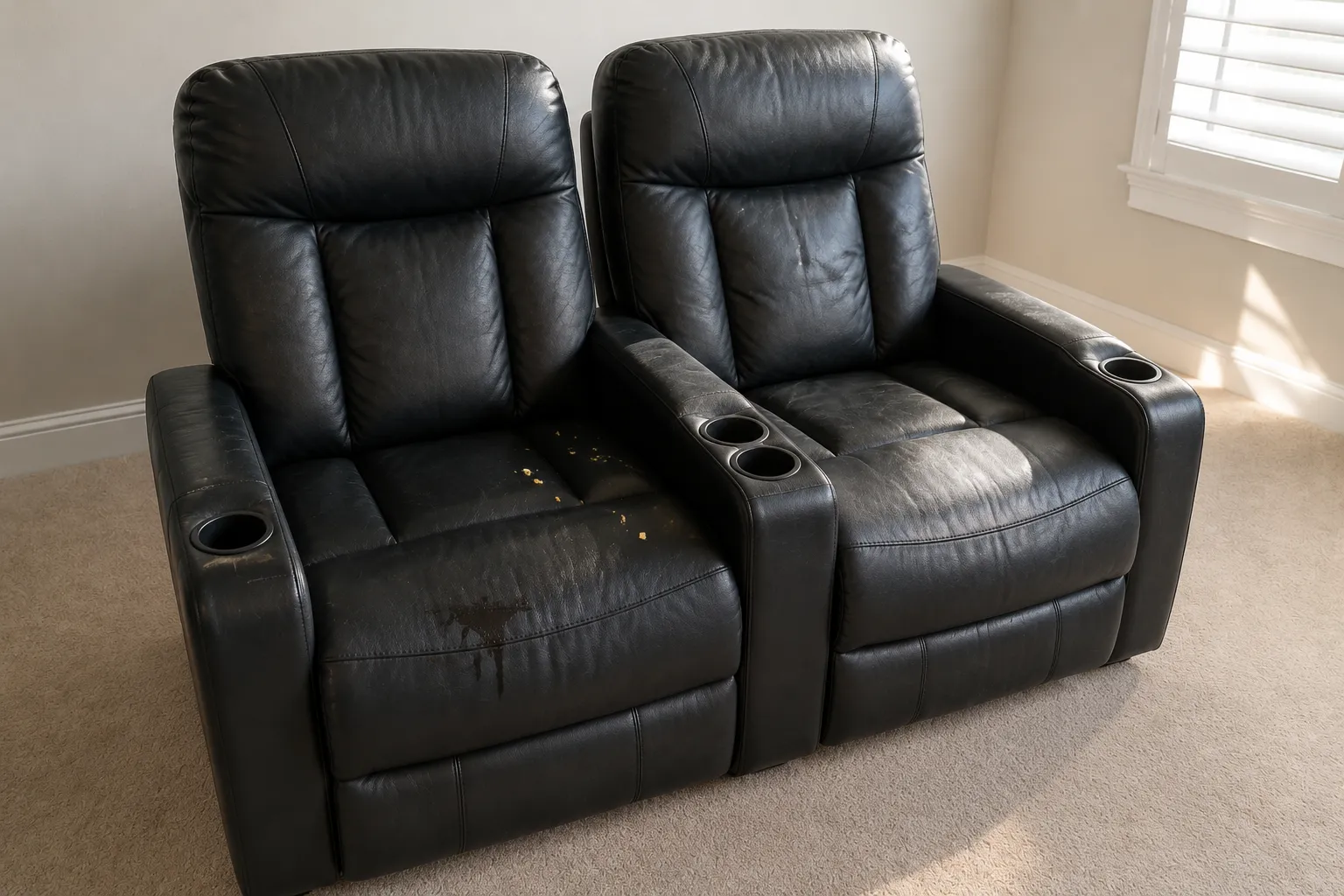
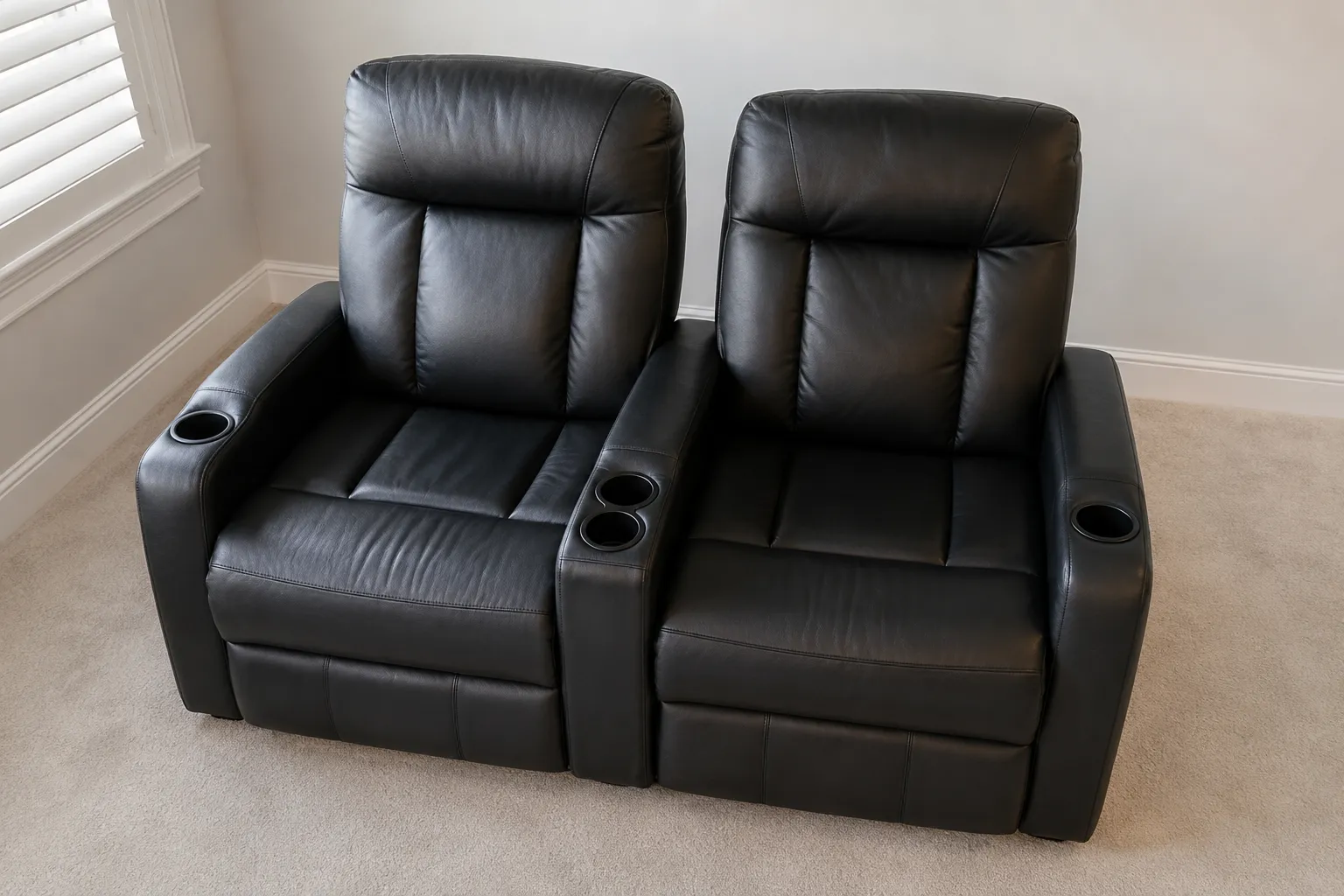 After
After
Request: Remove various stains from love seat upholstery.
Done: Stain treatment with different agents, extraction cleaning of entire piece.
Cost: 12 000 ₸
Master: Gulmira Kassymova, dry cleaning master
Total: All stains removed, upholstery evenly clean and fresh.
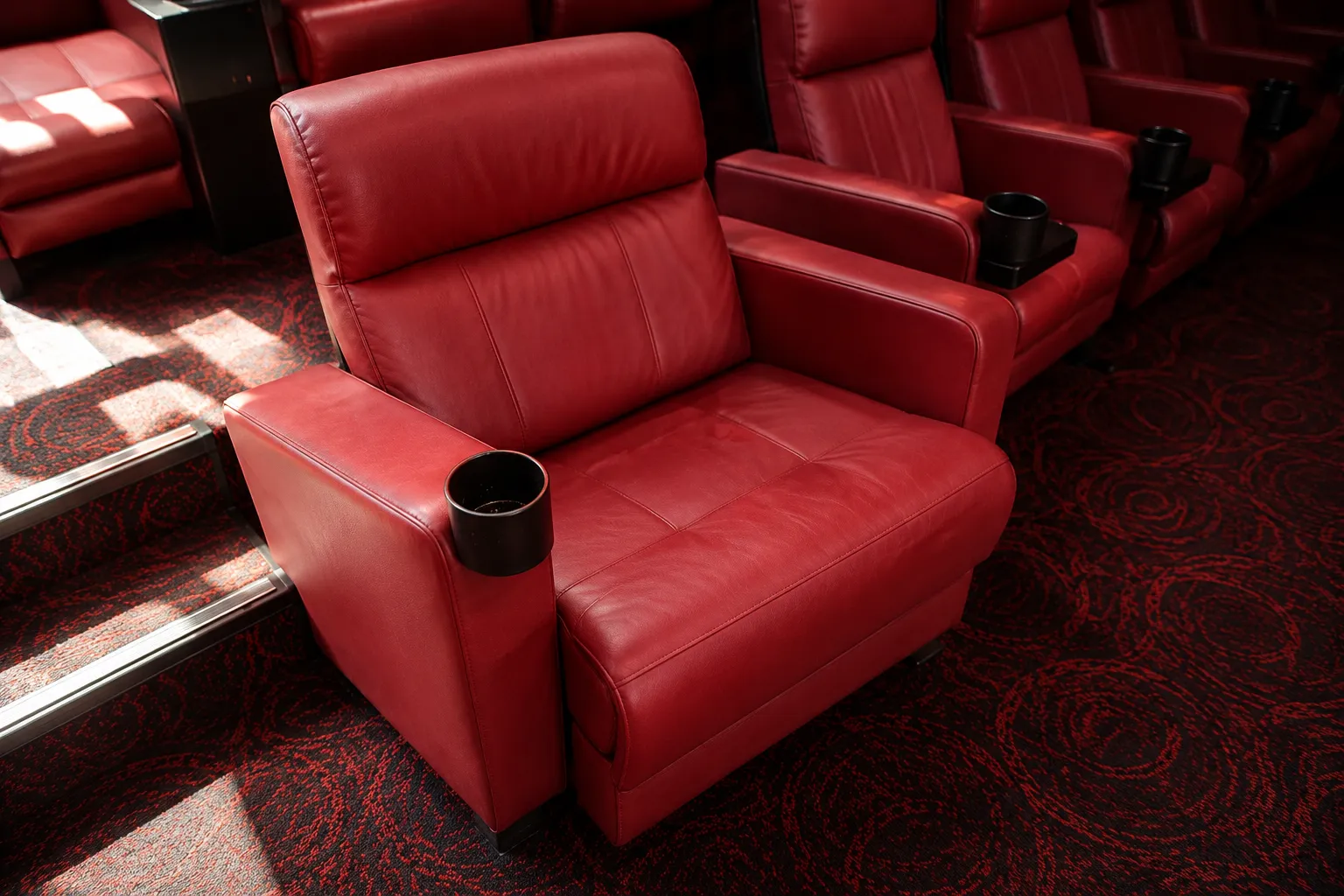
 After
After
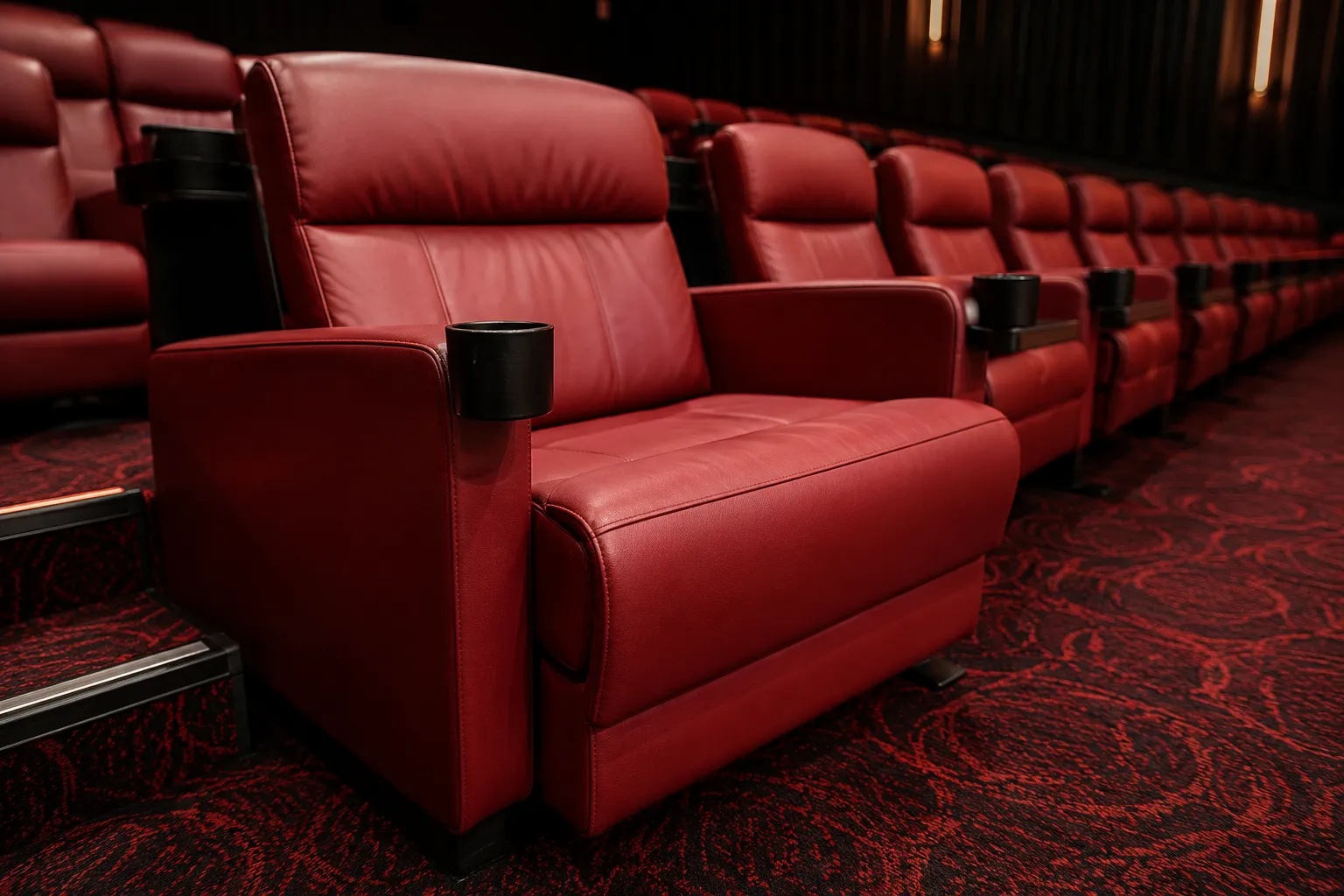
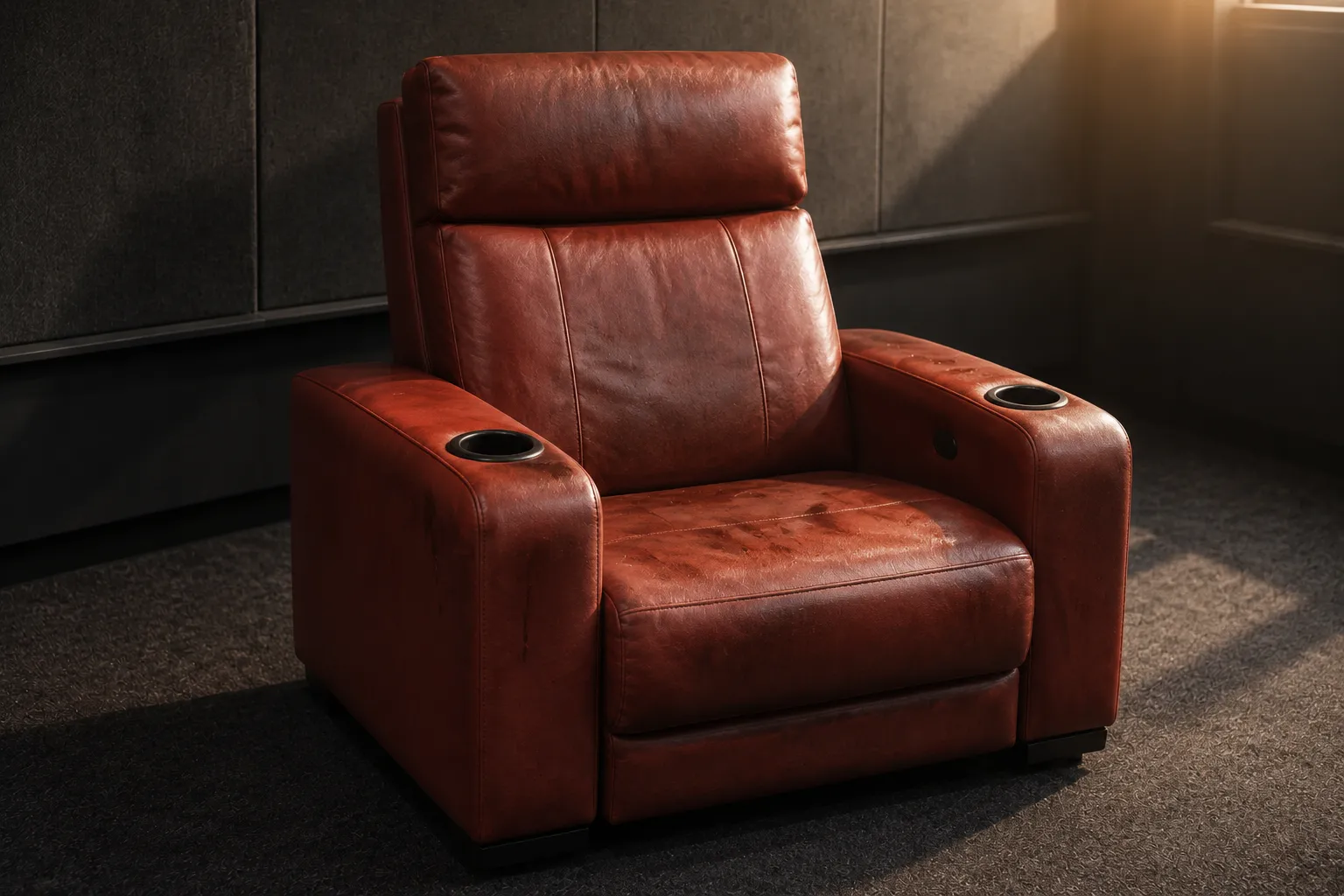
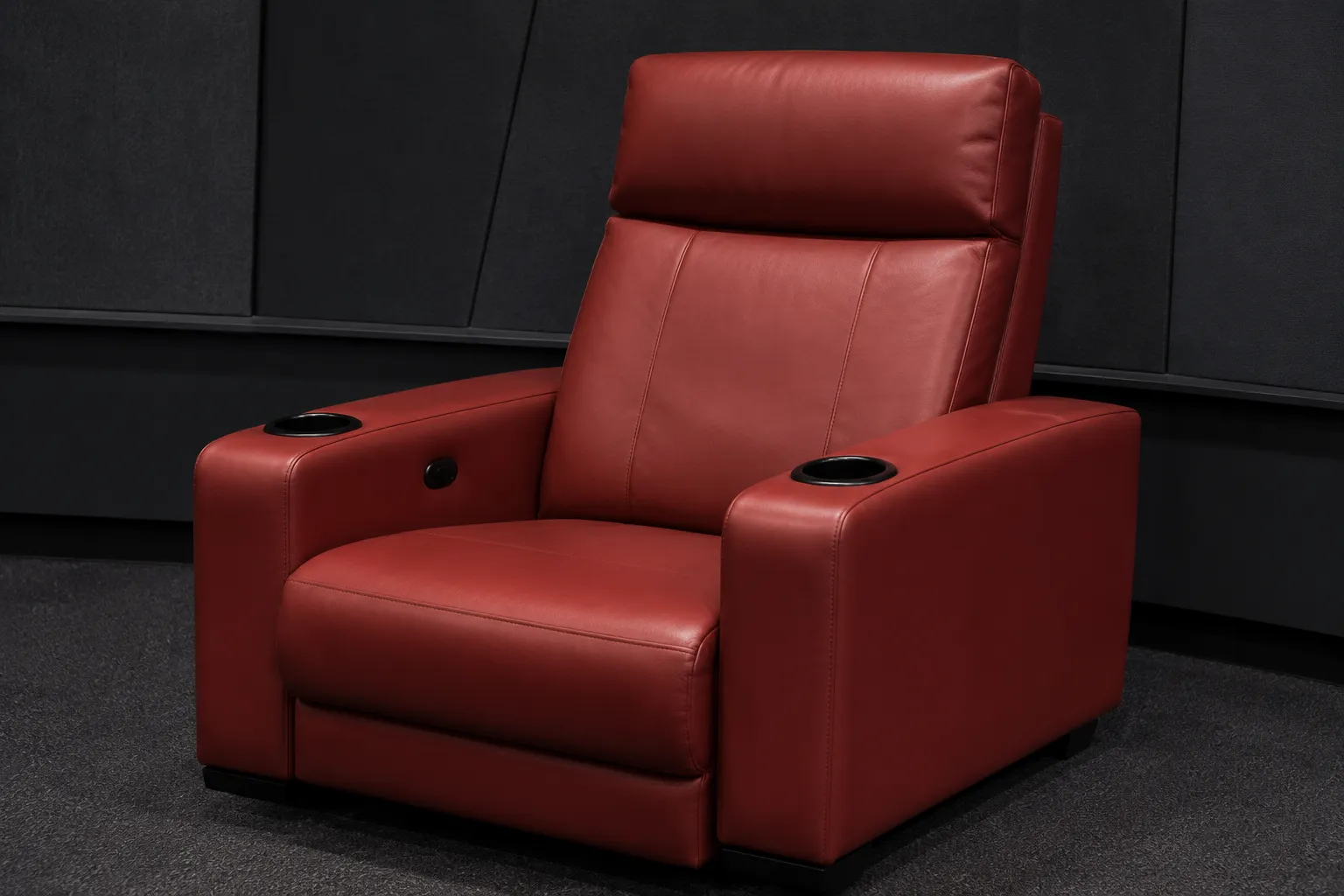
Request: Clean cup holder and seat from sticky residues.
Done: Cup holder steam cleaning, seat extraction cleaning.
Cost: 3 500 ₸
Master: Timur Zhaksybekov, dry cleaning master
Total: Cup holder shines, seat without stains or odor.
 After
After
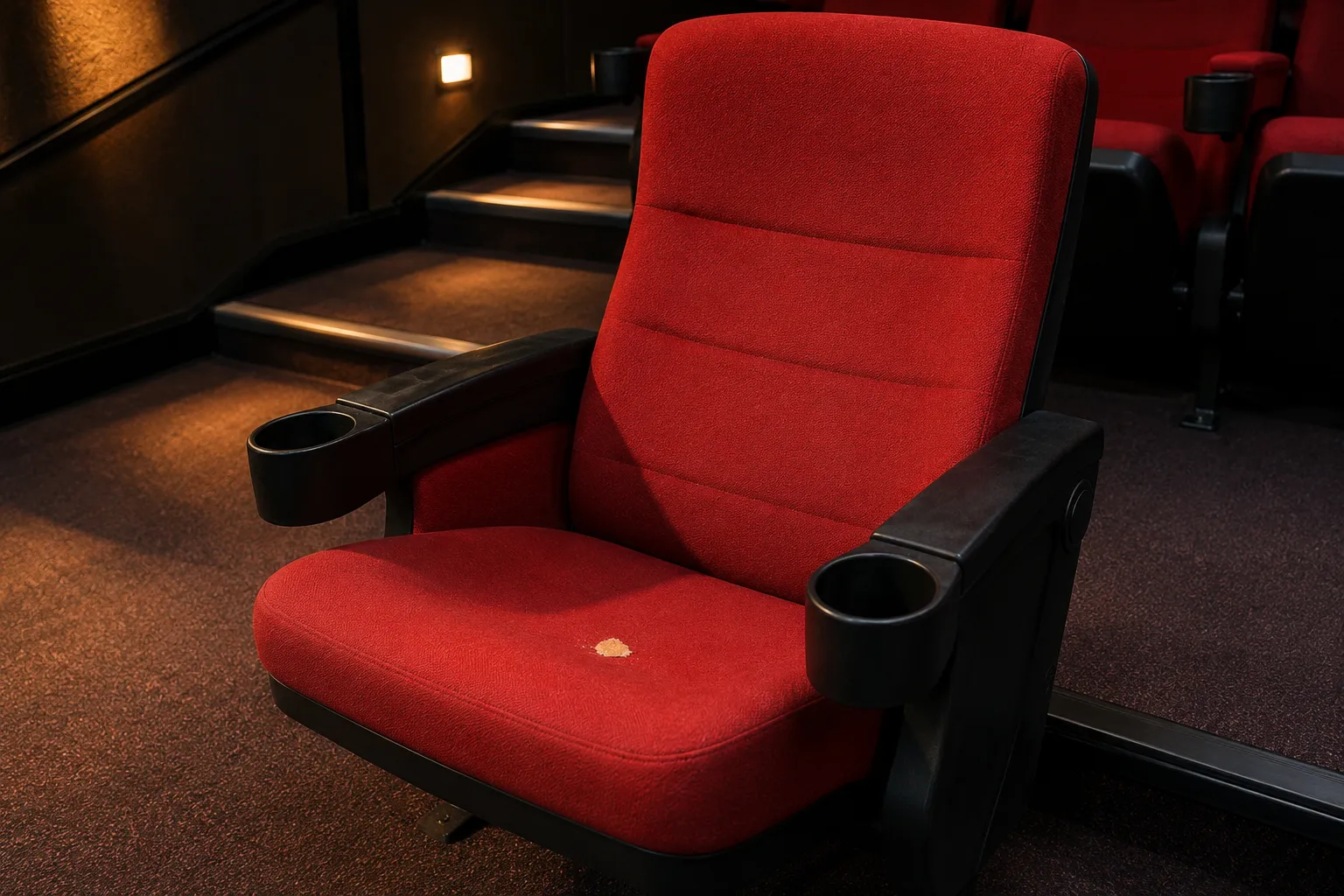
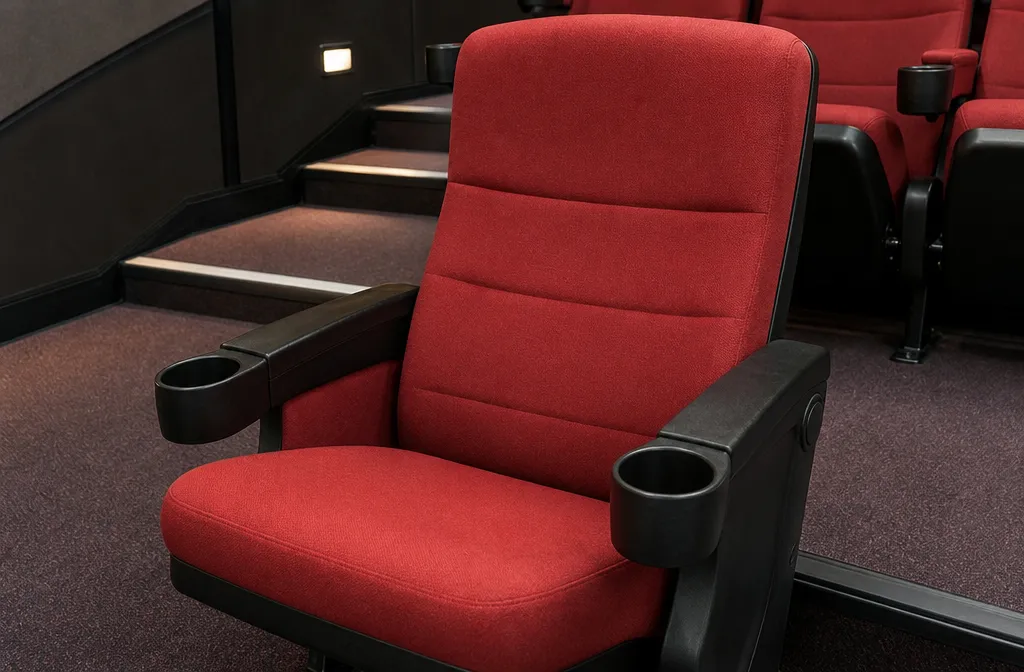
Request: Remove deep-set stains after pre-treatment.
Done: Hot water extraction cleaning with vacuum, repeat stain treatment.
Cost: 13 000 ₸
Master: Aizhan Nurtayeva, dry cleaning master
Total: Chair completely clean, no streaks or detergent residue.
 After
After
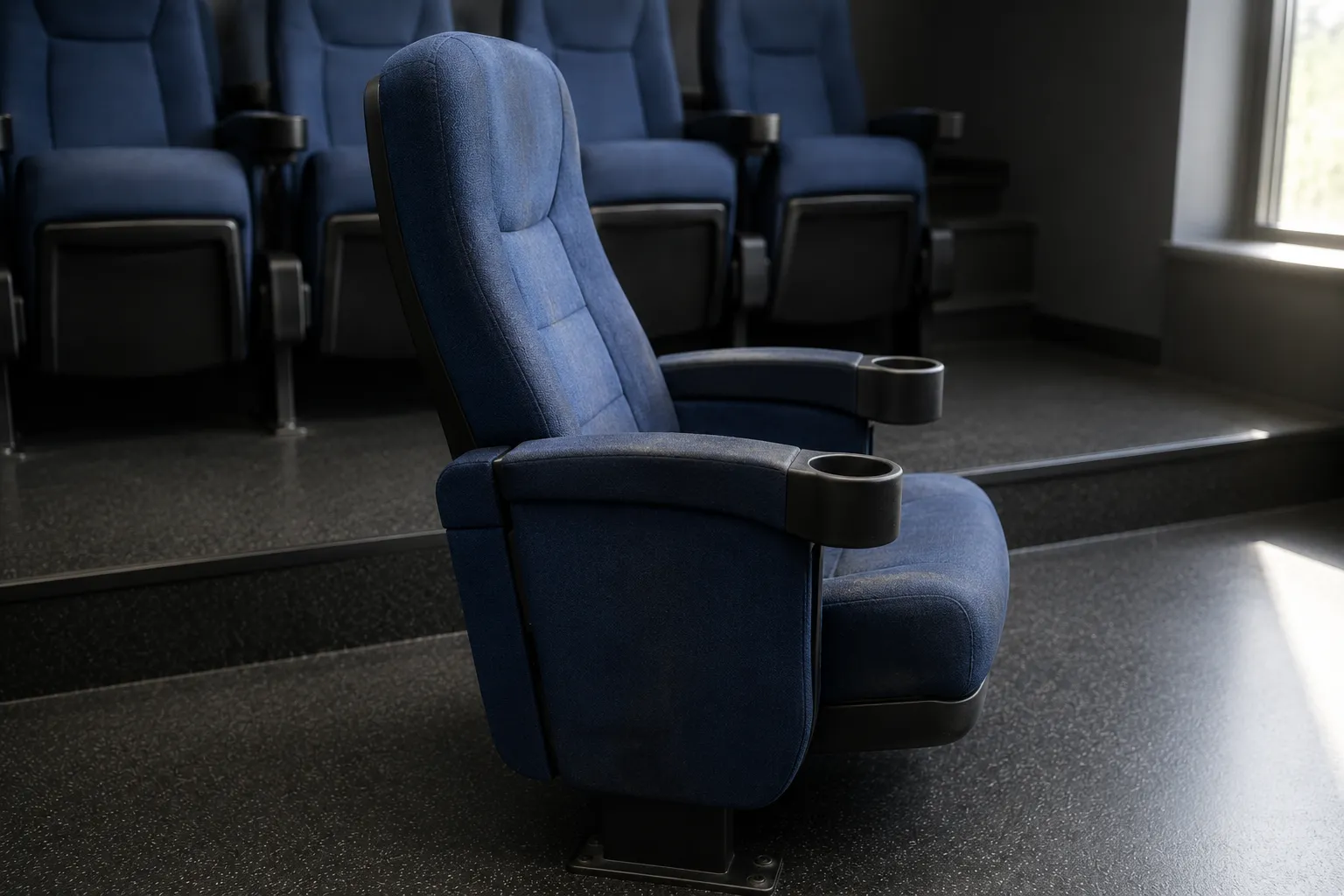
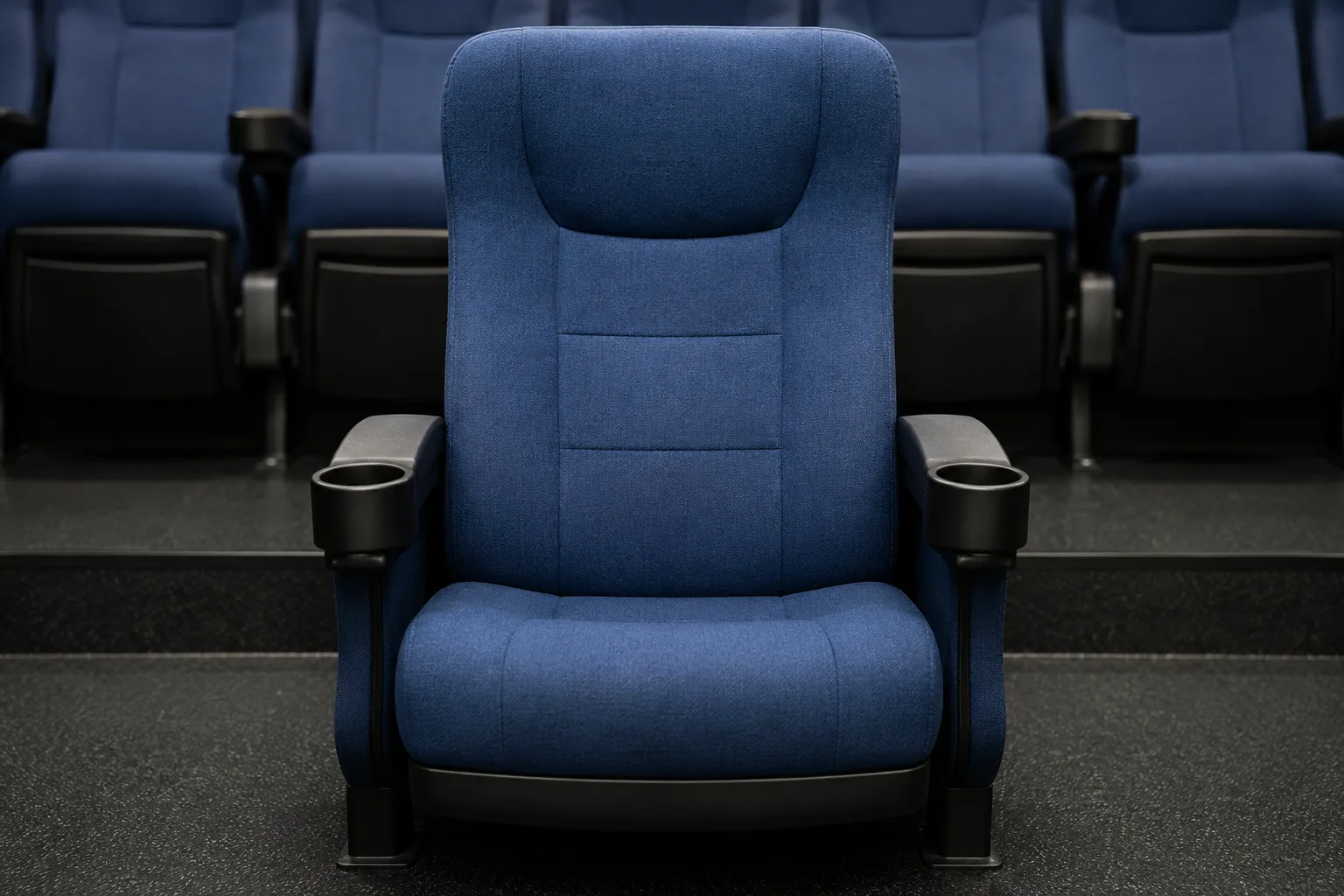
Request: Remove dried chewing gum from upholstery.
Done: Freeze gum with coolant, mechanical removal, spot cleaning.
Cost: 12 000 ₸
Master: Bakhytzhan Aliyev, dry cleaning master
Total: Gum removed without traces, upholstery undamaged.
 After
After
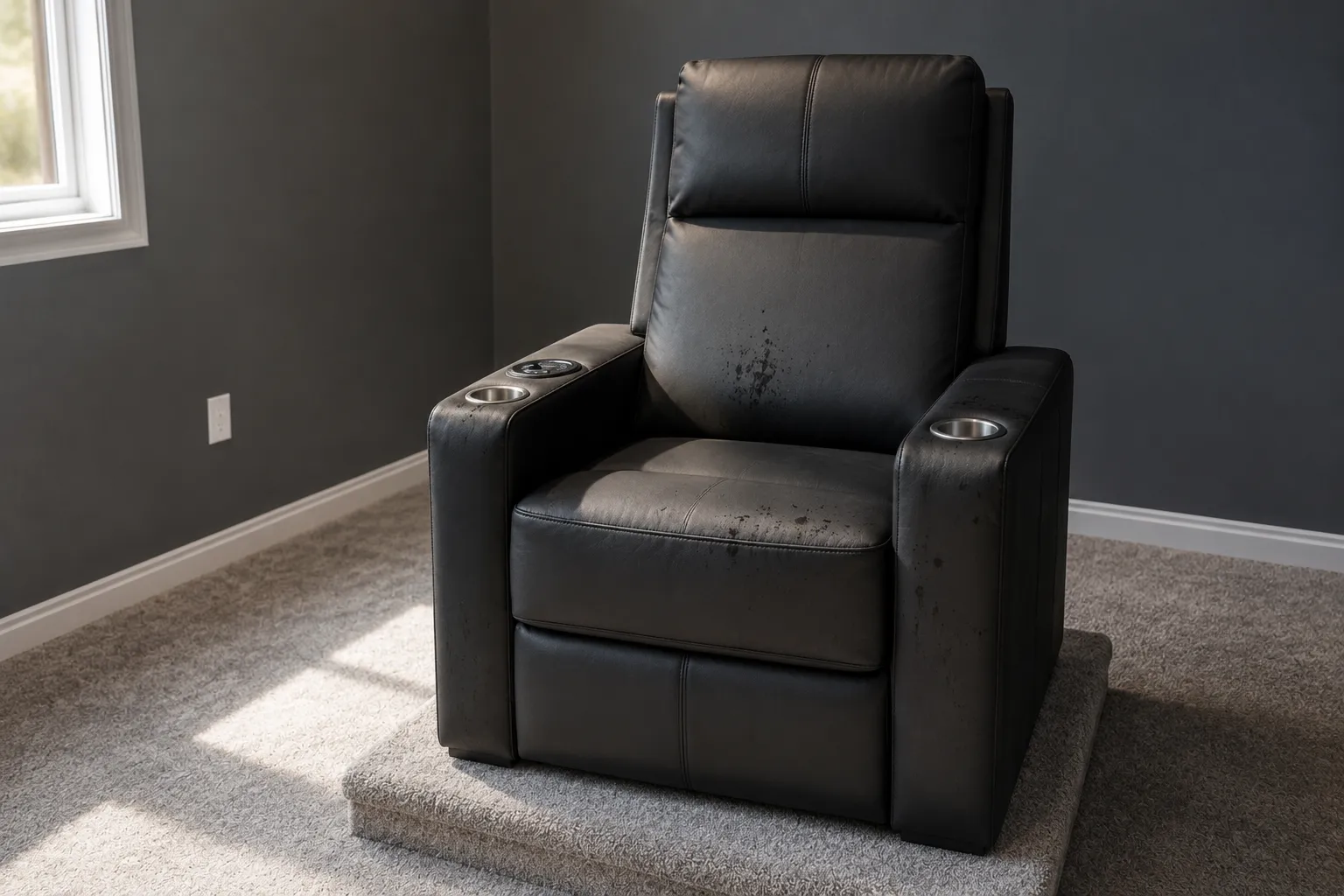
Request: Eliminate persistent tobacco odor and refresh upholstery.
Done: Ozone treatment for 2 hours, followed by light cleaning.
Cost: 3 500 ₸
Master: Gulmira Kassymova, dry cleaning master
Total: Odor completely gone, upholstery fresh and pleasant-smelling.
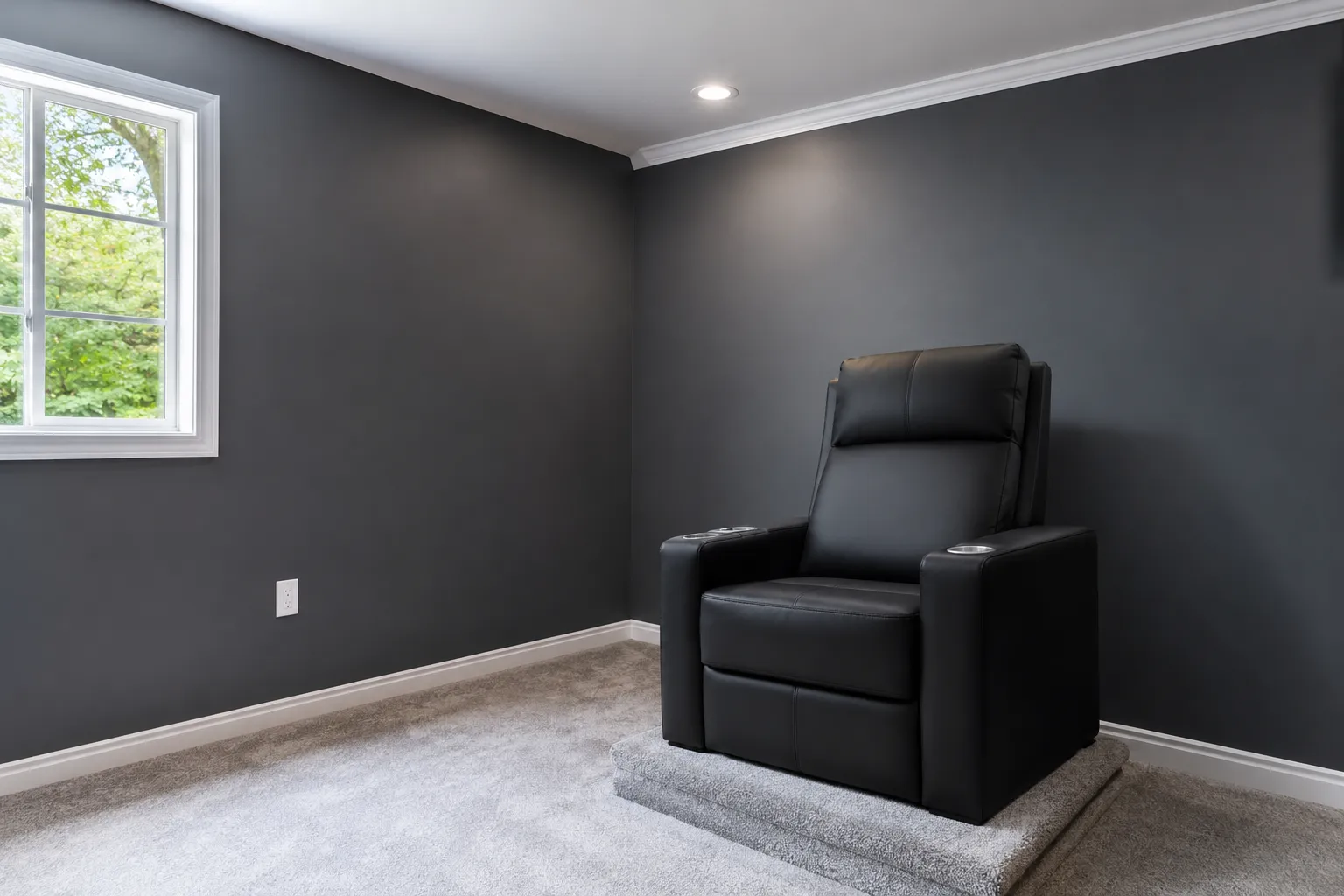 After
After
Request: Remove black mold spots from upholstery and armrests.
Done: Apply anti-mold solution, deep clean with extraction.
Cost: 3 500 ₸
Master: Ainur Sagintayeva, dry cleaning master
Total: Mold completely removed, upholstery disinfected and dried.
All cleaners are profi-clean staff with training, uniform and security check. Each order has a team leader who controls quality.
Cinema seats are not a home sofa or an office chair: they operate under heavy public use, absorb mixed soiling from hundreds of viewers, and must maintain their appearance and fire safety. Cleaning suitable for a residential space either won’t deliver results or will damage the upholstery, which is why specialized chemicals and equipment are necessary.
A single seat accumulates popcorn oil, soda sugar, cosmetics, sebum, dust, and textile micro-particles. Each of these substances requires a different pH balance: grease is removed with an alkaline solution, sugar crust with neutral foam, and protein-based traces (sweat, saliva) with enzyme-based products. If you try to clean everything with one universal shampoo, some soiling becomes fixed — for example, sugar caramelizes under the influence of alkali and sticks permanently to the fibers. In our practice, this is especially noticeable in halls with popcorn machines at the entrance: in rows near the screen, residue from sweet soda forms faster than in the back rows, where viewers less frequently bring drinks. Before dry cleaning, it is useful to visually divide the hall into zones — near the screen, middle, and far — and select products for each separately; otherwise, some seats will remain sticky to the touch after drying.
Most modern cinema seats in Almaty are covered with fabric that has a water-repellent impregnation (usually Teflon or fluorocarbon). With improper dry cleaning, this impregnation is destroyed, and the seat begins to absorb moisture and dirt like a sponge — after the first session with a spilled drink, a stain remains that cannot be removed. The problem is that the impregnation is not visible to the eye, and many cleaners, accustomed to home sofas, use a hot water extractor under high pressure — this washes away the protective layer in a single treatment. Instead of the hot water method, low-temperature foam cleaning with minimal moisture is used for such fabrics, and an aerosol-based water-based product is used to restore the impregnation. If you are planning dry cleaning for the entire hall, ask the contractor if they have products for restoring DWR coating — without them, the seats will lose their protection within 3–4 months.
Cinema seat upholstery is impregnated with fire retardants — substances that slow down burning. Many cheap stain removers contain solvents (acetone, white spirit) that wash the fire retardants out of the fibers. After several such cleanings, the fabric loses its fire resistance, and the seat no longer meets fire safety standards for public premises — this is the direct responsibility of the cinema owner under the law of the Republic of Kazakhstan. At profi-clean, we use only water-based products with a safety certificate for public textiles (OEKO-TEX standard) that do not react with fire retardants. Hall owners should request a safety data sheet for the products used from the cleaning company before work begins — this is the only way to verify that you are not washing away fire protection along with the dirt.
A cinema seat is not just upholstery: inside, there is a metal frame, a reclining mechanism, springs, foam cushions, and armrests with cup holders. During wet cleaning, water seeps into the mechanism gaps, causes corrosion of the guides, and the foam, soaked to the core, dries for weeks and begins to rot — a musty smell appears that does not dissipate. Therefore, extractor machines (like the Karcher Puzzi) are used on cinema seats only with minimal water consumption — no more than 0.3 liters per seat, and only if the hall is ventilated for 8–12 hours after cleaning. In halls with heated seats (such as those in premium halls in Almaty), the wet method is generally contraindicated — water gets onto the electric heating elements and causes a short circuit. For such seats, the only safe option is dry chemical cleaning with a hydrocarbon solvent that evaporates completely within 20 minutes.
Front rows: viewers put their feet on the seats in front of them, causing scuffs on the top of the backrest and sole marks. Middle rows: maximum load on the seat — each seat goes through 4–6 uses per screening, up to 20–30 cycles per day. Back rows: less wear, but more dust from ventilation and drink stains — viewers more often bring cups to the back of the hall. When dry cleaning the entire hall, it makes sense to treat the front and middle rows with a pre-applied enzyme stain remover (for organic matter from soles), and the back rows only with foam shampoo without pre-treatment. This saves up to 30% of chemical consumption without losing quality and reduces the overall hall drying time by 2–3 hours.
In working with cinema halls, we encounter five main types of stains, each requiring its own chemicals and technique. Let’s break them down in order — from the most common to the tricky ones.
Sweet soda, buttery popcorn, ice cream, and coffee — the main impact is on the upholstery. The sugar in soda, after drying, turns into a sticky film that attracts dust and creates an ideal environment for bacteria. The oil from popcorn penetrates deep into the fabric fibers and oxidizes, leaving yellow streaks that regular soap solution cannot remove. We use water-based enzyme stain removers — they break down proteins and fats into molecules without damaging the upholstery dyes. In our practice, there was a case in a 180-seat hall where the seats hadn’t been cleaned for two years: the top layer of fabric was black from a mixture of oil and dust, but after enzyme treatment and hot water extraction, the original gray color was restored. Tip: if you notice stickiness on the armrests — that’s sugar, it needs to be neutralized with a pH-neutral compound, otherwise the film will remain and start collecting dirt the very next day.
Cinema seats are dust accumulators: over a month, 1000+ people pass through the hall, each bringing skin particles, clothing lint, and street dust. Dust mites, the main cause of allergies, live precisely in the seat filling, where a regular vacuum cleaner cannot reach. Standard household bagged vacuums collect only the top layer — up to 30% of the dust. We use industrial extractors with HEPA H13 filters, which trap particles up to 0.3 microns, and treat the seats with hot steam at 120 °C — this kills mites and washes allergens out of the foam’s depth. Almaty spring, when poplar fluff flies into open cinema doors, is the peak of allergenic contamination; during this period, we recommend deep cleaning once a month instead of the standard quarterly schedule.
Every viewer leaves traces of sebum, hand cream, and decorative cosmetics on the headrest and armrests. An UV lamp shows these areas as glowing zones — within a month, the film becomes visible to the naked eye as dark, greasy-to-the-touch spots. The mistake of many cleaning services is trying to wash off the oil with water: it only drives it deeper into the fabric. The correct approach is pre-treatment with a citrus-based solvent degreaser (we use Sodasan products), which emulsifies the fat, after which it is easily removed by extraction. On leather seats, such a film destroys the protective lacquer, and the leather cracks within six months — here we apply a cleaning foam with pH 5.5 and a final wax impregnation.
The most underestimated type of contamination is mold in the cupholder area. Spilled soda or water seeps into the joints between the plastic and fabric, creating a moist environment. In Almaty cinemas with air conditioning during the summer heat, the temperature difference on the armrest surface reaches 10–15 °C, forming condensation — ideal conditions for black mold. Mold spores are toxic: they cause respiratory symptoms in viewers and spoil the upholstery from the inside, making it brittle. We treat problem areas with an antifungal spray based on benzalkonium chloride — it kills the mycelium and prevents recurrence. If the armrest has already turned black, mechanical cleaning is useless: the mold has penetrated the foam, and the seat needs replacement. Regular drying of the hall after screenings and ventilation reduce the risk of mold by 70%.
Even with a smoking ban, odors settle into the fabric: tobacco smoke from viewers’ clothes, a mix of deodorants and perfumes, and the smell of damp textiles after cleaning. These volatile compounds are not removed by a vacuum cleaner—they are adsorbed by the fibers and released when heated (for example, when the hall fills with people). We use dry fog ozonation: the generator sprays a solution with ozone molecules, which oxidize and neutralize odors at the molecular level. After treatment, the hall is ventilated for 30 minutes—no odor remains. In cinemas with carpeting, we additionally treat it with an enzymatic shampoo: the carpet is the second-largest odor accumulator after the seats, and if only the seats are cleaned, the smell will return within two to three days.
The frequency of professional seat cleaning directly affects their lifespan and the sanitary condition of the hall. We recommend basing it on the intensity of use, rather than a calendar schedule.
In Almaty, there are two peak periods when seat soiling increases 2-3 times faster than usual. During the summer months (June-August), due to open windows and doors, more street dust and poplar fluff enter the halls—seats accumulate dirt faster than in winter. During the autumn-winter season (October-February), viewers arrive with damp outerwear, which moistens the seat fabric and creates an environment for bacterial growth. During these periods, we advise shortening the interval between cleanings by one month—for example, switching from a standard schedule of once every 3 months to once every 2 months. In our practice, orders from Almaty cinemas during these months account for 60% of the annual volume.
If you notice at least one of these signs, do not wait for the scheduled date—call in technicians for an unscheduled cleaning. A missed moment costs more: old stains on velvet or eco-leather require 2-3 times more time and special enzymatic compounds that are 30-40% more expensive than standard ones.
To ensure the upholstery cleaning goes quickly and without surprises, five preparatory steps should be taken before the team arrives—they will save time and money.
The day before the visit, we cancel all screenings in the hall being treated and post announcements at the box office and on social media. In Almaty cinemas, where evening hall occupancy reaches 80-90%, screenings are usually moved to neighboring halls or to the next morning. It is important to block ticket sales in the automated system—otherwise, a viewer might buy a seat in a hall where cleaners are already working, leading to a conflict. In practice, there was a case at “Arman” where, due to a glitch in the cash register module, four tickets were sold for a screening in a hall where we had already removed the seats from their mounts. We had to refund the money and shift the schedule by an hour. Therefore, I recommend checking in the admin panel a day in advance that the hall is marked as “technical break.”
We ask administrators to collect large debris from the floor and under the seats — cups, popcorn packaging, forgotten items. In the halls of Almaty multiplexes, up to 3–5 kg of such debris accumulates per day. If it is not removed, the vacuum cleaner with a HEPA filter clogs 20% faster, and the technician spends an extra 10–15 minutes cleaning the tank. Another nuance: hairpins, coins, and receipts often get stuck under the seats — they can damage the extractor nozzle if they enter the hose. It is better to go over it with a handheld vacuum or at least sweep the debris to the central aisle before our arrival.
We remove everything from the seats that is held on by Velcro or clips: covers, headrests, advertising pockets. In premium-class halls — for example, at Kinopark 8 IMAX — the seats have removable covers and decorative panels. If they are not unfastened, we cannot reach the fabric under the armrests, and stains will remain there that will appear on the visible part within a month. We carefully place the dismantled elements in a separate bag and label the hall — in my opinion, it is easier to immediately number the bags with a marker than to later guess which row an armrest belongs to. Glass cup holders and vases on stands between the seats are best moved to the storage room: even with careful work by the crew, an accidental movement of the hose can break them.
Before starting work, we de-energize the hall at the panel — turn off the lighting, sound system, and projector. We use extractors with a voltage of 220 V, and the risk of a short circuit increases when working with water. In older Almaty cinemas — for example, at “Caesar” — the wiring is not designed for the simultaneous operation of three machines. Therefore, we ask the administrator to turn off the circuit breakers for the hall, except for the socket group, and check that the RCD (residual current device) is working. If the RCD does not trip, even a minor water leak into the distribution box can cause an electric shock. We cover the sound equipment — speakers and subwoofers — with thick polyethylene and secure it with tape along the edges to prevent moisture from the steam from getting onto the speakers.
The technicians need access to cold water — a pressure of at least 2 atmospheres and a fitting for the hose. In most Almaty cinemas, a technical faucet is available in the storage room near the bar counter or in the staff restroom. We ask that the passage to this faucet be cleared of boxes and equipment. We also open the doors to adjacent halls wide and turn on the supply ventilation to maximum — this reduces the drying time for the seats from 6 to 4 hours. If the ventilation is weak or absent (as in some small halls of “Kinopark”), we recommend using floor dehumidifiers — they reduce humidity from 80% to 50% in 2 hours.
When choosing a method for dry cleaning cinema seats, it is important to understand that extraction cleaning and steam cleaning solve different problems and are suitable for different types of dirt and upholstery. Let’s break down the key differences so you can make an informed decision.
Extraction cleaning is a deep penetration method where a cleaning solution is injected under pressure, followed by immediate removal of dirt along with the water using a vacuum pump. At profi-clean, we use professional extractors with water heating up to 85°C and a pressure of 5-6 bar — this is enough to wash even old grease and spilled sweet soda from deep within the padding, which viewers spill on the seats. This method is mandatory for seats with foam padding thicker than 5 cm: steam simply will not heat it through, while the extractor washes the entire thickness. In practice, this means that after one pass with the extractor, the seat loses up to 97% of hidden dirt according to a reflectometer test. An important nuance: after extraction, forced drying with industrial fans for at least 4 hours is required, otherwise moisture will remain in the foam and cause a musty smell. Therefore, for halls with a tight screening schedule, we recommend extraction only if there is a technological break of at least 6 hours.
Steam cleaning uses dry steam at a temperature of 120-140°C under low pressure (1-2 bar), which does not soak the fabric but acts on the surface and the top layer of upholstery. This method is ideal for seats with velour or microfiber upholstery, where excess moisture can destroy the adhesive base layer or cause shrinkage. In our practice, steam cleaning is indispensable for removing allergens and dust mites, which die at temperatures above 70°C — the steam guarantees to kill them on the surface and in the top 2-3 mm of the fabric. However, steam cleaning is powerless against deep oil stains from buttered popcorn — the steam simply spreads the grease without extracting it. Another nuance: after steam cleaning, seats dry in 30-40 minutes, allowing cleaning between screenings without renting the hall. We use steam cleaning for monthly preventive treatment of halls with velour seats, and for general cleaning once a quarter, we combine it with extraction.
| Parameter | Extraction Cleaning | Steam Cleaning |
|---|---|---|
| Type of soiling | Deep oil, grease, sweet stains, set-in dirt | Surface dust, allergens, microbes, fresh water-soluble stains |
| Type of upholstery | Dense fabrics (burlap, jacquard), foam >5 cm | Delicate fabrics (velour, microfiber, silk), leather, faux leather |
| Drying time | 4-6 hours with forced drying | 30-40 minutes natural |
| Depth of penetration | Up to 5-7 cm (entire thickness of filler) | 2-3 mm (top layer) |
| Frequency of use | Once every 3-4 months with intensive use | Monthly for prevention |
In Almaty cinemas, we often encounter a situation where the client chooses only steam cleaning to save on drying time, and a month later complains about the smell of old oil — the steam simply “sealed” the grease inside the foam. The opposite mistake is extracting every seat monthly, which wears out the fabric and extends hall downtime. Our solution for halls with mixed upholstery (central seats made of dense fabric, side seats made of velour) is a combined pass: an extractor for central zones with the highest traffic and steam cleaning for side zones with delicate fabric. This provides an even result without overloading equipment or unnecessary downtime.
In the conditions of the Almaty climate with sharp humidity fluctuations (dry winter from heating and wet spring), extraction cleaning from December to February requires special control: with low humidity in the hall, seats dry faster, but with heaters on, the risk of drying out the foam is higher. Steam cleaning, on the contrary, works stably all year round and does not depend on air humidity, making it the preferred method for prevention in the off-season. We have recorded that in halls with air conditioning, extraction provides a stable drying time of 4-5 hours, while in halls without climate control during a rainy April, drying stretches to 7 hours — this should be considered when planning the schedule. Before ordering dry cleaning of cinema seats, ask the technician to measure the humidity in the hall — this will help choose a method that won’t leave you without a functioning cinema hall for an extra 2-3 hours.
When a cinema tries to save money and takes on dry cleaning of seats on its own, the consequences often cost more than calling professionals. We have analyzed dozens of halls after such “savings” and compiled a list of the most expensive mistakes.
The main problem with DIY cleaning is the incorrect ratio of cleaning agent concentration to water. Too much foam — and after drying, white streaks remain on the upholstery, collecting dust faster than dirty fabric. In our practice, there was a case where, after self-treatment of velour seats in a 200-seat hall, the surface looked worse after two weeks than before cleaning — soap residues attracted dust from the ventilation. If you still decide to clean yourself, use an extractor with a clean water rinse function — this is the only way to wash chemical residues out of the depth of the filler.
Household carpet cleaners and steam cleaners are not designed for the volume of water required to wash seats. As a result, the foam inside the seat absorbs moisture like a sponge and does not dry out within a day. A damp environment is an ideal breeding ground for mold and mildew, especially in Kazakhstan’s climate with sharp humidity fluctuations. At one site, we discovered black mold in the seat foam three weeks after clients cleaned them themselves with a steam cleaner — we had to replace the upholstery and padding in 40 units. Professional HEPA extractors with adjustable water flow deliver exactly as much solution as the fabric can absorb and immediately extract it back.
Carpet cleaners, laundry stain removers, and even bleaches are what we regularly find on seats after DIY cleaning. Household chemicals often contain aggressive surfactants that destroy the fabric’s water-repellent coating and fade the dye. In one Almaty cinema, after treatment with “Vanish,” the velvet on the armrests lost its color within three months — all 150 seats had to be reupholstered. For dry cleaning cinema seats, neutral pH products labeled “for upholstery in public places” are needed — they do not change color or damage the fabric structure, even with repeated use.
The most common mistake is to start cleaning without a preliminary test on an inconspicuous area. Even if the product claims to be safe, the reaction on a specific fabric — especially on cheap Asian upholstery materials — can be unpredictable. We have seen cases where applying a stain remover to black velvet left a white spot that nothing could remove. The test takes two minutes: apply the product to the lower back of the seat or under the armrest, wait 5 minutes, blot with a white napkin. If the napkin is stained, the product is not suitable for that fabric. Before cleaning the entire hall, check each type of upholstery separately — leather, velvet, and microfiber react to the same products differently.
After DIY dry cleaning of cinema seats, they are often left to air dry naturally, which in Almaty’s humidity (especially in spring and autumn) takes 2–3 days. During this time, the foam begins to rot, and a musty smell appears on the fabric. In professional cleaning, we use fans and dehumidifiers to reduce drying time to 4–6 hours. If you don’t have industrial equipment, at least open all windows in the hall, turn on air conditioners on dehumidify mode, and point floor fans at the seats — this will reduce the risk of mold but does not guarantee complete drying of the padding.
We ordered dry cleaning of seats in cinemas for a premium hall. Popcorn and soda stains are completely gone, the seats look like new. The fresh scent still lingers.
Thank you, Aigerim! We are glad you are satisfied with the result.
After renovation, dust and paint stains remained on the seats. The masters cleaned everything carefully without damaging the upholstery. Now the hall looks perfect.
Dry cleaning of cinema seats is just what a hall in a shopping mall needs. The seats were dirty from the constant flow of people; after cleaning, they noticeably freshened up. The only thing is that one armrest remained slightly greasy, but overall great.
Daniyar, thank you for your feedback! We will take note to pay special attention to armrests next time.
We have a children's hall; the seats were covered in chocolate and plasticine. The cleaners handled it in a few hours, even removing marker stains. The kids are happy to go again.
I decided to order dry cleaning of cinema seats for the VIP zone – expensive leather seats needed care. The guys came, treated them with special foam, everything shines. Very satisfied.
Yerlan, thank you! For VIP halls we use delicate products; glad you appreciated it.
In the old cinema, the seats were very neglected. After cleaning, they are visually cleaner, but some ingrained stains did not come off, and the smell did not completely disappear. Perhaps a deep treatment was needed.
Assel, thank you for your feedback. We regret that we could not remove all stains. We will offer a repeat treatment with stronger products.
For the outdoor summer cinema, we ordered dry cleaning of cinema seats – it was a lifesaver. Dust, bird droppings, grass – everything was cleaned. The seats became like new.
In the business center, there is a small cinema hall for meetings. The seats had coffee and spilled water stains. The masters arrived quickly, dried and cleaned everything. Now the hall looks presentable.
Dinara, thank you! We work promptly for business clients.
We have a chain of 5 halls and regularly order dry cleaning of cinema seats. This time we cleaned after an abnormally dirty season – all halls shine. It extends the life of the upholstery.
Soft seats get dirty quickly. After cleaning, they became clean, but one cushion remained with a stain – apparently missed. Otherwise, the quality is excellent.
Gulnara, sorry for the oversight. We will send a master for re-treatment of the cushion.
In IMAX, the seats are huge and difficult to clean. The dry cleaning of cinema seats handled it perfectly – even between the seats everything was cleaned. Now the hall looks premium.
Alexey, thank you! For large seats, we use special equipment.
After the summer season, the seats in the park cinema were covered in sand and leaves. The cleaners vacuumed and washed everything. A fresh scent appeared, and it became pleasant to sit.
We have a small hall for 30 seats, ordered dry cleaning of cinema seats. The master arrived, processed everything quickly and efficiently. The price is reasonable, the result is excellent.
Kanat, thank you! We work with halls of any size.
Velvet seats require a delicate approach. The cleaning went well, the color became brighter. But after drying, small streaks remained on a couple of seats.
Laura, thank you for your feedback. We will pay attention to avoiding streaks in the future.
I ordered dry cleaning of cinema seats for a hall with heated seats. I was afraid the chemicals would damage the electronics, but the masters knew what they were doing. Everything works, seats are clean.
After a birthday party in the children's hall, the seats were covered in cake and juice. The cleaners arrived in the evening, and by morning everything was sparkling. The child was delighted.
Aliya, glad to help! We use child-safe products.
Dry cleaning of cinema seats is a necessary service, but in our case not everything was done perfectly. After renovation, there was construction dust on the seats, which was removed, but some seats still had traces of putty.
Sergey, we apologize. Please contact us, we will re-treat the problem areas.
We regularly order cleaning for our cinema in the mall. This time, we were especially pleased with the treatment of the armrests – they were sticky, now they are like new. We will continue cooperation.
In the hall with recliners, the seats have a complex shape. Dry cleaning of cinema seats did an excellent job: all mechanisms were cleaned, the upholstery was steam-treated. Everything works silently.
Bakhyt, thank you! Recliners require a special approach, we are glad you are satisfied.
After several parties, the seats were in a deplorable state. The masters cleaned everything, even removed wine stains. The hall can be shown to guests again.
I ordered dry cleaning of cinema seats for a hall in a residential area. Overall good, but it smelled of chemicals for a couple of days. Had to air it out. But it's clean.
Arman, thank you for your feedback. We use neutral scents and will try to minimize the smell.
In the hotel cinema, the seats had food stains. After cleaning, they became like new, guests are happy. We will definitely order regularly.
Saule, glad we could delight your guests!
The eco-leather had lost its appearance over time. Dry cleaning of cinema seats restored shine and elasticity. No cracks, only cleanliness. I recommend.
The armchair cushions were yellowed from age. After cleaning, they became lighter but not perfectly white. Overall, the result is good, but I would have liked them brighter.
Zuhra, thank you! For such cases, we recommend an additional whitening treatment.
The basement hall suffered from dampness – there was mold on the seats. I ordered chemical cleaning of cinema seats with antibacterial treatment. The mold was removed, the smell disappeared.
Victor, glad we handled the mold. We recommend maintenance treatment once a quarter.
I was afraid to clean the velvet seats to avoid damaging the pile. The masters used a gentle method – the pile was lifted, stains gone. The hall became luxurious.
In the cinema-karaoke, seats get dirty quickly. Chemical cleaning of cinema seats is our salvation. After cleaning, the hall is suitable for parties again. Thank you!
Yermek, thank you! We work fast so you don't have downtime.
We cleaned the seats along with the cup holders – they had sticky dirt. Everything was washed, but one cup holder broke during the process. It was replaced quickly, no questions asked.
Dinara, sorry for the breakage. Glad we replaced it. We'll be more careful.
In the sports complex, the cinema hall is used for events. I ordered chemical cleaning of cinema seats – the result exceeded expectations. Even old sweat stains are gone.
The fabric seats absorbed food odors. After cleaning, the smell became weaker but didn't disappear completely. Visual cleanliness is good, but the aroma remains.
Zhanar, thank you for the feedback. For complete odor removal, we recommend ozonation. Contact us.
Reclining seats tend to collect crumbs and debris. Chemical cleaning of cinema seats helped – everything was cleaned out of the folds. The mechanisms were also cleaned.
The children's area is separate – the seats are smaller but get dirty more often. After cleaning, they look like new. Now kids aren't afraid to sit down.
Marat, thank you! For children's areas, we use hypoallergenic chemicals.
The leather seats required gentle cleaning. The dry cleaning of the seats in the cinema handled it, but one seat had a scratch left – possibly from a brush. Otherwise, everything is great.
Daniyar, we apologize. We will pay for the scratch repair. Please contact us.
On average, 30-40 minutes per seat, including drying. Time depends on the degree of soiling and fabric type.
Using fans and heat guns, seats dry in 2-4 hours. Complete drying occurs within 6-8 hours.
Yes, we use hypoallergenic products with safety certificates, free of chlorine and harsh chemicals.
Just clear the aisles and disconnect power to motorized seats. We'll handle the rest.
We recommend every 3-6 months depending on hall occupancy. Regular cleaning extends seat lifespan.
Yes, armrests and cup holders are cleaned manually with a brush and steam cleaner. This is part of the standard procedure.
Yes, we can come at any time, including night, to avoid disrupting cinema operations. Night visits at no extra charge.
No, only a light fresh scent remains. If needed, we perform ozonation to completely remove odors.
We accept cash, Kaspi, Halyk, bank cards, and bank transfers for legal entities.
For motorized seats, it's advisable to disconnect power. For other seats, no disconnection is needed.
Tell us about your experience with profi-clean — it helps other clients and us improve.
We currently operate in Almaty. Other cities are coming soon.