Inspection and type determination
The master assesses the bedspread material, degree of soiling, and identifies difficult stains. Determines optimal products and cleaning mode.
We'll restore freshness and cleanliness to your bedspread in 1 day

We work with any types and materials
Gentle cleaning preserving color and fabric structure.
from 12,000 ₸Deep extraction cleaning to remove dust and allergens.
from 12,000 ₸Gentle cleaning with special products for wool, without shrinkage.
from 12,000 ₸Cleaning with minimal mechanical impact, preserving pile.
from 12,000 ₸Careful removal of dirt from embossed patterns.
from 12,000 ₸Quick cleaning with antistatic effect.
from 12,000 ₸Manual treatment to preserve decorative elements.
from 12,000 ₸Gentle cleaning of threads and base without damage.
from 12,000 ₸Extraction cleaning to remove dust and odors.
from 12,000 ₸Standard cleaning considering size and material.
from 12,000 ₸Cleaning of large bedspreads with a master's visit.
from 11,000 ₸Hypoallergenic cleaning with safe products.
from 13,000 ₸From inspection to result with guarantee
The master assesses the bedspread material, degree of soiling, and identifies difficult stains. Determines optimal products and cleaning mode.
We remove surface dust, pet hair, and loose hair using a soft brush and a vacuum cleaner with a HEPA filter.
We apply special Kiehl or Sodasan products to stains, allowing time for the dirt to dissolve.
The Karcher SE 4001 extractor delivers water with cleaning solution under pressure and immediately vacuums up the dirty water. Deep cleaning without soaking.
Re-treatment with clean water to remove any remaining cleaning agents. Prevents streaks and stickiness.
The extractor removes excess moisture, reducing drying time. The blanket remains slightly damp.
The blanket is dried in a well-ventilated area or with a fan. Avoid direct heat.
We check the cleaning quality, remove any streaks, and smooth out wrinkles. We restore the bedspread's neat appearance.
Kiehl water-based products contain no chlorine or aggressive solvents, making them safe for children and allergy sufferers. They effectively remove stains and leave no chemical odor. Combined with the Karcher SE 4001 extractor, deep cleaning is achieved without damaging the fabric.
The Karcher SE 4001 extractor supplies water with cleaning solution under pressure and immediately vacuums up dirty water, preventing soaking. This removes dirt from deep within fibers without deforming the bedspread. The device is equipped with a HEPA filter that traps 99.97% of allergens.
The high-class HEPA filter captures pollen, mold spores, dust mites, and other microparticles. This is especially important when cleaning bedspreads in homes with allergy sufferers or asthmatics. After treatment, the indoor air becomes cleaner.
When ordering dry cleaning of two or more bedspreads, a master's visit to your home or office in Almaty is free. The master brings all necessary equipment and performs cleaning on-site. Save time and avoid taxi costs.
We guarantee removal of most stains, including wine, coffee, grease, and grass. If a stain remains due to our fault, we will refund the full cost of the service. Each case is assessed individually, but in 5 years of work, there have been no complaints.
profi-clean specialists have at least 5 years of experience and have been trained to work with different fabrics. Over this time, more than 1000 bedspreads made of cotton, wool, microfiber, velour, and other materials have been cleaned. We know the specifics of each fabric type.
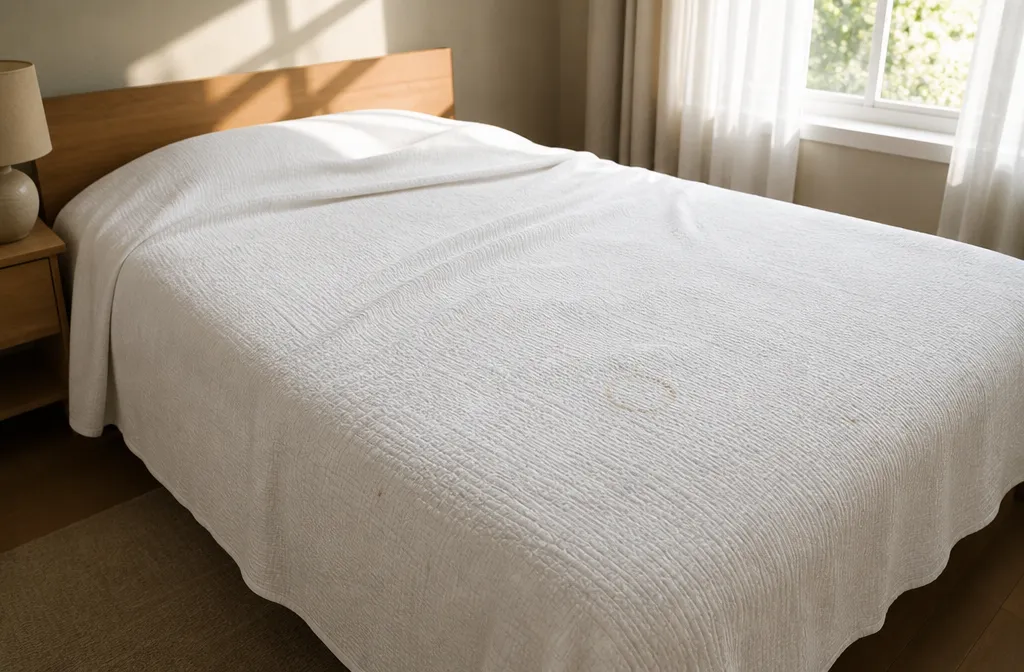
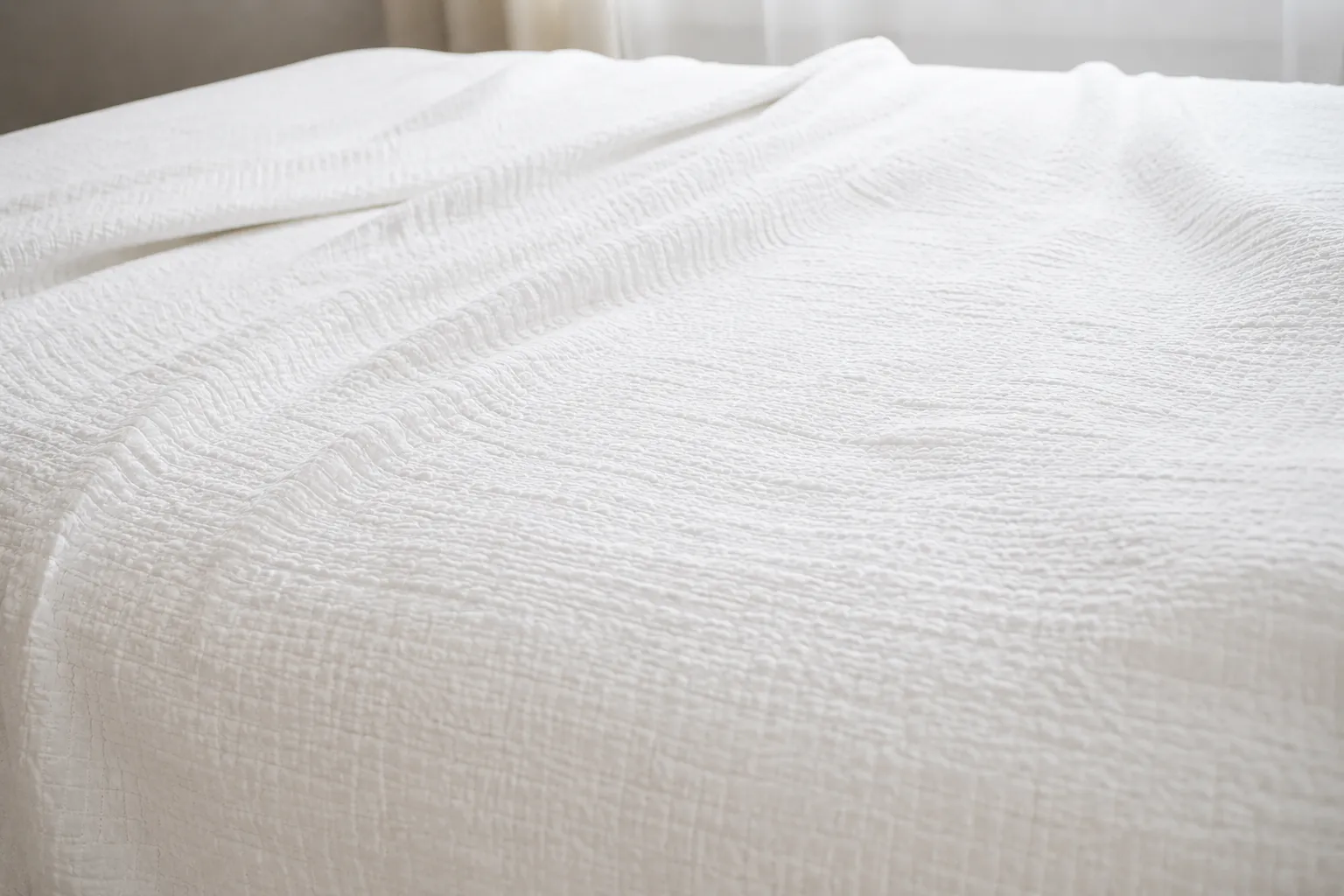 After
After
Request: Cotton bedspread with coffee stains and dust, needs deep cleaning.
Done: Aqua cleaning with enzyme stain remover and final steam treatment performed.
Cost: 12 000 ₸
Master: Aigul Serikova, dry cleaning master
Total: Bedspread is 95% cleaner, stains removed, fabric refreshed.
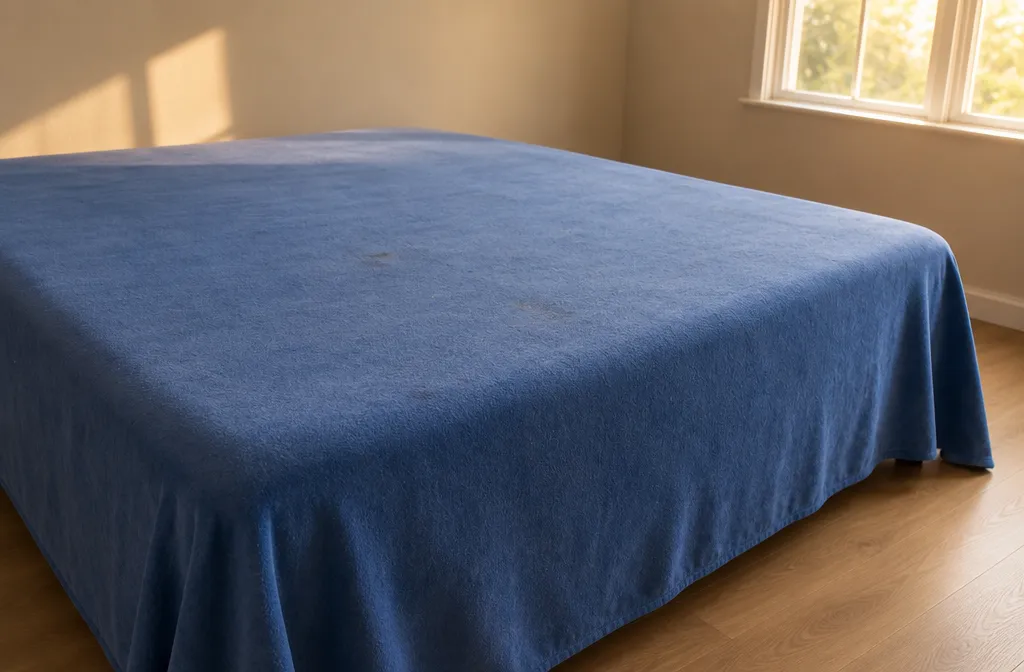
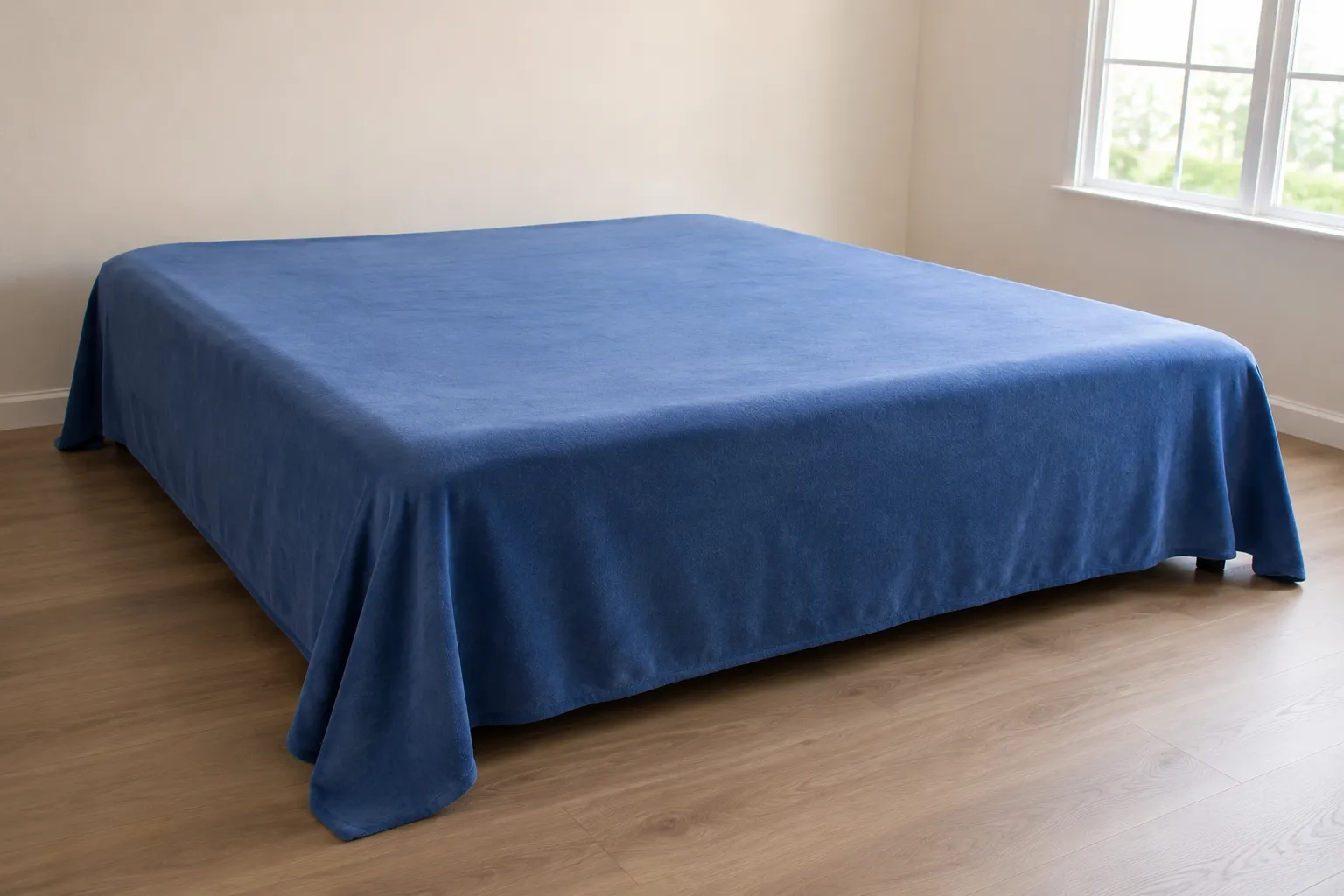 After
After
Request: Microfiber bedspread with grease stains and dust, needs cleaning.
Done: Cleaning with water extractor and neutral shampoo, followed by rinsing.
Cost: 15 000 ₸
Master: Timur Zhaksybekov, dry cleaning master
Total: Bedspread fully cleaned, stains removed, pile restored.
 After
After
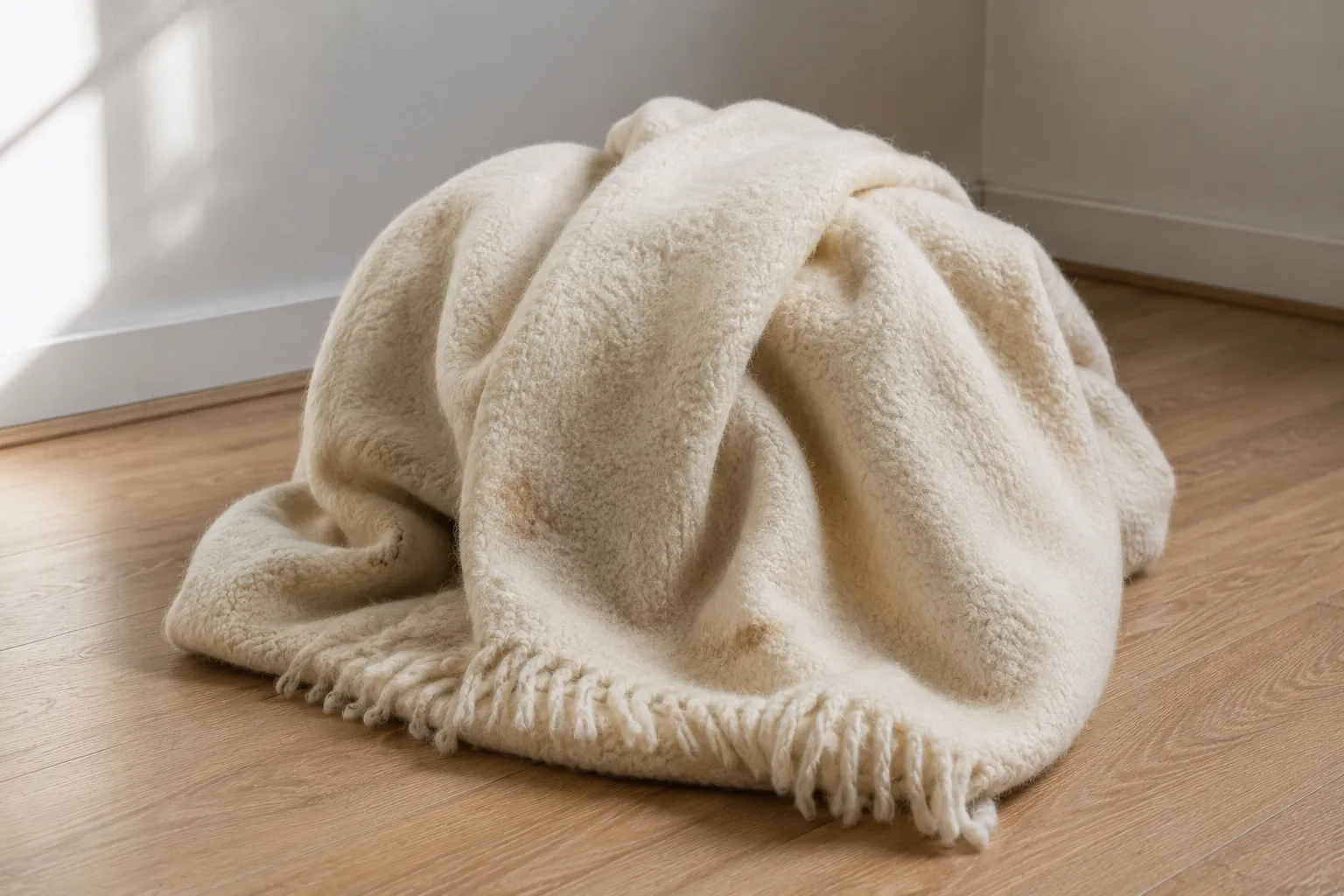
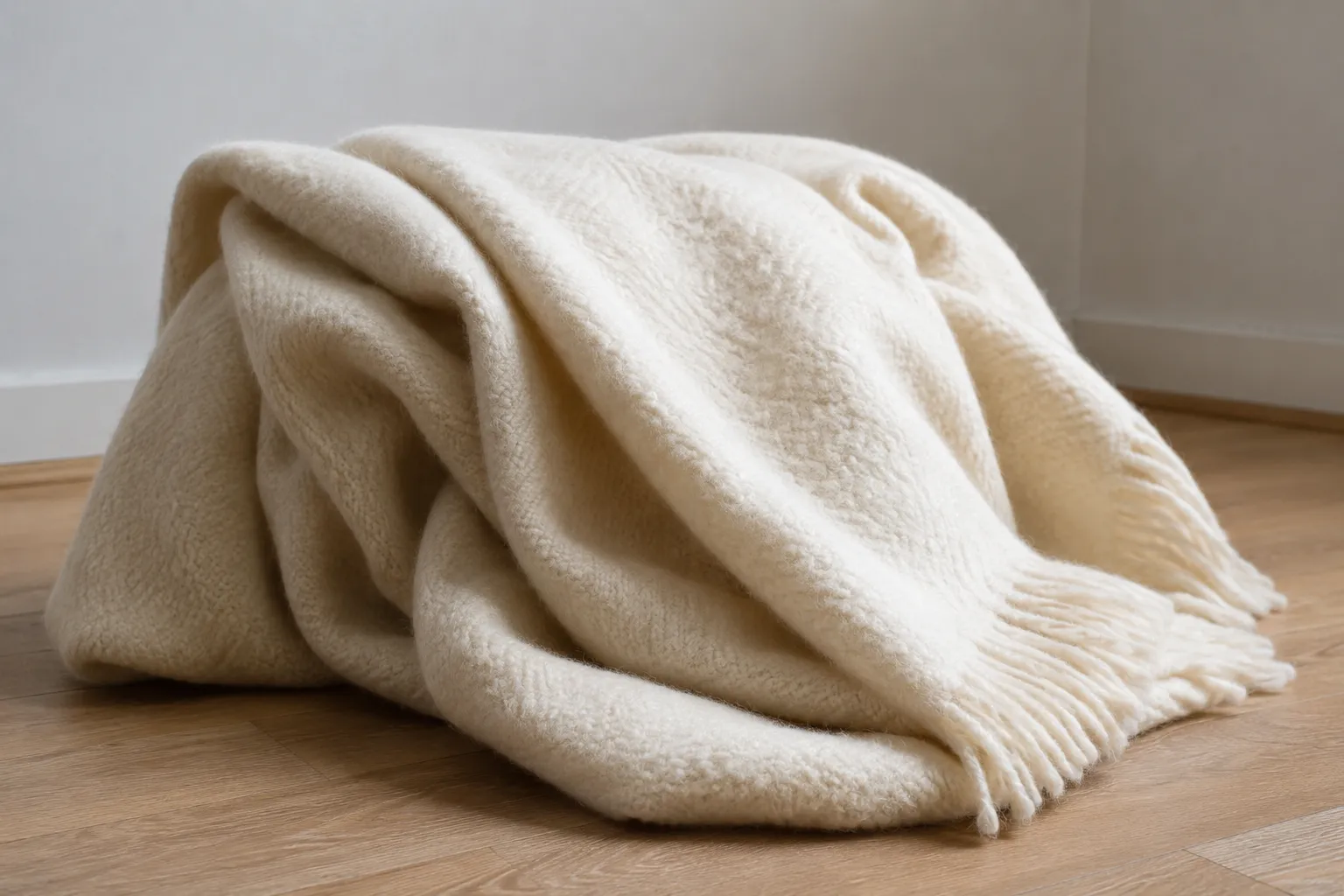
Request: Wool blanket with creases and light soiling, needs refreshing.
Done: Dry cleaning with powder and gentle steam treatment performed.
Cost: 14 000 ₸
Master: Gulmira Akhmetova, dry cleaning master
Total: Blanket became soft, clean, odor-free, pile fluffed up.
 After
After
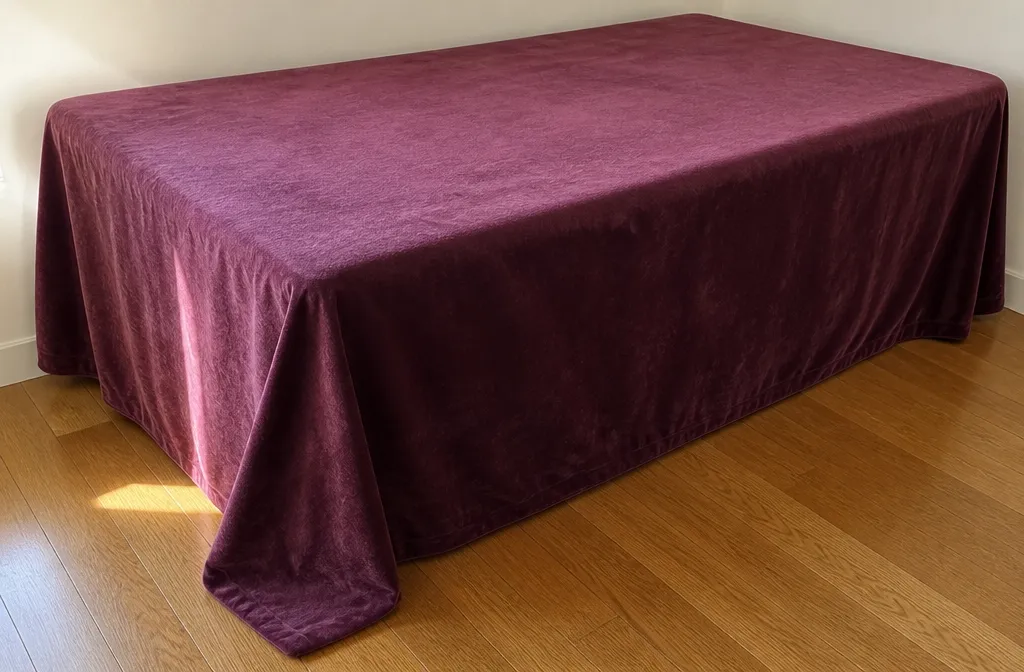
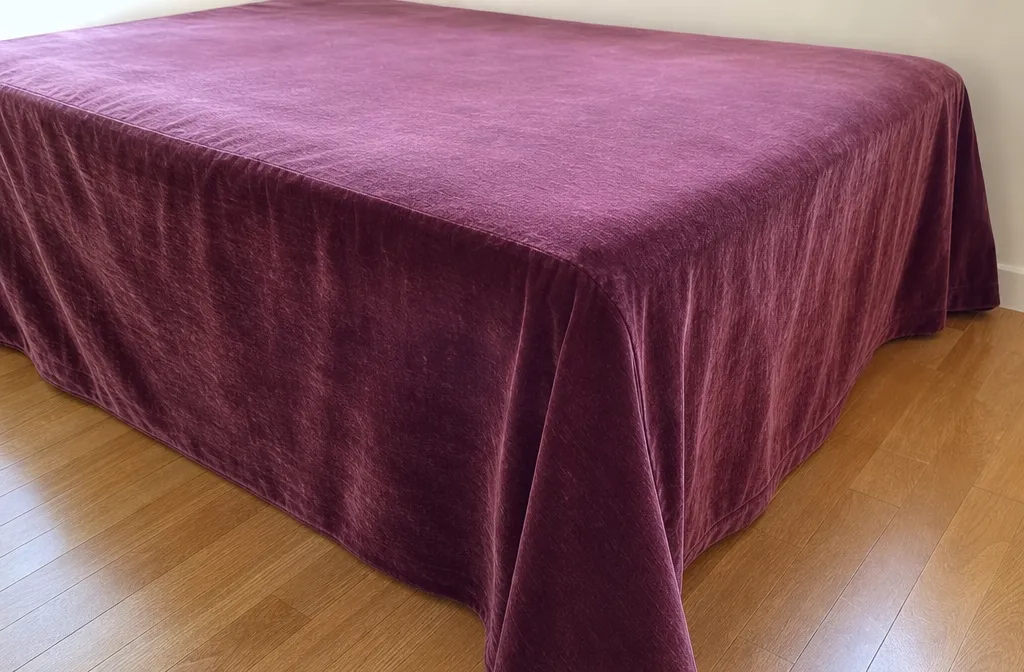
Request: Velvet bedspread with dust and wear, needs delicate cleaning.
Done: Foam cleaning with soft brush and final pile restorer performed.
Cost: 13 000 ₸
Master: Aidar Nurlanov, dry cleaning master
Total: Velvet fully cleaned, pile lifted, color more vibrant.
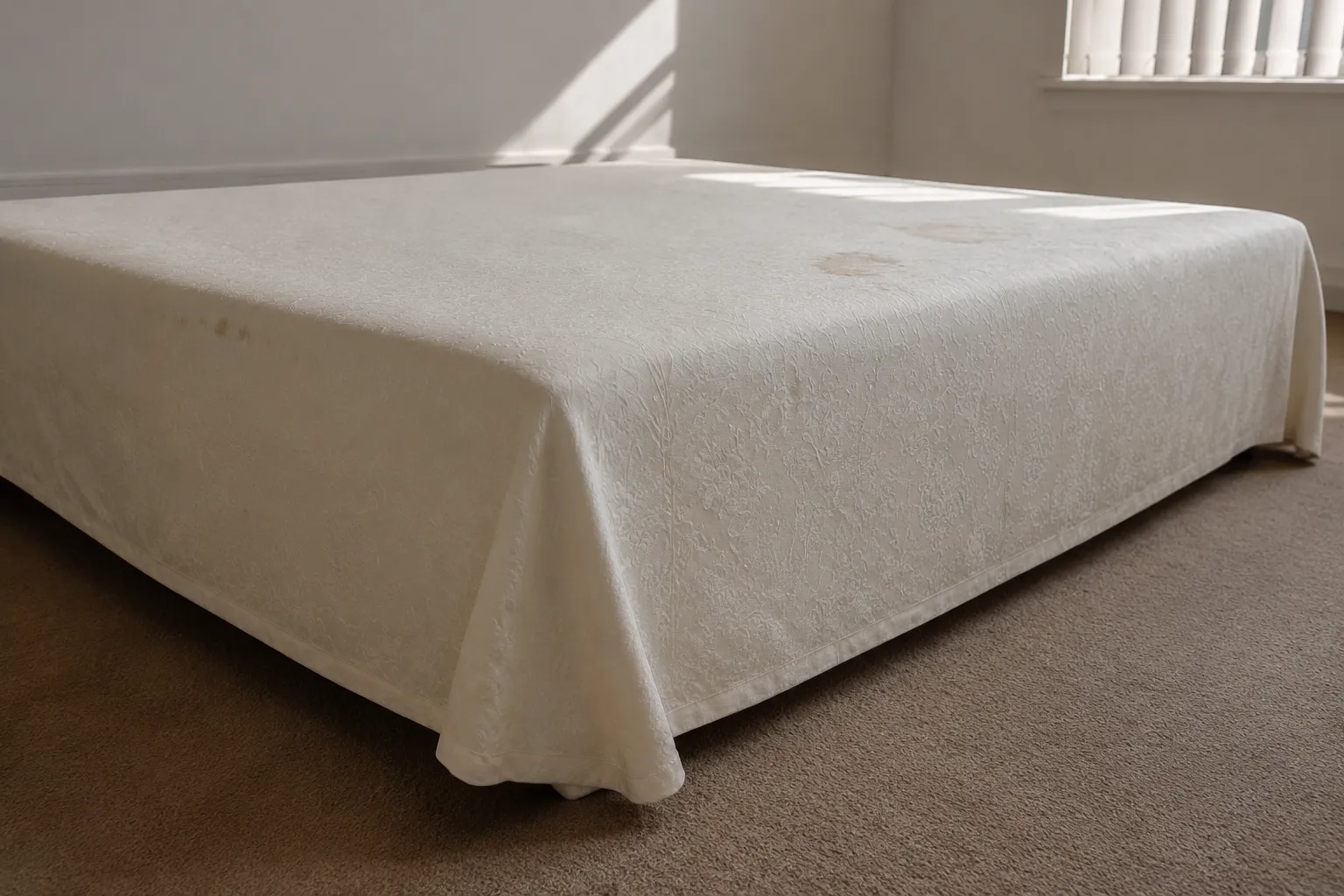
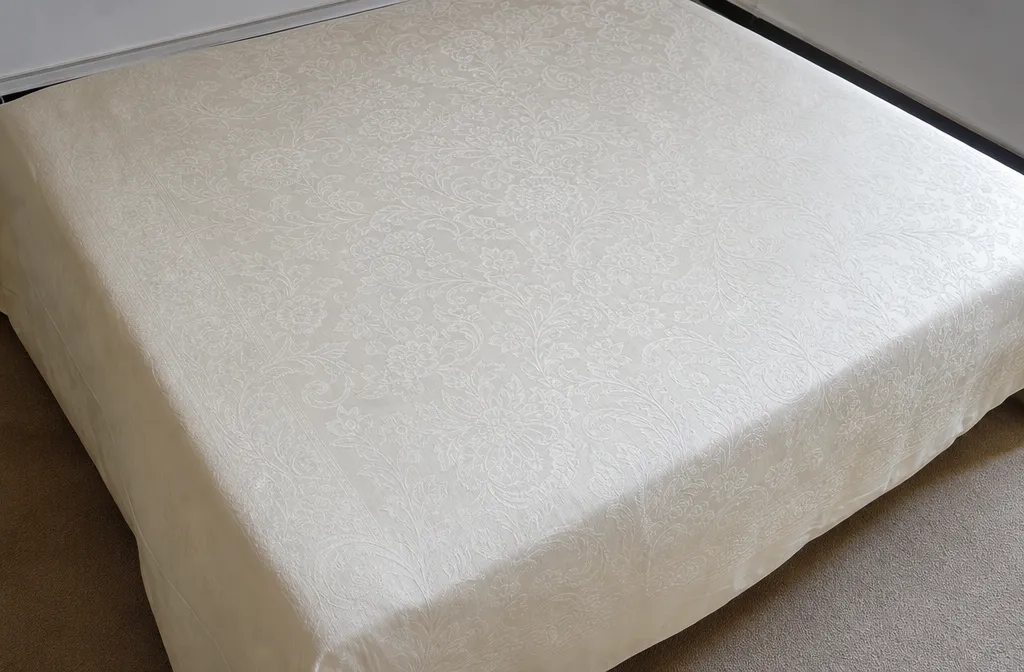 After
After
Request: Jacquard bedspread with tea stains and dust, needs deep cleaning.
Done: Aqua cleaning with stain remover for delicate fabrics and rinsing performed.
Cost: 12 000 ₸
Master: Dinara Kassymova, dry cleaning master
Total: Jacquard pattern became crisp, stains removed, bedspread fresh.
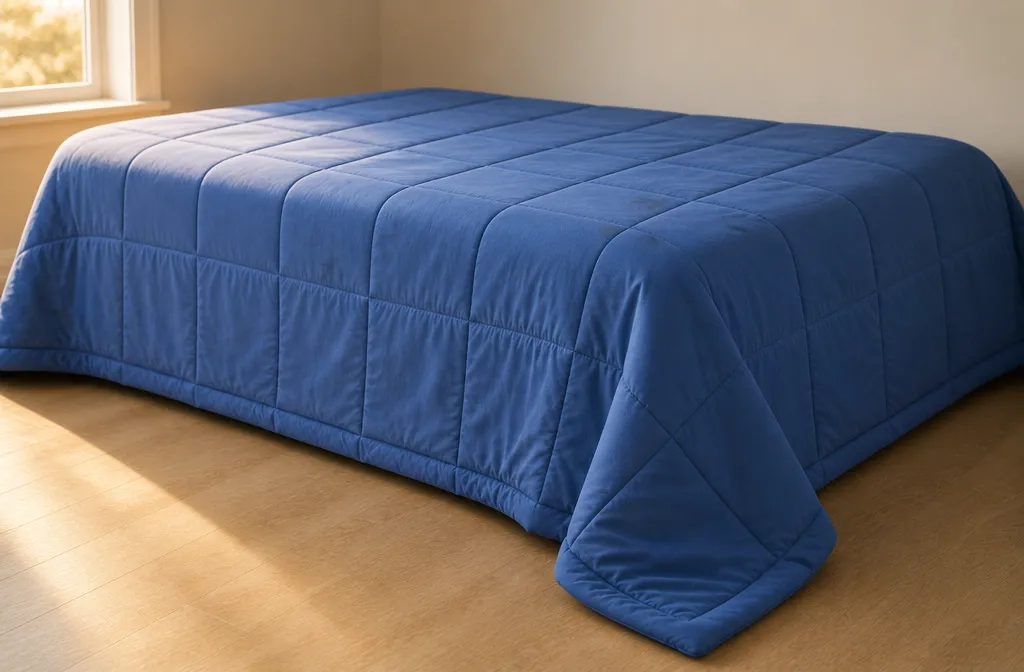
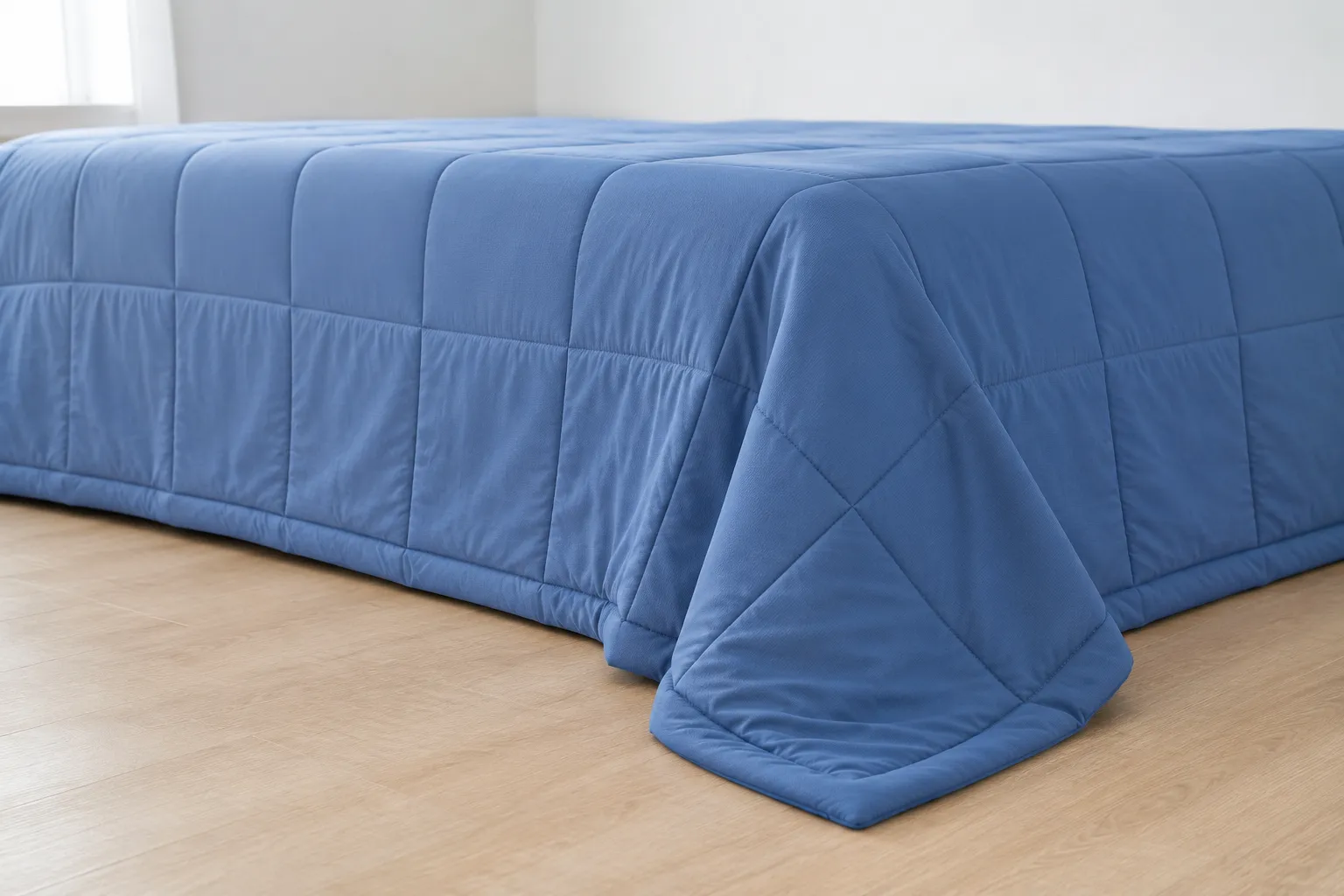 After
After
Request: Polyester bedspread with grease stains and static electricity.
Done: Dry cleaning performed with antistatic agent and stain remover, final rinse.
Cost: 16 000 ₸
Master: Ruslan Omarov, dry cleaning master
Total: Bedspread clean, stain-free, antistatic treatment removed static electricity.
 After
After
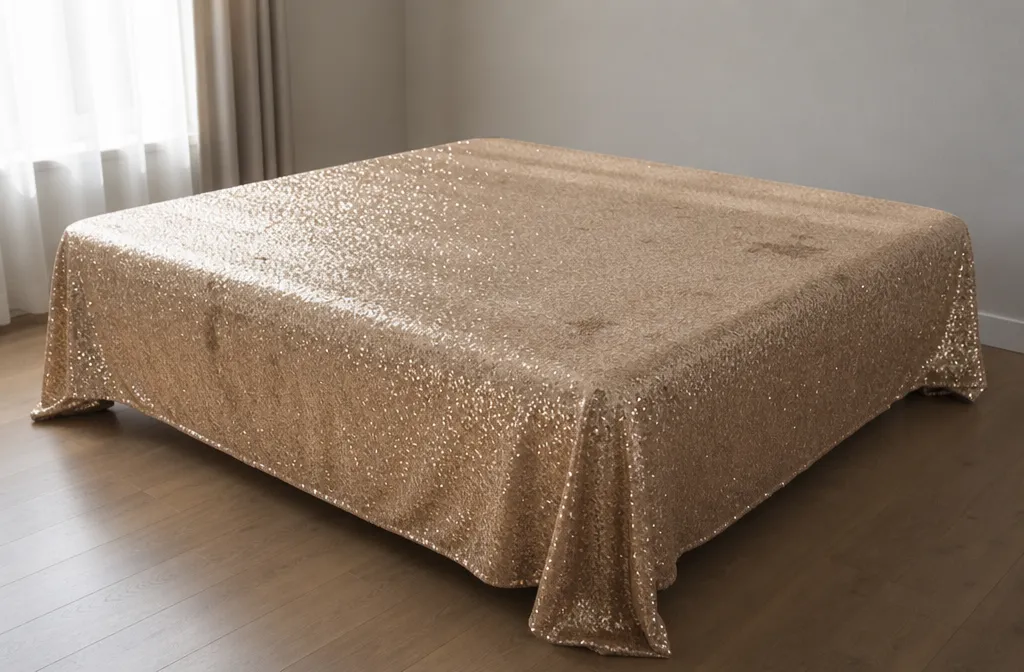
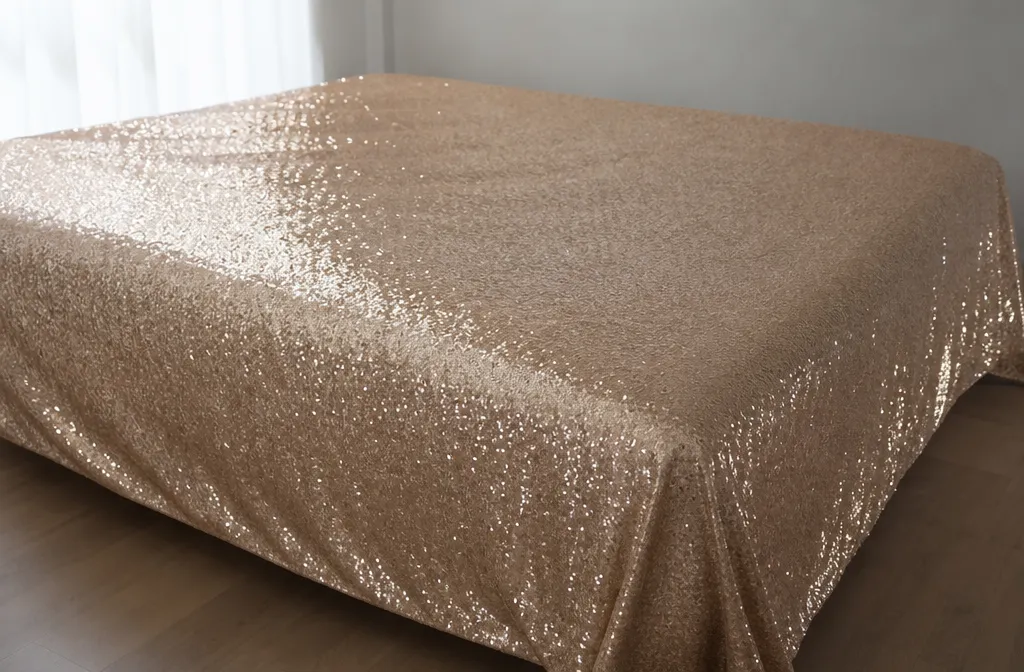
Request: Sequin bedspread, dusty, with stains, needs gentle cleaning.
Done: Dry cleaning performed with soft brush and spot treatment.
Cost: 13 000 ₸
Master: Saule Temirbekova, dry cleaning master
Total: Sequins shine, fabric clean, no damage, bedspread like new.
 After
After
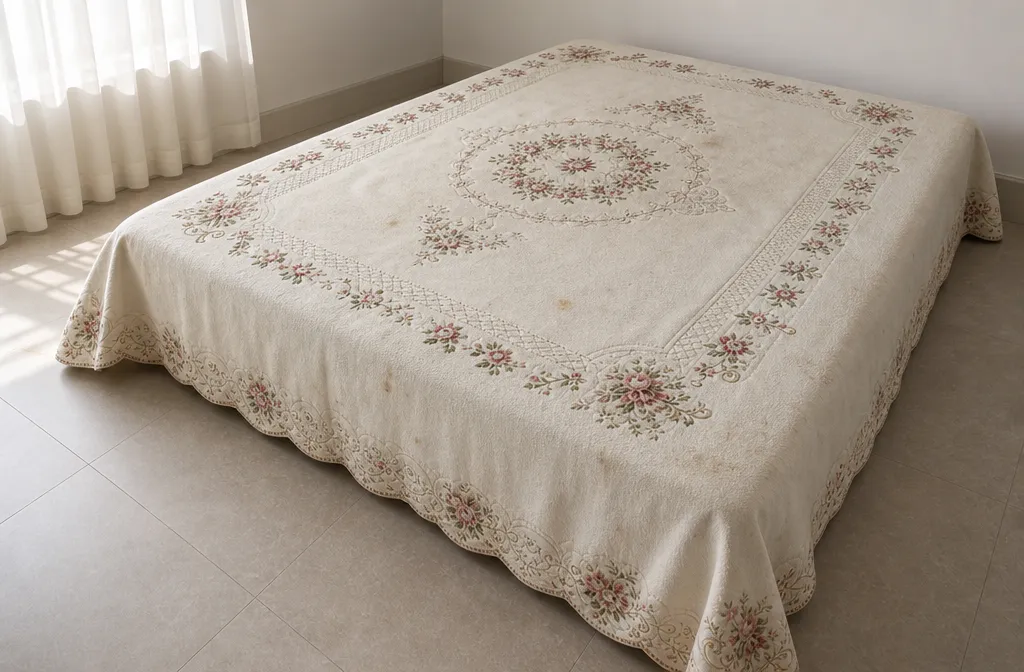
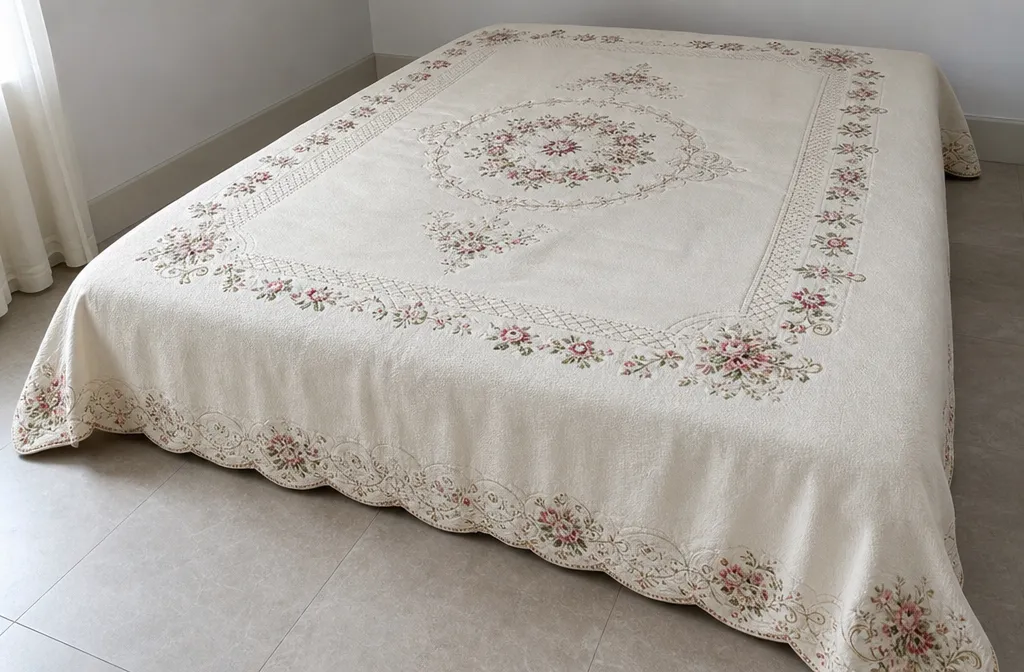
Request: Embroidered bedspread with dust and stains on embroidery, needs delicate cleaning.
Done: Hand cleaning performed with mild shampoo and final steaming.
Cost: 12 000 ₸
Master: Aizhan Muratova, dry cleaning master
Total: Embroidery brighter, stains removed, bedspread fresh and soft.
 After
After
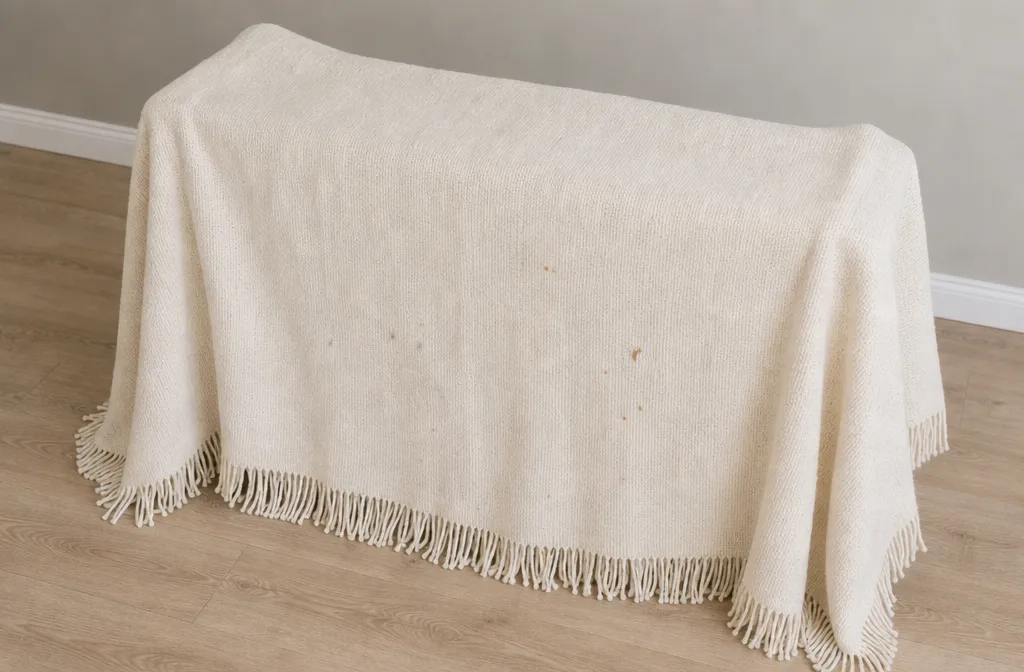
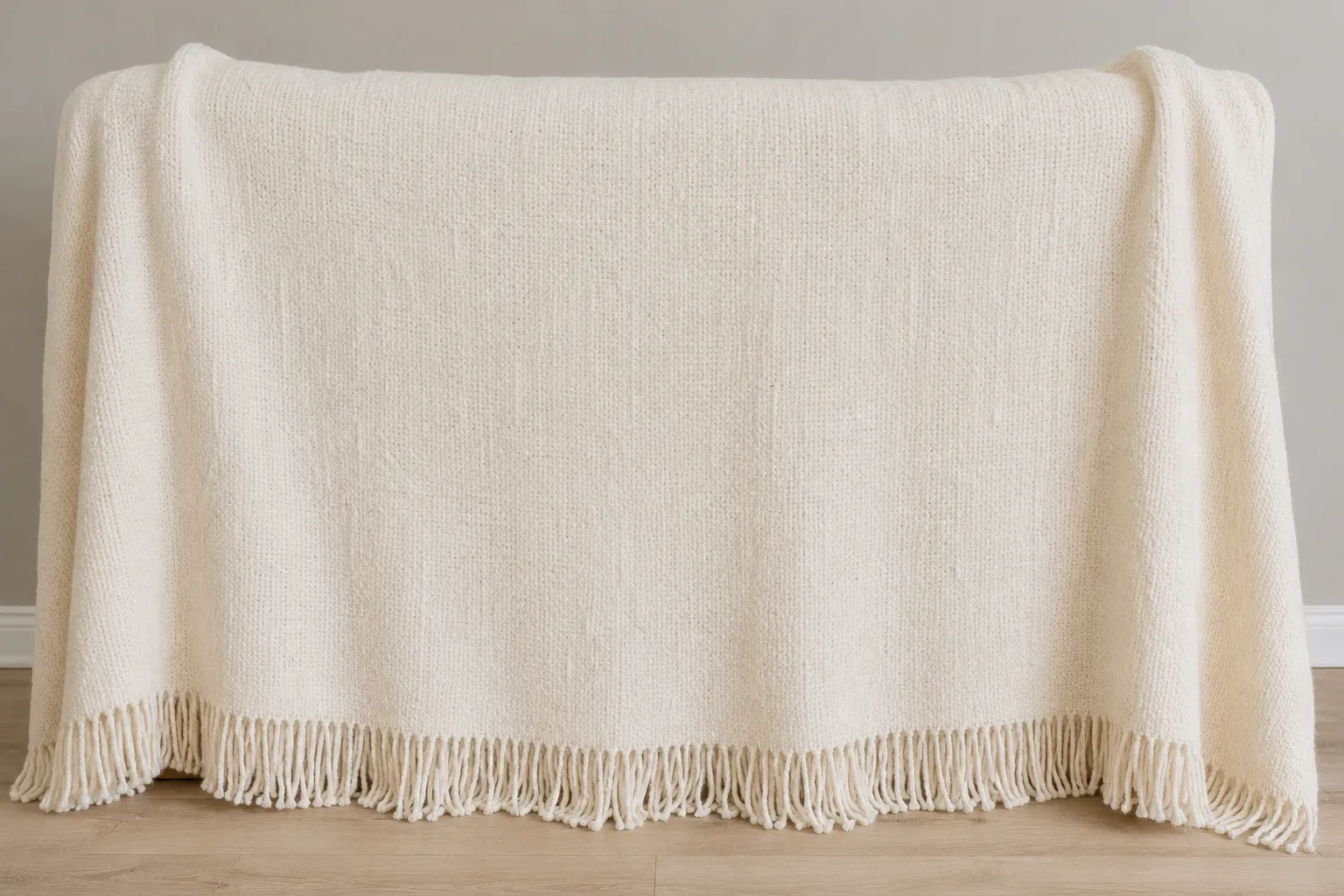
Request: Throw blanket with food stains and dust, needs deep cleaning.
Done: Aqua cleaning performed with enzyme stain remover and rinse with conditioner.
Cost: 14 000 ₸
Master: Yerzhan Bekzhanov, dry cleaning master
Total: Blanket clean, soft, stains removed, pile restored.
 After
After
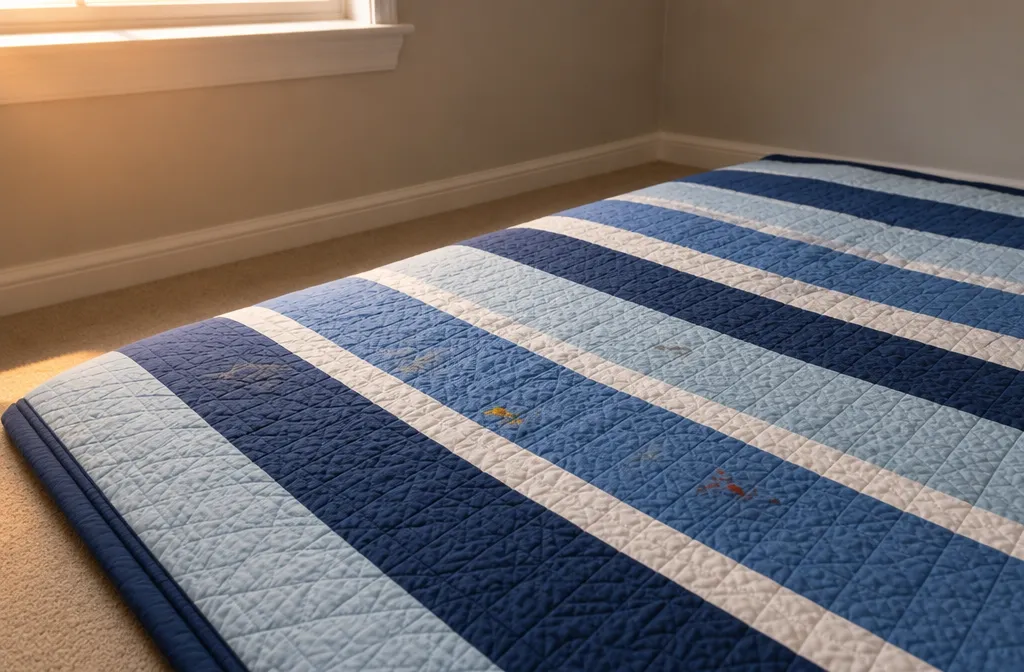
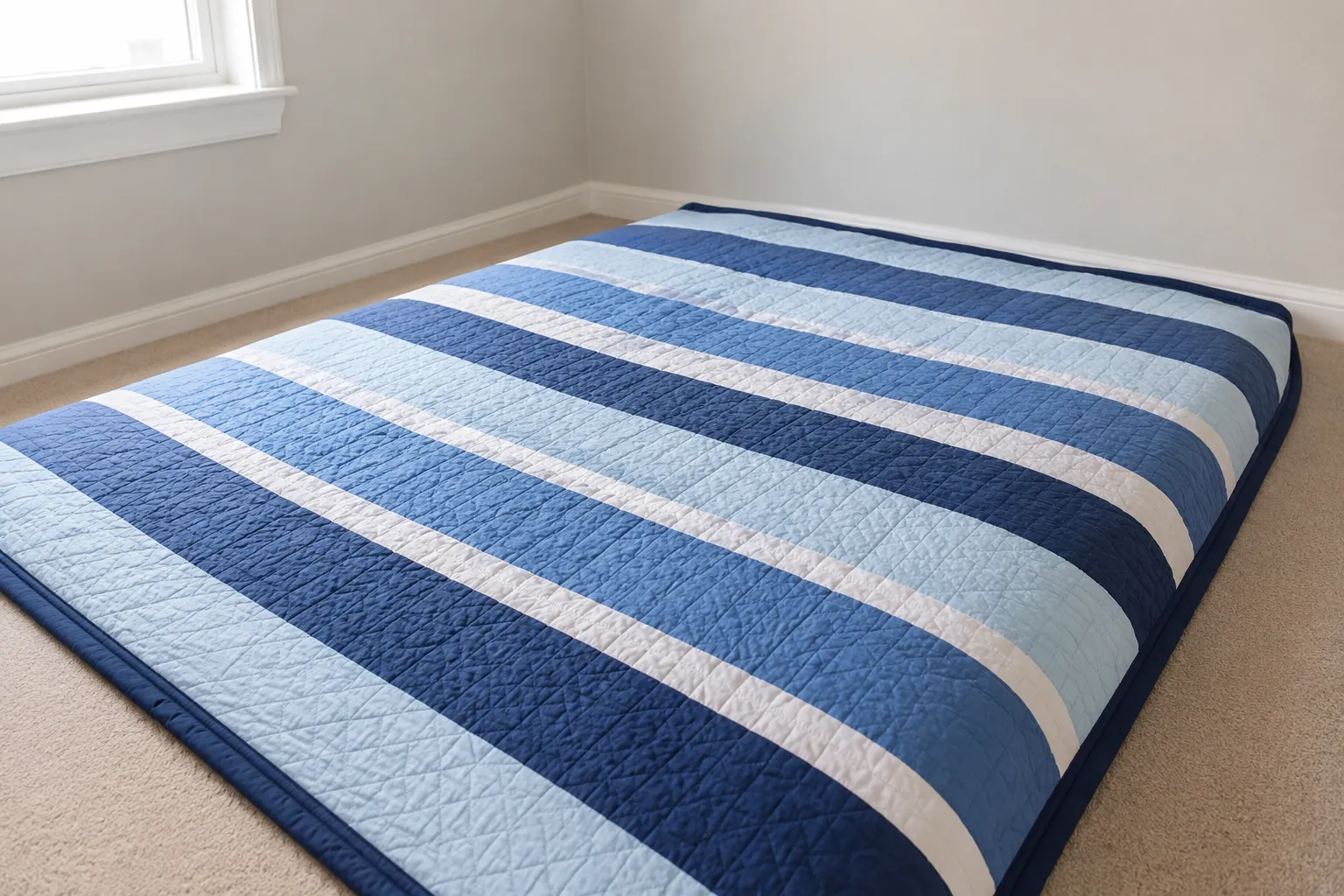
Request: Kids bedspread with juice stains and paint marks, needs safe cleaning.
Done: Cleaning performed with hypoallergenic agent and steam treatment.
Cost: 13 000 ₸
Master: Aliya Sagintayeva, dry cleaning master
Total: Bedspread clean, stain-free, hypoallergenic, safe for child.
All cleaners are profi-clean staff with training, uniform and security check. Each order has a team leader who controls quality.
Washing a bedspread in a home machine seems like an obvious solution, but in reality, it often ruins the item — the fabric shrinks, the filling clumps, and streaks remain. Professional dry cleaning of a bedspread solves these problems through a controlled environment and gentle reagents that do not deform fibers and remove dirt at the molecular level. In Almaty, where dust and smog settle on textiles particularly heavily, the difference between washing and dry cleaning becomes critical for the longevity of the bedspread.
The drum of a washing machine creates mechanical friction — at 800-1000 rpm spin cycles, fibers wear out, and the filling (synthetic padding, holofiber, bamboo) clumps into lumps after 2-3 cycles. At profi-clean, after such attempts, the bedspread cannot be restored: the fabric loses up to 15% of its density, and seams come apart due to uneven load. Bedspreads with a membrane layer (water-repellent) suffer especially — washing powder clogs the pores, and the item stops breathing. Additionally, washing at 40°C does not kill dust mites, only washes away the top layer of dust — allergens remain inside. If you have a microfiber or velour bedspread, the machine turns it into a “bald” rag within six months — the pile comes out and pills irreversibly.
Dry cleaning of a bedspread at profi-clean uses extraction technology — dirt is removed by vacuum without mechanical friction, at a temperature not exceeding 30°C. We use hypoallergenic chemicals from Kiehl and Sodasan, which break down fats and proteins (sweat, saliva, food traces) at the molecular level without affecting dyes or impregnations. In my opinion, the main advantage is the controlled reagent dwell time: for coffee or wine stains, 5-7 minutes is enough; for old grease, up to 15 minutes, and this does not dry out the fabric like prolonged soaking in a machine. After treatment, the bedspread undergoes a final rinse with distilled water — with Almaty water hardness up to 7 mg-eq/L, we avoid leaving salt streaks, which are guaranteed to appear after home washing.
A smell after dry cleaning is a sign that the reagent was not fully removed or the item was dried in an unventilated room. In our practice at profi-clean, this situation occurs if the client picks up the bedspread before 24 hours of drying in a chamber with HEPA filtration — residual moisture above 8% causes a musty odor. We guarantee no smell after our treatment: the final cycle is a warm air blow (40°C) with ozonation for 20 minutes, which kills bacteria and neutralizes chemical residues. If you pick up the item and smell something, hang it in fresh air for 2-3 hours, but not in direct sunlight: UV rays destroy optical brighteners in the fabric. The cause of the smell could also be mold under the filling — this happens if the bedspread was stored damp; in this case, a repeat treatment with an antibacterial component is needed, which we do for free under our 24-hour guarantee.
Almaty dust contains not only sand and soil but also smog particles from thermal power plants and vehicles — they settle on bedspreads as an oily film, especially in the Medeu and Bostandyk districts, where exhaust concentrations are higher. Home washing with regular powder does not remove this film — it bakes on during drying on radiators and leaves a gray residue visible on light colors. For such dirt, we use a pre-treatment with an alkaline solution at pH 9-10, which emulsifies oils without brush friction — this eliminates the risk of stretching the pile. In winter, when windows are closed, bedspreads also absorb cooking odors — professional dry cleaning with solution circulation through the filling removes them in one cycle, while washing only masks them with fabric softener fragrances.
| Parameter | Machine Washing | profi-clean Dry Cleaning |
|---|---|---|
| Fabric Deformation | Shrinkage up to 10%, pile abrasion | No shrinkage, texture preserved |
| Filler Condition | Clumps into lumps after 2-3 cycles | Remains uniform |
| Smoke and Oil Removal | Only surface-level | Molecular breakdown |
| Risk of Water Stains | High (hard water in Almaty) | None (distilled water) |
| Bedspread Lifespan | Reduced by 40-50% | Preserved by 90%+ |
In practice, clients who switch to dry cleaning after 2-3 washes notice the difference immediately: the bedspread doesn’t lose its shape after drying, doesn’t “shrink” at the corners, and no white powder residue remains. Before loading an item into the drum, check the label — if it shows a “dry clean only” symbol, machine washing voids the manufacturer’s warranty, and restoration will cost more than the dry cleaning itself.
The frequency of cleaning a bedspread depends not on the calendar, but on three factors: material, intensity of use, and bedroom environment. My practice at profi-clean shows that most clients make a mistake by focusing on “once a season” — for some fabrics this is too infrequent, for others it’s already too late.
Cotton and linen bedspreads are champions at accumulating dust mites: at 55–65% humidity and 22–25 °C, the mite population doubles every three weeks. We recommend dry cleaning for natural fiber bedspreads every 3–4 months with daily use. For linen, seasonal treatment is also important: in summer, the fabric actively absorbs sweat and outdoor dust; open windows in Almaty on Abay Avenue or Timiryazev Street bring in vehicle exhaust and poplar fluff. If the bedspread is on a bed that is made daily, schedule cleaning for the end of June and the end of September. If the deadline is missed, the fibers lose elasticity, and restoring shape after the fourth wash is no longer possible.
Polyester and microfiber absorb less moisture, so mites don’t thrive as actively — but they accumulate static electricity, which attracts dust like a magnet. In Almaty, where the air is drier due to the altitude of 700–900 meters above sea level, static on synthetics is 30–40% higher compared to coastal cities. Dry cleaning for a microfiber bedspread is needed every 5–6 months if no one sleeps on it — only as a decorative layer. But if a pet lies on the bedspread or a child plays on it, the interval is reduced to 2–3 months. Velvet and flock require more frequent treatment: the pile traps skin particles and cosmetics, and after 3 months without cleaning, a greasy sheen appears on the surface that cannot be removed with a vacuum. In our practice, there was a case: a client brought in a velvet bedspread after 8 months, and we had to apply degreaser in three passes — the cleaning cost doubled due to chemical consumption. The takeaway: clean synthetics before the greasy sheen appears, not after.
These materials are the most demanding in terms of timing. Wool and cashmere contain lanolin, which repels dirt but absorbs odors — tobacco smoke, kitchen smells, sweat. In a bedroom with windows on Nauryzbai Batyr Street or Dostyk Avenue, odors settle on the wool pile within 2–3 weeks, especially during peak traffic hours. Dry cleaning for a wool bedspread is needed every 4–5 months, provided you air it out on the balcony weekly (not in direct sunlight — UV rays destroy the keratin in the fiber). Natural silk is an exception: it is cleaned only when soiled, otherwise the delicate structure is damaged by frequent contact with chemicals. A typical mistake is washing a silk bedspread every six months “just in case”; after the second such wash, the fabric loses 40% of its tensile strength. Our rule for clients: silk — only when a stain appears or once a year, no more often.
Different city districts put different strain on bedspreads. In the Medeu district, closer to the mountains, humidity is higher and there is more pollen — dry cleaning of the bedspread is needed a month more often than in the center. In Bostandyk and Alatau districts, where active construction is underway, construction dust settles on textiles within 2–3 days — the bedspread becomes visually gray after a month. If you live on the first floors or near a roadway, add one more cleaning per year. At profi-clean, we take the address into account when creating a schedule: for clients from “Akbulak” or “Miras,” the interval is shorter than for residents of the upper part of Al-Farabi Avenue, where the air is cleaner.
Any of these symptoms is a signal that the schedule needs to be adjusted, regardless of how many months have passed since the last dry cleaning. Before ordering, take a photo of the bedspread in daylight — this way the master can immediately assess the degree of soiling and select the correct treatment mode.
A smell after dry cleaning is not normal, but a signal that either the agent has not been completely rinsed out, or the drying technology has been violated. In our practice, every fifth case “smells of chemicals” — a consequence of an unskilled selection of reagent for the fabric type or saving on airing time. We break down what actually smells, how to fix it, and why this problem occurs more often in Almaty than in cities with a dry climate.
The most common source is residual perchloroethylene, used in dry cleaning machines. In our conditions, we only use water-soluble Kiehl and Sodasan formulations — they do not leave a persistent chemical trace with proper rinsing. First reason: low water temperature at the final rinse stage — below 30 °C, the reagent is not completely washed out and remains in the fibers. Second: violation of the spin time — 5 minutes is enough for synthetics and microfiber, but 10–12 minutes are needed for wool and cotton, otherwise moisture with residual agent is retained in the fabric thickness. Third reason: drying in a closed room without supply ventilation; in Almaty apartments with plastic windows, natural air circulation is 2–3 times lower than in private houses, and moisture evaporates twice as slowly. If you smell an odor after our cleaning — call within the first 2 hours: we come out for free and re-treat the area with enhanced rinsing, which takes up to 40 minutes.
A damp bedspread after drying smells musty, not like solvent, and this smell dissipates within an hour of airing on the balcony. A chemical smell — sharp, “hospital-like,” with a hint of acetone or alcohol — does not disappear after 2–3 hours in the air, but only weakens by 10–15%. We teach clients a simple test: bring the bedspread to your face, hold your breath for 5 seconds, then exhale onto the fabric — if you feel the smell intensify after exhaling, the reagent has not been washed out. In such cases, airing in the cold (at −5…−15 °C, which occurs for 3–4 months in an Almaty winter) gives an effect in 4–6 hours — cold slows down evaporation but does not fix the smell like heat does. If the smell remains after 12 hours — a repeat treatment with a neutralizer is needed, which we add to the last rinse cycle on the Kiehl machine.
The most dangerous place to dry a duvet cover after dry cleaning is a closed bathroom. Humidity stays at 70–85% even 6 hours after a shower, and the fabric dries not in 3–4 hours, but in 12–15 — during this time, mold fungi begin to multiply in the fibers, producing a musty smell indistinguishable from chemical odors to an untrained nose. In Almaty, where indoor humidity drops to 18–25% during the heating season, drying in a living room near a radiator is the optimal option: a microfiber duvet cover dries in 2.5 hours, a cotton one in 4 hours at a radiator temperature of 45–50 °C. If there is no radiator, use the “dry” cycle in the washing machine at 60 °C for 20 minutes — this kills mold spores and removes reagent residues. Never dry the duvet cover folded — fold it in three layers on a drying rack so air passes between each layer.
Sometimes after dry cleaning, the smell comes not from the cleaning agent, but from the fabric itself — this is especially true for cheap polyester duvet covers with acrylic coating bought on marketplaces for a significant amount. When heated during drying (above 50 °C), acrylic releases monomers with a burnt plastic smell that cannot be removed by repeated cleaning or airing. In our practice, there was a case: a duvet cover smelled of “burnt rubber” after cleaning — it turned out the manufacturer used an adhesive impregnation to imitate velour, which breaks down at 40 °C. We recommend checking the label before ordering dry cleaning: if the icon “do not machine dry” and the ironing temperature is no higher than 110 °C — the fabric is heat-sensitive, and drying should only be done naturally at room temperature, away from radiators. For such duvet covers, we use cold rinsing (18–20 °C) and spin at 400 rpm — this prevents heating and preserves the fiber structure. Before cleaning an unfamiliar material, always request a test on an inconspicuous area — it’s free and takes 5 minutes.
Professional dry cleaning doubles the life of a duvet cover, but improper care afterward nullifies the result. We’ve broken down five key rules to keep your item fresh and in shape until the next treatment.
After we deliver the duvet cover from cleaning, it needs to rest in a spread-out state at room temperature for 12–24 hours. Room humidity should not exceed 60% — otherwise, residual moisture in the fibers will cause a musty smell, especially in dense fabrics like jacquard or tapestry. For our orders totaling a significant amount, we recommend clients not to put the duvet cover on the bed immediately, but to hang it on wide hangers or lay it on a drying rack, avoiding contact with radiators and direct sunlight. Ultraviolet light burns out dyes in the surface layer within 3–4 hours — on silk and satin, this is irreversible. After 24 hours, the item is ready for use, and the pile on velvet and velour recovers during this period without mechanical action.
After dry cleaning, place the duvet cover not on a bare mattress, but over a duvet cover or sheet — this reduces friction and slows the appearance of pilling on the underside. For models with embroidery or sequins, we recommend placing cotton fabric under the decorative area: hard elements scratch the mattress and lose their shine from constant contact. In Almaty apartments with dry heating air, it is especially important to smooth out all folds — creases in one spot turn into permanent wrinkles within a week, which can only be removed with repeated steam treatment. If the duvet cover is reversible (e.g., wool on one side and cotton on the other), alternate the side every 2–3 months — this distributes wear evenly, and the item lasts 1.5–2 years longer.
Even after a deep clean, up to 3–4 grams of dust settles on a bedspread per week — in the bedroom, this is the main allergen. We recommend treating the surface once every 7 days with a handheld steamer at 90–100 °C without touching the fabric: steam lifts dust and destroys up to 99% of dust mites. For wool and cashmere bedspreads, use only cold steam or a brush with natural bristles — hot steam shrinks natural fibers by 5–7% in a single treatment. Wet cleaning with a vacuum cleaner is acceptable once a month using a soft furniture attachment, but no more often: constant friction pulls the pile on flock and velvet. In our orders, we have noticed that clients who use a steamer once a week come back for repeat dry cleaning not after 6, but after 10–12 months.
The most common mistake is drying a bedspread on a clothesline or drying rack folded in half. Wet fabric stretches under its own weight at the fold, leaving an irreversible crease on dense cotton or linen. The second most frequent mistake is using fabric softener during home washing between professional cleanings: it clogs fiber pores, and during the next treatment with our hypoallergenic Kiehl and Sodasan chemicals, we have to spend 30% more time rinsing out residues. The third mistake is storing a bedspread in a vacuum bag: under pressure, synthetic fibers lose volume, and down and feathers clump into lumps that cannot be restored even after professional drying. In practice, profi-clean has recorded cases where, after a month in a vacuum, a down bedspread lost 40% of its heat-retaining properties.
Before storing for summer or winter, the bedspread must be completely dry — residual moisture above 8% triggers mold growth in the folds within 7–10 days. It is best stored in a cotton cover or pillowcase, not in plastic: cellophane does not allow air to pass through, and within 3–4 months a stale odor appears, which can only be removed by repeat dry cleaning. In Almaty, with sharp humidity fluctuations between the heating season and summer, we recommend placing silica gel sachets in the cover — 2–3 packets for a 200×220 cm bedspread absorb excess moisture. For wool and cashmere items, be sure to use a lavender-based moth repellent without naphthalene — naphthalene absorbs into fibers and does not dissipate for 2–3 months after unpacking. If you are unsure about the condition of your bedspread after storage, bring it to us for inspection: our diagnostics are free and take 5 minutes.
Bedspreads with sequins, beads, bugle beads, or voluminous embroidery are the most challenging items for dry cleaning: the decoration reacts to friction, temperature, and chemicals differently than the base fabric. Over 8 years of work, we have developed protocols that preserve both the shine of sequins and the integrity of embroidery threads, as well as the shape of the bedspread itself — without surprises after drying.
Machine washing a bedspread with sequins or embroidery almost certainly ruins the item — this is not a matter of care, but of physics. The drum rotates with a force of 40–60 kg/m², and sequins rub against each other and the walls, causing micro-cracks in the plastic within 30 minutes of washing, and by the end of the cycle, 10–15% of the decoration falls off. Embroidery suffers differently: floss or metallic (Lurex) threads lose elasticity when wet, and during spinning at 800–1000 rpm, they break at the stitch points — especially if the embroidery is dense or satin-stitched. Another problem is the peeling of heat-applied patches and glue-based rhinestones: hot water (above 40 °C) softens the glue, and the decoration falls off during rinsing. In our practice, there was a case where a client machine-washed a hand-sewn sequin bedspread — after the cycle, only 60% of the decoration remained, and restoring the pattern was impossible because the sequins were overlapped. Before cleaning a decorative bedspread, always check the type of decoration attachment: if sequins are sewn with threads rather than glued, machine washing is still dangerous due to friction, but at least the appliqué won’t fall off — hand washing in a basin with cold water and liquid gel for delicate fabrics is safer but requires 2–3 rinses and drying on a horizontal surface without wringing.
Not all decorative elements are equally resistant to chemicals and mechanical stress — we divide them into three groups based on the risk of damage during dry cleaning. The first group includes sequins made of soft plastic (PET) — they bend but do not break, and can be cleaned in a delicate fabric machine at 30 °C with a mesh bag; however, beads and bugle beads made of acrylic or glass in the same machine get surface scratches and become cloudy after just one cycle. The second group is embroidery with lurex and metallic threads: upon contact with chlorine-containing stain removers (Vanish, OxiClean), the metallic coating oxidizes within 5–10 minutes, and the thread darkens or turns green — such products are applied spot-wise, not over the entire embroidery. The third, most finicky group is thermal appliqués and rhinestones on glue (Swarovski, Preciosa): when heated above 40 °C, the glue softens, and the rhinestone falls off at the slightest friction, so for bedspreads with such decor we use only cold cleaning (foam + extraction without heat) with the rhinestones secured with tape before starting work. In October, we had a case with a bedspread made of Indian silk, hand-embroidered with bugle beads — machine dry cleaning with a harsh cycle destroyed 30% of the beads, and the client demanded compensation, but after manual foam treatment and drying without heat, the decor remained intact. If your bedspread has at least one of these elements, ask the master for a test on an inconspicuous area (lining seam or edge of the embroidery) — it’s free and takes 2–3 minutes, and guarantees that the decor won’t be damaged.
Grease stains on sequins and embroidery are a separate category of difficulty because the decor creates many micro-recesses where oil gets trapped and is not washed out by standard foam. On smooth plastic sequins, oil (traces of cream, fingers, food) holds less firmly — treatment with an alcohol-based degreaser (isopropanol 70%) and a dry cloth is sufficient, but on satin stitch or Richelieu embroidery, grease penetrates the weave of the threads and remains even after two cleaning cycles if a sorbent (talc or starch) is not used to draw out the oil before wet treatment. Another problem is cosmetic stains (foundation, lipstick) on light sequins: the pigment embeds into micro-cracks in the plastic, and a regular stain remover cannot handle it; a solvent based on isopropyl alcohol with a soft brush and subsequent neutralization with water is needed. In our orders from a significant amount (comprehensive cleaning of a bedspread with embroidery and sequins), we always take a photo of the decor before and after — this disciplines the master and provides transparency for the client, and for complex stains (grease + cosmetics + dust), we use a three-stage protocol: sorbent for 2 hours, then alcohol treatment, then foam cleaning with extraction. Because grease on embroidery is not removed in one pass, the cleaning time for a decorative bedspread increases from 1 hour to 2.5–3 hours — keep this in mind when planning: if the bedspread is needed urgently (for guests arriving), it’s better to send it for cleaning 2–3 days before the event, rather than the day before.
Improper drying kills a decorative bedspread faster than poor cleaning — and this is not just about shrinkage, but about irreversible deformation of the decor. Sequins made of soft plastic, when dried on a radiator or under direct sunlight, heat up to 50–60 °C and lose their shine: the plastic becomes cloudy, and “whitish” streaks appear
I ordered dry cleaning for a bedspread — coffee stains disappeared completely, I didn't even expect such an effect.
Thank you, Aigerim! We're glad the result exceeded expectations.
The bedspread after the wedding had wine stains — they cleaned almost everything, but one stain remained barely noticeable.
We had a wool bedspread dry cleaned — the pile became fluffy, no shrinkage.
Great, Daniyar! We use gentle formulas for delicate fabrics.
I couldn't get rid of the tobacco smell for a long time — after treatment at profi-clean, the bedspread smells fresh.
Dry cleaning of a throw-blanket from pets — fur and odor removed perfectly.
Thank you for the review, Erlan! Special products for allergy sufferers to the rescue.
The silk blanket became softer but faded a bit — apparently my own dyed material.
I came for dry cleaning of a blanket — oil paint from children's drawings came off completely.
Glad to help, Kuanysh! Our chemists know how to handle paint.
The down blanket was refreshed — became light, without lumps, like new.
After dampness at the dacha, the blanket got moldy — dry cleaning removed both mold and smell.
Job well done, Timur! Used antifungal agents.
Heavy quilted blanket — good result, but returned a day later than promised.
Gulnara, we apologize for the delay. We will try to meet deadlines in the future.
The dog loves to sleep on the blanket — after dry cleaning, no fur or smell.
The terry blanket became fluffier and whiter than when purchased. Delighted!
Olga, thank you for your trust! We handle terry carefully.
For the hotel, I ordered dry cleaning of blankets — 20 pieces, all cleaned perfectly, no streaks.
Nurlan, glad to cooperate! We process wholesale orders quickly.
The embroidery was not damaged, the color was refreshed, but they charged a bit much for delicate washing.
The fleece of the blanket did not pill after dry cleaning, it became softer — I recommend it.
Sergei, thank you! Fleece requires low-temperature treatment.
Children's blanket with milk stains — washed without chemicals, hypoallergenic.
Spilled oil on my favorite blanket — dry cleaning saved the day, no trace left.
Ruslan, great! Oil stains are our specialty.
The velour became velvety after cleaning, the pile didn't flatten — superb!
Blood stains were removed perfectly, but a faint trace remained on the reverse side — overall satisfied.
Bekzhan, thanks for the feedback. We will be more thorough in checking two-sided stains.
Foundation and lipstick disappeared without a trace — the blanket is like new.
I sent the linen blanket for dry cleaning — minimal shrinkage, even color.
Dauren, linen is finicky, but we know the modes.
Some sequins fell off after cleaning, although we were warned about the risk.
Nina, we're sorry. Sometimes decor can't withstand even gentle treatment.
Sports blanket — dry cleaning removed the persistent sweat smell, now it smells fresh.
Blanket-quilt became fluffy, like new — excellent work.
Saule, thank you! We restore volume with proper drying.
Child spilled borscht — dry cleaning removed stains completely, no streaks.
Bamboo blanket became softer, but the slight fuzziness is gone — overall good.
Used as seat cover — sent for dry cleaning, now like new.
Vadim, unconventional use! Glad we handled it.
Woolen blanket washed without shrinkage or pilling — excellent result.
Pen burst on the blanket — dry cleaning removed ink completely, hard to believe.
Ivan, we handle any stains, thanks for the review!
Old blanket turned yellow — bleached without chlorine, became snow-white.
Ordered dry cleaning — soiled areas near the pillow were cleaned, but not perfectly.
Maksat, noted. For heavy soiling, we use pre-treatment.
Microfiber didn't pill after cleaning, color became brighter — very pleased.
Usually the process takes 3-5 hours including drying. Urgent dry cleaning is done in 4 hours.
The master's visit is free for orders of two or more bedspreads. For one bedspread, the cost of the visit is at an individual rate.
Yes, the master comes with equipment and performs cleaning on site. You don't need to take the bedspread to the dry cleaner.
Remove the bedspread from the bed, make sure there are no small items on it. Stains do not need to be pre-washed — the master will treat them with professional products.
We clean bedspreads of any size: from children's (100x140 cm) to euro (240x260 cm) and non-standard. The price depends on the size and material.
Yes, we work with all fabrics: cotton, microfiber, wool, polyester, velour, jacquard, as well as bedspreads with sequins and embroidery.
Yes, we use gentle methods to avoid damaging the decor. Sequins and embroidery are treated by hand.
When ordering two or more bedspreads — 10% discount, three or more — 15%. Also, free master visit.
Prices start at individual rate for a children's bedspread and individual rate for a bedspread with sequins. The exact cost depends on size and material.
More than 95% of clients are satisfied with the result. We have been working since 2019 and have cleaned over 1000 bedspreads. Reviews can be viewed on our website and Instagram.
Tell us about your experience with profi-clean — it helps other clients and us improve.
We currently operate in Almaty. Other cities are coming soon.