Dress inspection
We assess the fabric, hardware, and type of stains. We record the condition of the decoration.
Professional wedding dress dry cleaning in Almaty — restore whiteness and freshness to even the most complex outfit

We work with any types and materials
Delicate cleaning without risk of deformation
from 4,000 ₸Special treatment of the train to preserve shape
from 4,000 ₸Hand cleaning of the corset with boning reinforcement
from 4,000 ₸Gentle cleaning of the hoop skirt without loss of volume
from 4,000 ₸Hand treatment of decorations to preserve shine
from 4,000 ₸Step-by-step cleaning of each layer
from 4,000 ₸Intensive treatment of long train
from 4,000 ₸Use of pH-neutral products for silk
from 4,000 ₸Hand cleaning of lace to prevent snags
from 4,000 ₸Spot removal of stains from embroidered areas
from 4,000 ₸Securing appliqués before cleaning
from 4,000 ₸Delicate cleaning of sequins without loss of shine
from 4,000 ₸From inspection to result with guarantee
We assess the fabric, hardware, and type of stains. We record the condition of the decoration.
Apply K2 stain remover to grass, wine, and cosmetic stains. For tough stains, use Orvus.
Clean in a professional machine with a gentle cycle for silk, lace, and beading.
Clean corset and crinoline by hand to avoid deformation.
Remove odors, smooth wrinkles, and disinfect with Vapamore MR-100 steam.
The dress dries in a special chamber with humidity control to set the shape.
Examine the dress under UV light for residual stains.
We pack it in a breathable storage cover to protect from dust and damage.
Our masters are trained to work with K2 and Orvus. These products effectively remove wine, grass, and cosmetics without damaging silk, lace, or beads. Each stain is treated individually.
Karcher SE 4001 provides deep dirt extraction, and Vapamore MR-100 delivers pressurized steam for disinfection. Equipment is certified for delicate fabrics.
We use only hypoallergenic formulations with Oeko-Tex certificates. After dry cleaning, no chemical residues remain — the dress is safe for skin.
We are confident in our quality: if a stain is not removed the first time, repeat treatment is free. The guarantee covers all types of stains.
We have cleaned dresses of all complexities: from simple to multi-layered with corsets and crinolines. We know how to reinforce beads and not damage lace.
Before cleaning, we test the stain remover on an inner seam. This ensures the product will not damage the fabric or change color.
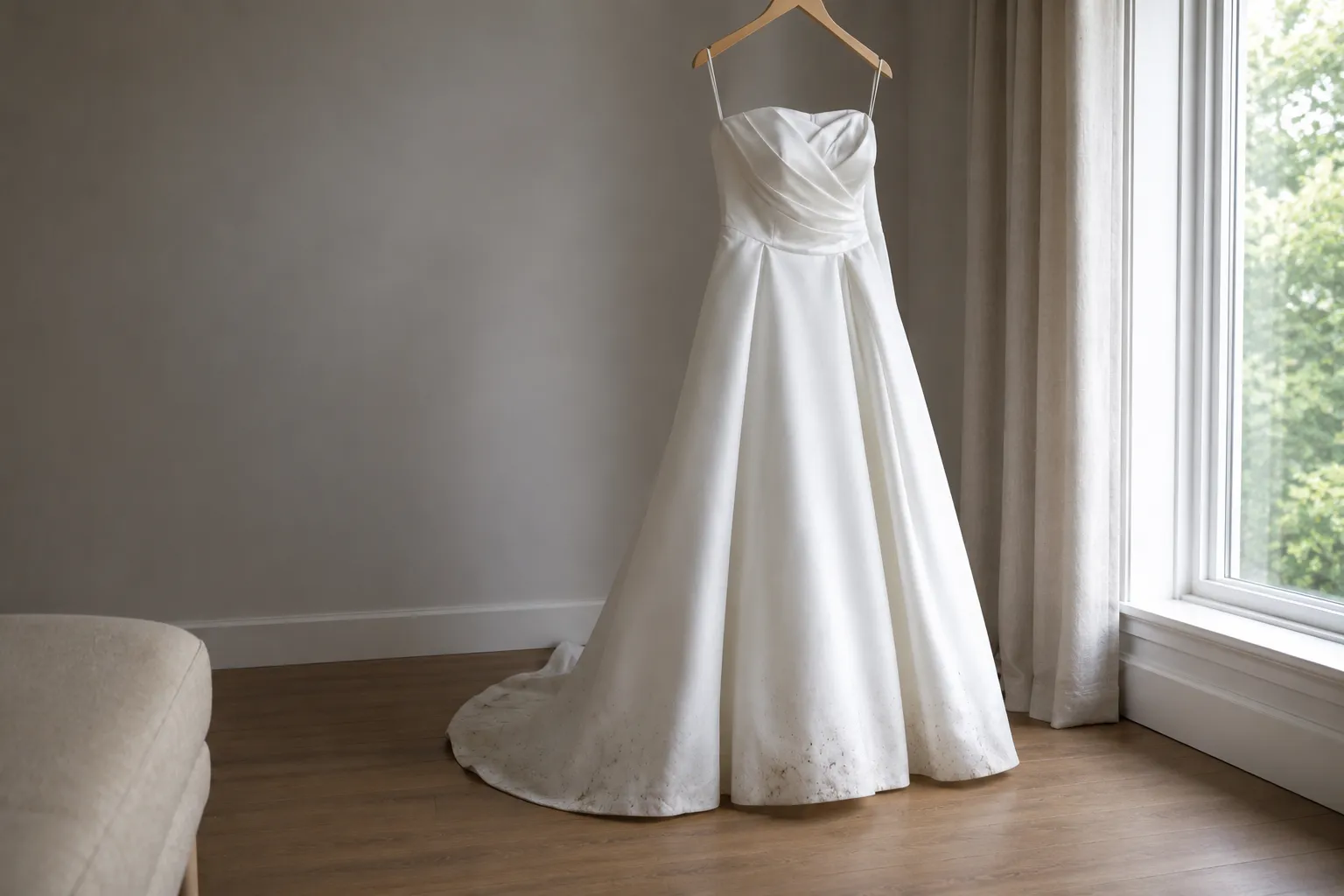
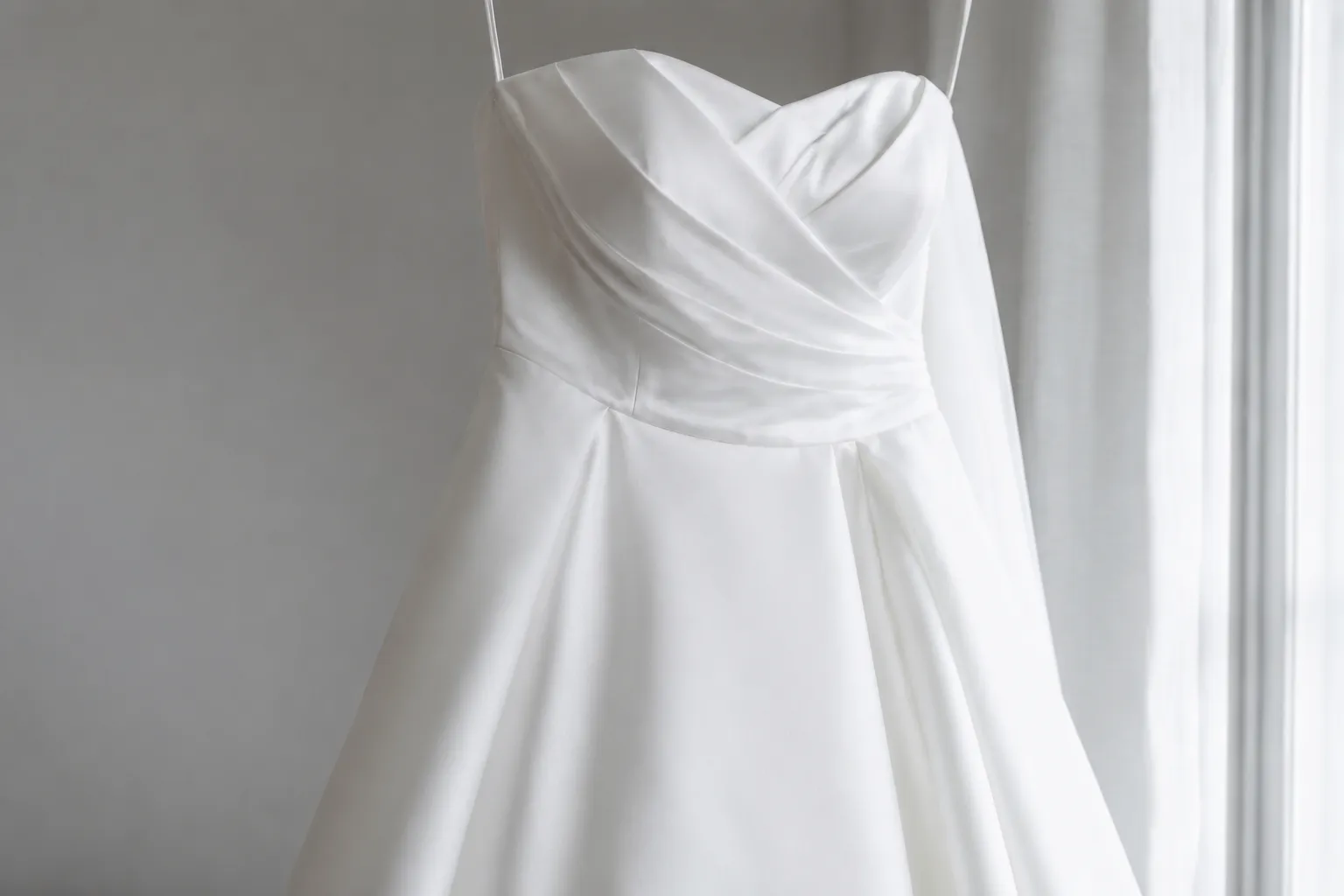 After
After
Request: The dress got dirty at the bottom of the hem after a walk in the park.
Done: We performed local dry cleaning of the hem and refreshed the entire fabric with steam.
Cost: 4 000 ₸
Master: Aigul Muratova, dry cleaning master
Total: The dress returned to perfect whiteness with no traces of dirt.
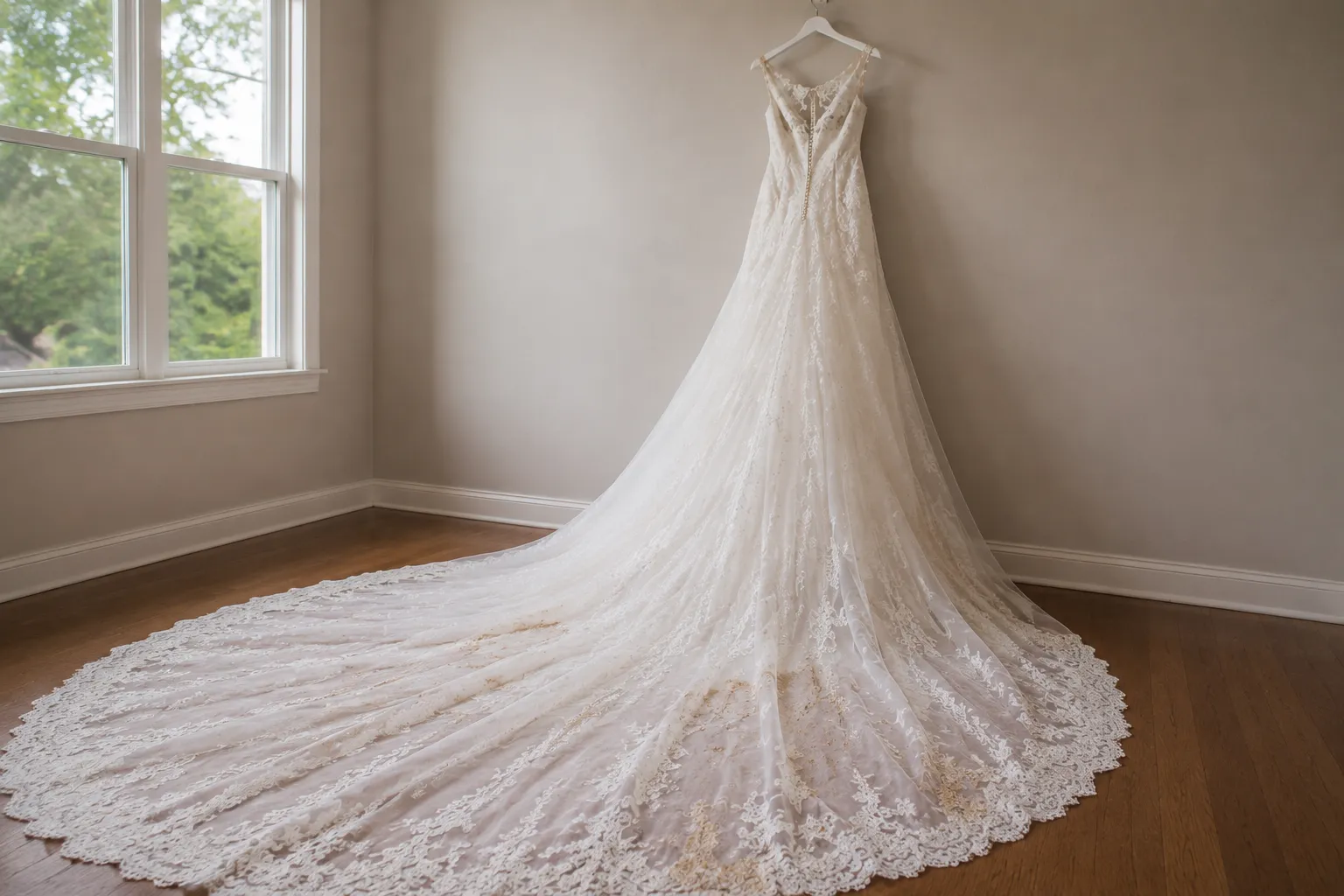
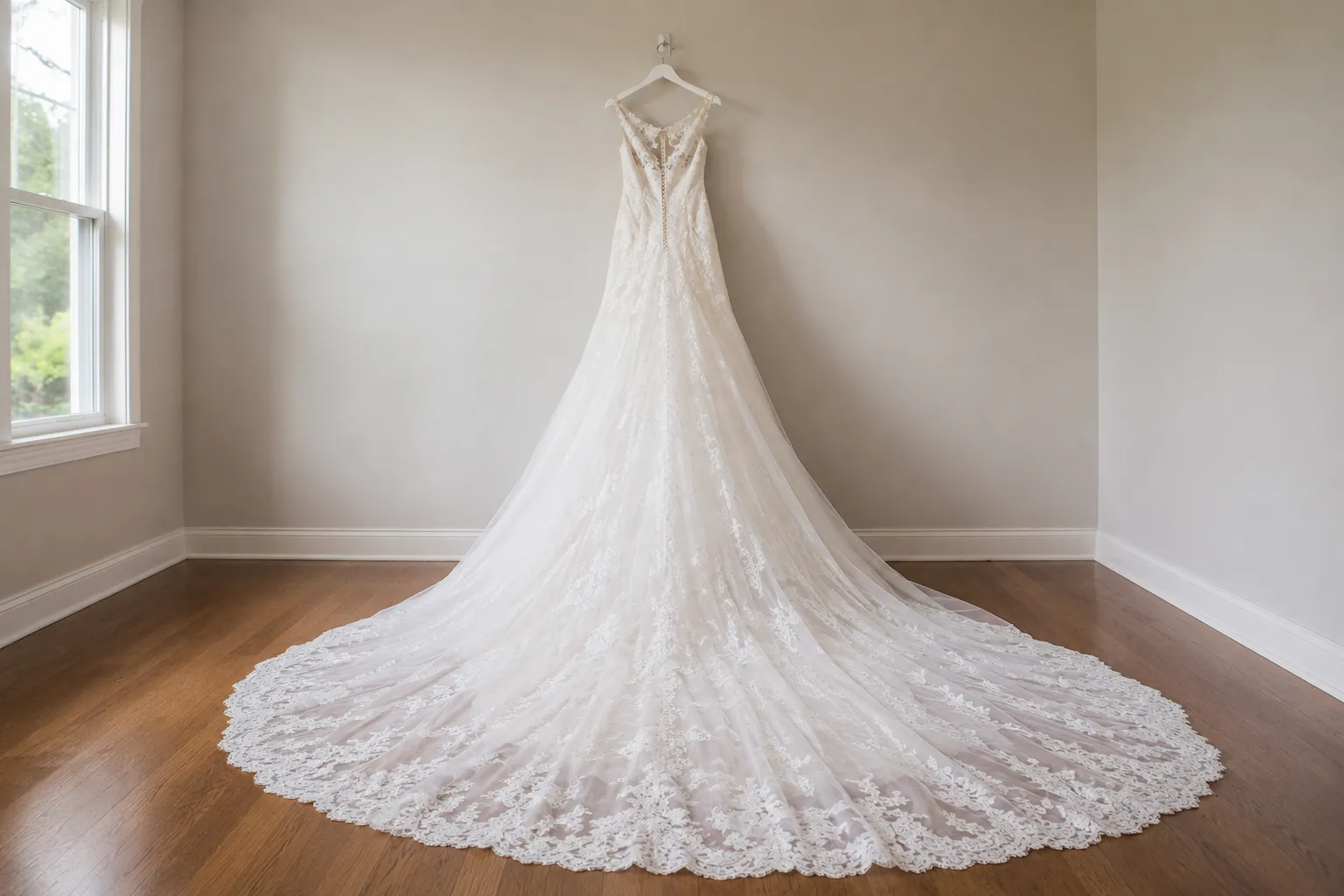 After
After
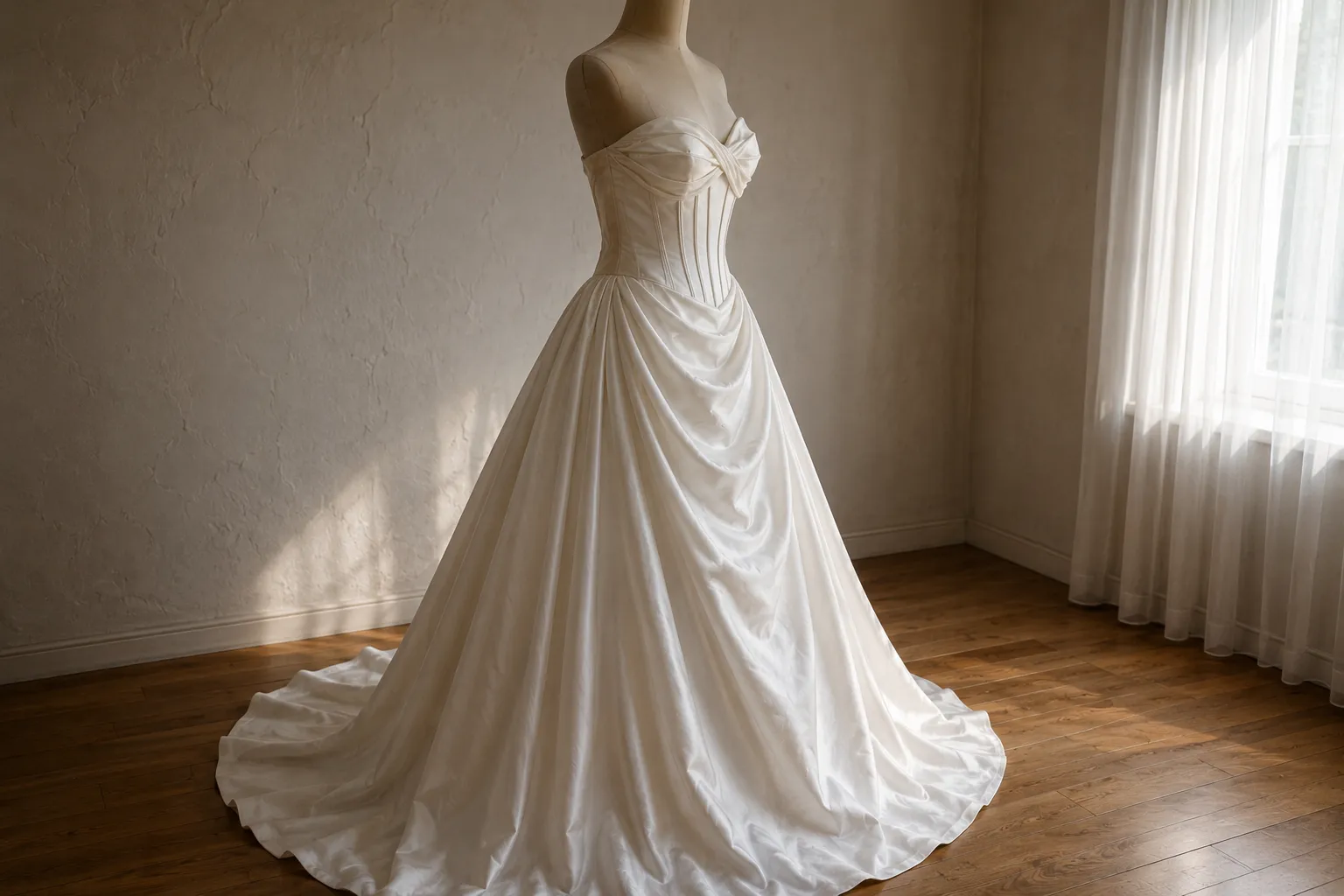
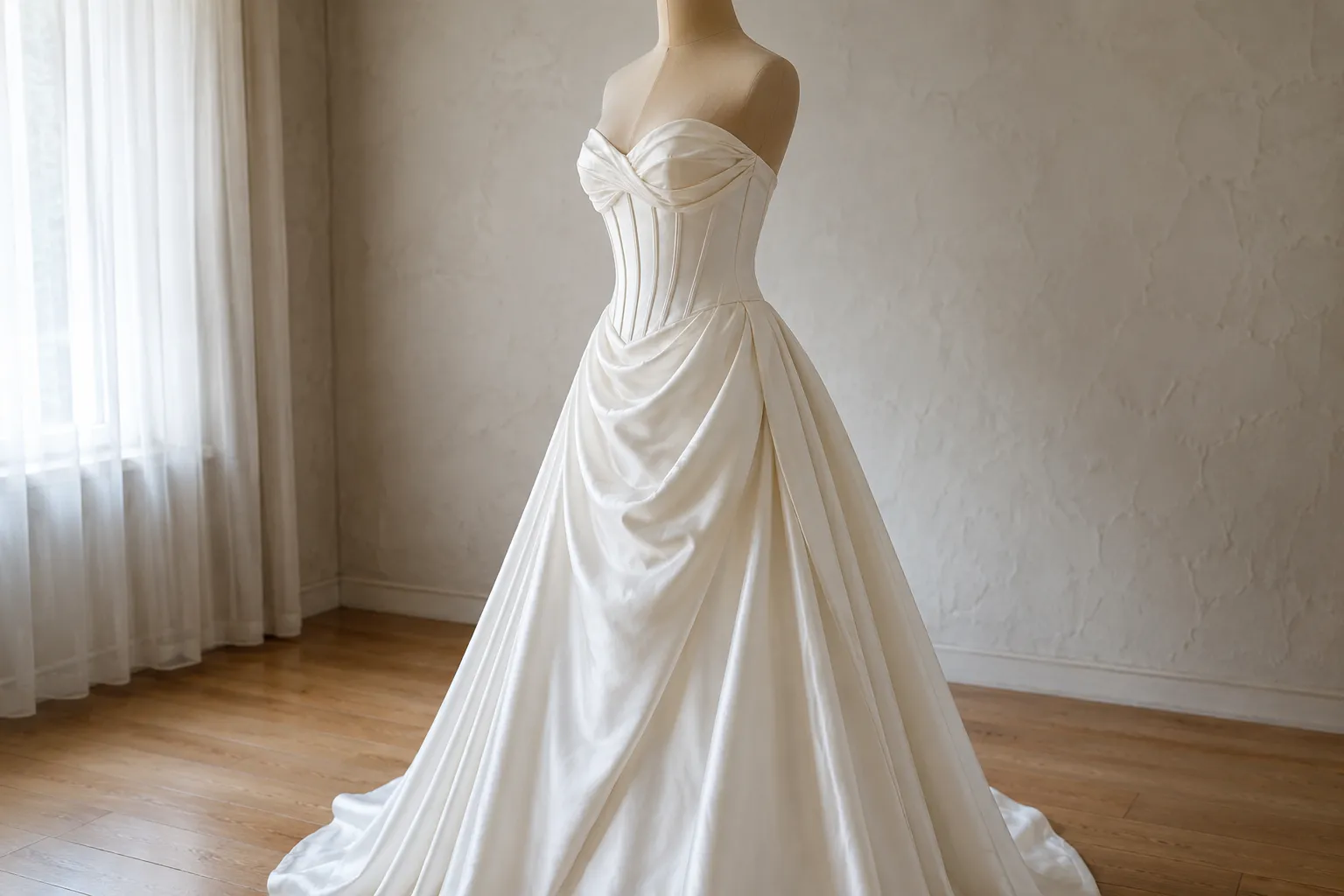
Request: The train of the dress turned yellow and was dusty after storage.
Done: We performed deep dry cleaning of the entire train with bleaching.
Cost: 4 000 ₸
Master: Damir Nurgaliyev, dry cleaning master
Total: The train became snow-white, without yellowness or gray tint.
 After
After
Request: The corset of the dress became shiny and had sweat stains.
Done: We cleaned the corset with a special solution and refreshed the fabric.
Cost: 4 000 ₸
Master: Kamila Abdrakhmanova, dry cleaning master
Total: The corset became matte and clean, without traces of sweat.
 After
After
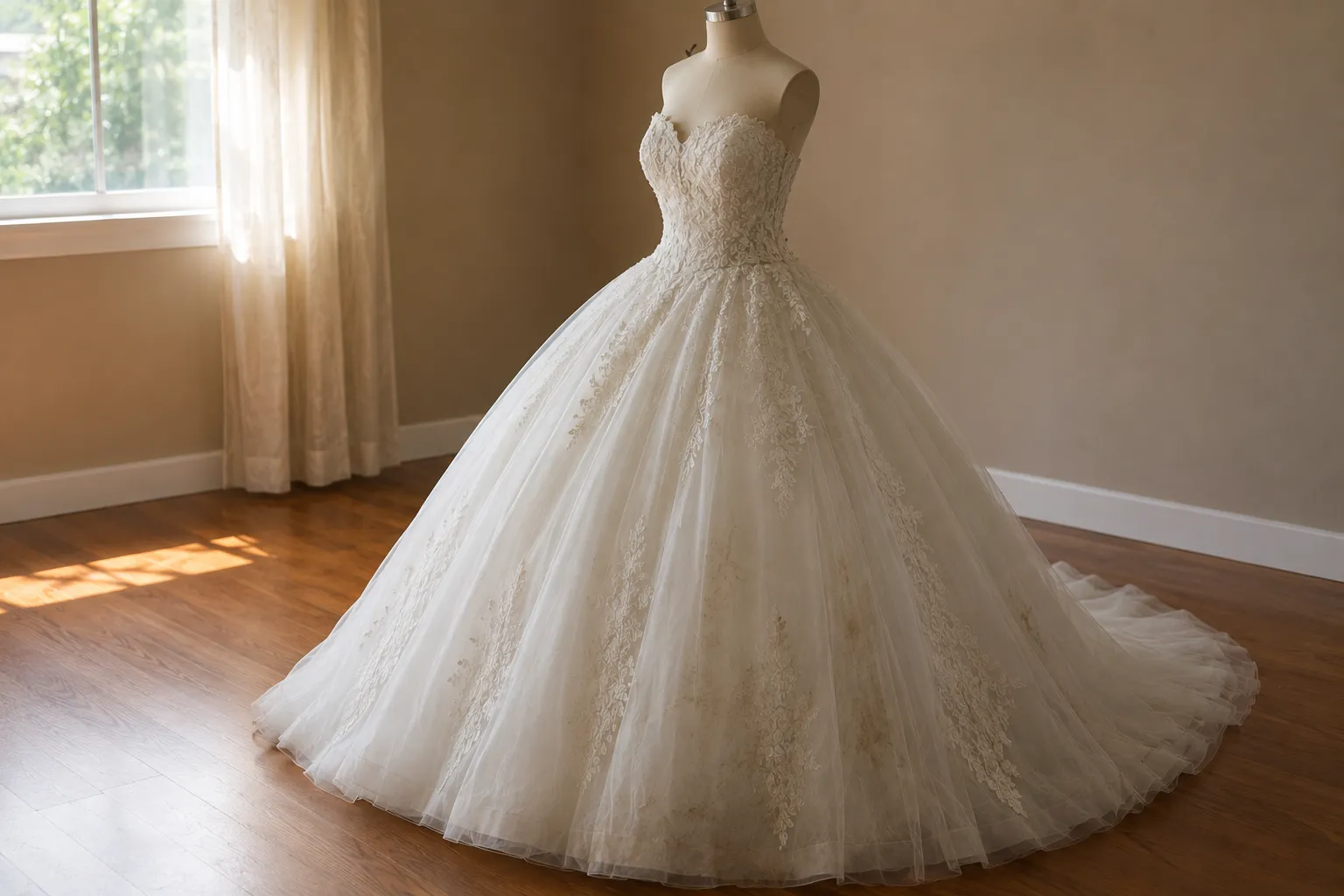
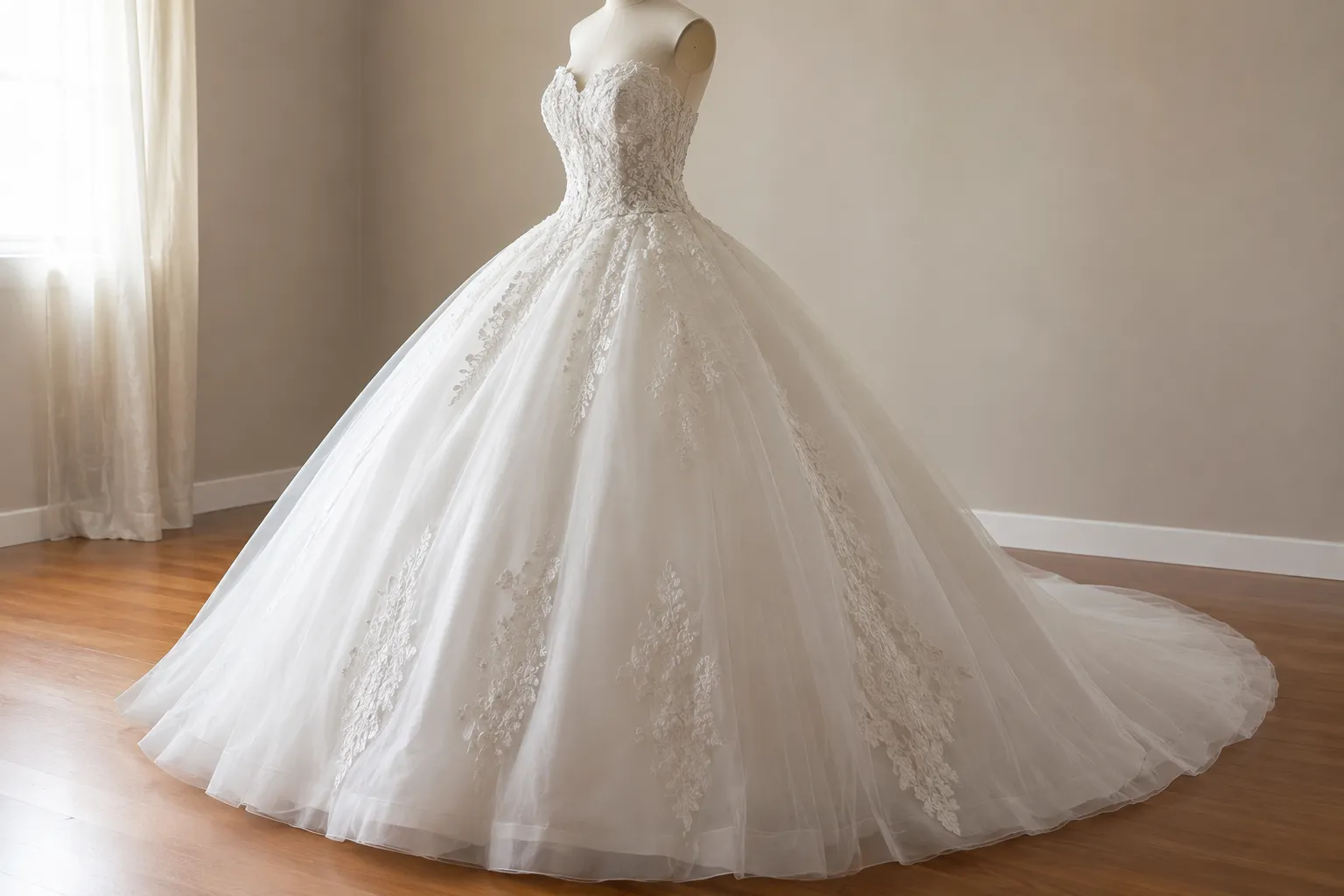
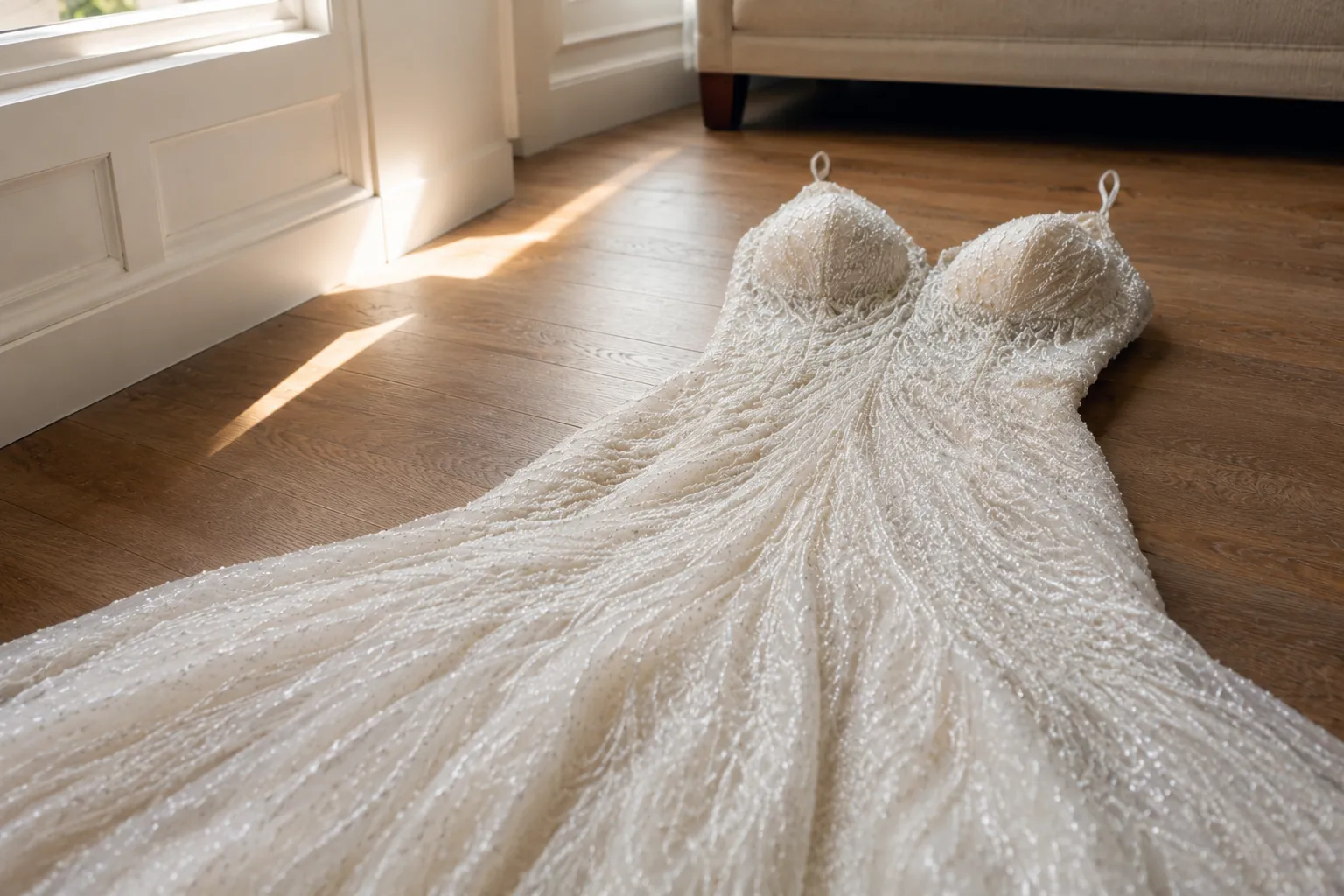
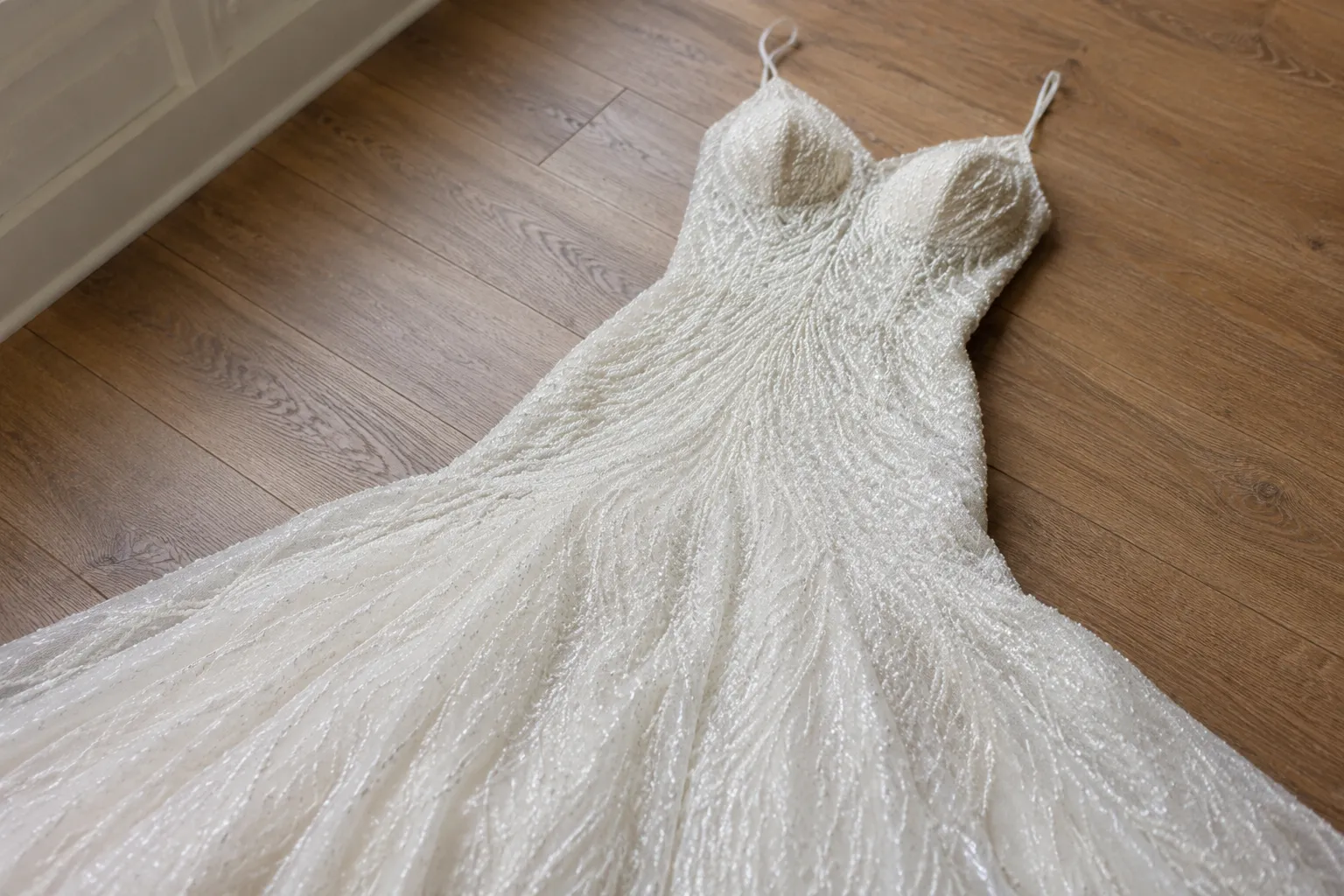
Request: The crinoline was deformed and dusty after storage.
Done: We cleaned the crinoline and restored its shape with steam.
Cost: 4 000 ₸
Master: Aliya Sadykova, dry cleaning master
Total: The crinoline regained its shape and became clean, without dust.
 After
After
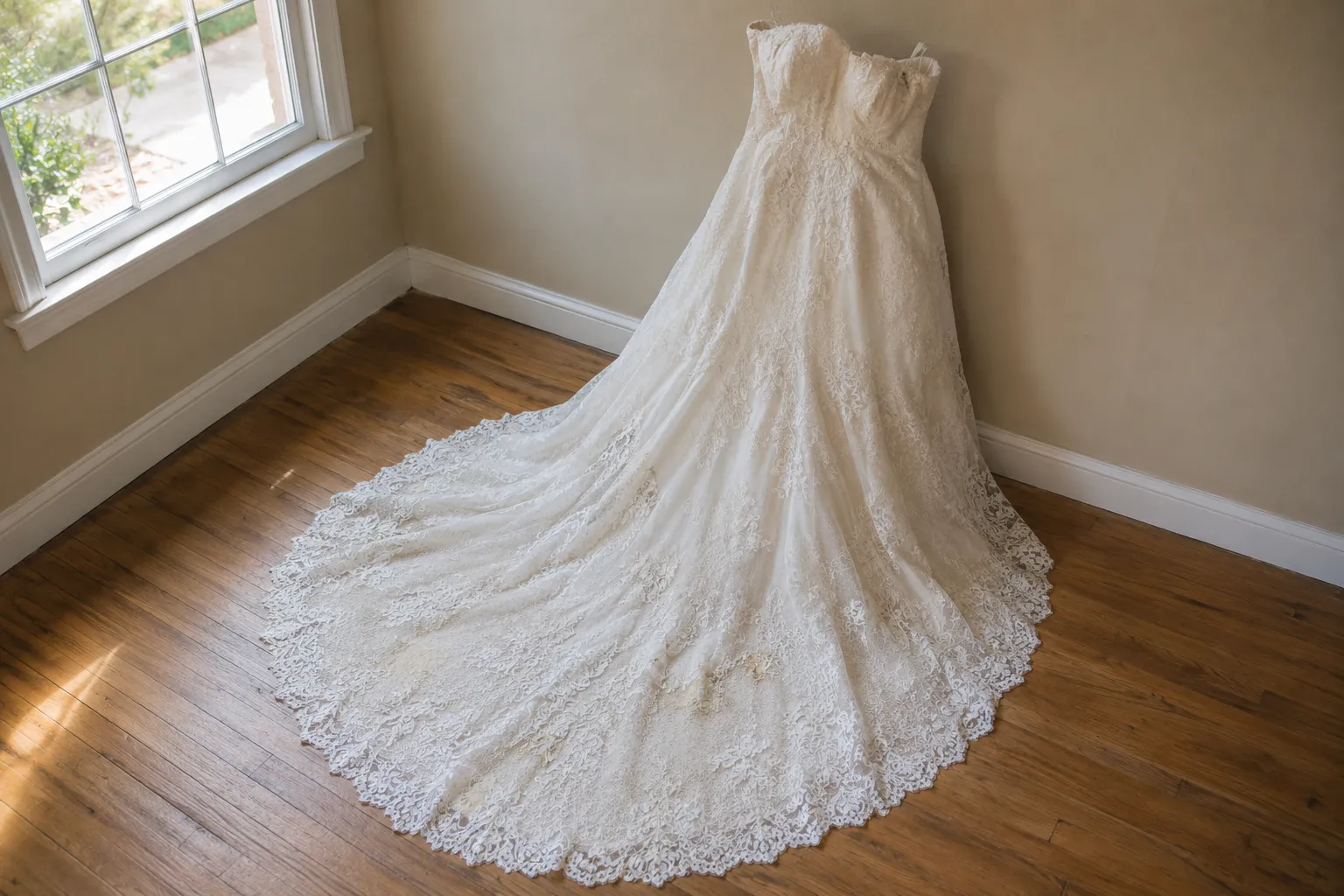
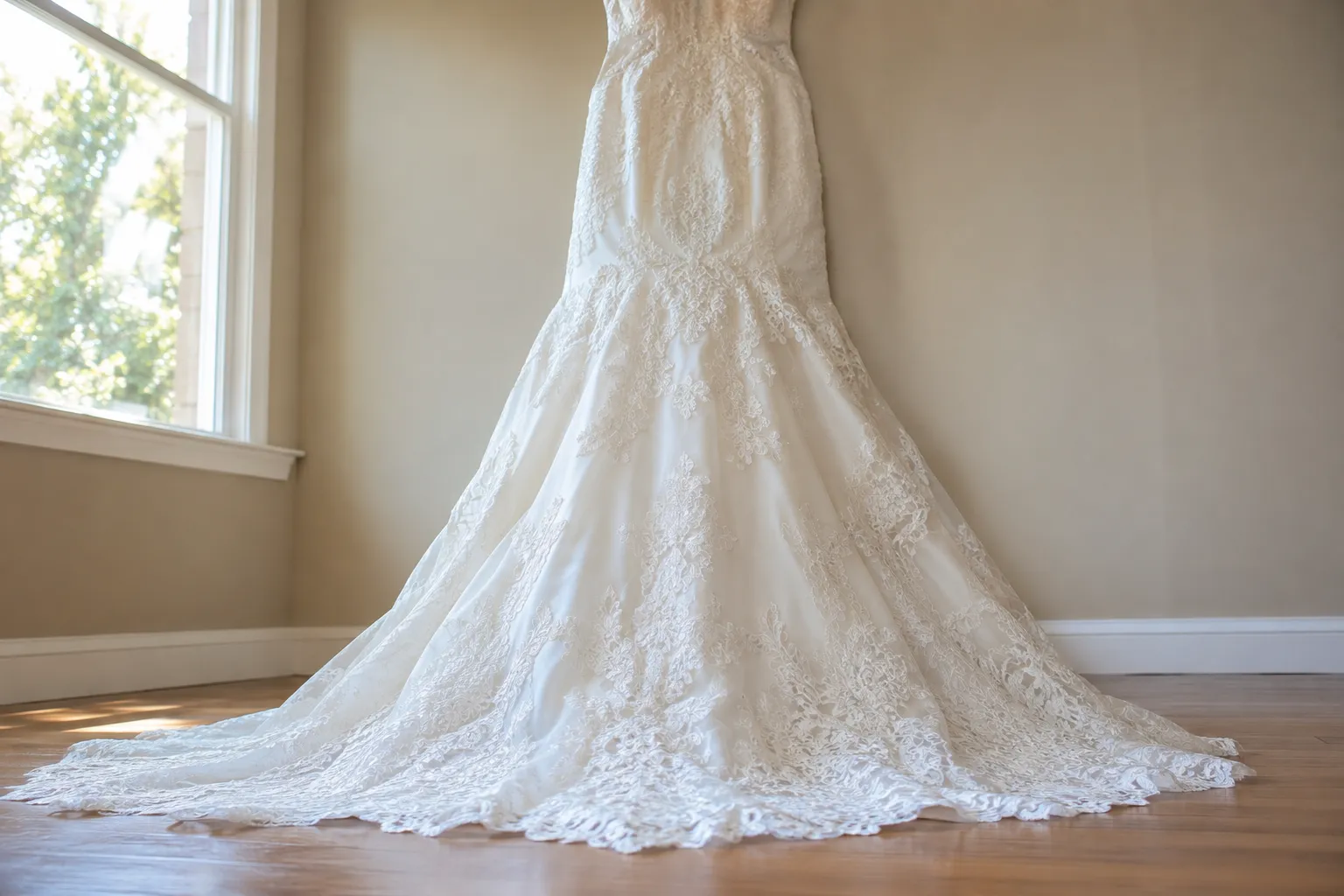
Request: The beads became dull, there were cosmetic stains on the fabric.
Done: We gently cleaned the beads and fabric with a soft brush.
Cost: 4 000 ₸
Master: Yerzhan Kassymov, dry cleaning master
Total: The beads sparkled, stains completely disappeared.
 After
After
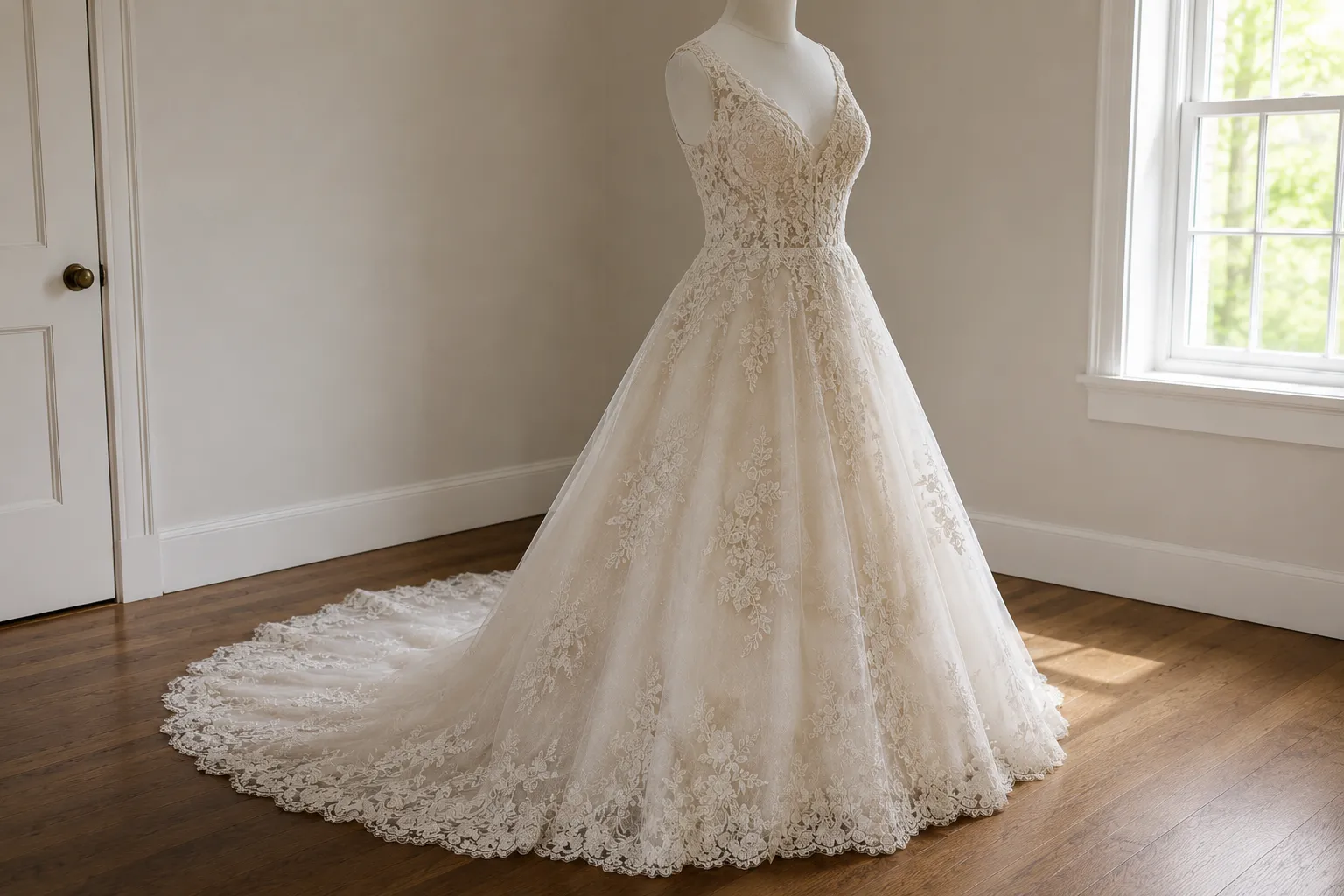
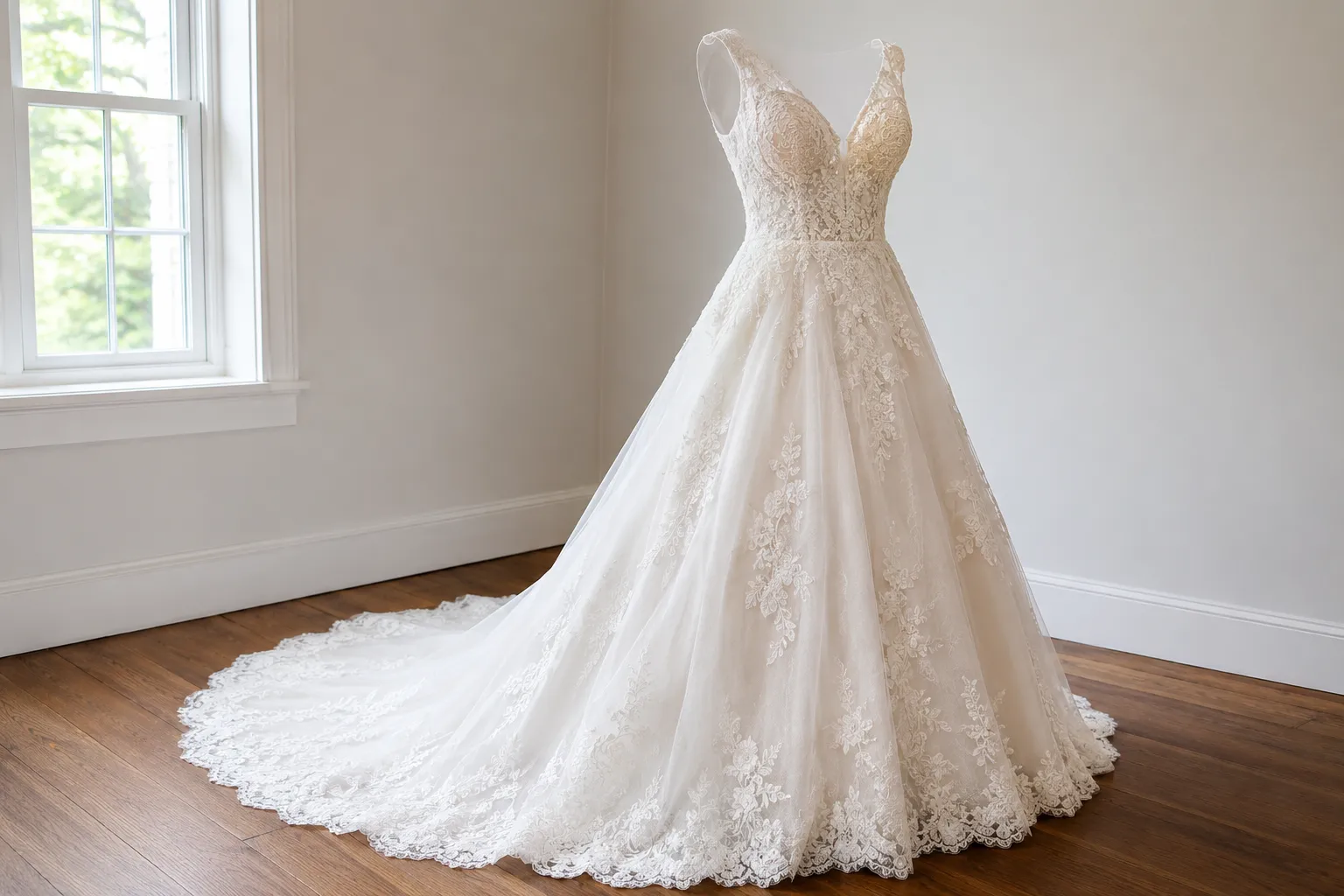
Request: The lace was yellowed and dusty.
Done: Bleached the lace with an oxygen compound and refreshed with steam.
Cost: 4 000 ₸
Master: Lyazzat Ibrayeva, dry cleaning master
Total: The lace became snow-white and soft.
 After
After
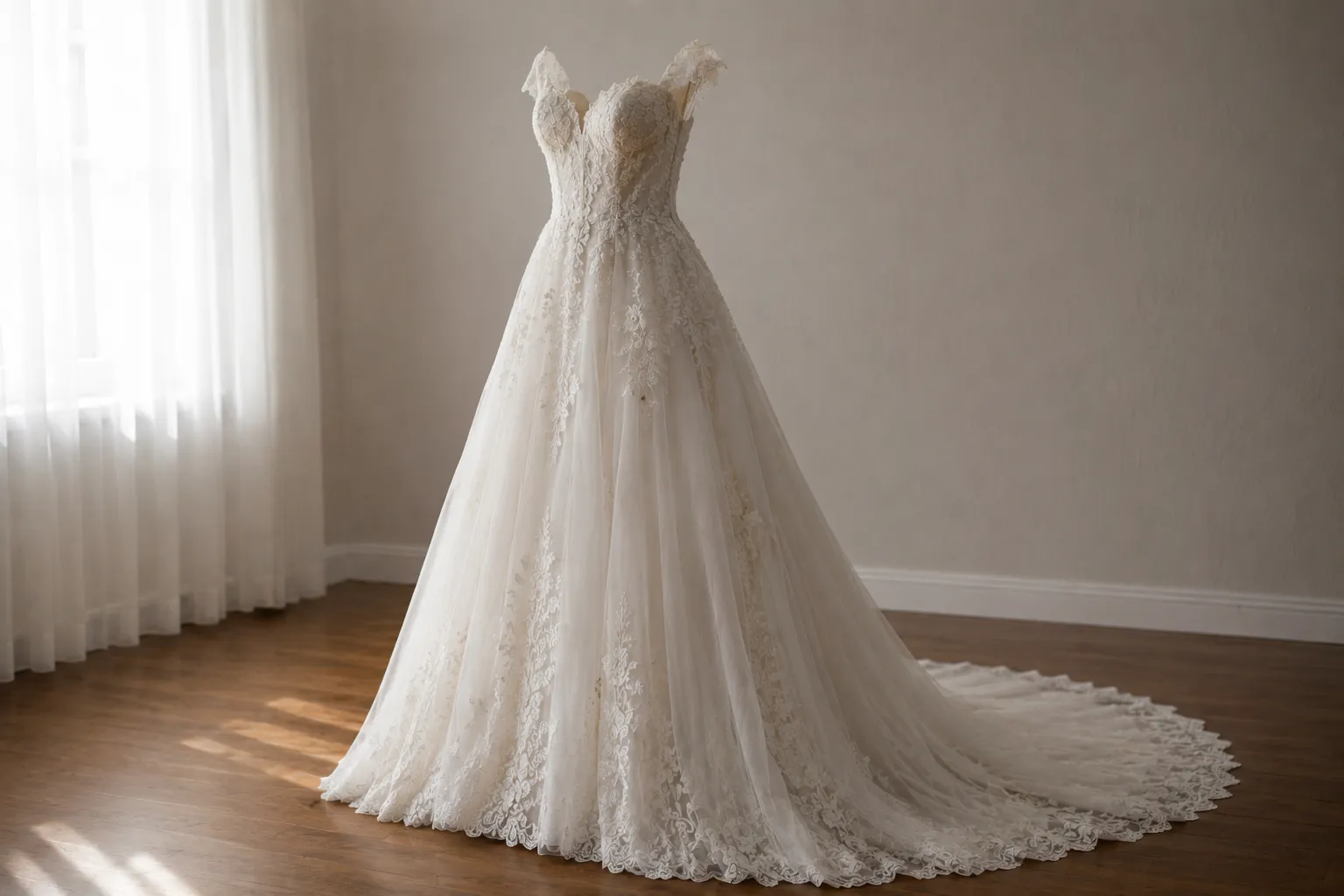
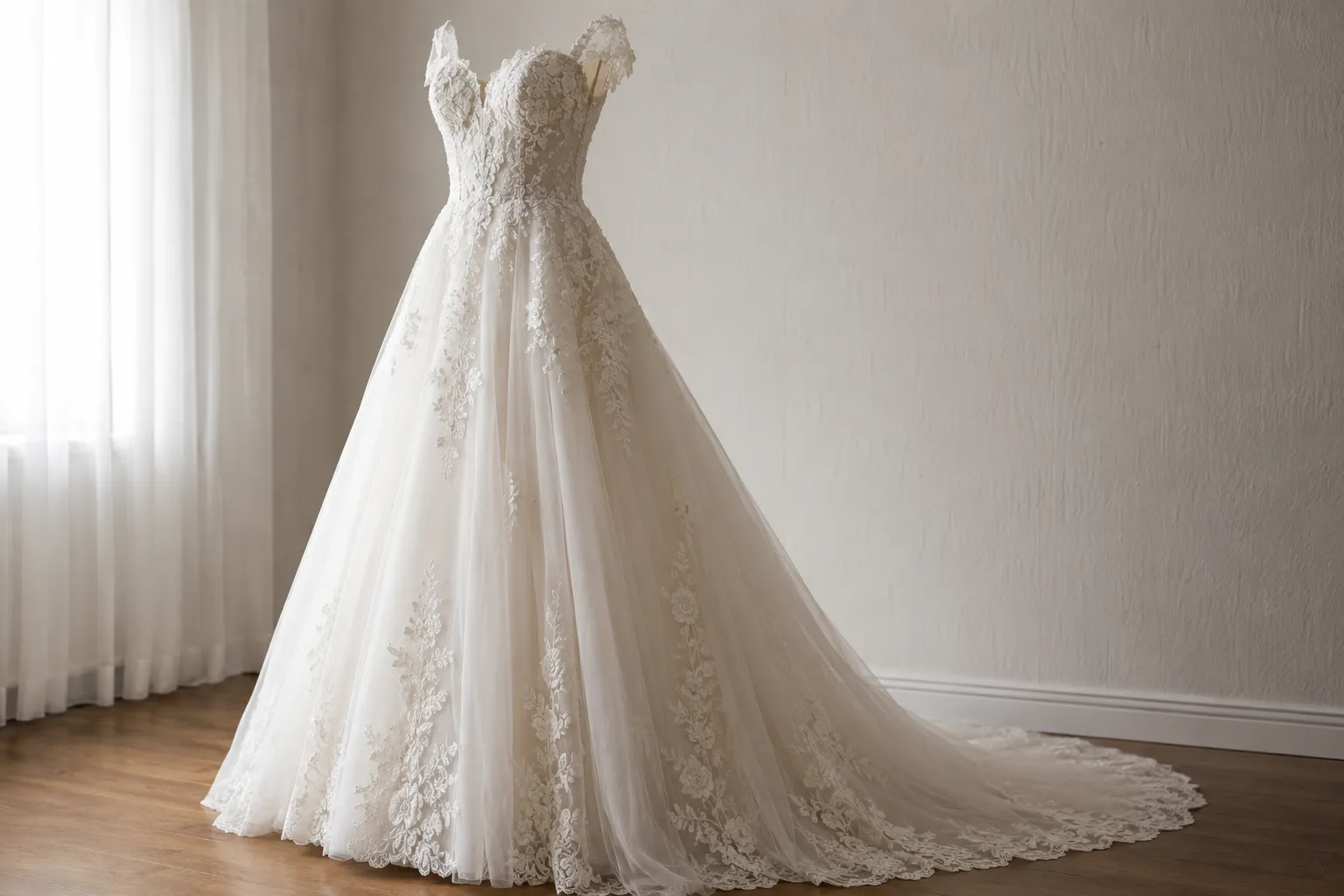
Request: The embroidery was dusty and slightly faded.
Done: Cleaned the embroidery by hand and restored the colors.
Cost: 4 000 ₸
Master: Gulmira Akhmetova, dry cleaning master
Total: The embroidery became bright and clean, without dust.
 After
After
Request: The appliques were peeling off and dusty.
Done: Secured the appliques and cleaned the dress with steam.
Cost: 4 000 ₸
Master: Marat Zhumabayev, dry cleaning master
Total: The appliques are securely attached, the dress is clean.
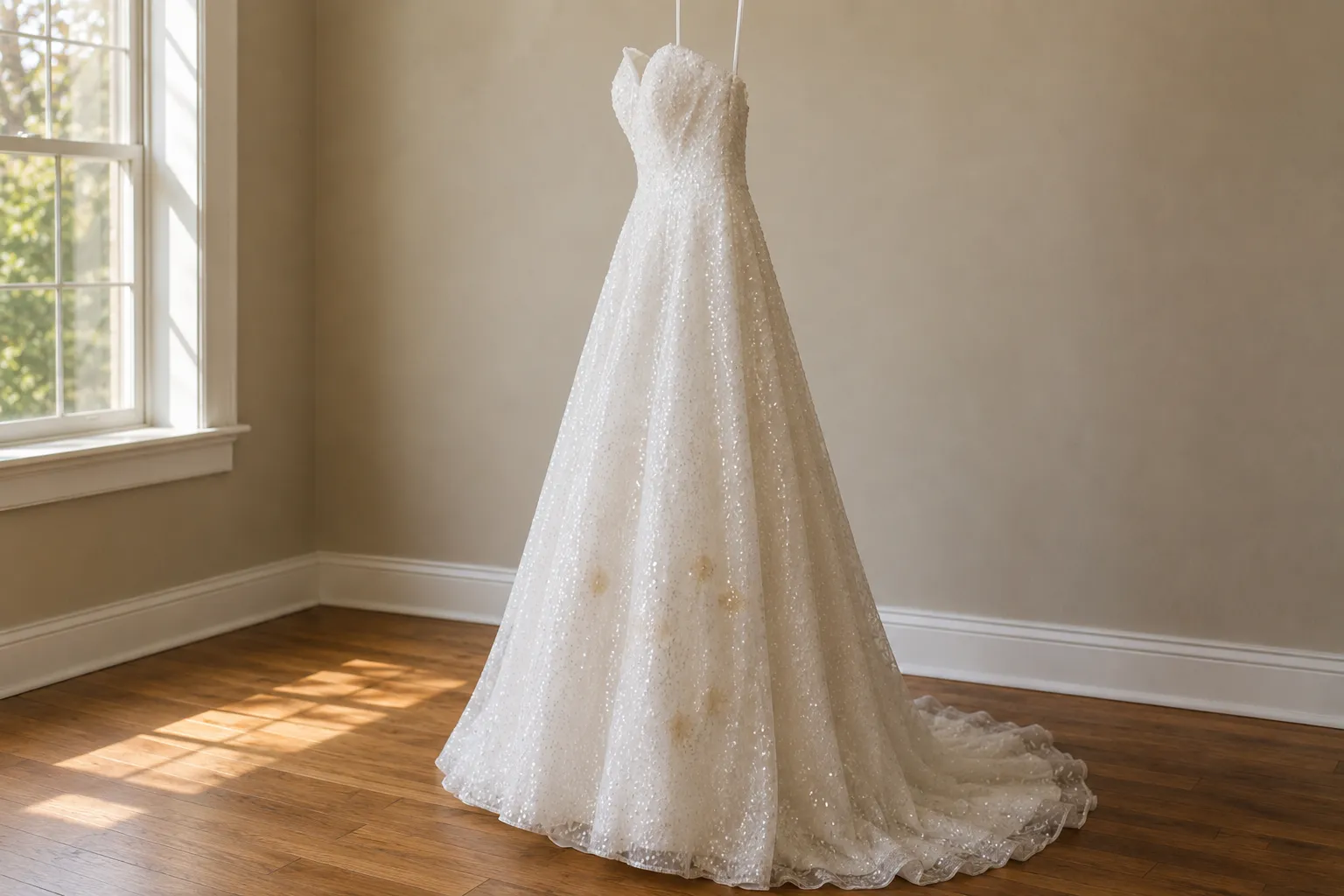
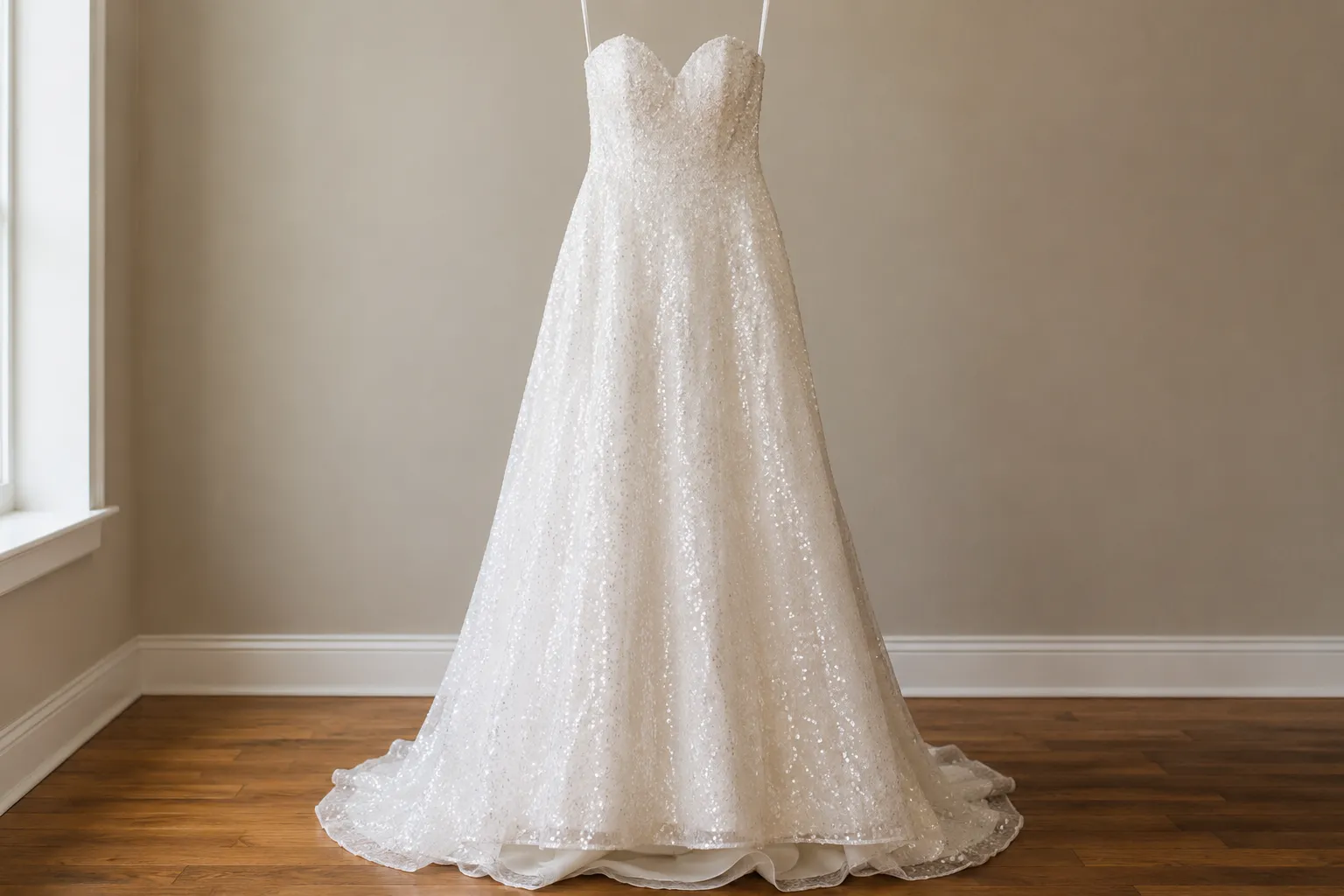 After
After
Request: The sequins were dull, the fabric had food stains.
Done: Gently cleaned the sequins and fabric with a special solution.
Cost: 4 000 ₸
Master: Nursultan Aliyev, dry cleaning master
Total: The sequins sparkled, stains disappeared.
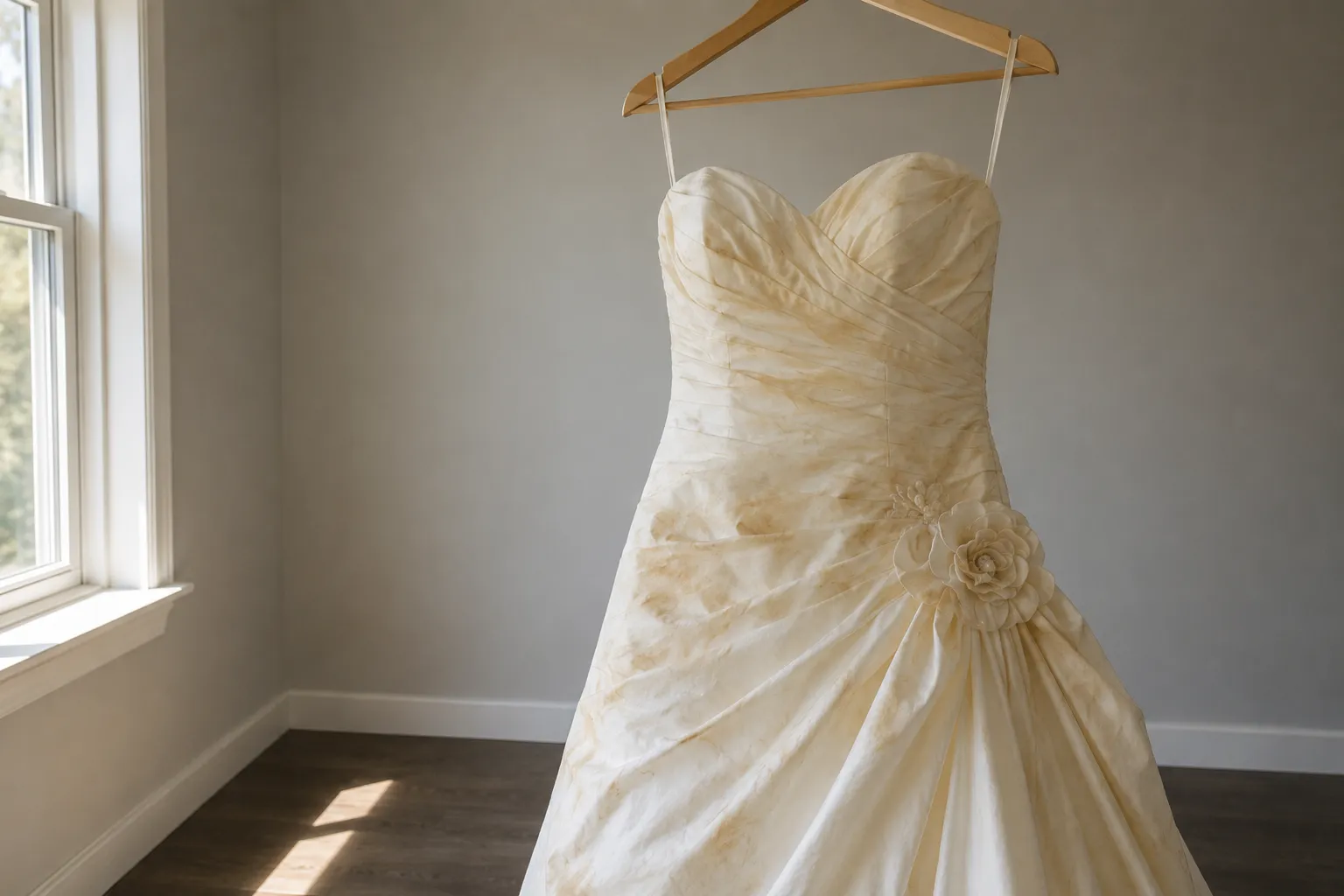
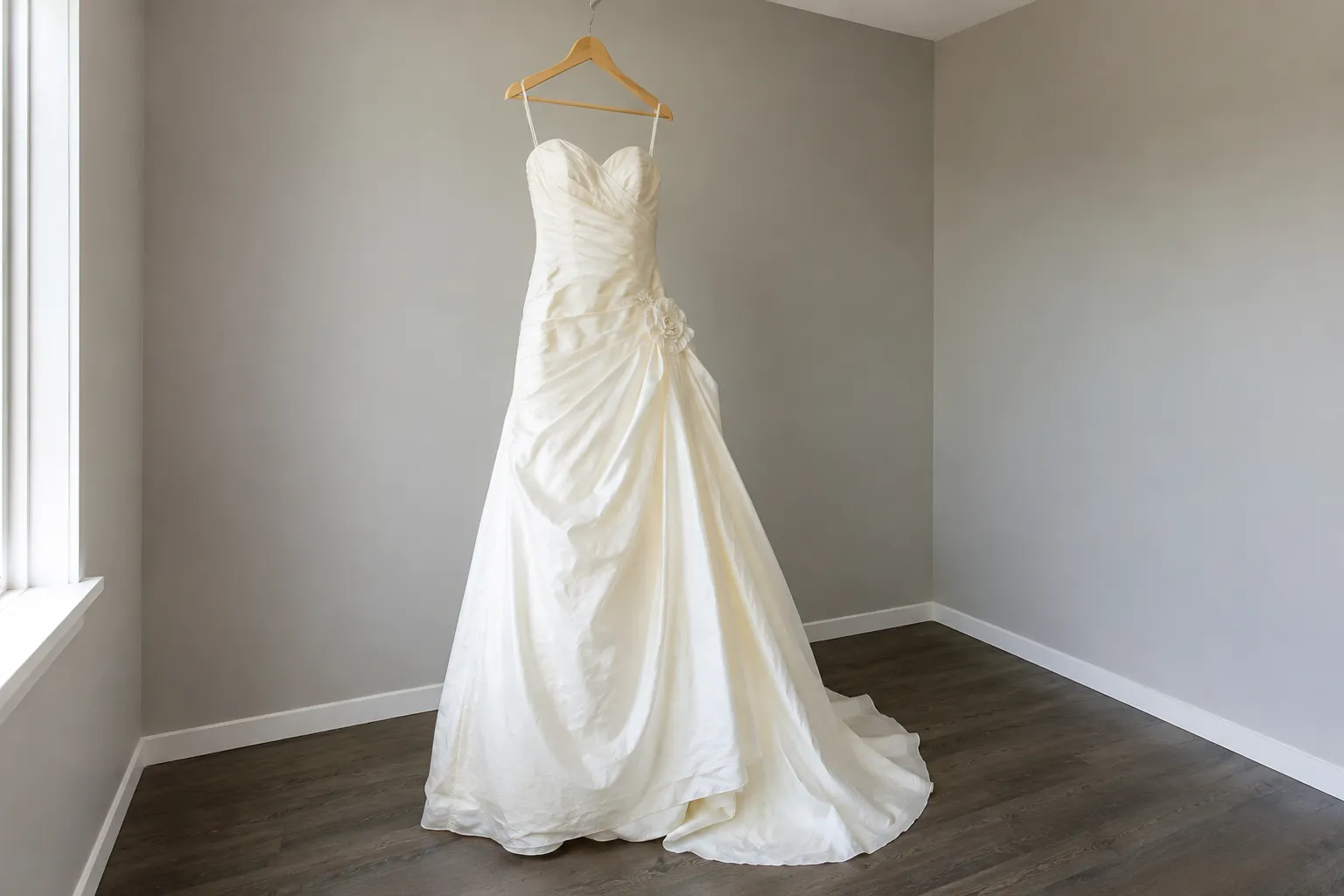 After
After
Request: The dress was heavily yellowed from age and improper storage.
Done: Performed deep dry cleaning with bleaching and yellowing removal.
Cost: 4 000 ₸
Master: Aizhan Tleubergenova, dry cleaning master
Total: The dress became snow-white, without the slightest hint of yellowing.
All cleaners are profi-clean staff with training, uniform and security check. Each order has a team leader who controls quality.
A wedding dress can accumulate a dozen different stains in a single day — from wine to grass, and each requires its own approach. At profi-clean, over 8 years of work in Almaty, we have established clear rules for each type of stain to avoid damaging the fabric and restore the dress to its original condition.
Wine leaves tannin marks that embed into cotton and silk within 15–20 minutes. The first rule — do not rub: friction pushes the pigment deeper into the fibers. At receptions in Almaty, we advise blotting the stain with a dry napkin (not a wet one — water sets tannins), then immediately sprinkling it with coarse salt or cornstarch — they will draw out the moisture along with the pigment. At the profi-clean dry cleaner, we use an enzyme-based pre-spotter with protease for wine stains: it breaks down the proteins in grape juice at 30°C, without heat. Champagne is less aggressive, but its bubbles lift skin oils from hands, creating a greasy film. Here, treatment with 0.5% citric acid helps (not vinegar — it can discolor dyed lace). In practice: if wine is spilled on tulle or organza, the stain disappears in one cycle; on satin, a repeat treatment after a 12-hour soak may be needed. Before handing the dress to the dry cleaner, fix the stain using a dry method — this increases the chance of complete removal from 60% to 90%.
Green marks from a lawn at a countryside registry office or from a peony bouquet are chlorophyll and plant sap, which cause a stubborn yellow-green discoloration on protein-based fabrics (silk, chiffon). A mistake is to pour alcohol on it: it fixes chlorophyll in the fibers, making the stain irreversible. At profi-clean, we use the opposite principle: apply glycerin (pharmaceutical grade, 99.5%) for 40 minutes — it draws the pigment out of the fabric without damaging its structure. Then, a short cold water wash with neutral, alkali-free soap. For synthetic fabrics (polyester, nylon), we replace glycerin with 70% isopropyl alcohol — it evaporates faster and leaves no streaks. In Almaty, a common case is stains from artificial greenery on a corset: dyes from cheap faux flowers migrate onto the fabric due to perspiration. This requires not dry cleaning, but a cold soak with soda (1 tbsp per liter) for 2 hours — it neutralizes acid dyes. If grass gets on rhinestones or embroidery, apply glycerin pointwise with a cotton swab, avoiding the decor — otherwise, the glue will soften and the rhinestones will fall off.
Foundation, concealer, or body oil leave grease stains on collars and cuffs that appear as dark, translucent circles when held up to light. The main mistake is washing the entire dress: hot water “bakes” the grease permanently. Our method at profi-clean is local treatment with an absorbent (talc or baby powder) for 30 minutes, then removal with a dry brush. After that, apply a degreaser based on citrus solvents (d-limonene), which works at 25°C without heat. For stubborn cosmetics (waterproof mascara, lip tint), we use a silicone solvent — it removes pigment from microfiber and lace without leaving a residue. In Almaty, SPF foundations are popular in winter — they contain zinc oxide, which leaves a white residue on dark fabrics when heated. We treat such stains with 3% acetic acid (not essence!) for 10 minutes — the zinc dissolves without a trace. Practical advice: do not try to wipe off foundation with a wet wipe — you will spread it 5 cm around. Instead, immediately dust it with talc and do not rub until your visit to the dry cleaner.
Yellow stains on silk and satin are a mixture of sweat salts and aluminum from antiperspirant, which under body heat causes irreversible yellowing. At profi-clean, we don’t use chlorine bleaches — they destroy silk. Instead, we apply 3% hydrogen peroxide with ammonia (1:1) for 20 minutes, then rinse with cold water. For white lace — soak in an oxygen bleach (chlorine-free) at 30°C for 1 hour. In practice: if a dress is made of natural silk, yellow sweat stains often require two treatment cycles with drying in between — one cycle removes 70-80% of the yellowing. For satin, one cycle with exposure is sufficient. An important nuance for Almaty’s heat: crystal deodorants (potassium alum) do not leave yellow marks, unlike aluminum sprays. If you haven’t chosen a hygiene product for the wedding yet — go with a crystal, it will save time on cleaning. And don’t wear the dress for more than 12 hours without a break: sweat with an acidic pH penetrates silk by 0.3 mm in 8 hours — deeper cannot be removed without mechanical action.
At outdoor weddings in Almaty (the “Arasan” venue, Botanical Garden), a dress can get stained with river silt or lawn sand. Here, you cannot rub with a wet cloth — the dirt grinds into the fibers like an abrasive. Let the stain dry, then brush it off with a stiff-bristled dry brush (no water). For residue — treat with an enzyme stain remover for 15 minutes. Firework splashes contain sulfur and potassium nitrates — they leave black dots on veils and skirts. We remove them with 10% citric acid (5-minute exposure) — the sulfur dissolves without damaging organza. In our practice, there was a case where sparks from a sparkler hit a taffeta dress — causing micro-burns with synthetic melting. Here, chemicals are useless; mechanical nap sanding (decating) with steam is needed. If black dots from fireworks remain on the dress — do not try to scrape them off with a fingernail or knife: you will damage the thread weave. Bring the dress to profi-clean within 24 hours — we will treat it with acid and, if necessary, sand the area with a steam generator.
Yellowing on a white wedding dress is one of the most common reasons people come to us at profi-clean, and the answer is yes — in most cases it can be removed, but not with household bleach. We’ll break down why dresses turn yellow, which methods work, and which permanently ruin the fabric.
The main reason is the oxidation of the optical brightener with which factory fabric is impregnated. Almost all factory white fabrics for wedding dresses are treated with fluorescent components — they convert ultraviolet light into a bluish glow, creating a “whiter than white” effect. Over time, under the influence of oxygen, light, and sweat residue, this brightener breaks down, and the fabric returns to its natural cream shade. The second factor is the migration of plasticizers from the lining and corset: cheap polyester over time releases yellowish compounds that seep into satin or chiffon. The third is improper storage: if the dress hung in a plastic cover or lay in a cardboard box, phenolic compounds from the packaging cause characteristic “phenolic yellowing,” which appears as irregularly shaped stains. In our practice, there was a case where a dress yellowed in two months in a shoebox — phenols from the cardboard reacted with 70% humidity. In my opinion, the most insidious case is mixed yellowing from sweat and perfume: sweat contains ammonia, perfumes contain essential oils, and together they create a persistent yellow reaction on silk and satin. Before taking the dress to dry cleaning, check it under a UV lamp — if the fabric glows evenly blue, the original brightener is still active, and the chance of restoring whiteness is close to 100%.
Chlorine-based bleaches (“Belizna,” Domestos) destroy silk and viscose fibers within 10-15 minutes of contact. The fabric loses 40-60% of its tensile strength, becomes brittle, and the dress may tear during the first fitting. Oxygen bleaches (Vanish, Ace Oxi) are safer, but only for cotton and synthetics — on silk and wool, they leach out natural proteins, making the fabric matte and stiff to the touch. Folk methods — soaking in lemon juice or vinegar — have the opposite effect: the acid fixes the yellow pigment in the fiber structure, and after drying, the dress becomes not yellow, but dirty brown. Baking soda and hydrogen peroxide (3%) only work on fresh sweat stains, but they are ineffective against 2-5 year old yellowing — the peroxide oxidizes the remnants of fluorescent whitening agents, making the fabric even yellower. Dry cleaners in Almaty at shopping centers (Mega, Esentai Mall) still use universal stain removers for all fabric types — this is a common reason why after “professional” cleaning, a dress becomes gray instead of white. Our position at profi-clean: if you don’t know the fabric composition and the type of yellowing, don’t experiment at home — one unsuccessful soaking cycle can render the dress irreparable.
Professional dry cleaning uses either chemical restoration of the fluorescent whitening agent or optical whitening without harsh chemicals. The first method — treatment in a slightly acidic environment (pH 4-5) with preparations based on stabilized hydrogen peroxide with activators — is suitable for dresses made of natural silk and satin. The process takes 2-3 hours in a special bath at 30-35°C, after which the fabric acquires an even white shade without losing its luster. The second method — applying a new generation optical brightener (liquid fluorescent compounds on a water base) — is used for synthetic fabrics where the original whitening agent is completely destroyed. At profi-clean, we use hypoallergenic Kiehl chemicals — they contain no chlorine or phosphates, making them safe for lace, sequins, and beads, which are often sensitive to acids. We determine the method choice based on a test at five points on the dress: the hem, underarm area, back, corset, and sleeve. If the test shows that the fibers are worn — for example, silk has become brittle with age — whitening is not performed to avoid completely destroying the dress. Before handing over your dress, check with the dry cleaner if they perform a preliminary test on five areas — without it, the result is unpredictable.
First — thermal yellowing after improper ironing with an iron at 200°C+ on synthetics. Polyester melts at 250°C, but already at 180°C its fibers irreversibly turn yellow — this is chemical degradation of the polymer, which no bleach can restore. Second — yellowing from nicotine: if the dress was stored in a room where people smoked, the resins penetrate the fiber structure and become permanently fixed — even after dry cleaning, the smell remains, and the shade becomes gray-yellow. Third — biological aging of silk: natural silk loses sericin (the natural glue binding the fibers) over time, and the fabric becomes yellow and brittle — this is a natural process that can be slowed down with proper storage but not reversed. In our practice, there was a case with a year-old dress made of raw silk — the hem and sleeves were uniformly yellow, but when tested, the fiber crumbled in the fingers. The client wanted to whiten the dress for her daughter, but we recommended not to risk it — the dress would simply fall apart in the bath. If your dress is older than 10 years and was stored in less-than-ideal conditions, first do a strength test: pull the fabric on an inconspicuous area (inner hem seam) — if it tears without effort, dry cleaning with whitening will only accelerate the destruction.
The main difference between professional dry cleaning and home washing is not in the set of stain removers, but in the physics of the process. Washing aggressively flushes out dirt with water and surfactants, while dry cleaning dissolves them in an organic solvent without swelling the fibers. For a wedding dress, where every detail (tulle, silk, rhinestones, corset with boning) reacts to water differently, this difference becomes critical. Let’s break down why an automatic machine and powder are enemies here, and professional treatment is the only working option.
Water is a polar solvent that, when wet, penetrates the amorphous zones of fibers and causes them to swell. For natural silk (tussar, mulberry, chiffon), swelling reaches 30–40% of the original volume — after drying, the fiber does not return to its previous geometry, the fabric shrinks, loses its luster, and becomes stiff. Tulle made of polyester or nylon is less finicky, but water washes out the sizing — the factory impregnation that holds the skirt’s shape. Satin shrinks by up to 5–7% along the warp after washing, which on a 2-meter hem means minus 10–14 centimeters. An organic solvent (perchloroethylene or hydrocarbon Solvon K4) is non-polar — it does not bond with fibrils, does not cause swelling, and does not alter fiber geometry. The strategic implication: dry cleaning preserves the original cut and fit of the dress, while washing inevitably changes the silhouette — sometimes imperceptibly to the eye, but critically during a fitting a year later.
The thermal adhesive fixation of rhinestones and sequins is designed for a dry environment: the hot-melt adhesive (ethylene-vinyl acetate or polyurethane) holds at 70–120°C but hydrolyzes in hot water within 10–15 minutes. When machine-washed at 30–40°C, water penetrates under the base of the rhinestone, softens the glue, and the mechanical friction of the drum tears off the decoration — 5–15% of elements are lost in a single cycle. On a dress with 500 rhinestones, that’s 25–75 pieces. In dry cleaning, the solvent does not react with the polymer base of the glue, the process temperature is 25–30°C, and there is no mechanical impact (the dress lies in a perforated drum without friction against the walls). The only risk is if the rhinestones are attached with cyanoacrylate (“super glue”) — it is brittle in a dry environment and may peel off due to vibration. In our practice, we check the adhesion of decorations on a test area before loading, and if the glue is weak, we secure the rhinestones with a hot glue gun before treatment. In case you sewed the decorations on with thread, dry cleaning does not damage them either, unlike washing, where the thread gets wet, stretches, and weakens the knot.
Grease (oil, cream, foundation, candle wax) does not dissolve in water — it is hydrophobic. When washing with powder, surfactant molecules form micelles that emulsify the grease, but only if the water temperature is above 40°C (the melting point of most animal fats). In cold water, the grease remains on the fabric, and when heated on a polyester dress, it can become fixed through thermal oxidation — forming a yellow stain that cannot be removed by anything. In dry cleaning, grease dissolves directly in the non-polar solvent, without an emulsion: the grease molecule (triglyceride) and the perchloroethylene molecule have similar polarity and mix like alcohol and water. Contact time is 15–20 minutes versus 40–60 minutes for washing. Actionable insight: if your dress has a grease stain, do not try to wash it at home with water and dish soap — you will only spread the grease over a larger area and drive it deeper into the fiber. Take it to the dry cleaner before the stain has been sitting for more than 2–3 days — fresh grease is removed in one cycle, while old grease requires double treatment.
The exception is dresses made of cotton guipure or lace without lining and without decoration, where the manufacturer has explicitly stated “machine wash at 30°C” on the label. But even in this case, washing in a home machine poses two risks: mechanical twisting of the lace into a rope (deformation of up to 20% of the area) and residual powder in the micropores of the guipure, which turns yellow when ironed. In Almaty, the water is hard — up to 10–12 mg-eq/L (compared to the norm of 7), and calcium salts form a white residue on dark fabrics. We had a case: a bride washed a lace top in the machine, and after drying, it shrank a size — we had to recut the corset. The moral: if the label allows washing, choose hand washing in cold water with a liquid silk detergent without enzymes and dry it flat on a horizontal surface. But for a dress with a corset, boning, a multi-layered skirt, or a rhinestone belt — only dry cleaning, and no label can override physics.
Properly preparing your dress before taking it to the dry cleaner saves the fabric and guarantees results. In our practice, every second bride brings in a dress with leftover decorative pins or dried petals inside the skirt — this hinders cleaning.
Inspect the dress in daylight and photograph all suspicious areas — hem, underarms, cuffs, neckline. At profi-clean, we ask clients to do this before handing over: the photos show which stains were original and which may have appeared during storage. Pay special attention to seams and lace — particles of foundation or powdered sugar often remain there. Our technician compares the photos with the actual condition upon acceptance to eliminate disputes about “new” soiling. This simple habit saves time when coordinating work on dresses with guipure and crinoline — defects on these are invisible until a professional inspection.
Remove all brooches, hairpins, adhesive-backed crystals, removable bows, and garters — dry cleaning can weaken the glue or damage rhinestones with solvents. Beads and sequins with thread fastenings are best left if they are securely attached, but check each one before sending: detached elements end up in equipment filters. Upon acceptance, we warn that Swarovski hot-fix crystals and fragile beads on tulle are better removed independently — in the drum of a professional machine, they lose their luster due to friction. On dresses with a corset, be sure to loosen the lacing and remove the boning if it is not sewn into a casing — otherwise, the metal may deform during cleaning.
In the pockets of A-line skirts and multi-layered hems, napkins, candy wrappers, and even forgotten phones often remain — turn out each pocket before handing over. In dresses with crinoline, check the space between the underskirt and the main layer: rose petals, glitter, and pieces of foil from party poppers fly in there. Our practice shows that an unnoticed wrapper in a tulle fold can tear the delicate fabric during spin-drying — remove all excess manually. For crinoline dresses, especially carefully inspect the joints of the hoops with the fabric — food remnants or flower pollen often get stuck there.
Do not fold the dress in a plastic bag — condensation creates an environment for mold, and fibers stick to satin and silk. The best option is a breathable cover made of spunbond or cotton, which we provide when ordering a pickup service. At profi-clean, we recommend transporting the dress in its spread-out form on hangers with wide crossbars: narrow hangers leave creases on lace straps. If the dress is long, lift the hem onto the hangers so it does not touch the car floor — street dirt embeds into tulle faster than wine stains. For crinoline, use a special transformer bag that secures the hoops in a folded position — otherwise, the frame may damage neighboring items in the trunk.
After the dress returns from dry cleaning clean and pressed, its proper storage determines whether it will be preserved for future generations or turn yellow and deform within a year. At profi-clean, we see dozens of dresses brought in 5–10 years after the wedding, and storage mistakes in Almaty are among the most common causes of damage.
Choosing a hanger. Use a wide shoulder hanger with soft foam padding and non-slip shoulders — ordinary wire hangers from dry cleaners deform the shoulder seam within 2–3 weeks, leaving dents that cannot be smoothed out. For dresses with corsets or boned straps, use a hanger with clip hooks on the straps: hang the dress by the straps, not by the inner loop — the loop stretches under the weight of a heavy hem and sags.
Securing the train and hem. The train and full hoop skirt (crinoline) cannot simply be hung — under their own weight, the fabric stretches and tears at the seams. Carefully gather the hem in wide circular folds and secure it with a soft cotton ribbon without elastic (elastic leaves marks) at knee level. Remove the crinoline hoops before storage — they deform the fabric at attachment points if stored under the dress’s weight.
Air out once a quarter. Even in an ideal cover, the dress needs air exchange: every 3–4 months, take it out, hang it for an hour in a ventilated room without direct sunlight, then change the fold orientation on the skirt — this prevents creases from forming in the same spot. In Almaty apartments with central heating in winter, humidity drops to 20%, and without airing, silk becomes brittle — after 2–3 years of such storage, the fabric may crack along the fold when trying to put the dress on.
I ordered dry cleaning of my wedding dress after the celebration — they removed a red wine stain and restored the lace's whiteness. The dress looks like new, I couldn't believe it.
Thank you, Aigerim! We're glad we could restore your dress to its original condition.
My wife didn't believe grass stains could be removed, but after cleaning the dress became perfectly white. Thank you for your careful work.
We had my sister's wedding dress dry cleaned — champagne stains came out, but there was a slight yellowing on the hem. Overall okay, but could have been better.
Daniyar, we apologize. Please contact us — we will do a repeat treatment for free.
The dress was in terrible condition after the wedding — dirt, makeup stains. They returned it snow-white, even cleaned the veil. Very satisfied.
We ordered dry cleaning for my daughter's wedding dress — berry and lipstick stains disappeared completely. The fabric wasn't damaged, everything was delicate.
Thank you for your review! We're glad we could help.
After cleaning, the dress became even whiter than before the wedding. Surprisingly, they even removed an old perfume stain.
The dry cleaning of the wedding dress was a bit expensive, and one stain remained. Had to take it to another place. Not the best experience.
Kuanysh, we're sorry. Write to us in private messages — we'll sort it out.
The dress was covered in chocolate and dirt after the photoshoot — they cleaned it perfectly. Even the lace wasn't damaged.
I took my wife's dress for dry cleaning — the result exceeded expectations. Coffee and lipstick stains disappeared without a trace.
Timur, thank you for your trust! We'll be happy to help again.
The dress was stored for a year after the wedding — stains had set, but they removed them. Now it can be sold as new.
We ordered dry cleaning for the wedding dress — done quickly, dirt stains on the hem were removed. But the smell of chemicals remained, had to air it out.
Alexey, we'll take note. We try to use more neutral products.
The dress looks like it's from a store window — white and fresh. They even cleaned the petticoat from dust.
My wife was very worried about red wine stains, but the dry cleaning of the wedding dress handled it perfectly. I recommend it to everyone.
The dress was stained with foundation and pollen — cleaned to like-new condition. Very gentle work.
Aliya, thank you for your review! We're glad you were satisfied.
The wedding dress dry cleaning was generally good, but the timeline was a bit delayed — promised in 3 days, took 5. Quality was excellent though.
Ruslan, we apologize for the delay. We'll strive to be more punctual.
The dress had water stains after the rain — restored perfectly. Even the lace became more voluminous.
I brought my sister's dress for dry cleaning — grass and champagne stains were completely removed. Very neatly packaged.
Bakhytzhan, thank you! Come again.
The dress felt a bit stiff after cleaning, though stains were removed. I expected softer fabric.
Saltanat, we're sorry. Please contact us — we'll do an additional conditioner treatment.
We ordered wedding dress dry cleaning for the bride — even deodorant marks on the lining were removed. Excellent result.
The dress had terrible food and drink stains — returned it snow-white. Thank you for your patience and professionalism.
Kamila, thank you! It's important for us to restore the dress's beauty.
Wedding dress dry cleaning was done well, but the price is a bit steep. However, no stains left.
Azamat, thanks for the review. The price is justified by the fabric complexity.
The dress held memories and stains after the wedding — now it's perfectly clean. Can be passed down as an heirloom.
I took my wedding dress to the dry cleaner — they did everything quickly and neatly. Wine and dirt stains disappeared.
Dauren, thank you! Glad to help.
Standard turnaround is 2-3 days. Express dry cleaning in 1 day is available at an additional individual rate.
Leave a request on the website or call us. We will come to pick up the dress, or you can bring it yourself. After cleaning, we will pack it in a cover and deliver it back.
Yes, we use hypoallergenic K2 and Orvus products, which we test on an inconspicuous area. Karcher and Vapamore equipment is set to delicate mode.
Prices are individual: for a simple dress from 25000 tenge, for a dress with a long train. The exact cost depends on the style and stains.
Yes, if dropped off within 3 days after the wedding, you get a 10% discount. Fresh stains are easier to remove.
Use the calculator on the website: select the dress type and additional options. Or call us — we will estimate based on a photo.
Yes, we specialize in such dresses. The corset is cleaned by hand, the crinoline is handled gently without losing its shape.
We accept all types: simple, with train, with corset, crinoline, beads, sequins, multi-layered, silk, lace, embroidered, and appliquéd.
First, inspection and test on an inconspicuous area, then stain treatment, delicate machine or hand cleaning, steam treatment, drying, final inspection, and packaging.
Includes: inspection, stain removal, cleaning, steam treatment, drying, final inspection under UV light, and packaging in a cover. Additional services like whitening or bead reinforcement can be ordered.
Tell us about your experience with profi-clean — it helps other clients and us improve.
We currently operate in Almaty. Other cities are coming soon.