Inspection and diagnostics
The master determines the fabric type and degree of soiling, selects the optimal chemicals and cleaning mode.
Professional car seat cover dry cleaning in Almaty with guaranteed results
We work with any types and materials
Deep extraction cleaning using Kiehl stain remover to remove oil and coffee.
from 15,000 ₸Gentle cleaning with special lotion and conditioning to maintain softness and color.
from 15,000 ₸Careful low-moisture cleaning to avoid pile damage.
from 15,000 ₸Cleaning without harsh solvents, followed by protective impregnation.
from 15,000 ₸Cleaning using soft brushes and extractor to restore pile.
from 15,000 ₸Stain and odor removal using Karcher SE 4001 extraction machine.
from 15,000 ₸Intensive cleaning with pre-treatment of stubborn stains.
from 1,200 ₸Spot cleaning with rinsing of each cell to remove dirt.
from 15,000 ₸Gentle cleaning without damaging heating elements, with moisture control.
from 15,000 ₸Hypoallergenic cleaning using safe Kiehl chemicals, no residual odors.
from 16,500 ₸Cleaning of large-sized covers with enhanced removal of oil and technical stains.
from 15,000 ₸Express cleaning with disinfection and removal of stubborn odors for heavily used covers.
from 15,000 ₸From inspection to result with guarantee
The master determines the fabric type and degree of soiling, selects the optimal chemicals and cleaning mode.
We remove dust, sand, and debris using a vacuum cleaner with a HEPA filter to prevent the spread of allergens.
We apply Kiehl stain remover to stubborn stains (oil, coffee, dirt) and leave for 5-10 minutes for action.
Main cleaning with Karcher SE 4001: pressurized cleaning solution application and simultaneous dirt extraction.
For leather covers, we use a special cleaning lotion and conditioner to nourish and protect the leather.
For persistent odors (tobacco, pets), we use cabin ozonation for complete neutralization.
Natural drying with open doors or using a heat gun (30-60 minutes) until completely dry.
We check the cleaning quality and apply a dirt-repellent impregnation for protection if needed.
We use a professional Karcher SE 4001 extractor that applies cleaning solution under pressure and simultaneously vacuums dirt. This ensures removal of dirt from deep fabric layers without streaks or chemical residue.
We use professional Kiehl (Germany) products that are certified hypoallergenic. They are safe for all types of fabric and leather, do not cause allergies, and leave no strong odor.
All profi-clean masters have at least 3 years of experience and regularly undergo training on working with various materials and equipment. We know how to clean Alcantara, leather, and fabric without damage.
If the stain is not removed after cleaning, we refund your money. We are confident in the quality of our work thanks to professional chemicals and equipment.
When ordering 5 or more seats, the master comes to you for free. We clean covers right at your home or office, without the need to remove them yourself.
Our vacuum cleaners are equipped with HEPA filters that remove 99.97% of allergens, dust mites, and fine particles. This is especially important for people with allergies and asthma.
 After
After
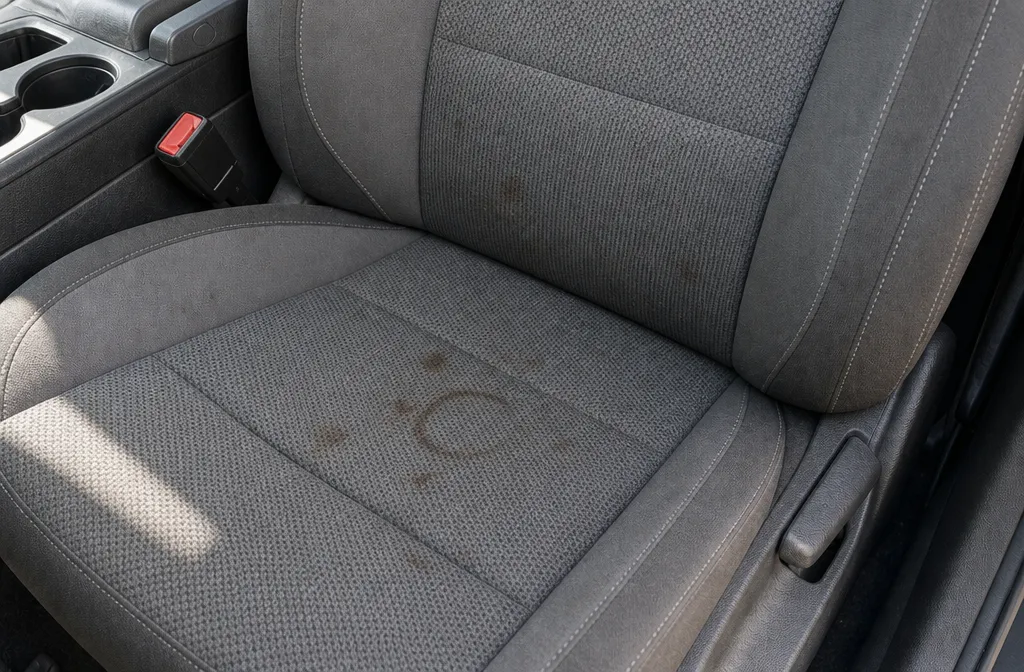
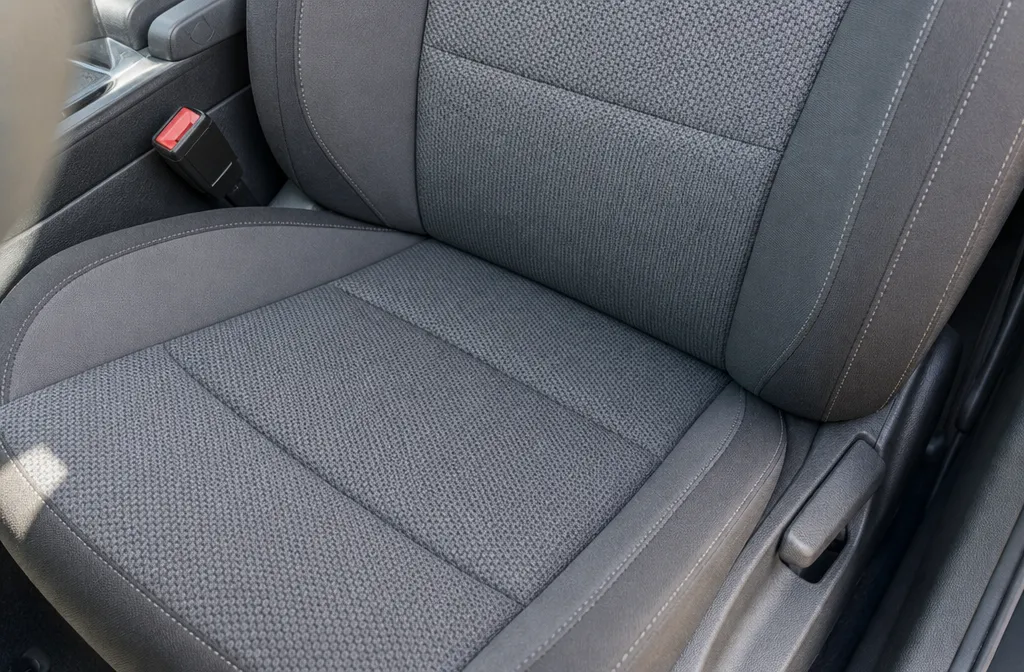
Request: Spilled coffee on the fabric front seat cover, need to remove the stain.
Done: Performed local dry cleaning of the stain using an enzyme stain remover and extraction.
Cost: 15 000 ₸
Master: Aigul Nurtazina, dry cleaning master
Total: Coffee stain completely removed, cover clean with no streaks.
 After
After
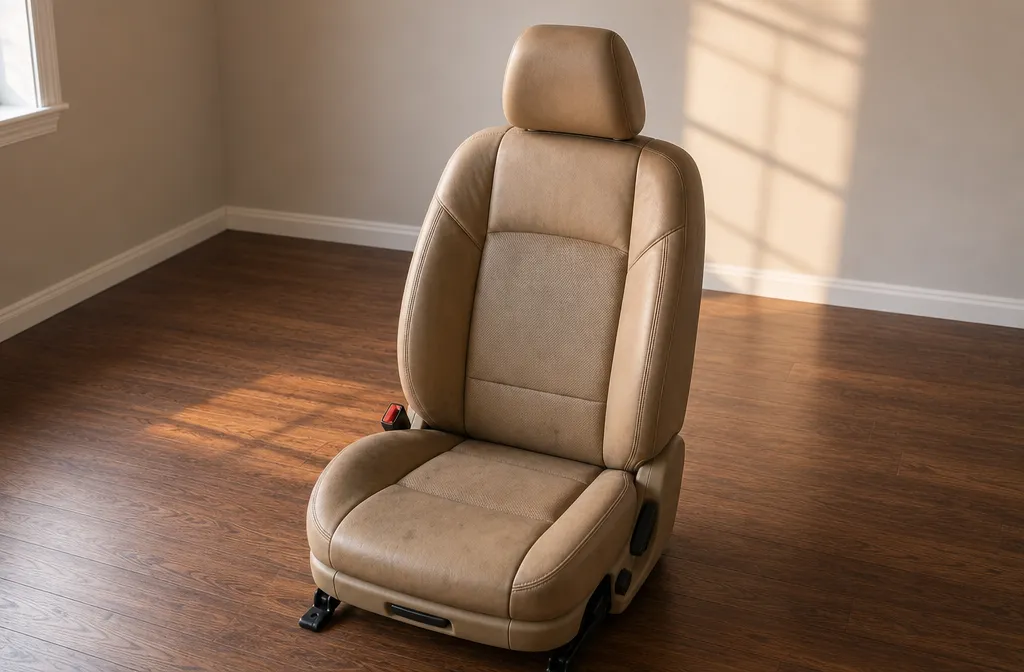
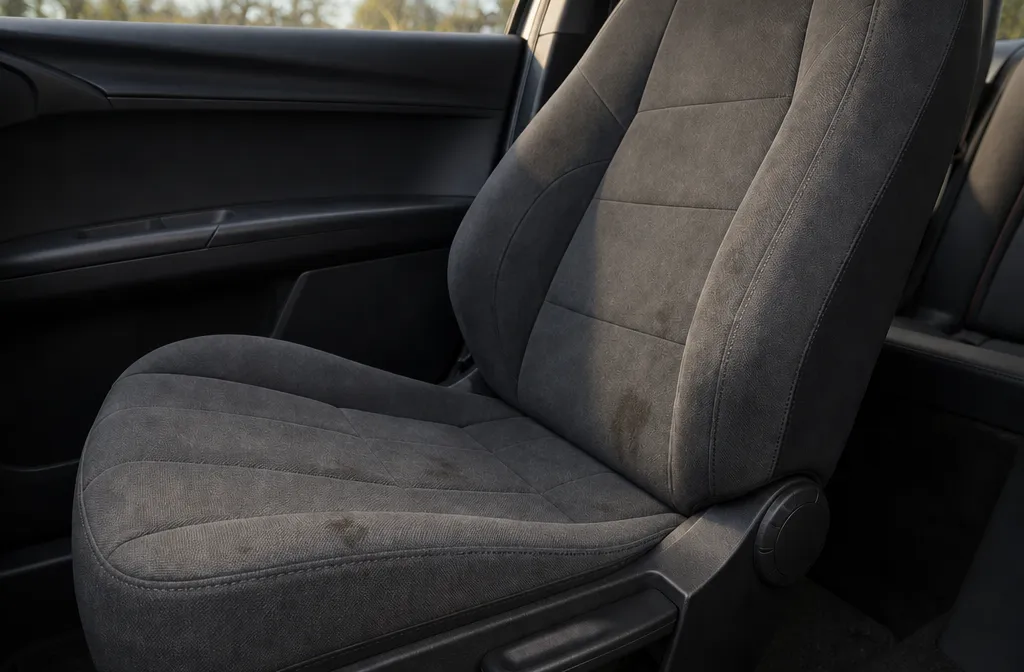
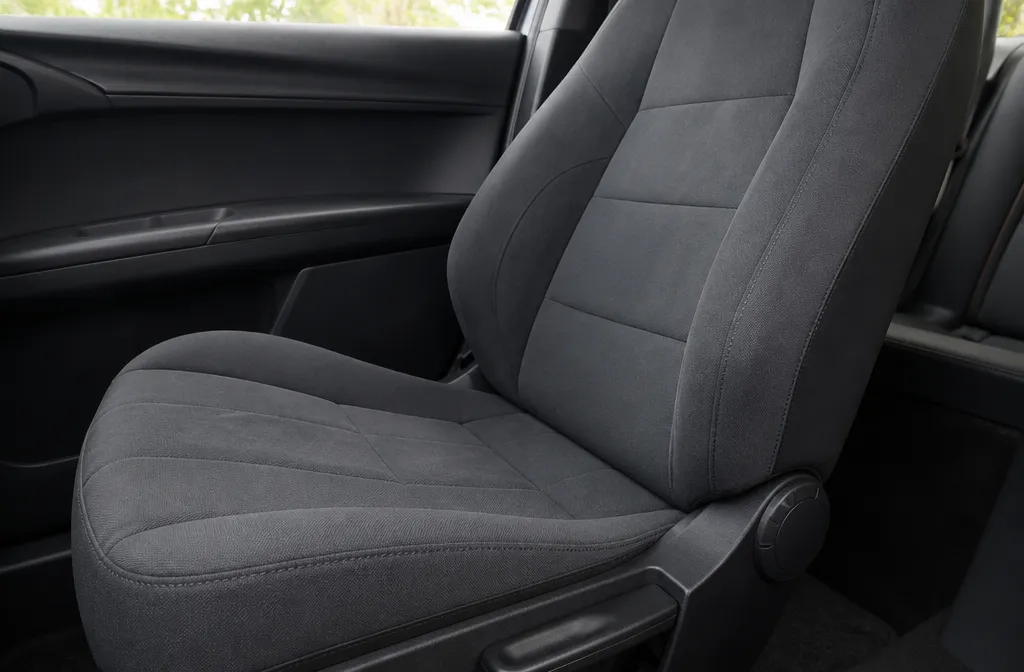
Request: Leather rear seat cover soiled with dirt after a trip to the countryside.
Done: Cleaned the leather with a special product, removed dirt, and applied protective conditioner.
Cost: 16 000 ₸
Master: Timur Zhaksybekov, dry cleaning master
Total: Leather cover clean, soft, with no traces of dirt.
 After
After
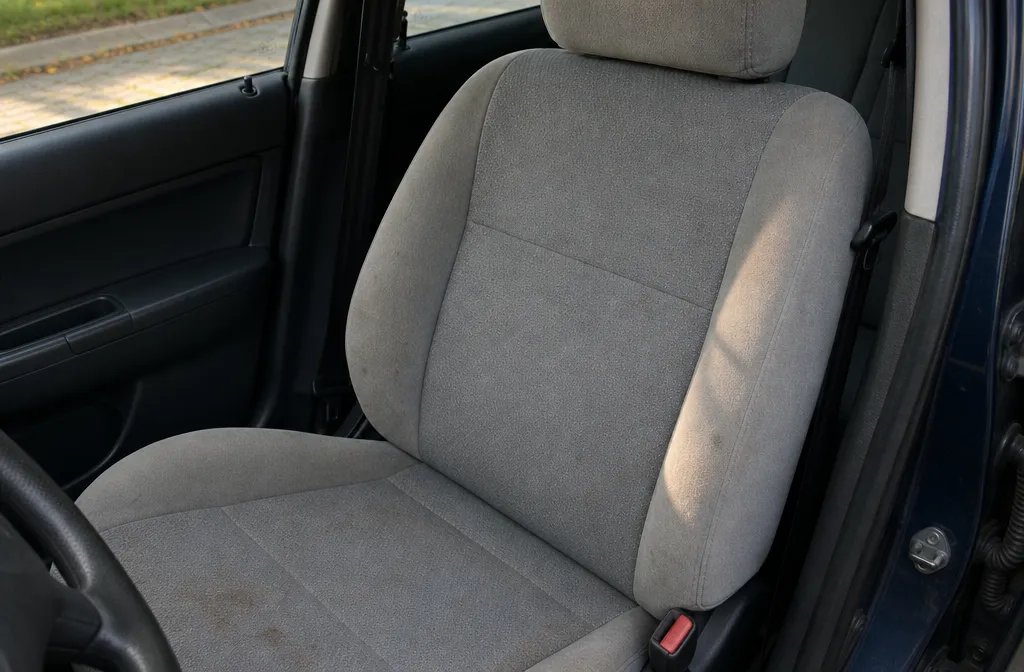
Request: Alcantara cover has an oil stain from food, needs removal.
Done: Treated the stain with solvent and performed deep steam cleaning.
Cost: 17 000 ₸
Master: Aigul Nurtazina, dry cleaning master
Total: Oil stain gone, alcantara pile restored.
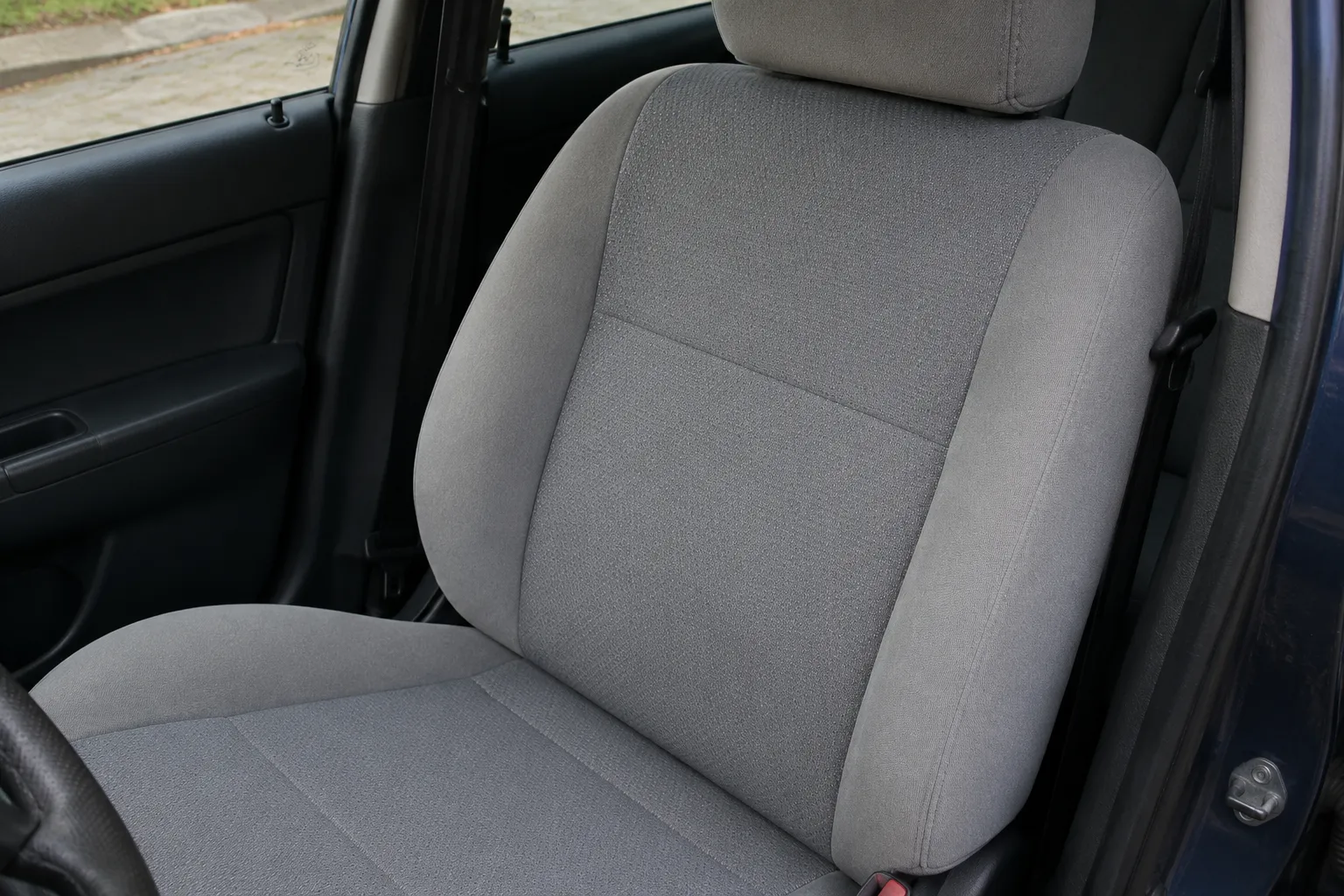 After
After
Request: Fabric cover soiled with dirt after rain, needs dry cleaning.
Done: Brushed off dirt and performed extraction cleaning with shampoo.
Cost: 16 000 ₸
Master: Timur Zhaksybekov, dry cleaning master
Total: Cover clean, with no dirt stains or streaks.
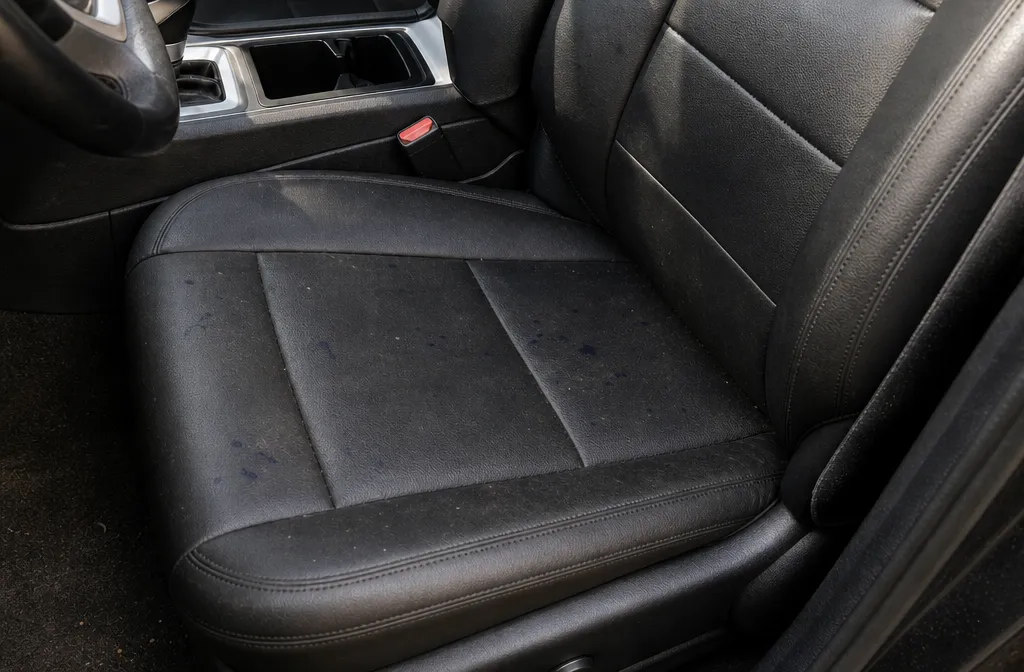
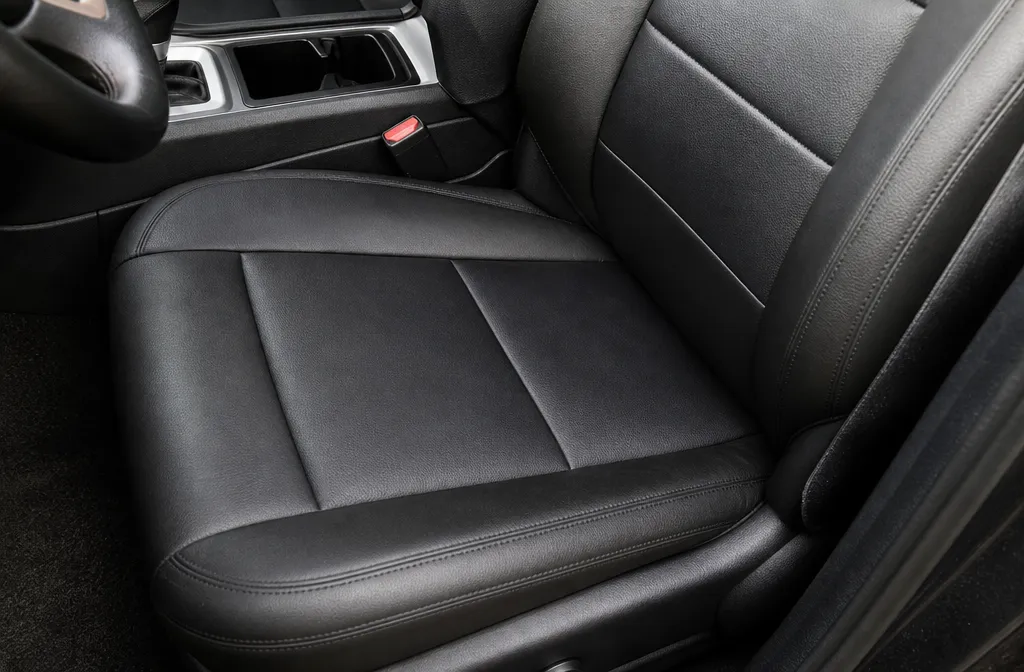 After
After
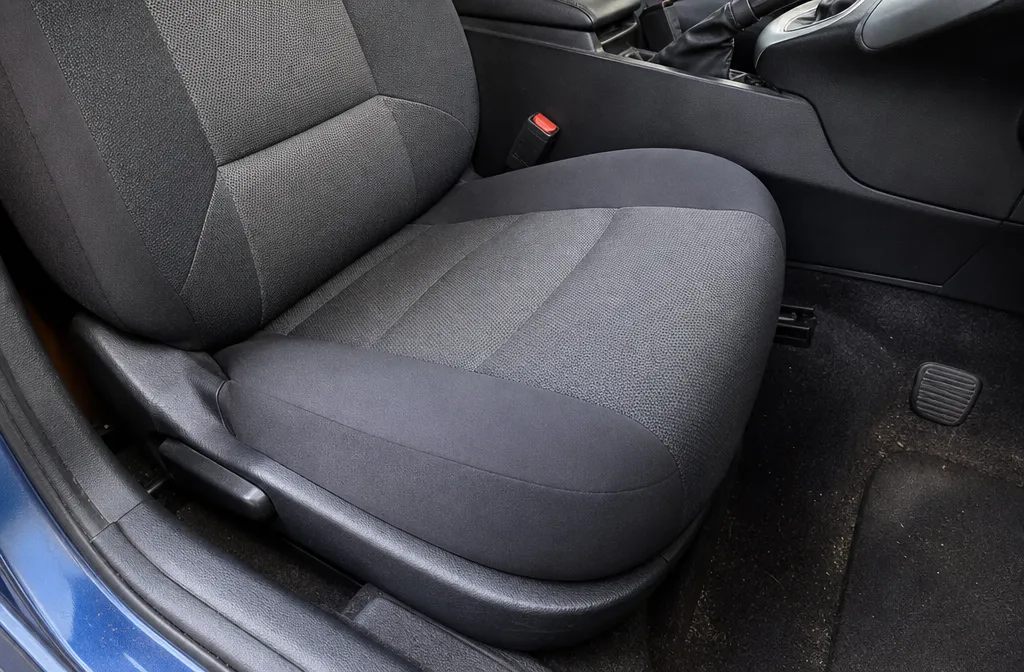
Request: Child spilled ink on the leather cover, needs urgent cleaning.
Done: Removed ink with a special leather stain remover and treated with conditioner.
Cost: 15 000 ₸
Master: Aigul Nurtazina, dry cleaning master
Total: Ink stain completely removed, leather undamaged.
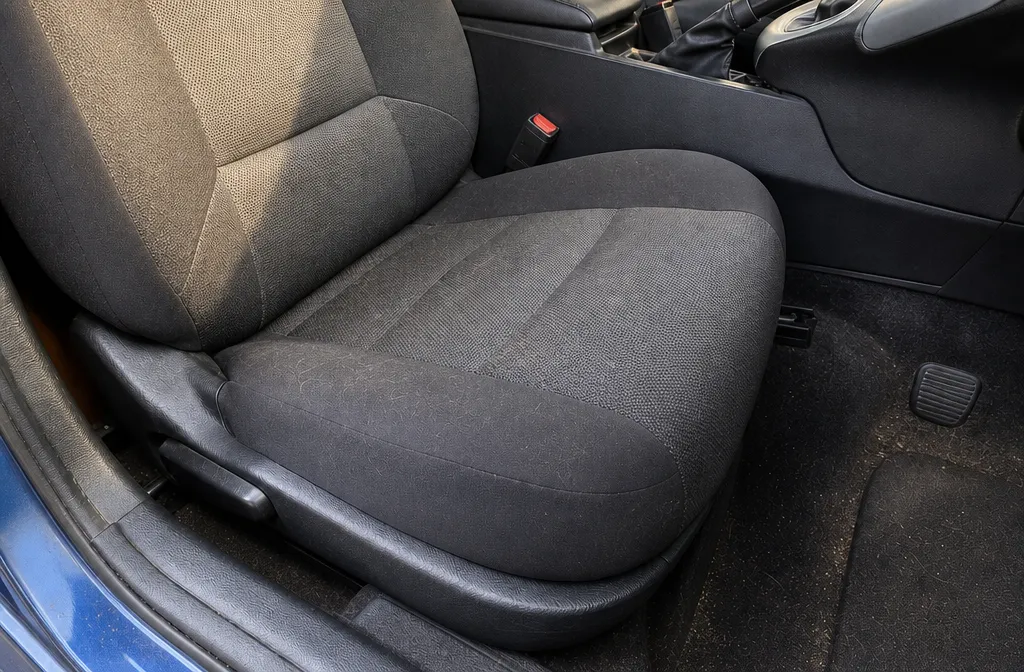
 After
After
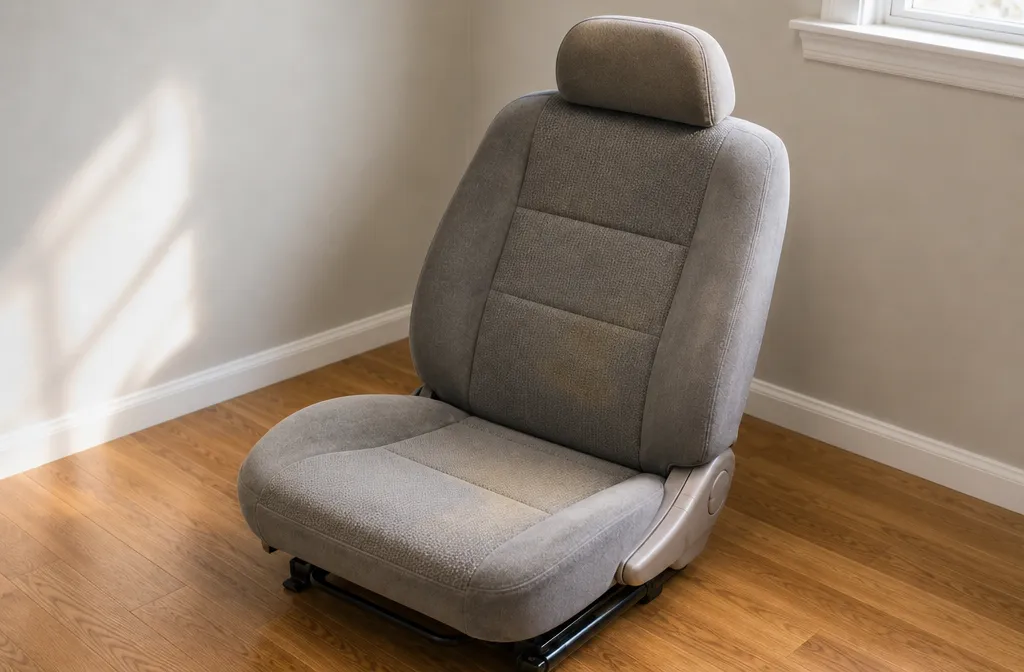
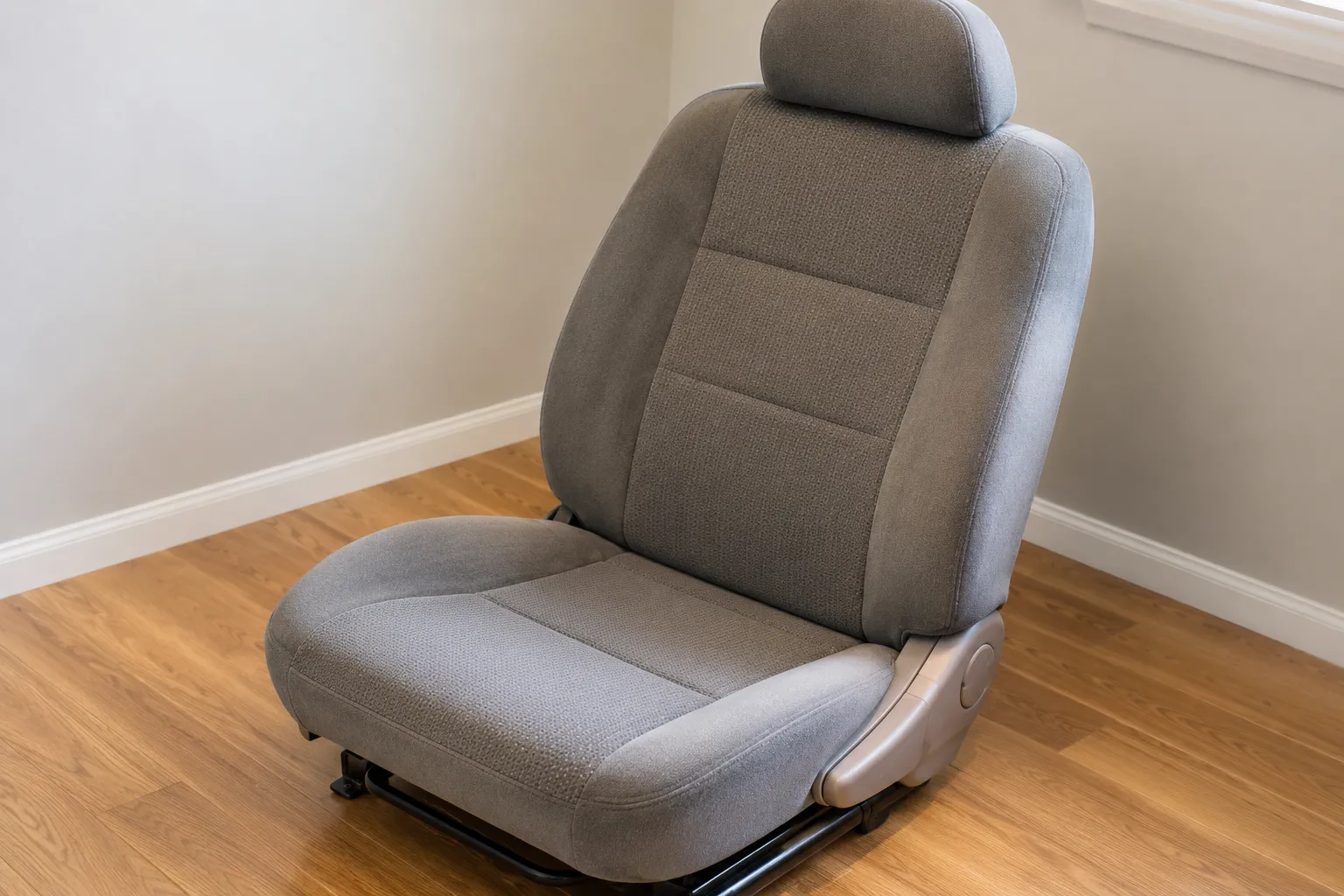
Request: Seat cover covered in dog hair, needs thorough cleaning.
Done: Removed hair with rubber scraper and performed dry cleaning with antistatic treatment.
Cost: 17 000 ₸
Master: Timur Zhaksybekov, dry cleaning master
Total: Seat cover clean, no pet hair or animal odor.
 After
After
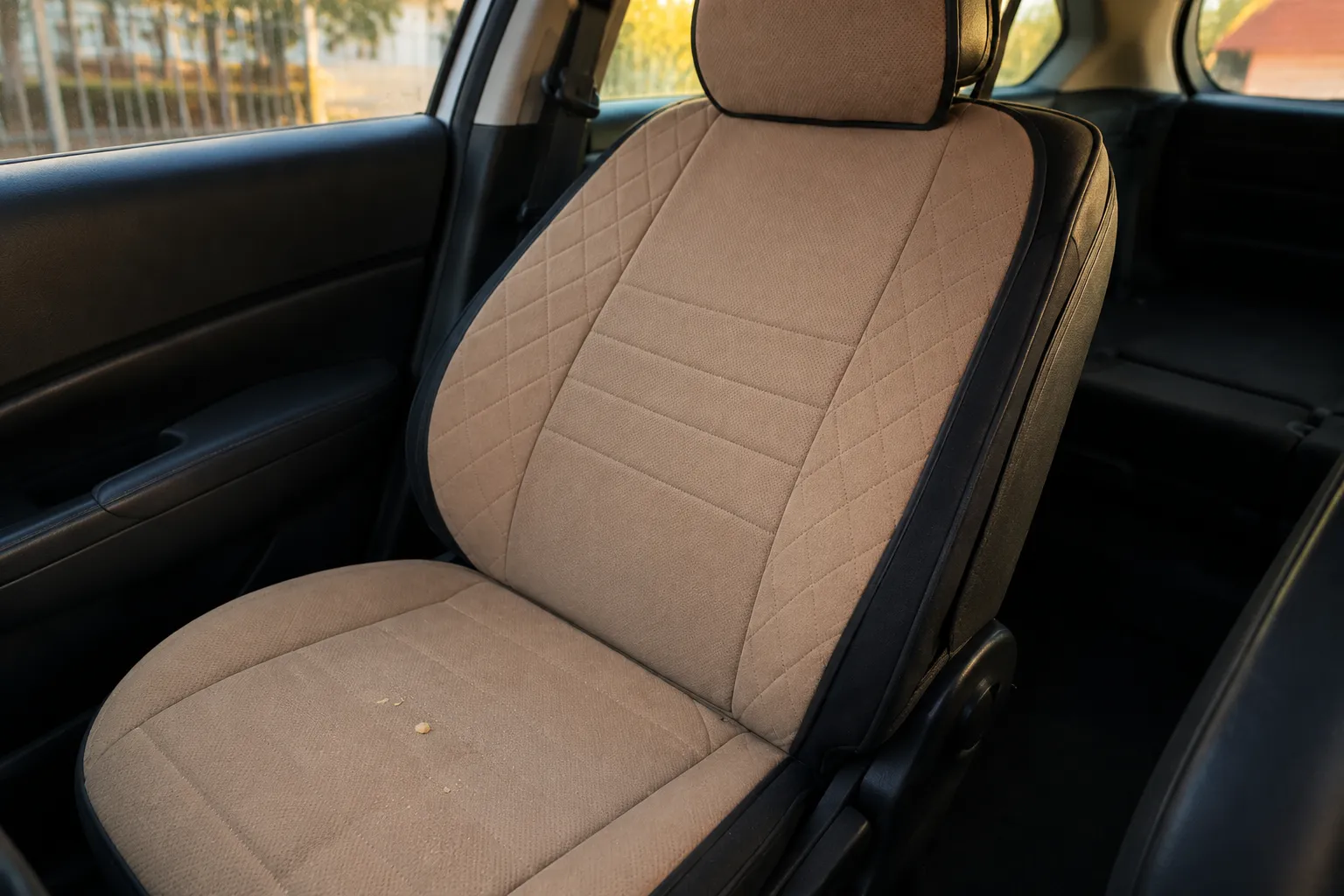
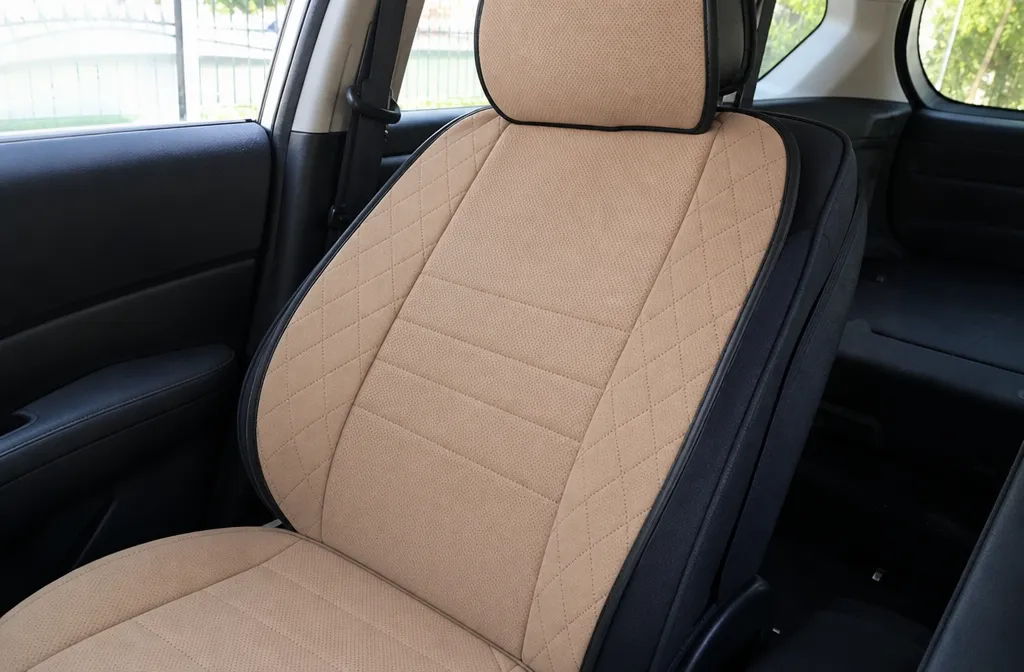
Request: Yellow sweat stains remain on fabric seat cover, needs bleaching.
Done: Treated stains with enzyme cleaner and performed deep steam cleaning.
Cost: 16 000 ₸
Master: Aigul Nurtazina, dry cleaning master
Total: Sweat stains removed, seat cover fresh and clean.
 After
After
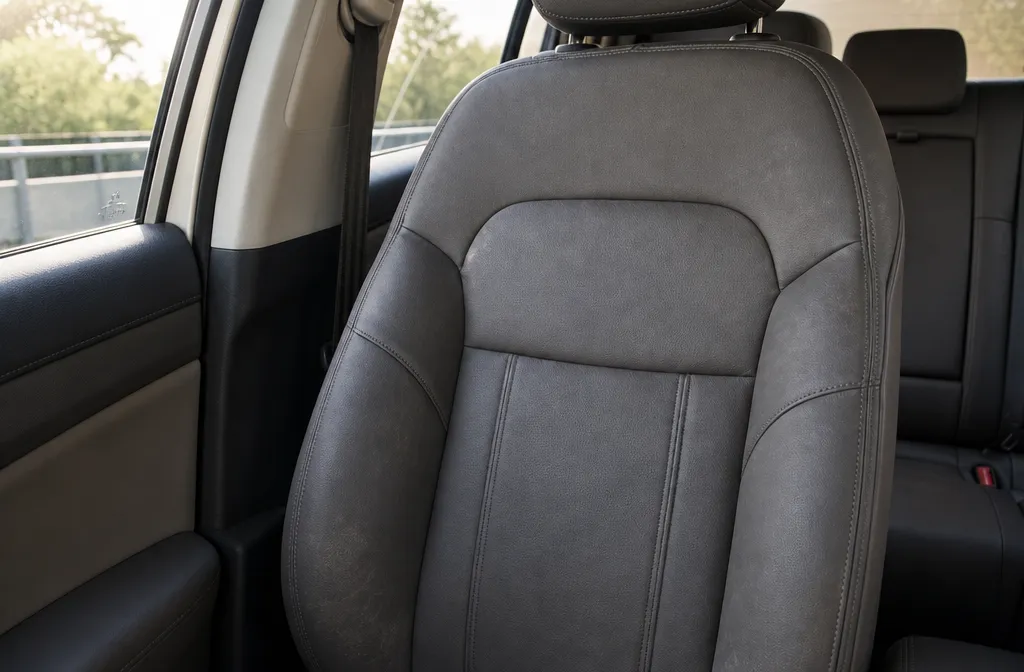
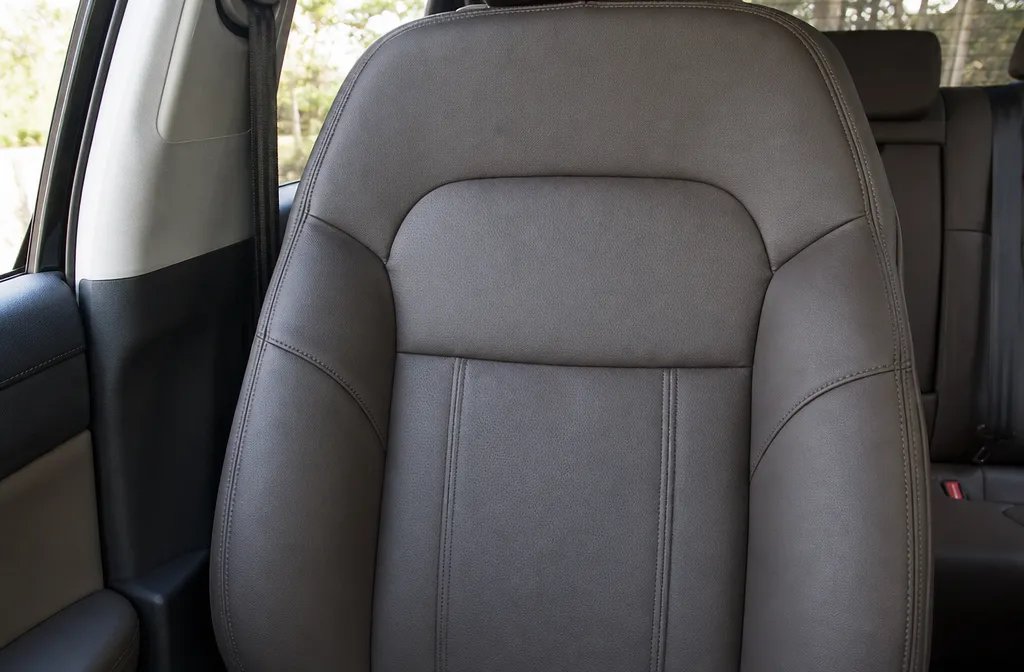
Request: After a snack in the car, the seat cover is covered in crumbs, needs cleaning.
Done: Vacuumed the seat cover and performed dry cleaning with shampoo.
Cost: 15 000 ₸
Master: Timur Zhaksybekov, dry cleaning master
Total: Seat cover clean, no crumbs or food residue.
 After
After
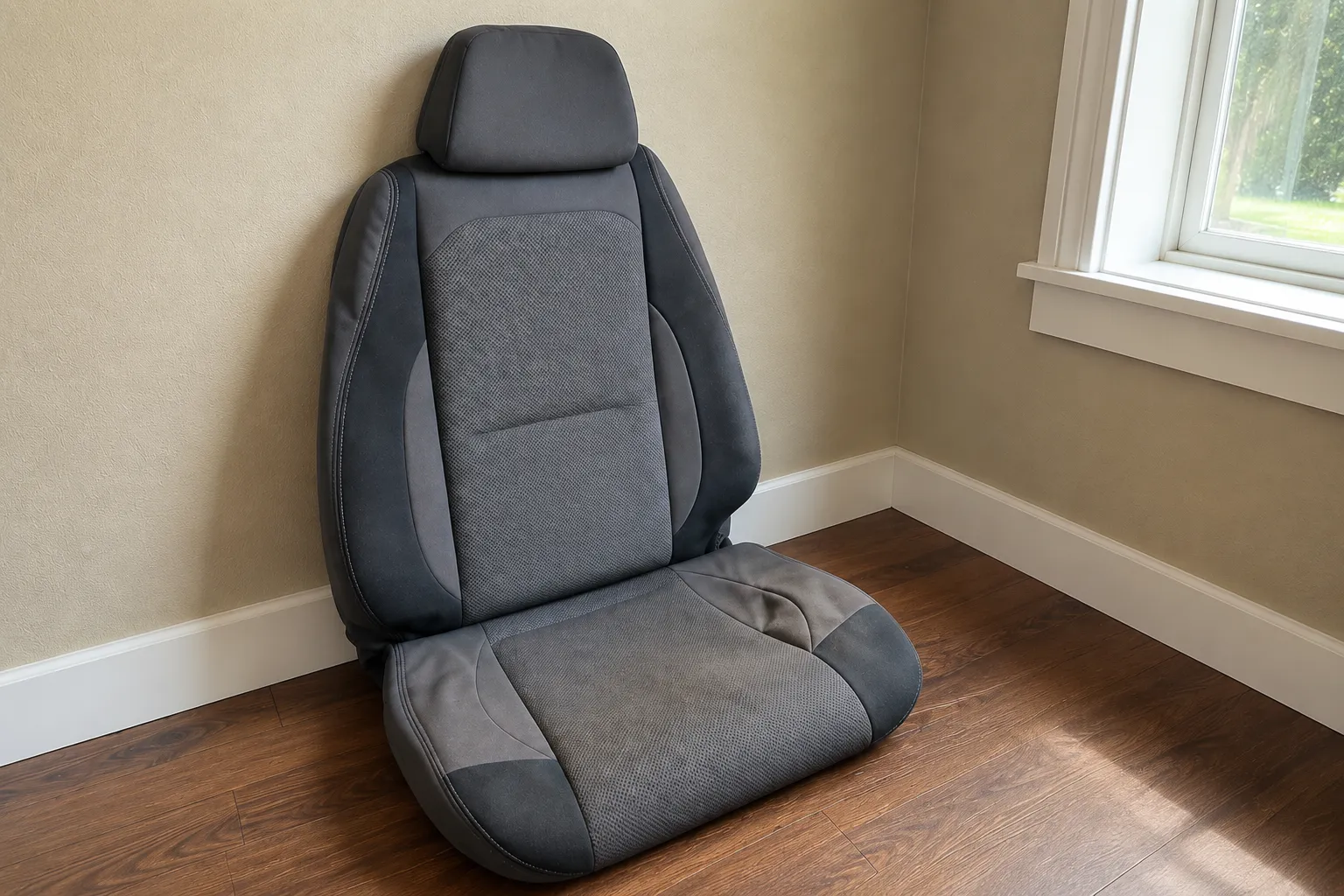
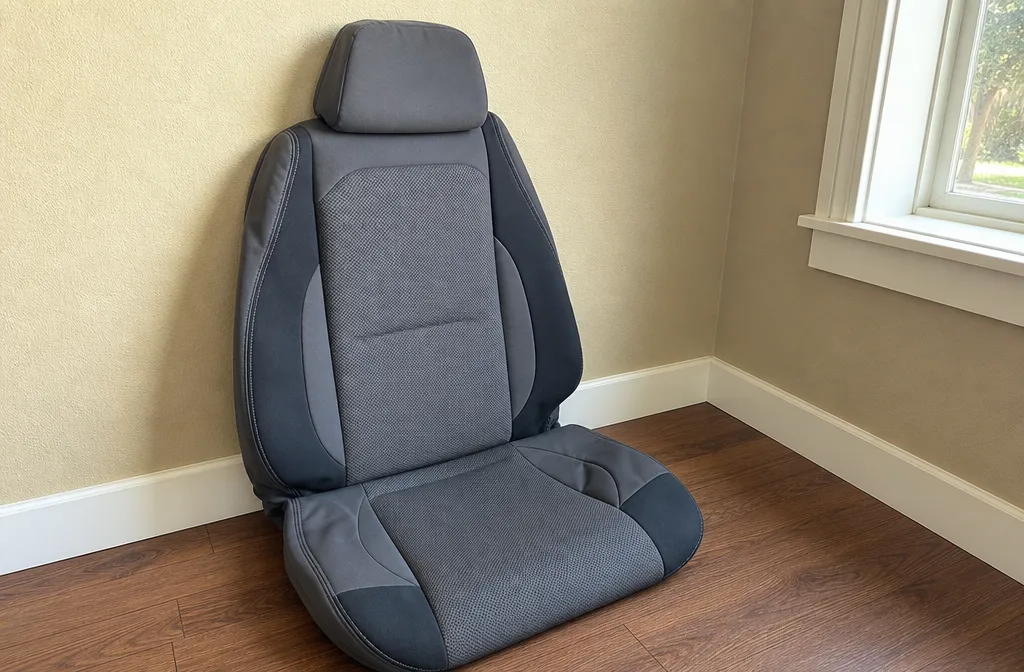
Request: Leather seat covers have scuffs and scratches, need refreshing.
Done: Cleaned the leather, applied restorative paint and protective coating.
Cost: 17 000 ₸
Master: Aigul Nurtazina, dry cleaning master
Total: Seat covers look like new, scuffs eliminated.
 After
After
Request: Fabric seat covers have lost their appearance from long use, need general cleaning.
Done: Performed full dry cleaning of all seat covers with extraction and conditioning.
Cost: 16 000 ₸
Master: Timur Zhaksybekov, dry cleaning master
Total: Seat covers clean, no stains, color brighter.
All cleaners are profi-clean staff with training, uniform and security check. Each order has a team leader who controls quality.
After we have removed the seat covers, cleaned them of stubborn dirt and coffee stains, and restored their color and freshness, it is crucial to maintain the result — otherwise, within a couple of weeks, they will look worse than before cleaning. Post-dry-cleaning care extends the effect by 2-3 times, and it differs for fabric, leather, and Alcantara. Let’s break down what to do with the seat covers immediately after they return from our service and how to care for them going forward.
Immediately after treatment, the material’s fibers are open and relaxed, with residual moisture held within the structure of the fabric or leather. If you install the covers on the seats and start using the car during this period, dirt will absorb deeper and faster than into uncleaned material. Do not install covers on a damp surface: the seat must be dry — residual moisture from leather conditioner or interior wet cleaning can cause mold in enclosed areas (seams, cushions), especially during Almaty’s humid spring and autumn. Do not expose the covers to temperature extremes: do not dry them in direct sunlight (fabric fading within 4-6 hours) and do not place them on a hot radiator (leather drying out, synthetic shrinkage up to 5%). Do not use harsh chemicals: no stain removers, bleaches, or chlorine-based sprays — they will destroy the protective layer we applied and open up the material’s pores. Do not scrub stains with a brush: if you notice a residual stain after return, do not try to remove it yourself — call us, and we will finish it free of charge within the 24-hour guarantee period. Do not subject the covers to mechanical stress: do not sit on them in wet or dirty clothes, do not place heavy bags or tools on them — freshly cleaned fabric absorbs new dirt like a sponge. The best scenario: leave the covers for 24 hours in a ventilated garage or on a balcony (out of direct sunlight), and install them on dry seats the next day.
After complete drying (24 hours), we apply a protective layer for each material type — for fabric, a fluoropolymer barrier profi-clean; for leather, a conditioner based on beeswax from Kiehl; for Alcantara, a water-repellent spray Sodasan. This layer lasts 4-6 weeks under normal use, but can be extended to 8-10 weeks with proper daily care. Fabric covers: once a week, treat them with a steam generator (handheld steamer) from a distance of 15-20 cm — steam lifts dust and fine sand that settle between fibers and renews the fluoropolymer layer. After steaming, let the covers dry for 30 minutes with windows open. Leather covers: every 10 days, wipe them with a microfiber cloth dampened with a soap solution (a drop of dye-free shampoo per 1 liter of water) and immediately dry with another microfiber cloth. No silicone sprays or polishes from auto markets — they clog leather pores, and after 2-3 months, the leather starts cracking. Alcantara: every two weeks, clean it with a soft natural bristle brush (e.g., for suede) in the direction of the nap — this removes dust and restores the structure. In Almaty, with our dusty spring and sandy winds, Alcantara should be steamed every 10 days, not once a month as in less dusty regions. General rule: after every off-road trip or in rainy weather — shake off the covers by hand or use a light vacuum (brush attachment, low power) to prevent sand and moisture from embedding into the protective layer.
We clean all three main types of car seat covers, and the care after our treatment differs for each — what works for leather damages Alcantara, and vice versa. Fabric covers (velour, jacquard, polyester): the most low-maintenance option. After our dry cleaning, they retain their appearance with weekly steaming and one “foam cleaning + fluoropolymer” cycle every 4-6 months. The main mistake is using aggressive carpet shampoos: they wash away the protective layer in one go. Leather covers (genuine leather and eco-leather): require mandatory conditioning every 2 weeks — if skipped, the leather dries out and micro-cracks appear at the folds, becoming visible within a month. We apply Kiehl conditioner to all leather surfaces after cleaning, but at home it needs to be refreshed. For eco-leather, a soapy solution is sufficient — conditioner for genuine leather is harmful to it (clogs pores, causing the coating to peel off after 3-4 months). Alcantara: the most finicky material. It cannot be rubbed, soaked with soapy water (leaves streaks), or treated with leather conditioner. Only dry cleaning with a soft brush and a steam generator every 10 days. If Alcantara gets wet from rain, do not rub it — blot it with a dry microfiber cloth using light touches and let it dry in the shade. In Almaty, with frequent rainfall in spring and autumn, Alcantara on the front seats requires more attention than fabric or leather — plan to return to us for preventive cleaning every 3-4 months, rather than every six months as with other materials. Combined covers (leather + fabric): care follows the most vulnerable material — if there is an Alcantara insert, the entire cover is treated as Alcantara, even if 80% of the surface is leather.
In 8 years of work in Almaty, we have seen dozens of cases where clients negated our work within a week — here is what happens most often. Mistake 1: immediately sitting on freshly cleaned covers in jeans. Dark denim fabric leaves dye on light-colored fabric (especially on beige and gray covers) in the first 6 hours after dry cleaning, while the pile is open. If you have a light interior, it is better to cover the seats with a light sheet or use a seat cover for the first 2 days. Mistake 2: using “folk” remedies. Vinegar, baking soda, citric acid, and ammonia — what is recommended on forums — destroy the fluoropolymer layer in one application. After vinegar, the fabric loses 60-70% of its water-repellent properties, and the next dry cleaning will be needed in 2 months instead of 6-8. Mistake 3: drying with a hairdryer or heater. Hot air (above 60°C) shrinks synthetic fibers — the cover shrinks by 3-5% and no longer fits tightly on the seat. Covers made of polyester and jacquard are particularly affected. Mistake 4: ignoring local stains. If you spill coffee or juice — do not wait for the next dry cleaning, blot it with a napkin (do not rub!) and treat it with steam the same day. An old coffee stain on Alcantara is 3-4 times harder to remove than a fresh one. Mistake 5: skimping on the protective layer. After our dry cleaning, we apply protection for free, but some clients ask us not to apply it — “to avoid the chemical smell.” Within a month without protection, the covers absorb cigarette smoke and sweat odors, and the cleaning effect is reduced by 50%. Advice from our practice: if you smoke in the car or transport children, renew the protective layer every 3 weeks, not every 6 — for Almaty with its smog and dust, this really works.
Even with perfect care, the protective layer wears out, and the material starts accumulating dirt again. Here are the signs that it’s time to come to us. Visual: the color has become 2-3 shades duller compared to right after cleaning, local stains have appeared that won’t come out with steam, the pile on Alcantara has flattened and won’t recover with a brush. Tactile: the fabric feels stiffer to the touch, the leather has lost elasticity (a crease remains when pressed), Alcantara “squeaks” when rubbed. Odor: there’s a smell of sweat, dampness, or tobacco that doesn’t dissipate after airing out — this means dirt has penetrated deep into the fibers, and the protective layer is no longer effective. By time: for fabric — every 6-8 months, for leather — once every 8-10 months (provided conditioning every 2 weeks), for Alcantara in Almaty — every 3-4 months due to dust and smog. If you notice at least one of these signs, don’t wait until the seat covers become visibly dirty — preventive cleaning is cheaper and faster than deep cleaning of old stains. For example, prevention on fabric seat covers takes us 1.5 hours, while deep cleaning after a year without care takes 4-5 hours with an additional odor removal cycle.
At first glance, dry cleaning seat covers is a universal procedure: apply the product, rinse, dry. In reality, the technology differs drastically for fabric and leather: different chemicals, different equipment, different risks of ruining the material. Let’s break down the key differences that we at profi-clean consider on every order.
Fabric seat covers have a porous structure: threads are woven together with micro-voids between them where dust, sweat, and spilled coffee get trapped. The main task when cleaning fabric is to extract dirt from deep within the fibers without damaging the weave. For this, we use water extraction machines — they inject the cleaning solution into the fiber under pressure and immediately suction it back out along with the dissolved dirt. If you apply leather foam to fabric and just wipe it, the dirt stays inside — streaks will appear within a week. Additionally, fabric seat covers require color fixation: dyes on cotton and synthetics are unstable, especially on cheaper models. Without a fixative, wet cleaning can leave yellow spots on light upholstery from washed-out pigment. We had a case in our practice: a client treated gray fabric seat covers with a universal car shampoo for leather — three days later, whitish spots appeared where the driver sat, which had to be repainted with an aerosol dye. For fabric, we always use pH-neutral Kiehl formulations with enzymes that break down protein (sweat, food) rather than just masking the odor.
Natural and artificial leather is a fundamentally different material: it’s not a porous structure but a film coating with a protective layer (lacquer, polyurethane, acrylic). Water and harsh chemicals are detrimental to leather: moisture penetrates the film through micro-cracks, causing the coating to peel and mold to grow on the underside. That’s why we never use extraction machines or heavy wetting on leather. Instead, we use low-moisture treatment: apply a low-expansion foam (Sodasan Leather Cleaner), let it sit for 2-3 minutes to bind grease and dirt, then remove it with a microfiber cloth. The second difference is mandatory conditioning after cleaning. Leather loses plasticizers with every wash, even gentle ones. Without a conditioner (e.g., Kiehl Leather Conditioner), after 2-3 cleanings, the leather starts cracking at the folds — especially on the side bolsters of seats where the load is greatest. In Almaty, where the cabin reaches +50°C in summer and the air is dry from the heater in winter, leather without conditioner dries out within six months. The third difference is dyes: leather is colored either throughout its thickness or only in the top layer (aniline coating). Cheap automotive leathers are often surface-dyed — if you scrub them with a stiff brush like fabric, the color will rub off, leaving a white base. On leather seat covers, we only use soft sponges and suede attachments.
The most common mistake is a universal “one product for everything” approach. Customers bring in seat covers that show signs of being cleaned with automotive interior cosmetics: fabric has silicone streaks, leather has a sticky layer from plastic conditioner. Silicone clogs fabric pores, requiring a solvent for the next cleaning. The second mistake is incorrect water temperature. Fabric covers made of polyester (70% of the budget car market) cannot tolerate hot water above +60°C — the fibers deform, the cover shrinks and no longer stretches over the seat. Leather, on the other hand, cannot tolerate cold water below +20°C — pores constrict, and dirt won’t come out. At profi-clean, we use +50°C for fabric and +30°C for leather. The third mistake is skipping the neutralization stage. Alkaline products for fabric (for grease removal) leave a pH of 9-10 on the fiber — without a neutralizer, the fabric will yellow within a month from alkali residue. On leather, acidic products for removing limescale (which can occur after washing in hard water) will corrode the protective layer without neutralization. The fourth mistake is drying with a hairdryer on the hot setting. Fabric shrinks irreversibly after a hot hairdryer, and leather cracks. After dry cleaning, our covers dry at room temperature with fans for 8-12 hours — the process cannot be rushed.
Before starting work, we always identify the material — this eliminates errors from the start. The first test is a drop of water: on leather, the water beads up; on fabric, it absorbs in 2-3 seconds. The second test is the edge of the cover from the underside: leather shows a nap (splits) or a fabric base (synthetic), while fabric shows a weave of threads. The third test is the smell when heated with a hairdryer (without contact): natural leather smells like leather, synthetic leather smells like plastic, and fabric smells like textile with no strong odor. The fourth test is a burn test on a thread from the underside (done only with the client’s consent): synthetic fabric melts, cotton burns with a paper-like smell. In Almaty, combined covers are common: the seat center is perforated leather, the bolsters are eco-leather or fabric. This hybrid requires separate treatment: leather with foam and conditioner, fabric with extraction and enzymes, and perforation with dry brushing to avoid clogging the holes with moisture. If the material is identified incorrectly, cleaning can ruin the covers in one cycle.
In our practice, some contaminants come off in one cycle, while others need to be treated 3-4 times, risking damage to the fabric itself. The difficulty depends not on the “strength” of the stain, but on a combination of three factors: the type of substance, the fiber composition, and the time the contaminant has spent in the fibers. Let’s break down three categories that most often come to us at profi-clean.
Motor oil, road bitumen, industrial lubricants are not just grease, but persistent hydrocarbon mixtures that penetrate the structure of polyester or nylon within hours. If the stain is fresh (up to 2 hours), we remove it with a D-Limonene-based solvent from Kiehl in one go — it breaks down the oil without heating the fabric. But when such a stain “sleeps” in the car, the oil oxidizes and polymerizes into the micropores of the thread: a regular stain remover won’t work, requiring an alkaline pre-spray (pH 10-11) followed by hot water extraction at 80 bar pressure. There is also a non-obvious consequence: on cheap covers made of recycled polyester, bitumen reacts with the dye, and after stain removal, a discolored spot remains — in such cases, we recommend not risking it and immediately dyeing the area.
Blood and egg are insidious because when they come into contact with hot water (above 40°C), the protein coagulates and “welds” itself permanently to the fiber. That’s why our first reaction to such stains is cold water (10-15°C) and an enzyme-based stain remover with protease from Sodasan: it breaks down the protein into amino acids that are easily rinsed away. The difficulty is that in Almaty, many people heat their car interior to the max in winter, and dried blood on the driver’s seat is no longer a stain, but a heat-set film. Last October, we had a case: covers from a child car seat — a mix of milk, saliva, and leftover puree — the owner tried to wipe it off with hot water from a car wash, and we only removed it after 4 cycles of cold soaking and ultrasonic cleaning. Our practical advice: never pour boiling water on biological stains — you will only seal them into the fabric forever.
Ink from pens, markers, hair dye, pomegranate or beet juice — all these stains share one thing: the pigment is chemically similar to the fabric’s own dye. If the cover is dyed with a cheap disperse dye (typical for budget car covers from China), an alcohol-based stain remover can remove both the stain and the factory color — leaving a faded spot. For such cases, we use an oxygen bleach based on sodium percarbonate (active oxygen at 60 °C) — it oxidizes organic pigments but is gentle on most modern textile dyes. However, on Alcantara and microfiber, ink penetrates the pile by 2–3 mm, and here you need mechanics, not chemicals: first, vacuum extraction of the solvent, then pressure washing — repeated up to 5 times. Remember: the brighter and more concentrated the stain color (e.g., brilliant green or a red marker), the higher the risk that a “shadow” will remain after removal — especially on light-colored fabric.
The regularity of dry cleaning your seat covers directly affects their lifespan and the interior’s appearance, but there is no universal schedule — the frequency is dictated by operating conditions, material type, and the driver’s lifestyle. Let’s break down how to determine the optimal interval for your case.
If the car is used daily for city and highway trips, and passengers are regularly in the cabin, the optimal dry cleaning frequency is every 3–4 months. Over this period, ingrained dust, sweat, and skin micro-particles accumulate on the fabric, which are invisible to the eye but have already begun to break down the fibers. In Almaty, this interval is especially relevant due to the high dust levels in the air: in one quarter, as much dust settles on the seats as in half a year in the suburbs. In our experience, owners who come in quarterly are less likely to encounter greasy headrests and persistent odors, and their covers retain color for 2–3 years longer. If you smoke in the car or transport pets, the interval should be shortened to 2 months — fur and nicotine tar clog fabric pores faster, and after six months, even deep cleaning won’t restore the original look.
For cars not used daily — for example, driven to the dacha in summer or stored in a garage in winter — it’s enough to dry clean twice a year: before the season starts and after it ends. Spring cleaning removes reagents and salt left over from winter, while autumn cleaning removes pollen, poplar fluff, and dust accumulated over the summer. In Almaty conditions, spring treatment is critical: after the thaw, micro-particles of the sand-salt mixture used on roads remain on the covers, and if not removed before summer, they embed into the fabric through friction. On models with velour covers, we’ve noticed that skipping spring dry cleaning leads to irreversible light streaks along the seat edges by mid-summer. This twice-yearly schedule also suits cars with leather covers — leather needs professional cleaning and conditioning once every six months to avoid drying out and cracking.
In cars where 10–15 passengers pass through daily (taxis, car-sharing, corporate fleets), dry cleaning of seat covers is needed every 3–4 weeks. In a month, the upholstery accumulates a volume of dirt comparable to a year’s worth in a personal car: grease from hands, spilled drinks, dirt from shoes. At profi-clean, we service several taxi fleets in Almaty and see that with a monthly interval, covers remain in good condition for up to 2 years, but if cleaning is delayed to every 2 months, after a year the fabric can no longer be cleaned to its original shade, and greasy areas appear at the lumbar and headrest points. For taxi fleet owners, this is a direct saving: frequent dry cleaning doubles the lifespan of covers compared to replacing them every 8–10 months. If children or pets are transported in the car, the interval is reduced to 2–3 weeks — urine, saliva, and small debris destroy the fabric’s impregnation faster.
You don’t always have to wait for a calendar date—there are visual and tactile markers that signal seat covers need treatment ahead of schedule. The first and most obvious is smell: if a musty or sour odor remains in the cabin after airing out, bacteria are already developing inside the fibers. The second sign is stains that a wet wipe can’t remove: coffee, juice, or grease absorbed deeper than 1–2 mm require professional extraction. The third is a change in texture: if the fabric feels stiffer to the touch, or leather develops a matte film that wet cleaning can’t remove, the pores are clogged with dust and sweat. The fourth is pills and lint that a roller can’t pick up—they form when fibers are weakened by ingrained dirt. In our practice, there was a case: a car owner came in 5 months after the previous dry cleaning, though he planned for six months—the paint on the leather side bolsters had already started peeling, and they could only be saved with restoration. It’s better to bring your car in for cleaning a month early than to risk irreversible material damage.
Almaty’s urban environment is a key factor accelerating seat cover soiling. Dust from mountain areas, exhaust fumes during rush hour, poplar fluff in May-June, and summer sandstorms—all of this settles on seats even with closed windows. We measured: in a month in central districts (Abay Avenue, Zhibek Zholy Street), 30–40% more dust accumulates on seat covers than in suburbs like Kargaly. In winter, reagents and salt used on roads add to the mix—they melt on shoes and transfer to seats. For owners living in high-traffic zones (Medeu, Bostandyk districts), we recommend shortening the standard interval by 1–1.5 months. In practice, this means: if you drive daily through central Almaty, dry cleaning every 3 months is not a luxury but a necessity—otherwise, leather and fabric lose elasticity 20–30% faster than in cars from quiet residential areas.
Almaty’s air is one of the dustiest in Kazakhstan due to its basin location and exhaust fumes, and this dust doesn’t just settle on upholstery fabrics as a layer—it embeds into the fiber structure along with road grime. Dry cleaning car seat covers under such conditions requires a different approach than in regions with clean air.
The urban particulate matter in Almaty consists of 30–40% soot particles from coal-fired boilers and diesel engines—this isn’t just “dirt,” but a fine abrasive with an oily fraction. When this dust mixes with condensation (morning moisture, spilled coffee), it forms a sticky film that clogs the pores of microfiber and polyester deeper than regular street dust. In our practice, seat covers after winter in the Medeu district require one more extraction cycle than after a year of use in the suburbs—the difference is visible in the color of the drained water during the rinsing stage. If the oily fraction isn’t removed at the very first stage, it fixes subsequent dirt, making it 2–3 times harder to remove.
Smog containing nitrogen and sulfur oxides triggers a chemical reaction on the surface of dyes—light-colored seat covers (beige, gray, cream) in Almaty turn yellow not from the sun, but from the acidic effect of exhaust fumes, especially in traffic jams on Al-Farabi Avenue. This isn’t just a coating: the molecular change in pigment doesn’t wash off with regular foam and requires a neutralizing pre-treatment with a pH of 8–9, which we apply before the main cleaning. On black and dark blue seat covers, smog manifests differently—the fabric loses color depth, becoming “soapy” in appearance, though it may feel clean to the touch. Owners of [year] cars often complain that their seat covers have “faded,” but the real cause is chemical etching of the dye by smog, and color can only be restored with gentle water-based recoloring, which we do after cleaning.
Normal mode — foam application, vacuum extraction, drying — in Almaty yields 60–70% results on seat covers that have been in use for over a year without professional cleaning. The reason: dust mixed with smog forms a crust on the fabric surface that standard pre-treatment cannot soften. In such cases, we use a two-phase treatment: first, an enzyme spray (breaks down the oily soot film), then a soak with an enzymatic solution for 15–20 minutes before applying foam. For cars that regularly sit in traffic jams on Tole bi or near the TSUM area, this scheme is mandatory — otherwise, gray streaks remain on the seat creases after drying. In my opinion, it is precisely the Almaty specifics that are the main reason why owners say “I cleaned it, but it’s still dirty”: the problem is not the quality of the dry cleaning, but that urban dust requires a different set of chemicals than regional highways.
A common practice at Almaty car washes is dry cleaning seat covers directly in the cabin, without removing them: foam is applied, vacuumed up, and left to dry on the seats. For a city with humidity above 60% (autumn, spring), this is a guaranteed risk: moisture that hasn’t fully evaporated gets trapped between the cover and the seat foam, creating an environment for mold — after 2–3 weeks, a characteristic musty smell appears, especially around the headrests. We always remove the covers and clean them on a rack with forced ventilation: drying takes 3–4 hours versus 30 minutes “on the car,” but it prevents foam rot and subsequent seat reupholstery costing 80–120 thousand tenge. If you are offered dry cleaning without removal in an hour — in Almaty, this is almost always a compromise on quality that will come back as a smell in a month.
I ordered dry cleaning of car seat covers — they removed juice and chocolate stains, the covers look like new, smell fresh.
Thank you, Aigerim! Glad we handled the stains.
Leather covers were covered in salt and dirt after winter — now they shine and feel soft. The result exceeded expectations.
Had dry cleaning of car seat covers, there were slight streaks on the backrest, but overall clean and fresh. I recommend.
Daniyar, we apologize for the streaks. If you want a redo, contact us, we'll fix it.
I hadn't cleaned the covers for two years — dust and stains had set in. The masters cleaned everything to a shine, even the seams turned white.
I drove my dog, the fur and smell got ingrained. I ordered car seat cover dry cleaning — they removed everything, now it's pleasant to sit in the cabin.
Yerlan, thank you for your review! We work with any stains.
After renovation, there was cement dust in the car, the covers were gray. They cleaned them perfectly, restored the color.
Dry cleaning of car seat covers from cigarette smell helped partially, but a slight smell remained. I thought it would be better.
Kuanysh, thank you for your honesty. For complete odor removal, ozone treatment is needed — we can offer it additionally.
I spilled coffee on the front seats — old stains. They removed them completely, no trace, the covers smell neutral.
I handed in fluffy winter covers for dry cleaning — they became fluffy and clean, without pills.
Timur, glad you liked it! We also work with pills.
They cleaned the child car seat — removed food stains, but a slight smell remained. Overall good, but could be better.
The car was used, the covers were terrible. Dry cleaning made them like new — even the driver was surprised.
Alexey, thank you! We work with any neglected cases.
I was afraid to ruin the alcantara, but the masters did an excellent job — soft, clean, no streaks. Very satisfied.
I spilled oil on the back seat. Dry cleaning removed the stain completely, no smell even.
Nurlan, great! Oil is a tough stain, but we handled it.
White seat covers turned gray in six months. After cleaning — snow-white, like on the day of purchase. Thank you!
I work in a taxi, seat covers are constantly dirty. Regular dry cleaning of car seat covers at profi-clean is the only salvation, always clean.
Ruslan, we are glad to be helpful! For taxi drivers, we offer discounts for regular service.
The red wine stain was removed, but a faint pink tint remained on the light fabric. Otherwise, everything is great.
I was afraid they would damage the heating, but the dry cleaning of car seat covers was done carefully, the heating works, the seat covers are clean.
Bakhytzhan, we always take features into account, thank you for your trust.
After a flood in the car, mold appeared on the seat covers. The masters eliminated the fungus and restored a fresh look. I recommend it.
I ordered dry cleaning of car seat covers with embroidery — I was afraid they would ruin it. Everything is intact, the embroidery is bright, clean.
Arman, thank you! We work carefully with embroidery.
They did it quickly, in an hour. The seat covers are clean, but one corner remained damp. I had to dry it myself.
Spilled gasoline in the trunk on the seat cover. Dry cleaning of car seat covers removed both the stain and the smell. Great!
Serik, glad to help! Gasoline is caustic, but we handled it.
Two cats in the car — fur everywhere. After cleaning, not a single hair, seat covers smooth, without sticky layer.
I ordered dry cleaning of car seat covers with eyelets — they removed and reinstalled them neatly, nothing was broken.
Zhanna, thank you! We work carefully with eyelets.
My child drew on the covers with markers — they removed even blue, covers look like new. I'm delighted!
I was afraid to wet velour covers. Dry cleaning of car seat covers was done at the highest level — the pile is even and clean.
Dauren, thank you! Velour is delicate, but we know the approach.
After cleaning, there was a strong chemical smell, had to air it out. But the dirt was washed off well.
Light covers get dirty quickly, but dry cleaning of car seat covers restores their perfect look. I'll use it regularly.
Kanat, thank you! We look forward to seeing you again.
Stains from cherries and strawberries were completely removed, not even a trace left. Very satisfied.
After construction, there was cement dust and dirt in the car. Dry cleaning of car seat covers saved the day — everything was cleaned, including hard-to-reach places.
Victor, thank you! Construction dirt is our element.
Grass stains were removed, but a yellowish tint remained on white. Otherwise good, fast.
Dry cleaning of car seat covers with pillows — they removed and reinstalled perfectly, pillows became fluffy.
Talgar, glad you liked everything!
My child has a dust allergy — after cleaning the covers, he stopped sneezing. The result is noticeable immediately.
On average, cleaning one seat takes 30-40 minutes. A full interior (5 seats) takes about 2-3 hours including drying.
Yes, we come to you in Almaty. For orders of 5 seats or more, the visit is free; otherwise, it is charged individually.
The price depends on the material: fabric — individual rate, leather — individual rate, Alcantara — individual rate. The exact cost is calculated by the calculator on the website.
Yes, for orders of 5 seats or more, you get a 10% discount and free visit.
Cleaning leather seat covers costs an individual rate per seat for standard soiling and an individual rate for heavy soiling.
Yes, we use hypoallergenic Kiehl chemicals that do not damage fibers or wash out dyes. For leather, we use special conditioners.
Yes, we guarantee stain removal. If a stain is not removed, we refund your money.
Use the calculator on the website: select the material type and number of seats, add additional services — the system will calculate the final price.
We clean seat covers made of fabric, leather, Alcantara, eco-leather, velour, microfiber, carpet, mesh, as well as heated seats and child car seats.
Yes, we professionally clean Alcantara using special products that preserve its structure and color.
Tell us about your experience with profi-clean — it helps other clients and us improve.
We currently operate in Almaty. Other cities are coming soon.