Inspection of fabric and stains
The master determines the fabric type, identifies all stains, and assesses the degree of soiling.
Professional dry cleaning of tablecloths from any fabrics in Almaty

We work with any types and materials
Gentle washing with shrinkage control, stain removal without bleaches.
from 12,000 ₸Gentle cleaning preserving fiber structure, anti-shrinkage.
from 12,000 ₸Quick cleaning without deformation, removal of grease stains.
from 2,500 ₸Manual stain treatment, gentle washing to preserve pattern.
from 2,500 ₸Careful cleaning with protection of embroidery threads from damage.
from 2,500 ₸Lace fixation before cleaning, hand washing.
from 2,500 ₸Cleaning of narrow long items with emphasis on edges.
from 2,500 ₸Even treatment over the entire area, special drying.
from 12,000 ₸Cleaning considering non-standard shape, stain removal on edges.
from 12,000 ₸Large-format cleaning with enhanced stain removal.
from 12,000 ₸Premium cleaning with guarantee of decor preservation.
from 12,000 ₸Economical cleaning for everyday use.
from 12,000 ₸From inspection to result with guarantee
The master determines the fabric type, identifies all stains, and assesses the degree of soiling.
A special KIEHL compound tailored to the stain type is applied to each stain.
The tablecloth is soaked in a professional solution to soften set-in stains.
Gentle wash with pH-neutral products on professional equipment.
Multiple rinses to completely remove detergents.
Gentle drying with moisture control to prevent shrinkage.
Professional ironing on a steam mannequin or with a steam iron.
Quality check, removal of all stains, packaging in protective cover.
We use German stain removers KIEHL, which effectively remove wine, grease, sauce, and tea without damaging the fabric. Products are selected individually based on the type of stain and material, ensuring safety even for delicate tablecloths.
We use a professional Karcher extractor with pressure up to 100 bar, which washes dirt out of the fiber depth. This is especially effective for dense fabrics (jacquard, linen) and old stains.
We clean cotton, linen, polyester, jacquard, and lace while observing temperature regimes and using pH-neutral products. After treatment, the tablecloth retains its shape, size, and color.
If a stain is not removed after all treatment stages, we refund the full cleaning cost. The guarantee applies to all types of stains, including wine, grease, and sauce.
Standard dry cleaning takes 2-3 days, and for urgent orders we return the tablecloth within 24 hours. Deadlines are strictly met, delivery is possible.
For orders of 3 or more tablecloths, the courier will come to your home or office in any district of Almaty for free. Pickup and delivery can be arranged at a convenient time.
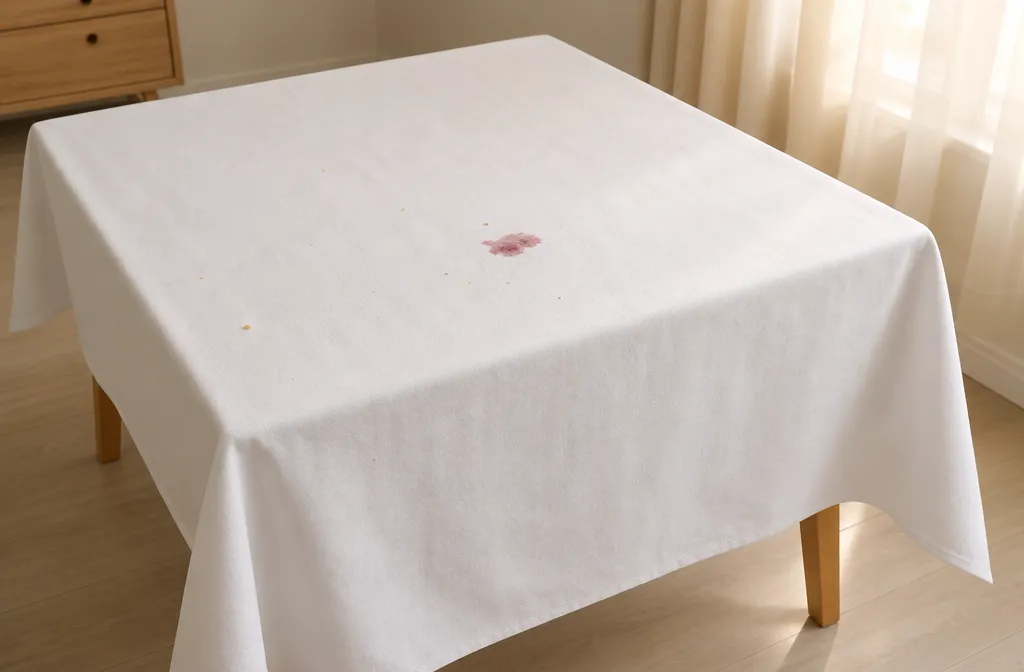
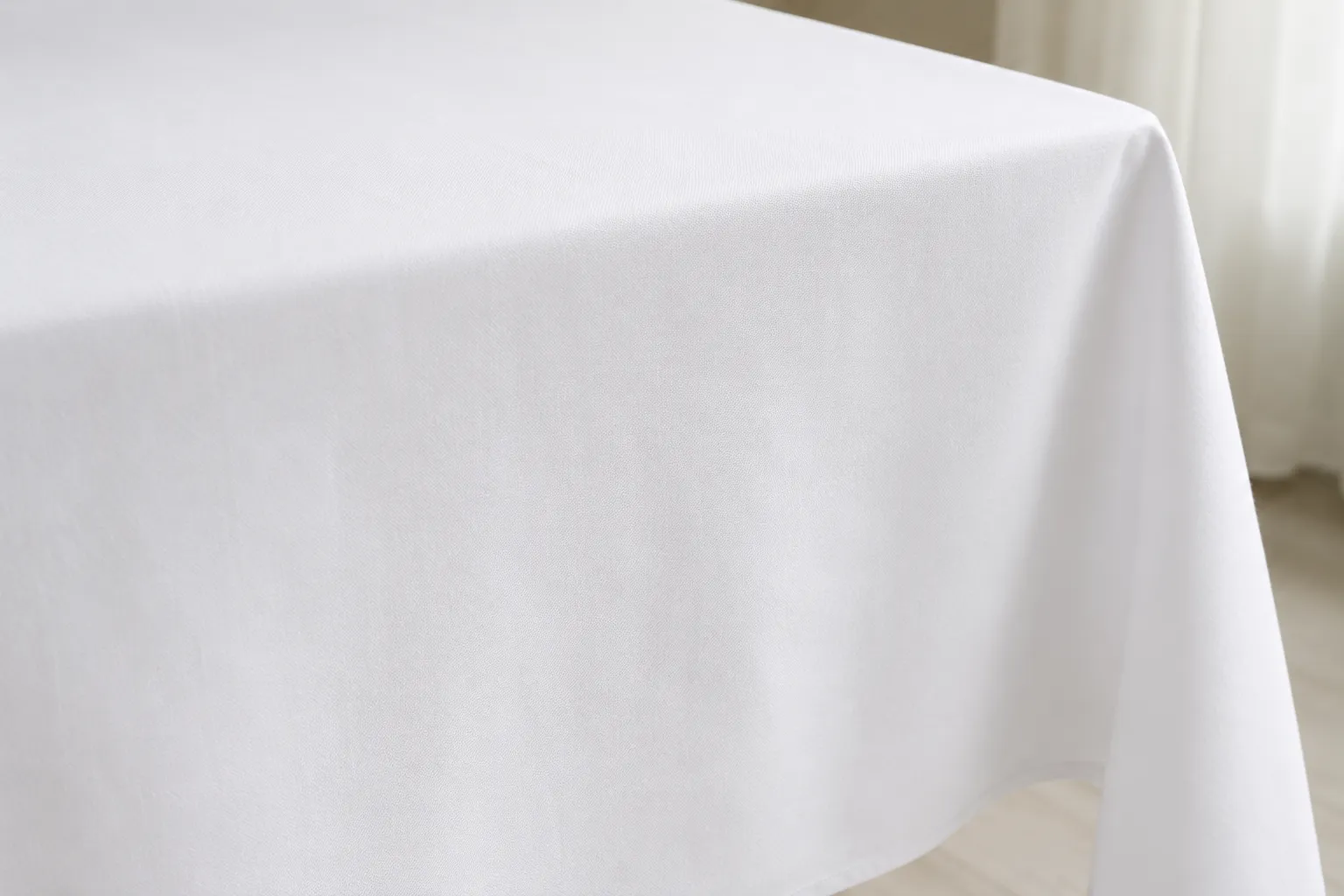 After
After
Request: Need to remove an old red wine stain from a white tablecloth.
Done: Enzyme treatment and oxygen bleaching applied to remove pigment.
Cost: 12 000 ₸
Master: Aizhan Nurmagambetova, dry cleaning master
Total: Tablecloth completely cleaned, no traces of stain or yellowing.
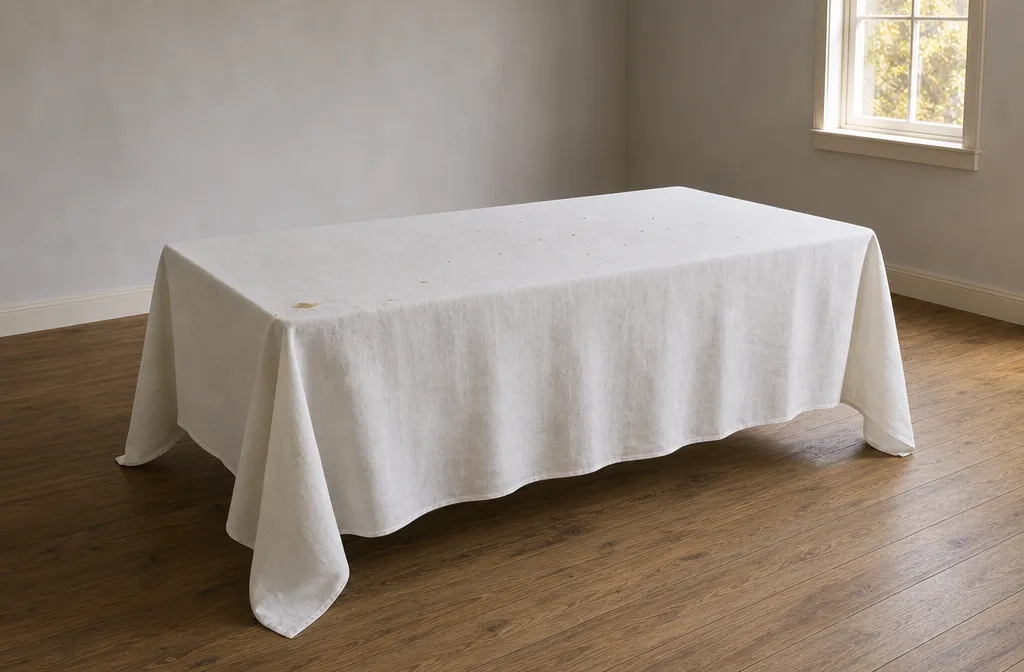
 After
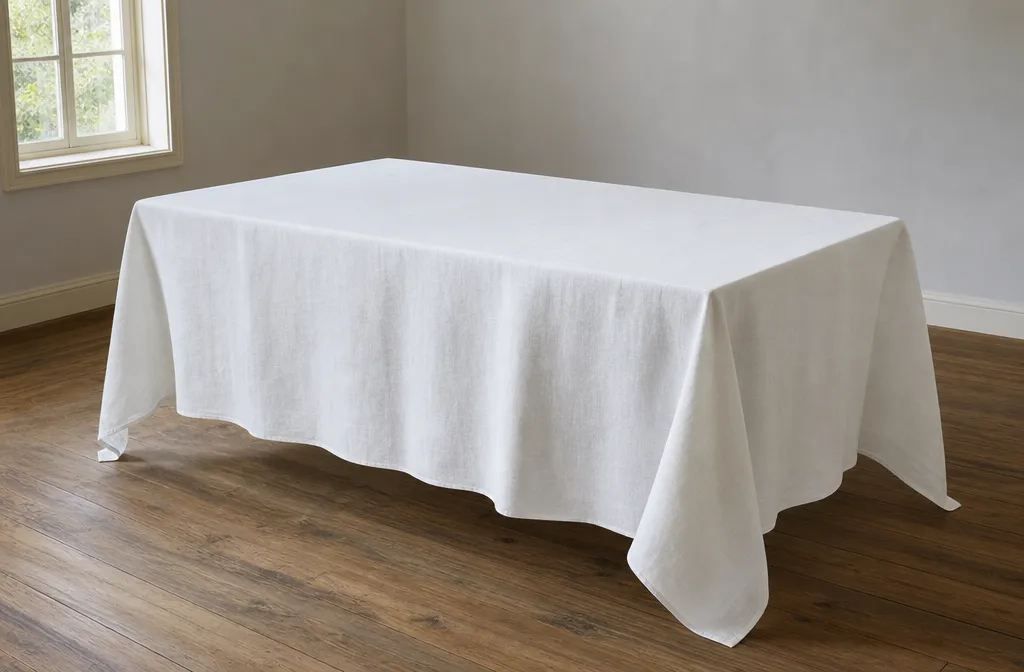
After
Request: Need to remove a grease stain from sauce on a linen tablecloth.
Done: Solvent treatment and deep wash with enzymes performed.
Cost: 15 000 ₸
Master: Timur Zhaksybekov, dry cleaning master
Total: Stain completely removed, fabric restored color and softness.
 After
After
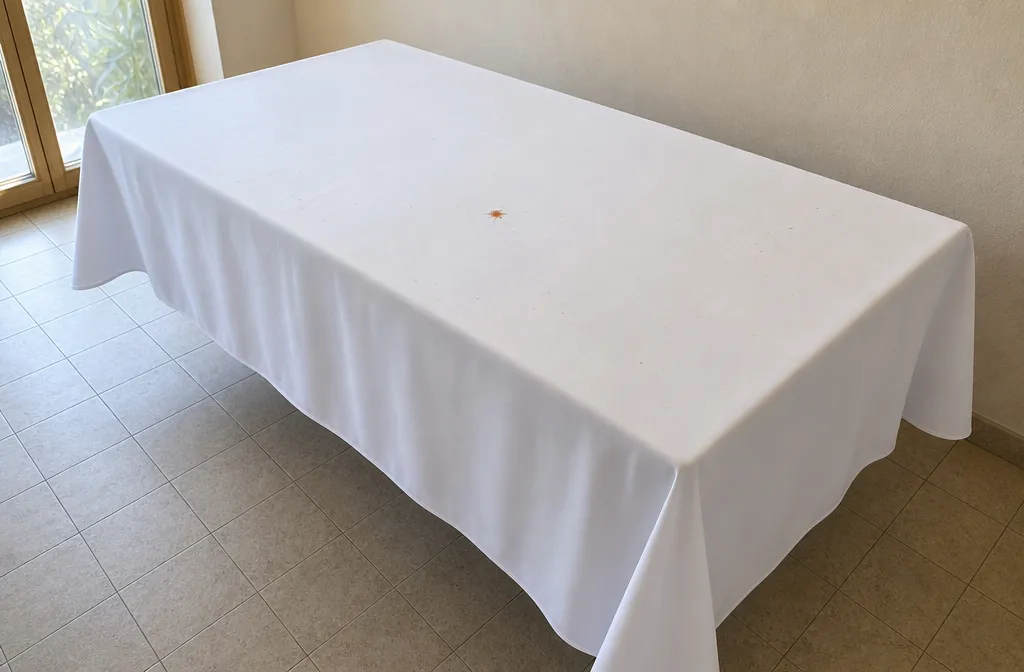
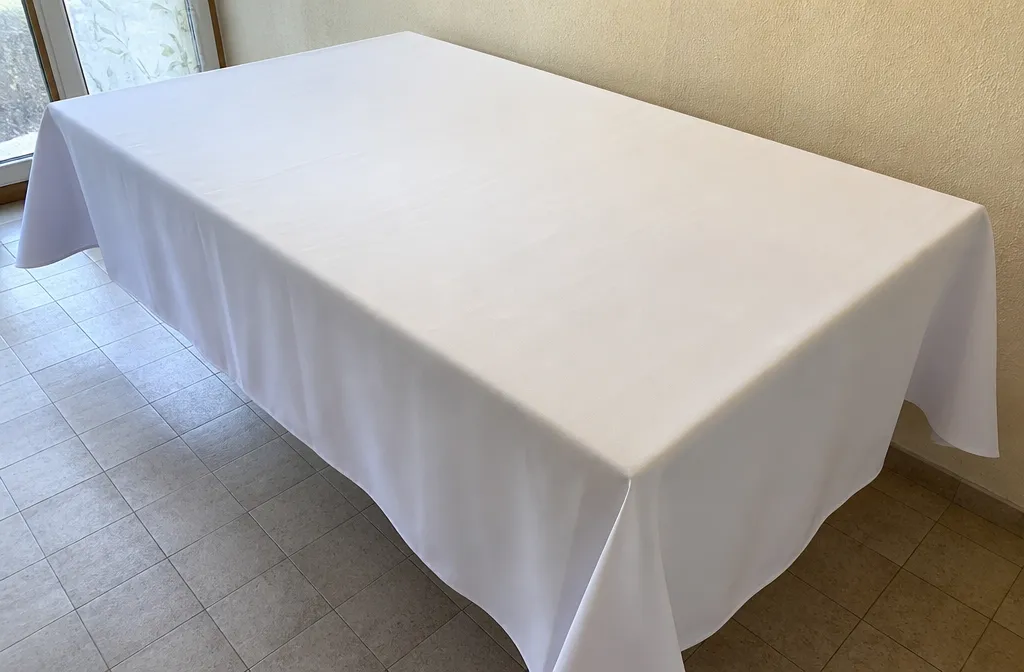
Request: Need to clean a tomato sauce stain on synthetic fabric.
Done: Gentle dry cleaning with stain remover for synthetics used.
Cost: 14 000 ₸
Master: Gulmira Sagintayeva, dry cleaning master
Total: Stain gone, tablecloth did not lose shape or color.
 After
After
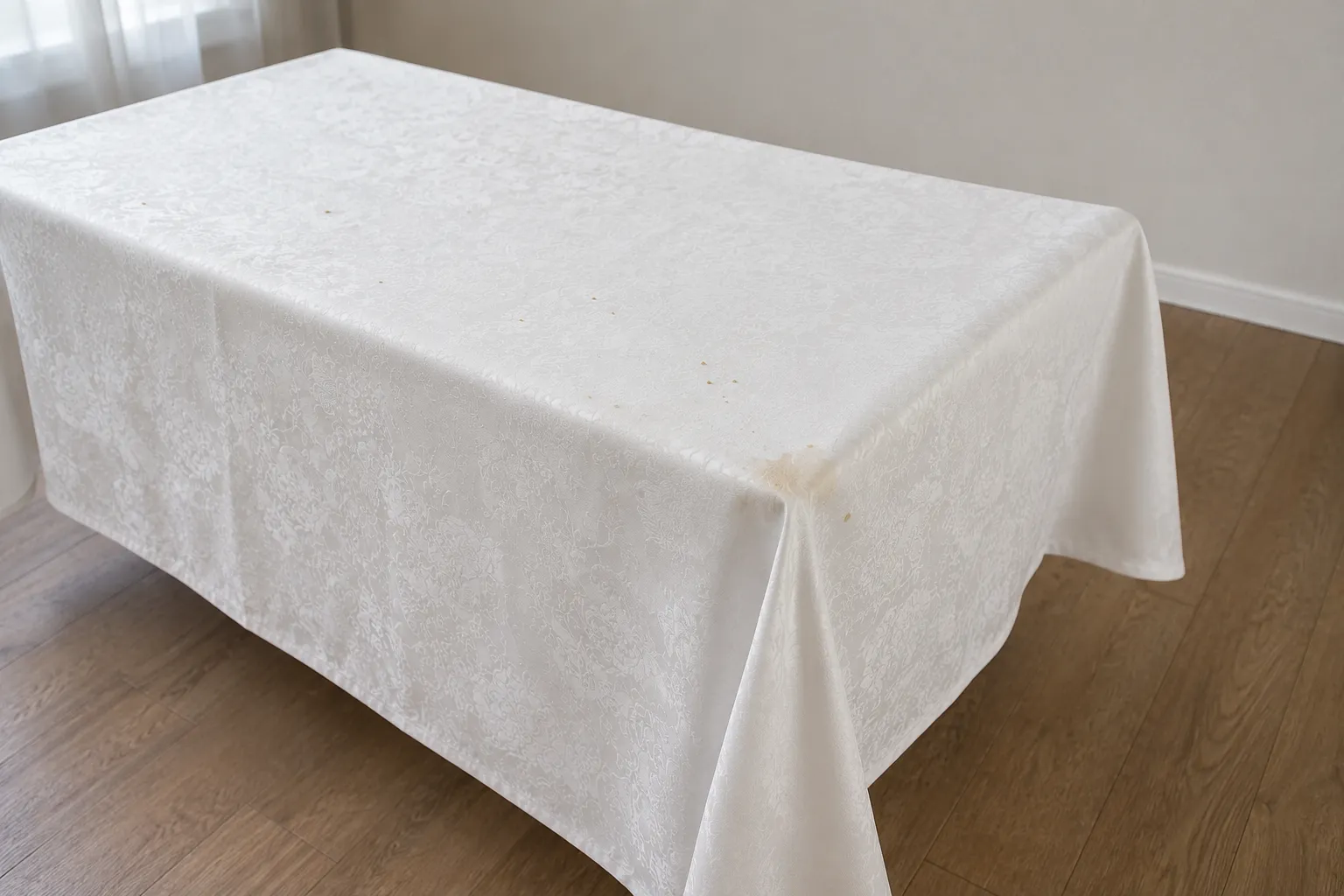
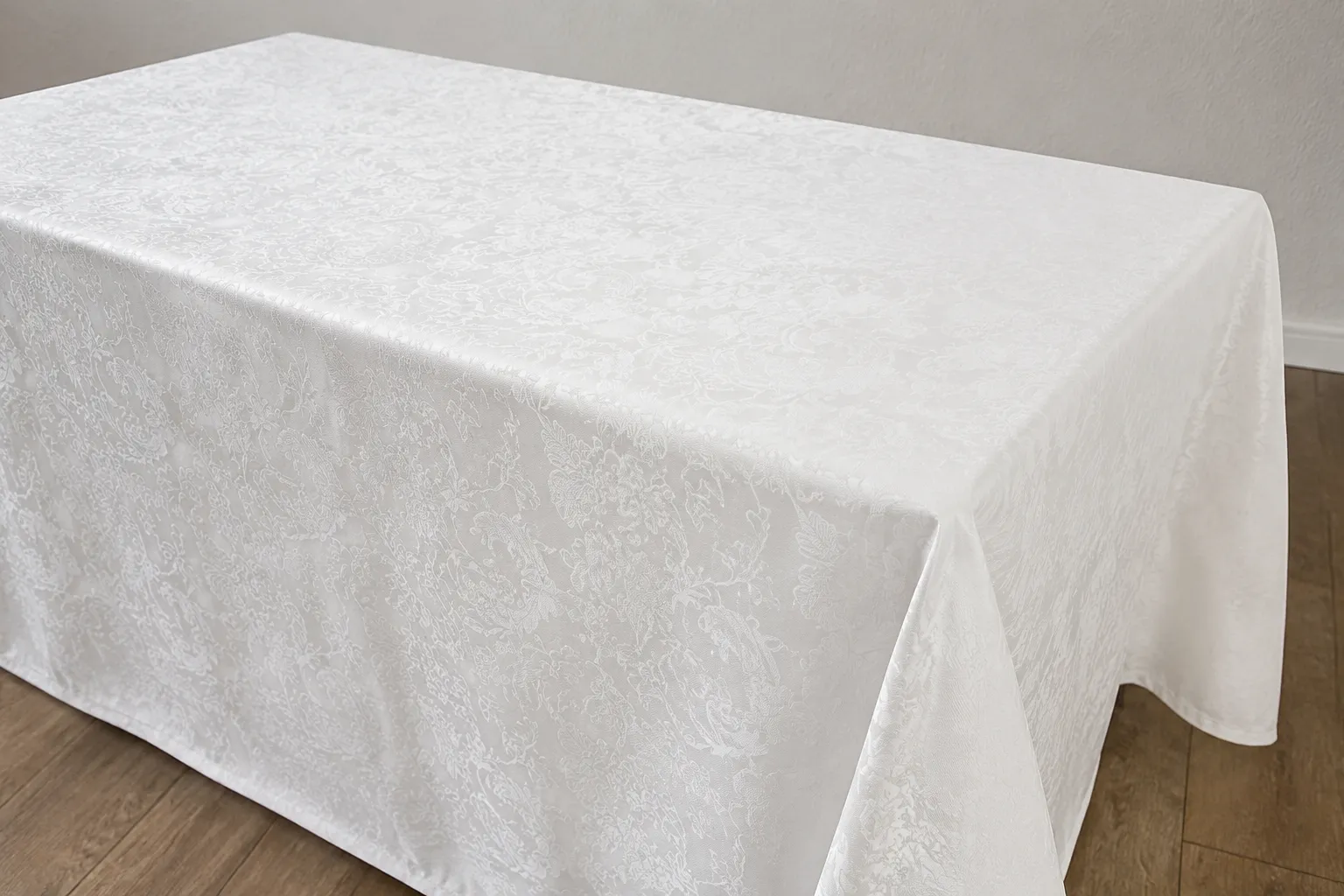
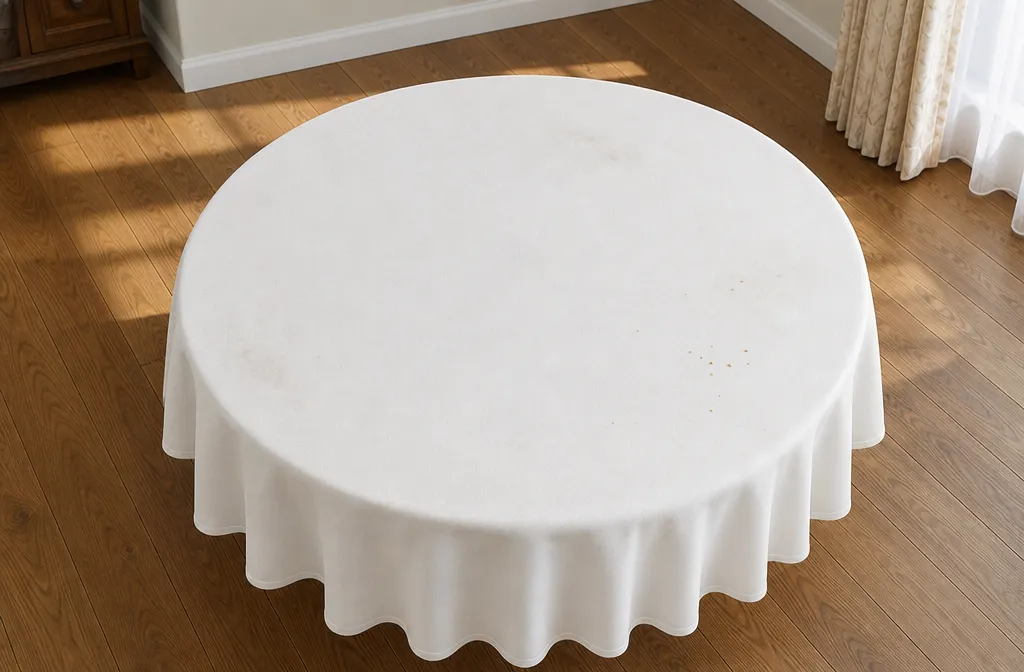
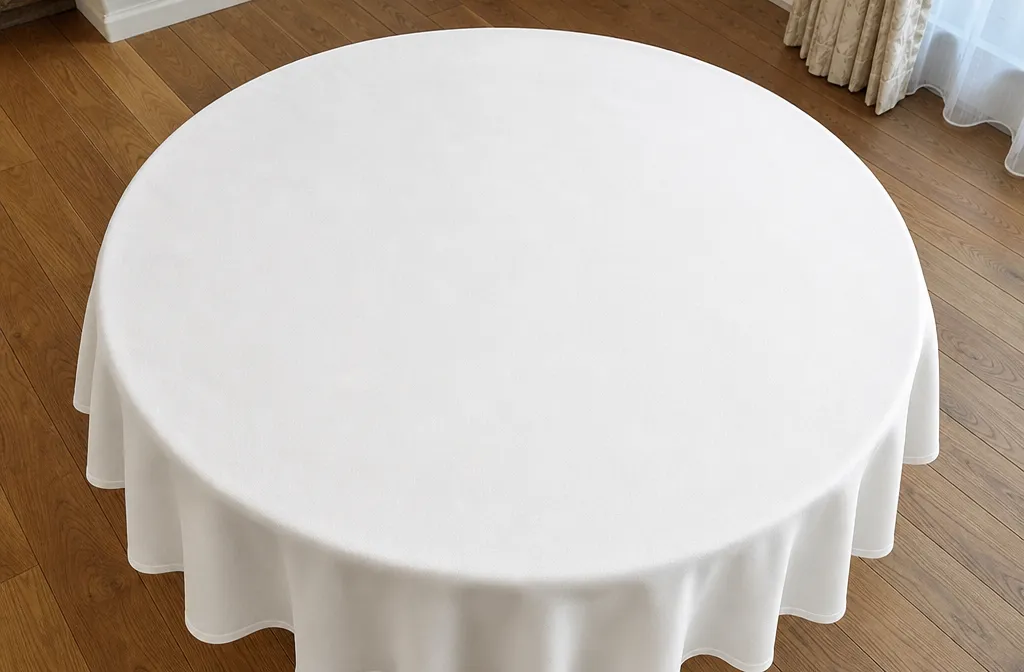
Request: Need to remove a tea stain from textured jacquard fabric.
Done: Spot treatment and gentle wash with conditioner performed.
Cost: 13 000 ₸
Master: Aizhan Nurmagambetova, dry cleaning master
Total: Tablecloth clean, pattern undamaged, color bright.
 After
After
Request: Tablecloth has collected dust and needs general cleaning.
Done: Dry and wet cleaning with antistatic performed.
Cost: 12 000 ₸
Master: Timur Zhaksybekov, dry cleaning master
Total: Tablecloth fresh, no dust or gray film.
 After
After
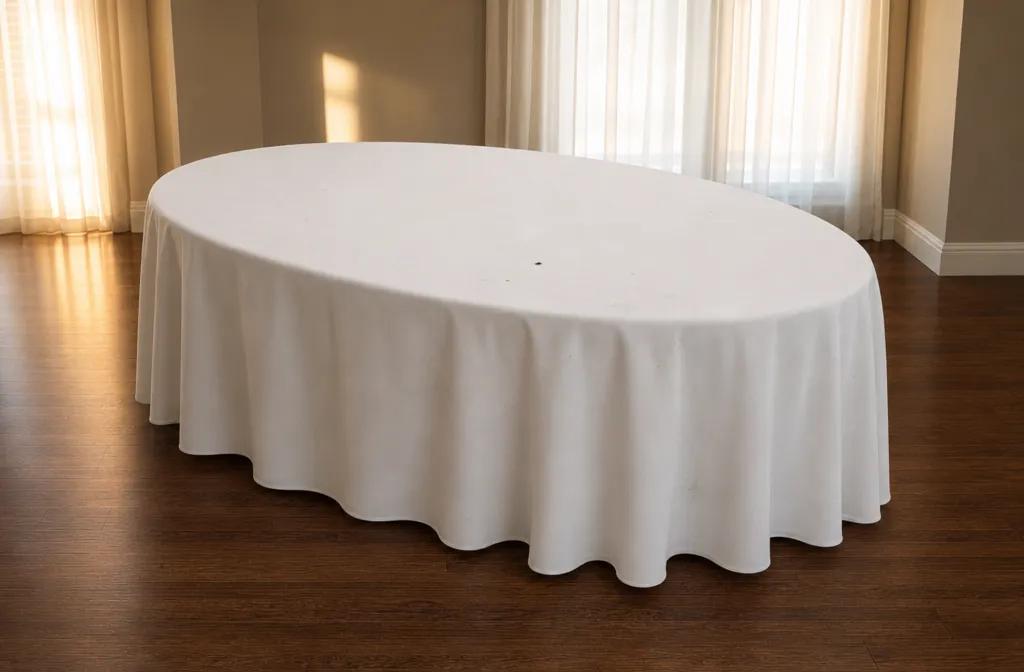
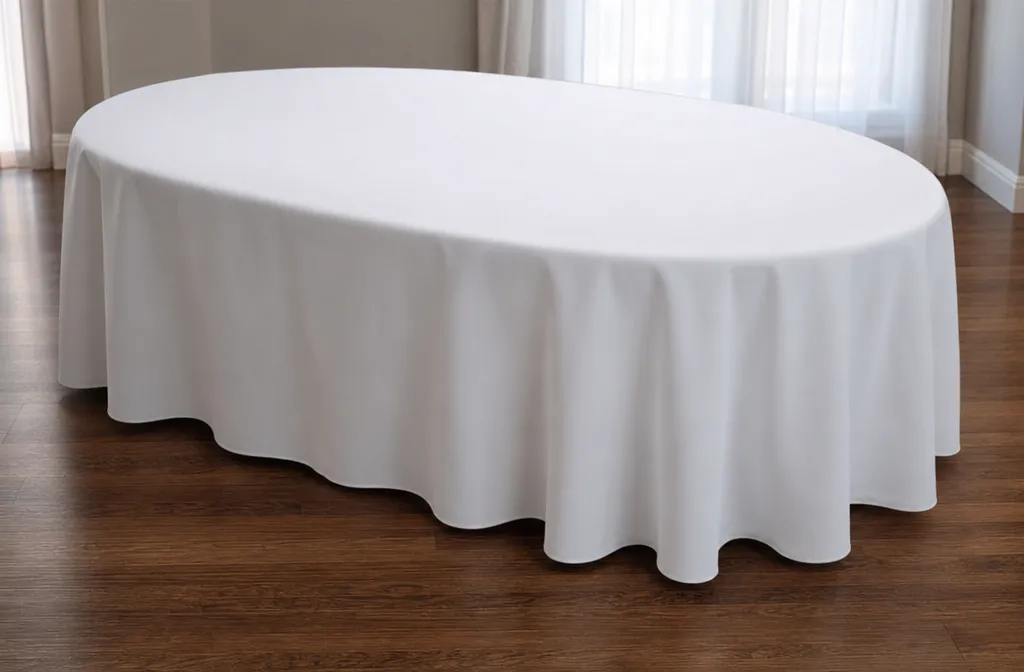
Request: Need to remove ink stain from oval tablecloth.
Done: Alcohol solution and ink adsorbent applied.
Cost: 14 000 ₸
Master: Gulmira Sagintayeva, dry cleaning master
Total: Ink completely removed, fabric undamaged.
 After
After
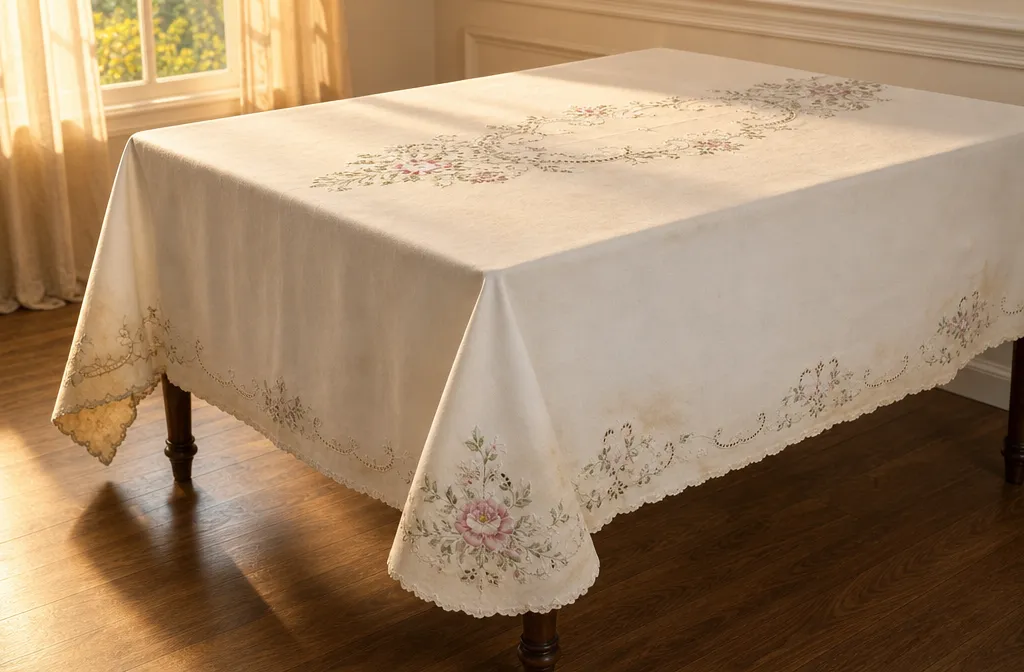
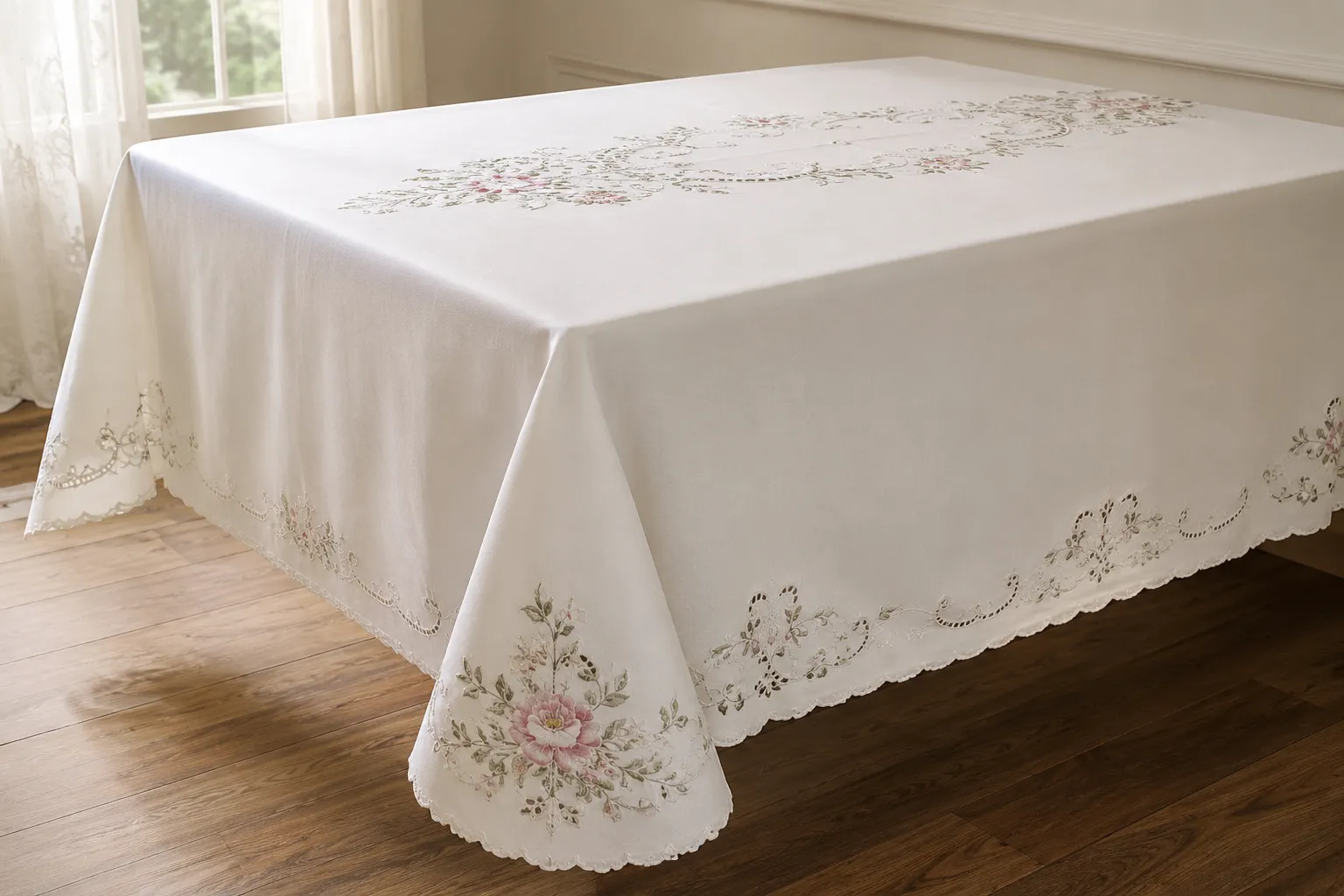
Request: Need to remove yellowing from white embroidered tablecloth.
Done: Oxygen bleaching and hand treatment of embroidery performed.
Cost: 13 000 ₸
Master: Aizhan Nurmagambetova, dry cleaning master
Total: Tablecloth snow-white, embroidery bright and intact.
 After
After
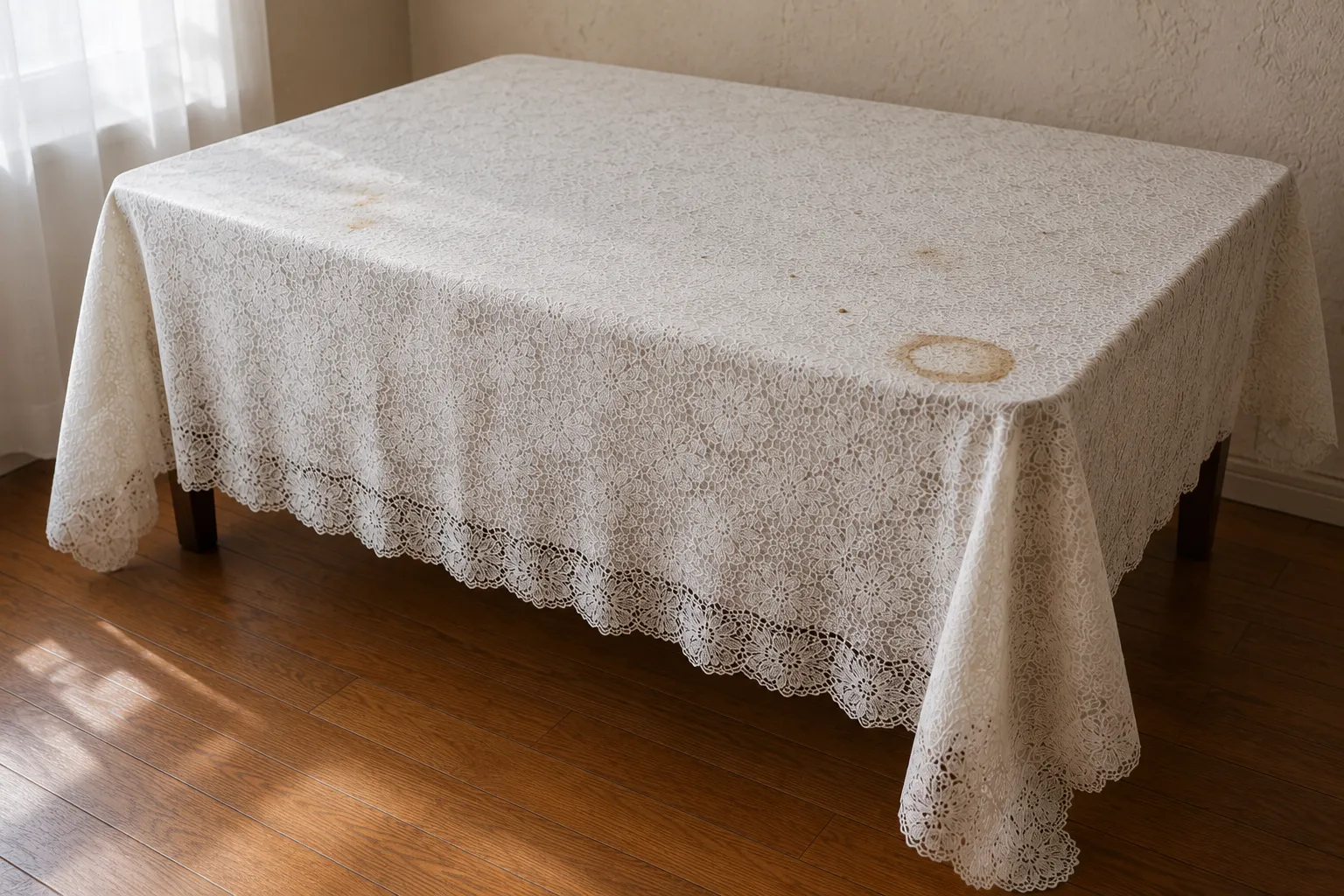
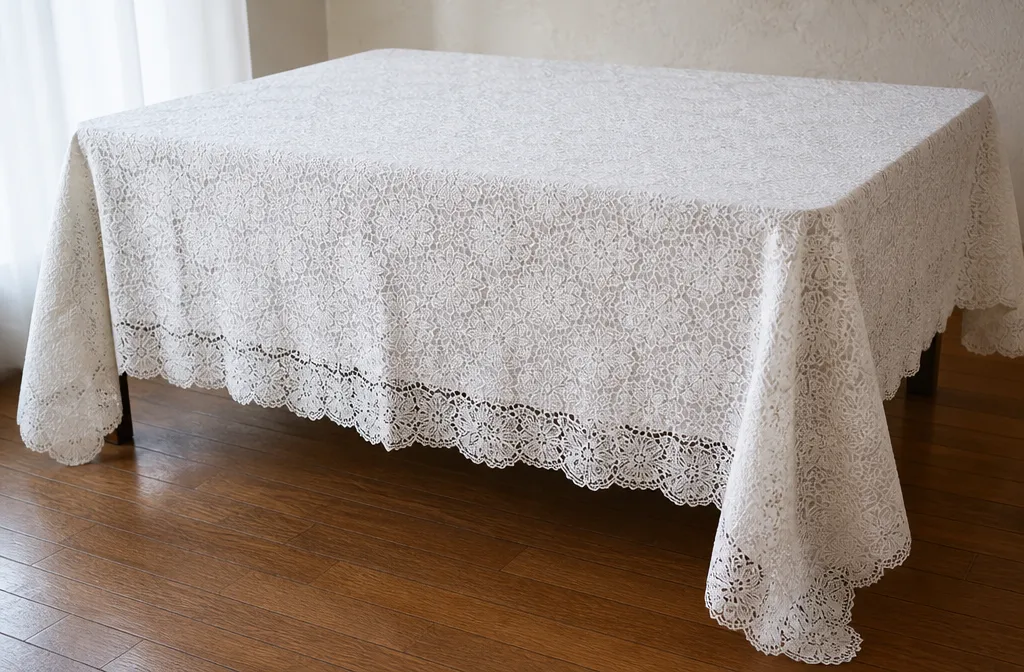
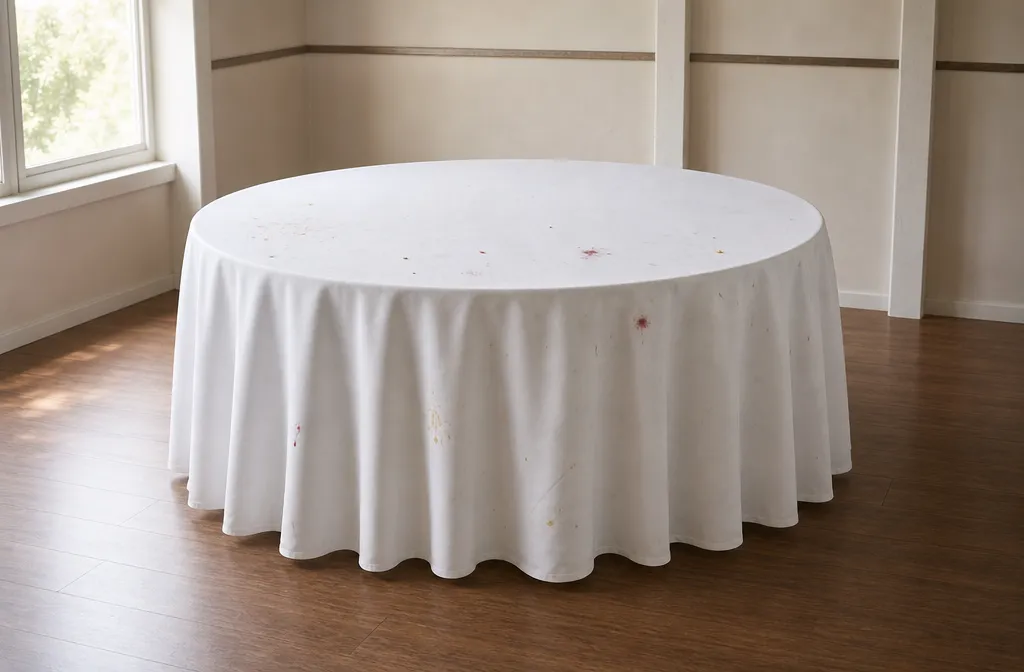
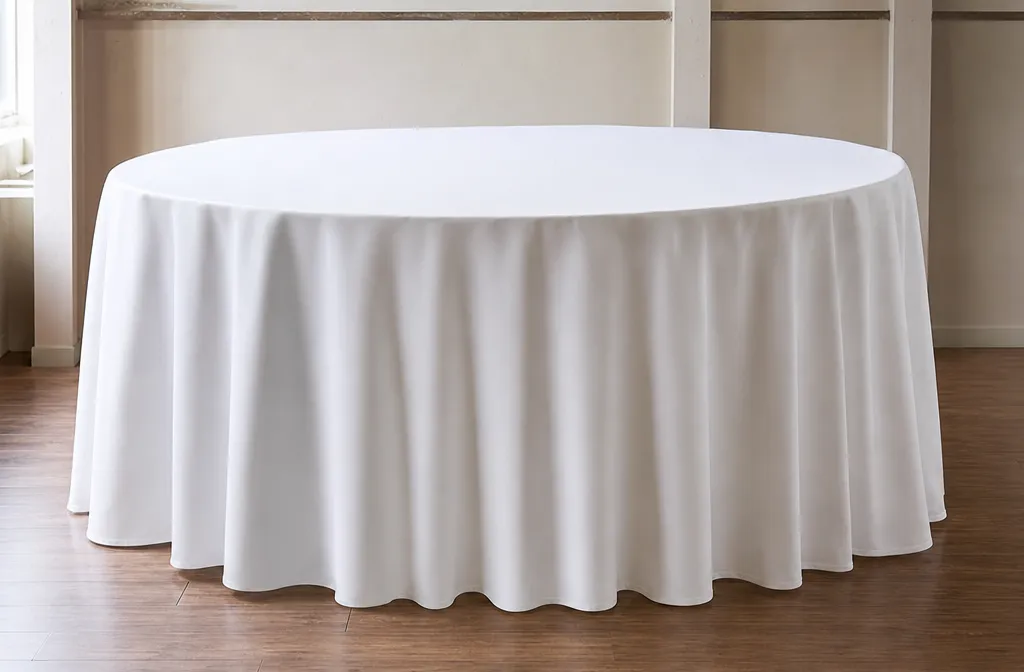
Request: Need to remove coffee stain from lace tablecloth.
Done: Spot cleaning and delicate cold water wash performed.
Cost: 12 000 ₸
Master: Timur Zhaksybekov, dry cleaning master
Total: Stain gone, lace not deformed.
 After
After
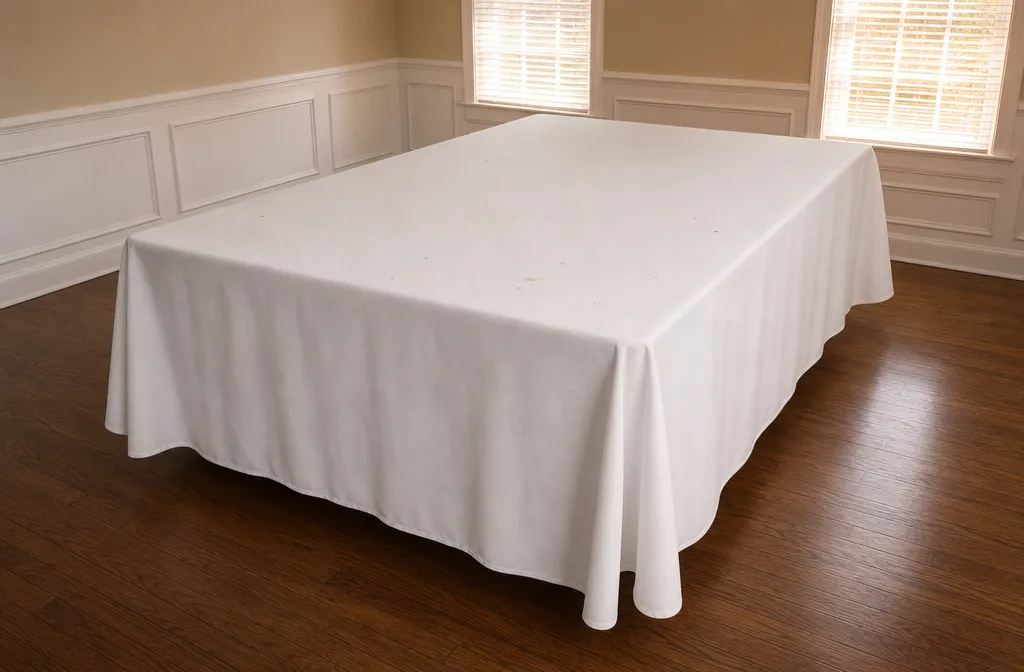
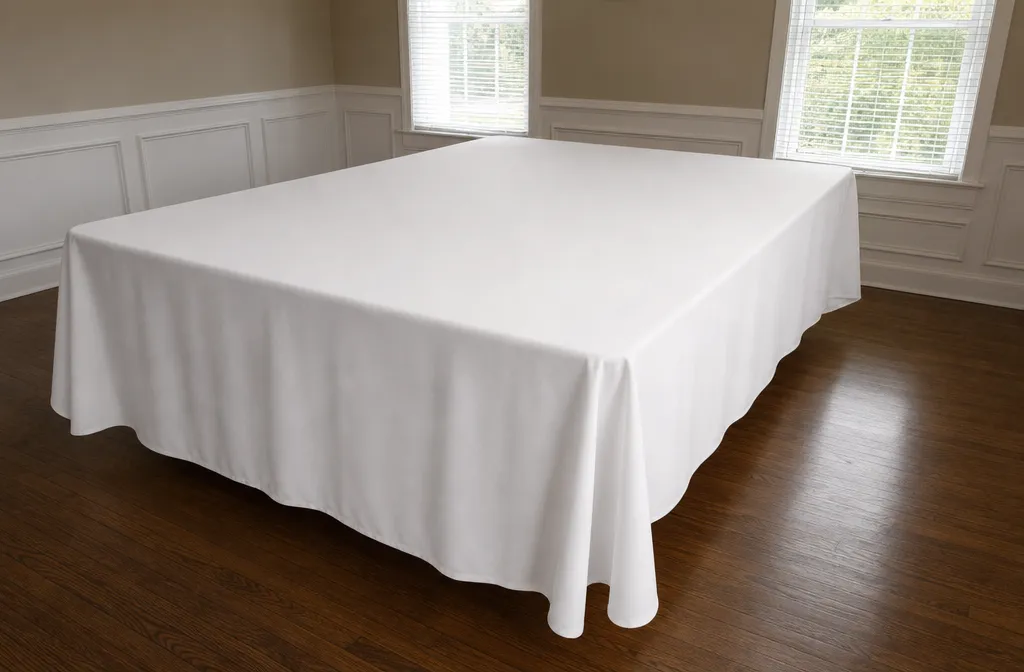
Request: Tablecloth after banquet with food and drink stains.
Done: Comprehensive dry cleaning with pre-treatment of stains performed.
Cost: 14 000 ₸
Master: Gulmira Sagintayeva, dry cleaning master
Total: Tablecloth completely clean, no traces of the feast.
 After
After
Request: Need to remove candle wax from wedding tablecloth.
Done: Heat treatment and wax solvent applied.
Cost: 13 000 ₸
Master: Aizhan Nurmagambetova, dry cleaning master
Total: Wax completely removed, tablecloth ready for use.
All cleaners are profi-clean staff with training, uniform and security check. Each order has a team leader who controls quality.
Many people think a tablecloth can simply be tossed into the washing machine — but in reality, home washing often damages the fabric or leaves stains behind. We break down why this happens and when professional dry cleaning for tablecloths is unavoidable.
Cotton and linen tablecloths can withstand machine washing at 40-60 °C, but silk, viscose, jacquard, and polyester with water-repellent coatings require a delicate approach. In our experience, about 30% of calls regarding ruined tablecloths result from washing silk on an automatic cycle: the fabric shrinks, loses its sheen, or becomes covered in pills. Jacquard tablecloths often become deformed after home washing due to uneven shrinkage of the warp and weft threads. So, before taking the item to the laundry room, check the label: if it shows a “dry clean only” or “hand wash at 30 °C” symbol, the washing machine is off-limits.
Hot water above 60 °C sets protein stains (milk, egg, sauce) and “cooks” grease into the fabric — after such a wash, removing the soiling becomes nearly impossible, even with professional stain removers. Regular washing powder with phosphates and optical brighteners leaves whitish streaks on dark tablecloths and faded patches on colored ones. Moreover, if the water in Almaty is hard (up to 7-8 mg-eq/L), calcium and magnesium salts react with the powder, forming an insoluble residue — the fabric becomes stiff and dull. For delicate fabrics, it’s better to use liquid gels for silk and synthetics, and set the temperature strictly according to the manufacturer’s recommendations; otherwise, the risk of permanently ruining the tablecloth reaches 40-50%.
The washing machine drum creates centrifugal force of up to 800-1000 rpm during the spin cycle — this is critical for thin fabrics: silk tears at the seams, lace stretches, and fringe tangles and breaks off. In practice, we see that tablecloths with embroidery or appliqués lose up to 30% of their decorative elements after machine spinning — the threads simply cannot withstand the load. Even the “delicate wash” cycle doesn’t help: friction against the drum walls wears down the pile on velvet and velour tablecloths, leaving unsightly abrasions. Therefore, items with three-dimensional decorations, glass beads, or sequins should only be hand-washed, without wringing — or sent to a dry cleaner, where mesh bags and gentle steam treatment are used.
| Parameter | Home Washing | Tablecloth Dry Cleaning |
|---|---|---|
| Temperature Control | ±5-10 °C from set point | ±1 °C, programmable control |
| Removing Set-In Stains | Usually no, stain gets fixed | Pre-treatment with enzymes |
| Risk of Shrinkage | High (especially silk, viscose) | Minimal (vacuum drying) |
| Preservation of Decor | Low (spinning, friction) | High (hand loading, bags) |
| Stiffness After Washing | Often increases (hard water) | Remains soft (fabric softener + water softening) |
If the tablecloth has stains from red wine, greasy sauce, beets, or turmeric — home washing will only set them, especially if more than an hour has passed. The same goes for candle wax: in hot water, it melts and soaks deeper into the fibers, while in cold water, it hardens and won’t wash out. In our practice, there was a case where a hostess tried to wash a tablecloth with pomegranate juice stains in boiling water — the stain turned purple-brown and could only be removed with a three-stage oxygen bleach treatment. Therefore, for stubborn dyes and combined soiling (grease + pigment), professional tablecloth dry cleaning is necessary — such reagents and equipment are simply not available at home.
Not every stain on a tablecloth is a simple task for a home stain remover. At profi-clean, we see tablecloths daily where an attempt to wipe off a stain at home only fixes it deeper into the fibers. We break down which soiling guaranteed requires dry cleaning, and which can be attempted to save before the technician arrives.
When protein is heated above 40 °C, it coagulates and bonds permanently to the fabric. If a tablecloth with an egg or blood stain goes through a hot wash, the protein denatures and becomes nearly impossible to remove. In our practice, we had a case: a client pre-washed an egg white stain on a linen tablecloth in a machine at 60 °C — after drying, the stain turned yellowish-opaque, and we removed it with cold enzyme formulations in two passes. Blood behaves similarly: a fresh stain washes out with cold water, but if you rub it or use hot water, hemoglobin reacts with the fibers and leaves a persistent brown mark. For such stains, we use proteases — enzymes that break down protein into amino acids, which are easily rinsed away. The rule: any protein stain — only cold water before treatment, and immediate professional dry cleaning if the soiling is older than 2–3 hours.
Grease penetrates deeper into the fabric structure than it appears. On cotton or linen, an oil stain sinks into the thread’s thickness within 15 minutes, and regular Fairy only removes the surface layer — the base remains inside. We tested it: after washing with enzyme powder, the greasy stain visually disappears, but under a UV lamp it shows a characteristic glow — meaning the grease remains in the fibers and will eventually oxidize and yellow. On synthetics (polyester, acrylic), oil holds less firmly, but on natural fabrics, professional solvents are essential. At profi-clean, for grease we use lipases and organic solvents — they break down triglycerides into glycerol and fatty acids, which are washed out with water. Advice: do not rub a greasy stain — you will spread it over a larger area; blot it with a paper towel and sprinkle with starch or talc, which will absorb the oil until the cleaner arrives.
Tannin in red wine and anthocyanins in cherry or pomegranate juice are among the most aggressive fabric dyes. They bond with the cellulose of cotton or linen within 5–10 minutes and leave a persistent violet-pink mark. A home attempt to rub the stain with salt or citric acid often backfires: the acid fixes the pigment, turning it into an insoluble lacquer. On white tablecloths, we remove wine stains with hydrogen peroxide in an alkaline environment — it oxidizes anthocyanins into colorless compounds. On colored fabrics, pH selection is needed without bleaching the base dye — this requires a test on an inconspicuous area. Expert recommendation: if you spill red wine — cover the stain with salt (it absorbs moisture), but do not pour water, do not rub, and do not use lemon; call the dry cleaner within 30–60 minutes.
Tannin in tea and coffee creates brown stains that darken over time due to oxidation. On white cotton or linen, a fresh tea stain is removed with boiling water — we pour boiling water over the stain from a height of 30–40 cm, and the flow washes out the pigment. But if the tablecloth is colored or the fabric is temperature-sensitive (silk, viscose), boiling water is contraindicated. In such cases, we use enzyme stain removers based on tannase — this enzyme breaks down tannin into gallic acid and glucose, which are easily rinsed away. Note: tea stains older than a day move into the complex category — oxidized tannin requires treatment with an oxygen bleach, which we apply only after testing the fabric for colorfastness.
Wax from a candle is a mechanical soiling, but its removal requires caution. If you scrape off wax with a warm iron through paper, as advised online, the melted paraffin absorbs deeper into the fibers and leaves a greasy halo. We do it differently: first, we freeze the tablecloth — at −18 °C, the wax becomes brittle and breaks off in pieces, leaving no trace on the fabric. Remaining stearin (solid fat in the candle’s composition) is removed with a cold organic solvent. Important: colored wax (red, green) contains pigment that, when heated, absorbs into the fabric — we accept such tablecloths with a “complex pigment” note and treat them first, before the dye sets.
Mold on a tablecloth is not just a stain, but a fungal colony growing deep into the fabric. In Almaty, with its humid spring and autumn seasons, mold appears on tablecloths stored in unventilated cupboards or after wet cleaning without drying. Home washing with bleach kills spores on the surface but does not penetrate the fiber — the stain returns within 2–3 weeks. We use oxygen bleach with activators (sodium percarbonate at 40–50 °C) and antifungal additives — they destroy the fungal cell wall and wash out the mycelium. Rule: if your tablecloth has a musty smell and gray-green spots — do not wash it at home; spores spread throughout the machine and infect other items; take it immediately to the dry cleaner with a “bio-contamination” note.
The most problematic cases are when different types of stains are mixed on the tablecloth. For example, a meat sauce stain: a greasy base + meat protein particles + tomato or paprika colorants. A universal cleaner won’t work here — grease requires lipase, protein requires protease, and tomato pigment requires an oxidizer. We apply enzyme compounds sequentially: first lipase breaks down the grease, then protease breaks down the protein, and finally oxygen bleach handles the pigment. An unintuitive consequence: when trying to remove such a stain at home with a single stain remover, you fix one component and make the others inaccessible for subsequent treatment — the chance of saving the fabric drops from 90% to 30%.
Professional dry cleaning doesn’t just remove dirt — it restores the fabric’s structure, preventing tears, fading, and deformation that are inevitable with home washing.
A home washing machine at 800–1000 RPM creates mechanical stress lasting 10–15 minutes. On tablecloths — especially linen, cotton, or blended fabrics — this leads to micro-tears in the fibers. After 3–4 wash cycles, the fabric noticeably thins: gaps appear, edges begin to fray, and a dense napkin turns into a loose rag. In our practice, there have been cases where a linen tablecloth, washed at home once a month, became unusable within six months — owners simply didn’t notice the fabric losing density. At profi-clean professional dry cleaning, we use drums with adjustable speed and fixed loading: the spin cycle does not exceed 400 RPM, and the cycle lasts exactly as long as needed for the specific material. If the tablecloth weighs more than 2 kg, ask for it to be loaded separately — in an overloaded drum, even a gentle cycle causes extra deformation.
Tablecloths on Almaty verandas and open terraces fade within one season — ultraviolet light destroys dyes, especially in red, blue, and green tones. Home bleaches with chlorine or oxygen agents accelerate the process: they react with the pigment, making the color dull and uneven. We use color stabilizers based on Kiehl polymers — they form a protective film on the fiber that reflects UV rays and blocks chemical oxidation. On tablecloths with embroidery or prints, this is especially noticeable: after treatment, the contrast remains bright, and the white background does not yellow. On dark fabrics, always check colorfastness on an inconspicuous area before dry cleaning — if the pigment is already weakened by the sun, even gentle chemicals can remove the top layer.
On tablecloths made of terry, velour, or flannel, grease from the table surface mixes with dust and settles in the pile. After 2–3 uses, the pile sticks together, becomes stiff, and starts scratching dishes — this is how those “greasy” areas appear that cannot be washed out in a machine. At profi-clean dry cleaning, we first treat such areas with an enzyme compound from Sodasan, which breaks down grease at the molecular level, and then rinse with cold water through nozzles — without friction or mechanical impact. Terry tablecloths regain 70–80% of their softness after the first professional treatment cycle, but if the pile has already matted into dense clumps, 2–3 procedures with intermediate drying will be needed.
Each fabric dictates its own approach: what saves cotton can destroy silk, and an aggressive stain remover on linen will leave a yellow halo. At profi-clean, we select a method based on the specific material, not the type of stain.
Natural cotton and linen fibers tolerate alkaline solutions and high temperatures well — but only if the fabric hasn’t shrunk before treatment. Based on our observations, up to 30% of untreated cotton tablecloths lose up to 5% of their length after the first hot water wash. At the start, we measure the item’s geometry and, if shrinkage occurs, use moist-heat treatment with fixation on a steam mannequin — this restores the shape. Meanwhile, linen tablecloths with a tight weave (e.g., creased linen) require minimal mechanical action: intensive scrubbing tears the fibers, and a pill forms where the grease stain was. Our algorithm for linen is cold soaking with enzymes and a gentle wash without spinning, which preserves the structure for 2-3 years longer than machine processing.
Silk is a hydrophobic material; it fears water more than solvents: wet silk loses up to 30% of its tensile strength. Therefore, we treat silk tablecloths exclusively in a perchlorethylene environment (dry cleaning) at temperatures no higher than 30 °C. Viscose, though artificial, behaves almost like silk — it shrinks significantly (up to 10%) upon contact with water. In our practice, there was a case where a client brought in a viscose tablecloth with a red wine stain: home washing with a “delicate” powder turned it into a child’s dress. We restored the geometry through steaming on an ironing press with shape fixation, but such risks are best eliminated from the start — check the label: if it has a “dry clean only” symbol, take it straight to a professional service, not to a basin.
Polyester, nylon, and blended fabrics (e.g., cotton with polyester) are stain-resistant but melt at temperatures above 140 °C — an iron on the “cotton” setting (200 °C) leaves irreversible shiny marks. At profi-clean, we use low-temperature solvents (siloxane or hydrocarbon) for synthetics with a drying cycle no higher than 50 °C. Blended tablecloths with a dense weave (like jacquard with added polyester) often have a lacquered coating — it cannot be scrubbed with a brush, otherwise the matte pattern will disappear. On such tablecloths, we only use foam treatment with a soft sponge followed by vacuum extraction. If the tablecloth has heat-applied decorations or rhinestones, check their glue: at 60 °C, the hot-melt adhesive softens, and the decor falls off — ask the technician to remove the decor before cleaning or treat the area manually with a cold method.
Wool tablecloths (especially from fine merino) shrink by up to 20% with a sharp temperature change — for example, from hot water to a cold rinse. Wool fibers are covered in scales that interlock under friction, causing the fabric to felt (become felt-like). We treat wool only in cold water (18-20 °C) with a neutral pH shampoo and no mechanical spinning — we dry it flat on mesh racks. Cashmere tablecloths are rare, but if encountered, they require manual handling: soaking for 10 minutes, gentle pressing, rinsing in three changes of water, and drying in a horizontal position. Our recommendation: do not wash a wool tablecloth in a machine even on the “wool” setting — the drum creates friction, and after 2-3 cycles, the fabric will lose its softness and shrink a size; it’s better to take it to a dry cleaner with a note “hand treatment only.”
Even a gentle wash cycle often destroys fabric faster than the stains themselves. Here are typical miscalculations we see in our practice.
The first reaction to a fresh stain is to rub it with a napkin or sponge. Mechanical friction drives the dye deeper into the fibers, expanding the affected area. This is especially critical for wine and grease: you are not removing the stain, but spreading it, increasing the area by 2-3 times. On fibrous fabrics (linen, terry cloth), rubbing also raises the nap, making the area look matte. In our practice, there was a case where a guest rubbed red wine into a dense cotton tablecloth — after machine washing, the stain “spread” by 15 cm, and the item was only saved with a professional acid-based stain remover. The rule: fresh stain — blot, don’t rub.
The folk method of pouring salt on spilled wine does absorb moisture, but salt crystals leave micro-scratches on smooth fabrics (satin, silk), and on colored ones, they eat away the pigment, leaving a whitish mark. For white cotton, this is tolerable, but on dark silk or colored jacquard, salt leaves an indelible “etching.” Due to micro-damage, the fibers lose their luster, and the tablecloth looks old after just one cleaning. Instead of salt, immediately blot the stain with a paper towel and apply starch or talc: they absorb grease and wine without abrasion.
Chlorine bleach (bleach, Domestos) dissolves dyes instantly, leaving yellow streaks on white linen and “faded” spots on colored tablecloths. Even oxygen bleach (Vanish, Amway) on silk and viscose destroys amino acid bonds — the fabric becomes brittle, and holes appear after the first stretch. Acrylic and polyester tablecloths are not damaged by bleach, but on natural fibers, it’s a disaster. We once received an Italian linen tablecloth for cleaning that the owner had soaked in “Vanish” overnight — after drying, the fabric crumbled in our hands. For colored fabrics, use only chlorine-free stain removers with a neutral pH, and for silk, only professional enzyme-based products.
Accelerated drying on a hot radiator or under direct sunlight causes irreversible deformation. Thermal shrinkage for cotton is up to 7%, for linen up to 5%, and for viscose up to 10%. Silk loses its elasticity from hot air, becoming stiff and brittle. Besides shrinkage, pigments fade in the sun: after just 2-3 drying cycles under UV light, a bright tablecloth becomes a shade paler. In Almaty, where summer has intense sun with a UV index of 7+, this is especially noticeable. Dry tablecloths flat in the shade, in a well-ventilated room — this will preserve their shape and color for years longer.
The most common request to our technical support: “I set the ‘silk’ cycle, but the tablecloth shrank.” The problem is that the ‘silk’ setting on a washing machine is designed for modern silk with polyester, while natural mulberry silk requires hand washing at 20°C. Similarly with linen: the ‘linen’ cycle on many machines is 60°C with a 1000 rpm spin, which is detrimental to dyed linen (the color runs, the fabric shrinks). Always check the label before washing — if it says “dry clean only,” it cannot be washed in water. For blended fabrics (cotton+polyester), a safe temperature is 30-40°C without a spin cycle. If the label is missing, test on an inconspicuous area: moisten with warm water and wait 15 minutes — if the fabric hasn’t deformed and the color hasn’t transferred to the cloth, it can be washed.
When a stain appears on a tablecloth, the first thought is to wash it at home. But a direct comparison of the costs of home washing and professional dry cleaning shows that “free” machine washing is more expensive when you factor in the full cost of wear, ruined items, and repeat purchases.
Direct costs: powder or gel (300–500 KZT per cycle), stain remover (200–400 KZT), fabric softener (100–200 KZT), water and electricity (about 150 KZT per cycle at Almaty rates). Indirect costs: washing machine wear and tear — depreciation amounts to 50–80 KZT per cycle for budget models and up to 150 KZT for premium ones. Risk of damage: if the tablecloth shrinks, fades, or tears after washing, the replacement cost easily covers 10–15 dry cleaning cycles. In our practice, there was a case: a client washed a handmade silk tablecloth on the “silk” setting — the fabric shrank by 8%, and the original size could not be restored. Replacement cost 45,000 KZT, whereas profi-clean dry cleaning would have cost 4,500 KZT. Time costs: a washing cycle takes 1.5–2 hours plus ironing — another 30–60 minutes. At the average hourly rate of an Almaty office worker of 3,500 KZT/hour, this amounts to 7,000–10,500 KZT of lost time per cycle. Before buying a new tablecloth instead of dry cleaning, check the fabric composition — for linen and cotton, shrinkage after the first wash reaches 5–7%, making the item unsuitable for table setting.
The fixed cost of the dry cleaning tablecloth price at profi-clean is calculated individually by area and condition — no surprises for additional treatments. Included operations: preliminary fabric diagnostics, stain removal with professional products (Kiehl for protein stains, Sodasan for grease stains), delicate cleaning on equipment with HEPA filtration, professional ironing on a steam mannequin, final inspection under daylight. Savings on replacement: one professional cleaning extends the life of a tablecloth by 2–3 years — with an average tablecloth cost of 15,000–30,000 KZT, this is a direct benefit of 5,000–15,000 KZT per year. 24-hour result guarantee: if a stain remains after cleaning, we re-treat it for free — something no home stain remover offers. Logistics: courier pickup within 60 minutes across Almaty — you don’t waste time on travel and waiting. On dense jacquard and damask tablecloths, home ironing after washing takes up to 40 minutes due to deep embossing — in dry cleaning, this operation is performed on a steam mannequin in 5 minutes, giving a perfectly smooth surface without creases.
| Parameter | Home washing | profi-clean dry cleaning |
|---|---|---|
| Stain remover | Universal stain remover (not matched to stain type) | Reagent selection by stain type (Kiehl/Sodasan) |
| Risk of fabric damage | Shrinkage 5–7% for linen and cotton, fading after 3–5 cycles | Zero — preliminary testing on an inconspicuous area |
| Cycle time (your involvement) | 2–3 hours (loading + ironing) | 5 minutes (calling a courier) |
| Service life extension | Reduces by 1–2 years due to mechanical wear | Increases by 2–3 years through professional care |
| Result guarantee | No | 24 hours — free re-treatment |
Everyday tablecloths made of thick cotton without decoration or complex stains — they can be washed in a machine on a delicate cycle at 30–40 °C, using a liquid gel without optical brighteners. Fresh tea or coffee stains on non-pigmented fabrics — if rinsed with cold water within 15 minutes, the chance of removing the stain without a trace reaches 80%. White linen tablecloths without embroidery — they can be boiled with oxygen bleach once every 3–4 months for whitening. Inexpensive tablecloths costing up to 5,000 KZT — it is economically impractical to take them to dry cleaning if the item is planned to be replaced once a year. Important exception: tablecloths with a lacquer coating or metallic thread (Lurex) are strictly prohibited from home washing — water destroys the coating, and the item loses its appearance after the first cycle. If you still decide to wash at home, check the label before loading: the “basin with hand” icon means only hand washing at 30 °C, and the “circle” icon means a ban on any water treatment — only dry cleaning.
Scenario 1: linen tablecloth 140×220 cm for 22,000 KZT. Home washing once a month for a year — 12 cycles × 1,200 KZT (detergent, water, electricity, depreciation) = 14,400 KZT plus replacement after 2 years (fabric wear) = another 22,000 KZT. Total over 2 years: 50,800 KZT. Scenario 2: profi-clean dry cleaning once a month — 12 cycles × 4,500 KZT = 54,000 KZT over 2 years, but the tablecloth lasts 4–5 years without replacement. Savings in the second pair of years: 22,000 KZT (cost of a new tablecloth) minus 0 KZT (no purchase needed) = 22,000 KZT. Hidden benefit: professional cleaning removes micro-particles of grease and sweat that accumulate in fibers during home washing and make the fabric stiff — after 5–6 dry cleaning cycles, the tablecloth remains as soft as new. When ordering dry cleaning of tablecloths in Almaty via the profi-clean website, you get free courier pickup for orders of two or more items — this additionally saves 1,000–1,500 KZT on logistics that you would have spent on a taxi to a self-service dry cleaner.
I ordered dry cleaning of a tablecloth after a big celebration — stains from red wine and grease were removed perfectly, I never thought it was possible.
Thank you, Aigerim! We're glad the tablecloth is like new again.
The tablecloth after a birthday was all covered in wax from candles. We sent it for cleaning — no wax, but a slight chemical smell remained, aired it out and it's okay.
Very satisfied! Dry cleaning of a white tablecloth saved it after coffee was spilled. No stains, whiteness restored.
Zhanna, thank you for your review! Always happy to help.
The linen tablecloth was cleaned of tough sauce stains. The fabric did not shrink, the color is bright. The result exceeded expectations.
I tried dry cleaning a tablecloth with mold. The mold was removed, but there was a slight damp smell. It aired out after a week, but the impression remained.
Yerlan, we apologize for the inconvenience. Usually the smell goes away after airing. Glad it turned out well in the end.
After dinner, there were greasy stains from meat on the tablecloth. I took it to profi-clean — they removed them without a trace. Very neat, thank you!
I had a tablecloth dry cleaned that had acrylic paint on it. The paint was almost completely removed, leaving only a barely noticeable trace. I'm satisfied.
Kuanysh, we tried our best! Glad we could help.
The lace wedding tablecloth was cleaned after the banquet — not a single stain, lace intact. Perfect!
Dry cleaning for red wine on a tablecloth works. The stains were old but came out. I recommend it.
The cotton tablecloth shrank after washing, but the dry cleaners stretched it and removed the stains. Now it's like new.
Gulnara, thanks for the review! Glad we could restore it.
I ordered dry cleaning for a tablecloth stained with machine oil (accidentally got it dirty). The stain was removed, but a faint halo remained. Overall, not bad.
Tea stains on a white tablecloth disappeared without a trace. Excellent service, pleasantly surprised.
Dry cleaning for pomegranate juice on a tablecloth — excellent result. The stains were bright but came out completely.
Saule, thank you! Pomegranate juice is a tough stain, but we managed.
The tablecloth with chocolate stains was sent for cleaning. Everything was washed out, but the fabric shade changed slightly. Overall, it's fine.
I was afraid to send my expensive brocade tablecloth, but the dry cleaning at profi-clean went perfectly. Gentle, without damage.
Aliya, we are very careful with delicate fabrics. Thank you for your trust!
Ketchup stains on the tablecloth disappeared. Returned in perfect condition. Fast and high quality.
Helped with dry cleaning of a tablecloth from cherry juice. The stains were old, but they removed them. Very happy.
The rust on the tablecloth was not completely removed, a faint trace remained. I expected more.
Bakhyt, we regret that the result is not perfect. Rust is a very difficult stain. We will try to improve the technology.
Dry cleaning of the tablecloth from wax — super! The wax was removed, the fabric was not damaged. I will come again.
Tatyana, thank you! We look forward to seeing you again.
Silk tablecloth cleaned from soy sauce stains. Everything is fine, but one corner turned slightly yellow. Otherwise excellent.
Very satisfied! Dry cleaning of the tablecloth from coffee — stains removed, no smell. I recommend.
Tablecloth after renovation with oil paint stains. profi-clean cleaned it completely. Thank you!
Serik, glad to help! Paint is our specialty.
I ordered dry cleaning for a tablecloth with yellowing after many washes. It became whiter, but not perfect. Overall good.
Grass stains on the tablecloth after a picnic — removed without a trace. Great job!
Tablecloth with blood stains (cut myself in the kitchen). Dry cleaning helped — no stains, fabric intact. Many thanks!
Natalya, we're glad it worked out. Be careful!
Mold on the tablecloth after storage. Not completely removed, smell remained. Had to wash again at home.
Raushan, sorry for the inconvenience. Mold is hard to remove completely. We'll try to do better.
Dry cleaning of tablecloth from grease stains — handled excellently. Restored freshness and cleanliness.
Tablecloth with watercolor paint stains from kids — washed perfectly. Kids are happy, so am I.
Zulfiya, wonderful! Creativity is no reason to be upset :)
Had dry cleaning of tablecloth after spilling perfume. Stain removed, but faint smell remained. Overall good.
Red wine on a white tablecloth — no problem for profi-clean. Removed quickly, no traces. Well done!
Dmitry, thank you! Wine is our thing.
Dry cleaning of tablecloth from tea stains — excellent result. Stains were old but disappeared.
Yes, we clean tablecloths with embroidery and lace. We use manual stain treatment and delicate washing modes to avoid damaging threads and lace elements.
Standard dry cleaning takes 2-3 days. If you need it urgently, we can do it within 24 hours (surcharge at an individual rate).
Leave a request on the website or call us. We will agree on a time, the courier will pick up the tablecloths for free (for orders of 3 or more), or you can bring them yourself.
Just remove any extra items and inform us about the type of stains. Do not pre-wash stains yourself — this may set them.
Yes, but additional fixation of sequins is required. Please check the price for cleaning such a tablecloth with the manager.
We perform a colorfastness test before cleaning. If the fabric sheds, we use cold water and color fixatives.
Yes, the courier will pick up and deliver tablecloths for free for orders of 3 or more. Delivery within Almaty is carried out during the day.
Payment by cash, Kaspi Gold, Halyk Bank, or card transfer. Payment after receipt is possible.
No, you don't. Our specialists will treat stains with professional products. Self-treatment may worsen the result.
With proper storage (in a dry place, away from direct sunlight), the tablecloth stays clean until the next use. We recommend storing it in a cover.
Tell us about your experience with profi-clean — it helps other clients and us improve.
We currently operate in Almaty. Other cities are coming soon.