Inspection and diagnostics
The master assesses the suede type, degree of soiling, and identifies stains. Determines the need for additional procedures.
Restore suede to its original look: shoes, clothing, accessories, and furniture
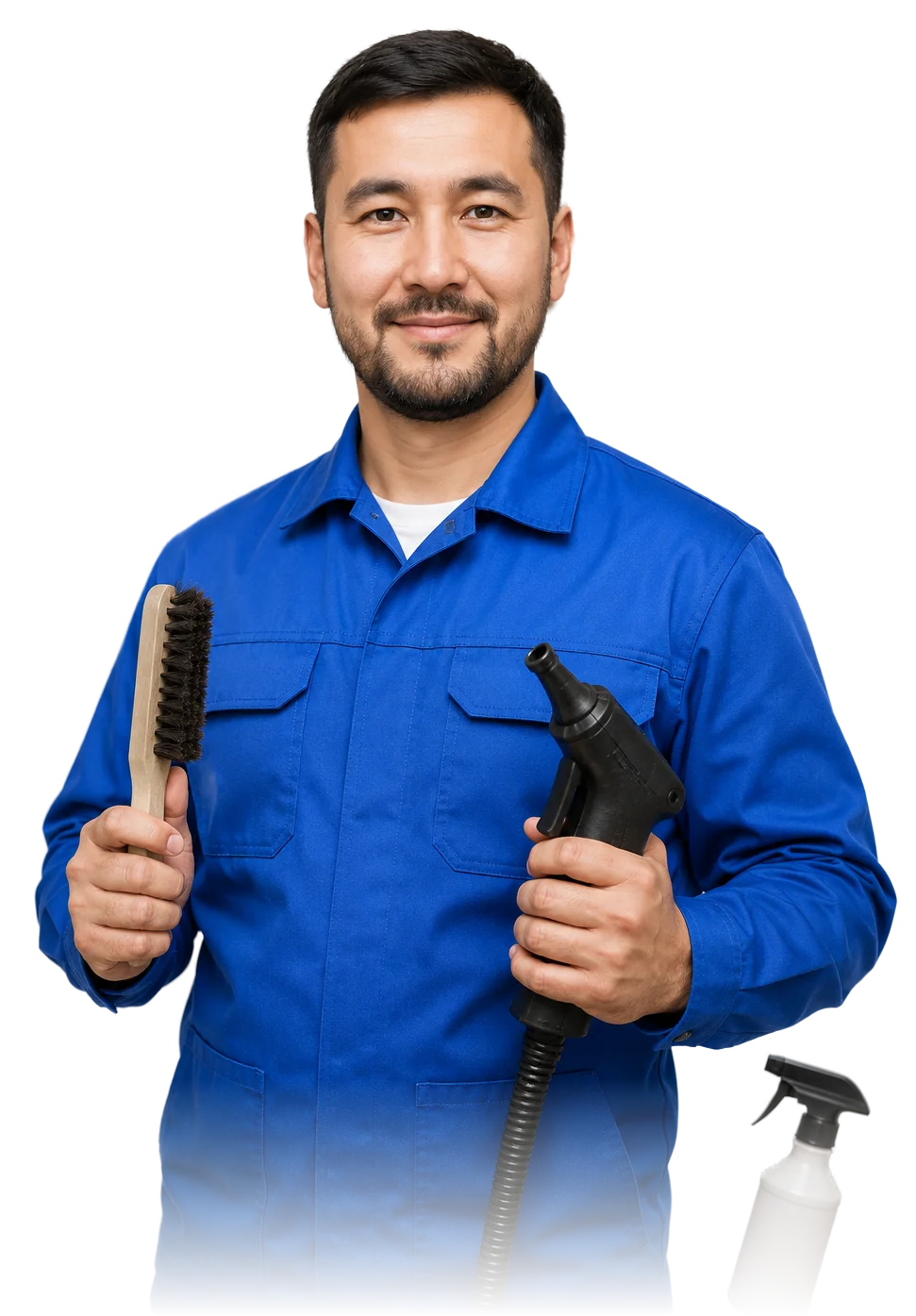
We work with any types and materials
Remove dirt and oil stains, restore nap
from 3,200 ₸Gentle cleaning while preserving shape
from 3,500 ₸Cleaning of shaft and sole, removal of salt stains
from 4,200 ₸Cleaning of lining and outer layer, color restoration
from 5,000 ₸Deep cleaning of large items
from 8,000 ₸Foam cleaning with extractor, stain removal
from 11,000 ₸Treatment of seat and armrests
from 3,500 ₸Cleaning of interior and exterior surfaces
from 12,000 ₸Removal of dirt from pockets and straps
from 12,000 ₸Hand cleaning without damaging buckles
from 12,000 ₸Restoration of shape and color
from 12,000 ₸Cleaning on special lasts
from 12,000 ₸From inspection to result with guarantee
The master assesses the suede type, degree of soiling, and identifies stains. Determines the need for additional procedures.
Using a special brass or rubber brush, remove dust and surface dirt. Move only along the nap.
Apply Saphir or Tarrago stain removers to oil, water, and mixed stains. Let sit for 5-10 minutes.
The Karcher SE 4001 extractor applies foam and vacuums dirt. Foam penetrates deeply without over-wetting the suede.
A steam cleaner at 120°C softens the nap and kills bacteria. Steam is applied under pressure.
The item is dried naturally or in a drying chamber at 40°C. Avoid direct heat.
Apply Saphir Teinture Française aerosol dye for suede. Color is matched from the catalog.
Final protective layer against water and dirt. We use Tarrago Nano Tech or Saphir Super Invulner.
These brands provide deep cleaning without washing out dyes. Saphir Medaille d'Or and Tarrago Nano Tech penetrate the material structure, removing oil and water stains. We select the product based on suede type: nubuck, velour, or split leather.
The extractor applies foam under pressure and instantly vacuums dirt. This removes impurities from deep within the nap without soaking the base. Karcher equipment is certified for professional dry cleaning.
The steamer softens creases and lifts the nap, restoring the item's original softness. Temperature of 120°C destroys up to 99% of bacteria and fungi. Steam is safe for all types of suede.
We guarantee removal of most stains when following the technology. If contamination remains after cleaning, we will refund the full cost of the service. The guarantee is valid for 7 days after the order is completed.
Our master will advise on how to properly store and clean suede at home. You will receive recommendations on using water-repellent impregnations and brushes. Consultation is available by phone or chat.
Each type requires a special approach: nubuck is cleaned dry, velour wet, and suede on leather with minimal moisture. We use different brushes and solutions for each material.
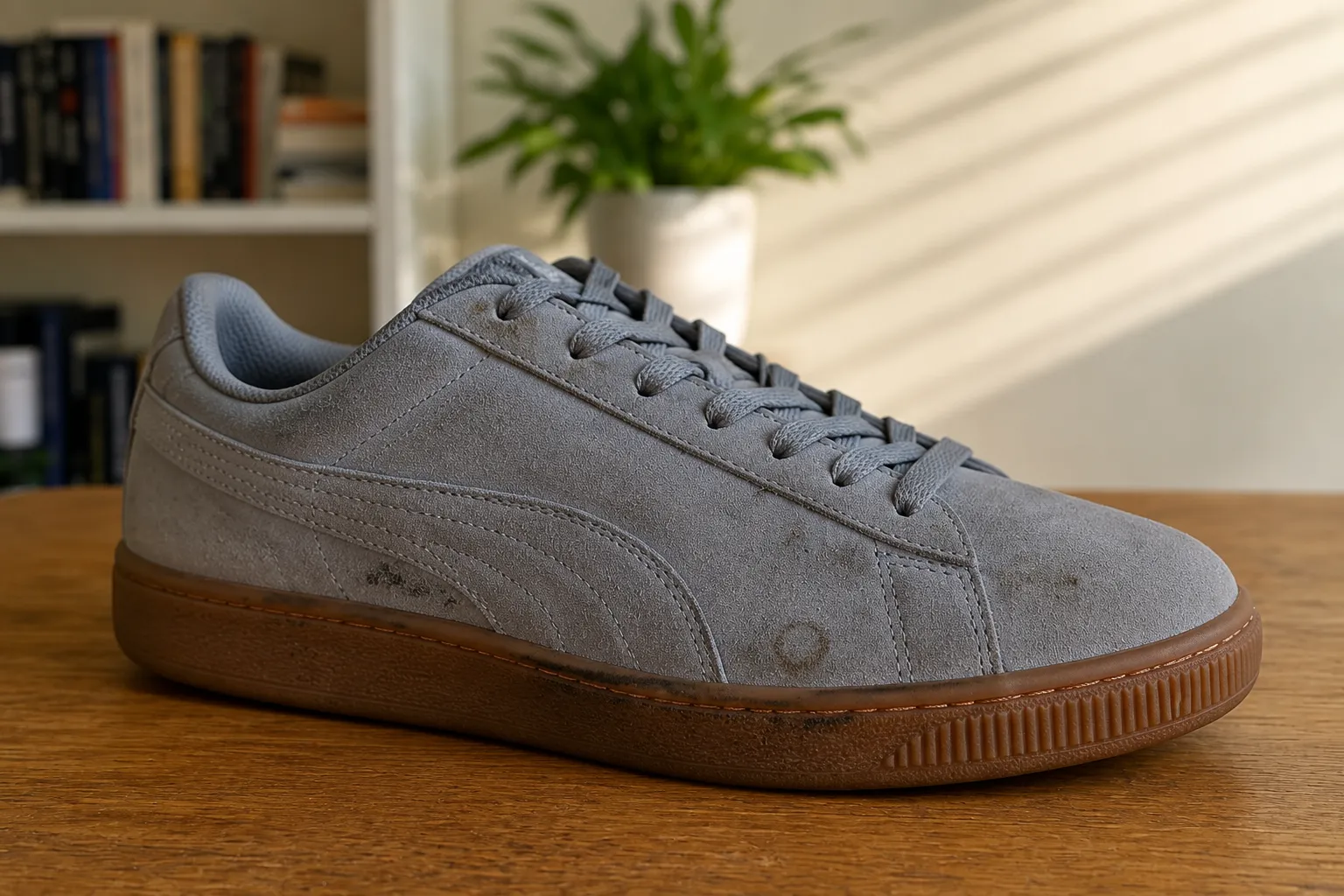
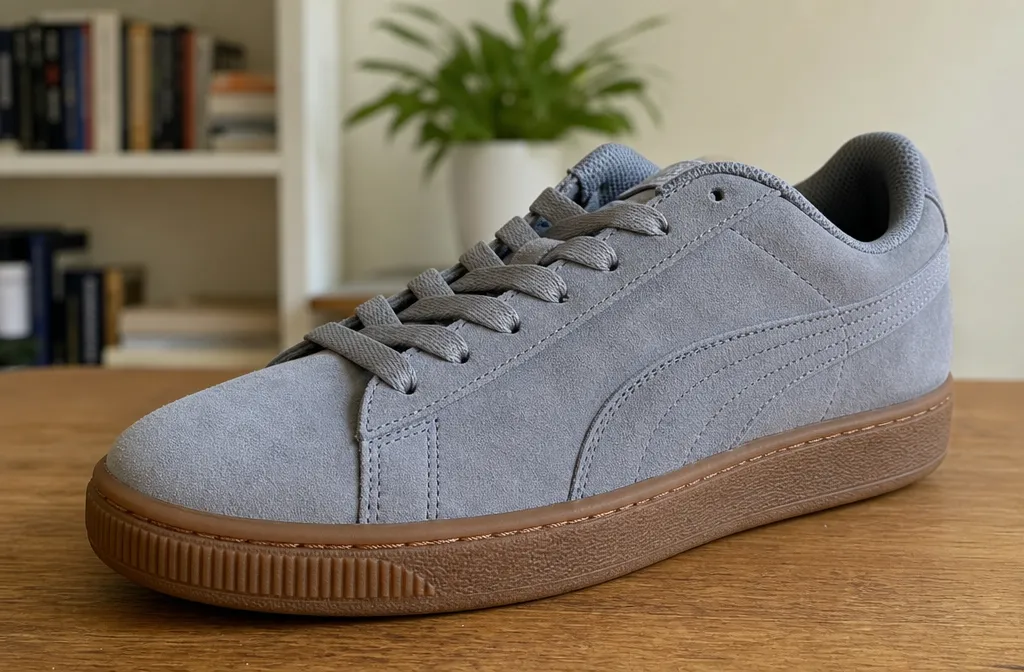 After
After
Request: Suede sneakers with old stains, need deep cleaning without damaging the material.
Done: Dry cleaning with a special brush, stain remover for suede, final water-repellent spray.
Cost: 2 500 ₸
Master: Aizhan Nurtaeva, cleaning master
Total: Sneakers are completely clean, color is even, nap is raised.
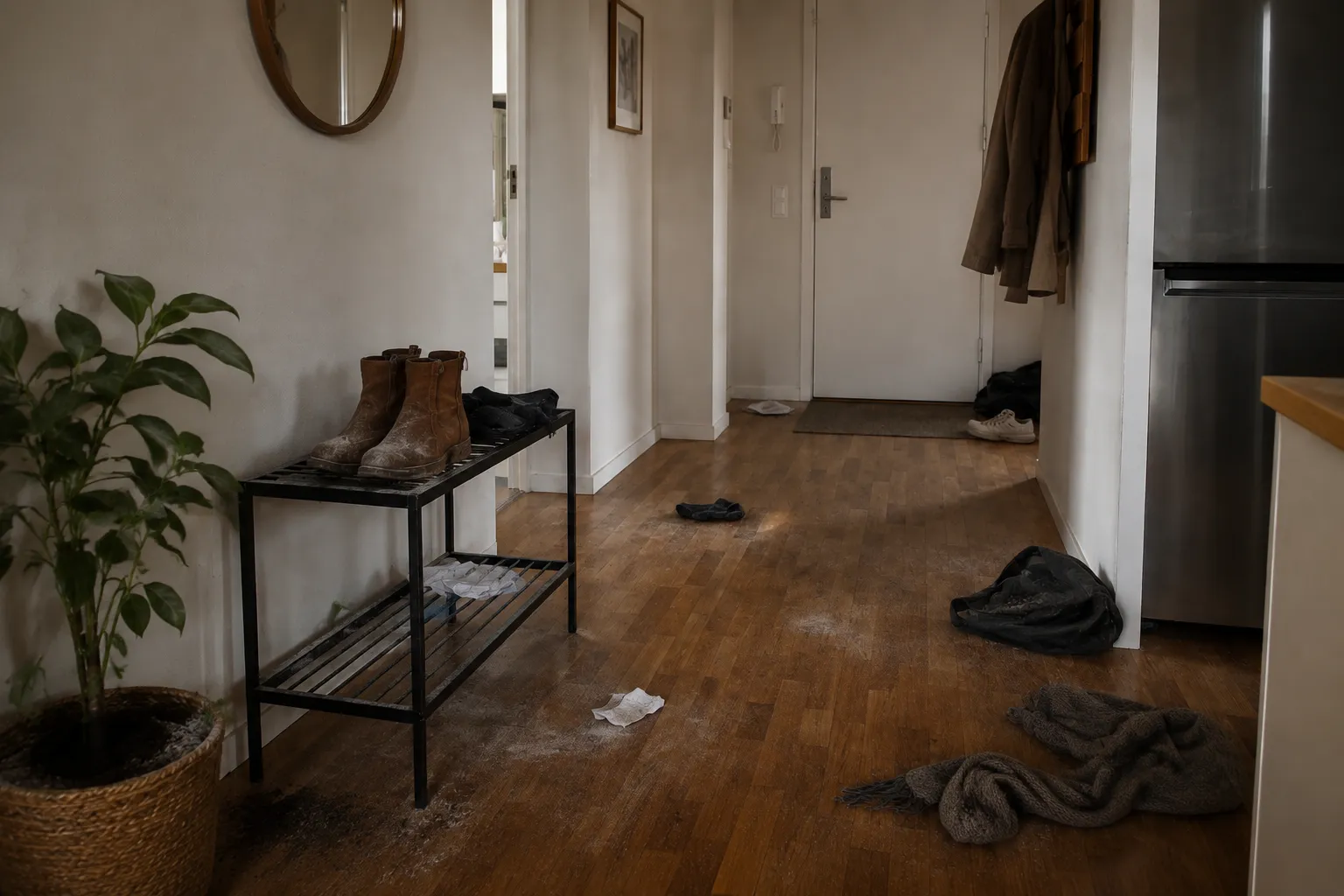
 After
After
Request: Suede boots after winter — streaks from de-icing reagents and scuffs on toes.
Done: Cleaning from reagents, removing streaks, tinting damaged areas, water-repellent impregnation.
Cost: 3 500 ₸
Master: Yermek Satybaldin, cleaning master
Total: Boots without streaks, color restored, material soft.
 After
After
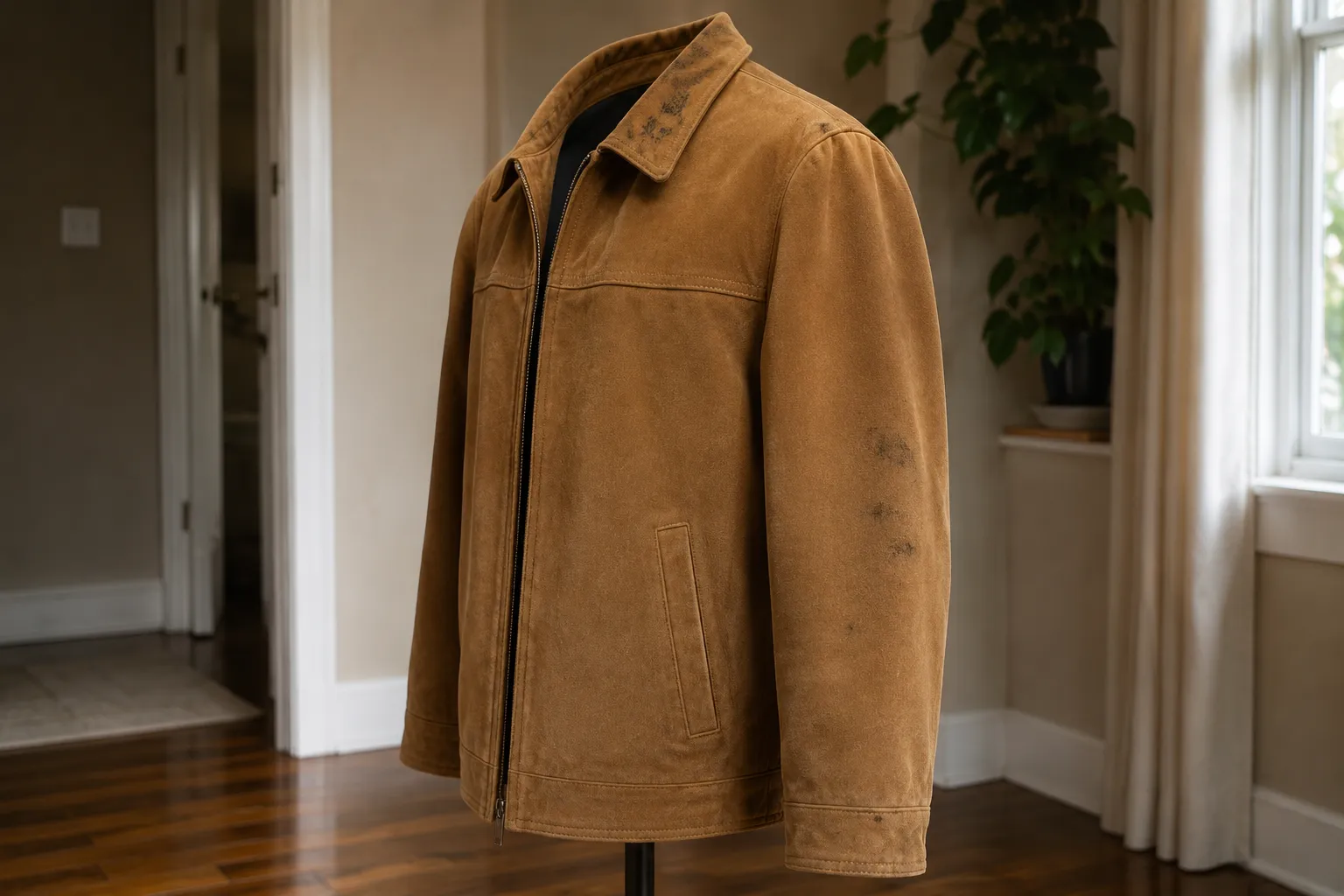
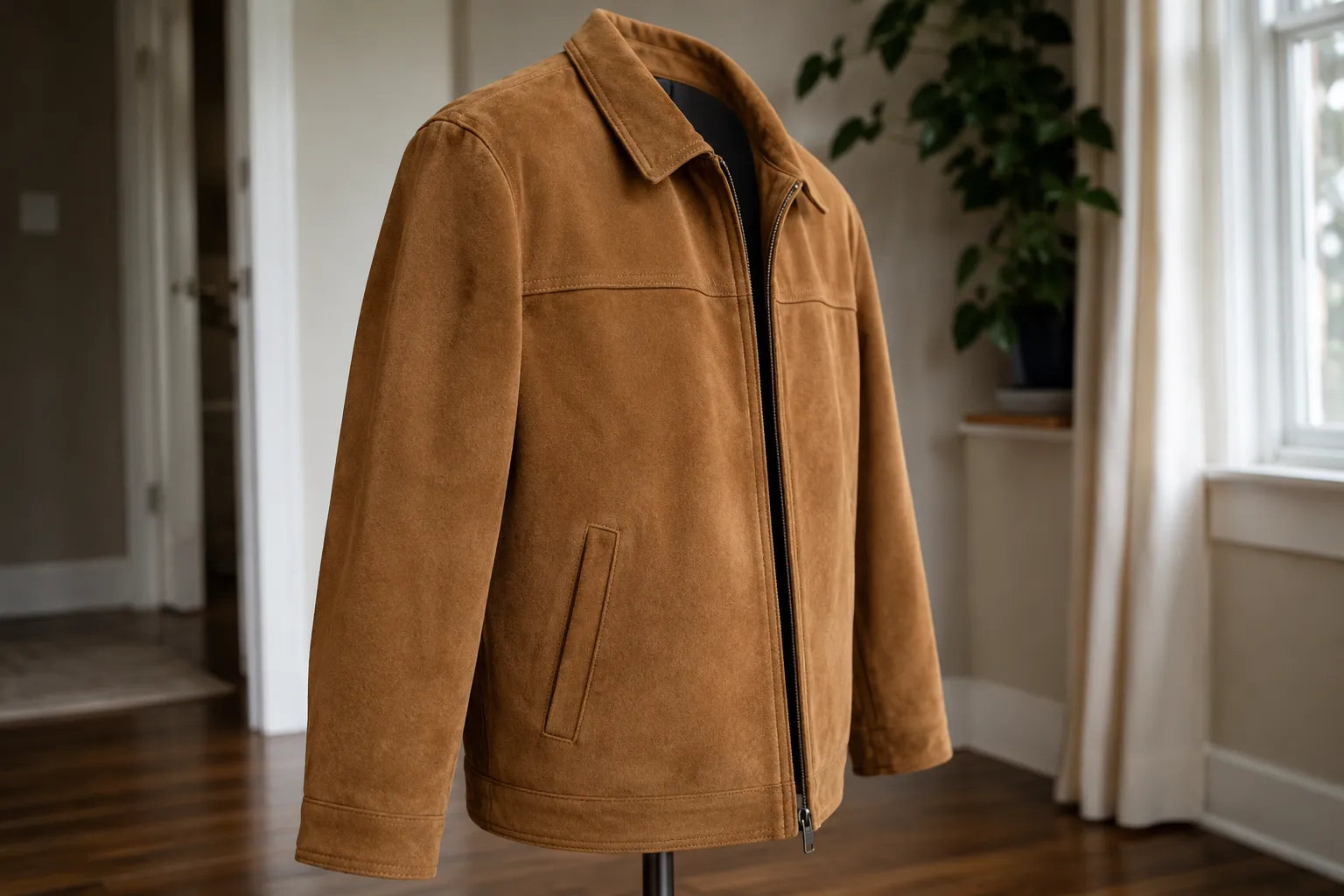
Request: Suede jacket with grease stains on sleeves and collar.
Done: Local stain treatment, steam cleaning, gentle drying, raising the nap.
Cost: 5 000 ₸
Master: Dana Rakhimova, cleaning master
Total: Stains removed, jacket soft, color refreshed.
 After
After
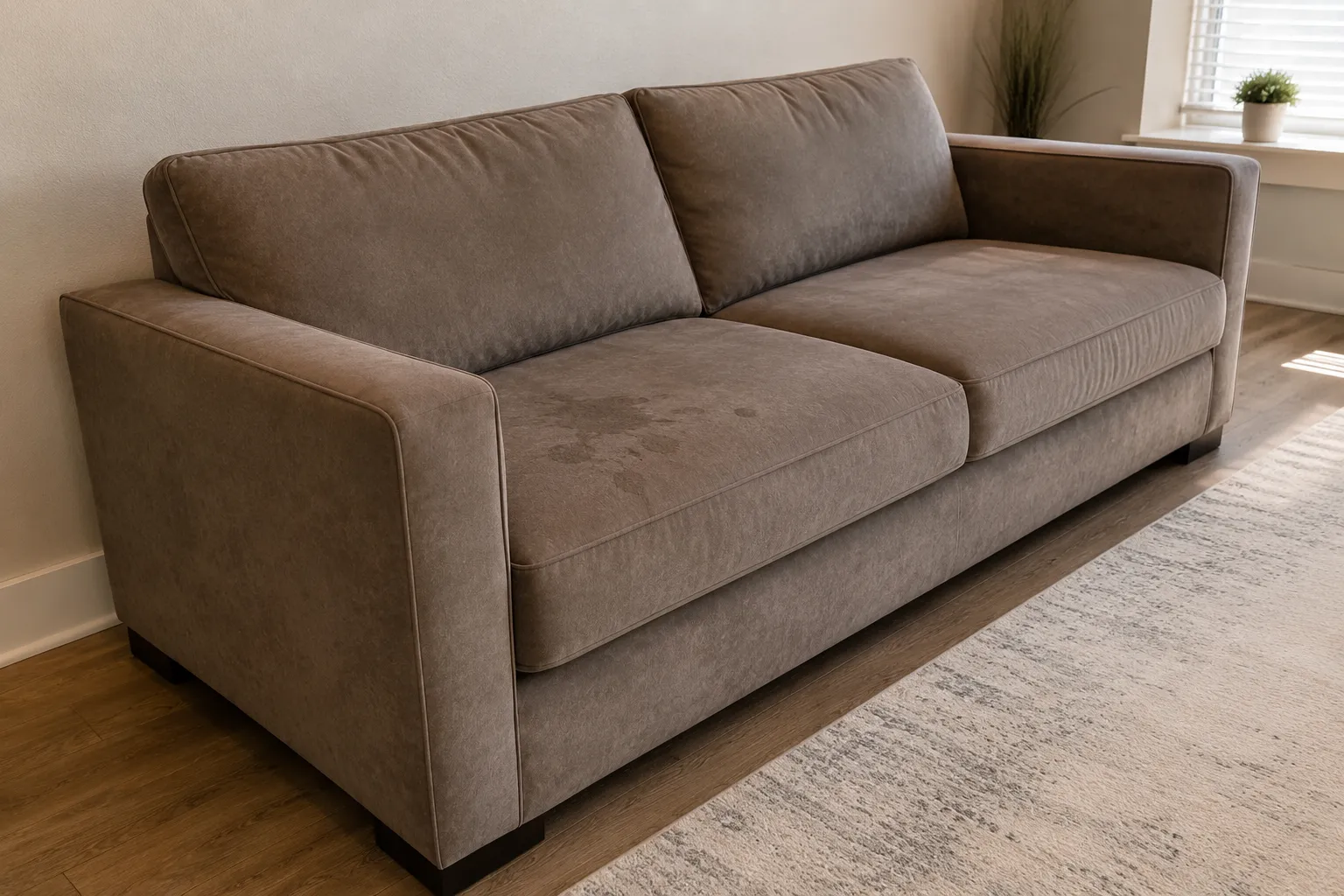
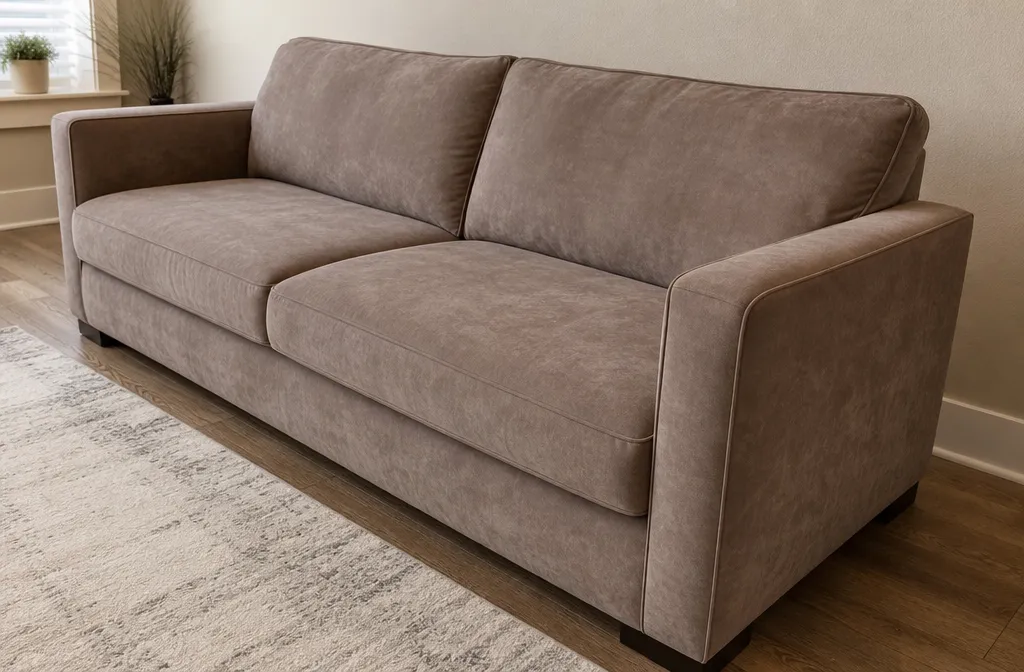
Request: Suede sofa with coffee stains and dust in crevices.
Done: Dry cleaning with special powder, stain removal, steam treatment, final impregnation.
Cost: 11 000 ₸
Master: Timur Zhaksybekov, cleaning master
Total: Sofa clean, no stains, nap uniform, pleasant smell.
 After
After
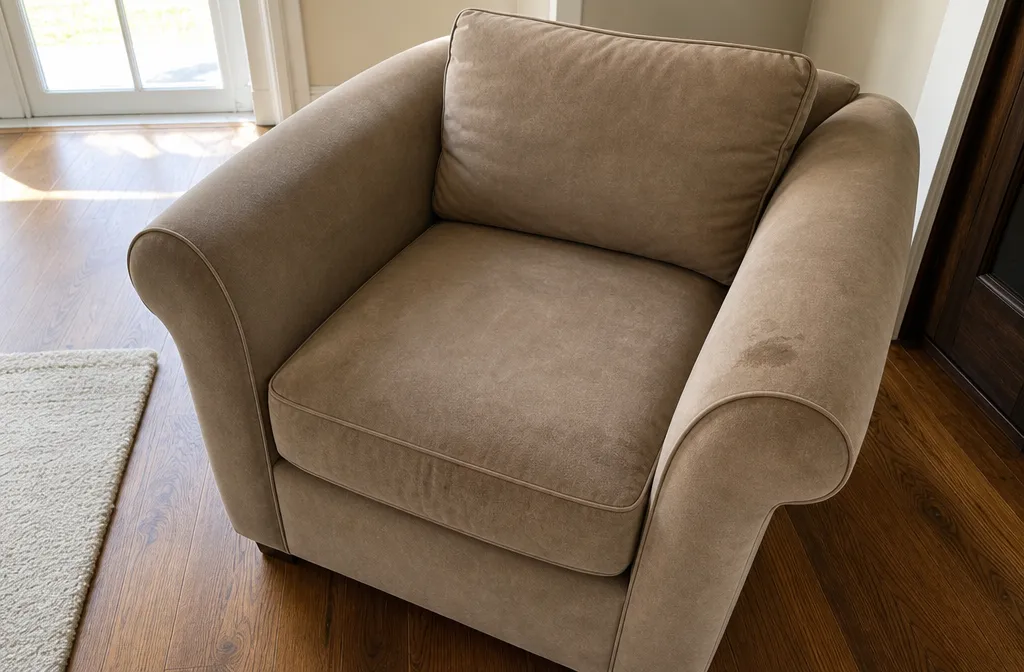
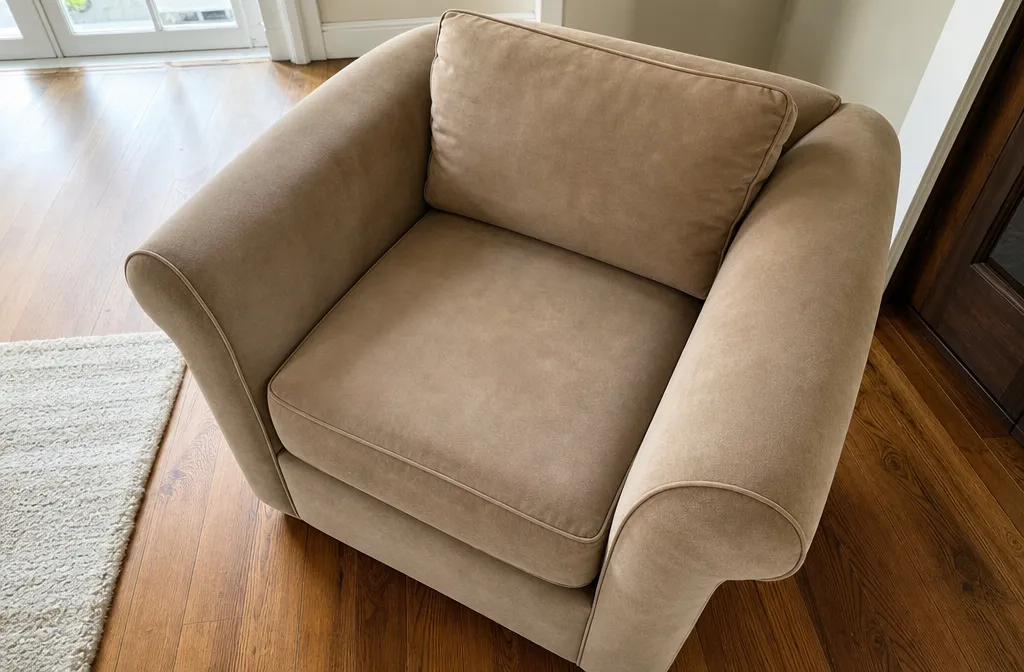
Request: Suede armchair with scuffs on armrests and stains.
Done: Brush cleaning, stain removal, tinting scuffs, impregnation.
Cost: 3 500 ₸
Master: Aliya Kassymova, cleaning master
Total: Armchair refreshed, no stains, color even.
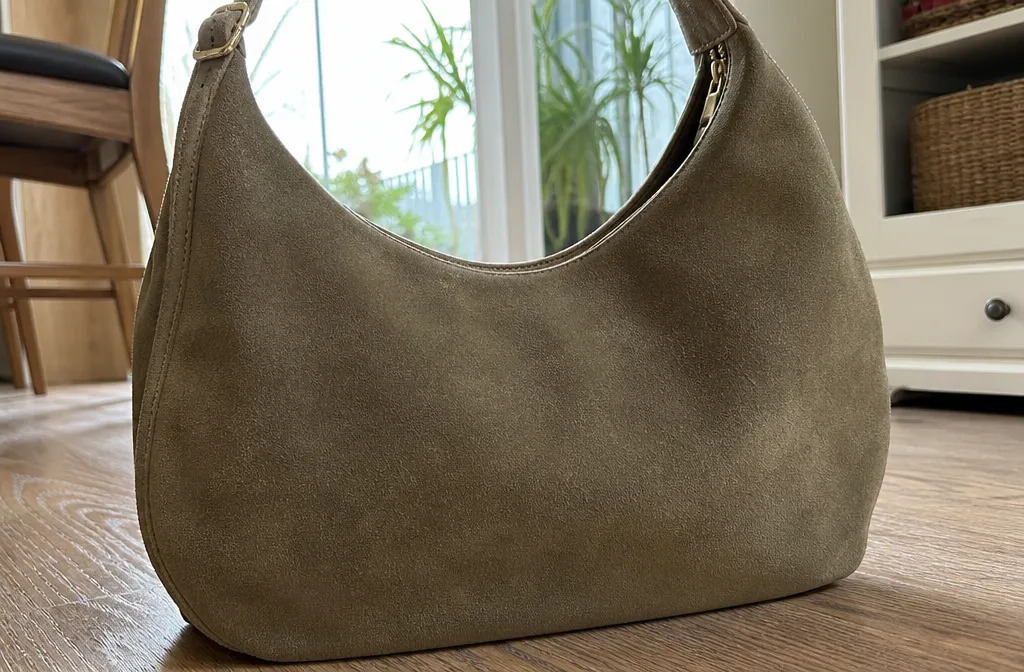 After
After
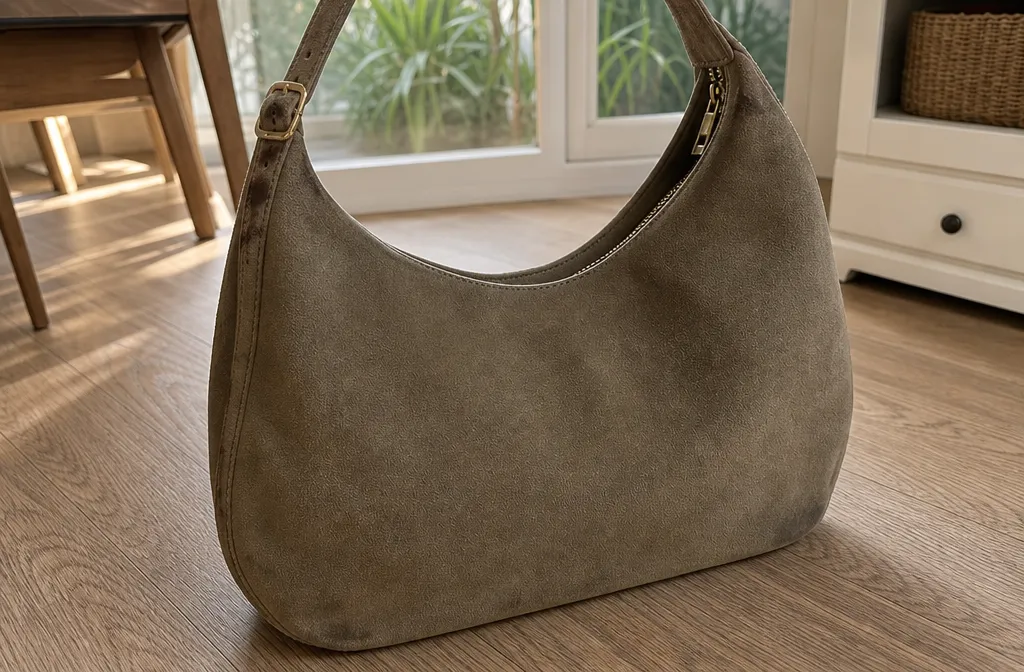
Request: Suede handbag with scuffed corners and dark hand stains.
Done: Suede cleaning, stain removal, corner tinting, water-repellent impregnation.
Cost: 14 000 ₸
Master: Nurzhan Akhmetov, dry cleaning master
Total: Bag looks like new, no scuffs, color is rich.
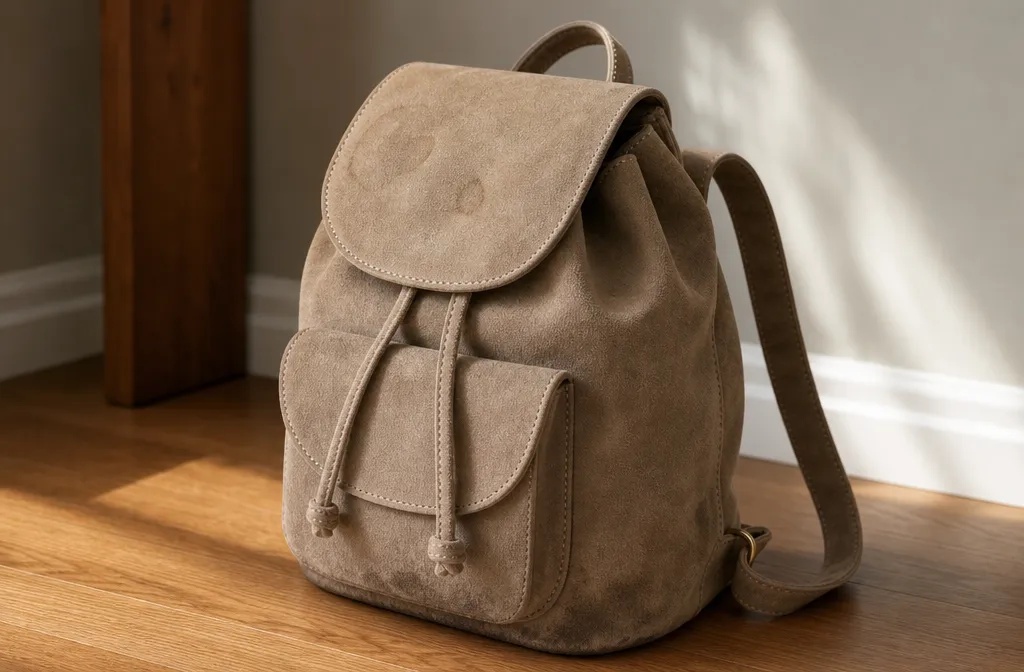
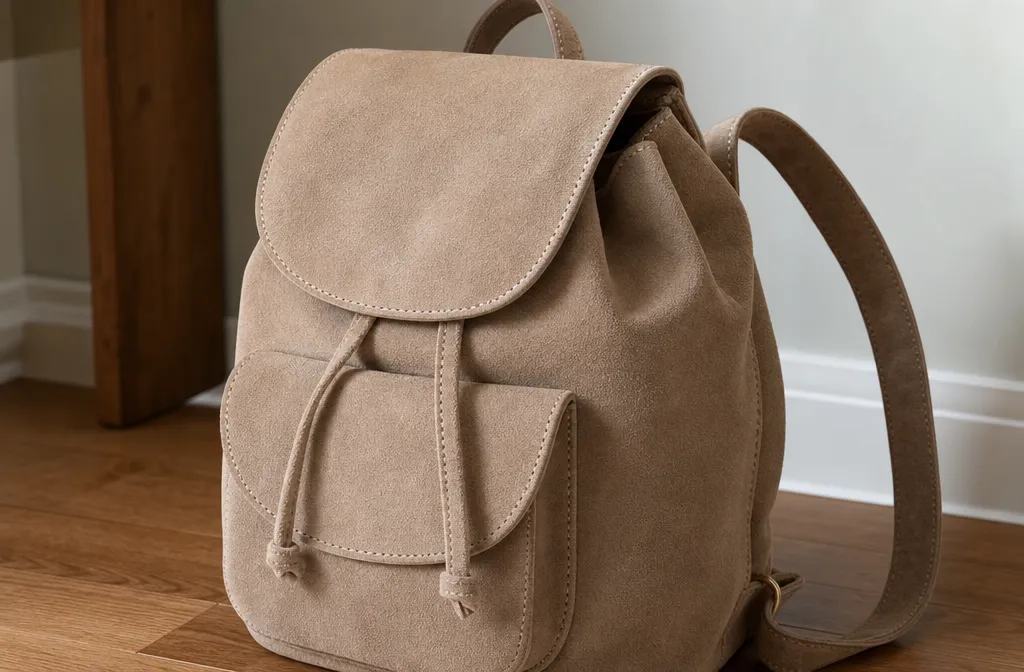 After
After
Request: Suede backpack with rain stains and dirt on the bottom.
Done: Suede cleaning, water stain removal, drying, nap lifting.
Cost: 13 000 ₸
Master: Gulmira Bekzhanova, dry cleaning master
Total: Backpack is clean, no streaks, nap is even.
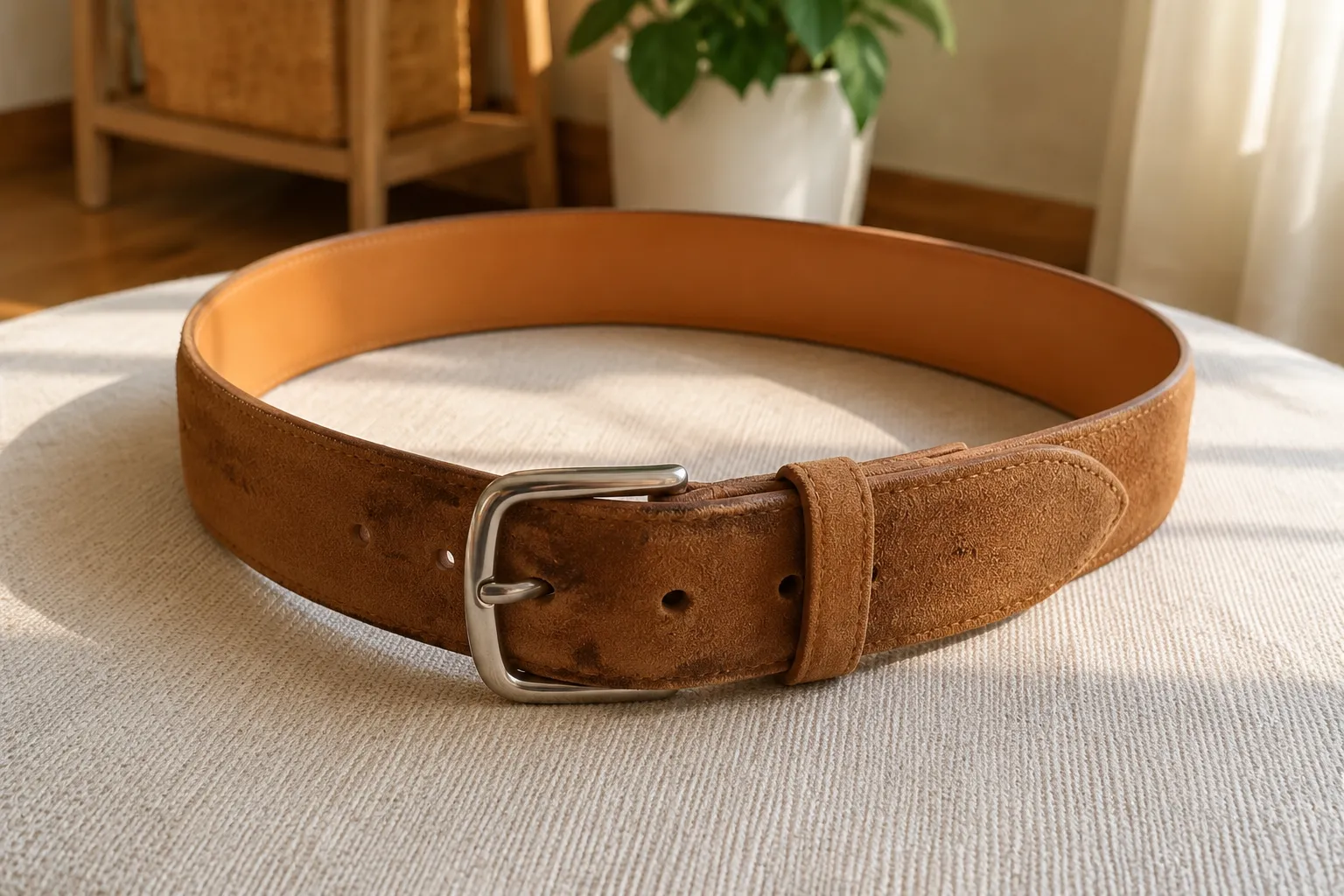
 After
After
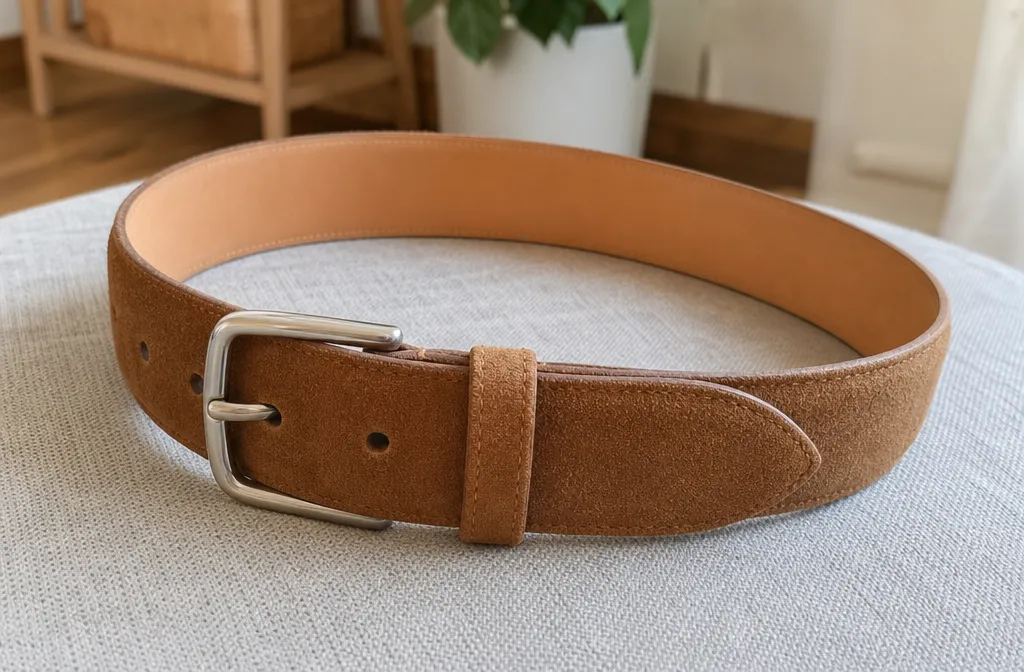
Request: Suede belt with scuffs near buckle and stains.
Done: Suede cleaning, stain removal, tinting, impregnation.
Cost: 12 000 ₸
Master: Arman Seitzhanov, dry cleaning master
Total: Belt is clean, scuffs removed, color even.
 After
After
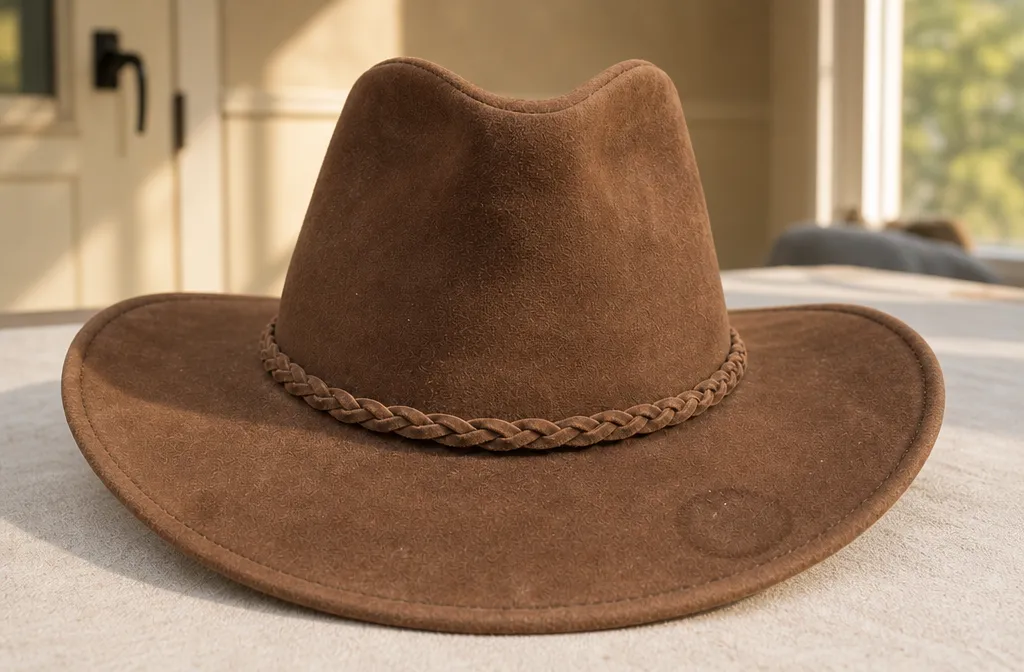
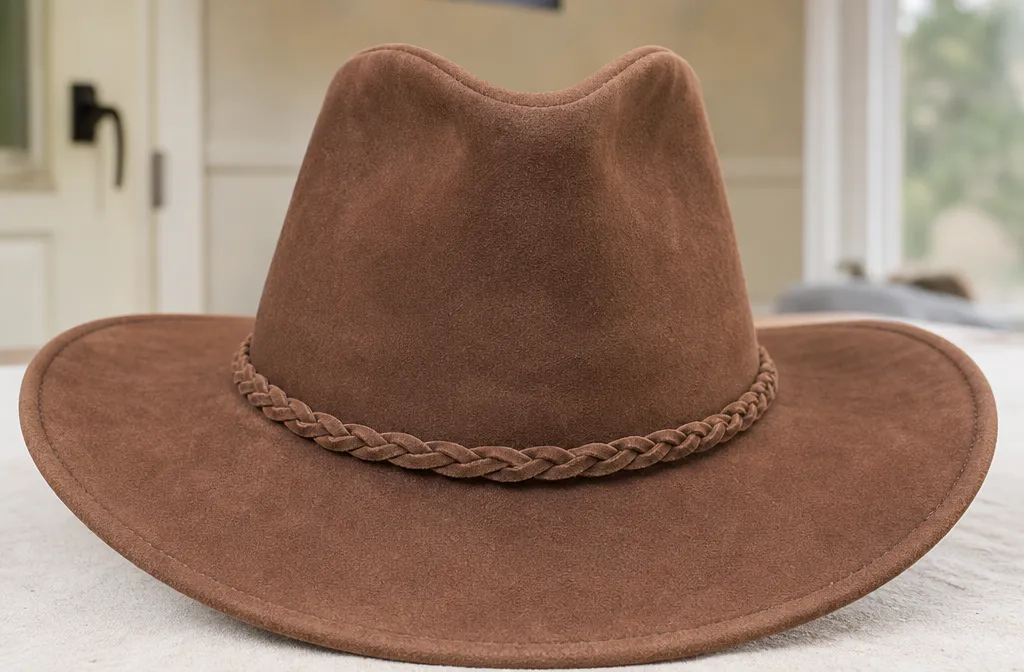
Request: Suede hat with stains and lost shape.
Done: Suede cleaning, stain removal, steam shape restoration, impregnation.
Cost: 14 000 ₸
Master: Saule Tulegenova, dry cleaning master
Total: Hat is clean, shape restored, color bright.
 After
After
Request: Suede gloves with stains and scuffs on fingers.
Done: Suede cleaning, stain removal, tinting, impregnation.
Cost: 13 000 ₸
Master: Zhanar Kaliyeva, dry cleaning master
Total: Gloves are clean, soft, stain-free.
All cleaners are profi-clean staff with training, uniform and security check. Each order has a team leader who controls quality.
Short answer: yes, but with a risk of ruining the material. Suede is porous, absorbs water and dirt, and home remedies often cause irreversible damage. Let’s break down when home cleaning is safe and when it’s guaranteed to ruin an item — and how to tell the difference before you pick up a brush.
The most common scenario in our practice is someone trying to scrub a stain off suede sneakers or a jacket, and the item ends up losing its appearance. Here are three key risks we see weekly in Almaty.
Our advice: if the item has even one greasy or oily stain — don’t try to remove it at home. Grease penetrates deep into the pores, and without professional extraction on a vacuum table, it will remain there forever.
There are two cases where you can refresh suede at home without risk: light dust and dry dirt without ingrained stains. But even here, technique matters. A mistake at the start — and the item ends up at the dry cleaner.
Moreover, even with dry cleaning, it’s important not to overdo it: if a “white residue” remains after using the eraser — you are already wearing away the top layer. In that case, it’s better to stop and hand the item over to professionals.
In Almaty, where winter brings reagents on sidewalks and summer brings dust and rain, suede footwear suffers especially. We’ve compiled a “blacklist” of home methods that are guaranteed to ruin an item. Do not repeat them.
Expert recommendation: if after home cleaning, streaks remain on the item or the color has changed — do not try to “fix it” with repeated treatment. Each subsequent attempt worsens the damage. It’s better to hand it over to specialists immediately: in some cases, restoration is possible, but only if you stopped in time.
Many clients in Almaty confuse these materials, and the difference determines the cleaning method. A mistake is costly: a product for nubuck can ruin suede, and vice versa.
In our practice, about 30% of inquiries about “ruined suede” are actually attempts to clean velour or nubuck using home methods. Always check the label before cleaning: if it says “velour” or “nubuck,” home experiments are especially dangerous.
Suede is a capricious material: improper cleaning wears down the nap, leaves streaks, or shrinks the leather. Let’s break down seven mistakes we see from clients after their home attempts and how to avoid them.
The main mistake is trying to scrape off a dry stain with a stiff brush. The suede nap breaks, leaving a bald patch. At profi-clean, we first treat the stain with steam at 120 °C — it softens the dirt, and only then do we go over it with a brass brush with 0.15 mm bristles. Without steam, you are simply grinding the abrasive deeper into the pores. Almaty dust, mixed with road reagents, makes the material especially brittle, so dry cleaning without moisture is the surest way to ruin the pair completely.
Laundry detergent with enzymes and phosphates destroys the suede’s impregnation and leaves a white residue that cannot be washed off with water. We only use neutral surfactants (pH 5.5–6.5) — for example, a concentrate from Kiehl based on coconut oil. It does not raise the nap or leave salts. If you have already washed suede with powder, the only chance is to rinse it in cold water with the addition of 3% vinegar (100 ml per 5 L), but this does not guarantee the return of softness. In Almaty, the water is hard (7–8 °dH), and calcium salts fix the powder in the pores — rinsing must be done at least twice.
After wet cleaning, suede should only be dried horizontally at 18–22 °C in the shade. A radiator draws moisture from the adhesive layer — the sole or lining will peel off after 2–3 cycles. Sunlight burns out the pigment: suede fades unevenly, especially under the Almaty sun with a UV index of 7–8 in summer. In our practice, 40% of color restoration requests are related to drying on a balcony. The correct cycle: 24–36 hours at room temperature, turning every 6 hours.
Impregnation should only be applied to clean, dry suede — otherwise, it seals the dirt inside, making the stain permanent. In Almaty, where it rains in autumn and reagents are used in winter, clients often spray the product right on the street. After a month, the suede darkens, and restoring the color is only possible with professional dry cleaning using a solvent. At profi-clean, before impregnation, we always perform a deep extraction of contaminants with an extractor using 40 °C water — this removes 95% of dust from the pores. Without this step, the spray acts like a varnish, preserving the dirt.
Wet wipes with antibacterial impregnation (alcohol, chlorhexidine) degrease suede — it loses its softness and begins to crack at the folds. Soapy water leaves alkali, which draws out natural oils. Suede is leather with a nap; it should be cleaned either dry (eraser, steam) or with special foams that do not seep into the lining. For Almaty shoes after being outdoors, we recommend only foam cleaning with a 5-minute dwell time followed by vacuuming — this is the only way to avoid soaking the glue seam.
Any product — even a “gentle” one — can change the shade of suede. A test on the inner seam or under the tongue of the shoe is mandatory before cleaning. In our practice, there was a case: a client used Vanish carpet stain remover on a suede sofa — the nap lightened by a shade, and restoration required repainting. The test takes 30 seconds: apply the product to a cotton pad, rub a hidden area, wait 10 minutes. If the pad is stained, the product is too aggressive for this type of suede.
Dry dirt, if not removed with a vacuum cleaner using a soft brush attachment, turns into a paste when wet, which gets rubbed into the pores. After drying, gray streaks remain that cannot be removed. At profi-clean, before any wet treatment of suede, a dry vacuum collection is carried out using a Karcher vacuum cleaner with a HEPA filter — this removes up to 80% of particles without contact with the nap. A household vacuum cleaner without a soft brush attachment (a regular brush) damages the nap, so it is better to use a hand-held vacuum with microfiber on the end.
“`markdown
Home methods only work for surface dirt on dense suede, but there are scenarios where any independent attempt is guaranteed to ruin the item — let’s break them down by stain type, material condition, and consequences.
Oil, shoe cream, or food grease instantly absorbs into the porous structure of suede, pulling the nap and leaving a dark halo. At home, trying to wipe such a stain with a napkin only spreads it deeper, and talc or starch, often recommended online, does not remove the grease from the thickness of the material — it remains inside and oxidizes over time, turning into a yellow, indelible stain. At profi-clean, for such cases, we use solvents based on citrus extracts — they break down grease at the molecular level without destroying the dye or lifting the nap. In practice, this means if you spill oil on a suede sofa or stain a jacket with greasy sauce, the chance of saving the item at home is near zero, and the longer you wait, the deeper the grease sets into the fibers.
Acidic and coloring drinks leave not just dirt on suede but a chemical trace — the pigment reacts with the tannins impregnating the leather. A home attempt to rub such a stain with water or soapy solution has the opposite effect: moisture brings the drink’s dye to the surface, and after drying, a dark, blurred stain remains that cannot be removed with a brush. The specifics of the Almaty climate — sharp humidity fluctuations in spring and autumn — worsen the situation: in dry air, the stain sets faster, and in humid air, it spreads wider. In our practice, there was a case where a client tried to remove a pomegranate juice stain from suede sneakers with citric acid — the nap at that spot completely faded, and restoring the color required aerosol painting, which added to the treatment cost. Professional suede stain removers work differently: they are applied precisely to the stain’s edge and draw the pigment into a sorbent, preventing it from spreading.
In winter and the off-season, suede shoes in Almaty face a triple threat: de-icing reagents on sidewalks, salt, and sand. Salt eats into the suede in crystals, tearing fibers from the inside — after drying, micro-cracks remain where white streaks were, which over time turn into holes. Sand and reagents spread on city roads act as an abrasive: when walking, they grind into the nap and wear it down to shiny bald spots that no brush can lift. Home washing with water only accelerates the destruction — water dissolves the salt but does not remove it from the depths, and upon subsequent drying, the crystals reappear. At profi-clean, for winter shoes, we use a gentle emulsion cleaning followed by impregnation with a water-repellent compound — this not only removes reagents but also creates a barrier for the next season. In my opinion, if suede boots or shoes have gone through at least one season without professional cleaning, restoring their nap to its original state is already impossible — only masking with paint.
On suede jackets, raincoats, and blazers, shiny areas eventually appear on the elbows, collar, and cuffs — this isn’t dirt, but mechanical abrasion of the nap combined with the absorption of skin oils. Home methods like steam treatment or ammonia provide a temporary effect: the nap lifts for an hour or two, but without removing the oil from the base, it lies flat again when worn. Moreover, ammonia dries out suede, and after three or four such treatments, the material at the folds begins to crack — we see this on jackets brought in after “folk” remedies. In professional dry cleaning, shiny areas are treated with special degreasing enzyme foams that break down skin oils without affecting the dye. If the item is worn regularly, I recommend sending it for dry cleaning once a season before visible wear marks appear — preventive treatment is cheaper than restoring an already worn area.
Accidental contact of hair dye, nail polish, or super glue on suede is a situation where home remedies are categorically useless. Acetone or alcohol, which are typically used to remove such stains, instantly dissolve the suede dye along with the stain — leaving a white spot of discolored leather on the item. Even special water-based glue removers are unsuitable: suede is afraid of water, and after getting wet, its structure changes irreversibly. At profi-clean, for such cases, we use a dry method — mechanical removal of the top layer of the stain with a micro-abrasive followed by color correction. In practice, this means that if a drop of paint or glue has already soaked in and dried, the item can only be saved at a service center, and not always — the success rate depends on the time since the stain occurred. The conclusion is simple: if paint or glue gets on suede, don’t try to do anything yourself — immediately take it to professionals. “`
Suede comes out refreshed after professional treatment, but without proper care, the effect doesn’t last long. We’ll tell you how to consolidate the result, what products to use, and what to do to avoid ruining the material in the first few days.
After treatment, the suede nap is open and maximally susceptible to external influences. Do not wear the item or place it in direct sunlight for 24 hours — ultraviolet light dries the leather unevenly, leaving yellow spots on light shades. The humidity in the room during this time should be 50-60% — dry air (typical for Almaty apartments with central heating) tightens the suede, while excess moisture prevents the nap from rising. At profi-clean, after final drying, we apply a finishing hydrophobic spray, Kiehl — it creates a protective film that sets in 12 hours. If you pick up the item without such treatment, buy a water-based suede aerosol and apply it 8-10 hours after dry cleaning, when the material has completely cooled.
In Almaty, sharp weather changes in spring and autumn are a common cause of recurring stains on freshly cleaned suede. Wet asphalt and reagents from sidewalks (sand and salt are sprinkled in winter) leave whitish streaks that set in within 30-40 minutes. Act as follows: let the suede dry at room temperature — never dry it on a radiator, otherwise the nap will “cook” and become stiff to the touch. Using a dry suede brush, go over the nap in one direction to remove dried dirt. If streaks remain, use a suede eraser (sold in shoe repair shops on Zhibek Zholy) — it removes salt stains without wetting. After cleaning, use a steam generator from a distance of 15-20 cm: steam lifts the flattened nap and restores the velvety texture. In our practice, profi-clean cleaners use this technique on sneakers after rain — the result is visible immediately, without a repeat dry cleaning.
Shoes and outerwear made of suede require different approaches after dry cleaning due to varying stress on the material. Sneakers and boots come into contact with asphalt, road reagents, and moisture — after cleaning, be sure to apply a water-repellent spray before every time you go outside, especially in slush. Jackets and coats suffer from friction against bags, car seat belts, and contact with hand skin (greasy marks on the collar and cuffs appear after 2-3 wears). For clothing, once a week, go over the nap with a soft clothing brush — this removes dust that embeds into the suede and makes it look “greasy.” Do not rub rain stains on a jacket — blot them with a dry cloth and let it dry, then raise the nap with a brush. On shoes, flattened areas at the toe and heel can be treated with steam from an iron with a vertical steaming function (hold at a distance of 10 cm), but this method is risky on clothing — the suede may shrink at the seams.
Improper storage negates the results of dry cleaning faster than active wear. Suede items should not be hung on thin hangers — under the weight of a jacket or coat, the nap on the shoulders gets crushed, and after a month, unsightly “bald spots” appear that can only be removed with repeated treatment. Use wide hangers with soft padding or store on a hanger with a trouser bar (if referring to suede pants). Store shoes in breathable cotton bags — plastic bags create a greenhouse effect, causing the suede to “suffocate” and lose color, especially on light shades (beige, sand). Place shoe trees or paper inside boots and sneakers — without them, the material deforms, and cracks appear at the creases during the next wear. In Almaty, where indoor humidity in winter drops to 20-25%, place a humidifier or at least a container of water near the storage area — dry air makes suede brittle, and micro-cracks appear at the creases within 2-3 weeks.
Sometimes after dry cleaning, suede looks faded — this is not a defect, but a natural reaction of the material to the removal of stubborn dirt, especially if the item hasn’t been cleaned for a long time. Do not try to fix this by tinting with shoe cream for smooth leather — it clogs the pores, making the suede feel “plastic.” Use an aerosol spray paint for suede (Kiehl or similar water-based products) — apply from a distance of 20-25 cm, in two thin layers with an intermediate drying time of 10-15 minutes. After painting, go over it with a rubber brush to raise the nap — the paint will apply evenly, and the color will be restored by 90-95%. At profi-clean, on dark suede (black, dark blue), we tint problem areas after cleaning — the collar, cuffs, and shoe toe — to make the item look like new. If you notice the color has faded but don’t know the exact shade, bring the item to us for a diagnosis: we will match the tone using our dye catalog and perform restoration within one day.
“`markdown
The difference between what is used at home and what is used in professional dry cleaning is not just about the price of the bottle. It determines whether the item will remain intact after the first contact with a stain.
Household stain removers and all-purpose cleaning foams often have an alkaline pH (8–10), which raises the nap of suede, making it stiff and brittle after drying. Professional lines — for example, we use Kiehl for delicate materials — work in a neutral or slightly acidic range (pH 5.5–7), which does not disrupt the structure of tanned leather. Additionally, household products often contain chlorine-based bleaches and abrasive particles (chalk, soda ash): they embed between the fibers, leave whitish streaks, and pull out the coloring pigment. Professional formulations use enzyme complexes that break down a specific type of soiling (grease, protein, tannin) without contacting the base. In practice, this means a household product may “handle” a stain by destroying the top layer of suede, whereas a professional agent removes the dirt precisely, preserving the nap and color. When choosing between a cheap spray from a supermarket shelf and a specialized concentrate, remember: with the former, you risk the item; with the latter, you invest in its preservation.
Home remedies are applied from a spray bottle in a wide fan — the liquid saturates not only the stain but also the clean areas around it, creating a “halo” and uneven drying. Professionals work precisely: applying to microfiber or a brush with bristle stiffness selected for the pile type (for short-pile suede — a soft brass brush, for long-pile — a rubber brush). This prevents the solution from seeping into the lining or seams, where it could cause deformation. Another difference is the method of dirt removal: at home, dirt is often “rubbed in” with circular motions, driving particles deeper into the pores. In professional practice, including with our cleaners, a pulling technique is used — from the edge of the stain to the center with a dry cloth and minimal pressure, to absorb dirt onto the surface, not into the fiber. The difference in result is visible upon drying: with the home method, dark halos often remain; with the professional method, the treatment boundary is invisible.
At home, the arsenal is limited: a sponge, an old toothbrush, a hairdryer for drying. This is only sufficient for dust and fresh water-soluble stains. The professional set includes a steam cleaner with adjustable steam temperature (up to 120 °C) and a vacuum extractor, which not only rinses away dirt but sucks it out along with chemical residues from the depths of the suede. For example, when cleaning a suede sofa in Almaty, we first treat the stain with steam through a trigger nozzle — the steam softens grease and dust without soaking the base, and then remove the solution with an extractor using a narrow nozzle. A household hairdryer overheats suede: at temperatures above 60 °C, the leather loses elasticity, the pile mats down, and hard areas appear. Professional drying is done at room temperature with forced ventilation — this preserves softness and shape. For residents of Almaty, where humidity drops to 30% during the heating season, improper drying is especially critical: suede quickly dries out and cracks at the folds.
| Parameter | Home Remedies | Professional Products (profi-clean) |
|---|---|---|
| pH Balance | Alkaline (8–10), aggressive to pile | Neutral or slightly acidic (5.5–7) |
| Type of Active Ingredients | Chlorine, abrasives, surfactants | Enzymes, specific stain solvents |
| Application | Fan spraying — risk of “halo” | Precise application with microfiber/brush |
| Dirt Removal | Rubbing in — clogs fibers | Pulling — absorption onto the surface |
| Drying | Hairdryer (overheating >60 °C) | Room temperature + ventilation |
| Result after 3–5 cleanings | Wear marks, color loss, stiffness | Preserved pile and color, softness |
On the Kazakhstan market, many “professional” suede sprays are sold in auto shops and on marketplaces — they have large “PRO” letters on the label, but the composition is often identical to household aerosols: water, isopropyl alcohol, fragrance, and silicone. Silicone provides a temporary shine and a feeling of “renewal,” but it clogs the pores of the suede, and after 2–3 days, dirt sticks to the silicone film more strongly than to clean leather. A genuine professional product is a concentrate that is diluted with water in a ratio of 1:5 or 1:10, contains no silicones or waxes, has a manufacturer’s certificate (e.g., Kiehl or Sodasan), and allows use on suede without a test on a hidden area only after checking the pH. Before purchasing such a product, check the label: if there are no dilution instructions and no pH indication, you are looking at household chemicals in professional packaging. In our orders from Almaty, clients often bring items treated with such a “PRO” spray — and restoration takes twice as long as cleaning ordinary soiling. “`
I ordered dry cleaning of suede products for my jacket. They returned it like new, even rain stains disappeared.
Thank you, Aigerim! We are glad the jacket makes you happy again.
The boots looked terrible after winter, but after cleaning they became like from a store window. Very satisfied.
We had dry cleaning of suede products for the sofa. The color became brighter, but a slight smell remained; we aired it out — it's fine.
Daniyar, thank you for your feedback! Next time we will offer additional deodorization.
They removed a grease stain from my favorite bag. I didn't think it was possible. Thank you!
Ordered suede cleaning for an office chair. No streaks, the nap was lifted — great.
Yerlan, thank you for your review! We work for you.
Dropped off boots, one stain wasn't fully removed. Had to redo, but in the end it was fine.
Assel, we apologize for the inconvenience. We will take your experience into account and improve quality control.
Suede cleaning saved my favorite jacket after coffee. Great job!
The puffer jacket looks like new, I couldn't believe it could be cleaned so well. Thank you!
Dinara, thank you for choosing us!
Requested suede cleaning for a child's car seat. Clean, but had to wait longer than promised.
Timur, sorry for the delay. We are working on speed.
The trench coat after cleaning is a sight to behold. All stains gone, color even. I recommend.
Had suede cleaning done for sneakers. Now they look new, smell gone.
Alexey, thanks for the review! We look forward to seeing you again.
Sofa cleaned perfectly, but a corner remained slightly darker. Otherwise no complaints.
Olga, thank you for the note. We will try to avoid such nuances in the future.
Ordered suede cleaning for a fur coat. Done neatly, fur not damaged.
The backpack looks like new after cleaning. Very high quality, thank you!
A suede coat is a finicky item, but dry cleaning of suede products at profi-clean worked wonders. Stains removed, nap raised.
Natalya, glad we could help! Feel free to reach out.
The jacket was cleaned well, but the price seemed high. However, the quality justifies it.
Marat, thank you for your feedback! We strive to maintain a balance of price and quality.
Dry cleaning of suede products for winter boots — they handled salt and chemicals excellently.
The trench coat looks better, but there are still marks on the sleeves. I expected more.
Yerzhan, we apologize. Please contact us — we'll try to fix it.
We had dry cleaning of suede products for a leather jacket with suede inserts. The inserts look like new.
Lyazzat, thank you for your trust! You're always welcome.
The sofa after cleaning is like a dream. Wine stains disappeared. Very satisfied.
I ordered dry cleaning of suede products for a bag. They restored it to perfect condition, even cleaned the handles.
Assel, thank you! Come back anytime.
The gloves became clean but lost some softness. Overall, not bad.
Damir, thank you for your feedback. We'll use gentler products next time.
Dry cleaning for suede vests — fast and odor-free. I recommend it.
I cleaned my suede shoes. The result exceeded expectations — even the color evened out.
A standard cycle takes 4 to 6 hours, including drying. Express cleaning is possible in 2 hours with quick drying.
Leave a request on the website or call. The courier will pick up and deliver the item for free. Payment by cash, Kaspi, or Halyk.
Yes, we use gentle products and technologies that do not damage the structure. Suede does not shrink or lose color.
Price is individual per pair. Includes dry and wet cleaning, stain removal, and impregnation.
Individual pricing. Includes cleaning of lining and outer layer, color restoration, and impregnation.
Individual pricing for a two-seater sofa. Price depends on the number of seats and degree of soiling.
Use the calculator on the website: select shoe type, number of pairs, and additional options. The final price will appear automatically.
We clean shoes, clothing, accessories, and furniture made of suede, nubuck, and velour. Full list in the 'Types' section.
The process includes 8 stages: inspection, dry cleaning, stain treatment, wet cleaning, steaming, drying, color restoration, and impregnation.
Professional products from Saphir (France) and Tarrago (Spain), specially developed for suede and nubuck.
Tell us about your experience with profi-clean — it helps other clients and us improve.
We currently operate in Almaty. Other cities are coming soon.