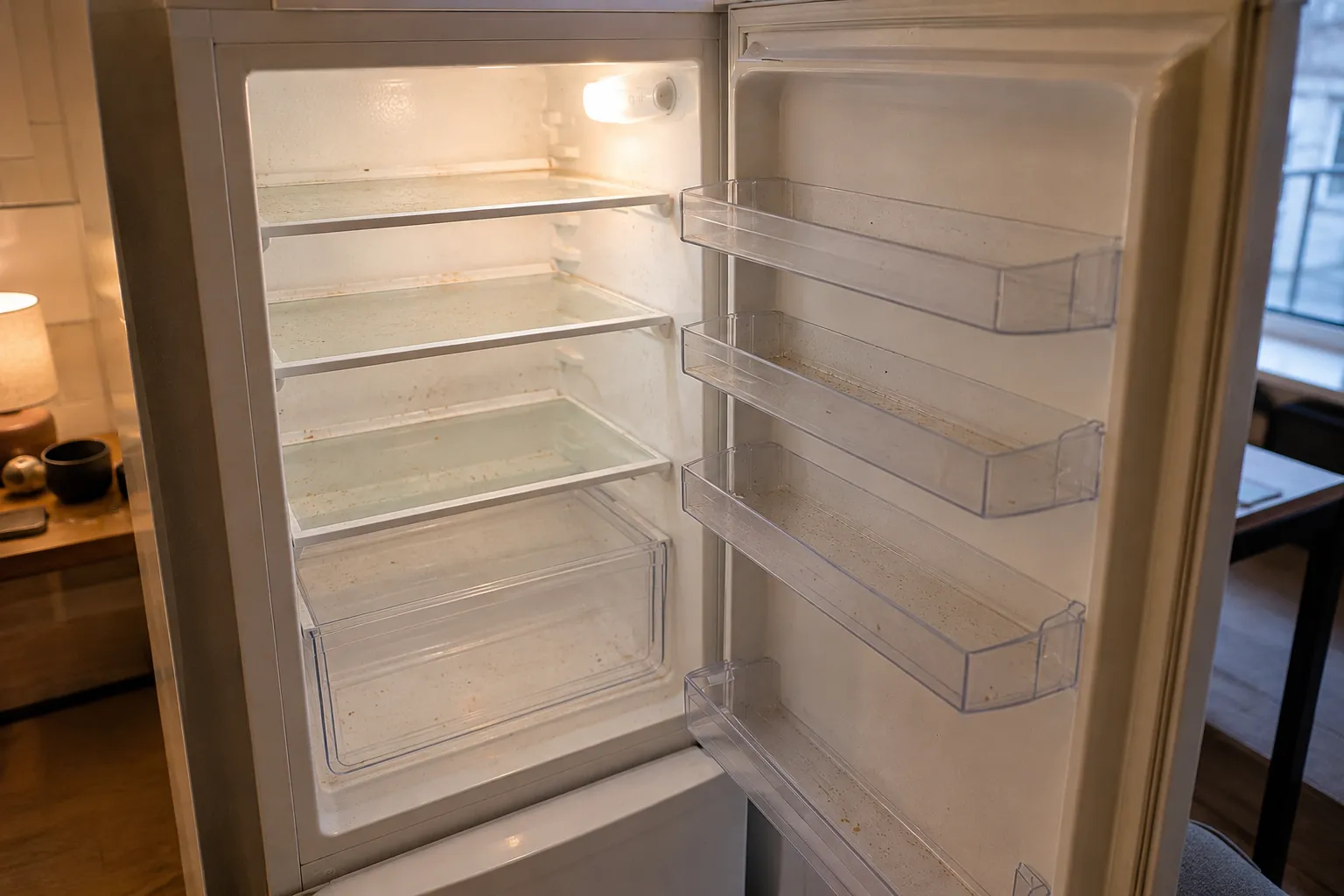
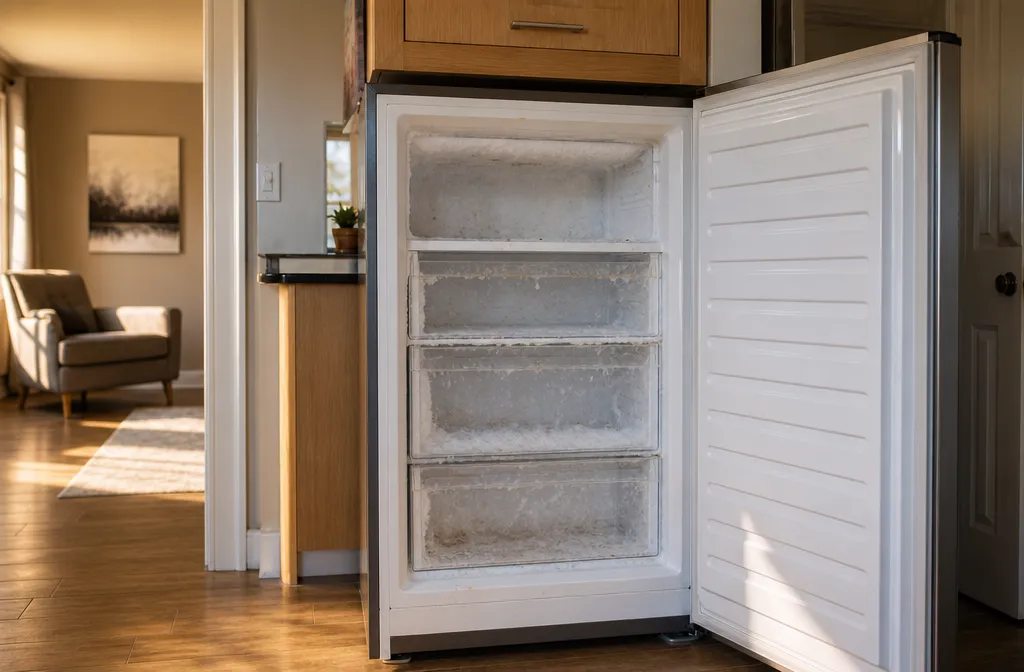
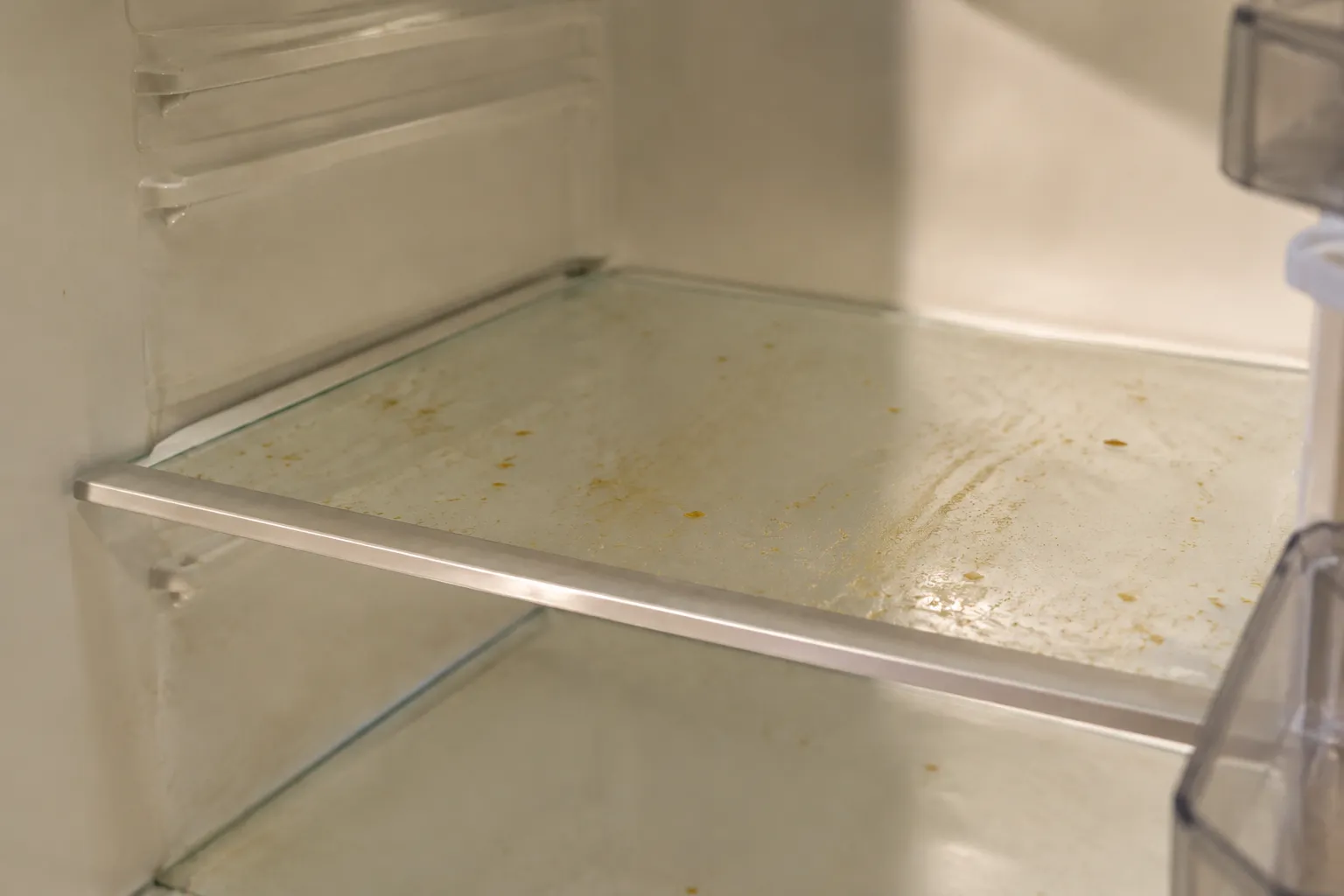
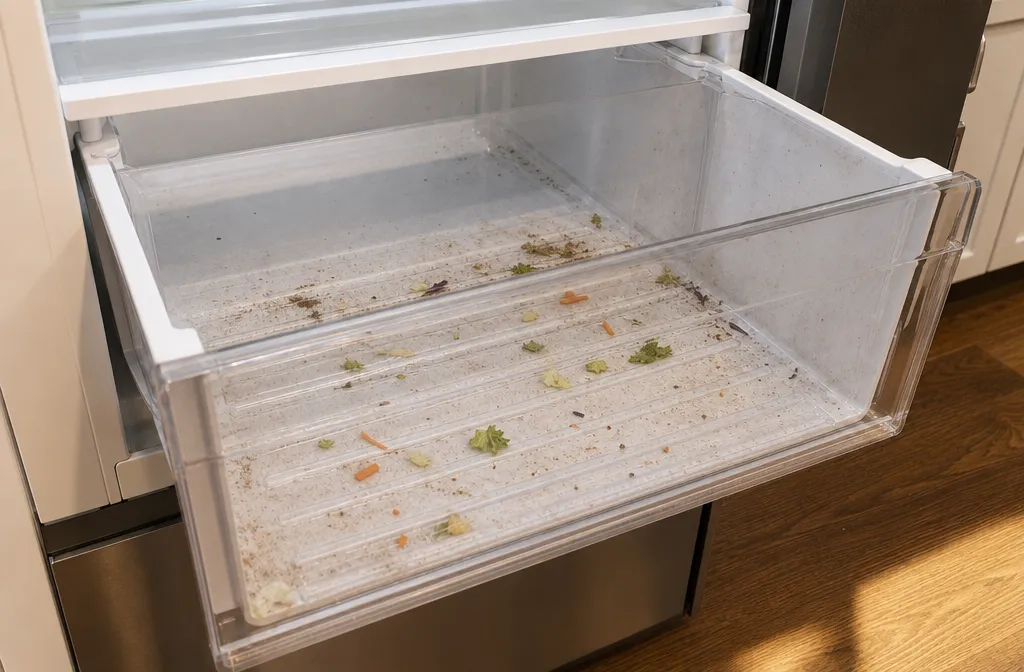
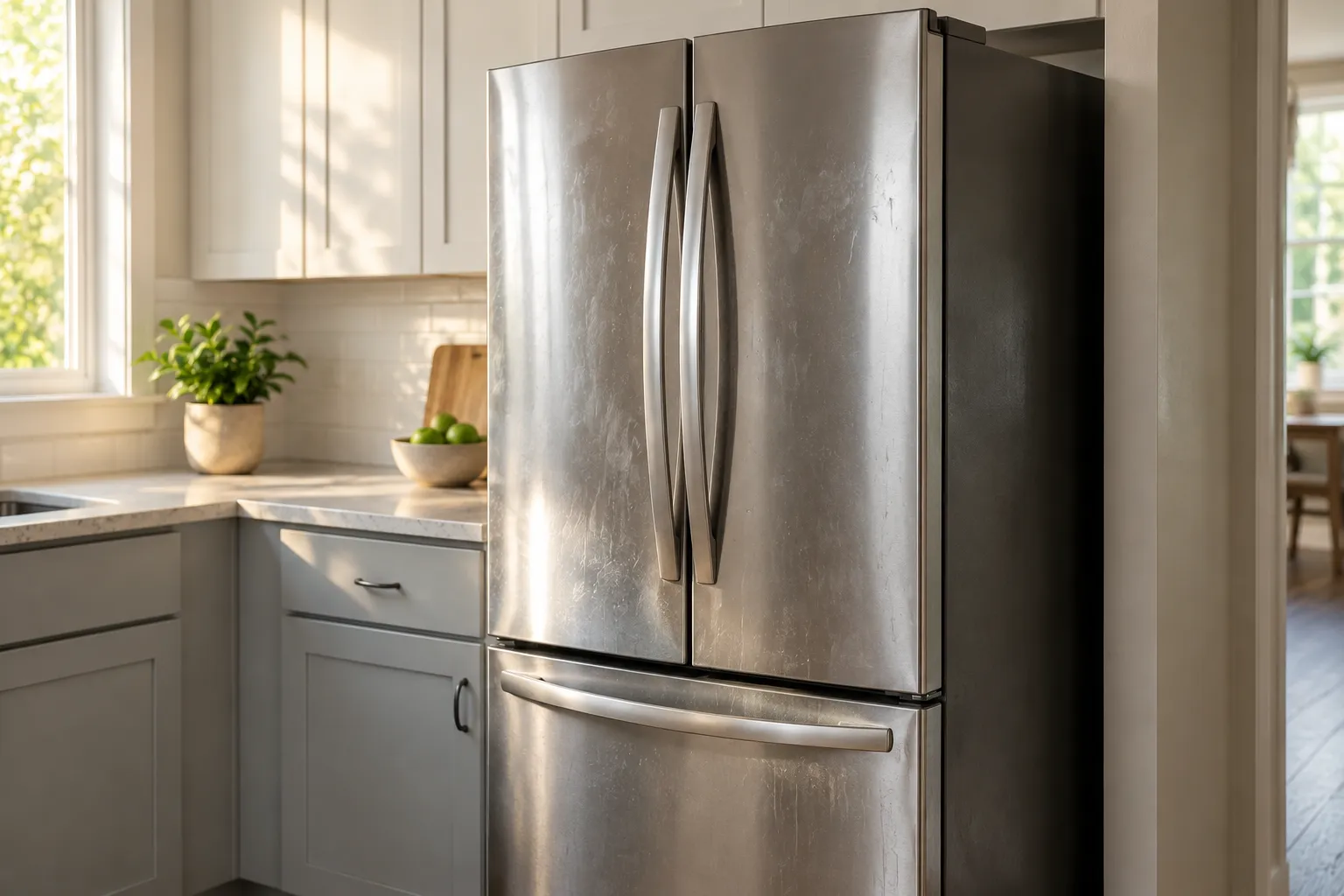
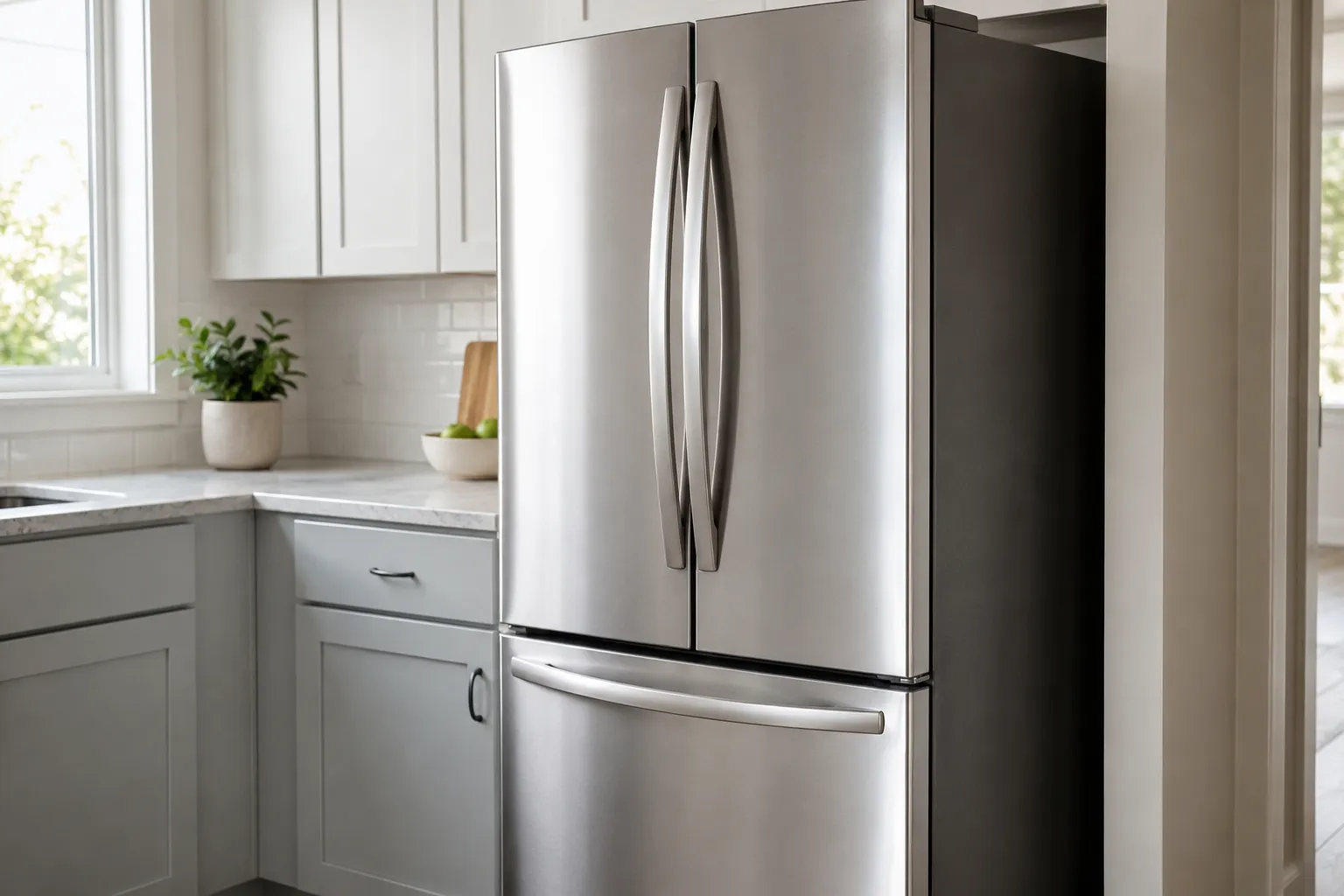
Is It Possible to Clean a Refrigerator Without Defrosting?
Our experience shows: the myth that you can wash a refrigerator without unplugging it from the power supply is one of the main causes of compressor breakdowns and mold growth in hard-to-reach places. At profi-clean, we do not accept cleaning orders without first disconnecting the appliance, and here is why this is fundamental.
Why Wet Cleaning a Running Refrigerator is Dangerous
When you wash the interior walls of a running refrigerator, water inevitably enters the drain hole — that small tube that directs condensate to the pan above the compressor. Water mixed with cleaning solution flows into the channel, combines with grease and dust, and after 2-3 such cleanings, the drain becomes completely clogged. In Almaty apartments with hard water, this happens even faster — calcium salts form a deposit inside the tube within a couple of months. The result: water accumulates at the bottom of the compartment, the compressor runs non-stop trying to compensate for the humidity, and it fails. According to our data, a significant portion of refrigerator repair service calls in Almaty are related specifically to a clogged drain after self-cleaning. If you clean your refrigerator once every six months or less, the risk is minimal, but with monthly cleaning without defrosting, the drain is guaranteed to clog within 4-6 cycles.
What Happens to the Door Gasket When Washing Without Unplugging
The rubber door gasket is the most vulnerable spot when you are wiping the walls of a running refrigerator. The temperature difference: +4°C inside the compartment and +24°C room temperature outside — creates condensation directly on the rubber. If you wipe the gasket with a damp cloth, water seeps under the rubber strip into the groove of the cabinet. In Almaty, where air humidity drops to 20% during the heating season and rises to 60% in summer, these fluctuations cause the rubber to expand and contract — water in the groove starts the rotting process. After a year, the gasket stops sealing properly, a gap appears, the refrigerator loses a significant amount of cold, and the compressor turns on more frequently. On our jobs, we have seen refrigerators where the rubber has hardened and cracked precisely due to regular washing without drying — the moisture did not have time to evaporate, and the material deteriorated. The only way to preserve the gasket is to unplug the appliance for 2 hours, allow the rubber to warm up to room temperature, and only then wash it.
How Dirt in the No Frost Evaporator Affects Food Taste
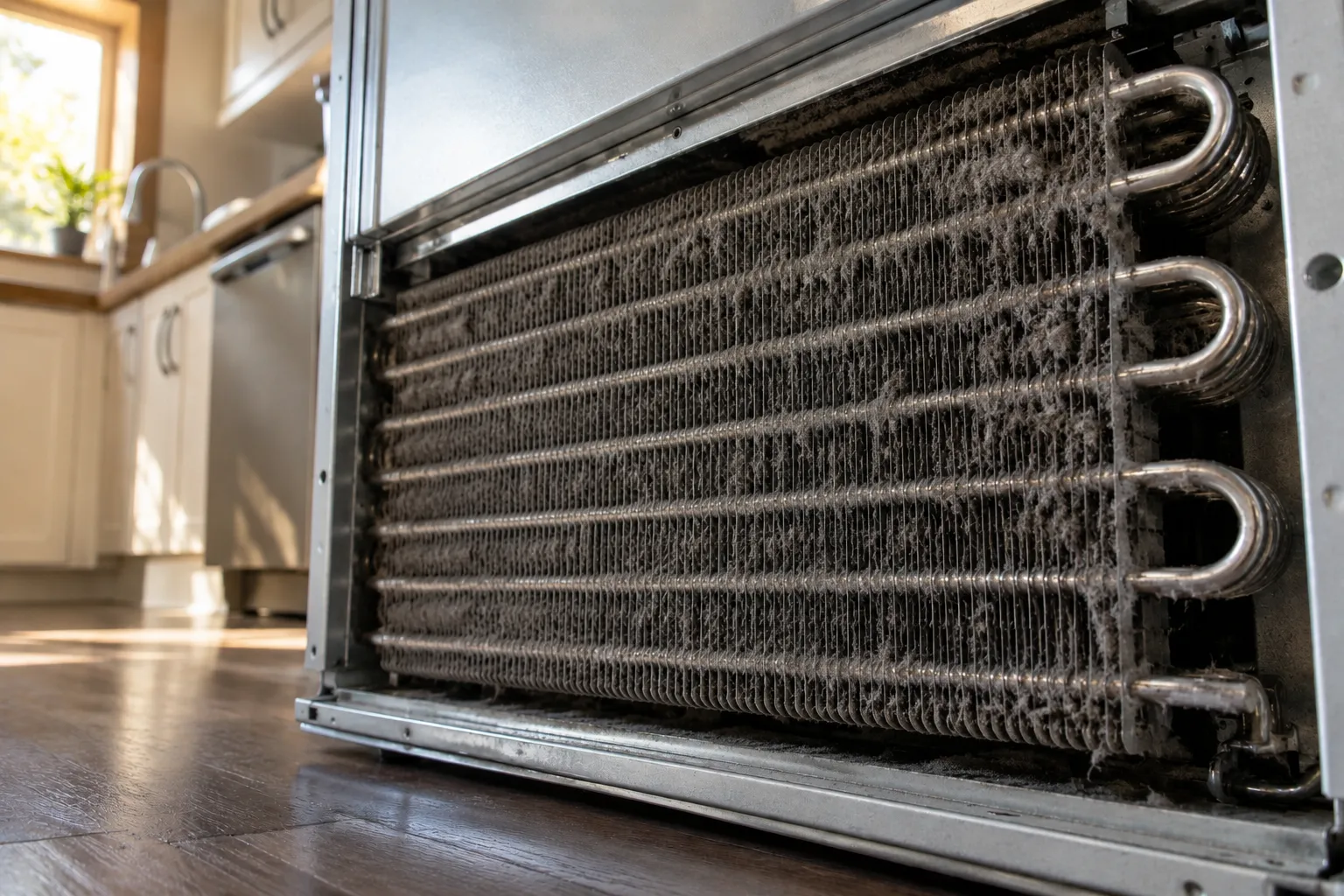
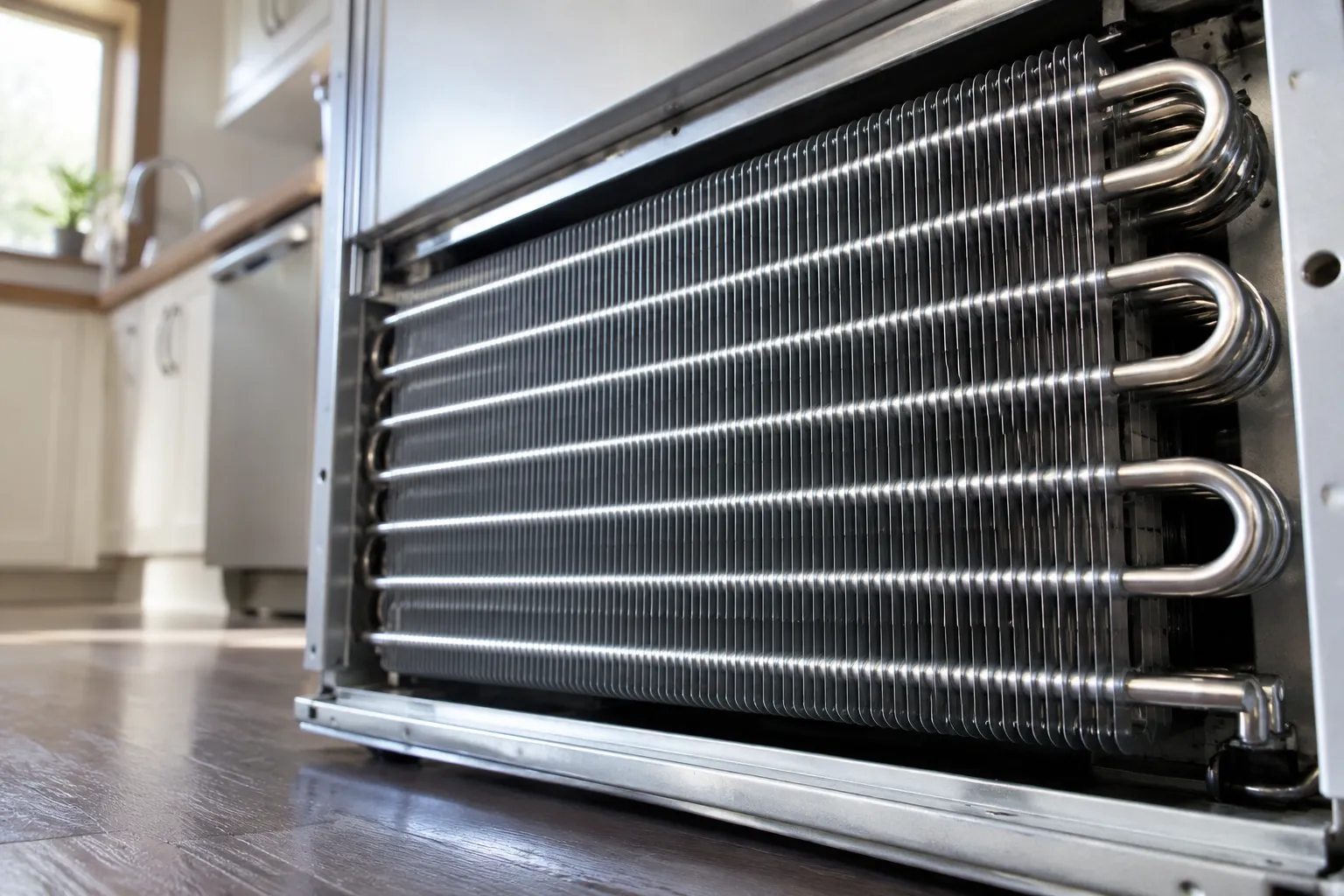
In No Frost systems, the evaporator is hidden behind the back wall — you cannot see it, but it is responsible for air circulation in the compartment. When you wash the refrigerator without defrosting, moisture settles on the evaporator, mixes with dust drawn in by the fan, and forms a crust of dirt and ice. This crust is an ideal breeding ground for Aspergillus mold, whose spores are spread by the airflow across all shelves. In Almaty, the problem is compounded by the high concentration of dust from construction and smog — after a month of operation without defrosting, a layer accumulates on the evaporator that is visible to the naked eye if you disassemble the compartment. Our cleaners check the ventilation grilles during every refrigerator cleaning: if there is a deposit on them, it means the evaporator is already contaminated. The solution is a full defrost for 6-8 hours, after which the moisture from the evaporator evaporates naturally, and only then cleaning with a special isopropyl alcohol-based spray for evaporators.
The Mistake of Using Vinegar and Baking Soda on a Running Appliance
The most popular homemade recipe for cleaning a refrigerator — a solution of vinegar or baking soda with water — becomes dangerous if the appliance is not unplugged. Vinegar acid in vapor form corrodes the aluminum evaporator tubes in older models (up to the year of manufacture), while baking soda left in warm water creates an alkaline reaction that damages the paint coating on the interior walls. In a running refrigerator, vapors concentrate inside the compartment, and the chemical aggression happens faster. At profi-clean, we use neutral pH products from Kiehl and Sodasan — they do not react with metal or plastic, but their use requires mandatory drying of all surfaces. If you decide to clean the refrigerator yourself, unplug it 2 hours before cleaning, remove all shelves, and let them warm up — then even a vinegar solution will not cause harm because the chemical reaction slows down at room temperature.
When a Refrigerator Can Be Cleaned Without Defrosting — The Only Exception
The only scenario where wet cleaning without unplugging is acceptable is daily wiping of shelves and glass surfaces with a microfiber cloth dampened with clean water and no detergents. Such light cleaning removes fresh drips and crumbs without creating excess moisture that seeps into the drain or under the rubber seals. However, deep cleaning involving shelf disassembly, washing containers, and treating corners should only be done with the refrigerator unplugged and fully defrosted. In Almaty, due to voltage fluctuations in the power grid (especially in older homes in the Kamenka and Tastak microdistricts), the compressor is already under strain—extra moisture inside the chamber becomes the last straw. Our recommendation: defrost your refrigerator at least once every six months, even if there seems to be no ice—moisture inside the system still accumulates.
How often should you clean your refrigerator?
The regularity of refrigerator cleaning directly affects its lifespan and food safety. At profi-clean, we’ve determined the optimal frequency based on 8 years of practice and hundreds of orders in Almaty—it depends on the appliance type and usage intensity.
Weekly check-up: what to clean without defrosting
Once a week, spend 5–10 minutes on a quick inspection: remove expired items, wipe shelves and door seals with a damp microfiber cloth and a hypoallergenic cleaner. In my opinion, the most important thing is to spot spills of milk or juice in time: if left for a week, they dry out and become a breeding ground for mold even at +4 °C. In our orders, we most often find mold precisely in the rubber seals—moisture and crumbs accumulate there unnoticed until a black coating appears. So every Saturday, give the seal two minutes: wipe it with a dry cloth, and once a month, use a soda solution. This approach extends the door seal’s lifespan and reduces compressor load—the refrigerator uses less energy to maintain temperature.
Deep cleaning: when to defrost and wash completely
We recommend a major cleaning with defrosting and washing all removable parts every 3–4 months. For two-chamber No Frost models, this interval can be 4–5 months, while for drip systems, a maximum of 3 months. The reason is simple: a layer of ice builds up on the freezer evaporator, reducing heat transfer and forcing the compressor to work overtime. In our practice, there was a case where a client in the Auezov district didn’t defrost their refrigerator for 11 months—ice filled half the freezer, and the compressor failed two weeks after our visit. Deep cleaning includes washing shelves, drawers, and all corners, as well as treating the drain hole—a clogged drain is a common cause of puddles under vegetable drawers. Doing this quarterly costs less than calling a repair technician.
Seasonal factors: summer, load, and Almaty specifics
In summer, especially in +35 °C heat, cleaning frequency should increase: a quick check every 5 days, deep cleaning every 2 months. The reason is not just rapid bacterial growth but also that the refrigerator is opened more often—the door swings up to 50 times a day, letting warm, humid air inside each time. In Almaty, with its sharply continental climate and frequent power outages (especially in the “Taugul” and “Orbita” microdistricts), we advise not to postpone cleaning until September—it’s better to do it in early July so the evaporator is clean before peak loads. If there are small children or allergy sufferers in the family, hygienic cleaning of seals and shelves should be done weekly using hypoallergenic chemicals—this reduces the risk of household mold buildup, which is more dangerous for a child than for an adult.
Signs it’s time to clean your refrigerator off-schedule
Sometimes a schedule isn’t enough — here are three signs you need cleaning immediately: a persistent odor that baking soda or vinegar can’t remove; condensation on the back wall (even in No Frost models); an ice “coat” on the evaporator thicker than 5 mm. In October, we had a job in central Almaty — the refrigerator smelled so bad the client couldn’t open the door without feeling nauseous. The cause was a thawed bag of chicken that had been sitting in the bottom drawer for three days and leaked into the drain. We removed the drawers, flushed the system with a vinegar solution, and treated it with a lactic acid-based antibacterial spray — the smell was gone in an hour, but the food had to be thrown out. If you notice any of these signs, don’t wait for the quarterly deadline: call for cleaning within 24 hours, otherwise bacteria from the condensation can transfer to your food and spoil it faster than you’ll notice.
Why mold appears in the refrigerator and how to prevent it
Mold in the refrigerator is not just an aesthetic issue, but a direct threat to your health and the appliance’s lifespan. We break down the causes of its appearance and prevention methods that actually work in Almaty’s humidity and frequent power outages.
Main causes of mold in the refrigerator compartment
Mold spores are always present in the air, but they only germinate under three conditions: humidity above 80%, temperature above 5°C, and the presence of organic food. In Almaty, summer humidity in apartments reaches 65-75%, and when the refrigerator door is opened, condensation forms instantly. The second cause is a damaged door seal: through micro-cracks, warm, humid air enters and settles on the walls and shelves. The third is a faulty drain: a clogged drain hole causes water to accumulate under the vegetable drawers, creating an ideal environment for black mold, Aspergillus niger. In practice, about one in five mold cases in our orders is related specifically to a clogged drain that owners haven’t cleaned for years. At the first sign of condensation on the back wall, check the drain hole with a thin wire — this prevents mold growth before it reaches your food.
Why mold is dangerous and how to recognize it early
Black mold, Aspergillus niger, releases mycotoxins that accumulate in food and cause allergic reactions, asthma, and food poisoning. Green and black spots on rubber seals and in the corners of vegetable drawers are especially dangerous — spores multiply there unnoticed. White coating on the walls is often mistaken for ordinary frost, but if you wipe it with a damp cloth, mold leaves a sticky residue and a characteristic musty smell. Pink mold (Serratia marcescens) on wet surfaces indicates water stagnation in the drain and requires immediate treatment with a vinegar solution (1:1 with water). In our practice, clients often notice mold only by the smell coming from the refrigerator — by that time, spores have already penetrated the porous plastic walls, and a simple wipe-down won’t suffice. If the rubber seal has turned black in the folds, it’s better to replace it — cleaning won’t remove spores from deep within the material.
How to prevent mold without harsh chemicals
Mold prevention is based on controlling humidity and regularly inspecting problem areas. The first rule is don’t put hot pots in the refrigerator: the temperature difference creates up to 200 ml of condensation at a time. The second is to use moisture absorbers: silica gel packets (sold in household chemical stores) or regular activated charcoal in gauze bags on the shelves. The third is to wipe rubber seals once a month with a baking soda solution (2 tablespoons per liter of water) — the alkaline environment kills spores without damaging the rubber. In Almaty’s humid climate, we recommend clients place the refrigerator 5-10 cm away from the wall — this ensures condenser ventilation and reduces internal humidity by 5-7%. On Samsung and LG models, there is a “Vacation Mode” function — it maintains +12°C and reduces humidity during long absences, preventing mold during a month of disuse.
Common mistakes when fighting mold
The most common mistake is treating mold on plastic walls with chlorine-containing products (Whiteness, Domestos). Chlorine reacts with plastic, making it porous, and spores grow deeper with each cycle. The second is using abrasive sponges: they leave micro-scratches where mold becomes permanently embedded. The third is freezing moldy food: spores survive at -18°C for up to 6 months, and they become active again upon thawing. Many try to clean black spots on the door seal with alcohol — this temporarily removes visible residue but does not kill the mycelium deep within the rubber. In our service orders, we’ve had cases where clients called technicians three times for mold, and the issue was solved by replacing the drain tube in 10 minutes. Before using any product, test it on an inconspicuous area of the wall — if the plastic changes color or becomes rough, the product is aggressive and will lead to mold recurrence within a month.
When mold requires professional treatment
If mold appears inside a No Frost system (behind the ventilation grilles) or on the evaporator, DIY cleaning is impossible — panel disassembly and treatment with a steam generator at 120°C are needed. The second case is mold on the cabinet insulation: it penetrates between the outer and inner layers of the refrigerator and produces a lingering odor that won’t dissipate. In Almaty, we encounter this on older models like “Atlant” and “Saratov” — their foam insulation rots within 5-7 years of use in a humid climate. The third is multiple black mold spots on polystyrene shelves and bins: this material is porous, spores penetrate 2-3 mm deep, and household chemicals are ineffective. In such cases, we use ozone treatment of the compartment for 30 minutes after cleaning — ozone kills 99.9% of spores in hard-to-reach areas. If the odor returns 2-3 days after cleaning, don’t try to mask it with air fresheners — call a technician to diagnose the ventilation and drainage system.
Comparison of home remedies and professional chemicals for refrigerator cleaning
In Almaty apartments, the myth that baking soda with vinegar or citric acid cleans a refrigerator just as well as professional products is still deeply rooted. In practice, the difference in results is colossal — and it’s not just about shine, but about food safety and the lifespan of the appliance.
Why home remedies are dangerous for seals and plastic
Vinegar and citric acid are aggressive acids that, with regular contact, destroy the rubber door seal. On refrigerator seals from Samsung and LG, popular in Almaty, micro-cracks appear after just 3–4 months of vinegar treatment — the door no longer seals tightly, the compressor runs longer, and electricity consumption increases. Baking soda, while less aggressive, leaves abrasive particles on plastic walls: over time, they scratch the glossy surface, and dirt gets trapped in the micro-scratches, making it harder to clean. On internal polystyrene shelves, found in most LG and Indesit models, baking soda acts like sandpaper — leaving matte streaks that won’t wash off. In our practice, there was a case: a client from the “Samal-2” microdistrict wiped her refrigerator with vinegar for a year, and the seal had to be replaced at the 14th month of use — the warranty no longer covered it. Therefore, for plastic and rubber, use only neutral pH products labeled “for refrigerators” — they contain no alcohol, acids, or abrasives.
Why “folk” disinfection doesn’t kill mold
Baking soda and vinegar suppress visible mold growth but do not destroy its spores in plastic pores and the drain hole. In Almaty’s humidity conditions (especially in summer at +35°C in the kitchen), spores regrow within 3–5 days, and the odor returns. Professional disinfectants based on QACs (quaternary ammonium compounds) — such as Kiehl or Sodasan formulations — penetrate the micro-pores of plastic and destroy the fungal cell wall at a molecular level. After treatment with such a product, mold does not reappear for at least 3–4 weeks, even if the refrigerator is in a warm niche. For the drain hole, we use an alkaline gel that flushes the tube of clogged spores — home remedies simply cannot be poured in without risking damage to the plastic. If mold has already penetrated the seal, replacement costs an amount calculated individually, while prevention with professional disinfection is many times cheaper.
How professional chemicals extend the lifespan of your appliance
Hypoallergenic profi-clean formulations contain no chlorine, ammonia, or harsh solvents that corrode the inner lining of refrigerator compartments. For instance, the walls of Haier and Bosch refrigerators feature an antibacterial coating with silver ions — vinegar and bleach destroy this coating in 2–3 treatments, causing the compartment to lose its bacterial protection. Professional cleaners, on the other hand, preserve the factory coating and even restore its hydrophobic properties: after treatment, water droplets roll off without leaving streaks. Additionally, we use products with a neutral pH (5.5–6.5) that do not disrupt the acid-base balance of the plastic — it does not become brittle or yellow. In practice, if a client from the “Nurly Tau” residential complex orders regular cleaning every 2–3 months, the refrigerator lasts 2–3 years longer than the manufacturer’s stated lifespan — because the compressor does not have to compensate for the loss of seal integrity due to a damaged gasket.
Which home remedies are still acceptable and under what conditions
Baking soda and vinegar are viable in one scenario: when you need to quickly remove an odor after defrosting and no professional product is at hand. A baking soda solution (1 tablespoon per liter of water) is safe for plastic with a single use — but only if thoroughly rinsed off with clean water and wiped dry. Vinegar (1:5 with water) can be used to disinfect glass or ceramic vegetable drawers — on these materials, the acid leaves no traces. However, never treat rubber gaskets, aluminum evaporators (found in older models like “Saratov” and “Minsk”), or glossy plastic panels with vinegar. After home remedy treatment, be sure to air out the compartment for 30–40 minutes with the door open — otherwise, the smell of vinegar or soda will be absorbed into food, especially butter and dairy products. For regular cleaning, use professional products — they require no rinsing and leave no odor, which is critical if open food containers are stored in the refrigerator.
Comparison table: home remedies vs professional chemicals
| Parameter |
Home remedies (baking soda/vinegar/lemon juice) |
Professional chemicals (Kiehl/Sodasan/CHAS) |
| Safety for plastic |
Abrasive (baking soda) or acidic (vinegar) — scratch and damage the coating |
Neutral pH, do not damage the surface |
| Mold disinfection |
Kill only visible residue, spores remain in pores |
Destroy spores at the molecular level, effect lasts up to 4 weeks |
| Effect on gasket |
Dry out rubber, cause microcracks after 3–4 months |
Contain silicone additives, soften rubber and extend its lifespan |
| Odor after treatment |
Strong (vinegar) or neutral with baking soda — requires airing out |
Odorless or with a light citrus scent, does not absorb into food |
| Preservation of factory coating |
Destroy antibacterial coating (silver ions) |
Preserve and restore hydrophobic properties |
| Recommended frequency |
Only in emergencies, no more than once every 3–4 months |
Regular cleaning every 2–3 months without harming the appliance |
Cleaning specifics for No Frost and drip system refrigerators
The difference between No Frost and drip systems is not just in how they handle condensation, but also in how they need to be cleaned. An incorrect approach to refrigerator cleaning damages ventilation, clogs the drain, and shortens the compressor’s service life. Let’s break down what specifically distinguishes the care for these two types and how to avoid typical mistakes made by Almaty housewives.
How the No Frost system works and why it is cleaned differently
In No Frost refrigerators, moisture condenses on the evaporator, hidden behind the back wall, and defrosts automatically—there is almost no frost inside the chamber. However, the fan circulates air in a closed loop, and any particles (crumbs, grease droplets, mold spores) are distributed throughout the entire volume. At profi-clean, we have opened refrigerators where, after two years without professional refrigerator cleaning, a sticky layer 2–3 mm thick built up on the fan blades—this reduced performance by 15–20% and increased the load on the compressor. During cleaning, you must not direct a stream of water into the ventilation openings—water can reach the electronics and cause a short circuit. Our cleaners remove the back panel (4–6 screws on most models), treat the evaporator and fan with steam at 120 °C and hypoallergenic Kiehl foam—this is the only way to guarantee the removal of grease inside the air ducts. On Samsung models with Power Cool and LG models with DoorCooling+, access to the fan is more complicated: without a disassembly diagram, it is easy to damage the plastic clips. Before cleaning a No Frost refrigerator, unplug it an hour in advance—this allows the evaporator to fully defrost and prevents flooding the drain.
How the drip system differs in maintenance
In drip (static) models, moisture runs down the back wall into a drain tray above the compressor, where it evaporates. The problem is that this tray gradually becomes clogged with silt: grease droplets, milk residues, and juices get in, leading to bacterial growth with a characteristic sour smell. In Almaty apartments with hard water (up to 7 °dH in the Bostandyk and Auezov districts), limescale forms on the back wall—it clogs the enamel pores and impairs heat dissipation. Regular refrigerator cleaning cannot remove such deposits—treatment with a weak citric acid solution (5–8 g per liter of water) for 10 minutes is required, followed by mechanical cleaning with a soft brush. The drain hole in drip models (6–8 mm in diameter) often becomes clogged with food debris—it should be cleaned with a silicone tube or a special brush, not with wire, to avoid damaging the plastic. At profi-clean, we use Sodasan bio-enzyme formula to flush the drain—it dissolves organic matter in 5–7 minutes without acid. For drip systems, defrosting is mandatory every 3–4 months; otherwise, the ice layer on the back wall reaches 10–15 mm and stops melting—the compressor runs continuously.
Typical mistakes when cleaning both systems
The most common mistake is washing the refrigerator immediately after unplugging it: during defrosting, condensation inside the chamber mixes with the cleaning agent, and foam clogs the drain. In No Frost models, this risks flooding the electronic module; in drip models, it leads to water stagnation in the tray and odors. The second mistake is using abrasive powders (Comet, Pemolux) on plastic shelves and walls. On No Frost chambers, abrasives scratch the glossy surface, and bacteria settle in the micro-cracks; on drip systems, scratches accelerate limescale formation. The third mistake is cleaning the refrigerator with hot water (above 50 °C): on No Frost models, door seals become deformed (after 2–3 such washes, the rubber loses elasticity); on drip models, the enamel on the back wall cracks. In Almaty, due to frequent voltage fluctuations (up to 250 V during peak hours), the electronics in No Frost models are especially vulnerable—before wet cleaning, always unplug the refrigerator from the socket, not just set the thermostat to “0”. Our cleaners always check the condition of the seals before cleaning: if the rubber hardens or peels off, cleaning will only provide a temporary effect, and cold air will escape—order a seal replacement before your next refrigerator cleaning.
How to adapt maintenance to a specific model
For No Frost refrigerators with a bottom freezer (French Door, Side-by-Side), access to the evaporator is often blocked by pull-out drawers—they must be removed before cleaning begins, otherwise water will get into the guides and cause rust. On LG models with a linear compressor, the refrigerator should not be unplugged for more than 8 hours—this disrupts sensor calibration, and temperature recovery takes a full day. For drip systems with a top freezer (Indesit, Atlant), the tray above the compressor often has an evaporation hole—it must not be filled with water during washing, otherwise condensation will flow back into the chamber. On Asian brands (Samsung, LG), the drip system is supplemented with a “No Frost in the freezer” function—in such a hybrid, the freezer compartment is cleaned according to No Frost rules (do not flood the ventilation), while the refrigerator compartment is cleaned as a static one (clean the drain, remove deposits).