Professional Cleaning Products: Safety and Effectiveness
Many clients worry that after a deep clean, the lingering smell of chemicals will stay in the apartment for a week. We use professional-grade solutions with European eco-certifications that are safe for allergy sufferers and pets.
Why supermarket household chemicals can’t handle stubborn dirt
Mass-market products are designed for superficial maintenance cleaning — they foam, smell nice, but don’t remove years of buildup on kitchen cabinets or baked-on grease in the oven. profi-clean’s professional concentrates (Kiehl and Sodasan) have pH formulas tailored to specific types of dirt: alkaline solutions break down protein and grease stains, while acidic ones remove limescale and rust. Household chemicals are diluted “by eye,” whereas we dose concentrates according to the manufacturer’s instructions — this guarantees predictable results without excess foam that leaves streaks on glass and tiles. We had a case where a client used three bottles of a popular cleaner on ingrained grease above the stove, and we removed it in 15 minutes with a single treatment. Before booking an hourly cleaning, ask our manager if the company uses professional-grade chemicals — without them, stubborn stains will remain.
How we select the right product for each surface in your apartment
Marble, laminate, acrylic bathtubs, and brushed aluminum all require different solutions — a universal cleaner will ruin the texture or leave a whitish residue. For natural stone in the hallway and kitchen countertops, we use Kiehl’s neutral pH, non-abrasive products that won’t damage the structure or strip the protective sealant. For glossy kitchen fronts and chrome faucets, only alcohol-free cleaners are suitable — alcohol burns the lacquer layer, causing the surface to dull after just 2-3 cleanings. In Almaty apartments with hard well water, stubborn limescale often forms on plumbing and glass shower enclosures, which we remove with Sodasan acid gels without damaging the chrome. When submitting your request, please specify the type of flooring (laminate/parquet/porcelain tile) — this affects the processing time and chemical choice, and therefore the final cost of the hourly cleaning.
What HEPA-filter equipment arrives at your property
Vacuum cleaners without HEPA filters recirculate microparticles through the air, and within an hour of cleaning, dust settles back on furniture — this is especially critical for allergy sufferers and families with infants. We bring industrial-grade vacuum cleaners with H13 HEPA filters that trap 99.97% of particles as small as 0.3 microns — including mold spores, dust mites, and fine soot from Almaty’s smog that settles on windowsills. Rotary extractors for carpets (Karcher Puzzi) wash the fibers thoroughly by injecting solution under pressure while simultaneously extracting dirty water — manual scrubbing with a brush simply can’t achieve this. In our larger orders, we often include additional steam cleaning of upholstered furniture, which disinfects without chemicals and removes pet odors. When booking an hourly cleaning, check if a HEPA vacuum is included — without it, an allergy sufferer could have a reaction within an hour of the cleaners leaving.
Cleaning Equipment: Vacuums, Steam Cleaners, Mops
A clean home starts with the right tools — we use professional equipment that tackles tasks beyond the capability of household appliances. At profi-clean, we select machinery for each surface and type of dirt to ensure flawless results without risking damage to furniture or coverings.
Industrial Vacuums with HEPA Filtration
We use Karcher NT 22/1 and Nilfisk Attix 30 vacuum cleaners with HEPA H13/H14 filtration class — they trap 99.97% of particles as small as 0.3 microns. Unlike household models, where the bag allows fine dust back into the air, our equipment captures pollen, mold spores, and dust mites. For Almaty apartments with panoramic windows and carpeting, this is critical: in the dry season, the concentration of suspended dust in a room without cleaning reaches 40–60 µg/m³, and after a pass with our vacuum cleaner, it drops below 10 µg/m³. The suction power of 250–300 air watts versus 180–200 in home analogs allows us to remove pet hair and sand from carpet fibers in a single pass. Moreover, the TurboBrush motorized power head automatically agitates the pile — without this, it is impossible to extract dust settled between the fibers from a wool carpet. If there is a child with allergies in the house, insist on cleaning only with an industrial vacuum cleaner with HEPA — household appliances do not provide the necessary degree of air purification.
Steam Cleaners: Disinfection Without Chemicals
Karcher SC 5 and Polti Vaporetto SV 460 steam cleaners deliver dry steam at a temperature of 130–150 °C under a pressure of 4–5 bar — this is enough to destroy 99.9% of bacteria and viruses without a single drop of reagent. In Almaty, where windows are rarely opened for ventilation in winter, steam treatment is the only safe way to disinfect upholstered furniture and mattresses without leaving a toxic residue. Steam penetrates the micropores of the fabric and washes out detergent residues that accumulate after repeated cleanings with household shampoos. An important nuance: steam cleaners cannot be used on lacquered parquet and waxed oak — hot steam destroys the protective layer, and the finish becomes dull. On parquet, we work only with microfiber and special compounds, while steam is used on tiles, plumbing, and kitchen backsplashes. In my opinion, the steam cleaner is the most underestimated piece of equipment in the cleaning arsenal: it eliminates tobacco and urine odors from a mattress in a single pass, something machine washing cannot handle.
Mop and Microfiber System: How Floors Are Cleaned
profi-clean uses a three-level mop system: dry (dust and pet hair collection), wet (washing with a hypoallergenic concentrate), and finishing (polishing to a shine without streaks). The cloth is microfiber with a density of 300–400 g/m² with split fibers, which absorbs 7–8 times more water than cotton and leaves no lint. The difference from a regular rag from a hardware store is colossal: cotton smears dirt across the tile, while microfiber traps it in the fiber and removes it. For laminate and parquet, we use mops with a flat platform and a water tank — they dispense just enough moisture to avoid soaking the joints. For owners of glossy poured floors, I advise checking which mop the cleaning service uses: if it’s a bucket with a roller wringer, there will be streaks; the correct option is a flat mop with a sprayer and a dry finishing pass.
Robot Vacuum Cleaners: When They Are Useful and When They Are Not
We do not use robot vacuum cleaners in professional cleaning — their suction power (20–40 air watts) is 6–10 times lower than our Karcher, and they cannot clean high-pile carpets or corners. In Almaty apartments with high baseboards and thresholds of 1.5–2 cm, many models get stuck or miss the area along the walls. A robot is only useful for daily maintenance on smooth floors between deep cleanings — it picks up dust and crumbs but does not replace wet cleaning with disinfection. If you have a carpet with a pile height of more than 10 mm, do not rely on a robot: it will pass over the top, leaving dust at the base. We recommend running the robot daily in the morning and scheduling a professional cleaning with an industrial vacuum cleaner every two weeks — this prevents the dust layer on the carpet from building up.
Why We Do Not Use Harsh Chemicals
Our stance on chemicals comes from practice: over eight years, we have tried dozens of formulations and are convinced that harsh agents provide a short-term effect at the cost of long-term problems — for surfaces, for allergy sufferers, and for the cleaners themselves. Therefore, profi-clean’s arsenal only includes professional hypoallergenic chemicals from Kiehl and Sodasan with ECOCERT and EU Ecolabel certifications, while chlorine, ammonia, and acidic concentrates are banned.
The Dangers of Harsh Chemicals for Home Surfaces
Household “universal” chemicals from supermarkets and cheap cleaning concentrates contain sodium hypochlorite, hydrochloric acid, and alkalis with a pH of 11–14 — they do remove any buildup, but they destroy the protective layer. On laminate and parquet, chlorine-based compounds eat away the wax impregnation — after 3–4 treatments, the coating starts to dull, microcracks appear where dirt gets embedded. On stone (marble, granite in Almaty apartments), acidic products leave matte etching stains — restoration requires polishing at a significant cost per square meter. On chrome faucets and stainless steel, chlorine causes corrosion: after six months of regular use, black spots appear. In our practice, there was a case: a client in the “Nurly Tau” residential complex washed a kitchen backsplash made of porcelain stoneware with a product containing orthophosphoric acid for a year — the tile lost its gloss and had to be replaced. We only use neutral compounds with a pH of 5–7, which dissolve dirt through enzymes and surfactants without damaging the material’s structure — this extends the life of coatings by 30–40% according to our measurements.
How hypoallergenic chemicals affect the air in an apartment
Aggressive products emit volatile organic compounds (VOCs) — formaldehyde, phenol, chloramine — that linger in the air for up to 48 hours after cleaning. In closed Almaty apartments with plastic windows (which is 90% of new buildings), the VOC concentration after chlorine treatment exceeds the maximum permissible limit by 3–5 times — this causes headaches, sore throats, and asthma exacerbations. It is especially dangerous for children under three years old: their airways are narrower, and their mucous membranes absorb toxins faster. Certified hypoallergenic compounds like Kiehl and Sodasan have zero or minimal VOC levels (<0.1% according to the GEV Emicode EC1 standard) — after cleaning, just air out the room for 10 minutes, and the air is clean. We have a regular client with a child who has allergies in the “Samal-2” microdistrict — after switching to our chemicals, the attacks stopped, and the pediatrician confirmed the connection. Our cleaners also benefit: in eight years, not a single case of contact dermatitis or chemical burns on hands, whereas in companies using cheap concentrates, turnover due to occupational diseases is 2–3 times higher.
Mistake: “dilute dish soap and add bleach”
Homemade recipes from the internet are a scourge for Almaty households: they mix dish soap, chlorine bleach, and vinegar, producing chlorine gas. Such a reaction occurred in an apartment on Abay Avenue last year — the homeowner was hospitalized with chlorine gas poisoning. Even without gas formation, household chemicals leave a residue: soap mixed with chlorine creates a sticky film that attracts dust — two hours after cleaning, the floor looks dirty again. Professional chemicals are designed for proper dilution (usually 1:100 or 1:200) and do not conflict with Almaty water utility water — hard water (up to 7 mg-eq/L) neutralizes cheap surfactants, and the product stops working. We use concentrates with chelating agents that bind hardness salts — effectiveness does not decrease even with our water composition. Our technologist Aigerim Kassymova strongly recommends: if you see “keep away from children” and “use gloves” on the packaging, it is a potentially dangerous composition — such products are not used in professional cleaning.
The difference between “hypoallergenic” and “eco” on labels
The “eco” label in Kazakhstan is not regulated — a manufacturer can put it on without certification. Genuine hypoallergenic chemicals must have a German ECOCERT or Swedish EU Ecolabel certificate — this confirms that 99% of ingredients are biodegradable, with no phosphates, chlorine, fragrances, or dyes. We purchase Kiehl (Germany) — its enzyme complexes break down protein (blood, milk, sauces) at 30°C without soaking, and Sodasan (Austria) — based on coconut and rapeseed soap, without petroleum products. Cheap analogs labeled “eco” for a negligible amount per liter often contain SLS/SLES and synthetic fragrances — they “mask” the smell rather than remove it. Test: drop the product on white fabric — if a yellow stain remains, it contains petroleum distillates, which are unsuitable for children’s rooms. Our cleaners carry concentrates in dispensers with factory labels — if you have doubts, ask to see the product certificate before cleaning begins.
Why “cheap chemicals” cost more in the long run
Saving a small amount on a liter of concentrate results in restoration costs: restoring laminate after aggressive chemicals is priced individually per m², replacing a kitchen backsplash — from a significant amount per m². Let’s compare: Sodasan kitchen cleaner (500 ml concentrate, enough for 10 cleanings) costs individually — that’s individually per cleaning. A cheap chlorine gel (1 liter, individually priced) lasts for 2–3 cleanings because it’s poured “by eye” — individually per cleaning, but after the third treatment, micro-scratches appear on the artificial stone countertop. After six months — matte streaks that cannot be washed off, only polished for a significant sum. Plus time: aggressive chemicals require double rinsing with water (otherwise a sticky layer remains), while hypoallergenic ones rinse off in one go. In our hourly cleaning orders, we include the use of professional chemicals as a standard — no extra charges for safety, because in long-term care, this is the only reasonable approach. If a client insists on their own household chemicals, we warn about the risks and sign an act — in a year, there were only three such cases out of 4,200 orders.
How We Disinfect Surfaces
Disinfection in our orders is not a separate service but a mandatory step of every visit: we treat contact surfaces in each apartment, regardless of the tariff.
What We Wipe With: Alcohol Premixes vs Ready Sprays
Our cleaners use self-made alcohol premixes based on isopropanol — not store-bought spray cans. Ready-made products from the store (Domestos, Cif, Mr. Proper) contain thickeners, fragrances, and stabilizers that leave a sticky film on glossy surfaces — on glass tables and kitchen fronts, it’s visible in the sun. We mix 70% isopropanol with distilled water in a 3:1 ratio — this concentration kills 99.9% of bacteria and viruses within 30 seconds of contact but evaporates without a trace in 2 minutes. On matte artificial stone and quartz agglomerate countertops, alcohol leaves no streaks, while ready sprays often matte the surface due to wax additives. In Almaty apartments with hard water (up to 7 mg-eq/L from the Gorvodokanal water supply), the alcohol premix also dissolves salt streaks left after washing with plain water — no need to wipe glass separately with vinegar. The only limitation: on acrylic bathtubs and shower trays, we use a non-alcohol composition based on QACs (quaternary ammonium compounds) — isopropanol can make acrylic cloudy with frequent contact. Before each order, we clarify the type of bathtub coating to take the right concentrate.
How We Treat Switches and Door Handles
Switches, interior door handles, and remotes are the dirtiest spots in an apartment in terms of microbial load, but they are often skipped during regular cleaning due to fear of damaging electronics. We treat them using the “one cloth — one surface” method: we wet a microfiber cloth with the alcohol premix so it’s damp but not wet, and wipe each element with a separate side of the fabric. No drops remain — moisture doesn’t seep into the gaps of the keys but evaporates from the surface in 15-20 seconds. On brass and nickel door handles, we don’t use alcohol for longer than 3 seconds of contact — isopropanol washes off the protective lacquer, and the handle starts to tarnish after 2-3 months of such treatments. For metal fittings, we have a separate composition based on benzalkonium chloride: it kills microbes in 60 seconds but is not aggressive to the coating. In Almaty new developments (residential complexes “Nurly Tau”, “Akbulak”, “Grand Alatau”), magnetic locks on entrance doors are common — we don’t touch them with alcohol at all: the lubricant inside the mechanism dries out, and the lock starts to jam after six months. We wipe such handles with a dry microfiber cloth with a QAC composition, without soaking through. Remotes for air conditioners and TVs are placed on a separate cloth, and each button is treated pointwise with a cotton swab with a minimal amount of product — this way, the rubber membranes don’t swell and stop pressing.
Disinfection of Upholstered Furniture and Carpets Without Streaks
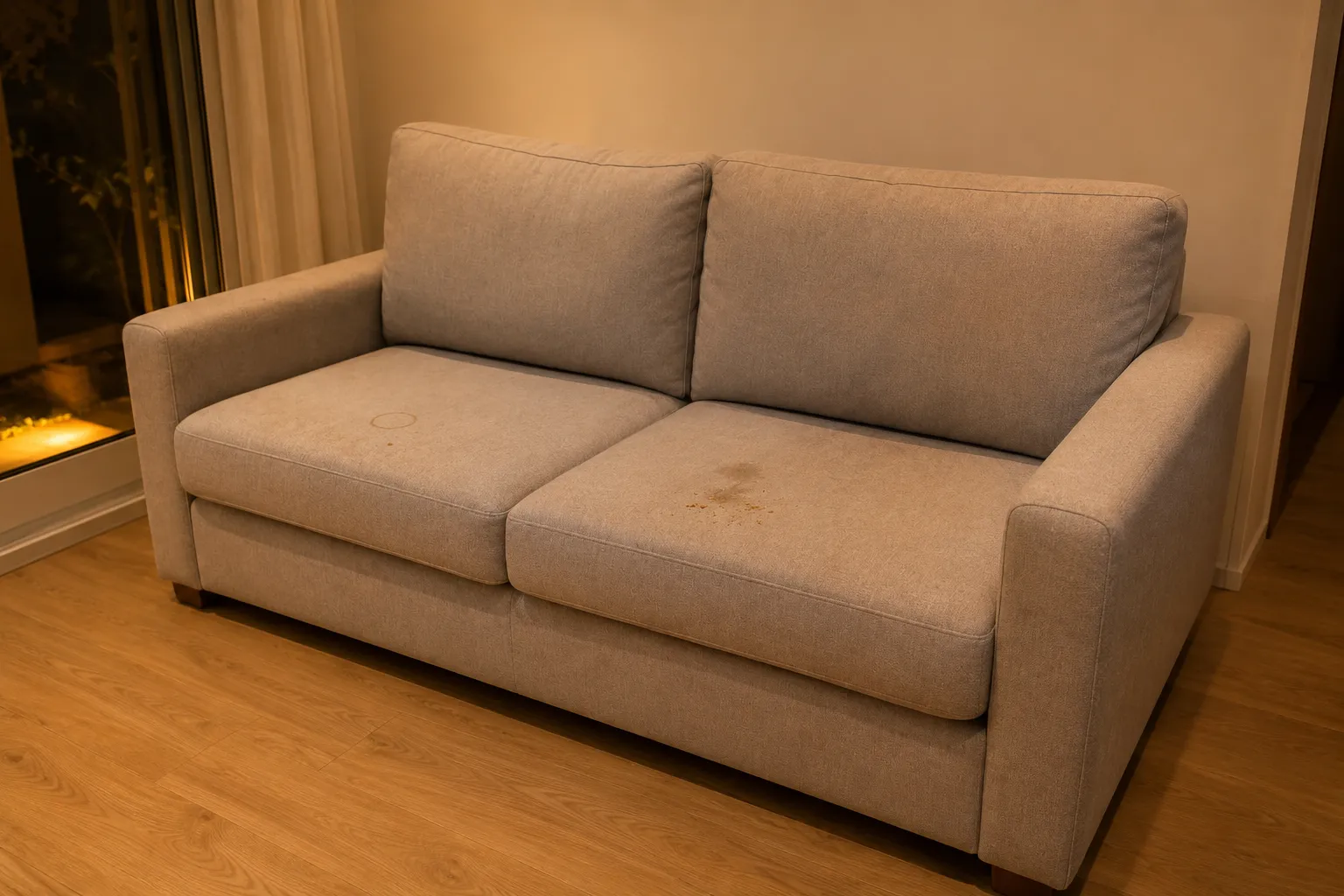
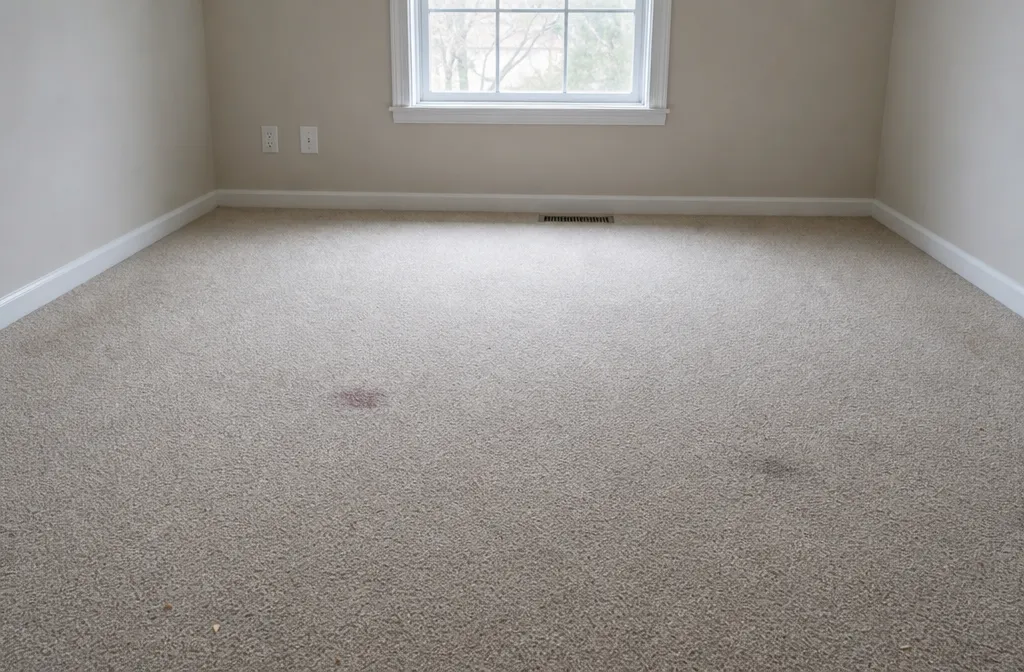
Treating sofas and carpets with liquid disinfectants from a spray bottle is the most common mistake made by inexperienced cleaners: moisture soaks into the padding, doesn’t dry within 4-6 hours, and after a day a musty smell appears, especially in Almaty apartments with high humidity in spring and autumn. We use a Karcher SC 5 steam cleaner with an output steam temperature of 140°C — dry steam kills bacteria, mites, and mold spores without wetting the fabric. After treatment, the furniture can be used in 15 minutes, not a day later. For long-pile carpets (wool, viscose), we pre-clean with a dry enzyme shampoo — it breaks down organic dirt, then we go over them with steam at minimal humidity. On polypropylene carpets in the hallways of Almaty apartments, black streaks from shoes often remain — steam softens them in 5 seconds, and they disappear without scrubbing with a brush, which pulls out the pile. The only thing that cannot be steam-treated is furniture with fabric glued to the frame (often found in inexpensive sets from Almaty furniture centers): steam softens the glue, and the upholstery peels off. On such sofas, we use a dry foam compound with QAC — we apply the foam, wait 10 minutes, and collect it with a HEPA-filter vacuum cleaner, leaving only the smell of ozone, which dissipates in an hour.
Treatment of kitchen surfaces and cutting boards
In the kitchen, we separate zones based on the risk of cross-contamination: the countertop where raw meat or fish was placed is treated with a separate cloth and not reused for the stove or sink. The “color-coded cloth” method: blue cloths for areas with raw products, green for dishes and ready-to-eat food, yellow for the stove and oven. We do not soak wooden cutting boards with disinfectant — the porous structure absorbs chemicals, which then transfer into food. Instead, at a steam temperature of 140°C, we treat each board for 10 seconds on both sides, then remove condensation with a dry cloth. Plastic boards (polypropylene, polyethylene) can be treated with an alcohol premix — they don’t absorb, but they retain knife scratches where bacteria get trapped. In such scratches, alcohol does not kill microbes because it doesn’t penetrate deeply — pressurized steam drives the temperature into micro-cracks and sterilizes them. In kitchens of older Almaty apartments (Center, Tastak, Samal), handmade wooden countertops are often found — we do not steam-treat them at all: steam raises the grain, making the surface rough. For such countertops, we only use a QAC-based solution on microfiber with minimal moisture, and once a month we recommend owners coat them with linseed oil.
Comparison of hourly cleaning with deep cleaning and express cleaning
When a client calls us at profi-clean, the first question is not “how much does it cost,” but “what suits me best.” Most often, they choose between hourly, deep, and express cleaning, confusing them in terms of scope and tasks. I’ll explain how they really differ, where hourly cleaning wins, and where it’s a loss of money and time.
Express cleaning: quick maintenance of order
Express cleaning is a targeted cleaning of visible areas in 1–1.5 hours: wipe countertops, make the bed, vacuum high-traffic carpets, and take out the trash. For such a visit, we send one cleaner with a mini-kit — a handheld vacuum, microfiber cloths, and glass spray. The main difference from hourly cleaning: express cleaning does not touch plumbing, does not wash floors under furniture, and does not move objects. If there are pets in the apartment, express cleaning will not remove hair from upholstered furniture — this requires at least 1 hour with a turbo brush, which is beyond the scope of the service. In our practice, express cleaning is ordered before an unexpected arrival of guests or after renovating one room — but not for long-term cleanliness maintenance. Our advice: express cleaning is justified if you cleaned yourself a week ago and need to “freshen up” high-traffic areas in minimal time.
Deep cleaning: deep restoration of surfaces
General cleaning is a completely different scale: 4 to 8 hours, a team of 2–3 cleaners, and a full arsenal of equipment and chemicals. We move all furniture, wash walls from baseboard to ceiling, clean interior doors and trim, treat the kitchen cabinet set inside and out, and defrost the refrigerator. An hourly cleaning for the same 4 hours won’t deliver such results — it allocates time for maintenance, not restoration. For example, grease on the range hood: with hourly cleaning, we only remove the outer grille; with general cleaning, we wash the filters and the interior cavity with a foam cleaner. If an apartment hasn’t been cleaned for 2–3 months, an hourly service will only spread the dirt — for such neglect, a general cleaning is mandatory. At profi-clean, we recommend a general cleaning once a quarter, with hourly cleanings every 1–2 weeks in between: this way, surfaces don’t accumulate buildup, and each subsequent cleaning takes 20–30% fewer hours.
When hourly cleaning beats both alternatives
Hourly cleaning is the only format that adapts to your schedule and budget without overpaying for extra hours. Unlike general cleaning, you only pay for the time you actually need: 2 hours to maintain a studio, 3–4 hours for a two-bedroom apartment with a children’s room. Unlike express cleaning, within those hours, the cleaner manages to mop floors in all rooms, dust top shelves, and clean the sink and toilet — in other words, do what the express service fundamentally does not cover. In Almaty, there’s a specific nuance: in homes with central heating (older housing stock, Zhetysu and Alatau districts), dust settles faster due to dry air — an express cleaning once a week doesn’t suffice, and a general cleaning every two weeks is economically unviable. Hourly cleaning twice a week for 1.5 hours provides stable cleanliness without overpaying. We notice: clients who switch from express to hourly cleaning spend, on average, 30% less time on their own cleaning — because a professional does in one hour what takes the homeowner half a day.
Typical mistakes when choosing a format
The most common one is ordering an express cleaning for an apartment that hasn’t been cleaned in a month. The cleaner arrives, mops the floors, and within a day they’re dusty again — because dust from top cabinets and cornices continues to settle. The second mistake is booking a general cleaning once a month “just in case,” when an hourly service would suffice: you overpay for washing walls and ceilings that haven’t gotten dirty in 4 weeks. The third is confusing hourly cleaning with “post-renovation cleaning”: construction dust gets embedded in crevices, and without floor sanding and double-sided window washing, an hourly session won’t be effective — this requires a separate rate with an enhanced team. At profi-clean, we always advise: if you don’t remember the last time you mopped under the bed, start with a 3-hour hourly cleaning, and after that, decide if a general cleaning is needed. This approach saves both money and nerves — you don’t buy a service that doesn’t solve your actual problem.