How to Prepare a Room for the Arrival of Technicians
Proper room preparation reduces technician working time by 20-30% and lowers the risk of damage to belongings during disinfection. Here is what needs to be done before our arrival — based on hundreds of profi-clean call-outs across Almaty.
Ensure Access to All Areas
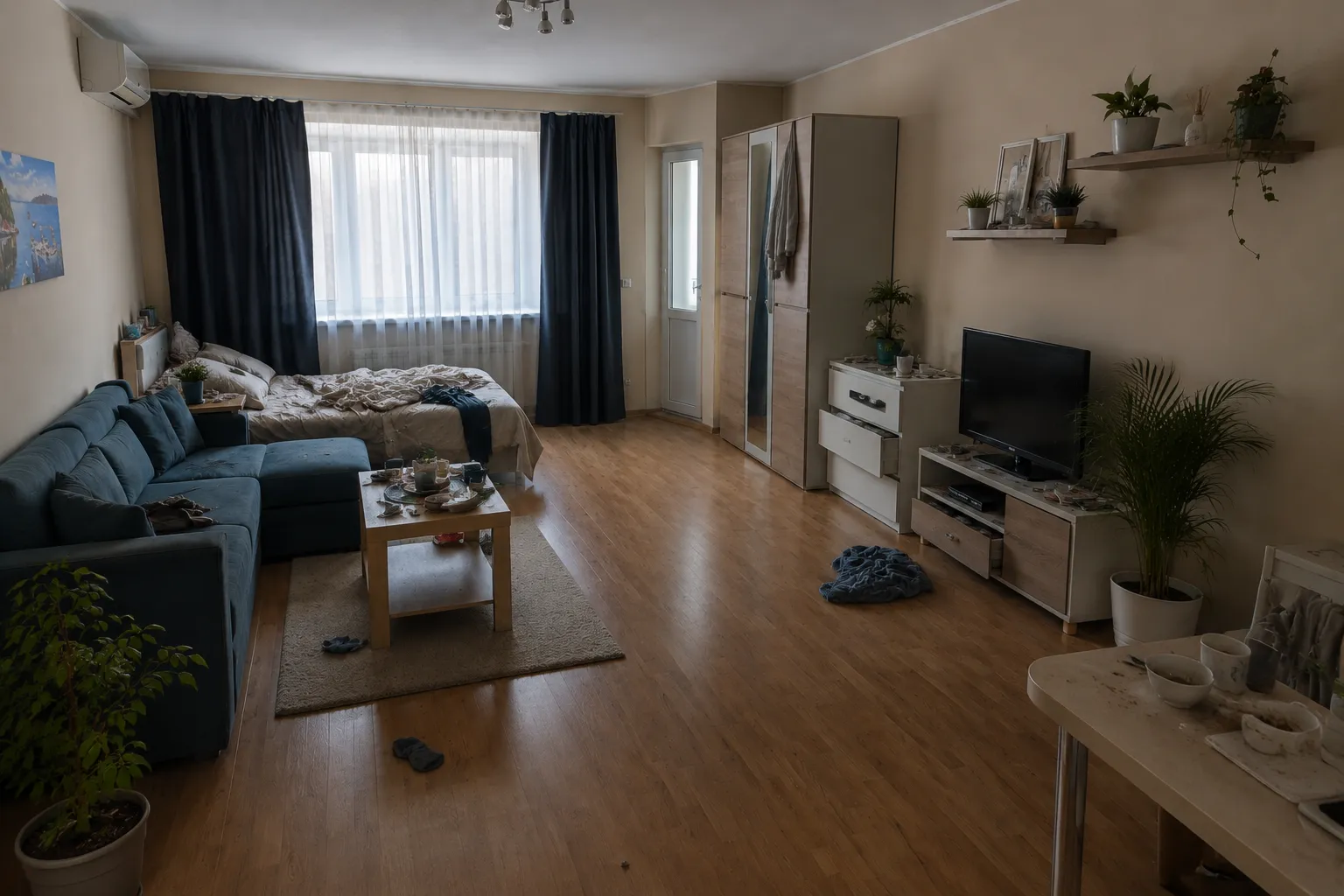
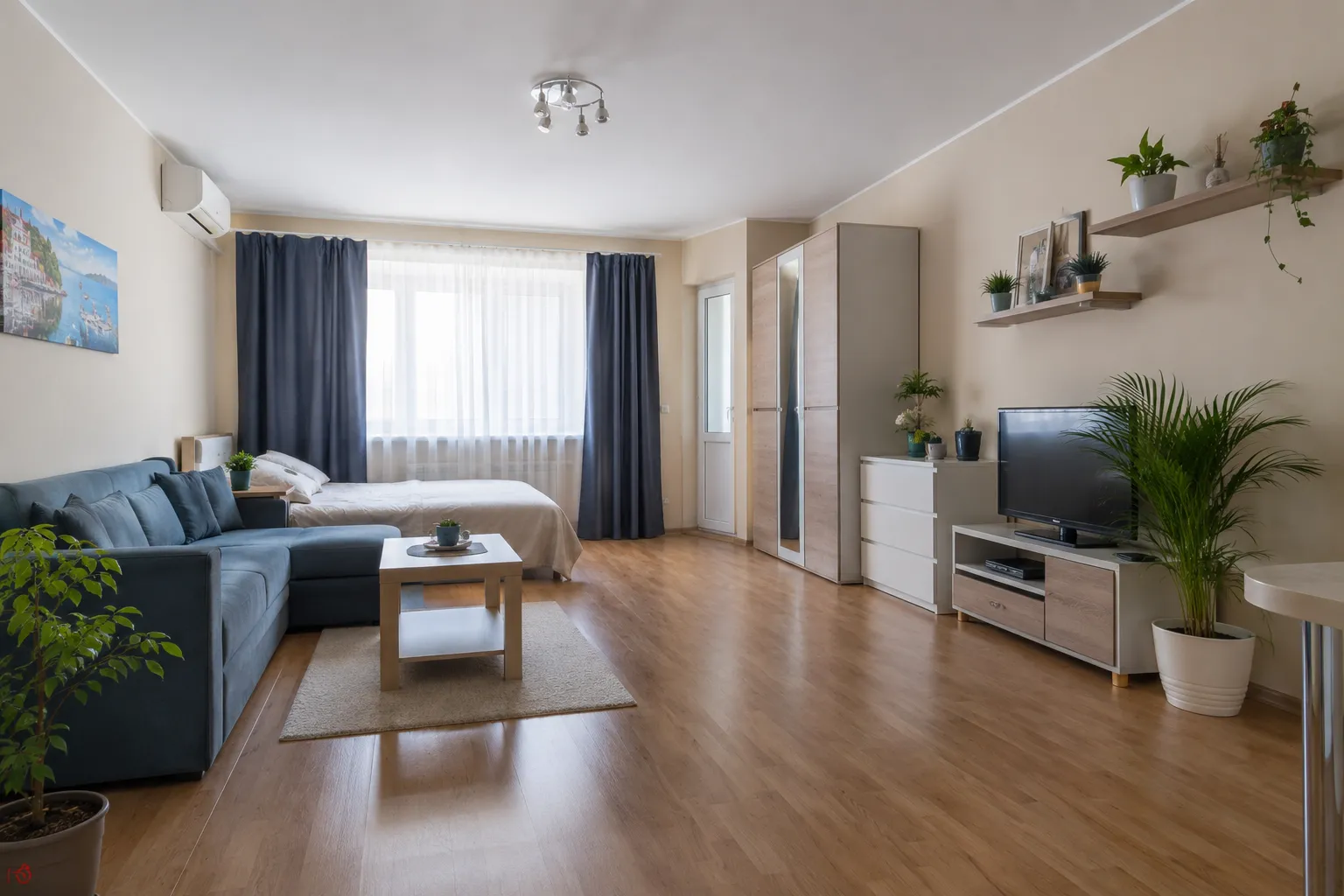
Clear pathways: move furniture 50-70 cm away from walls, remove carpets and runners — the technician needs access to baseboards and corners where biofluids accumulate. Remove fragile items: glass figurines, vases, photo frames from shelves and windowsills — vibration from turbine or ozone generator operation can dislodge unsecured objects. Open sliding wardrobe doors: if there are stains or odors inside, we will treat the shelves as well; closed fronts prevent ozone circulation. Take down curtains and tulle: fabric absorbs cadaverous odor within 6-8 hours; these are taken for separate dry cleaning — on-site we only treat curtain rods and walls. Free up power outlets: the ozone generator and Karcher washer require 2-3 free 220V sockets; extension cords over 10 meters cause voltage drop, reducing equipment performance to 70%. In our orders along Abay Avenue and the Samal-2 microdistrict, the most frequent delays are precisely due to blocked outlets and locked wardrobes.
Ventilation and Isolation Before Treatment
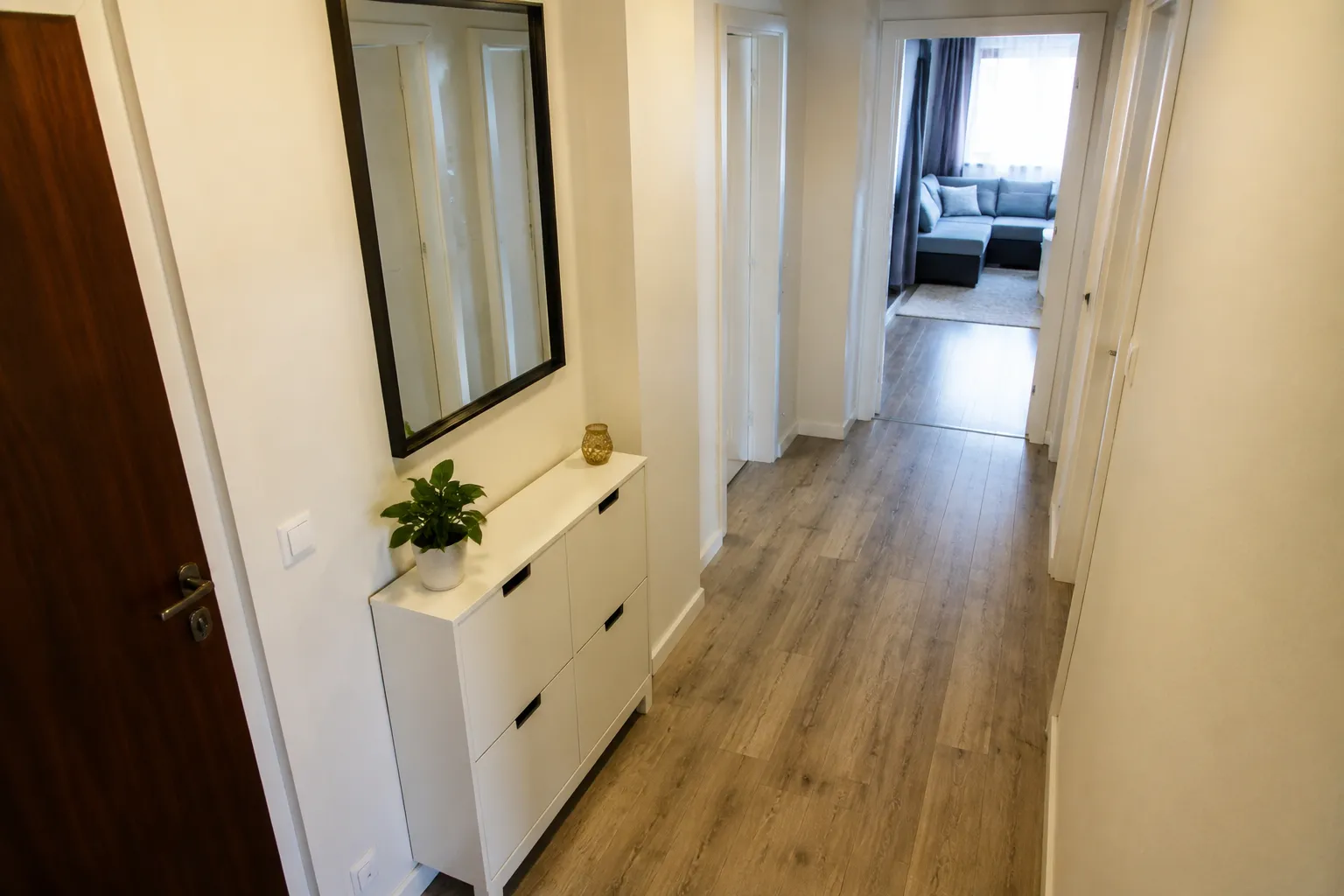
Open all windows for 30-40 minutes one hour before arrival — this reduces the concentration of cadaverous gases (putrescine, cadaverine) by 40-50% and allows the technician to work without a respirator during the initial stage. Seal ventilation grilles with film or tape: through shared ventilation in apartment buildings (standard series — “Khrushchyovkas”, “Brezhnevkas” on Zharokova, Gagarina streets) the odor reaches neighbors within 15-20 minutes; profi-clean had a case where residents of three floors called emergency services due to an odor we failed to isolate in time. Remove pets: cats and dogs in the treatment area can suffer poisoning from ozone and chlorine-based disinfectant fumes — take them to relatives or a pet hotel for 24 hours. Gather documents and valuables: passports, money, jewelry, laptops — store them in a safe or with acquaintances; while the risk of accidental liquid damage is excluded during wet chemical work, the room remains unattended during the drying period. Leave keys to all rooms on the hallway shelf — the technician should not have to wait for you to unlock a bedroom containing the contamination source.
What NOT to Do Yourself
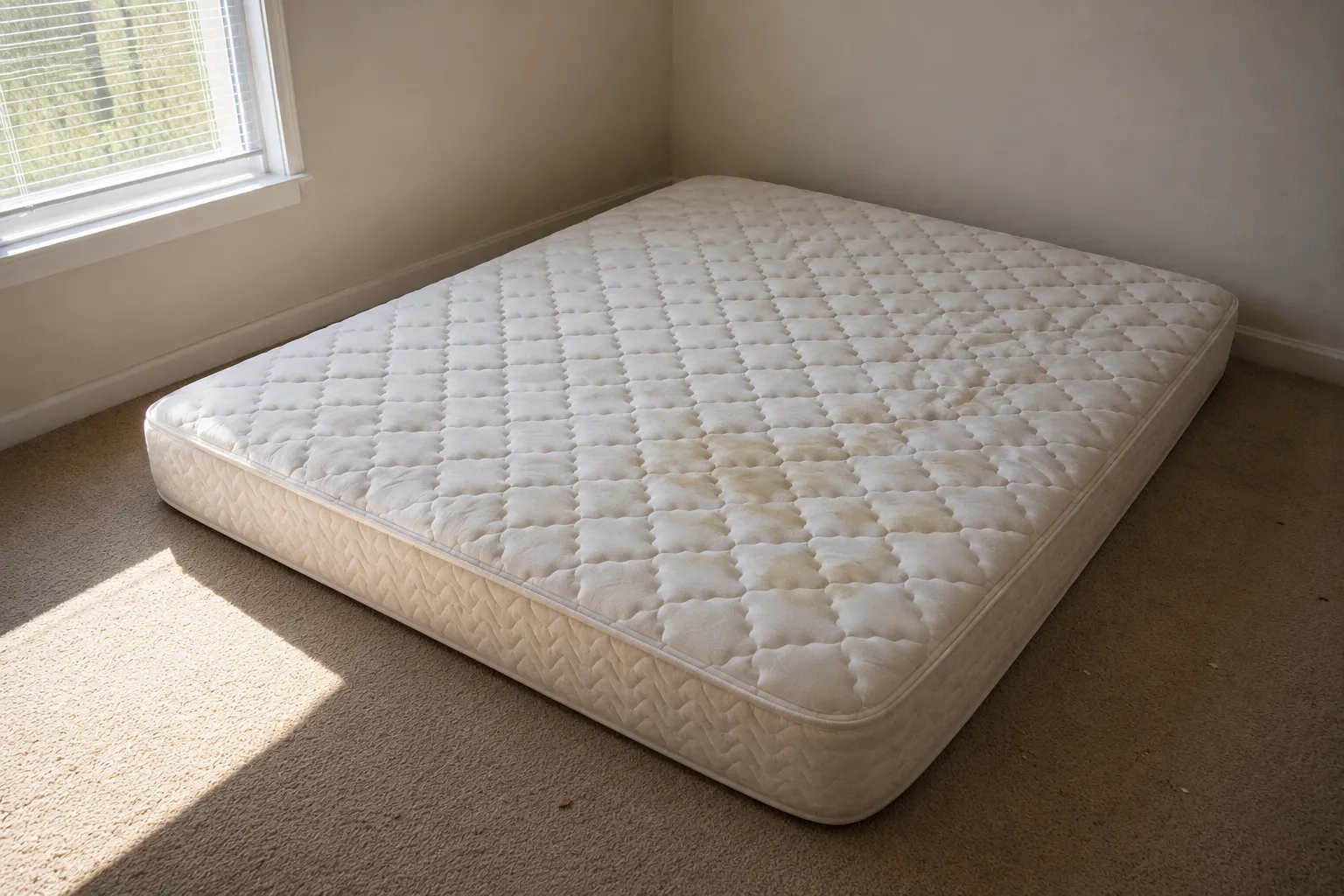
Do not wash floors or walls before our arrival — water spreads bacteria across the surface, increasing the affected area by 2-3 times, and neutralizes the polymer film we apply for odor sorption. Do not use bleaches or chlorine: they react with protein residues, releasing toxic chloramine — in a closed room, concentration reaches dangerous levels within 10 minutes. Do not turn on air purifiers with carbon filters: they become clogged with cadaverous fats within 2-3 hours of operation and begin recirculating the odor back into the room. Do not throw away items before inspection: upholstered furniture, mattresses, carpets — we assess them on-site; 60% of textiles with cadaver stains can be restored using Kiehl enzyme compounds, requiring no replacement. Our practice in Almaty shows: attempts at self-cleaning result in a call to profi-clean 1-2 days later, when the odor returns and the affected area has spread to adjacent rooms through wallpaper and parquet flooring.
Health Risks of Self-Cleaning After a Death
Self-cleaning a room after a death carries serious biological and chemical threats that most people are unaware of. Without professional protection and knowledge, common household products cannot handle pathogens and toxins.
Biological Hazard of Biomaterials
Blood, lymph, feces, and other biological fluids after death contain pathogens of hepatitis B and C, HIV, tuberculosis, staphylococcus, streptococcus, E. coli, and enteroviruses. According to WHO, the hepatitis B virus remains viable in the external environment for up to 7 days, and tetanus spores for decades. Upon contact with damaged skin, mucous membranes, or inhalation of aerosol during washing, the risk of infection increases sharply. In our practice, there was a case where a relative of a deceased person with tuberculosis started cleaning in a construction respirator — two weeks later, they were hospitalized with a positive reaction to Koch’s bacillus. Before any independent cleaning attempt, ensure you have no open wounds on your hands and use at minimum medical gloves and an FFP3 class respirator — a construction mask does not trap aerosol particles.
Toxic Decomposition Products
During tissue decomposition, cadaveric poisons are released — putrescine and cadaverine, as well as hydrogen sulfide, ammonia, methane, and skatole. These compounds penetrate the skin and mucous membranes, causing intoxication: headache, nausea, dizziness, and liver and kidney damage with prolonged inhalation. The concentration of hydrogen sulfide in a closed room with a body after 48 hours can exceed the maximum permissible concentration by 50-100 times, leading to loss of consciousness and pulmonary edema. Bleach or vinegar, which are most often used during self-cleaning, react with ammonia to form chloramine — a toxic gas that irritates the bronchi. At one site in Almaty, relatives poured “Belizna” (bleach) on the floor, and within 20 minutes, all three began coughing and experiencing eye irritation — an ambulance had to be called. Neutralizing cadaveric toxins requires professional disinfectants based on peracetic acid or hydrogen peroxide at a concentration of 6% or higher — they break down organic matter without releasing dangerous gases.
Porosity of Materials and Hidden Contamination
Biological fluids are absorbed into non-sealed surfaces — parquet, laminate, concrete screed, drywall, tile grout, wallpaper. Even if stains are visually removed, organic matter remains at a depth of 5-15 mm, continuing to decompose and feed mold fungi of the genus Aspergillus and Penicillium. Mold spores cause allergic rhinitis, bronchial asthma, and pulmonary aspergillosis — especially dangerous for immunocompromised individuals. Self-cleaning the floor with a mop only spreads contamination over a larger area, driving bacteria into micro-cracks. The only way to remove deep contamination is using an extraction machine with a vacuum suction and cleaning solution, which is applied under pressure and immediately extracted. In Almaty, where humidity in basements and on first floors often exceeds 70%, mold germinates within 72 hours after cleaning without professional drying. If you still decide to clean yourself, be sure to treat all porous surfaces with a steam generator at a steam temperature of at least 150°C and immediately dry the room with a dehumidifier.
Waste Disposal Mistakes
Biological waste — blood, tissues, soaked materials — belongs to Class A (epidemiologically hazardous) and requires disposal through incinerators or autoclaving. Throwing them into a shared trash container poses a threat to janitors, stray animals, and children who may accidentally come into contact with them. The fine for violating the rules for handling biological waste in Kazakhstan can reach a significant amount for individuals, and in the case of infecting third parties, criminal liability applies. In Almaty, licensed medical waste removal operators accept materials packed in yellow sealed bags. For self-cleaning, use only thick black bags with double packaging, tie each layer separately, and do not fill them more than 2/3 full — during disposal, light packaging cannot withstand the weight and tears.
How to Choose a Reliable Company for Cleaning After Death
When an irreparable event occurs in a home, choosing a contractor for sanitary cleaning is doubly difficult: emotions make it easy to make a mistake, and the consequences of poor work — persistent odor and risk of infection. What should you look for first?
License and Permits for Biological Waste
Cleaning after death is not a household chore, but work with biological material of hazard class B. A reliable company must have a license for disinfection and a contract with organizations that dispose of biological waste. profi-clean has such permits: we work according to the SanPiN RK regulations, and all contaminated materials are removed in sealed containers for incineration. Before signing a contract, ask to see the license — if there is none, the company is not legally entitled to perform cleaning after death. In practice, people have come to us who were abandoned by a “cleaning crew” after the first treatment, leaving behind odor and stains — because the company had neither permits nor experience. Demand documents before work begins, not after.
Specialized chemicals and equipment
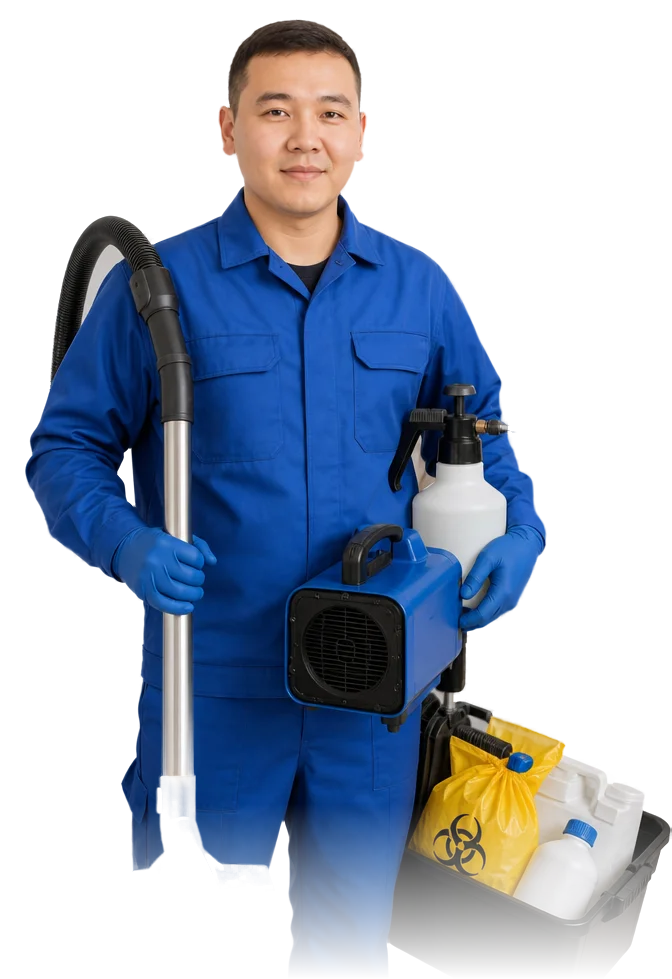
Regular cleaning products cannot handle the smell of decomposition — it penetrates the pores of concrete, wood, and drywall. Professional companies use ozone generators, bactericidal recirculators, and enzyme-based odor neutralizers (e.g., Bioshock or Decon). At profi-clean, we use hypoallergenic chemicals from Kiehl and Sodasan, and after mechanical cleaning, we run an ozone generator for 4–6 hours depending on the area. A regular vacuum cleaner without a HEPA filter only spreads mold spores and bacteria through the air — we use equipment with HEPA filters that capture particles down to 0.3 microns. If a company arrives with a household vacuum cleaner and bleach, it is not cleaning after death, but a simulation. Real results come only from a three-stage treatment: chemical breakdown of proteins, odor neutralization, and bactericidal irradiation.
Written guarantee of results and defect documentation
A responsible company documents the condition of the premises before and after cleaning with photos, and includes a guarantee in the contract — typically 24 hours for odor return under normal ventilation. profi-clean issues a certificate of completed work with a warranty period, specifying what to do if the odor returns: we come back and re-treat the problem area for free. If a contractor offers work “on a handshake” without a contract and photo documentation — that is a red flag. In our practice, there was a case: a client hired a crew from Avito, they “cleaned” the apartment in an hour and disappeared, and after three days the smell became unbearable. profi-clean had to dismantle the laminate and treat the concrete screed — costs doubled. A written guarantee protects you from repeated expenses.
Checklist for verifying a cleaning company
- Disinfection license: check its availability and validity — without it, the company operates illegally.
- Specialized equipment: ozone generator, recirculator, HEPA filters — ask for models, don’t be shy.
- Reviews on 2GIS and Instagram: look for real cases with “before/after” photos of cleaning after death, not generic “deep cleaning.”
- Contract with a guarantee: a written document describing the work, timelines, and responsibility for odor recurrence.
- On-site inspection: a reliable company visits for free to assess the scope and provides a fixed estimate, not “calculated individually.”
Specifics of cleaning after death in Almaty: climate and legislation
The Almaty climate and local regulatory framework create unique conditions for cleaning after death that companies from other regions do not account for. At profi-clean, we analyze these nuances during the property assessment stage.
Impact of Almaty’s humid climate on biological risks
Air humidity in the foothills of Almaty stays at 55-70% for most of the year, accelerating organic decomposition by 1.5-2 times compared to dry regions of Kazakhstan. Biological fluids penetrate deeper into porous surfaces — untreated concrete, unvarnished wood, drywall. Our technology includes pre-drying the area with infrared lamps before applying the disinfectant; otherwise, the biocide enzymes do not penetrate to full depth. When working in a private house in the Medeu district at an altitude of 900 meters, we recorded a case where floor impregnation took 40% longer due to capillary moisture suction from the ground. Before ordering, check the ventilation level in the room — in basements and cellars with earthen floors, the risk of incomplete sanitation in Almaty is higher than in upper-floor apartments.
Legislative requirements for disinfection in Kazakhstan
Sanitary regulations of Kazakhstan (SanPiN RK) mandate mandatory final disinfection after death from infectious diseases, including tuberculosis and hepatitis, using products from the state register. We only use preparations registered in the Republic of Kazakhstan — European Kiehl and Sodasan undergo certification by the Committee for Sanitary and Epidemiological Control. For apartments in multi-story buildings in Almaty, there is a requirement to isolate the premises during treatment: we seal the door with warning tape and post a notice for neighbors. Without a confirmation certificate of disinfection from a licensed company, problems may arise when selling the apartment — the notary requests a certificate of absence of biological contamination for transactions involving housing after the owner’s death. In our practice, there was a case where a family could not process an inheritance for six months due to the lack of such a certificate.
How temperature fluctuations affect the choice of cleaning agents
Daily temperature fluctuations in Almaty reach 10-15°C even in the off-season, which changes the viscosity of disinfectants and their exposure time. In winter at minus 15-20°C, aqueous biocide solutions freeze on open balconies and in unheated basements, losing activity — we use alcohol-based formulations with a freezing point down to minus 25°C. In summer at +35°C, evaporation of the working solution accelerates, and the standard 30-minute exposure may not ensure complete spore death: we increase the concentration of the active substance by 15% according to the manufacturer’s instructions. For cleaning after death in private houses with stove heating, we consider the wall freezing zone — biological contaminants in the thickness of the plaster thaw in spring and provoke odor if deep antiseptic impregnation is not carried out before the cold weather. Check which treatment method is chosen for your case — surface spray or injection into the wall material.
Mistakes when cleaning in apartments of old housing stock
In houses built in Almaty in the 1960s-80s (Khrushchev-era buildings on Abaya, five-story buildings on Rozybakieva), wooden floors and hollow-core slabs create channels for the spread of biological fluids to the floor below. Self-cleaning the floor with bleach in such an apartment washes away visible traces but does not stop seepage into the joints between the slabs — neighbors downstairs complain about the smell after 2-3 weeks. profi-clean uses vacuum extraction from joints and fills expansion joints with polymer sealant, which blocks the migration of contaminants. In houses with basements without waterproofing (Tastak, Kamenka districts), groundwater raises toxins back through the concrete capillaries — disinfection of not only the floor but also wall treatment up to a height of 50 cm from the screed level is required. When ordering cleaning in a first-floor apartment of an old house, check the condition of the basement with the management company — if it is damp, standard floor treatment may not provide a lasting result.
Why you cannot postpone cleaning after death
Every hour of delay after the discovery of a body irreversibly changes the condition of the room: biological fluids are absorbed into porous surfaces, the smell sets into textiles, and pathogenic microflora begins to multiply exponentially. We go to such sites daily and see the difference between cleaning within the first 6 hours and after a day — it is colossal.
Biological processes in the first 24 hours
Immediately after the cessation of life, autolytic and putrefactive processes begin in the body. In the first 6-8 hours, biological fluids (blood, lymph, stomach contents) are still in a liquid phase and are easily removed from hard surfaces. By 12-14 hours, coagulation begins — proteins curl, forming a film that eats into microcracks in laminate, parquet, and tile joints. By the end of the first day, bacteria of the genus Clostridium and Pseudomonas produce volatile amines and hydrogen sulfide — these are the compounds that give that very “cadaverous odor” which impregnates plaster, drywall, and upholstered furniture to a depth of up to 5 centimeters. In Almaty apartments with standard finishes (drywall walls, stretch ceilings, 32nd class laminate), the process of odor infiltration accelerates due to low ventilation and high humidity — on average 20-30% faster than in private houses with brick walls.
Why ventilation does not solve the problem
A common mistake is to open windows and “air out” the smell. In Almaty’s climate, with its sharp temperature fluctuations and dusty winds, airing out has the opposite effect. The influx of dry air accelerates the evaporation of moisture from the surface of biological stains but does not remove them — the liquid penetrates deeper into the material, carrying dissolved proteins and bacteria with it. As a result, after 2-3 days, a crystallized protein deposit appears at the stain site, which cannot be washed away with household chemicals. Furthermore, open windows during the off-season (March-April, October-November) bring mold spores and pollen into the room, which find a nutrient medium in residual biological contaminants. In our orders across Almaty, we have recorded cases where, after 48 hours of airing out, black mold *Aspergillus niger* appeared on the walls near the stains — its removal requires not just sanitary cleaning, but a full treatment involving the dismantling of affected finishing areas. In my opinion, airing out is only justified in the first 30 minutes after discovery and only in conjunction with immediately calling professionals.
Risk of Secondary Contamination of the Premises
With each day of delay, the biological danger does not grow linearly but multiplies. Intestinal bacteria (E. coli, enterococci) remain viable on dry surfaces for up to 7-10 days, and in a liquid environment for up to 30 days. The hepatitis B virus remains infectious in dried blood for up to 7 days at room temperature. In Almaty apartments with central heating (average winter temperature 22-24°C, humidity 30-40%), these periods are reduced by 15-20% due to the warmer microclimate compared to northern regions. But the main danger is the spread of pathogens through the ventilation system. In typical multi-story apartment buildings (e.g., series 1-464, 1-447), the exhaust system connects 4-6 apartments on a single riser. Biogas, formed during decomposition, can enter neighboring apartments through the ventilation duct, posing a threat to neighbors — especially children, the elderly, and immunocompromised individuals. This is why sanitary services in Almaty recommend sealing ventilation grilles in the affected room until the cleaners arrive. At profi-clean, we always warn our clients about this before the team departs — simple tape over the grille reduces the risk of spreading odor and bacteria by 70-80% in the first few hours.
How Temperature and Humidity in Almaty Affect Decomposition Rate
Almaty’s climate is a unique factor that accelerates decomposition processes compared to northern or mountainous regions. The average annual temperature in the city is +10°C, and in heated apartments during winter, it stays at +22-25°C — this is the optimum for mesophilic bacteria, which make up 90% of putrefactive microflora. At this temperature, the decomposition rate of soft tissues is 2-2.5 times higher than at +10°C (the typical temperature of an unheated room in winter in the Akmola region). Humidity in Almaty apartments during winter drops to 25-30% due to central heating, which paradoxically accelerates the mummification of the surface layers of biological fluids but slows down the decomposition of deeper layers — a “crust” forms, under which putrefaction continues with gas release. In summer, with humidity at 50-60% and temperatures of +30-35°C on the southern side of the city (microdistricts Samal, Medeu District), the decomposition process accelerates by 3-4 times compared to winter conditions. This means that in Almaty, the critical window for safe cleaning is the first 12 hours in summer and 24 hours in winter. If cleaning is not carried out within these timeframes, the cost and complexity of the work increase manifold — it becomes necessary to use not only surface disinfectants but also deep impregnation of walls, replacement of drywall sections, and treatment of the ventilation system.