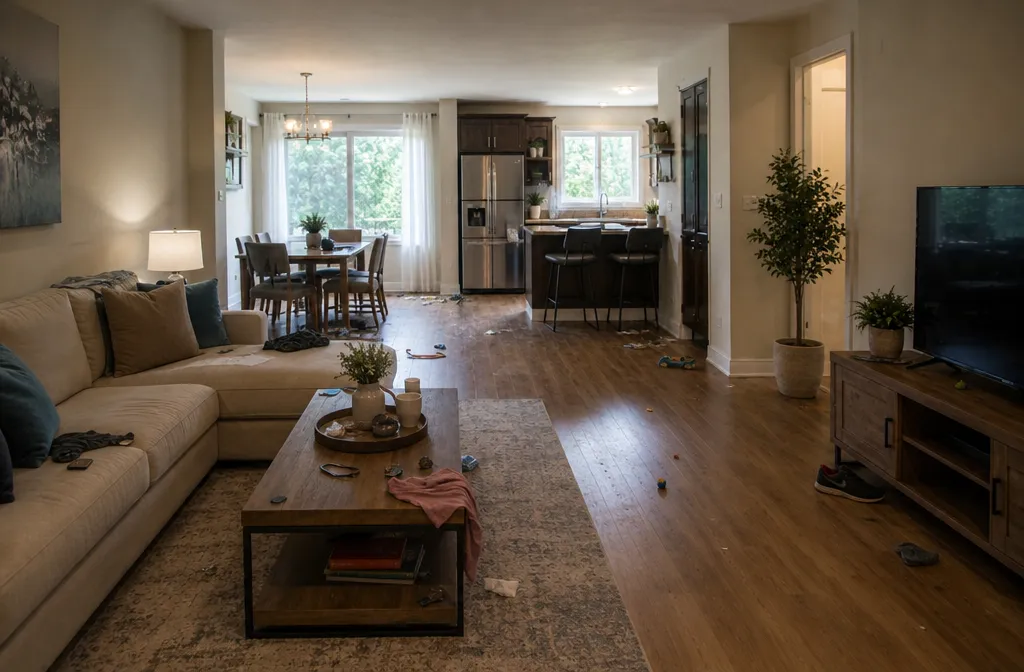
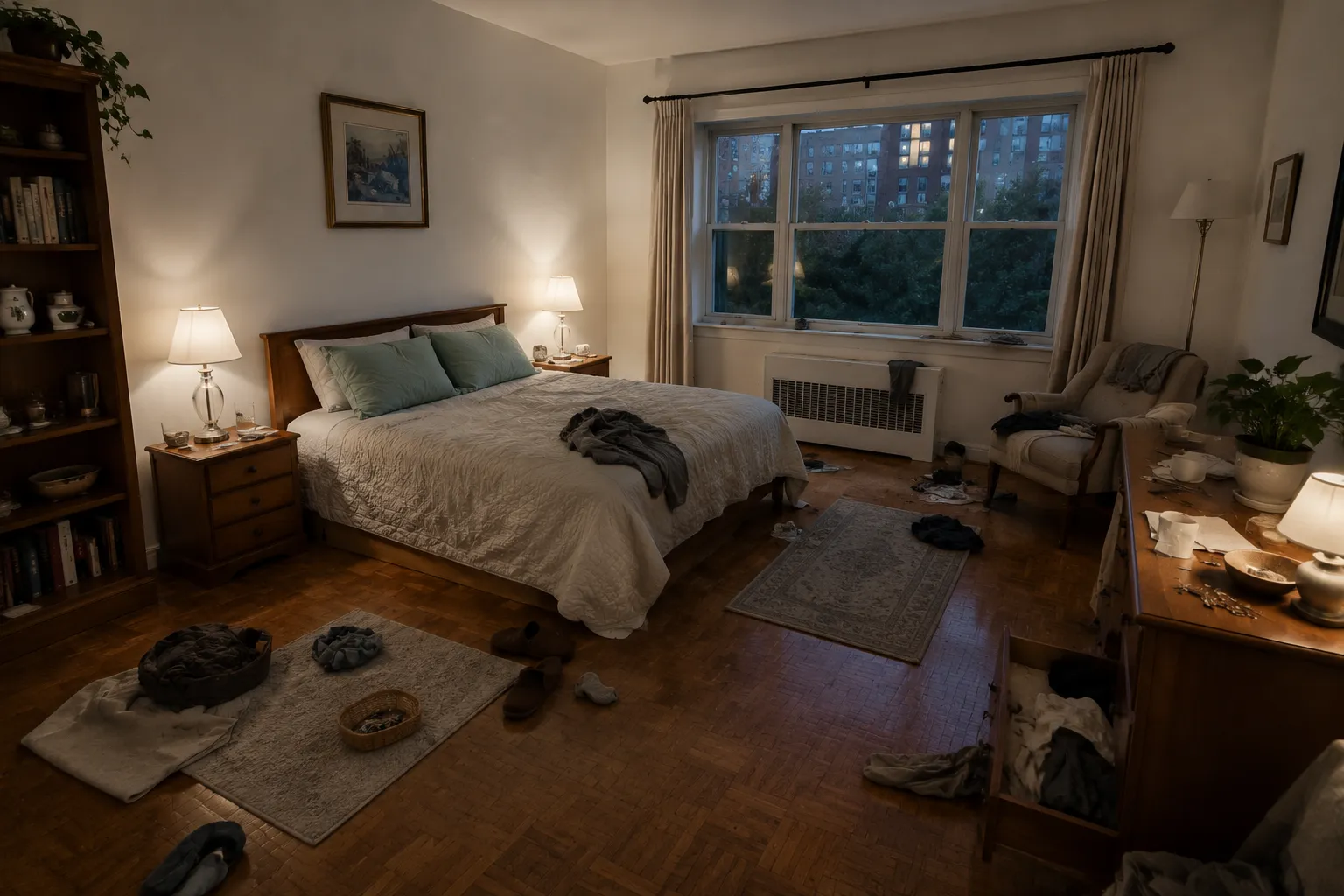
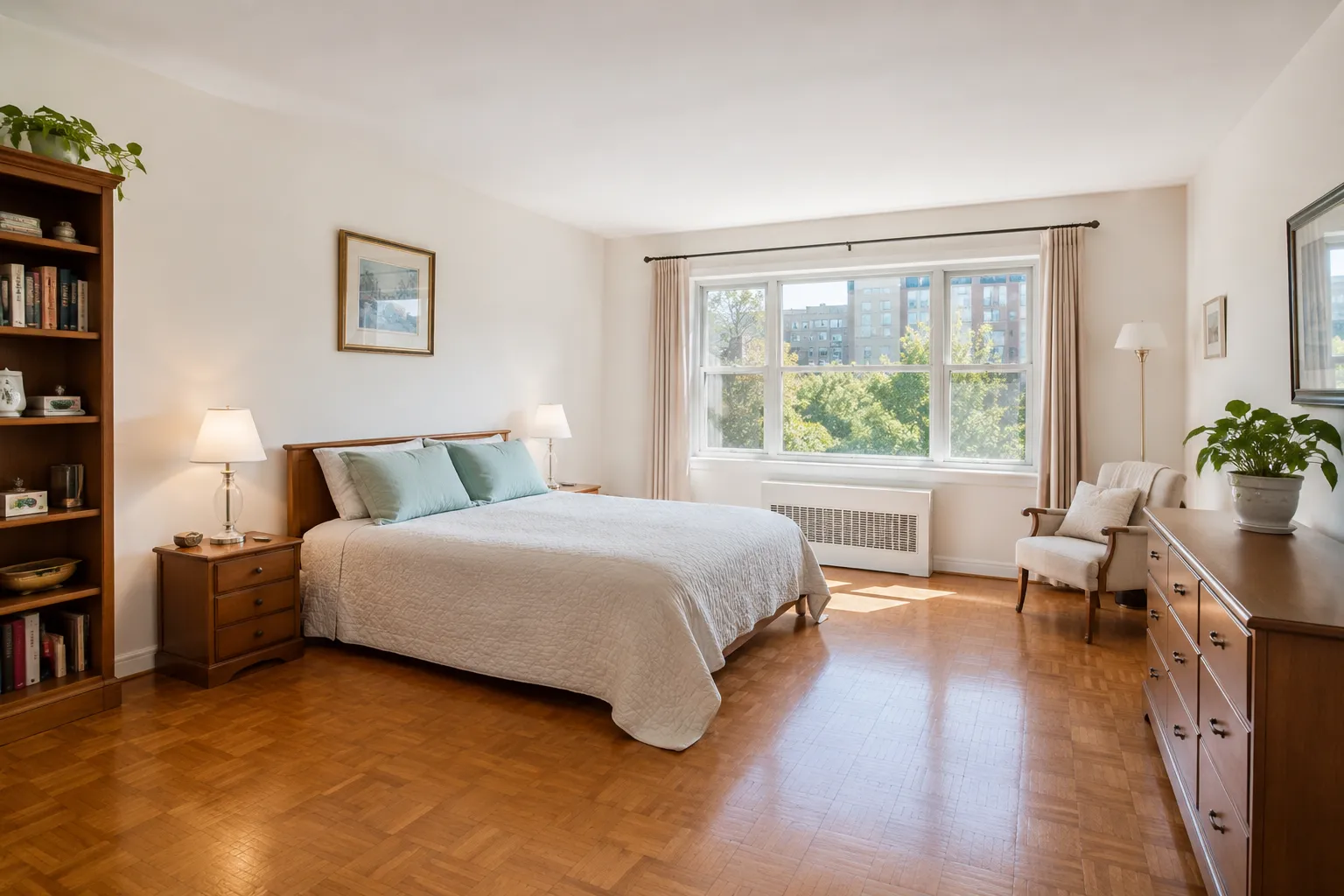
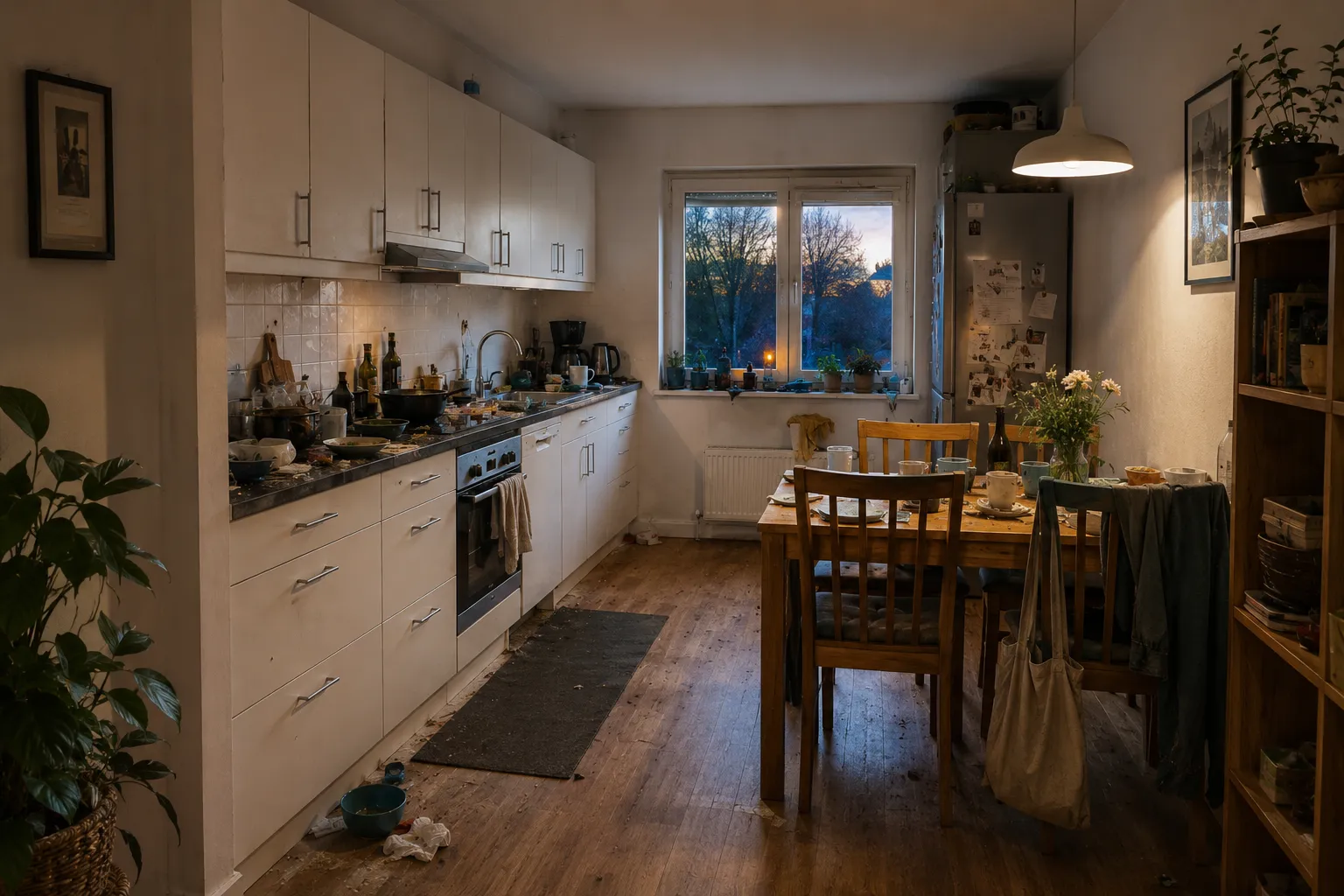
Differences between Regular Cleaning and Deep Cleaning
Customers often confuse regular (maintenance) cleaning with deep cleaning — and end up overpaying for extra hours or, conversely, not getting the desired result. Let’s break down the key differences so you know exactly what you are ordering.
Frequency and Depth of Treatment
Regular cleaning is weekly or bi-weekly maintenance: dusting all horizontal surfaces, wet mopping floors, cleaning mirrors, plumbing fixtures, and the kitchen backsplash. Deep cleaning is done every 3–6 months and includes tasks that are neglected during regular sessions: washing light fixtures, radiators, interior cabinet surfaces, baseboards, doors, and door frames. In our practice, clients who order only monthly regular cleaning still call for a deep clean after six months — grease builds up on kitchen fronts and dust accumulates behind furniture, which the regular format does not address. If there are allergy sufferers in the home, the interval between deep cleanings should be reduced to 3 months: the HEPA filters in our vacuums capture 99.97% of particles, but without washing curtains and upholstered furniture (included in the deep cleaning rate), allergen concentrations return to baseline within 6–8 weeks.
Equipment and Chemicals Used
Regular cleaning requires a standard set: microfiber cloths for dust and glass, a mop with a pad, a bucket, and an all-purpose cleaner. Deep cleaning requires specialized equipment: a steam cleaner for stubborn grease and limescale, an extractor for carpets and upholstery, and an orbital polishing machine for hard floors. We use hypoallergenic Kiehl (Germany) chemicals for daily tasks and Sodasan (organic series) for food-contact surfaces — during regular cleaning, chemical consumption is 3–4 times less than during deep cleaning. On Almaty tap water (hardness 5–7 °dH), we always use an anti-scale agent on faucets and showerheads during deep cleaning, whereas regular cleaning only requires a standard glass cleaner. Before ordering, check with the operator which chemical set will be used — for homes with small children or pets, we switch to phosphate-free, fragrance-free formulas.
Time Requirements and Areas of Responsibility
- Regular cleaning (standard apartment 50–70 m²): 1.5–2.5 hours — the cleaner treats all rooms, kitchen, bathroom, hallway, but does not touch the inside of cabinets, mezzanines, or appliances (refrigerator, oven, microwave).
- Deep cleaning (same area): 4–7 hours — plus washing kitchen fronts inside and out, cleaning all pull-out drawers, radiators, chandeliers, windows (up to 2 sashes included), and bathroom walls up to the ceiling.
- Area of responsibility during regular cleaning: visible surfaces up to a height of 180 cm — dust from cornices, top shelves, and mezzanines is not removed unless separately agreed.
- Deep cleaning: includes treatment of the entire room height, including ceiling moldings, ventilation grilles, and the tops of door frames.
- Almaty specifics: due to dust storms in spring and autumn, a layer of dust up to 2–3 mm accumulates on windowsills and drip edges within two weeks — during regular cleaning, we wipe windowsills with a damp microfiber cloth, while during deep cleaning, we wash frames and drip edges with detergent and a scraper.
When choosing a format, consider the actual condition of the premises: if you haven’t cleaned for more than a month, a single regular session may not be enough — the cleaner will spend time removing the dust layer, leaving no time for the final polishing of mirrors and glass.
When Regular Cleaning is Sufficient
Regular cleaning solves the task of maintaining cleanliness in an active lifestyle, but only under certain conditions — otherwise, it turns into a waste of time and money.
Apartment with Permanent Residents and Pets
In a home where people and pets are present daily, regular cleaning is the only realistic format. Fur, street dust, crumbs, and paw prints accumulate within 1-2 days, and waiting for a monthly deep clean is pointless. Our practice shows that in Almaty during the autumn-spring period, the amount of street dust on the floor triples compared to winter — this is due to sandstorms and winds from the Ili Valley. Regular cleaning is effective if done at least once every 5-7 days: within a week, dust mites don’t have time to multiply in textiles, and the film on surfaces remains thin and washes off without abrasives. We recommend this frequency for cat and dog owners — fur, unlike dust, doesn’t “accumulate gradually” but sheds cyclically after molting, so daily floor washing isn’t necessary, but once every 5 days is optimal.
Office with up to 10 people daily
In a small office with 5-10 employees, regular cleaning 2-3 times a week fully meets the need for cleanliness. A key nuance is that areas with different usage levels require different approaches: the bathroom and kitchen get dirty 4 times faster than the work area. In our orders for business centers in Almaty, we differentiate the frequency: we treat the bathroom and eating areas during every visit, while work desks and office equipment are done every other time. This scheme saves up to 30% of the cleaner’s time without losing visual results. If the foot traffic exceeds 15 people, regular cleaning can no longer cope — a soapy film appears on door handles and light switches that a regular damp cloth can’t remove, and then a monthly deep clean with disinfectant treatment of all contact surfaces is needed.
Space after recent renovation
After cosmetic renovations (painting walls, replacing linoleum, updating plumbing), regular cleaning is the right choice, but with a caveat. Construction dust settles on all horizontal surfaces, including the top shelves of cabinets and cornices, which a cleaner doesn’t check during regular cleaning. At profi-clean, we advise: if the renovation ended less than a month ago, order one deep clean to remove construction residue, then switch to regular cleaning once a week. Otherwise, you’ll live with microparticles of putty in the air — they rise with every step and settle back down, creating the illusion of constant dirt. However, in the kitchen and hallway after renovation, regular cleaning can start immediately — those surfaces are washed more often, and construction dust is removed in 2-3 passes.
Family with children under 3
In a home with a toddler who crawls and puts everything in their mouth, regular cleaning is not just sufficient but preferable to deep cleaning. Harsh chemicals used in deep cleaning (alkalis, chlorine-based compounds) can leave micro-residues on the floor that the child licks off. Our technology with hypoallergenic Kiehl and Sodasan products solves this problem: formulas based on coconut oil and lactic acid break down completely within 15-20 minutes. Regular cleaning in such a home must include mandatory treatment of baseboards and the lower third of walls — that’s where dust accumulates, which the child inhales while crawling. Deep cleaning in this scenario is indicated once every 3-4 months for washing windows, doors, and upper areas that the child physically can’t reach. Regular cleaning every 5-7 days with children’s hypoallergenic products fully ensures safe cleanliness without excessive strain on the family budget.
Which areas require special attention
During regular cleaning, profi-clean cleaners allocate different amounts of time to different surfaces in the apartment — and this directly affects the result. We’ve noticed: clients often overestimate “visible” areas (floor, table, sink) and underestimate those where real dirt accumulates, which regular wiping doesn’t remove.
Kitchen: stove area, backsplash, and hood
The main problem with Almaty kitchens is the greasy film on the splashback and the range hood grille, which cannot be removed with a regular microfiber cloth and soap. Where apartment owners wipe the surface with a sponge once a day, a sticky film of grease and dust forms within a month. In our practice, we use an alkaline Kiehl solution with a 30–40 second exposure time — it breaks down grease into a water-soluble state, after which it simply needs to be rinsed off. On the hood, we additionally remove the aluminum filter and soak it in a degreaser for 5–7 minutes. If this step is skipped, after six months the grease clogs the air duct, and the hood stops drawing air — then replacing the filter will cost half the price of the current cleaning.
Bathroom: bathtub edges, tile joints, and the trap
In the bathroom, the most vulnerable areas are the sealant around the bathtub perimeter and the grout lines between tiles. With weekly cleaning using a damp cloth, moisture remains in the micropores of the silicone, and after 2–3 months, black mold appears. We treat these joints with Sodasan antifungal agent with a 3–5 minute exposure time, then wipe them dry — this is the only way to stop mold growth without replacing the sealant. The second problem area is the trap under the sink: over a year, up to 200–300 grams of hair and soap residue accumulate in it. During regular cleaning, we flush the trap with baking soda and vinegar (1:1) — this is cheaper and more eco-friendly than store-bought powders, which corrode plastic pipes within 2–3 years.
Hallway: doormat and baseboards
The hallway in Almaty apartments is an area where street dirt (sand, de-icing agents, dust) settles not only on the floor but also on vertical surfaces: the lower part of the walls, baseboards, and door panels. Standard vacuum cleaning without wet treatment leaves an abrasive layer on the baseboards, which wears the paint down to the primer within six months. We first vacuum all baseboards with a crevice tool, then wipe them with a damp microfiber cloth — this takes 5–7 minutes but extends the finish’s lifespan by 2–3 years. We don’t just vacuum the doormat; we beat it outside and treat it with steam — otherwise, the sand in the fibers scratches the laminate with every step.
Bedroom: mattress and headboard
Many clients don’t realize that the mattress is the main dust collector in the bedroom. Over a year, up to 200–300 grams of dust, dead skin, and mites accumulate in it. During regular cleaning, we always vacuum the mattress on both sides with a HEPA-filter attachment, and treat the headboard (especially fabric ones) with a steam cleaner at 120 °C — this kills 99% of dust mites without chemicals. If this isn’t done, allergy sufferers start experiencing morning coughing and nasal congestion within a month — a characteristic sign of an overloaded mattress.
Living room: upholstered furniture and electronics
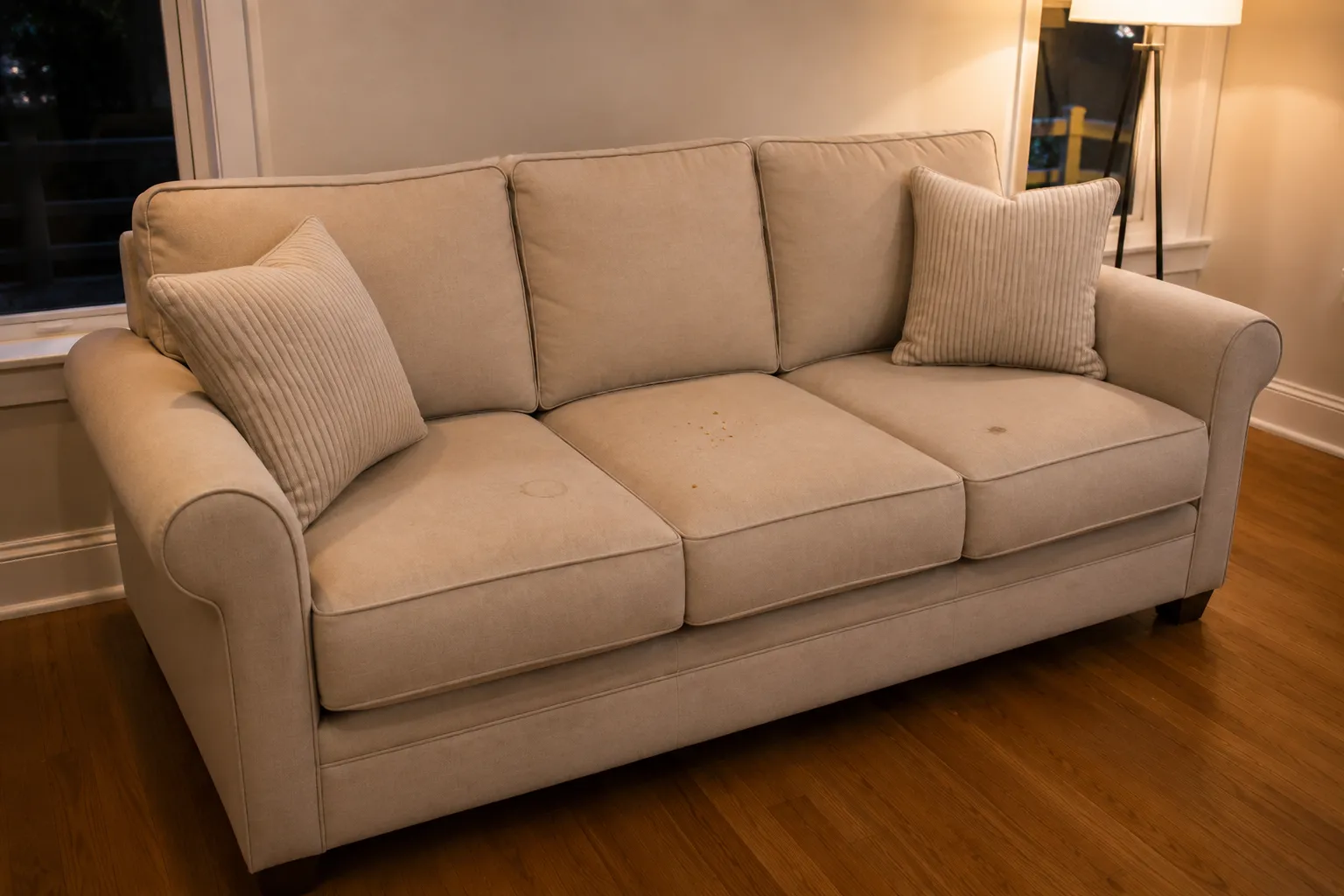
Upholstered furniture is an area where regular cleaning is limited to vacuuming, but deep treatment is needed. On a sofa, up to 50–70 grams of sebum and dust accumulate in the pores of the upholstery over six months — this is only visible under bright side lighting. At profi-clean, we use a Karcher extractor for such cases: it washes the upholstery with pressurized water and extracts the dirty liquid. Without this procedure, the sofa starts to smell musty within a year, even with regular vacuuming. Electronics (TVs, monitors, speakers) is another underestimated area: dust on the back panels and ventilation grilles clogs cooling radiators, reducing the lifespan of electronics by 15–20%. We wipe electronics with an anti-static microfiber cloth and a water-based Kiehl solution — this prevents dust from settling again for 2–3 weeks.
How often should you schedule regular cleaning
The frequency of regular cleaning is not a universal number but a parameter that depends on family composition, room usage activity, and the season. At profi-clean, we have established three basic intervals for Almaty apartments — each with its own criteria and cost-effectiveness.
Optimal frequency for a family with children
In apartments with children under 7, we recommend regular cleaning every 5–7 days. The main reason is allergens: a child’s room accumulates dust 2–3 times faster than an adult bedroom due to textile toys and carpets. In practice, if you skip a week, the level of dust mites on soft surfaces rises to a threshold where a child may develop nasal congestion or a skin reaction. In Almaty, where street dust is tracked in on shoes and clothing, this effect is amplified during the dry season. We use hypoallergenic Kiehl chemicals that leave no aggressive surfactants on surfaces, but even with them, a weekly maintenance schedule is the minimum for a child’s health. With two children or a pet, the interval is reduced to 4–5 days.
Every two weeks — for apartments without children or pets
For an adult apartment with two residents and no pets, a frequency of once every 14 days is economically justified. Over two weeks, a layer of dust 0.2–0.5 mm thick accumulates on open shelves and windowsills — visible to the naked eye but not critical for breathing. In such apartments, a profi-clean regular cleaning in 60–90 minutes restores surfaces to a “post-vacuum” state: the HEPA filter in our equipment captures 99.97% of particles up to 0.3 microns, including pollen and mold spores. A typical owner mistake is skipping the second week, thinking “there’s almost no dust.” In reality, after 21 days without cleaning, dirt embeds into laminate joints and kitchen fronts, requiring not a maintenance but an intensive service with manual front washing — an additional 30–40 minutes of work.
Seasonal adjustment: when you need it more often
The frequency of regular cleaning changes depending on the season, a factor many overlook. In Almaty, from March to May and September to November, street dust peaks due to winds and dry soil. During these periods, dust on windowsills and in hallways appears 2–3 days after cleaning, not 5–7 as in summer. Our cleaners note: in April and October, the number of visits requiring additional wet cleaning of walls and windowsills increases by 30–40% compared to July. Advice from our technology: during transitional seasons, shorten the interval by 2–3 days — for example, from 14 to 10–11 days for a child-free apartment. This prevents film buildup on kitchen fronts and in the bathroom, where humidity plus dust creates a sticky layer that, at a normal frequency, is only removed by deep cleaning. In winter, conversely, you can return to the basic schedule — there is less dust, and indoor humidity from heating reduces the rate of particle settling.
Tips for maintaining cleanliness between visits
Even with regular profi-clean cleaning, between cleaner visits, a few simple rules should be followed — they extend surface freshness and reduce dust accumulation by up to 40% according to our measurements.
Organizing quick tidying
A 5-minute morning routine for the apartment reduces the cleaner’s workload by 15–20 minutes — a direct effect we see in order timing.
- Beds and sofas: make the bed immediately after getting up — an unmade bed collects twice as much settling dust during the day.
- Kitchen surfaces: wipe down countertops and the stove after each meal preparation — hardened grease on an induction hob takes twice as long to clean.
- Mirrors and glass: wipe them with a dry microfiber cloth every 2–3 days — residue from hands and splashes doesn’t have time to dry into stains.
- Floors in high-traffic areas: sweep crumbs and sand from the hallway and kitchen with a broom or vacuum — hard particles scratch laminate and parquet when walked on.
Our cleaners note: in apartments that adhere to this minimum, deep cleaning takes an hour less than in neglected spaces of the same size.
Fighting dust without extra effort
Dust in Almaty is a special case: due to the proximity of mountains and active construction in the Zhetysu, Alatau, and Kalkaman microdistricts, it contains more mineral particles than in flatland cities and settles faster on electronics and textiles.
- Use a humidifier: at 45-55% humidity, dust becomes heavier and falls to the floor instead of floating in the air — we checked the concentration with a laser particle counter, the difference is 3-4 times.
- Ventilate through a mesh with a filter: an ordinary open window brings in as much street dust in 30 minutes as settles in a day — install a mosquito net with microporous foam on plastic window frames.
- Treat textiles with fabric antistatic spray: sofas, armchairs, and carpets attract dust with static charge — spray a water solution with a couple of drops of fabric softener on the upholstery, the effect lasts 5-7 days.
In my opinion, the most effective hack is to place a mat with a cellular structure at the front door: it traps up to 80% of street dirt you bring on your soles before it gets into the hallway.
What not to do between visits
Some home “cleaning methods” actually damage surfaces and create extra work for profi-clean cleaners.
- Do not use abrasive powders on glossy surfaces — micro-scratches from baking soda or “Pemolux” accumulate, and matte streaks can no longer be removed with a regular microfiber cloth; polishing is needed.
- Do not soak carpets with water when spot-cleaning stains — moisture saturates the backing, and mold develops underneath, which we find when moving furniture during deep cleaning.
- Do not wash laminate and parquet with a mop and excessive water — wood and HDF board swell at the joints, and after six months, gaps appear between the boards where dirt gets trapped.
- Do not use bleach on colored sofa fabrics — chlorine eats away the dye unevenly, leaving yellow spots that even professional dry cleaning cannot restore.
If something is spilled on furniture or a carpet — blot it with a dry napkin without rubbing and call us immediately: we will arrive with an extractor and remove the stain within the first 2 hours, before it sets into the fibers.