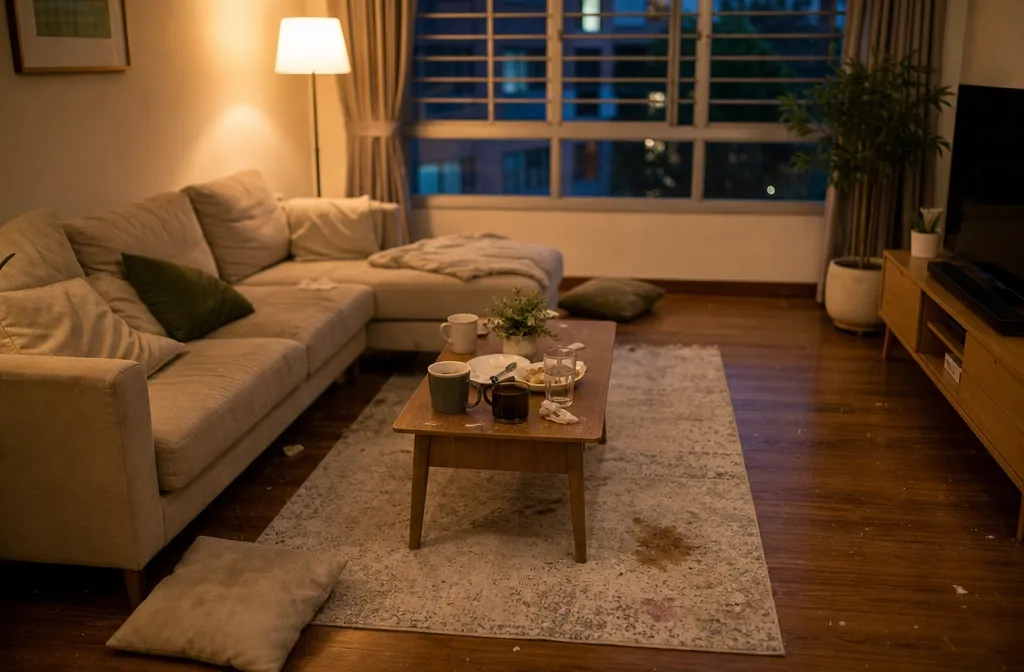
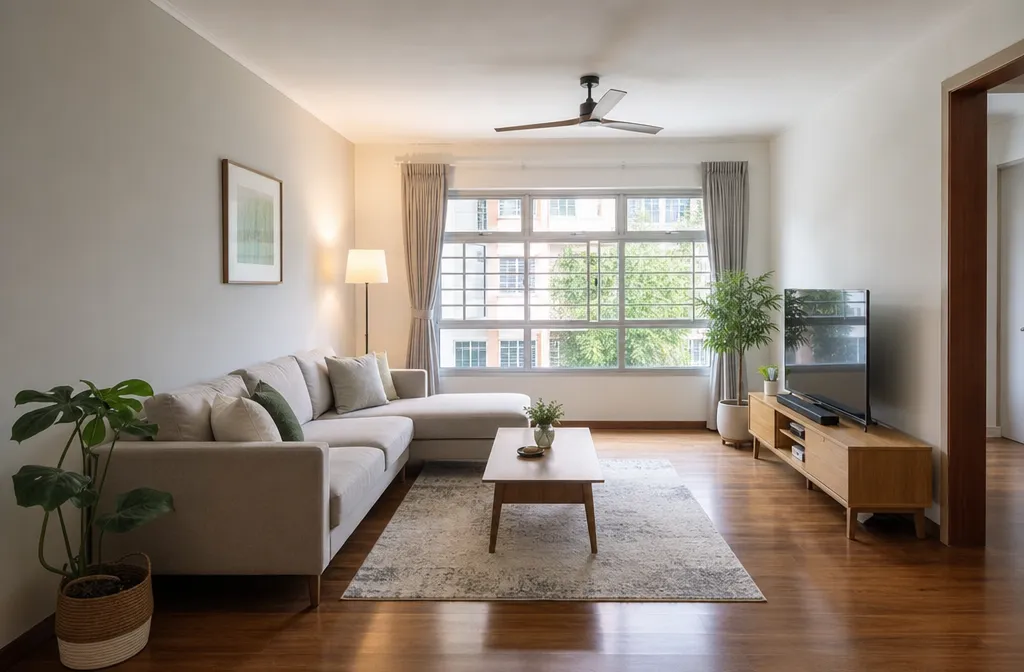
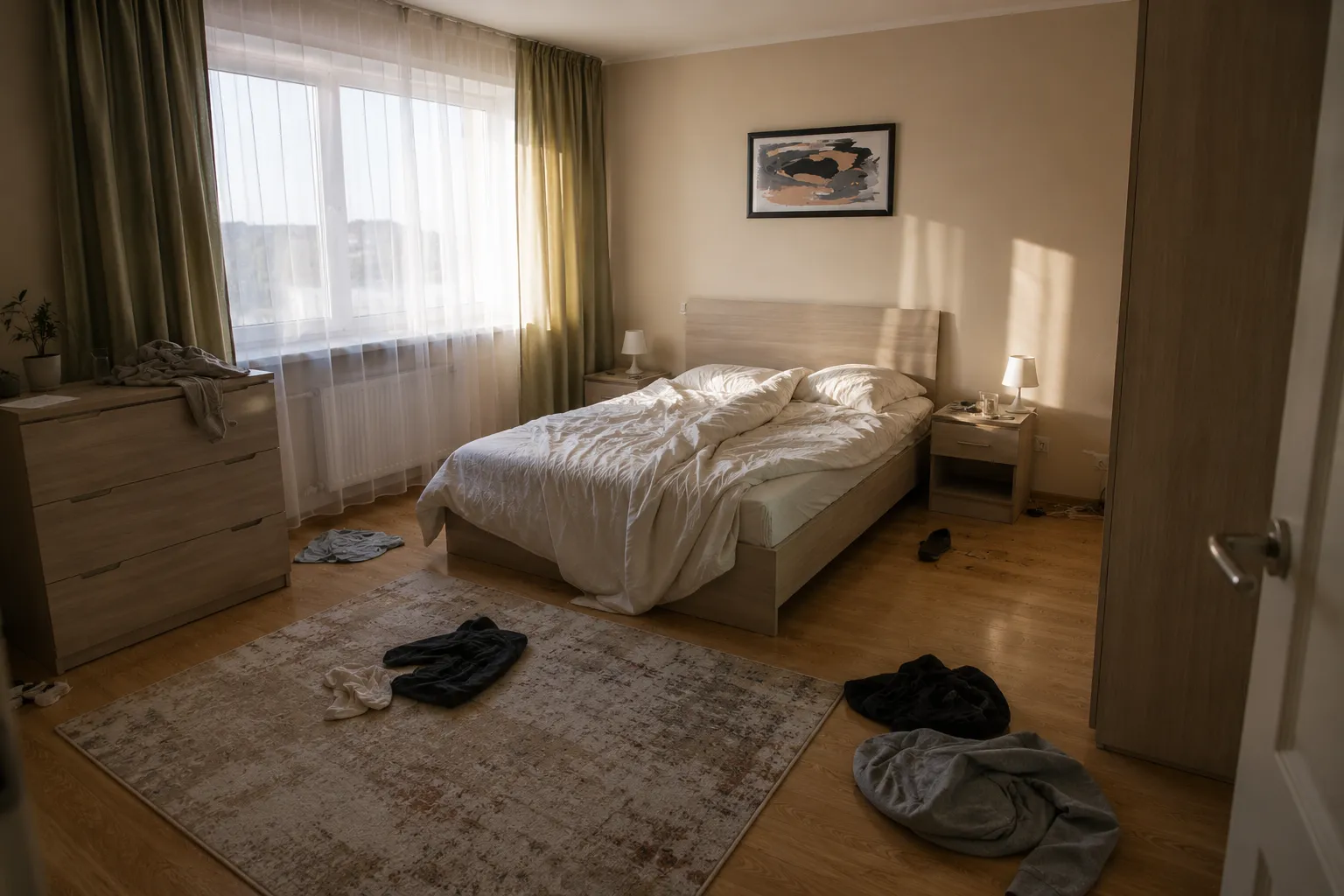
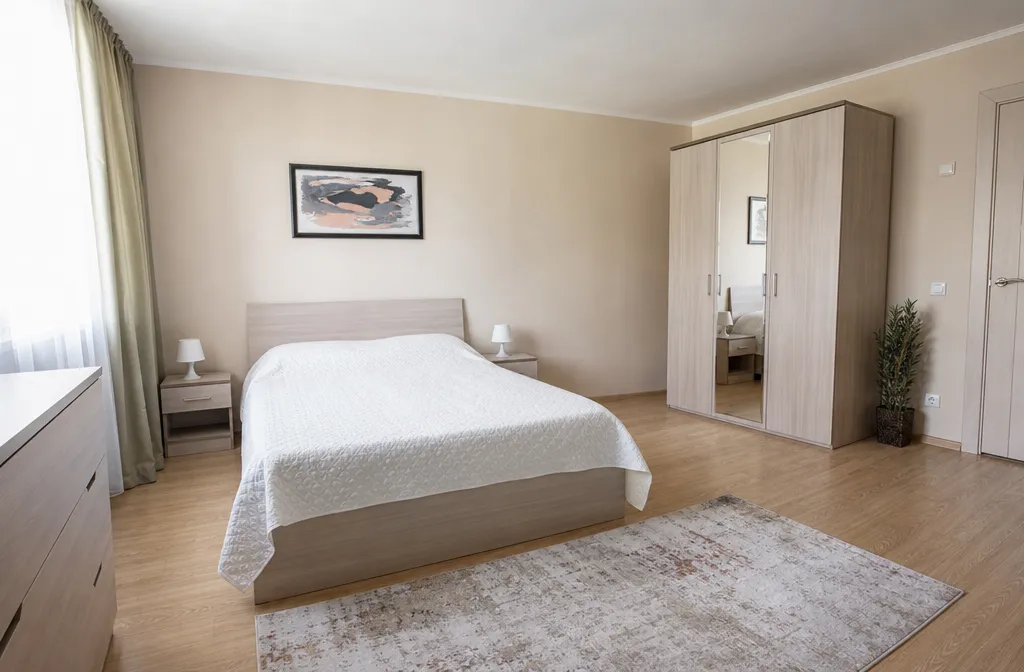
How often should you do a deep clean of a four-room apartment?
The frequency of deep cleaning a four-room apartment depends not on the calendar, but on the family composition, lifestyle, and the degree of ventilation contamination — in our Almaty apartments with Soviet-era layouts, dust accumulates on mezzanines twice as fast as in new buildings with supply ventilation. At profi-clean, we go out for deep cleans in four-room apartments every day and have gathered statistics: the optimal interval is 4–6 months for families without small children and pets, and 2–3 months if preschoolers or furry pets live in the apartment. Below, we break down three typical scenarios — each with its own frequency and focus points.
Family with preschool children: deep cleaning every 2–3 months
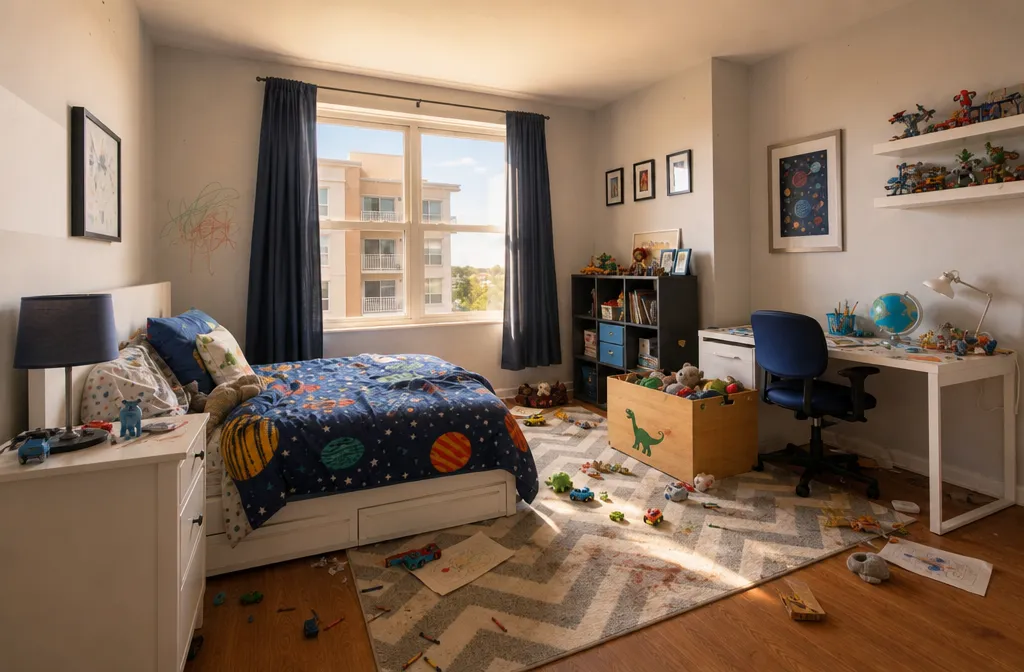
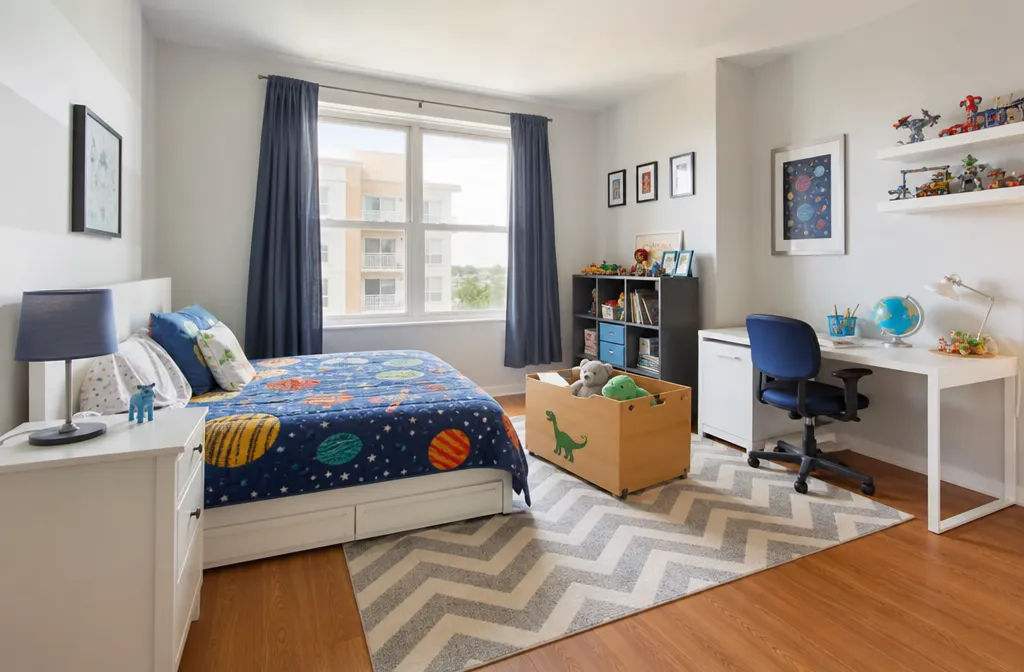
In a four-room apartment where children aged 2–6 live, deep cleaning is needed every 2–3 months — and it’s not just about smudges in the kitchen. A child’s fine motor skills leave marks on all surfaces: finger paints on the wallpaper, plasticine in the carpet fibers, crumbs in the parquet joints. Over three months, up to 200–300 grams of household dust mixed with fur and dry food particles accumulates in interior gaps and under baseboards — this is a breeding ground for dust mites. Our practice shows: if a child with allergies lives in the apartment, the interval is reduced to 6–8 weeks. In such orders, we use hypoallergenic Kiehl chemicals labeled “for children’s rooms” and wash all textile surfaces — sofas, armchairs, curtains — with hot steam at 120 °C. If there are two children of different ages in the family, it’s worth scheduling the deep cleaning of the four-room apartment for different seasons: in spring — after the heating is turned off, when dust from the radiators rises into the air, and in autumn — before turning the radiators on.
Apartment with pets: regular deep cleaning and unscheduled shedding
For four-room apartments with one dog or cat, the standard frequency of deep cleaning is once every 3–4 months, but with one caveat: during the seasonal shedding period (April–May and October–November), we recommend an unscheduled visit 6–8 weeks after the previous cleaning. Pet fur and dander are not just an aesthetic issue: particles 2–5 microns in size settle on horizontal surfaces and in the pores of upholstered furniture, and when the air conditioner is running, they rise into the air every 20–30 minutes. In our orders for apartments with pets, we always clean the indoor units of split systems with a steam generator — over 4 months, a layer of felted fur up to 3 mm thick accumulates on the filters and fan blades, reducing the air conditioner’s performance by 15–20%. If a family member has been diagnosed with an allergy to the Fel d 1 protein, the deep cleaning interval is reduced to 1.5 months — and in this case, treatment of all soft surfaces with a hypoallergenic Sodasan shampoo followed by water extraction with a HEPA-filter vacuum cleaner is mandatory. Owners of two or more animals should plan for a deep cleaning of a four-room apartment once every 2 months, with the spring and autumn seasons necessarily including dry cleaning of carpets and sofas, not just vacuuming.
Singles and couples without children: once every six months is enough, with a focus on the kitchen and bathrooms
For adult residents without children and pets, a deep cleaning of a four-room apartment once every 4–6 months is an adequate schedule, but with an important clarification: in such an apartment, the most problematic areas are the kitchen and two bathrooms. Over six months, a layer of grease forms on the kitchen backsplash and range hood, which cannot be washed off with regular household chemicals — an alkaline solution with a pH of 11–12 and mechanical treatment with steam at a pressure of 6–8 bar are needed. In our orders, we allocate an additional 40–50 minutes for the kitchen: we disassemble the hood grille, wash the filter in an ultrasonic bath, and clean the inside of the oven from burnt grease, which turns into a polymer film over six months. In the second bathroom, which is used less frequently, the main problem is stagnant water in the traps and limescale in the toilet: during a deep clean once every six months, we always flush the traps with a disinfectant solution and clean the tile joints in the shower area from black mold, which appears as early as the 4th–5th month. If the residents cook a lot or work from home, it’s better to reduce the interval to 4 months — in a home office, 2–3 times more dust settles on monitors and keyboards than in the bedroom, due to the static electricity of running appliances.
Seasonal factor: when an unscheduled deep cleaning is needed in Almaty
In Almaty’s climate, there are two periods when the standard frequency of general cleaning should be adjusted — regardless of family composition. The first is the smog season (December–February): in windless weather, the concentration of PM2.5 in the air reaches 150–200 µg/m³, and fine dust penetrates the apartment through micro-ventilation, settling on horizontal surfaces in a layer invisible to the eye but leaving a gray coating on white windowsills within 2–3 weeks. The second is the poplar blooming season (May–June): fluff clogs ventilation grilles, gets under the refrigerator, and into the cracks of balcony frames — if a general cleaning isn’t done immediately after blooming ends, the fluff begins to rot and releases mold spores. During such seasons, we recommend scheduling a general cleaning for a four-room apartment not on a fixed schedule, but based on actual conditions: if a gray coating appears on the windowsills or a musty smell comes from the ventilation — it’s time to call the cleaners, even if only 2 months have passed.
How does cleaning a four-room apartment differ from cleaning a three-room apartment?
The difference between cleaning a three-room and a four-room apartment is not just one extra room, but a fundamentally different scale of logistics and zoning. Four-room apartments in Almaty often have an area of 90 to 140 m², and in this area, the distribution of dirt follows a different scenario.
Additional zone — study or dressing room
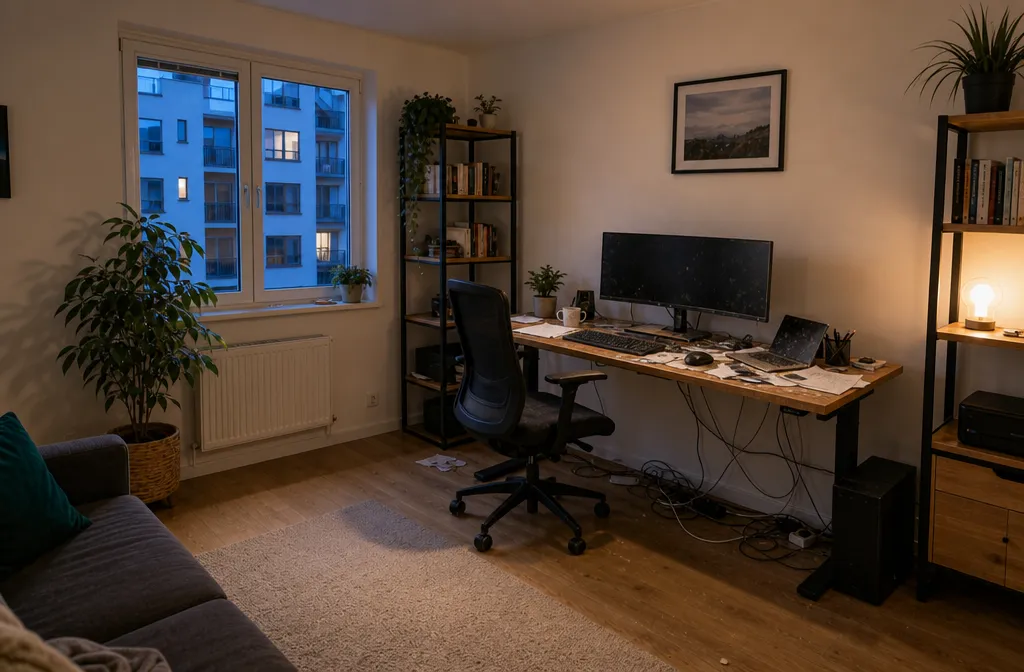
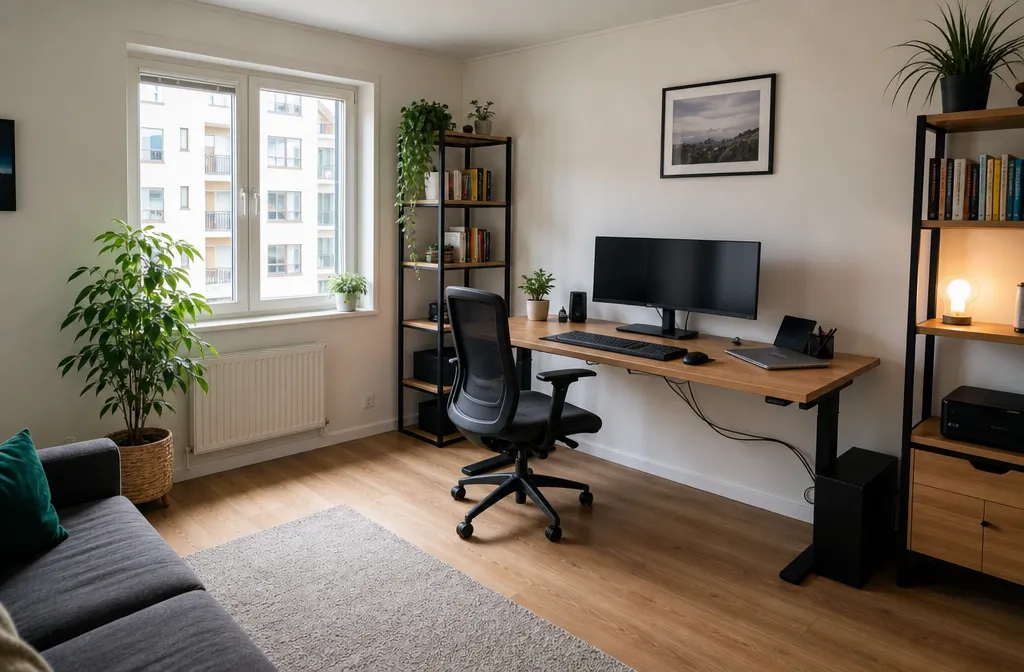
The fourth room in standard Almaty layouts is most often a study, a children’s room, or a dressing room. A study means electronics (monitors, keyboards, system units) that accumulate static dust faster than bedroom furniture. A dressing room means shoe racks and shelves for bags, where street dust from soles and fabrics settles. In a three-room apartment, such zones are usually absent — all rooms are living spaces.
At profi-clean, for dressing rooms, we use a separate set of vacuum cleaner attachments with soft bristles to avoid damaging fabric boxes and lacquered leather. For a study, we use an antistatic agent on microfiber cloths; otherwise, the dust will settle again within an hour. In practice, this increases cleaning time by 25–30 minutes even in a maintenance format.
Different levels of dirt in “transit” zones
In a four-room apartment, corridors and hallways occupy up to 15–20% of the total area — more than in a three-room apartment. These transit zones collect the maximum amount of sand, shoe dirt, and pet hair. In a three-room apartment, the hallway is usually compact, and dirt is localized in one place.
We’ve noticed: in Almaty’s four-room apartments with children, hallways often have bicycles, scooters, and strollers — the wheels bring street dirt deep into the apartment. During cleaning, we have to wash the floors in the corridors twice: the first pass to rinse off sand and gravel, the second to remove streaks from soles. In a three-room apartment, one pass is enough.
More complex surfaces: stained glass, niches, panoramic windows
In new four-room apartments in Almaty (residential complexes “Nurly Tau”, “Triumph”, “Akbulak”), panoramic windows are often installed — their area is 30–40% larger than in three-room apartments. Washing each stained glass panel takes 10–15 minutes on both sides when using a professional squeegee and an isopropyl alcohol-based solution. In a three-room apartment, there are usually two or three standard windows — this takes half the time.
Additionally, four-room layouts often feature niches for wardrobes and built-in shelving — they accumulate dust on the top shelves, which cannot be reached with a regular cloth. Without a telescopic pole with a brush attachment, layers of dust remain there, which rise with a draft and settle on furniture. In three-room apartments, such deep niches are usually absent.
Different number of furniture groups
A four-room apartment in Almaty accommodates 4–6 furniture groups (sofas, armchairs, beds, dining tables, chairs, shelving units). A three-room apartment accommodates 2–3 groups. Each group requires its own technique: upholstered furniture is cleaned with a Karcher SG 4/4 steam cleaner with a fabric attachment, wooden facades are cleaned with a microfiber cloth and water-based polish.
In practice, this means the time for furniture treatment in a four-room apartment is one and a half to two times higher. Moreover, if in a three-room apartment the sofas are in the living room, in a four-room apartment they are also in the study or children’s room, and each requires a separate approach based on the type of upholstery.
Cleaner movement logistics
A cleaner in a four-room apartment walks 200–300 meters during a cleaning — carrying a bucket, vacuum cleaner, and chemical cart. In a three-room apartment, it’s 100–150 meters. It seems like a small detail, but in practice, this means that in a four-room apartment, we use two water connection points: one in the kitchen and one in the bathroom, to avoid carrying the bucket across the entire apartment.
Because of this, in a four-room apartment, we change the water in the bucket three to four times per cleaning, compared to two times in a three-room apartment. If we don’t do this, streaks from settled dirt will appear on the floor at the finish, especially in hallways and the kitchen.
Challenges of Cleaning Four-Room Apartments in Almaty
Four-room apartments in Almaty have layout features that turn a regular cleaning into a multi-layered task with non-obvious risks. Let’s break down the real challenges owners face and why the standard approach doesn’t work here.
High Ceilings and Mezzanines: The Zone of Invisible Dust
Ceilings of 3.0–3.2 meters in houses of the 1-464 series and “Brezhnevkas” on Abay and Dostyk Avenues are the main source of dust that is not visible from the floor. At a height of 2.5+ meters, light fractions settle, raised by walking and air conditioner operation. In our practice, there was a case: in an apartment on Zharokova Street, the owner complained about allergies, although the floors were washed every week — the problem turned out to be a layer of dust on the mezzanines and cornices. A regular mop with a telescopic handle does not provide the necessary pressure: the lint slides without removing the film. For such heights, we use microfiber attachments on a 4-meter pole with a 45-degree angle of attack — this is the only way to remove the film without streaks. Mezzanines in Almaty apartments, especially in houses from the 1970s–80s, often have slotted joints where up to 200 grams of dust accumulates over six months — during a deep clean, they must be vacuumed with a narrow crevice tool, otherwise, when the door is opened, all the sediment returns to the room.
Layouts with Dark Corridors and Niches
In standard four-room apartments in the “Taugul” and “Samal-2” microdistricts, corridors 6–8 meters long connect all rooms, forming a single air channel. Each pass carries dust from the hallway into the bedrooms — when doors are opened, the pressure difference blows particles out from under the baseboards and from the joints of the parquet. Niches and built-in wardrobes in such apartments (1-464D series projects) have a gap of 3–5 cm between the wall and the body — greasy kitchen dust settles there if the niche adjoins the kitchen, and textile lint from clothes. During standard cleaning, these areas are missed: a damp cloth doesn’t fit into the gap, and a vacuum cleaner with a regular brush doesn’t extract the film. We treat such niches with a steam cleaner at 130 °C — the steam softens the grease deposits, after which the residue is collected with microfiber. Without this treatment, dust mites appear in the gaps after 3–4 months, especially in apartments on the first floors with high humidity from the basement.
Different Types of Flooring in One Apartment
A typical Almaty four-room apartment is laminate in the hallway and two bedrooms, parquet board in the living room and lounge, and tile in the kitchen and bathrooms. Each covering requires its own humidity regime and chemicals: laminate (class 32–33, common in new buildings of the “Nurly Tau” residential complex) is afraid of excess water — the joints swell after 2–3 wet cleaning cycles. Parquet board in old houses on Tole Bi Street (solid oak 15–20 mm) absorbs moisture unevenly — after a year of regular wet cleaning, gaps of up to 2 mm appear. Tile in the kitchen, on the contrary, requires an alkaline compound to remove grease stains. The mistake is washing all floors with one solution: streaks from hard Almaty water (total hardness up to 7 mg-eq/l) remain on the laminate, and a white alkaline residue appears on the parquet. In our practice, we use pH-neutral products for laminate and parquet (Sodasan 5–7 pH), and for tiles, an alkaline concentrate Kiehl with pH 10–11, changing the mop and water between zones.
Large Windows and French Balconies
In apartments of the “individual” series on Manas and Baitursynov streets, glazing accounts for up to 60% of the facade wall — this is 6–8 window units up to 2.2 meters high. Almaty dust mixed with smog (average annual PM2.5 concentration up to 40 µg/m³) settles on the glass as a greasy film that water without surfactants cannot wash off. French balconies with sliding systems (popular in the “Triumph” and “Akkent” residential complexes) accumulate dirt in the lower guide profile — up to 100 ml of water collects there after rain, and black mold appears within a month. We wash such windows using a two-pass technique: first, an alkaline solution from Kiehl with a sprayer to soften the smog, then a scraper with a brass blade (not steel — it scratches the aluminum profile). The guides are cleaned with a narrow brush and blown out with a compressor — without this, moisture remains in the grooves and destroys the seal in 2 seasons.
Kitchen grease on walls and backsplashes
In the kitchen of a four-room apartment where cooking is done 2–3 times a day, a layer of grease up to 0.5 mm thick forms on the tile or tempered glass backsplash within 3–4 months. In Almaty apartments with gas stoves (the main type in houses built up to a year), the grease polymerizes under high temperature — regular cleaning agents cannot remove it. We use hot steam (130 °C) with a scraper attachment: the steam softens the polymerized layer in 10–15 seconds, after which the residue is removed with a microfiber cloth without abrasives. On glass backsplashes (in the “Symphony” and “Esentai Tower” residential complexes), grease leaves rainbow streaks if washed in circular motions — the correct technique is straight horizontal passes from top to bottom with a 50% overlap. Without this, matte spots remain on the glass after six months, which cannot be removed without polishing.
Carpets and upholstered furniture in every room
In four-room apartments, there are often 3–4 carpets (living room, bedrooms, children’s room) and 2–3 sofas — the total textile area reaches 25–30 m². Almaty dust with a high sand content (wind transport from desert zones) embeds deeper into the pile than ordinary city dust — when walking, abrasive particles cut the fibers, and after 2 years the carpet loses color in high-traffic areas. We clean carpets using the extraction method: first, a dry treatment with Host powder (rubbed into the pile, absorbs dirt in 20 minutes), then vacuum collection with a HEPA filter. Only after that — wet extraction with Kiehl shampoo (dilution 1:32). Skipping the first stage is a common mistake among cleaners: when wet, the sand turns into an abrasive paste that wears the pile down to the base in 3–4 cleanings.
“`markdown
How to extend cleanliness after cleaning?
Let’s look at what simple habits and techniques keep a four-room apartment fresh for weeks longer — without daily floor washing and dust wiping.
Zonal shoe system: house slippers for each room
We at profi-clean have noticed: most dirt is brought in not from the street, but from the hallway into the living room and corridors. The solution is to separate shoes by zone: separate slippers for the hallway, kitchen, and bedrooms. In practice, this reduces the amount of street dust by 40-50% compared to a single pair worn throughout the apartment. In Almaty’s four-room apartments with long corridors, the effect is especially noticeable — fewer black marks on light laminate and parquet. It’s enough to hang three pairs of slippers on hooks in the hallway and leave one pair at the kitchen entrance. Before changing seasons, wash them in the machine at 60 °C — this removes both odor and bacteria.
Regular cleaning of the HEPA filter in the vacuum cleaner
A mistake made by 80% of owners of four-room apartments: they clean the filter once a month or forget about it altogether. The HEPA filter in the vacuum cleaner becomes clogged after 2-3 full cleanings, and instead of collecting fine dust (PM2.5), it starts releasing it back into the air. In Almaty, with its high air dustiness due to the proximity of mountains and construction, this is critical — settled dust is visible on surfaces within a day. We recommend rinsing the HEPA filter under running water after every second cleaning, and replacing it with a new one once a quarter. This extends surface cleanliness by 3-4 days without extra effort.
Hypoallergenic spray for textiles: protection against dust settling
After cleaning, upholstered furniture and carpets remain a “magnet” for dust due to static charge. Regular fabric softeners don’t solve the problem — they only soften the fabric. We use an antistatic spray based on Sodasan — it neutralizes static and creates a microscopic film on the surface that repels particles. One spray on the sofa, armchairs, and carpet after each cleaning is enough. In a four-room apartment with two or three sofas and carpeting, this provides +5-7 days of visual cleanliness. Our advice: don’t buy sprays with silicone — they leave a greasy shine and get dirty faster.
Ventilation after the season change: frequency and direction
Four-room apartments in Almaty often have windows on two sides — this allows for creating a draft. After a deep cleaning (especially in spring and autumn), we open the windows for 10-15 minutes, directing the airflow from the kitchen to the far bedroom. During this time, up to 70% of the suspended dust that rose into the air during cleaning is removed from the room. If the windows face one side, use a breather or supply valve — they provide constant fresh air without heat loss. In winter, we reduce ventilation to 5 minutes, but we don’t skip it: without it, humidity rises above 60%, and dust settles faster.
The “single towel” system for the kitchen and bathrooms
The main source of streaks on tiles and countertops is wet hands. In a four-room apartment with two or three bathrooms and a kitchen, it’s easy to lose control over towel quality. We recommend allocating one guest towel for each bathroom and one work towel for the kitchen — change them every three days. A damp towel hanging for more than four days becomes a breeding ground for bacteria, which are transferred to surfaces when drying hands. At profi-clean, we replaced regular terry towels with microfiber — it dries in 2 hours instead of 6 and doesn’t leave lint on tiles. “`
“`markdown
Which areas require special attention?
In a four-room apartment, there are more surfaces and hard-to-reach places than in a three-room apartment, so during deep cleaning we focus on areas where the main dust, dirt, and grease accumulate. A mistake here costs time — a missed corner will force you to re-clean everything.
Kitchen: grease deposits and hidden surfaces
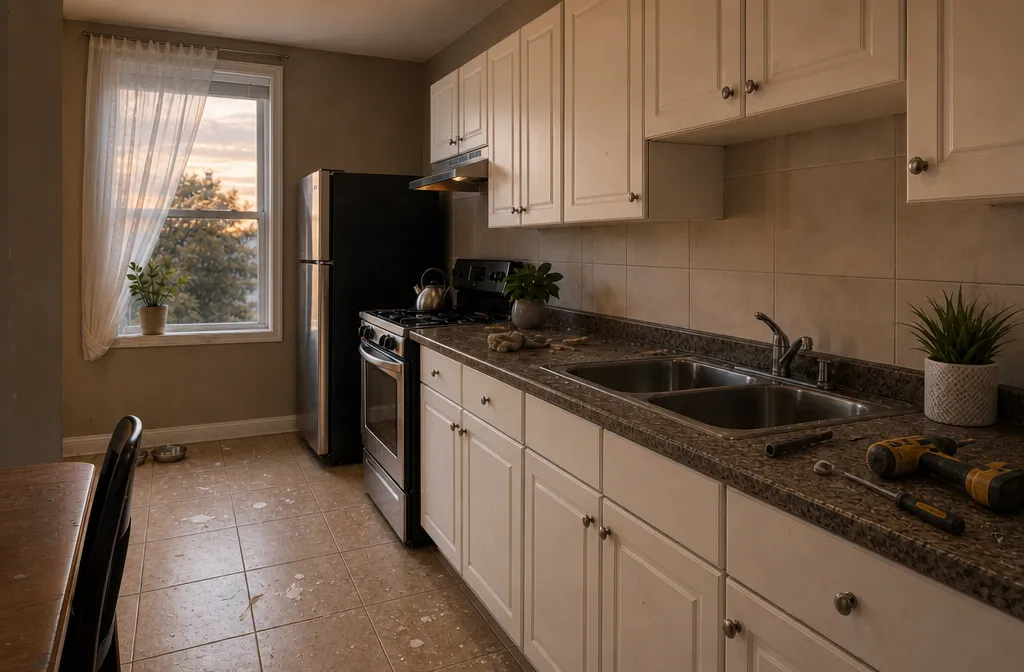
The kitchen in a four-room apartment is often used more actively than other rooms — it’s where meals are prepared for a large family. We pay special attention to grease buildup on the range hood, backsplash, and upper cabinets: it sets in within 2-3 weeks and doesn’t wash off with regular damp cleaning — hot water with an alkaline Kiehl compound that breaks down oil films is needed. The interior walls of the oven and microwave, as well as the rubber seals of the refrigerator, are areas that owners often miss, but it’s precisely there that bacteria multiply at room temperature. In my opinion, the most insidious part is the base of the kitchen unit: crumbs and spilled grease roll under it, attracting cockroaches even in clean apartments. In our cleaning orders for four-room apartments, we always include washing the range hood with filter removal — this is a procedure rarely done independently, but without it, the smell of old grease lingers in the kitchen for another week.
Bathroom and toilet: mold in hard-to-reach joints
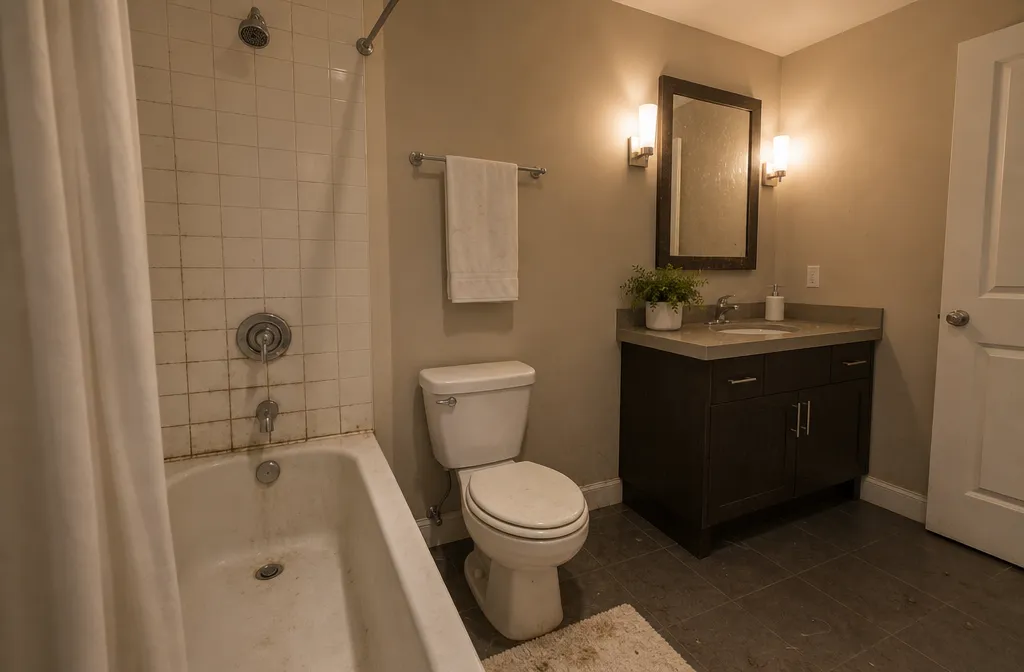
In two bathrooms of a four-room apartment — a typical layout for Almaty — the mold problem is more acute than in a one-room apartment due to the larger number of tile joints and silicone seams. We check the sealant around the bathtub and shower cabin: if it has turned black, it needs to be cut off and reapplied — otherwise, fungal spores spread through the air throughout the apartment. The sink trap and bathtub drain are areas of stagnant water where biofilm with an unpleasant odor forms 2-3 weeks after regular cleaning. Special attention goes to the washing machine: the rubber door gasket and detergent drawer are often covered with black mold, which housewives only notice when the laundry starts to smell musty. Almaty’s hard water leaves limescale on faucets and showerheads — we use Sodasan to avoid damaging the chrome coating with acid. If these points are not treated, mold will return within a month even after a perfect cleaning.
Living room and bedrooms: upholstered furniture and textiles
Upholstered furniture in a four-room apartment—sofas, armchairs, ottomans—accumulates dust inside the filler that a vacuum cleaner without a special attachment cannot remove. We treat the upholstery with a steam cleaner at 120°C: this kills dust mites and softens stubborn stains from coffee or juice, which we then remove with Kiehl stain remover. Long-pile carpets are a risk zone: street dust gets embedded in them, especially in apartments on lower floors in Almaty where windows face busy streets. Curtains and tulle are another dust collector: we take them down and treat them with steam on-site if dry cleaning isn’t possible, but for thick velvet or velour drapes, on-site dry cleaning is required. Under beds and behind wardrobes is a “dead air” zone: 30-40% of all dust in a room settles there, invisible to owners but stirred up with movement. In practice, if furniture isn’t moved, cleanliness in the bedroom lasts half as long—dust settles on bedding overnight.
Children’s Room: Safe Chemicals and Antibacterial Treatment
The children’s room in a four-room apartment requires a separate approach—we use only hypoallergenic Sodasan chemicals that leave no toxic fumes after cleaning. Toys—soft, plastic, wooden—need different treatments: soft ones are washed at 60°C, plastic ones are cleaned with soapy water, and wooden ones are wiped with a dry cloth to prevent swelling. The floor under a play mat is an area where crumbs and pet hair accumulate: if a child crawls, dust particles enter the respiratory tract. We wash baseboards and corners up to 30 cm from the floor with a damp microfiber cloth—standard dry cleaning doesn’t achieve this. In Almaty apartments with children’s rooms, carpeting is often installed—this is the worst choice for allergy sufferers, as it absorbs dust and moisture, and without monthly steam cleaning, mold develops. My advice to parents: before a deep cleaning, collect small toys in a container—the cleaner will spend time sorting rather than cleaning, saving you an hour of work.
Hallway and Corridor: Shoe Dust and Seasonal Dirt
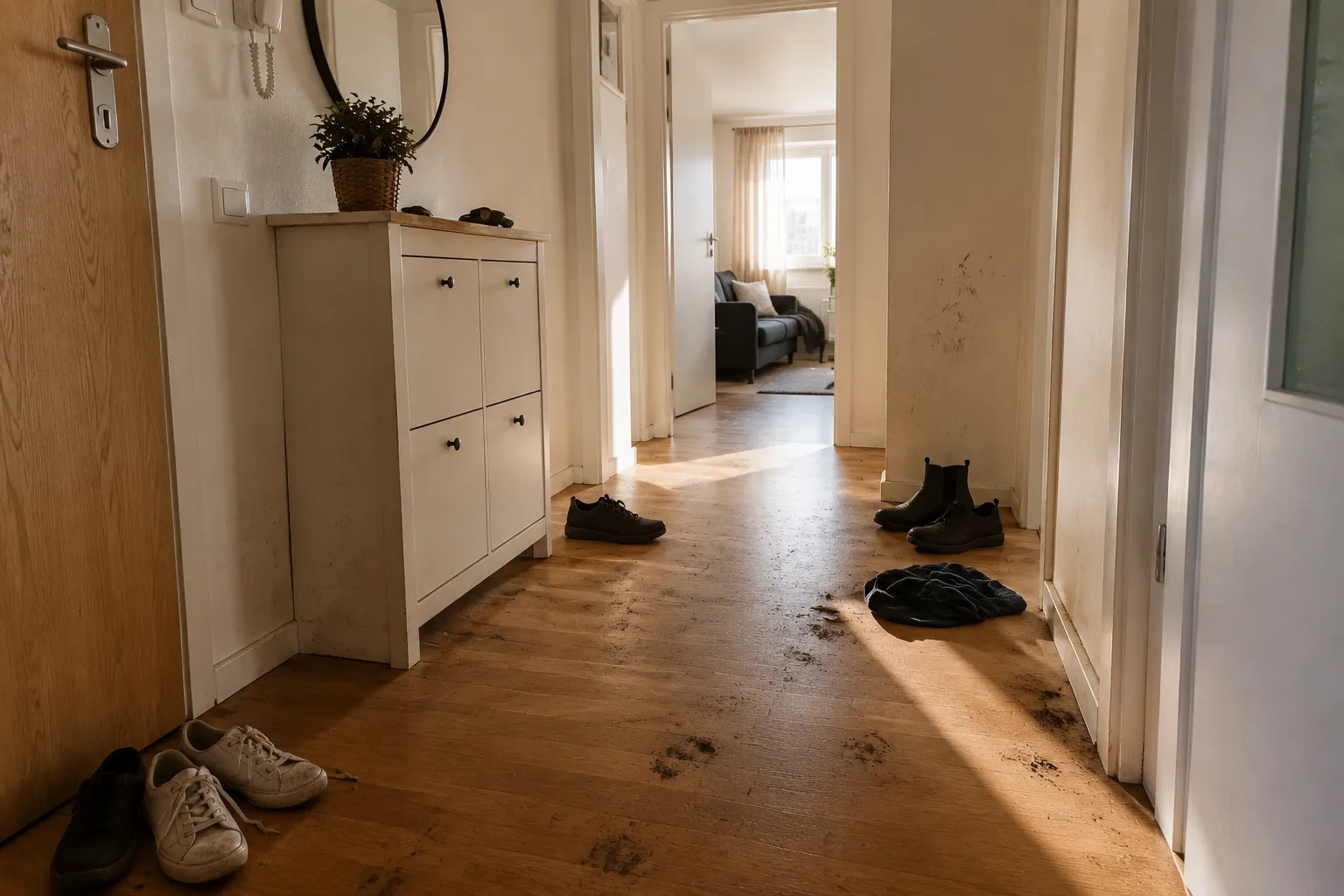
In a four-room apartment, the hallway is a transit zone through which the whole family passes, and up to 70% of street dirt settles here. The doormat is the first line of defense: we beat it outside or treat it with steam if it’s rubber, otherwise sand and de-icing agents spread throughout the corridor. The shoe rack is an odor zone: wet shoes after rain in Almaty create an environment for mold inside the cabinet, so we wipe the shelves with an antiseptic and leave the doors open for an hour after cleaning. Outerwear on the rack collects street dust—we treat down jackets and coats with steam to remove ingrained odors and pollen. Mirrors and glass surfaces in the hallway are common spots for streaks: we use an ammonia-free glass cleaner to avoid rainbow spots in sunlight. If the shoe rack and doormat aren’t treated, a week after cleaning a four-room apartment, the hallway will look like it hasn’t been washed in a month—street dirt settles on shoes and spreads to all rooms.
Loggia and Pantry: Forgotten Dust Accumulation Zones
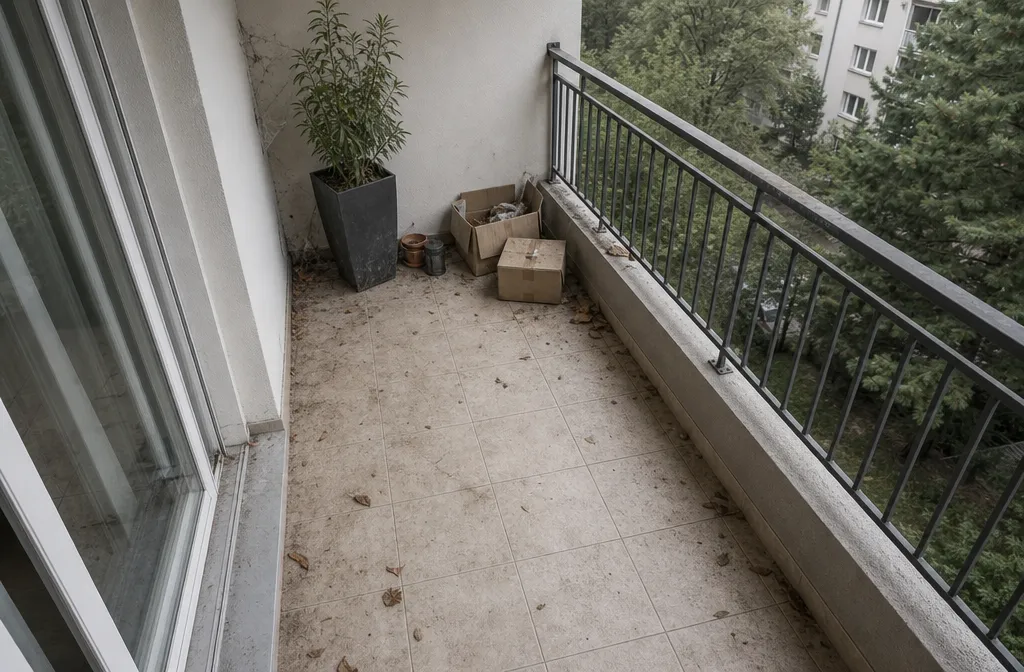
The loggia in a four-room apartment is often used as storage—bicycles, boxes, old furniture—and dust settles there in layers untouched for years. We start by removing all items, then wash the floor and walls with an alkaline cleaner: on an open loggia in Almaty, street dust with soot particles from cars accumulates if windows face a main avenue. The pantry is a narrow room without ventilation: air stagnates there, and a musty smell develops on items. We treat the walls and shelves with an antiseptic, then leave the door open for airing—otherwise, the smell transfers to clothes and boxes. In practice, if the loggia or pantry is skipped during a deep cleaning, dust from there spreads throughout the entire apartment through open doors within a month—especially during the heating season when air convection is active.
Range Hood and Ventilation: Hidden Contamination Channels
Ventilation grilles in a four-room apartment are the area cleaned least often, but it is through them that dust from neighbors and the street enters the apartment. We remove the grilles, wash them with an alkaline cleaner, and vacuum the duct to a depth of up to 30 cm — this is enough to remove accumulated dust that reduces draft. The kitchen hood is a separate story: the grease filter needs to be soaked in hot water with soda for 20 minutes, otherwise the oil clogs the cells and the fan runs idle. In Almaty’s older buildings (Khrushchev-era and Brezhnev-era apartments), ventilation shafts are often clogged with construction debris — we don’t go inside, but we clean the grille and the visible part of the duct to improve air exchange. If the ventilation is not treated, the entire cleaning of a four-room apartment loses its meaning — within a month, dust from neighbors will settle on all surfaces again.
Baseboards and Corners: The Boundaries of Cleanliness
Baseboards around the perimeter of a four-room apartment — about 80-100 linear meters — collect dust that is invisible to the naked eye but rises when you walk. We wash them by hand with an antistatic microfiber cloth to prevent dust from resettling for 2-3 days. Corners under the ceiling are areas for cobwebs and dust accumulation, especially in rooms with high ceilings (from 2.7 m), which are common in new residential complexes in Almaty. We use a telescopic mop with a microfiber attachment to reach all corners without a ladder — it’s faster and safer than climbing on a chair. I recommend paying attention to the baseboards behind doors: when the door is open, they are hidden from view, but that’s exactly where dust settles during a draft.
Heating Radiators: Dust Heated to 60°C
Radiators in a four-room apartment — 5-7 sections per room — act as dust collectors: hot air lifts dust, which settles on the internal fins and bakes on, creating a burnt dust smell when the heating is first turned on. We use a special brush for the space between sections and a vacuum cleaner with a narrow nozzle — a regular cloth cannot reach the back wall of the radiator. In Almaty apartments with central heating, radiators are often painted with oil-based paint, which cracks over time — dust gets into the cracks and can only be removed with steam. If you don’t clean the radiators before the heating season, you will be breathing burnt dust for the first month, and cleaning the four-room apartment will not solve the odor problem.
Window Sills and Frames: Street Dirt and Condensation
Window sills in a four-room apartment — up to 40 cm wide in older homes — collect street dust and soot if the windows face a road. We wash them with a soapy solution, then wipe them dry with a cloth — otherwise, streaks remain from the water with a high salt content typical of Almaty. Window frames — especially the bottom profile — are an area for condensation and mold accumulation during the cold season: we treat them with an antiseptic and dry them with a microfiber cloth. We remove mosquito nets and wash them in the shower with a soft brush — they trap up to 50% of street dust that would otherwise enter the apartment. If you don’t wash the window sills and frames during a deep clean, a black deposit from condensation and street dirt will appear within 2-3 weeks.
Lighting Fixtures: Chandeliers and Sconces
Chandeliers in a four-room apartment — usually 4-6 pieces — accumulate dust on the shades, which scatters light and reduces room illumination by 15-20%. We remove glass shades, wash them in warm water with a mild shampoo, and wipe metal parts with an antistatic agent. Crystal chandeliers are a special case: they need to be hand-washed with vinegar (1:10) to restore shine, otherwise water drops leave white spots. In Almaty apartments with high ceilings (3 m and higher), chandeliers often hang on rods up to 1.5 m long — we use a stepladder and work in pairs for safety. Tip: if you have a complex multi-tiered chandelier, order its cleaning once every six months — dust on the shades makes the room visually darker, and you will turn on the lights more often, increasing your electricity bill. “`
Why Trust Cleaning to Professionals?
A four-room apartment is not just more square meters, but a fundamentally different level of dirt that household chemicals and a vacuum cleaner from the supermarket cannot handle. Let’s break down where exactly the amateur approach loses to the professional one and why DIY deep cleaning often just spreads the dirt around.
Mistakes in DIY Cleaning That Damage Surfaces
The most common mistake is choosing the wrong cleaning agent for a specific material. Marble windowsills in Almaty’s new developments become covered with dull etching stains from acidic compounds (even citric acid), which cannot be polished without specialized tools. Lacquered parquet flooded with an all-purpose abrasive cleaner loses its gloss after 3–4 wet cleaning cycles — restoration requires sanding and a new coat of varnish. Housewives often scrub matte kitchen fronts with the rough side of a sponge, leaving micro-scratches that trap grease. Another mistake is applying furniture polish without first removing grease: the film settles on dirt, and within a week the residue becomes sticky, attracting dust faster. In a professional environment, these errors are eliminated at the stage of selecting chemicals for each surface type — we use pH-neutral formulas and 12 types of concentrates for various tasks, including delicate ones.
How professional chemicals differ from household ones
Household chemicals from mass-market brands are designed for an average result: they foam (so the customer sees an “effect”), contain phosphates and fragrances that mask odors but don’t remove their source. profi-clean’s professional concentrates — German Kiehl and Swiss Batelle — work differently: they break down dirt at the molecular level rather than “moving” it across the surface. For example, a grease remover for kitchen fronts leaves no streaks and requires no repeated rinsing — one pass with a microfiber cloth is enough. Hypoallergenic Sodasan chemicals for children’s rooms are approved by dermatologists: they are odorless and do not trigger allergies, even in asthmatics. Moreover, professional formulas are more economical: one liter of concentrate dilutes to 10–20 liters of working solution, while a store-bought bottle is used up on a single room. In our orders for four-room apartments, chemical consumption is 40% lower than with DIY cleaning using the same products — thanks to precise dosing and correct dwell times.
Why professional equipment cleans deeper
An ordinary vacuum cleaner with a dust bag allows up to 30% of the finest particles back into the air — these are PM2.5 and pollen that settle on horizontal surfaces within an hour after cleaning. profi-clean’s industrial vacuum cleaners are equipped with HEPA filters class H13, which trap 99.95% of particles as small as 0.3 microns — including mold spores, pet hair, and dust mites. For a four-room apartment, this is critical: if an allergy sufferer lives in the bedroom, a regular vacuum cleaner only stirs up dust in the mattress, while a HEPA filter extracts it completely. Rotary floor scrubbers with pressurized water clean tile grout and laminate without flooding the joints — a manual mop leaves puddles that seep under baseboards and cause swelling. Steam cleaners with steam temperatures of 150 °C kill bacteria and mites in mattresses and upholstered furniture without chemicals — for families with children, this is the only safe way to deep-clean sleeping areas.
Health risks of DIY cleaning
Fumes from household chemicals in a closed apartment without supply ventilation are a common cause of headaches and sore throats for homeowners after a deep clean. Chlorine-based products (sodium hypochlorite) combined with ammonia are especially dangerous — they release toxic chlorine gas that irritates mucous membranes. In Almaty, where many apartments have plastic double-glazed windows and sealed doors, natural ventilation is minimal, and the concentration of volatile compounds rises faster. The professional formulas we use have a safety class of IV (practically non-toxic) and require no airing out — cleaning is done with the exhaust fan running and without occupants present. Additionally, lifting heavy furniture, moving carpets, and working on a stepladder with wet hands pose direct risks of spinal injuries and falls. In our practice, there was a case where a client damaged laminate flooring while rearranging a sofa on her own — scratches deep into the base layer required a full replacement.