How to Distinguish General Cleaning from Maintenance Cleaning
Many people think that general cleaning is just a more thorough maintenance cleaning, but in reality, these are two different processes with different goals, frequencies, and depths of surface treatment. Here at profi-clean, we see daily how clients confuse these concepts and then are surprised that a “general clean” didn’t solve the problem of old plaque, or that maintenance cleaning didn’t remove the grease from the kitchen backsplash. Let’s clarify the criteria once and for all.
Depth of Penetration: Surface vs. Structure
Maintenance cleaning works with the top layer of dirt – dust, fresh stains, light film – which are removed in 1-2 passes with a microfiber cloth. General cleaning, however, penetrates the surface structure: it washes grease out of tile grout, removes years of buildup from the range hood, and soaks in hardened marks from furniture legs on parquet flooring. In our practice, there was a case where a client ordered a general kitchen cleaning because maintenance cleaning could no longer handle the sticky layer on the cabinets – it turned out that over 3 years, a micro-film of oil vapor and condensation had accumulated, which a regular cloth just smears around. We used an alkaline solution from Sodasan with a 15-minute dwell time and a Karcher steam cleaner with an attachment for hard-to-reach areas – only that managed to remove this layer down to the clean plastic. If, after maintenance cleaning, there are still streaks on the glass or a matte film on the facades, it means the dirt has set in – it’s time to switch to general cleaning.
Areas of Responsibility: What Each Format Covers
- Maintenance cleaning: open floors, horizontal surfaces (tables, windowsills), plumbing fixtures, mirrors, trash removal – 5-7 zones in 1-2 hours.
- General cleaning: all of the above plus interior shelves of cabinets, kitchen facades on both sides, movable appliances (refrigerator, stove, washing machine), radiators, curtain rods, chandeliers, baseboards, tile grout, range hood (inside and out), disinfection of plumbing fixtures with limescale removal – up to 20 zones with detailed treatment of each.
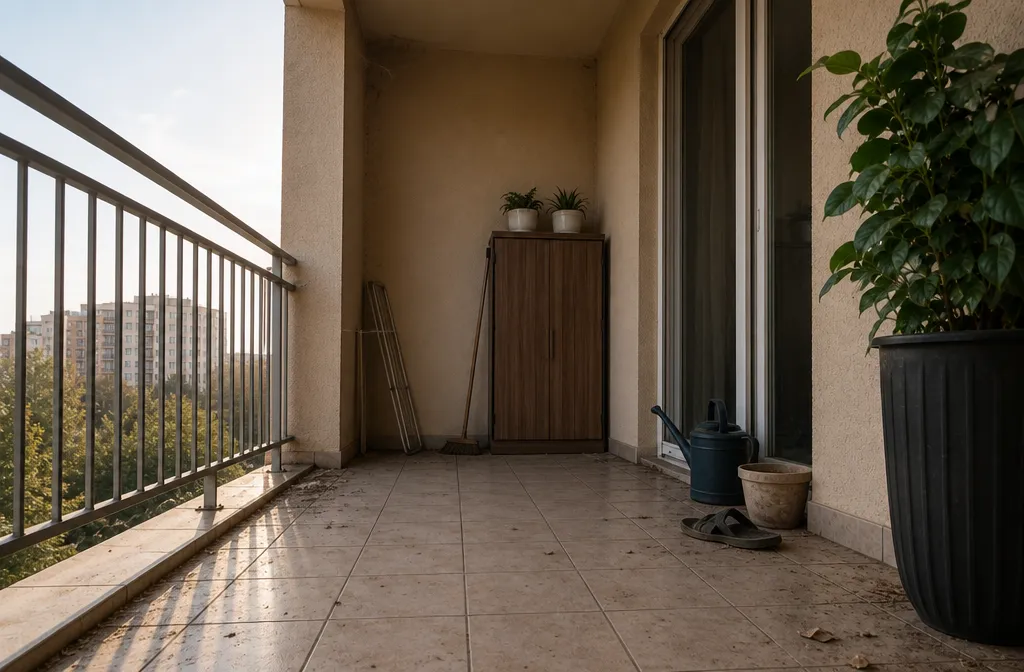
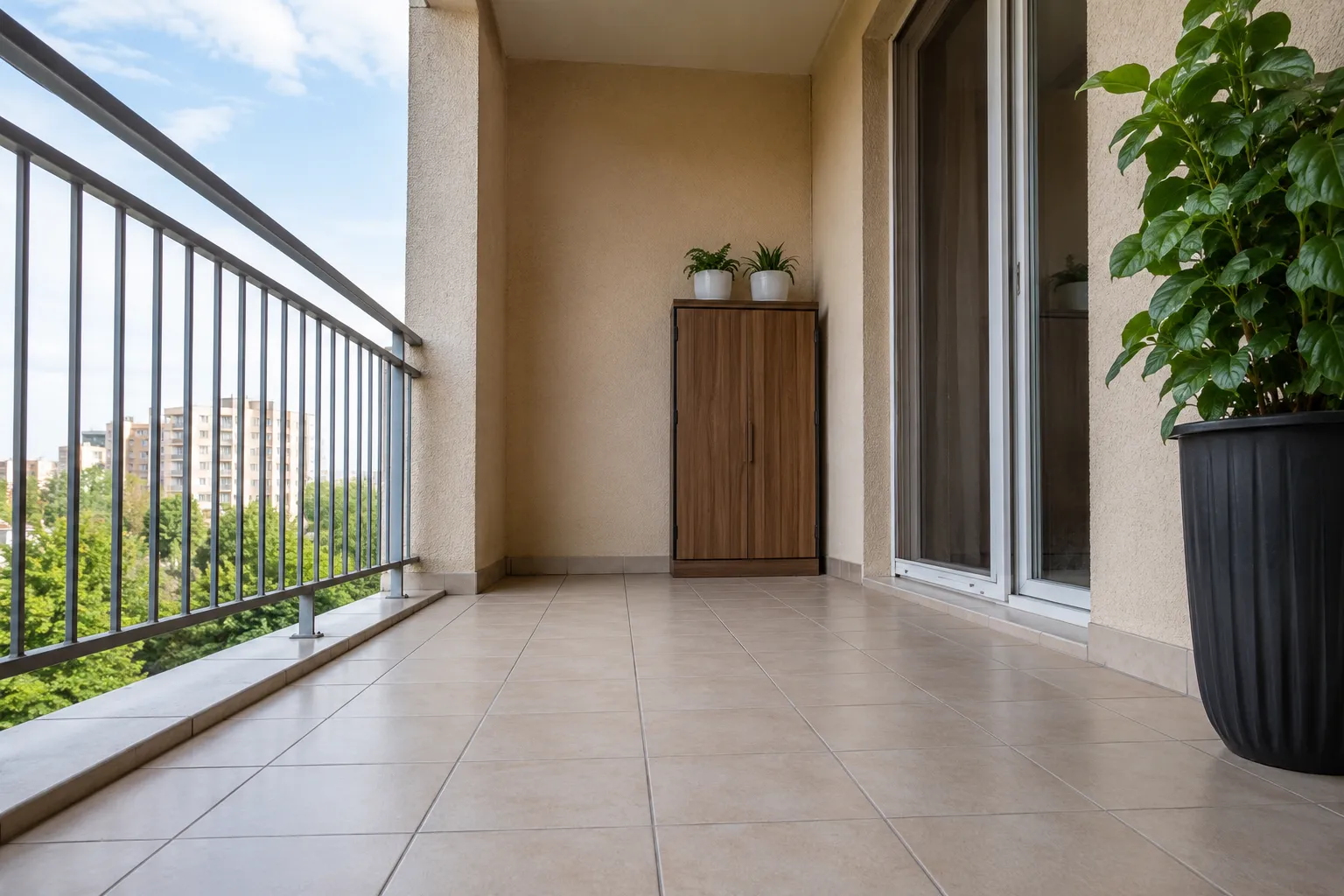
- Seasonal work: during a general cleaning order at profi-clean, we additionally treat balconies and storage rooms (if cleared out) and wash windows with frame disassembly – these zones are not included in maintenance cleaning.
- Result verification: for maintenance cleaning, a visual inspection for the absence of dust is sufficient; for general cleaning, we perform a cleanliness test – we run a white cloth along the top edge of a cabinet or behind the refrigerator (the cloth must remain white).
Frequency: How Not to Miss the Mark or Overpay
The optimal interval for maintenance cleaning in an Almaty apartment is once every 7-10 days if there are pets or children, and once every 2 weeks for singles without pets. General cleaning is typically required once every 3-6 months, depending on the intensity of room usage. There are objective markers that it’s time to call cleaners for a general clean: a yellow film appears on the kitchen backsplash that won’t wash off with a sponge and soap; a white limescale layer forms on the shower enclosure glass (Almaty water has increased hardness – about 5-7 mg-eq/L, which causes buildup within 2 months); black mold appears in the bathroom on tile grout (visible under bright flashlight light). If you mop the floors and feel your soles sticking to the linoleum an hour later, it’s a sign that a greasy film from cooking vapors has accumulated on the flooring, which maintenance cleaning cannot remove.
Which Stains Require a Special Approach
Not all spots and deposits can be washed off with regular household chemicals – some types of dirt penetrate the surface structure and require professional-grade solutions, otherwise, streaks remain or the material gets damaged. In Almaty apartments, we encounter three fundamentally different types of such dirt, and each dictates its own cleaning technology.
Grease Deposits in the Kitchen: Nicotine-Oil Film
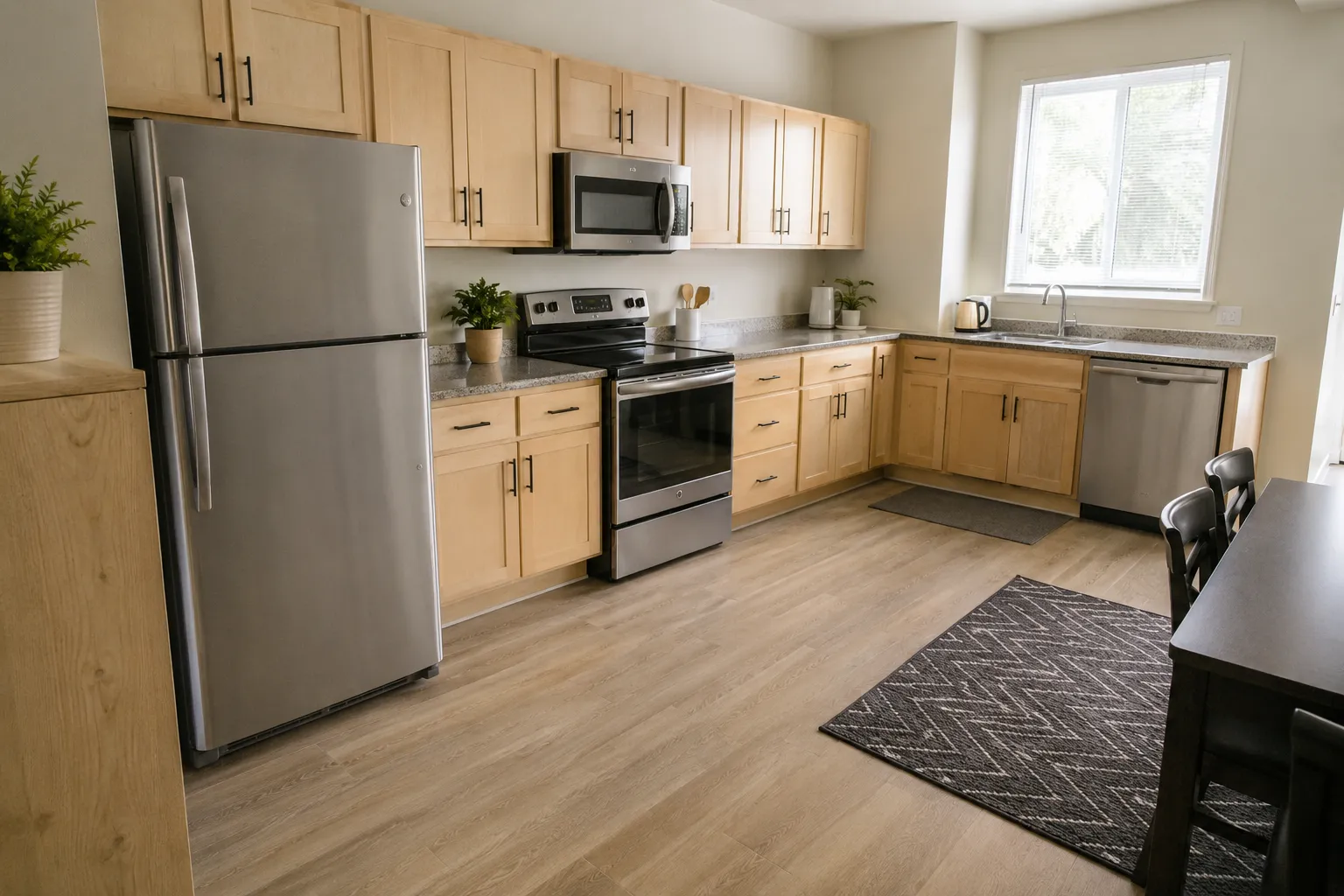
Nicotine-oil film is a condensate of oil vapors, soot, and nicotine that settles on cabinet fronts, range hoods, and tiles. Over a year in a kitchen where daily cooking occurs, a layer up to 0.5–1 mm thick forms, which regular cleaning agents cannot handle — they only spread the grease, leaving a sticky base. We use alkaline concentrates with a pH of 11–12, which saponify grease into water-soluble salts, then rinse it away without abrasives. In my opinion, the main mistake in DIY cleaning is using harsh sponges and powders: they scratch glossy facades, and new grease gets trapped in the micro-cracks, making it impossible to clean out. In kitchens with gas stoves, the film also contains soot particles — in that case, we add an oxygen bleach to the solution to remove yellowing from plastic and enamel. Before treating the facades, we always check the coating’s resistance on an inconspicuous area — on some budget MDF cabinets, the alkali can lift the lamination, turning the cleaning into a restoration job.
Mineral Deposits in the Bathroom: Salt, Limescale, and Rust
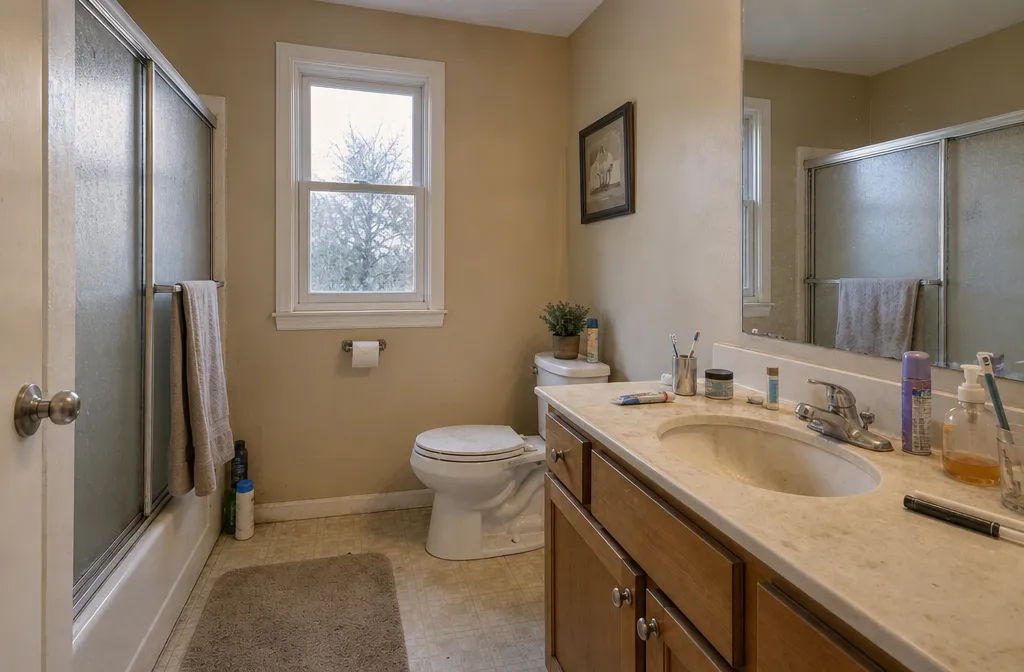
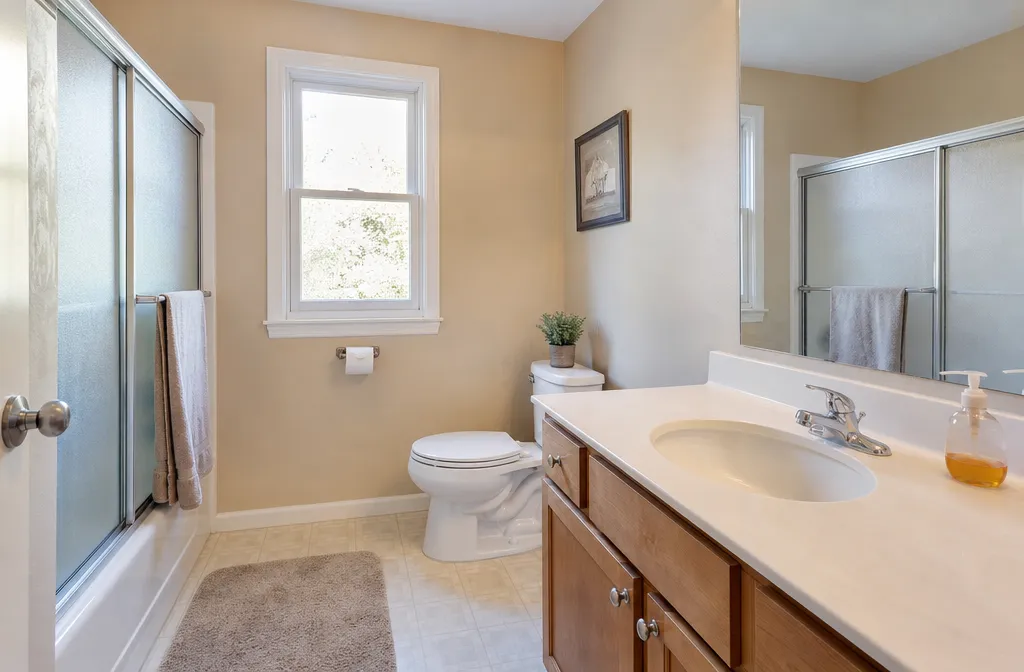
In Almaty’s water, the hardness salt content reaches 5–7 mg-eq/L — higher than the Kazakhstan average, so limescale on faucets and tiles forms within 2-3 weeks. Rusty streaks from old pipes require a special approach: they contain iron oxides that eat into bathtub enamel and acrylic surfaces, leaving irreversible yellow stains if not removed within a month. We use acidic cleaners based on citric or sulfamic acid — they dissolve calcium carbonate and oxides without damaging chrome or ceramics. On mosaic and natural stone (travertine, marble), acids are prohibited — they strip the polish, so for these surfaces, we use paste-like compounds with a pH of 5.5–6.5 and mechanical cleaning with microfiber. Another Almaty-specific issue is black mold in silicone joints due to constant humidity in homes with poor ventilation: bleach is insufficient here; mold is only eliminated after a complete replacement of the sealant, followed by treatment with an antifungal primer.
Stubborn Stains on Carpets and Upholstery
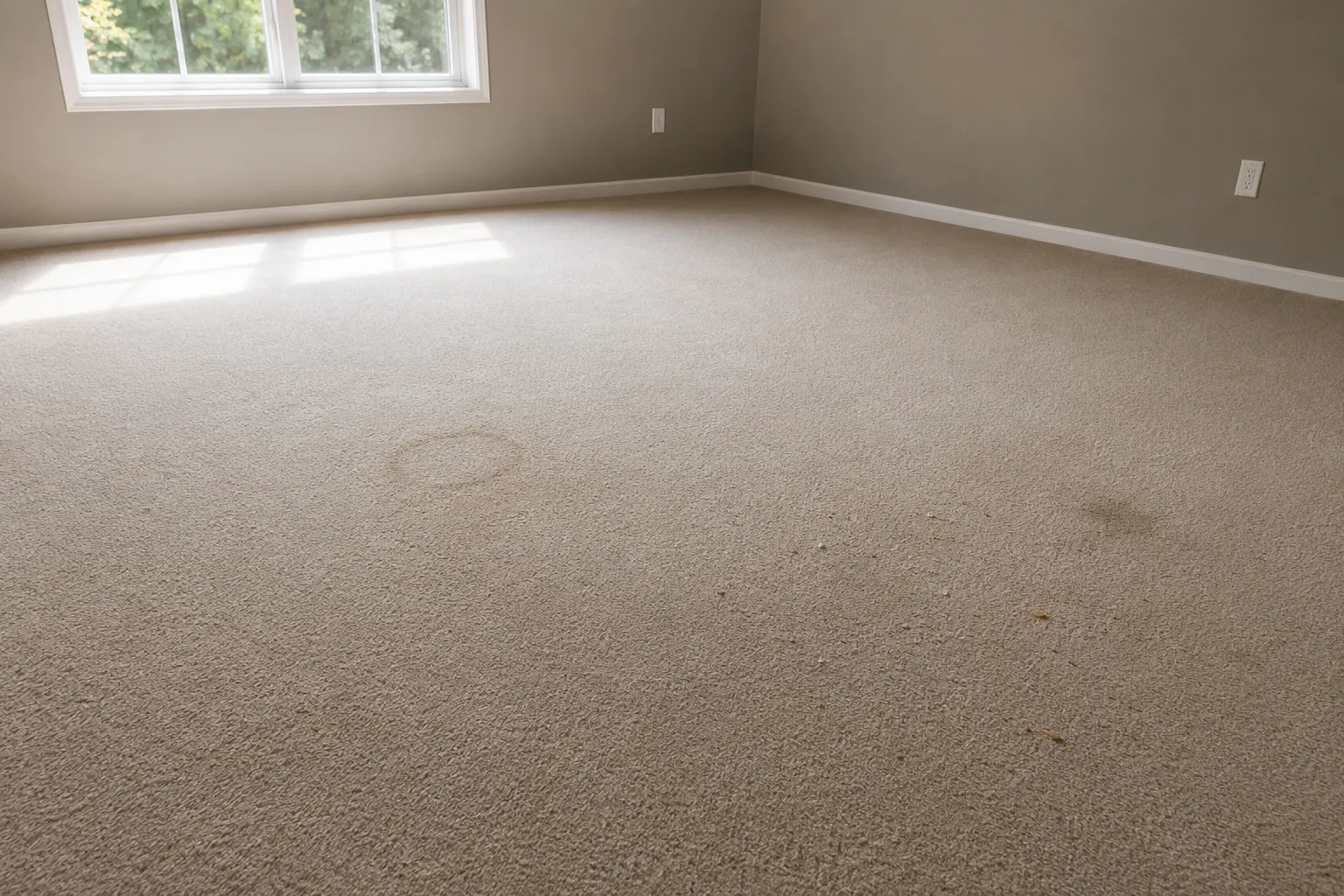
Protein-based stains (blood, milk, urine, sweat) are the most insidious: when exposed to hot water, the protein coagulates and permanently bonds to the carpet fibers. In our practice, there was a case where a homeowner tried to remove a wine stain from a carpet with an iron — afterward, the stain turned purple and could not be removed even with an industrial extractor. We use enzyme shampoos with proteases that break down protein into amino acids, then remove them with cold water (maximum 30 °C). For tannin stains (tea, coffee, fruit), we use oxygen bleaches without chlorine — they oxidize the pigment without discoloring the carpet dye. On silk and viscose carpets (often imported from Turkey and Iran), chlorine and alkali are strictly contraindicated — we only use neutral surfactants and ultrasonic cleaning. If a stain is older than 3-4 months, the fiber has already deformed, and after pigment removal, a “shadow” remains — a light area without pile; in such cases, we recommend local re-dyeing or replacing the carpet section.
Odors Absorbed into Walls and Textiles
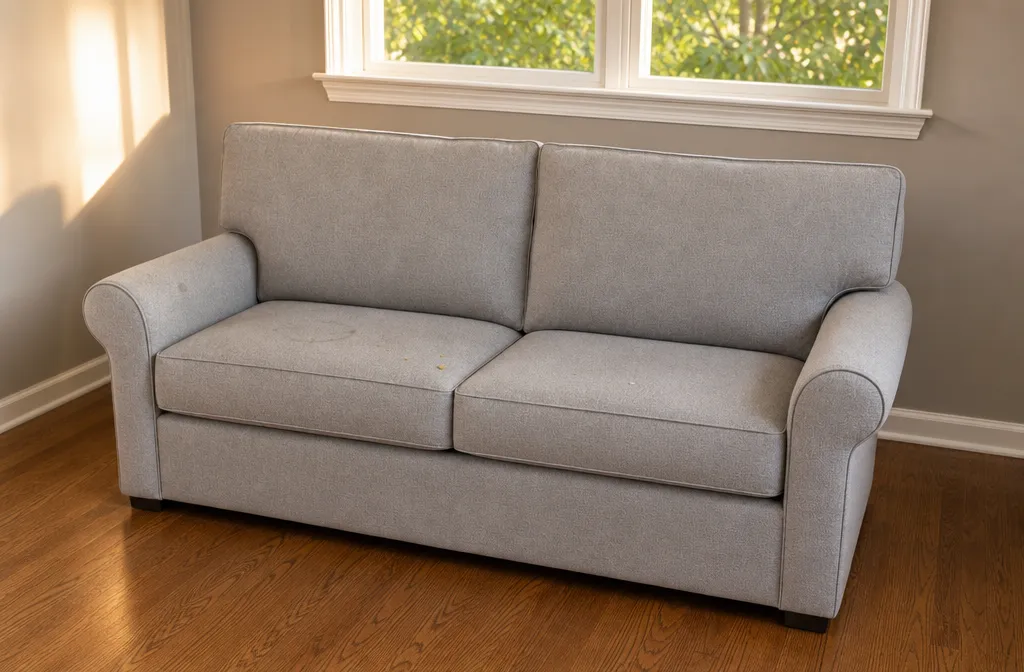
Absorbed odors from tobacco, animals, and mold are a separate category because they reside not on the surface but within the pores of materials. Regular cleaning only temporarily masks them with air fresheners, and the odor returns within a week. We use ozonation (an O₃ generator for 30–60 minutes in an empty room) — ozone oxidizes odor molecules, turning them into harmless CO₂ and H₂O. On fabric surfaces (sofas, curtains), we apply a dry fog with enzyme neutralizers — they penetrate deep into the fiber and break down the odor source rather than masking it. In homes where smokers lived, we have to treat not only textiles but also walls and ceilings — nicotine penetrates paint and plaster, and without professional wall cleaning followed by priming, the odor lingers for years. Before ozonation, we always remove all plants and animals — ozone is toxic to living organisms in high concentrations, and the room must be ventilated for 2-3 hours after treatment.
Oil and Technical Stains in the Entryway and Kitchen
Technical oils (machine oil, lubricating oil) and bitumen stains are rare in apartments but are found in homes with workshops or after renovations. They do not dissolve in water or household degreasers — organic solvents (white spirit, isopropanol) are needed, followed by neutralization with surfactants. On tiles and linoleum, such stains are removed in 1-2 passes, but on untreated wood (floors, window sills), the oil absorbs instantly — the only solution is sanding the top layer followed by varnishing. In Almaty apartments with central heating, oil drips from radiators are common — they contain graphite and rust, and if not removed before the heating season starts, they dry into a hard crust that can only be removed mechanically, risking damage to the paint. On walls with water-based paint, oil stains cannot be removed — we clean the area, putty it, and repaint, which is already a repair, not a cleaning.
Specifics of Almaty Air: Dust and Soot
Urban dust in Almaty contains not only sand and soil but also fine PM2.5 particles from vehicles and thermal power plants — they settle on horizontal surfaces and textiles, creating a gray coating that regular wet cleaning merely redistributes. These particles are so small (2.5 microns) that they penetrate the pores of wood and plastic, and over time, the surface becomes matte and rough. We use vacuum cleaners with HEPA H13 filters — they trap 99.97% of particles down to 0.3 microns, and then we wipe surfaces with antistatic microfiber cloths with a dust fixative. On window sills and drip caps — there is also soot from stoves and fireplaces in private homes: it is oily and sticky, and can only be washed off with a degreaser followed by polishing. During the poplar blooming season, fluff gets clogged in window frame gaps and ventilation grilles — a vacuum cleaner with a narrow nozzle and a brush is essential; otherwise, the fluff compacts into felt and becomes a breeding ground for mold.
“`markdown
How Often Is a Deep Cleaning Recommended?
The frequency of deep cleaning depends not on the calendar but on the residents’ lifestyle, the type of premises, and seasonal factors — Almaty has its own triggers not found in other cities.
Recommended Frequency by Type of Housing
- One-bedroom apartment, 1-2 people without children: Once every 3-4 months — with active use of the kitchen and bathroom, this is enough to prevent grease and limescale buildup.
- Two- to three-bedroom apartment, family with children: Once every 2 months — children’s stains, toys, and frequent surface contact accelerate dust and bacteria accumulation, so the interval is shorter.
- Private house with a yard: Once every 1-1.5 months — outdoor dust, sand, and pollen are brought in on shoes and clothing, settling on textiles and furniture.
- Office or commercial space: Once a month — high foot traffic and daily equipment operation create persistent dirt that routine cleaning does not fully remove.
Seasonal Triggers for Almaty
In spring and autumn, the concentration of suspended dust in the air in Almaty rises sharply — it settles on curtains, upholstered furniture, and ventilation grilles. After the poplar and wildflower blooming period (May-June), fluff gets stuck under baseboards and into gaps of cabinet furniture. If a deep cleaning is not done after each such season, dust mites and allergens accumulate faster than in, say, a coastal city — we lack the humid air that settles suspended particles. Therefore, in April and October, we recommend an unscheduled deep cleaning even for those who stick to a standard schedule — this reduces the respiratory system load on household members by 30-40%, according to feedback from our clients after the first treatment.
How to Know It’s Time, Even If the Deadline Hasn’t Come
- Sticky film on the kitchen backsplash and range hood — it doesn’t wash off with a regular sponge, meaning the grease has already polymerized and requires an alkaline cleaner.
- Gray tint on curtains and sofa upholstery — dust has absorbed into the microfiber of the fabric; a maintenance vacuum cleaner won’t extract it.
- Musty smell in the bathroom after airing out — limescale on tile joints and in the siphon has started to decompose organic matter, accelerating mold growth.
- Dull shine on floors after washing — a film of cleaning agent and dirt has formed on laminate or tiles, which a mop cannot remove.
If you notice at least one of these signs, the standard interval should be shortened — waiting until the next scheduled date is risky: the dirt will have time to reach a stage where not a general cleaning, but a restorative treatment with abrasives will be required.
A typical mistake is confusing a general cleaning with a seasonal one
Many clients order a general cleaning once a year before the New Year, and the rest of the time they limit themselves to maintenance cleaning. In practice, this is not enough: over 12 months, up to 2–3 kg of dust and dirt accumulates in hard-to-reach areas (under the refrigerator, behind cabinets, on the top shelves of mezzanines), which becomes a breeding ground for fungus. In Almaty, with its sharp humidity fluctuations (dry summer → humid autumn), such an environment activates especially quickly. At profi-clean, we see this from the condition of ventilation grilles at properties where general cleaning was done more than six months ago — there are already micro-foci of mold that are not visible to the eye but produce a smell when the heating is turned on. Therefore, the optimal frequency is 2–3 times a year, tied not to a holiday, but to the change of season. “`
What to do if streaks remain after cleaning
Streaks on glass, mirrors, and glossy surfaces are the most common complaint after cleaning, and the cause is almost always a violation of technology, not a “bad product.” We have analyzed three typical situations where clients call us to redo the work of competitors and explain how to avoid these mistakes.
Streaks on glass and mirrors
After window washing, streaks remain if hard tap water with salt impurities is used — in Almaty, its hardness is above the Kazakhstan average, about 5–7 mg-eq/L, due to mountain water intake. When drying, the drops leave a white residue that is not removed by regular detergent. In our practice, we use distilled or deionized water at the final stage — it does not leave sediment. The second factor is a low-quality squeegee: if the rubber is old or has nicks, it smears the water instead of collecting it. At profi-clean, professional squeegees with a Teflon-coated blade are used — they last up to 200 washing cycles. The third reason is washing in the sun: water evaporates faster than it can be collected, leaving droplet “speckles.” It is worth working on windows in cloudy weather or on the shady side.
Streaks on kitchen fronts and countertops
On glossy MDF fronts and acrylic countertops, streaks occur when grease is washed off with an incorrectly selected product — an alkaline composition dissolves the residue but is not completely rinsed off without clean water. The mistake: the cleaner applies the product, wipes it with a sponge, and leaves drips that dry into rainbow spots. At profi-clean, we use a two-pass technology: the first pass — an alkaline composition for grease, the second — a neutralizer with water that removes chemical residues. On matte fronts, streaks are barely noticeable; on glossy ones, they are visible from any angle. We check the result under side light — this way even a minimal film is visible. If streaks are already present, they are removed with a 5% vinegar solution in water (only on acid-resistant surfaces) or a professional anti-rain glass compound.
Streaks on tiles and plumbing fixtures
Bathroom cleaning is the area where streaks appear most often, and the culprit is not the chemicals but the sequence of actions. If you wash the bathtub or sink first, and then the tiles — splashes with detergent fall on the already cleaned surface and dry into spots. The correct order: top to bottom — first the wall tiles, then the plumbing fixtures, then the floor. The second factor is using a hard brush on glossy tiles: micro-scratches from the abrasive collect dirt faster, and over time the surface becomes matte with white streaks. We use microfiber of different densities: 300–400 g/m² for walls, 200–300 for plumbing fixtures. On chrome faucets, streaks from limescale are removed only with a composition containing citric acid (pH 3–4) — regular soap leaves a film. If the deposit is old, it is soaked for 5–7 minutes, then rinsed with water and wiped dry with a chamois cloth — it does not leave lint.
Tips for preparing your apartment for a general cleaning
Proper preparation of the apartment before a general cleaning saves up to an hour of the cleaners’ time and improves the quality of the result — here is what needs to be done before the profi-clean team arrives.
What needs to be removed from open surfaces before work begins
Small items on countertops, windowsills, and shelves hinder quality surface treatment and create shadows—areas where the cleaning solution doesn’t reach. We remove everything that is openly placed: cosmetics, figurines, photo frames, charging stations, books, remote controls, desk lamps. In the bathroom, we remove shampoo bottles, toothbrushes from cups, and soap dishes. In the kitchen—bread bins, sugar bowls, kettles, toasters, cutting boards, and knife blocks. Decorative pillows and throws from sofas are best stacked in one corner or put away in a closet—this ensures the most thorough upholstery cleaning. Important exception: do not leave fragile items (vases, porcelain, figurines) on the floor—cleaners are not responsible for breakage of items they were not warned about. In our practice, there was a case where a homeowner left a Venetian papier-mâché mask on the windowsill—the cleaner, moving the curtain, knocked it over. Since then, we ask that all fragile items either be put in a closed cabinet or placed on the floor in an area we do not access.
How to prepare wardrobes and closets: what to leave, what to take out
Deep cleaning includes treating the inside of closets only upon prior request—standardly, we work with facades, mezzanines, and open shelves. If you order cleaning inside the closet: remove all clothes from hangers and fold them on the bed or sofa in the same room. Gather shoes on the lower shelves into boxes or bags. Bed linen, towels, and throws from the top shelves—stack them on a chair. Our tip: don’t try to empty the closet 100%—cleaners work with a vacuum cleaner and a damp cloth; it’s enough to clear 2-3 shelves for them to place items on to reach the top ones. In practice, in Almaty apartments with high ceilings (270-280 cm), the upper mezzanines are often packed with boxes of Christmas ornaments and old documents—remove them in advance, otherwise the cleaner will just wipe the dust from below without moving the boxes. Actionable insight: if the closet contains items made of thin silk or cashmere, cover them with a sheet—even damp cleaning can leave drops on the fabric, which after drying cause streaks.
Flooring safety: what needs to be removed and laid down
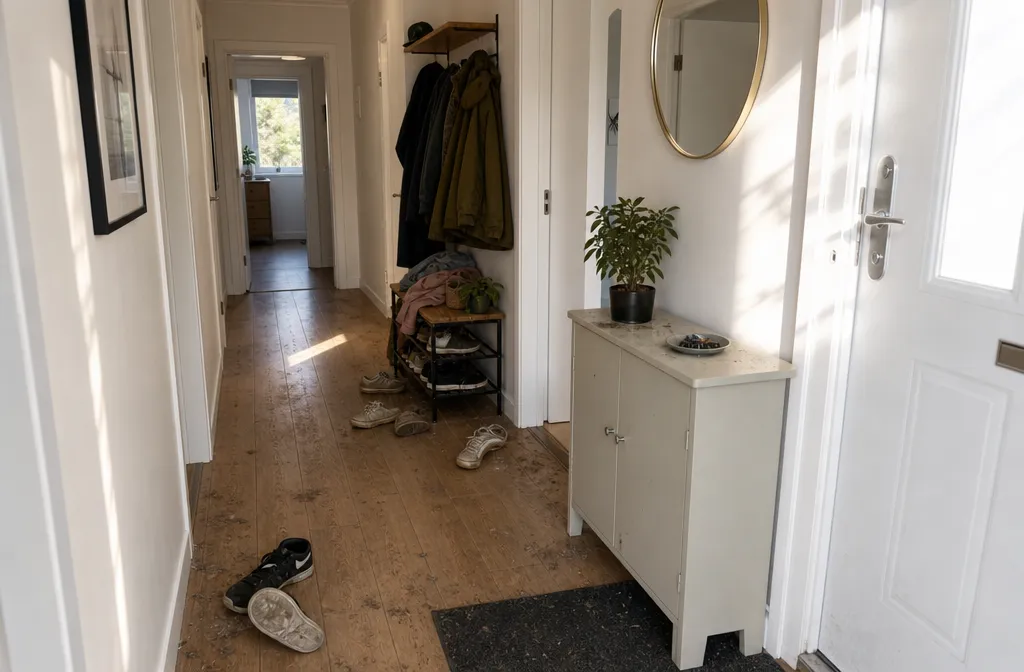
Parquet, laminate, and engineered wood in Almaty suffer from humidity fluctuations—dry air in winter (15-25%), humid in summer (60-70%). Before a deep cleaning, remove all rugs and runners—sand and fine debris accumulate underneath, which turns into an abrasive paste during damp cleaning and scratches the laminate. Door mats, hallway rugs, and kitchen mats—first priority. If there is a long-pile carpet on the floor, roll it up and stand it vertically against the wall or take it out to the balcony—there is always an area underneath where the vacuum cleaner hasn’t been since the last deep cleaning. For parquet and laminate: ask cleaners to use a special microfiber damp cleaning attachment with minimal water—excess moisture seeps into the joints, and after 2-3 cycles, the boards start to creak. In Almaty new buildings with underfloor heating, it is especially important: do not turn on the heating 2 hours before cleaning and for 4 hours after—the temperature difference during damp cleaning can deform the lamellas. Our observation: clients who remove rugs before cleaning get a 30% cleaner floor covering than those who leave them in place—up to 200 grams of sand and hair can accumulate under a rug in a month.
Kitchen preparation: refrigerator, stove, and small appliances
The kitchen is the most labor-intensive area in a deep clean, and preparation here is critical. Refrigerator: if you are not ordering defrosting and interior cleaning, simply wipe the external surfaces — handles, top lid, back wall (if accessible). If you are ordering it, clear all shelves: food in bags, eggs in containers, jars, bottles. Perishables (meat, fish, dairy) should be placed in a thermal bag or a neighbor’s fridge — cleaners clean the refrigerator for up to 40-60 minutes, and during this time, food spoils without cold. Stove and oven: remove the grates, baking trays, and baking dishes — they are soaked separately. Burner caps (if removable) are best removed and placed in the sink. Small appliances: put the multicooker, coffee machine, toaster, and blender away from the countertop onto a table or in a cupboard — there is always a greasy film underneath them that needs to be scrubbed with a special solution. Actionable insight: in an Almaty kitchen with a gas stove, grease hardens faster due to hard water (up to 350 ppm in some areas) — turn on the extractor hood for 15 minutes before cleaning to reduce the viscosity of grease deposits, making them easier to remove without harsh chemicals.
Important points for the bathroom and toilet: what to remove and how to treat
The bathroom requires special preparation due to high humidity and limescale. Remove from shelves and hooks: towels (all of them, including those on the towel warmer), bathrobes, loofahs, sponges, toothbrushes, razors, hairdryer, curling iron. It is best to leave the mirror and glass shelves empty — cleaners will wipe them with a special streak-free product. Shower curtain: if it is fabric, remove it and soak it in bleach or send it to the dry cleaner (we can do this). If it is plastic, just leave it; we will treat it with an anti-mold solution. Toilet: remove the toilet brush and toilet paper holder — they hinder the complete cleaning of the outer surface of the tank and the floor around it. Actionable insight: if there is mold on the silicone seals in the bathroom (black spots along the tile and bathtub joints), do not try to scrub it off with bleach the day before cleaning — bleach discolors the silicone but does not kill the fungus deep inside. It is better to leave it as is: our cleaners will treat the seals with a professional fungicide based on quaternary ammonium compounds — it penetrates the silicone and kills the mycelium in 10-15 minutes, after which the black spots are simply washed away with water.
Window and windowsill area: what to do before the cleaners arrive
Window cleaning is part of the deep clean, but preparation speeds up the process and prevents streaks. Remove from windowsills: flower pots, planters, vases, picture frames, candles. If there is an indoor orchid or ficus on the windowsill, move it to the floor or another room — when cleaning windows, cleaners use a telescopic pole with a cloth that could hit the leaves. Curtains and blinds: it is best to remove thin tulle and soak it in advance — if it hasn’t been washed for a long time, the dust from it settles on the freshly cleaned glass. We clean horizontal aluminum blinds on-site with a special vacuum attachment; they do not need to be removed. Mosquito nets: remove them and place them in the bathtub — they are washed separately under the shower, and it is inconvenient to do this in place. Actionable insight: in Almaty high-rises with plastic windows, gaps between the frame and the wall are common, where dust from the street blows in — if you notice such gaps, inform the cleaner before they start washing the windows; they will blow them out with compressed air and wipe them from the inside, otherwise, dust will reappear on the windowsill an hour after the glass is cleaned.
What to do with pets during a deep clean
Cats, dogs, and birds are an additional factor that can slow down cleaning and cause stress for your pet. It is best to isolate cats in one room with a litter box, bowl, and water — keep the door closed and ensure the window has a screen. The loud noise of the vacuum cleaner and the smell of chemicals (even hypoallergenic ones) frighten animals, and they may hide in inaccessible places (under the bathtub, behind the wardrobe), making it difficult to get them out later. Small breed dogs (Yorkies, Toy Terriers, Chihuahuas) should be placed in a carrier or in a room without carpets. Large dogs (Labradors, German Shepherds) are best taken for a walk during cleaning or left with a family member — they will interfere by trying to sniff the cleaner and the tools. Cover cages with birds and rodents with a thick cloth — dust and fumes from cleaning products can cause respiratory irritation. Our advice: if you use our services regularly (once every 2-3 months), accustom your pet to the presence of strangers in uniform — the first cleaning will be stressful, but by the second or third time, the cat will no longer hide, and the dog will calmly lie in its spot. In our practice, there was a case where the owner forgot to close the hamster in its cage, and it escaped into a gap behind the baseboard — we had to dismantle the corner to retrieve it. Since then, we always remind: all small rodents should be kept only in a cage with a tightly closed door.