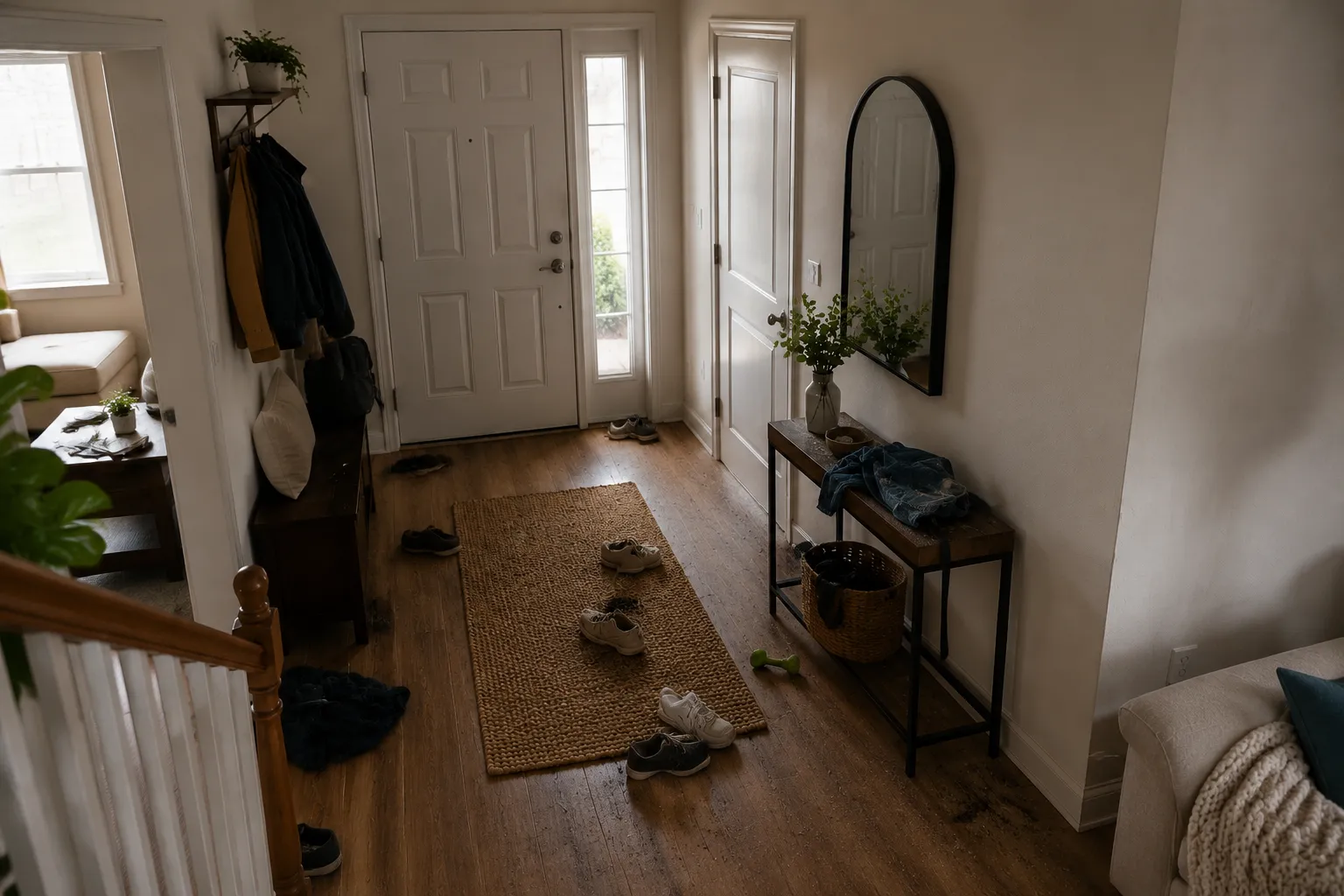
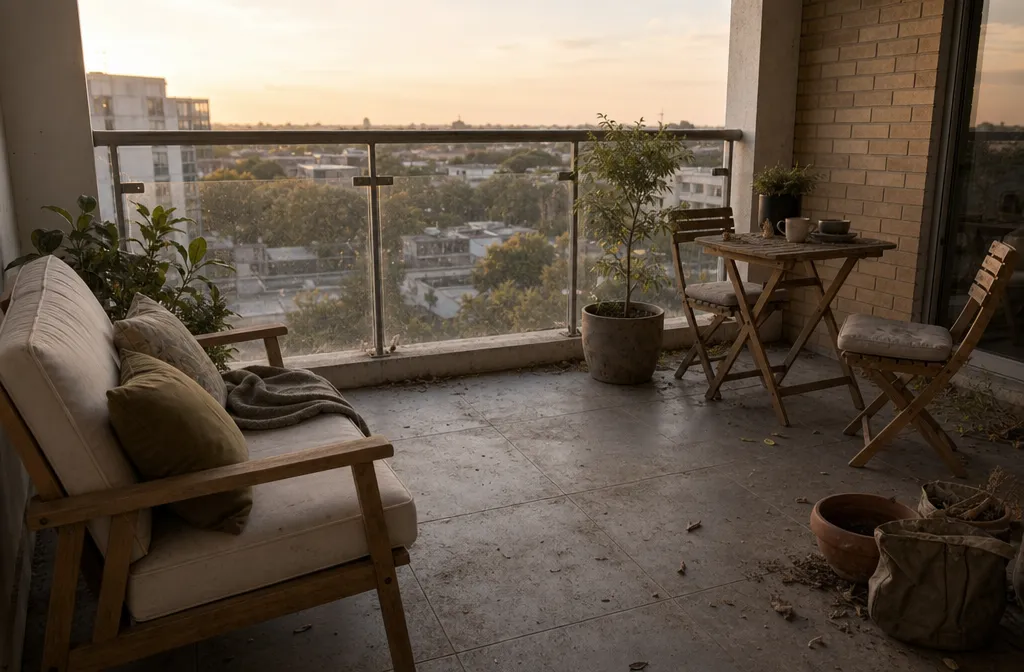
What Contaminants Are Found in Neglected Apartments and How We Remove Them
In neglected apartments, layers of contaminants accumulate that ordinary household chemicals and a cloth cannot handle: from greasy deposits in the kitchen to old stains and dust build-up in hard-to-reach places. Our profi-clean cleaners work with each type of dirt using a separate technology to restore surfaces to their original appearance without damage.
Grease and Kitchen Deposits
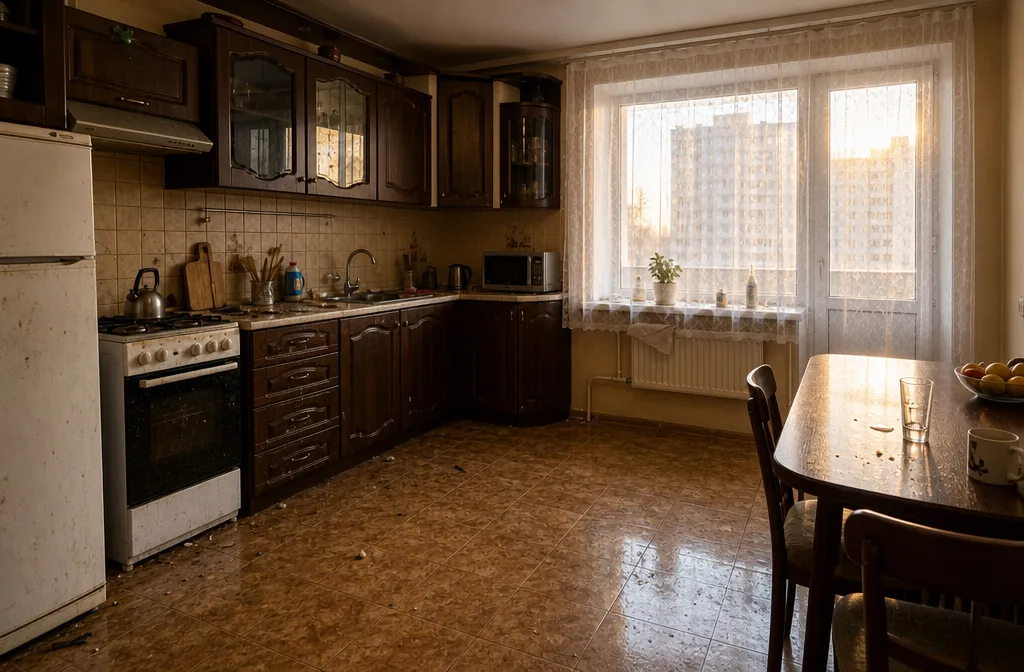
In the kitchen of a neglected apartment, grease is the main enemy. It settles on the range hood, backsplash, cabinet fronts, and tiles in layers that harden into a sticky crust over time. We remove it not with abrasives (which scratch glossy surfaces), but with alkaline potassium-based compounds — for example, the professional product Kiehl K-25, which breaks down grease in 5-7 minutes without mechanical rubbing. On old deposits, we apply the compound, let it sit for 10-15 minutes, then rinse it off with a steam cleaner at 140 °C — the steam softens even years-old build-up on the range hood that a sponge cannot handle. Inside ovens and microwaves, we use Sodasan gel to remove burnt-on grease — it is safe for enamel and leaves no odor. We have encountered cases where grease on a glass ceramic cooktop has baked into a film — we remove it with a scraper blade at a 45° angle, then polish with a microfiber cloth. In Almaty apartments with Soviet-era layouts, there are often old range hoods where grease has permanently clogged the filters — we soak these in an alkaline solution for 20 minutes rather than cleaning them in place, to avoid spreading dirt around the kitchen.
Old Stains on Floors and Walls
Stains from spilled coffee, wine, oil, or paint on linoleum, laminate, and tiles are common in neglected apartments. On linoleum, old marks from shoes and furniture are removed with a special polymer cleaner, Kiehl L-10, which restores the top layer without dullness. For laminate, we use a neutral pH compound — alkaline substances eat away at the seams, causing the boards to swell. On tiles and grout in the bathroom, rusty streaks from old pipes or drips often remain — these are removed with an acidic gel based on citric acid, applied pointwise for 3-5 minutes. Wall panels and wallpaper stained by children’s markers or greasy hands are treated with a foaming enzyme cleaner — it breaks down organic matter without soaking the paper. In one Almaty apartment, there were wax candle stains on the walls — we removed them using a cold method (froze them with an ice cube in a bag and chipped them off with a spatula) to avoid leaving a greasy mark. It is important for us not just to wipe off the dirt, but also not to damage the coating — so at every site, we test the product on an inconspicuous area.
Dust Deposits in Hard-to-Reach Places
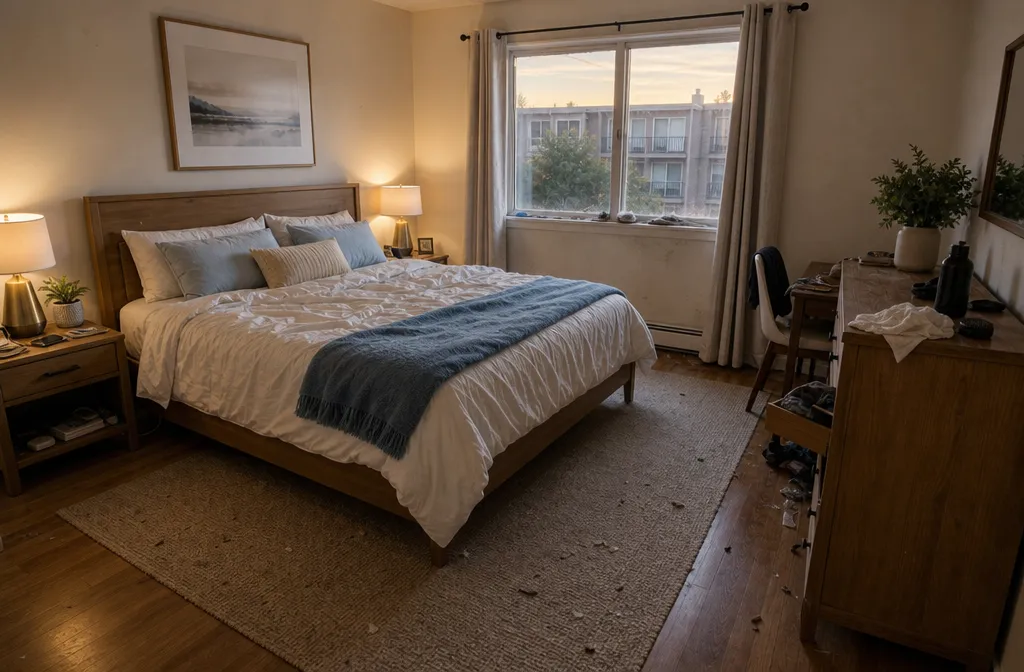
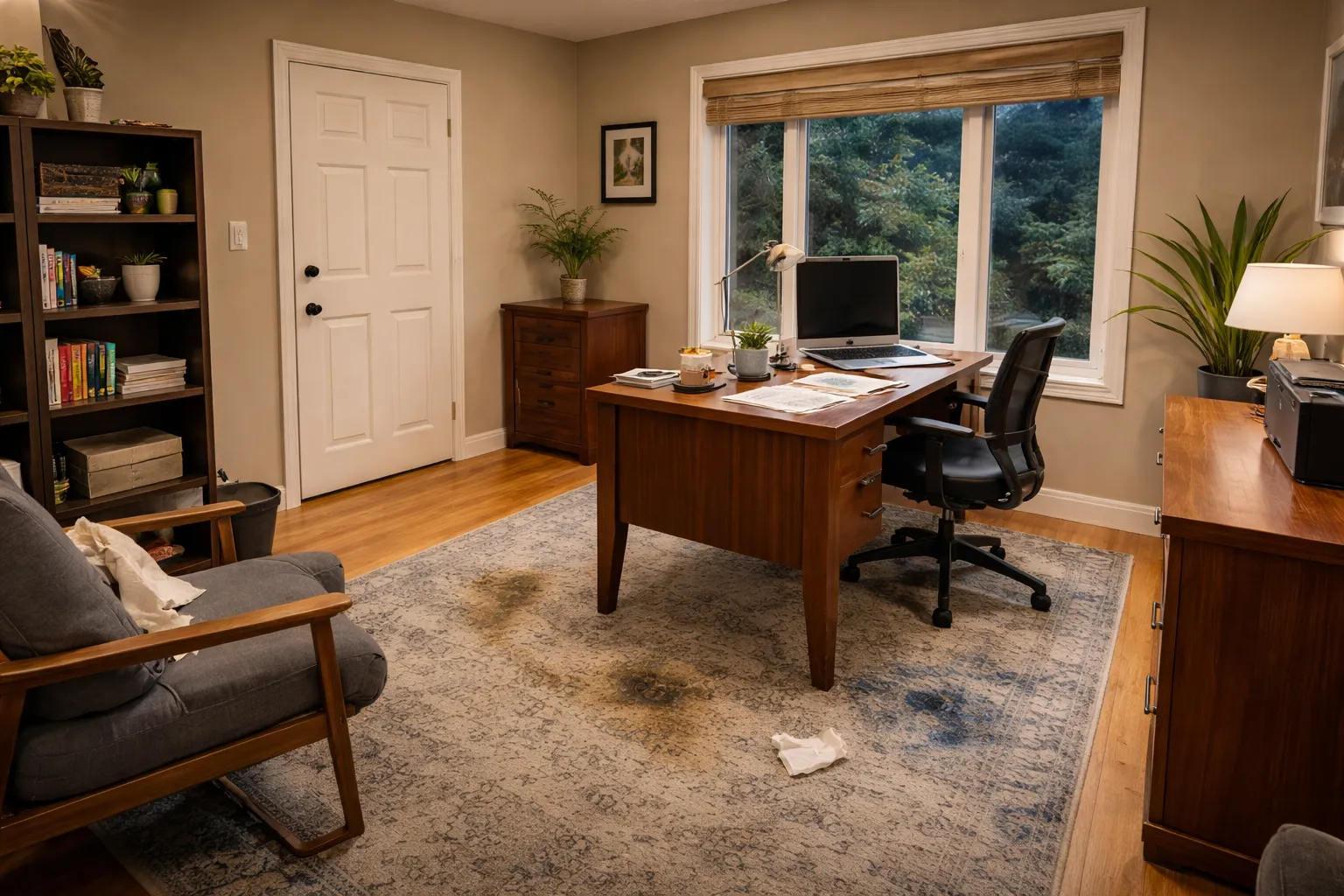
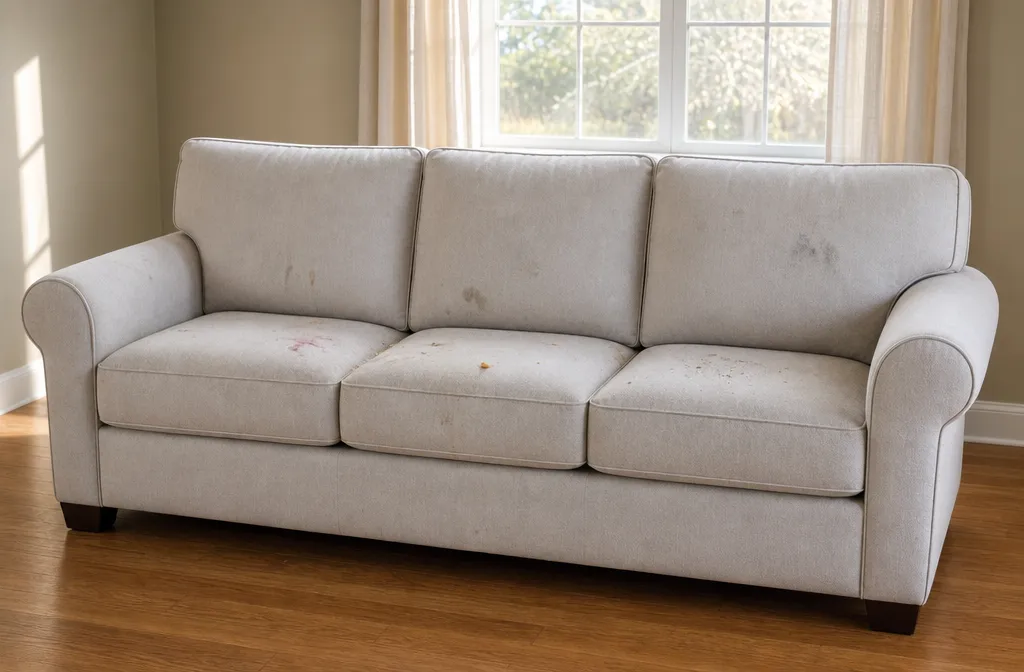
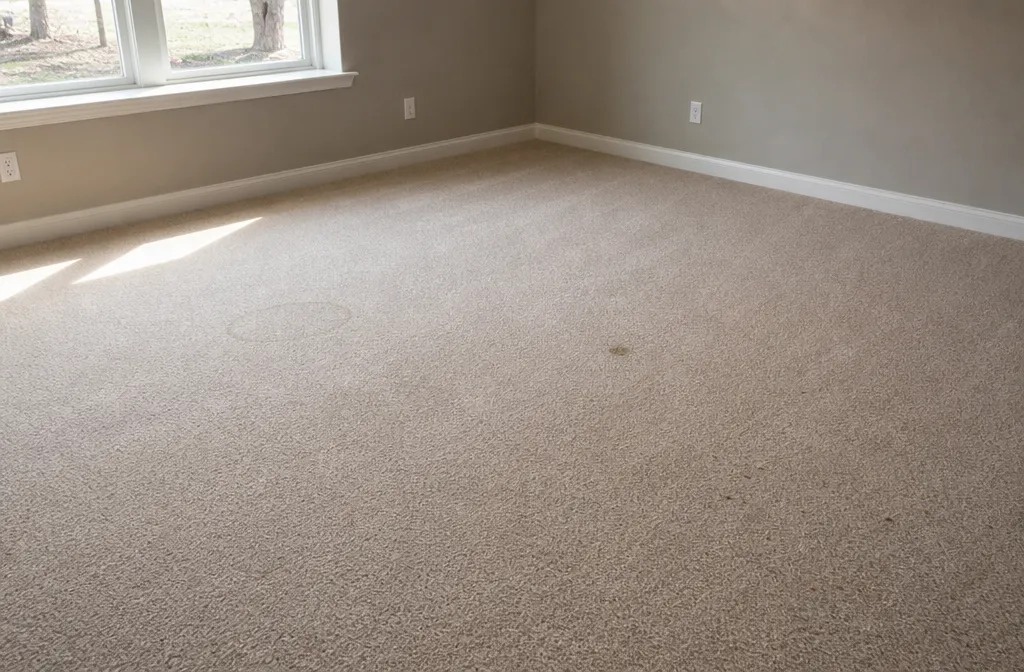
Under furniture, behind cabinets, and on mezzanines in neglected apartments, dust accumulates mixed with pet hair, plaster particles, and soot — this is not just a gray coating, but an allergenic cocktail. We remove it not with a broom (which stirs dust into the air), but with a vacuum cleaner equipped with an H13 HEPA filter, which traps 99.97% of particles as small as 0.3 microns — including house dust mites. On top shelves and cornices, we use a soft-bristle attachment to avoid knocking dust onto the floor. Behind heating radiators in Almaty’s “Khrushchevka” apartments, there are often years-old deposits — we blow them out with a compressor and immediately collect them with a vacuum cleaner, otherwise the dust will settle back. On fabric lampshades and curtains, dust becomes embedded in the fibers — here, a steam generator helps: steam at 4.5 bar pressure knocks particles out of the fabric, and we immediately suction them up with a wet attachment. If the apartment has carpets, we treat them with a dry shampoo using an extractor — it pulls dust from deep within the pile rather than just washing the surface. After such cleaning, the air becomes noticeably cleaner — clients with allergies often note this in their reviews on 2GIS.
Mold and Mildew in the Bathroom and Kitchen
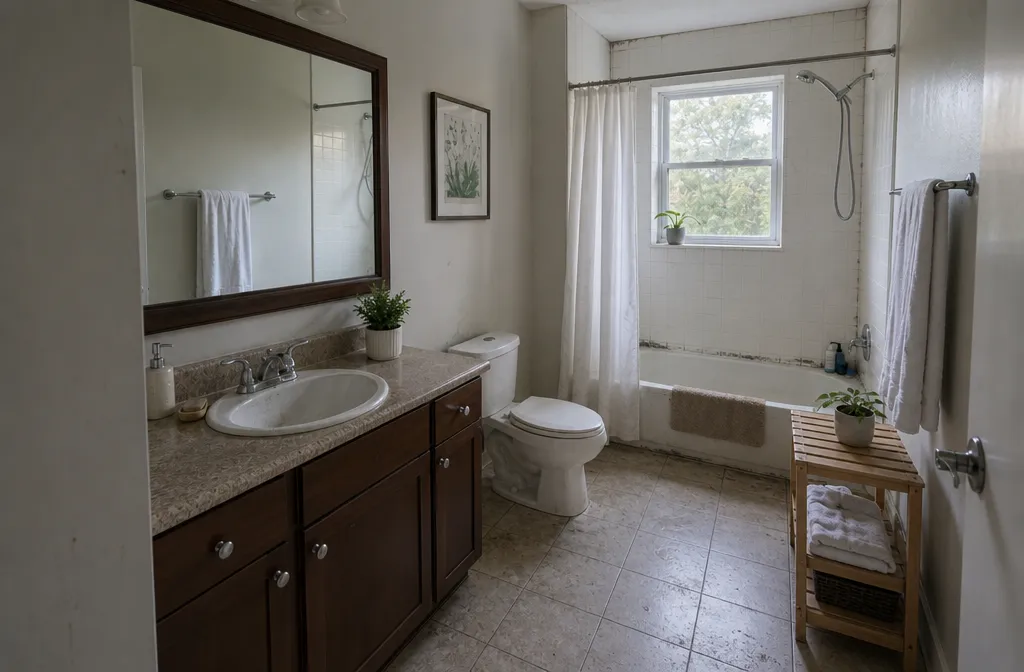
In neglected apartments with poor ventilation, mold appears at tile joints, under the sink, and on the bathroom ceiling — as black spots or white fluffy deposits. We do not use bleach (it whitens grout and releases caustic gas), but instead apply a professional fungicide based on quaternary ammonium compounds — it penetrates material pores and kills mycelium to a depth of up to 2 mm. Before treatment, we clean the surface of visible deposits with a steam cleaner, then apply the compound with a brush, leave it for 15 minutes, and rinse it off. On silicone sealants, the mold has already set in — we recommend replacing such areas, but if the customer insists on keeping them, we treat them with a concentrated solution for 30 minutes. In Almaty apartments on the first floors, mold often comes from basement dampness — in such cases, we advise installing a supply air valve and provide a preventive care guide. Important: mold on wallpaper cannot be removed — it will have to be stripped, but we warn about this before starting work to avoid surprises.
Limescale and mineral deposits in plumbing
On faucets, showerheads, and toilets in neglected apartments, white or rusty deposits form from hard water — in Almaty, the water is moderately hard (5-7 mg-eq/L), so buildup accumulates quickly. We remove it with an acid gel based on sulfamic acid — it dissolves calcium carbonate in 3-5 minutes without scratching chrome or stainless steel. On old cast-iron bathtubs with yellowing, we use oxalic acid in a paste — it lightens the enamel without abrasives. Toilets with years-old uric scale are treated with hydrochloric acid at a 10% concentration (safe for earthenware), left for 10 minutes, and flushed — the scale flakes off. If a faucet has rusty streaks from old pipes, we first remove the rust with a special product containing a corrosion inhibitor, then polish it to a shine with microfiber. In neglected apartments, clogged aerators are common — we remove them, soak them in vinegar for 30 minutes, and clean them with a needle, otherwise water pressure will remain weak.
How cleaning a neglected apartment differs from deep cleaning
Many people confuse deep cleaning with cleaning a neglected apartment, although these are different services with incomparable labor, chemicals, and risks. Deep cleaning handles household dust and light dirt, while a neglected apartment requires an aggressive approach with a preliminary assessment of surface conditions.
Approach to caked-on grease and deposits
Deep cleaning uses universal cleaning agents with low alkalinity — they work on fresh stains but are powerless against layers of grease that have accumulated over years. In a neglected apartment, we use industrial degreasers in the kitchen and backsplash area: first, we apply an alkaline compound for 15–20 minutes to soften it, then remove layers with a scraper without risking damage to the enamel. Our cleaners test the material’s reaction on an inconspicuous area — on glossy plastic, alkali leaves streaks, so a neutral gel with microfiber is used there. Moreover, on old range hoods, grease soaks into the filter so deeply that chemicals alone won’t suffice — we have to soak removable parts in a hot soda solution for up to two hours, which is simply not done during deep cleaning.
Techniques for extracting dust from porous surfaces
A regular vacuum cleaner with a bag or cyclone filter only lifts the top layer of dust from smooth floors, but in a neglected apartment, dust penetrates the pores of upholstered furniture, high-pile carpets, and laminate joints. We use an extractor washer with water pressure of 8–10 bar and a HEPA filter class H13 — it washes out dust mites, mold spores, and nicotine resins from deep within the upholstery. Deep cleaning is limited to dry carpet brushing with a brush, leaving up to 40% of allergens inside the fibers. In practice, this means: after our cleaning, asthma attacks in rooms with allergy sufferers stop within 24 hours, whereas after regular cleaning, relief lasts only a couple of hours.
Material safety under aggressive treatment
In a neglected apartment, the risk of damaging surfaces is higher than during a general cleaning: solvents strip paint from wooden frames, abrasives scratch acrylic bathtubs, and acidic agents eat away at chrome faucets. Our technicians categorize chemicals by class: on MDF kitchen cabinets with PVC film, we use only neutral compounds with a pH of 7–8; on tiles, alkaline gels with a pH of 10–11; and on natural stone in the hallway, low-concentration acidic cleaners (no more than 5% citric acid). General cleaning often uses an “all-purpose surface cleaner” — in a neglected apartment, this approach leads to dull spots on gloss and fabric fading. Therefore, before starting work, a profi-clean master creates a material map of the premises and selects chemicals individually, which is not possible in a standard cleaning tariff format.
Specifics of cleaning neglected apartments in Almaty: climate and typical problems
Almaty’s climate is not just a backdrop, but a direct factor that determines what contaminants we encounter in neglected apartments and how we have to remove them.
How Almaty’s air and dust complicate cleaning
Almaty is a city in a basin, where smog and fine PM2.5 dust settle on surfaces in a dense layer, mixing with household dirt. In neglected apartments, this dust doesn’t just lie there — it embeds itself in textiles, wallpaper, and plastic window frames, forming a hard-to-remove film after every rain or street watering. In our practice, there was a case: in an apartment on Abay Avenue, where windows hadn’t been washed for 3 years, the layer of grime on the glass reached 2 mm — it had to be removed with a scraper and a professional surfactant-based compound, as ordinary water with vinegar left streaks. In my opinion, the main mistake residents make is trying to wash such windows with household products: they smear the soot instead of removing it. Before ordering cleaning in Almaty, check if the company uses equipment with HEPA filtration — without it, part of the dust returns to the air and settles again within an hour.
The specifics of stubborn kitchen grease in a sharply continental climate
In winter, Almaty residents ventilate their kitchens less often, and condensation from cooking mixes with street dust, creating a layer of grease on walls and hoods that turns into a sticky “stalactite” within six months. In neglected apartments, this layer can be 3-5 mm thick on the backsplash and tiles — neither powders nor brushes can handle it without pre-soaking. In October, at a site in the “Samal” microdistrict, we softened grease on a hood with a professional alkaline gel for 40 minutes at 50°C — only then did it come off the metal without damaging the coating. Because winters in Almaty are humid and cold, grease on unheated balconies hardens into a monolith — it has to be heated with a steam generator, rather than trying to scrape it off mechanically. If you are planning a cleaning after tenants, keep in mind: kitchen grease on walls in Almaty apartments often contains soot impurities from gas stoves — regular degreasers are powerless here; specialized chemicals with a pH of 12-14 are needed.
Why neglected apartments in Almaty suffer in bathrooms and ventilation
High humidity in the city (especially in spring and autumn) combined with poor ventilation in old buildings is a direct path to black mold in bathroom corners and tile joints. In neglected apartments, mold doesn’t just ruin the appearance — it grows into grout and under silicone sealants, and its removal requires not only chemical cleaning but also subsequent treatment with a deep-penetrating antiseptic. In one apartment on Zharokova Street, we found mold behind the toilet that had “eaten” 5 mm of silicone over 2 years — we had to completely remove the sealant, clean the joints with steam, and apply a new plumbing compound. Our cleaners always check ventilation grilles: in neglected properties, they are 70-80% clogged with dust and grease, which worsens air circulation and creates a greenhouse effect for mold. When ordering cleaning, ask to include steam treatment of the ventilation — this is the only way to remove spores from hard-to-reach places without dismantling the duct.
How often should you clean a neglected apartment
Here we answer the main question from owners: how often should you clean a neglected apartment so it doesn’t return to its original state. The frequency depends on two factors — the residents’ lifestyle and the initial degree of contamination, not on a calendar schedule.
One-time cleaning after prolonged neglect
After the first deep cleaning of a neglected apartment, we recommend reinforcing the results with a maintenance clean within 7–10 days. During this week, dust stirred up during the deep clean settles, and areas that may have been missed due to layered grime become visible. At this stage, we perform a light damp cleaning and wipe down surfaces — without scrubbing old grease, as it is no longer present. In our experience, this two-pass approach provides lasting order for 2–3 months, especially in Almaty apartments with panoramic windows, where dust settles faster.
Scheduled Frequency: Monthly or Quarterly
For a typical Almaty apartment after cleaning a neglected unit, the optimal interval is once every 2 months. If smokers or pets live in the space, the interval shortens to 3–4 weeks: nicotine resin and pet hair accumulate on surfaces within 10–14 days, and after missing two cycles, sticky kitchen residues return. For non-residential apartments rented out daily, the frequency should be after every 2–3 guests; otherwise, a stale odor appears within a month that ventilation cannot remove. We had a case where the owner of a studio on Abay Avenue scheduled cleaning once a month, but due to proximity to a busy road, windows became coated with soot in 3 weeks — we had to switch to a bi-weekly schedule.
Seasonal Adjustments for Almaty
In Almaty, the frequency of cleaning a neglected apartment directly depends on the season: in winter and spring, the interval can be extended to 2.5–3 months because the humid mountain air traps dust, reducing its movement when walking. In summer, especially in July–August, when dust is carried from vacant lots and construction sites, we recommend shortening the interval to 4–5 weeks — otherwise, a noticeable layer of gray dust forms on windowsills and appliances within 2 weeks. In autumn, after leaf fall, cleaning the hallway and balcony is added — leaves and dirt from shoes are tracked into the apartment within 2–3 days.
When a Neglected Apartment Needs a Repeat Deep Clean, Not Just Maintenance
A repeat deep clean, rather than just maintenance, is needed if more than 6 months have passed since the previous deep clean without intermediate cleaning. By this time, grease deposits reappear on the kitchen hood and backsplash, and soap scum forms on bathroom tiles that a regular damp cloth cannot remove. We identify the moment by two signs: if running your hand along the top edge of a kitchen cabinet leaves a sticky residue, or if mirrors show streaks after a shower that glass cleaner cannot remove — it is time to call a team with chemicals for deep cleaning.
Tips for Maintaining Cleanliness After a Deep Clean
After profi-clean cleaners have removed years of grime, the key is to prevent the apartment from returning to its original state. We have gathered practical tips that help our clients in Almaty preserve results for months, not weeks.
Daily Routine: 10 Minutes That Prevent Neglect
After a deep clean, spending 10–15 minutes daily on three zones is enough to prevent the return of residue and dust. First — the kitchen backsplash and cooktop: wipe them immediately after cooking, before the grease hardens; otherwise, a sticky film appears within a week that requires steam cleaning again. Second — the floor at the entrance and in the hallway: Almaty street dust (especially near construction sites or Tastak-2) settles in a dense layer within a day. A damp mop with microfiber without chemicals each morning takes 3 minutes and removes 90% of the sand. Third — the bathroom: after a shower, rinse water residue from walls and fixtures with a stiff sponge — Almaty water has high mineral content, which creates white deposits on chrome surfaces within a week. In my opinion, this minimum is the only way to avoid calling us back within a month and to extend the interval between deep cleans to six months.
Storage Organization: How to Eliminate Dust Collectors
The most common reason for dirt returning quickly in Almaty apartments is open surfaces without a storage system. After a deep clean by profi-clean, we recommend reviewing three things. First, replace open shelving with cabinets with doors or drawers — books and decor on shelves collect Almaty dust in 2–3 days, and vacuuming them every week is tiresome. Second, use containers with lids for kitchen staples: cereals, pasta, and tea in open packages are a source of crumbs and moths. Third, carpets: if you’re not ready to give them up, choose models with short pile (up to 10 mm) and steam clean them once a month, otherwise in 3–4 months they become a reservoir for dust mites. We had a case: a client bought closed storage systems for the hallway after cleaning — and the frequency of wet cleaning dropped from twice a week to once.
Maintenance Cleaning Schedule by Zone
To avoid overloading yourself with daily tasks, at profi-clean we have developed a simple weekly schedule for clients that takes into account Almaty specifics. Let’s break down the zones into three categories — the table below shows what to do and when.
| Zone |
Frequency |
What We Do |
Why It’s Important |
| Kitchen (backsplash, stove, hood) |
Daily after cooking |
Wipe with microfiber and a drop of degreaser |
Grease hardens in 3–4 hours and then requires a steam cleaner |
| Floor (hallway, kitchen) |
Daily, in the morning |
Wet mop with microfiber |
Removes sand and street dust before it spreads through the rooms |
| Bathroom (walls, faucets, mirror) |
Every other day |
Wipe with a stiff sponge without chemicals |
Prevents limescale from hard water |
| Bedroom and living room (surfaces, floor) |
2 times a week |
Vacuum with HEPA filter, wet mop the floor |
Controls dust from textiles and furniture |
| Carpets, upholstered furniture |
Once a month |
Steam cleaning or calling a cleaner with an extractor |
Removes allergens and dust mites |
By following this schedule, you spend no more than 30 minutes a day, and the apartment stays in a “just cleaned” state until the next seasonal cleaning.
Which Products to Avoid to Prevent Damaging Surfaces
After a deep clean by profi-clean, all surfaces retain a protective layer from professional Kiehl and Sodasan chemicals — it extends cleanliness and makes the next cleaning easier. Harsh products can destroy it. Do not use chlorine-based bleaches on kitchen countertops made of artificial stone or porcelain stoneware — they leave dull stains that cannot be washed off. Abrasive powders (Comet, Pemolux) scratch acrylic bathtubs and enamel sinks — they create micro-cracks where dirt gets trapped. On glass-ceramic cooktops, do not use abrasive sponges — only soft microfiber and a special scraper for burnt-on food. Also: do not pour vinegar essence into the toilet or enamel sinks — it eats away the coating in 2–3 uses, and then limescale builds up faster. Our recommendation: for daily maintenance, water and microfiber are enough, and once a week, a drop of liquid soap or a product suitable for the specific surface.
How to Prolong Freshness of Air and Textiles
Almaty’s air is one of the most polluted in Kazakhstan, especially during the cold half of the year when CHP plants and stove heating create smog. After a deep clean, we recommend installing an air washer in the apartment or at least a simple HEPA filter in the bedroom — this reduces soot settling on curtains and wallpaper by 3–4 times. Treat textiles (carpets, sofas, curtains) with steam once a month — our Karcher steam station with a temperature of 140 °C kills dust mites and removes odors without chemicals. Wash heavy fabric curtains (velvet, jacquard) once every six months, but only at a dry cleaner — home washing shrinks the fabric and deforms the cut. If you have an air conditioner on the balcony, clean its filters once a month: through a clogged filter, all street dirt flies into the room, and a week after cleaning, black residue will reappear on the windowsills. In our practice, clients who installed an air washer note that wet cleaning can be done not every 3 days, but every 5–6 days — a noticeable difference.
Why You Should Trust Cleaning to Professionals Rather Than Doing It Yourself
When faced with a neglected apartment, it seems logical to grab a mop and cleaning products and restore order yourself. However, in practice, independent cleaning of this volume often results in wasted time, damaged surfaces, and unfinished areas. Professional cleaning has fundamental differences that make it not just a convenience, but a necessity.
Risks of DIY Cleaning: What Gets Damaged Without Experience
- Surface damage: incorrectly chosen chemicals (alkali on laminate, acid on marble) leave matte spots and streaks that cannot be removed.
- Spreading dirt: a regular cloth and bucket transfer grease and dust from one surface to another, especially on kitchen fronts and tiles — visually clean, but microparticles remain.
- Residual chemicals: when manually washing floors and furniture, the cleaning agent is not completely rinsed off, leaving a sticky film that attracts new dust within 2–3 days.
- Missed areas: without professional lighting and mirrors, it is difficult to notice layers of soot above the hood, deposits on top shelves of cabinets, and ingrained dirt in the joints of baseboards.
- Lost time: independent cleaning of a neglected one-bedroom apartment takes 8–12 hours, and the result rarely reaches the depth achieved by a two-hour team effort with a steam generator.
In our practice, clients who have tried to clean themselves return to us a week later — because three days after home washing, stickiness reappears on the floor, and streaks from hard Almaty water appear on the windows.
Why Professional Chemicals and Equipment Change the Result
profi-clean uses hypoallergenic concentrates from Kiehl (Germany) and Sodasan (Austria), which work differently than household chemicals from the supermarket. They have a different pH and enzyme composition: they break down grease and protein at the molecular level, rather than just washing off the top layer. For example, the grease film on a kitchen backsplash, which you scrub with “Sillit Bang” for half an hour, disappears in 2–3 minutes without abrasive friction — the coating is not scratched. Industrial vacuum cleaners with HEPA H13 filters trap 99.95% of particles up to 0.3 microns in size: this includes pollen, mold spores, and dust mites, which during regular cleaning simply become airborne and settle again within an hour. Rotary floor scrubbers with nylon discs remove ingrained dirt from tile joints and parquet seams — such areas cannot be cleaned with a hand brush without risking damage to the grout.
At sites in Almaty on ground floors and apartments with windows facing busy streets (Abay Avenue, Furmanov Street), we record black deposits on windowsills just a month after regular cleaning — this is soot and exhaust fumes that settle on damp surfaces. A steam generator at 150°C washes away this layer without chemicals, but during DIY cleaning, you simply spread it over the double-glazed window.
Saving Time and Effort: When a Professional is More Profitable
Independent deep cleaning of a neglected one-bedroom apartment in Almaty takes up the entire weekend day with breaks for rest — in reality