Aqua carpet cleaning Almaty
Professional aqua carpet cleaning in Almaty from profi-clean. Deep cleaning, stain and…
on requestProfessional Carpet Cleaning in Almaty — We Remove Any Stains and Odors

Professional aqua carpet cleaning in Almaty from profi-clean. Deep cleaning, stain and…
on requestProfessional carpet cleaning after flood in Almaty. We remove odors, mold, and…
on requestProfessional carpet cleaning in Alatau District, Almaty. We remove any stains, restore…
on requestProfessional carpet cleaning in Almaly District. We remove any stains, restore freshness.…
on requestProfessional carpet cleaning in Almaty from profi-clean. We remove any stains, restore…
on requestProfessional carpet cleaning in Auezov District, Almaty. We remove any stains, restore…
on requestProfessional carpet cleaning in Bostandyk District, Almaty. We remove any stains and…
on requestProfessional carpet cleaning in Medeu District Almaty. We remove any stains, restore…
on requestProfessional carpet cleaning in Nauryzbay District, Almaty. We remove any stains, restore…
on requestProfessional carpet cleaning in Turksib District Almaty by profi-clean. Deep cleaning, stain…
on requestProfessional carpet cleaning with on-site service in Almaty. We remove any stains,…
on requestEffective carpet ozonation in Almaty from profi-clean. We remove odors, bacteria, and…
on requestProfessional carpet washing with pickup in Almaty. Cleanliness and freshness without hassle.…
on requestHigh-quality dry carpet cleaning in Almaty. No odor or shrinkage. Fast, safe…
on requestProfessional eco carpet cleaning in Almaty. Safe products, deep stain and odor…
on requestProfessional hand carpet washing in Almaty. Gentle stain removal, freshness and durability.…
on requestProfessional luxury carpet cleaning in Almaty. We remove any stains, restore freshness.…
on requestFrom inspection to result with guarantee
We determine fiber type, degree of soiling, and identify problem areas.
Vacuum the carpet with a HEPA filter to remove surface dust and sand.
Apply enzymatic or solvent-based products to stains, allow reaction time.
Spray cleaning solution with a pressure extractor, foaming the dirt.
Extract the solution with dirt using a powerful vacuum extractor.
Rinse the carpet with clean water to remove chemicals.
Level the pile, remove excess moisture.
We install air movers and monitor humidity until it returns to normal.
We use vacuum cleaners with HEPA H13, capturing 99.97% of particles as small as 0.3 microns. This removes dust mites, allergens, and mold spores. Especially important for allergy and asthma sufferers. The air after cleaning becomes clean.
We offer a 14-day guarantee: if the stain returns, we re-clean for free. We document the carpet's condition before and after. We only use professional products from Kiehl (Germany) and Sodasan, which do not leave a sticky residue.
Each carpet goes through 8 stages: from inspection to drying. We use the Karcher Puzzi 10.8 extractor for deep washing. We remove up to 98% of dirt, including old stains. We control humidity at every stage.
We work without intermediaries — all carpets are cleaned on our own equipment. This guarantees quality and speed. We do not outsource carpets, so we take full responsibility for the result.
For complex carpets (handmade, antique) we visit for free within Almaty. The appraiser determines the material type, selects safe products, and gives an accurate price. Saves your time.
We use hypoallergenic Kiehl (Germany) products without phosphates or chlorine. They are safe for children and pets. Leave no odor, cause no irritation. Certified for home use.
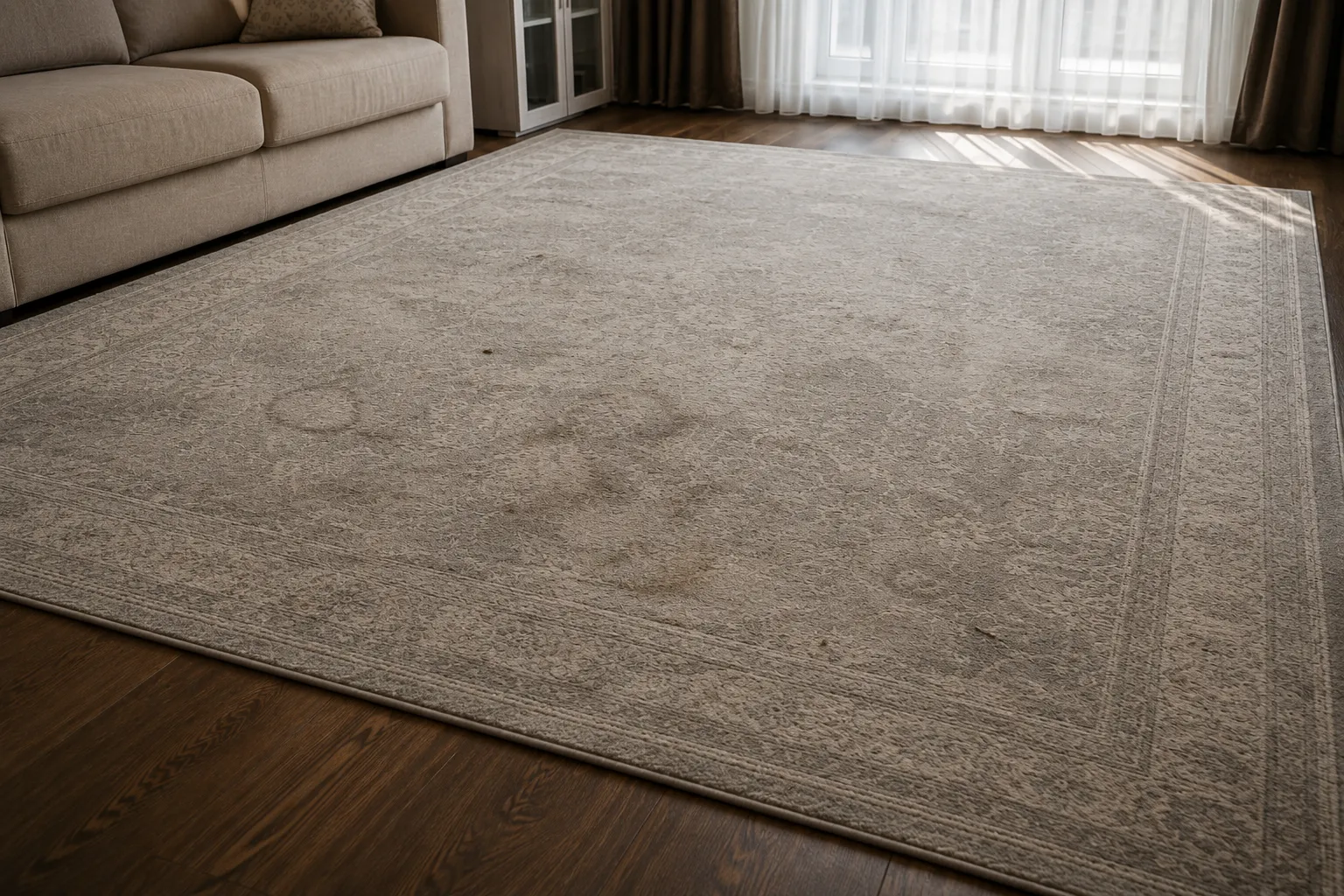
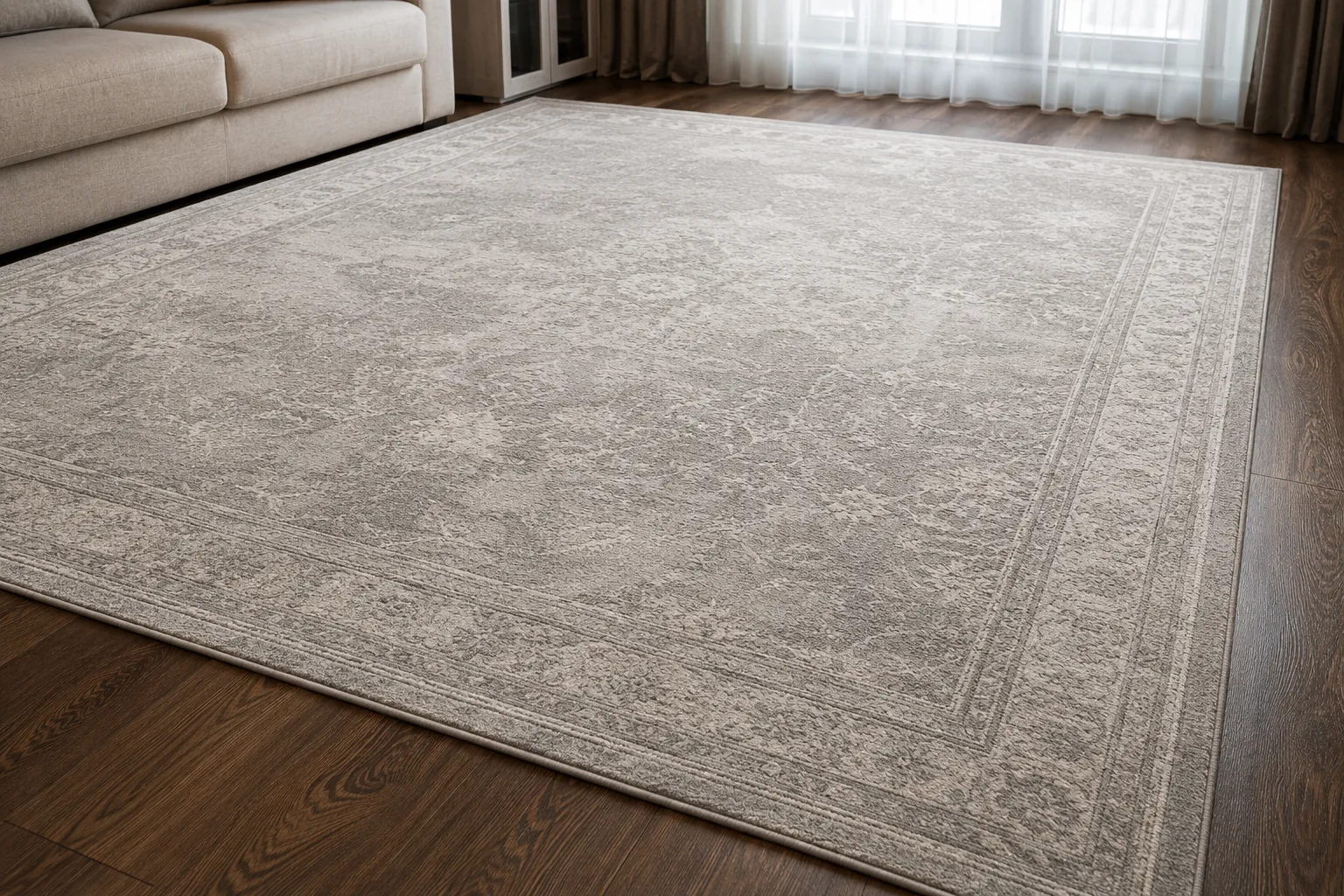 After
After
Request: Living room: synthetic carpet has lost its appearance, needs deep cleaning.
Done: Extraction cleaning of the carpet using a rotary machine and shampoo.
Cost: 7 000 ₸
Master: Aigul Serikova, dry cleaning master
Total: Carpet fully cleaned, color restored, all stains removed.
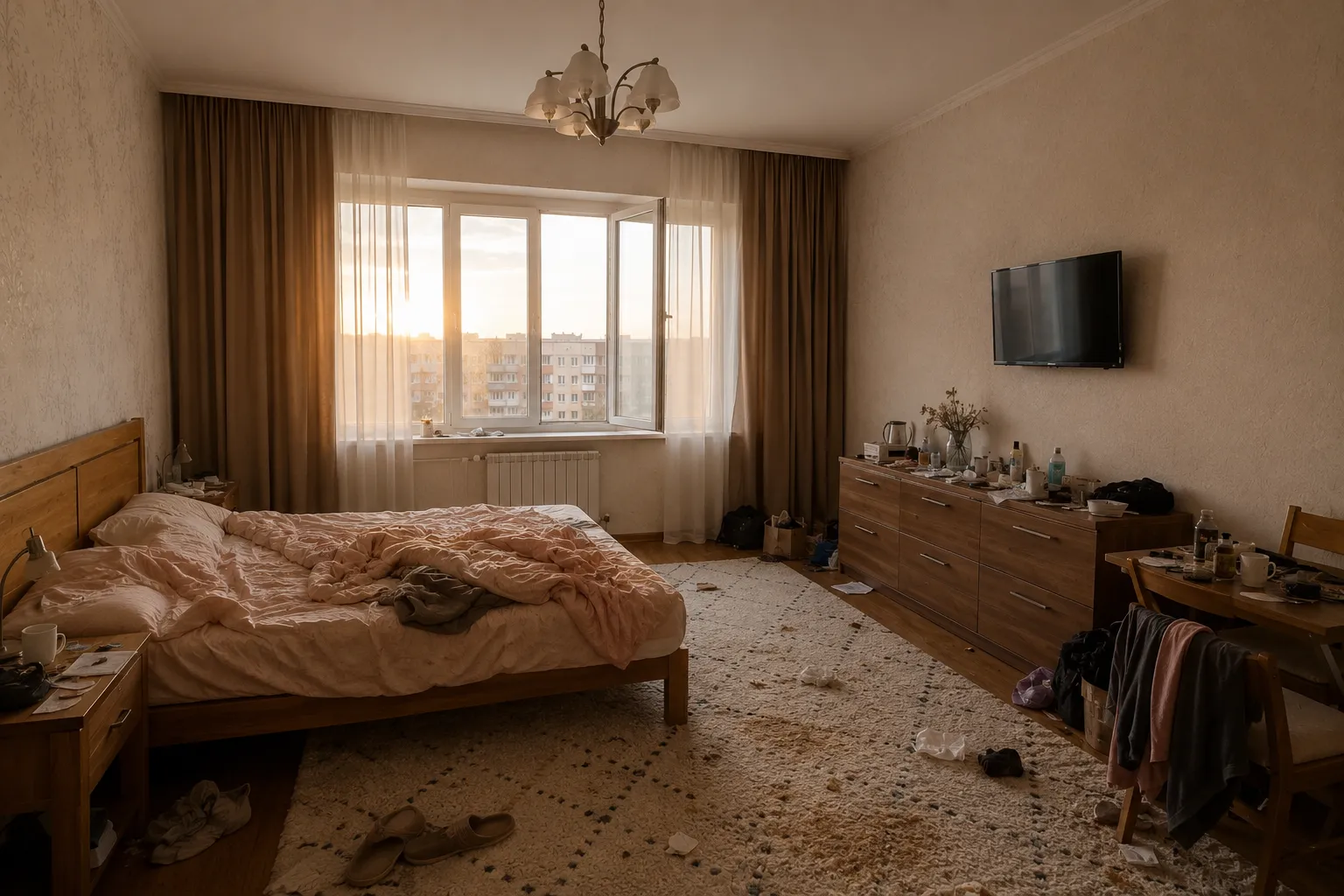
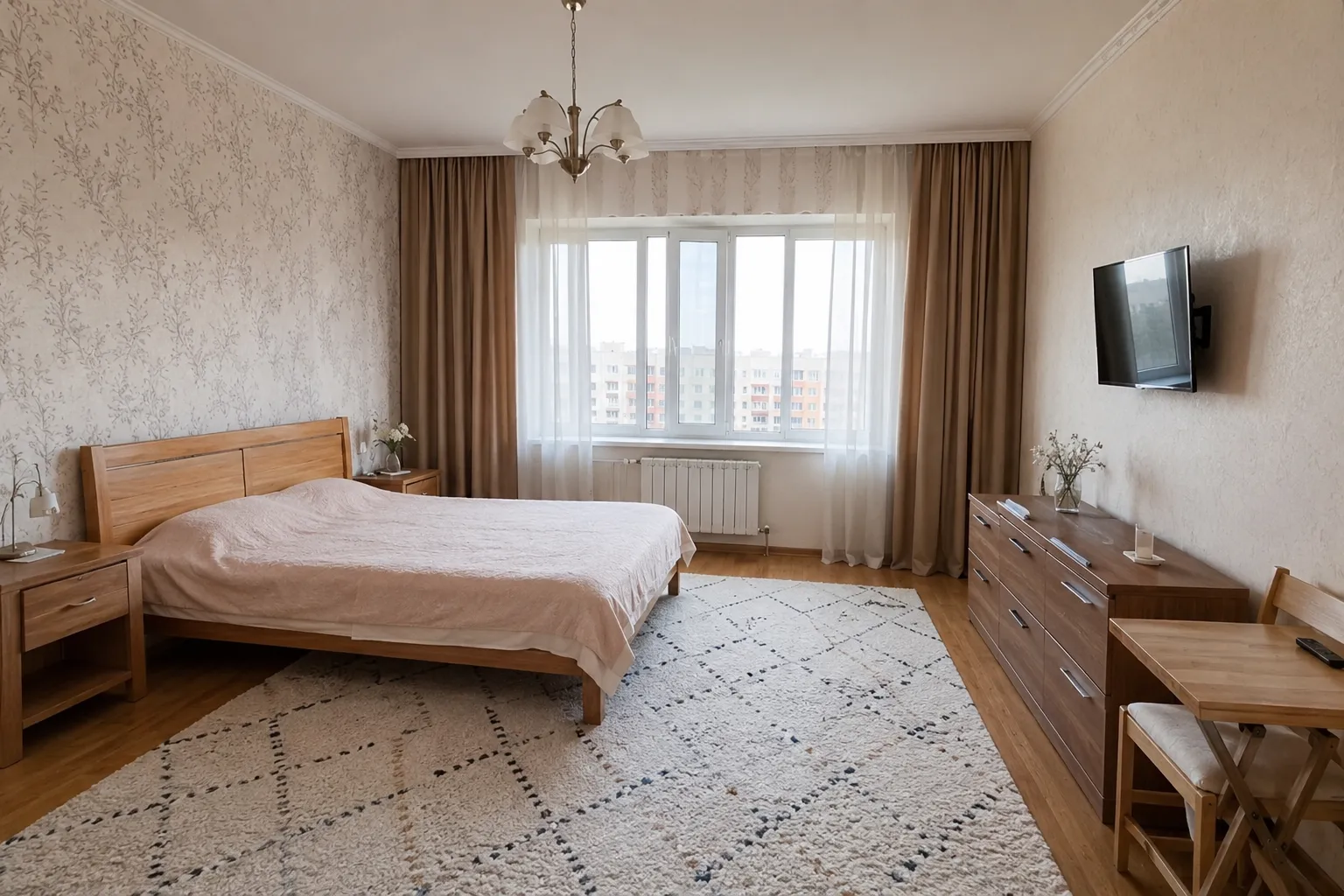 After
After
Request: Bedroom: wool carpet needs gentle cleaning.
Done: Dry cleaning of the carpet using powder and brush.
Cost: 8 000 ₸
Master: Timur Zhaksybekov, dry cleaning master
Total: Carpet refreshed, pile fluffed, dust and allergens removed.
 After
After
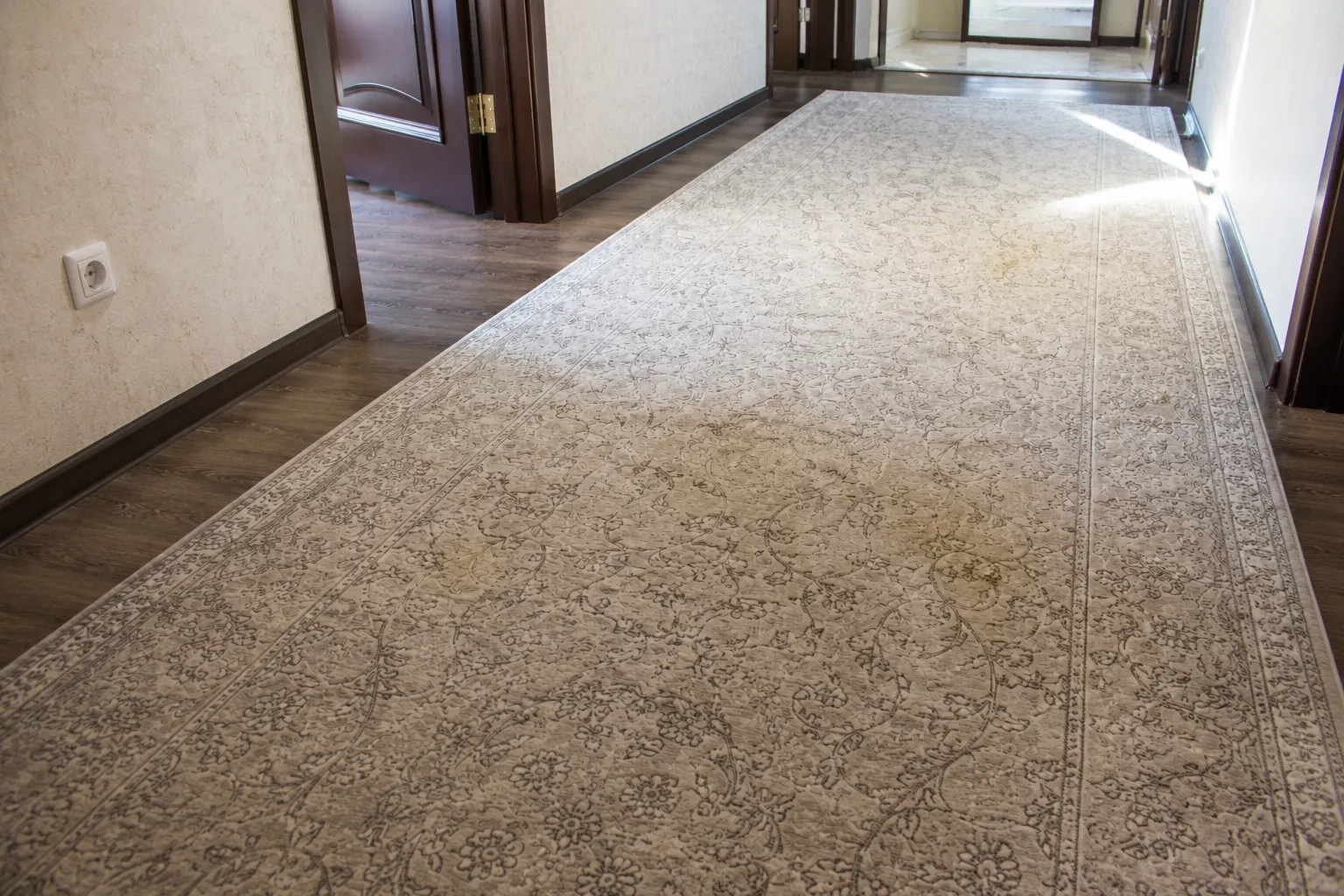
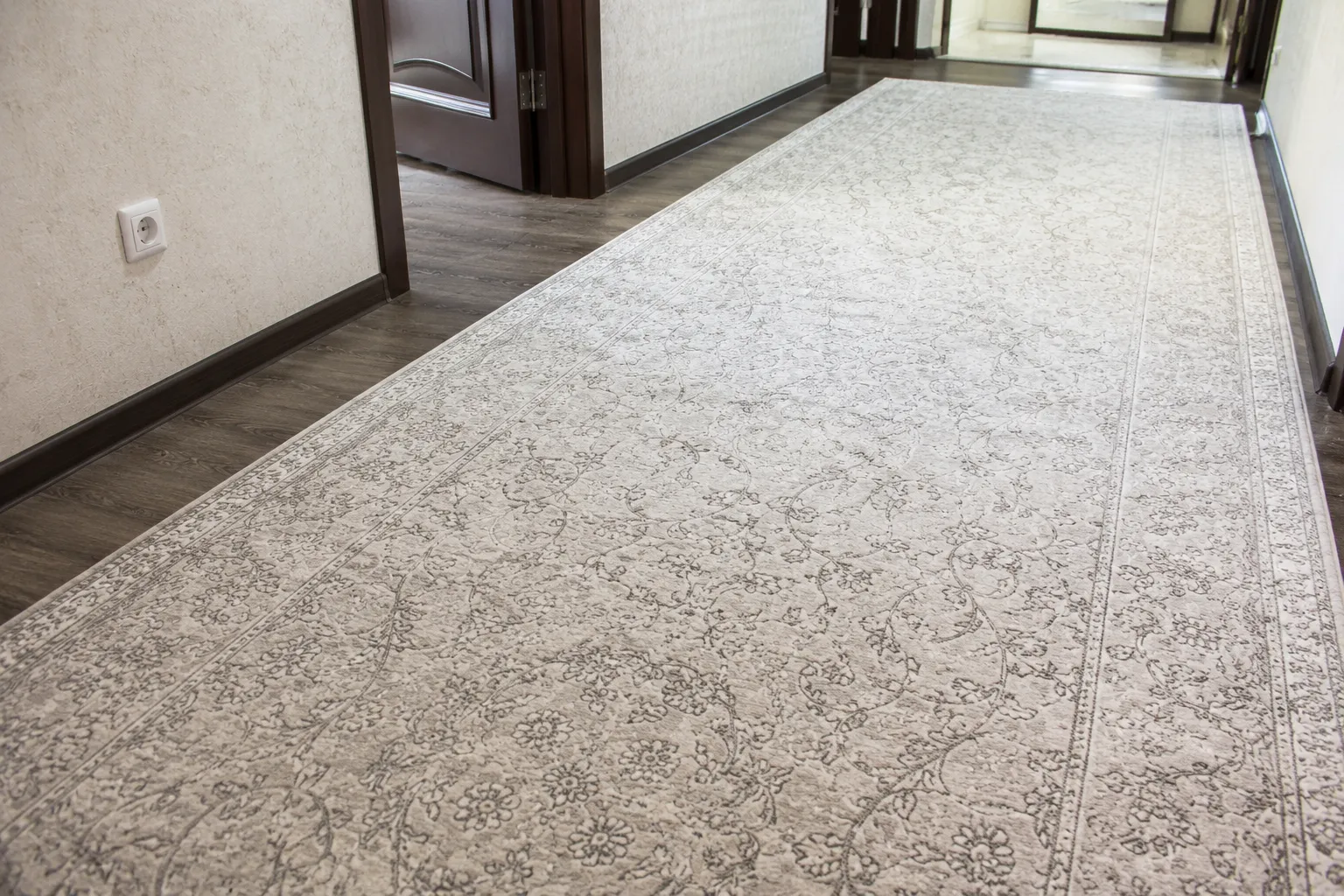
Request: Hallway: viscose carpet has yellowed, needs professional cleaning.
Done: Chemical cleaning of the carpet with a neutral detergent.
Cost: 9 000 ₸
Master: Dinara Nurzhanova, dry cleaning master
Total: Carpet brightened, streaks and odors removed, color restored.
 After
After
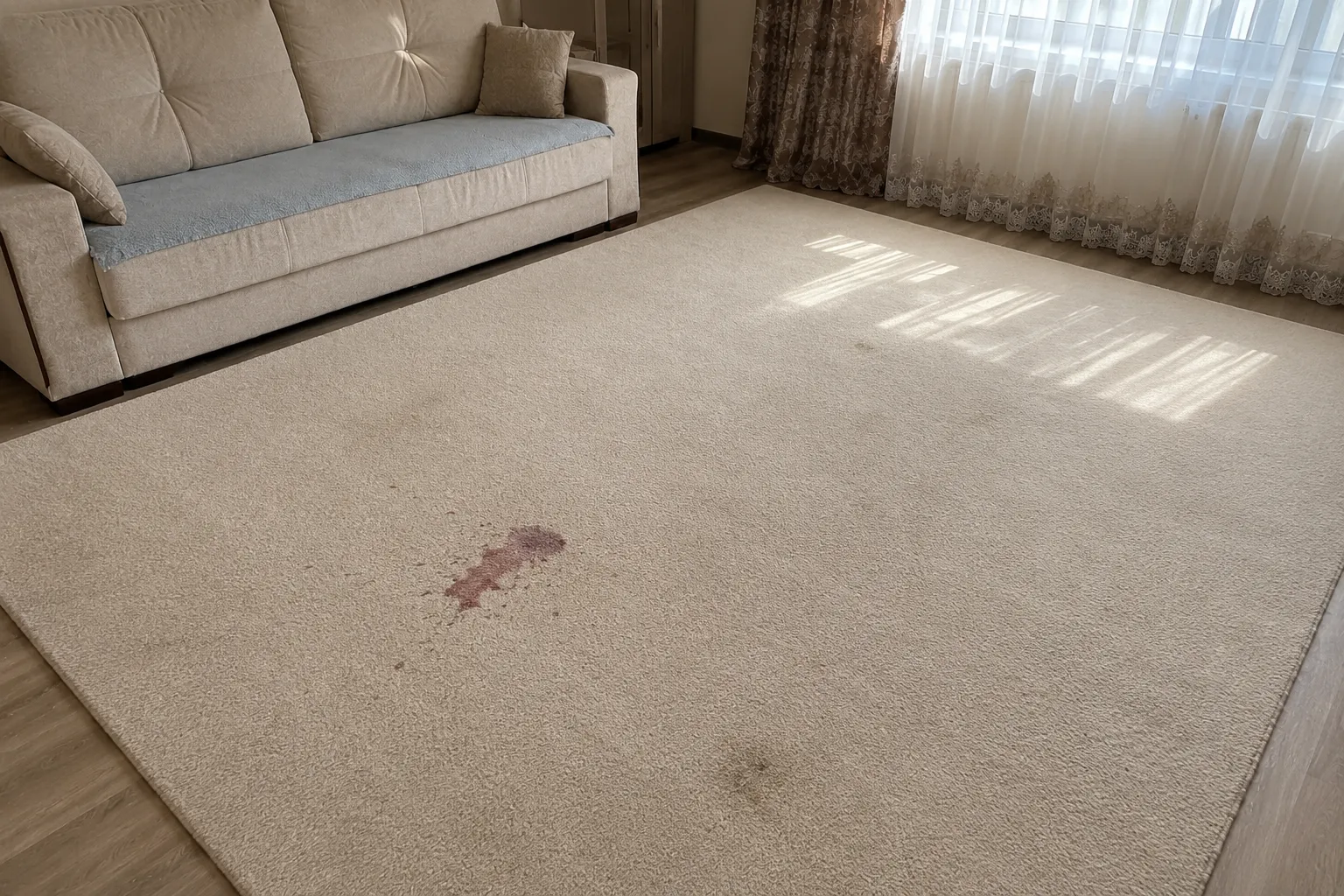
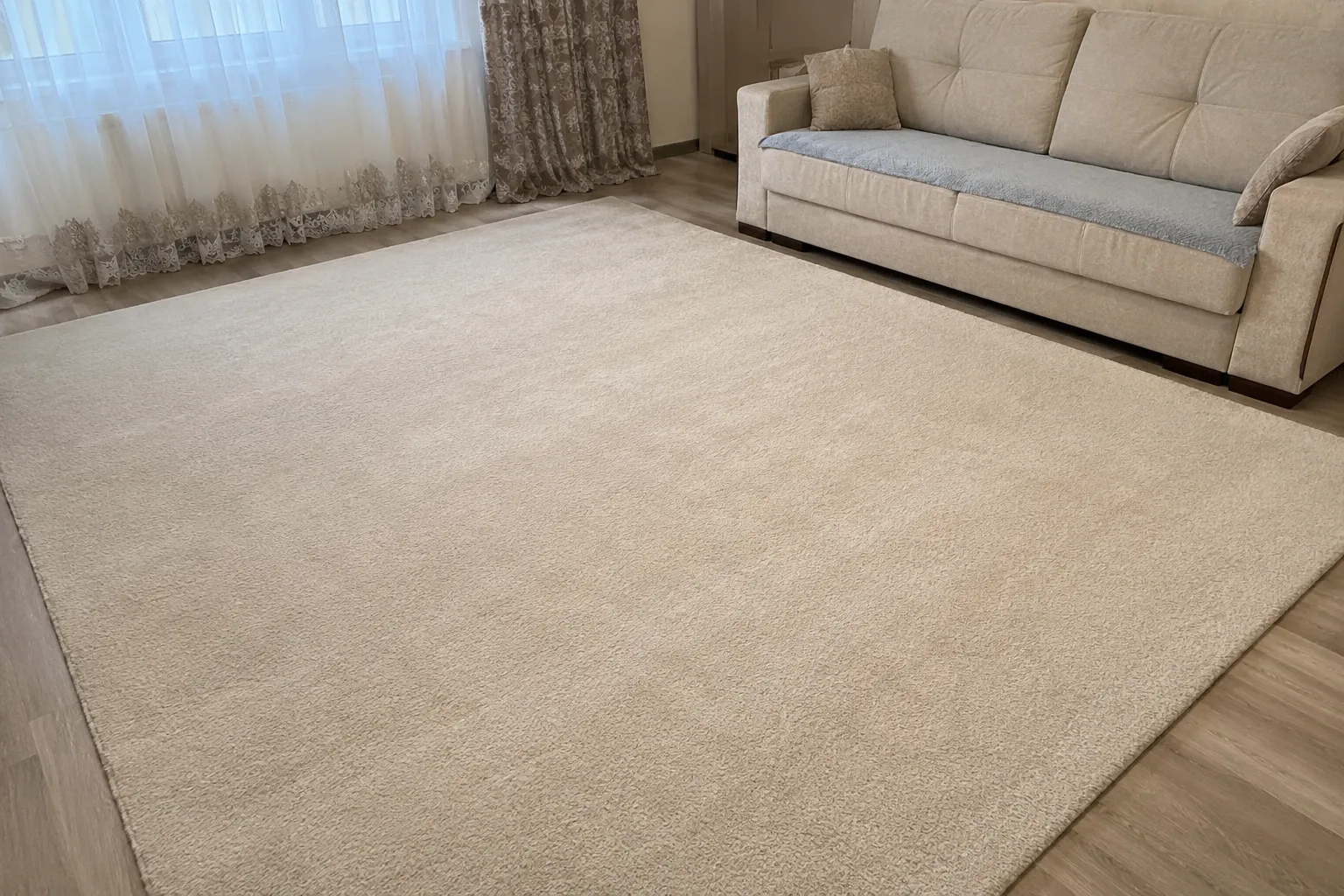
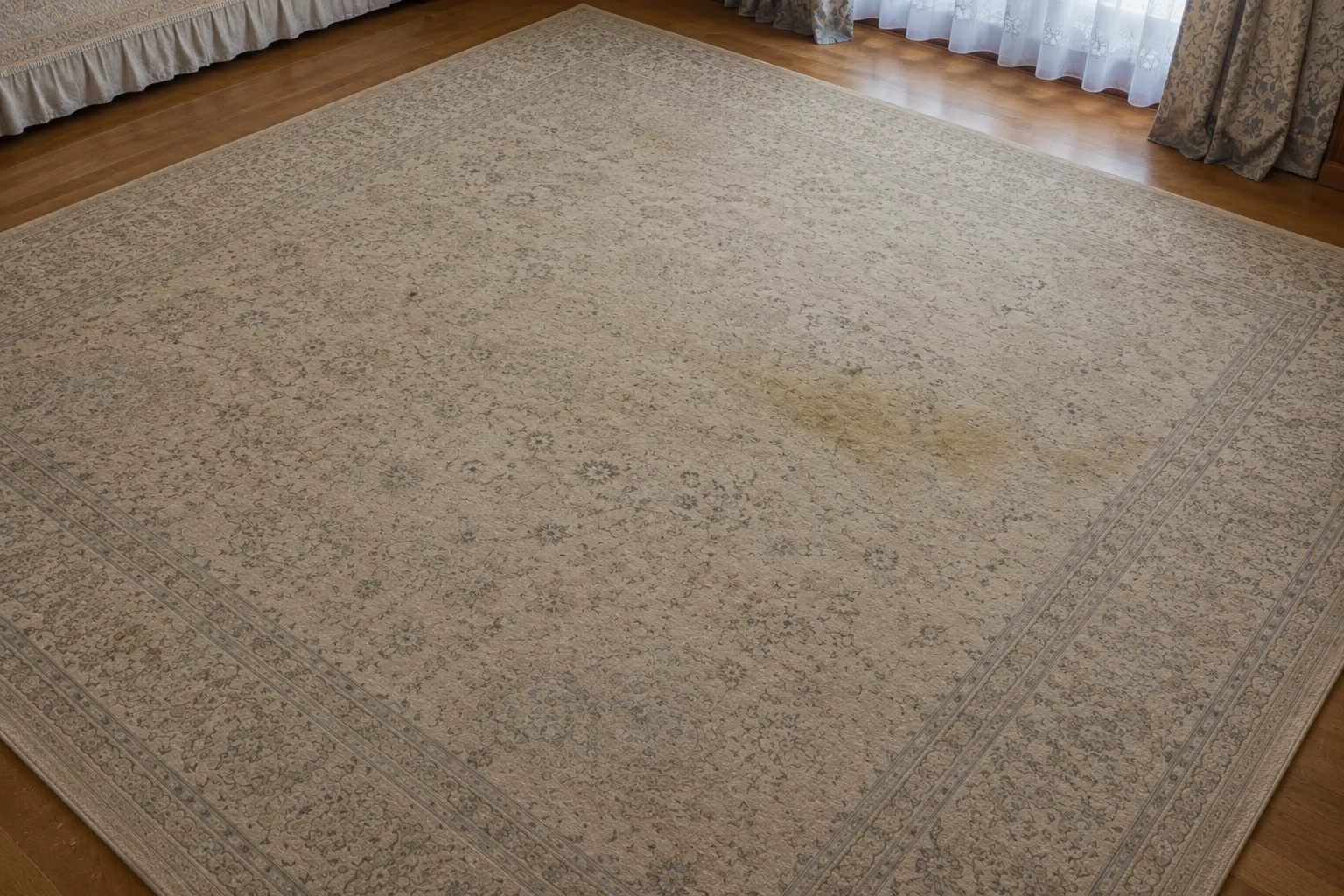
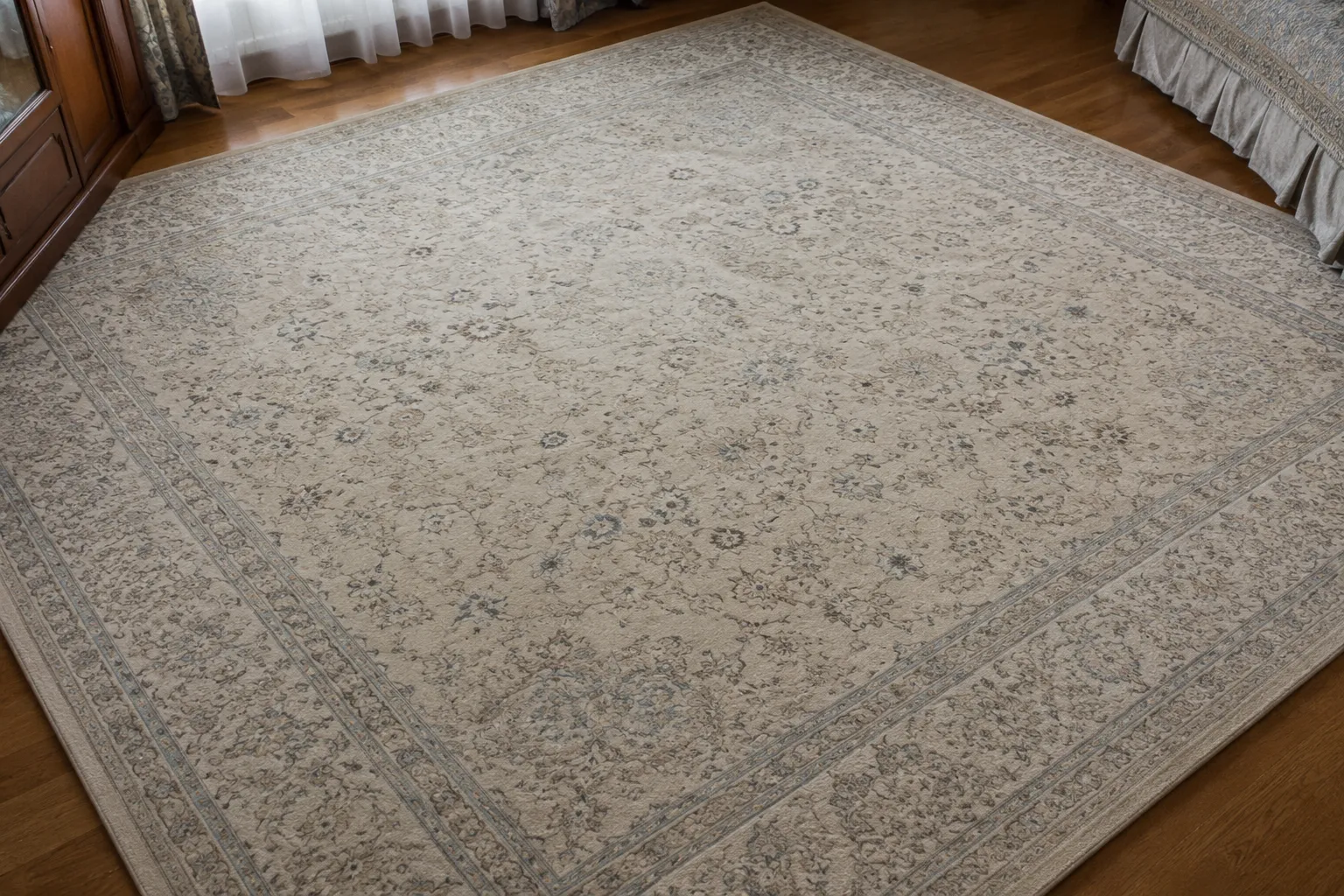
Request: Red wine was spilled on the carpet, need urgent stain removal.
Done: Applied organic stain remover and extraction cleaning.
Cost: 8 000 ₸
Master: Aigul Serikova, dry cleaning master
Total: Wine stain completely removed, carpet without traces or odor.
 After
After
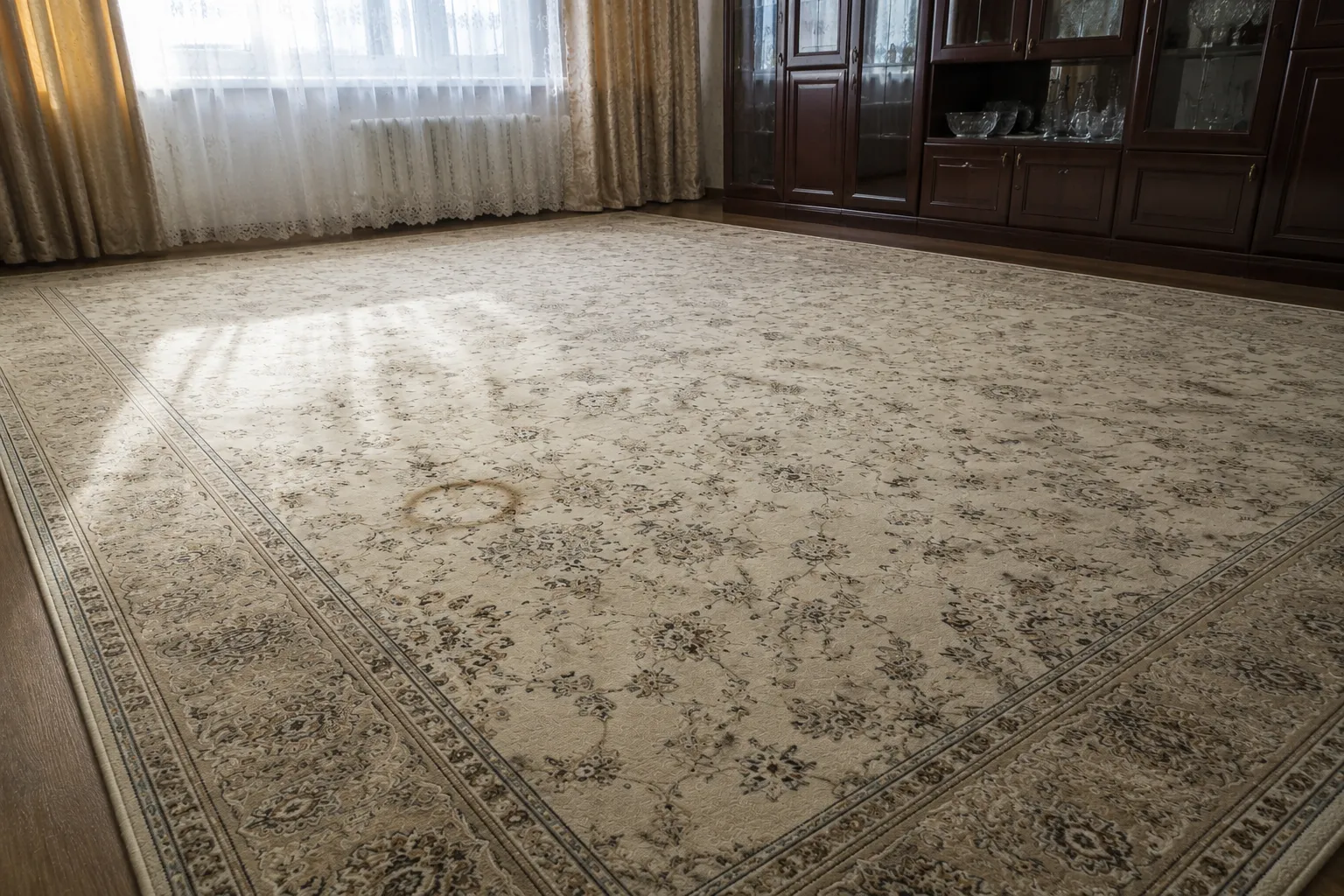
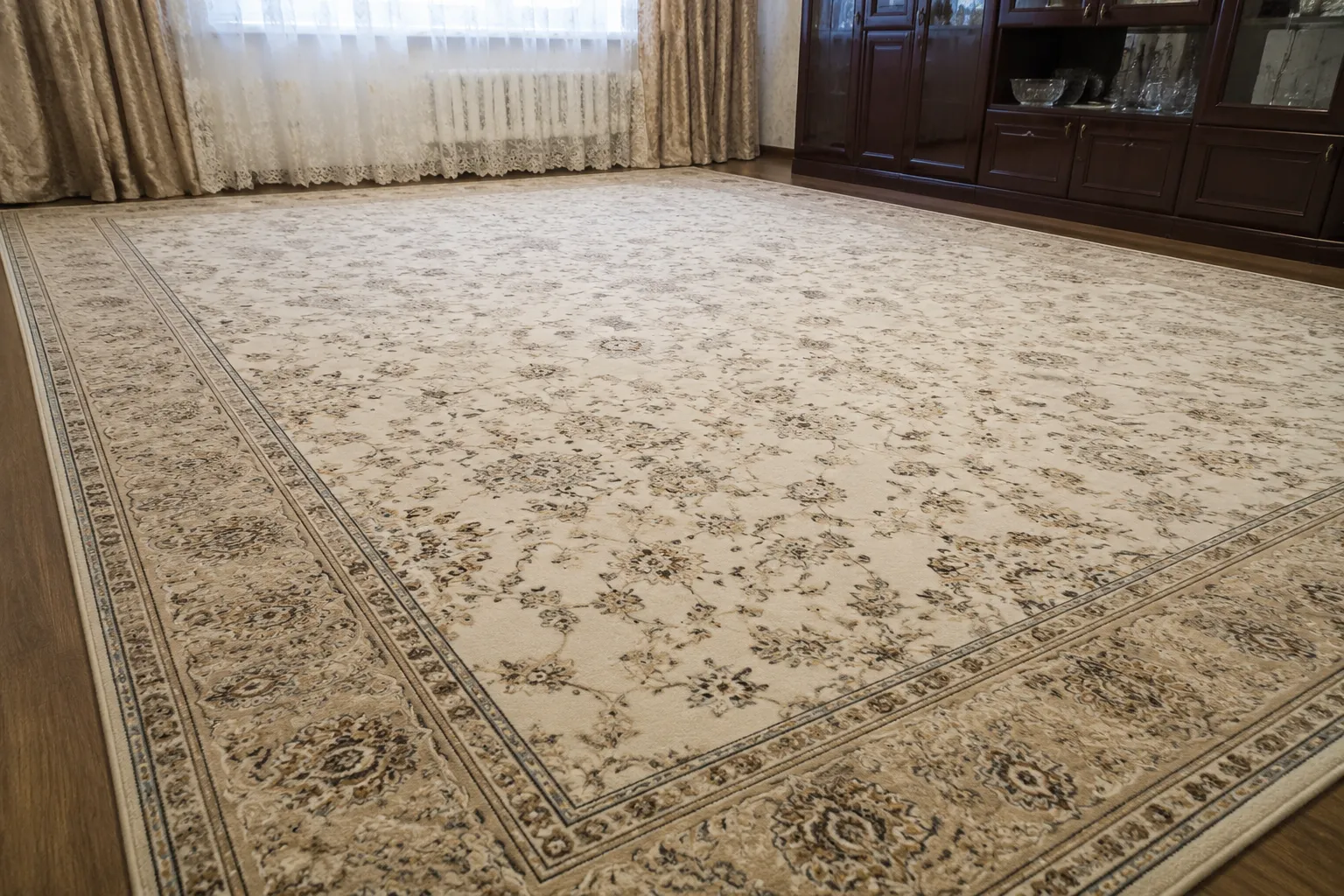
Request: Carpet soiled with cat urine, needs cleaning and odor removal.
Done: Treatment with enzymatic cleaner and deep extraction.
Cost: 7 000 ₸
Master: Timur Zhaksybekov, dry cleaning master
Total: Urine stain and odor eliminated, carpet clean and fresh.
 After
After
Request: Spilled coffee on carpet, needs stain removal.
Done: Applied caffeine stain remover, then extraction cleaning.
Cost: 9 000 ₸
Master: Dinara Nurzhanova, dry cleaning master
Total: Coffee stain removed, carpet clean, no streaks.
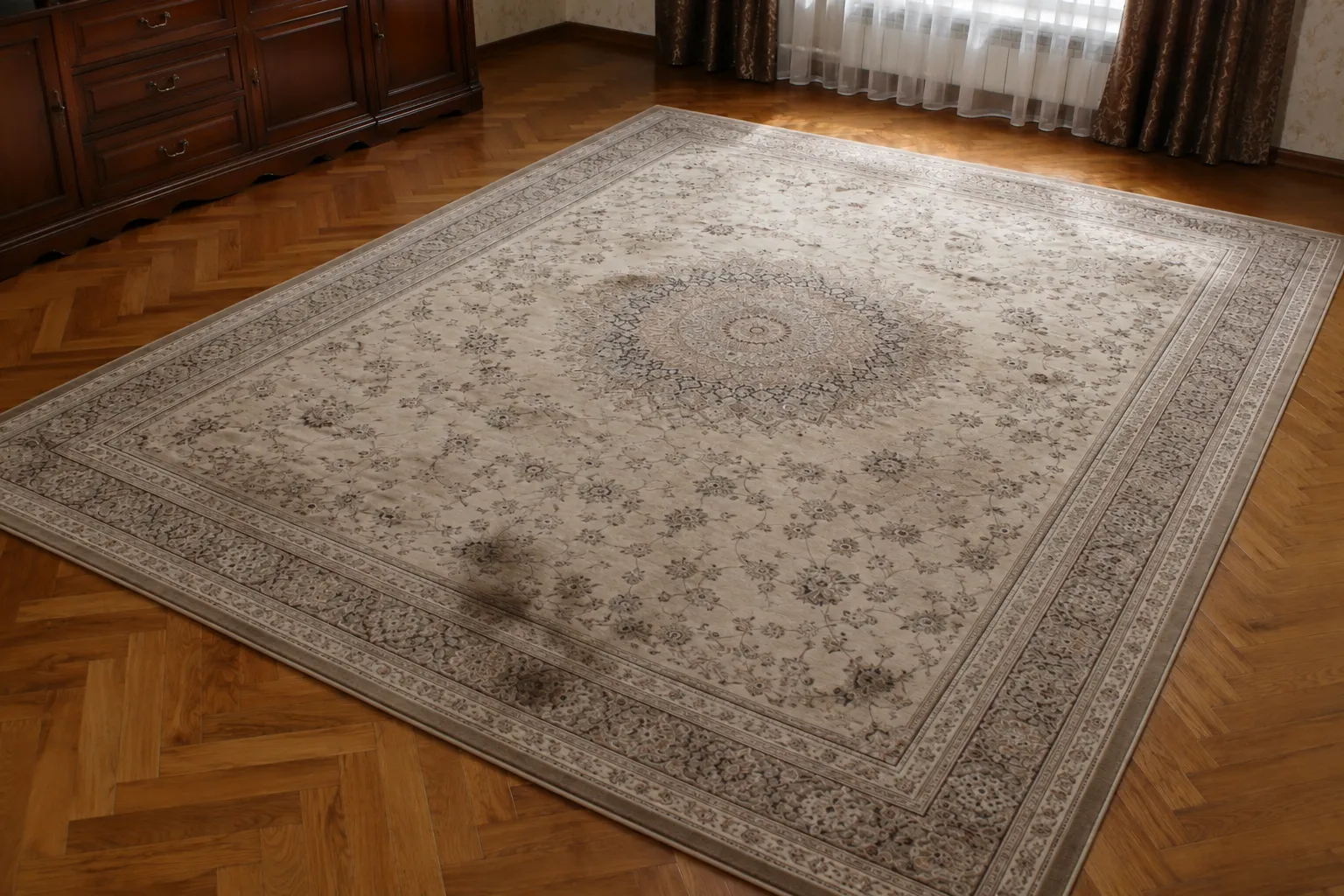
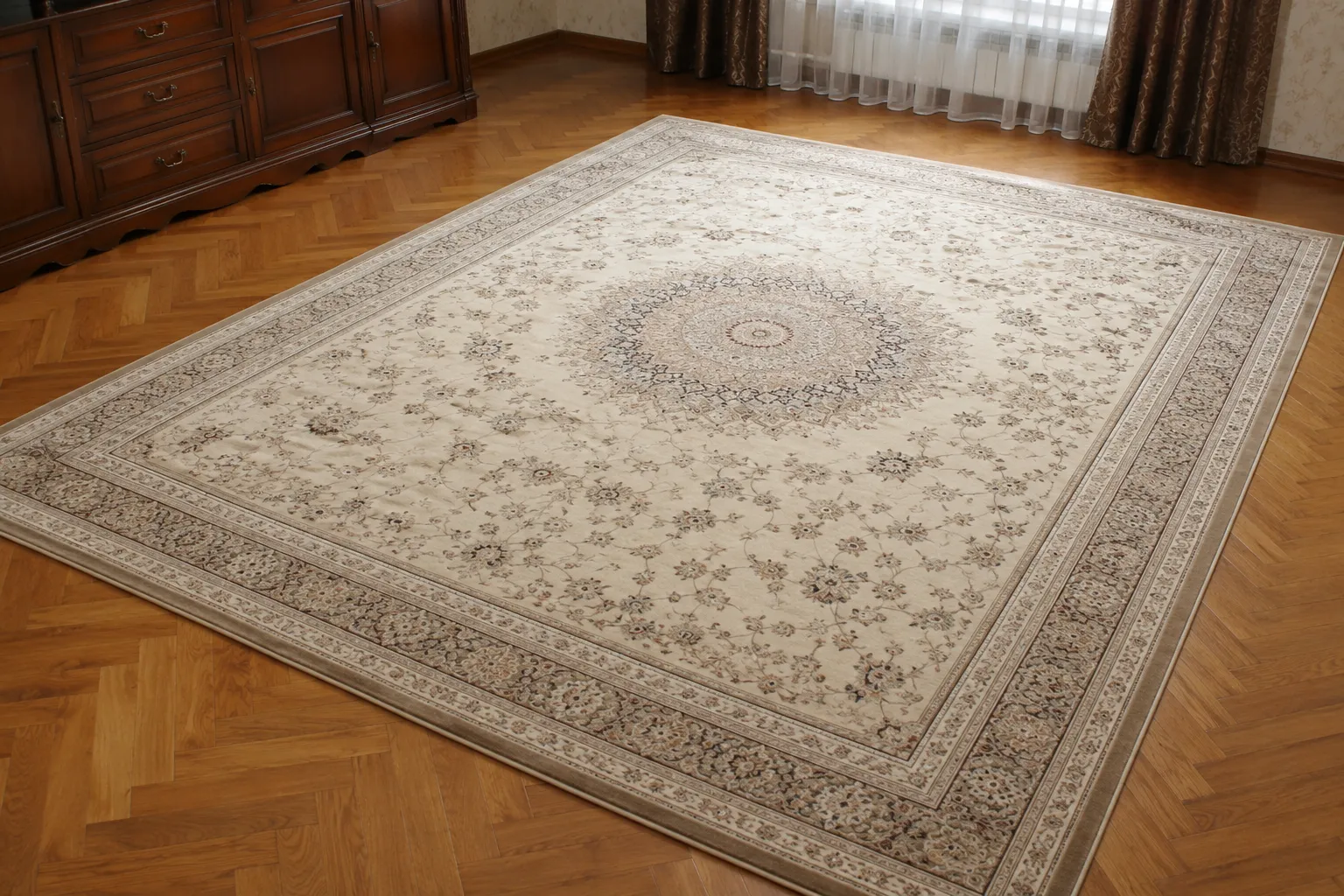 After
After
Request: After renovation, traces of dirt and dust remained on the carpet.
Done: Carpet cleaning with pre-treatment of stains and extraction.
Cost: 8 000 ₸
Master: Aigul Serikova, dry cleaning master
Total: Carpet completely cleaned of dirt, original appearance restored.
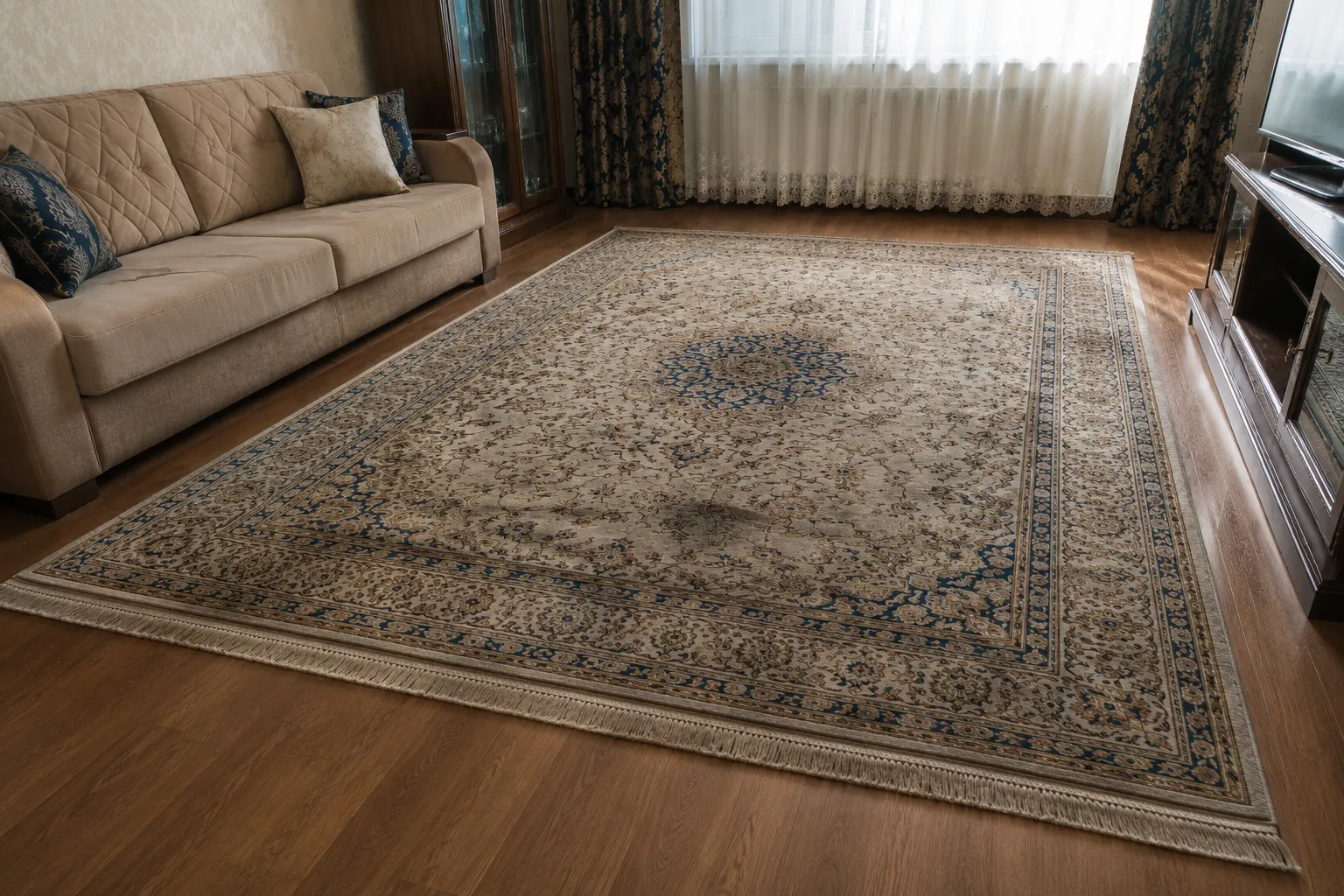
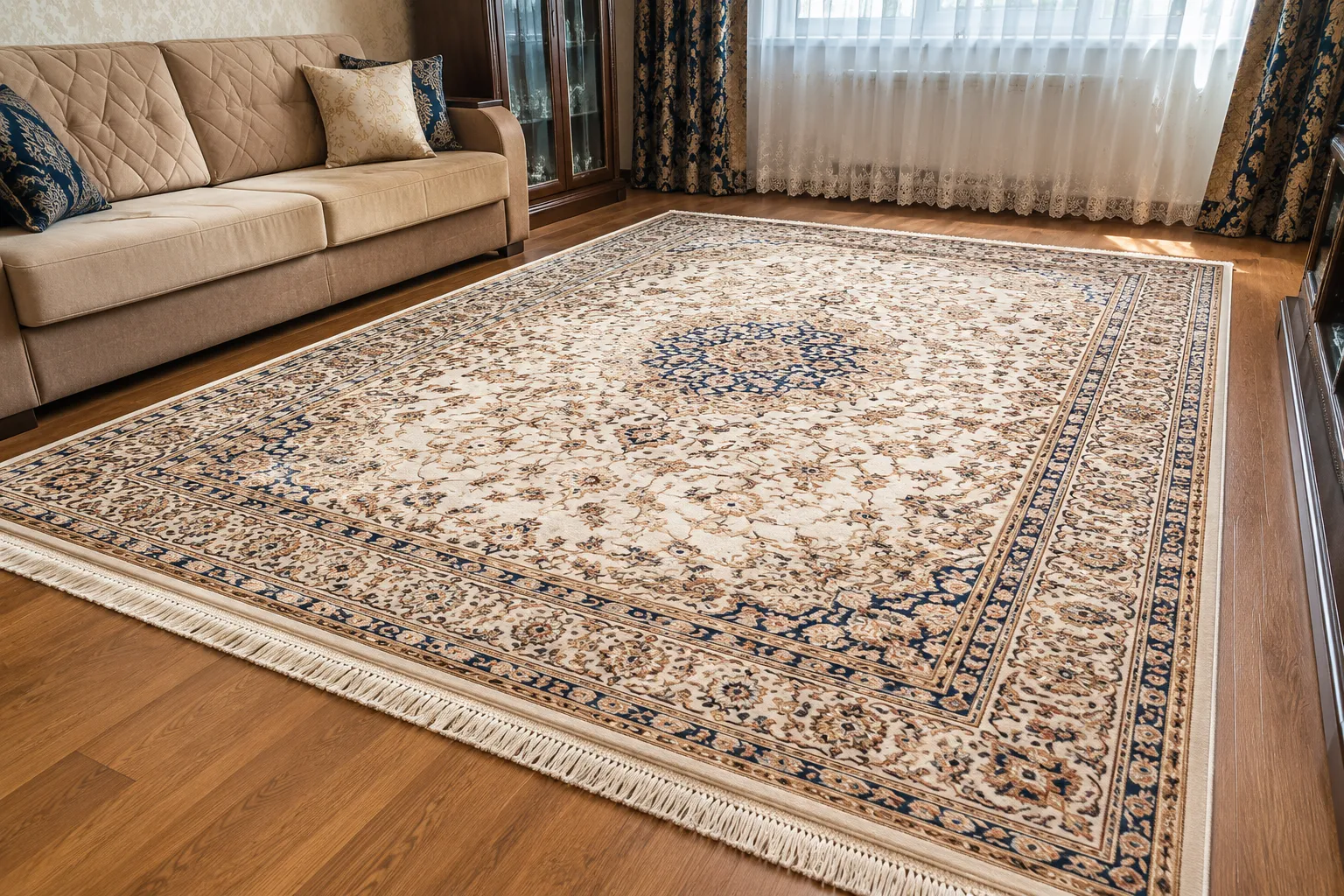 After
After
Request: Carpet in hallway heavily trampled, needs deep cleaning.
Done: Deep extraction cleaning with shampoo and brush performed.
Cost: 9 000 ₸
Master: Timur Zhaksybekov, dry cleaning master
Total: Carpet cleaned of ingrained dirt, pile restored.
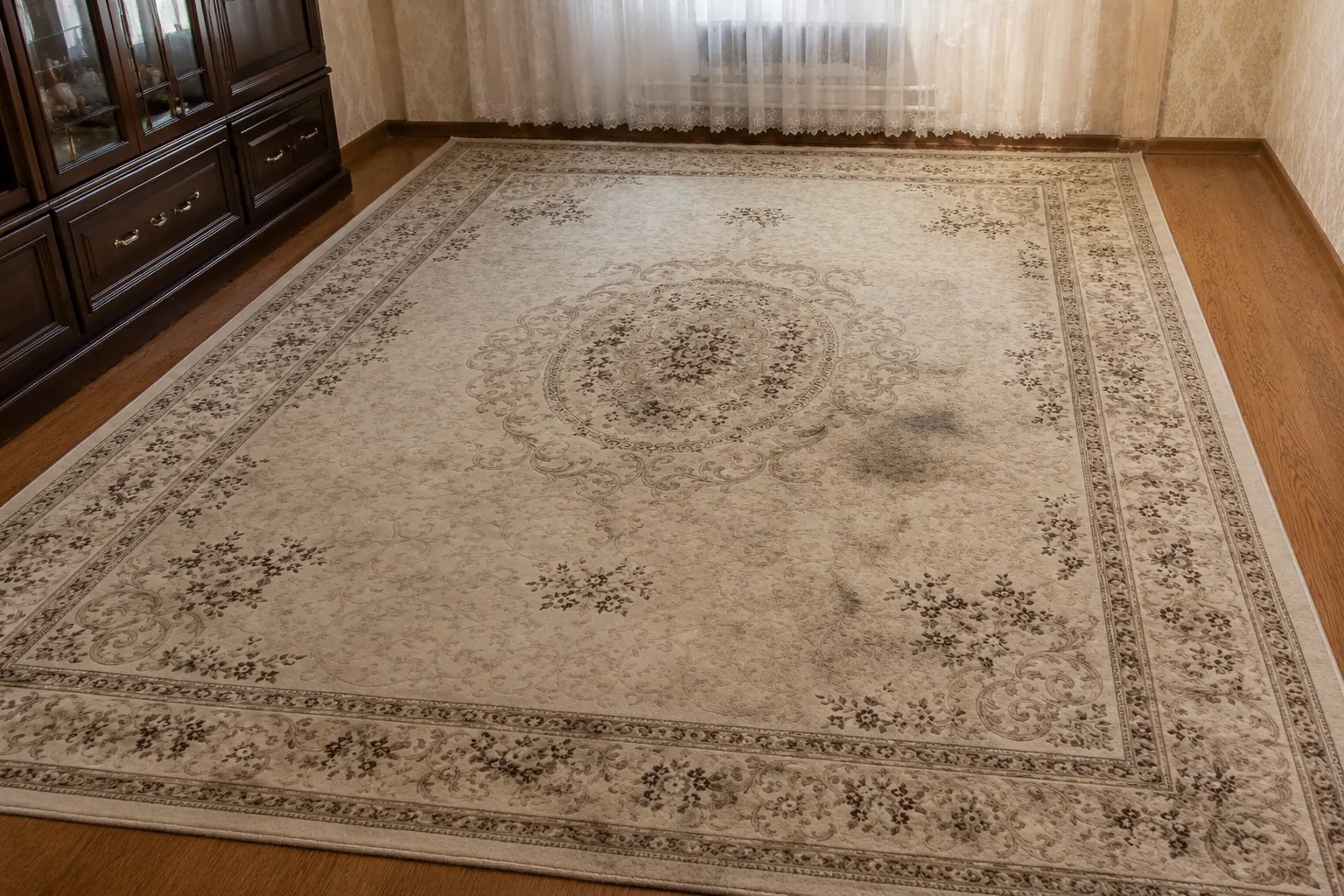
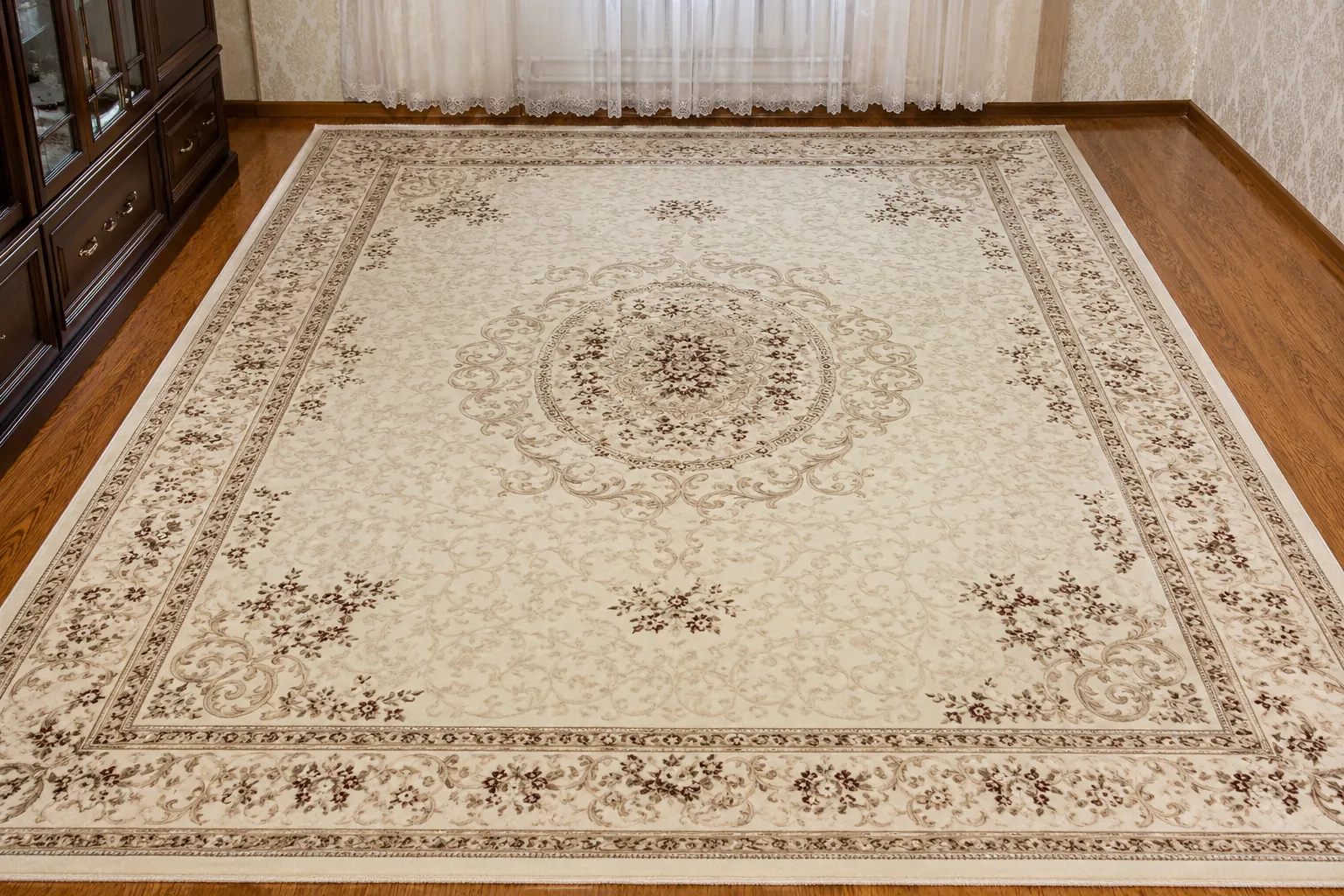 After
After
Request: After flooding, mold appeared on the carpet, needs treatment.
Done: Antibacterial treatment and deep cleaning with fungicide.
Cost: 11 000 ₸
Master: Dinara Nurzhanova, dry cleaning master
Total: Mold removed, carpet disinfected, odor eliminated.
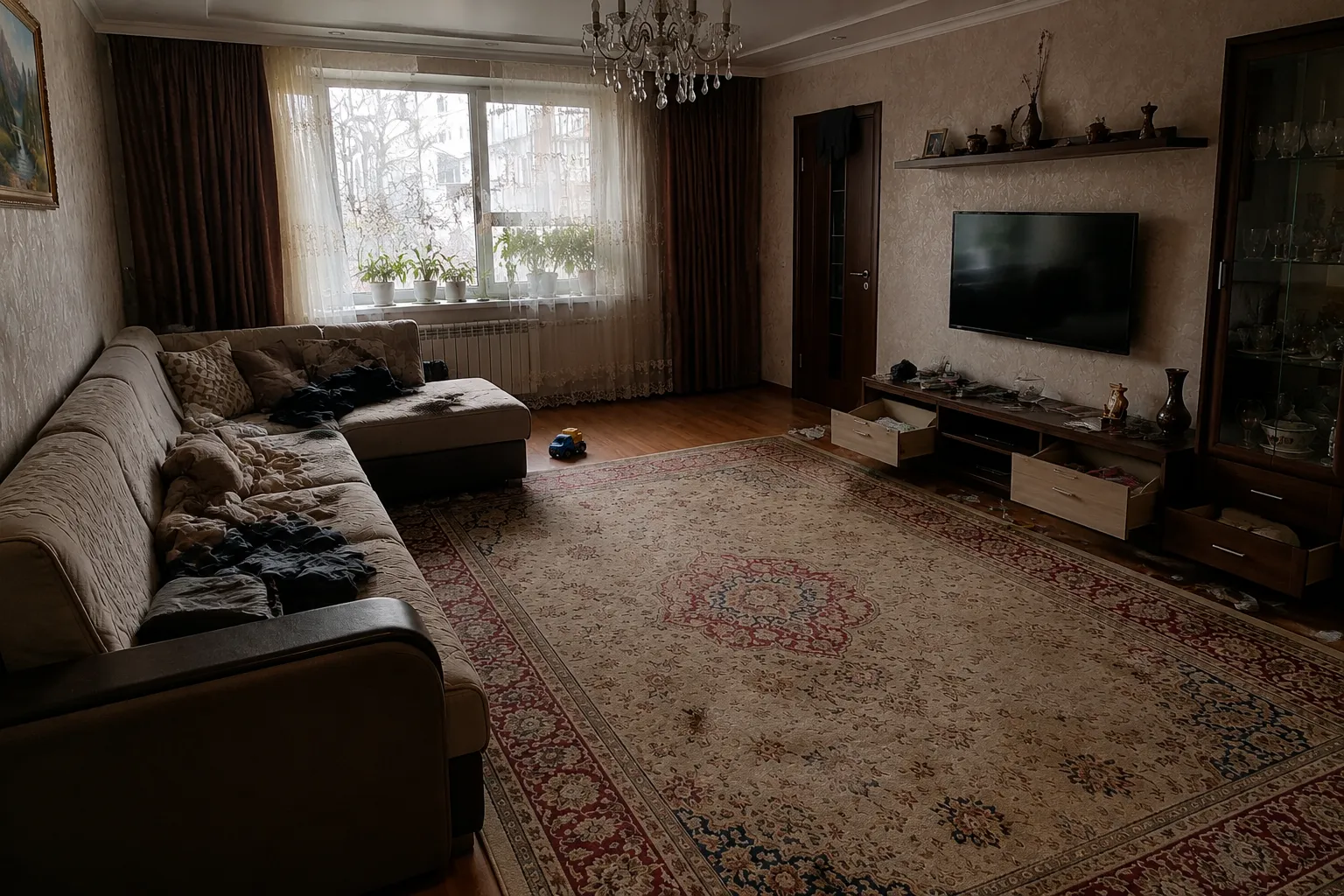
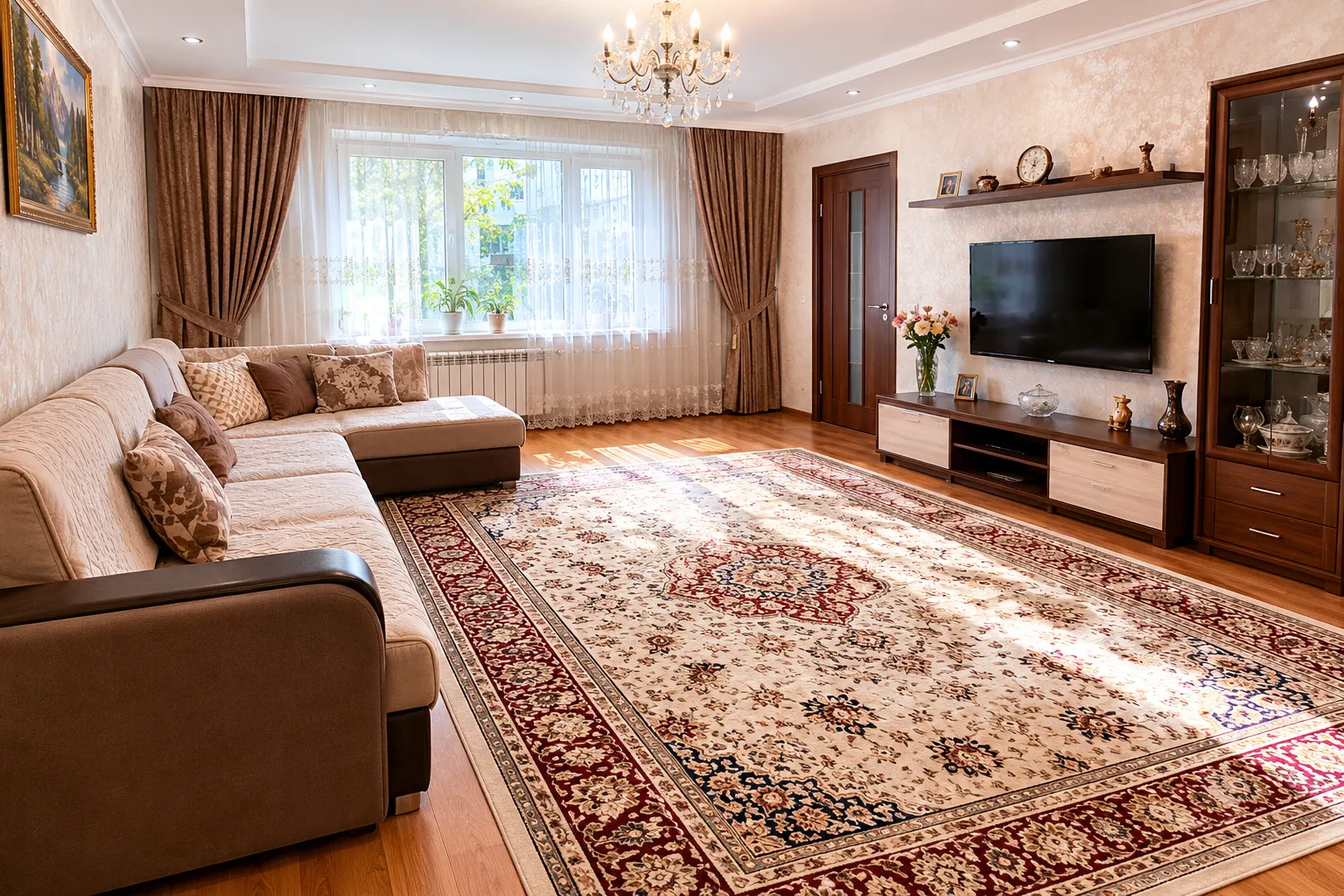 After
After
Request: Carpet faded in the sun, want to restore color saturation.
Done: Applied restorative compound and deep cleaning.
Cost: 8 000 ₸
Master: Aigul Serikova, dry cleaning master
Total: Carpet color restored, brighter and more saturated.
All cleaners are profi-clean staff with training, uniform and security check. Each order has a team leader who controls quality.
The frequency of carpet cleaning depends on foot traffic, pile type, and the allergy status of household members — there is no one-size-fits-all schedule. At profi-clean, we divide recommendations into three scenarios: for families with children and pets, for bedrooms, and for guest areas.
In a home with small children, dogs, or cats, the carpet accumulates hair, dust mites, and organic stains (saliva, urine, food residue) 2–3 times faster than in an average apartment. Our field cleaners notice: if you skip a seasonal cleaning, after six months deep dirt penetrates the carpet to the base, and standard extraction is no longer enough — enzyme treatment is needed. In Almaty apartments with heated floors, the situation is worse: dry air accelerates the crystallization of salt stains from paws after walks. The optimal interval is every 3–4 months using hypoallergenic chemicals (Kiehl or Sodasan) and mandatory drying with an industrial fan to prevent mold. In practice, it’s best to schedule cleaning with the change of seasons: April and October — before the pollen season and before turning on the heating.
In the bedroom, the carpet contacts the body and collects dead skin flakes — the main food source for dust mites. If cleaned once a year, by the 10th–11th month, the concentration of allergens in the pile reaches a level where sensitive people experience morning nasal congestion. We recommend a semi-annual cycle with an emphasis on hot water extraction (water temperature 60–70°C) — it kills mites without chemicals. For home offices where the carpet is under a rolling chair, the interval shortens to 5–6 months: the dent from the chair fills with rubber crumbs and dust that a regular vacuum cleaner can’t extract. In Almaty apartments with panoramic windows, the UV factor adds up — it fades the pile, so between cleanings, it’s worth treating the carpet with a steam cleaner at minimum humidity once a month to avoid softening the backing adhesive.
The hallway and the area near the sofa are the dirtiest spots in the apartment by microorganisms per square meter, according to our lux meter measurements. Street dust, sand, and de-icing agents (in Almaty, a sand-salt mixture is used in winter) settle in the pile and, when wet, turn into an abrasive paste that cuts fibers within 2–3 months. If cleaned less frequently, light-colored carpets develop permanent gray tracks near the threshold. At profi-clean, we use a pre-treatment with an alkaline solution (pH 9–10) for these areas — it breaks down the oily film from de-icing agents that neutral chemicals can’t handle. After cleaning, we always apply an antistatic agent: in Almaty’s dry climate, synthetic carpet becomes electrified within a day and attracts dust again.
The choice between dry and wet cleaning is not a matter of taste, but a decision that determines how long the carpet will retain its color, shape, and pile structure. In our practice, 70% of requests are attempts to save money by choosing a “simple” wet cleaning, which in reality has the opposite effect. Let’s figure out which method suits your carpet type, soiling level, and season.
Dry cleaning is treating the pile with an absorbent powder or foam with minimal water content (up to 5% of the carpet’s weight). Wet cleaning is extraction cleaning with a cleaning solution applied under pressure followed by vacuum removal of dirt. The main difference is in the amount of residual moisture: after dry cleaning, you can walk on the carpet within 30–40 minutes; after wet cleaning, it takes 4 to 24 hours depending on pile thickness and ventilation. Moreover, the wet method provides deep penetration to the very base of the pile, which is critical for old stains and dust mites, but it also carries the risk of shrinking wool carpets and mold formation when drying in Almaty’s humid weather. In my opinion, the key criterion is the fiber type: for wool and viscose, dry cleaning is mandatory; for synthetics in warm weather, wet cleaning is more effective.
We recommend the dry method for carpets made from natural fibers — wool (especially hand-knotted with a high density of up to 500,000 knots per m²), silk, viscose, as well as for antique and light-colored carpets with long pile (over 15 mm). In such cases, water tightens the fibers, alters the pattern geometry, and can cause dye bleeding — particularly in Turkish and Iranian carpets with aniline dyes. Another scenario is for allergy and asthma sufferers: dry cleaning with hypoallergenic Sodasan powder and HEPA-filtered vacuuming removes 99.9% of dust mites and mold spores without the risk of activating them with moisture. In Almaty, where humidity is high in spring and autumn due to melting snow and rain, dry cleaning eliminates the risk of prolonged drying — the carpet does not absorb moisture from the air. Before ordering dry cleaning, check the pile type: if the label says “S” (solvent only) — only dry treatment is allowed, otherwise the warranty is voided.
Wet extraction cleaning is indispensable for heavily soiled synthetic carpets (polypropylene, nylon, polyester) — it washes out old oil stains, kitchen grease, and pet marks that dry powder simply cannot capture. In our orders for carpets in hallways and children’s areas, wet treatment shows visible results 2-3 times faster than dry: after the first extraction, up to 80% of deep dirt is removed compared to 40-50% with dry cleaning. Another case is carpets with urine or tobacco odor: water with an enzyme solution breaks down organic matter at the molecular level, whereas dry cleaning only masks the smell. However, the wet method requires professional equipment with water temperatures up to 60°C (household steam cleaners do not heat above 40°C) and powerful vacuum extraction — without this, water remains in the backing, and a musty smell appears after 2-3 months. In Almaty, wet cleaning is best scheduled for the dry season (June-August), when the carpet can be dried outdoors in 4-6 hours — in rainy November, the drying time in an unventilated apartment stretches to 2 days.
The first and most costly mistake is wet cleaning a wool carpet with a household carpet cleaner: wool absorbs water like a sponge, shrinks by 10-15% of its original size, and restoring the carpet’s geometry becomes impossible. The second is dry cleaning a carpet with oil stains from fuel or cosmetics: the powder does not dissolve grease but rubs it deeper into the fibers, making the stain harder to remove later. The third is using home remedies (vinegar, baking soda, hydrogen peroxide) on colored carpets: the reaction with aniline dyes causes irreversible white spots, especially on dark blue and burgundy tones of Persian carpets. In our practice, there was a case where a client poured a vinegar solution on a silk carpet from Isfahan — the dye “bled” into adjacent areas, requiring a full recoloring at 40% of the carpet’s cost. The fourth mistake is cleaning a carpet that is not secured to the floor: the wet method without fixation shifts the carpet, creating folds and waves that cannot be smoothed out later. Before any cleaning, check the dye fastness: rub a damp white cloth on an inconspicuous area — if it leaves a mark, only dry treatment with a neutral powder is suitable.
For a quick choice, simplify the parameters into a simple matrix: wool/silk/viscose + any time of year → only dry cleaning; synthetic (polypropylene, nylon) + warm season (May-September) → wet extraction; synthetic + cold season → dry cleaning with antistatic (wet cleaning would take two days to dry with radiators on, increasing room humidity to 80%). For blended carpets (60% wool + 40% polyamide), the rule “follow the most sensitive fiber” applies — base it on wool and choose the dry method, otherwise the polyamide will absorb moisture and deform the softer wool threads. Another nuance is carpets with latex backing: wet cleaning destroys the latex base after 2-3 cycles, causing the carpet to crumble at the edges, so for such models (often found in budget carpets from Turkey and China), dry cleaning extends the lifespan by 2-3 times. In Almaty, with sharp humidity fluctuations from 20% in summer to 70% in autumn, I recommend a seasonal change of methods: do the spring general cleaning dry (to remove winter dust without the risk of dampness), and the autumn cleaning wet with enzymes (to remove street dirt and reagents from shoes).
A safe carpet cleaner isn’t just “odorless”—it’s a formula that doesn’t damage the pile, leaves no sticky residue, and is safe for children and allergy sufferers. At profi-clean, we exclusively use professional concentrates from Kiehl and Sodasan with Ecorating certification, and here’s why choosing the right chemistry is a key step where most clients make mistakes.
The first safety criterion is the pH level of the product. For natural carpets (wool, viscose, sisal), only a neutral pH of 6–7 is acceptable; alkaline formulas destroy the keratin in wool fibers, making them brittle and dull after just 3–4 cleanings. For synthetics (polypropylene, polyamide, nylon), a slightly alkaline pH of up to 9 is acceptable—it’s more effective at removing oil stains but requires complete residue removal, otherwise the pile sticks together and clogs with dust faster. Our Kiehl Neutralreiniger with pH 7.0 is universal for all types, while Sodasan Wollreiniger with pH 5.5 is for fine wool and cashmere. Before buying a household concentrate, check the pH on the packaging—if it’s not listed, the product is almost certainly aggressive.
After cleaning, the carpet must be safe to breathe—especially in Almaty, where windows are closed during the heating season and indoor humidity drops to 25–30%. profi-clean’s professional products (Sodasan Comfort and Kiehl ProNature series) have an A+ emission class per the GUT standard—they contain no volatile organic compounds (VOCs) that cause headaches and allergies. Russian and Chinese household foams often contain formaldehyde and propylene glycol—after their use, the pile dries for 6–8 hours, and during that time, a strong chemical smell lingers in the room. Our experience shows: clients who order cleaning with our chemicals come back in 2–3 days asking, “why is it easier to breathe?”—this is a direct effect of the absence of VOCs.
A separate category is enzyme-based products for removing protein (blood, milk, urine, vomit). Regular alkaline foams cook the protein, setting the stain permanently—we see such carpets weekly. At profi-clean, we use Sodasan Enzym-Fleckenentferner based on proteases and lipases, which break down organic matter into water and carbon dioxide without heat. An important nuance: enzymes only work at temperatures of 20–35°C—hot water kills them, so steam cleaners are contraindicated for such stains. The product is applied, left for 15–20 minutes, then removed with an extraction machine—without scrubbing, which pushes residues deeper into the pile.
The most common mistake is using floor or dishwashing detergents (Fairy, Mr. Proper, Amway). They produce abundant foam that’s hard to rinse out of the pile—residues attract dust, and the carpet gets dirty 2–3 times faster than before cleaning. The second most common is chlorine-based stain removers (Vanish Oxi Action, Bleach)—they discolor dyes on wool and viscose, leaving yellow streaks on light tones. The third is buying a “carpet shampoo” without a pH label: in Almaty hardware stores, we’ve found concentrates with pH 11–12 that turn the pile into a “dishrag” in one cleaning. At profi-clean, we always test the product on an inconspicuous area before work—if a drop changes the pile’s color or leaves a white film after drying, we switch chemicals.
In Almaty, humidity is high in spring and autumn (up to 70–80% in foothill areas—Alatau, Gorny Gigant)—carpets dry slower, and if the product leaves hygroscopic salts (sodium lauryl sulfate, sodium chloride), the pile stays damp for 2–3 days and starts to mildew. Professional Kiehl and Sodasan products contain no such salts—after extraction, the pile feels dry to the touch within 4–6 hours even at 70% humidity. In winter, conversely, dry air and static are issues—we use antistatic components in the Kiehl Antistatik final rinse to reduce dust attraction. For ground-floor apartments in the “Samal” and “Dostyk” microdistricts (proximity to soil, mold), we use a formula with an antifungal additive—it prevents spore development in the pile’s depth after moistening.
On the box of a professional product, look for three markers: the GUT symbol (European safety standard for textiles), the words “pH neutral” or “pH 6.0–7.5”, and a composition without “VOC” or “solvents” labels. In Kazakhstan, certified lines like Kiehl (Netherlands) and Sodasan (Germany) are available on the market — they are officially imported by a distributor in Almaty, and we buy directly. Household products like Bagi, Denkmit, and Udalix have the EAEU certificate, but it does not check pH and VOC — in our practice, Udalix carpet concentrate showed a pH of 9.8 and left a residue on a test wool sample. Life hack: if the bottle says “suitable for all carpet types” without specifying pH — don’t believe it, universal chemicals don’t exist, selection is always based on the material.
The dry air of the Almaty foothills and fine dust from mountain screes create a specific wear on the pile that is not found in coastal or plain cities. In our eight years of practice — we have accumulated statistics on how exactly local pollen, sand, and smog change the behavior of carpet coverings, and have developed a protocol that prevents the pile from “matting” after the second cleaning.
Almaty dust is not ordinary sand, but a mixture of loess particles (size 0.01–0.05 mm), soot from highways, and micro-particles from tires. This fraction packs into the base of the pile and acts as an abrasive with every step. We measured: on synthetic carpets (polypropylene, polyester) after three months without professional cleaning, the depth of pile wear in high-traffic areas reaches 15–20% of the original height — in Moscow or Astana, this process takes 5–6 months due to coarser sand. On wool carpets, the situation is reversed: fine dust clogs the wool scales, making them stiff, and the carpet loses its softness within six months. Therefore, in Almaty, we recommend reducing the cleaning interval by 30–40% compared to the national average — especially in neighborhoods at the foot of the Zailiysky Alatau, where the dust load is 1.5 times higher.
When air humidity is below 30% (normal in Almaty from May to October), synthetic pile accumulates a charge of up to 10–15 kV — this is 2–3 times higher than the threshold at which a person feels a shock. In our orders, complaints about static come from 60% of polypropylene carpet owners precisely during the dry season. The solution is not an anti-static spray (it provides an effect for 2–3 days), but treating the pile with a special conditioner containing silver ions during extraction cleaning. At profi-clean, we use a Kiehl compound with an anti-static module for this — it binds the charge at the molecular level and lasts until the next wet treatment. Static practically does not occur on wool carpets: natural fiber retains moisture 5–7% longer than synthetics.
From April to June and from September to November, winds blow from the southeast in Almaty, raising dust from the dry riverbeds of the Malaya and Bolshaya Almatinka rivers. Even with closed windows, dust penetrates through ventilation and settles on carpets in a layer of 0.2–0.5 mm per week. We checked: on a 3×4 m carpet in a 5th-floor apartment, up to 150–200 g of dust accumulates per month — that’s the weight of half a pack of laundry detergent. In ordinary regions with a humid climate, the same area collects 30–50 g. The consequence: if you only vacuum the carpet without deep extraction, after a year the carpet base loses elasticity, and latex cracks appear at the folds. We recommend that owners of apartments on the 1st–4th floors in the Aksai, Alatau, and Zhetysu areas order cleaning with a water extractor at least twice a year — in spring after the dusty season and in autumn before the heating period.
Kazakhstan handmade carpets made of camel wool (tuskiz, tekemet) are a class of their own: the pile is coarser than sheep’s wool, but also looser and more hygroscopic. In Almaty’s dry climate, camel wool releases moisture faster than it absorbs it, causing the fibers to become brittle at the folds. We have had cases where, after self-cleaning with a steam cleaner (steam temperature 120–140 °C), the pile on a tekemet began to crack at the folds — the wool simply dried out and lost its elasticity. For such carpets, we only use cold spraying with a pH-neutral shampoo (Sodasan) and drying with forced air without heat — this preserves the natural fat film on the fiber. If you notice that your tekemet has become stiff after cleaning, this is a sign of overdrying, and next time it is better to entrust the cleaning to specialists with humidity control.
In microdistricts adjacent to Medeu, Butakovka, and Kok-Tobe, sand from mountain trails is brought in on shoes even in the off-season — its particles are larger (0.5–2 mm) and are not removed by a regular vacuum cleaner without a turbo brush. Our cleaners note: in apartments on the first floors of such houses, carpets lose up to 30% of their pile thickness in one season due to abrasive wear. We recommend laying a rubber mat with cells at the apartment threshold (it traps 80% of coarse sand), and treating the carpet itself once a month with a vacuum cleaner equipped with a HEPA filter and a turbo brush — a regular vacuum cleaner without mechanical agitation leaves sand at the base of the pile. At profi-clean, when cleaning such carpets, we always do a double pass: first, dry collection of the coarse fraction, then extraction with an aqueous solution.
After professional cleaning has restored freshness to your carpet, the most important stage begins — consolidating the result. Without proper care, the effect wears off in 2–3 weeks, and the pile loses its elasticity faster than with natural wear. We have compiled six rules that extend the lifespan of the covering by 1.5–2 times.
Damp pile is an ideal environment for mold and bacteria, and even hypoallergenic chemicals do not protect against stagnant moisture. After cleaning, we leave the carpet spread out on drying racks: at room temperature and with a draft, polypropylene dries in 4–6 hours, wool in up to 12–14 hours. You can lay the covering on the floor only when the base feels completely dry and does not cool your palm. If you lay a damp carpet, condensation forms underneath it, leading to a musty smell and delamination of the latex in synthetic models within 2–3 days. In practice, clients often rush and lay the carpet 2–3 hours after cleaning — it is precisely these cases that come back to us with complaints of odor a week later.
After cleaning, the pile becomes looser and collects dust more actively than before — this is natural until the fibers “settle.” We recommend vacuuming the carpet with a turbo brush attachment every 3–4 days for the first month, and then once every 5–7 days. For wool carpets in Almaty, a turbo brush is especially important: fine dust that settles between the fibers is not removed by a regular attachment and clogs the structure. If you don’t have a turbo brush, go over the carpet with a smooth attachment in the longitudinal direction — crosswise movement fluffs up the pile and accelerates wear.
The Almaty sun is active for 9 months of the year, and ultraviolet radiation burns out pigment even in high-quality dyes: wool loses its color after 8–10 weeks of constant exposure, synthetics after 14–16 weeks. After cleaning, the pile is more vulnerable to fading because the top layer of the fat film (for natural fibers) or factory impregnation (for synthetics) has been removed. To slow down the process, we advise covering the carpet with a thin curtain during peak insolation hours — from 11:00 AM to 3:00 PM, or using blinds with UV-blocking. Our cleaners have noticed: carpets in west-facing rooms fade 30–40% faster than those in north-facing rooms, so protection is especially important for them.
The legs of sofas, armchairs, and tables press the pile down in one position, and after cleaning, these areas do not recover on their own — forming “bald spots” 2–3 mm lower than the rest of the covering. We recommend moving heavy furniture 10–15 cm to the side every week and placing silicone pads under the legs: they reduce pressure by 1.5–2 kg/cm². If furniture has been sitting on a carpet for more than three months without being moved, the pile underneath becomes irreversibly flattened — the only solution then is to rearrange items so that the compressed areas end up under new legs.
The longer a stain remains on the carpet after cleaning, the deeper it soaks into the cleaned pile — the fiber pores are open, and liquid penetrates 2–3 times faster than on a soiled surface. We teach clients one rule: blot a fresh stain with a dry microfiber cloth without rubbing, then apply a neutral pH solution (e.g., 1 tablespoon of vinegar per liter of water) and blot again. Do not rub the stain — the pile becomes frayed and loses uniformity, especially on wool and viscose carpets. In practice, rubbed-in coffee and juice stains on freshly cleaned carpets require a repeat cleaning within just 2–3 weeks.
Even with perfect home care, dust mites, sebum, and microparticles accumulate in the pile, which cannot be removed by vacuuming or stain removers. We receive carpets from clients who clean them once a year and see the difference: the pile is 20–25% softer than those who bring in their covering every 2–3 years. The optimal interval is 12–14 months for synthetics and 10–12 for wool: during this time, deep dirt does not have time to destroy the fiber structure, and subsequent cleaning can be done without aggressive enzymes. If the carpet is in a hallway or corridor, the interval is reduced to 8–9 months — wear in these areas is 1.5 times higher than in the living room.
I ordered carpet cleaning for the living room – the wool carpet was in terrible condition after winter, but the masters restored its freshness and brightness.
Thank you, Aigerim! We are glad the carpet makes you happy again.
We had carpet cleaning done in the office, the carpet tiles became cleaner, but a few coffee stains remained. Overall not bad.
Very satisfied with the bedroom carpet cleaning – they removed old juice stains, the carpet looks like new.
Thank you, Daniyar! Your review inspires us.
I ordered carpet cleaning for the hallway, but the effect was not as bright as I expected. Shoe stains remained.
Zhanna, we apologize. We will contact you to fix the situation.
I ordered a long-pile carpet cleaning for the first time – the result exceeded expectations, the pile became fluffy and soft.
Great carpet cleaning in the children's room – removed marker and plasticine stains, now the child plays on a clean carpet.
Assel, we do our best for you and your little one!
The masters came and treated the carpet in the living room. Red wine stains disappeared, only a slight chemical smell remained but aired out in a day.
The runner in the hallway after renovation was full of dust and paint – the guys cleaned it perfectly, even the seams became light.
Thank you, Dinara! Glad to help.
I contacted for wool carpet cleaning – I was afraid they would ruin it, but the masters did an excellent job, the carpet did not shrink or fade.
Timur, we use gentle products, thank you for your trust!
I ordered cleaning for a light-colored carpet, it became clean, but there is a slight yellowing on the corners. Otherwise fine.
Carpet in the bedroom after the cat – removed odor and stains, now the room smells fresh.
Alexey, we know how important freshness is in the bedroom!
Many thanks! The carpet in the living room after New Year was spilled with champagne and stained with salads – now it looks like from a store window.
I doubted whether a viscose carpet could be cleaned, but profi-clean did the carpet cleaning carefully, without damage.
Sveta, we are glad we met your expectations!
The hallway carpet was cleaned, dirt is gone, but the work time dragged on for an hour. Quality is good.
Bakhyt, sorry for the delay, we'll take it into account in the future.
I was afraid to clean the patterned carpet, but the masters did the carpet cleaning without streaks, the colors became brighter.
The carpet in the office had become shiny over time – after treatment, matte pile and fresh look.
Ruslan, thank you for your feedback!
I ordered carpet cleaning for a silk carpet, but after drying a wave appeared, although the stains were removed.
Ainur, we apologize. We will help solve the problem.
The kitchen rug was cleaned of grease stains and food smell – now like new, very satisfied.
My wife insisted on cleaning the living room carpet, I was skeptical, but the result impressed me – the carpet was transformed.
Nurlan, nice to hear! Say hi to your wife.
The children's room carpet was cleaned well, but there was a faint chemical smell that took a long time to air out.
Tatyana, we use products with minimal odor, we'll take your comment into account.
I ordered carpet cleaning for the stairs – the runners became clean, the pile was lifted, very neat.
I was afraid to give the fringed carpet, but the fringe was not damaged, everything was washed perfectly.
Madina, thank you for trusting us!
Carpet cleaning in the bedroom was quick, but one stain wasn't completely removed. They re-did it at no extra charge – well done.
Victor, glad we fixed the issue.
The sheepskin rug was ruined after machine washing, but profi-clean restored it – soft and fluffy again.
The carpet in the living room suffered from wine – urgently called for cleaning, stains disappeared without a trace.
Sergei, we work promptly!
The hallway carpet was cleaned, but after drying, streaks appeared, and I had to rewash it myself. Not very satisfied.
Aliya, we apologize. We will offer a free re-treatment.
I trusted the cleaning of handmade carpets – they know how to handle delicate items. Colors were restored.
The runner in the corridor was black from dirt, now it's light beige, like new. Amazing!
Natalya, thank you for your kind words!
Carpet cleaning in the living room was done well, but they were 20 minutes late. The result is excellent.
Yerzhan, sorry for the delay, we'll try to be more punctual.
After renovation, the carpet was covered in paint – the masters removed everything, even old coffee stains disappeared.
Ordered carpet cleaning in the bedroom – a pleasant surprise, the carpet became softer and brighter.
Ilya, thank you for your review!
Cleaned the children's carpet from juices and porridge, but the pile is a bit matted in one area. Overall okay.
Raushan, thank you for pointing that out. We'll send a technician to fix it.
Cleaned a wool carpet for the first time, was worried, but the carpet cleaning went great, no shrinkage.
Carpet in the living room after the dog – removed hair and odor, now you can play with the dog on a clean floor.
Larisa, glad to help!
Ordered cleaning of a light-colored carpet, stains were removed, but the carpet turned slightly yellowish. Not critical, but noticeable.
Askhat, we apologize. We will contact you to resolve it.
Hallway carpet cleaned from dirt and salt, now it looks like new. Fast and high quality.
Carpet in the living room after the holidays – carpet cleaning saved the day, all stains are gone.
Dmitry, we are always happy to help!
Cleaned a long-pile carpet, but it took a long time to dry, almost a day. But the result is excellent.
Gulmira, thank you for your patience! Next time we'll speed up the drying.
Depending on the carpet type and humidity, drying takes 2 to 6 hours. We use air movers to speed up the process. We recommend not stepping on the carpet until it is completely dry.
Yes, we pick up your carpet, clean it in our dry cleaning facility, and return it. The cost of pickup and delivery is based on an individual rate. Convenient for large carpets.
We use hypoallergenic Kiehl (Germany) products without phosphates or chlorine. They are completely rinsed with water. After drying, the carpet is safe for children and pets.
For a synthetic carpet of 6 m², the price will be at an individual rate (per m²). For a wool carpet, it will be at an individual rate (per m²). The exact price depends on the type and condition of the carpet.
Yes, we offer a 10% discount for orders of two or more carpets. For regular customers, cumulative discounts up to 15% are available.
Price = area (m²) × price per m². For example, a 3x4 m carpet = 12 m². For synthetic: 12 × 800 = at an individual rate. Additional services (deep cleaning, impregnation) are charged separately.
We clean synthetic, wool, viscose, carpet tiles, handmade carpets, with long and short pile. We select safe products for each type.
Yes, we clean carpet tiles on-site or with pickup. Price is at an individual rate per m². We use a Karcher extractor for deep cleaning.
Yes, we offer a 14-day guarantee. If a stain reappears, we will clean it again for free. We document the condition before and after.
We use professional Karcher equipment, safe Kiehl products, and offer a guarantee. We have our own dry cleaning facility and free estimator visit. Over 5 years on the Almaty market.
Tell us about your experience with profi-clean — it helps other clients and us improve.
We currently operate in Almaty. Other cities are coming soon.