Visit and inspection
A technician arrives at the site, assesses the area, type of contamination, sources of odor, and access to ventilation. Measures humidity and temperature to select the treatment mode.
We eliminate bacteria, viruses, mold, and odors in apartments, offices, and commercial spaces in Almaty — certified products and ozone generators.
We work with any types and materials
We treat the rooms, kitchen, and bathroom, then ozonate the entire apartment volume.
from 15,000 ₸Residential floors, boiler room, and basement: we treat the house zone by zone with different exposure times.
from 28,000 ₸We treat workstations, meeting rooms, and the kitchen in the evening or on a day off.
from 15,000 ₸We disinfect the dining area, kitchen, and restrooms outside working hours, before opening.
from 25,000 ₸We treat the sales floor, treatment rooms, and back room without closing for the day.
from 23,000 ₸We treat the office, restroom, and air with a certificate and a list of products used.
from 18,000 ₸Extended ozonation removes ingrained tobacco and smoke odors.
from 18,000 ₸Dampness and mold in the basement of a private house: antiseptic plus ozone.
from 15,000 ₸Tile grout, corner, or slope up to 5 m² — cleaning and fungicide treatment.
from 7,500 ₸Antibacterial treatment of the heat exchanger and drainage of a split system.
from 6,000 ₸We spray disinfectant into the duct through the grille and check the draft.
from 2,500 ₸Steam treatment of the upholstery kills bacteria and mites without excess moisture.
from 7,000 ₸From inspection to result with guarantee
A technician arrives at the site, assesses the area, type of contamination, sources of odor, and access to ventilation. Measures humidity and temperature to select the treatment mode.
We seal doors and ventilation grilles, cover sensitive items with film. We remove people and animals from the site.
Using a HEPA vacuum, we collect dust, hair, and mold spores from surfaces and textiles. This improves the effectiveness of the subsequent disinfection.
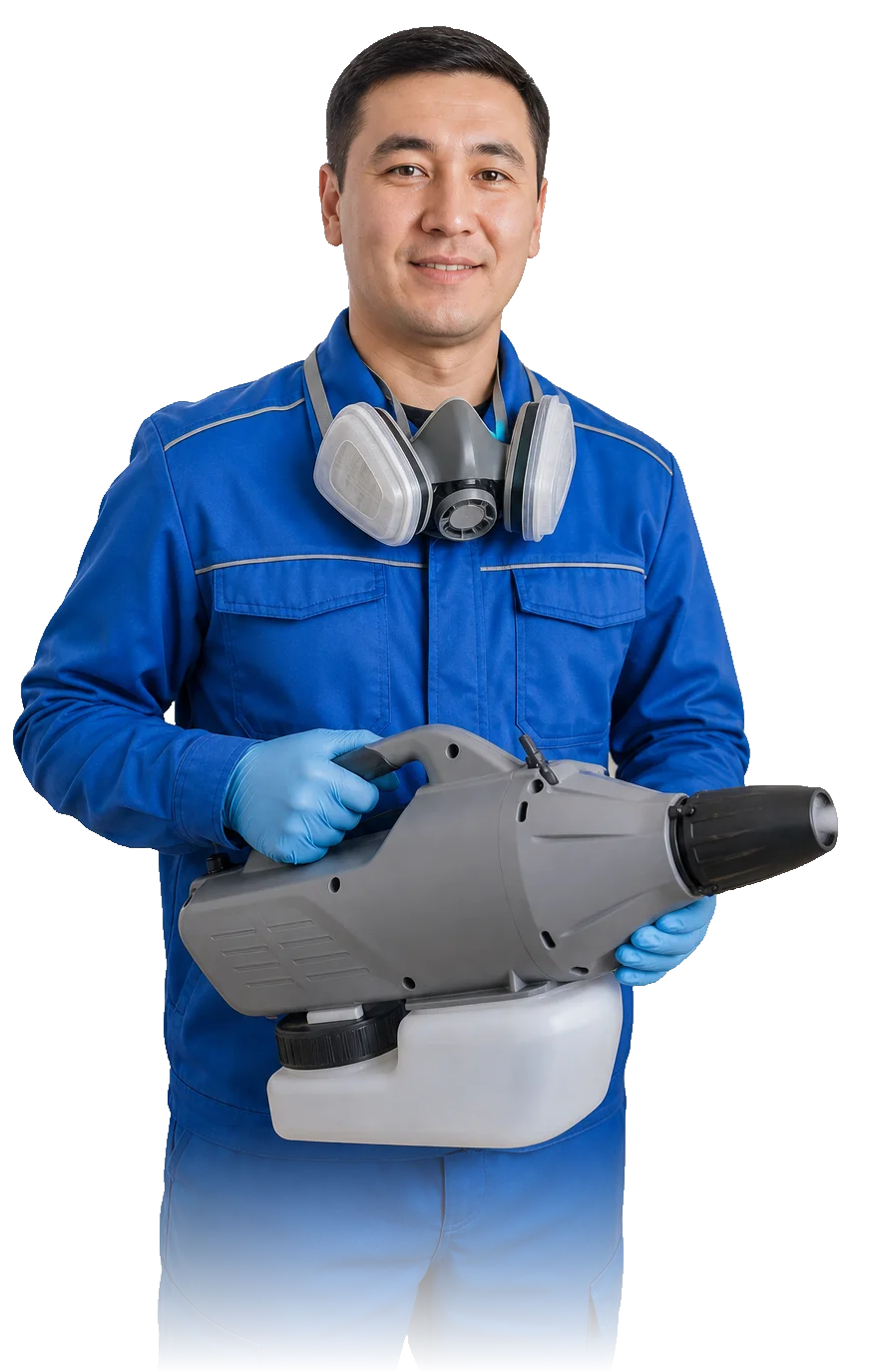
Using cold fog through a ULV generator, we apply a certified disinfectant to all surfaces and hard-to-reach areas. The fog penetrates into cracks and gaps.
We treat curtains, carpets, and upholstered furniture with cold fog along with the room — this is included in the base price. Deep steam disinfection of the sofa is a separate price item; we add it on request.
We start the ozone generator at the specified concentration. Exposure — from 30 to 120 minutes: depends on the room volume and the task (odor, mold, tobacco). Ozone penetrates the pores of materials and crevices.
We treat ventilation grilles; ozone enters the duct openings. Full-length duct disinfection and antibacterial air conditioner treatment are separate price items; we add them on request.
After ozonation, we ventilate the room for 30–60 minutes, check residual ozone with a gas analyzer, perform wet cleaning, and hand over the site with recommendations. We issue a work completion certificate.
We use products based on quaternary ammonium compounds and hydrogen peroxide, certified in Kazakhstan. They are effective against bacteria, viruses, and fungi, and safe for surfaces. We provide certificates of conformity upon request.
We use ozone generators with a capacity of 5–20 g/h, which create a concentration sufficient to eliminate mold and persistent odors. Ozone penetrates hard-to-reach places where spraying does not work. The treatment is carried out with exposure time control.
After the treatment, we issue a work completion report with the area, list of products, and ozonation mode, written recommendations for ventilation, and copies of certificates for the disinfectants. These documents are useful for the management company, landlord, or internal inspection.
If an odor remains or you notice a flaw after the treatment, tell us within 24 hours and we will redo the work for free. The technician will come back, find the missed source and repeat the treatment. The guarantee terms are fixed in the contract before work begins.
Only in-house technicians work in protective suits and respirators, trained in handling ozone and disinfectants. We do not engage random subcontractors. Each technician undergoes safety instruction.
We follow the protocol: sealing, exposure time control, ventilation, and residual ozone check before people are allowed access. We use a gas analyzer to monitor concentration. People and animals are allowed only after complete ventilation.
 After
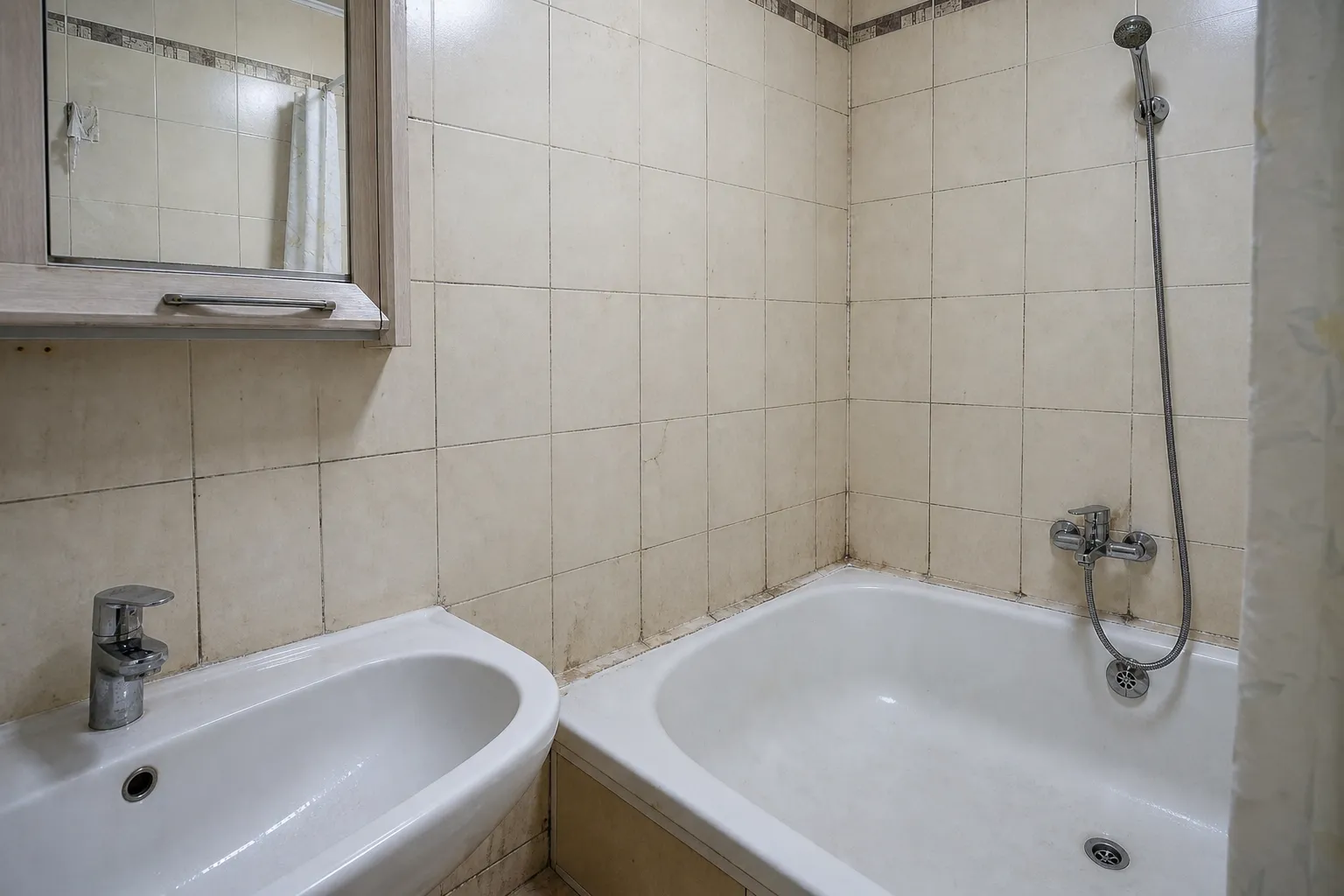
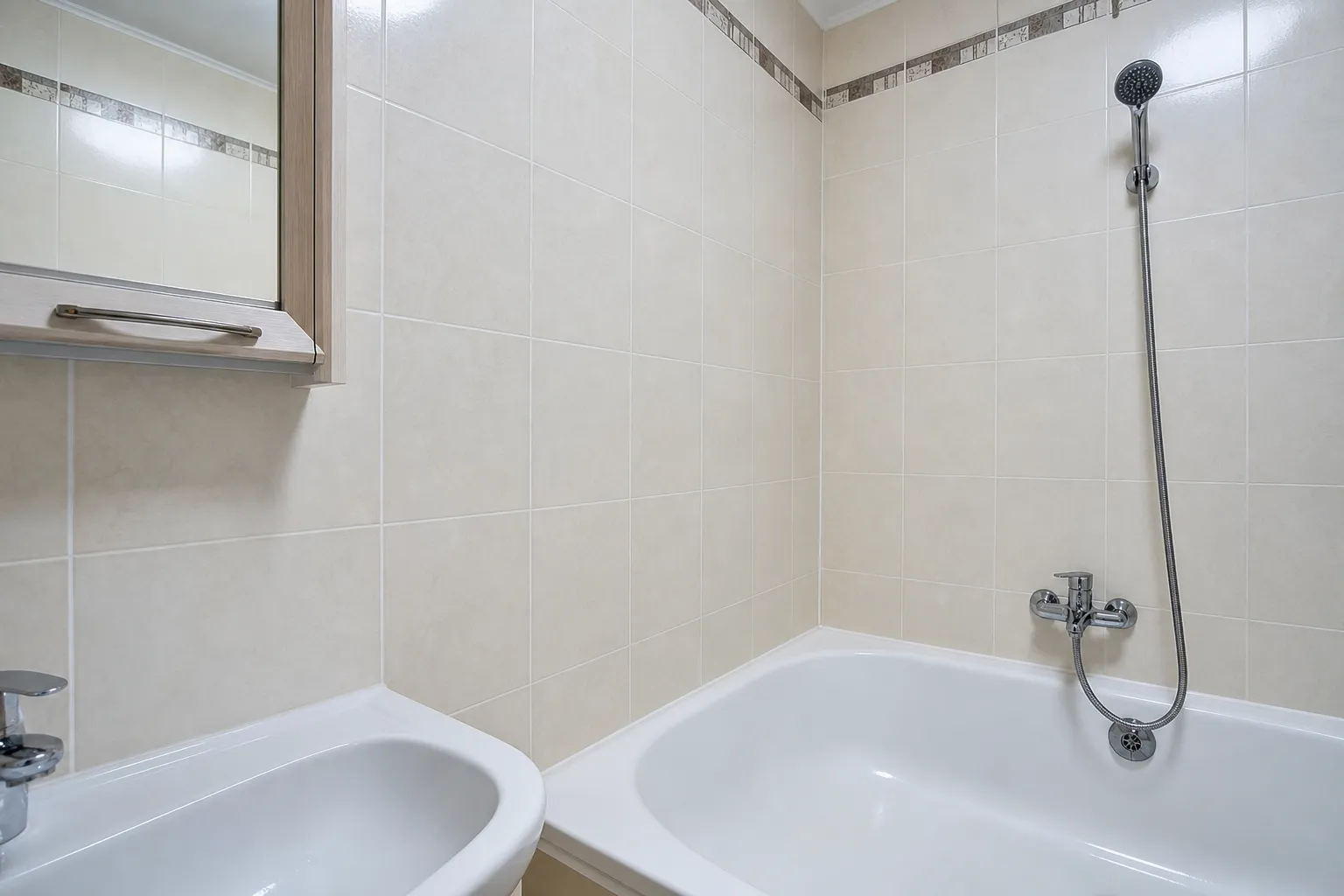
Request: Black mold appeared on the tile grout and silicone in the bathroom, with a musty odor.
Done: We cleaned the grout and silicone, applied fungicide to the affected area, then ozonated the bathroom for 40 minutes.
Cost: 7 500 ₸
Master: Aidyn Smagulov, disinfection specialist
Result: Mold removed from grout and silicone, bathroom is clean, no musty odor remains.
 After
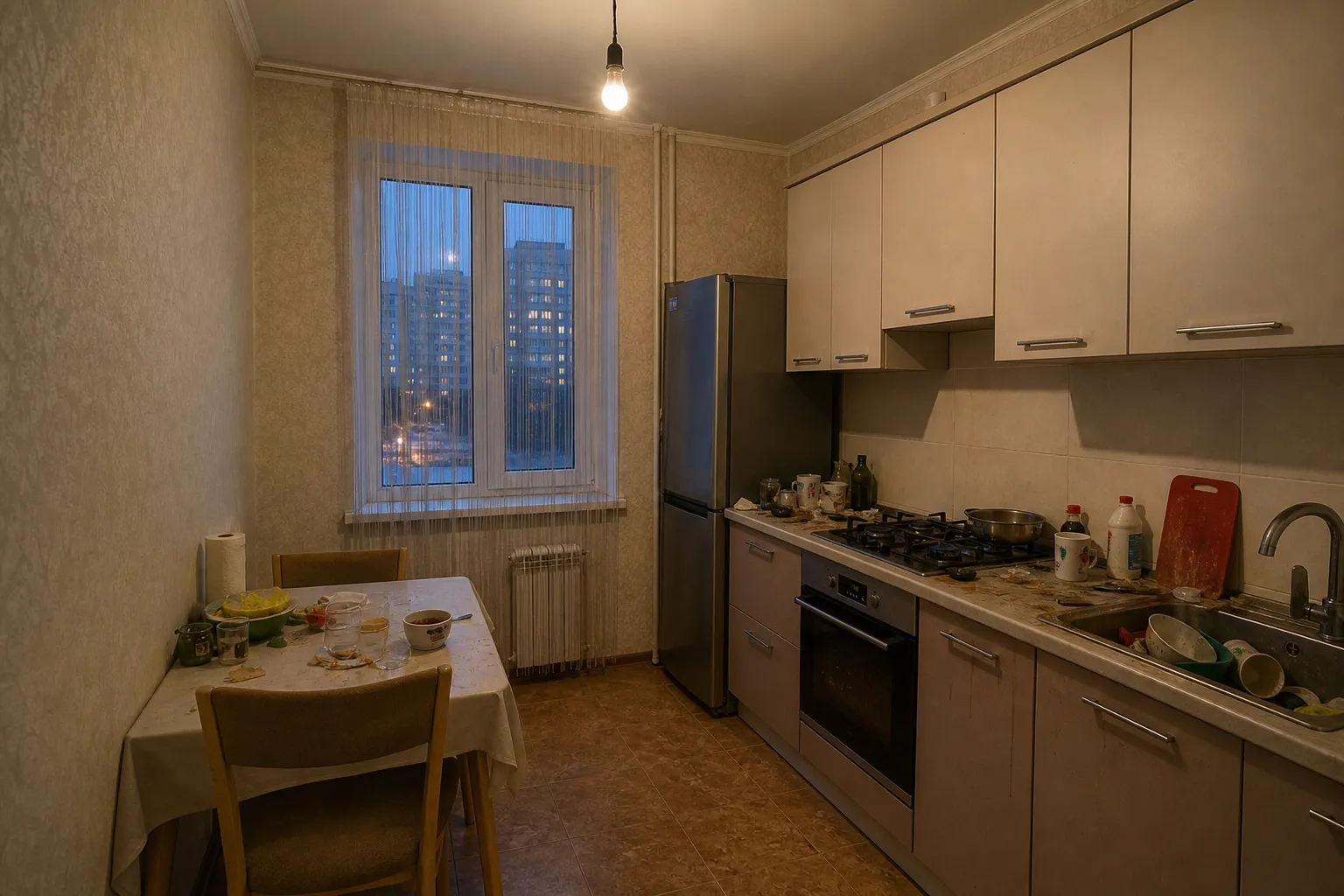
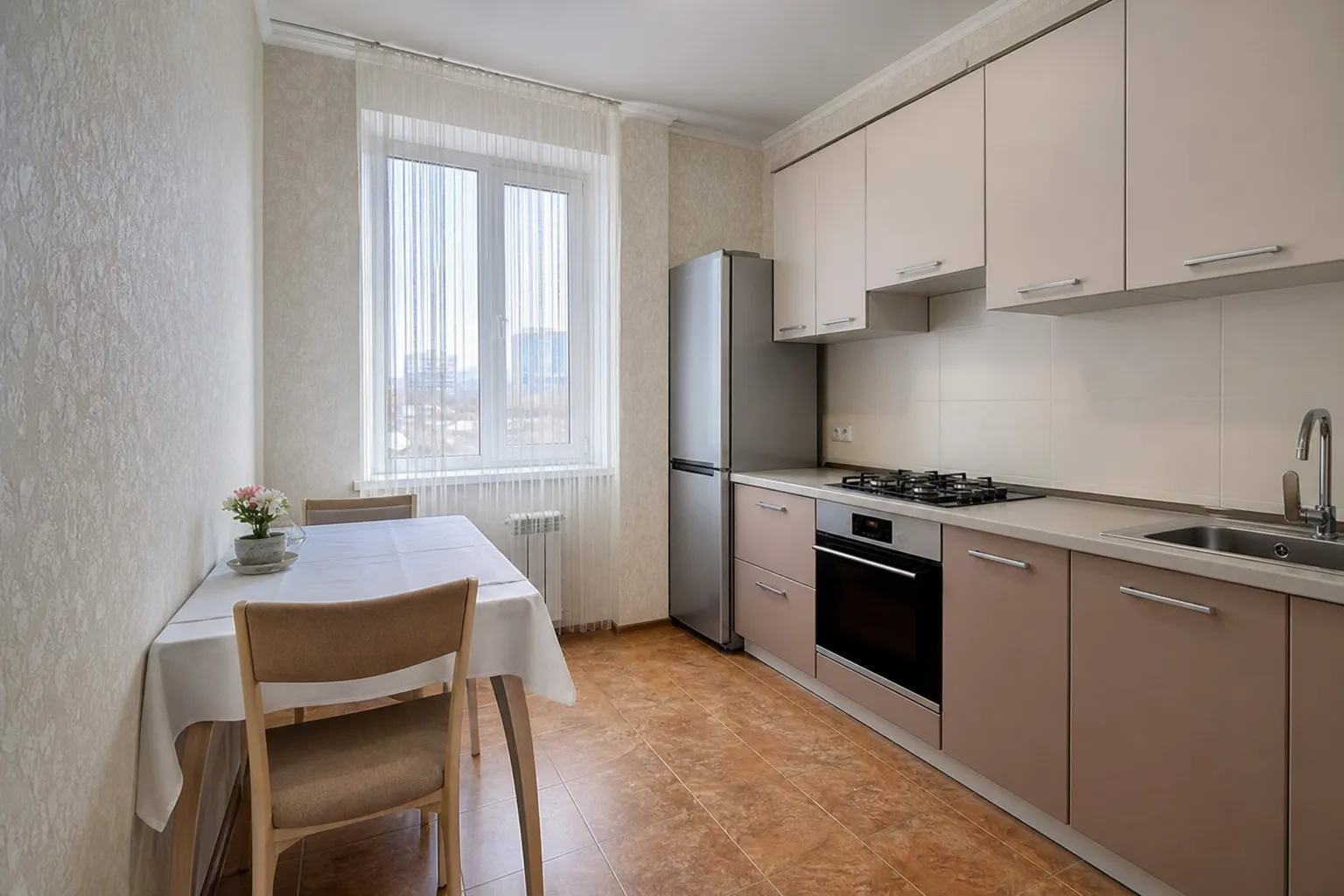
Request: After an intestinal infection in the family, the kitchen and the entire one-room apartment need disinfection.
Done: We washed the countertop and sink, disinfected the kitchen and the entire apartment, and ozonated for 30 minutes.
Cost: 15 000 ₸
Master: Dinara Akhmetova, disinfection specialist
Result: The kitchen and apartment are disinfected, the countertop and sink are clean, no foreign odors.
 After
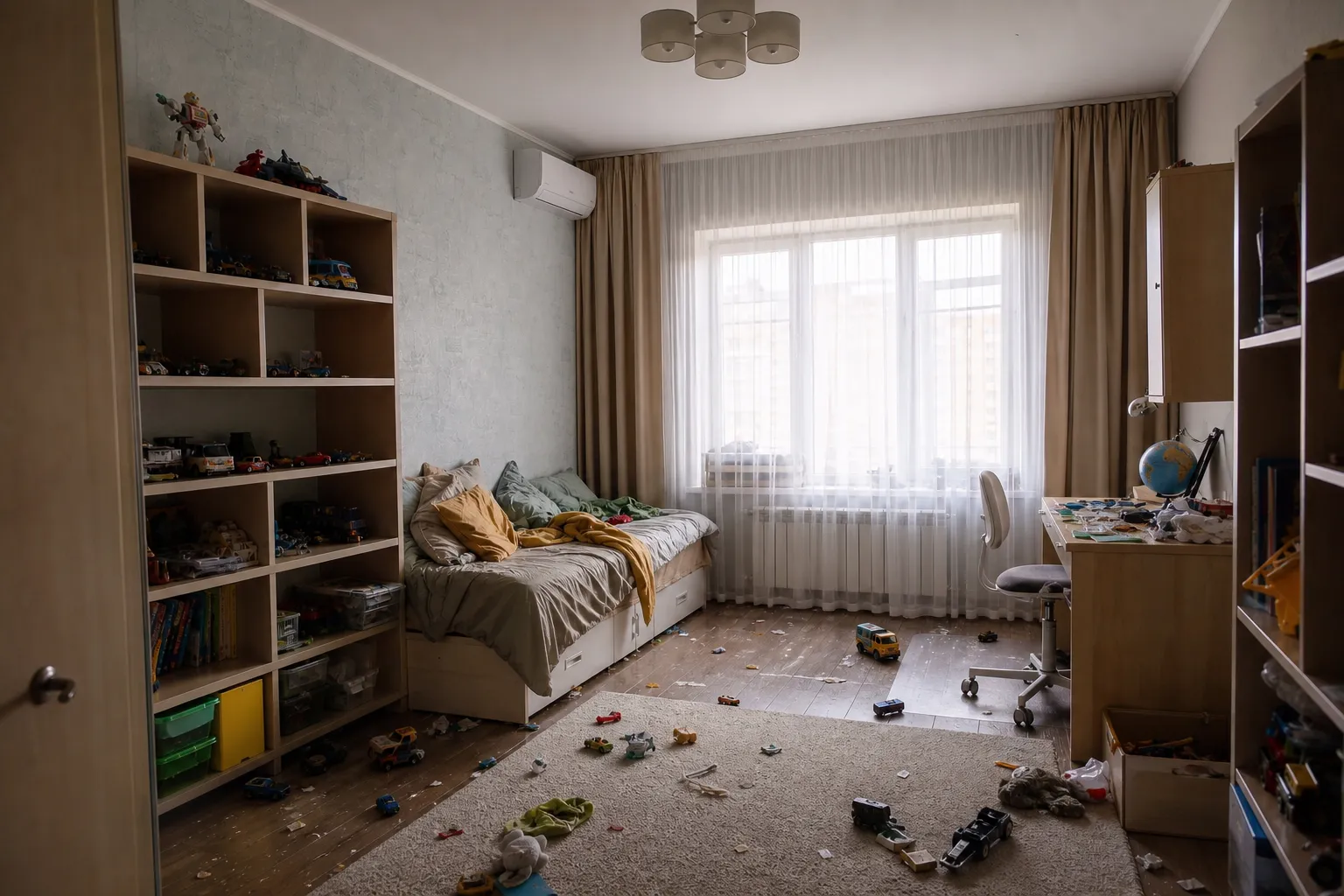
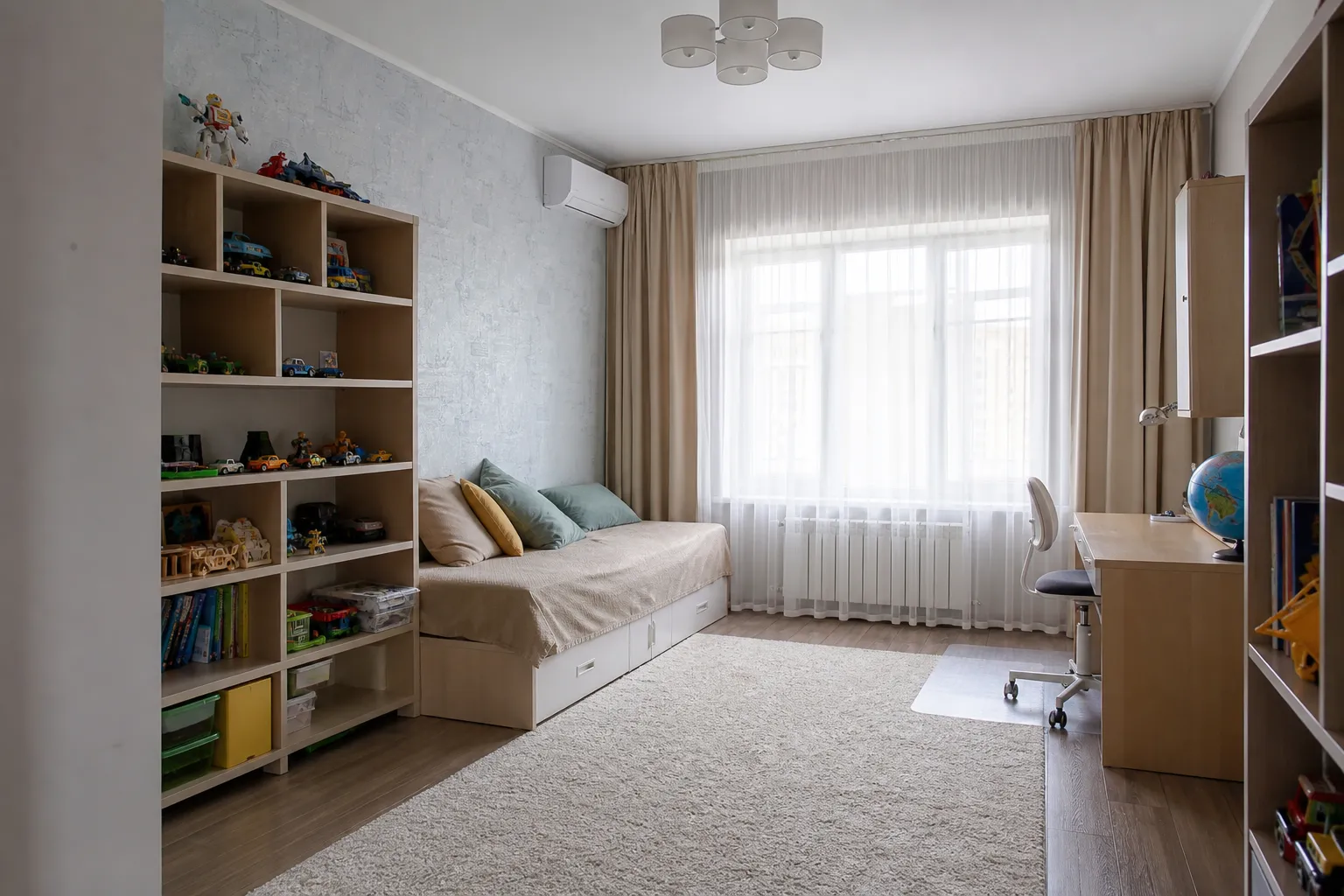
Request: After the child's cold, we want to disinfect the kids' room and the entire two-bedroom apartment.
Done: We wiped down the shelves, toys, and floor with an odorless disinfectant, treated the apartment, and ozonated for 30 minutes.
Cost: 19 000 ₸
Master: Aruzhan Temirova, disinfection specialist
Result: The kids' room is cleaned and sanitized, toys are in place, and the room has clean, fresh air.
 After
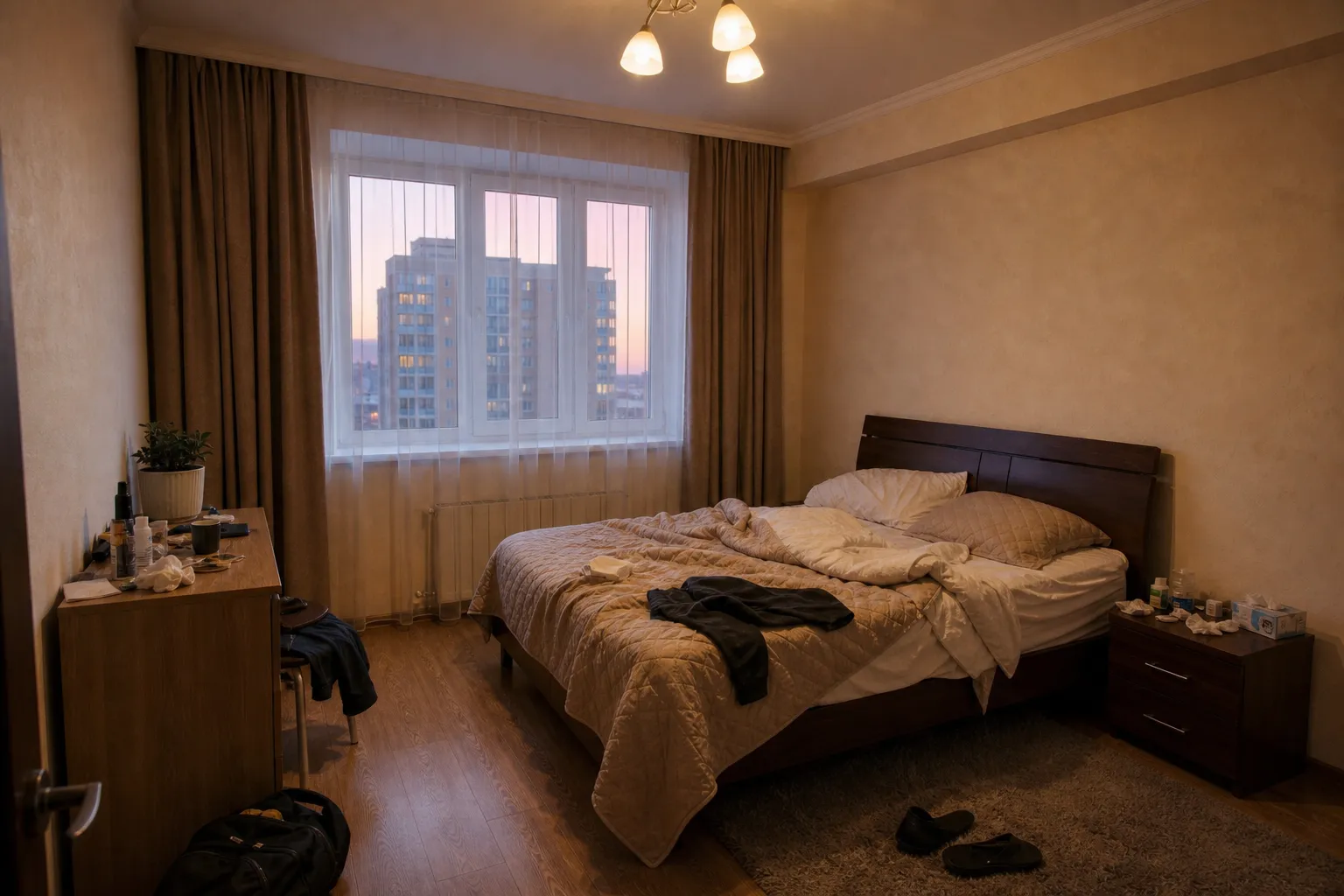
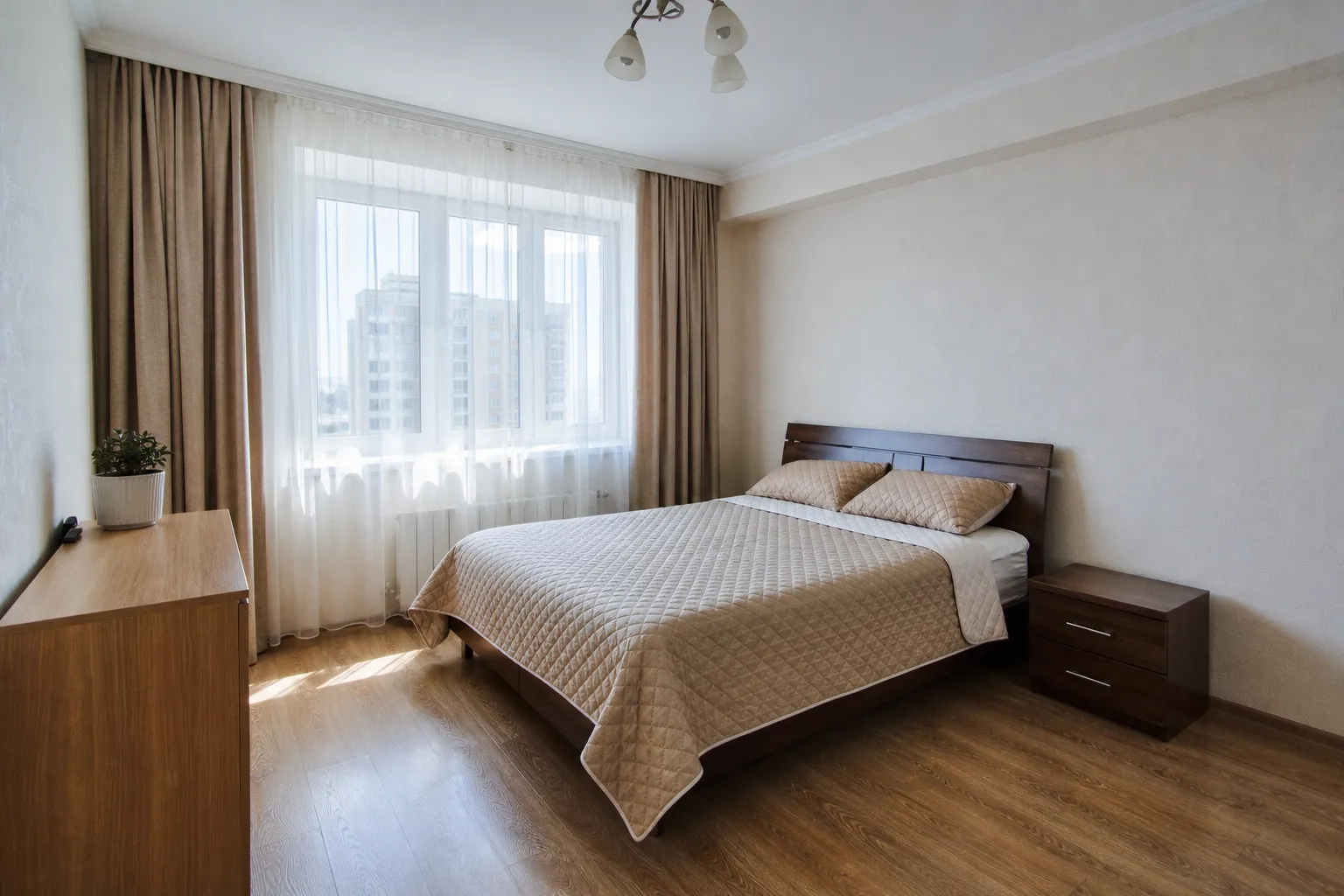
Request: The whole family has had the flu, and the bedroom and the other rooms in the apartment need to be disinfected.
Done: We removed the trash, treated surfaces and textiles with cold fog, then ozonated for 40 minutes.
Cost: 23 000 ₸
Master: Yerlan Bekmuratov, disinfection technician
Result: The bedroom and apartment have been disinfected, the bedding is fresh, and the smell of medication is gone.
 After
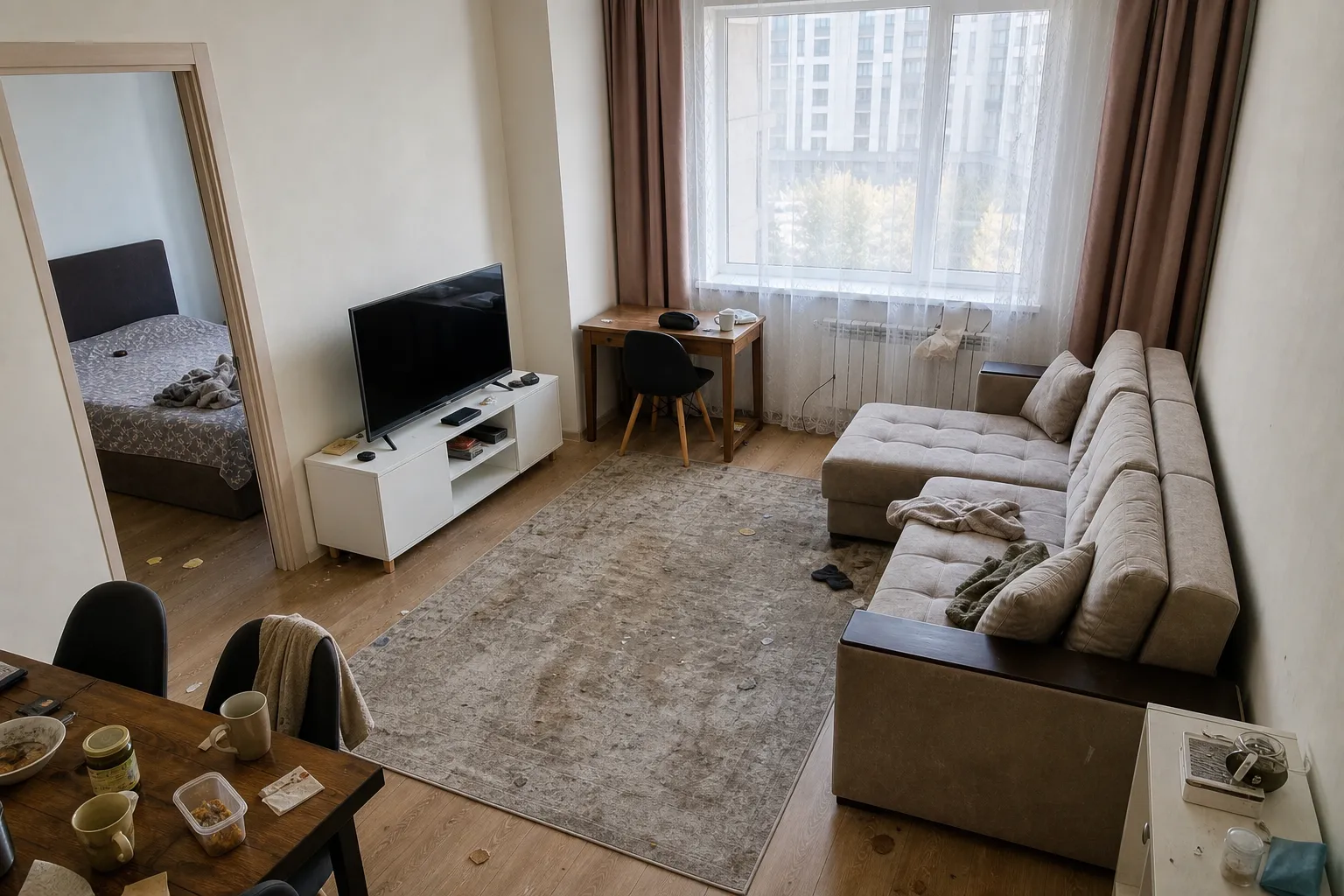
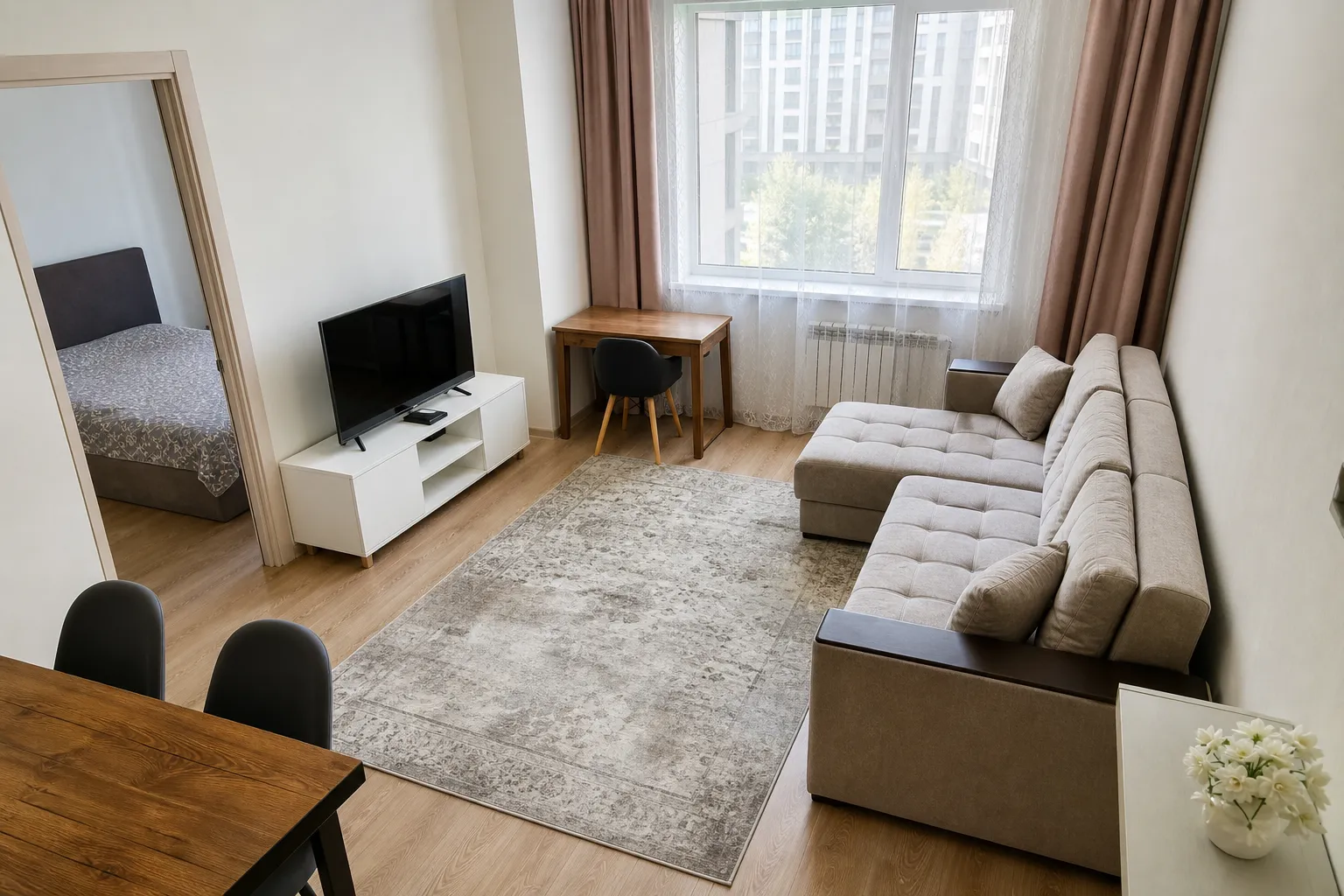
Request: In a rented one-room flat after tenants with a cat: clutter, a dirty rug and a persistent cat odor.
Done: We cleared things and trash, cleaned the rug and sofa, fogged all surfaces and ran ozonation for 45 minutes.
Cost: 15 000 ₸
Master: Madina Ibrayeva, disinfection technician
Result: The room is tidy, the rug and sofa are clean, the cat odor is gone, and the flat can be rented again.
 After
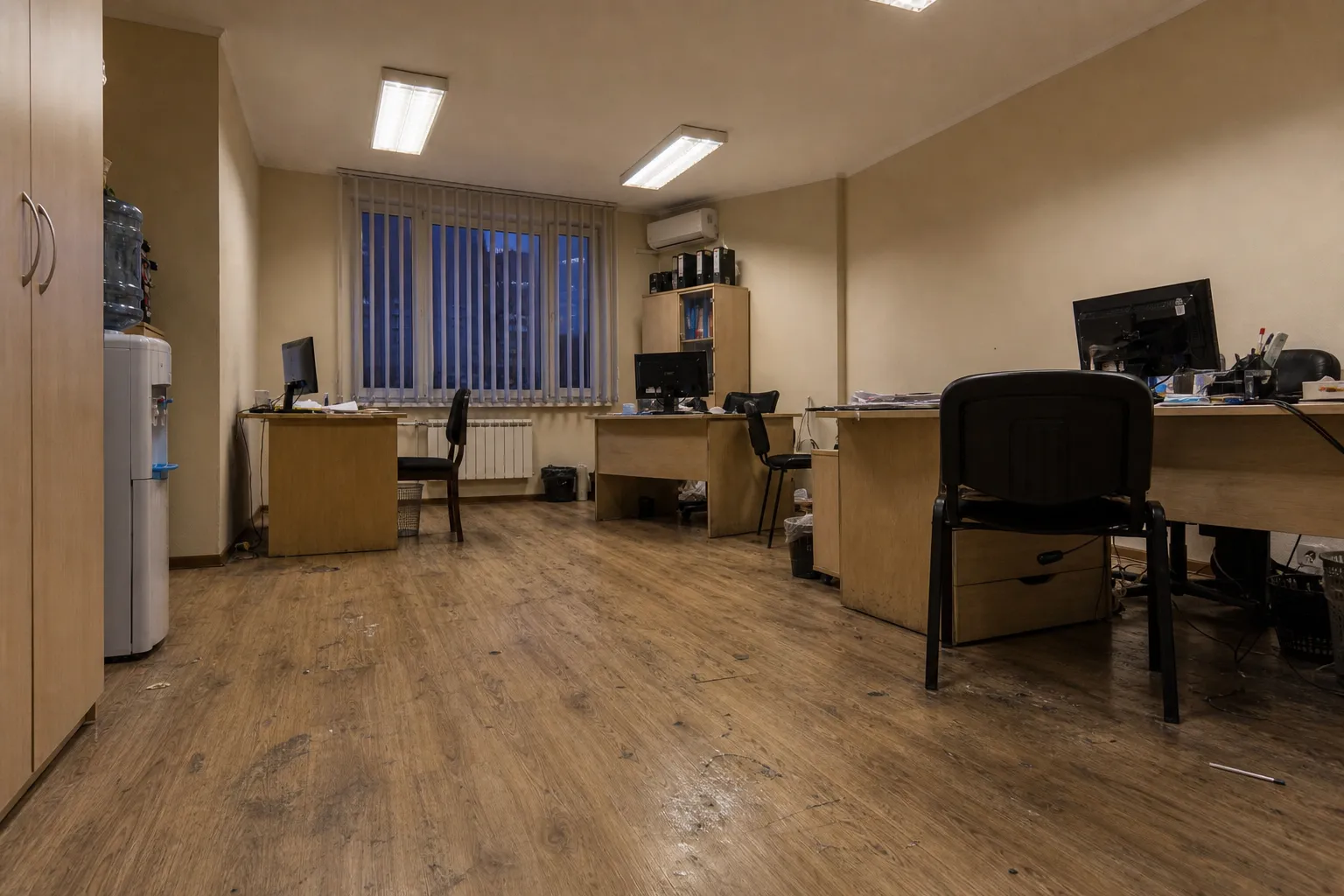
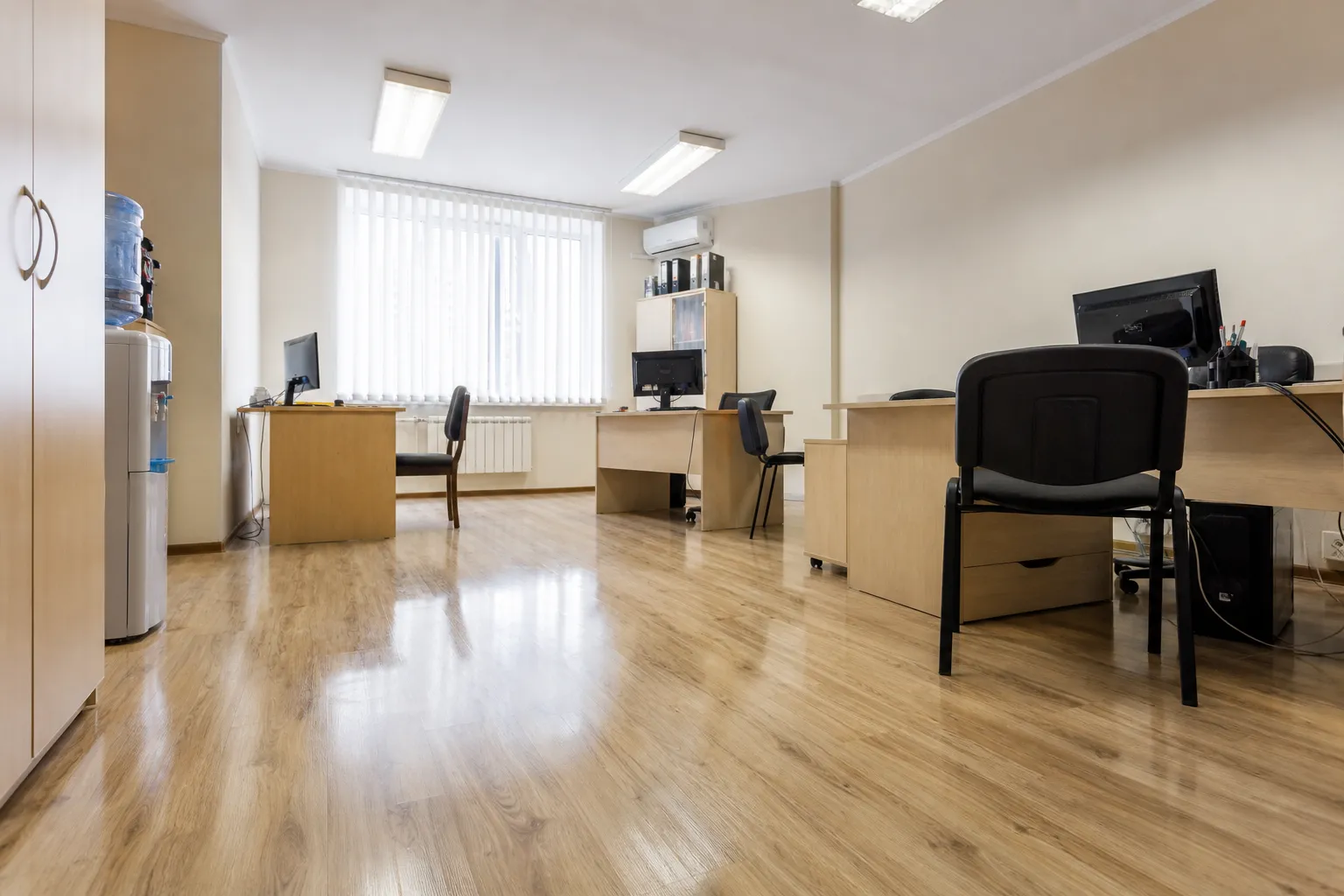
Request: After employees were on sick leave, the 40 m² office needs to be disinfected by Monday.
Done: On Friday evening, we cleared the tables, wiped down contact surfaces, treated the office, and performed ozonation.
Cost: 15 000 ₸
Master: Bekzat Yermekov, disinfection technician
Result: The office is clean, contact surfaces have been treated, and the office was open on Monday.
 After
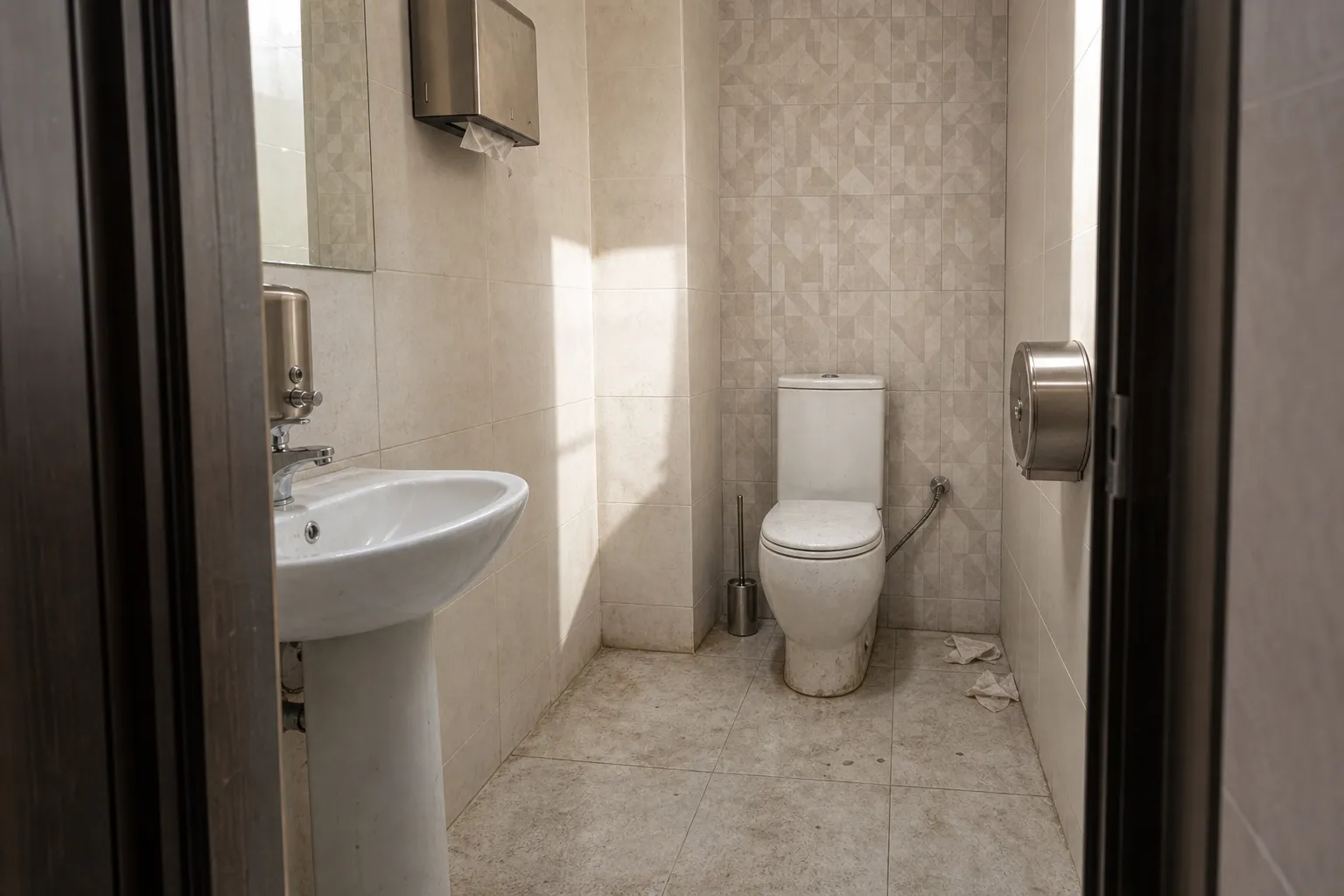
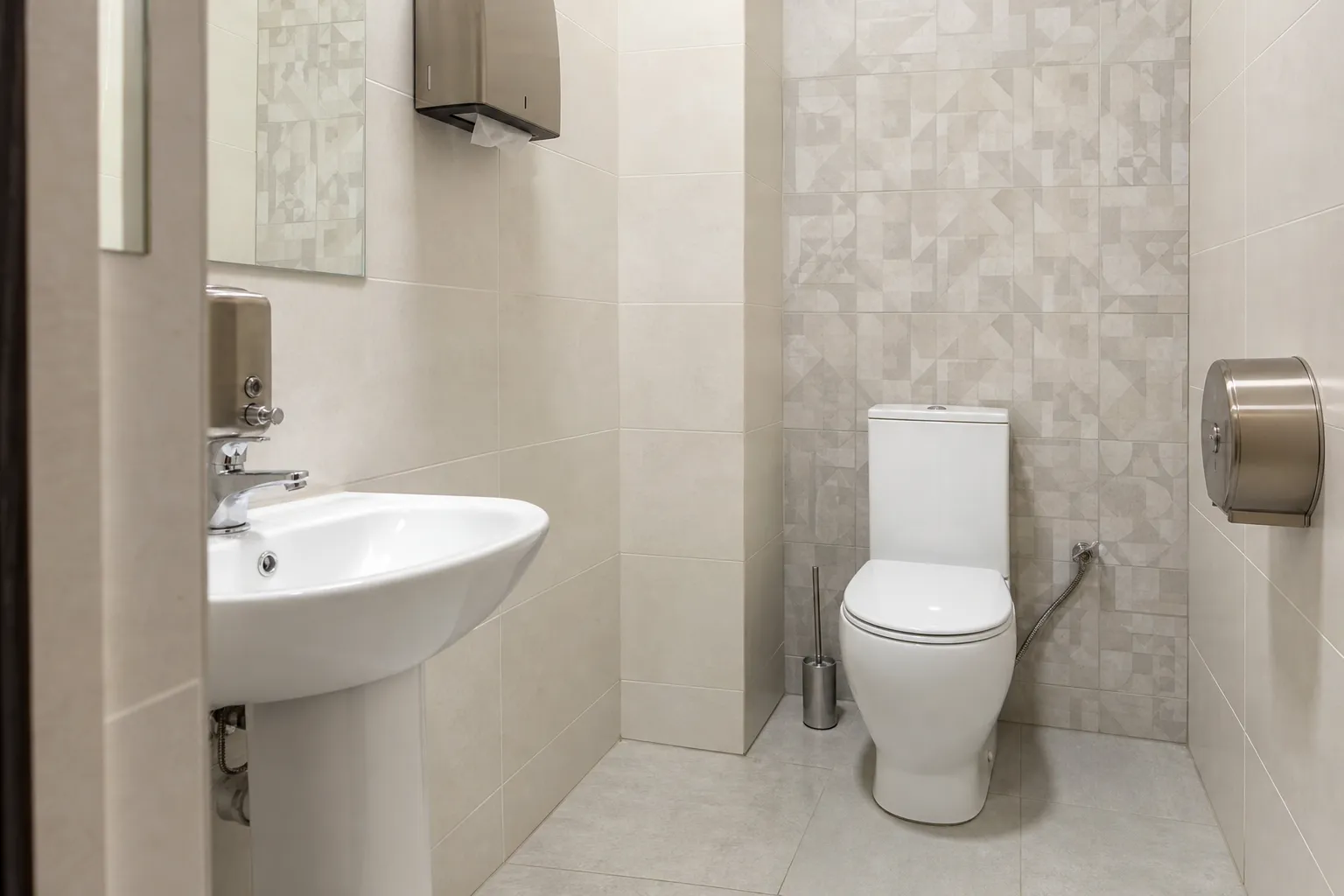
Request: In a 60 m² cafe, there is limescale and staining in the guest restroom, and the entire establishment needs disinfection.
Done: We removed limescale from the toilet and tiles, treated the dining area, kitchen, and restroom, and performed ozonation at night for 30 minutes.
Cost: 25 000 ₸
Master: Gulnara Satybaldiyeva, disinfection technician
Result: Limescale and stains in the restroom were removed, the cafe was treated, and it opened on time in the morning.
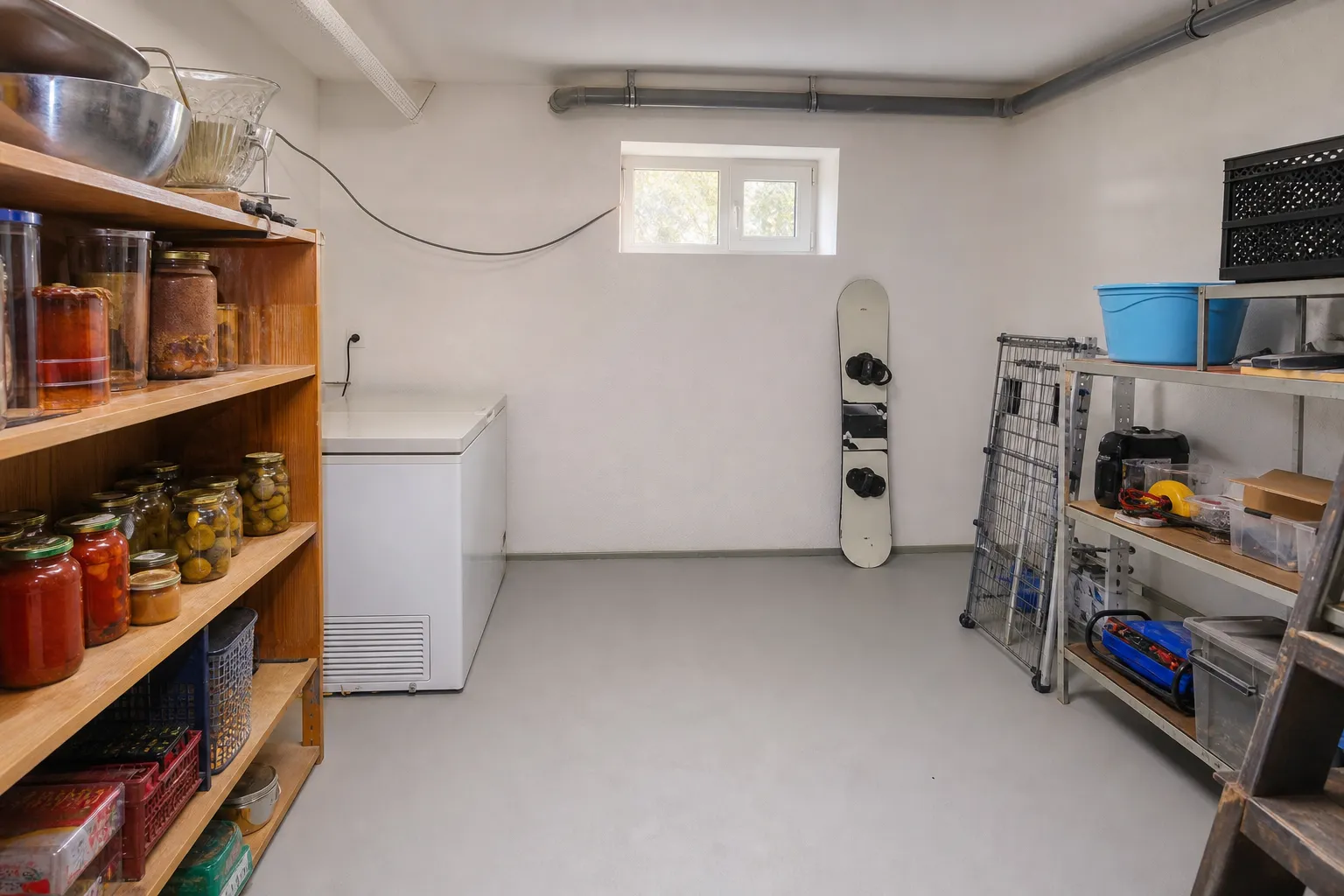 After
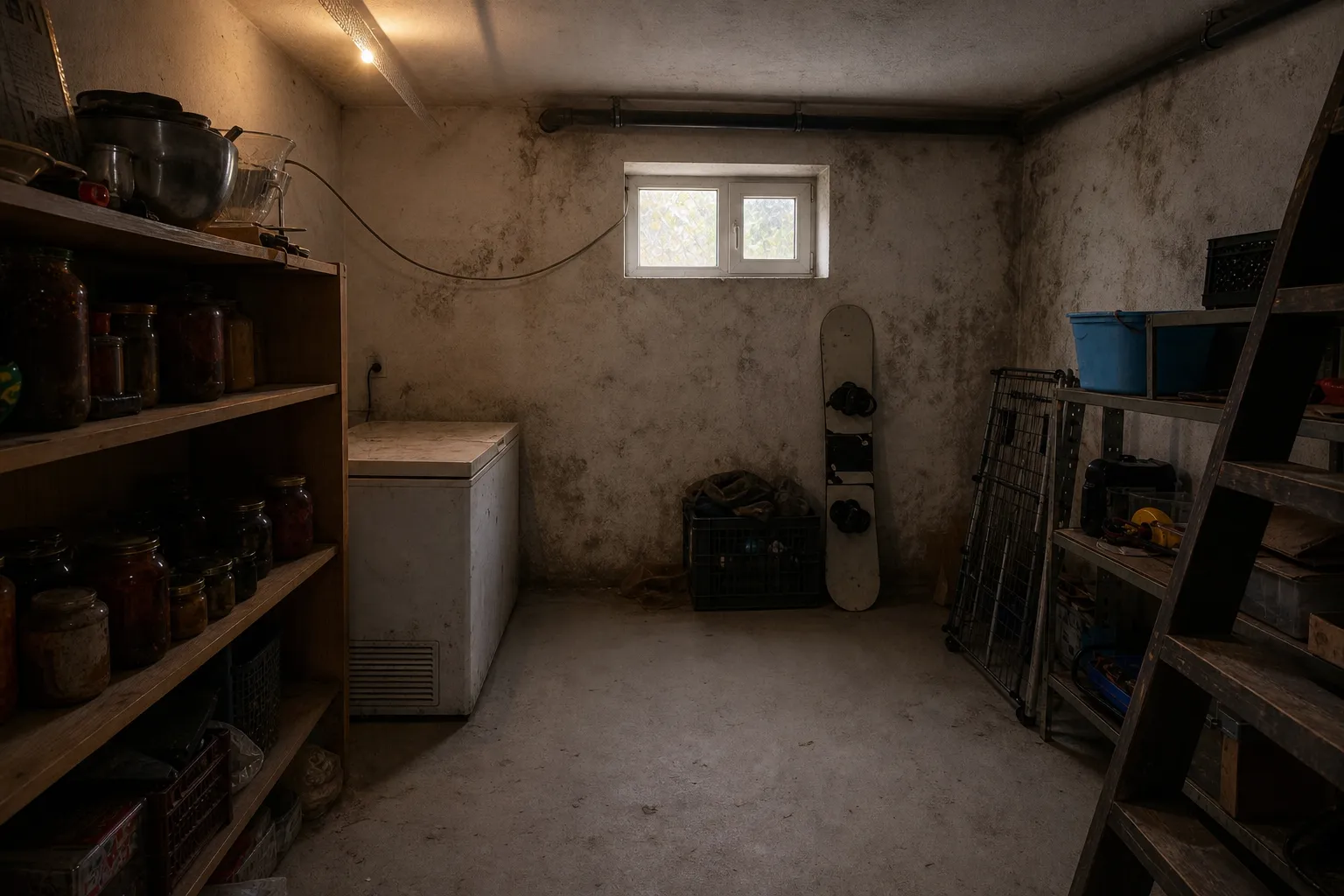
Request: In the basement of a private house, there is mold on the walls, it smells damp, and old boxes are stored there.
Done: We removed the boxes, scraped the walls, applied an anti-mold antiseptic, and performed ozonation for 60 minutes.
Cost: 15 000 ₸
Master: Daniyar Ospanov, disinfection technician
Result: Mold was removed from the walls, the basement is clean and dry, and the smell of dampness and mustiness is gone.
All cleaners are profi-clean staff with training, uniform and security check. Each order has a team leader who controls quality.
Regular cleaning removes visible film but does not touch the cause: mycelium in the pores and spores in the air. Let’s break down why mold comes back and what ozone does where a cloth is powerless.
Mold comes back because surface cleaning removes the pigmented film but does not destroy the mycelium that has grown into the plaster, tile joints, silicone, and wood. The fungus hypha penetrates 2-5 mm deep into the porous surface, while household chlorine-based products only work in the top layer. After 5-10 days, at 60-70% humidity and a temperature of 20-25 degrees, the remaining spores produce a new colony in the same spot. In Almaty panel buildings from the 1970s-1990s, the number of floors and weak bathroom ventilation make the problem worse: condensation on cold walls does not dry out for days. Before treatment, check the wall humidity with a household hygrometer — if it is above 15%, first fix the leak or improve the exhaust, otherwise any treatment will give only a temporary effect.
Ozone, as a gas, penetrates where neither a brush nor a sprayer can reach: into tile joints, ventilation ducts, behind baseboards, into concrete pores, and into fabric upholstery. The O3 molecule destroys the spore’s cell wall and oxidizes the protein structures of the mycelium — the fungus loses its ability to reproduce rather than simply becoming discolored. In our practice, after ozone treatment, reoccurrence in the same area is not recorded during the season in 9 out of 10 cases, if the moisture cause has been eliminated. At the same time, ozone leaves no film and does not require rinsing, unlike chlorine compounds that eat into the joints and leave an odor. An important nuance: the gas works only at sufficient concentration and exposure — a short 15-minute “airing” kills the odor but not the mycelium.
Ozonation covers two different tasks — destroying microorganisms and eliminating the volatile compounds they release. Ozone suppresses mold in its active growth phase, but dense colonies deeper than 5 mm in brickwork require mechanical opening and treatment with an antiseptic before ozonation. The smell of dampness, tobacco, burning, and animals is a secondary effect that is fully removed by ozone, because the molecules of odorous compounds are oxidized to neutral ones. But if the source of the odor is a fresh leak or wet laundry, ozone will only mask the problem for 2-3 weeks. In Almaty apartments with Soviet-design ventilation, we first check the draft with an anemometer: at a speed of less than 1 m/s in the bathroom, ozone goes into the living rooms instead of the exhaust, and the treatment loses its point.
If mold reappears in the same spot within 2-3 weeks after treatment, it signals a hidden leak or a wall that freezes through — in that case, ozonation is repeated only after the cause is fixed. At profi-clean, we always request a photo of the problem area before the visit: the image shows whether mechanical scraping is needed before gas is applied, and this saves the client a repeat visit. Ordering disinfection and ozonation in Almaty makes sense when the moisture source has already been found and fixed; otherwise, the procedure becomes cosmetic and requires repeating every few months. The price of disinfection and ozonation depends on the area and the extent of contamination — from 15,000 ₸.
The choice of disinfection technology depends on the type of space, the surface materials, and access to them. We break down three methods by their effectiveness against mold, viruses, and odors, as well as by their limitations for residential and work spaces.
Ozone destroys the cell walls of bacteria, mold spores, and viruses through oxidation, penetrating the pores of concrete, tile grout, and textiles. A UV lamp with a wavelength of 254 nm damages the DNA of microorganisms, but it only works in the direct irradiation zone — shadows behind furniture and seams remain untreated. Quartz treatment is the same UV principle, but with a harsher spectrum: it produces a pronounced ozone smell and requires the complete absence of people. In our practice, ozone delivers results in hard-to-reach areas where a lamp physically cannot reach. That is why, for mold in a bathroom, we combine both methods rather than choosing one.
The method is selected based on three inputs: the type of facility, the surface materials, and what exactly needs to be eliminated — bacteria, viruses, mold, or odor. Below is the working selection logic that we apply on site visits in Almaty.
| Type of facility | Priority method | Why |
|---|---|---|
| Apartment with residents | Fine-droplet spraying + ozonation without people | No furniture corrosion, access to crevices |
| Open-plan office | Scheduled spraying of disinfectant | Treatment of 200-400 m² in one visit |
| Cafe, food service kitchen | Alkaline disinfectant solution + steam | Removes grease and biofilm from stainless steel |
| Kindergarten, school | Class IV hazard products | Permitted with children present after ventilation |
| Warehouse, auto service | Fog generator | Reaches shelving and hard-to-access areas |
Before signing the contract, ask the contractor for a test report for a specific strain — universal claims of “against all bacteria” without documentation are worth nothing.
We break down the mistakes that most often lead to zero results or damage to property. All of them are gathered from our site visits after DIY attempts — across Almaty apartments, offices, and cafes.
The main mistake during DIY ozonation is turning on the generator while staying in the room or leaving children and pets there. Ozone at a concentration of 0.1 ppm and above irritates mucous membranes; at 5-10 ppm it causes pulmonary edema and headaches; the maximum permissible single concentration of ozone in the air of populated areas is 0.16 mg/m³, while an industrial generator produces 20-50 times more in an hour. During treatment, windows and doors are closed, ventilation is turned off, and the premises are completely vacated for the exposure period — along with animals, plants, and aquariums, which ozone damages irreversibly. After the cycle, a pause for gas decay and through ventilation for 30-60 minutes are mandatory. In our practice, there was a case in the Bostandyk district when a client started the ozone generator and stayed in the next room with the door closed — they got severe mucous membrane irritation and saw a doctor. If there is an asthmatic or allergic person in the home, treatment is scheduled for their absence and with extra ventilation time.
Disinfection and ozonation solve different tasks, and replacing one with the other gives a false sense of cleanliness. A solution based on quaternary ammonium compounds or hypochlorite works only where it physically reaches: a soaked cloth, a sprayer, a mop. Ozone fills the entire volume and penetrates cracks, ventilation ducts, behind baseboards, into fabric upholstery — but it does not wash away grease, film, or biofilm. If surfaces are not washed first, organic matter binds the active substance, and the concentration drops below the working level. The correct sequence is mechanical cleaning, then disinfection of contact surfaces, then ozonation of the volume. Only this order gives an effect that lasts rather than disappearing within a day.
Insufficient dwell time is the most common reason everything comes back within a week. The disinfectant manufacturer specifies the contact time for a specific concentration: 30, 60, or 120 minutes. Cutting it in half means you don’t kill the mold spores — you only weaken the mycelium, which recovers within 3-5 days. The same goes for ozone: treatment time is calculated based on room volume and generator output, not “by eye.” Mixing concentrate without a measuring cup, using a bottle cap, gives a 2-3x variance — either surface burns or zero result. In Almaty, tap water is hard with high mineralization: it reduces the activity of many disinfectants, so solutions are prepared with distilled or filtered water. Our senior team lead Gulnara Abisheva always repeats during technician training: saving 15 minutes of dwell time costs a repeat visit and a damaged reputation.
Treating visible walls and floors doesn’t solve the problem if the source remains untouched. Mold spores live in tile grout, behind the refrigerator, in the sink siphon, in the washing machine seal, in the ventilation duct, and under the windowsill. Humidity in Almaty apartments on ground floors and in buildings without waterproofing stays at 65-75% year-round — an ideal environment for regrowth. Until the leak is fixed, the exhaust is working properly, and the structures are dried out, any disinfection gives only a temporary effect for 2-4 weeks. In one cafe on Abay, we found the source in the air conditioner drain tube: surface treatment of the hall didn’t help until the indoor unit was removed and disinfected.
Mixing a chlorine-based and an acid-based product in an enclosed space releases chlorine gas — that’s poisoning with damage to the respiratory tract. Chlorine with ammonia produces chloramines, which are 10-20 times more toxic than the original components. Ready-made solutions should not be stored: chlorine loses activity within 4-6 hours, peroxide breaks down within a day, and a diluted concentrate in a warm room becomes a breeding ground for bacteria. Fill the sprayer under an exhaust hood or on a balcony, wearing gloves and a respirator. If someone in the home has asthma or allergies, chlorine-based products are excluded entirely — at profi-clean we use hypoallergenic Kiehl and Sodasan chemicals for exactly this reason. And never mix two products in one container, even if both are “for mold”: the result is unpredictable, and the consequences are — lung burns.
Ozone is a gas, but it does not pass through dense barriers and does not penetrate closed boxes, cabinets, appliances, or sealed containers. If cabinet doors are closed, the original microflora remains inside. Ozone treats fabric items, mattresses, pillows, and upholstered furniture only on exposed surfaces — deep inside the filling, the concentration drops to ineffective levels. That is why before ozonation all doors, drawers, and lids are opened, and items are laid out loosely, not in a stack. Appliances and electronics are covered or removed: ozone destroys rubber seals and accelerates oxidation on metal contacts. In our practice, after a DIY treatment without opening the cabinets, a client found the smell in the linens again 10 days later — we had to repeat the process with full disassembly.
| Parameter | DIY attempt | Professional service visit |
|---|---|---|
| Exposure calculation | “by eye,” based on feel | by volume, power, and type of contamination |
| Protection of people and animals | often ignored | complete absence from the premises |
| Source of the problem | not identified | diagnostics before treatment |
| Ventilation | 10-15 minutes | 30-60 minutes with decay monitoring |
| Result guarantee | none | free redo if you tell us within 24 hours |
If more than a week has passed since a DIY treatment and the smell or film has returned, it means the source was missed or the exposure was incorrect. In such cases, it is cheaper to call in specialists with equipment and HEPA filtration than to repeat the cycle over and over again. You can order disinfection and ozonation with source diagnostics from us — our technician will first inspect the premises and identify the cause, rather than simply spraying product on the walls.
The Almaty microclimate dictates its own treatment conditions: here the challenge is not dryness but moisture, dust from the mountains, and seasonal swings. Let us break down how this changes the approach to sanitization.
Average humidity in Almaty stays at 60-70% for most of the year, and in the foothill districts — Medeu, Butakovka, Kamenskoye Plateau — the figure reaches 80%. At such levels, mold spores germinate in 48-72 hours, not in a week as in a dry climate. In practice, this means a premises that could stand untreated for a month in a dry region requires attention here within just five days. Ground floors and basements are especially vulnerable — moisture rises there from the foundation and groundwater, and condensation settles on walls and furniture. Our senior crew leader Gulnara Abisheva always repeats during technician training: first find the source of moisture, then treat. If you simply spray product without removing the cause, the mycelium will return within two weeks.
The peak in requests to profi-clean falls on two periods — March-April and October-November. In spring, snow melts in the mountains, the groundwater level rises, and basements, ground floors, and storage rooms fill with dampness. In autumn, heating is turned on, windows are closed, air exchange drops threefold, and the temperature difference between outside and indoors creates condensation on glass and exterior walls. In summer, another factor is added — dust: in July-August, the concentration of suspended particles in the air increases 2-3 times, dust settles on surfaces and serves as a breeding ground for bacteria. In winter, the problem shifts to ventilation: cold air from outside meets warm air inside and leaves condensation in the shafts.
Houses in Almaty built before the 1990s — and this is a significant part of the housing stock in the Almaly, Zhetysu, and Turksib districts — have natural-draft ventilation without forced exhaust. Over decades, the ducts in such buildings accumulate dust, grease film (if these are kitchen risers), mold, and even insect nests. The draft in them is weak: in summer heat it may be absent altogether, and the air in the apartment stagnates. Treating ventilation grilles by spraying gives only a visible effect — the duct itself remains a source of spores. When working in old housing stock, our cleaners always check the draft with an anemometer and, if it is absent, treat the duct through an inspection opening or recommend mechanical cleaning before disinfection.
Almaty dust differs from the dust of lowland cities: it has a high proportion of mineral particles from mountain rocks, which settle as a fine fraction and penetrate the narrowest cracks. This dust is abrasive — it scratches the lacquer coating of furniture, and bacteria accumulate in the micro-scratches, where an ordinary cloth cannot reach. In districts closer to the mountains — Bostandyk, Medeu — the concentration of such dust is higher due to winds from the foothills. During disinfection, we first remove dust with a HEPA vacuum, otherwise the disinfectant lands on the dust layer and does not contact the surface. This is not a formality: treatment without preliminary dust removal reduces effectiveness by 40-60%.
Almaty high-rise buildings periodically face scheduled hot water outages — usually for two weeks in the summer, and in some districts even longer. During this time, residents more often use reserve containers and fill bathtubs with water, which increases humidity in bathrooms and creates a favorable environment for bacterial growth. Voltage surges in old buildings disable household humidifiers and recirculators, and people are left without their usual means of microclimate control. During such periods, demand for disinfection of bathrooms and kitchens rises by a third. We take this into account in our schedule: if the water has been shut off in a building, it is better to plan treatment after supply resumes, when humidity stabilizes.
Ozone destroys microorganisms and neutralizes volatile odor molecules, but it does not restore damaged materials. Let us break down situations where treatment gives a temporary effect and the cause returns after 2-6 weeks.
Ozone only works where it can reach the source: in the pores of drywall, plaster, and particleboard, mold mycelium goes as deep as 3-4 cm, where the gas only partially penetrates. If the substrate humidity exceeds 20%, colonies recover within 2-3 weeks after treatment. In our practice, Almaty apartments on the first floors of old Soviet-era buildings are a typical case: capillary moisture rises through the brick, ozone removes the visible film, but a month later the fungus resurfaces. The solution is to open up the finish down to the concrete, dry it with a heat gun, and treat it with an antiseptic-fungicide before installing new layers. Ozonation here is the final stage, not a standalone measure.
Disinfection and ozonation are effective in a sealed volume, but if the exhaust duct is clogged or has reverse draft, spores return from the riser into the apartment within a week. Almaty panel buildings of the 1-464 series and high-rises on Rozybakiev often have building-wide shafts without filters: air from neighboring apartments with mold is pulled back through a non-working valve. Before treatment, we check the flow velocity in the grille with an anemometer — if it is below 1 m/s, we recommend first calling a ventilation specialist and installing a check valve. Without this, ozone gives an effect for 10-14 days, and the musty smell returns along with the humidity from the mountains. In a building on Dostyk we had a case: three treatments in a row did not help until the client replaced a flexible air duct with a tear.
Ozone oxidizes volatile molecules in the air, but nicotine resins absorbed into plaster and wallpaper continue to evaporate for months. In an apartment after several years of smoking, the resins sit in the layer of paint and wallpaper, and one ozonation cycle is enough for 3-6 weeks. The same goes for cat and dog urea: if the marks got into the concrete floor through the seams of the laminate, salt crystals sit in the capillaries and release ammonia when humidity rises. Ordering disinfection and ozonation in such a case only makes sense after removing the wallpaper, sanding the walls, and treating the substrate with an enzyme neutralizer. Otherwise you are paying for temporary relief, not for eliminating the cause.
| Sign | What it means | Action before ozonation |
|---|---|---|
| Dark spots go deep into the plaster | Mycelium in the substrate | Open up and replace the layer |
| Musty smell with no visible mold | Moisture in the structure | Find the leak, dry it out |
| Reverse draft in the ventilation grille | Spores are coming from the shaft | Repair the ventilation |
| Yellow streaks on the ceiling after smokers | Nicotine in the floor slab | Remove the finish, apply primer |
| Ammonia smell when humidity rises | Salts in the screed | Enzyme treatment of the floor |
Ozone is a strong oxidizer, and at concentrations above 10 ppm it destroys natural rubber, latex, some types of vinyl, and untreated copper. In apartments with expensive solid oak or walnut furniture, prolonged treatment leads to darkening of the lacquer and microcracks in the veneer. At profi-clean we have a rule: we calculate the price of disinfection and ozonation taking protective measures into account — covering natural wood, brass fittings, and antique items. If a space has an art collection or handmade leather furniture, we replace ozone with fine-droplet hydrogen peroxide spraying with HEPA filtration — the effect on bacteria is comparable, while the risk to materials is lower. Cleaners receive individual instructions for each site, because there is no universal protocol for antiques.
If a space has swollen parquet, peeling wallpaper, black deposits on concrete basement walls, or signs of rot on wooden joists, disinfection and ozonation address only the hygiene aspect, not the structural one. In a residential building basement on Abay, we refused treatment until the apron was repaired: water was coming in through cracks in the foundation, and any disinfection lasted a week at most. The correct sequence is: eliminate the source of moisture, replace damaged structures, dry everything out, and only then carry out the final ozone treatment. Ordering disinfection and ozonation before repairs means paying for a procedure whose result will be washed away by the first rain.
We ordered disinfection and ozonation after everyone had been sick. The technician arrived on time, treated all the rooms, and the smell was gone within a couple of hours. Now it's easy to breathe.
Thank you, Aigerim! We're glad we helped restore a healthy atmosphere in your home.
They treated the entire office in one evening, and in the morning the employees came in to a clean space. No chemical smell, just freshness.
Thank you for your trust! We're always ready to treat your office at a convenient non-working time.
We ordered disinfection and ozonation of a kindergarten after quarantine. They arrived half an hour late, but the result is excellent: the children returned to clean groups.
We rented an apartment with a musty and moldy smell. After the treatment, the air became clean and the smell disappeared completely. Very satisfied.
We ordered disinfection and ozonation in a private house after renovation. The dust and paint smell were gone, and breathing became noticeably easier.
Thank you for your review! After renovation, ozonation is especially effective.
We removed the smell of cat markings. The technician explained everything and treated the sofa and corners with an enzyme product. The smell was gone, and the apartment felt fresh.
Ozonation after the previous smoker tenant removed the tobacco smell in the rooms, but it was still noticeable in the closets. The technician advised removing the old wallpaper.
Thank you for your feedback! Ozone does not fully remove odors absorbed into wallpaper and furniture — we'll advise you on how to prepare the apartment for a repeat treatment.
After the flood, there was a smell of dampness and mold. The entire apartment was treated, the smell disappeared, and the walls dried faster.
Disinfection and ozonation of a fitness club were done at night; in the morning there was no trace of chemicals. The locker rooms and showers no longer smell musty, and clients are happy.
Thank you! Glad we could treat the club without interrupting its operations.
The smell of paint and glue dissipated after the treatment. The technician was about twenty minutes late, but warned us in advance. The result is good.
We ordered disinfection and ozonation of the office after half the team went on sick leave. They treated it in the evening, and on Monday everyone returned to a fresh room.
Thank you! Office treatment can always be scheduled for the evening or a weekend.
The dog left an odor in the apartment. After the treatment, the air became clean and the dog smell disappeared. The dog behaves calmly.
Before opening the restaurant, we ordered disinfection and ozonation of the hall and kitchen. They removed post-renovation and kitchen odors; guests notice nothing.
Thank you for your review! We wish you a successful opening.
Treated the children's room after chickenpox: wiped down toys, shelves, and the crib, then ozonated. No smell, the child sleeps peacefully.
The basement of a private house smelled musty and there was mold on the wall. After disinfection and ozonation, the odor was gone, but the technicians took longer than promised.
After the tenants, there was a smell of tobacco and animals. The technician left an ozone generator in the empty apartment, and after airing out, the smell was gone. Rented it out without any problems.
Thank you, Madina! We're glad we helped you get the apartment ready quickly.
Disinfection and ozonation of a dental office were performed on a weekend, as agreed. Everything is clean, no odor, and the certificate was issued immediately.
We were fighting mold in the bathroom on the tile grout. After treatment, the grout is light, the musty smell is gone, and the mold hasn't come back so far.
The beauty salon smelled of hair dye and nail polish. After disinfection and ozonation, the rooms are easy to breathe in, and clients noticed the difference.
Thank you! We are glad the treatment benefited the salon.
We treated a cottage after renovation. The paint smell was gone, but we had to air it out longer than expected. Overall, we're satisfied.
We ordered disinfection and ozonation in the gym. They removed the smell of sweat and rubber. Now it's more pleasant to work out.
Thanks for the review! It's great that your workouts have become more comfortable.
After the flu, they treated the entire apartment, especially the kitchen: the countertop and sink were disinfected, and the rooms were ozonated. It smells fresh.
We ordered disinfection and ozonation of a small grocery store. The stale odor from the back room is gone; now it is fresh there.
I was worried about my parrot. The technician asked to take the bird and flowers away during treatment, then ventilated and checked ozone. The odor is gone, and the bird is home and active.
Thank you for your trust! We always remove birds and plants during ozonation — after ventilation, everything is safe.
We ordered disinfection and ozonation of a cafe before the season. They treated the hall, kitchen, and restroom at night; in the morning we opened on time.
Removed the cat odor. It helped, but not on the first try — we had to call them back. In the end, everything is clean.
Thank you for letting us know! We're glad the repeat treatment resolved the issue.
Disinfection and ozonation of a training center were performed during the holidays: classrooms, corridors, and restrooms. The smell of dust is gone.
After the renovation, there was a smell of varnish. They treated it — breathing became easy. I recommend it to everyone doing renovations.
We bought a private house; after the previous owners there was a heavy odor. We ordered disinfection and ozonation of all rooms and the boiler room; now the house is fresh.
Thank you! We are glad the house has truly become yours.
My child is allergic to dust. After the treatment, there was noticeably less dust, and it's easier to breathe in the kids' room. Very grateful.
Disinfection and ozonation of the office went fine, but the ozone odor lingered longer than promised. We had to ventilate for a couple of hours longer.
Thank you for your feedback! We'll take your note about the airing-out time into account.
The treatment removed the smell of paint and dust. Now the apartment feels fresh. The technician was careful and explained everything.
Yes, after the treatment is completed and the room is ventilated, it is safe for children, animals, and allergy sufferers. We use certified products that leave no toxic traces. After the generator is turned off, ozone decomposes to oxygen, and 30–60 minutes of ventilation speeds up the process. During treatment, people, animals, birds, and plants are removed from the room.
Ozone oxidizes odor molecules rather than masking them, so the smell of tobacco, smoke, pets, and dampness goes away. If the source remains (a wet wall, soaked wallpaper, marks in the screed), the smell will return over time — the technician will point this out during the inspection and advise what to do before treatment.
You can book by phone or on the website, and we will agree on a visit time. Payment is after the work is completed: Kaspi, Halyk, bank card, or cash. No prepayment is required.
Ventilation takes from 30 to 60 minutes depending on the room volume. You can return after the technician checks residual ozone with a gas analyzer and gives permission. Usually access is opened 1–2 hours after ozonation ends.
Select the type of site — an apartment by number of rooms, a private house, an office, or a cafe — and the number of sites. You can separately add additional services: treatment of a mold source, air conditioner, ventilation duct, and steam disinfection of a sofa. The technician will confirm the exact cost after inspection.
We treat apartments, private houses with basements, offices, cafes and restaurants, shops, beauty salons, kindergartens, schools, medical offices, and fitness clubs. We also separately disinfect ventilation ducts, air conditioners, and upholstered furniture.
The base price includes inspection, preparation, mechanical cleaning with a HEPA vacuum, spraying disinfectant with cold fog over all surfaces, including curtains and upholstery, treatment of ventilation grilles, ozonation, ventilation with ozone control, and a work certificate. Steam disinfection of a sofa, air conditioner, full-length ventilation duct, and mold source are additional price items.
The treatment takes place in 8 stages: inspection, preparation, mechanical cleaning, spraying disinfectant, textile treatment, ozonation, treatment of ventilation grilles, ventilation, and handover. Ozonation lasts 30–120 minutes depending on volume; you can enter 1–2 hours after it ends, when the technician checks residual ozone.
Yes: free redo if you tell us within 24 hours. After the work, we issue a certificate of completed work with the area, list of products, and treatment regimen, as well as copies of certificates for the disinfectants upon request.
We use industrial-class ozone generators of 5–20 g/h and ULV cold fog generators. We use certified disinfectants based on quaternary ammonium compounds and hydrogen peroxide. Our own trained technicians do the work, not random contractors.
Tell us about your experience with profi-clean — it helps other clients and us improve.
We currently operate in Almaty. Other cities are coming soon.