Fabric inspection
We determine the fabric type and type of stains. We check colorfastness on an inconspicuous area.
We'll restore your sweater's freshness and cleanliness without damaging the fabric

We work with any types and materials
Delicate wash with enzyme stain removers to preserve shape and color.
from 2,800 ₸Hand cleaning with pH-neutral shampoos to avoid shrinkage.
from 2,800 ₸Gentle steam treatment and special conditioners to maintain softness.
from 2,800 ₸Quick cleaning with anti-static agents to prevent pilling.
from 2,800 ₸Hand washing in a spread-out position to prevent deformation.
from 2,800 ₸Local treatment of embroidery with thread protection from damage.
from 2,800 ₸Cleaning with rhinestone fixation to prevent them from falling out.
from 2,800 ₸Hypoallergenic cleaning using organic Sodasan products.
from 2,800 ₸Deep cleaning with Karcher extractor to remove sweat and odors.
from 2,800 ₸Steaming and fiber alignment to restore shape.
from 2,800 ₸Delicate wash with fabric softener for softness.
from 2,800 ₸Hand cleaning of collar and cuffs using Kiehl stain remover.
from 2,800 ₸From inspection to result with guarantee
We determine the fabric type and type of stains. We check colorfastness on an inconspicuous area.
Apply Kiehl or Sodasan stain removers to local stains. Use gentle formulas for delicate fabrics.
Submerge the sweater in a solution with controlled temperature (30°C for wool, 40°C for cotton). Use mild detergents.
Hand wash or use Karcher extractor for deep cleaning. For cashmere, hand wash only.
Thoroughly rinse out detergent residues in clean water. Change water 2-3 times until no foam remains.
Lay the sweater flat on a horizontal surface in its natural shape. Avoid direct sunlight and heaters.
Steam the sweater for disinfection and wrinkle removal. Use a professional steamer.
We check for cleanliness, stains, and damage. We pack the sweater in a protective cover.
We use vacuum cleaners with HEPA filters that trap 99.97% of particles as small as 0.3 microns. This is especially important for people with asthma and allergies. After dry cleaning, your sweater becomes safe even for sensitive skin.
If a stain is not removed, we will refund your money within 14 days. We are confident in the quality of our work, so we provide a written guarantee. You can check the result and request a refund if anything is unsatisfactory.
When ordering 2 or more sweaters, a master will come to your home or office in Almaty for free. Save time and avoid taxi costs. We visit any district of the city.
Our dry cleaning processes are certified according to ISO 9001:2015. This means that every stage, from reception to delivery, is controlled. You get consistently high quality.
We use the professional Karcher SE 4001 extractor for deep cleaning. It removes dirt from fibers without mechanical action, preserving the fabric structure. Ideal for delicate materials.
We use German Kiehl (hypoallergenic) and organic Sodasan products. They are safe for skin and fabric, causing no irritation. Each cleaning stage, from soaking to final steaming, is performed considering the fabric type.
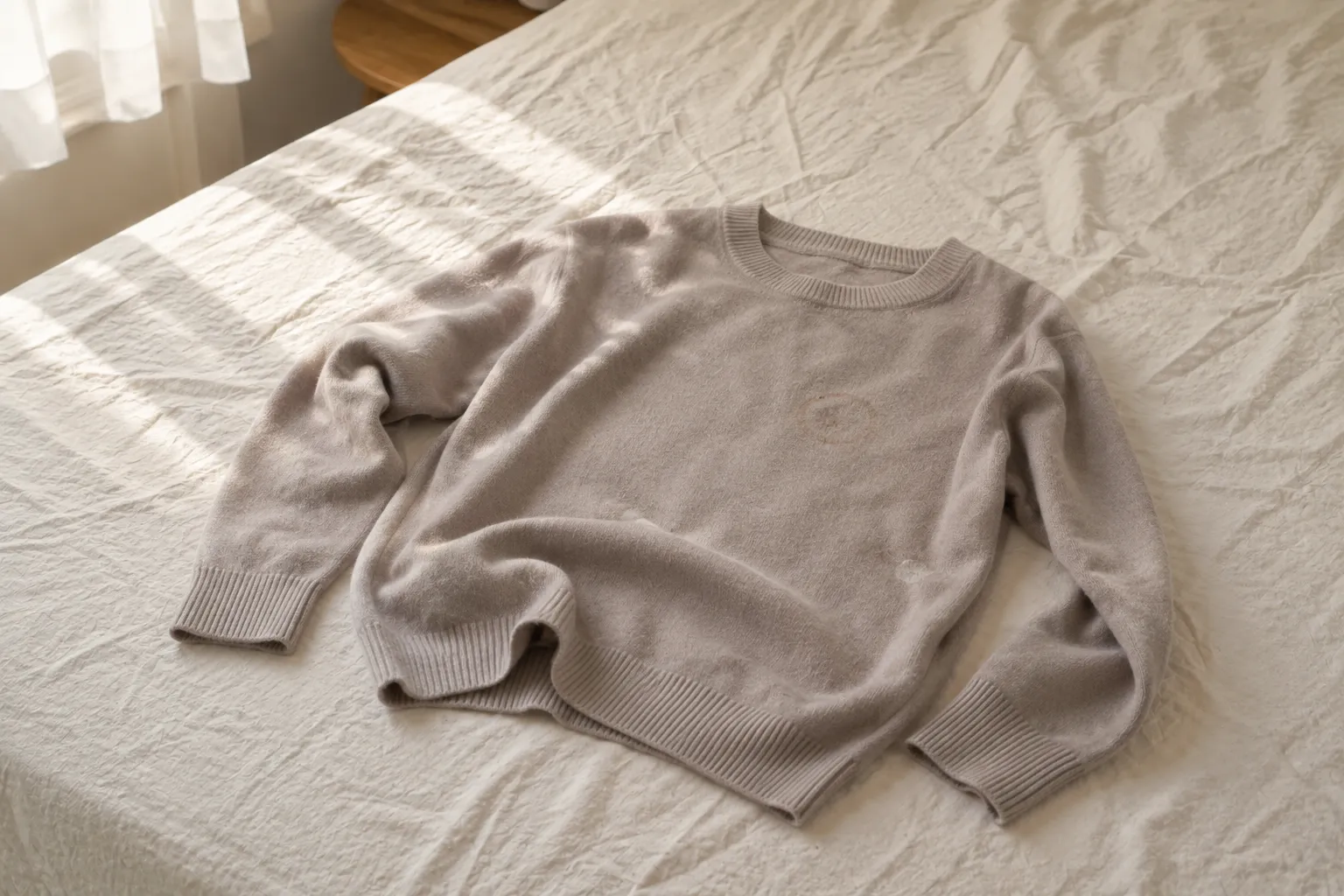
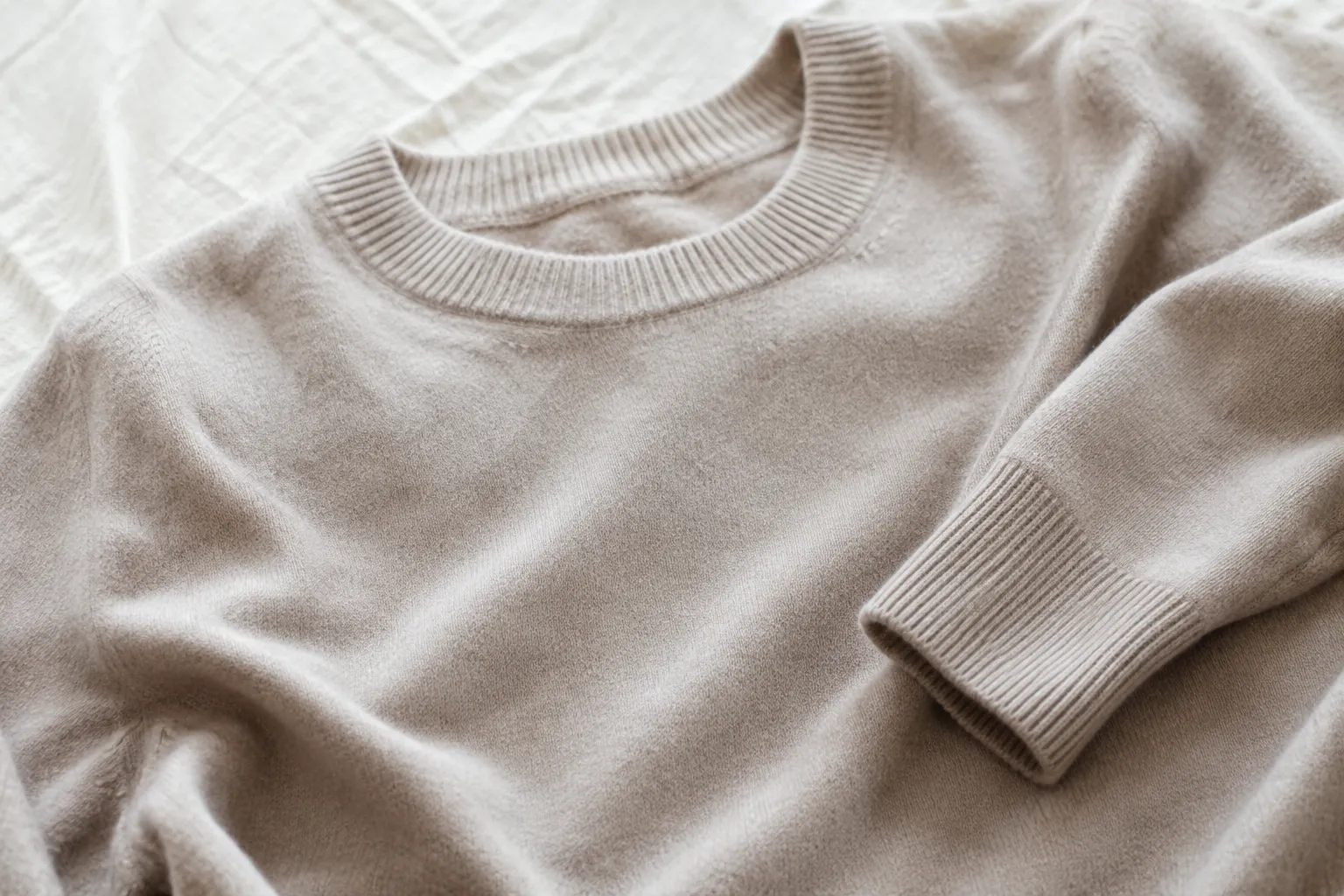 After
After
Request: Removed red wine stain from a wool sweater without damaging the fabric.
Done: Treated the stain with an enzyme stain remover, then delicate wash at 30°C.
Cost: 2 800 ₸
Master: Aigul Nurgaliyeva, dry cleaning master
Total: The stain is completely gone, the sweater retains its shape and softness.
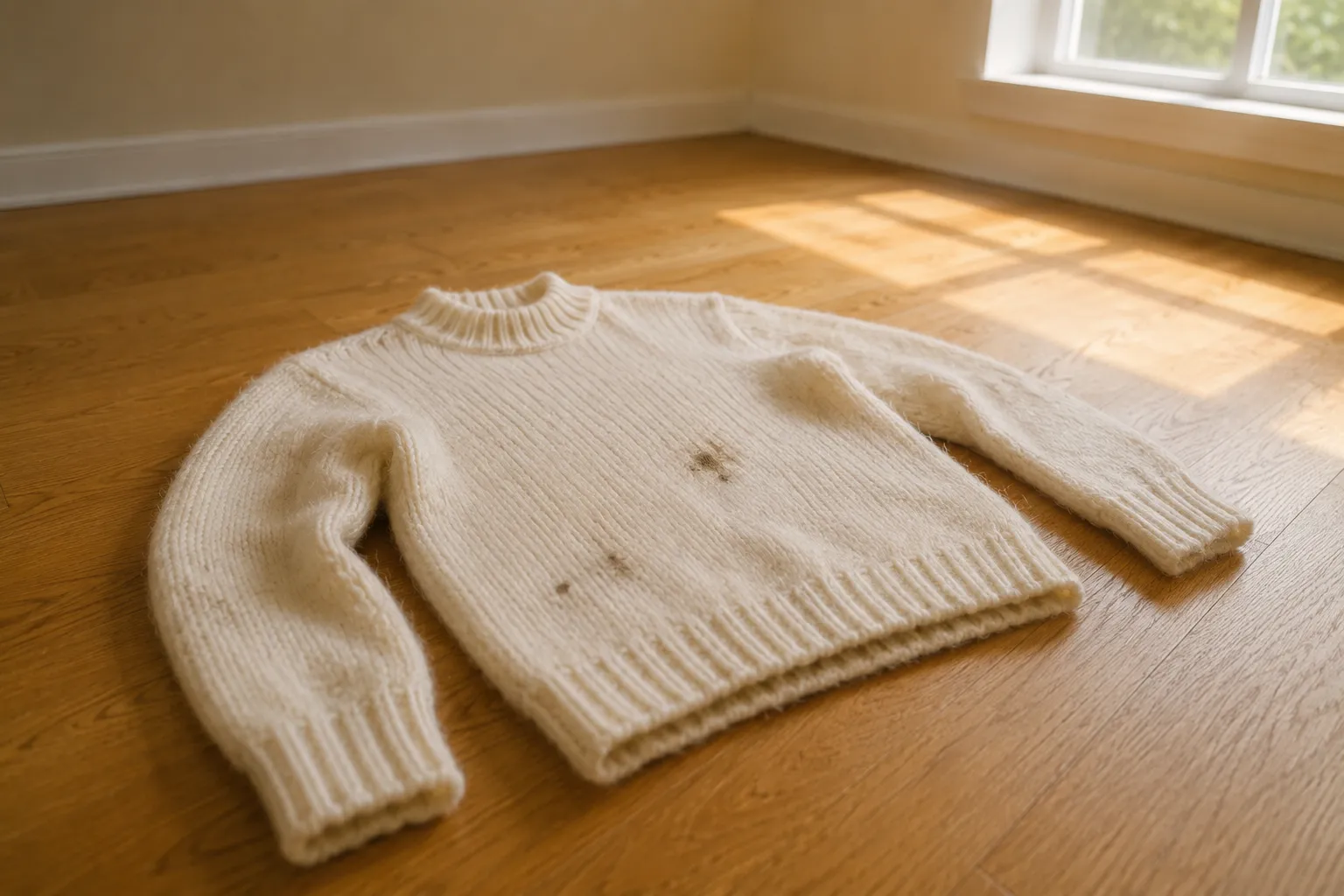
 After
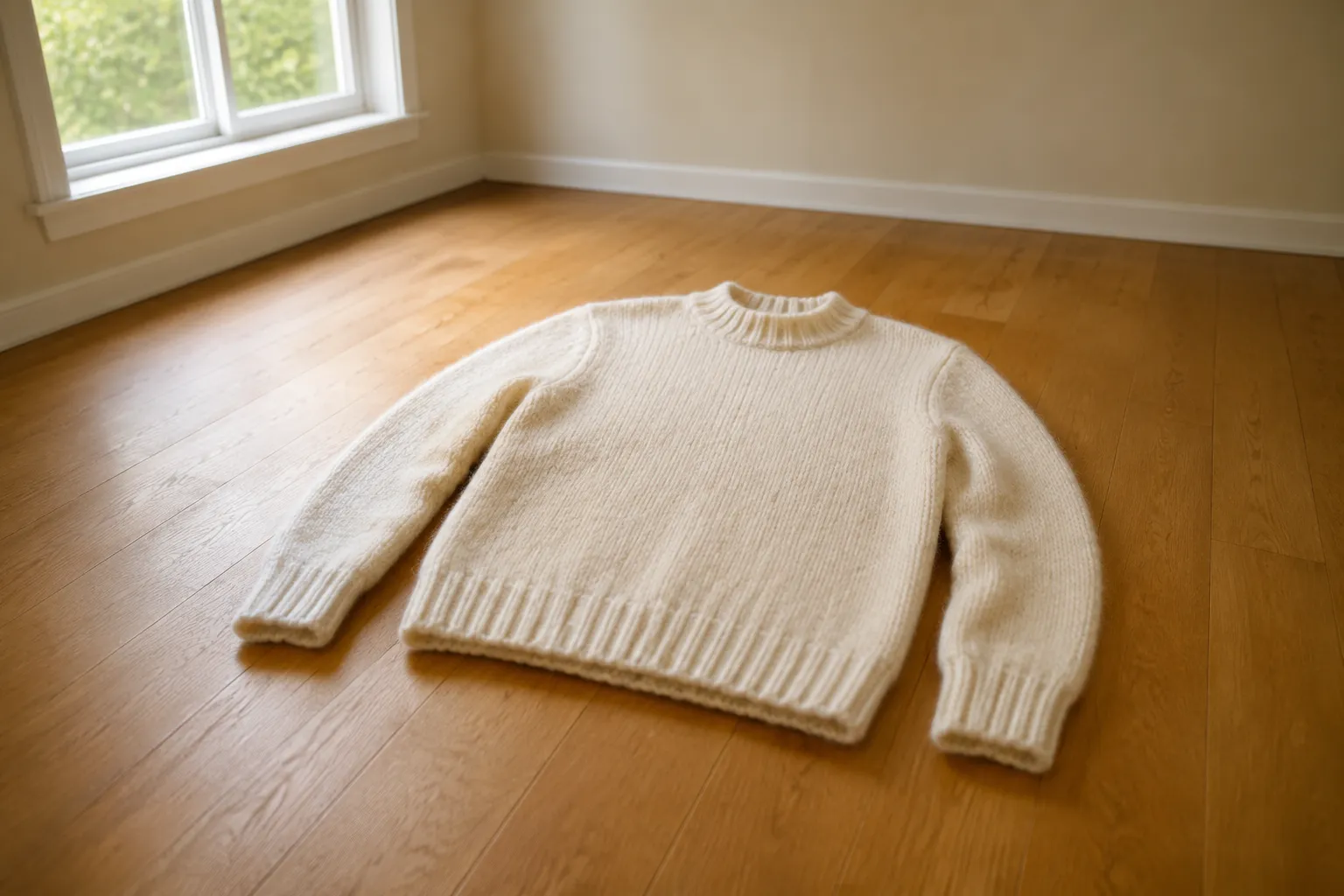
After
Request: Refresh the cashmere cardigan, remove pills and light soiling.
Done: Delicate dry cleaning with cashmere conditioner, pill removal.
Cost: 2 800 ₸
Master: Timur Zhaksybekov, dry cleaning master
Total: The cardigan became soft, without pills, color restored.
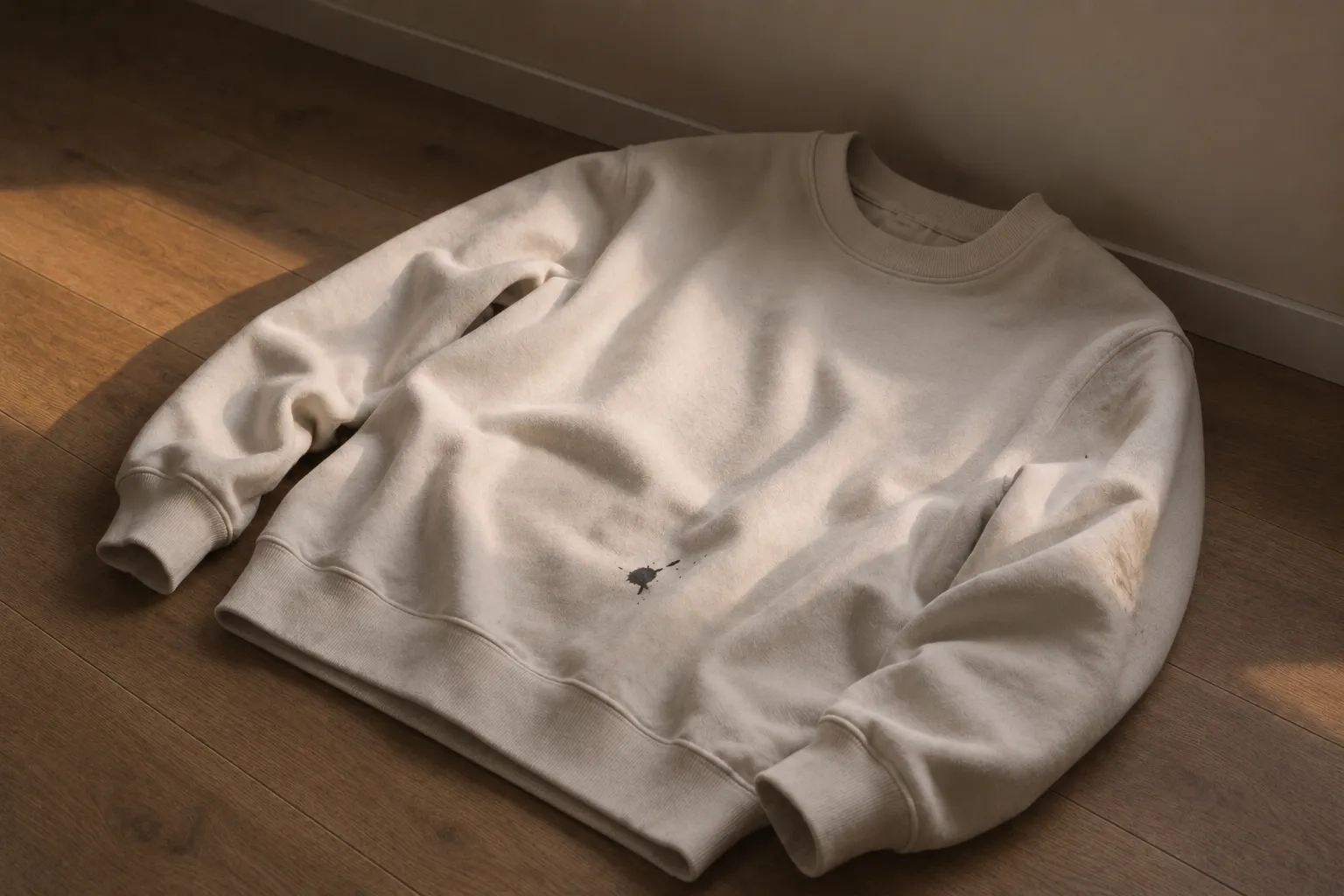
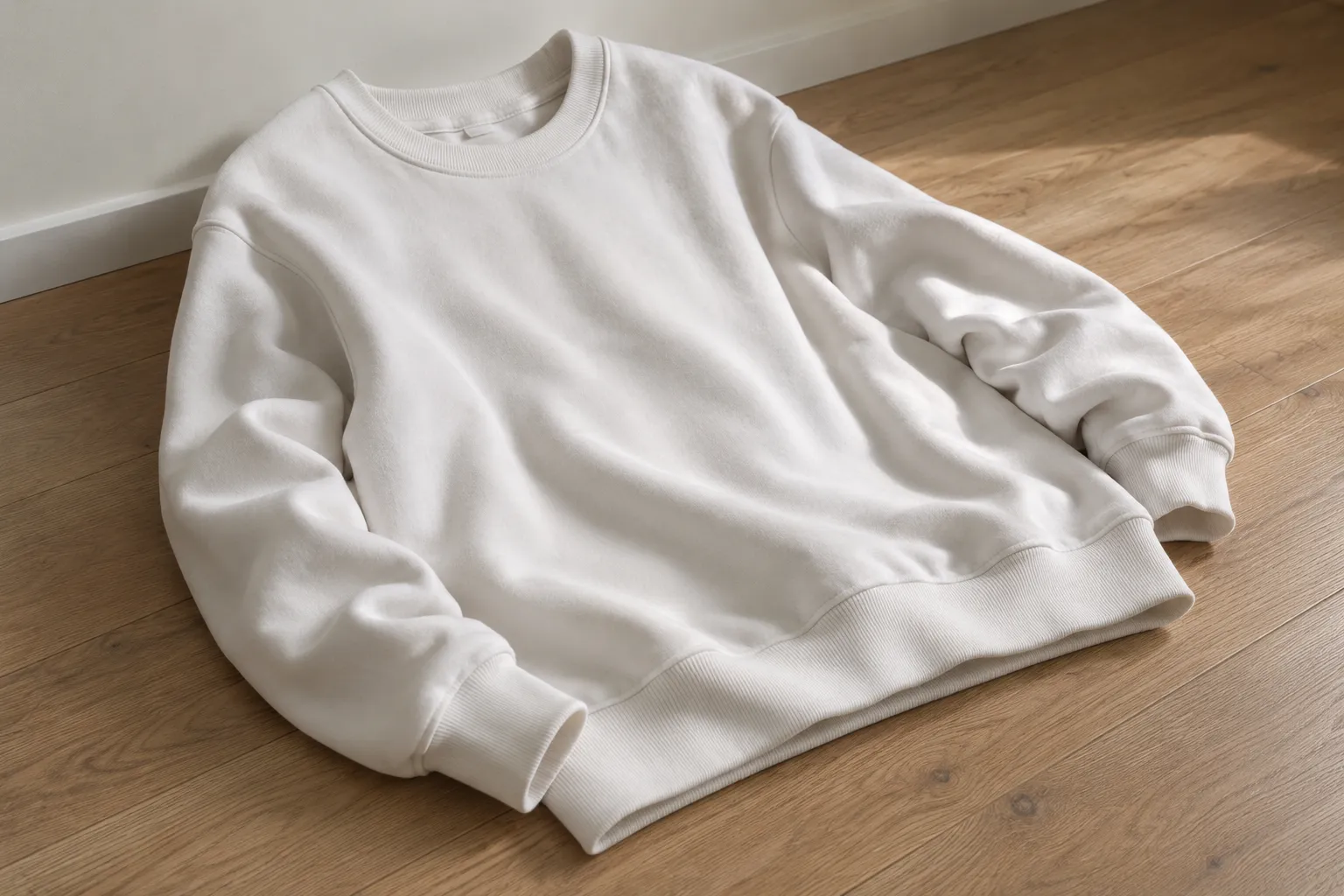 After
After
Request: Remove grass stains from a white cotton pullover.
Done: Soaking in oxygen bleach, hand wash with stain remover.
Cost: 2 800 ₸
Master: Aigul Nurgaliyeva, dry cleaning master
Total: Green grass stains completely removed, fabric not yellowed.
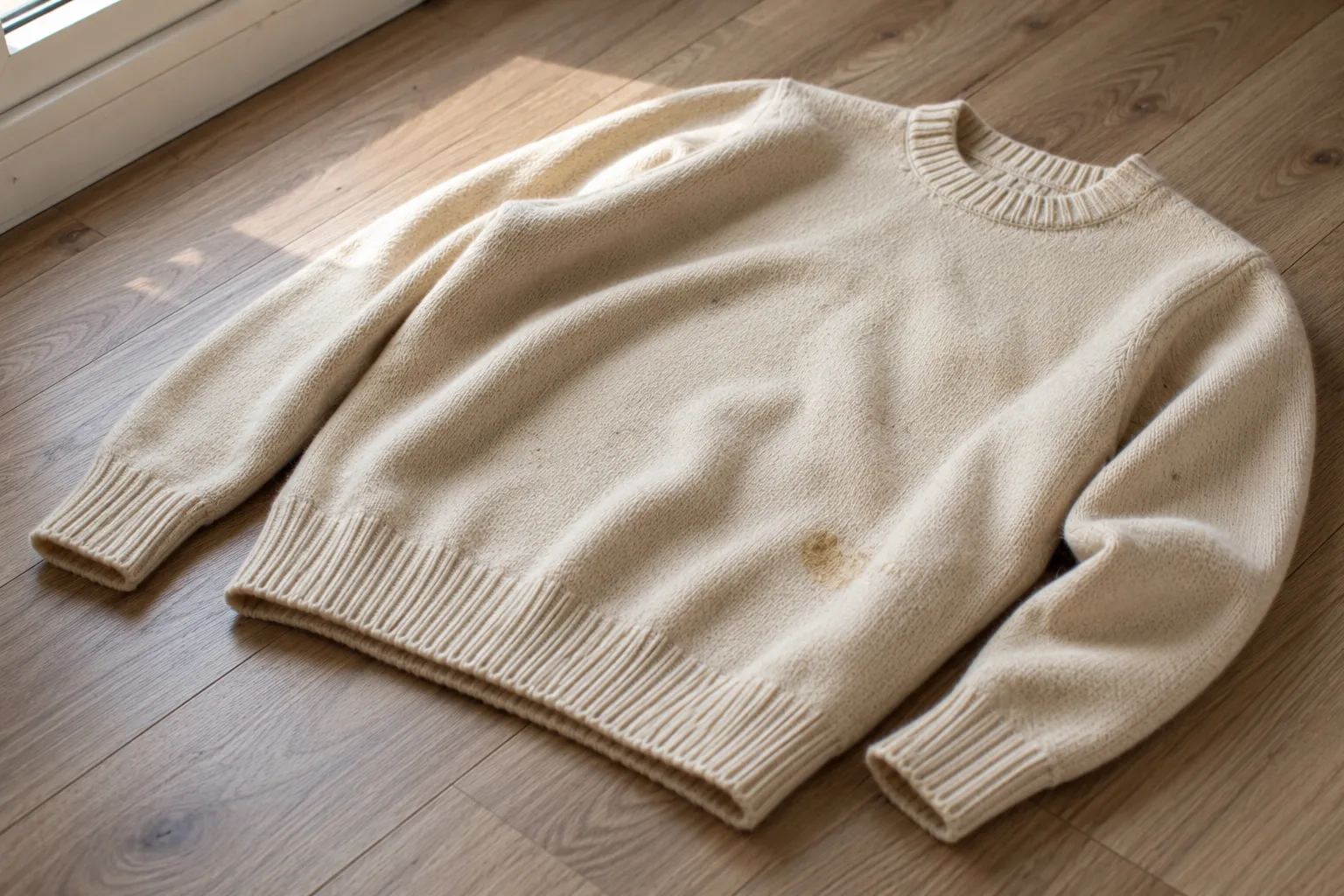
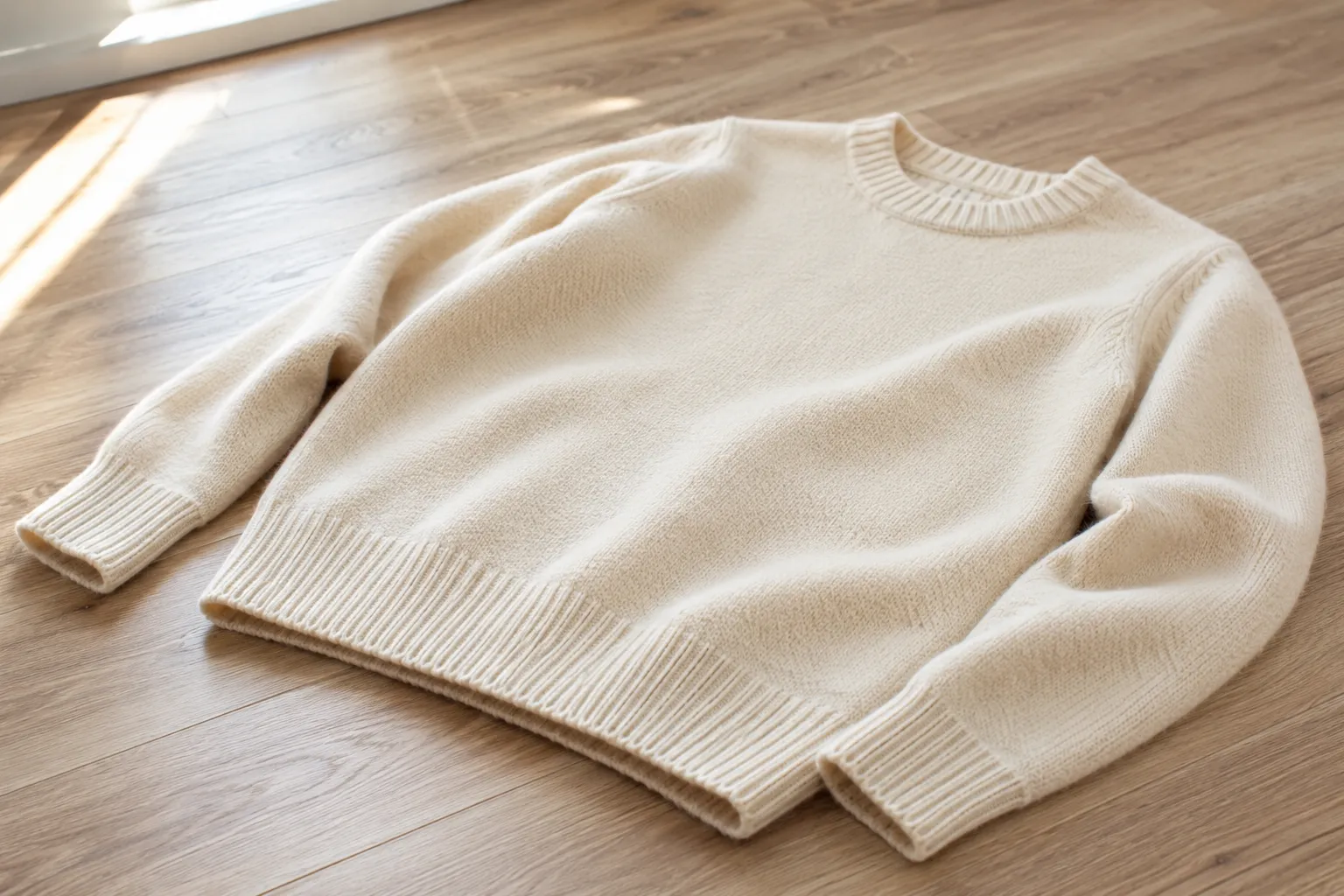 After
After
Request: Remove grease stain from machine oil from a synthetic sweater.
Done: Treat stain with solvent, then wash in warm water with detergent.
Cost: 2 800 ₸
Master: Timur Zhaksybekov, dry cleaning master
Total: The oil stain is gone, the sweater hasn't lost color or shape.
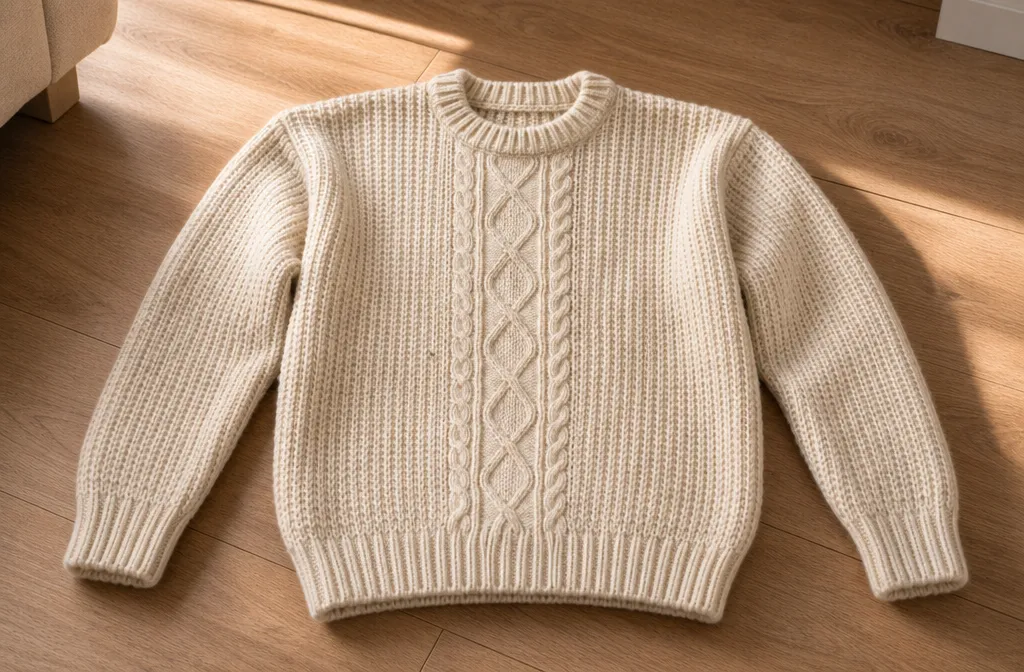
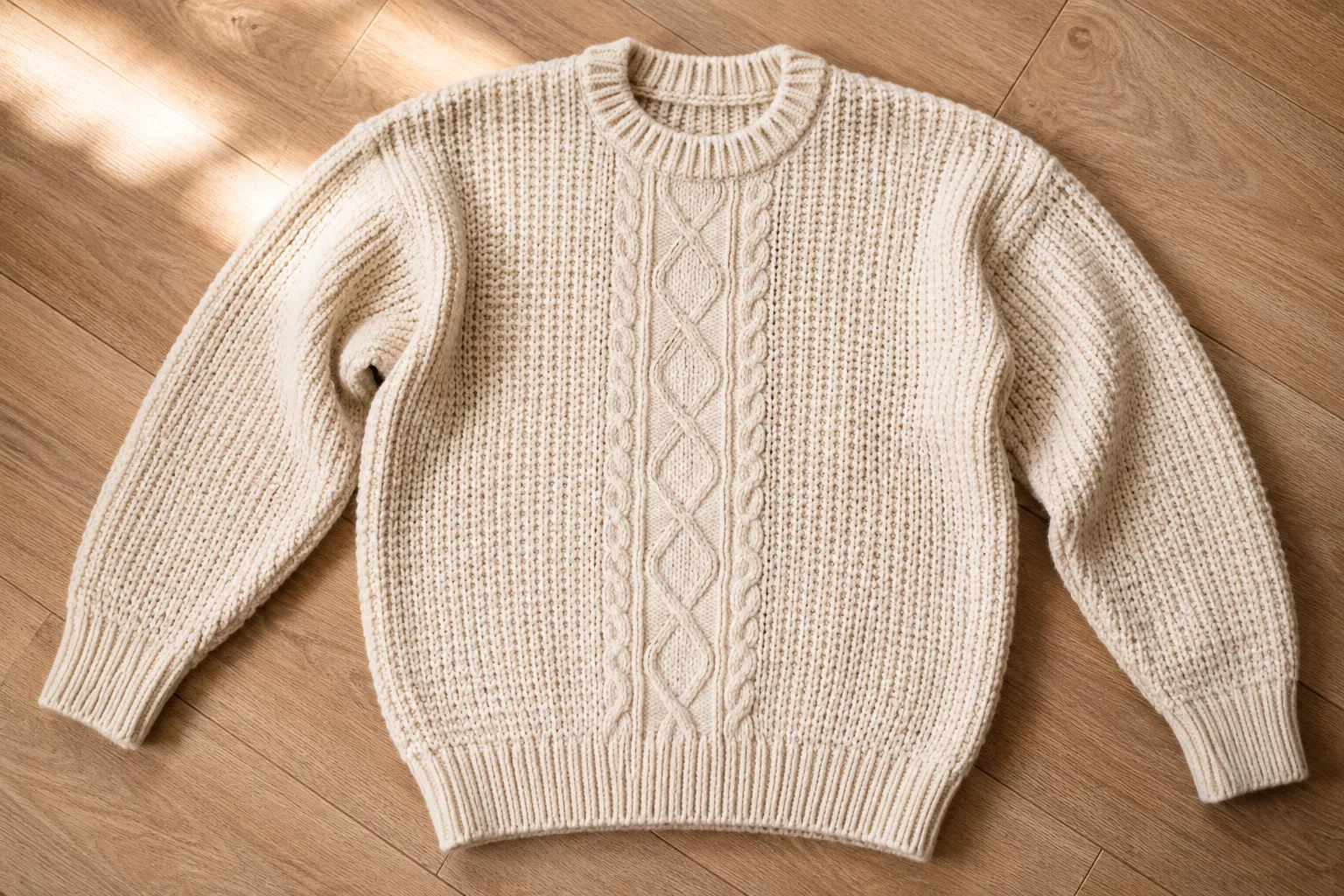 After
After
Request: Remove pills from a knitted cardigan, restore smoothness.
Done: Treatment with a pill remover machine, then dry cleaning.
Cost: 2 800 ₸
Master: Aigul Nurgaliyeva, dry cleaning master
Total: The cardigan became smooth, without pills and light soiling.
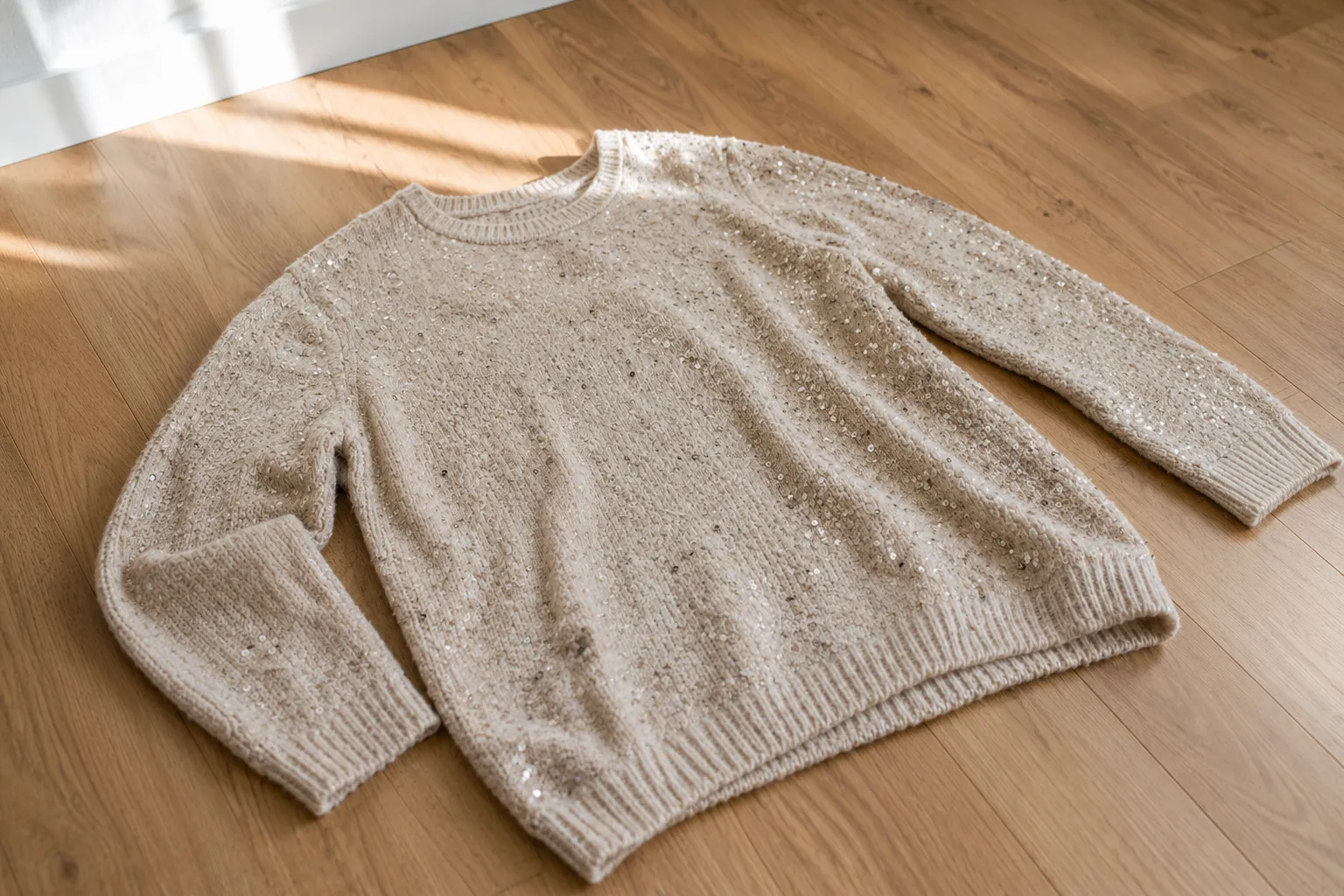
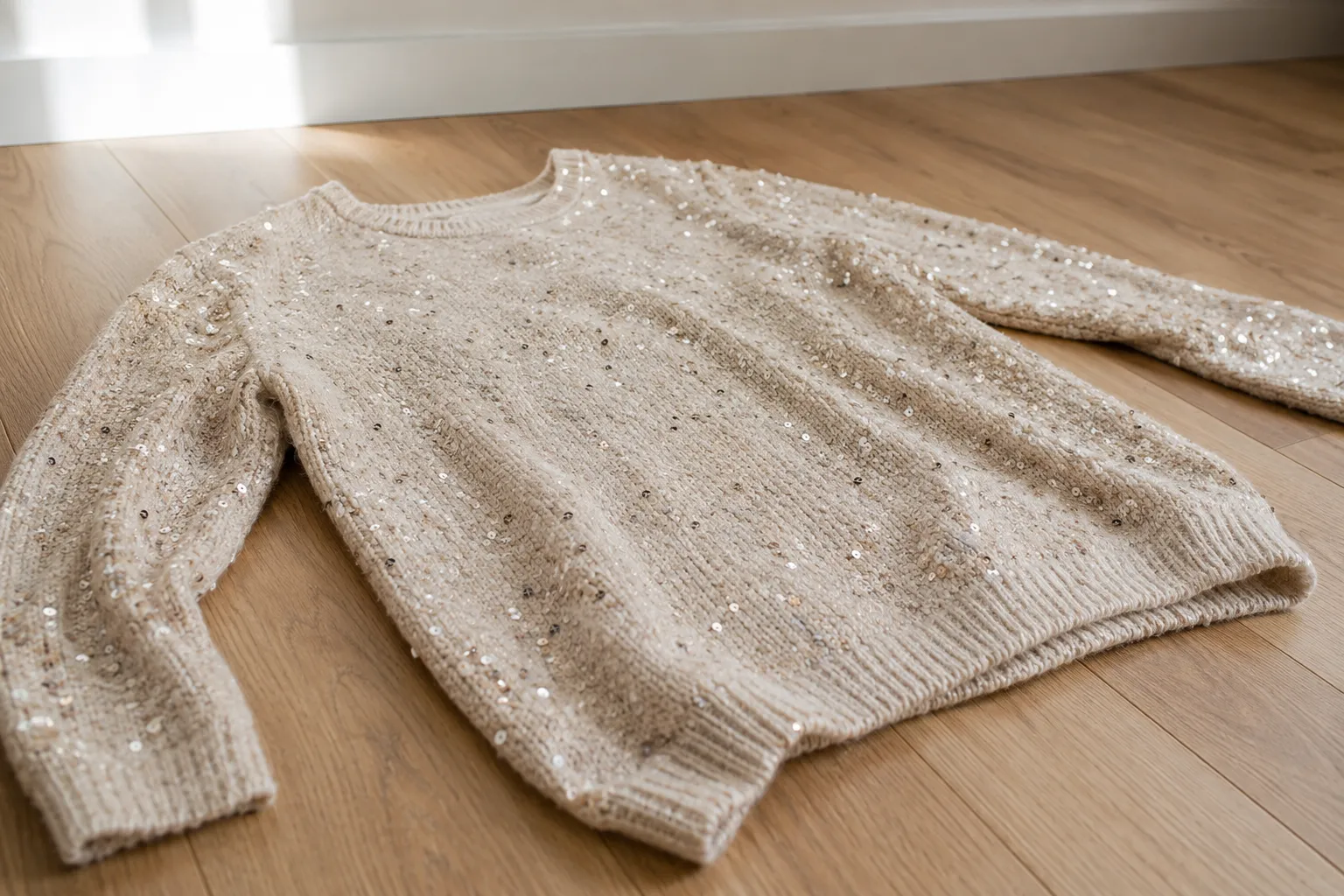 After
After
Request: Remove chocolate stain from kids sweater.
Done: Soak in cold water, treat with stain remover, wash.
Cost: 2 800 ₸
Master: Timur Zhaksybekov, dry cleaning master
Total: Chocolate stain completely removed, sweater safe for child.
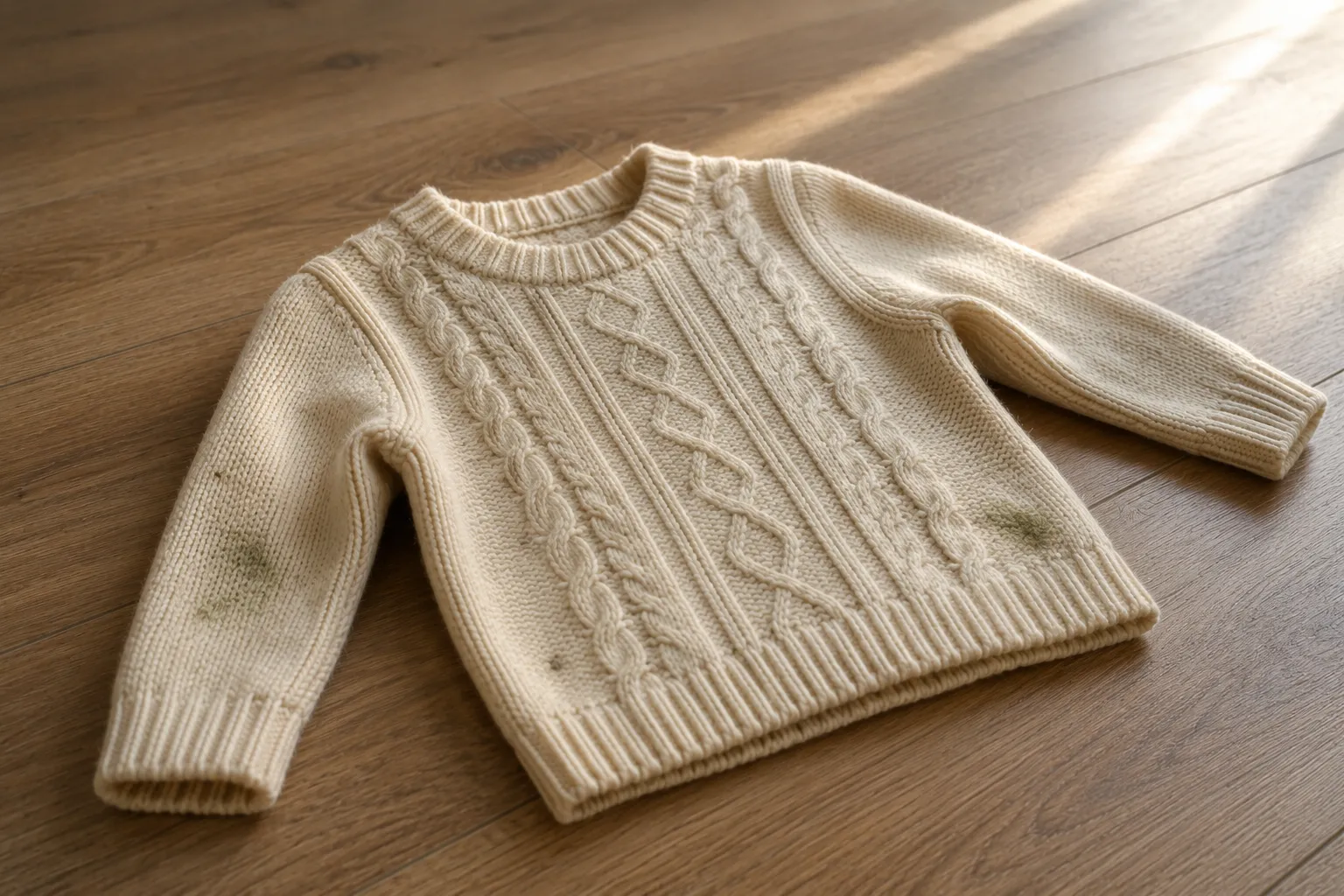
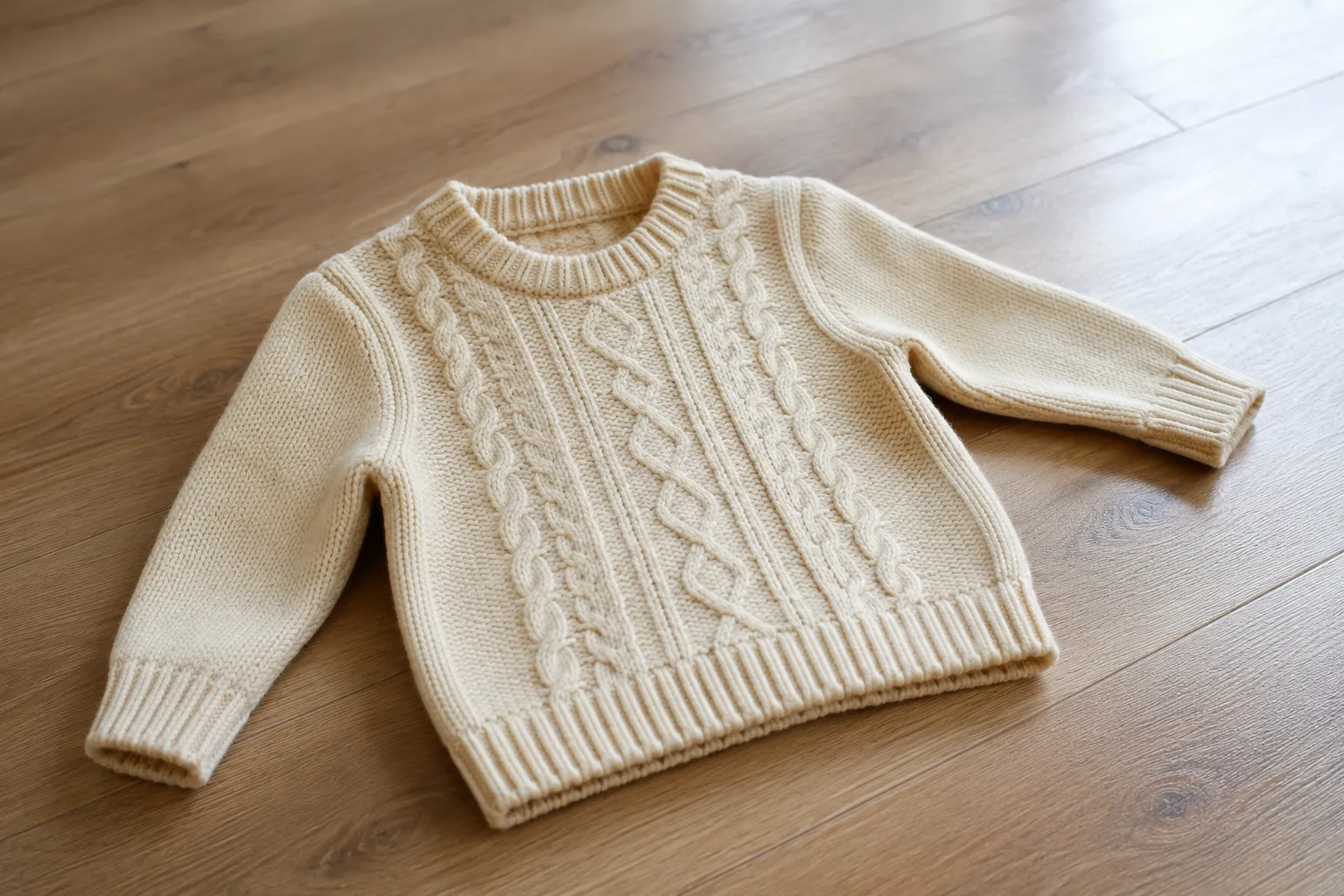 After
After
Request: Eliminate sweat odor from fleece jacket after workouts.
Done: Soak in deodorizing solution, wash with antibacterial agent.
Cost: 13 000 ₸
Master: Aigul Nurgaliyeva, dry cleaning master
Total: Sweat odor gone, fleece fresh and soft.
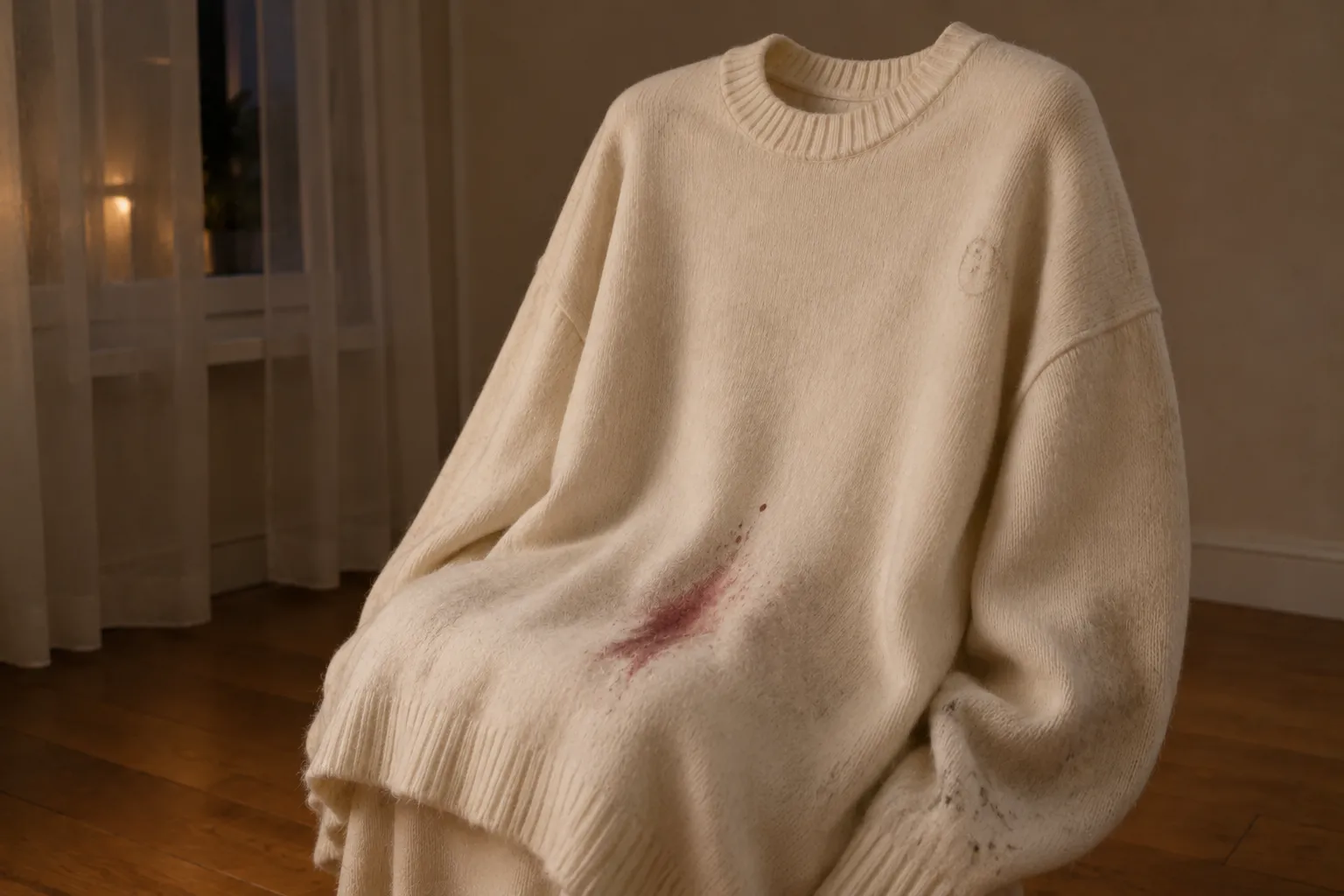
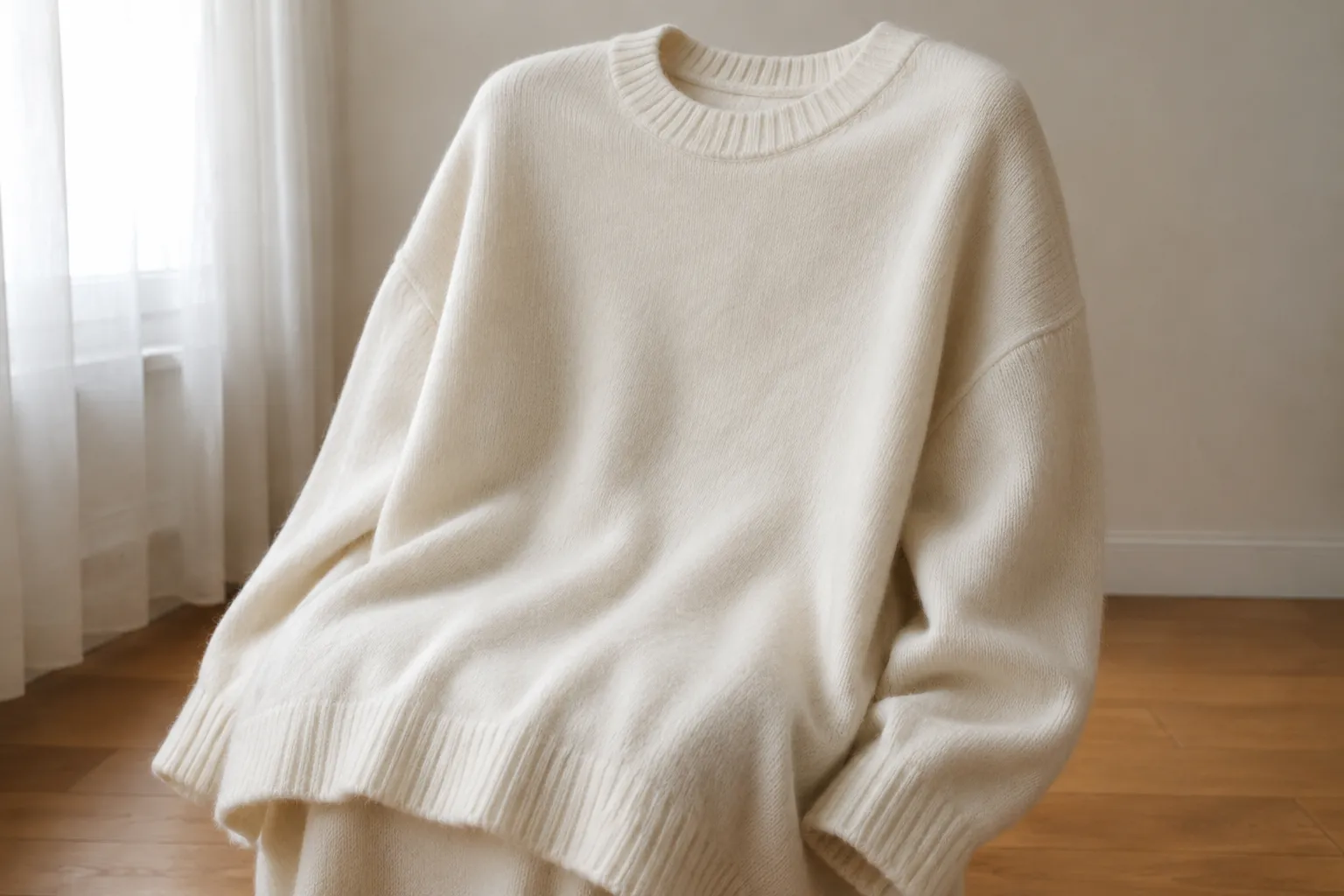 After
After
Request: Remove foundation traces from turtleneck collar.
Done: Treat stain with micellar solution, gentle wash.
Cost: 2 800 ₸
Master: Timur Zhaksybekov, dry cleaning master
Total: Makeup traces completely removed, fabric undamaged.
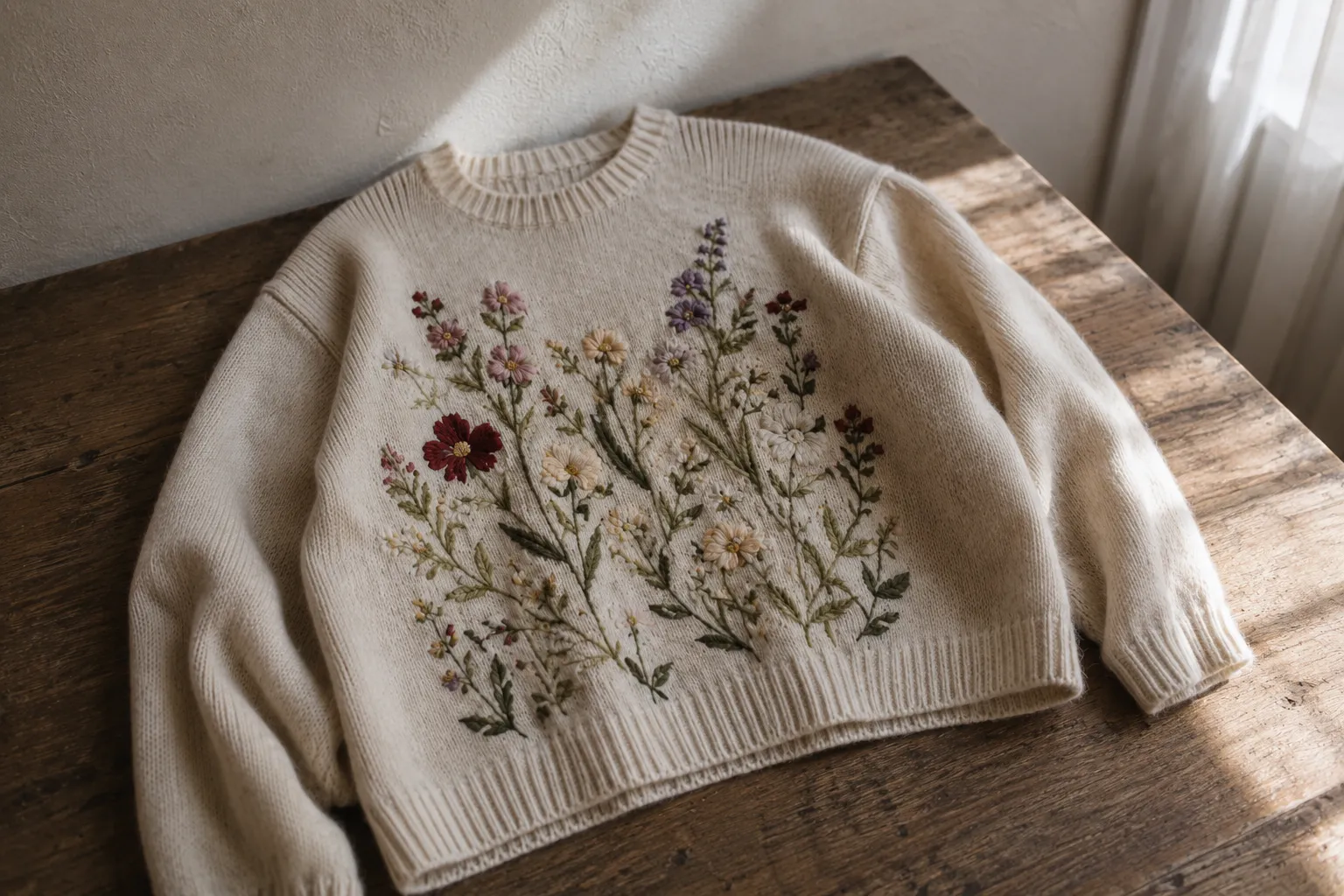
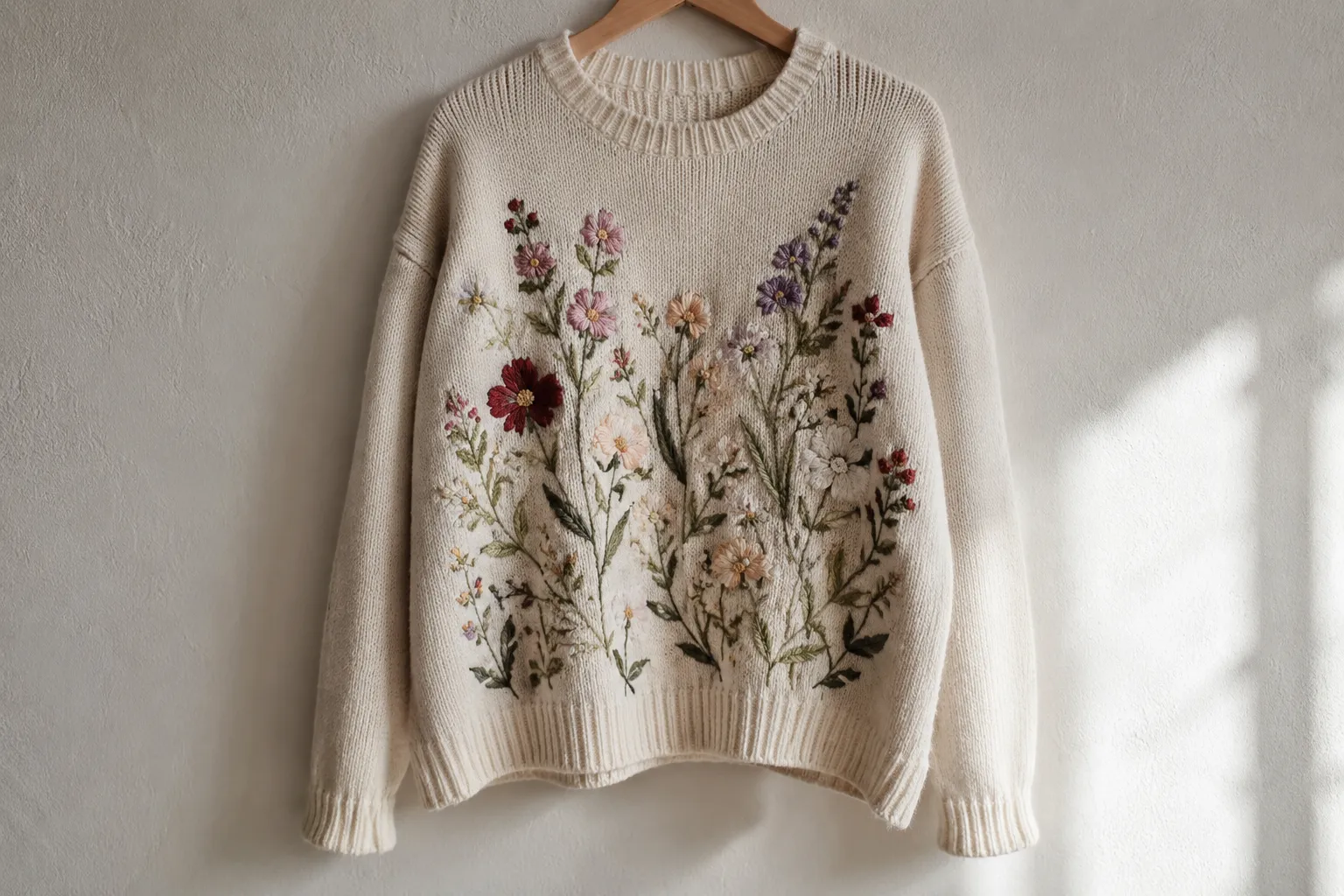 After
After
Request: Clean embroidered sweater from dust and light soiling.
Done: Gentle dry cleaning with embroidery protection, steaming.
Cost: 2 800 ₸
Master: Aigul Nurgaliyeva, dry cleaning master
Total: Embroidery bright, sweater clean and fresh.
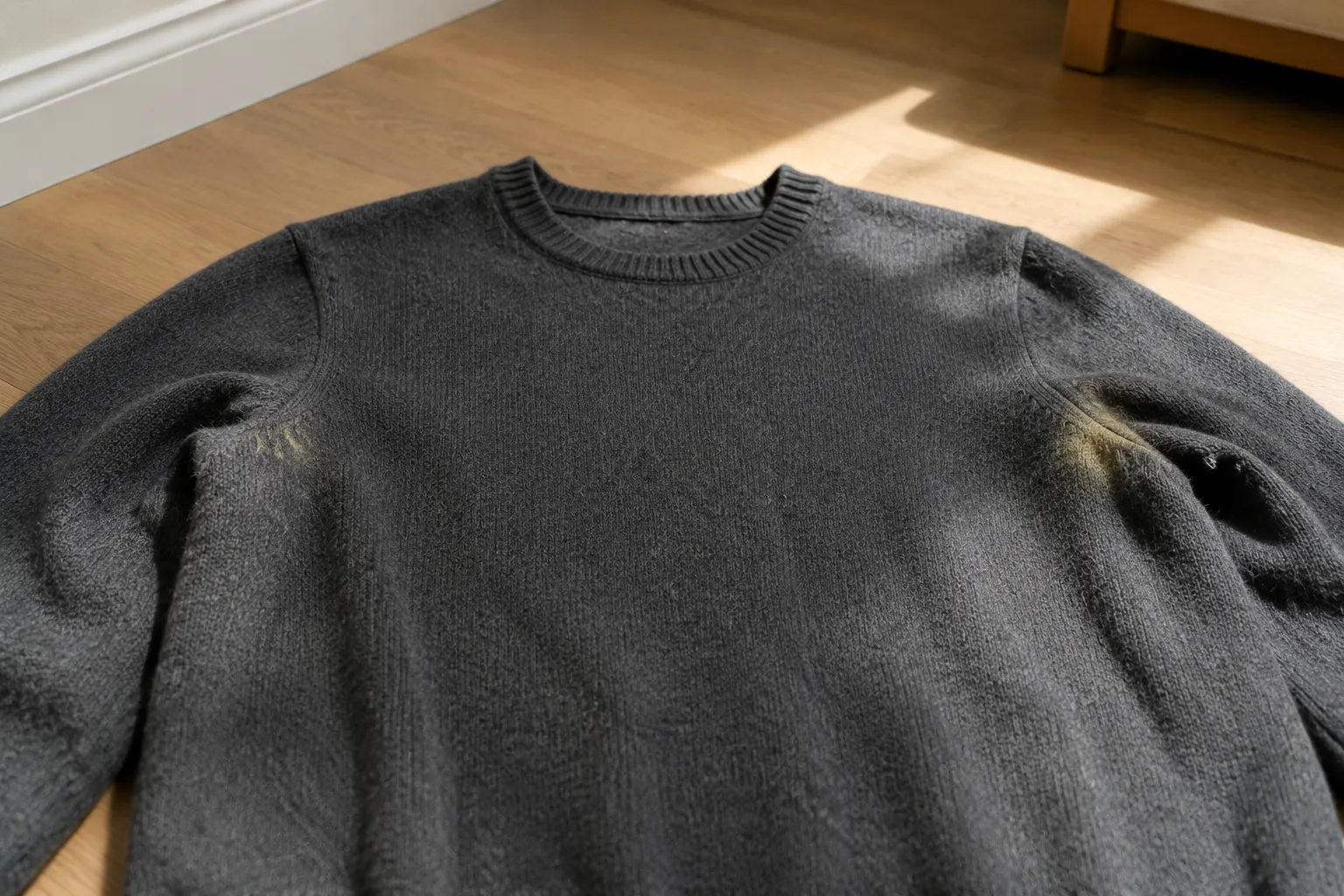
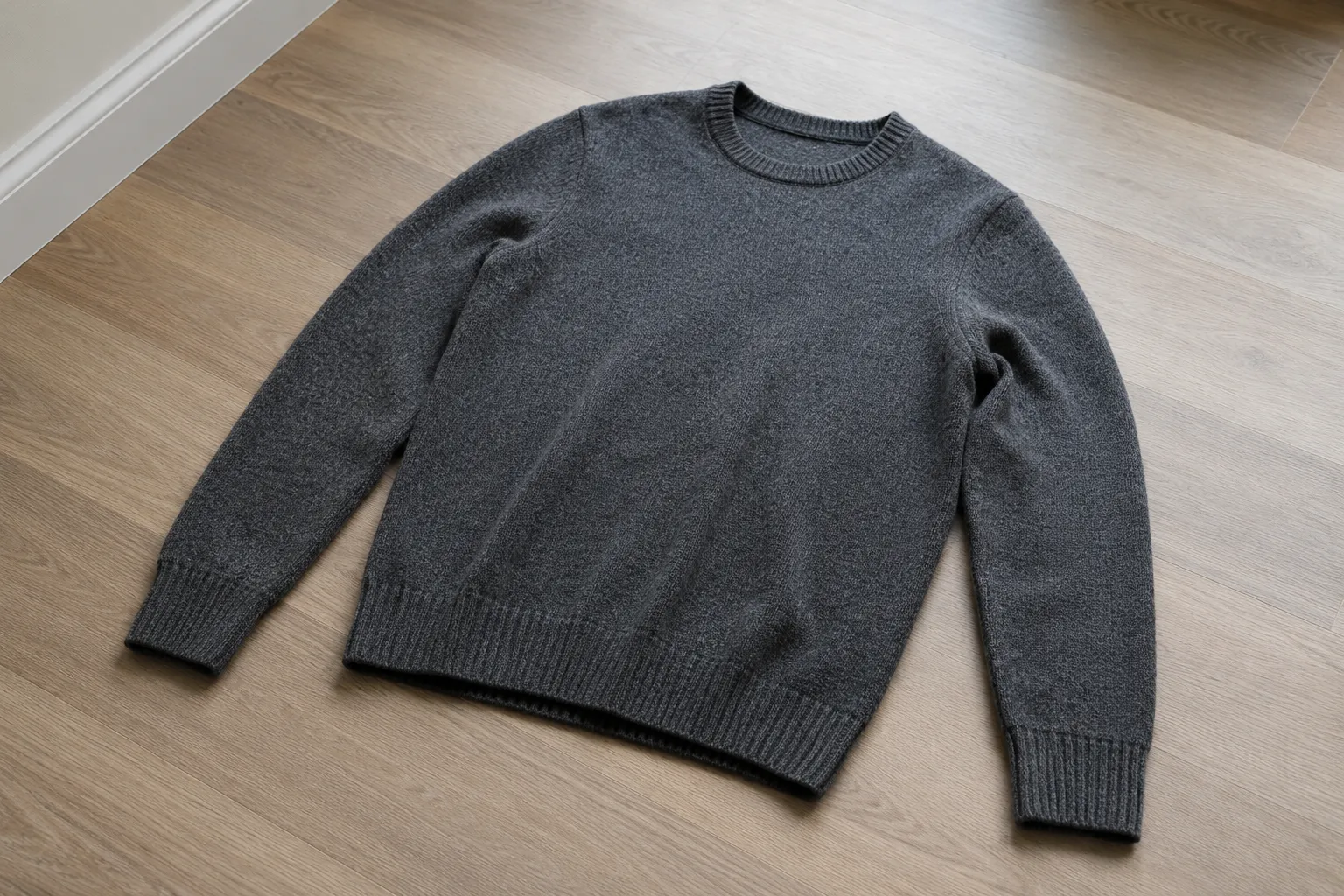 After
After
Request: Restore old wool sweater: remove stains, pills, odor.
Done: Hand dry cleaning with conditioner, pill removal, deodorization.
Cost: 2 800 ₸
Master: Timur Zhaksybekov, dry cleaning master
Total: Sweater restored: no stains, soft, odor-free.
All cleaners are profi-clean staff with training, uniform and security check. Each order has a team leader who controls quality.
Most housewives have encountered this situation at least once: after machine washing, a favorite sweater shrinks, fades, or loses its shape. In Almaty, where the water is hard and temperature fluctuations in apartments are frequent, the risk of ruining an item by hand is higher than it seems. Let’s break down exactly which processes in the drum or basin ruin delicate fabrics and why even hand washing doesn’t always save the day.
Even a delicate cycle at 30°C causes wool fibers to contract and felt. The reason isn’t the temperature, but the mechanical action: the drum’s rotation and friction against other items destroy the scaly layer of the wool. In Almaty, the situation is worsened by hard water (up to 8 mg-eq/L from the tap) — calcium and magnesium salts settle on the fibers, making them brittle. Cashmere loses up to 15% of its original area after 2-3 machine washes. In practice, this means a pullover worth 50,000–70,000 tenge turns into a child’s sweater. We had a case in our practice: a client hand-washed a cashmere cardigan with laundry powder — the item shrank two sizes and could not be restored. Before washing any woolen item, check the label: if the “hand wash” icon is crossed out — dry clean only, even a basin of cold water doesn’t guarantee preservation.
Aggressive surfactants from powders and gels wash pigment out of fibers, especially in bright and dark shades — red, blue, black. In Almaty, with an ultraviolet index of 6–8 during the summer months, the process accelerates: a washed item fades in the sun during drying within 2–3 cycles. Melange (blended yarns with different colors) suffers more — one type of fiber loses color faster, and the sweater becomes covered in uneven spots. Washing at 40°C with bleach on a cotton sweater with a print will guaranteed remove the image in one go. If an item bleeds dye — do not rewash it hoping to “wash out the excess dye,” this will only intensify the fading. At profi-clean, we use oxygen-based bleach Sodasan for colored sweaters — it doesn’t destroy the pigment and is suitable even for melange.
Machine spinning (even at 400 rpm) stretches knit stitches, and the sweater loses its original cut — sleeves become longer, the neckline stretches, the hem “goes wavy.” Elastane fibers (spandex, lycra), which provide a snug fit, are destroyed by hot water and the centrifuge within 5–6 washes — the item stops returning to its shape. In Almaty, where temperature fluctuations in apartments reach 10°C per day, knitwear deforms even when dried on a radiator — local overheating stretches the stitches at the contact points. Our recommendation: dry knit sweaters (jersey, interlock) only horizontally on a drying rack, without spinning or using a radiator. If the item is already stretched, dry cleaning with steam treatment can restore up to 80% of its shape due to fiber shrinkage from steam.
Hard water in Almaty (averaging 6–8 mg-eq/L with a norm of up to 7) neutralizes anionic surfactants from regular powders — you pour in a double dose, but the fibers remain coated with salt residue. After drying, this residue looks like white streaks on dark sweaters or a “grayness” on white ones. Additionally, calcium salts block the pores of the fabric — the item stops “breathing,” and a stagnant odor appears even after washing. In Almaty, this problem is especially noticeable in winter when more reagents are added to the water supply for softening. The solution is to use liquid detergents with chelates (EDTA) or add washing soda, but this is risky for colored sweaters. At profi-clean, we use professional Kiehl concentrates with chelating agents — they work at any water hardness without leaving residue on fibers. If a white residue remains on a sweater after home washing, do not rub it with vinegar — this will fix the salts in the structure rather than remove them.
Sometimes clients complain about a chemical smell after professional treatment — it’s residues of perchloroethylene (PERC) due to improper airing. At profi-clean, we only use eco-friendly hydrocarbon-based solvents — they evaporate in 2–4 hours at room temperature without a trace. If you smell “chemicals” after dry cleaning at another company — the item is either not fully dried, or the deodorization cycle was disrupted. Simply airing the sweater on a balcony in the shade for 6–8 hours is enough, and the smell will disappear. In Almaty, with its dry climate (humidity 40–50%), this process is faster than in coastal cities. Our cleaners always check the item for odor before packaging — this is a standard, not an option.
“`markdown
Professional dry cleaning handles dozens of stain types that home stain removers either can’t remove or set permanently. At profi-clean, we see sweaters daily after DIY washing attempts — and in 70% of cases, the problem isn’t the stain’s stubbornness, but the wrong first step. Let’s break down which stains are guaranteed to be removed by professional treatment and why.
Traces of vegetable oil, butter sauce, hand cream, or greasy soup — a classic for cotton and synthetic sweaters. Home scrubbing with soap only spreads the grease across the fibers, and hot water “bakes” it into the fabric’s structure. Professional dry cleaning uses organic solvents (perchloroethylene or hydrocarbon solvents) — they break down grease at the molecular level without damaging the threads. This works especially well on knitwear: after treatment, there’s no halo — a faded light outline around the former stain. Importantly, if you’ve already tried to remove grease with an iron through a napkin and it soaked deeper — a professional enzyme-based stain remover will still get it out in one cycle.
Blood, traces of dairy products, egg white, and set-in sweat stains — these are protein compounds that coagulate and permanently bond to fabric when exposed to hot water (above 40 °C). This is why home washing in warm water makes such stains permanent. At profi-clean, for protein stains, we use cold enzyme solutions based on proteases — they dissolve the protein without heat. On wool and cashmere sweaters, this method is especially important: high temperature shrinks the fiber, and acid in home stain removers destroys the structure. Moreover, professional treatment removes even those protein traces that have yellowed over time — the solvent penetrates up to 2 mm deep into the thread’s thickness.
Dry cleaning sweaters from coffee, red wine, tea, or berry juice stains is one of the most requested services in Almaty, especially in autumn and winter when hot drinks spill on sweaters. Pigment stains (tannins and anthocyanins) penetrate fibers in seconds and set upon drying. Home remedies — citric acid, soda, peroxide — often lighten the area but leave a yellow or gray mark. Professional dry cleaning uses a two-step process: first, an organic solvent pulls the pigment from the fiber, then an oxygen bleach (chlorine-free) neutralizes the residue. On white cotton sweaters, the result is close to 100%; on colored ones — without changing the fabric’s shade. If the wine stain has dried and darkened, it’s still worth sending the item for treatment — emulsifiers soften the set-in film within 15–20 minutes of contact.
On the collars and cuffs of sweaters worn under outerwear, a cocktail of sebum, cosmetics (foundation, powder), dust particles, and sweat accumulates. Home pre-soaking with laundry soap only spreads this mixture deeper into the weave of the threads, and after 2-3 cycles, the fabric in these areas begins to shine and lose color. Professional dry cleaning with pre-spotting on a special table (spotting board) treats such areas with steam at a pressure of 4-5 bar and an alkaline pre-spray — it breaks down grease and cosmetics into water-soluble fractions. After the main machine processing, no yellow outline or greasy sheen remains on the collar. In our practice, 90% of sweaters with a “non-washable” collar return to perfect condition in one visit — provided the item has not been machine-washed before coming to us.
In Almaty, due to smog particles and anti-icing reagents on sidewalks, fine soot and chemical suspensions settle on sweaters. These contaminants are invisible to the naked eye but, over time, create a gray film, especially on light-colored items. Home washing with powder does not remove the oily fraction of smog — it remains in the fibers, making the fabric feel stiff to the touch. Professional dry cleaning using a hydrocarbon solvent (KWL-1000) washes out bitumen and oil particles by 98%, restoring softness and breathability. For Almaty customers who wear their sweater to work on foot or by bus, we recommend professional cleaning every 2-3 months — this extends the garment’s lifespan by a year to a year and a half compared to home care. “`
The frequency of professional cleaning directly depends on the material, intensity of wear, and season — there is no universal schedule, but there are practice-proven intervals for each type of fabric.
Cashmere sweaters absorb odors and sebum faster than synthetics, but frequent dry cleaning damages the delicate fibers. We recommend sending cashmere for professional treatment once every 2–3 months with regular wear (2–3 times a week). If the sweater is worn once a week in autumn-spring, one cleaning at the end of the season is sufficient. In between — airing on the balcony in the shade and spot-cleaning stains with a damp cloth. Almaty dust and smog (especially in the areas of Abay Avenue and Tastak) settle on the pile, accelerating soiling — for cashmere worn daily to work in the city center, it is better to shorten the interval to 6–8 weeks, otherwise, the fibers lose their elasticity.
Dense cotton knitwear and linen sweaters can be cleaned every 4–6 weeks with active wear — they tolerate dry cleaning cycles better than wool. An important nuance: viscose loses up to 3% of its original density with each cleaning, so the optimal interval for it is 8–10 weeks, and with infrequent wear — once per season. In the Almaty heat, cotton sweaters absorb sweat faster, and if cleaning is postponed for 2+ months, ingrained protein stains require aggressive solvents that reduce the fabric’s lifespan by 20–30%. Our practice shows: a cotton sweater cleaned once a month lasts 1.5–2 seasons longer than one that waits for treatment every six months.
Synthetic sweaters (acrylic, polyester, nylon) absorb less dirt and odors, so the interval between cleanings can reach 4–5 months with moderate wear. However, there is a catch: acrylic becomes statically charged and attracts dust, which gets embedded in the weave of the threads — over time, the fabric turns gray even without visible stains. In Almaty, due to dry air and fine dust (especially in the Auezov and Bostandyk districts), acrylic sweaters lose their brightness after just 6–8 weeks, even though they feel clean to the touch. We advise cleaning synthetics not on a schedule, but based on a visual sign: as soon as the color has faded by 1–2 tones, it’s time to send it for dry cleaning. Missing this moment leads to the dust “baking” into the fibers during home ironing, and restoring the original brightness is only possible through chemical color restoration — a procedure that costs 40% more than regular cleaning.
Regardless of the material, any sweater needs professional cleaning before being stored in the closet for summer or the off-season. Residues of skin oils and sweat, invisible to the eye, turn into yellow stains on sleeve creases and collars within 3–4 months of storage — removing them after a year of lying idle is almost impossible. For Almaty with its humidity fluctuations (from 30% in summer to 70% in winter), this is critical: in dry air, oils oxidize faster; in humid air, they provoke mold on woolen items. At the profi-clean warehouse, there was a case: a client brought in a cashmere sweater that had been stored uncleaned for 8 months — a persistent yellow border had formed on the inside of the cuffs, which even enhanced stain removal couldn’t handle, as the fibers in that area had lost their structure.
Cashmere and wool are finicky materials that react differently to Almaty’s climate and household stains. Let’s break down how professional approaches to these fabrics differ and what nuances are important for preserving their structure.
Despite their visual similarity, cashmere and wool have different fiber structures: cashmere is thinner than a human hair (14–19 microns), while wool is 20–40 microns. Cashmere absorbs moisture and oils faster but is also more easily deformed by steam and friction — our practice shows it requires only dry cleaning with minimal solvent contact. Wool, on the other hand, tolerates gentle moistening but is critical to temperature: even 40°C triggers a shrinking process that is difficult to reverse. In Almaty, where winter humidity drops to 40% and summer rises above 60%, cashmere accumulates static and dust more actively than wool — which is why during intake inspection, we check not only the fabric type but also the date of the last cleaning. Before ordering dry cleaning for a sweater, clarify with the technologist the exact percentage of cashmere in the composition — items with a 10–20% wool blend require different treatment than pure cashmere.
Almaty’s urban dust contains fine particulate matter (PM2.5) and sand from the foothills, which settle into the pile of cashmere and wool and act as an abrasive with every movement. After a month of wear in the city center or near Abay Avenue, the pile wears down 15–20% faster than in suburbs with lower air pollution — this is confirmed by our measurements on clients’ items from different districts. Dust particles get trapped between fibers and are not fully removed during home washing, only pushed deeper, accelerating the formation of pills and dullness. During the pre-treatment stage, we use compressed air blow-off through a HEPA filter — this removes up to 90% of abrasive particles before solvent contact. If you wear a cashmere coat or wool blazer in Almaty, plan professional cleaning every 3–4 months, not once a season — otherwise, dust will irreversibly damage the top layer of the pile.
The most common mistake is using fabric softener during home washing: it leaves a film on the fibers that blocks stain remover penetration during subsequent professional cleaning. The second most frequent is drying on a radiator or heater: cashmere loses up to 30% of its original softness, and wool shrinks by up to two sizes. The third is attempting to scrub a stain with hot water and soap, especially on cashmere: the greasy stain spreads, and the fibers, under heat and friction, mat into irreversible clumps. In our work, there were cases where, after such “help,” a coffee stain on a wool sweater tripled in size, and removing it was only possible through localized bleaching — the item had to be re-dyed. On wool items with viscose gussets (often found in Almaty stores), chlorine-based solvents cannot be used — viscose dissolves, leaving holes. Before dry cleaning a sweater, always check the label for synthetic additives in the lining.
In the dry and cold period (November–February), cashmere and wool become more prone to static electricity and attract pollen, fluff, and animal hair — especially in apartments with central heating, where humidity drops to 35%. During these months, we use a water-based anti-static rinse safe for wool, which reduces adhesion by 3–4 times. In summer, when humidity exceeds 60%, wool fibers swell and become more vulnerable to mechanical stress — so for summer cleaning, we reduce drum drying time by 20% and increase pauses between cycles. Rainwater in Almaty has a neutral pH (6.8–7.2), but after drying, it leaves micro-residues from salts on cashmere — these are only visible under ultraviolet light, but they reduce color saturation. Our cleaners test the item with a UV lamp before cleaning to identify such traces and adjust the solvent composition. When ordering dry cleaning for a sweater in spring or autumn, ask if the item is checked for hidden residues — this will save you a return visit.
Even high-quality dry cleaning can sometimes leave lingering odors — the causes lie in residual moisture, improper drying, or a chemical reaction between the solvent and a specific fiber type. Let’s break down how to distinguish a temporary technical smell from a sign of a defect, and what you can do before contacting the service again.
A slight solvent smell (perchloroethylene or hydrocarbon-based) in the first 2–4 hours after receiving the item is normal for most fabrics. In profi-clean’s professional machines, the solvent circulates in a closed loop and is removed by distillation, but micro-particles remain in the fiber structure, especially in dense wool or thick cotton. Complete airing takes from 6 to 24 hours at room temperature in a ventilated room. If the smell hasn’t disappeared after a day, it’s a reason for inspection: either the drying cycle was disrupted (residual moisture trapped the solvent), or the machine was overloaded, and the chemical wasn’t extracted evenly. In our experience, cashmere sweaters with a viscose lining retain the smell longer — up to 36 hours — due to the different absorbency of the layers. Before returning the item, hang it on a hanger in a dry, dark place away from direct sunlight — UV light breaks down some solvents but can burn the pigment on colored sweaters.
If after 24 hours of airing the aroma remains, follow three steps before calling the service. Step 1 — moisture test: press a dry white napkin against the underarm area and cuffs for 30 seconds. If the napkin becomes damp or smells, the item is under-dried, and the solvent hasn’t evaporated. Step 2 — residual solvent check: smell the seam from the inside (condensation often accumulates there). Step 3 — local deodorant test: apply a drop of water to an inconspicuous area (inner sleeve seam) — if the smell intensifies or turns sour, an alkaline environment from the previous neutralization stage remains on the fiber. In both cases, the item needs reprocessing: at profi-clean, we add an extra rinse cycle with a neutralizer, and for thick fabrics, extended drying at 45°C. Never use home air fresheners or steam generators — they “seal” the smell inside the fiber, and a second professional treatment will require aggressive deodorization that could damage delicate threads.
The most common complaints about persistent odor after dry cleaning in Almaty are not related to the service’s work, but to clients’ own experiments. People spray their sweater with vinegar, soda, or fabric softener — this provides temporary masking but worsens the situation: vinegar reacts with residual perchlorethylene, forming acrid “hospital-like” chloroacetic compounds that can only be removed by a repeat cycle with an absorbent. Soda applied to damp fabric crystallizes in the fibers and, upon the next wear, rubs against the skin, causing irritation. Conditioners with silicones seal the fabric’s pores — after them, the odor can only be removed using ozonation (a special chamber available at profi-clean for delicate items). In my opinion, the only safe home method is to hang the sweater on the balcony on a dry, windless night: the airflow removes up to 80% of residual molecules without contact with chemicals. If the odor persists after this, bring the item back without trying to fix it with household remedies.
| Fabric Type | Air-out Time | Reason for Odor Retention | Recommendation |
|---|---|---|---|
| Cashmere (100%) | 24–36 hours | High absorbency of wool fiber | Air out in the shade, do not hang near a heater |
| Wool with acrylic | 12–18 hours | Acrylic doesn’t absorb but seals odor in the wool base | Dry on a horizontal rack in a ventilated room |
| Densely woven cotton (denim, tweed) | 6–10 hours | Thick yarn holds solvent in the weave | Hang on a hanger, unbutton for air circulation |
| Viscose and modal | 3–6 hours | Artificial fiber releases moisture quickly | Can be ironed through gauze with a steamless iron — residues will evaporate |
| Polyester and nylon | 1–3 hours | Synthetics do not absorb solvent | 30 minutes in fresh air is sufficient |
During Almaty’s humid spring (relative humidity 60–70%), air-out time increases by 30–40% for all fabrics — the solvent evaporates more slowly due to air saturation. Our cleaners warn about this when handing over orders in the rainy season, but if you received the item in dry weather and the odor persists longer than indicated, call the service within 48 hours: this is a warranty case, and we perform repeat deodorization free of charge.
Choosing between different dry cleaning providers for a sweater in Almaty often comes down to three criteria: quality of delicate fabric treatment, speed of pickup, and result guarantee. Let’s examine how profi-clean’s approach differs from typical market offerings.
The main difference is the business model. Dozens of points in Almaty accept items in one location and clean them in a central workshop in an industrial zone. This adds 1–2 days for logistics and a risk of order mix-ups. We, profi-clean, travel to the client with equipment and process the sweater on-site immediately. In our practice, there was a case where a client dropped off a cashmere sweater at a pickup point on Abaya Avenue and received a stranger’s pullover three days later — with our pickup service, such a situation is impossible because the cleaner works with one item under the client’s supervision.
Many dry cleaners in Almaty use standard perchlorethylene (PERC) for all fabric types — it is cheap and effective against grease stains but aggressive for wool and cashmere. profi-clean uses hypoallergenic formulations from Kiehl (Germany) and Sodasan (Austria) — they work at lower temperatures (up to 30 °C) and do not damage the fiber structure. For example, after PERC treatment, an angora sweater can lose 15–20% of its original softness, whereas after our chemicals, the pile remains fluffy. In my opinion, the difference is noticeable to the touch after just one cleaning.
Part of the “home dry cleaners” in Almaty use ordinary Karcher steam cleaners — they remove surface dirt but do not eliminate oil stains or disinfect the fabric at depth. profi-clean uses a professional extractor with a HEPA filter that washes out contaminants from all layers of the material and captures 99.97% of allergens. The difference is critical for mohair or alpaca sweaters: after a steam cleaner, a sauce stain may reappear within a day, while after the extractor, it disappears completely. If the sweater has a synthetic lining, household steam will deform it; our equipment dries the fabric in 20 minutes without shrinkage.
In typical dry cleaners in Almaty, the turnaround time is 2–5 business days, and a quality guarantee is usually not provided: “if the stain is not removed, bring it back again.” profi-clean offers a 24-hour result guarantee: if after our treatment there is still an odor or streaks, we will come back for free within a day. In October, we had an order for a white sweater with red wine stains — after the first cycle, a yellowish mark remained on the collar; we treated the area locally with an enzyme solution and returned the item within 6 hours. At a drop-off point, you would have to wait another 2 days, and no one would be responsible for the repeated result.
When choosing a dry cleaner for a sweater in Almaty, it is worth checking reviews on 2GIS and the companies’ Instagram accounts — this provides a real picture. profi-clean has over 200 ratings on 2GIS with an average score of 4.8 and dozens of video reviews on Instagram, where clients show before-and-after results. Many chain drop-off points have ratings of 3.5–4.0 due to frequent complaints about deadlines and order mix-ups. Before ordering, ask the service provider for photos of similar work on your fabric type — this will save time and hassle.
I ordered dry cleaning for a sweater — they removed a coffee stain that hadn't washed out for a week. Excellent result, color unchanged.
Glad we could help! We gently remove any stains.
We sent in a sweater after a failed lunch — the oil stain disappeared completely. I couldn't believe it was possible.
Dry cleaning helped remove old sweat odor. Almost perfect, but a faint trace remained on the collar.
Thank you for your feedback! Next time we'll treat the collar additionally.
I brought in a white blouse after a wedding — there were champagne and foundation stains. Returned like new, even the lace was undamaged.
Thank you for your trust! We handle delicate fabrics carefully.
Accidentally leaned against a painted wall — paint drops on the sweater. Dry cleaning saved the day, no paint left.
Just decided to freshen up my favorite cashmere sweater. It became softer, pills disappeared. Very satisfied.
Cashmere requires special care, we take that into account.
Dry cleaning didn't fully remove the wine stain — a faint pink trace remained. Expected more.
We apologize. We'll offer to re-treat it for free.
After a picnic, green stains on the sweater. Couldn't wash them out, but dry cleaning removed them perfectly.
Ballpoint pen smeared on the pocket. Dry cleaning removed the ink completely, no traces.
Ink is a tough stain, but we know how.
Turned in a white sweater with yellowing on the cuffs. It became noticeably better, but not perfect. Maybe age-related.
Thank you! For stubborn yellowing, we recommend a professional bleach.
Dripped grease on the sweater. Dry cleaning was the only thing that helped. The grease stain disappeared without a trace.
My daughter stained the sweater with cherry juice. After dry cleaning, no trace, hard to believe.
Glad we helped! Berry stains are removed gently.
I've been wanting to dry clean my sweater for a long time, finally decided. Turned in three sweaters — all came back fresh, no smell.
Thank you! Comprehensive cleaning extends the life of your clothes.
The tea stain was removed well, but the sweater shrank half a size. I'll keep that in mind for the future.
Sorry about the shrinkage. We'll be more careful in selecting the mode.
I cut myself badly — blood on the sweater. The dry cleaning handled it, no stain, not even noticeable where it was.
I spilled sauce on a light sweater. Took it to dry cleaning — returned flawless. Thank you!
You're welcome! We remove sauces easily.
Spent an evening in a hookah lounge — the sweater reeked of smoke. Dry cleaning removed the smell completely, now it smells fresh.
Odors are removed with special products. Glad to help!
After a walk in the rain, the sweater was covered in dirty splashes. Dry cleaning restored its original look.
I ordered dry cleaning for a sweater — they removed lipstick marks. Almost perfect, but a faint sheen remained on the nap.
Thank you! For greasy cosmetic stains, we use enhanced treatment.
I dropped off two sweaters for dry cleaning — one everyday, one expensive. Both like new, not a thread out of place.
Thank you! Care is our priority.
Spilled coffee on myself in the morning. Quickly took it for dry cleaning — no stain, sweater fresh.
Got a fuel oil stain on my work sweater. Sent it to dry cleaning — it got better, but a dark mark remained. For such a stain, probably normal.
Fuel oil is difficult to remove completely. We can offer a repeat treatment.
My child stained my sweater with chocolate. Dry cleaning of the sweater — and not a trace, I can't even believe it. Thank you!
Glad to help! We remove children's stains with safe products.
A standard cycle takes 1-2 days. Urgent dry cleaning is done within 24 hours. The time depends on the complexity of stains and fabric type.
Call or leave a request on the website. A master will come to your address in Almaty, pick up the items, and return them clean in 1-2 days. For orders of 2 or more sweaters, pickup is free.
Yes, we use only gentle methods: hand washing, cold water, organic Sodasan products. Cashmere and wool do not shrink or lose shape.
We remove wine, grass, oil, chocolate, blood, sweat, and other common stains. Complex stains are treated with professional Kiehl products.
Yes, we offer a 14-day guarantee. If a stain is not removed, we refund your money. The result is recorded upon pickup.
Yes, we accept Kaspi Gold, Halyk Bank, as well as cash and transfers. All payment methods are available.
Yes, we clean children's sweaters with hypoallergenic Sodasan products, safe for a child's skin. Price is individual.
Check pockets, fasten buttons. Inform the master about complex stains and fabric type. No additional preparation is needed.
Yes, we use ozonation and special deodorizing agents. The odor is completely removed, without masking.
We perform a colorfastness test before cleaning. If the fabric sheds, we use dye fixation methods. In rare cases, we refuse cleaning to avoid damaging the item.
Tell us about your experience with profi-clean — it helps other clients and us improve.
We currently operate in Almaty. Other cities are coming soon.