Inspection and diagnostics
Master assesses marble type, depth of scratches, stains, and chips. Determines necessary set of abrasives and chemicals.
Restoring marble shine: floors, countertops, windowsills, stairs

We work with any types and materials
Restoring shine and removing scratches on marble floors of any area.
from 20,000 ₸Polishing countertops to a mirror finish, removing stains and dullness.
from 20,000 ₸Grinding and polishing windowsills, eliminating chips and scratches.
from 1,200 ₸Treating stairs, including spiral ones, for safety and aesthetics.
from 20,000 ₸Polishing bar counters in restaurants and homes, protecting from stains.
from 2,500 ₸Restoring fireplace mantels after heat and dirt.
from 2,500 ₸Grinding and polishing marble walls, removing deposits and scratches.
from 2,500 ₸Polishing complex-shaped columns while preserving geometry.
from 2,500 ₸Removing limescale and scratches from marble sinks.
from 3,000 ₸Polishing tables, restoring shine and protecting from stains.
from 2,500 ₸Grinding and polishing marble tiles, leveling joints.
from 3,000 ₸Treating thresholds, removing wear and chips.
from 2,500 ₸From inspection to result with guarantee
Master assesses marble type, depth of scratches, stains, and chips. Determines necessary set of abrasives and chemicals.
We cover furniture, walls, and baseboards with film and painter's tape. We use protective covers on large items.
Using diamond grinding segments grit 30-50 to remove deep scratches, chips, and old coatings. Working with water for cooling.
Using segments 100-200 grit to level the surface and remove marks from coarse grinding. Achieving a matte smoothness.
Using segments 400-800 grit to prepare marble for polishing. Removing micro-scratches, surface becomes silky.
Using Marble Plus crystallizer or finishing powder with grit 1500-3000. Buffing to a mirror shine.
Applying a hydrophobic impregnator to protect against stains and moisture. The impregnator penetrates deep into the stone pores.
We remove dust with a HEPA vacuum and check gloss with a reflectometer. We hand over the work to the client.
Klindex diamond abrasives (Italy) ensure even layer removal without overheating marble. Grit from 30 to 3000 grit allows removing deep scratches and achieving mirror shine. Abrasives are certified for natural stone.
Marble Plus crystallizer (USA) creates a hard protective layer on the marble surface, enhancing color and shine. No wax or films — only chemical reaction with stone. Result lasts up to a year with proper care.
Industrial Nilfisk vacuum with HEPA H14 filter captures 99.97% of particles up to 0.3 microns. This prevents marble dust from settling on furniture and walls. Suitable for allergy sufferers and children.
1-year warranty covers the quality of polishing and protective layer. Following care recommendations, the surface retains shine. In case of defects, free correction is provided.
Master arrives at a convenient time, takes measurements and diagnoses marble. Determines stone type, defect depth, and cost. Visit is free — payment only for the service.
All profi-clean masters have certificates for working with marble and granite. 5+ years of experience, regular training in new technologies. We work officially with a contract and warranty.

 After
After
Request: Need to remove scuffs and restore shine to the marble floor in the living room.
Done: We performed grinding with diamond cutters, then crystallization for gloss.
Cost: 20 000 ₸
Master: Aizhan Nurgaliyeva, stone master
Total: The floor became smooth, mirror-shiny, without a single scratch.

 After
After
Request: Countertop lost its shine, wine and grease stains appeared.
Done: We performed deep cleaning, grinding, and application of protective impregnation.
Cost: 23 000 ₸
Master: Damir Sagintayev, dry cleaning master
Total: Countertop like new: shine, uniform color, stain protection.
 After
After
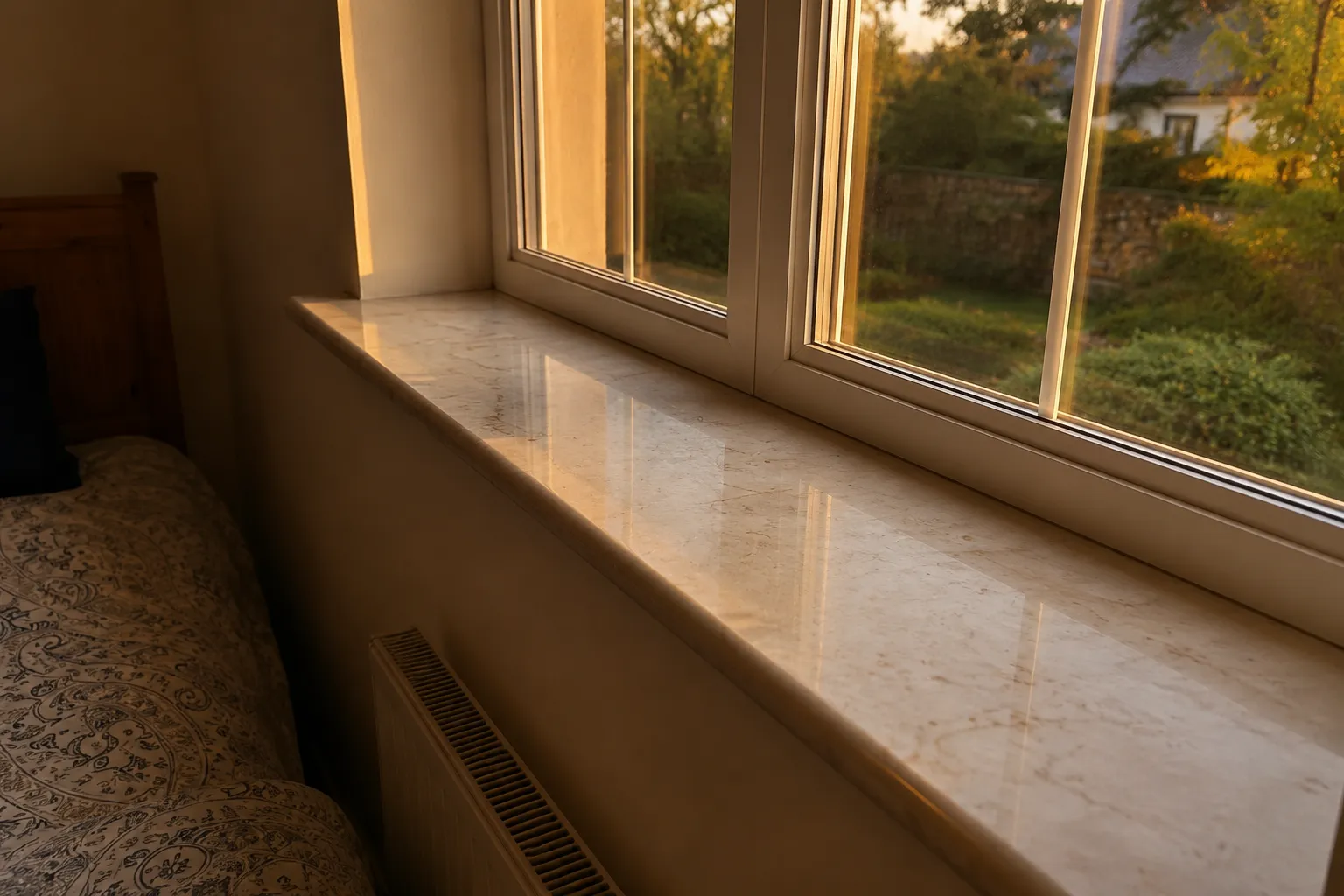
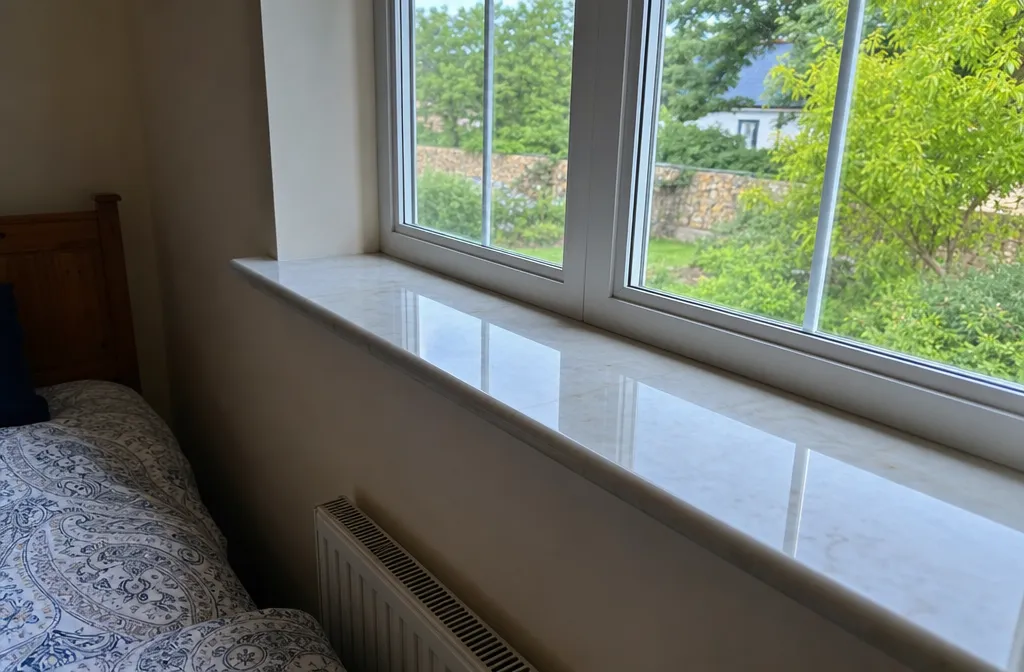
Request: Windowsill scratched from pots, matte, needs gloss.
Done: We ground with diamond discs, then polished to a mirror shine.
Cost: 22 000 ₸
Master: Aizhan Nurgaliyeva, stone master
Total: Windowsill smooth, shiny, without scratches or scuffs.
 After
After
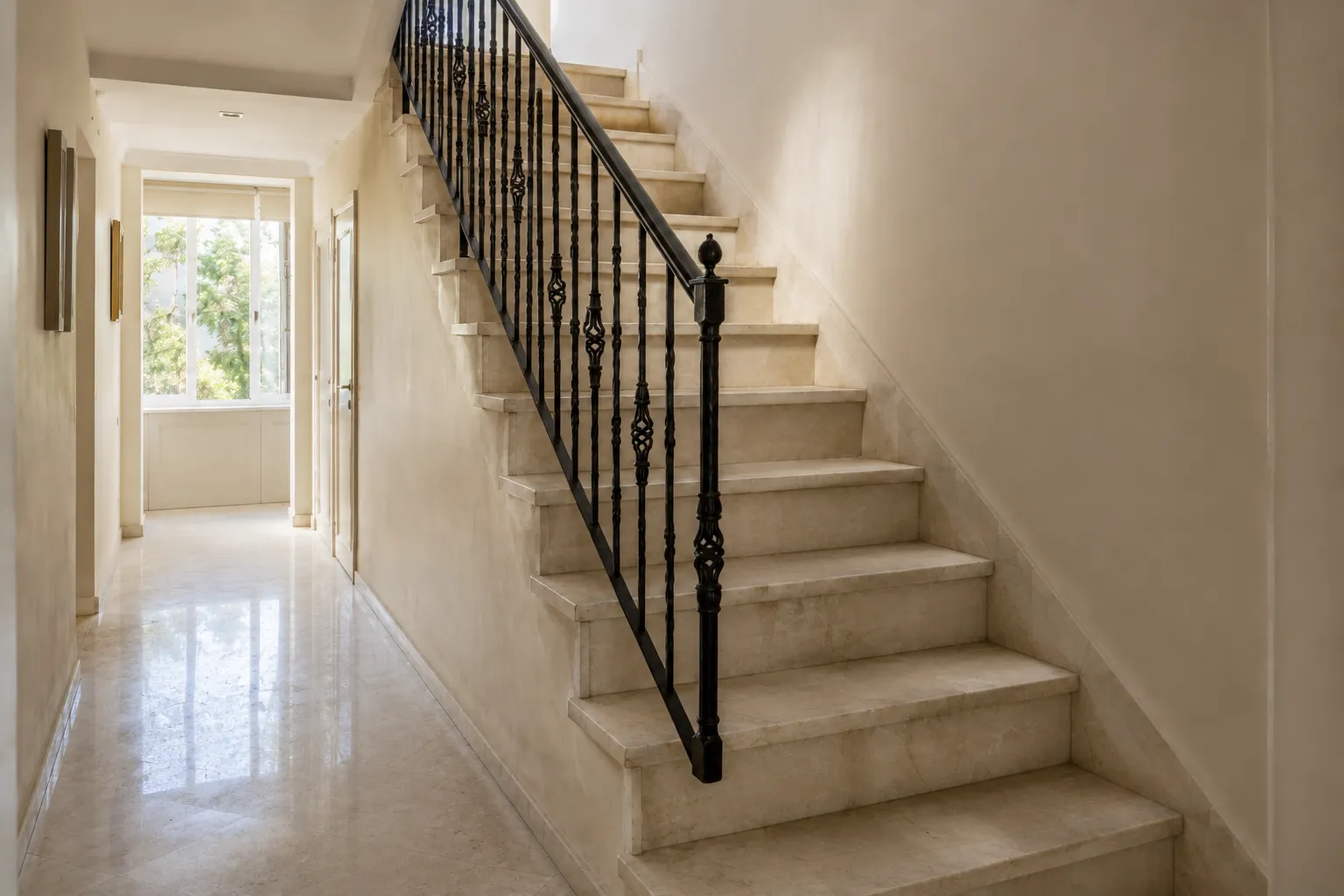
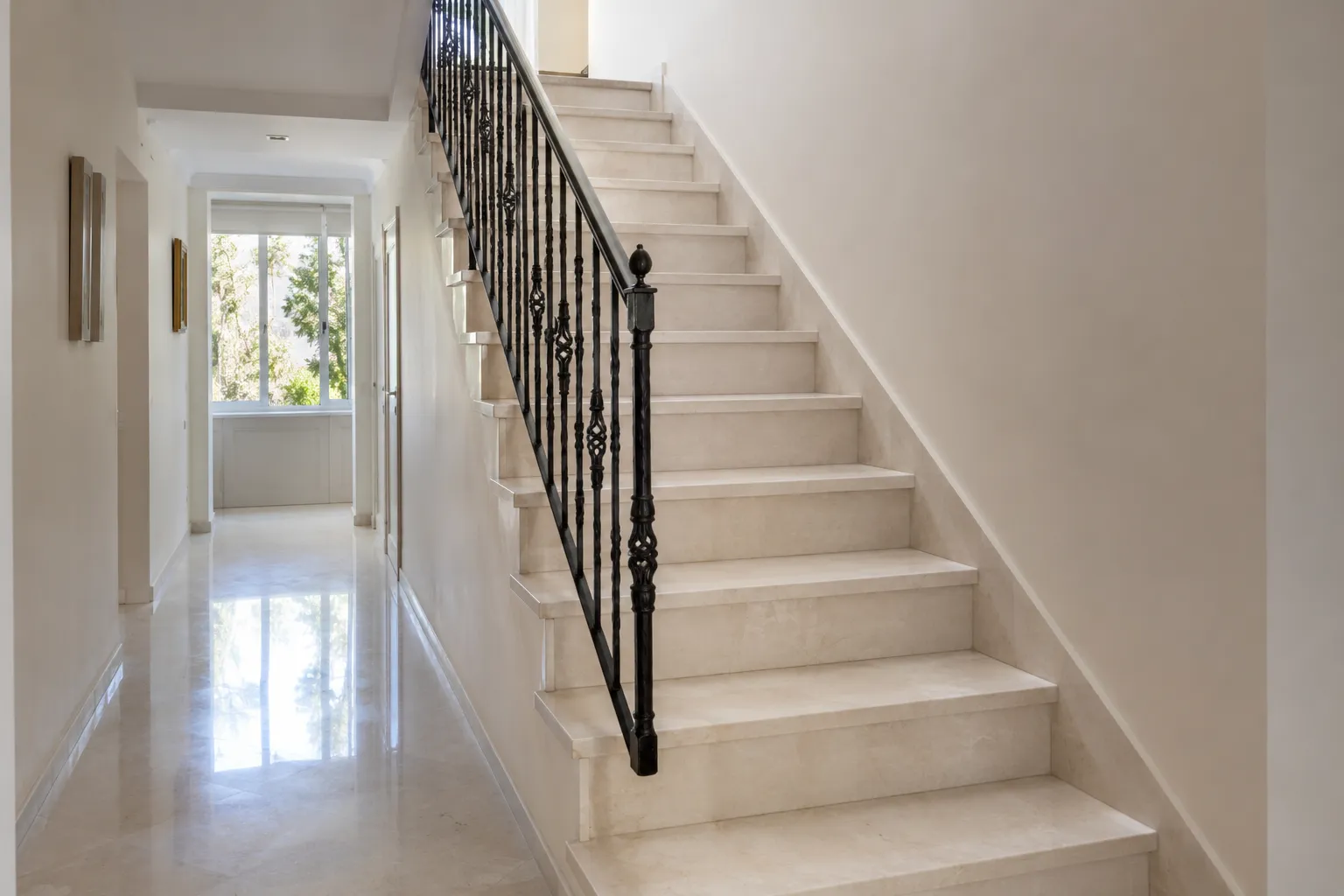
Request: Steps worn, have chips, surface restoration required.
Done: We sanded the steps, filled chips with polymer, applied matte varnish.
Cost: 21 000 ₸
Master: Timur Zhaksybekov, stone master
Total: Staircase even, without defects, with a matte noble sheen.

 After
After
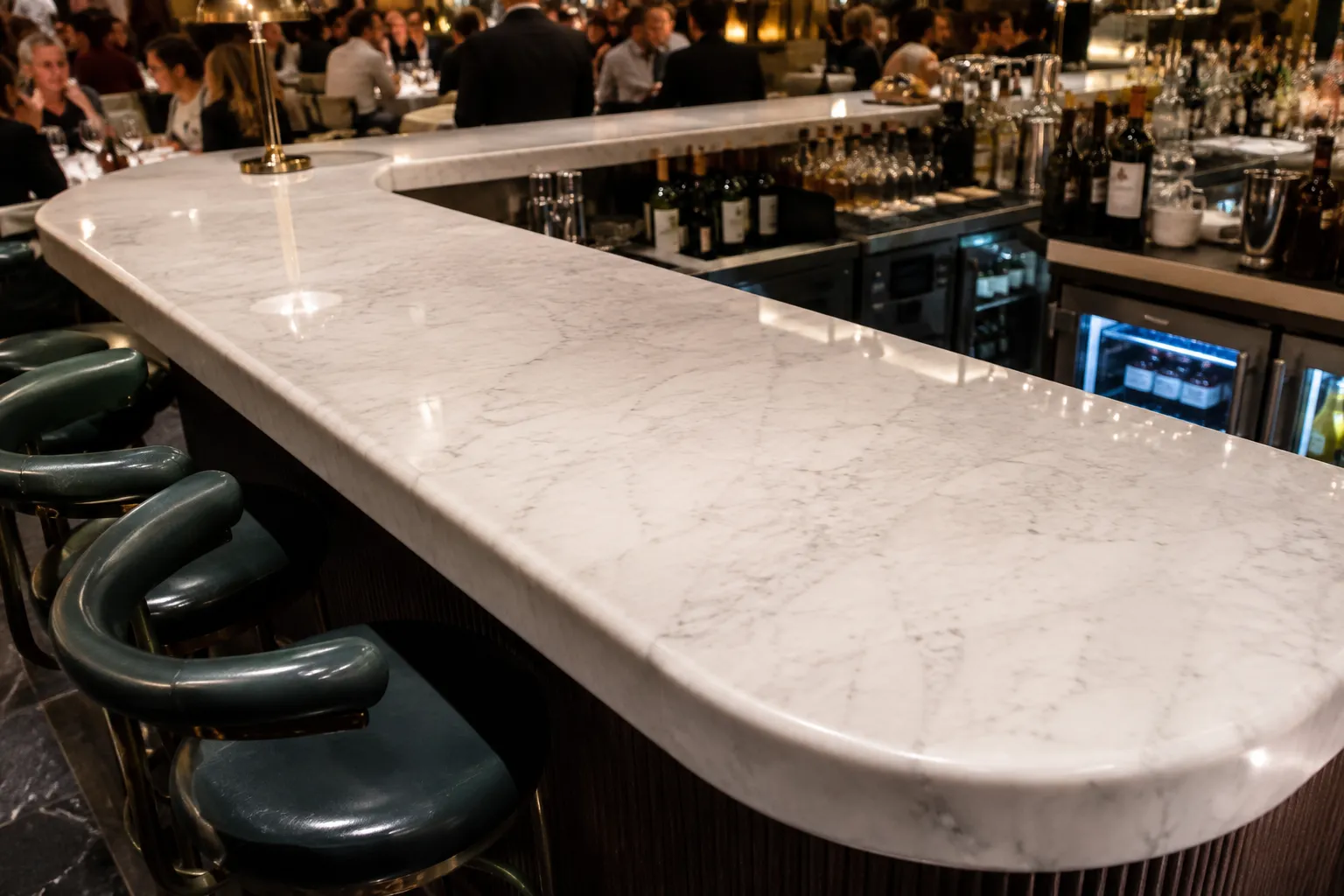
Request: Counter has become greasy, visible streaks and grease stains.
Done: We cleaned with special products, sanded and applied protective wax.
Cost: 22 000 ₸
Master: Aizhan Nurgaliyeva, stone master
Total: Counter shines, grease stains removed, surface protected.
 After
After
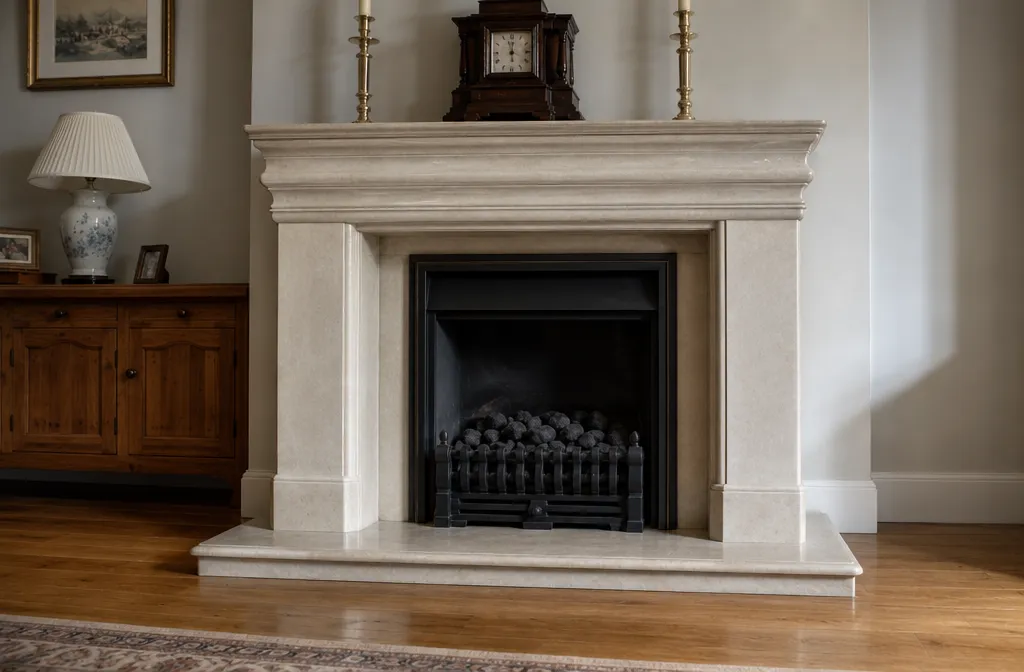
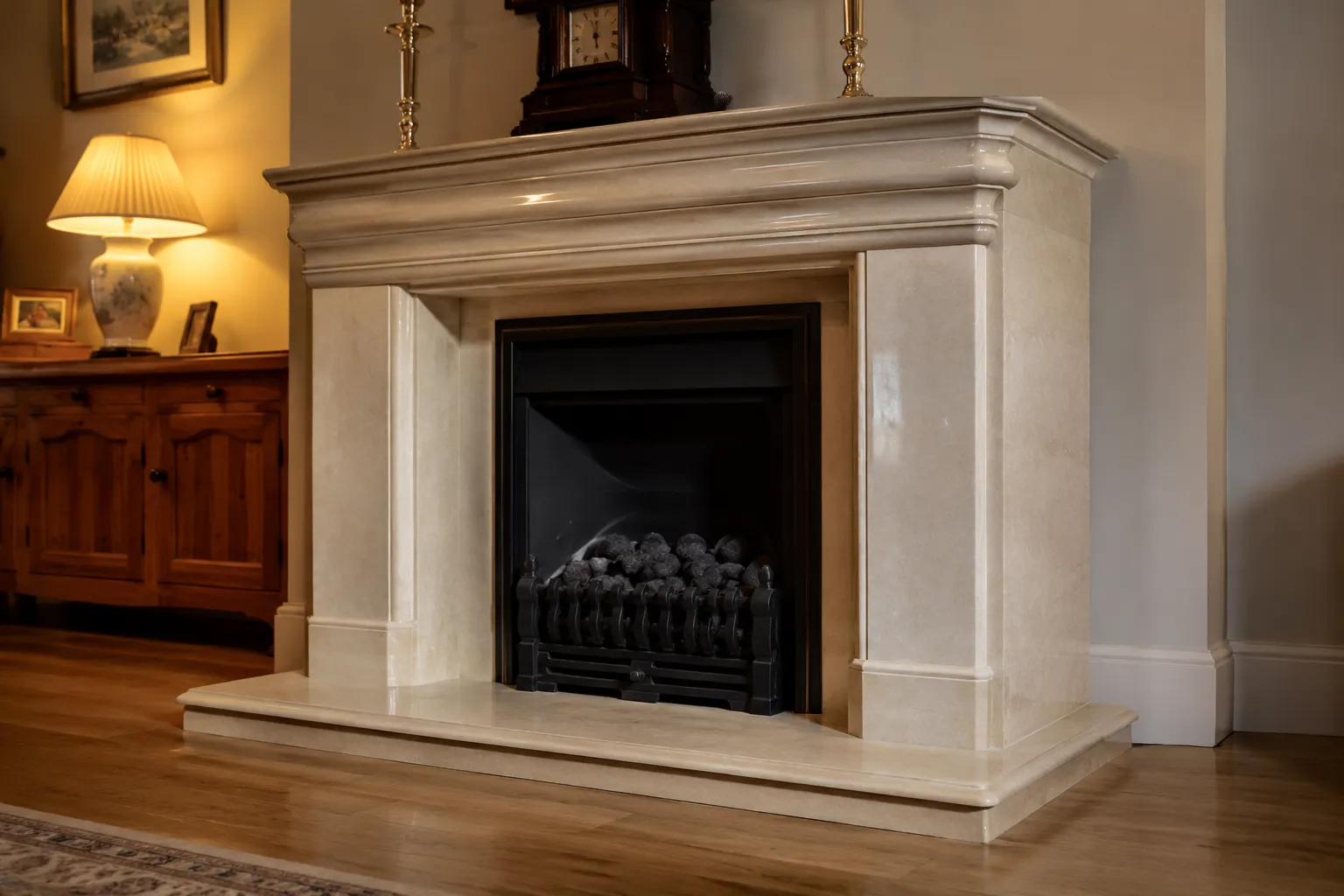
Request: The fireplace has lost its appearance, with candle stains and dust.
Done: Ground the surface, removed tarnish, applied matte lacquer.
Cost: 22 000 ₸
Master: Damir Sagintayev, stone master
Total: The fireplace looks noble, without stains or scuffs.
 After
After
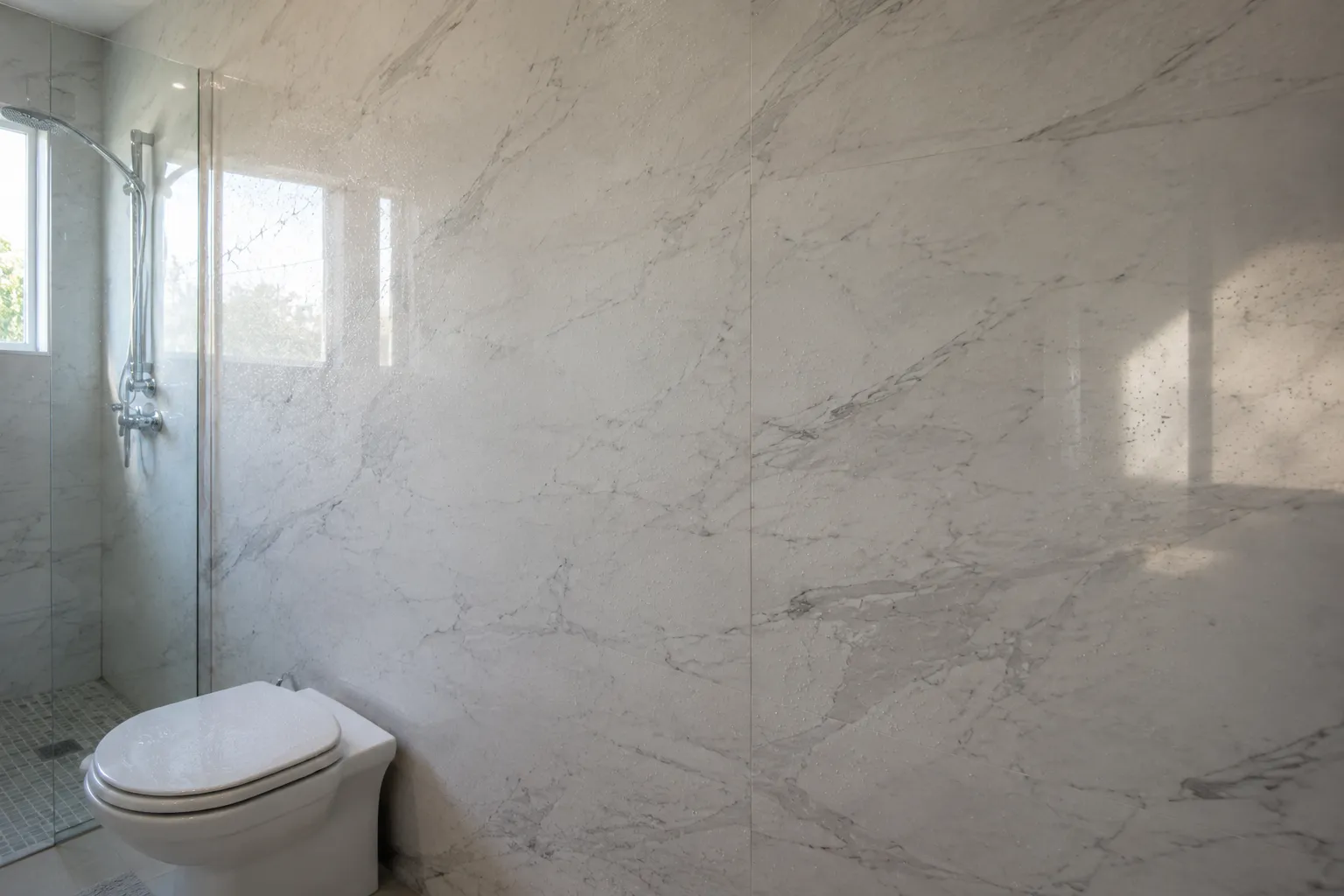
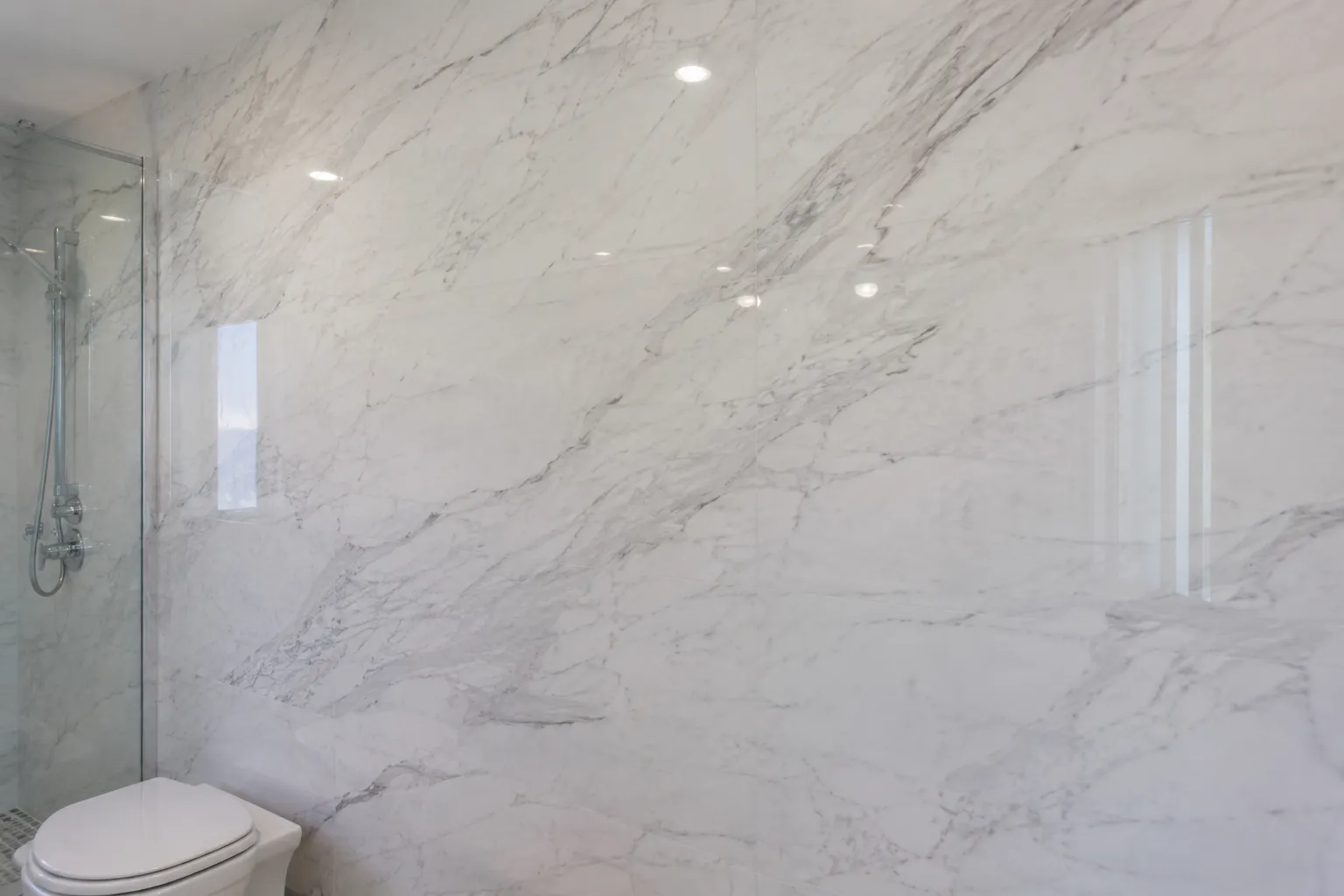
Request: The wall has dulled, with water spots and soap scum.
Done: Cleaned from deposits, polished, applied hydrophobic impregnation.
Cost: 21 000 ₸
Master: Timur Zhaksybekov, stone master
Total: The wall shines, no streaks, water beads off.
 After
After
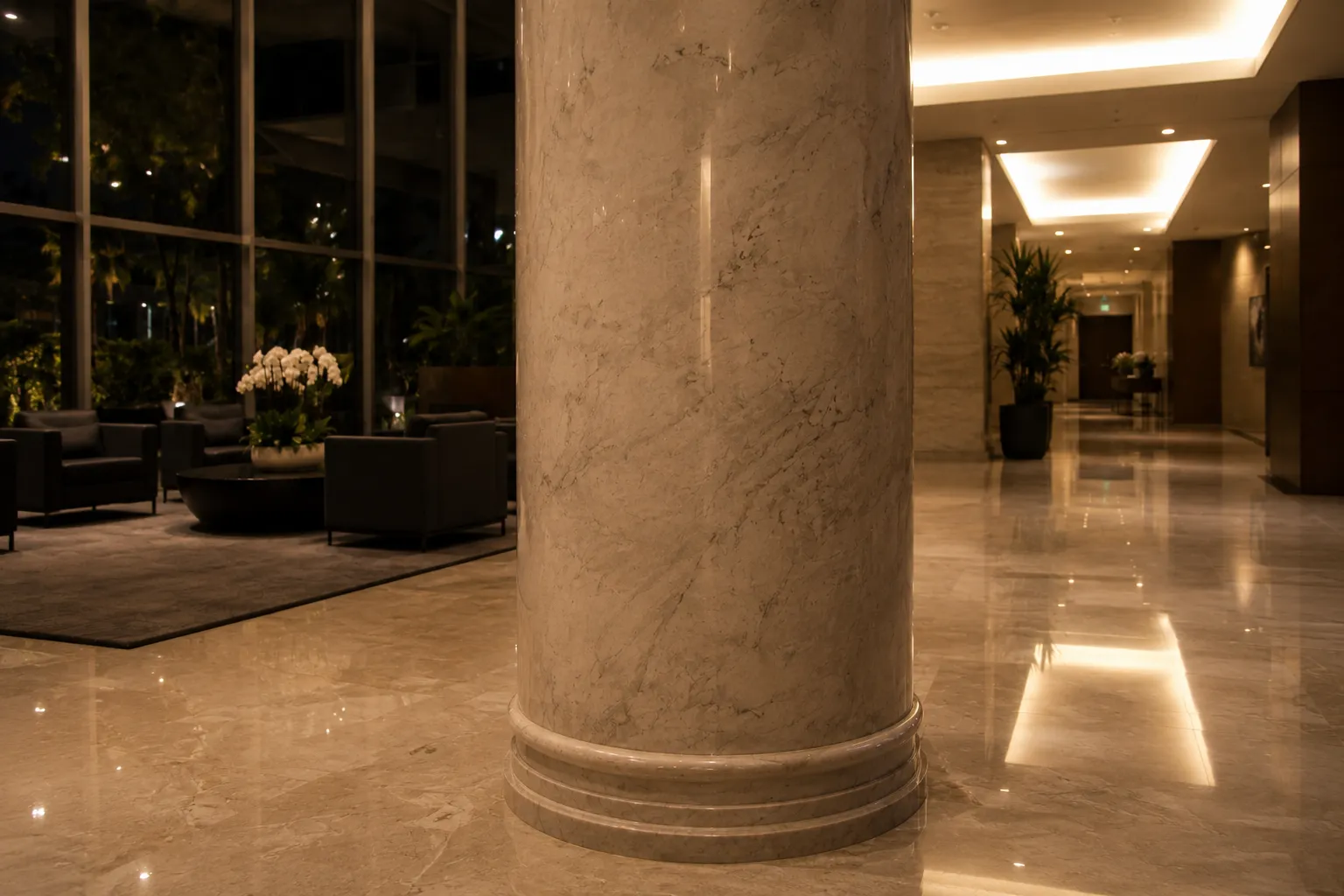
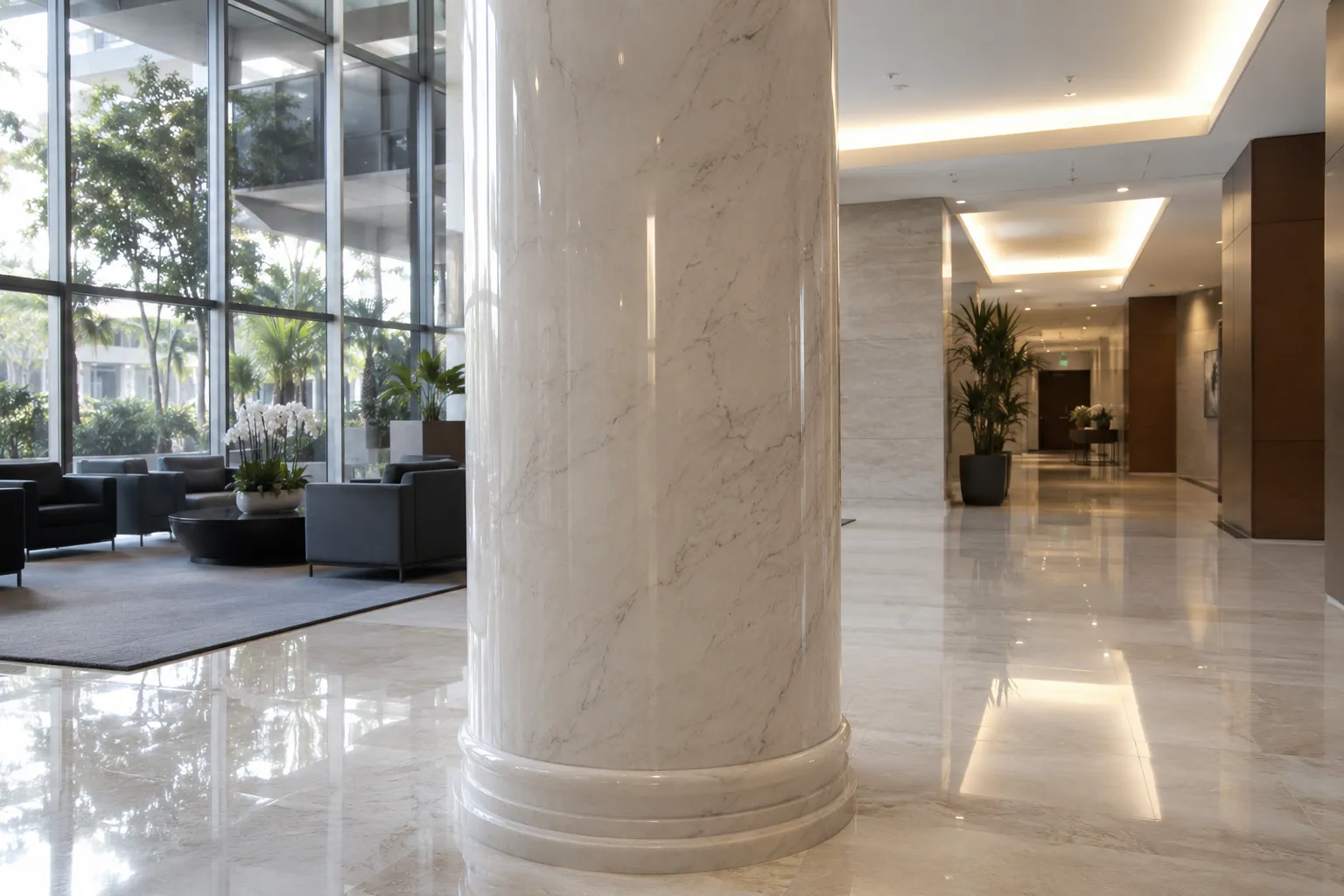
Request: The column is matte, with visible scratches and scuffs from hands.
Done: Performed grinding at full height, then crystallization.
Cost: 20 000 ₸
Master: Aizhan Nurgaliyeva, stone master
Total: The column shines, no scratches, surface uniform and smooth.
 After
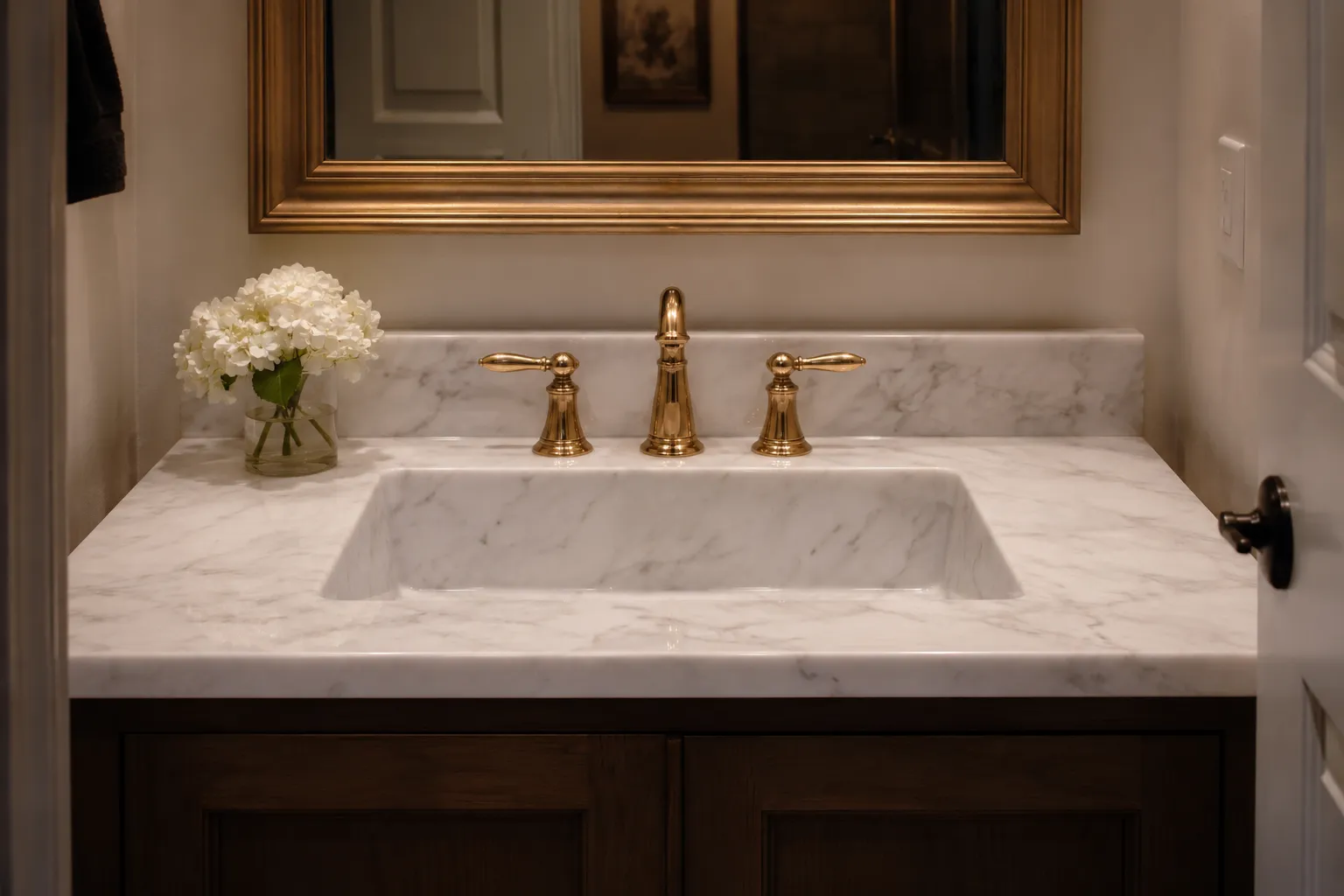
After
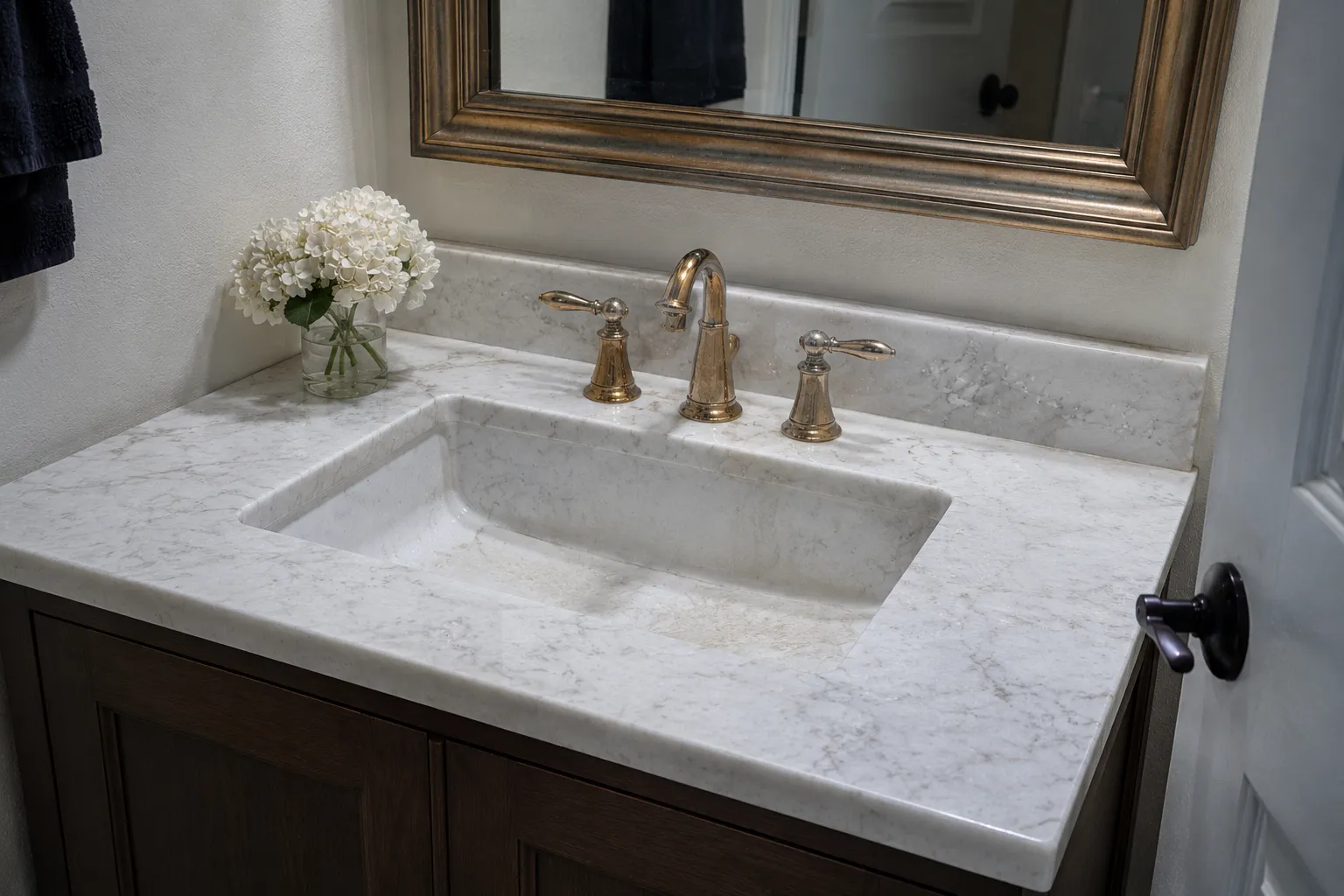
Request: The sink has dulled, with water and cosmetic stains.
Done: Polished the surface, removed deposits, applied protection.
Cost: 22 000 ₸
Master: Damir Sagintayev, stone master
Total: The sink shines, no stains, water leaves no marks.
 After
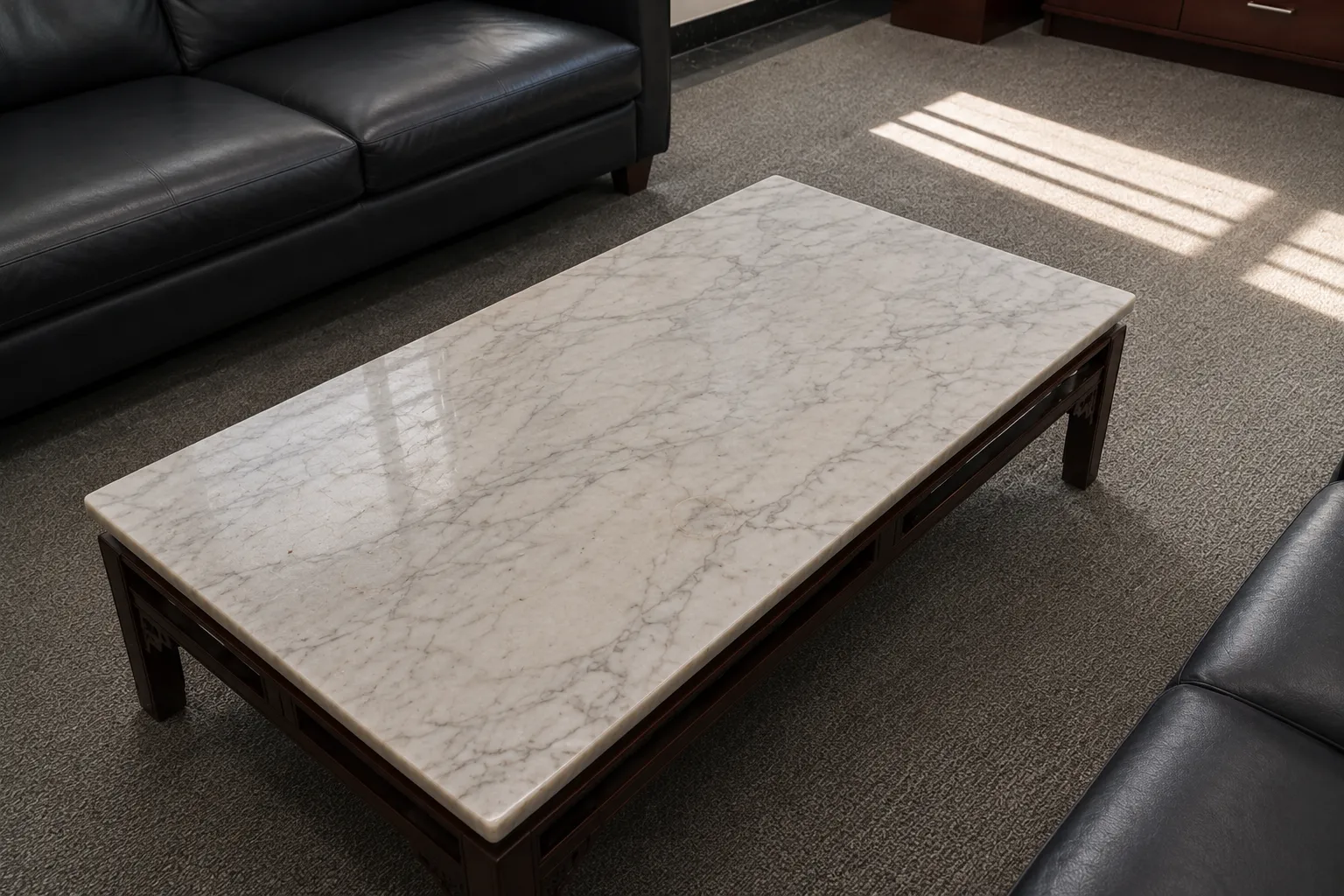
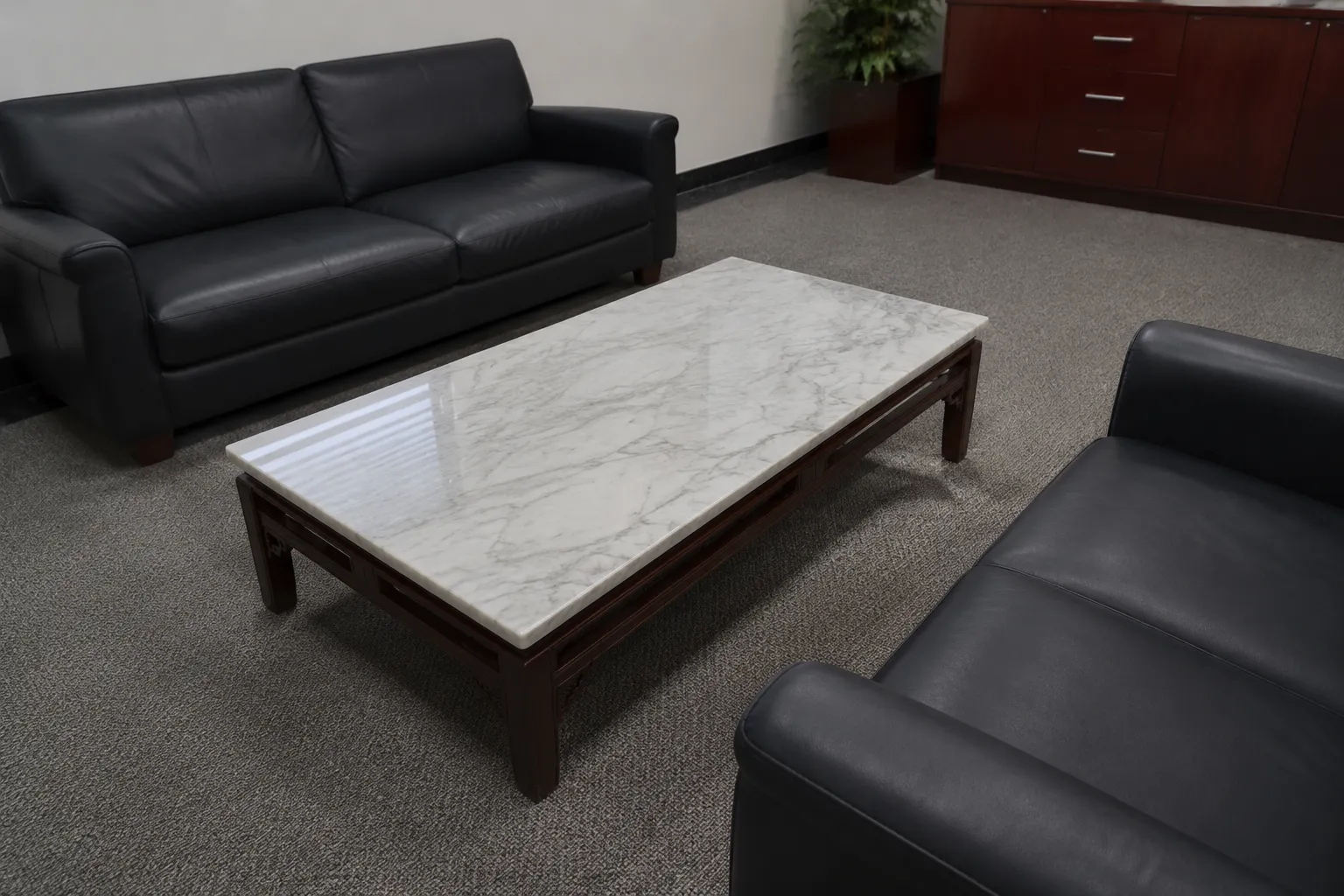
After
Request: The table is scratched, with coffee stains, needs gloss.
Done: Sanded, buffed scratches, applied polish.
Cost: 21 000 ₸
Master: Timur Zhaksybekov, stone master
Total: The table is like new: glossy, without scratches or stains.
All cleaners are profi-clean staff with training, uniform and security check. Each order has a team leader who controls quality.
Marble loses its shine and becomes covered in scratches due to three factors: chemical attack from household acids, abrasive wear from sand, and improper cleaning. In our orders across Almaty, 80% of requests are specifically for restoring lost gloss. Let’s break down each cause separately.
Marble is calcium carbonate (CaCO₃), which reacts with any acid. Spilled lemon juice, vinegar, wine, or even soda react with the surface — at the molecular level, they destroy the crystal lattice. The result is matte “burn” spots that cannot be washed off with plain water. In our orders for Almaty kitchens and bathrooms, this is the number one cause of shine loss. After the acid dries, a rough layer remains on the marble — this is what looks dull. Before setting the table on a marble countertop, wipe it dry after every contact with acid — a wet film accelerates etching by 3-4 times compared to a dry surface.
In Almaty, during spring and autumn, shoes carry a lot of sand and fine gravel from the streets. When you walk across a marble floor, microscopic quartz particles (hardness 7 on the Mohs scale vs. 3 for marble) press into the stone and leave micro-scratches. After a month of such traffic, the gloss disappears — the surface becomes matte. At commercial sites in the Medeu district, we record a loss of shine within 3-4 months with a foot traffic of 50+ people per day. At the entrance to a room with a marble floor, lay a rubber mat at least 2 meters long — it collects 70% of the sand, and polishing will be needed not once a year, but once every 2-3 years.
A regular mop with stiff bristles and household chemicals with an acidic pH are the worst things for marble. The bristles scratch the surface, and cleaning agents for tiles or bathrooms contain alkali or acid that etch the stone. A vacuum cleaner with a rotating brush also leaves micro-gouges. On our service calls across Almaty, we see a typical picture: clients use a universal “all-purpose” cleaner — it has a pH of 8-9, but marble needs a neutral pH of 7. The result is that after six months of regular cleaning, the shine disappears. For marble, use only special neutral products with a pH of 7 — for example, Kiehl Marble Clean — and a lint-free microfiber cloth; this extends the effect of polishing by 2-3 times.
Even with perfect care, marble loses its shine over time due to natural erosion. The stone’s pores become clogged with micro-dust, and the calcite crystals on the surface wear down from micro-friction. In Almaty homes from the 1970s-80s with original marble floors, we observe a 60-70% loss of gloss over 40-50 years of use — this is not a defect, but a natural process. Such marble looks “velvety” but does not shine. If the marble is over 20 years old and has never been professionally polished — grinding with diamond abrasives of 3000-8000 grit restores the shine to a factory level in one pass, because it only removes the dead layer of 0.1-0.3 mm.
Private craftsmen in Almaty often use cheap waxes and silicone-based polishes — they provide a short-term gloss for 1-2 weeks but do not restore the crystal structure. The wax clogs the pores, and after a month the surface starts to “sweat” — the shine disappears, and streaks appear. In our orders after such “masters,” we remove the wax layer with a special solvent, and only then perform crystallization. High-quality marble polishing is not applying a compound, but crystallizing the surface with magnesium fluoride under a pressure of 200-300 kg/m²; if the master says “I’ll apply wax and polish it” — look for someone else.
Grinding and polishing marble are two fundamentally different stages of stone restoration, often confused even by self-taught craftsmen. The difference is not in the number of passes, but in the grit of the abrasive and the goal: grinding removes the damaged layer, polishing restores the mirror-like shine. In our practice at profi-clean, 80% of calls come from clients who tried to polish deep scratches with household paste and only worsened the condition of the slab.
Marble grinding is an abrasive treatment using diamond tools with grit sizes from 30 to 400, removing 0.3–1.5 mm of the surface layer. Its purpose is to eliminate scratches from sand on shoes, traces of acid stains (juice, wine, vinegar), and level joints between slabs if they are uneven due to foundation settlement. At profi-clean, we start grinding with 50–60 grit on marble floors in Almaty apartments — this size removes chips up to 0.8 mm deep in a single pass. On countertops and windowsills, we start with 120–150 grit to avoid overheating thin slabs (2–3 cm thick) — excessive pressure with 30 grit can cause the stone to crack along a hidden fissure. Grinding is performed using the “wet” method: water is supplied to the disc to cool the marble and bind abrasive dust into slurry — dry grinding without an industrial vacuum cleaner with a HEPA filter clogs the stone’s pores with quartz dust that cannot be washed out later. After a pass with 200 grit, we check flatness with a straightedge — a deviation of more than 1 mm over 2 meters requires re-leveling with 60 grit, otherwise the final polishing will “sink” into uneven areas.
Marble polishing is a chemical-mechanical process using diamond discs of 800–3000 grit with crystallizers based on oxalic acid and fluorides that “seal” micro-cracks. Its purpose is not just to add gloss, but to compact the top calcite layer to a hardness of 4.5–5 on the Mohs scale (original marble is 3–4). At profi-clean, we use a three-step polishing process: 800 grit removes marks from 400 grit, 1500 grit creates a matte silk finish, and 3000 grit with a crystallizer achieves 85–90% reflectivity (like factory marble). In the Almaty market, many craftsmen skip the 1500 grit — they go straight from 800 to 3000, and after 2–3 months, a “network” of micro-scratches from sand appears on the surface. The stone temperature during polishing must not exceed 45 °C — we monitor it with an infrared thermometer because overheating evaporates the crystallizer before the reaction, and the gloss lasts only 3–4 months instead of a year. After the final pass with 3000 grit, we apply a water-based protective impregnation (Sodasan or similar without wax — wax yellows on light marble after six months).
Polishing marble yourself without professional equipment is almost guaranteed to damage the stone, and here’s why. Home polishers buy “Anti-Scratch” paste based on aluminum oxide (1000 grit) from Almaty construction supermarkets and an angle grinder with speed control — but the rotation speed of 3000 RPM on an angle grinder creates local overheating up to 70 °C, which “burns” the calcite: the marble darkens in spots that cannot be removed even with 30 grit grinding. A second common mistake is skipping intermediate grits: a person starts with 1000 grit on a 0.5 mm deep scratch without removing it with 120 grit, simply “filling” the scratch with polishing paste — after 2–3 weeks, it reappears when the protective layer wears off from washing. A third risk is using acidic cleaning agents (Cillit Bang, Sanfor) before polishing: the acid “eats away” 0.1–0.3 mm of calcite, and after polishing, a matte spot forms that the crystallizer cannot fix. In my opinion, the only case where you can take the risk is a small chip on a countertop (up to 2 cm²), treated with 2000 grit sandpaper by hand with water, but without pressure — this won’t restore the factory gloss but will hide the defect from a distance of up to 1.5 meters.
The key difference between marble grinding and polishing lies in the abrasive grit and depth of impact, and we at profi-clean have documented this across hundreds of sites in Almaty. Grinding uses grit sizes from 30 to 400 and removes 0.3–1.5 mm of stone — this is restoration, not cosmetic work. Polishing uses grit sizes from 800 to 3000 and does not remove material but compacts it — this is a final crystallization. If a marble floor has a scratch as deep as a fingernail (0.5–1 mm), polishing without grinding is useless; you would simply “polish the air” in the defect. If the surface is level but dull from age, polishing with 1500–3000 grit is sufficient, and the shine will return in 2–3 passes without removing a layer. In Almaty’s conditions, humidity fluctuations in apartments (winter heating dries the air to 20%, summer to 60–70%) cause micro-expansion of calcite. Therefore, after grinding, we always let the stone “settle” for 24 hours at room temperature, and only then polish; otherwise, “hairline” cracks appear on the finish within a week. Before ordering marble grinding and polishing services, the price is calculated individually based on area and condition — the depth of grinding directly affects the cost because each pass with 30 grit requires changing the diamond disc (service life 15–25 m² per disc) and additional time for cleaning the slurry.
DIY marble polishing in Almaty often leads to the opposite result — instead of shine, streaks, yellowing, and deep scratches appear. At profi-clean, we analyze dozens of countertops and floors ruined by home experiments and see the same systematic mistakes made by owners.
The most common mistake is trying to polish marble with vinegar, citric acid, or cleaning powders. Marble is calcium carbonate, which instantly reacts with acid: the surface becomes dull, rough, and develops micro-pits — etched spots. In Almaty, many universal cleaning products with acids are available (Cif, Domestos, Sanfor), but all of them destroy the crystal lattice of the stone. After such “care,” restoration requires not polishing but deep grinding — removing 0.3–0.5 mm of the top layer to eliminate the etched layer. Our practice shows: fixing this defect costs 2–3 times more than calling a professional right away.
The second most common mistake is using an angle grinder with a regular abrasive wheel or a polishing attachment without water cooling. Marble heats up to 200–300 °C during friction, and without water, the marble crystals “burn” — the surface becomes whitish, loose, like chalk. In Almaty, private craftsmen in ads often offer “polishing in an hour” with a dry machine, but after such treatment, the marble does not shine; instead, it starts to dust and absorb dirt. Professional polishing is carried out with a constant water supply (wet method) and a change of diamond tools from 50 to 3000 grit — each fraction removes microns, not millimeters. Dry working is only possible with finishing pastes on an already prepared surface, and even then, at low speeds.
The third mistake is stopping at the final polishing with diamond tools and not sealing the result with a crystallizer. After grinding and polishing, marble has open pores — it shines for the first 2–3 days, but upon first contact with water or juice, it absorbs moisture and darkens. Crystallization is a chemical-mechanical process: a special compound (tin oxide or magnesium fluorosilicate) is applied to the surface and rubbed in with a rotary machine and a felt pad. The compound fills the pores, reacts with calcite, and forms a hard protective film 10–20 microns thick. Without crystallization, marble in Almaty apartments with hard tap water loses its shine in 3–4 weeks, but with it, it lasts a year to a year and a half. If you are polishing yourself, be sure to buy a professional crystallizer (e.g., Marble Plus or Cleaner 77) — this is the only way to preserve the result for longer than a week.
The fourth mistake is starting polishing without first repairing cracks and chips. In Almaty, marble often suffers from temperature changes and humidity: in winter, snow and reagents are brought in from the street, in summer, sand and dust. Microcracks expand, and if a polishing compound is applied on top of them, it gets clogged inside, and when it dries, the crack opens even wider. The correct sequence: first, widen the crack with a diamond pencil (make a 1-2 mm groove), fill it with polyester putty matching the marble color, let it dry for 6-8 hours, sand it flush — and only then polish the entire surface. In our practice, there was a case where a cleaner repaired a crack with epoxy without matching the color — a dark stripe remained on white Carrara marble, and the entire countertop had to be redone.
The fifth mistake is taking one attachment (for example, a 200-grit diamond cup) and trying to immediately achieve a gloss with it. Marble is a capricious material: each fraction removes its own layer, and if you skip a stage, scratches from the previous attachment are not removed, but only rolled over with polishing paste. When light falls from the side, these scratches become visible as a “cobweb” or “worn-out gloss.” The professional sequence: 50-100-200-400-800-1500-3000 grit — a minimum of 7 transitions, each subsequent stage removes the marks from the previous one. On the Almaty market, they sell Chinese “all-in-one” kits with three attachments — this is a guaranteed defect.
The stone restoration services market in Almaty is full of offers — from private individuals with angle grinders to companies with professional equipment. But the difference between “made it shiny for a day” and “restored the stone for years” lies in three things: equipment, chemicals, and the master’s experience with a specific type of marble. Here’s what to look for to avoid throwing money away.
A true marble master does not work with an “angle grinder with a felt wheel” — this method provides a short-term gloss due to surface overheating, which disappears after 2-3 wet cleanings. Professional marble grinding and polishing is performed with rotary machines with adjustable speeds from 300 to 3000 rpm and a water feed system — this eliminates overheating and microcracks. At profi-clean, we use three-phase planetary machines Klindex (Italy) with diamond abrasives of different grits: from 30 grit for rough grinding to 3000 grit for final polishing. An industrial vacuum cleaner with an H13 HEPA filter is mandatory — it collects 99.97% of microscopic marble dust particles, which settle in the lungs and scratch the coating if left on the surface. A “universal polishing machine” with one disc is a sign that the master is trying to cover concrete, granite, and marble with one tool, which results in uneven stone removal. Our experience: at a site in the “Samal-2” microdistrict, the client had already hired a private individual with an “angle grinder” — after his work, we had to remove 0.8 mm of the top marble layer to eliminate burn marks from overheating. Before ordering, ask the master the brand of the machine and the availability of at least 4-5 diamond abrasives of different grits — if the answer is “why, I have one wheel for everything,” look for someone else.
Marble is a carbonate rock that dissolves in acids: vinegar, lemon juice, and household chemicals with a pH below 6 destroy its crystal lattice within minutes. Professional polishing uses only neutral or slightly alkaline compounds (pH 7-8) — crystallizers based on magnesium fluoride and potassium oxalate, which fuse into the surface and fill micropores. In Almaty, where tap water is hard (7-8 mg-eq/L, according to “Almaty Su”), technicians often use distilled water to dilute compounds — otherwise, calcium salts leave a white residue that cannot be washed off. profi-clean uses Kiehl (Germany) chemistry for crystallization and Sodasan (hypoallergenic, certified for children’s facilities) for final protection. If a technician says, “I work with regular floor polish” — that’s a varnish that will peel off in a month, not stone restoration. Another marker: there should be no strong chemical smell on site — professional marble compounds are almost odorless, unlike cheap acidic cleaners. In our practice, there was a case where a client complained of a headache after a private technician’s work — he used technical hydrochloric acid to “speed up crystallization,” which is prohibited. Before work begins, ask to see the chemical bottles and check for a “for natural stone” label — this will save your health and your floor.
Experience with marble in Almaty is not measured in years — it is measured by the types of stone a technician has worked with. Local marble from the “Tekeli” and “Karasai” quarries is loose, porous, with high water absorption (up to 0.5% versus 0.1% for Italian Carrara). A technician used only to dense Italian stone can burn Altai marble by removing too much of a layer. Ask the contractor: “Have you worked with marble from Karasai?” — and listen to the answer. If they name a specific site in Almaty (MEGA shopping center, Almaly residential complex, Esentai Mall) — that’s a good sign. Check for a portfolio with “before/after” photos on marble, not granite or porcelain stoneware — these are different technologies. At profi-clean, we keep a card for each site specifying the stone type, tools used, and chemicals — this allows us to guarantee results for 24 hours. Another indirect sign: a technician who asks questions about the coating’s age, finish type (glossy or matte), presence of cracks and chips — understands that marble requires diagnostics. Someone who quotes a price over the phone without seeing the surface is likely averaging and taking risks. In Almaty, where humidity in basement rooms reaches 70% during the rainy season, marble on the first floor behaves differently than on the 10th — this affects the choice of crystallizer and drying time. Ask if the technician will do a test on an inconspicuous area before the main work — a professional always insists on a trial.
A guarantee for marble polishing in Almaty is not just a formality, but an indicator of how confident the technician is in their technology. High-quality crystallization lasts 1-2 years with proper care, amateur “wax polishing” lasts 2-4 weeks. profi-clean provides a written 24-hour guarantee on the result: if streaks, uneven shine, or stains appear within a day, we come out for free. But there is a nuance: the guarantee does not cover the consequences of household chemicals — if a client washes the floor with vinegar a week later, the crystallization will be destroyed. A professional technician will explain this before the work and provide a care guide: only neutral cleaning agents (pH 7), soft microfiber, no abrasive sponges. In Almaty, where homes often use underfloor heating systems, marble on such a base requires a special regime — the surface temperature should not exceed 28°C, otherwise the crystallizer “burns out” within a month. If the technician does not warn about this — they either don’t know or don’t intend to take responsibility. Check the contract: it should specify exactly what is guaranteed (shine, absence of scratches, color uniformity), not a vague “quality of work.” Private contractors on “Olx” often give an oral “eyeballed” guarantee, and after a month stop answering calls — a company with a legal entity and Kaspi Red at least has leverage through reviews on 2GIS. Our advice: if the technician does not provide a written guarantee for at least a month — don’t risk it, marble is more expensive.
In Almaty, there are a dozen companies that position themselves as “marble masters,” but in reality, they outsource orders to subcontractors — you pay the company, but a person from the market arrives at the site without insurance or equipment. A marker of a direct contractor: the company itself owns a fleet of vehicles (doesn’t rent), has a chemical warehouse, and employs in-house technologists. profi-clean, for example, keeps 4 sets of Klindex equipment and two technologists with 5+ years of experience — we don’t subcontract marble work because quality control is lost. Check the website: if the “equipment” section has generic Shutterstock photos instead of real photos of an Almaty warehouse, it’s a reseller. Another sign: a company offering “polishing of marble, granite, concrete, and laminate” with one craftsman doesn’t specialize in stone. In Almaty, where marble chips are used in the facade finishing of residential complexes like “Nurly Tau” and “Almaly,” you need a craftsman who understands the difference between facing marble and floor marble — layer thickness, adhesive type, and joint grouting affect the polishing technology. Ask the manager: “Does your technologist come for the measurement, or the craftsman?” — if it’s the craftsman, clarify who will supervise their work. At profi-clean, a technologist visits each site for measurement — they assess the stone’s condition, coating type, cracks, and chips, then assign the task to the craftsman with specific parameters. Resellers cut corners at this stage, and the result is “hit or miss.” Before ordering, check the legal entity via Kaspi or 2GIS, look at real reviews with photos, not inflated ones on Instagram — this is the best insurance against shoddy work.
The choice between crystallization and diamond polishing determines not only the appearance of the marble but also its durability and health safety. Let’s break down the key differences so you understand which technology suits your floor.
Crystallization is a reaction of an acidic compound with calcium carbonate in marble, forming a thin protective layer of calcium fluoride. At profi-clean, we use this method only for glossy marble in low-traffic areas — for example, in guest bathrooms or bedrooms. The process uses pads and one-step crystallizers like Revital or Fila, which are applied to a damp surface and buffed to a shine. The downside: the layer is fragile; contact with acids (lemon juice, vinegar, household chemicals) destroys it after 3–5 floor cleaning sessions. In Almaty apartments with hard tap water, crystallization provides an effect for 6–8 months, after which reapplication is needed. In my opinion, for home kitchens and hallways, this is a risky choice — even a small spill of juice or dish soap leaves a dull stain that cannot be polished out without a full repolishing.
Diamond polishing is the sequential grinding of the surface with diamond abrasives of varying grits (from 50 to 3000 grit), removing a microscopic layer of stone and exposing its natural crystalline structure. We use a three-stage process: coarse grinding (50–200 grit) to remove scratches, medium grinding (400–800 grit) for leveling, and final polishing (1500–3000 grit) for a mirror-like shine without chemicals. Unlike crystallization, diamond polishing does not create an additional layer — the gloss is achieved by light reflecting off the microscopically smooth surface of the stone itself. This makes the finish resistant to household chemicals and water: we tested it on marble floors in Almaty restaurants with daily wet cleaning — the shine lasts 2–3 years without renewal. The only limitation is that diamond polishing requires expensive equipment (a planetary machine with water cooling) and skilled craftsmen, but the result is worth the cost: the surface becomes harder and denser than after crystallization.
When choosing between crystallization and diamond polishing, three factors must be considered: marble type, traffic intensity, and budget. For soft marble varieties (travertine, Coimbra, light Carrara), crystallization can cause yellowing due to the acid reaction with iron impurities — in our practice, there was a case on Abay Avenue where white marble developed yellow stains after crystallization, which were only removed by diamond polishing with a 200 grit tool. For dense varieties (Emirati Beige, Nero Marquina), crystallization is safer and cheaper, but only for low traffic. Diamond polishing is universal for any marble surface — floors, steps, countertops — and delivers guaranteed results without chemical risks. Moreover, for floors in hallways and kitchens, where there is sand from shoes and spills, diamond polishing is the only way to maintain gloss for longer than a year.
Crystallizers contain hydrofluoric acid, which is toxic when inhaled during work and requires room ventilation for at least 4–6 hours after the procedure. In Almaty apartments with poor ventilation (especially in old houses in the Bostandyk district), residual fumes can persist for up to a day, causing respiratory irritation in children and asthmatics. Diamond polishing is completely safe — we use only water and diamond abrasives, without acids, solvents, or volatile compounds. In our practice, there was an order in an apartment with a child who had allergies on Timiryazev Street: after diamond polishing, the family returned to the room an hour after work was completed, with no smell or need for ventilation. For clients with pets or small children, I recommend diamond polishing — it leaves no chemical residue on the surface that could be licked or rubbed into the skin.
Polishing restores marble’s factory shine and smoothness, but without proper care, the result lasts barely a month. We’ve broken down three key rules for home care — from choosing neutral chemicals to a wet cleaning schedule — that extend the polishing effect for a year or more.
Almost all household cleaning products contain acids (citric, oxalic, hydrochloric) or alkalis (bleach, ammonia), which literally etch away the protective layer applied during polishing. On marble, after an acid attack, dullness appears within 3–4 uses — the calcium crystals on the surface are corroded, and the shine is lost irretrievably until the next grinding. In Almaty stores like “Cleaning-Market” or on Kaspi, specialized neutral stone cleaners with pH 7-8 are sold — for example, profi-clean Stone Wash or Kiehl Marble Clean. They do not contain aggressive surfactants and leave a thin polymer film on the marble, which additionally protects against scratches. Our practice shows: clients who replaced “Mr. Muscle” with a neutral concentrate come back for repeat polishing not after 2-3 months, but after 12-18.
Wet cleaning of polished marble is the most common cause of micro-scratches: one grain of sand under a mop leaves 10-15 parallel marks visible in side light. We recommend using a microfiber flat mop (like Vileda or Leifheit) and a separate bucket — free of any detergent residue from previous tile or laminate cleaning. Water temperature should be cold or slightly warm, not hotter than 30°C: hot water opens the pores of marble, and dirt gets trapped inside. Change the water after each room and rinse the mop — this is a rule our cleaners follow on sites but forget at home. If there is a cat litter box or a child’s high chair on the floor, place a silicone mat underneath: urine and spilled juice are an acid attack that leaves a permanent stain on polished stone within an hour.
After professional polishing, we apply a final crystallization or an impregnator to the marble — this is not mandatory, but highly recommended. An impregnator (a water-based or solvent-based sealer) fills the stone’s micropores and creates a barrier against moisture and grease: spilled wine or coffee won’t soak in within seconds but will remain on the surface — you can blot it away with a napkin without a trace. For floors in Almaty apartments with underfloor heating, it’s better to choose vapor-permeable impregnators (e.g., Lithofin Stain-Stop), which do not seal the stone completely — otherwise, moisture from temperature fluctuations condenses under the film and causes cloudiness. For marble countertops, we recommend a wax-based polish (Kiehl Marble Wax) — it provides extra gloss and repels grease but requires renewal every 2-3 months. On kitchen surfaces in Almaty, where cooking with turmeric and tomato paste is common, the wax truly saves from yellow stains — without it, the polish loses its appearance within six months.
The first taboo is placing hot pots or pans directly on the countertop: thermal shock creates micro-cracks, which turn into white crazing within a week, and the polish in that area is destroyed until a new grinding session. The second is using abrasive sponges (melamine erasers, scrapers, the rough side of sponges): they scratch the gloss worse than sand and leave matte streaks that cannot be polished out with home remedies — only with diamond tools. The third is applying “folk” mixtures like vinegar, lemon juice, or baking soda with water to the marble — supposedly for shine. In reality, acetic acid removes the top layer of polish within 5 minutes, leaving the stone rough. In our practice, there was a case in Almaty — a client decided to “refresh” her countertop with lemon, and we had to re-polish the entire surface because the acid burn had penetrated 0.3 mm deep.
We ordered grinding and polishing of marble on the kitchen countertop. They restored the original shine, wine stains disappeared.
Glad you are happy with the result! Gentle marble care is our specialty.
The marble floor in the hall after renovation was in terrible condition. profi-clean made it perfectly smooth and shiny like a new mirror.
We did grinding and polishing of marble on windowsills. Scratches gone, but one remained slightly matte. Overall good.
Thank you for the feedback! On your next visit, we will rework this area for free.
The marble staircase after polishing looks like in a hotel. Steps are not slippery, color is rich. Very satisfied.
Ordered grinding and polishing of marble on the fireplace. Restored matte shine, removed chips. Neat work, no dust.
Thank you! The fireplace will now delight you for years to come.
Marble bathroom countertop after cleaning and polishing looks like new. Cosmetic stains gone, surface smooth.
Tried grinding and polishing marble on the dining table. Shine appeared, but knife scratches not fully removed. Expected more.
We apologize. Deep scratches require additional treatment. We offer a repeat visit with a discount.
Marble living room floor polished to a shine. Even tile joints became invisible. Thanks for the quality!
Ordered grinding and polishing of marble for the bar. The counter now shines, coffee and wine stains gone. Clients are delighted.
Great! Glad we helped create a cozy atmosphere.
Marble window sills after your treatment look luxurious. Even sunlight plays differently. Thank you!
Had grinding and polishing of marble in the hallway. Became light and clean, but chemical smell lingered for two days. Had to air out.
We use safe compounds, the smell dissipates within a day. Next time we will increase ventilation.
Marble kitchen countertop after polishing became smooth and shiny. Beetroot and tea stains gone. Very high quality!
Ordered grinding and polishing of marble in the restaurant. The floor looks like new, visitors praise. Work done quickly, without disruption.
Thank you for your trust! Always happy to help businesses.
The windowsill shines after your treatment. Scratches from pots have disappeared. Very satisfied.
I ordered marble grinding and polishing in the bathroom. The walls and floor came alive. Mold in the joints was removed, now everything is dry and beautiful.
Thank you! It's important to maintain marble in dry rooms.
The marble countertop became shiny, but there is a slight roughness left on the corner. Otherwise excellent.
I apologize. We will send a technician to polish the corner for free.
We did grinding and polishing of marble in the office. The floor became presentable, cleaning is now easier. Employees are happy.
The marble fireplace looks expensive after polishing. All cracks were masked. Thank you for patience and quality.
Kitchen marble countertop — ordered grinding and polishing. Stains from turmeric and wine are gone, the surface is like new.
Glad we managed to save the countertop! Take care of it.
The windowsills after your work shine with a matte gloss. Scratches are not visible. Very aesthetic.
Hallway — grinding and polishing of marble worked wonders. The floor became smooth, dirt does not absorb. I recommend.
Thank you! The hallway will now delight guests.
The marble coffee table after polishing became the highlight of the living room. Coffee stains are gone. Very satisfied.
We ordered marble grinding and polishing on the stairs. The steps are shiny, but one still has a small dent. Overall good.
The dent requires deep grinding. We offer to fix it at a convenient time.
The marble countertop in the bathroom is flawless after your work. Perfume stains are gone, the surface is smooth and shiny.
Living room — marble grinding and polishing transformed the space. Light reflects, the room looks bigger.
Excellent! Marble gives a sense of spaciousness.
The windowsill after polishing is like a mirror. The color became richer. Very beautiful.
Marble dining table — we did grinding and polishing. Now it doesn't show plate marks, it shines.
Glad the table pleases you again!
The marble floor in the hall after your treatment became matte and noble. Shoe stains no longer set in.
I ordered marble grinding and polishing on the fireplace. Shine appeared, but small scratches remain. Not perfect.
We apologize. The depth of scratches could not be fully removed. We are ready to perform additional treatment.
The kitchen countertop shines after polishing. Grease and juice stains are gone. Very satisfied with the quality.
Corridor — marble grinding and polishing made it brighter. Now it's not slippery, easy to clean.
Thank you! Glad it became more convenient.
On average, polishing 1 m² takes 1-2 hours depending on condition. Full treatment of a 20 m² room can take 1-2 days.
Clear the floor of carpets and small furniture. We cover large furniture ourselves. Ensure access to water and electricity.
Yes, we use safe water-based compounds. It's best to isolate the room during work, but after drying (24 hours) it is completely safe.
Yes, marble can be polished at humidity up to 80%. However, after polishing, ensure drying for 24 hours.
It's better to move small furniture out; we cover large furniture with film. The master's visit includes free assessment and recommendations.
The smell is minimal as we use solvent-free products. It completely dissipates 2-3 hours after work.
You can walk on the floor 24 hours after final treatment. Full load (furniture) is recommended after 48 hours.
Yes, but cracks require preliminary filling with a special compound matching the stone color. This is an additional service.
Use neutral cleaning agents (pH 7-8), avoid acids and abrasives. Wipe with a soft cloth.
Hydrophobic sealant dries in 2-4 hours, full curing in 24 hours. Avoid water contact during this time.
Tell us about your experience with profi-clean — it helps other clients and us improve.
We currently operate in Almaty. Other cities are coming soon.