Reception and diagnostics
We inspect the outer fabric, insulation, fur and hardware, and record stains, shiny worn patches and damage in the order card. We identify the type of fabric and insulation to choose the cleaning method.
Professional parka dry cleaning in our workshop: we remove stains and shiny worn patches, restore the loft of down and fur, and apply a water-repellent finish.
We work with any types and materials
A long model below the hip: we clean with temperature control so the insulation doesn't clump and no streaks are left on the hem.
from 6,000 ₸Thin insulation and a shell fabric on top: we choose a gentle wash and dry cycle, preserving the shape and water-repellent properties.
from 5,400 ₸Down requires delicate wet cleaning (aqua cleaning) followed by tumble drying with tennis balls to fluff it up and restore the volume.
from 7,000 ₸Synthetic padding can't stand hot water: we clean using the hydrocarbon method and dry at 40–50 °C so the fibres don't stick together.
from 5,400 ₸Thinsulate keeps you warm even when damp, but it doesn't like harsh solvents — we use mild surfactants and wet cleaning (aqua cleaning).
from 6,500 ₸Hollofibre resists deformation but easily builds up static — after cleaning we treat it with an anti-static agent and restore the volume.
from 5,400 ₸We don't clean membranes with powders or conditioners: we use liquid products without enzymes and restore the DWR water-repellent finish.
from 7,200 ₸We remove the fur and clean it separately using a delicate method, then comb it and restore the pile, while the shell fabric is treated without contact with the fur.
from 8,100 ₸We detach the lining and clean it using fur technology, while the outer shell of the parka is treated separately — this way the fur keeps its fluffiness and doesn't get deformed.
from 8,100 ₸Taslan is a dense polyamide fabric with a coating: we clean it using the hydrocarbon method at low temperature and renew the DWR water-repellent finish.
from 5,500 ₸An extended model with a deep hood and thick insulation: we remove the fur hood trim (if present) and clean it separately.
from 6,000 ₸We use hypoallergenic products without aggressive fragrances, rinse thoroughly and control residual moisture before packaging.
from 4,500 ₸From inspection to result with guarantee
We inspect the outer fabric, insulation, fur and hardware, and record stains, shiny worn patches and damage in the order card. We identify the type of fabric and insulation to choose the cleaning method.
We remove the detachable fur, detach the hood and lining, and fasten all zips and snaps. We treat local stains with a stain remover before the main cleaning.
We choose wet cleaning (aqua cleaning) or solvent (hydrocarbon) cleaning depending on the outer fabric and type of insulation. We clean membrane and down using the aqua method with mild surfactants, and taslan and synthetic padding with a hydrocarbon solvent at low temperature.
We clean the fur separately with a gentle formula, then comb it and restore the pile. For natural fur we use a conditioner that brings back softness and shine.
We tumble-dry the parka with temperature control so the insulation doesn't clump. We fluff down with tennis balls, and distribute synthetic padding and hollofibre by hand across the sections.
We steam the outer fabric and smooth out seams and creases without pressing. For membrane and taslan we use low-pressure steam so as not to damage the fabric structure.
We apply a DWR water-repellent finish to the outer fabric to protect against road de-icing chemicals, moisture and dirt. The finish does not affect the breathability of the membrane.
We check cleanliness, the condition of the hardware, fur and insulation. We pack the parka on a hanger in a cover to keep its shape during transport.
We accept, clean and package the parka in our own workshop with our staff specialists, rather than passing it on to third parties. This allows us to control every stage: from diagnostics to the final check. You always know where your item is and can ask the specialist directly.
We work with solvent machines using hydrocarbon solvent, wet cleaning (aqua cleaning) with programmable temperature control, steam cleaners and drying drums. We use professional products from Kiehl and Sodasan, selected for the type of fabric and insulation. For membranes and taslan — separate formulas without chlorine and aggressive surfactants.
Fur and down can't handle universal settings: we clean fur with a delicate formula, followed by combing and restoring the pile, and dry down in a drum at 40–50 °C with tennis balls to fluff it up. The insulation doesn't clump but is evenly distributed across the sections. After drying, we check the volume and repeat the fluffing if necessary.
If after receiving your parka you notice a flaw — a stain, a crease, unevenly distributed insulation — let us know within 24 hours. We'll redo the work using the proper technology free of charge, with no arguments and no extra payment. The guarantee applies to all types of cleaning, including fur and membrane.
Membrane, taslan, nylon, polyester, cotton, blended outerwear fabrics — for each fabric we select the cleaning mode, drying temperature and type of finish. We don't wash membrane parkas with regular powder but treat them with a special formula that preserves the membrane pores. We don't press taslan and nylon to avoid leaving a shine.
We accept payment via Kaspi, Halyk, bank card and cash. A courier picks up the parka from your home or office and brings it back after cleaning — you don't need to go to the workshop. The courier fee is fixed, and we agree on the delivery time when placing the order.
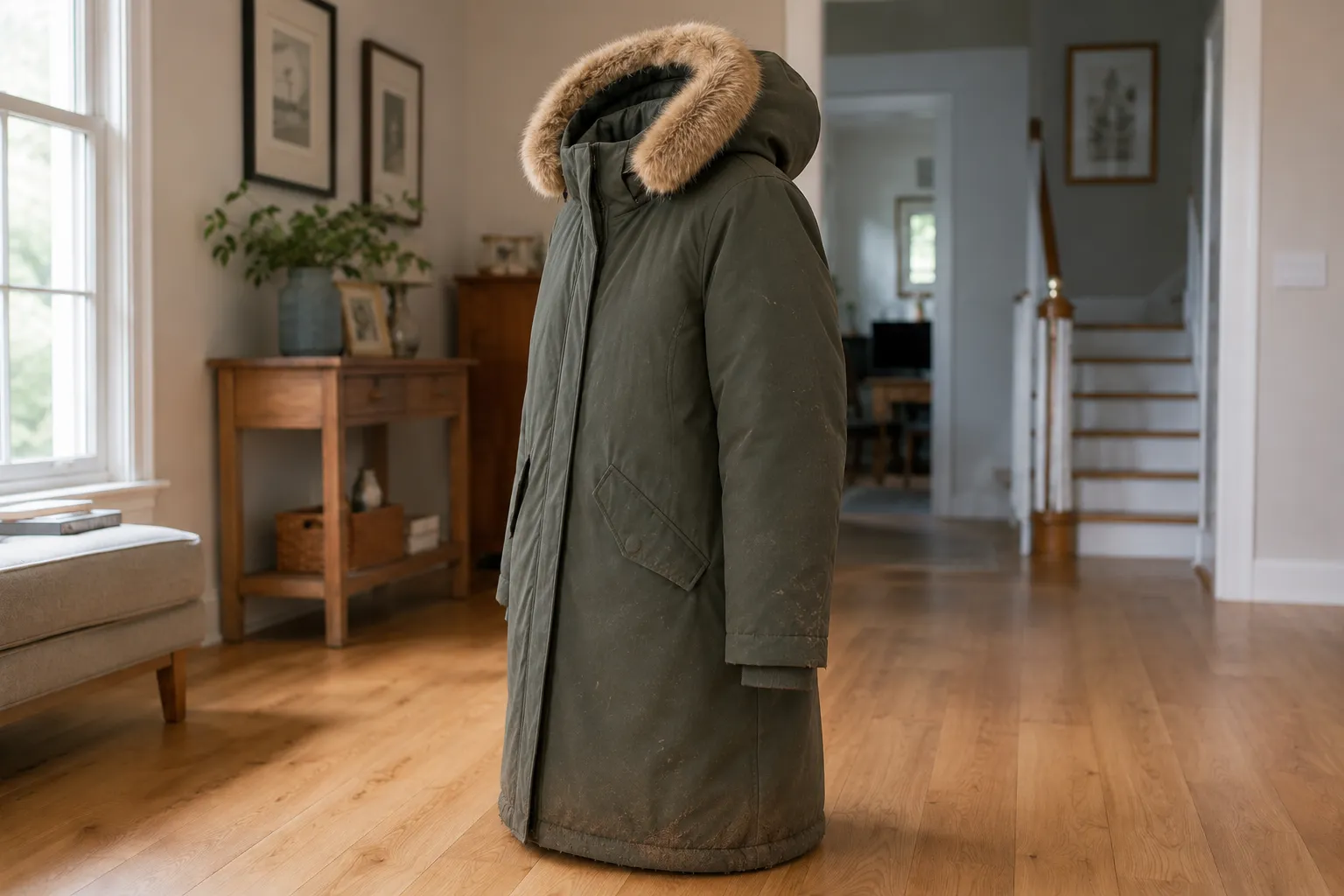
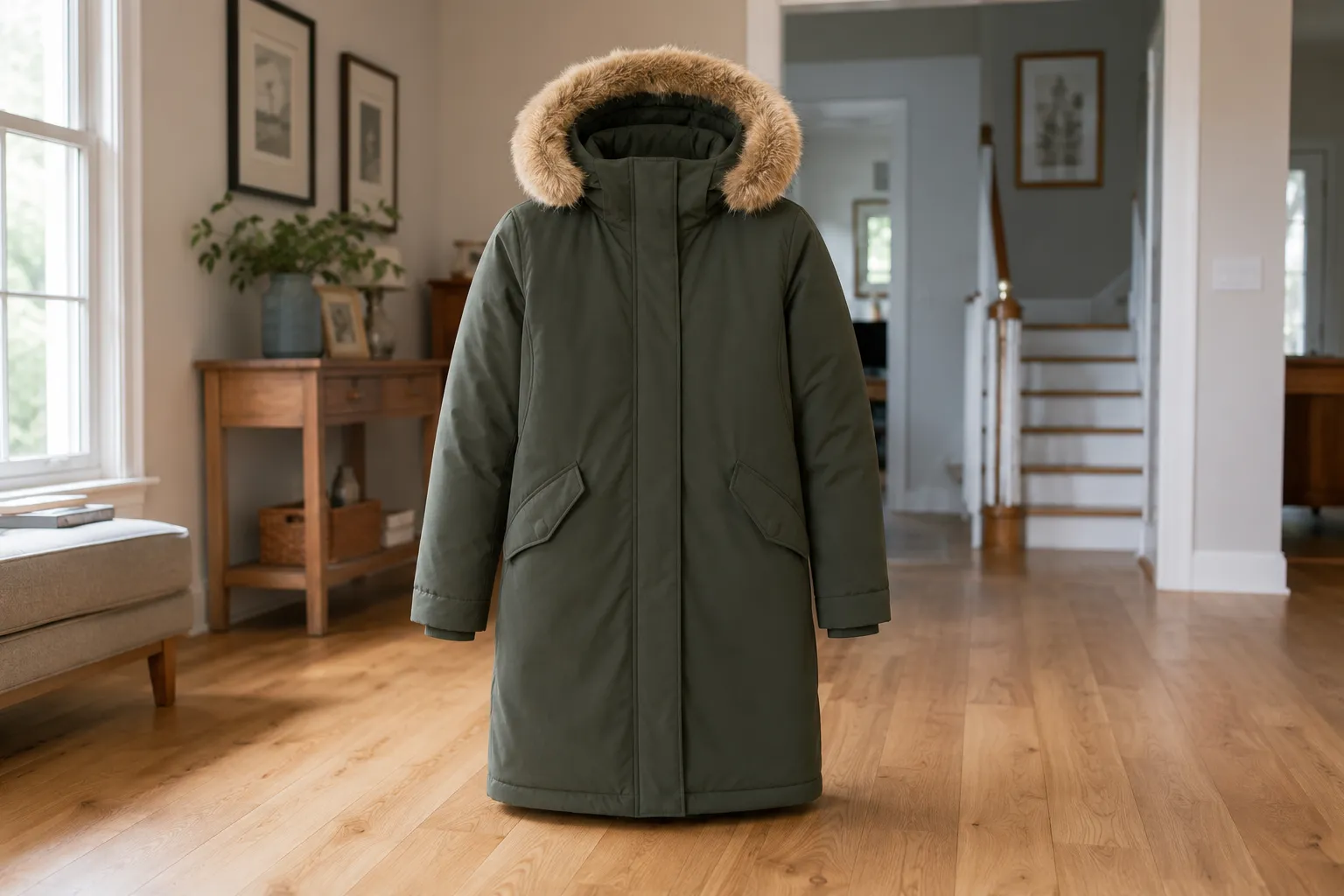 After
Request: The bottom of the long khaki parka had turned grey from slush and road de-icing chemicals, the fabric looked dull, and I wanted to bring the colour back.
Done: We removed the fur trim, treated the salt marks on the hem, carried out wet cleaning (aqua cleaning), dried and steamed the parka.
Cost: 8,100 ₸
Master: Yelzhan O, furniture and mattress dry-cleaning specialist
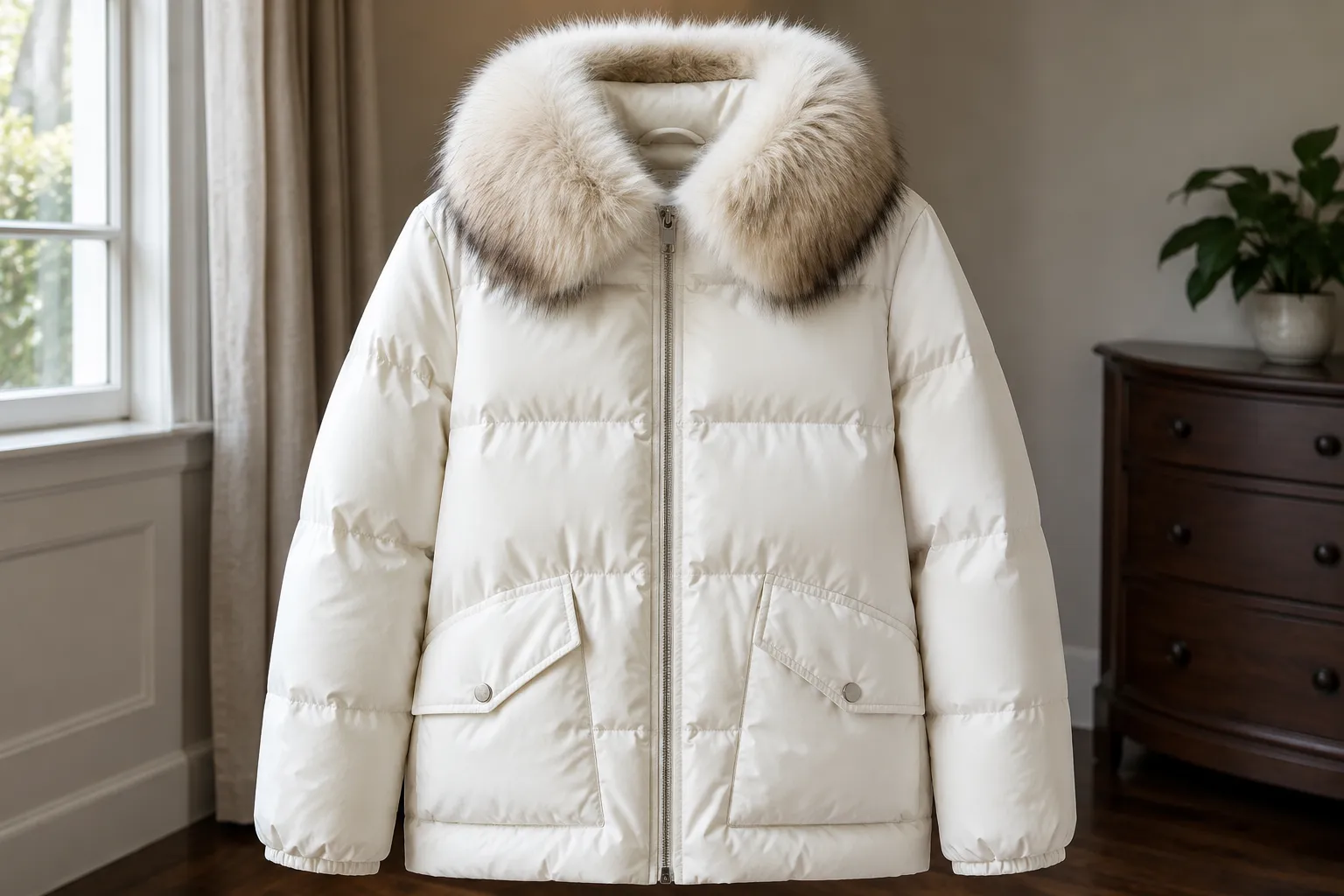
Result: The hem is clean, the olive colour is even again, the fur on the hood is fluffy and glossy.
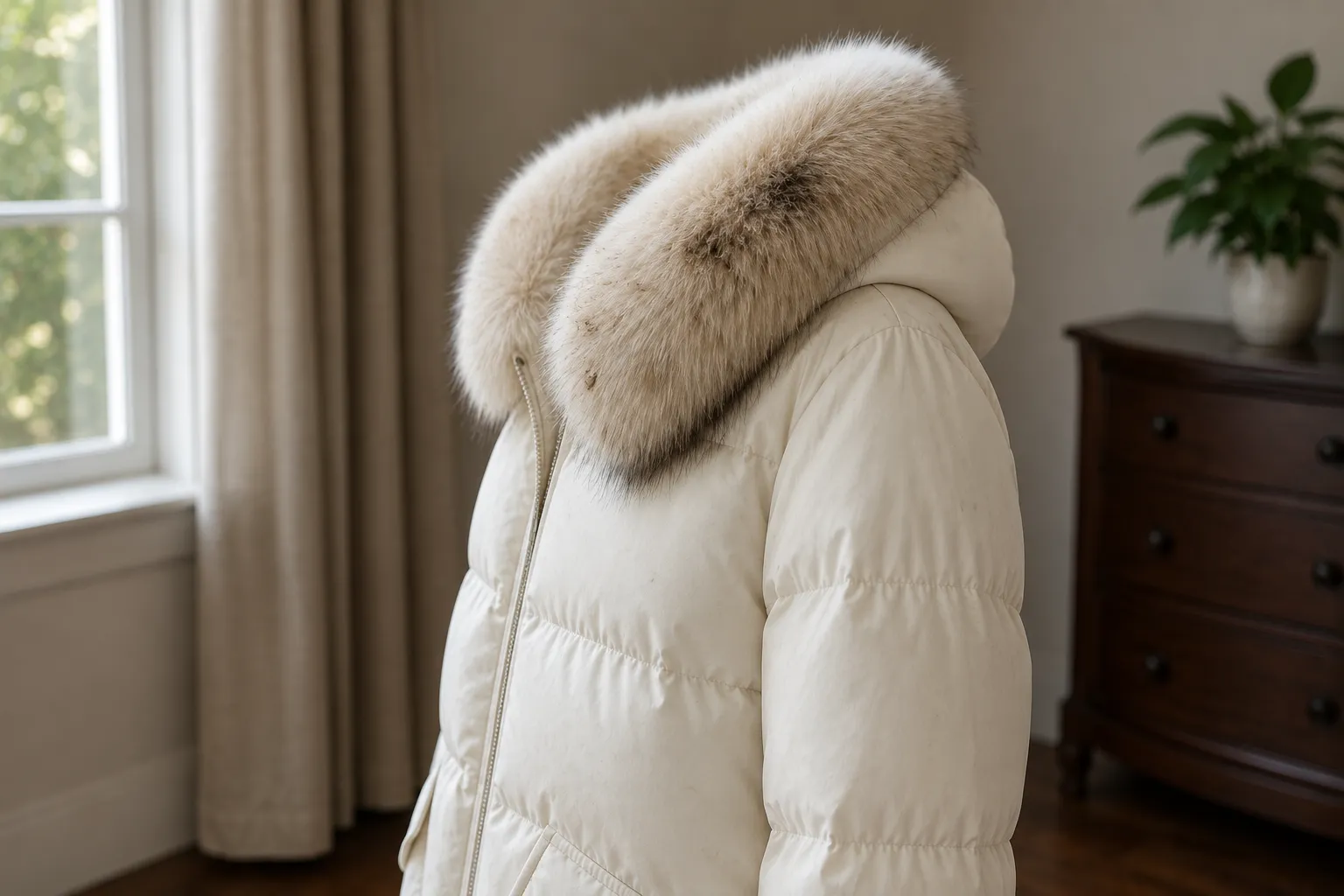
 After
Request: The fur on the hood of the white parka had matted and turned grey around the face, and a grey film had appeared on the shoulder.
Done: The fur trim was detached and cleaned separately, the upper part was washed using the wet cleaning method, and the down was fluffed up in the drum.
Cost: 8,100 ₸
Master: Anel S, cleaner and dry-cleaning technician
Result: The fur is light and fluffy again, the fabric is white with no film, and the parka holds its shape.
 After
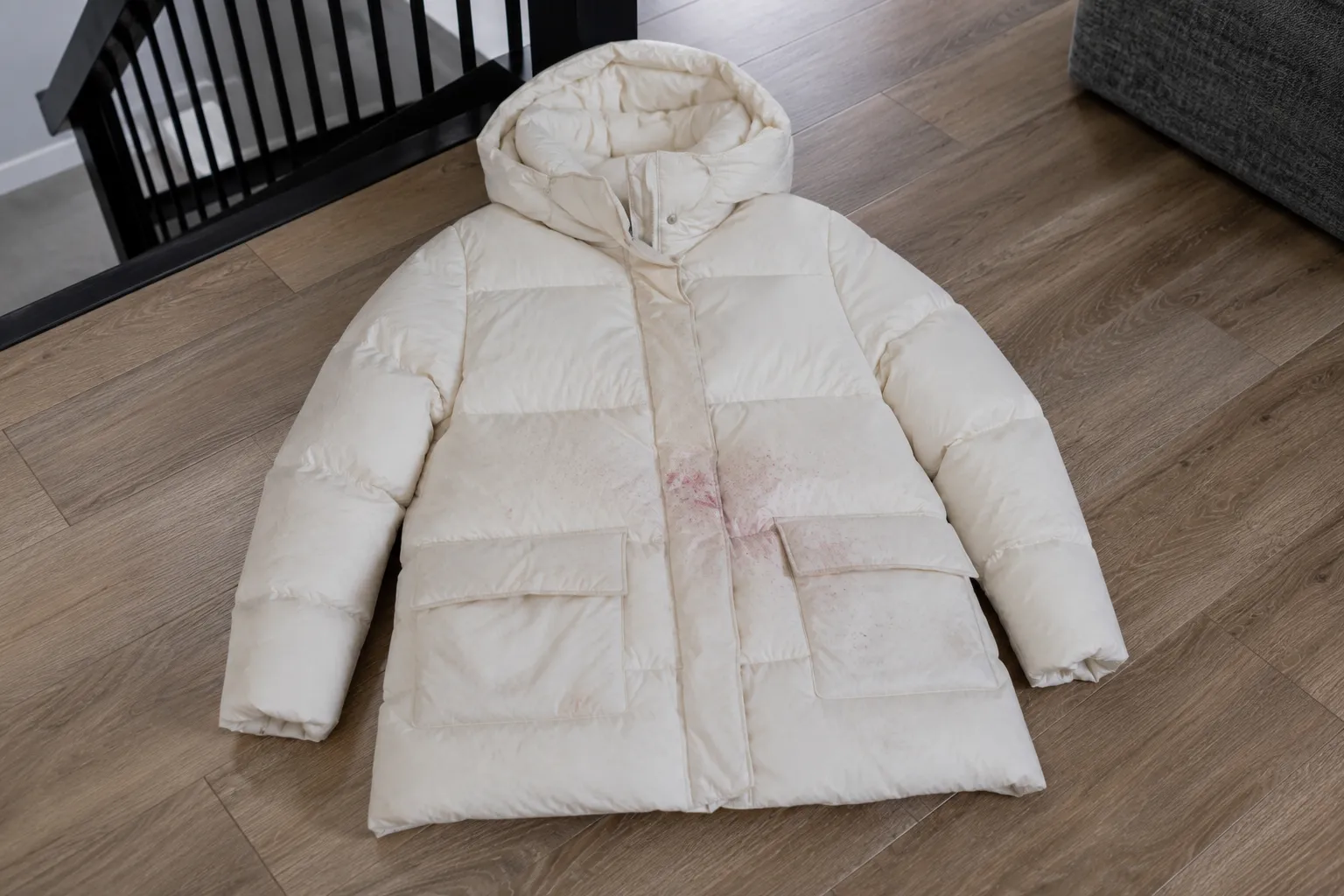
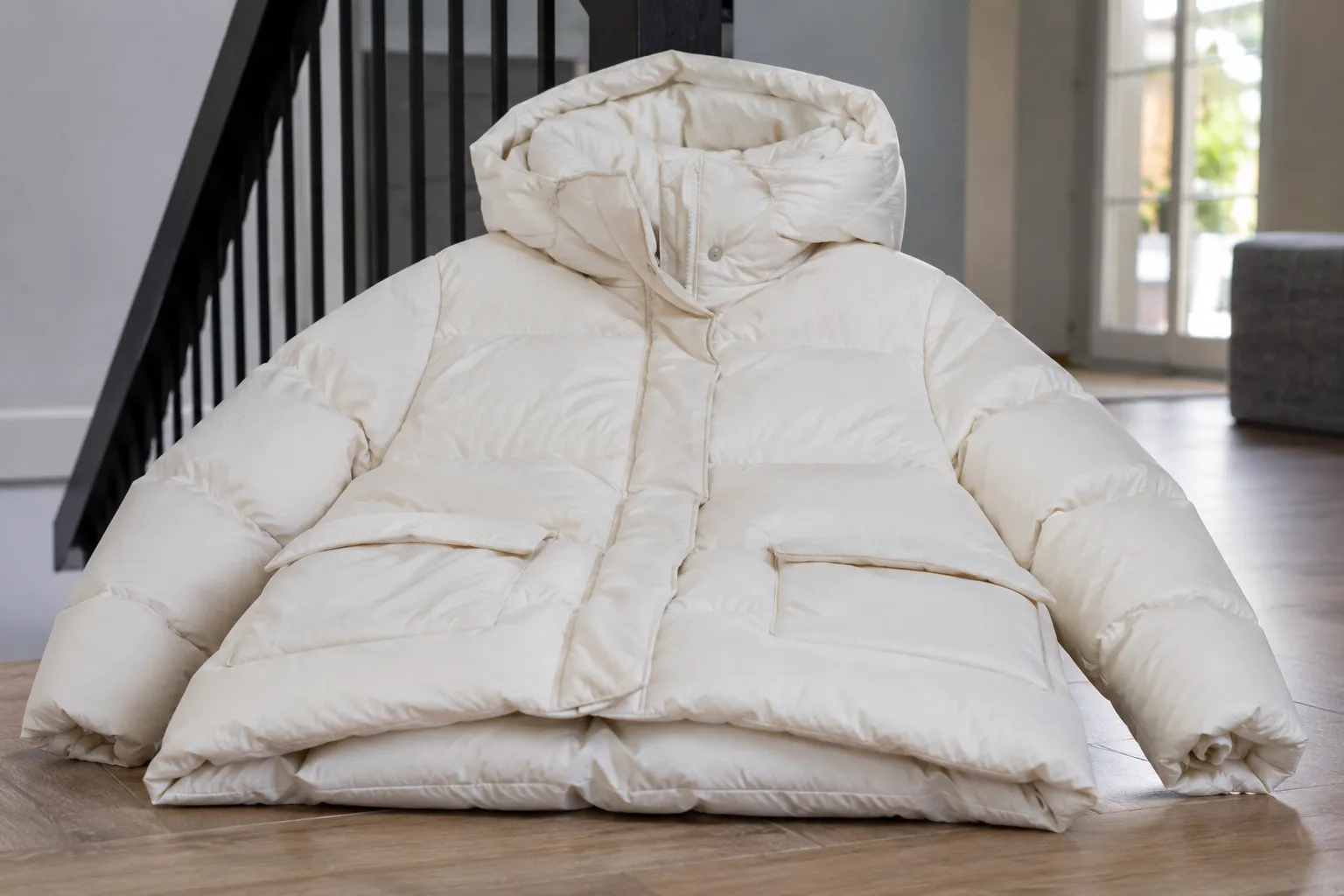
Request: Red wine was spilled on the light down parka — the stain spread across the chest and placket.
Done: The stain was treated with Kiehl stain remover, then wet cleaning and drying with down fluffing were carried out.
Cost: 7,000 ₸
Master: Laura K, cleaning and dry-cleaning specialist
Result: No pink marks remain, the milky fabric is an even colour, and the down has not clumped.
 After
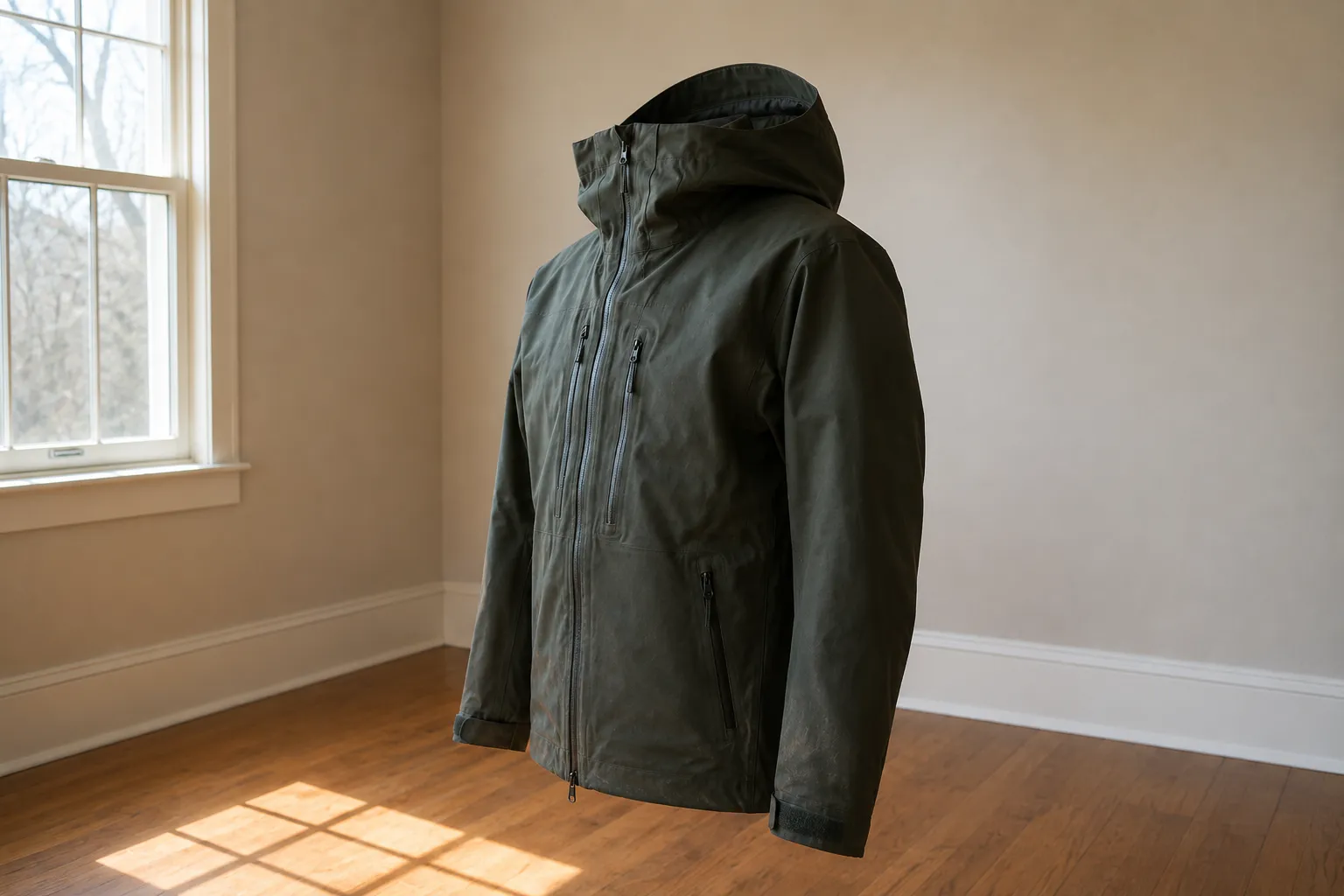
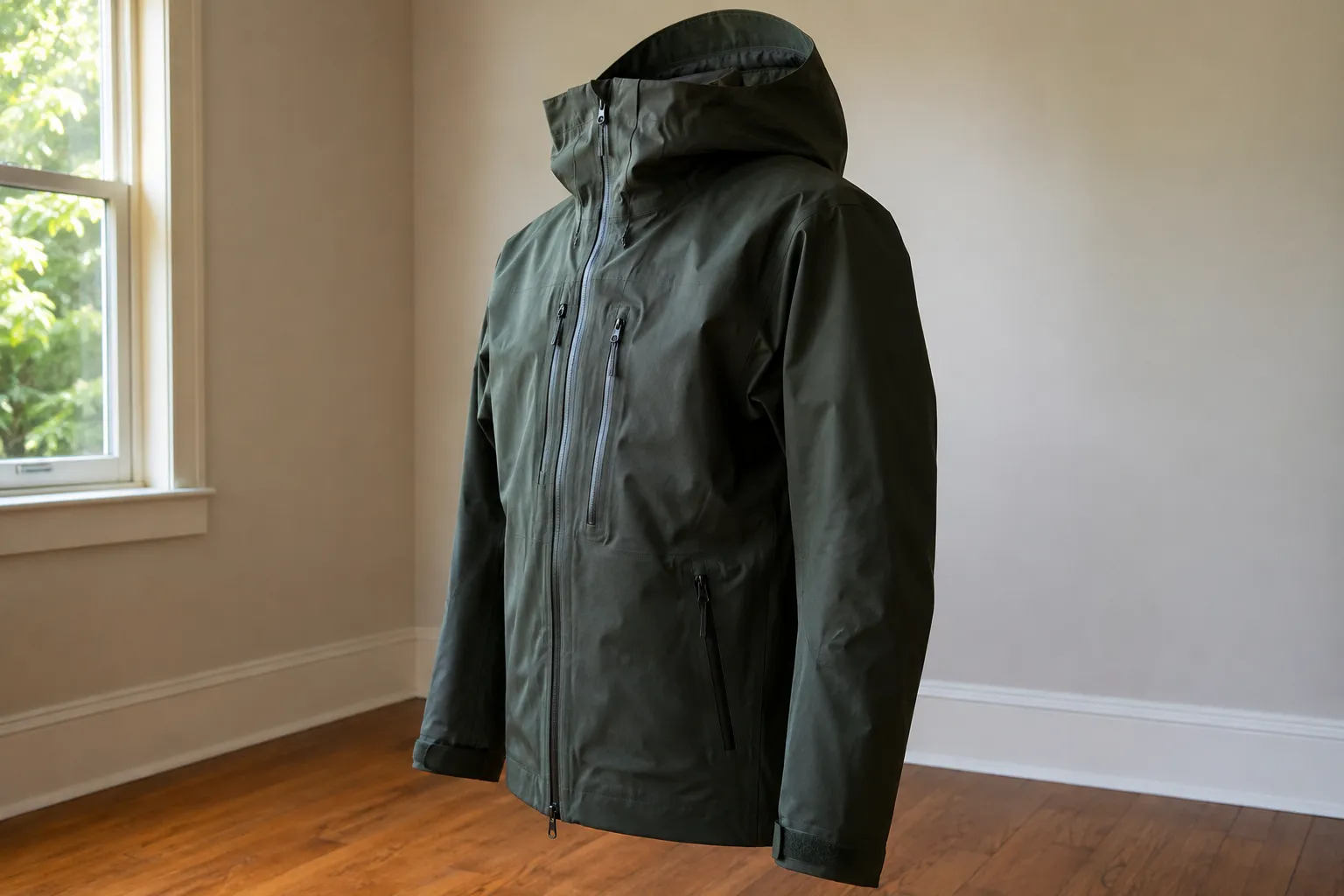
Request: The membrane parka became dusty after trips to the mountains, there were marks on the fabric, and water no longer beaded up.
Done: The membrane was cleaned with a liquid enzyme-free product, dried at low temperature, and treated with DWR.
Cost: 7,200 ₸
Master: Yelzhan O, furniture and mattress dry-cleaning specialist
Result: The fabric is clean and an even colour, the membrane breathes, and water beads up again.
All cleaners are profi-clean staff with training, uniform and security check. Each order has a team leader who controls quality.

Home washing destroys the structure of the down filling and the fur trim faster than the parka itself wears out. Let’s break down the physics and chemistry of the process: what exactly breaks in a washing machine, why the fur loses its look, and which mistakes happen most often.
Down is a protein keratin with a natural oily coating on every down cluster, and hot water with powder washes that coating away in a single cycle. During spinning at 800-1000 rpm, the wet down mass clumps into dense lumps that do not fluff up again when dried. After an unsuccessful home wash, a parka keeps noticeably less warmth: the filling is distributed unevenly, the back and sleeves let the cold through, and empty gaps form on the chest. The structure can only be restored with industrial drying using tennis balls under controlled temperature — a household machine has no such setting. If the down has already clumped, do not try to break up the lumps by hand through the fabric: you will tear the down compartments, and the filling will start working its way out through the seams.
Natural fur is a leather tissue (the hide) with a hair covering, and water acts on it like a tanning agent in reverse. The hide swells, loses its elasticity, shrinks as it dries and cracks; the hair becomes stiff, dull and starts to split. Drum washing adds mechanical action: friction against the outer fabric pulls out the downy hairs, while fabric conditioner glues the pile into icicle-like strands. Fur from a mink, Arctic fox or raccoon trim loses its volume and shine permanently after a single machine wash — restoration is only possible through treatment by a specialist. A detachable trim should always be unfastened before any cleaning and cleaned separately, while a non-detachable one is sent to our workshop, where the fur is treated with steam and special compounds.
A membrane parka keeps you dry thanks to micropores in the laminate and the water-repellent DWR layer on the outer fabric. Ordinary powder with surfactants and enzymes clogs the pores, the membrane stops venting vapour — it becomes damp inside, and the garment starts letting water through from the outside. Conditioner and chlorine-based products destroy DWR in a single cycle: water no longer beads off, and the fabric soaks up moisture like a sponge. The finish can only be restored by re-treating with a fluorocarbon compound in our workshop; at home a spray gives a temporary effect for 2-3 wears. In Almaty, with its winter slush and road de-icing chemicals, losing the finish means the parka will start soaking up dirty sludge along the hem and sleeves within the first week.
Different outer fabrics react to home washing in different ways, and there is no universal gentle cycle that suits them all. Cotton parkas shrink by up to 5-7% in length, taslan and nylon lose their shape and become covered in creases that cannot be steamed out with an iron, and membrane laminates peel away from the lining. The down inside behaves more aggressively than synthetic insulation: it is heavier, and when wet it pulls the fabric downwards, deforming the silhouette. The only way to bring a garment back to life after a failed wash is to take it to our workshop for professional wet cleaning (aqua cleaning) or hydrocarbon cleaning, followed by drying and restoring the loft. If your parka has already shrunk or the down has clumped after home washing, do not wash it again “just in case”: every attempt makes the deformation worse, and restoration costs more.
Shiny worn patches and salt streaks from road de-icing chemicals are two different problems with different chemistry, and trying to solve them with a single product usually makes both worse. Let’s look at what actually works on parka outer fabrics and why.
Shiny worn patches are not surface dirt but a compacted layer of skin oil, sweat and dust pressed into the fibres on the collar, cuffs, placket and pockets. Road de-icing chemicals are water-soluble calcium and magnesium salts from anti-icing mixtures that crystallise in the fabric and show up as white streaks along the bottom of the garment and along the seams. The oily layer can only be removed with organic solvents or alkaline surfactants, while the salt deposit needs water followed by acid neutralisation. If you treat a salt streak with a degreasing product, the crystals bite deeper; if you douse a shiny patch with water, the grease spreads over a larger area. At profi-clean we always start with diagnostics: we examine the parka under side light, feel the fabric at the seams, and only then select the formula. Tip: before any treatment, test the fabric’s reaction on an inconspicuous area under the lining — taslan and membrane can shrink or lose colour from aggressive alkali.
The first and most common one is trying to wipe off a salt stain with a damp cloth: the water spreads the salts across the fabric, and once it dries the white mark becomes wider. The second is using household soap or washing powder on a shiny worn collar: the alkali destroys the finish and leaves a grey halo that can no longer be removed. The third is drying a parka on a radiator: the high temperature “bakes” the grease into the fibres, and the shiny worn patches become permanent. The fourth is treating the fur hood trim with the same products as the outer fabric: fur requires a separate technique, and contact with alkali makes the pile stiff. The fifth mistake is ignoring the lining: salts and grease penetrate inside through the seams, and without treating the lining layer the problem comes back after the very first wear. Our specialist recommends not trying to remove old traces of de-icing chemicals on your own — in our workshop we identify the type of soiling by how the fabric reacts and select the treatment for the specific outer material.
In winter, Almaty roads are treated with a sand-and-salt mix and liquid chloride de-icing chemicals — they are more aggressive than dry salt and penetrate the fabric faster. On streets with a slope (Al-Farabi, Dostyk, the road to Medeu) the concentration is higher: more of the mixture is spread, and the melted slush runs downhill. Parkas worn in Almaty most often suffer at the bottom edge: the hem, pockets, and sleeves at the cuffs. The second Almaty-specific factor is smog and dust, which mix with grease and give a grey-yellow tint on light-coloured fabrics. That is why for Almaty clients we often combine hydrocarbon (solvent) cleaning (against grease and smog) with acid neutralisation (against de-icing chemicals). If a parka has been worn for one season without treatment, the shiny worn patches and the salt deposits overlap, and home remedies only set both layers in.
Home remedies are effective only on fresh soiling and only on simple fabrics — dense cotton, polyester without a finish. On membrane, taslan and softshell, any household chemical strips the DWR water-repellent finish, and the fabric starts letting water through. On down parkas, water penetrates through the seams and clumps the insulation together. On parkas with a fur hood trim or a detachable fur lining, contact with water and alkali makes the pile brittle. If after two attempts the shiny worn patches or salt stains remain, that is a signal that the soiling has gone into the fibre structure and professional parka dry cleaning is needed. In our workshop we work with hydrocarbon solvents and wet cleaning (aqua cleaning) using hypoallergenic Kiehl and Sodasan products, restore the finish and treat fur separately. We can collect and return your parka by courier, turnaround 2-4 days, or 24 hours for urgent orders.
The outer fabric of a parka determines which chemicals and temperatures are safe. We break down the three most common materials — membrane, taslan and nylon — and the mistakes that irreversibly damage the water-repellent layer.
The membrane in a parka is a microporous film laminated to the outer fabric, and its pores get clogged by particles of ordinary washing powder in a single cycle. In our workshop we treat membrane parkas only with liquid detergents free of enzymes and chlorine — such as Sodasan or Kiehl — because powder granules settle in the pores and block vapour permeability completely. The second mistake is fabric conditioner: it coats the fibres in a silicone film and strips the membrane of its ability to wick moisture away. The third is spinning in a centrifuge at high speeds: the mechanical stretching tears the lamination along the seams, and the membrane starts to delaminate. A DWR water-repellent finish can be restored after a failed wash, but destroyed lamination cannot. Our dry cleaning specialist always checks the care label and tests an inconspicuous area before putting a membrane parka into wet cleaning (aqua cleaning).
Taslan is a dense polyamide fabric with a polyurethane coating, and its main enemy is a high iron temperature. When it comes into contact with a hot soleplate, the coating melts and sticks to the fabric, leaving a shiny mark that nothing can remove. The second mistake is chlorine-based stain removers: they eat through the polyurethane layer and leave white bald patches. The third is drying on a radiator or in direct sunlight: the coating cracks and peels off in flakes. We clean taslan with a hydrocarbon solvent at low temperature and dry it in a cabinet at controlled humidity so the base fabric doesn’t dry out. If a taslan parka has already been ironed at home and has developed shiny worn patches, it is impossible to restore the matte finish completely — professional treatment in our workshop only makes the mark less noticeable.
A nylon parka loses its elasticity in hot water above 40 °C and from oxygen bleaches — the fibre becomes stiff and starts to “crunch” at the folds. At profi-clean we wash nylon at 30 °C in soft water, because hard water with calcium salts leaves a grey film that eats into the fibre structure. Another mistake is tumble drying: nylon shrinks unevenly, and the parka loses its shape across the shoulders and sleeves. To restore its water-repellent properties, we apply a DWR spray after every second clean — without the finish, a nylon parka soaks through within 10 minutes in the rain.
The insulation in a parka loses its loft not from cleaning as such, but from the wrong mechanical and temperature conditions. Below is what happens to each type of filling and which mistakes lead to clumping.
Natural down is not a solid layer but millions of down filaments that hold their loft thanks to the air pocket between them. When wet, the filaments clump together; when dried quickly in a machine, they scorch against the lining; and when dried on a radiator, they become brittle and lose their resilience. In our workshop, down parkas are dried in a drum with tennis balls at a gentle temperature — the balls mechanically break up clumps without tearing the filaments. At home, people tackle this with tennis balls in the machine on low spin, but if the down has already matted after getting wet, restoring it without professional treatment is almost impossible. In our practice, a parka with down insulation that had been washed in an automatic machine at 800 spin was brought in with a completely shrunken hem — the insulation had clumped in the hem and compressed into a dense layer.
Synthetic padding (sintepon) is a non-woven fabric of polyester fibres bonded thermally or with adhesive. When washed in hot water above 40 degrees, the adhesive coating breaks down, the fibres lose their bond and mat into a thin layer along the seams. The spin cycle finishes the job: the fabric stretches and, once dry, never regains its original thickness. Synthetic padding cannot be restored — only replaced in our workshop. That is precisely why at profi-clean we do not wash parkas with synthetic padding in a wet cleaning machine, but treat them with the hydrocarbon method: the solvent does not penetrate the fibre structure as deeply as water, and the fabric keeps its shape.
Our technologists call Thinsulate and bio-down the most “patient” insulations, and synthetic padding the most temperamental: it is cheaper, but withstands the fewest cleaning cycles.
You can check the condition of the insulation after cleaning by touch: if, when you squeeze the parka in your fist, the insulation does not spring back into shape within 3-4 seconds, the fibres have lost their resilience and replacement is needed.
How often you clean your parka and how you store it determine how many seasons it keeps its shape. Below are practical guidelines for the Almaty climate: road de-icing chemicals, dust, humidity swings and off-season storage mistakes.
The optimal interval is twice a season: mid-wear and before putting it away for storage. Parka dry cleaning in Almaty is in particular demand in November–February, when road de-icing chemicals and city dust settle on the outer fabric and the insulation absorbs moisture from temperature swings. Down models need cleaning every 8–10 wears: sweat and skin oils seep through the lining and break down the down feathers from the inside — it is invisible from the outside, but the loft is lost. Synthetic padding (sintepon) and hollofibre hold their shape longer but accumulate odour. Demi-season parkas without insulation only need to be taken in once at the end of the season. Our dry cleaning specialist recommends not waiting for visible stains: soiling develops from the inside, not the outside.
On a hanger in a breathable cover is the only safe option for down and fur. The polythene bags from the dry cleaner are not suitable: they do not let air through, so the down steams and picks up an odour. The fur hood trim is removed, combed and stored separately in a cotton bag — mothballs turn fur yellow. Synthetic insulation can tolerate vacuum bags, but for no longer than 3–4 months: prolonged compression reduces the fibres’ ability to recover. Humidity in the wardrobe should stay within 45–55% — in Almaty’s dry winter a silica gel sachet is enough. You must not hang a parka right up against other clothes: the outer fabric becomes distorted along the shoulder line.
| Mistake | What happens | How to do it properly |
|---|---|---|
| Polythene cover from the dry cleaner | Down steams and develops an odour | A breathable cover or a pillowcase |
| Vacuum bag for a year | Fibres lose their resilience | Only for 3–4 months |
| Mothballs next to fur | Fur turns yellow and breaks | Cedar balls, lavender |
| Damp basement or balcony | Mould, fungal odour | A dry wardrobe, 45–55% humidity |
| Hanging tightly in a row | Creases on the shoulders and sleeves | A separate rail, plenty of space |
Almaty winters combine dry air in the foothills with humid smog in the lowlands, and a parka absorbs this difference in different ways. In areas closer to the mountains (Kok-Tobe, Medeu), the air is dry, and the main threat is drying out of the leather and fur: once a month, the fur hood trim should be combed with a damp brush. In the lowland districts (Almaly, Zhetysu), the air is more humid in winter, and in a wardrobe without ventilation a parka can become damp within 2–3 weeks. Storing on a glazed balcony is unsuitable in any district: during the day the fabric heats up, at night it cools down — condensation settles inside the insulation. In our practice, there was a case when a down jacket that had hung on a balcony all summer had to be cleaned twice: first from mould, then from the smell.
If you’re unsure whether it’s time to send your parka in, send a photo via WhatsApp, and a profi-clean specialist will assess its condition and advise whether urgent cleaning is needed or the item can be stored until next season.
The fur hood trim is the most delicate part of a parka: it accumulates sebum, dust and road de-icing chemicals faster than the upper fabric, and improper cleaning makes it lose its softness and causes shedding. Let’s break down when the trim is removed before cleaning and when it’s treated together with the garment.
A detachable trim serves a dual function: it warms the face in frost and protects the edge of the hood from shiny worn patches, so it gets dirty more intensively than any other area of the parka — over a season, fur absorbs noticeably more sebum than the collar. Natural fur (fox, raccoon, rabbit, arctic fox) is hair with a fatty coating on the hide, and when it gets wet the hide swells, and with quick drying it shrinks, causing the hair to start shedding. Faux fur on an acrylic or polyester base behaves differently: it’s not afraid of moisture, but it loses its shape from high temperatures and becomes static. That’s exactly why at the profi-clean workshop the trim is always assessed separately from the parka — by fur type, pile length and condition of the hide. Keep in mind: if the fur has already started shedding before cleaning, it won’t be possible to restore its density — you can only stop the process.
| Mistake | Consequence | How to do it correctly |
|---|---|---|
| Drying on a radiator | The hide shrinks, the pile sheds | Natural drying in a stretched-out position |
| Hairdryer on hot air | The hair breaks and loses its shine | Warm air no higher than 40 °C |
| Combing wet fur | The pile stretches and tears | Comb only when dry |
| Washing fur with powder | The hide stiffens, the pile dulls | Fur shampoo or foam |
| Storing in polythene | The fur stifles and develops an odour | A breathable cover |
Almaty winters with frequent thaws and road de-icing chemicals put a double load on fur: the salt film crystallises in the pile and scratches the hair when combed, while humidity swings destroy the hide. In our practice, fur trims after an Almaty winter require separate treatment in 6 out of 10 cases — more often than in regions with dry, stable frost. If a parka is worn daily from November to March, the fur is worth removing and sending for preventive care twice a season, without waiting for visible shiny worn patches — this way the pile keeps its volume longer. At profi-clean, the fur trim is collected for cleaning by the same courier who picks up the parka — you do not need to take the item apart yourself.
I took my parka with a fur hood trim for dry cleaning — it came back like new, the fur was fluffed up, and the hood holds its shape. I picked it up three days later, everything was neatly packed.
Thank you, Aigerim! We're glad the fur and hood made you happy after cleaning.
After winter, my down parka was covered in streaks from road de-icing chemicals. They cleaned it, fluffed up the insulation, and the down didn't clump. It can last a couple more seasons.
I ordered parka dry cleaning, and the oil stain on the sleeve was completely removed. The only thing — I picked it up a day later than promised.
Thank you for your feedback! We apologise for the delay in collection.
I got my mid-season parka dirty in mud at the dacha. I sent it to the workshop, and it came back clean, the fabric didn't fade, the seams are intact.
I had my parka with a hood dry cleaned — the bobbles were removed, the fur on the hood was combed, and the DWR water-repellent finish works again.
Thank you for your trust! We apply the DWR finish at the client's request — glad it's working again.
My child smeared my parka with chocolate and juice. Everything was removed, the fabric is like new, and there's no chemical smell at all. Very pleased.
The dry cleaning of my parka with a detachable fur lining went perfectly — the fur was treated separately, and the lining was put back in place. Everything is intact.
The long parka was cleaned well, but the fur hood trim became a bit stiffer. Otherwise no complaints, the fabric is fresh.
Thank you for the note, Dinara! The fur can be combed out additionally — please contact our reception.
I ordered parka dry cleaning after a city winter — the streaks from road de-icing chemicals came out completely, and the fabric didn't lose its colour.
I spilled coffee on a light-coloured parka and thought it was ruined. They cleaned it in the workshop, no stains left, the colour is even. The courier picked it up and brought it back himself.
Glad to help, Gulnara! Light-coloured fabrics are our pride.
I had my parka with synthetic padding dry cleaned — the insulation was restored, the loft came back, nothing got clumped. They steamed it beautifully.
The old wine stain remained slightly visible, though they warned me it might not come out. Overall clean, but there's a bit of a letdown.
Olga, thank you for your honesty. We always warn in advance about stubborn old stains.
Parka dry cleaning with a membrane — I was afraid they'd ruin it, but no: it breathes, it doesn't get wet through, and the DWR water-repellent finish was renewed. They did it in 24 hours.
Thank you! We clean membrane fabrics using a separate technology, glad you appreciated it.
The parka was completely covered in pilling, I thought it was for the bin. After cleaning the fabric is smooth, the fuzz was removed, it looks neat.
I had a men's dark parka dry cleaned. The petrol and dirt stains came out, the fabric didn't fray, the seams are even.
They cleaned it well, and the stains on the cuffs are gone. It took a bit longer than usual — four days instead of two.
Ainur, thank you! It's busier in season, we try not to delay.
I ordered dry cleaning for a parka with fur hood trim — the fur was combed out, the hood holds its shape, the trim is fluffy. Excellent.
Thank you, Bekzat! We treat fur separately to preserve the pile.
After repair, the parka was covered in dust and paint. Everything was cleaned off, the paint was carefully removed from the fabric, not a trace left.
Parka dry cleaning removed an oil stain that wouldn't come out at home. The fabric wasn't damaged, the colour stayed the same.
The parka smelled musty after storage. After cleaning the odour was completely gone, the fabric is fresh. I picked it up two days later.
Thank you, Saule! Drying and odour treatment are standard for us.
I took my parka for dry cleaning, everything was cleaned well. The zip was lubricated, but one snap button became harder to fasten.
Igor, thank you! For hardware issues, just get in touch — we'll fix it free of charge.
I thought the fur trim on my parka couldn't be saved. In the end the fur was fluffed up, it's soft again, the parka looks expensive.
I took my parka for dry cleaning after a fishing trip — mud, slime, odour. It came back clean, odour-free, the fabric like new.
Thank you, Ruslan! Tough stains are a particular pride of our workshop.
The green grass stains on the parka were completely removed. The fabric didn't fade, the colour is even, the seams are intact.
Parka dry cleaning with a refreshed finish — now water just rolls off instead of soaking in. Very happy with the result.
Thank you! We apply the finish after every clean to protect the fabric.
The parka was cleaned, but the decorative patch lost a bit of its look. The fabric itself is clean, no stains.
Indira, thank you! We check the decorative trim before cleaning — bring it in and we'll take a look.
Had my parka dry cleaned after winter — road de-icing chemicals, dirt, all gone. The fabric hasn't faded, and the insulation was fluffed up.
The grease stain on my parka from shashlik came out without a trace. The fabric didn't darken like I feared. Thank you!
We're glad, Aliya! Grease stains are a common challenge, and we handle them.
The dry cleaning of my bulky parka went fine, everything's clean. But the packaging was crumpled, so I had to steam it at home.
Dmitry, thank you! We pack carefully and will take your feedback on board.
My parka with fur had makeup stains. The fur wasn't damaged, the stains are gone, and the fabric is fresh. I picked it up three days later.
I ordered dry cleaning for a parka with a hood and fur hood trim — the fur was fluffed up, the hood holds its shape, everything's clean.
Thank you, Olzhas! We treat fur and hoods by hand.
Berry stains on a light-coloured parka were completely removed. The fabric didn't fade, the colour is even. Very neat work.
Parka dry cleaning with hollofibre insulation — the insulation didn't clump, the loft came back, and it was beautifully steamed. Highly recommend.
Thank you, Sanzhar! Restoring the loft is a mandatory step.
The standard turnaround is 2–4 days from the moment of acceptance. Express cleaning in 24 hours is available as an add-on: we take the parka out of turn and hand it back the next day. We confirm the exact time on acceptance; it depends on our workshop's workload and the complexity of the soiling.
You can bring the parka to our workshop yourself or order a courier: they will collect the item from your home or office in Almaty and bring it back after cleaning. The courier works within an agreed time slot, and the price is fixed. We take orders by phone or via WhatsApp.
Yes, it's safe. We clean down using the wet cleaning method, followed by tumble drying at a controlled temperature and fluffing with tennis balls. The insulation doesn't clump but is evenly distributed across the sections. After drying, we check the loft and repeat the fluffing if needed.
A parka with fur hood trim costs more than a basic one: the price includes separate fur treatment — removal, delicate cleaning, combing and restoring the pile. The current price is in the price list and calculator on this page; DWR water-repellent finish and removal of stubborn stains are add-on options.
Yes, there is a difference: down requires a more delicate technology with tumble fluffing, so a down parka costs slightly more than one with synthetic padding or hollofibre. Prices for each type of insulation are in the price list on this page; we confirm the final amount when you drop off the item.
We accept all types: winter long-length, mid-season, down, synthetic padding, Thinsulate, hollofibre, membrane, taslan, Alaska parkas, with fur hood trim and detachable fur lining, and children's. For each model we select a specific cleaning and drying technology.
Basic cleaning includes: diagnostics, spot stain removal, main cleaning (wet or solvent), drying with loft restoration, steam finishing and packaging. Fur treatment and DWR water-repellent finish are separate services that can be added to your order. Removal of stubborn stains (road de-icing chemicals, grease, paint) is also an add-on option.
We clean membrane, down and delicate fabrics using the wet cleaning method with mild surfactants; taslan, synthetic padding and dense fabrics — with hydrocarbon solvent. We dry down in a tumble dryer at 40–50 °C with tennis balls for fluffing; after drying, we distribute synthetic padding and hollofibre by hand across the sections.
We work in our own workshop with in-house specialists, no middlemen. For fur and membrane we use separate technologies and professional products by Kiehl and Sodasan. If you find a flaw after receiving your item, let us know within 24 hours and we'll redo the work free of charge.
Let us know within 24 hours after receiving your item — we'll redo the work free of charge using the proper technology. No extra payment or arguing needed: the guarantee applies to all types of cleaning, including fur and membrane. Bring the parka to our workshop or call a courier.
Tell us about your experience with profi-clean — it helps other clients and us improve.
We currently operate in Almaty. Other cities are coming soon.